Russian Forces Wipe Out First French-Donated Crotale NG Missile System in Ukraine
By Svetlana Ekimenko – Sputnik – 25.12.2023
In the course of the ongoing special military operation in Ukraine, the Russian Armed Forces have been successfully delivering high-precision strikes targeting foreign equipment and ammunition provided to the Kiev regime by Washington and its NATO allies, obliterating the much-touted sophisticated weaponry.
Russia’s Armed Forces operating in the special military operation zone have destroyed several Norwegian-made NASAMS (National Advanced Surface-to-Air Missile System) and one French Crotale NG short-range air defense system that the Kiev regime received from its Western patrons, the Russian Defense Ministry said on Sunday. The NATO-donated weapons systems were stationed at the Starokonstantinov Airfield in the Khmelnitsky region.
This is believed to be the first recorded instance of a Crotale NG being obliterated in combat, and serves as further proof that NATO’s state-of-the-art equipment is fair game for Russia’s military.
The Russian military carried out a coordinated assault that involved tactical aircraft, missile troops, artillery units, and unmanned aerial vehicles (UAVs). Besides neutralizing the air defense systems, the attack inflicted damage on the Kiev regime’s aircraft equipment, flight navigation sysems, and aviation ammunition stored at the airfields in Kanatovo, Kirovograd region, and Dnepr, Dnepropetrovsk region. Furthermore, military personnel and equipment of the Ukrainian Armed Forces was destroyed in 127 districts.
The strategic impact of Russian strikes on Ukraine’s air defense capabilities is expected to be significant, Army Recognition, an online Western military outlet, acknowledged, commenting the MoD announcement. It clarified that the destruction of enemy air defense capabilities enables Russia’s military to gain even greater control over the airspace. While reducing the risk to their own aircraft, it boosts their ability to carry out air operations such as strategic bombing, providing close air support to ground forces, and conducting reconnaissance missions.
As part of NATO’s ongoing proxy war against Russia in Ukraine, France has supplied Ukraine with two Crotale NG air defense batteries, the military outlet underscored.
The French Crotale NG (New Generation) missile system is a modernized version of the Crotale air defense system designed for short-to-medium range air defense. Equipped with the VT1 missile with an engagement range of around 11 kilometers (6.8 miles), it is touted as providing effective defense against aircraft, helicopters, various precision-guided weapons, and unmanned aerial vehicles (UAVs). The system can engage targets at altitudes up to 6,000 meters.
As far as NASAMS are concerned, a number of countries have delivered these systems to Ukraine. Thus, Belgium has purportedly contributed an undisclosed number of AIM-120 NASAMS missiles, Lithuania has delivered two launchers, while Canada has supplied Kiev with one NASAMS air defense battery along with AIM-120 missiles.
The NASAMS utilizes the AIM-120 Advanced Medium-Range Air-to-Air Missiles (AMRAAM), capable of engaging targets at distances of up to 25 kilometers. This renders the NASAMS effective for medium-range air defense scenarios.
The United States reportedly sent eight NASAMS batteries as part of its billions’ worth of military assistance to Ukraine, while the UK has donated NASAMS missiles.
Despite the vast amounts of military aid being provided by the West, Ukraine’s much-hyped 2023 counteroffensive that began in June of this year failed to produce any tangible battlefield results. As the country’s military losses have mounted, public support for Ukrainian President Volodymyr Zelensky has also waned in recent months.
Political developments have suggested that support for Ukraine is dwindling in the United States as well, where President Joe Biden’s massive funding package for Kiev has stalled in Congress. Republicans have insisted on incorporating funding for border security. In Europe, “Ukraine fatigue” is also gaining momentum, as EU states face depleted stocks from funneling military aid to Kiev, and repercussions from self-harming anti-Russia sanctions.
Since Western countries ramped up military support for the Kiev regime, Moscow officials have consistently warned that such moves do not bode well for Ukraine, and only prolong the conflict. NATO weaponry, no matter how sophisticated, will eventually be destroyed, the Kremlin underscored, and vehicles carrying supplied weapons are a legitimate target for the Russian army.
Europe betrayed by US and Ukraine – Minsk talks negotiator
By Lucas Leiroz | December 25, 2023
The current conflict in Ukraine is a direct result of the failure of the Minsk Agreements. Between 2014 and 2015, Russia and the European Union mediated negotiations between the breakaway republics of Donbass and the Kiev government, reaching a mutually beneficial protocol that was expected to guarantee regional peace. However, the terms of the pact were never respected by the Ukrainian regime, which continued to constantly attack the republics and advance its project of “de-Russification” and ethnic cleansing.
According to former German prime minister, Angela Merkel, the Agreements did not fail, but fulfilled their real objective: to prepare Ukraine for a war against Russia in the near future. Commenting on the beginning of Moscow’s special military operation and the escalation of the conflict in Donbass, the German former official stated that this confrontation was expected from the very beginning, with the ceasefire established in Minsk only working as a way to temporarily alleviate tensions, enabling Kiev to gain time.
However, this does not appear to be the opinion of some other insiders who were also deeply involved in negotiations in the Belarusian capital. I recently had the opportunity to visit the Donbass region as a war correspondent. There I interviewed several local leaders, politicians and state officials, including the Minister of Foreign Affairs of the People’s Republic of Lugansk, Vladislav Deinego, who was one of the negotiators in the Minsk process.
In our conversation, I asked the Minister his opinion on the failure of the Minsk Agreements and heard from him a long explanation about how the situation got out of control and escalated to the current status of war. According to Deinego, Merkel is lying when she claims that the plan has always been to simply prepare Ukraine. For him, Europe had a genuine interest in achieving regional peace and stabilizing its relations with Russia, avoiding a military escalation that would put the entire continental security architecture at risk.
Deinego claims that Kiev wanted total war from the beginning. The Minister explains that, before the Minsk Accords were established, the separatists tried to resolve the situation diplomatically in several ways. After non-military means failed, the republics proposed to Kiev that the fighting be somewhat limited to avoid civilian casualties.
First, a ban on the use of artillery and aviation was proposed, which Kiev quickly denied. Next, Donbass’ leaders attempted to establish security zones, limiting the use of heavy weapons according to their distance to civilian areas. In this model, artillery would be allowed only in regions far from inhabited cities, while in the “zero line” combat would be limited to the regular use of infantry, preventing civilians from being hit by heavy weapons. Even so, Ukraine denied signing such a deal.
This insistence by the neo-Nazi regime on waging all-out war against the separatists, according to the minister, generated real concerns among Europeans. The deeper the Ukrainian incursions were, the closer the attacks would come to Russian borders, worsening the security crisis. In practice, the situation could at any time escalate into a situation of absolute violence in which Moscow would be forced to intervene, generating a major conflict in Europe. This worried EU members, especially Germany, which was very dependent on the partnership with Russia.
Being a major importer of Russian gas and depending on friendship with Moscow to guarantee its economic and social stability, Berlin engaged deeply in the diplomatic process to try to end, or at least freeze, the conflict. For this reason, Germany was the main negotiator on Kiev’s side in Minsk, while Russia negotiated in support for the Donbass’ republics. In this sense, after many negotiations, the pact was finally signed, establishing measures such as ceasefire, release of prisoners and respect for the political autonomy of Russian-speaking regions.
Deinego believes that actual compliance with the Agreements would be the best scenario for Europeans as it would guarantee stability in Russia-EU relations, despite Ukrainian hostility towards Moscow. However, as well known, Kiev never obeyed the Minsk’s terms and continued violence in the region – even though the intensity of the fighting obviously decreased. Deinego thinks that this was never in the European interest and that, in fact, the direction taken by the conflict showed the failure of European diplomacy.
Indeed, at the time Russia-EU relations were prosperous, despite ideological and geopolitical rivalry. There was no reason for Europeans to agree to participate in a war plan in which they would be severely harmed. This leads us to believe that other actors worked to escalate the crisis, without considering European interests. Certainly, the US, which always wanted war with Russia, was responsible for this.
The circumstances show that Washington probably took advantage of the “stability” generated by the Minsk Agreements to prepare Kiev to act as a proxy against Russia. The Europeans never participated in this plan and were betrayed by NATO just like the Russians. Currently, Europe continues to be a victim of NATO’s war plans, being forced by the US to impose suicidal sanctions against Russia, affecting its own economy.
The opinion of an insider of the Minsk process is vital to show the real reasons for the conflict. In practice, Deinego presents proof of how relations between the US and EU are semi-colonial, with Europeans being used by Washington in war plans, without having their interests respected.
Lucas Leiroz, journalist, researcher at the Center for Geostrategic Studies, geopolitical consultant.
You can follow Lucas on X (former Twitter) and Telegram.
The Anglo-American War on Russia – Part Twelve (NATO Wants War)
Tales of the American Empire | December 21, 2023
The American empire is expanding to rule the world with the help of its NATO vassal states. In 2008, American President George Bush announced that NATO wanted to add Ukraine to NATO, even though most Ukrainians opposed the idea. Russia announced this would be unacceptable while Germany and France said now is not the time to add Ukraine.
NATO now has 31 members who all must approve of new members, so it’s politically impossible to add Ukraine to NATO while it fights with Russia. However, the United States had already made Ukraine de facto member and wanted a war to occur.
Ukraine never implemented the 2015 Minsk peace accords nor the 2019 Steinmeier Formula agreement and continued random tank and artillery fire into rebel held cities, killing some 14,000 ethnic Russians since 2015. On the eve of the Russian invasion of eastern Ukraine, the buildup of Russian troops on the eastern border of the Donbas was heavily reported. Unreported was the buildup of Ukrainian troops on the Donbas’ western border that preceded it. Ukraine had massed 60,000 troops along its border with Donbas rebels.
As Ukraine slowly loses its war with Russia, many fear NATO will intervene militarily. NATO Secretary General Jens Stoltenburg has spent years selling the dangerous idea of adding Ukraine to NATO. This led to disaster, yet Stoltenburg still promotes this insane idea that would lead to a world war.
_________________________________
“German agency suspends certification for NordStream 2”; DW; November 11, 2021; https://www.dw.com/en/german-agency-s…
Related Tale: “The American Colony Called Germany”; https://www.youtube.com/watch?v=adfyC…
“Germany’s Economy is in Freefall”; Remix; September 2023; https://www.bitchute.com/video/bo10lE…
“Address by the President of the Russian Federation”; Vladimir Putin; The Kremlin; February 21, 2022; http://en.kremlin.ru/events/president…
Related Tales: “The Anglo-American War on Russia”; https://www.youtube.com/playlist?list…
Russia warns West against seizing assets
RT | December 22, 2023
The seizure of Russian assets by Western countries would be “illegal” and “extremely dangerous” for the global finance system, Kremlin spokesman Dmitry Peskov warned on Friday.
The US and EU are reportedly considering using Russian assets frozen in the West to rebuild Ukraine, or even fund Kiev’s ongoing military efforts. According to the New York Times, the administration of US President Joe Biden is said to have made the latest proposal to do so as the White House struggles to greenlight a new $60 billion aid package for Ukraine.
An estimated €260 billion ($285 billion) in Russian central bank assets was immobilized in G7 countries, the EU, and Australia following the launch of Moscow’s offensive in Ukraine in February 2022, with most of the reserves being held in Europe.
Speaking to journalists on Friday, Peskov noted that the issue of confiscating the frozen funds continued to be raised in both Europe and the US.
“This topic is, first of all, unacceptable,” Peskov said, adding that the potential seizure of Russian assets would deal “a very serious blow to the international financial system.”
The Kremlin spokesman stressed that any country considering the move must understand that Russia would “never leave those who did this alone,” and would take wide-ranging legal steps.
The EU and US must also understand that the seizure of Russian assets would be followed by a proportionate response from Moscow, Peskov added. “If something is confiscated from us by someone, then we will see what we can confiscate in response. And if this something is found, we will, naturally, [confiscate] it immediately,” the spokesman said.
Russian Finance Minister Anton Siluanov previously issued a similar warning to the West, promising a tit-for-tat response, while State Duma Speaker Vyacheslav Volodin claimed last month that the G7’s assets in Russia were “more numerous than Russia’s frozen funds [in the West].”
The Financial Times reported on Wednesday that a number of EU members, including France, Germany and Italy, have been “extremely cautious” over the idea of seizing Russian assets. According to the newspaper, these countries are worried that the move would be seen as “cross[ing] a line,” and may cause concern in Asia and the Middle East that sovereign assets held in Western currencies are not safe.
Empty Quiver
By William Schryver – imetatronink – December 21, 2023
As the sun sets here at the Winter Solstice of 2023, I would like to draw attention yet again to what, in my estimation, is one of the most strategically significant battlefield humiliations inflicted upon NATO over the course of the Ukraine War: the progressively comprehensive defeat of their precision-guided strike missile inventory — ATACMS, HARMS, JDAMS, GMLRS fired from HIMARS, cruise missiles (Storm Shadow and SCALP).
The Russians have demonstrated that they can routinely shoot down ANY species of strike missile the US/NATO can field against them — not all of them all of the time, but most of them most of the time.
And they get better and better at it as time goes on.
Indeed, over the past few months it is increasingly becoming “all of them most of the time”.
As Russian Defense Minister Sergei Shoigu reported earlier this week:
“We are using air defence systems in a comprehensive manner during the special military operation. This significantly improved their responsiveness and strike range. Over the last six months, we have shot down 1,062 of NATO’s HIMARS rockets, short-range and cruise missiles, and guided bombs.”
No other military on the planet has previously attested this level of capability. The US does not have it, and is at least a decade away from developing it.
And, it is important to bear in mind that the precision-guided systems the US and its NATO allies have provided for Ukraine are representative of the best their own militaries could deploy in a conflict with Russia.
The current front-line inventory of US tactical ballistic missiles and sea- and air-launched cruise missiles would present no greater technical challenge for Russian air defenses than what they have already seen and defeated in the Ukraine War.
The significance of this battlefield development defies exaggeration. It alters the war-fighting calculus that has been assumed for many decades.
Against Russia at least, the Pentagon must know that the success of a large conventional strike missile package is far from assured. There is no doubt some damaging hits would be inflicted, but Russian retaliatory capacity would not be appreciably affected, and the subsequent Russian counterstrike against NATO targets would be devastating — for the simple reason that US/NATO air defenses are not even remotely as effective as their Russian counterparts. In fact, they are rookie league in comparison. They would be as utterly befuddled as was the Patriot system in Kiev the night the Russians launched a very modest attack against it.
It would also be logical to assume that China, if not as fully proficient as Russia in every respect, is very likely not far behind.
It is also increasingly apparent that Iran has made great strides in the same direction.
As I have noted repeatedly in recent months: for the declining empire and its decrepit vassals, there are no easy wars left to fight.
UK about to escalate naval tensions in Black Sea
By Lucas Leiroz | December 20, 2023
The UK appears to be close to launching a new dangerous anti-Russian naval policy. According to reports, the British Navy will send new combat ships and heavy weapons to the Black Sea in order to help Ukraine strengthen its regional presence there. It appears that a formal agreement between both countries will be signed in the near future, setting out the terms for naval cooperation, which will obviously result in increased tensions with Russia.
The data was published by The Telegraph. The outlet’s sources claim that the agreement between the UK and Ukraine will be signed “in the coming weeks”, generating expanded British participation in the activities of the Ukrainian Navy. The Black Sea, which is currently a conflict zone between Russian and Ukrainian forces, is expected to receive a large number of British military ships that will support Kiev in hostilities.
The news comes shortly after the British Ministry of Defense announced the sending of at least two mine clearing ships to Ukraine. The measure was taken within the framework of a coalition of naval support for Kiev that also involves Norway. As the UK is one of the most active sponsors of the Ukrainian regime, constantly sending packages of weapons and equipment to Kiev, the delivery was not seen as something “surprising” at the time, but, apparently, London still plans to further deepen its interventionism, starting to participate in even more actions in the Black Sea.
According to anonymous sources mentioned by the newspaper, the new agreement would also make it possible to send heavy ground and air weapons, with the aim of making Ukrainian units close to the Black Sea more “interoperable” with NATO. More modern and lethal versions of British ship-based Brimstone missiles are also expected to supply the Ukrainian Navy, giving it more capability for the high-intensity fighting that is currently taking place in the region.
In addition, it is planned to advance in the training of commando troops focused on amphibious assault and mine-clearing operations. The UK has been training many Ukrainian troops since the beginning of the Russian military intervention. It is estimated that more than 30,000 Ukrainian soldiers were trained by the British last year as part of the so-called “Operation Interflex”. Now, it is believed that, under the new agreement, the Navy’s special forces training programs will be expanded.
Unconfirmed rumors also indicate that the new security pact between the UK and Kiev will have as one of its objectives to provide guarantees to Ukraine regarding post-conflict British aid. Faced with Ukraine’s evident military defeat, concerns are growing about possible aid packages to rebuild Ukraine in a post-war scenario, which is why Kiev officials are expected to pressure their partners to include guarantees in this regard in new agreements signed with Western countries.
In fact, all these measures seem irresponsible and anti-strategic from a realistic point of view. It is more than clear that no Western aid will be able to make Ukraine reverse the military scenario of the conflict, which is absolutely controlled by the Russian Federation. Defeats on the battlefield, territorial losses and the humiliating failure of their attempted “counteroffensive” have proven that Kiev’s forces have no chance of defeating their adversaries, and that it is pointless to continue supporting the neo-Nazi regime with weapons, money and equipment.
The situation is particularly delicate for Ukraine in the Black Sea, where Russia is focused on destroying all enemy targets, including suspicious commercial ships and critical infrastructure. Kiev has been using the region’s ports to store weapons, as well as transporting military equipment and troops via ships disguised as commercial vessels. After suffering several attacks against its territory due to the Ukrainian military use of civilian naval infrastructure, Moscow decided to consider such suspicious ships and ports as legitimate targets.
In this sense, the UK may be making a serious mistake by planning to expand its participation in Black Sea’s hostilities. British ships sent to the Ukrainian Navy will be seen by the Russians as a priority target and it is likely that most of the vessels will be neutralized even before they begin to be operated by Kiev’s forces. Moscow is not willing to tolerate any foreign interventionism in the region and is focused on preventing further attacks on Russian civilians from Ukrainian units in the Black Sea, so there will certainly be efforts to destroy all equipment sent by London.
Instead of creating new military agreements and aid packages, the West should simply encourage Kiev to negotiate peace, ending hostilities without further damage.
Lucas Leiroz, journalist, researcher at the Center for Geostrategic Studies, geopolitical consultant.
Odessa, the City of Catherine

Ukrainian workers dismantle the “Monument to Empress Catherine II of Russia and her companions” in Ekaterininskaya Square, Odessa, on December 28, 2022
BY SCOTT RITTER | DECEMBER 15, 2023
They came in the middle of the night, a handful of municipal employees manning a crane which they used to dismantle the bronze statue of Empress Catherine II, known as “Catherine the Great.” The statue was part of an assembly of bronze figures collectively known as the “Monument of the Founders of Odessa.” One of these figures was of José de Ribas, a Spanish naval officer who joined the Russian Imperial Army in 1772, leading it to victory against the Ottoman forces. Ribas led the assault that captured the territory which would be, in 1794, under an imperial edict issued by Catherine, Odessa. Ribas was the first administrator of the city. Another figure depicted François Sainte de Wollant, a Flemish engineer who was the first architect of Odessa. Platon Zubov was a Russian nobleman and believed to be Catherine’s closest advisor (and secret lover), while Grigory Potemkin, another Russian nobleman, was Catherine’s most influential advisor (and secret lover), who was the first Governor of the territories of New Russia, including Odessa, that were captured from the Ottomans.
These figures were all removed, and placed in storage, as part of an effort overseen by Ukrainian President Volodymyr Zelensky to “de-Russify” Ukraine by eliminating all symbols of Ukraine’s Russian heritage.
Zelensky’s efforts, however, have not dampened Russia’s emotional and historic ties to Odessa. This point was driven home by Russian President Vladmir Putin during his annual end of the year question and answer event on December 14. “I have always said and as I am saying today,” Putin declared, “that despite the current tragic developments, Russians and Ukrainians are essentially one people.”
Putin likened the current conflict to a “civil war” between two fraternal peoples. But he made clear that parts of Ukraine were more Russian than Ukrainian. “The southeastern part of Ukraine has always been pro-Russian because it is historically a Russian territory,” Putin said. “Neither Crimea nor the Black Sea region has any connection to Ukraine,” he continued, before concluding, “Odessa is a Russian city. We know this. Everyone knows this.”
The original Monument to Empress Catherine II of Russia and her companions was built in 1900, the belated byproduct of patriotic fervor that had gripped Odessa in 1894—Odessa’s centennial. It was toppled by the Bolsheviks in 1920, with Catherine’s bust dismantled, and the statues of the four founders removed to a warehouse. In 2007 a pro-Russian member of the Odessa City Council, Ruslan Tarpan, raised funds to restore the monument of Catherine and her four subjects. On October 27, 2007, the new monument was unveiled in a lavish ceremony that featured fireworks and a philharmonic orchestra.
But not everyone was thrilled with the idea of celebrating a Russian Empress; then-President Viktor Yushchenko, who had elevated the pro-Nazi Ukrainian nationalist leader, Stepan Bandera, to “hero” status in Ukraine, condemned the monument, and police had to be called in to separate those who participated in the unveiling ceremony from crowds of Ukrainian nationalists who had traveled to Odessa to disrupt the proceedings.
These Ukrainian nationalists eventually succeeded in forcing Tarpon to flee to exile in the United Emirates to escape charges of embezzlement; these same nationalists later flocked to Odessa in May 2014, where they set fire to a building where pro-Russian demonstrators had gathered, leading to the deaths of 48 persons. The Russian invasion of Ukraine in February 2022 provided the final impetus for the Ukrainian nationalists to remove the monument.
The marble plinth that held the monument is now empty, save for a Ukrainian flag. Despite the passage of a law by President Zelensky in April 2023 forbidding Russian names to be used for public places, the square that was home to the monument is still known as Katerynynska Square. Nearby are the Potemkin Steps, made famous in Sergei Eisenstein’s 1925 classic silent movie, Battleship Potemkin, which tells the story of the revolt of the sailors of that warship during the 1905 Revolution.
While the Soviet authorities sought to depict Odessa first as a revolutionary city, and later as a “Hero City” (the city was besieged by German and Romanian forces from August-October 1941, before falling), the reality of Odessa was perhaps most closely captured by the Jewish-Russian writer, Isaak Babel, who, in his Odessa Tales, depicts a city defined by hedonism and lawlessness. Alexander Pushkin, the Russian poet, spent 13 months in exile in Odessa; his observations of life in that city, circa 1823-24, is said to have influenced his famous novel, Eugene Onegin. The culture of Odessa, whether told through the eyes of Babel or Pushkin—or any other Russian writer—was defined by its geography, positioned as it was on the Black Sea, serving as the gateway to the Bosphorus and eastern Mediterranean Sea. Odessa was always more Levantine than European in terms of its culture, its port city status linking it to the rich mercantile heritage of the region.
While Ukrainian nationalists emphasize that, based upon the 2001 census, a little over 60% of Odessa’s population of 1.1 million persons identifies as Ukrainian (Russians comprised just under 30%), the reality is that Odessa has always had an air of Russophone cosmopolitanism, with its inhabitants speaking in uniquely accented-Russian. This diversity of cultures grounded in Russian reality is what defines much of the Russian Federation today, a definition that held true during Soviet and Imperial Russian rule as well. The fact that Odessa and the pro-Russian regions of southeastern Ukraine (or New Russia, as it was known during the time of Catherine the Great) fell under Ukrainian rule following the dissolution of the Soviet Union is, as Russian President Putin noted, an accident of history.
It looks as if the “accident” is about to be rectified. Putin’s reference to Odessa as a “Russian city” provides a critical insight into the thinking of the Russian leadership. But this thinking is not shaped by nostalgia alone—the fact that the Ukrainian government has transformed Odessa into a base where NATO, using Ukrainian forces as its proxy, is able to threaten the Black Sea Fleet’s Sevastopol base, sealed Odessa’s fate. Simply put, Russia cannot permit whatever Ukrainian entity that emerges from the current conflict to ever again be able to use Odessa as a sword pressed into Russia’s side.
Odessa will be Russian again. This is a fact driven by geopolitical reality as well as historical precedence. Odessa will be Russian because it always has been Russian. No matter how much Ukrainian nationalism, manifested in the ideology of Stepan Bandera as interpreted by the deeds and actions of Voldymyr Zelensky, seeks to argue otherwise, the simple fact of the matter is that the Banderist ideology of the Zelensky government is completely out of step with the reality of Odessa which, even today, still retains the characteristic rogue charm as described by Babel in the 13 short stories that comprise his Odessa Tales.
Isaac Babel was executed by the NKVD in 1940, his post-revolutionary writing considered counter-revolutionary by Stalin and his ilk. But his words live on in the daily beat of life in a city which came to life under the multi-cultured guidance of Catherine the Great and her four associates—half of whom were not Russian. And let there be no doubt—someday in the not-so-distant future, Catherine’s visage, and those of her four advisors, will once again grace the plinth in the center of Katerynynska square, a Russian leader once again looming large over a Russian city.
Scott Ritter discusses this article on Episode 122 of Ask the Inspector.
Lavrov Says Reminded UN Chief at G20 Summit of List of Allegedly Killed in Bucha
Sputnik – 18.12.2023
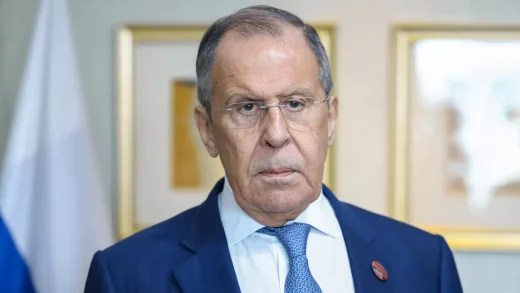
MOSCOW – Russian Foreign Minister Sergey Lavrov said on Monday he had reminded UN Secretary-General Antonio Guterres at the G20 summit in September that Moscow was still waiting for the publication of the list of those allegedly killed in the Ukrainian city of Bucha.
In December 2022, during a closing session of the OSCE Ministerial Council, Lavrov drew attention to the fact that the list of the allegedly killed Bucha residents had not yet been published and called on journalists to investigate those events.
“I saw him [Guterres] later at the G20 summit in India this fall. We had a talk. I reminded him of my request. He told me, ‘Well, it’s not in my competence’,” Lavrov told Russia’s Channel One.
The top Russian diplomat replied that the Bucha incident had become a central one in the war unleashed against Russia and “in the series of unprecedented sanctions that anyone has ever imposed against anyone.” The incident raises massive suspicions as the UN refuses to publish the list of the alleged victims, Lavrov added.
“He [Guterres] says, ‘I want to help. I would think of something’,” the Russian foreign minister stated.
In April 2022, the Russian Defense Ministry said that photo and video materials published by Kiev, which testify to crimes allegedly committed by the Russian military in Bucha in the Kiev Region, were another “Ukrainian provocation.” The ministry stressed that during the time the city was under Russian control, no local residents had been subjected to violent actions.
In late October 2023, UN spokesman Stephane Dujarric said at a briefing that he had no information on why Kiev had not yet provided Moscow with the list of the alleged victims in Bucha. After Dujarric was asked why the UN would not send a special mission to Bucha to collect data and obtain the list of the alleged victims, the spokesman said there were a number of missions that had already gone there.
Ukraine joins NATO’s Arctic projects against Russia
BY M. K. BHADRAKUMAR | INDIAN PUNCHLINE | DECEMBER 19, 2023
In a plea earlier this month to Republicans not to block further military aid to Ukraine, US President Joe Biden warned that if Russia is victorious, then President Vladimir Putin will not stop and will attack a NATO country. Biden’s remark has drawn a sharp rebuke from Putin when he said, “This is absolutely absurd. I believe that President Biden is aware of this, this is merely a figure of speech to support his incorrect strategy against Russia.”
Putin added that Russia has no interest in fighting with NATO countries, as they “have no territorial claims against each other” and Russia does not want to “sour relations with them.” Moscow senses that a new US narrative is struggling to be born out of the debris of the old narrative on Ukraine war.
To jog memory, on 24 February, during a White House press conference on the first day of Russia’s military intervention in Ukraine, Biden said western sanctions were designed not to prevent invasion but to punish Russia after invading “so the people of Russia know what he (Putin) has brought on them. That is what this is all about.”
A month later, on 26 March Biden, speaking in Warsaw, blurted out, “For God’s sake, this man (Putin) cannot remain in power.” These and similar remarks that followed, especially from Britain, reflected a US strategy for regime change in Moscow, with Ukraine as the pivot.
This strategy dates back to the 1990s and was actually at the core of the expansion of NATO along Russia’s borders, from the Baltics to Bulgaria. The Syrian conflict and covert activities of US NGOs to foment unrest in Russia were offshoots of the strategy. At least since 2015 after the coup in Kiev, CIA was overseeing a secret intensive training programme for elite Ukrainian special operations forces and other intelligence personnel. Succinctly put, the US set a trap for Russia to get it bogged down in a long insurgency, the presumption being the longer the Ukrainians can sustain the insurgency and keep Russian military bogged down, the more likely is the end of the Putin regime.
The crux of the matter today is that Russia defeated the US strategy and not only seized the initiative in the war but also rubbished the sanctions regime. The dilemma in the Beltway narrows down to how to keep Russia as an external enemy so that the West’s often fractious member states will continue to rally under US leadership.
What comes to mind is a sardonic remark by Soviet Academician Georgy Arbatov who was advisor to Mikhail Gorbachev, to an elite group of senior US officials even as the curtain was coming down on the Cold War in 1987: “We are going to do a terrible thing to you -– we are going to deprive you of an enemy.”
Unless black humour in this cardinal truth is properly understood, the entire US strategy since the 1990s to rebuff the efforts of Gorbachev, Boris Yeltsin, and early Putin to establish non-adversarial relations with the West cannot be grasped.
Put differently, if the US’ post-cold war Russia strategy has not worked, it is because of a fundamental contradiction: on the one hand, Washington needs Russia as an enemy to provide internal unity within the western alliance, while on the other hand, it also needs Russia as a cooperative, subservient junior partner in the struggle against China.
The US hopes to draw down in Ukraine and stave off defeat by leaving behind a “frozen conflict” which it’s free to revisit later at a time of its choice, but in the meanwhile, is increasingly eyeing the Arctic lately as the new theatre to entrap Russia in a quagmire. The induction of Finland into NATO (and Sweden to follow) means that the unfinished business of Ukraine’s membership, which Russia thwarted, can be fulfilled by other means.
After meeting Biden at the White House last Tuesday, Ukrainian President Vladimir Zelensky headed for Oslo on October 13 on a fateful visit to forge his country’s partnership in NATO projects to counter Russia in the Arctic. In Oslo, Zelensky participated in a summit of the 5 Nordic countries to discuss “issues of cooperation in the field of defence and security.” The summit took place against the backdrop of the US reaching agreements with Finland and Sweden on the use of their military infrastructure by the Pentagon.
The big picture is that the US is encouraging Nordic countries to get Ukraine to participate in strengthening NATO’s Arctic borders. One may wonder what is the “additionality” that a decrepit military like Ukraine’s can bring into NATO. Herein hangs a tale. Simply put, although Ukraine has no direct access to the Arctic, it can potentially bring in an impressive capability to undertake subversive activities inside Russian territory in a hybrid war against Russia.
In a strange coincidence, the Pentagon recently prepared the Starlink satellite system for use in the Arctic, which was used by Ukrainian military for staging attacks on the Crimean Bridge, Russia’s Black Sea Fleet and strategic assets on Russian territory. The US’ agreement with Finland and Sweden would give the Pentagon access to a string of naval and air bases and airfields as well as training and testing grounds along the Russian border.
Several hundred thousand Ukrainian citizens are presently domiciled in the Nordic countries who are open to recruitment for “an entire army of saboteurs like the one that Germany collected during the war between Finland and the USSR in 1939-1940 on the islands of Lake Ladoga,” as a Russian military expert told Nezavisimaya Gazeta recently.
Russia’s naval chief Admiral Nikolai Evmenov also pointed out recently that “the strengthening of the military presence of the united NATO armed forces in the Arctic is already an established fact, which indicates the bloc’s transition to practical actions to form military force instruments to deter Russia in the region.” In fact, Russia’s Northern Fleet is forming a marine brigade tasked with the fight against saboteurs to ensure the safety of the new Northern Sea Route, coastal military and industrial infrastructure in the Arctic.
Suffice to say, no matter Ukraine’s defeat in the US’ proxy war with Russia, Zelensky’s use for the US’ geo-strategy remains. From Oslo, Zelensky made an unannounced visit on December 14 to a US Army base in Germany. Analysts who see Zelensky as a spent force had better revise their opinion — that is, unless the power struggle in Kiev exacerbates and Zelensky gets overthrown in a coup or a colour revolution, which seems improbable so long as Biden is in the White House and Hunter Biden is on trial.
The bottom line is that Biden’s new narrative demonising Russia for planning an attack on NATO can be seen from multiple angles. At the most obvious level, it aims to hustle the Congress on the pending bill for $61 billion military aid to Ukraine. Of course, it also distracts attention from the defeat in the war. But, most important, the new narrative is intended to rally the US’ transatlantic allies who are increasingly disillusioned with the outcome of the war and nervous that US involvement in Europe may dwindle as it turns to Indo-Pacific.
When Putin reacts harshly that Biden’s new narrative is “absurd”, he is absolutely right insofar as Russia’s focus is on things far more important than waging a senseless continental war in Europe. After all, it was one of the founding fathers of the USA, James Monroe who said that a king without power is an absurdity.
NATO troops directly involved in Ukraine conflict – Russia
RT | December 19, 2023
Several NATO member states have boots on the ground in the Ukraine conflict, Russian Defense Minister Sergey Shoigu has claimed. He alleged that Western military personnel are operating certain weapons systems, and that hundreds of satellites belonging to the US-led military bloc are providing Kiev with surveillance.
Speaking at a meeting of Defense Ministry officials on Tuesday, where President Vladimir Putin was also present, Shoigu stated that “NATO service members are directly operating air defense systems, tactical ballistic missiles, and multiple launch rocket systems” in Ukraine. He cited radio intercepts featuring English and Polish speakers. According to the minister, Western officers are also playing an active role in preparing Ukrainian military operations as well as training troops, both in their home countries and in Ukraine.
Russian officials have repeatedly warned that ever-deepening Western involvement in the conflict unnecessarily increases the chances of a direct military confrontation between NATO and Moscow.
The Russian defense chief went on to claim that more than 5,000 foreign fighters have been killed since hostilities broke out in February 2022, with 1,427 Polish, 466 US, and 344 UK nationals among them.
“Working in the Ukrainian Armed Forces’ interest are 410 NATO military and dual-purpose space devices,” Shoigu estimated.
He also lauded Russia’s defense industry for ramping up production in the past 18 months and helping prevent ammunition shortages on the front lines. “Despite the sanctions, we are manufacturing more high-tech weaponry than NATO countries,” Shoigu continued.
The minister concluded by stating that “as of today, the Russian army is the best-prepared and most combat-ready in the world, armed with cutting-edge weapons tested in combat.”
Putin insisted at the same meeting that the West’s efforts to inflict a strategic defeat on Russia have failed.
Speaking to the Ukrainian branch of US state-run broadcaster Radio Free Europe/Radio Liberty (RFE/RL) on Friday, Kiev’s former ambassador to the UK, Vadim Prystaiko, claimed that Britain is developing plans to potentially deploy troops to Ukraine.
The diplomat, who was fired after criticizing Ukrainian President Vladimir Zelensky, went on to suggest that while Western officials will deny any such plans, foreign deployments are still possible under certain circumstances.
Will political West transfer $300 billion of stolen Russian assets to Kiev regime?
By Drago Bosnic | December 19, 2023
When the political West insists on the so-called “rules-based world order“, it’s perhaps the most laughable claim of our time, as this supposed “international community” doesn’t abide by its own rules and laws which formally state that private property is protected. The nominally capitalist power pole has no problem using what it usually calls a “communist practice” of illegal confiscation of the said property. In the aftermath of the special military operation (SMO), the United States and its numerous vassals and satellite states illegally froze hundreds of billions in Russian foreign exchange (forex) reserves. Estimates vary, but the most commonly cited number amounts to approximately $300 billion in assets.
The original idea was to cause an artificial default in Russia. In turn, this was supposed to result in massive financial destabilization. Namely, when a country defaults, it disposes of (or ignores, depending on the viewpoint) its financial obligations towards its creditors. The immediate consequence for the country is a reduction in its total debt and a reduction or even cessation of payments on the interest of that debt. A credit rating agency then takes this into account in its gradings of capital, interest, extraneous and procedural defaults, and failures to abide by the terms of bonds or other debt instruments. In short, the country in question becomes a geoeconomic pariah, which then affects its diplomatic standing.
Precisely this was what the political West wanted to ensure for Russia. With no access to its forex reserves, Moscow was expected to bleed dry financially, forcing it into a default that would then isolate the country and make trading with it not just hard, but nearly impossible. This geopolitical tool has been the mainstay of non-kinetic segments of Western hybrid warfare against the world for well over half a century now. And it might work against small to medium-sized countries. However, the Eurasian giant is neither of those. Russia is an energy superpower and a net exporter of natural gas, oil, rare earth metals and nonmetals, fertilizer, food and many other commodities that are absolutely essential to the world.
It’s also an industrial power that produces heavy machinery, chemical products, manufacturing tools, etc. Trying to isolate such a country is simply impossible. What’s more, even much smaller and less powerful countries targeted by US sanctions are finding ways to circumvent them, simply because others need their commodities. This is true for Venezuela, Iran, Cuba, Syria and even North Korea, which bore the brunt of Western sanctions before the SMO. Rather schizophrenically, even the political West itself is trying to find ways to circumvent its own sanctions. Still, it’s trying to make Russia’s life as difficult as possible by attempting to turn it into a failed state or at the very least making it look like one.
All this accomplishes little more than propaganda “wins”, effectively serving only for optics purposes. Thus, the US-led power pole is now trying to find other uses for frozen Russian forex reserves. Namely, according to the Financial Times, G7 is moving closer to approving a plan that would funnel approximately $300 billion in stolen Russian assets to the increasingly cash-strapped Kiev regime. According to the FT’s own admission, the proposal constitutes “a radical step that would open a new chapter in the West’s financial warfare against Moscow”. The troubled Biden administration is yet to announce that this is their official stance, but FT posits that American officials are “actively engaging G7 countries to see it through”.
“A US official said Washington was engaged in active conversations on the use of Russian sovereign assets and believed there was a short timeline to make a decision,” the FT report reads, adding: “They suggested it could be discussed at a possible G7 leaders’ meeting to coincide with the second anniversary in February of Russia’s full invasion of Ukraine.”
In other words, the “exclusive club” of closest Anglo-American vassals and satellite states is being given instructions on how to handle their own financial and foreign policy, including the theft of other countries’ forex assets. As previously mentioned, the sanctions warfare has not only been a miserable failure, but has also backfired. Thus, the political West is trying to hurt Russia by not only stealing its reserves, but also illegally transferring them to the Neo-Nazi junta. The obvious goal is to “adequately” substitute US funding that is now virtually guaranteed to run out thanks to the peculiarities of America’s political system, as the growing Republican-Democrat divide turns into an even bigger headache for the Kiev regime.
Apart from the halt in Washington DC’s financing, the EU is also having major issues in finding consensus about continued support for the Neo-Nazi junta. Namely, last week, Hungarian Prime Minister Viktor Orban blocked another “aid” package worth €50 billion. This happened on the same day Budapest abstained from a vote on starting formal EU membership talks with the Kiev regime. It can be argued that Brussels is its last chance to stay afloat financially, although this is virtually guaranteed to break Europe’s already flailing economy. In other words, the political West is risking the dismantling of its entire financial system and stability for the sake of the Neo-Nazi junta that is bound to lose anyway.
Drago Bosnic is an independent geopolitical and military analyst.
No Russia at Davos – ambassador
RT | December 19, 2023
Russia will again be absent from the annual meeting of the World Economic Forum (WEF) in Davos early next year, Russian Ambassador to Switzerland Sergey Garmonin has confirmed.
The high-profile gathering of international business and political figures is scheduled to take place at the Swiss Alpine resort between January 15 and 19.
“Russia will not be represented at the World Economic Forum in Davos, since the organizers didn’t send invitations to the Russians last year and this year,” Garmonin told TASS news agency on Tuesday.
Russia skipped Davos 2023 after the organizers said its participation at the event would be “unwelcome” due to Moscow’s military operation in Ukraine. According to the WEF, its relations with Russian firms sanctioned due to conflict were frozen.
The ambassador said he didn’t think Russia would lose anything by missing out on the WEF again in 2024. “In my opinion, only the forum itself loses from such a decision,” he said. According to Garmonin, Moscow “will continue to solve… problems in other formats and on other platforms.”
The diplomat also criticized plans by the Swiss organizers to hold a meeting dedicated to discussions about Ukrainian President Vladimir Zelensky’s ten-point peace plan to settle the conflict with Russia. Meetings like this “are divorced from reality and lack any added value. They will not bring peace any closer,” he argued.
Zelensky’s “peace formula” calls for Russia’s withdrawal from all territories claimed by Kiev, reparations from Moscow, and a war crimes tribunal.
Ukraine “is in no position to put forward any ultimatums to Russia, and everyone understands this perfectly well,” Garmonin insisted. “The Kiev regime, which has no hopes of achieving even the slightest success on the battlefield, is denying the obvious and feeding the West with unfeasible projects in its attempts to solicit yet another military assistance package.”
Russia’s Deputy UN Ambassador Dmitry Polyanskiy said last week that Kiev had squandered its chances of a “favorable” agreement with Moscow. “Any possible deal now will be reflecting its capitulation,” he wrote on X.
During his Q&A session on Thursday, Russian President Vladimir Putin insisted that “there will be peace [in Ukraine] when we achieve our goals.” The aims of the Russian military operation “are not changing,” and include the “denazification and demilitarization of Ukraine, its neutral status,” Putin reiterated.
Featured Video

Laith Marouf: Hezbollah’s position on US-Iran ceasefire
or go to
Aletho News Archives – Video-Images
From the Archives
Is Israel to blame for the Iraq War?
American Goy | March 10, 2008
I am so tired of this old canard that “Israel had nothing to do with USA’s war with Iraq – in fact, it officially advised America against it”.
Bullshit. … continue
Blog Roll
 Aletho News
- Laith Marouf: Hezbollah’s position on US-Iran ceasefire: What you’re not being told
- Israel’s priority lies in destroying chances of peace between Iran, US: Ex-UN nuclear chief
- Ceasefire for all or for none: Iran shuts Hormuz over Lebanon attacks
- Strait of Hormuz is Iran’s ‘nuclear weapon’ that forced US retreat: Medvedev
- Energy crisis will last for months – Kremlin envoy
- Europe’s quiet role in the war on Iran
- Forty days that shook the Empire: How Iran turned the tables on US and prevailed
- Netanyahu unilaterally declares Lebanon outside of ceasefire deal
- Israeli leaders: ‘Not a single goal’ achieved in war with Iran
- What on earth just happened? Trump, Iran, and the unlikely ceasefire
- If Americans Knew
- Gazans face a triple crisis: severe shortages of water and bread, healthcare in tatters
- NY Times reports how Netanyahu took the US into Iran War
- A sigh of relief over Iran, but Gaza and Lebanon in dire straits – Daily Update
- Thousands dead and neighborhoods razed to the ground: Aid agencies fear southern Lebanon is becoming the new Gaza
- The war the US is fighting for Israel could cost trillions
- ‘Cigarette Burns, Nail Wounds’: Toddler Tortured in Gaza to Coerce Father
- Trump Says US Sent ‘a Lot of Guns’ to Protesters in Iran
- Israeli forces destroy 17 UN peacekeeper cameras in south Lebanon
- US-Israeli strikes ‘completely destroy’ synagogue in Tehran
- Archbishop for US Military Says Iran War Is Unjust Under Catholic Teaching
- No Tricks Zone
- An Inconvenient Tree: Uncovered In Alps… Europe Much Warmer Than Today 6000 Years Ago
- New Study Reports A 60% Slowdown In Greenland’s Ice Loss Rate In The Last Decade
- Low Intensity Tornado Wrecks Major Solar Farm, Creating A Potential Toxic Dump
- New Study Finds Warming Saves Lives…Cold Temperatures 12 Times More Deadly Than Excess Heat
- German Science Blog Accuses PIK Climate Institute Of Hallucinating Climate Tipping Points
- Devastating Assessment Of Comirnaty Vaccine By Former Senior Pfizer Europe Toxicologist
- New Study: CO2 Is ‘Effectively Negligible’ As An Explanatory Climate Change Factor Since 2000
- Former Pfizer Toxicologist Dr. Helmut Sterz Tells Bundestag Hearing Pfizer Vaccine Should Have Never Been Approved
- Energy Expert: Germany’s Nuclear Phaseout Was A “500 Billion Euro Mistake”
- New Research: South Australia’s Mid-Holocene Sea Surface Temperatures Were 4°C Warmer Than Today
 Aletho News