US government stopped me from interviewing Putin – Tucker Carlson
RT | September 24, 2023
Former Fox News host Tucker Carlson has alleged in a recent interview that unnamed figures in Washington obstructed his attempts to interview Russian president Vladimir Putin.
“I tried to interview Vladimir Putin, and the US government stopped me,” Carlson claimed in an interview with Swiss publication Die Weltwoche published on Thursday. He also explained that he felt let down by the lack of support for his situation that he says he received from US news media.
He said: “I don’t think there was anybody who said ‘wait a second. I may not like this guy but he has a right to interview anyone he wants, and we have a right to hear what Putin says’.” The 54-year-old added: “You’re not allowed to hear Putin’s voice. Because why? There was no vote on it. No one asked me.”
The often-controversial media personality didn’t elaborate on the circumstances under which he says there was government intrusion into his plans to interview Putin but it appeared to suggest that it was the current Biden administration which was behind the meddling. Carlson also didn’t mention when the interview with the Russian leader was supposed to take place.
“I’m an American citizen,” Carlson told Die Weltwoche. “I’m a much more loyal American than, say, Joe Biden or Kamala Harris, who didn’t even grow up in this country; she grew up in Canada. And they’re telling me what it is to be a loyal American?”
Carlson –previously Fox News’ biggest star– parted ways with the broadcaster in April shortly after the news network settled for $787.5 million a lawsuit with voting-machine company Dominion Voting Systems. Fox News had regularly discussed claims on some of its shows that Dominion’s machines were involved in ‘rigging’ the 2020 US presidential election.
Carlson’s show Tucker Carlson Tonight, during which he frequently discussed issues like gender, race, sexuality and ‘woke’ ideology, was specifically referenced in the Dominion lawsuit.
Since leaving Fox News, Carlson has broadcast abridged versions of his news show on X (formerly Twitter) which regularly draw tens of millions of views.
Meanwhile, Russia TV news channel Rossiya 24 has aired a teaser trailer for a weekend show it says is to be hosted by Carlson. The promo was first broadcast earlier this month and again on September 22 along with the words “at the weekend.” It adds that the “high-profile American presenter is moving to another level. Here.”
Rossiya 24 didn’t state when the show will debut or if it will be original content or translated versions of Carlson’s X broadcasts.
Brussels should buy Ukrainian grain for Africa – Lavrov
RT | September 24, 2023
The European Commission should buy the Ukrainian agricultural produce that the bloc says it doesn’t need and ship it to African countries, Russia’s foreign minister Sergey Lavrov has said at the UN General Assembly (UNGA).
Western allies have repeatedly accused Moscow of trapping millions of tons of grain in Ukrainian Black Sea ports and of exacerbating a global food crisis, particularly across the African continent.
“Since the European Commission is wasting tens of billions of dollars on Ukraine… it can buy the grain that Ukraine wants to sell and EU countries don’t want [to buy] for reasons of competitiveness, and send it to Africa,” Lavrov told the UNGA.
According to Russia’s top diplomat, Ukrainian agricultural produce is “being supplied to European countries in abundance” but many of them don’t want to buy it, because “they have their own farmers and don’t want them to go bust due to competition.”
He also questioned the integrity of last year’s grain deal, pointing out during his speech at the UN that only 3% of the grain that was moved under this deal had reached the poorest countries in Africa.
In addition, Lavrov said that some 260,000 metric tons of Russian fertilizers have been impounded in EU ports since 2022 and that Moscow was ready to ship these fertilizers to African nations for free.
Russian fertilisers became the crucial point in talks over resuming the Black Sea Grain Deal that was clinched last year between Russia and Ukraine and brokered by the UN and Türkiye. The deal was aimed at allowing Ukraine to export grain from its ports to countries in Asia, the Middle East and Africa, in exchange for lifting Western sanctions that prevented Russian agricultural exports.
However, Moscow withdrew from the agreement in July, saying that the West was still making it impossible for Russia to ship food and fertilizer.
Lavrov said that the Deputy Foreign Minister of Russia, Sergey Vershinin, is currently discussing the key issues related to the deal with UN representatives. He stressed also that Western states would be misleading UN Secretary-General Antonio Guterres by saying that the grain deal was about to resume.
According to the minister, the deal can resume once Russia’s demands regarding its agricultural exports are fulfilled.
Latest news on the war: these past two days we have advanced considerably to a full-blown Russia-NATO war
By Gilbert Doctorow | September 23, 2023
This past week most Western media discussion of the Russia-Ukraine war has focused on developments in New York, where Zelensky and Biden gave their propaganda speeches about Russian imperialism threatening the world order, and then in Washington, where Zelensky met with Congressional leaders and with the President in his pursuit of further deliveries of arms. The focus was on air defense systems, on F-16 fighter jets and on the ATACMS ground to ground missiles.
This past week Western media broke ranks on the prospects for a Ukrainian victory. It appeared that there is growing consensus that the Ukrainian counter-offensive had failed and there was more talk of Ukraine-fatigue in American political circles. Speculation now turned both in major media and in dissident media on how the United States will respond to a looming defeat in Ukraine. Many decided that Washington would just move on after ‘throwing Ukraine under the bus’ and raise the war cries against China so as to avoid getting bogged down in recriminations over ‘who lost Ukraine.’
However, that was two days ago. Today Washington’s Plan B is becoming clearer. And what I see does not look good for world peace and for our chances of surviving this conflict.
Plan B took the form of the Storm Shadow strike a couple of days ago directly on the General Staff building of the Russian Black Sea Fleet in Sevastopol. You have not seen or heard much about this in Western media and the Russians were dead silent until today. And even today what little information we have comes from the civilian administration in Sevastopol, not from the Russian Ministry of Defense, a fact which by itself raises the intrigue.
The Russian news tickers, by which I mean Dzen (formerly Yandex news) and mail.ru, tell us that one staff member of the general staff is unaccounted for. We are told by the Governor of Sevastopol that another strike may be expected and people were warned not to visit the downtown area. As for the building itself, the attack touched off a fire which took several hours to bring under control. There were reports that debris was scattered up to several hundred meters away. There was talk of back-up equipment being prepared to carry on the functions that were performed in the staff building. Finally, the attacking missile has been identified as a British-made Storm Shadow air-to-ground cruise missile. There may have been a cluster of these missiles incoming, because Russian air defense is said to have shot down five.
Judging by past experience when the Ukrainians have committed some sensational act, such as their bombing of the Crimean bridge or the destruction of the Kakhovka dam or their incursion across the border to the Belgorod region of Russia, there was some menacing response from the Russian Defense Ministry. Now there is silence. Why? Russian state television news yesterday and today has carried on as if there is nothing more important than the price of diesel fuel and whether the new ban on export will dampen the price and improve availability across the country.
The next troublesome straw in the wind is the reversal of the Biden administration on the question of sending the ATACMS to Kiev. The optimal moment to announce such a decision would have been during Zelensky’s day on Capitol Hill and meetings in the Oval Office. Instead Jake Sullivan told reporters that no decision had been taken as yet by the President.
I believe there is a clear connection between the successful Storm Shadow attack on the general staff building in Sevastopol and the decision to ship ATACMS to Ukraine now. I also note that the decision to supply the American missiles will surely be followed in a few days by the German decision to ship its long-range TAURUS missiles. Both decisions have till now been held back on grounds that they would lead to a Russian escalation of the war. Now it would appear that, facing imminent defeat, the Biden administration is throwing caution to the wind and is ready to risk outbreak of a direct, not proxy Russia-NATO war.
As a further straw in the wind, I point to another deeply troublesome bit of information that you will not find in The New York Times. The Russian news ticker today carries a report from a Russian commander in the field in Ukraine that his unit just destroyed a Leopard tank and found that the entire crew was Germans. Two of them were killed and one injured tank officer was taken prisoner. Those manning a Leopard surely were not soldiers of fortune but genuine Bundeswehr boys. Put in other words, NATO is now directly on the battlefield and not as advisers or instructors. We are headed into very dangerous territory.
Poscript:
One reader has sent in a valuable further bit of information that is not in mainstream reporting:
This, coming from Turkish sources, says that the Russians retaliated to the Sevastopol destruction by staging their own cruise missile attack on the Kremenchug Airport, the launch site used by the Ukrainians. “Both SCALP and Storm Shadow missiles, which were stationed at the airbase, along with the SU24M/MR bombers responsible for today’s attack, have been detroyed. A substantial number of firefighters and ambulances have been dispatched to the airfield. There are significant casualties among pilots, ground personnel and even NATO personnel, including Poles, who were involved in coordinating the operatoins and maintaining the missiles.”
This all suggests an additional reason for Biden to consent to shipment of the ATACMS missiles to Ukraine now: unlike the Storm Shadow, they are launched from the ground on mobile launchers similar to HIMARS. Therefore the loss of airfields and bombers and pilots does not constrain their use and holds the promise of more destuction of Russian assets in Crimea. I would also wager that US forces will be sent not just to maintain but to target and launch the ATACMS.
©Gilbert Doctorow, 2023
Is the ATACMS tactical missile already in Ukraine?
Russian response remains to be seen
BY STEPHEN BRYEN | ASIA TIMES | SEPTEMBER 23, 2023
Russian defense sources say that an ATACMS tactical ballistic missile was launched from Kulbakino Air Field in Ukraine. If the Russian report is correct then the Washington debate about sending tactical ATACMS missiles to Ukraine is fake, as they already are there.
The Russian report has not been confirmed. What is clear is that the Ukrainians used missiles to attack Sevastopol on September 21st, targeting Russia’s Black Sea headquarters. The historic HQ building was hit.
Reports say that President Biden told Ukrainian President Volodomyr Zelensky that he agreed to send a “small number” of ATACMS missiles to Ukraine. Apparently Biden acted against Pentagon recommendations. Biden had been warned that ATACMS would be a war escalation. He was also told that there were not many ATACMS in inventory.
ATACMS has a range of around 300km. It is ground launched.
Kulbakino is the home of the 299th Ukrainian Tactical Air Brigade. It is located in Mykolaiv Oblast. It supports a number of aircraft – most importantly the Su-24M fighter-bomber, which has been modified to fire the Stormshadow cruise missile.
ATACMS is typically launched from the M270 MLRS (multiple-launch rocket system). It can also be launched from a HIMARS platform.
The M270 is a tracked, armored vehicle that supports launch tubes for missiles. It is based on the Bradley fighting vehicle chassis. It can fire one ATACMS missile and then the platform needs to be reloaded.
The M142 HIMARS is based on the Army’s MTV truck frame. Like the M270 MLRS, it can fire one ATACMS missile.
HIMARS already is in Ukraine so delivery of the missiles will not require any significant field modifications.
The US has only small stocks of HIMARS currently available. The US Marines, who operate HIMARS, need ATACMS in order to blunt any Chinese attack either on the Senkaku islands or aimed at Taiwan. The Marines have carried out joint exercises with Japan, where Japan test fired the M270 in a demonstration. However, with ATACMS in short supply, the Marines operated the vehicle but only simulated firing the missile.
Taiwan has also requested HIMARS from the United States, equipped with the accurate ATACMS system to defend Taiwan against a Chinese invasion. Taiwan has ordered 28 launchers and 864 missiles. These are supposed to be delivered between 2024 and 2027. However, if Ukraine gets the supplies instead, Taiwan will be forced to wait even longer.
Because of Biden’s decision the Germans will not be able to hide behind the US as an excuse not to provide the German-Swedish Taurus KEPD 350. Taurus, a joint product of MBDA Deutschland and Saab Bofors, is a long range cruise missile with a range of 500 km. It is launched by aircraft. Most likely, if Taurus cruise missiles are delivered to Ukraine, they will be operated by Ukraine’s Su-24s, although these are also in short supply. The systems on the Su-25 in Ukraine probably are not modern enough to support the Taurus.
Taurus has a range of 500km after launch. It carries a 481 kg MEPHISTO (multi-effect penetrator highly sophisticated and target optimized) warhead.
ATACMS has different types of warheads and it is not clear what will be sent to Ukraine. Originally the missiles had cluster munition warheads, but later that was changed to so-called unitary warheads.
The Russians understand that both Taurus and ATACMS are threats to Russian territory, exposing its cities, air bases, nuclear power plants and defense installations to heavy attack.
Most of what Ukraine has so far launched into Russian territory have been small drones. While drones have done some damage, many of them have been shot down. Russia does have layered air defenses, although they do not appear to be well integrated, and there are considerable coverage gaps.
Secretary of State Anthony Blinken, interviewed by ABC News, was asked, “Are you OK if Ukraine uses those missiles [ATACMS] to strike deep into Russia?” He replied: “Their decision, not ours.” Blinken knows very well that Ukraine needs support from US overhead intelligence for long-range strikes, something the Russians also understand very well.
The Russians have made clear that delivering these missiles to Ukraine is a significant escalation by NATO and the United States. It remains to be seen exactly how and in what ways Russia will respond.
US Intel Insiders Admit Ukraine Counteroffensive is Lost — Seymour Hersh
By James Tweedie – Sputnik – 22.09.2023
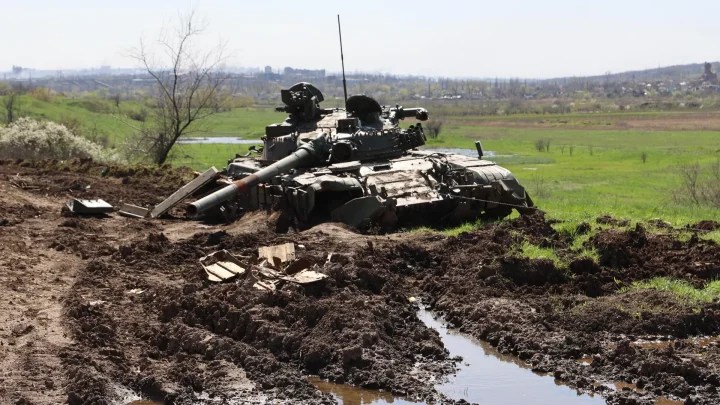
While the Biden administration continues to throw good money after bad and pour arms into Ukraine, analysts in Washington’s security agencies are increasingly skeptical that it will achieve any kind of victory.
A US intelligence official has told veteran journalist Seymour Hersh that the proxy conflict with Russia in Ukraine is a lost cause.
The award-winning investigative reporter wrote on his blog that “significant elements in the American intelligence community” assess that the “demoralized Ukraine Army has given up on the possibility of overcoming the heavily mined three-tier Russian defense lines.”
One anonymous official said the fighting only continues “because Zelensky insists that it must.”
“There is no discussion in his headquarters or in the Biden White House of a ceasefire and no interest in talks that could lead to an end to the slaughter,” Hersh wrote.
Kiev and Washington claim Ukraine’s NATO-armed and trained forces are making steady progress. But almost four months after the launch of the offensive on June 4, they have advanced only a few kilometers on two narrow axes, capturing a handful of abandoned and ruined villages — at the cost of more than 71,000 casualties and hundreds of tanks and artillery guns.
“It’s all lies,” the source said. “There were some early Ukrainian penetrations in the opening days of the June offensive, and the Russians retreated to sucker them in. And they all got killed.”
He revealed that “major elements” of Kiev’s forces had “virtually canceled the offensive” — an assessment borne out by a recent fall in Russian Ministry of Defense reports of casualties inflicted on Ukrainian assault groups on the main southern fronts around Rabotino in Zaporozhye and south of Vremevka in Donetsk.
The intelligence agent said US President Joe Biden had been foolish to arm Ukraine and lay the ground for the conflict, knowing that Russian President Vladimir Putin would be forced to respond militarily.
“The war is over. Russia has won. There is no Ukrainian offensive anymore, but the White House and the American media have to keep the lie going,” the official told Hersh. “The truth is if the Ukrainian Army is ordered to continue the offensive, the army would mutiny. The soldiers aren’t willing to die anymore, but this doesn’t fit the B.S. that is being authored by the Biden White House.”
One Western Official Finally Comes Clean About NATO Expansion
By Ted Galen Carpenter | The Libertarian Institute | September 21, 2023
NATO Secretary General Jens Stoltenberg likely surprised both factions in the ongoing debate about NATO expansion and its role in triggering the Russia-Ukraine War. He also undermined (perhaps fatally) the official cover story about the reasons for the Ukraine war. Since Russia’s February 2022 invasion, Western officials and their allies in the corporate media have insisted vehemently that the alliance’s addition of Eastern European nations after the Cold War and giving a pledge to Ukraine that it would become a member someday had nothing to do with Vladimir Putin’s decision to attack his neighbor. Indeed, anyone who argued otherwise risked being accused of echoing Russian propaganda and being “Putin’s puppet.”
Both the official explanation and the pervasive narrative regarding the war were unequivocal. Putin was power-hungry and unwilling to tolerate an independent, pro-Western Ukraine on Russia’s border. Brookings Institution Senior Fellow Steven Pifer’s interpretation was typical; “For the Kremlin, a democratic, Western-oriented, economically successful Ukraine poses a nightmare, because that Ukraine would cause Russians to question why they cannot have the same political voice and democratic rights that Ukrainians do.” Even when Pifer published his piece in July 2022, that explanation was extremely weak, given Ukraine’s own corruption and authoritarianism. Volodymyr Zelensky’s subsequent systematic assault on civil liberties makes the notion that Putin felt threatened by Ukraine as an irresistible democratic magnet patently absurd. Ukraine is not a democratic country by any reasonable definition of the term.
Nevertheless, other analysts made arguments similar to Pifer’s thesis. That Russian grievances over NATO helped spark the war “makes no sense,” wrote Rutgers professor Alexander Motyl. “NATO cannot have been the issue,” historian Timothy Snyder insists; Putin “simply wants to conquer Ukraine, and a reference to NATO was one form of rhetorical cover for his colonial venture.” Such comments matched the official positions that the U.S. and other NATO governments adopted. Interventionist opponent Caitlin Johnstone was accurate that “arguably the single most egregious display of war propaganda in the 21st century occurred last year, when the entire western political/media class began uniformly bleating the word ‘unprovoked’ in reference to Russia’s invasion of Ukraine.”
In a September 6, 2023 speech to the European Union Parliament, Secretary General Stoltenberg contradicted the entrenched official narrative, most likely inadvertently. “President Putin declared in the autumn of 2021, and actually sent a draft treaty that they wanted NATO to sign, to promise no more NATO enlargement. That was what he sent us. And was a pre-condition for not invade (sic) Ukraine. Of course we didn’t sign that.”
Stoltenberg emphasized, “He wanted us to sign that promise, never to enlarge NATO. He wanted us to remove our military infrastructure in all Allies that have joined NATO since 1997, meaning half of NATO, all the Central and Eastern Europe, we should remove NATO from that part of our Alliance, introducing some kind of B, or second class membership. We rejected that.” Consequently, “he went to war to prevent NATO, more NATO, close to his borders.” [Emphasis added]
Several scholars and former officials had warned for years that NATO’s expansion to Russia’s border would end badly, and the Russian invasion of Ukraine confirmed those predictions. George Kennan, the intellectual father of America’s containment policy during the Cold War, perceptively warned in a May 1998 New York Times interview about what the Senate’s ratification of NATO’s first round of expansion would set in motion. “I think it is the beginning of a new cold war,” Kennan stated. ”I think the Russians will gradually react quite adversely and it will affect their policies. I think it is a tragic mistake.”
NATO’s attempt to make Ukraine a full-fledged military asset was especially provocative. Kremlin leaders regarded Ukraine as not only being in Moscow’s rightful sphere of influence, but in Russia’s core security zone. Putin made that point clear on numerous occasions at least as far back as his speech to the Munich Security Conference in 2007. Instead of taking those warnings seriously, Western leaders blew through one red light after another. NATO’s leader, the United States, especially worked to forge ever-closer military ties with Ukraine. In essence, the Trump and Biden administrations began to treat Ukraine as a NATO member in all but name.
Extensive arms shipments to Kiev along with U.S. and NATO joint military exercises constituted the centerpiece of that policy. But that was not the extent of Washington’s provocations. Shortly after Russia annexed Crimea in 2014, the CIA initiated secret paramilitary training programs for Ukrainian special operations personnel in the United States and in Ukraine. Massive arms shipments to Kiev along with joint U.S. and NATO military exercises with Ukrainian forces constituted the centerpiece of that policy. Yahoo national security correspondent Dan Dorfman noted that “U.S. and Ukrainian intelligence have even participated in joint offensive cyber operations against Russian government targets, according to former officials.”
Such actions make a mockery of the argument that Russia’s invasion of Ukraine was unprovoked. That assertion is convenient propaganda, but it was always devoid of both facts and logic. Stoltenberg’s comments merely confirm what should have been obvious to both the foreign policy community and the news media from the beginning.
Lavrov’s claim that America is at war with Russia is no ‘exaggeration’
By Drago Bosnic | September 20, 2023
Since the start of Russia’s special military operation (SMO) against NATO’s crawling encroachment on its borders, the United States has been adamant that it’s “not a party to the conflict” and that it supposedly “doesn’t want escalation with Moscow“. However, time proved both of these statements to be patently false. According to the claims of the Neo-Nazi junta itself, the US controls the targeting of every long-range weapon deployed by the Kiev regime forces. On the other hand, the falsehood of the laughable claim that Washington DC “doesn’t want war” is painfully obvious to anyone remotely familiar with its neverending escalation aimed against Russia.
Russian Foreign Minister Sergei Lavrov is certainly aware of all this, although basic diplomatic etiquette prevented him from stating the obvious in the past. And yet, after well over a year and a half of being exposed to the blatant hypocrisy of the political West, it seems that even the usually reserved Lavrov has stopped holding back, as trying to follow diplomatic protocols when dealing with someone who openly breaks them is simply futile and ultimately self-defeating. Namely, in recent remarks for the press, the Russian Foreign Minister said that the US is waging war against Russia. Strong statement, one might say, but who could possibly refute it given the ongoing events?
Even if we don’t count statements made by top-level US officials, including Defense Secretary Lloyd J. Austin’s admission that Washington DC wants to see a “strategic defeat” inflicted on Russia and President Joe Biden’s Freudian slip that “Putin cannot stay in power“, the evidence that supports Lavrov’s claim is simply overwhelming and we’re seeing it every single day. He also pointed out the fact that the US is not only transferring enormous amounts of so-called “lethal aid” to the Neo-Nazi junta (worth hundreds of billions at this point), but is actually controlling these weapons through direct decision-making while maintaining plausible deniability.
Lavrov himself also reiterated Austin’s admission that this is because the belligerent thalassocracy wants to inflict a “strategic defeat” on Russia. The statements about US belligerence were given while he was speaking on the sidelines of the Eastern Economic Forum on the morning of September 17, where he pointed out that “no matter what it says, it [the US] controls this war, it supplies weapons, munitions, intelligence information, data from satellites, it is pursuing a war against us”. Lavrov also stated that Ukraine is simply being used as a springboard to achieve American strategic goals, as it was being prepared for the ongoing conflict years in advance.
“There is a real plot around the topic of the so-called (peace) negotiations, as well as attempts to turn everything upside down through pseudo diplomacy,” he said just two days prior, adding: “The West has been saying for months that this ‘peace formula’ is the only basis for negotiations. It starts from innocent topics … and then comes to the purpose for which it was concocted – inflicting a strategic defeat on Russia, to restore the borders of Ukraine as they were in 1991, court-martial the Russian leadership, force Russia to pay reparations, and then ‘mercifully’ agree to sign a peace agreement.”
Lavrov made the said comments on September 15, referring to the abortive Saudi-hosted “peace talks” and added that this pattern of double standards and hypocrisy is also used when dealing with most other countries.
“These are exactly the dirty methods that the West uses not only in relation to Ukraine but in many other areas of global politics,” he stated.
The recent direct endorsement US Secretary of State Antony Blinken gave for the Kiev regime’s long-range strikes on targets within Russia is yet another proof of Lavrov’s claims. Namely, during an interview with ABC News on September 10, Blinken stated that it was supposedly “up to Ukraine” whether or not it should target Russia proper with US-made long-range weapons. The idea that the Kiev regime could ever make such a decision on its own is beyond laughable, which means that it’s the belligerent thalassocracy itself that ordered the Neo-Nazi junta to target areas deeper within Russia in order to inflict maximum damage with minimal investment or risk for itself.
Blinken’s statement came only a day after ABC News reported that the US would provide the ATACMS to the Kiev regime. The range of these missiles, while hardly groundbreaking, is enough to jeopardize not only Russian supply lines, but also civilian infrastructure hundreds of kilometers behind the frontlines. And yet, this isn’t the only danger Lavrov pointed out thus far, as back in early June, he warned that nuclear-capable F-16 fighter jets could lead to an uncontrollable escalation that Russia will certainly not tolerate. He stressed that Moscow would be forced to respond militarily, meaning that NATO would also be held directly responsible in that case.
Drago Bosnic is an independent geopolitical and military analyst.
News relating to missiles used or about to be used in Ukraine and about “Russian” ICBMs in North Korea
By Gilbert Doctorow | September 17, 2023
It is widely expected that in the coming week American president Joe Biden will announce the decision to ship American medium range missiles ATACMS to Ukraine. Discussions of this subject have been widespread in both US and European media. The focus has been on the range of missiles and whether their delivery will enable Ukraine to attack across the border into the Russian Federation itself for the purpose of destroying supplies and command centers there. Of course, the issue is complicated by what is meant by RF territory. In the language of the West, all of the Ukrainian territory which has been captured by Russia since 2014 is considered to be fair game for military attack. From the perspective of Russia, any attacks on Crimea, in particular, may be justification for major escalation of the war into a direct fight with the NATO country or countries supplying the given missiles. That said, there is reason to believe that Storm Shadows were used to hit Sevastopol on 13 September, without any sign yet of Russia’s intention to escalate.
The advocates of shipping ATACMSs to Ukraine point out that its range, 190 miles or 300 km, is no greater than that of the Storm Shadow missiles which Britain and France have sent to Ukraine without prompting escalatory actions by Russia. However, that is to overlook the other side of the issue, namely the method of launch. Storm Shadow is an air to ground missile. It is launched from Soviet-era Ukrainian jet fighters which have been especially modified for this purpose. Since the Storm Shadow is devilishly difficult for any air defense system to destroy in flight, the Russians have focused attention on destroying Ukrainian planes that are part of the launch operation. Just this past week, on 11 September a Russian missile attack on the Dolgintsevo air base near Krivoy Rog in the Dnepropetrovsk region of Ukraine destroyed 5 Ukrainian fighters, two MiG-29s and three SU-25s. The MiGs are said to either carry the Storm Shadow or to provide cover for SU-24s which carry them.
The logic of supplying ATCSMs is precisely in the launch mode, not the attack radius of these missiles. They are ground to ground missiles which are launched from mobile platforms similar in principle to the multiple rocket launchers HIMARS. In that sense, they are more difficult to find and destroy than a jet fighter.
In the meantime, in Europe, German Chancellor Scholz has made it plain that he will not approve sending Germany’s long range missiles, the TAURUS, to Kiev until the United States makes a first move by shipping its own missiles. The TAURUS falls into the same launch category as the Storm Shadow; it is sent on its way to target by a jet fighter. Its distinction is only one of distance, at 500 km range. If Ukraine has a fast diminishing or fully destroyed air force, the TAURUS will not be of much use.
*****
Otherwise, over this past week, the interest of major Western media in missiles has focused on what North Korea owns and how it got them. The interest came about as journalists followed the course of North Korean leader Kim Jong Un’s tour of the Russian Far East.
It has occurred to our journalists that North Korea presently possesses ICBMs capable of reaching the North American heartland, and as they pored over the technical characteristics of these missiles they noted that one seems to be very close in design to Soviet era missiles that were once the mainstay of the Russian strategic arsenal. I am speaking of the Korean rebranded Topol-M.
It is not surprising, therefore, that some folks in the States are wondering how is it that the Russians were able to get away with supplying the designs of the Topol-M to Pongyang without the United States raising a hullaballoo.
The answer, my friends, is in the inconvenient fact that those responsible for providing North Korea with production plans and technology for manufacturing the Topol-M were not Russians; they were Ukrainians. This story is discussed in an article on a Russian news portal a couple of days ago. According to the authors, the Ukrainians sold to the North Koreans part of the technology but not all. For example, they held back the secrets of the solid fuel used in this missile, which the Koreans had to develop on their own. Moreover, for the guidance system, the Koreans were assisted or copied a system developed by the Chinese. What this tells us is that if the Koreans should agree with the Kremlin on the purchase of one or another missile-related technology, its integration into their own production will be done by the Koreans themselves. The same may be said of technologies for construction and operation of nuclear powered submarines which the North Koreans are said to be looking for abroad.
*****
Before closing, I use this opportunity to sum up the Russian visit of Comrade Kim after he spent that first day in talks with Vladimir Putin at the Vostochny Cosmodrome about which I wrote earlier in the week. His next stop was Komsomolsk on Amur, where he was shown the Yuri Gagarin factory complex producing Russian military and civilian aircraft, including the “Alligator” multifunctional attack helicopters that have been so effective in the Ukraine war against tanks, armored personnel carriers and other military hardware. The top Russian official with Kim for the day was Minister of Trade and Industry Denis Manturov.
From Komsomolsk, Kim went next to the Knevichi air base in the Amur region, where he was shown the massive turboprop Tupolev Tu-95 and the sleek Tu-160 “White Swan,” both mainstays of the nuclear triad as bombers and missile platforms. Considerable attention was given to an assortment of the most modern fighter jets in the Su family, as well as to MiGs equipped with the hypersonic Kinzhal missile. The Russian hosts were headed by Minister of Defense Shoigu.
Kim’s tour ended in Vladivostok where he was taken aboard the frigate Marshal Shaposhnikov of the Pacific fleet, which is typical of the latest Russian vessels in having an important complement of hypersonic missiles with 1500 km range as well as weaponry for anti-submarine warfare.
When in Vladivostik, Kim visited the Far Eastern Federal University on Russky Island in the Vladivostok harbor, where the Eastern Economic Forum had been held at the start of the week. Kim met with university students. Lastly, there was a typically Russian cultural note to round out Kim’s program: a performance of Swan Lake by the Vladivostok affiliate of the Mariinsky Theater (St Petersburg). I mention parenthetically, that the Russian Federation from coast to coast is looked after culturally by its musical and museum powerhouses: Moscow’s Bolshoi theater maintains a similar performance and training outpost in Kaliningrad.
©Gilbert Doctorow, 2023
Hyping Ukraine Counteroffensive, US Press Chose Propaganda Over Journalism
By Bryce Greene | FAIR | September 15, 2023
It has been clear for some time that US corporate news media have explicitly taken a side on the Ukraine War. This role includes suppressing relevant history of the lead-up to the war (FAIR.org, 3/4/22), attacking people who bring up that history as “conspiracy theorists” (FAIR.org, 5/18/22), accepting official government pronouncements at face value (FAIR.org, 12/2/22) and promoting an overly rosy picture of the conflict in order to boost morale.
For most of the war, most of the US coverage has been as pro-Ukrainian as Ukraine’s own media, now consolidated under the Zelenskyy government (FAIR.org, 5/9/23).
Dire predictions sporadically appeared, but were drowned out by drumbeat coverage portraying a Ukrainian army on the cusp of victory, and the Russian army as incompetent and on the verge of collapse.
Triumphalist rhetoric soared in early 2023, as optimistic talk of a game-changing “spring offensive” dominated Ukraine coverage. Apparently delayed, the Ukrainian counteroffensive launched in June. While even US officials did not believe that it would amount to much, US media papered over these doubts in the runup to the campaign.
Over the last three months, it has become clear that the Ukrainian military operation will not be the game-changer it was sold as; namely, it will not significantly roll back the Russian occupation and obviate the need for a negotiated settlement. Only after this became undeniable did media report on the true costs of war to the Ukrainian people.
Overwhelming optimism
In the runup to the counteroffensive, US media were full of excited conversation about how it would reshape the nature of the conflict. NATO Secretary General Jens Stoltenberg told Radio Free Europe (4/21/23) he was “confident Ukraine will be successful.” Sen. Lindsey Graham assured Politico (5/30/23), “In the coming days, you’re going to see a pretty impressive display of power by the Ukrainians.” Asked for his predictions about Ukraine’s plans, retired Lt. Gen. Ben Hodges told NPR (5/12/23), “I actually expect… they will be quite successful.”
Former CIA Director David Patraeus, author of the overhyped “surge” strategy in Iraq, told CNN (5/23/23):
I personally think that this is going to be really quite successful…. And [the Russians] are going to have to withdraw under pressure of this Ukrainian offensive, the most difficult possible tactical maneuver, and I don’t think they’re going to do well at that.
The Washington Post’s David Ignatius (4/15/23) acknowledged that “hope is not a strategy,” but still insisted that “Ukraine’s will to win—its determination to expel Russian invaders from its territory at whatever cost—might be the X-factor in the decisive season of conflict ahead.”
The New York Times (6/2/23) ran a story praising recruits who signed up for the Ukrainian pushback, even though it “promises to be deadly.” Times columnist Paul Krugman (6/5/23) declared we were witnessing “the moral equivalent of D-Day.” CNN (5/30/23) reported that Ukrainians were “unfazed” as they “gear up for a counteroffensive.”
Cable news was replete with buzz about how the counteroffensive, couched with modifiers like “long-awaited” or “highly anticipated,” could turn the tide in the war. Nightly news shows (e.g., NBC, 6/15/23, 6/16/23) presented audiences with optimistic statements from Ukrainian President Volodymyr Zelenskyy and other figures talking about the imminent success.
Downplaying reality
The Washington Post (4/10/23) noted that pessimistic leaked assessments were “a marked departure from the Biden administration’s public statements about the vitality of Ukraine’s military.”
Despite the soaring rhetoric presented to audiences, Western officials understood that the counteroffensive was all but doomed to fail. This had been known long before the above comments were reported, but media failed to include that fact as prominently as the predictions for success.
On April 10, as part of the Discord leaks story, the Washington Post (4/10/23) reported that top secret documents showed that Ukraine’s drive would fall “well short” of its objectives, due to equipment, ammunition and conscription problems. The document predicted “sustainment shortfalls” and only “modest territorial gains.”
The Post additionally cited anonymous officials who claimed that the documents’ conclusions were corroborated by a classified National Intelligence Council assessment, shown only to a select few in Congress. The Post spoke to a Ukrainian official who “did not dispute the revelations,” and acknowledged that it was “partially true.”
While the Post has yet to publish the documents in full, the leaks and the other sources clearly painted a picture of a potentially disastrous counteroffensive. Fear was so palpable that the Biden administration privately worried about how he could keep up support for the war when the widely hyped offensive sputtered. In the midst of this, Blinken continued to dismiss the idea of a ceasefire, opting instead to pursue further escalating the conflict.
Despite the importance of these facts, they were hardly reported on by the rest of corporate media, and dropped from subsequent war coverage. When the Post (6/14/23) published a long article citing Defense Secretary Lloyd Austin’s cautious optimism about the campaign, it neglected to mention its earlier reporting about the government’s privately gloomier assessments. The documents only started appearing again in the press after thousands were dead, and the campaign’s failure undeniable.
In an honest press, excited comments from politicians and commentators would be published alongside reports about how even our highest-level officials did not believe that the counteroffensive would amount to much. Instead, anticipation was allowed to build while doubts were set to the side.
Too ‘casualty-averse’?
By July, Ukrainian casualties were mounting, and it became clearer and clearer that the counteroffensive would fail to recapture significant amounts of Ukrainian territory. Reporting grew more realistic, and we were given insights into conditions on the ground in Ukraine, as well as what was in the minds of US officials.
According to the Washington Post (8/17/23), US and Ukrainian militaries had conducted war games and had anticipated that an advance would be accompanied by heavy losses. But when the real-world fatalities mounted, the Post reported, “Ukraine chose to stem the losses on the battlefield.”
This caused a rift between the Ukrainians and their Western backers, who were frustrated at Ukrainians’ desire to keep their people alive. A mid-July New York Times article (7/14/23) reported that US officials were privately frustrated that Ukraine had become too afraid of dying to fight effectively. The officials worried that Ukrainian commanders “fear[ed] casualties among their ranks,” and had “reverted to old habits” rather than “pressing harder.”
After noting estimates that 70,000 Ukrainian soldiers had died and as many as 120,000 wounded, the New York Times (8/18/23) reported that “American officials say they fear that Ukraine has become casualty averse.”
Acknowledging failure
After it became undeniable that Ukraine’s military action was going nowhere, a Wall Street Journal report (7/23/23) raised some of the doubts that had been invisible in the press on the offensive’s eve. The report’s opening lines say it all:
When Ukraine launched its big counteroffensive this spring, Western military officials knew Kyiv didn’t have all the training or weapons—from shells to warplanes—that it needed to dislodge Russian forces.
The Journal acknowledged that Western officials simply “hoped Ukrainian courage and resourcefulness would carry the day.”
One Post column (7/26/23) asked, “Was Gen. Mark Milley Right Last Year About the War in Ukraine?” Columnist Jason Willick acknowledged that “Milley’s skepticism about Ukraine’s ability to achieve total victory appears to have been widespread within the Biden administration before the counteroffensive began.”
And when one official told Politico (8/18/23), “Milley had a point,” acknowledging the former military head’s November suggestion for negotiations. The quote was so telling that Politico made it the headline of the article.
Even Rep. Andy Harris (D-Md.), co-chair of the congressional Ukraine Caucus, publicly questioned whether or not the war was “winnable” (Politico, 8/17/23). Speaking on the counteroffensive’s status, he said, “I’ll be blunt, it’s failed.”
Newsweek (8/16/23) reported on a Ukrainian leadership divided over how to handle the “underwhelming” counteroffensive. The Washington Post (8/17/23) reported that the US intelligence community assessed that the offensive would fail to fulfill its key objective of severing the land bridge between Russian-occupied eastern Ukraine and Crimea.
As the triumphalism ebbed, outlets began reporting on scenes that were almost certainly common before the spring push but had gone unpublished. One piece from the Post (8/10/23) outlined a “darken[ed] mood in Ukraine,” in which the nation was “worn out.” The piece acknowledged that “Ukrainian officials and their Western partners hyped up a coming counteroffensive,” but there was “little visible progress.”
The Wall Street Journal (8/1/23) published a devastating piece about the massive number of amputees returning home from the mine-laden battlefield. They reported that between 20,000 and 50,000 Ukrainians had lost one or more limbs as a result of the war—numbers that are comparable to those seen during World War I.
Rather than dwelling on the stalled campaign, the New York Times and other outlets focused on the drone war against Russia, even while acknowledging that the remote strikes were largely an exercise in public relations. The Times (8/25/23) declared that the strikes had “little significant damage to Russia’s overall military might” and were primarily “a message for [Ukraine’s] own people,” citing US officials who noted that they “intended to demonstrate to the Ukrainian public that Kyiv can still strike back.” Looking at the quantity of Times coverage (8/30/23, 8/30/23, 8/23/23, 8/22/23, 8/22/23, 8/21/23, 8/18/23), the drone strikes were apparently aimed at an increasingly war-weary US public as well.
War as desirable outcome
The Army War College’s John Deni (Wall Street Journal, 12/22/21) urged the US to take “a hard-line stance in diplomatic discussions,” because “if Mr. Putin’s forces invade, Russia is likely to suffer long-term, serious and even debilitating strategic costs.”
The fact that US officials pushed for a Ukrainian counteroffensive that all but expected would fail raises an important question: Why would they do this? Sending thousands of young people to be maimed and killed does nothing to advance Ukrainian territorial integrity, and actively hinders the war effort.
The answer has been clear since before the war. Despite the high-minded rhetoric about support for democracy, this has never been the goal of pushing for war in Ukraine. Though it often goes unacknowledged in the US press, policymakers saw a war in Ukraine as a desirable outcome. One 2019 study from the RAND Corporation—a think tank with close ties to the Pentagon—suggested that an effective way to overextend and unbalance Russia would be to increase military support for Ukraine, arguing that this could lead to a Russian invasion.
In December 2021, as Russian President Vladimir Putin began to mass troops at Ukraine’s border while demanding negotiations, John Deni of the Atlantic Council published an op-ed in the Wall Street Journal (12/22/21) headlined “The Strategic Case for Risking War in Ukraine,” which laid out the US logic explicitly: Provoking a war would allow the US to impose sanctions and fight a proxy war that would grind Russia down. Additionally, the anti-Russian sentiment that resulted from a war would strengthen NATO’s resolve.
All of this came to pass as Washington’s stance of non-negotiation successfully provoked a Russian invasion. Even as Ukraine and Russia sat at the negotiation table early in the war, the US made it clear that it wanted the war to continue and escalate. The US’s objective was, in the words of Raytheon boardmember–turned–Defense Secretary Lloyd Austin, “to see Russia weakened.” Despite stated commitments to Ukrainian democracy, US policies have instead severely damaged it.
NATO’s ‘strategic windfall’
In the wake of the stalled counteroffensive, the US interest in sacrificing Ukraine to bleed Russia was put on display again. In July, the Post‘s Ignatius declared that the West shouldn’t be so “gloomy” about Ukraine, since the war had been a “strategic windfall” for NATO and its allies. Echoing two of Deni’s objectives, Ignatius asserted that “the West’s most reckless antagonist has been rocked,” and “NATO has grown much stronger with the additions of Sweden and Finland.”
In the starkest demonstration of the lack of concern for Ukraine or its people, he also wrote that these strategic successes came “at relatively low cost,” adding, in a parenthetical aside, “(other than for the Ukrainians).”
Ignatius is far from alone. Hawkish Sen. Mitt Romney (R–Utah) explained why US funding for the proxy war was “about the best national defense spending I think we’ve ever done”: “We’re losing no lives in Ukraine, and the Ukrainians, they’re fighting heroically against Russia.”
The consensus among policymakers in Washington is to push for endless conflict, no matter how many Ukrainians die in the process. As long as Russia loses men and material, the effect on Ukraine is irrelevant. Ukrainian victory was never the goal.
‘Fears of peace talks’
Polls show that support for increased US involvement in Ukraine is rapidly declining. The recent Republican presidential debate demonstrated clear fractures within the right wing of the US power structure. Politico (8/18/23) reported that some US officials are regretting potential lost opportunities for negotiations. Unfortunately, this minority dissent has yet to affect the dominant consensus.
The failure of the counteroffensive has not caused Washington to rethink its strategy of attempting to bleed Russia. The flow of US military hardware to Ukraine is likely to continue so long as this remains the goal. The Hill (9/5/23) gave the game away about NATO’s commitment to escalation with a piece titled “Fears of Peace Talks With Putin Rise Amid US Squabbling.”
But even within the Biden administration, the Pentagon appears to be at odds with the State Department and National Security Council over the Ukraine conflict. Contrary to what may be expected, the civilian officials like Jake Sullivan, Victoria Nuland and Antony Blinken are taking a harder line on perpetuating this conflict than the professional soldiers in the Pentagon. The media’s sharp change of tone may both signify and fuel the doubts gaining traction within the US political class.
‘Biden’s phase’ of Ukraine war is beginning
BY M. K. BHADRAKUMAR | INDIAN PUNCHLINE | SEPTEMBER 17, 2023
The ground war in Ukraine has run its course, a new phase is beginning. Even diehard supporters of Ukraine in the western media and think tanks are admitting that a military victory over Russia is impossible and a vacation of the territory under Russian control is way beyond Kiev’s capability.
Hence the ingenuity of the Biden Administration to explore Plan B counselling Kiev to be realistic about loss of territory and pragmatically seek dialogue with Moscow. This was the bitter message that US Secretary of State Antony Blinken transmitted to Kiev recently in person.
But President Zelensky’s caustic reaction in a subsequent interview with the Economist magazine is revealing. He hit back that the western leaders still talk the good talk, pledging they will stand with Ukraine “as long as it takes” (Biden mantra), but he, Zelensky, has detected a change of mood among some of his partners: “I have this intuition, reading, hearing and seeing their eyes [when they say] ‘we’ll be always with you.’ But I see that he or she is not here, not with us.”
Zelensky knows that sustaining the western support will be difficult. Yet he hopes that if not Americans, the European Union will at least keep supplying aid, and but may open negotiations over the accession process for Ukraine possibly even at its summit in December. But he also held out a veiled terrorist threat to Europe — warning that it would not be a “good story” for Europe if it were to “drive these people [of Ukraine] into a corner”. So far such ominous threats were muted, originating from low ranking activists of the fascist Bandera fringe.
But Europe has its limits, too. The western stockpiles of weapons are exhausted and Ukraine is a bottomless pit. Importantly, conviction is lacking whether continued supplies would make any difference to the proxy war that is unwinnable. Besides, European economies are in doldrum,’ the recession in Germany may slide into depression, with profound consequences of “deindustrialisation.”
Suffice to say, Zelensky’s visit to the White House in the coming days becomes a defining moment. The Biden Administration is in a sombre mood that the proxy war is hindering a full-throttle Indo-Pacific strategy against China. Yet, during an appearance on ABC’s This Week, Blinken explicitly stated for the first time that the US would not oppose Ukraine using US-supplied longer-range missiles to attack deep inside Russian territory, a move that Moscow has previously called a “red line,” which would make Washington a direct party to the conflict.
The well-known American military historian, strategic thinker and combat veteran Colonel (Retd.) Douglas MacGregor (who served as advisor to the Pentagon during the Trump administration), is prescient when he says that a new “Biden’s phase of the war” is about to begin. That is to say, having run out of ground forces, the locus will now shift to long-range strike weapons like the Storm Shadow, Taurus, ATACMS long-range missiles, etc.
The US is considering sending ATACMS long-range missiles that Ukraine has been asking for a long time with the capability to strike deep inside Russian territory. The most provocative part is that NATO reconnaissance platforms, both manned and unmanned, will be used in such operations, making the US a virtual co-belligerent.
Russia has been exercising restraint in attacking the source of such enemy capabilities but how long such restraint will continue is anybody’s guess. In response to a pointed query about how Washington would see the attacks on Russian territory with American weaponry and technology, Blinken argued that the increasing number of attacks on Russian territory by Ukrainian drones are “about how they’re [Ukrainians] going to defend their territory and how they’re working to take back what’s been seized from them. Our [US] role, the role of dozens of other countries around the world that are supporting them, is to help them do that.”
Russia is not going to accept such a brazen escalation, especially as these advanced weapon systems used to attack Russia are actually manned by NATO personnel — contractors, trained ex-military hands or even serving officers. President Putin told the media on Friday that “we have detected foreign mercenaries and instructors both on the battlefield and in the units where training is carried out. I think yesterday or the day before yesterday someone was captured again.”
The US calculus is that at some point, Russia will be compelled to negotiate and a frozen conflict will ensue where the NATO allies would retain the option to continue with Ukraine’s military build-up and the process leading to its membership of the Atlantic alliance, and allow the Biden Administration to focus on the Indo-Pacific.
However, Russia will not settle for a “frozen conflict” that falls far short of the objectives of demilitarisation and denazification of Ukraine that are the key objectives of its special military operation.
Faced with this new phase of the proxy war, what form the Russian retaliation will take remains to be seen. There could be multiple ways without Russia directly attacking NATO territories or using nuclear weapons (unless the US stages a nuclear attack — of which the chances are zero as of now.)
Already, it is possible to see the potential resumption of military-technical cooperation between Russia and the DPRK (potentially including ICBM technology) as a natural consequence of the aggressive US policy towards Russia and its support for Ukraine — as much as of the current international situation. The point is, today it is with DPRK; tomorrow it could be with Iran, Cuba or Venezuela — what Col. MacGregor calls “horizontal escalation” by Moscow. The situation in Ukraine has become interconnected with the problems of the Korean Peninsula and Taiwan.
Defence Minister Sergey Shoigu said on state television on Wednesday that Russia has “no other options” but to achieve a victory in its special military operation and will continue to make progress with their key mission of mowing down the enemy’s equipment and personnel. This suggests that the attritional war will be further intensified while the overall strategy may shift to achieving total military victory.
The Ukrainian military is desperate for manpower. In the 15-week “counteroffensive” alone, over 71,000 Ukrainian soldiers have been killed. There is talk of Kiev seeking repatriation of its nationals in military age from among the refugees in Europe. On the other hand, in expectation of a prolonged conflict, the mobilisation in Russia is continuing.
Putin disclosed on Friday that 300,000 people have volunteered and signed contracts to join the armed forces and new units are being formed, equipped with advanced types of weapons and equipment, “and some of them are already 85–90 percent equipped.”
The high likelihood is that once the Ukrainian “counteroffensive” peters out in another few weeks as a massive failure, Russian forces may launch a large-scale offensive. Conceivably, Russian forces may even cross Dnieper river and take control of Odessa and the coastline leading to the Romanian border, from where NATO has been mounting attacks on Crimea. Make no mistake, for the Anglo-American axis, encircling Russia in the Black Sea has always remained a top priority.
Watch the excellent interview (below) of Col. Douglas MacGregor by Professor Glenn Diesen at the University of North-Eastern in Norway:
US waging war against Russia – Lavrov
RT | September 17, 2023
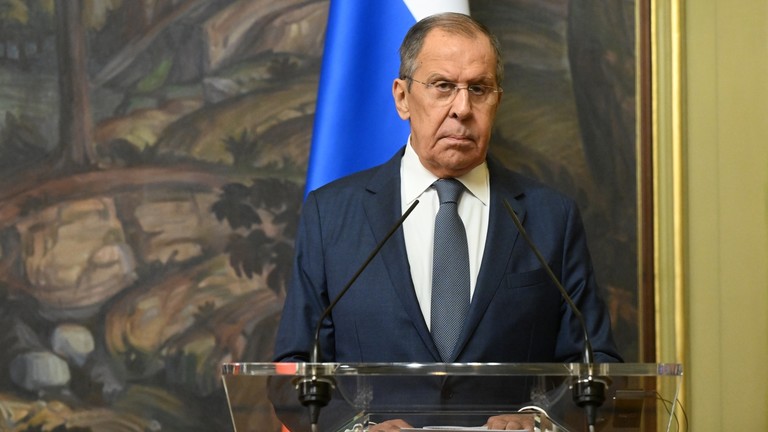
Washington’s massive campaign to support Ukraine with arms amounts to a war against Russia, Foreign Minister Sergey Lavrov has said, adding that the US has long groomed Kiev for this very purpose.
In a comment to Russian reporter Pavel Zarubin released on Sunday, Lavrov suggested that rumors about Washington possibly giving the green light to the delivery of Army Tactical Missile Systems (ATACMS), which have a range of up to 300km, were aimed at “shaping public opinion.”
According to the minister, these deliberations would not change the fact that “for many years Ukraine has been groomed to fight with its hands and bodies in order to inflict a strategic defeat on Russia.” Lavrov accused the US of controlling the hostilities between Kiev and Moscow.
“They are sending weapons, ammunition, intelligence, and satellite data. They are waging war against us.”
In recent weeks, several Western media outlets have reported that the administration of US President Joe Biden is edging closer to approving deliveries of the ATACMS, which Kiev has been requesting for several months. The US has been reluctant to approve sending these missile systems, arguing that potential Ukrainian strikes deep into Russia could trigger a major escalation in the conflict.
Ukraine has already received long-range missiles from the UK and France, which, according to local officials, have been used to attack civilian targets and infrastructure in Russia’s Crimean Peninsula and Donbass.
While the US has yet to grant Kiev’s request for ATACMS, it has committed more than $43 billion in military aid to Ukraine since the conflict began, including air defense systems, armored personnel carriers, and M1 Abrams tanks.
Moscow has repeatedly warned the West against supplying Ukraine with arms, saying that doing so will only prolong the conflict but will not change its ultimate outcome.
Featured Video

EUROPE FEARS RUSSIA’S NEXT MOVE / Ian Proud
or go to
Aletho News Archives – Video-Images
New Book
New Book: No Autoimmunity The Body Doesn’t Attack Itself
Lies are Unbekoming | September 24, 2026
 The label for Humira, once the best-selling drug in the world, lists its risks in plain print. One of them, in the label’s own words, is new “autoimmune” disease.
A drug prescribed for a condition labelled autoimmune carries a warning that it can cause a condition labelled autoimmune. That contradiction sits in every box, on a folded paper almost nobody reads.
My new book starts there.
No Autoimmunity: The Body Doesn’t Attack Itself
For seventy years, “your body is attacking itself, and we don’t know why” has ended the conversation for people diagnosed with multiple sclerosis, lupus, rheumatoid arthritis, Hashimoto’s, Type 1 diabetes, Crohn’s and psoriasis. More than eighty conditions now carry the autoimmune label. The diagnosis comes with a prescription for life. It almost never comes with a question about cause.
This book asks the question and answers it from the framework’s own records: its drug labels, its journals, its regulatory filings, and its own experiments. … continue
Blog Roll
 Aletho News
- Inside Ukraine’s propaganda operation targeting Americans
- Hackers From US, France, Singapore Tried to Disrupt Russian Elections – Internet Provider
- New Book: No Autoimmunity The Body Doesn’t Attack Itself
- EUROPE FEARS RUSSIA’S NEXT MOVE / Ian Proud
- Big tech hands in its DSA censorship reports to the EU
- ‘A Big Victory’ – Palestine Chronicle Wins Two-Year Legal Battle
- IAEA inspectors cannot return to Iran amid US threats: Russia
- Senate Rejects Iran War Powers Resolution Passed By House
- ‘We did not attack Pakistan with drones’: Afghan sources
- Iraqi Resistance faction links arms to sovereignty, questions US exit
- If Americans Knew
- ‘This is where I live now, the back of a truck’: a day in the life of a grandmother in Gaza
- In UN Speech, Iran’s President Displays Pictures of Children Killed by US, Brings Attention to Israel’s Nuclear Arsenal
- Israel displaces hundreds of Palestinians amid wave of demolitions in West Bank
- Aid, reconstruction, and Israel’s history of obstruction in Gaza
- Trump administration digs an ever-deeper hole of complicity in genocide – Daily Update
- US-Israel $2.8 Billion Arms Deal, 40,000-Bomb Supply Faces New Gaza Complicity Accusations
- Caught on Tape: AIPAC CEO Boasted of Controlling Trump’s National Security Officials
- Why Hamas Attacked Israel in October 2023 – Israeli professor Ilan Pappé
- They see them, then kill them: Israeli quadcopters track, deliberately target civilians in Gaza
- Winter could turn Gaza’s treacherous, war-damaged buildings into deathtraps
- No Tricks Zone
- New Study: Earth And Venus Surface Warmth Largely Explained By Convection And Lapse Rate, Not CO2 Or Radiation
- 2025 Nature Paper Claiming Worsening Global Drought Gets RETRACTED …Heavily Flawed
- New Study: ‘Global Drought Shows No Detectable Recent Acceleration Under Climate Warming’
- Economic Masterminds: German Socialists Suggest Taxing Productivity Gains Stemming From Using AI
- The South China Sea Has Not Been Cooperating With The Climate Change Narrative
- Energy Crisis: Germany Enters Heating Season With Historically Low Gas Reserve Fill Levels
- New Study: The Antarctic Ice Sheet Gained Mass From 2020-2024 Due To Staggering Snow And Ice Accumulation
- Study: Ocean Heating Rates From Thousands Of Years Ago ‘Dwarf’ Modern Ocean Heating Rates
- Climate Extremists Target, Attack Large-Scale Power Grid Infrastructure In Germany!
- New Study: Antarctic Ice Melt Has Contributed Less Than 1 Centimeter To Sea Level Rise In The Last 30 Years

