The US Officially Regards It As A Sanctionable Offense To Teach Foreigners How To Protest

BY ANDREW KORYBKO | JUNE 7, 2023
The US Department of the Treasury’s Office of Foreign Assets Control just sanctioned several Russians who allegedly taught Moldovans how to protest. According to their press release from earlier this week, “These actors provoked, trained, and oversaw groups in democratic countries that conduct anti-government protests, rallies, marches, and demonstrations.” These punitive measures represent the US’ latest repudiation of the same so-called “rules” that it claims to support across the world.
Organizations such as the US-funded “National Endowment for Democracy” and George Soros’ infamous “Open Society Foundations” regularly teach countless foreigners across the world about the late Gene Sharp’s protest-related works such as his 198 methods of non-violent action. These operations are aimed at cultivating anti-government cadre that can then be employed to pressure countries that refuse to comply with the US’ demands of them.
All national models of democracy incorporate a degree of public opinion when formulating policy, which is why training some of their people as professional protesters is such an effective means of influence for their foreign patron who funds these lessons. The subsequent organization of large-scale demonstrations and predictably resultant scuffles with police generate headlines at home and abroad, which in turn piles pressure on the targeted government to do the external state’s bidding.
This cost-effective method of advancing its interests abroad explains why America has done so for decades, especially when remembering that its return on investment is sometimes historically significant such as when US-sponsored protests overthrew the Ukrainian government in 2014. Back then, peaceful demonstrations morphed into violent riots on command after President Yanukovich refused to relent during the first phase of this US-backed Color Revolution, thus leading to February’s coup.
The Ukrainian Civil War that followed was exploited by the US to contain Russia, which set the basis for its special operation after Washington refused to seriously consider Moscow’s proposals for peacefully resolving their security dilemma that emerged in the aftermath of this regime change. Most recently, the case can be made that the US was also behind the planned coup that was just foiled in Kyrgyzstan, which could have opened up a second front against Russia amidst Kiev’s NATO–backed counteroffensive.
It deserves to be said that Russia suspects the US of intending to open another front in Moldova by ordering Chisinau and/or Kiev to attack its peacekeepers in Transnistria. This is the military-strategic context within which Washington just sanctioned several of its citizens for teaching that country’s people how to protest. Unlike the regime change that the US orchestrated in Ukraine, the demonstrations that Russia is accused of organizing in Moldova are meant to avert conflict, not catalyze it.
Another difference is that most Moldovans are aware of the US’ proxy war plans and vehemently oppose them, while few Ukrainians could have countenanced what was to come less than a decade later as a direct result of the anti-government protests that America helped manage back in the day. Had they known the destruction that awaited their country after it was exploited as a Hybrid War proxy against Moscow, then it’s unlikely that “EuroMaidan” would have succeeded.
Considering this, Russia is basically being accused of training Moldovan protesters who want to prevent their country’s involvement in a regional conflict. These activists are concerned that invading Transnistria could backfire, which is a credible fear for them to have since the Russian peacekeepers that their government is plotting to attack will fire back out of self-defense. Not only that, but Chisinau could become the new Kiev if Moscow launches drone and missile strikes against military targets in that city.
The abovementioned sequence of events is easily predictable and not the product of so-called “Russian propaganda”, which is why Moldovans are already protesting on their own without Moscow having to train any of them. In fact, no controvertible proof has ever been publicly presented in support of the claim that Russia is replicating the US’ modus operandi in that country, thus meaning that the entire basis upon which some of its citizens were just sanctioned could possibly be false.
It might even be that the US wants to delegitimize genuinely grassroots anti-war protests in Moldova by concocting another “Russiagate” conspiracy theory for this purpose. That wouldn’t be surprising either since it makes perfect sense for American policymakers to establish the pretext for justifying Chisinau’s potentially violent dispersal of its peacefully demonstrating people in order to ensure that they don’t get in the way of Washington’s proxy war plans.
Whatever the truth may be, it’s hypocritical for the US to sanction Russians for doing the exact same thing that Americans and Europeans have done abroad for decades. Teaching foreigners how to protest isn’t anything new, but it’s now apparently a criminal offense if their government is pro-Western. These double standards are similar in spirit to those applied against Georgia after it sought to promulgate a US-inspired foreign agents law last spring.
America has no problem training other countries’ people to protest and mandating that those of its own citizens who receive foreign funding register with the authorities since these policies serve its interests, but the moment that others do the same in advance of their own interests, it ruthlessly opposes them. This undeniable observation exposes the US’ latest anti-Russian sanctions as a charade intended to prevent peacefully protesting Moldovans from stopping their country’s march towards war.
Russia tells US government to publish truth about JFK assassination
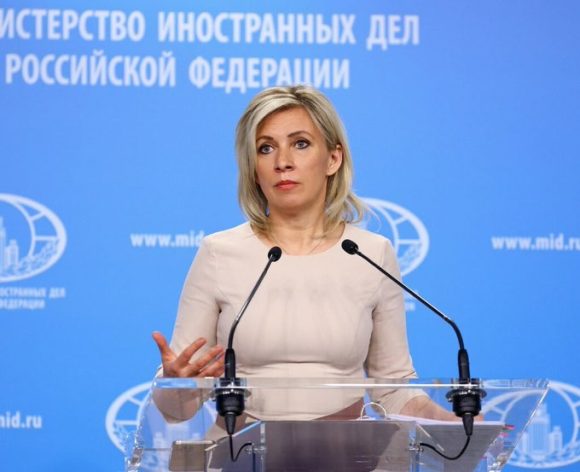
RT | June 7, 2023
If the US wishes to be considered an authority on democracy and human rights, it ought to come clean about the killings of President John F. Kennedy and his brother, Russian Foreign Ministry spokeswoman Maria Zakharova said on Wednesday.
During her regular daily briefing, Zakharova was asked about the statement by US Secretary of State Antony Blinken, who said Washington intends to champion human rights and fundamental freedoms in China and worldwide.
“Washington itself has long fallen short of the standards of democracy that it publicly declares everywhere,” Zakharova replied, adding that the US promotes “pathetic, hypocritical rhetoric” abroad to hide its neo-colonial ambitions and geopolitical interests.
“The history of American politics contains many unsightly facts that are deliberately hushed up by the US authorities,” Zakharova noted. As an example, she cited the Kennedy family – and the recent anniversary of the June 1968 assassination of Senator Robert F. Kennedy in Los Angeles, during the presidential primaries in which he was a favorite.
The RFK assassination came two months after the fatal shooting of civil rights leader Martin Luther King – and almost five years after the November 1963 assassination of John F. Kennedy, the 35th US president, Zakharova told reporters.
“I suggest to Mr. Blinken to muster up the courage and publish all the materials regarding the political assassinations of the US presidents, in particular John F. Kennedy, and tell his people – his people, first of all – the truth about what happened in Dallas” she said.
“Only when they close the case on these political killings, can they try to correct other countries,” the Russian Foreign Ministry spokeswoman argued. “While such egregious crimes remain unresolved, and the killers not found and convicted, if I were American leaders I would not open my mouth about other countries, and certainly stop lecturing everyone else how to live.”
Solve the Kennedy assassination – both of them, actually – and then maybe you will be regarded as an authority. Or maybe not.
RFK’s son and JFK’s nephew Robert Francis Kennedy Junior launched his primary challenge to President Joe Biden in April. In an interview last month, he said there was “overwhelming evidence that the CIA was involved” in his uncle’s murder, and “very convincing but circumstantial” evidence the spy agency was also linked to his father’s assassination.
The official findings of the US government, known as the Warren Commission Report, said that US Marine veteran Lee Harvey Oswald acted alone and shot the president while his motorcade was passing through Dallas on November 22, 1963. Before he could stand trial, Oswald was shot dead by nightclub owner Jack Ruby at the Dallas Police Headquarters. The Warren Commission ruled that Ruby had acted alone, on impulse and out of grief.
Ruby died in prison in 1967. Later that year, the CIA issued a directive on how to discredit “conspiracy theorists” who doubted the official findings of the Warren Commission.
Russo-Ukrainian War: Dam!
A different kind of leak
BIG SERGE THOUGHT | JUNE 7, 2023
It is probably safe to say that the current week (June 5-11, 2023) is shaping up to be one of the most significant of the entire Russo-Ukrainian War. On Monday, all eyes were on the Ukrainian Armed Forces and their much anticipated summer counteroffensive, which began with a series of battallion level attacks across the breadth of the theater. After these initial assaults in the Ugledar, Bakhmut, and Soledar sectors began to collapse with heavy losses, it looked like the topic of discussion for the forseeable future would be Ukraine’s prospects for breaching strongly held Russian defenses.
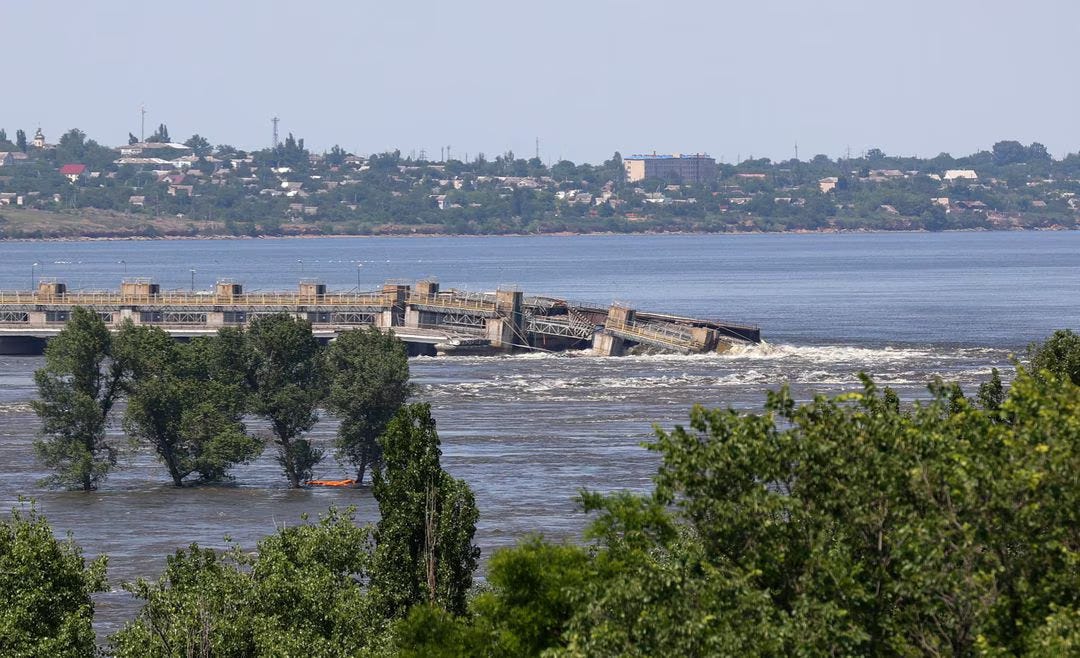
Instead, the entire Ukrainian offensive was overshadowed by the sudden and entirely unexpected failure of the dam at Nova Kakhovka on the lower Dneiper.
Let’s be clear about one thing: the destruction of this dam marks a qualitative change in the course of the war; a dam represents an entirely different tier of target. There is a broad sense that dams are not legitimate military targets, as they fall in the category of “objects containing dangerous forces”, along with things like sea walls, dykes, and nuclear power plants. However, attacks on dams are not without precedent, and the legality of such attacks is a complicated and thorny topic – it is not so simple as to say “attacking dams is a war crime” in all circumstances.
In any case, the legalities are not the main point here. The destruction of dams has the potential to impact civilians on a scale which is an order of magnitude higher than anything which has yet occured. The reality of the war in Ukraine is that, due to the fact that most of the fighting is occuring in depopulated areas (along with Russia’s use of precision standoff weapons) civilian casualties have been mercifully low. Through May of this year, there were fewer than 9,000 recorded civilian deaths in Ukraine (including both Ukrainian and Russian controlled territories). This is a thankfully low number, compared (for example) to the war in Syria, where over 30,000 civilians are killed annually, or Iraq, where nearly 18,000 civilians died per year in the years following the American invasion in 2003.
A breaking dam, however, massively escalates the threat to civilians. Tens of thousands of civilians are in the flood path and have to be evacuated – but perhaps even more significantly, the destruction of the dam creates a major threat to agriculture. There are also rising escalation risks, and the last thing anybody wants is for dams to become a permanent menu item.
In this article, I want to conduct a preliminary assessment of the destruction of the dam, its consequences, and its potential causes. In particular, I want to sort through the evidence and get a sense of whether Ukraine or Russia is a more likely culprit. As it currently stands, the situation is in flux and it is not as if we will find either Zelensky’s or Putin’s fingerprints on the detonator, but we can at least put some puzzle pieces roughly into position and get a sense of what the picture looks like.
One thing that I want to mention, first off, is that we do not need to assume that the dam was intentionally destroyed. For example, in a now infamous Washington Post article, we learn that Ukraine experimented with hitting the dam with GMLRS rockets in an attempt to blow a hole and create a controlled flood. The sense that one gets here is that Ukraine did not necessarily intend to destroy the dam altogether, but rather that they wanted to create a limited breach and by extension a limited flood.
We will keep such possibilities in mind and consider them to be a distinction without difference. It’s entirely possible that one party or the other attempted to create a limited breach and accidentally brought about a much larger dam failure, but from our perspective this isn’t particularly different from intentionally bringing the whole thing down.
With this little distinction in mind, let’s begin to sort through what we know about this whole dam thing.
Water World
What on earth is (or was) the Kakhovka dam and what was its relation to the larger geography of the surrounding steppe?
To begin with, let’s make a brief note about the Dnieper. In its natural state, the Dnieper is a deeply difficult and turbulent river, characterized by a series of essentially unnavigable rapids. In fact, the Dnieper’s fiesty nature is precisely why the city of Kiev is where it is. 1200 years ago, when enterprising traders came rowing down the Dnieper (trying to get to the Black Sea, and thence to Constantinople), they found that certain portions of the river were impassable, and it was necessary to “portage” their boats – which means dragging them out of the river and overland to get past the rapids.
Portaging a boat on the middle Dnieper in 800 AD was dangerous. While disembarked and laboriously dragging the boat downstream, a trading party would be highly vulnerable to attack by the various warlike tribes which inhabited the region at the time. So it became necessary to build some sort of outpost stronghold which could serve as a waypoint to make passage down the river at least acceptably safe. Hence, Kiev – buit originally as a timber fortified trading post to ease passage along the middle Dnieper.
This is perhaps interesting, but as an aside it illustrates the basic point that for most of human history the Dnieper was not a friendly or easily navigable river akin to the Mississippi or the Rhine, and in the Soviet era a major effort was undertaken at last to tame it, in the form of a series of hydroelectric dams. These dams stiffled the rapids, generated electricity, smoothed the river’s course, and created enormous resevoirs, of which the Kakhovka resevoir is the largest by volume.
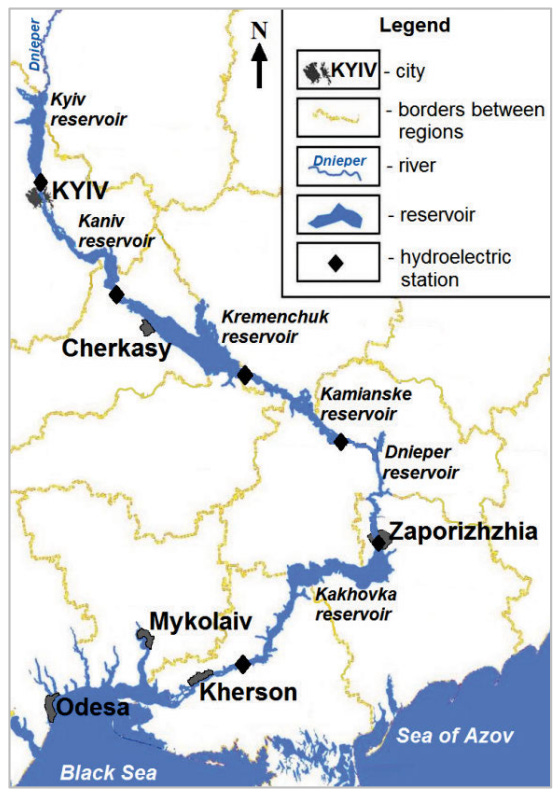
The Resevoirs and Dams of the Dneiper
The creation of the Kakhovka resevoir was also vitally linked to a series of canals which are fed from the resevoir. The most important of these is the Crimean canal, which carries Dnieper water to Crimea, but there are also a series of irrigation works which are vital to agricutlure in Kherson and Zaporizhia oblasts.

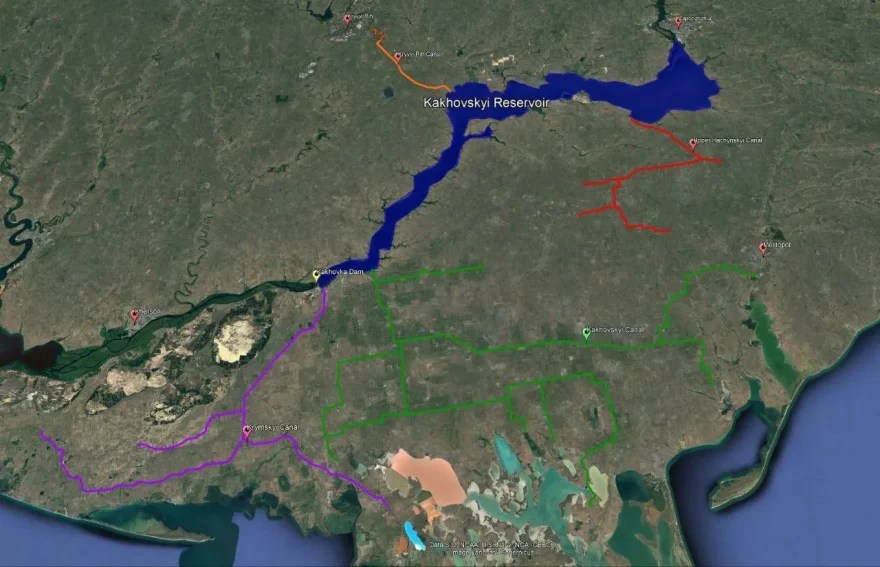
Canals fed by the Kakhovka Resevoir System
So that is the basic structure of the region’s hydrology. We can therefore enumerate both upstream and downstream effects from the dam’s breaching. Upstream effects relate to the draining of the Kakhovka resevoir, which will in time lead to insufficient flow through the canals, depriving both Crimea and regional farmland of water. Downstream effects are those of the enormous flooding which is currently taking place.
A threat to the Kakhovka dam first entered the discourse last autumn, when General Surovikin made the stunning decision to withdraw Russian forces from west bank Kherson – a decision which he said was prompted by the fear that Ukraine might destroy the dam and create a flood which would trap Russian troops on the far shore. That decision certainly looks prescient now, but thanks to this earlier discussion there was already a bevy of analysis conducted predicting what the flood path might look like.
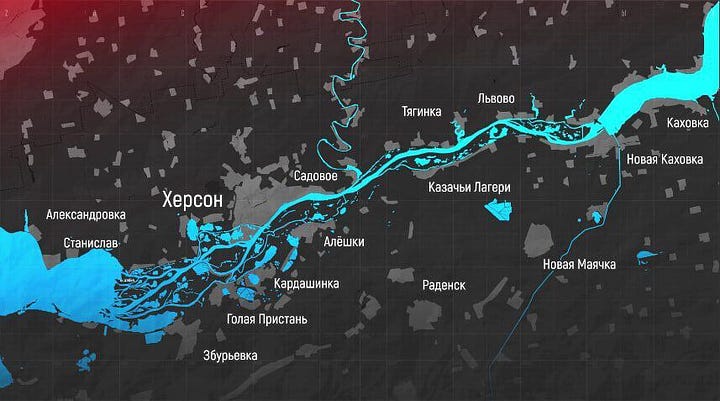
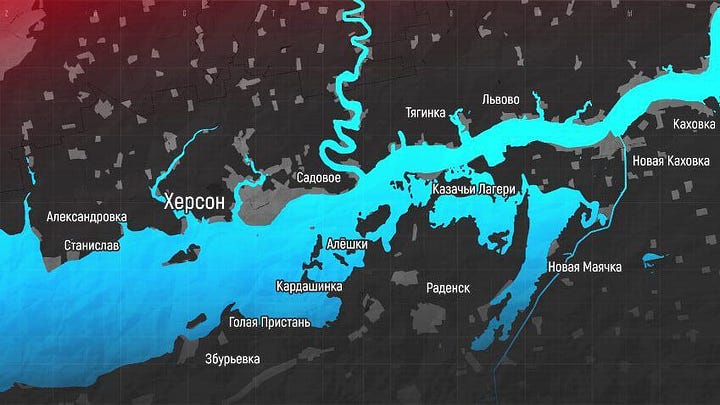
Before and After
As per the latest information as of this writing, the river has not yet crested and water levels continue to rise, but this has already turned into a vast and extremely disruptive flood. This is a severe humanitarian and ecological disaster with implications for the military situation in Ukraine. The question is – who did it?
Incriminating Evidence
Let’s start by looking at the most direct evidence potentially implicating Russia or Ukraine. I’d like to start by looking at an allegedly damning (haha) video which has been circulating rapidly, which purports to confirm that Russia blew the dam.
The video in question allegedly shows a Russian soldier giving an interview in December in which he boasts that the Russin army mined the Kakhovka dam and plan to destroy it to create a cascading flood and wash away the Ukrainian troops downstream.
Not to be blunt, but this is an egregiously bad bit of trickery and it’s difficult to believe that people are falling for it. To begin with, this is an interview with a Ukrainian blogger and youtuber who goes by the screen name “Edgar Myrotvorets” – interestingly naming himself after the infamous Ukrainian kill list. The “Russian soldier” who he is interviewing is allegedly a gentleman named Yegor Guzenko. Yegor seems to be an interesting fellow – he pops up on social media periodically largely to confess to stereotyped Russian war crimes, like kidnapping civilians and executing Ukrainian prisoners, and of course blowing up dams.
Essentially, we are being asked to believe that there is a Russian soldier out there who is giving interviews to Ukrainian media in which he confesses to all of Russia’s nefarious activities, and then goes about his duties without being stopped or punished. It should be pretty obvious that Yegor is actually Yehor, and is not a Russian soldier at all but a Ukrainian impersonator – funnily enough, Yegor also has a beard even though the Russian MOD has been cracking down on facial hair.
In any case, Yegor’s explosive interview is the main piece of direct evidence which is being used to prove that Russia blew up the dam.
In contrast, the evidence implicating Ukraine is pretty straightforward: they openly talked about experimenting with ways to breach the dam, and have actively shot rockets and artillery shells at it in the past. We refer back to the infamous WaPo article, and in particular the key passage:
Kovalchuk [commander of Ukrainian Operative Commandment South] considered flooding the river. The Ukrainians, he said, even conducted a test strike with a HIMARS launcher on one of the floodgates at the Nova Kakhovka dam, making three holes in the metal to see if the Dnieper’s water could be raised enough to stymie Russian crossings but not flood nearby villages.
The test was a success, Kovalchuk said, but the step remained a last resort. He held off.
We even have footage of Ukraine striking the dam (particularly the roadway on top of it) from last year – footage which was incorrectly shared this week as being video of the strike that destroyed the dam on monday.
There is also a variety of circumstantial evidence worth sorting through.
A popular point being raised by the Ukrainian infosphere is the fact that the Kakhovka dam was under Russian control – therefore, they argue that only Russia could therefore have planted explosives to createa breach (at this point, we do not know the technical method used to create the breach).
I rather think that Russia’s control of the dam makes it much less likely that they are responsible, for the following basic reason. First, having control over the dam’s gates means that Russia had the power to manipulate water levels downstream at will. If they wanted to create flooding, they could have simply opened all the gates. With the dam now breached, they have lost this control.
The situation is very much akin to the destruction of the Nordstream pipeline (which now seems to be being blamed on Ukraine, rather predictibly). Both Nordstream and the Kakhovka dam were tools that Russia had the power to swing in one direction or the other. These were levers that Russia could move from on to off and back again. The destruction of these tools actually robs Russia of control, and in both cases we are asked to believe that Russia intentionally disabled its own levers.
Cui Bono?
Ultimately, any analysis would be incomplete without asking a very basic question: who benefits from the destruction of the dam? This is where it gets a bit complicated, largely because there are so many concerns at cross-currents to each other. Let’s enumerate a few.
First, the flooding disproportionately affects the Russian side of the river. This has been pretty thoroughly established. The eastern bank of the river is lower and thus more affected by flooding. We knew this in the academic sense, and now satellite imagery confirms that it is indeed the east bank that has suffered most of the flooding.
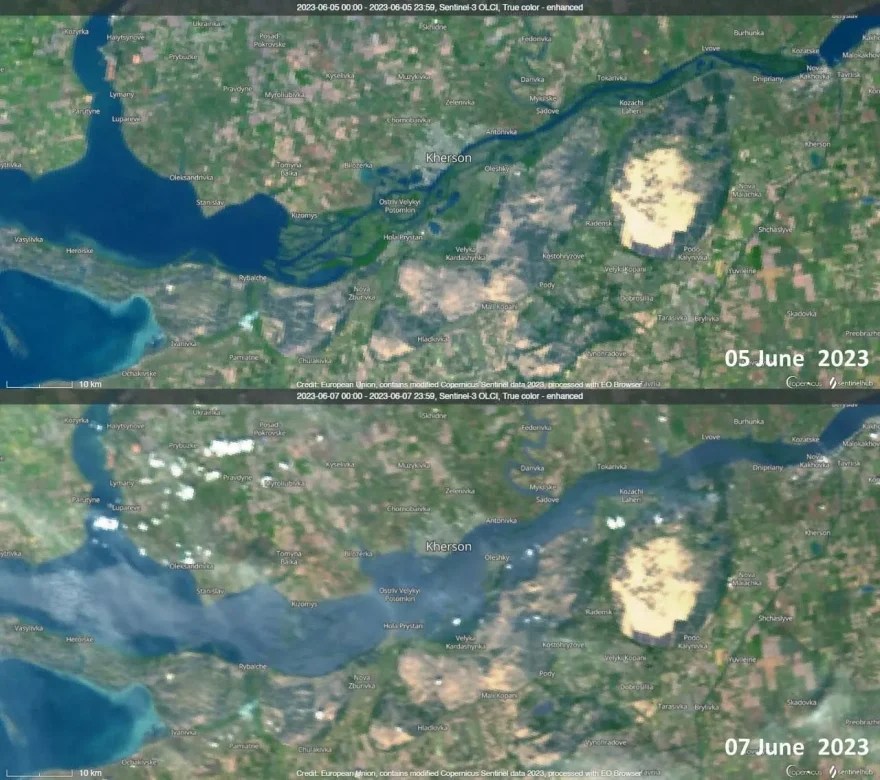
This has had the effect of washing out prepared Russian defenses, including minefields, and forcing withdrawls out of the flood zone, with plenty of imagery coming in of Russian soldiers standing in water up to their waists.
Secondly, the Upstream effects disroportionately affect Russia as well. Remember, the implications of the dam breach are not just downstream flooding, but also the draining of the resevoir, and this is particularly bad for Russia. First, in the long run this endangers the water flow through the Crimean Canal, which undermines a key Russian war aim. One of Russia’s primary motivations for launching this war in the first place was precisely to secure the Crimean Canal, which Ukraine had dammed up in order to choke off the peninsula’s water supply. Any analysis of the issue needs to aknowledge that, if you believe Russia blew the dam, you are essentially saying that they voluntarily trashed one of their primary war aims.
But it’s not just the Crimean Canal – there are also the variety of irrigation canal networks which sustain agriculture in east-bank Kherson and Zaporizhia oblasts – oblasts which Russia has annexed and which are firmly under Russian control.
The only way to spin all this (and there are some people, like Peter Zeihan, trying to spin it this way) as being in Russian interests is to argue that Russia expects to lose control of all this territory (including Crimea) and is going scorched earth in anticipation of defeat. But to believe this, you need to believe that Russia is badly losing the war and is on the verge of total defeat, and if you believe this I have nothing to say to you except to direct you to this link.
Third, we need to note the effects that this will have on a potential amphibious operation. In the short term, this obviously turns the lower Dneiper into a dangerous morass, and as the water subsides it will leave plenty of mess and mud which will make a river crossing very difficult for several weeks. In the long run, however, crossing the river may actually be easier – and here is where I want to make what I think is a critical point.
As long as Russia had control of the Kakhovka dam, they had the power to create flooding downstream at will. The optimal time to do this would be while Ukraine was attempting an amphibious assault out of Kherson. If you created flooding during such an assault, you would be complicating the crossing and washing out Ukraine’s beachheads. Obviously, Russia has now lost the ability to do this.
We already know that Russia understands how and why to manipulate the water levels to its advantage. Earlier this year, they were actually keeping the Kakhovka resevoir levels extremely low, most likely to minimize the threat of Ukraine breaching the dam (as Surovikin was apparently quite worried about). However, in recent weeks they closed up the gates and filled the resevoir up to the top.
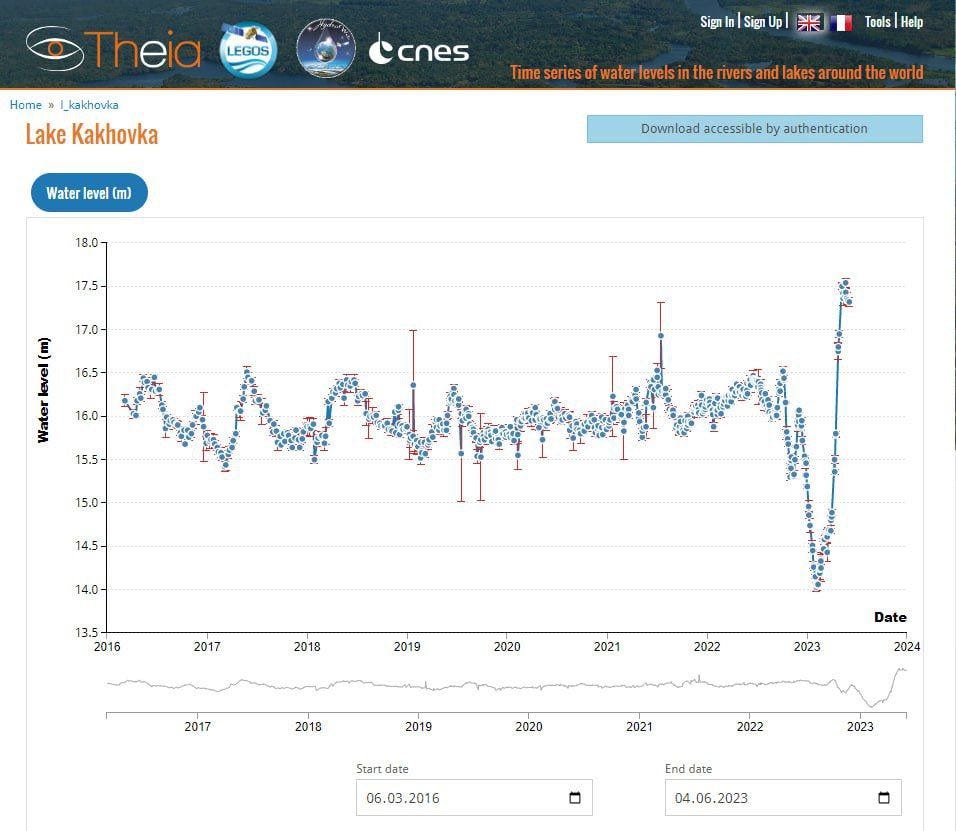
Kakhova Resevoir Levels
Why would they do this? It seems likely that Russia would want to retain water so that they could create a surge (not by destroying the dam, but by opening the gates up) to disrupt any Ukrainian attempt to cross the river. Again, the appeal of the dam for Russia is that it is a lever which can be throttled up and down as the situation calls for it. The breach of the dam, however, robs them of this tool.
This brings us to the corollary point, which is that the breach has two major benefits for Ukraine. Not only is it washing out Russian defenses and disproportionately disrupting the Russian side of the river, but Russia has now lost the ability to create a flood at the opportune moment later on.
If I had to make my guess about what happened to the dam, it would be as follows:
I believe Russia was retaining water to maintain the power to create flooding in the event of a Ukrainian amphibious assault across the lower Dnieper. Ukraine attempted to nullify this tool with a limited breach of the dam (of the sort which they rehearsed last December) but the dam failure cascaded beyond what they intended due to A) the resevoir being at extremely high levels, putting excessive stress on the strucure, and B) previous damage to the structure from prior Ukrainian shelling and rocketry attacks. Indeed, images of the dam seem to suggest that it failed in stages, with a single span leaking before the collapse metastasized.

I find the idea that Russia destroyed the dam to be very difficult to believe, for the following reasons (in recap):
- Flooding disproportionately affected the Russian side of the river and destroyed Russian positions.
- The loss of the dam does severe damage to core Russian interests, including Crimean water access and agriculture on the steppe.
- The dam, while intact, was a tool which Russia was using to manipulate the water level freely.
- Of the two beligerent parties, only Ukraine has openly shot at the dam and talked about breaching it.
We may learn, of course, that there was some accidental failure of some kind, potentially due to the water tug of war being waged between Russia and Ukraine as they try to balance the flow of the river. But in a wartime situation, when a major infrastructure object is destroyed, it is most rational to assume intentional destruction, and in this situation the costs to critical Russian infrastructure and the loss of a valuable tool for controlling the river make it extremely difficult to believe that Russia would blow up its own dam.
Ultimately, perhaps your judgement on the matter simply reflects your larger belief about who is winning the war. Breaching a dam is, after all, rather a desperation move – so maybe the question to ask is: who do you think is more desperate? Whose back is against the wall here – Russia, or Ukraine?
Ukraine blew up Kakhovka dam as revenge for failed offensive – Kremlin
RT | June 6, 2023
Ukrainian forces sabotaged the Kakhovka hydroelectric dam in Russia’s Kherson Region in a bid to deprive Crimea of drinking water and distract from its faltering counteroffensive, Kremlin spokesman Dmitry Peskov claimed on Tuesday.
The dam was partially destroyed early on Tuesday morning, sending torrents of water downstream and flooding towns and villages along the path of the Dnieper River.
“We are talking about a deliberate sabotage by the Ukrainian side,” Peskov told reporters. “This sabotage could potentially lead to very serious consequences for several tens of thousands of inhabitants of the region, environmental consequences and consequences of a different nature, which have yet to be established.”
Peskov claimed that one of the key goals of the attack was to deprive Crimea of water. Crimea’s 2 million residents largely receive their water from the North Crimean Canal, which is fed from the reservoir above the Kakhovka dam.
“This sabotage is also connected with the fact that, having launched large-scale offensive operations two days ago, the Ukrainian armed forces are not achieving their goals,” Peskov continued. Russia’s Defense Ministry has said it repelled several large-scale attacks in the southern sector of the front in recent days. These “offensive actions are choking,” Peskov stated.
Ukrainian officials and their European backers have accused Russia of blowing up the dam, with European Council President Charles Michel calling the attack “a war crime.” Moscow “strongly rejects” the accusation, Peskov said.
While the flooding now makes it difficult for Ukrainian forces to cross the Dnieper and attack Russia’s defensive lines, the destruction of the dam also appears to aid a number of Ukraine’s key objectives. The flooding mostly threatens the eastern bank of the river, where Russian troops withdrew to last year amid concerns that the Ukrainian military would blow up the dam.
With the dam destroyed, the level of the Dnieper has fallen further upstream, including at the Zaporozhye Nuclear Power Plant. Ukrainian troops made several attempts to cross the river to recapture the plant from Russian forces last year, and lowering the water level would remove a major obstacle to future attempts. Additionally, the Soviet-era plant depends on water from the Dnieper to cool its reactors and its spent fuel rods.
The Ukrainian military conducted a test strike on the dam using an American-supplied HIMARS launcher last year, Ukrainian General Andrey Kovalchuk told the Washington Post in December.
Two months earlier, Russia’s envoy to the United Nations, Vassily Nebenzia, warned the UN Security Council that Kiev’s forces were considering a “reckless” attack on the dam with sea mines or missiles. “The authorities in Kiev and their Western backers will bear full responsibility for all the consequences of such a devastating scenario,” Nebenzia cautioned.
Western weapons used in Ukrainian raid inside Russia – WaPo
Moscow earlier published photos of destroyed Western hardware on Russia’s territory as Washington struggled to explain them

RT | June 3, 2023
Military equipment and small arms provided by several NATO nations, including the US, ended up in the hands of militants who launched a cross-border raid into Russia’s Belgorod region in May, the Washington Post reported on Saturday, citing sources linked to US intelligence.
At least four tactical vehicles initially supplied to the Ukrainian military by the US and Poland were employed in the May raid, raising concerns about Kiev’s commitment to fulfilling the demands of its Western supporters, the sources told WaPo.
The US and its Western allies have consistently expressed opposition to the use of Western arms by Ukraine in attacks on Russian territory. They also urged Kiev to “carefully track the billions of dollars’ worth of weapons that have flowed into the country,” WaPo reported.
The attack in question occurred in late May, and in response, the Russian Defense Ministry announced that “over 70 Ukrainian terrorists, four armored combat vehicles, and five pickup trucks” had been destroyed in the clash in Belgorod. The remaining militants were subsequently forced back into Ukraine and targeted by Russian artillery. The incursion resulted in one civilian death and 12 injuries, according to Russian authorities.
The Russian military shared a series of photographs showing what appeared to be destroyed Western equipment abandoned by the militants. Some of the images depicted two M1151A1 Humvee armored cars stuck in bomb craters, while others displayed two M1224 MaxxPro armored vehicles. An AMZ Dzik-2 armored car, manufactured in Poland, was also visible in the images.
Kiev attempted to distance itself from the raid by claiming it was carried out by the “Freedom of Russia Legion” and the “Russian Volunteer Corps (RDK),” the neo-Nazi units responsible for a similar attack in the Bryansk Region in March. The Pentagon and the US State Department expressed doubts regarding the authenticity of the images.
The State Department also said that the US “does not encourage or enable attacks inside of Russia.” Washington also does not “support the use of US-made equipment … for attacks inside of Russia,” it added.
According to the Washington Post, videos published by the “Freedom of Russia Legion” and the RDK militants themselves showed fighters using the Czech-made CZ Bren and Belgium’s FN SCAR assault rifles. Both types of weapons were provided to Ukraine by the respective nations, the paper said, adding that “Bren and SCAR rifles are commonly distributed to Ukraine’s soldiers” and foreign fighters who travel to Ukraine to combat Russian forces.
A spokesperson from the Belgian Defense Ministry informed the Washington Post that they only provided weapons to “official authorities and the regular army” in Ukraine, placing responsibility on Kiev for their usage. Poland and the Czech Republic declined to comment on the findings presented by the Washington Post.
The use of Western military supplies in an attack on Russian territory raises the issue of Kiev’s accountability, Mark Cancian, a senior adviser at the Center for Strategic and International Studies (CSIS), a Washington-based think-tank, told WaPo. The Ukrainians “are clearly complicit here,” Cancian, a retired US Marine Corps officer, added.
Iran, Regional States to Form Naval Coalition Soon: Navy Commander
Al-Manar – June 3, 2023
Iranian Navy Commander Rear Admiral Shahram Irani announced that Iran’s navy and the countries of the region including Saudi Arabia, UAE, Qatar, Bahrain and Iraq will form a new naval coalition soon.
Irani in a televised program on Friday night announced the formation of new regional and extra-regional coalitions, saying that today, the countries of the region have realized that the security of the region can be established through synergy and cooperation of the regional states.
Referring to the holding of annual exercises of the naval coalition of Iran, Russia and China, he said that the regional coalition is also forming.
Almost all the countries of the North Indian Ocean region have come to the understanding that they should stand by the Islamic Republic of Iran and jointly establish security with significant synergy, he said, adding that Oman, Saudi Arabia, UAE, Qatar, Bahrain, Iraq, Pakistan and India are among these countries.
Earlier, a Qatari website reported that Iran, Saudi Arabia, the United Arab Emirates, and Oman are to form a joint naval force under China’s auspices towards enhancing maritime security in the Persian Gulf.
Al-Jadid carried the report on Friday, saying China had already begun mediating negotiations among Tehran, Riyadh, and Abu Dhabi aimed at reinforcing maritime navigation’s safety in the strategic body of water.
Since the 1979 victory of Iran’s Islamic Revolution, the Islamic Republic has invariably opposed foreign meddling and presence in the region, asserting that the regional issues have to be addressed by the regional players themselves.
CIA hacked iPhones of diplomats in Russia – FSB
RT | June 1, 2023
The CIA installed malware on thousands of Apple phones used by Russian citizens and foreign diplomats working in the country, Russia’s Federal Security Service (FSB) has claimed.
The FSB said on Thursday that a joint operation with the Federal Guard Service (FSO) had “uncover[ed] a surveillance operation by American intelligence agencies, carried out with the use of Apple’s mobile devices.”
An assessment of Russia’s telecom infrastructure revealed “anomalies” in the operations of some iPhones, caused by “a previously unknown malicious program that uses software vulnerabilities provided by the manufacturer,” a statement by the agency read.
Several thousand phones made by Apple were infected with the malware, according to the FSB.
Not only Russian citizens were targeted, but also “foreign phone numbers and subscribers that use SIM cards registered with diplomatic missions and embassies inside Russia, including countries from the NATO bloc and the post-Soviet space, as well Israel, Syria and China,” the agency said.
The discovery is more proof of the close cooperation between Apple and the US intelligence community, the FSB claimed, adding that “the declared policy of ensuring the privacy of personal data of Apple users has nothing to do with reality.”
The FSB also accused Apple of “providing the American intelligence services with a wide range of opportunities to survey any persons of interest to the White House, including their partners in anti-Russian activities, as well as their own citizens.”
In March, the Kommersant newspaper reported that members of the Russian presidential administration had been told to discard their iPhones. According to the paper, the step was taken due to concerns that advanced cyberwarfare tools, such as the Israeli Pegasus software, could allow Apple gadgets to be breached, despite the producer’s claims of their enhanced security features.
Kremlin spokesman Dmitry Peskov declined to comment on the report, but noted that Russian officials were in any case barred from using smartphones “for work purposes” due to the potential vulnerability of devices.
Kiev Faces Seven Key Challenges Ahead Of Its Counteroffensive
BY ANDREW KORYBKO | JUNE 1, 2023
US National Security Council spokesman John Kirby confirmed that Kiev’s upcoming NATO-backed counteroffensive will commence sometime this summer, which makes it timely to discuss the key challenges that it’ll face. First and foremost among these is the NATO-Russian “race of logistics”/“war of attrition” that Secretary-General Jens Stoltenberg declared in mid-February. Considering that Kiev is entirely dependent on foreign support, the state of those two’s competition is the most crucial variable.
The second one is connected with the preceding one and concerns the fact that Kiev’s NATO-trained forces haven’t yet been tested in battle. For all the hype about the upcoming counteroffensive, it remains to be seen whether they’ll perform as expected since they lack the experience carrying out large-scale operations. Russia learned from its shortcomings that were responsible for Ukraine’s reconquest of Kharkhov and half of Kherson Region, thus reducing the chances of this happening again.
On that topic, the third key challenge facing the counteroffensive is that Russia has fortified its defenses along the Line of Contact (LOC). Kiev will therefore struggle to achieve a breakthrough absent some black swan event, which of course can’t be ruled out but nevertheless appears unlikely. Moreover, the Battle of Artyomovsk imbued Russian forces with invaluable urban warfare experience that they can put to use defending major cities under their control, which could create more meat grinders for Kiev.
This leads into the fourth point, which is that Ukraine has already exhausted a large amount of its equipment and personnel over the past 15 months. The Washington Post drew attention to this in their detailed report in mid-March, which the Polish Chief of Army Staff extended credence to in his similar assessment that he shared in late April. These objective observations from pro-Kiev sources cast serious doubt on the success of the upcoming counteroffensive.
It’s precisely because of these worries that Ukraine is pinning its hopes on so-called “wunderwaffen” like the F-16s, but even US Air Force chief Frank Kendell said in late May that such systems aren’t going to be a “dramatic game-changer…for their total military capabilities.” Furthermore, Russia has already proven that it’s able to adapt to Kiev’s fielding of prior such “wunderwaffen” like Turkiye’s Bayraktar drones, which government-funded US and UK experts recently admitted that Moscow successfully neutralized.
Building upon the abovementioned fifth key challenge, the sixth one involves the West’s growing fatigue with indefinitely funding the NATO-Russian proxy war, which has already cost their taxpayers over $160 billion. Chair of the House Foreign Affairs Committee Michael McCaul cautioned in early May that the counteroffensive’s potential failure to meet the public’s expectations could lead to a reduction in future support, which exposes other Western officials’ pledges of unconditional support as lies.
And finally, the last factor working against Kiev’s favor ahead of its counteroffensive is to meet the Western public’s unrealistically high expectations that McCaul spoke about despite the tremendous odds. Unnamed Biden Administration officials told Politico in late April that they’re very worried that this won’t happen, which places Ukraine’s spree of terrorist attacks since then into their appropriate context by revealing them to be nothing but infowar copium to satiate the bloodthirsty Western masses.
These seven key challenges will be very difficult for Kiev to overcome, thus making it likely that the outcome of its much-hyped counteroffensive will simply be some limited changes along the LOC. Seeing as how that would almost certainly provoke deep disappointment among the Western public, it could very well be that this predictably lackluster result directly leads to the resumption of peace talks by year’s end, which might freeze the conflict with a ceasefire if not end it outright with some sort of compromise.
The Union State Expects That The NATO-Russian Proxy War Will Expand
BY ANDREW KORYBKO | JUNE 1, 2023
The 52nd session of the CIS Council of Heads of Security Agencies and Special Services took place in Minsk on Thursday, during which time representatives from the Union State expressed concern that the NATO-Russian proxy war will expand. FSB chief Bortnikov from the Russian side shared his assessment that this bloc is responsible for sabotage in their two countries. He also warned that “The West actively encourages Moldova to get involved in the Ukrainian conflict by cleansing Transdniestria and Gagauzia.”
As for the Belarusian side of the Union State, it was most importantly represented by President Lukashenko, who raised awareness of the West’s impending coup plot against him. According to him, “this is no longer 2020, when girls went to rallies wearing short white skirts and holding flowers. People are ready to come here with weapons.” He said that this is because the West now demands that those “opposition” figures who they’re hosting commit terrorist attacks in order to continue receiving funding.
Bortnikov and Lukashenko shared their views on the same day as the Russian Ministry of Defense announced that it had beaten back Ukrainian terrorists earlier that morning who tried infiltrating Belgorod Region in a repeat of last week’s incident. These three developments suggest that Kiev’s upcoming counteroffensive will possibly attempt to expand the geographic scope of this proxy war to include Belarus, Moldova, and/or Russia’s pre-2014 territory, perhaps even all at once.
The strategic reason for going all out like that would be to compensate for the seven key challenges that place Ukraine in a position of weakness vis-à-vis Russia even in spite of the over $165 billion in aid that it’s received from NATO since the start of the special operation. Aware that the counteroffensive will likely fail to meet the Western public’s expectations exactly as unnamed US officials told Politico in late April, Kiev seems to be preparing a set of spectacular provocations to spin as a success instead.
The potential plan appears to be for Kiev to lash out in those three directions in the hope of achieving a breakthrough across at least one of those fronts, not to mention the Line of Contact (LOC) between its forces and Russia’s in the territory that Ukraine claims as its own. The West wanted Georgia to play a role in this scheme too in order to maximally divide Moscow’s attention, but its Color Revolution agents couldn’t get Tbilisi to go along with this despite trying their best to pressure it to do so in March.
In the event that Kiev gains and holds ground in Belarus, Moldova, Russia, and/or Ukraine’s former regions, none of which can be taken for granted of course, then the West can claim that the counteroffensive was worth it. NATO doesn’t think that the last-mentioned front along the LOC will see much progress, if any at all, which is why it appears to be preparing Kiev for a multifront attack that stands a better chance of meeting the public’s expectations of success.
The scenario of a direct NATO military intervention in Moldova and/or up to the LOC also can’t be ruled out either. The second one would of course spike the risks of nuclear brinksmanship, but since “Biden’s Re-Election Hinges On The Success Of Kiev’s Counteroffensive”, the US’ ruling liberal–globalist elite might gamble with the apocalypse out of desperation if Kiev fails to achieve any success at all. The possibility of Russia reversing the dynamics to achieve its own breakthrough could also prompt that dark scenario too.
The West is in a dilemma since NATO’s “race of logistics”/“war of attrition” with Russia that Secretary-General Stoltenberg declared in mid-February is gradually trending in Moscow’s favor as proven by its victory in the Battle of Artyomovsk. Such an astronomical sum has already been invested in this counteroffensive, which has also been hyped up to an absurd level, that it has to go forward no matter what despite the Washington Post warning in mid-March about how poorly Kiev’s forces are really faring.
It’s therefore politically impossible to do the pragmatic thing by agreeing to a ceasefire that freezes the LOC before Kiev loses even more territory, hence why the West seems to be seriously contemplating the previously unthinkable scenario of escalating along four separate fronts at once. This is being done from a position of weakness out of desperation for something tangible to be achieved that can then be spun as a success in order to partially meet the Western public’s expectations.
The counteroffensive’s full failure would reflect terribly on the ruling Western elite and possibly pose a major electoral challenge to their figureheads the next time that voters go to the polls, which is why they’re ready to do whatever is required to prevent that perception among their people. There’s of course the slim chance that cooler heads will prevail, but the latest developments suggest that Kiev is being pressured by NATO to go all out, which could lead to the proxy war expanding in four directions at once.
Insisting on “demilitarized zone” in Russia, Kiev shows no interest in diplomatic solutions
By Lucas Leiroz | June 1, 2023
The Kiev regime shows that it is really not willing to negotiate and achieve peace diplomatically. In a recent publication on social media, Mikhail Podoliak, the main adviser to Ukrainian President Vladimir Zelensky, stated that it would be necessary to create a “demilitarized zone” inside Russian territory. The measure sounds absolutely absurd and does not correspond to the terms of peace demanded by the Russians, making it impossible for there to be talks seeking mutual interests.
Podoliak published his plan in his Twitter account on May 29. The adviser stated that the creation of a demilitarized zone of 100-120 km (62-76 miles) deep into Russian territory bordering Ukraine would “prevent a recurrence of aggression in the future”, and “ensure real security” for Ukrainian citizens in Kharkov, Chernigov, and Sumy regions. According to him, Zaporozhye, Lugansk and Donetsk regions (which Kiev considers its own, but which were already reintegrated into Russia last year) would also benefit from the absence of Russian troops in the area.
In the scheme exposed by him, there should be no units of the Russian armed forces in the cities of Belgorod, Bryansk, Kursk and Rostov. Curiously, Podoliak referred to these Russian oblasts as “republics”, quietly suggesting that they should become more autonomous regions or independent states. With this, Podoliak also makes it clear that he echoes the already known intentions of the Ukrainian and Western authorities to divide the Russian Federation in order to neutralize it through the loss of territorial control.
The adviser believes that the plan to create the demilitarized zone should be implemented in stages, with the possibility of initially allocating an international security contingent in the region to gain territorial control and guarantee the absence of Russian forces. Then, the area could finally be completely demilitarized, making the peace project successful.
The official even classified these measures as a “key issue” to discuss the possibility of lasting peace between the two countries. For him, “if [the Russians] are not going to attack and don’t decide they want revenge in a couple of years, this shouldn’t be an issue”. Obviously, the aide ignores all the problems involved in this dispute, such as the self-determination of ethnic Russians who want to join the Federation and Russia’s need for solid security guarantees.
In fact, the Ukrainian attitude of ignoring Russian demands for peace is already well known, being the main reason why all attempts at talks so far have failed. However, there is something significantly more serious about the current case, as Kiev openly plans to violate Russia’s undisputed territory under the excuse of “avoiding aggression”. In practice, Ukraine makes it clear that its condition for peace is not only to take back the territories it considers its own (the newly integrated oblasts and Crimea), but also to fragment the Federation and prevent Moscow from exercising its sovereignty even in areas not claimed by Kiev.
In other words, Podoliak makes it clear that the neo-Nazi regime has no other intention in this conflict than to attack Russia and violate its sovereign space. Although the western narrative describes Russia as an “invader” and an “aggressor”, the real situation is the exact opposite, with Kiev and NATO being the threatening sides, who openly want to harm Russia and its people. Moscow’s military actions since the beginning of the special operation have been only a reaction to the imminent risk posed by the (Western-sponsored) Ukrainian side.
In practice, this definitely annuls the chances of peace through diplomacy. Moscow will obviously not accept restrictions on the use of its military force in its own territory. And Kiev will certainly continue to refuse to accept Russian terms, which would oblige the Ukrainian government to recognize territorial losses and commit to not joining NATO. Faced with this impasse, the only solution left is to continue fighting on the battlefield until the winning side unilaterally imposes its conditions after neutralizing the enemy.
For Ukraine, this is the worst scenario, since, according to many experts, the country is simply not able to reverse the unfavorable military scenario. Russian victory seems to be just a matter of time, as Moscow troops continue to gain territory even with a low percentage of mobilization, while Ukraine is losing more and more ground even though it is using everything it has – no longer being able to count on reserves for the future. Obviously, in the face of imminent defeat, it is best to resort to negotiations, but Kiev does not have the sovereignty to decide something in this sense, only obeying Western orders to continue a proxy war that is impossible to win.
Lucas Leiroz, journalist, researcher at the Center for Geostrategic Studies, geopolitical consultant.
Featured Video

EUROPE FEARS RUSSIA’S NEXT MOVE / Ian Proud
or go to
Aletho News Archives – Video-Images
New Book
New Book: No Autoimmunity The Body Doesn’t Attack Itself
Lies are Unbekoming | September 24, 2026
 The label for Humira, once the best-selling drug in the world, lists its risks in plain print. One of them, in the label’s own words, is new “autoimmune” disease.
A drug prescribed for a condition labelled autoimmune carries a warning that it can cause a condition labelled autoimmune. That contradiction sits in every box, on a folded paper almost nobody reads.
My new book starts there.
No Autoimmunity: The Body Doesn’t Attack Itself
For seventy years, “your body is attacking itself, and we don’t know why” has ended the conversation for people diagnosed with multiple sclerosis, lupus, rheumatoid arthritis, Hashimoto’s, Type 1 diabetes, Crohn’s and psoriasis. More than eighty conditions now carry the autoimmune label. The diagnosis comes with a prescription for life. It almost never comes with a question about cause.
This book asks the question and answers it from the framework’s own records: its drug labels, its journals, its regulatory filings, and its own experiments. … continue
Blog Roll
 Aletho News
- Merz regime wants ‘secret police’ – opposition
- Israeli settlers terrorize West Bank Palestinians with state-provided drones: Report
- They see them, then kill them: Israeli quadcopters track, deliberately target civilians in Gaza
- Debunked: Trump’s egregious UNGA claims on war against Iran crumble under scrutiny
- Europe was part of the infrastructure of US aggression against Iran: Deputy FM
- New evidence on the Bucha Massacre
- Italy and France debunk reports CIA issued ‘Russian drone threat’ warning
- How Russia is Rewiring the Global South
- Britain’s elites want you ready to die for a war they keep imagining
- Inside Ukraine’s propaganda operation targeting Americans
- If Americans Knew
- Trump betrayed voters with his campaign lies and prioritized a foreign country once he took office
- Netanyahu calls Israel’s war in Gaza ‘opposite of genocide’ in UN speech to near-empty hall
- Settler Kidnappings: Torture, Sexual Abuse and Terrorisation of Palestinian Abductees as Israel Deepens Annexation of West Bank
- Gaza winter nears as 162,000 tents become unusable, raising fears of humanitarian crisis
- Netanyahu says, “It’s the opposite of genocide”; UN says Gaza economy is world’s ‘most severe crisis on record’ – Daily Update
- Israel’s US-Backed Assault on Gaza Has Created the ‘World’s Most Severe Economic Crisis on Record’: UN
- ‘Protecting U.S. Citizens’… From Israel
- ‘This is where I live now, the back of a truck’: a day in the life of a grandmother in Gaza
- In UN Speech, Iran’s President Displays Pictures of Children Killed by US, Brings Attention to Israel’s Nuclear Arsenal
- Israel displaces hundreds of Palestinians amid wave of demolitions in West Bank
- No Tricks Zone
- New Study: Earth And Venus Surface Warmth Largely Explained By Convection And Lapse Rate, Not CO2 Or Radiation
- 2025 Nature Paper Claiming Worsening Global Drought Gets RETRACTED …Heavily Flawed
- New Study: ‘Global Drought Shows No Detectable Recent Acceleration Under Climate Warming’
- Economic Masterminds: German Socialists Suggest Taxing Productivity Gains Stemming From Using AI
- The South China Sea Has Not Been Cooperating With The Climate Change Narrative
- Energy Crisis: Germany Enters Heating Season With Historically Low Gas Reserve Fill Levels
- New Study: The Antarctic Ice Sheet Gained Mass From 2020-2024 Due To Staggering Snow And Ice Accumulation
- Study: Ocean Heating Rates From Thousands Of Years Ago ‘Dwarf’ Modern Ocean Heating Rates
- Climate Extremists Target, Attack Large-Scale Power Grid Infrastructure In Germany!
- New Study: Antarctic Ice Melt Has Contributed Less Than 1 Centimeter To Sea Level Rise In The Last 30 Years

