US repeatedly interfered in Russian elections – Putin
RT | June 16, 2017
The US has repeatedly meddled in Russian politics, “especially aggressively” in the 2012 presidential elections, President Vladimir Putin told Oliver Stone, while dismissing allegations that Moscow hacked the US elections as lies from Trump’s opponents.
In the final part of US filmmaker Oliver Stone’s documentary series, Putin Interviews, which was aired on Showtime on Thursday night, the Russian leader told the Oscar-winning director about how Washington has attempted to interfere in the Russian electoral process through US diplomatic staff and by pouring money into NGOs.
“[They did it] in 2000, and in 2012, this always happened. But especially aggressively in 2012. I will not go into details,” Putin said, adding that all of the other post-Soviet republics have also been subject to US meddling.
As one of the most glaring examples, Putin pointed out that US diplomatic workers had actually campaigned for the Russian opposition.
“They gathered opposition forces and financed them, went to opposition rallies,” the Russia leader noted, adding that he had broached this issue with members of the past administration, including former US President Barack Obama and former Secretary of State John Kerry.
Engaging in the power struggle within Russia runs contrary to the role of diplomats, which is to “establish interstate relations,” Putin argued. Another tool the US uses to project influence is NGOs, which “are frequently financed through a number of layers and structures either from the State Department or some other quasi-governmental sources,” he said, adding that Washington employs the same interference strategy all over the world.
Dismissing the allegations that Russia meddled in the November presidential elections as a “lie,” Putin said that US-Russia relations are being held hostage to US domestic squabbles and used as “a tool in the intra-political fight in the United States.”
Putin said he had read the US intelligence report alleging Russia’s involvement in the US elections and found it superficial, as it lacks concrete details and is based on speculation rather than hard facts.
Putin stressed that Russia has not carried out cyberattacks targeting the infrastructure of other countries.
“We have not engaged in any cyberattacks. It is hard to imagine that any country, including a country like Russia, could seriously influence the electoral campaign and its results,” he said.
When asked whether a “secret war” was underway between Russia and the US in the cybersphere, the Russian president simply said that for every action, there is always an equal and opposite reaction.
The Russian president admitted that it had taken some time for Russia to grasp the threat to its cybersecurity that had come with the hardware and software it procured from Europe and the US soon after the collapse of the Soviet Union.
“Since the early 1990s, we assumed that the Cold War was over. We thought there was no need to take any extra security measures because we were an organic part of the world community,” Putin said, adding that now Russia is “taking certain steps” to reclaim its technological independence.
Newly-deployed US rocket launchers may target Syrian army: Russia
Press TV – June 15, 2017
Russia says the US has deployed the M142 High Mobility Artillery Rocket System (HIMARS) launchers from Jordan to its base in southern Syria, warning that the equipment could be used against Syrian government forces.
“The United States has moved two HIMARS multiple rocket launchers from Jordan to the At-Tanf US special forces base,” the Russian Defense Ministry said in a statement released on Thursday.
It also accused the US, which is purportedly fighting terrorists, of having “repeatedly issued strikes on Syrian government forces fighting Daesh near the Jordanian border.”
Thus, the ministry said, “it’s not hard to guess that similar strikes will be continued against contingents of the Syrian army in the future using HIMARS.”
The deployment of any type of foreign weaponry on Syrian soil “must be approved by the government of the sovereign country,” it pointed out.
The statement further said Moscow is closely monitoring the situation on the Syrian-Jordanian border.
On Wednesday, an intelligence source first reported the US relocation of the HIMARS from Jordan to Syria.
The town of At-Tanf, home to a US base, is located in Syria’s Homs Province near a Syria-Iraq border crossing on the main Baghdad-Damascus highway.
On June 6, US warplanes attacked a Syrian military position on the road to At-Tanf, killing an unspecified number of people and causing some material damage.
The US claimed that the Syrian forces who came under the attack posed a threat to its forces and their terrorist allies in Syria.
On May 18, the US carried out a similar strike on a Syrian military convoy near At-Tanf.
The Syrian army has denounced the attacks, saying they demonstrate US support for terrorism, at a time when the Syrian army and its allies are making gains against Daesh militants.
The US and its allies have been bombarding what they call Daesh positions inside Syria since September 2014 without any authorization from the Damascus government or a UN mandate.
They have been accused of targeting and killing civilians, while failing to fulfill their pronounced goal of destroying Daesh.
How Vladimir Putin Sees the World
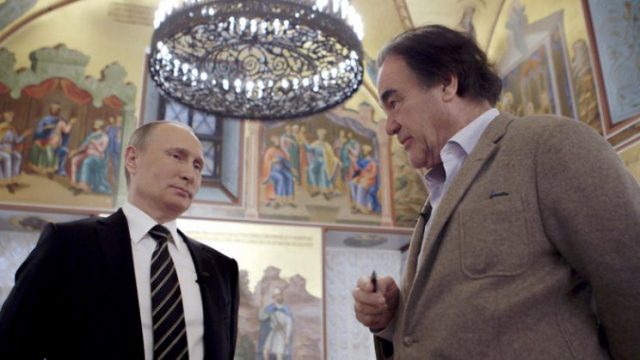
Oliver Stone interviewing Russian President Vladimir Putin in Showtime’s “The Putin Interviews.”
By Robert Parry | Consortium News | June 13, 2017
There was a time when I thought that it was the responsibility of an American journalist to hear all sides of a dispute and then explain the issue as fairly as possible to the American people, so they would be armed with enough facts to make their own judgments and act as the true sovereigns in a democracy.
I realize how naïve that must sound today as American journalism has shifted to a new paradigm in which the major news outlets view it as their duty to reinforce whatever the establishment narrative is and to dismiss or discredit any inconvenient facts or alternative analyses.
Today, The New York Times, The Washington Post and the rest of the mainstream media permit only the narrowest of alternative views to be expressed or they just pile into the latest groupthink whole hog.
So, that is why director Oliver Stone’s four-part series of interviews with Russian President Vladimir Putin on “Showtime” will surely draw near-universal outrage and ridicule from the big U.S. media. How dare anyone let Putin explain how he views the challenges facing the world? Can you believe that any right-thinking American would treat the Russian leader with civility and – god forbid – respect?
The new American media paradigm requires either endlessly insulting Putin to his face or aggressively blacking out his explanations, especially if they are based on information that puts the U.S. government in a negative light. The American people must be protected from this “Russian propaganda and disinformation.”
In other words, with the mainstream “guardians of truth” forewarning the American people not to watch Stone’s “The Putin Interviews,” the series will probably draw a relatively small viewership and the demonizing of Putin and Russia will continue unabated.
The American public can thus be spared some disturbing historical revelations and the unsettling vertigo that comes from hearing information that disrupts “what everyone knows to be true.”
In the “director’s cut” or long-form version of the four-part series that I watched, Stone does allow Putin to offer detailed explanations of his thinking on current crises, but also draws from Putin acknowledgements that might be surprising coming from a Russian leader. He also puts Putin in some uncomfortable binds.
–Regarding the Soviet Union’s development of the nuclear bomb in the late 1940s, Putin said Russian and German scientists were working on the project but got help from participants in the U.S. nuclear program:
“Our intelligence also received a lot of information from the United States. Suffice it to remember the Rosenberg spouses who were electrocuted. They didn’t acquire that information, they were just transferring that information. But who acquired it? The scientists themselves – those who developed the atomic bomb.
“Why did they do that? Because they understood the dangers. They let the genie out of the bottle. And now the genie cannot be put back. And this international team of scientists, I think they were more intelligent than the politicians. They provided this information to the Soviet Union of their own volition to restore the nuclear balance in the world. And what are we doing right now [with the U.S. withdrawal from the Anti-Ballistic Missile Treaty]? We’re trying to destroy this balance. And that’s a great mistake.”
–Regarding the origins of modern Islamist terrorism, Putin said: “Al Qaeda is not the result of our activities. It’s the result of the activities of our American friends. It all started during the Soviet war in Afghanistan [in the 1980s] when the American intelligence officers provided support to different forms of Islamic fundamentalism, helping them to fight the Soviet troops in Afghanistan.
“So the Americans themselves nurtured both Al Qaeda and [Osama] bin Laden. But it all spun out of control. And it always happens. And our partners in the United States should have known about that. So they’re to blame.”
Stone noted how President Reagan’s CIA Director William Casey sought to exploit Islamic fundamentalism to destabilize Muslim parts of the Soviet Union and to achieve regime change in Moscow.
Putin added: “Those ideas are still alive. And when those problems in Chechnya and the Caucasus emerged [after the collapse of the Soviet Union in 1991], the Americans, unfortunately, supported those processes. We [Russians] assumed the Cold War was over, that we had transparent relations, with the rest of the world, with Europe and the U.S. And we certainly counted on support, but instead, we witnessed that the American Intelligence services supported terrorists.
“I’m going to say something very important, I believe. We had a very confident opinion back then, that our American partners in words were talking about support to Russia, the need to cooperate, including fighting terrorism, but in reality they were using those terrorists to destabilize the internal political situation in Russia.”
–Regarding NATO expansion into Eastern Europe,” Putin said, “There was a deal not to expand NATO eastward. [But] this deal was not enshrined in paper. It was a mistake made by Mr. Gorbachev [the last president of the Soviet Union]. In politics, everything must be enshrined in paper.
“My impression is that in order to justify its existence, NATO has a need of an external foe, there is a constant search for the foe, or some acts of provocation to name someone as an adversary.”
–Regarding NATO missile bases being installed in Eastern Europe, Putin said: “And what are we supposed to do. In this case we have to take countermeasures. We have to aim our missile systems at facilities that are threatening us. The situation becomes more tense. …
“There are two threats for Russia. The first threat, the placement of these anti-ballistic missiles in the vicinity of our border in the Eastern European countries. The second threat is that the launching pads of these anti-ballistic missiles can be transformed within a few hours into offensive missile launching pads. Look, if these anti-ballistic missiles are placed in Eastern Europe, if those missiles are placed on water, patrolling the Mediterranean and Northern Seas, and in Alaska, almost the whole Russian territory would be encircled by these systems.
“As you can see, that is another great strategic mistake made by our partners [a word that Putin uses to refer to the United States]. Because all these actions are going to be adequately answered by Russia. And this means nothing else but a new cycle of an arms race. …
“When the Soviet Union collapsed, they [American leaders] were under the illusion that the U.S. was capable of anything, and they could [act] with impunity. That’s always a trap, because in this situation the person or the country begins to commit mistakes. There is no need to analyze the situations, or think about the consequences. And the country becomes inefficient. One mistake follows another. And I think that is the trap the U.S. has found itself in.”
–Regarding the prospect of nuclear war, Putin said, “I don’t think anyone would survive such a conflict.” Regarding U.S. plans for creating a missile shield, he said, “There is a threat deriving from the illusion of being protected, and this might lead to more aggressive behavior. That is why it is so important to prevent unilateral actions. That is why we propose to work jointly on the anti-ballistic missile system.”
–Regarding the American neoconservatives who now dominate the U.S. foreign policy establishment and the major news media, Stone described “the neoconservative element as being so hungry to make their point, to win their case that it’s dangerous.” Putin responded, “I fear them too.”
–In an interview on Feb. 16, 2016, Stone asked about the U.S. presidential campaign to which Putin replied, “We are going to be ready to work with whoever gets elected by the people of the United States. I said that on several occasions and that’s the truth. I believe nothing is going to change no matter who gets elected. … The force of the United States bureaucracy is very great. And there are many facts that are not visible to the candidates until they become President. And the moment one gets to real work, he or she feels the burden. …
“My colleague, Barack Obama, promised to close Guantanamo. He’s failed to do that. But I’m convinced that he sincerely wanted to do that. … Unlike many partners of ours, we never interfere within the domestic affairs of other countries. That is one of the principles we stick to in our work.”
–In a February 2017 interview, which was added amid the escalation of charges that Russia interfered in the U.S. election, Stone noted that Donald Trump is “your fourth president” and asked, “what changes?”
“Almost nothing,” Putin said with a wry smile. “Life makes some changes for you. But on the whole, everywhere, especially in the United States, the bureaucracy is very strong. And bureaucracy is the one that rules the world.”
Asked about alleged Russian interference to help Trump, Putin responded: “You know, this is a very silly statement. Certainly, we liked President Trump and we still like him because he publicly announced that he was ready to restore American-Russian relations. … Certainly, we’ve got to wait and see how, in reality, in practice, the relations between our two countries are going to develop. …”
Stone: “So why did you bother to hack the election then?”
Putin: “We did not hack the election at all. It would be hard to imagine any other country – even a country such as Russia would be capable of seriously influencing the electoral campaign or the outcome of an election. … any talk about our influencing the outcome of the U.S. election is all lies. They are doing it for a number of reasons.
“First, they are trying to undermine the legitimacy of President Trump, create conditions that must preclude us from normalizing our relations, and they want to create additional instruments to wage an internal political war. And Russia-U.S. relations in this context are just a mere instrument in the internal political fight in the U.S. … We know all their tricks.”
–Regarding cyber-war and the possibility that U.S. intelligence planted malware and back-doors in software sold to Russia, Putin said, “Well, you will probably not believe me, but I’m going to say something strange. Since the early 1990s, we have assumed that the Cold War is over. We thought there was no need to take any additional protective measures because we viewed ourselves as an integral part of the world community.
“We didn’t have any equipment of our own. Our companies, our state institutions and administrative departments, they were buying everything – hardware and software. And we’ve got much equipment from the U.S., from Europe, and equipment is used by the Intelligence Services and by the Defense Ministry. But recently we certainly have become aware of the threat that all of that poses.
“Only during recent years, have we started to think about how we can ensure technological independence, as well as security. Certainly we give it much thought, and we take appropriate measures. … We had to catch up with others.”
In an aside to Putin’s translator within earshot of Putin, Stone remarked: “He’s acting funny about this story, like he’s guilty a bit.”
–Regarding the dangers to Russia from U.S. cyber-warfare, Putin said: “It is almost impossible to sow fear among the Russian citizens. … And secondly, the economies that are more sophisticated, in technological terms, they are more vulnerable to this type of attack. But in any case, this is a very dangerous trend. A very dangerous avenue for competition to pursue and we need some rules to be guided by.”
When Stone raised the possibility of a treaty, Putin said, “I don’t want to say that, but you are simply drawing this information from me. You make me say that. One and a half years ago, in Autumn 2015, we came up with a proposal that was submitted to our American counterparts. We suggested that we should work these issues through and arrive at a treaty, an agreement on the rules to be guided by in this field. The Americans didn’t respond, they kept silence, they didn’t give us any reply.”
–Regarding allegations of Putin’s wealth, Stone asked, “Is there someway you could make your personal wealth clearer?”
Putin responded indirectly: “I remember when I moved to Moscow from St. Petersburg [in the 1990s], I was astounded and shocked by how many crooks had gathered here in Moscow and their behavior was so astounding, I couldn’t get used to it for a very long time. Those people didn’t have any scruples at all. … My task was to differentiate between power and money.”
Stone: “So there are no bank accounts in Cyprus?”
Putin: “No, and never have been. That’s just nonsense, and if that were the case we would have had to face it a long time ago.”
–Although Putin remained disciplined and controlled during the long sit-downs with Stone, the Russian president appeared most uncomfortable when Stone pressed him about his future plans and the risk of a leader viewing himself as indispensable to a nation.
Citing the possibility that Putin would have been in power – as either prime minister or president – for 24 years if he were to run for president again and win, Stone asked, “Do you feel that Russia needs you that badly?”
Putin: “The question you have asked whether Russia needs anyone that bad – Russia itself will decide. An alteration in power certainly has to exist. … In the end, let me reiterate – the citizens of Russia are going to make the final decision. Concerning the 2018 elections, I’d like to say there are things, things that should have some intrigue and mystery. So I am not going to answer that part of the question.”
Stone: “I said if…”
Putin: “We shouldn’t speak in the subjunctive mood.”
Stone then suggested more transparency in the next election.
A stern Putin responded: “Do you think our goal is to prove anything to anyone? Our goal is to reinforce our country.”
Stone: “That is a dangerous argument. It works both ways. Those who abuse power always say it’s a question of survival.”
Putin: “We are not talking about survival and we are not trying to justify ourselves. Certainly taking into account all the negative tendencies you’ve been talking about – the Soviet legacy, the Imperialist legacy, it’s something in the past. But we also have to think about the positive legacy. Russia has been built for a thousand years; it has its own traditions. We have our notions of what is just and unjust, we have our own understanding of what defines an efficient government.
“This is not a question of helping someone cling to power or to claim it for myself. This is about ensuring economic growth and sustaining it, improving our defense capabilities, and not just during periods of crisis and difficulties.”
Stone: “Mr. Putin, I don’t doubt for one moment your pride in serving Russia or that you are a son of Russia to me, and you have done very well by her. We all know the price of power. When we’re in power too long no matter what, the people need us but at the same time we’ve changed and we don’t even know it.”
Putin: “Indeed, this is a very dangerous state. If a person in power feels that they have lost it, this bond connecting this person to the country and to the rank-and-file citizens of the country, then it’s time for them to go.”
Germany’s Die Linke Calls for Improvement in Russia Relations
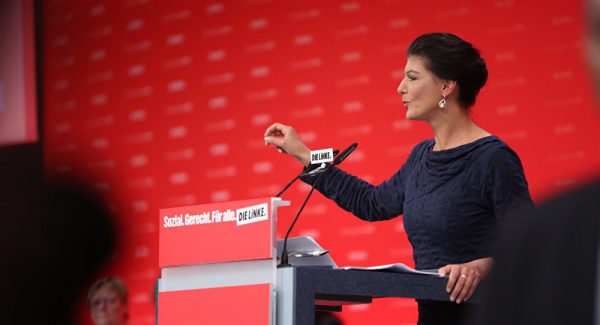
Sputnik – June 12, 2017
Germany’s Die Linke party, which held its party conference in Hannover last weekend, is seeking to pursue a policy of “good neighborliness” and improve relations with Russia, the party’s leader in the Bundestag Sahra Wagenknecht told Sputnik.
The leftist Die Linke is the third-largest party in the German Bundestag, with 64 seats. On Friday, the party began its three-day conference in Hannover, where party members debated its manifesto ahead of federal elections to be held on September 24. On the sidelines of the conference, Sahra Wagenknecht, co-leader of Die Linke in the Bundestag, told Sputnik Deutschland that one of the party’s foreign policy ambitions is to improve relations with Russia.
“We want to improve the relationship with Russia, we want a new approach in the tradition of détente politics, a policy of good neighborliness. This means taking mutual interests seriously and mutually accepting legitimate interests. Europe and Russia have a history that can’t be erased, and Russia has always been the victim of raids and wars, not least, and worst of all, by Germany in the Second World War,” Wagenknecht said.
“That is why I can well understand that many people feel threatened when they see German soldiers on the Russian border again. We do not want that, we want peace in Europe and peace is only possible with Russia and not against Russia.”
Wagenknecht said her party rejects the unsubstantiated allegations made in the US that Russia influenced the result of last year’s presidential election, to the detriment of Democratic candidate Hillary Clinton.
Rather, Clinton’s failure to be elected President was a result of her shortcomings as a candidate from the establishment, at a time when voters are keen for something different.
“This debate is going on in all seriousness and it is really curious. I really have to say: Whoever ascribes to Russia the power to essentially decide who will lead the American nation and who will become President, is completely crazy.”
“Of course, there is no substance [to the allegations]. I think there has to be a serious discussion about why someone like Donald Trump was able to be elected. That is also where we are regarding social issues and social problems, there is an absence of perspective. Above all, the election in the USA was an anti-election. The people there did not want any ‘more of the same,’ they did not want Hillary Clinton. This is the truth and everything else is really ridiculous,” Wagenknecht said.
In her speech to the party conference, Wagenknecht called on the German left to provide an alternative to establishment politics and emulate the recent success of the UK’s Labour Party, which succeeded in last week’s general election with a socialist agenda. Against expectations, Labour Party leader Jeremy Corbyn increased his party’s share of the vote by 9.6 per cent and gained an extra 30 seats in parliament.
Wagenknecht drew an unfavorable comparison between Corbyn and German Social Democrats (SPD) leader Martin Schulz.
“Die Linke would immediately elect a German Jeremy Corbyn as Chancellor; It is not, unfortunately, in our power to make Martin Schulz into a Jeremy Corbyn,” Wagenknecht told the conference.
In conversation with Sputnik, the party co-chair said that Corbyn had won by taking “classical Social-Democratic positions” such as renationalization of privatized public services and utilities as well as investment in education and healthcare.
“He was vilified as somebody who wants to return to the past. This is a reproach which we hear in Germany again and again: If someone wants to restore the welfare state, then one is supposedly backward. But Corbyn was not bothered at all by all the insults and defamations. He was treated very badly, also by the media, but he pulled through, he said clearly, ‘this is what I want.’ He also had credibility, which is probably the most decisive. It is not just about the promises which are made to voters but also about whether or not to believe him.”
“Martin Schulz doesn’t have any of that. He doesn’t have any credibility or [political] demands. Everything is to force a continuation of the grand coalition. So, you don’t win elections, but one is also out of the game when it comes to making a new coalition with left-wing participation. This is absurd, because we don’t want to continue the recent policy,” Wagenknecht said. The politician said that her party would consider entering into coalition only if it could find a suitable partner.
“Sure, we want to govern if we have an absolute majority. If we have partners with the same goals, we want to govern. But we do not want to go into a government in which, in the end, we have to do the opposite of what we have promised the voters. There are enough of those kinds of parties, which have no credibility, which can’t be trusted by their voters. We won’t be like that,” Wagenknecht declared.
Tehran Was Always America’s and Thus the Islamic State’s Final Destination
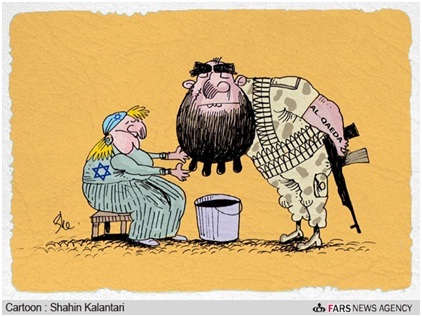
By Tony Cartalucci – New Eastern Outlook – 10.06.2017
Several were left dead and many more injured after coordinated terror attacks on Iran’s capital of Tehran. Shootings and bombings targeted Iran’s parliament and the tomb of Ayatollah Khomeini.
According to Reuters, the so-called “Islamic State” claimed responsibility for the attack, which unfolded just days after another terror attack unfolded in London. The Islamic State also reportedly took responsibility for the violence in London, despite evidence emerging that the three suspects involved were long-known to British security and intelligence agencies and were simply allowed to plot and carry out their attacks.
It is much less likely that Tehran’s government coddled terrorists -as it has been engaged for years in fighting terrorism both on its borders and in Syria amid a vicious six-year war fueled by US, European, and Persian Gulf weapons, cash, and fighters.
Armed Violence Targeting Tehran Was the Stated Goal of US Policymakers
The recent terrorist attacks in Tehran are the literal manifestation of US foreign policy. The creation of a proxy force with which to fight Iran and establishing a safe haven for it beyond Iran’s borders have been long-stated US policy. The current chaos consuming Syria and Iraq – and to a lesser extent in southeast Turkey – is a direct result of the US attempting to secure a base of operations to launch a proxy war directly against Iran.
In the 2009 Brookings Institution document titled, “Which Path to Persia? Options for a New American Strategy toward Iran,” the use of then US State Department-listed foreign terrorist organization Mujahedin-e Khalq Organization (MEK) as a proxy for instigating a full-fledged armed insurgency not unlike that which is currently unfolding in Syria was discussed in detail.
The report explicitly stated:
The United states could also attempt to promote external Iranian opposition groups, providing them with the support to turn themselves into full-fledged insurgencies and even helping them militarily defeat the forces of the clerical regime. The United states could work with groups like the Iraq-based National council of resistance of Iran (NCRI) and its military wing, the Mujahedin-e Khalq (MeK), helping the thousands of its members who, under Saddam Husayn’s regime, were armed and had conducted guerrilla and terrorist operations against the clerical regime. although the NCRI is supposedly disarmed today, that could quickly be changed.
Brookings policymakers admitted throughout the report that MEK was responsible for killing both American and Iranian military personnel, politicians, and civilians in what was clear-cut terrorism. Despite this, and admissions that MEK remained indisputably a terrorist organization, recommendations were made to de-list it from the US State Department’s Foreign Terrorist Organization registry so that more overt support could be provided to the group for armed regime change.
Based on such recommendations and intensive lobbying, the US State Department would eventually de-list MEK in 2012 and the group would receive significant backing from the US openly. This included support from many members of current US President Donald Trump’s campaign team – including Rudy Giuliani, Newt Gingrich, and John Bolton.
However, despite these efforts, MEK was not capable then or now of accomplishing the lofty goal of instigating full-fledged insurrection against Tehran, necessitating the use of other armed groups. The 2009 Brookings paper made mention of other candidates under a section titled, “Potential Ethnic Proxies,” identifying Arab and Kurdish groups as well as possible candidates for a US proxy war against Tehran.
Under a section titled, “Finding a Conduit and Safe Haven,” Brookings notes:
Of equal importance (and potential difficulty) will be finding a neighboring country willing to serve as the conduit for U.S. aid to the insurgent group, as well as to provide a safe haven where the group can train, plan, organize, heal, and resupply.
For the US proxy war on Syria, Turkey and Jordan fulfill this role. For Iran, it is clear that US efforts would have to focus on establishing conduits and safe havens from Pakistan’s southwest Balochistan province and from Kurdish-dominated regions in northern Iraq, eastern Syria, and southeastern Turkey – precisely where current upheaval is being fueled by US intervention both overtly and covertly.
Brookings noted in 2009 that:
It would be difficult to find or build an insurgency with a high likelihood of success. The existing candidates are weak and divided, and the Iranian regime is very strong relative to the potential internal and external challengers.
A group not mentioned by Brookings in 2009, but that exists in the very region the US seeks to create a conduit and safe haven for a proxy war with Iran, is the Islamic State. Despite claims that it is an independent terrorist organization propelled by black market oil sales, ransoms, and local taxes, its fighting capacity, logistical networks, and operational reach demonstrates vast state sponsorship.
The Ultimate Proxy, the Perfect Conduit and Safe Haven
The Islamic State reaching into Iran, southern Russia, and even as far as western China was not only possible, it was inevitable and the logical progression of US policy as stated by Brookings in 2009 and verifiably executed since then.
The Islamic State represents the perfect “proxy,” occupying the ideal conduit and safe haven for executing America’s proxy war against Iran and beyond. Surrounding the Islamic State’s holdings are US military bases, including those illegally constructed in eastern Syria. Were the US to wage war against Iran in the near future, it is likely these assets would all “coincidentally” coordinate against Tehran just as they are now being “coincidentally” coordinated against Damascus.
The use of terrorism, extremists, and proxies in executing US foreign policy, and the use of extremists observing the Islamic State and Al Qaeda’s brand of indoctrination was demonstrated definitively during the 1980’s when the US with the assistance of Saudi Arabia and Pakistan – used Al Qaeda to expel Soviet forces from Afghanistan. This example is in fact mentioned explicitly by Brookings policymakers as a template for creating a new proxy war – this time against Iran.
For the US, there is no better stand-in for Al Qaeda than its successor the Islamic State. US policymakers have demonstrated a desire to use known terrorist organizations to wage proxy war against targeted nation-states, has previously done so in Afghanistan, and has clearly organized the geopolitical game board on all sides of Iran to facilitate its agenda laid out in 2009. With terrorists now killing people in Tehran, it is simply verification that this agenda is advancing onward.
Iran’s involvement in the Syrian conflict illustrates that Tehran is well aware of this conspiracy and is actively defending against it both within and beyond its borders. Russia is likewise an ultimate target of the proxy war in Syria and is likewise involved in resolving it in favor of stopping it there before it goes further.
China’s small but expanding role in the conflict is linked directly to the inevitability of this instability spreading to its western Xianjiang province.
While terrorism in Europe, including the recent London attack, is held up as proof that the West is “also” being targeted by the Islamic State, evidence suggests otherwise. The attacks are more likely an exercise in producing plausible deniability.
In reality, the Islamic State – like Al Qaeda before it – depends on vast, multinational state sponsorship – state sponsorship the US, Europe, and its regional allies in the Persian Gulf are providing. It is also sponsorship they can – at anytime of their choosing – expose and end. They simply choose not to in pursuit of regional and global hegemony.
The 2009 Brookings paper is a signed and dated confession of the West’s proclivity toward using terrorism as a geopolitical tool. While Western headlines insist that nations like Iran, Russia, and China jeopardize global stability, it is clear that they themselves do so in pursuit of global hegemony.
Report: Rise in number of Russian Jews leaving Israel
MEMO | June 9, 2017
A new report revealed an increase in the number of Russian Jews who migrate from Israel to other countries or to their original home in Russia and the former Soviet Union.
The report, released by the Knesset Committee for Immigration, Absorption and Diaspora Affairs, revealed that 38 per cent of the total 290,300 immigrants who left Israel without return within the past 14 years are Russian immigrants.
According to the report, the main reasons for their reverse migration include the “glass barrier” which prevents their progress in the occupational ladder, lack of separation between religion and state especially in the matters of marriage, burial rituals, in addition to the stereotyping of Russians and discrimination on the public and official levels.
The committee held on Wednesday an emergency session following the release of the report published in early May which pointed out that one in six Russian immigrants leave Israel and that the percentage could rise if the relevant authorities do not provide appropriate solutions.
According to official data, nearly 650,000 people from the former Soviet Union immigrated to Israel – including 185,000 people under the age of 20 – between 1990 and 1996.
Moscow Urges CNN Host to Take Honest Interview with Aleppo Boy

Fars News Agency | June 8, 2017
The Russian Foreign Ministry’s spokeswoman Maria Zakharova on Thursday invited CNN host Christiane Amanpour to visit Syria to make an honest interview with the Syrian boy from Aleppo known as the “symbol of Aleppo suffering.”
The RT broadcaster released a two-part interview with Omran Daqneesh’s father Mohammad Kheir Daqneesh on Tuesday and Wednesday. The interview revealed that the White Helmets volunteers had manipulated injured Omran into being photographed instead of offering immediate help and later threatened his father after he went into hiding to prevent any more unwanted media exposure, Sputnik reported.
Amanpour in her October interview with Russian Foreign Minister Sergey Lavrov showed the photograph of Daqneesh shot in August, saying that it illustrated “a crime against humanity.”
“I’d like to say that if Amanpour started this story, I mean so publicly, coming to Moscow and being determined enough to print out the photograph and show it to Sergei Lavrov, maybe she has enough bravery, journalistic professional ethics and simple humane conscience to finish it? And do that by going to Aleppo, finding the family of the boy and taking a truly honest interview, not a set up one as they at CNN know, but an honest interview with the boy,” Zakharova said.
August’s footage showed the boy injured and covered in ashes after being rescued from an attack in the militant-controlled Karm al-Qaterji neighborhood. Syrian anti-government forces accused Moscow of conducting an airstrike on the neighborhood, while Russian Defense Ministry’s spokesman Maj. Gen. Igor Konashenkov denied Western media reports of Russia’s alleged role in the strike as the residential neighborhood is directly adjacent to the Russian humanitarian operation corridors for the safe exit of local residents.
Konashenkov previously stated that the nature of damage shown by Western media during Omran’s rescue demonstrates that if the strike did take place, it could not have come from aircraft munitions, but a mine or a gas cylinder, heavily used by terrorists in Syria. The Russian defense ministry’s spokesman accused the media of committing a “moral crime” in the “cynical hype” of the volunteers’ footage for their “formulaic propaganda material.”
25,000 troops to take part in largest US-led Black Sea drills in July
RT | June 7, 2017
The largest US-led drills in the Black Sea area this year will see 25,000 American and allied troops gather in Bulgaria, Hungary and Romania this July for the annual ‘Saber Guardian 2017’ exercises.
The fifth edition of the annual Saber Guardian war-games, scheduled for July 10-20, will be “larger in both scale and scope” compared to previous years, the US European Command said in a statement.
It will amass around 25,000 servicemen from the US and 23 other nations, making it “the largest of the 18 Black Sea region exercises this year.”
According to the US European Command, the drills will focus on “participant deterrence capabilities, specifically, the ability to mass forces at any given time anywhere in Europe.”
The participating forces will also engage in an array of live fire exercises, river crossings and a mass casualty exercise.
The European-based 3rd Armored Brigade Combat Team, 4th Infantry Division and 2nd Cavalry Regiment are to represent the US military during the drills.
The Saber Guardian drills will be preceded and followed by a number of smaller exercises, in what the Americans calls “deterrence in action.”
Also on Wednesday, the US European Command announced the arrival of “several” B-1B heavy bombers from Ellsworth Air Force Base in South Dakota to the Fairford Airbase in the UK.
The bombers will support the separate Saber Strike and BALTOPS exercises to take place in the Baltics, and elsewhere in Europe this June.
Saber Strike is an annual exercise which was first staged in 2010 to improve cooperation among allies, while promoting regional stability and security, the US European Command said.
The current chapter of the so-called BALTOPS multinational drills will involve 4,000 navy personnel, 50 ships and submarines and more than 50 aircraft.
On Tuesday, Russia scrambled jets to intercept a nuclear-capable US B-52 strategic bomber which was flying in neutral airspace over the Baltic Sea along the Russian border.
NATO used the Ukrainian conflict and Crimea’s reunion with Russia in 2014 as a pretext to boosting its military presence in Eastern Europe, which it says is necessary to reassure allies in the face of the “Russian threat.”
The US-led military alliance is regularly staging drills near Russia’s borders, involving troop numbers and hardware unseen since the Cold War.
Russia denies having any aggressive designs on Eastern Europe and believes that NATO is vilifying Moscow to justify increased defense spending among the nations in the military alliance.
Moscow sees NATO’s relentless military buildup in neighboring countries as a security threat, and has responded by strengthening its own forces in the western part of Russia.
On Tuesday, Russian Foreign Minister, Sergey Lavrov, blamed NATO of returning to “the policy of dividing lines In Europe” as he commented on the inclusion of Montenegro as the bloc’s 29th member.
READ MORE: Montenegro’s accession to NATO a purely geopolitical project, won’t boost security – Lavrov
Lavrov: Deconfliction zones in Syria announced without Damascus’ consent illegitimate
RT | June 7, 2017
Russia considers the US-led coalition airstrike against pro-Damascus fighters in Syria an act of aggression and rejects the justification for the attack issued by the Pentagon, Russian Foreign Minister Sergey Lavrov said.
The Tuesday airstrike near the town of At Tanf in eastern Syria “was an aggressive act, that violated the sovereignty and territorial integrity of the Syrian Arab Republic and – deliberately or not – targeted the forces which are most effective in fighting terrorists on the ground,” the minister said on Wednesday.
The Pentagon justified the attack by saying that the pro-government forces “advanced inside the well-established deconfliction [sic] zone in southern Syria.”
The US claimed that it attacked the pro-Damascus convoy because it posed threat to “partner forces” based in At Tanf. The US military earlier stated that an area within 55km from the town was a designated “deconfliction zone,” where forces not allied with the US are apparently not allowed to enter.
Lavrov rejected that reasoning, saying that he is not familiar with the term.
“I don’t know anything about such zones. This must be some territory, which the coalition unilaterally declared [deconfliction zones] and where it probably believes to have a sole right to take action. We cannot recognize such zones,” he said.
Lavrov said Russia, Turkey and Iran have signed a deal, which has been endorsed by the UN Security Council, to establish so-called “de-escalation zones” in several parts of Syria. Damascus agreed to this approach and the exact borders and mechanisms for observing a truce inside those zones are currently being negotiated.
“This approach was agreed to by Syria. We consider illegitimate any unilateral declaration of ‘deconfliction zones’ not endorsed by Damascus. We hope the coalition will adhere to the agreement it has reached with us, which states that the de-escalation zones must be agreed to in detail by all stakeholders,” he said.
He added that, according to some reports, the force attacked by the coalition was being deployed to prevent Islamic State (IS, formerly ISIS) fighters from destroying two bridges and a road connecting Syria with Iraq, and that the intervention had allowed the terrorists to carry out their plan.
Clapper says Russians ‘genetically driven’ to be untrustworthy — and no one even blinks
By Danielle Ryan | RT | June 3, 2017
The former US Director of National Intelligence James Clapper thinks Russians have some sort of biological predilection to be an untrustworthy bunch. I wish I was making that up, but sadly, I’m not.
Clapper said it during last Sunday’s episode of Meet The Press on NBC, during a response to a question about Jared Kushner’s ties to Moscow. The Russians are “typically, almost genetically driven to co-opt, penetrate, gain favor, whatever” — was the exact quote.
There’s great irony in that comment by Clapper, with his own record of perjury, implying that an entire ethnicity can’t be trusted. So, of course, widespread outrage followed the blatantly xenophobic comment.
Nah, I’m only joking. No one actually noticed or cared. Chuck Todd, the interviewer, let the comment slide without even acknowledging that Clapper had said something untoward.
If there was a debate about Clapper’s comment and it was deemed somehow acceptable, that would be bad enough — but it’s actually worse than that, because anti-Russian sentiment is so deeply ingrained in the American psyche, that no one even notices when a high profile figure like Clapper makes a comment about the “genetics” of Russians in an effort to brand them as inherently devious and conniving.
But it shouldn’t be surprising. Unlike any other group of people, it’s been well-established that you can say pretty much whatever you like about Russians with no repercussions or backlash of any kind, particularly if you pass it off as comedy.
Take NBC’s comedy show Saturday Night Live. Their go-to Russian character, Olya Povlatsky, played by Kate McKinnon, has regularly crossed the line from comedy into xenophobia. Even the BBC’s Shaun Walker called out one Olya skit as “veering pretty close to racism.”
The segments usually revolve around Olya telling the audience in various ways that everyone in Russia wants to be dead and that the country is a barren wasteland. Jokes involve Olya having no glass in her window frames, living with her ten sisters in one room, sleeping inside the carcass of a dog, wishing a war would come to her village and hoping she gets hit by a meteor or eaten by a bear. Asked whether she’s surprised the Olympics were coming to Russia, Olya says, “I’m surprised ANYONE is coming to Russia!”
Whenever Olya appears, you can be guaranteed SNL is about to serve up every banal stereotype about Russia in under 4 minutes.
Comedian Louis CK told an audience a few years ago that he once traveled to Russia to “see how bad life gets.” He put together a ten-minute long routine about how terrible life is in Russia and how “no one” has any money, which serves to perpetuate the ridiculous notion that Russians are all aimlessly wandering around wearing no shoes and begging for food.
It’s not difficult to imagine the reaction it would spark if a Russian comedian were to deliver the same kind of diatribe about the horrors of life in America. As journalist Dominic Basulto put it, it would “immediately be hailed as an example of the hate-filled propaganda speech filling Russian TV airwaves.”
This kind of hate-filled comedy, so pervasive in American popular culture, sets people up to not even notice when Clapper talks about Russians being genetically wired to be dishonest schemers. Replace the word ‘Russians’ with ‘Jews’ or ‘Muslims’ or ‘Latinos’ or ‘African-Americans’ — or any other group or ethnicity — and Clapper’s comment would sound simply outrageous. But, like I said, nothing is off limits when it comes to Russians.
Josh Barro, a Senior Editor at Business Insider is another good example. Barro regularly expresses his almost pathological hatred of Russia on Twitter.
I’m not sure whether his lowest point was when he suggested Russian national pride was a bizarre phenomenon since they have “so little to be proud of” — or when he stooped so low as to call the country a “dystopic shithole since the dawn of history”. It’s probably a tie. Then there’s CNN contributor Michael Weiss, who recently insinuated on Twitter that being married to a Russian is inherently suspicious.
Again, if Barro or Weiss were saying these things about other nationalities or ethnicities, there’s a good chance they would have faced some serious professional consequences by now. Not so when Russians are your target. Take your free pass and run with it.
Luckily, there are some journalists out there who still possess a basic sense of common decency. Freelance journalist Michael Sainato was one of the only people in American media who seemed to notice the offensive nature of Clapper’s comment.
In his piece for the Observer, Sainato wrote that the current political climate in the US, has “fostered xenophobia at the highest levels” and that Clapper’s comment goes “far beyond criticism of Putin and the Russian government.”
Sainato also noted that the media had contributed to the “Russophobic rhetoric” by “irresponsibly elevating” conspiracy theorists as reliable sources on the Trump-Russia story.
Honestly, at this point, I don’t know which is worse: The casual xenophobia of a top former US official suggesting an entire ethnicity has a genetic predisposition toward lying — or the fact that no one noticed.
It reminded me of a depressing conversation I had with a Russian waitress in Saint Petersburg last year. She wanted to travel to the US, but was afraid to even apply for a visa. When I asked her why, she said she was afraid that Americans would be “suspicious” of her. I wonder how many other Russians feel just like her.
Sadly, they now have good reason to worry.
Read more:
CNN introduces new definition of suspicious activity: Dating Russians
Danielle Ryan is an Irish freelance writer, journalist and media analyst. She has lived and traveled extensively in the US, Germany, Russia and Hungary. Her byline has appeared at RT, The Nation, Rethinking Russia, The BRICS Post, New Eastern Outlook, Global Independent Analytics and many others. She also works on copywriting and editing projects. Follow her on Twitter or Facebook or at her website http://www.danielleryan.net.
US deploying B-52 bombers to Europe for NATO exercise
Press TV – June 2, 2017
The US Air Force is deploying nuclear-capable B-52 bombers and 800 airmen to Britain that will take part in NATO exercises in June in Eastern Europe near Russia’s border.
The long-range strategic Boeing B-52 Stratofortress will take part in a series of joint exercises that primarily take place in the Baltic Sea, the Arctic and along Russia’s border with several NATO member states.
“Training with allies and joint partners improves coordination between allies and enables the US Air Force to build enduring relationships necessary to confront a broad range of global challenges,” the Air Force said in a press release.
In April, the US Air Force said it is deploying F-35 jets to Estonia, the service’s newest and most expensive fighter jets.
Western countries have moved to step up their military presence in Eastern Europe to deter what they call the Russian “aggression.”
Moscow is wary of NATO’s military build-up near its borders. In response, Russia has beefed up its southwestern military capacity, deploying nuclear-capable missiles to its Baltic enclave of Kaliningrad bordering Poland and Lithuania.
The B-52 deployment comes following a NATO summit on May 25 in Brussels where US President Donald Trump accused members of the alliance of not contributing enough to the NATO budget and owing “massive amounts of money” to the US.
Trump was harshly critical of NATO as a presidential candidate, describing the 28-member Western military alliance as “obsolete.”
Featured Video
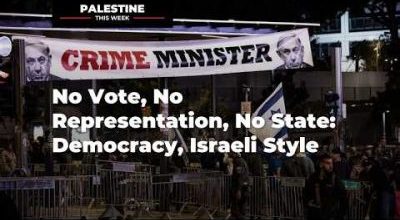
No Vote, No Representation, No State: Democracy, Israeli Style
or go to
Aletho News Archives – Video-Images
From the Archives
Sanctions, War and the Policy of Dual Containment
By SASAN FAYAZMANESH | March 17, 2008
It is now nearly three decades since the Unites States adopted the policy of dual containment of Iran and Iraq. While much has been written about the containment of Iraq, there has been very little in-depth analysis of this policy when it comes to Iran. In a book that is going to be released on March 31, 2008, entitled The United States and Iran: Sanctions, Wars and the Policy of Dual Containment (Routledge), I attempt to address this shortcoming by investigating when and why the US policy of containment of Iran came about, how it evolved, and where it stands today.[1] To the extent that Israel has been involved in US policy making, the study will also include the role that Israel has played in the containment of Iran. Also, since the fate of Iran has been inextricably linked to that of Iraq, occasionally the investigation will overlap with the containment of Iraq.
The policy of dual containment of Iran and Iraq originated during the Carter Administration, but it was not until the Clinton Administration that the expression “dual containment” became popular. … continue
Blog Roll
 Aletho News
- Elmo Sold mRNA Jabs to Your Toddler. Now They Are “Off-Label.”
- British state targets Palestine Action with yet another crooked trial
- Americans are paying the price to preserve Israel’s nuclear hegemony
- Resistance factions are necessary to ensure a permanent US Iraq withdrawal
- How Israel destabilizes the Middle East: Denying sovereignty and the right to exist
- Europe’s Establishment Is Embracing War – and Losing Voters
- NATO chief advocates war of aggression
- No Vote, No Representation, No State: Democracy, Israeli Style
- Zionist Bought Senate Blocks Information About American Citizens Killed By Israel
- While Gaza dominates the UN, these are the people keeping it alive
- If Americans Knew
- Israeli Soldiers Abduct At Least 22 Across Occupied West Bank
- Eight Palestinians Killed in Israeli Attacks on Gaza
- Israeli former leaders and security chiefs threaten legal action over ‘Jewish terrorism’
- Israel map in LA Times ad includes all land from the river to the sea
- Inside Lebanon’s 200-page dossier on Israeli war crimes
- Flydubai, genocide, settler violence, Trump abuse of power to deport – Daily Update
- Counting Antisemitic Incidents: What the ADL Audit Reveals — and Obscures
- Mamdani releases plan to combat antisemitism and hate crimes in New York City
- Iran’s Revolutionary Guards Publish Letter to the American People
- DMFI launches $1 million ad campaign supporting Virginia’s Elaine Luria
- No Tricks Zone
- Green Energy Debacle: German Expert Professor Fritz Vahrenholt Warns Of Severe Economic And Social Consequences
- Two More Paleo Reconstructions Affirm Meters-Higher Sea Levels Across Ireland, Brazil 7000-6000 Years Ago
- New Study: Earth And Venus Surface Warmth Largely Explained By Convection And Lapse Rate, Not CO2 Or Radiation
- 2025 Nature Paper Claiming Worsening Global Drought Gets RETRACTED …Heavily Flawed
- New Study: ‘Global Drought Shows No Detectable Recent Acceleration Under Climate Warming’
- Economic Masterminds: German Socialists Suggest Taxing Productivity Gains Stemming From Using AI
- The South China Sea Has Not Been Cooperating With The Climate Change Narrative
- Energy Crisis: Germany Enters Heating Season With Historically Low Gas Reserve Fill Levels
- New Study: The Antarctic Ice Sheet Gained Mass From 2020-2024 Due To Staggering Snow And Ice Accumulation
- Study: Ocean Heating Rates From Thousands Of Years Ago ‘Dwarf’ Modern Ocean Heating Rates

