Trump’s ultimatum to Russia is bluster and bluff to hide proxy war defeat
Strategic Culture Foundation | July 18, 2025
What’s behind Trump’s angry ultimatum to Russia this week? The short answer: failure and frustration. Donald Trump promised American voters that he would end the Ukraine war in 24 hours upon his election in November 2024. Six months into his presidency, Trump has failed to deliver on his boastful promises.
This week, Trump flipped his pacemaker image by pledging billions of dollars worth of new American weaponry to Ukraine. He also issued a warning to Russia to call a ceasefire within 50 days or else face severe secondary tariffs on its oil and gas exports. The tariffs, quoted at 100 percent, will be applied to nations purchasing Russian exports, primarily Brazil, China, and India. The latter move indicates that the U.S.-led proxy war in Ukraine against Russia is really part of a bigger geopolitical confrontation to maintain American global hegemony.
In any case, Moscow dismissed Trump’s ultimatum. Deputy Foreign Minister Sergei Ryabkov said that Moscow would not comply with pressure and that Russia would not back down from its strategic goals in Ukraine to counter NATO’s historic aggression.
It is clear that Trump and his administration have failed to understand Russia’s strategic position and the root causes of the conflict.
Trump’s supposed diplomacy is seen to operate on a superficial basis more akin to showbiz, with no substance. He wants a peace deal with Russia to show off his vaunted skills as a business negotiator and to grab the limelight, headlines, and adulation.
Resolving a conflict like Ukraine requires deep historical understanding and genuine commitment to due diligence. Moscow has repeatedly stated the need to address the root causes of the conflict: the expansion of NATO on its borders, the CIA-sponsored coup in Kiev in 2014, and the nature of the NATO-weaponized Neo-Nazi regime over the past decade.
Trump and his administration have failed to appreciate Russia’s viewpoint. Thus, expecting a peace deal based on nothing but rhetoric and vacuous claims about “ending the killing” is futile. It won’t happen.
This failure, based on unrealistic expectations, has led Trump to adopt an increasingly bitter attitude towards Russian President Vladimir Putin in recent weeks. Ironically, Trump has accused Putin of duplicity and procrastination when, in reality, it is Trump who has shown no serious commitment to resolving the conflict.
Now, with chagrin and bruised ego, Trump has reacted with frustration over what are his own failings by issuing ultimatums to Russia. Trump’s 50-day deadline for a Russian response to his demands has a similarity to the 60-day deadline he threatened Iran with, after which he carried out a massive bombing attack on that country. Trump’s aggression towards Iran has turned out to be a fiasco and failure. Threatening Russia is even more useless.
This proclivity for threatening other nations has the hallmark of a Mafiosa megalomaniac. It is also causing Trump to lose support among his voter base, who believed he was going to end “endless wars.” It’s shambolic. Biden’s war is becoming Trump’s war because, at the end of the day, it is the U.S. imperial deep state that rules.
Trump’s mercurial switch from professing peace in Ukraine to ramping up the promise of weapons shows that his previous aspirations were always hollow and contingent on other interests.
It seems that the 47th American president did not want peace after all. What was driving his apparent desire to end the conflict in Ukraine – what he deprecated as “Biden’s war” – was simply to cut American financial costs.
What has appealed to Trump is that the proposed new supplies of American weapons to Ukraine will be paid for by Europe. Money and profit are all that matter to him. It is significant that when Trump announced the new arms racket scheme, he was sitting beside NATO chief Mark Rutte in the Oval Office. Rutte has a knack for wheedling, previously referring to Trump as “daddy” and this week absurdly praising the U.S. as the world’s policeman for securing peace. It seems that the NATO and transatlantic ruling establishment have found a way to manipulate Trump. Tell him that the Europeans will henceforth directly subsidize the U.S. military-industrial complex.
The trouble for Trump and the NATO establishment is that it is all an unworkable bluff. For a start, the U.S. arsenal of Patriot missiles and other munitions has been depleted and destroyed by Russia over the past three years in Ukraine. There are no “wonder weapons” that can alter the battlefield dominance of Russia.
Secondly, the European economies are broke and can hardly sustain the proposed purchase of U.S. weapons for Ukraine, even if such supplies were feasible, which they are not. At least four European states, including France, the Czech Republic, Italy, and Hungary, have said they will not engage in any scheme of buying American weapons for Ukraine.
Thirdly, Trump’s threat of secondary sanctions against Brazil, China, India, and others for doing business with Russia is a blatant assault on the BRICS and Global South that will only garner international contempt. Trump’s bullying is neither viable nor credible. His earlier trade war against China has already failed and shown that the United States is an impotent giant whose power is a thing of the past. Trump had to climb down from his hobby horse towards China.
So, threatening to hit China and others with 100 percent tariffs for doing business with Russia is like a former prizefighter shaking a feeble fist while sitting in a wheelchair. He is liable to incur more self-harm.
Lastly, Russia is decisively winning the NATO-led proxy war in Ukraine. The Kiev regime’s air defenses are non-existent at this stage. Therefore, Russia can and will press its strategic terms to end the conflict because it is the military victor.
Trump’s ultimatum to Russia is nothing but bluster and bluff. He once mocked Ukraine’s puppet president Zelensky, that he had no cards to play. Trump, for all his bravado, has only a couple of deuces himself.
In 50 days, Trump will have a serious amount of egg on his face when Russia’s defeat of the NATO proxy war becomes more evident.
Want To Wipe Out Patriot Systems? Ask The Russians How
Sputnik – 18.07.2025
US-made Patriot air defenses aren’t a magic fix for Ukraine — and Russia’s arsenal has already exposed their weaknesses.
“Patriot is ineffective against hypersonic missiles,” retired Russian Colonel Viktor Litovkin tells Sputnik.
- The Kh-47M2 Kinzhal, a Russian hypersonic missile that reaches speeds up to Mach 10 and ranges of 3,000 km, easily destroys Patriots.
- Iskander-M’s single-stage solid-fuel guided missile 9M723 boasts a quasi-ballistic trajectory. With a striking range up to 500km it is another effective tools against Patriot systems.
- Both the Iskander-M and Kinzhal systems demonstrate high precision.
- Not by hypersonic alone: Geran dones + Kalibr missiles is a killer combo. A swarm of Geran drones forces Patriots to waste missiles. Then, while it’s reloading, a cruise missile, like a Kalibr, is fired.
Patriot’s Achilles’ heels
- “Dead Zones”: The Patriot has dead zones, like up to 100m altitude where it can’t detect targets, per Litovkin.
- So drones flying low can evade it. This is exactly how Houthi drones overcome air defenses in the Middle East, and Patriots couldn’t stop them.
- Easy to detect: The Patriot system has a radar station that emits radio waves. By detecting these waves, you can determine where they come from and pinpoint the coordinates of the source. So, in this case, reconnaissance is technically quite simple.
Ukraine’s Layered Defense Dream
The Kiev regime aims to build a layered system, says Yuriy Knutov, a military expert and air defense historian, which would include:
- long-range Patriots
- mid-range SAMP/T
- short-range NASAMS or IRIS-T
- plus Gepard guns
Who gets protection:
- Knutov believes that new Patriot systems will protect Western military plants in Ukraine.
- They’ll also be deployed around Kiev, Kharkov, Odessa, and Lichevsk — key hubs for weapons.
- Ukrainian troops at the front lines? Just cannon fodder.
The Patriot is the core — so it must be precisely targeted, he says.
Germany, UK to deliver long-range weapons to Ukraine under new pact
Al Mayadeen | July 17, 2025
Ukraine is set to receive new long-range weapons systems developed through joint efforts by British and German defense industries, German Chancellor Friedrich Merz announced Thursday. The deliveries are expected to begin within the next few weeks and continue over the coming months.
The statement followed the signing of a new bilateral agreement between Germany and the United Kingdom. Chancellor Merz and UK Prime Minister Keir Starmer formalized what they described as a “historic” treaty focused on friendship and enhanced defense cooperation during a joint appearance in Berlin.
Speaking at a press conference alongside Starmer, Merz stressed the expanded scope of military assistance to Ukraine. “We had a detailed discussion about military support for Ukraine, and this is not only about air defense, but also about Ukraine’s ability to better defend itself with long-range systems. We call this long range fire,” he said during the event, which was broadcast by Germany’s Phoenix TV.
He added that “Ukraine will soon receive significant additional support in this area, including through the industrial cooperation that we have established with Ukraine.”
Arming Ukraine
The delivery of these advanced systems comes in light of a deepening of European defense collaboration in support of Ukraine, amid ongoing hostilities with Russia. The weapons transfer is part of a broader framework outlined in the Kensington Treaty, signed on July 17, 2025, in London, the first post-WWII bilateral defense treaty between the UK and Germany. The pact not only strengthens joint military production but also facilitates financing and technological cooperation with Ukraine’s domestic arms industry.
Germany has already committed approximately €5 billion to support Ukraine’s production of long-range strike capabilities and has lifted previous range restrictions on German-supplied weapons, enabling Kiev to strike targets within Russian territory. British-German collaboration is also laying the foundation for future deep-precision systems with ranges exceeding 2,000 km, designed to ensure sustained deterrence capabilities in Eastern Europe.
These moves reflect a decisive shift in European defense policy amid increasing urgency to counter growing Russian military pressure.
Provocative Escalation
Moscow has responded with sharp warnings. Russian Foreign Minister Sergei Lavrov condemned Germany’s posture, suggesting it reveals the true intentions behind Western support for Kiev.
Kremlin spokesperson Dmitry Peskov criticized the deepening UK-Germany military alignment as a destabilizing factor for European security. Former President Dmitry Medvedev went further, cautioning that continued Western arms deliveries to Ukraine may provoke preemptive Russian strikes.
In a statement reported by TASS, he described the expanding range and sophistication of Western weapons as justification for escalating Russia’s own military posture.
Russian officials argue that this latest escalation marks a direct provocation, framing the treaty and weapons transfer as an existential threat that could draw Europe into broader conflict.
500+ Chemical Attacks: Russia Details Ukraine’s Use of Toxic and Poisonous Agents
Sputnik – 17.07.2025
Major General Alexey Rtishchev, head of the Russian Armed Forces’ Radiation, Chemical, and Biological Protection Troops, stated that more than 500 instances of Ukraine using chemical and toxic substances have been documented during the special military operation.
“Throughout the special military operation, over 500 cases have been recorded where the Ukrainian side employed riot control agents (chloroacetophenone, CS gas), as well as toxic substances with psychotropic (BZ) and general poisonous effects (cyanogen chloride, hydrogen cyanide),” Rtishchev said during a briefing on Ukraine’s and Western countries’ violations of the Chemical Weapons Convention.
“Since the beginning of 2025, the Ukrainian Armed Forces have been systematically using copter-type drones to drop containers filled with CS gas and improvised munitions containing chloropicrin on Russian military positions,” he added.
Kiev is planning a provocation involving the release of ammonia at a facility near Novotroitsk in the DPR, says Major General Alexey Rtishchev, head of the Russian Armed Forces’ Radiation, Chemical, and Biological Protection Troops. The goal is to accuse Russia of intentionally causing a man-made disaster.
“With the support of Western handlers, the Kiev regime has not abandoned its long-developed barbaric tactic of warfare—the ‘chemical belt’ method, which involves placing and detonating containers with toxic chemicals in areas where Russian troops operate. Available evidence indicates preparations for another such provocation,” Rtishchev said during a briefing on Ukraine’s and Western countries’ violations of the Chemical Weapons Convention.
“On July 3, 2025, operational measures confirmed that Ukrainian Armed Forces personnel had installed antenna-mast equipment at a major ammonia distribution facility near the settlement of Novotroitsk. The plant is a first-class hazard facility, and if struck, it could release over 550 tons of liquid ammonia into the environment. The plan is to subsequently accuse our country of deliberately causing a man-made disaster and inflicting reputational damage,” Rtishchev added.
He presented the original letter from the deputy director of the Kiev-controlled “Ukrkhimtrans-ammiak” enterprise to the head of the regional military administration, confirming the placement of military equipment at the site.
“I remind you that using a high-risk facility for military purposes violates international humanitarian law,” the head of the Chemical, Biological, and Radiological Defense Troops emphasized.
According to the documents disclosed by Rtishchev, the incident concerns the village of Novotroitsk in the Kramatorsk district of the DPR.
Western countries will continue to use the Organization for the Prohibition of Chemical Weapons (OPCW) as an instrument of political pressure on Russia, without taking into account objective facts, head of the Nuclear, Chemical, and Biological Protection Troops of the Russian armed forces Major General Aleksei Rtishchev said on Thursday.
Last week, Dutch Defense Minister Ruben Brekelmans informed the country’s parliament that Russia, according to Dutch intelligence services, allegedly intensified the use of chemical weapons in Ukraine, which is a violation of the Convention on the Prohibition of Chemical Weapons (CWC).
“It is obvious that the West will continue to use the OPCW as an instrument of political pressure on Russia, without taking into account objective facts. The Russian side will continue to work to counter this policy and to inform the world community about the violation of the Chemical Weapons Convention by the Kiev regime and its curators,” Rtishchev told a briefing.
The activities of the OPCW have become highly politicized due to pressure from Western states, which, at their whim, impose unilateral sanctions, make unfounded accusations against undesirable countries, and abuse the provisions of the Convention, the military said.
Additionally, the military said that Russia had recently asked the OPCW head to send a team of experts from the organization’s technical secretariat to Russia to assist in the investigation of Kiev’s crimes, as well as a draft agreement between Russia and the OPCW on organizing and conducting visits for the purpose of such assistance.
“This step is due to the fact that all previously presented documentary evidence and expert opinions have not received the proper response from the organization. About 40 verbal notes from the Permanent Mission of Russia to the OPCW still remain without a meaningful response. At the same time, unsubstantiated requests from the Ukrainian side receive immediate support from the bureaucratic structures of the OPCW with the involvement of accredited laboratories,” Rtishchev said.
Taking advantage of its preferences, Ukraine has repeatedly involved the OPCW technical secretariat in legitimizing incidents falsified by Ukrainian and Western intelligence services regarding the alleged use of chemical means of riot control by Russian military personnel on the line of combat contact, he added.
The Redheaded Stepsister Goes to the Ball

Kerch Strait Bridge
By William Schryver – imetatronink – July 14, 2025
Against the AGM-158 JASSM missile, has Russia’s Kerch Strait Bridge finally met its match?
Talk of sending Joint Air-to-Surface Standoff Missiles to Ukraine commenced last year, during the later months of the Biden administration. It was reported at the time that it would take “months” to adapt the missiles to operate with the rag-tag Ukrainian air fleet consisting of a few surviving Soviet Su-27s and MiG-29s and whatever 1980s-era boneyard F-16s NATO could cobble together and render airworthy (not many).
Of the two dozen or so F-16s shipped to Ukraine, the evidence suggests few (if any) are currently airworthy, and it is likely several have already been destroyed on the ground, in addition to the handful that are confirmed to have crashed or been shot down.

JASSM Cruise Missile
The JASSM is an air-launched cruise missile, with reputed (but dubious) stealthy properties and a 450 kg warhead. The majority of production consists of the relatively short-ranged (~350 km) AGM-158A.
The later-model AGM-158B (JASSM-ER) claims a range of 1000 km, but that has never been demonstrated in a live scenario. Although at least several dozen JASSM strikes were made against Syria and Yemen during Trump’s first term, none were of the extended range variety.
The JASSM was actually considered a bust during its many years of development (1998-2009). On multiple occasions, it appeared the entire program was going to be canceled.
What was the problem? It was notoriously inaccurate!
But eventually Lockheed was able to formulate a testing regimen more likely to indicate success, and the missile finally went into production.
The US Air Force contracted to buy ~5000 units.
The US Navy declined to buy any of them.
Foreign sales have been unimpressive.
It is almost certain that the Pentagon will not throw away many (if any) of the long-range AGM-158Bs on the irreversibly lost Ukraine War. That means all that can be hoped for is a few hundred AGM-158As, with their ~350 km range.
And, in my considered opinion, the only way “Ukraine” will be able to deploy these short-range air-launched cruise missiles is if “volunteer” NATO pilots fly front-line NATO planes to deliver them.
NATO F-16s and F-15s can carry two JASSM missiles, one under each wing.
In a mission (for example) to strike the Kerch Strait Bridge, NATO aircraft (likely flying from Romania) would have to penetrate deeply into Russian air defense coverage areas extending around Crimea.
It would almost certainly require at least a dozen JASSM 450 kg warheads to make a meaningful dent in the Kerch Strait Bridge. That translates into half a dozen strike aircraft.
And, unless the NATO generals are just utterly clueless and indifferent (which they probably are), it would be a dereliction of duty to not provide a half-dozen fighters for combat air patrol.
So a dozen NATO aircraft in total — not counting any refueling tankers and ISR platforms that would be required.
I assess as VERY LOW the likelihood of success for a JASSM attack against the Kerch Strait Bridge.
I assess the risks for the attacking force to be VERY HIGH.
But I reckon they’re stupid enough to give it a try all the same.
‘Russia doesn’t respond to pressure’: How Moscow sees Trump’s ultimatum
From skepticism to strategic recalculations, Russian analysts interpret Washington’s new pressure campaign – and its limits
By Georgiy Berezovsky | RT | July 15, 2025
On Monday, July 14, US President Donald Trump issued a stark ultimatum: Russia has 50 days to reach a peace agreement, or face “very severe” tariffs on its exports – potentially as high as 100%. The move signals a shift from rhetorical posturing to a time-bound strategy aimed at forcing negotiations.
While Trump’s statement made waves in Washington and Europe, it is the reaction from Moscow that may prove most consequential. In this roundup, RT presents a cross-section of views from Russian political analysts, foreign policy scholars, and institutional insiders – voices that provide a window into how the American ultimatum is being interpreted in Russia.
Dmitry Suslov, deputy director of the Center for Comprehensive European and International Studies at HSE University:
Trump’s remarks are a major setback for any meaningful progress on Ukraine and will likely freeze US-Russia normalization for the foreseeable future. Zelensky now has no incentive to engage in serious negotiations with Moscow or consider the terms outlined in the Russian ceasefire memorandum.
Meanwhile, the European ‘party of war’ will seize on Trump’s statements as cover to promise Ukraine an endless stream of military aid – further escalating the conflict. The result? No truce, no talks, just a deepening of hostilities. Kiev may even walk away from the Istanbul peace process in the coming months – unless the battlefield situation shifts dramatically in Ukraine’s favor.
As for US-Russia relations, they were already at a standstill. Washington had effectively put dialogue on hold. Now, that pause could drag on indefinitely. When Trump issues ultimatums, sets arbitrary deadlines, and threatens Russia’s key trading partners with 100% tariffs, it’s clear there’s no space for normalization – or cooperation.
That said, unlike the Biden administration, Trump’s team appears committed to keeping diplomatic channels open with Moscow, regardless of whether there’s progress on Ukraine. But this isn’t an opening for a settlement on Russia’s terms. Trump’s goal is to pressure Moscow into compromise – something that simply isn’t going to happen.
His statement also signals that he has no intention of letting Congress dictate US foreign policy. He wants full control over tariffs – their size, timing, and structure. That’s why it’s entirely possible he’ll tweak or delay his self-imposed deadline.
Ivan Timofeev, program director of the Valdai Club:
1. Trump is frustrated with Moscow’s position on Ukraine.
Russia has refused to freeze the conflict on terms favorable to the US and Kiev – a signal that Trump sees dialogue as having hit a dead end.
2. The Lindsey Graham sanctions bill is now much more likely to pass.
Among other things, it would authorize secondary tariffs of up to 500% on countries that import Russian oil and other raw materials. While the US president already has the power to impose these measures unilaterally under IEEPA, the bill would bring Congress into alignment and add yet another layer to the already sprawling legal web of sanctions on Russia.
3. Trump would have full discretion over these secondary tariffs.
That could mean 100%, 500%, or anything in between – and he could calibrate them differently depending on bilateral relations. For example, India might face lower tariffs, China higher ones – or he might apply them uniformly. The Iran sanctions precedent shows that countries which reduced oil purchases were granted exemptions as a reward for ‘good behavior’.
4. A coordinated pushback from the Global South is unlikely.
Trump has already been pressuring both allies and neutral countries with new tariffs since April – and most are caving. Even China is treading carefully. So in the short term, we may see reduced purchases of Russian commodities simply out of a desire to avoid Trump’s wrath. Alternatively, countries may demand a higher risk premium. While there’s a lot of rhetorical support for Russia in the Global South, few are willing to stick their necks out when it comes to action.
5. Trump’s 50-day deadline amounts to an ultimatum.
Moscow will almost certainly ignore it, making the imposition of secondary tariffs a highly probable – perhaps even default – scenario. That said, Russia isn’t without leverage, limited though it may be. And it’s clearly preparing for a hardline path. Tight global commodity markets and well-established export channels work in Russia’s favor.
6. This may mark the end of backchannel diplomacy on Ukraine.
Sanctions will be ramped up, and arms deliveries to Kiev are likely to intensify. Russia, for its part, will maintain military pressure. We’re back to a familiar standoff: The West betting on economic collapse in Russia, while Moscow counts on Ukraine’s military defeat and the West’s internal turmoil. But after three years, it’s clear neither side’s assumptions have panned out. Sanctions haven’t broken Russia’s resolve, and the war effort is now on a new long-term footing.
7. The optimism in Russian markets is puzzling.
Yes, sanctions haven’t been imposed just yet – which some investors may have hoped for – but the risk landscape has only worsened. The current rally looks short-lived. Those banking on a quick end to sanctions may be in for a long wait.
Timofey Bordachev, professor at the Higher School of Economics:
In theater or film, ‘playing a scene’ means performing a role convincingly – conveying emotions, building a character, advancing the plot. Donald Trump does that rather well. He seems to grasp a fundamental truth: Bold moves between nuclear superpowers are dangerous precisely because they are impossible. They risk the irreversible – and Trump clearly wants no part of that. On some level, he understands that the diplomatic chess match will drag on indefinitely, and that there are no clean resolutions. Still, the show must go on – and the audience must be entertained.
That’s why Trump substitutes real strategy with theatrics: Shifting arms deliveries to NATO, proposing a new financing scheme for Kiev, tossing around tariff threats against Russia and its trading partners. It’s about constantly filling the political space with action – or at least the illusion of it – to avoid the impression of paralysis or failure. If no progress is made on Ukraine within 50 days, he’ll unveil a new plan that overwrites the old one.
None of these announcements should be treated as final or irreversible – and in that, Trump is perfectly in tune with the nature of today’s international politics. His behavior isn’t a deviation – it’s a reflection of the system.
Maxim Suchkov, director of the Institute for International Studies at MGIMO University:
Trump’s statement brings both good and bad news for Moscow. The good news is that the final decision was largely predictable – no surprises, no sudden turns. As is often the case with Trump, the ‘teaser’ for his policy was more dramatic than the main act. Europe wants to continue the war – and Trump is happy to let it pay the price. For now, he’s held back from embracing the more radical measures proposed by the hawks in his circle, which means dialogue with Washington is still on the table.
The bad news: After six months in office, Trump still hasn’t grasped Russia’s position or understood President Putin’s logic. It’s as if the repeated visits to Moscow by Steve Witkoff never even registered with him. More broadly, Trump seems to have learned very little about this conflict. And that’s a problem – because without some form of resolution and a working relationship with Moscow, key elements of Trump’s domestic agenda simply aren’t achievable.
Either he genuinely believes the Ukraine conflict can be settled by setting a deadline and hoping for the best – or he just doesn’t care. Maybe this is just his way of playing global peacemaker: Making noise, tossing out promises to fix everything, knowing full well there will be no political consequences if he fails. American voters won’t judge him on Ukraine.
Which scenario is worse is anyone’s guess. But one thing is clear: If anyone still had hopes for this administration to play a serious role in ending the conflict, those hopes look misplaced. Whether they were premature – or already outdated – we’ll find out in 50 days.
Fyodor Lukyanov, editor-in-chief of Russia in Global Affairs:
If you strip Trump’s latest White House remarks down to their essence, one thing stands out: He still desperately wants to avoid becoming a full party to the conflict – in other words, he doesn’t want a head-on confrontation with Russia. That’s why he keeps repeating that this is “Biden’s war,” not his. From Trump’s perspective, what he announced is a cautious, compromise-driven approach.
First, the tariffs he’s threatening on Russian commodities – and let’s be clear, these aren’t ‘sanctions’ in his lexicon – have been postponed until the fall. Just like in other cases, the offer of negotiations remains open.
Second, the US won’t be sending weapons to Ukraine directly. Deliveries will go through Europe, and only on a full-cost basis – meaning the Europeans will foot the bill. To Trump, that’s not direct confrontation with Moscow – it’s a way to nudge the parties toward talks.
We can set aside the usual flood of self-congratulation and NATO Secretary-General Mark Rutte’s over-the-top flattery – that’s all part of the ritual now.
Russia is unlikely to see this as a genuine invitation to dialogue. It’s pressure – and the Russian leadership doesn’t respond to pressure. It’s also a worsening, though perhaps not a dramatic one, of the military situation for Russian forces, which naturally elicits a response. But Moscow won’t engage in verbal sparring. There’s no point. The conversation is now happening on the battlefield.
Most likely, we’ve reached the end of the first phase of US-Russia relations under Trump – a six-month stretch now drawing to a close. When the next phase begins, and what it looks like, remains anyone’s guess.
Dmitry Novikov, associate professor at the Higher School of Economics:
Trump’s bombastic statement – supplemented by his Q&A with reporters – boils down to three core messages.
First, the objective hasn’t changed: Washington still wants a deal on Ukraine, but only on terms acceptable to the US.
Second, the carrot for Moscow remains the same: Promises of good political relations (‘talking to Putin is always pleasant’) and vague suggestions of future economic cooperation (‘Russia has enormous potential’).
Third, the stick – for now – isn’t particularly impressive. The announcement of Patriot systems for Ukraine is just the latest iteration of something Trump and his team have floated before: Boosting Kiev’s air defenses to protect against Russian strikes. And that, it seems, bothers Trump more than the frontline situation itself. He’s criticized Russia before for deep strikes into Ukrainian territory, and he did it again this time – presumably after being shown some grim images.
As for other weapons, there were no specifics – just the familiar ‘billions of dollars in military aid’ line.
The introduction of 100% secondary tariffs, delayed by 50 days, appears to be Trump’s main instrument of coercion. As an economic determinist, he likely believes this is his most powerful and effective threat. But whether it will actually be implemented is unclear. Previous efforts to squeeze Russian energy exports – price caps, import bans – didn’t exactly shut the flow. Russia adapted.
In essence, the message is more psychological than strategic: You’ve got 50 days. After that, I’ll ‘get serious’.
But Trump left one key question unanswered: How far is the US actually willing to go if there’s no progress after 50 days? If tariffs are the endgame, and Washington backs off after that, that’s one scenario. But if those tariffs are just the prelude to broader military or political escalation, that’s something else entirely.
Trump deliberately keeps things murky, leaning on the old idea that ‘a threat is more powerful than an attack’. He seems to be counting on Moscow to imagine the worst.
Nikolai Topornin, director of the Center for European Information:
With his latest statement, Trump didn’t just leave a crack open for Russia – he threw the window wide. He made clear he expects a practical response from Moscow within the next 50 days. As things stand, nothing prevents Russia from acting on the terms previously discussed with Trump: Initiating a 30-day ceasefire and entering talks with Kiev to start hashing out a concrete peace agreement.
Of course, the problem remains that many of Russia’s proposals are fundamentally at odds with Ukraine’s position. Still, from a diplomatic standpoint, the ball is now in Moscow’s court. And Kiev, in the meantime, comes out as the clear short-term beneficiary of Trump’s announcement.
We can expect the usual statements from Moscow rejecting the pressure – that sanctions don’t scare Russia. And it’s true that US-Russia trade is already near zero. There are no billion-dollar contracts left to speak of. Most economic ties were severed back in the Biden era. Washington has already imposed sweeping sanctions on Russian businesses and the financial sector.
So if nothing changes over the next 50 days, the US will likely continue expanding military aid to Ukraine – but on a pragmatic basis. In doing so, Washington can channel European funding to keep its own defense industry running at full speed.
Sergey Oznobishchev, head of the Military-Political Analysis and Research Projects Section at IMEMO RAS:
Trump needs to save face. He once vowed to end the conflict in a single day – but that hasn’t happened. Russia isn’t backing down, isn’t agreeing to a ceasefire with Ukraine, and isn’t halting its offensive. There’s nothing Trump can point to and sell as even a partial fulfillment of that campaign promise. So now he’s under pressure to act.
He’s signaling to Moscow that he expects some kind of reciprocal move – and he’s trying to extract it through a mix of diplomatic pressure and economic threats.
What exactly Trump discussed with the Russian president remains unclear. But it’s likely that Russia’s core position was laid out: Full control over the territories now enshrined in its constitution. Russia simply cannot walk away from those claims. It’s even possible that Trump’s 50-day deadline is meant as a tacit acknowledgment of that reality – a window for Russia to consolidate its hold before talks resume. That would be his version of compromise.
Trump often opens negotiations with bold, hardline offers – the kind you ‘can’t refuse’, as American political lore puts it – only to walk them back later and land somewhere in the middle. That’s his style, drawn straight from the world of business deals: Apply pressure first, then strike a bargain.
Of course, these latest announcements – especially the pledge to send weapons – will only increase criticism of Trump within Russia. Still, this isn’t the harshest stance he could have taken. It’s a tough message, but one that still leaves room for maneuver.
Nikolai Silayev, senior research fellow at the Institute for International Studies, MGIMO University:
I wouldn’t say we’re standing at the brink of a new escalation. Trump hasn’t endorsed the sanctions bill currently under discussion in Congress. Instead, he’s talking about imposing 100% tariffs by executive order – just as he’s done in the past. In doing so, he’s clearly distancing himself from that legislation.
There are no immediate sanctions coming. The 50-day timeline he mentioned is just the latest in a series of deadlines he’s floated before.
On the one hand, Trump wants to avoid sliding back into the kind of confrontation with Russia that defined the Biden era. On the other, he doesn’t want to see Ukraine defeated – nor is he willing to accept a Russian ceasefire on Moscow’s terms, since that could be spun as a US loss, and by extension, a personal failure. He keeps repeating that this is “Biden’s war” – but the longer it drags on, the more it becomes his own.
As for the Patriots, it’s Europe that will be footing the bill. Trump didn’t promise any new funding from the US budget. What remains to be seen is how many systems and missiles the US defense industry can actually produce – and how many European countries are willing to buy.
From Moscow’s perspective, this is still the US arming Ukraine. Washington is also continuing to share intelligence and support logistics. No one in the Kremlin is going to say, ‘Thank you, Grandpa Trump – now you’re just a vendor’. That’s not how this will be seen.
Sergey Poletaev, political commentator:
The scale of this conflict is such that no single move – not by the US, not by Russia, not by anyone – can produce a sudden breakthrough. The only person who could do that is Vladimir Zelensky – by surrendering. There’s no weapon system that could fundamentally change the course of this war, short of nuclear arms. And the only other game-changer would be direct involvement by the US or NATO – but if they’d wanted that, they would’ve intervened long ago.
As for Trump’s tariff threats against Russia and its trading partners – that’s really just kicking the can down the road for another 50 days. Classic Trump.
From Russia’s standpoint, we’re not shipping anything to the US anyway. As for our trading partners – yes, we’re talking about China and India. But this move would only add to the contradictions in Trump’s chaotic tariff diplomacy, where every issue is approached through economic threats. I don’t think it’s going to work.
I don’t see how Trump thinks he can pressure India. China – maybe. But Beijing is already staring down a whole slew of tariff threats. One more won’t make things easier – just worse. If anything, it will reinforce the idea that the US sees China as vulnerable to pressure. And that’s not a message China will take lightly.
Konstantin Kosachev, Russian senator and foreign affairs specialist:
If this is all Trump had to say about Ukraine today, then the hype was definitely overblown. Most of Lindsey Graham’s alarmist fantasies remain just that – fantasies. A 500% sanctions package makes little practical sense.
As for Europe, it looks like they’ll keep picking up the tab – again and again. What they thought was free cheese turned out to be a trap. The only true beneficiary here is the US defense industry.
Ukraine, meanwhile, is left to fight until the last Ukrainian – a fate they seem to have chosen for themselves.
But 50 days is a long time. A lot can change – on the battlefield, in Washington, and in NATO capitals. What matters most, though, is that none of this has any real impact on our own determination. At least, that’s how I see it.
Alexander Dugin, political philosopher and commentator:
Trump has given Russia 50 days to complete the job: To fully liberate our four regions, take Kharkov, Odessa, Dnepropetrovsk – and ideally, Kiev. After that, he’s promised to get truly angry and hit back with 100% tariffs on our key oil buyers – India and China. That’s a serious threat.
So now we have 50 days to finish what we’ve left unfinished over the past 25 years.
This is precisely the kind of moment captured in the old Russian saying: ‘We take a long time to harness the horses, but we ride fast’. Given the circumstances, I believe any weapons can be used, against any targets. We have 50 days to win.
Moldova’s ‘Victory’ Bloc Seeks Union State With Russia – Opposition Leader
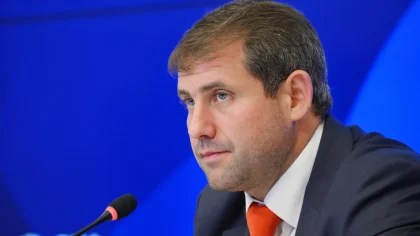
Moldova’s opposition bloc Pobeda (Victory) and Sor party leader Ilan Shor
Sputnik – 14.07.2025
CHISINAU – On Monday, Ilan Shor, leader of Moldova’s opposition Pobeda (Victory) bloc, announced the bloc’s support for establishing a Union State between Moldova and Russia, along with greater cooperation between the country and the Eurasian Economic Union.
“Pobeda will fight for the right to represent a free Moldova in parliament. We believe in our strength, because we have the votes of hundreds of thousands of people, and we will never betray their trust. Pobeda offers a clear and transparent program: for the Union State with Russia; for trade and economic cooperation with the EAEU countries; for cheap gas and fair prices; for the preservation of national identity and sovereignty,” Shor wrote on Telegram.
According to him, the bloc will closely monitor the actions of the Central Election Commission, acknowledging that the authorities may attempt to prevent the registration of the political formation.
Bornholm Island: NATO’s Baltic Bridgehead for Aggression Against Russia
By Ilya Tsukanov – Sputnik – 14.07.2025
Copenhagen is using the old ‘Russian threat’ excuse to justify the militarization of its easternmost island, but NATO operational planning and drills reveal otherwise.
Where is Bornholm?
Situated about 140 km southeast of Copenhagen in waters between Sweden, Poland and Germany, the 588 km2 island has been a strategic stronghold since medieval times, used by Vikings, Scandinavian kings, Napoleon and the Nazis for both defensive and offensive operations.
In 2022, NATO announced plans to turn the Baltic Sea into a ‘NATO lake’. Bornholm would play a key role in this calculus.
Breaking Old Agreements
Freed from the Nazis by the Red Army in WWII, Bornholm was returned to Denmark by Moscow on the understanding that foreign troops would never again be stationed there. Denmark reneged in 2022, okaying large-scale NATO drills on and around the island.
Drills have included deployments of US HIMARS MLRS (300 km max range) and Typhon missile system components (2,500 km range). The Typhon TEL can fire SM-6 and Tomahawk missiles, whose payload, notably, can include nuclear warheads.
Military Infrastructure Buildup
- construction of a 85m spy tower in Ostermarie (2017)
- inclusion in NATO’s Baltic “island chain” strategy alongside Gotland and Aland (2023)
- plans to add 5k troops to the local garrison (2025)
Air and Naval Power Projection
Bornholm’s Ronne Airport has a military apron, and has been used in drills by Finnish F-18 jets (2024). Moscow has accused USAF strategic bombers flying toward Russian cities including Kaliningrad and St. Petersburg of hiding in the island’s airspace to avoid interception by Russian jets.
Ronne’s seaport has undergone expansions (2023) to accommodate large ships, including military and support vessels.
Fictitious Justifications
“Bornholm’s militarization is taking place under the false pretext of the need to protect the island from the ‘Russian threat,’” even though Russia “has never had aggressive intentions toward Denmark,” Ambassador Vladimir Barbin has said.
Trump issues threat to Russia over Ukraine conflict
RT | July 14, 2025
US President Donald Trump has threatened to impose “severe” tariffs of up to 100% on Russia’s trading partners unless a deal is reached to end the Ukraine conflict within 50 days.
Trump issued the warning on Monday during a meeting with NATO Secretary General Mark Rutte in the Oval Office.
“We’re very, very unhappy – I am – with [Russia], and we’re going to be doing very severe tariffs if we don’t have a deal in about 50 days,” he stated.
Trump blamed his predecessor Joe Biden for dragging Washington into the conflict, saying the US had spent approximately $350 billion on aid for Ukraine.
The US president also mentioned a congressional bill that would impose tougher sanctions on Russia, saying, “I’m not sure we need it, but it’s good they’re doing it… could be very useful.” A Senate vote is expected next week.
He noted that, if there was no progress on Ukraine, slapping Russia with secondary US tariffs would not require congressional approval.
Secondary tariffs are sometimes introduced on countries that do business with a sanctioned country.
Trump also announced that the US will send weapons to Ukraine through NATO, which would handle both payment and distribution.
“We’ve made a deal today where we are going to be sending them weapons, and they’re going to be paying for them,” he said.
Russia has repeatedly denounced the West for supplying Ukraine with weapons, warning that this only serves to prolong the conflict and makes no impact on its outcome.
The Russian stock market soared on Trump’s remarks, with the main index jumping nearly 3%, according to data from the Moscow Exchange.
Zelensky threatens ‘long-range strikes’ in Russia
RT | July 14, 2025
Ukrainian leader Vladimir Zelensky has threatened new strikes deep inside Russia, days after the US pledged to resume military aid to Kiev.
Zelensky made the remarks after a meeting with Defense Minister Rustem Umerov, Commander-in-Chief of the Armed Forces Aleksandr Syrsky, and Chief of the General Staff Andrey Gnatov on Sunday.
“Our units will continue to destroy the occupiers and do everything possible to bring the war onto Russian territory. We are preparing our new long-range strikes,” Zelensky wrote on X.
He added that Ukraine is preparing for a visit by US presidential envoy Keith Kellogg and will “work with partners on arms deliveries and scaling up joint production of essential defense assets.”
Among its recent attacks far from the front line, Ukraine targeted military airfields housing strategic bombers in several Russian regions last month. Ukrainian drones and missiles also repeatedly struck apartment blocks and other civilian infrastructure. According to Moscow, Ukraine was responsible for the passenger train derailment on March 31, which left seven people dead.
The EU has allocated hundreds of billions of euros in recent months to expand its military-industrial complex and support Ukraine’s domestic armament production.
Berlin will provide Ukraine its first batch of long-range missiles financed by Germany in the coming weeks, Major General Christian Freuding, who oversees the coordination of the country’s military support for Kiev, has said.
US President Donald Trump said earlier this week that the Pentagon will resume deliveries to Kiev, following weeks of suspension, and reportedly considers approving a first new aid package since returning to office.
Russia has said that it views the use of foreign-supplied missiles as direct participation by Western states in the conflict and claimed that Ukrainian troops cannot operate sophisticated weapons systems on their own.
Lasha Kasradze: Azerbaijan as the Next Frontline Against Russia & Iran?
Glenn Diesen | July 13, 2025
As Azerbaijan takes an increasingly hostile approach to both Russia and Iran, it risks becoming a proxy in a wider regional war. Azerbaijan’s Zangezur corridor connects Azerbaijan closer to Turkey, and thus NATO. Many uncertainties emerge in terms of what happens to Armenia, to what extent Turkey and NATO can project power that deep into the South Caucasus, and how Russia and Iran will react. Lasha Kasradze is an international affairs analyst from Georgia, and an expert on the wider region.
Featured Video
BRITAIN’S WARNING: PREPARE FOR WAR
or go to
Aletho News Archives – Video-Images
From the Archive
How Ukraine Tortured and Slaughtered Donbass
By Kit Klarenberg | Al Mayadeen | July 11, 2024
Almost immediately after the proxy war erupted, ISIS-tier footage of the torture and murder of Russians in Ukrainian custody emerged.
On July 6th, the New York Times published an astonishing investigation: In Ukraine, Killings of Surrendering Russians Divide an American-Led Unit. The article documents in grim detail how Chosen Company, an international volunteer battalion for Kiev, routinely executes Russian prisoners of war. It is the very first mainstream admission that this practice – a brazen breach of the Geneva Conventions, and a grave war crime – is widespread among Ukraine’s fighters, both foreign and homegrown. … continue
Blog Roll
 Aletho News
- Pentagon designates Chinese cultural centers national security threat
- Israel Demolishes Home Of Lebanese Journalist Whose Viral Film Exposed Pager Attack
- Record Oil, Empty Tanks: The UAE’s Miracle Recovery
- Burnham tackles Britain’s poverty with aggression in Yemen
- Peace in Ukraine: the easy way – or the hard way
- Trump & the Rrrrussians
- US taxpayer money laundered back through Ukraine – Musk
- Before COVID, an NIH lab chief proposed making a SARS-like bat virus more infectious
- Gates, Bourla on Trial in Netherlands Accused of ‘Great Reset’ Scheme at Vaccine Injury Hearing
- BRITAIN’S WARNING: PREPARE FOR WAR
- If Americans Knew
- An error has occurred; the feed is probably down. Try again later.
- No Tricks Zone
- Two New Studies Find Thwaites Glacier Melt Cannot Be Driven By Human Activity Or A Warming Ocean
- E-Cars Reduce CO2 Emissions By Only 41% Compared To Internal Combustion Engine Vehicles
- Predictions Made By Renowned Climate Professor Over Past Decades Have Been Proven To Be Poor
- New Study Suggests Large Regions Of The Pacific Ocean Have Been Cooling For The Last 80 Years
- Germany’s Green Energy Debacle: High Energy Costs Force Kahla Porzellan to Close After 182 Years!
- New Study: 50 Years Of The Most Aggressive ‘Net Zero’ Policies Can Only Affect The Global Climate By 0.03°C
- US September “Heat” Was No Record…Many Records Set Decades Ago
- Latest European Green Energy Debacle; Portugal’s Largest Flagship Solar Park Insolvent!
- Green Energy Debacle: German Expert Professor Fritz Vahrenholt Warns Of Severe Economic And Social Consequences
- Two More Paleo Reconstructions Affirm Meters-Higher Sea Levels Across Ireland, Brazil 7000-6000 Years Ago

