US to send upgraded long-range bombs to Ukraine – Reuters
RT | March 14, 2025
The United States has upgraded the Ground-Launched Small Diameter Bombs (GLSDB) to counter Russian jamming and is set to “reintroduce” them onto the battlefield in Ukraine within days, according to a Reuters report.
The GLSDB, jointly developed by Boeing and SAAB AB, combines the GBU-39 Small Diameter Bomb with the M26 rocket motor, creating a weapon with a range of approximately 100 miles (161 kilometers).
The administration of former President Joe Biden sent an undisclosed number of GLSDB units to Kiev, but it has been “months” since Ukrainian forces last used the bomb against Russia after it proved ineffective last year, sources told Reuters.
Russia’s electronic warfare capabilities rendered precision-guided Western munitions – including GLSDB and GPS-guided Excalibur artillery shells – ”useless,” the Wall Street Journal reported in July. With their guidance systems scrambled, some of these weapons were reportedly retired within weeks of being deployed.
Since then, Boeing has introduced several upgrades, including reinforced internal connections to enhance resistance to jamming. According to Reuters sources, at least 19 GLSDBs were test-fired in “recent weeks” to assess the effectiveness of the modifications. The US has stockpiled a significant number of these relatively inexpensive bombs in Europe and is “poised” to resume shipments to Kiev within days, the publication reported.
The potential replacement comes amid reports that Ukraine has depleted its stockpile of US-supplied Army Tactical Missile Systems (ATACMS), which have a longer range of 300 km.
Kiev began using ATACMS missiles for strikes into internationally recognized Russian territory in the autumn of 2024, particularly targeting the border regions of Kursk, Bryansk, Belgorod, and Rostov. However, the stockpile was fully exhausted by late January, the Associated Press reported on Wednesday.
Moscow has repeatedly warned the US and its allies against permitting long-range Ukrainian strikes, arguing that such attacks would make NATO a direct participant in the conflict due to Kiev’s reliance on Western-supplied weapons.
In response to Ukraine’s first ATACMS strikes in November last year, Russia launched its new hypersonic Oreshnik intermediate-range ballistic missile at the Yuzhmash military-industrial facility in the Ukrainian city of Dnepr.
Collapse of Kursk: Narratives versus Reality
Prof. Glenn Diesen
Glenn Diesen | March 11, 2025
The Ukrainian army’s invasion of Kursk, backed by NATO, likely had rational and tangible objectives such seizing the Kursk nuclear power plant, creating a buffer zone, diverting Russian troops, and giving Ukraine a bargaining chip in future negotiations. However, it was also a battle for narratives. Exploring why the military operation failed also provides some lessons for why the war to control the narrative failed. … continue reading
UPDATED – Russia ready for ceasefire: Putin
RT | March 13, 2025
Russia is ready for a ceasefire in the Ukraine conflict, President Vladimir Putin has said, stressing that such an agreement “must lead to long-term peace.”
Moscow believes that the “idea” of a ceasefire is the “right one,” Putin told journalists during a joint press conference with Belarusian President Alexander Lukashenko in Moscow on Thursday. “We absolutely support it,” he added.
“We endorse the idea of resolving the conflict through peaceful means,” the president insisted.
Certain issues still need to be discussed and resolved before a truce can be reached, Putin stated, adding that Moscow particularly needs to discuss them with the US. The dialogue could also require a personal conversation with US President Donald Trump, the Russian leader said.
As of Wednesday evening, Moscow’s forces had liberated 86% of the territory occupied by the Ukrainians in August 2024, according to the head of the Russian General Staff, General Valery Gerasimov. The remainder of Kiev’s units in the area were largely “encircled” and “isolated,” he explained.
Washington and Kiev both endorsed a 30-day temporary truce following a meeting between the two nations’ delegations in Saudi Arabia on Tuesday. US special envoy Steve Witkoff is expected to present the results of those talks during his visit to Moscow later today.
Russia has previously spoken out against any temporary truce in the Ukraine conflict, arguing that Kiev would use it to rearm and continue fighting. Putin has insisted that any resolution to the conflict must address the root causes in order to establish a long-lasting sustainable peace.
Here’s a full transcript of the Russian president’s response:
Before I assess how I view Ukraine’s readiness for a ceasefire, I would first like to begin by thanking the President of the United States, Mr. Trump, for paying so much attention to resolving the conflict in Ukraine.
We all have enough issues to deal with. But many heads of state, the president of the People’s Republic of China, the Prime Minister of India, the presidents of Brazil and South African Republic are spending a lot of time dealing with this issue. We are thankful to all of them, because this is aimed at achieving a noble mission, a mission to stop hostilities and the loss of human lives.
Secondly, we agree with the proposals to stop hostilities. But our position is that this ceasefire should lead to a long-term peace and eliminate the initial causes of this crisis.
Now, about Ukraine’s readiness to cease hostilities. On the surface it may look like a decision made by Ukraine under US pressure. In reality, I am absolutely convinced that the Ukrainian side should have insisted on this (ceasefire) from the Americans based on how the situation (on the front line) is unfolding, the realities on the ground.
And how is it unfolding? I’m sure many of you know that yesterday I was in Kursk Region and listened to the reports of the head of the General Staff, the commander of the group of forces ‘North’ and his deputy about the situation at the border, specifically in the incursion area of Kursk Region.
What is going on there? The situation there is completely under our control, and the group of forces that invaded our territory is completely isolated and under our complete fire control.
Command over Ukrainian troops in this zone is lost. And if in the first stages, literally a week or two ago, Ukrainian servicemen tried to get out of there in large groups, now it is impossible. They are trying to get out of there in very small groups, two or three people, because everything is under our full fire control. The equipment is completely abandoned. It is impossible to evacuate it. It will remain there. This is already guaranteed.
And if in the coming days there will be a physical blockade, then no one will be able to leave at all. There will be only two ways. To surrender or die.
And in these conditions, I think it would be very good for the Ukrainian side to achieve a truce for at least 30 days.
And we are for it. But there are nuances. What are they? First, what are we going to do with this incursion force in Kursk Region?
If we stop fighting for 30 days, what does it mean? That everyone who is there will leave without a fight? We should let them go after they committed mass crimes against civilians? Or will the Ukrainian leadership order them to lay down their arms. Simply surrender. How will this work? It is not clear.
How will other issues be resolved on all the lines of contact? This is almost 2,000 kilometers.
As you know, Russian troops are advancing almost along the entire front. And there are ongoing military operations to surround rather large groups of enemy forces.
These 30 days — how will they be used? To continue forced mobilization in Ukraine? To receive more arms supplies? To train newly mobilized units? Or will none of this happen?
How will the issues of control and verification be resolved? How can we be guaranteed that nothing like this will happen? How will the control be organized?
I hope that everyone understands this at the level of common sense. These are all serious issues.
Who will give orders to stop hostilities? And what is the price of these orders? Can you imagine? Almost 2,000 kilometers. Who will determine where and who broke the potential ceasefire? Who will be blamed?
These are all questions that demand a thorough examination from both sides.
Therefore, the idea itself is the right one, and we certainly support it. But there are questions that we have to discuss. I think we need to work with our American partners. Maybe I will speak to President Trump. But we support the idea of ending this conflict with peaceful means.
All the pressure is now on Zelensky after ceasefire offer – don’t believe the British spin
By Ian Proud | Strategic Culture Foundation | March 12, 2025
I assess that Russia will agree with the U.S. on a proposed ceasefire in Ukraine. This would put the ball back in Zelensky’s court to sign a peace deal that could destroy him politically and may give President Putin the security assurances he has sought for over seventeen years.
In a quite remarkable turn of events, the BBC announced that Britain had helped the U.S. and Ukraine agree on the need for a 30-day ceasefire. This is spin of the most disingenuous kind.
The UK has done everything in its power to prevent the possibility of ‘forcing’ Ukraine into negotiations on ending the three-year war. Indeed, just last week, a prominent UK broadsheet reinforced this point in a searing editorial. The British narrative for three years has been that, with sufficient support and strategic patience, Ukraine could impose a defeat on Russia. To use a British military phrase, that plan ‘didn’t survive contact with the enemy’.
Ukraine’s sudden collapse in Kursk, after Russian troops crawled ten kilometres through a gas pipeline that President Zelensky had, with much fanfare, shut down in January, was an astonishing defeat. It was astonishing because it revealed what many western commentators had said since August 2024, that seizing a small patch of land in Russia would turn out to be a strategic blunder for Ukraine. Since the Kursk offensive was launched, Russia has occupied large tracts of land in southern Donetsk, including several important mines and one of Ukraine’s largest power stations. The basic maths show a significant net loss to Zelensky over the past six months. The bigger picture proves that the overall direction of the war has been moving in Russia’s direction since the failed Ukrainian counter-offensive in the summer of 2023.
In Ukraine itself, the vultures are already circling in the sky as the body of Zelensky’s now six-year presidential term approaches its final breath. Arestovich was quick to call for Zelensky to resign after the damaging shoot-out at the Oval Office. Poroshenko has come out to say Ukraine has no choice but to cut a deal. Even Zelensky’s former press spokeswoman has called for peace and implied that the Ukrainian government tries to limit free speech on the subject of a truce. Team Trump is apparently talking to the egregiously corrupt former Prime Minster Yulia Tymoshenko about the future, heaven help us. The domestic political space for Zelensky to keep holding out with meaningless slogans like ‘peace through strength’, and ‘forcing Russia to make peace’ is rapidly closing around him.
That Ukraine has come to the negotiating table at all is a sign that it has been given no choice, since America paused the military and intelligence gravy train. There is nothing in the Jeddah meeting that suggests any change in the U.S. position towards Ukraine.
All that the ceasefire does, if Russia agrees to it, is pauses the fighting. Indeed, it goes further than the unworkable Franco-Ukrainian idea to pause the fighting only in the air and sea, allowing Ukraine to keep fighting on the ground. Ironically, the Jeddah formulation favours Russia, as a partial ceasefire would have provided succour to the Ukrainian army which does not enjoy strategic air superiority, despite its mass drone attack on Moscow and other parts of Russia.
The joint U.S.-Ukraine statement calls for Ukraine and others to ‘immediately begin negotiations toward an enduring peace that provides for Ukraine’s long-term security’.
If Russia agrees to a ceasefire, the clock will start on 30-days of intensive talks aimed at delivering a durable peace. Russia has said consistently that it will not agree to a ceasefire only; it wants the big questions addressed front and centre. These include Ukraine’s aspiration to join NATO, the status of the four oblasts annexed by Russia since the start of the war and the protection of the Russian language in Ukraine.
The latter should be easier to tick off, at least in theory, although it will face resistance from ultranationalists in Ukraine. The second will be harder, as there is no military route for Ukraine to reclaim occupied lands, so may require some diplomatic finesse in allowing for a freezing of the line. By far the most bitter pill for Ukraine and its European sponsors will be the NATO issue.
Just moments after U.S. Defense Secretary Peter Hegseth said at the Munich Security Conference that Ukraine’s NATO aspiration was unrealistic, Keir Starmer told Zelensky that it was irreversible. There is simply no way in which Britain will be able to finesse the point that a core plank of its strategy on Ukraine will be shattered, at U.S. and Russian insistence. Nor is it likely that Russia will agree to any UK proposal for a NATO-lite peacekeeping force in Ukraine, even if it is in Lviv or some place hundreds of kilometres from the line of contact.
Moreover, Russia will expect some movement in any peace talks on the issue of economic sanctions. Before arriving in Jeddah, the Guardian newspaper published an OpEd from Andriy Yermak calling for more sanctions on Russia as part of any peace plan. This is beyond idiotic. What person with an ounce of political savvy thinks that Russia will sign up a peace process that punishes it for ending a war that it is winning on the battlefield?
While I doubt that Russia expects to achieve a complete lifting of all 20,000 sanctions, they will want many to fall away immediately as part of a longer-term plan. This will also force a reckoning with the issue of the $300bn in seized Russian sovereign reserves, most of which are held in Brussels. Ignoring the issue or hoping that western nations can simply give the money to Ukraine, simply won’t work; detailed thinking needed here too, as I have said several times before.
From my perspective, Ukraine’s readiness to go for a ceasefire illustrates how weak its hand of cards has become. Many on the western side are crowing that Russia will be forced to accept a ceasefire on Ukrainian terms, but this is nonsense. I predict President Putin will see this as an opportunity for NATO to provide him with the longer-term security reassurances on NATO enlargement that he has sought for the past seventeen years, without heed.
Trump invites Putin to a roller coaster ride
By M. K. BHADRAKUMAR | Indian Punchline | March 13, 2025
The political optics of the joint statement issued after the US-Ukrainian talks at Jeddah on March 11 lasting nine hours is hard to tell since President Donald Trump prides himself on his ability to strike deals. Prima facie, the optics are that Ukraine caved in and accepted a Trump administration proposal for a 30-day cease-fire with Russia and on its part, the latter agreed to immediately lift a pause on intelligence sharing with Kyiv and resume military assistance.
The White House Press Secretary Karoline Leavitt during a Fox News TV broadcast said that Trump “put Zelensky in his place and told him that the Americans are serious about a long-term peace deal…And we are very, very pleased with the way that the Ukrainians and this deal today turned out.”
However, there are fine prints in a joint statement, which add the caveat that “Ukraine expressed readiness to accept the U.S. proposal to enact an immediate, interim 30-day cease-fire” if Russia did the same. The statement qualifies that “The United States will communicate to Russia that Russian reciprocity is the key to achieving peace.”
The US Secretary of State Marco Rubio interpreted that the agreement now puts the pressure on Russia to end the war. He said, “We’ll take this offer now to the Russians, and we hope that they’ll say yes, that they’ll say yes to peace. The ball is now in their court.”
Rubio signalled that if Moscow doesn’t sign up to the ceasefire, “then we’ll unfortunately know what the impediment is to peace here.” For sure, coercive diplomacy has crept in.
Curiously, even before talks began in Jeddah, Rubio had told reporters, “It should be clear to everyone that the United States has tools available to also impose costs on the Russian side of this equation, but we hope it doesn’t come to that. What we’re hoping is that both sides realise that this is not a conflict that can end by military means; it can only end by diplomatic means. And the President’s goal is to bring them both to the table to get this resolved. But it’s a reminder that we understand that the United States has tools at its disposal if in fact this falls apart, and — but we’re hoping it doesn’t. We really do. We hope it doesn’t reach that point.”
There has been no public indication so far that Russia would accept an unconditional, month-long ceasefire that compromises the core objectives of the special military operations. Indeed, that’s what the Russian people will expect from President Vladimir Putin.
Of course, Putin himself had indicated in January, “The goal should not be a short truce, not some kind of respite for regrouping forces and rearmament with the aim of subsequently continuing the conflict, but a long-term peace based on respect for the legitimate interests of all people, all nations living in this region.”
It will be politically damaging for Moscow to retract from the terms spelt out by Putin last June in his address to the foreign ministry in Moscow as conditions for Russia agreeing to peace talks. Again, the generals’ opinion has to be taken into account. The Russian forces have managed slow but consistent advances in the east in the Donetsk region and are preparing for breaking through into the neighbouring region of Dnipropetrovsk. Only last weekend, after heavy fighting, they managed a significant breakthrough in the Kursk region, coming close to encircling around 10,000 elite Ukrainian troops.
Clearly, it is not going to be easy for Putin to order the generals that it’s time for a ceasefire that may look like a strategic defeat as the Russian forces are still failing in their core strategic goals. Konstantin Kosachev, chairman of the international affairs committee of the upper house of Russia’s parliament, probably reflected the mainstream elite opinion in a post on Telegram that: “Russia is advancing. Real agreements are still being written there, at the front. Which they should understand in Washington, too.”
On the other hand, there is no question that Putin’s preference will be to avoid unpleasantness with Trump, leave alone a collision course. Putin has to tread with care, as Trump will not like anyone stopping him from getting his deal.
On Monday, in a subtle suggestion that Putin and Trump are sailing in the same boat, Tass carried two reports (here and here) warning that British activities in Odessa directly threaten Russian interests and, furthermore, that “According to the information received by the SVR (Russian Foreign Intelligence Service), the British leadership sees a threat to its interests in the promotion of dialogue between the US and Russia to resolve the Ukrainian conflict… London is extremely irritated by the fact that Donald Trump ‘dialogues with Russia as a superpower and shows disregard to close allies.’”
The SVR statement added, “The British authorities consider it an ‘urgent priority’ to undermine ‘peacekeeping’ efforts of the new US administration on the Ukrainian track. The media and specialised NGOs are tasked with demonising Trump, portraying him as ‘a man with a poor peacekeeping record and susceptible to Kremlin manipulation.’”
Interestingly, Tass also reported on a telephone conversation between Russia’s Foreign Intelligence Service Director Sergey Naryshkin and Chief of the Central Intelligence Agency (CIA) John Ratcliffe. The readout said, “the parties discussed the issues of interaction of both intelligence agencies in areas of common interest and the settlement of crisis situations” and reached an agreement “on maintaining regular contact between the SVR and CIA directors with the aim of facilitating international stability and security and reducing confrontation in relationships between Moscow and Washington.”
Evidently, Zelensky, tutored by his American friends and European advisers, has decided on a play-along strategy to avoid antagonising Trump counting, arguably, that he should leave it to Putin to cross and disappoint Trump. Put differently, in an iterative process, Ukraine needs to project itself as the constructive party.
That said, in the final analysis, the dynamics are such that personal diplomacy rather than ideological commitments or even military achievements may come to prevail. The outcome will depend on the personal agreements — or the lack thereof — between Putin and Trump.
Trump himself told reporters that he thought he would speak with Putin this week and that he hoped a lasting cease-fire would be negotiated in the coming days. Meanwhile, Trump’s envoy Steve Witkoff is reportedly planning to travel to Moscow to meet Putin. He had a meeting with Putin lasting several hours last month.
The bottom line is that one way or another, Moscow will have to decide quickly how to play Trump. To my mind, in this bouquet of thorny roses out of Jeddah, the likelihood is that Putin may opt to string discussions out by offering a succession of counter proposals.
Russia and Trump set the stage for Ukraine, but can Kiev be trusted?
The Jeddah talks have confirmed the long-obvious fact that Zelensky’s regime has no real options
By Sergey Poletaev | Kommersant | March 12, 2025
The most telling aspect of Tuesday’s US-Ukraine talks in Jeddah wasn’t the meeting itself but rather the reaction of Western European leaders. Forced to begrudgingly praise Washington’s supposed efforts for peace, officials – led by EU boss Ursula von der Leyen – were left practically begging for a seat at the negotiating table. But they won’t get one.
For the past month, there has been an ongoing struggle between European globalists and Donald Trump over who will dictate the West’s approach to Ukraine. The outcome of the Jeddah talks makes it clear: the Europeans have lost that battle.
Europe sidelined
Brussels and its allies wanted to continue supplying Ukraine with weapons and funding in a prolonged fight against Russia, all while attempting to drag Washington along. The idea was to assume leadership of the globalist agenda that had been slipping from Joe Biden’s grasp. Emmanuel Macron, the most restless among them, floated various unrealistic initiatives – ranging from sending Western European troops under the guise of peacekeepers to proposing partial ceasefires and other half-measures.
Trump, however, has made no secret of his disdain for this crowd. To him, the liberal interventionists pushing for endless war in Ukraine are ideological opponents. Since Ukraine has been the centerpiece of Western foreign policy for the past three years, stripping Kiev from its European patrons was a crucial step for Trump’s team in its broader battle against the globalist elite.
This strategy played out in the open. First, Vladimir Zelensky was humiliated in Washington, almost being shown the door at the White House. Then, the Trump administration cut off Ukraine’s access to intelligence data and drastically reduced military supplies. Trump made it clear to Zelensky: either fall in line or lose everything, because the Europeans won’t save you.
For Zelensky, the writing was on the wall. He spent the past few days frantically touring European capitals, desperately seeking military guarantees or a last-minute lifeline. Instead, he received only empty words of sympathy and lofty speeches. The reality was unavoidable – the EU was powerless to help.
By effectively signing a political surrender to Trump, Zelensky has pledged loyalty to the American president, committing to his agenda. This was confirmed in Jeddah. Now, Zelensky is expected back in Washington – to cement what is likely a humiliating agreement for Ukraine.
What this means for Russia
Exactly one month ago, Trump placed a call to Vladimir Putin. While the details of their conversation remain unknown, we can speculate. Trump likely expressed his desire for a quick peace deal and inquired about Russia’s conditions. Putin would have reiterated Moscow’s long-standing demands – rooted in the failed Istanbul agreements of 2022 and further solidified by Russia’s terms outlined last June. Most importantly, Putin likely asked Trump a critical question: can you guarantee Ukraine and Europe will abide by any deal?
It appears Moscow and Washington have reached an initial framework for a peace agreement. The broad strokes seem to include no military guarantees for Ukraine, no path to NATO membership, and a change in Kiev’s leadership.
Both sides have spent the past month preparing. Trump has tightened his grip over Ukraine and pushed Western Europe out of the decision-making process, while the Russian military has made decisive gains, particularly in Kursk, a necessary condition for any ceasefire.
A fragile peace?
Trump seems confident that he can strike a deal with Putin, ensure Kiev’s compliance, push the Europeans aside, and secure a lasting peace – cementing his status as a global peacemaker. But the reality is more complicated.
First, we don’t know the precise terms Putin and Trump have discussed, nor whether both leaders interpret them in the same way. The devil is always in the details, and negotiations between Moscow and Washington are never straightforward.
Second, and more critically, Zelensky’s pledge to Trump does not guarantee genuine loyalty. A peace deal on Russia’s terms would mean the collapse of modern Ukrainian nationalism and, inevitably, the slow dismantling of the Ukrainian state in its current form.
Zelensky has already spent the past year resisting peace efforts, pushing for military guarantees, and clinging to Western Europe in hopes of prolonging the war. There is no reason to believe he has suddenly abandoned these instincts. The most logical course for Kiev now would be to publicly cooperate while privately undermining any deal, buying time in hopes that Trump can be outmaneuvered or that European support can be rekindled.
Western Europe’s next move
The EU and the UK are unlikely to sit idly by. Macron and others will undoubtedly work behind the scenes to keep Ukraine on life support, maintaining a political and financial link to Kiev while waiting for an opportunity to reverse course. Their strategy is clear: stall Trump and hope for a new US administration in 2029 that will reignite the conflict.
The Kremlin has experienced this kind of Western deception before. If Moscow has learned anything from past negotiations, it will ensure that any deal struck this time is airtight, leaving no room for Ukraine or its European patrons to wriggle free.
The Jeddah talks mark a turning point. Ukraine is being pulled out of the hands of the Western European elite and placed firmly under Trump’s control. Whether this will lead to a real peace settlement – or merely a new phase in the geopolitical chess game – remains to be seen. What is certain, however, is that Brussels and London have lost their grip on the Ukraine conflict.
Sergey Poletaev is an information analyst and publicist, co-founder and editor of the Vatfor project.
This article was translated and edited by the RT team.
Ukrainian forces encircled in Kursk Region – Russia’s top general
RT | March 12, 2025
Ukrainian forces in Kursk Region, western Russia, have been encircled and isolated, Chief of the General Staff Valery Gerasimov said on Tuesday. He added that 86% of the territory has been liberated, and that the systematic destruction of enemy forces is underway.
Gerasimov reported on the situation in Kursk Region during a meeting with Russian President Vladimir Putin at one of the command posts in the area.
Over the past five days, Russia’s ‘North’ military grouping took control of 24 settlements and 259 square kilometers of territory, Gerasimov said. In certain areas, Russian forces have advanced and crossed into Ukraine’s Sumy Region.
He also said that the Ukrainian army suffered 67,000 casualties in the area.
Gerasimov added that in the nearest future Ukrainian troops would be defeated in Kursk and that Moscow’s forces would reach the border. He said that enemy soldiers were surrendering, with 430 prisoners already taken.
According to some reports, the fighting is ongoing in the western and northwestern outskirts of Sudzha.
Putin stated that Ukrainian prisoners should be treated “as terrorists in accordance with Russian law.”
Kiev does kill civilians, contrary to the claims of EU’s top diplomat – Moscow
RT | March 12, 2025
EU High Representative for Foreign Affairs Kaja Kallas’ claim that Russian civilians “are not dying” in the Ukraine conflict is erroneous, Russia’s envoy to the UN Vassily Nebenzia has said.
During a UN Security Council meeting on Tuesday, Nebenzia denounced Kallas’s remarks from February as “immoral assertions” from an official peddling “fantasies.” He said that in 2024 alone, Ukrainian military action resulted in the death of 809 Russian civilians, including 51 children.
Those killings constituted “real crimes” and not a “theatrical performance like Bucha that was staged by the Ukrainian authorities” to garner Western support, Nebenzia stated. Kiev has cited claims that Russian forces had committed a “massacre” in the town in 2022 to justify its decision to abandon peace talks, while Russia contends that the evidence was fabricated.
Speaking at a panel discussion during the Munich Security Conference, Kallas claimed that the two nations take radically different positions: “The difference is that Russian civilians are not dying. I mean Russian children and women are not dying, it’s soldiers on the ground” who do, she stated.
In response, Russian Foreign Ministry spokeswoman Maria Zakharova labeled Kallas’s comments as evidence of the “degradation” of senior EU officials, asserting that the senior diplomat has reached a new low in “cynicism and immorality.”
“How can one seriously negotiate with people who have declared lies as their official position?” Zakharova questioned.
Kallas, known for her hawkish stance towards Russia, became the EU’s foreign policy and security chief last December after stepping down as Estonia’s prime minister under public pressure.
Ukraine admits attacking key oil pipeline to EU
RT | March 11, 2025
The Ukrainian General Staff has confirmed that one of the targets of Tuesday’s mass drone attacks was Russia’s Druzhba oil pipeline system, a key delivery route to EU countries, according to a statement on its official Telegram channel.
Druzhba is one of the world’s longest networks, transporting crude some 4,000km from Russia to refineries in the Czech Republic, Germany, Hungary, Poland, and Slovakia.
“Ukraine’s security services carried out the operation, reporting explosions near the linear production dispatching station ‘Stalnoi Kon’ (Steel Horse) in Russia’s Oryol region, which manages the pipeline’s operations,” the statement read.
Hungary, which relies on oil shipments through the system, has called the attack “unacceptable” and accused Ukraine of threatening its sovereignty. Foreign Minister Peter Szijjarto announced that crude shipments via the pipeline had been temporarily halted, but later resumed. Szijjarto criticized the European Commission, arguing that assurances it had offered regarding the safety of Hungary’s energy infrastructure had been repeatedly violated.
According to media reports, three Ukrainian fixed-wing drones struck the Druzhba terminal in Russia’s Bryansk Region. The attack was part of a wider assault involving more than 340 UAVs hitting civilian targets across Russian territory, killing at least 3 people and injuring over 20 and causing a fire at a Rosneft oil depot in Bryansk.
Ukraine has repeatedly targeted Russian energy infrastructure throughout the conflict, despite resulting supply disruptions for Kiev’s European allies.
In January, Ukrainian forces attempted to attack a compressor station of the TurkStream pipeline, which supplies natural gas to Turkish customers and several European countries, including Hungary, Serbia, Bulgaria, Slovakia, Bosnia and Herzegovina, and Greece.
In March 2024, Ukrainian drones struck an oil refinery in the Krasnodar region, causing a fire and temporary shutdown. Similarly, in January of that year, a drone attack hit a fuel depot in St. Petersburg, reportedly damaging storage tanks.
The most notable attack on Russian energy infrastructure during the conflict was the sabotage of the Nord Stream pipelines in September 2022. The explosions, which severely damaged Nord Stream 1 and 2—key conduits for Russian gas exports to EU—sparked international speculation about the perpetrators. While various theories have emerged, no definitive culprit has been identified.
Moscow has condemned attacks on its civilian energy infrastructure, labeling them acts of terrorism.
Ukraine’s Drone Attack on Russia: Desperate Move or Calculated Provocation?
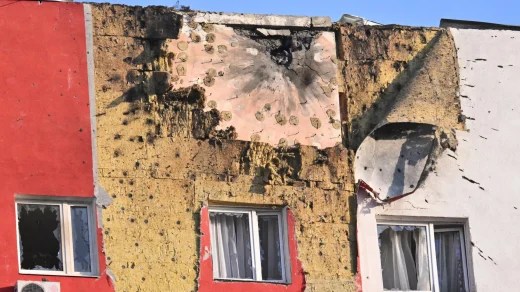
Sputnik – 11.03.2025
“This terrorist state [Ukraine] used its favorite terrorist policy to declare that it is not dead yet and can still do something,” Anatoliy Matviychuk, retired colonel of the Russian Armed Forces, states.
Here’s a closer look at what drove Kiev’s massive drone attack:
- Ukraine expects Russia to retaliate in order for Kiev to play the victim and to make it look like Moscow responded with aggression to Donald Trump’s peace initiatives, Matviychuk believes.
- The timing of the attack is directly tied to Ukraine’s recent battlefield defeats and the ongoing negotiations in Saudi Arabia, Mikael Valtersson, former officer of the Swedish Armed Forces, says.
- Kiev hopes it will strengthen its bargaining position and distract from Ukraine’s collapse in the Kursk salient, the analyst adds.
Earlier today, Ukraine launched a massive drone attack involving over 300 UAVs against Moscow – an attack that was ultimately thwarted by Russian air defenses.
Featured Video

Elijah Magnier: Yemen’s strikes are shattering Saudi Arabia’s long-term strategy
or go to
Aletho News Archives – Video-Images
From the Archives
British weapons and personnel doing much of the killing in Yemen
Press TV – June 18, 2019
A detailed report published by the Guardian newspaper has shown how Britain is massively contributing to Saudi Arabia’s devastating war on Yemen as it suggests that London is not only supplying the bombs that fall on Yemenis, but it provides the personnel and expertise that keep the war going.
The comprehensive report by Arron Merat published on Tuesday showed that Britain was doing much of the killing in Yemen as the country continues to provide Saudi Arabia with everything it needs to turn its southern impoverished neighbor into a graveyard.
“Every day Yemen is hit by British bombs – dropped by British planes that are flown by British-trained pilots and maintained and prepared inside Saudi Arabia by thousands of British contractors,” said Merat in the report. … continue
Blog Roll
 Aletho News
- A West Bank War for Netanyahu’s Election Campaign, Could It Backfire?
- Yemen denounces European Parliament’s ‘hypocritical’ push to blacklist Ansarullah
- Qalibaf: UAE’s UN bid aims to ‘clear the runway’ for ‘Greater Israel’, whitewash genocide
- Pakistan reopens Iran border after boosting security: Report
- Why are so many Brazilians voting for Flávio Bolsonaro?
- Democrats Put Anti-Russia Agenda Ahead of American Workers
- Elijah Magnier: Yemen’s Strikes Are Shattering Saudi Arabia’s Long-Term Strategy
- Pentagon designates Chinese cultural centers national security threat
- Israel Demolishes Home Of Lebanese Journalist Whose Viral Film Exposed Pager Attack
- Record Oil, Empty Tanks: The UAE’s Miracle Recovery
- If Americans Knew
- An error has occurred; the feed is probably down. Try again later.
- No Tricks Zone
- Sudden Stratospheric Warming, Powerful El Niño Combination May Lead To Extreme Europe Cold, Energy Crisis!
- Two New Studies Find Thwaites Glacier Melt Cannot Be Driven By Human Activity Or A Warming Ocean
- E-Cars Reduce CO2 Emissions By Only 41% Compared To Internal Combustion Engine Vehicles
- Predictions Made By Renowned Climate Professor Over Past Decades Have Been Proven To Be Poor
- New Study Suggests Large Regions Of The Pacific Ocean Have Been Cooling For The Last 80 Years
- Germany’s Green Energy Debacle: High Energy Costs Force Kahla Porzellan to Close After 182 Years!
- New Study: 50 Years Of The Most Aggressive ‘Net Zero’ Policies Can Only Affect The Global Climate By 0.03°C
- US September “Heat” Was No Record…Many Records Set Decades Ago
- Latest European Green Energy Debacle; Portugal’s Largest Flagship Solar Park Insolvent!
- Green Energy Debacle: German Expert Professor Fritz Vahrenholt Warns Of Severe Economic And Social Consequences

