West too fearful of escalation with Russia – Zelensky
RT | August 5, 2024
Ukraine is pushing NATO nations to create a coalition that would attempt to intercept Russian missiles, Vladimir Zelensky has said. The US-led military bloc has previously declined to do so.
Kiev has long been pressuring its Western backers to become more involved in the conflict with Moscow and start shooting down Russian drones and missiles over Ukrainian territory. However, its efforts have been rebuffed by foreign powers reluctant to engage in a direct military confrontation with Russia.
“[Western nations] are always concerned about possible escalation. We are fighting against that. We will work on it,” Zelensky told journalists on Sunday. The government in Kiev is considering “technical possibilities for neighboring nations to use military aircraft against missiles that strike Ukraine” after flying in the general direction of NATO countries, he added.
Zelensky has been calling for the establishment of a no-fly zone over Ukraine since the outbreak of hostilities with Russia in February 2022. Military experts pointed out that any realistic enforcement of Kiev’s wish would require NATO members to attack Russian planes in the air and at airfields inside Russia.
The idea of a less ambitious shield over Western Ukraine was floated last month, as Kiev signed a bilateral security deal with Warsaw and ramped up its lobbying efforts ahead of a NATO leaders’ summit in the US.
The Polish government indicated it was willing to answer the Ukrainian call, provided that NATO approved, although other nations, including the US, objected. Washington said it believed that supplying more air defense systems to Ukraine to operate on its own was the best way to counter Russian barrages.
Zelensky spoke to the press after confirming that sponsors had delivered US-designed F-16 fighter jets to Ukraine. Media reports have suggested that the new Ukrainian capability is too small-scale to become a gamechanger on the front line. It would likely be used to intercept cruise missiles delivering long-range strikes instead, defense experts have suggested.
Moscow has been targeting Ukrainian military assets as well as some key infrastructure sites, such as power stations, which it considers crucial for Kiev’s war effort. According to Russian officials, the conflict is a US-led proxy war in which Ukrainian troops serve as “cannon fodder” for Western geostrategic interests.
On Saturday, Zelensky said Kiev wants to attack targets deep inside Russia, a type of operation for which Ukraine is not allowed to use donated Western weapons and relies on domestically produced kamikaze drones instead.
Russia Ranks Among G20’s Lowest in National Debt Per Capita
Sputnik – August 3, 2024
This year, Russia has entered the top three largest economies in the world with the lowest level of national debt per capita, according to an analysis by Sputnik of the latest data from G20 countries. On average, government debt among those countries is $23,600 per citizen. Only six countries exceed that mark.
New data shows Russia has one of the lowest per-capita debt levels of the G20 group of nations.
India has the most modest sovereign debt, with the latest data from the G20 showing $1,316 per person. Indonesia follows with $1,747 and Russia is third with $2,076 per capita at the end of the first half of this year.
Other countries with national debts less than $5,000 per person include Turkiye ($2,800), China ($3,000) and South Africa ($4,500).
Countries with debts ranging from $5,000 to $10,000 include Brazil, Mexico, Saudi Arabia and Argentina.
South Korea’s national debt is almost twice that of Argentina, at $16,000 per capita, Germany’s is $20,900 and Australia’s is $21,200 per capita.
The six countries with above-average national debts are all members of the Group of Seven (G7).
Of those, Canada has the lowest debt at $25,300 per capita. France’s debt stands at $40,300 per citizen, while the UK and Italy have accumulated debts twice as large as Canada’s at $51,600 and $51,900 per person. Japan has the second-largest national debt at $70,400 per capita.
The United States continues to have the highest sovereign debt, at $104,500 per capita — 80 times higher than India’s and 50 times higher than Russia’s. Among all countries in the world, only Singapore has a higher debt figure at $149,300 per person.
Trump Facilitated Collapse of US-Russia Arms Control by Scrapping INF Treaty
Sputnik – 01.08.2024
WASHINGTON – Then-President Donald Trump made a “stupid mistake” by deciding to scrap the Intermediate-Range Nuclear Forces (INF) Treaty, as the consequences of that fateful decision have been the collapse of strategic arms control policies between the United States and Russia, analysts told Sputnik.
The INF treaty, signed between the Soviet Union and the US in 1987, banned the countries from developing and possessing ground-launched ballistic and cruise missiles with ranges from 500-5,500 kilometers.
In 2019, Trump withdrew the US from the treaty, which prompted Russia to suspend its participation in the Cold War-era accord in response.
August 2 marks the fifth anniversary of the US’ formal withdrawal from the INF Treaty.
Restraint Abandoned
“The consequences have been that strategic arms control policies between Russia and the US/NATO have largely been abandoned and both sides have developed nuclear capable intermediate range missiles that raise the likelihood that they will be resorted to in a potential escalating conflict like in Ukraine,” former CIA analyst, founder and chair of the Council for the National Interest Philip Giraldi said.
There were sharp differences of opinion in the Trump administration on whether to retain the treaty, in spite of both sides’ claims that there was “cheating,” Giraldi recalled. “The neocons predictably won the argument.”
Back in the 1980s, despite hawkish governments in London and Bonn, popular sentiment across Europe, especially in Germany overwhelmingly favored creating the treaty, Giraldi emphasized.
“Interestingly enough, I was in the CIA German station in Hamburg 1982-5 when the whole issue of intermediate range missiles, which theoretically allowed for no warning devastating nuclear capable attack, was being debated,” he said.
“There were huge demonstrations in all German cities against the deployment and in favor of an agreement,” Giraldi reported. “The US Consulate General was located near Hamburg’s central lake, the Alster and thousands of demonstrators would gather along the lakefront and storm the front of the building by crossing the access road that surrounded the lake.”
Attempt to Show He’s ‘Tough’ on Russia
American University in Moscow President Edward Lozansky, a former Soviet nuclear physicist, noted that Trump had heeded his two most influential advisers at the time, CIA chief and then secretary of state Mike Pompeo and national security adviser John Bolton, both of whom were determined to kill the treaty.
“One has to look at Trump’s two critical foreign policy and security advisers at the time, Pompeo and Bolton. Trump foolishly appointed them to prove he is tough on Russia. He made many other stupid mistakes for the same reason,” Lozansky said.
One can excuse Trump for being a “political novice who miraculously won in 2016 and found himself in an ocean of sharks,” he added.
The recent events show that “the Deep State learned the 2016 lessons” and the chances of Trump repeating the miracle of that year are quickly decreasing, at least for now, according to Lozansky.
“Almost each of the next 100 days till November 5 elections might bring unexpected events, not all of them bright for America and mankind,” the expert concluded.
Israel’s allies block Security Council statement condemning Tehran attack
The Cradle | August 1, 2024
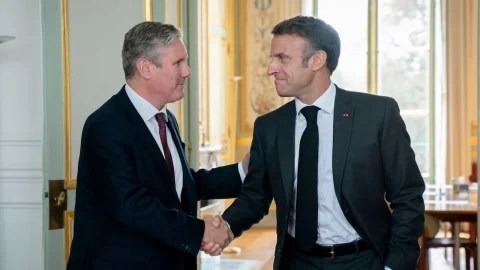
The US, UK, and France blocked a Russian-proposed statement at the UN Security Council (UNSC) condemning the assassination of Hamas politburo chief Ismail Haniyeh in Tehran, Iran’s envoy to the UN Amir Saeid Iravani said on 1 August.
“Russia’s proposed statement condemning Israel’s heinous act was blocked by the US, UK, and France,” Iravani told Russian media following an emergency UNSC meeting on Wednesday night.
“It is now absolutely necessary to hold the occupying [Israeli] regime accountable for the atrocities it committed,” the Iranian diplomat added. “This regime cannot be allowed to escape accountability and consequences for the violations it has committed.”
During the session, Iravani stressed that Tehran “reserves its inherent right to self-defense in accordance with international law” and said that “the responsibility of the United States as a strategic ally and main supporter of the Israeli regime in the region cannot be overlooked in this horrific crime. This act could not [have] occurred without the authorization and intelligence support of the US.”
Permanent UNSC members Russia and China strongly condemned Israel’s attacks on the Iranian and Lebanese capitals, blasting Tel Aviv for once more sabotaging Gaza ceasefire talks and pushing the region to the brink of all-out war.
“China is deeply concerned about the potential for this incident to further destabilize the region,” Fu Cong, China’s permanent representative to the UN, emphasized during the meeting. “China strongly opposes and condemns recent irresponsible actions, including Israel’s attacks on southern Beirut,” he added.
Fu also called on Tel Aviv to cease all military actions in Gaza and appealed to “influential countries” to “put more pressure and work more vigorously … to put out the flames of war in Gaza.”
Russia’s first deputy envoy to the UN, Dmitry Polyansky, also condemned Haniyeh’s killing, calling it an “attempt” to drag Iran into war.
“This provocative attack was carried out while the Hamas leader was in Iran on an official invitation to attend the inauguration ceremony of the President-elect of the Islamic Republic of Iran, Masoud Pezeshkian. Those behind this political assassination had to realize how dangerous the consequences could have been for the entire region,” Polyansky said.
“The misguided practice of targeted liquidations of prominent political and military figures is bringing the Middle East to the brink of a region-wide war,” the Russian diplomat added.
Feda Abdelhady Nasser, the deputy permanent observer of the State of Palestine to the UN, told the gathered diplomats that the global community “has a choice to make” between “peace and security” or letting “Israel drag us all to the abyss.”
“Israel has been the oppressor, tormentor, and murderer of Palestinians for decades, and it is the longstanding destabilizer of our region,” Nasser highlighted.
Lebanon’s Acting Permanent Representative to the UN, Hadi Hashem, contested Israel’s claims that the attack on the Beirut suburb of Dahye this week was an act of “self-defense.”
“Israel’s claim that it seeks to protect the population it occupies is a display of hypocrisy,” Hachem said, adding, “The real goal of Israel is to prolong and escalate the hostilities. And it is ironic that the killer of tens of thousands of children in Gaza sheds tears for the children of the occupied Syrian Golan.”
Similarly, Syria’s UN ambassador, Qusai al-Dahhak, stressed that “Israel is responsible for the crime in Majdal Shams” and noted that the territory is Syrian, accusing Israel of “weaponizing” the attack on the Druze community “to continue its aggression on the states of the region.”
Robert Wood, deputy US ambassador to the UN, called on UNSC members with influence over Iran “to increase pressure on it to stop escalating its proxy conflict against Israel and other actors.”
France and the UK took a similar line, reiterating a call for an “immediate ceasefire” in Gaza and condemning what they said was Iranian support for “destabilizing actors in the region.”
Shooting down Russian missiles is ‘act of war’ – Ritter
RT | July 31, 2024
Vladimir Zelensky’s idea to have Poland shoot down Russian missiles would get NATO directly involved in the conflict with Moscow, former US Marine and UN weapons inspector Scott Ritter has said.
Ukraine’s leader has been asking his Western partners for a “defense shield” for months. He claimed to have finally received a commitment from Warsaw in early July, as part of a security pact. Poland has said it would not target Russian missiles without NATO approval, which the US-led bloc has yet to give.
“Zelensky is operating on the assumption that NATO can have Patriot missiles in Poland that can shoot down Russian missiles that are headed towards militarily sensitive targets in the vicinity of Lviv,” Ritter told YouTube host Danny Haiphong in an interview posted on Tuesday.
“He doesn’t understand: that’s an act of war,” Ritter added. “That’s Russian military equipment, on a Russian military mission, in support of a Russian national security objective.”
Shooting down those missiles, even locking on to them with radar, would make NATO “literally a party to the conflict,” Ritter explained.
The US-led bloc has been trying to maintain a pretense that it’s not directly involved in the Russia-Ukraine conflict, despite donating billions of dollars worth of weapons, equipment and ammunition to Kiev’s armed forces and in some cases literally paying the salary of Ukrainian government employees.
Kiev is trying to have NATO set up a de facto “no fly zone” over western Ukraine, Ritter argued, which he described as “something Russia simply won’t tolerate.”
“Zelensky is just desperate right now, so he’s trying to invent rules of engagement,” Ritter concluded.
Ukrainian forces have been suffering steady setbacks along the front for weeks, with no prospect of replenishing their losses in either men or materiel.
The first handful of F-16 fighters reportedly arrived on Wednesday and will most likely be armed with modern US missiles. Zelensky has already complained that he would need more than 100 jets to actually make a difference, however.
Ritter is a former US Marine Corps major who served as a UN weapons inspector. He famously disagreed with the foreign policy establishment in Washington in the early 2000s, insisting that Saddam Hussein’s Iraq did not have weapons of mass destruction – a pretext the US later used to invade the country. He has been a RT contributor and saw his passport seized by the US government when he tried to attend the St. Petersburg International Security Forum in June.
Scott Ritter: EU’s Anti-Russian Sanctions ‘Have Boomeranged Back on Europe’
By Oleg Burunov – Sputnik – July 31, 2024
EU packages of sanctions on Russia have backfired, becoming “one of the greatest economic disasters in modern European history,” former US Marine Corps intelligence officer and ex-UN weapons inspector Scott Ritter pointed out.
“These sanctions, which are designed to punish Russia, have failed to do so. In fact, they’ve boomeranged back on Europe. And Europe continues to move forward, putting more sanctions into more sanctions, all the while Russia gets stronger economically,” the ex-US Marine Corps intelligence officer noted.
He dubbed the EU “the economic arm of a gaggle of organizations and institutions, which include the North Atlantic Treaty Organization, all of which serve fundamentally at the behest of the United States.”
“So the sanctions that were implemented by the European Union were done so because the United States wanted Russia to be isolated” and “confronted by Ukraine that was functioning as a de facto proxy of NATO,” Ritter argued.
The former UN weapons inspector insisted that America is using the sanctions “to achieve a larger strategic objective, not only weakening Russia but also weakening Europe, so that the United States emerges from this [Ukraine] conflict stronger.”
“It’s been the goal of the United States for decades to break Europe of its addiction to cheap Russian energy. So the sanctions and the blowback are achieving that result. Maybe Europe doesn’t realize this, or they haven’t woken up to the reality that the United States isn’t their friend,” Ritter concluded.
He was echoed by Gunnar Beck, outgoing member of the European Parliament for the Alternative for Germany party, lawyer and academic specializing in EU law, who told Sputnik that it’s safe to say the EU shot itself in the foot by deciding to impose sanctions on Russia.
“There’s no doubt that the economic impact [from the sanctions] is felt to a much greater extent here in the EU itself compared to Russia. I mean, the Russian economy, according to the official data, is doing very well and it appears to have adapted to the sanctions,” Beck pointed out.
The EU’s sanctions on Russian raw materials, including oil and gas “have hurt primarily the European economies,” which “used to be able to rely on predictable, high quality and cheap gas and oil imports from Russia,” according to the expert.
These economies, he went on, “still cannot do without importing oil and gas from Russia, but they’re now doing it via third countries at much higher prices,” with Russia continuing to sell its oil and gas.
“So the EU has basically harmed itself with these sanctions, or rather to be more precise, the bloc has massively harmed European industry and European consumers. But it [the restrictive measures] don’t appear to have had much impact on the Russian economy,” Beck emphasized.
The sanctions “have not had the impact that the EU hoped they would have,” which was predictable, per the expert.
“The EU probably underestimated the degree to which the Russian government had prepared for the eventuality of sanctions, including far-reaching restrictions on energy imports into the EU, as well as financial transactions. On this occasion, I think the sanctions have proved ineffective and they have failed insofar as Russia is concerned,” Beck summed up.
Russia and China challenge US claims to marine seabed – media
RT | July 31, 2024
US claims to a vast section of potentially resource-rich seabed floor have no basis in international law and should be rejected, Russian and Chinese government representatives have said, according to Bloomberg.
The statements were reportedly made during a session this week of the International Seabed Authority, held in Kingston, Jamaica, and were in response to recent claims by the US that it would be adding about one million square kilometers (386,100 square miles) to its continental shelf in the Bering Sea, the Pacific Ocean, the Atlantic Ocean and the Gulf of Mexico.
Both the representatives of Russia and China stressed that Washington’s unilateral claims contradict the United Nations Convention on the Law of the Sea (UNCLOS), which the US has never ratified, Bloomberg wrote on Tuesday.
Adopted in 1982, UNCLOS sets out rules relating to the world’s oceans and seas, covering issues including territorial limits, resources and protection of the marine environment.
Under the law, countries have the right to any resources in the sea or seabed floor within their so-called exclusive economic zones, which can stretch up to 200 nautical miles (370 km) off a country’s coast.
States that have ratified UNCLOS undergo a lengthy process to reach agreement on where the boundaries of underwater continental shelves lie, which will define exclusive economic rights to potentially lucrative seabed resources based there.
The US’ unilateral claims jeopardize a fragile international balance, as well as the integrity of the convention, Russia’s representative reportedly said and added that Moscow rejects Washington’s selective approach to international law.
China’s delegate at the Seabed Authority meeting also argued that the US doesn’t have the right to make such claims unilaterally, and can’t expect to enjoy the benefits of the convention without having ratified it, Bloomberg reported. The unnamed representative described the resources in the international seabed as the common heritage of mankind and said any act that threatens that shouldn’t be accepted. Both Russia and China ratified UNCLOS in the 1990s.
The US representative Gregory O’Brien defended his nation’s position, according to reports, claiming it followed the rules of the convention in making the claims.
The US announced the extensions of its claims on the ocean floor in December 2023, as part of an effort to boost access to so-called critical minerals that are necessary for electric vehicle batteries and renewable energy projects. The claims were “about geography, not resources,” the State Department insisted.
The extension “highlights American strategic interests” in securing hard minerals, such as lithium and tellurium, on its seabed and subsoil, “lying sometimes hundreds of miles offshore,” according to an article by James Kraska, chair and professor of International Maritime Law at the US Naval War College.
The latest US Geological Survey, conducted in 2008, estimated that about 90 billion barrels of undiscovered oil and 1,670 trillion cubic feet of gas lie inside the Arctic Circle, along with critical metals needed for electrification. However, most of that estimate is based on land studies and the offshore potential is largely unexplored, Bloomberg wrote.
Iran Rejects US Intelligence Words on Tehran’s Alleged Interference in Elections – Reports
Sputnik – 30.07.2024
TEHRAN – Iran’s mission to the United Nations has rejected US intelligence statements regarding Tehran’s alleged interference in the upcoming elections in the United States, the IRNA news agency reported on Tuesday.
On Monday, media reported that the office of the Director of National Intelligence of the United States had unsubstantiated claims that Russia, China and Iran allegedly use marketing, communications and other means to influence US voters and the outcome of the upcoming presidential election.
“Iran has no purpose or activity aimed at influencing the US elections. Most of these accusations are being made as part of psychological actions to artificially revive election campaigns,” the Iranian mission to the UN said, as quoted by the news agency.
China responds to US election interference claim
RT | July 30, 2024
Beijing has never interfered in US elections and has no intention of doing so, the Chinese Foreign Ministry has stressed in response to accusations recently levied by US intelligence officials.
The ministry’s statement comes in response to a late July Election Security Update by the US Office of the Director of National Intelligence (ODNI) in which Russia, China and Iran were accused of supposedly using their influence to impact US politics and threaten the upcoming US presidential election, scheduled for November.
In the report, ODNI stated that while China “probably does not plan to influence the outcome of the US presidential election,” actors linked to Beijing are expected to “seek to denigrate down-ballot candidates” who are seen as a threat to China’s core interests. The agency suggested that similar actions were carried out by Chinese agents “in a handful of midterm races in 2022.”
ODNI also stated that it is aware that Beijing is using social media to sow “divisions in the US and portray democracies as chaotic.”
Speaking at a press conference on Tuesday, Chinese Foreign Ministry spokesman Lin Jian responded to the accusations by stating that “China has never interfered in and will not interfere in the US election.”
“We oppose the US spreading false information to smear China and oppose the US election using China as an excuse,” Lin stressed.
Kremlin spokesman Dmitry Peskov has also categorically rejected ODNI’s allegations of election meddling, describing them as “absurd” and accusing the US intelligence community of succumbing to “fashionable trends in domestic politics” and “looking for enemies.”
“The Americans cannot think of a better enemy than Russia,” Peskov told reporters on Tuesday, adding that more similar accusations are likely to come out in the future as the US election approaches. He explained that Russia and its President Vladimir Putin continue to be major factors for US Republicans and Democrats to exploit amid their ongoing political struggle.
The Kremlin spokesman expressed regret that Moscow has to deal with this fact, noting that the American politicians’ baseless accusations only serve to further harm Russian-American relations.
Russia reacts to Olympic ‘sabotage’ accusations
RT | July 29, 2024
Kremlin spokesperson Dmitry Peskov has dismissed reports of alleged Russian involvement in recent attacks on French infrastructure during the Olympic games as “unsubstantiated accusations” and “fakes”.
France’s high-speed train network was targeted early Friday by several “coordinated” arson attacks, according to the country’s transport minister. The sabotage paralyzed high-speed rail travel ahead of the Olympics opening ceremony.
“Low-quality media outlets, and even respected ones, have recently stopped at nothing to literally blame Russia for everything that is happening,” Peskov said, dismissing the accusations aimed at Moscow as “unsubstantiated fakes.”
He added that such reports without evidence do nothing for the reputation of the media outlets as supposedly “reliable sources of information.”
Last week, France’s minister of the interior said officials thwarted four credible planned attacks for the Olympics, including one that was allegedly tied to a Russian national.
According to the Paris prosecutor’s office, a 40-year-old Russian man was taken into custody three days before the opening of the Games. The incident raised fears of his alleged “intention to organize events likely to cause destabilization during the Olympic Games,” the office told NBC news.
Outgoing Interior Minister Gérald Darmanin said on Monday that the profiles of those who may have been behind the Friday rail attack “resembled the ultra-left’s operating procedure,” but that “the question is if these people were manipulated by others or acted on their own behalf.”
On Monday, French authorities also reported that a number of fiber optic networks have been sabotaged across the country.
Meanwhile, Russian television channels and streaming services are not airing this year’s Olympic Games due to the IOC’s ruling on the participation of Russian and Belarusian athletes. While initially banning their participation, the international body later ruled that a limited number of individuals from the two countries could take part in the Olympics under a neutral flag. Just 36 Russian athletes are thought to have been approved, but 20 have since refused to take part, citing humiliating conditions.
The Paris Summer Olympics is the first event in 40 years to be boycotted by Russia. Previously the USSR snubbed the 1984 Summer Olympics in Los Angeles citing “security concerns and chauvinistic sentiments and an anti-Soviet hysteria being whipped up in the United States.”
INTERVIEW: Basil Valentine & Prof. Glenn Diesen – EU Childishly Boycotts Budapest
21Wire | July 26, 2024
TNT Radio guest host Basil Valentine speaks with Professor and political scientist Glenn Diesen, to discuss the EU’s unprecedented efforts to punish Hungary, one of its members, for entertaining diplomatic talks with the Russian Federation. They talk about Western diplomacy and how it is no longer about appeasement but about schooling peers and near-peer enemies on compliance. They touch upon the Prime Minister of Hungary, Viktor Orban’s strong relationship with former U.S. President Trump who if elected, will favour negotiation with the Russians to bring an end to the Russo-Ukrainian conflict to avoid WWIII and a possible nuclear holocaust.
Featured Video

No Threat Can Force Iran’s Surrender /Trita Parsi & Lt Cl Daniel Davis
or go to
Aletho News Archives – Video-Images
From the Archives
An Expert Military Analysis of War with China
Actually, None is Necessary
By Fred Reed • Unz Review • December 13, 2020
The Correlation of Armed Forces: U.S. goods and services trade with China totaled an estimated $634.8 billion in 2019. Exports were $163.0 billion; imports were $471.8 billion. The U.S. goods and services trade deficit with China was $308.8 billion in 2019. Trade in services with China (exports and imports) totaled an estimated $76.7 billion in 2019. Services exports were $56.5 billion; services imports were $20.1 billion. The U.S. services trade surplus with China was $36.4 billion in 2019.
There is talk within the Washingtoniat of a possible war with China. Steve Bannon, who apparently was dropped on his head as a child, actually favors such a war. We hear the usual shoo-the-boobs alarm about how the Chinese are doing something terrible and we must gird our loins and American values and show them what for, bow wow, woof. The danger is that the current game of who-blinks-first in Asian waters might actually provoke a shooting war. You know the kind of thing: One warship refuses to get out of the way of another, a collision ensues, some retard lieutenant who signed up on waivers opens fire, and we’re off and running. It is not a good idea to let children play with matches.
The said war is discussed either in emotional terms by idiots or in purely naval terms by those familiar with such things, so we hear of the First Island Chain and the Second Island Chain and whose missiles against the other’s missiles and so on. This would be appropriate if we were fighting World War Two again. Which we aren’t. Let’s take a quick-and-dirty look at how such a war might go.
To begin the war, America would overestimate itself and underestimate China. This is doctrine in the Pentagon. … continue
Blog Roll
 Aletho News
- Theodore Postol: Iran’s Missiles & Drones Were Underestimated
- Iran To Target Military Industrial-Tech Complex That Facilitated Gaza Genocide
- Collapsing Empire: The Resistance Disarms ‘Israel’
- Suicide Should Not Be a Government Service
- Rethinking America’s greatest threat: Iran vs. Israel-Firsters
- Iran accuses adversaries of false flags to strain Turkey ties
- Poland rules out sending Patriot missiles to US/Israel amid war on Iran
- Tehran approves new Hormuz plan with major restrictions
- No Threat Can Force Iran’s Surrender /Trita Parsi & Lt Cl Daniel Davis
- UK’s New Pandemic Plan Would Turn Big Tech Into a Mass Location Tracking Network
- If Americans Knew
- Ann Coulter Rips Into Fox News for Iran War Coverage, Compares to False Rigged 2020 Election Reporting
- Joe Kent Urges Americans To Call White House and Congress To Object To Sending Troops Into Iran
- DNC Resolution to Reject AIPAC Funding Puts Democratic Leaders in the Hot Seat
- Swedish foundation to build 400 schools as over 650,000 Gaza children remain without education for 2 years
- Israeli army admits photshopping image of slain Lebanese journalist
- This is how Israel is systematically killing health workers under the cover of war in Lebanon
- Carrying life under fire: Israeli invasion of Lebanon leaves pregnant women facing deadly risks
- Champagne all around for the new death penalty (for Palestinians) law – Not a ceasefire Day 172
- Why are Palestinian books struggling to be seen on Amazon?
- The Line Between Affinity and Conspiracy
- No Tricks Zone
- New Study Finds Warming Saves Lives…Cold Temperatures 12 Times More Deadly Than Excess Heat
- German Science Blog Accuses PIK Climate Institute Of Hallucinating Climate Tipping Points
- Devastating Assessment Of Comirnaty Vaccine By Former Senior Pfizer Europe Toxicologist
- New Study: CO2 Is ‘Effectively Negligible’ As An Explanatory Climate Change Factor Since 2000
- Former Pfizer Toxicologist Dr. Helmut Sterz Tells Bundestag Hearing Pfizer Vaccine Should Have Never Been Approved
- Energy Expert: Germany’s Nuclear Phaseout Was A “500 Billion Euro Mistake”
- New Research: South Australia’s Mid-Holocene Sea Surface Temperatures Were 4°C Warmer Than Today
- Storing Green Energy To Last Germany 10 Days Would Require A 60-Million Tonne Battery
- New Studies: UK Sea Levels Were 4 Meters Higher Than Today During The Mid-Holocene
- Destructive Green New Deal: German Energy And Metal Group Warns Of Drastic Crisis
 Aletho News