Weapons makers cash in on Trump’s Iran war
Big Pentagon contractors like Lockheed Martin and Northrop Grumman saw billions added to their market value
By Ben Freeman and Janet Abou-Elias | Responsible Statecraft | March 3, 2026
The economic costs of the U.S. and Israel’s decision to start a war with Iran have already reverberated throughout the international economy. Oil prices rose, the stock market fell, and U.S. mortgage rates jumped sharply, raising the cost to buy a home for Americans. Unsurprisingly, public opinion polls have found that Americans are resoundingly opposed to Trump’s Iran war.
Yet, one sector has profited massively from the devastating conflict: Pentagon contractors. Arms supplier stocks as a whole rose 1.5% on Monday, but the largest Pentagon contractors and the contractors with the greatest stake in the conflict saw their share prices rise even more.
Lockheed Martin — the largest Pentagon contractor, which regularly receives more taxpayer dollars than the entire State Department — saw its stock price rise 3.4% Monday. Since the beginning of 2026, Lockheed’s stock price has increased nearly 40%, as tensions between the U.S. and Iran grew. Lockheed makes the THAAD system which has been used to intercept Iranian missiles. In January, Lockheed Martin signed a deal with the Pentagon to quadruple production of the THAAD interceptors — which each cost $12.77 million — from 96 to 400 per year.
RTX (previously Raytheon) stock rose 4.7% in the first day of trading since the Iran war began. RTX makes the Patriot radar and ground systems (Lockheed makes the $4 million Patriot missiles the system fires) that have been widely used in the conflict, which cost as little as $250,000. Multiple Patriot missiles are sometimes used to intercept every Iranian missile. In one case, for example, 11 Patriot missiles were reportedly used to intercept just one Iranian missile.
Of all the major Pentagon contractors, Boeing saw its share price rise the least on Monday, inching up just 1%. This relatively limited, though still sizable, gain is at least partially explained by the firm being the only major Pentagon contractor that does not derive a majority of its revenue from the Defense Department. The firm does, however, make the F-15 EX fighter jet, three of which crashed after being accidentally attacked by Kuwait’s air defense system. The cost of those three jets alone was around $300 million.
The biggest winner on Wall Street yesterday was Northrop Grumman, whose share price rose a remarkable 6%, increasing the company’s market value by billions of dollars in just one day of trading. Northrop’s B-2 Stealth Bombers were used in the recent Iran strikes, as well as in the strikes on Iran six months ago. The B-2s cost taxpayers around $2 billion to buy and more than $150,000 per hour to fly.
For investors and stock analysts, this was all to be expected. After all, the ticker for the global defense sector ETF is literally “War”.
As Jonathan Siegmann, a market analyst at the firm Stifel, succinctly explained to clients Monday, “Defense spending was already set to surge in 2026 and a protracted war with Iran will make the spending more urgent and less controversial.” As Marketwatch summed up the financial markets’ zeal for firms that will profit from the Iran war: “war can be good for business.”
The greatest threat to investors in these firms? Peace. When peace talks begin during prolonged conflicts, investors in defense firms tend to sell, as they did late last year when Russia, Ukraine, and the U.S. were in peace talks. But investment analysts are confident there’s no imminent threat of peace breaking out soon in the current Iran conflict. “Given the U.S. has assembled the largest set of military assets since the 2003 invasion of Iraq, we anticipate this conflict will be unfortunately more extended and violent than we have seen in recent years,” Siegmann said Monday.
In short, while more than 100 children were murdered in a strike on an Iranian school and the number of U.S. service members killed in the conflict continues to climb, war profiteering has a bright future ahead.
Ben Freeman is Director of the Democratizing Foreign Policy program at the Quincy Institute and the author of “The Trillion Dollar War Machine: How Runaway Military Spending Drives America into Foreign Wars and Bankrupts Us at Home” (2025).
Is Sweden complicit in Saudi war on Yemen?
Press TV – February 21, 2018
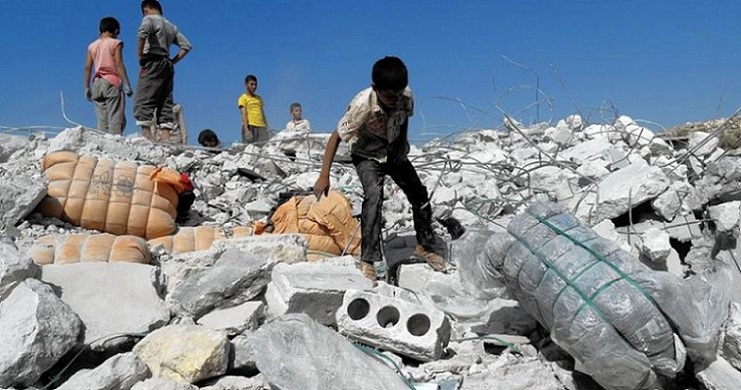
Last year, Swedish Foreign Minister Margot Wallström told a conference that the unfolding humanitarian crisis in Yemen was one that “has far too long been neglected and forgotten by the global community” and what Yemeni people were going through was “difficult to imagine.”
It is such statements that, besides leading various international peace efforts to help resolve major conflicts across the globe, including Saudi Arabia’s deadly war on Yemen, have helped Sweden establish the image of a peace-loving country that cares for others.
However, a steady rise in the Scandinavian country’s weapons business over the past years, including its major dealings with repressive Arab regimes in the Persian Gulf region, has cast doubt on Stockholm’s true intentions.
In fact the rise has been so fast that according to official data by the US government, Sweden is now the world’s third largest weapons producer per capita, closely following Russia and Switzerland while overtaking France, Britain and the US.
At the heart of Sweden’s weapons industry is Saab, a company that sold over $2.7 billion worth of weapons in 2016 alone, making its way into the world’s top 30 arms producing companies according to the Stockholm International Peace Research Institute (SIPRI).
Over the recent years, Saudi Arabia and the United Arab Emirates (UAE) have become some of the main customers for Swedish-made weapons.
Svenska Freds, a 135-years-old Swedish anti-militarization group, charges that Stockholm has been providing Riyadh with weapons since 1998, with a brief suspension in 2015 following a diplomatic row between the two countries.
The larger chunk of the trade has taken over in the past eight years. According to Svenska Freds, the arms sales to Saudi Arabia reportedly approached six billion Swedish kronor ($741mn) between 2010 and 2016.
That means the arms deals between the two sides have continued throughout Saudi Arabia’s deadly war on Yemen, which began in March 2015 and has killed nearly 14,000 Yemeni civilians.
The UAE, another Saudi ally in the bloody war, was able to secure a larger deal in 2016, when the Swedish administrative authority, the National Inspectorate of Strategic Products, authorized 11 billion Swedish kronor ($1.3bn) in arms sales to the Arab country.
Before that, the country had sold 2.1 billion kronor ($272mn) in weapons sales to the UAE.
In a move that further proved Sweden’s desire to expand military ties with repressive Arab regimes, Saab opened a new office in the UAE capital Abu Dhabi in late 2017.
Lawmakers in the Swedish parliament have time and again criticized the government’s arms deals with the Saudi-led coalition.
While Foreign Minister Margot Walltröm has pledged to introduce measures that would limit the exports later this year, there are no signs that Stockholm is willing to end the profitable business anytime soon.
Arms Race Fears Roused in Sweden by Saab’s Indiscriminate Campaigning
Sputnik – 27.03.2017
As the Swedish manufacturer Saab experiences growing problems trying to market its Gripen fighter jet, the company is forced to try and woo previously unbeknown markets. This, however, has attracted criticism from peace researchers, who claim the move contradicts Sweden’s long-lasting foreign policy goals.
A group of peace researchers from Uppsala University condemned Saab’s campaigning in Botswana, saying the move was in direct conflict with Sweden’s foreign policy goals. These are peace, human rights and poverty reduction, according to an opinion piece published by the Swedish daily Svenska Dagbladet.
In 2016, a high-ranking Swedish delegation, led by Defense Minister Peter Hultqvist, toured Botswana. The subsequent scandal involving ballooning costs diverted Swedes’ attention from more pressing issues, such as Sweden’s plans to market JAS 39 Gripen fighter jets to the African nation. According to peace researchers Johan Brosché, Kristine Höglund and Sebastian van Baalen, the deal is highly controversial, especially given the bribery scandals that followed a similar deal with South Africa.
Firstly, in Botswana, which has long been touted as an African success story in terms of equality, human rights and economic development, democracy has gradually eroded. The country’s government is hardly an eligible partner for Sweden, which is trying to emerge as a champion of human rights on the international arena. Botswana, according to Uppsala University researchers, is clearly heading in an authoritarian direction, with growing surveillance, reduced opportunities for freedom of expression and reprisals against anti-government views.
Secondly, a Saab deal would contradict Sweden’s goal of combating poverty, as Botswana is facing major economic problems. Over a fifth of its population of two million live in absolute poverty and subsist on less than two dollars a day, despite the country’s large diamond resources. The billions to be invested in fighter jets would undermine efforts to curb unemployment, and fight drought and corruption.
Third, the idea of Botswana acquiring a fleet of advanced fighter aircraft may trigger a regional arms race, with Namibia and other neighboring countries to follow suit, with detrimental consequences for everyone but the arms dealers. At present, Botswana is not faced with any direct external threat and it is unclear why huge sums must be invested in the acquisition of advanced fighter jets. Whereas the need to protect the country’s tourism industry, combat poaching and monitor the flow of refugees previously were indicated as reasons, none of these problems can be solved with advanced fighter jets.
The Swedish researchers concluded that the arms deal with Botswana would worsen the economic and democratic development in the country, undermine regional security and mar Sweden’s reputation in Southern Africa.
The Saab JAS 39 Gripen is a light single-engine multi-role fighter aircraft in the same class as Airbus’ Eurofighter Typhoon, the Rafale by Dassault and Lockheed Martin’s Joint Strike Fighter.
Despite Saab’s ambitious hopes for the Gripen to “dominate the market,” the company’s bids were consequently rejected by Norway, Poland, Denmark and the Netherlands. The Rafale and the Eurofighter Typhoon are also regarded as favorites in Malaysia, where the government will decide on an aircraft fleet upgrade.
So far, Sweden remains the largest consumer of the Gripen, with an order of 60 new-generation Gripens placed by the Defense Ministry. Saab’s agreement with Brazil on 36 planes worth 40 billion SEK ($4.5bln) remains the company’s largest overseas success. Other Gripen consumers include South Africa and Thailand, while the Czech Republic continues to rent Gripens from Sweden.
Featured Video
America Racing to Strategic Defeat in Iran
or go to
Aletho News Archives – Video-Images
From the Archives
Should Europeans ‘Thank’ the Americans for Destroying Nord Stream?
By Robert Bridge | Strategic Culture Foundation | September 29, 2022
With an investigation continuing into the destruction of the Nord Stream gas pipeline that provided energy supplies to Europe from Russia, there appears to be just one prime suspect, and that should surprise nobody.
Following the sabotage of the Nord Stream 1 and 2 gas pipelines, former Polish Foreign Minister Radoslaw Sikorski already seemed to know the identity of the perpetrator when he tweeted out: “Thank you, USA.”
At first glance, it seemed that Sikorski was speaking sarcastically, berating Washington for carrying out an attack that will have severe repercussions for the people of Europe. After all, how could anyone see any good coming from the termination of Europe’s primary source of gas reserves with winter just around the corner? It was Sikorski’s homeland of Poland, after all, that urged its citizens to collect firewood in the face of dwindling gas reserves.
In fact, the Polish diplomat was speaking one-hundred percent literally… continue
Blog Roll
 Aletho News
- Growing insecurity, soaring prices fuel protests in north as regime bans evacuation: Sources
- Iran denies responsibility for ‘depraved’ attack on Kuwait desalination plant
- Bring The Troops Back. End This War Now!
- Can we please stop calling Israel the ‘only democracy in the Middle East’ now?
- US should start removing its troops for Germany, proposes AfD co-leader Chrupalla
- Iran Red Crescent: 600 educational centers attacked in US-Israeli ‘war crimes’
- Russian Oil Tanker Arrives in Cuba Amid U.S. Blockade
- America Racing to Strategic Defeat in Iran: Lt Col Daniel Davis
- FTC Warns Visa, Mastercard, PayPal, Stripe Over Political Debanking
- Russian tanker approaches Cuba despite US oil blockade
- If Americans Knew
- Israeli police block Catholic cardinal from entering Church of the Holy Sepulchre on Palm Sunday
- Israel is assassinating journalists again, more than any other nation, anywhere, ever – Not a ceasefire Day 170
- Over 300 US service members wounded, majority have brain injuries – Not a ceasefire Day 169
- Researchers at Human Rights Watch Resign Over Blocked Report on Palestinian Refugee Return
- Jewish Groups Are Backing a War Americans Don’t Want
- Eric Fingerhut Thinks He’s the President of the Jews
- Top Jewish Philanthropists, Rabbis Urge Israeli President to Take Action Against ‘Jewish Extremists’
- Don’t Be Fooled. Zionist Leaders Have Always Wanted to Control Southern Lebanon
- Israel’s widespread use of torture is a core element of its genocide against the Palestinian people
- In Israel’s War on Iran, Many Middle East US Bases Rendered “All But Uninhabitable”
- No Tricks Zone
- New Study Finds Warming Saves Lives…Cold Temperatures 12 Times More Deadly Than Excess Heat
- German Science Blog Accuses PIK Climate Institute Of Hallucinating Climate Tipping Points
- Devastating Assessment Of Comirnaty Vaccine By Former Senior Pfizer Europe Toxicologist
- New Study: CO2 Is ‘Effectively Negligible’ As An Explanatory Climate Change Factor Since 2000
- Former Pfizer Toxicologist Dr. Helmut Sterz Tells Bundestag Hearing Pfizer Vaccine Should Have Never Been Approved
- Energy Expert: Germany’s Nuclear Phaseout Was A “500 Billion Euro Mistake”
- New Research: South Australia’s Mid-Holocene Sea Surface Temperatures Were 4°C Warmer Than Today
- Storing Green Energy To Last Germany 10 Days Would Require A 60-Million Tonne Battery
- New Studies: UK Sea Levels Were 4 Meters Higher Than Today During The Mid-Holocene
- Destructive Green New Deal: German Energy And Metal Group Warns Of Drastic Crisis
 Aletho News