Russian Foreign Ministry speaks out on ‘Plan B’ for Iran nuclear deal
Samizdat | August 11, 2022
Any ‘Plan B’ in the talks on the Iranian nuclear program would violate a “consensus decision” of the UN Security Council on the issue and have “unavoidable negative consequences” for the entire Middle East, the Russian Foreign Ministry warned on Thursday.
“Any departure [from the original 2015 deal] or ‘Plans B’ that some people like to speculate about would run counter to the consensus decisions of the [UN] Security Council,” said Ivan Nechaev, the ministry’s deputy spokesman, referring to a 2015 UNSC resolution supporting that year’s agreement on the Iranian nuclear program.
The revival of the existing 2015 deal through the ongoing talks in Vienna is the only “reasonable and effective way” forward, Nechaev told journalists during a briefing. He also welcomed the latest round of indirect talks between the US and Iranian delegations in Vienna, which resulted in some “progress” on issues that had earlier been a stumbling block in the negotiations.
“A positive result of the talks is… achievable,” Nechaev said, adding that “there are no irreconcilable differences between the parties. Further progress would solely depend on each side’s “political will,” the diplomat said.
At the same time, Moscow slammed the EU for what it called the bullying tactics. “The language of ultimatums does not work in such a sensitive and high-stakes issue,” Nechaev said as he particularly criticized Peter Stano, the spokesman for EU diplomatic chief Josep Borrell.
Earlier this week, Stano told journalists that “everything that could be negotiated has been incorporated into the final version of the text” compiled after the latest round of talks between Tehran and Washington, which was mediated by the EU. “It’s yes or no,” Stano insisted, adding that “there is no more room for other compromises.” Borrell himself also called the document “the final text” at that time.
On Thursday, the Russian Foreign Ministry responded by saying Stano had no authority to make such statements on behalf of all parties involved in the talks. The Iranian deal, also known as the Joint Comprehensive Plan of Action (JCPOA), was built on “carefully measured balance of interests” and not “crude political pressure,” it added.
The work on reviving the deal will only end “when interests of all parties involved are properly taken into account,” Nechaev told journalists on Thursday.
Last week, Washington said it developed a proposal for a mutual return to the nuclear deal with Iran. Tehran responded by saying the revival of the agreement relies primarily on the US’ “will” and that Washington must show its readiness to achieve a long-term result.
The Western media have also been publishing pieces calling on Washington and Brussels to work out a ‘Plan B’ that can be used if the Vienna negotiations yield no results. Some of the pieces openly called on Western governments to ditch the talks in favor of this option, which has apparently yet to be devised. “Enough of the ‘tenuous’ Iran nuclear deal – it’s time for Plan B,” read an opinion piece The Hill published in early July. “Biden Should Show Iran What ‘Plan B’ Looks Like,” another piece published by the Washington Post in mid-June suggested.
The deal signed in 2015 by Iran, the US, the UK, France and Germany – as well as Russia, China and the EU – involved Tehran agreeing to certain restrictions on its nuclear industry in exchange for the lifting of economic sanctions and other incentives.
The agreement has been in limbo since 2018 when it was torpedoed by the US under then-President Donald Trump, who unilaterally withdrew from it. In response, Iran started gradually reducing its commitments under the accord, such as the level of enriched uranium it produces.
On August 1, Tehran announced it has “the technical ability to build an atomic bomb,” adding, however, that such a program “is not on the agenda.”
Biden and Allies Continue to Put Iran in the Crosshairs
By Connor Freeman | The Libertarian Institute | August 5, 2022
In addition to escalating brinkmanship with Russia and China, President Joe Biden’s administration is flirting with war against Iran. The clearest evidence of this includes the ever expanding “maximum pressure” sanctions campaign, as well as the development of a U.S.-led, NATO style alliance encircling Iran. There is also ample support for Israel’s incessant drone strikes, assassinations, and ceaseless bombings of allegedly Iranian targets in Syria.
Last month, Biden traveled to the region to publicly genuflect before the rulers of America’s cherished Gulf tyrannies and apartheid Israel. The aforementioned burgeoning alliance topped his agenda.
In May, Tel Aviv’s U.S. taxpayer subsidized military murdered Shireen Abu Akleh, a world renowned Al Jazeera journalist, a Palestinian Christian, and American citizen. During a raid on the occupied West Bank’s Jenin refugee camp, the Israeli Occupation Forces shot her in the face while she was wearing a press vest. They also attacked her funeral procession, attempting to knock her casket to the ground while mourners were carrying it.
But Biden, “Israel’s man in Washington,” got off the plane at Ben Gurion airport and said our bilateral relationship is “bone-deep.” And speaking for the “vast majority” of Americans, he stated emphatically we are “completely devoted to Israel’s security without any ifs, ands, or buts—without any doubts about it.”
He went on to sign a joint declaration with acting Israeli Prime Minister Yair Lapid committing the U.S. to use all of its “national power” to prevent Iran from acquiring a nuclear weapon.
During an interview ahead of his Israel visit, Biden said he would use force, threatening war against Iran “as a last resort.” It is not enough for the Israelis, they demand an “offensive” and “credible” military threat against Iran. Lapid called it “the real thing.”
Biden refuses to lift the necessary sanctions to return to the Joint Comprehensive Plan of Action, the Iran nuclear deal, which means at least the brutal economic war on Iran will persist in perpetuity. This week, Biden levied fresh sanctions on Iran. Biden’s issuance of sanctions has become more frequent in recent months and ever since the other members of the P5+1 began approaching a finalized deal.
As Dave DeCamp, news editor at Antiwar.com, reported,
The U.S. on Monday issued fresh sanctions against Iran meant to target the Islamic Republic’s oil and petrochemical sales to East Asia.
The new sanctions targeted three Chinese firms and one UAE firm accused of doing business with the Persian Gulf Petrochemical Industry Commercial Co. (PGPICC), which the U.S. Treasury Department says is one of Iran’s largest petrochemical brokers.
According to the Treasury Department, PGPICC facilitated the “sale of tens of millions of dollars worth of Iranian petroleum and petrochemical products from Iran to East Asia” through the firms that were hit with sanctions.
The sanctions are the latest sign that the Biden administration is not serious about reviving the Iran nuclear deal, known as the JCPOA. On Monday, Secretary of State Antony Blinken was asked if the U.S. was ready to return to JCPOA, but he sidestepped the questions and put the responsibility on Iran.
Donald Trump and Biden’s “maximum pressure” campaign has led to 40-50% inflation rates and medical shortages. Washington has deliberately suffocated the Iranian people, almost half of whom live below the poverty line.
Last year, former Prime Minister Naftali Bennett told Biden his “strategic vision” for Iran was “death by a thousand cuts,” or myriad military and diplomatic attacks, as well as clandestine attacks, “the gray-area stuff.” Bennett went on to demand U.S. troops remain indefinitely in both Syria and Iraq.
But the decades of lies and unsubstantiated assertions by hawks about Iran’s non-existent nuclear weapons may remain a useable casus belli. Americans aware of Israel’s arsenal, which includes 200 or more nuclear weapons and makes U.S. aid illegal, are considerably outnumbered statistically by those who falsely believe Iran has the bomb. The Iranians have never sought nuclear arms, and they recently reiterated twice that they have the technical capability but, despite their encirclement, Tehran has chosen not to take this course. The development of such weapons is haram under Islamic law, forbidden by the Ayatollah Khamenei’s fatwah.
However, this was never about the phony threat of Iran nuking Israel. The Iranians’ latent threat is unacceptable for Tel Aviv because it may finally restrict the Israelis’ ability to attack their neighbors with impunity, the way they bomb Syria every week.
In the book Enough Already: Time to End the War on Terrorism, Scott Horton, the Libertarian Institute’s Director, explains,
Israeli Prime Minister Benjamin Netanyahu and his then-defense minister, the former prime minister Ehud Barak, admitted in 2010 that even if Iran were hypothetically to gain atomic weapons, the Israelis were not afraid the Ayatollah would attack them in a first strike, as they constantly tell the public. Instead they were merely concerned that it would limit their “freedom of action” against other regional adversaries, such as Hezbollah, and could cause a “brain drain” of talented young Israelis to the United States. Netanyahu’s immediate predecessor, Prime Minister Ehud Olmert told the New York Times that, “Just as Pakistan had the bomb and nothing happened, Israel could also accept and survive Iran having the bomb.” Former Clinton administration State Department official Jamie Rubin also explained in Foreign Policy that the problem was never an Israeli fear of a first strike by Iran, but “Israel’s real fear – losing its nuclear monopoly and therefore the ability to use its conventional forces at will throughout the Middle East – is the unacknowledged factor driving its decision-making toward the Islamic Republic.”
Horton continues quoting Rubin,
[F]or Israeli leaders, the real threat from a nuclear-armed Iran is not the prospect of an insane Iranian leader launching an unprovoked nuclear attack on Israel that would lead to the annihilation of both countries. It’s the fact that Iran doesn’t even need to test a nuclear weapon to undermine Israeli military leverage in Lebanon and Syria.
Earlier this year, the Israelis simulated a massive bombing campaign over Iran, with a series of repeated airstrikes against the Iran’s civilian nuclear energy program. The drills took place over the Mediterranean Sea, spanned over 10,000 kilometers, and saw more than 100 military aircraft and navy submarines participating.
These simulations capped off a month long military exercise called Chariots of Fire which practiced for war with Iran and other contingencies. The U.S. General overseeing Central Command was in attendance. The IDF’s chief of staff has now announced the Israeli military’s primary focus is preparing an attack on Iran. In the Red Sea, the U.S. and Israel are now conducting joint war drills.
The Iran situation is another deadly indication that presidents and administrations may change, but the overall foreign policy agenda does not. Apparently, it only gets worse. The U.S. empire is in decline and the American people feel it. But the neocons and their liberal interventionist partners are holding onto their dream of a “Unipolar Moment.”
As the world adjusts to a multipolar world order, the U.S. foreign policy establishment, left and right, has picked fights with its enemies, not ours.
Americans’ only enemy is our own ruling class who would drag us into wars (proxy wars or otherwise), including with nuclear armed world powers to fulfill their desires to violently dominate the planet, funneling trillions of our dollars into the military-industrial complex. This establishment’s geopolitical and monetary schemes are destroying our nation’s future. As the Ron Paul Institute’s Daniel McAdams recently said, “[American] foreign policy is the FED with nukes.”
We have been stuck with a bill for more than $10 trillion after more than 20 years of war and killing in the Middle East, with millions dead and tens of thousands of soldiers committing suicide. It is long past time Americans put their foot down.
We have a choice. Do we want to continue gambling on the apocalypse, fighting wars with Iran, Russia, and China in memory of the disgraced neocon Charles Krauthammer’s “Unipolar Moment?”
Or should we pursue “peace, commerce, and honest friendship with all nations, entangling alliances with none?”
The answer should be obvious.
Connor Freeman is the assistant editor and a writer at the Libertarian Institute, primarily covering foreign policy. He is a co-host on Conflicts of Interest.
US asks Argentina to confiscate aircraft linked to Iran
MEMO | August 3, 2022
The US Department of Justice said on Tuesday that it has asked the government in Buenos Aires for permission to seize an Iranian plane that was sold to new owners in Venezuela but is being held in Argentina on suspicion of being linked to international terrorist groups.
The unannounced arrival of the plane in Argentina on 8 June raised concerns within the Argentinian government about its relations with Iran, Venezuela and companies that the US has imposed sanctions on. The Justice Department said that the seizure request followed the disclosure of a warrant in the District Court for the District of Columbia dated 19 July to take the aircraft for violating export control laws.
According to the department, the US-made Boeing 747-300 is under sanctions because Iran’s Mahan Air sale to Emtrasur last year violated US export laws. Both companies are subject to US sanctions over their alleged cooperation with terrorist organisations.
Assistant Attorney General Matthew Olsen of the Justice Department’s National Security Division said that, “The department will not tolerate transactions that violate our sanctions and export laws.” Mahan Air faces sanctions for its ties to Iran’s Islamic Revolutionary Guard Corps’ Quds Force, which the US has listed as a terrorist organisation.
There were 14 Venezuelans and five Iranians travelling on the aircraft when it landed in Buenos Aires. Seven of the passengers are still being held by the Argentinian authorities.
Iran nuclear chief: IAEA cameras will remain turned off until JCPOA fully restored
Press TV – July 25, 2022
The head of the Atomic Energy Organization of Iran (AEOI) says monitoring cameras installed by the UN nuclear agency at the Iranian nuclear sites will remain turned off until the 2015 nuclear deal, known as the Joint Comprehensive Plan of Action (JCPOA), is fully restored.
Mohammad Eslami made the remarks on Monday in reaction to recent remarks by Director General of the International Atomic Energy Agency (IAEA) Rafael Grossi.
Eslami said the conclusion of the JCPOA was the final outcome of numerous rounds of negotiations over Iran’s nuclear program.
“However, the West continues to level accusations against Iran on the basis of stolen and alleged documents. The Islamic Republic of Iran agreed to the JCPOA to dispel doubts and build confidence. Iran accepted to restrict its [nuclear] activities to pave the way for confidence building. However, they (the other parties to the deal) did not abide by their commitments,” he said.
“The [IAEA] cameras [which were installed] under the JCPOA were meant to put an end to those [Western] accusations. If those accusations are going to remain in place, there is no more need for the existence of JCPOA cameras,” Iran’s nuclear chief said.
Esalmi added that the IAEA “has removed and sealed the cameras, which are being kept at the [nuclear] facilities [of Iran] until they return to this accord.”
Grossi said in June that Iran has informed the United Nations nuclear watchdog that it is removing 27 surveillance cameras at its nuclear facilities following the Western-drafted anti-Tehran resolution by the agency’s Board of Governors.
“What we have been informed is that 27 cameras… are being removed in Iran,” the IAEA chief said.
Elsewhere in his remarks, Eslami also criticized certain allegations against Iran’s nuclear program, emphasizing that “Tehran has never engaged in any covert and enrichment activities outside the framework [of the JCPOA] and without coordination with the IAEA.”
Iran’s measures to produce heavy water or develop other sections of the country’s nuclear industry infrastructure have been carried out in coordination with the IAEA and are currently under the agency’s supervision, Eslami said.
“No one should have the wrong impression that the IAEA does not currently supervise Iran’s nuclear activities. The IAEA is … conducting its supervision according to the Safeguards Agreement,” the Iranian nuclear chief pointed out.
He added that Iran has turned off the cameras that were not operating based on the Safeguards Agreement, but were related to the JCPOA.
He, however, said Tehran will make new decisions if the parties to the deal return to their obligations as per the JCPOA and Iran is assured that the West would not carry out any mischievous act any more.
During an interview with Spain’s El Pais on Friday, the IAEA chief claimed that Iran’s nuclear program “is advancing at a gallop and we have very little visibility.”
Iran’s nuclear program “has grown enormously, far beyond what it was in 2015. It is a growth that is not only quantitative but qualitative, also with the levels of enrichment.”
“This does not imply that Iran is making a nuclear weapon, but no country that does not have warlike projects enriches at that level, at 60 percent,” Grossi said.
Earlier on Monday, Iran’s Foreign Ministry spokesman Nasser Kan’ani also reacted to Grossi’s remarks, saying, “The Islamic Republic of Iran is a member of the International Atomic Energy Agency and the Non-Proliferation Treaty (NPT), and for many years, especially during recent years, has allowed the agency’s inspectors … to visit [Iran’s nuclear] facilities.”
“Unfortunately, Mr. Grossi has time and again taken an unprofessional and unfair approach vis-à-vis Iran’s nuclear program, especially in recent months. His views are not helpful and constructive. He is interested in raising an issue about Iran’s nuclear issues now and then.,” he said.
Kan’ani added, “We believe that the IAEA director general should adopt a constructive and interactive approach in response to Iran’s constructive cooperation with the agency. We do not view Grossi’s remarks as technical and professional and we advise him to observe the principle of neutrality and fairness and to avoid politically-motivated statements.”
US “Iran Nuclear Deal” Ploy Coming Full Circle
By Brian Berletic – New Eastern Outlook – 22.07.2022
Hopes for the Joint Comprehensive Plan of Action (JCPOA) simply known as the Iran Nuclear Deal seemed to fade further during US President Joe Biden’s recent trip to Israel where the US and Israeli governments signed a pledge to use force against Iran should it pursue nuclear weapons (weapons both the US and Israel possess).
US-based ABC News in its article, “Biden left with few options on Iran as nuclear talks stall,” would claim:
President Joe Biden made a clear promise on Iran, declaring that the country would never become a nuclear power under his watch. But during his time in the White House, the path towards upholding that promise has only become murkier.
During his trip to the Middle East, the president said he would consider using force against Iran only as a “last resort,” although Israel, the US.’s most ardent ally in the region, has pushed for the administration to issue a “credible military threat” against Tehran.
The article would mention the Iran Nuclear Deal specifically, claiming:
… while the administration initially hope to cut a “longer and stronger” deal with Iran, over a year and half of indirect negotiations has produced little movement towards restoring even the original terms of the agreement.
After a monthslong stalemate, a 9th round of talks took place in Doha, Qatar, at the end of June. A State Department spokesperson did not sugarcoat the outcome, saying “no progress was made.”
The 2018 unilateral withdrawal of America from the deal by the administration of US President Donald Trump is blamed for the deal’s failure. Yet the Trump administration’s withdrawal was predicted long before President Trump took office, and in fact, long before US President Barack Obama even signed the deal in the first place. President Biden’s recent activities are only wrapping up what was always a diplomatic ploy meant to trap Iran.
The Nuclear Deal Was Always a Trap
When President Obama signed the Iran Nuclear Deal, it was celebrated as a breakthrough in US diplomacy and a departure from the previous Bush administration’s expanding wars of aggression spanning Iraq and Afghanistan while threatening Iran next.
Signed by the United States and Iran along with other participating nations (the UK, EU, Germany, Russia, China, and France) in 2015, NBC News in their article, “What is the Iran nuclear deal?” would explain:
The Iran nuclear deal, formally known as the Joint Comprehensive Plan of Action, offered Tehran billions of dollars in sanctions relief in exchange for agreeing to curb its nuclear program.
The agreement was aimed at ensuring that “Iran’s nuclear program will be exclusively peaceful.” In return, it lifted UN Security Council and other sanctions, including in areas covering trade, technology, finance and energy.
At face value, the United States imposing sanctions on Iran to impede its development of nuclear weapons was problematic. The United States is the only nation in human history to use nuclear weapons against another nation, twice. Following the 2001 US invasion and occupation of Afghanistan and the 2003 US invasion and occupation of Iraq, the United States had military forces to Iran’s west and east. US hostilities toward Iran stretch back decades and the US State Department, regardless of administration, has made little secret that Washington seeks regime change in Tehran just as it did in Afghanistan and Iraq.
Worse still, US policymakers as early as 2009 had articulated a ploy by which the US would offer Iran a “deal” before deliberately sabotaging it and using its failure as a pretext for the long sought-after regime change war the US has wanted against Iran.
The Washington DC-based Brookings Institution, funded by the largest corporate-financier interests in the Western world as well as Western governments themselves including the US through the US State Department published the 2009 paper (PDF), “Which Path to Persia? Options for a New American Strategy Toward Iran.” In it, the Brookings Institution’s policymakers explicitly articulated options the US could pursue to achieve regime change in Iran.
These options were broken down into sections and chapters within the 170-page report and ranged from “An Offer Iran Shouldn’t Refuse: Persuasion,” to “Toppling Tehran: Regime Change,” to “Going All the Way: Invasion,” and “The Velvet Revolution: Supporting a Popular Uprising.” Everything from setting diplomatic traps to arming designated terrorist organzations were not only discussed, but in the years that followed the paper’s publication, they were implemented one after the other without success. The remaining options on the long list are military in nature involving either the US or Israel (or both) waging war directly and openly against Iran.
All that is required before doing so is a pretext, including the “offer” the US made, but Iran “refused.”
“An Offer Iran Shouldn’t Refuse”
Under “Chapter 1” titled, “An Offer Iran Shouldn’t Refuse: Persuasion,” Brookings policymakers would explain (emphasis added):
… any military operation against Iran will likely be very unpopular around the world and require the proper international context—both to ensure the logistical support the operation would require and to minimize the blowback from it.
The paper then laid out how the US could appear to the world as a peacemaker and depict Iran’s betrayal of a “very good deal” as the pretext for an otherwise reluctant US military response (emphasis added):
The best way to minimize international opprobrium and maximize support (however, grudging or covert) is to strike only when there is a widespread conviction that the Iranians were given but then rejected a superb offer—one so good that only a regime determined to acquire nuclear weapons and acquire them for the wrong reasons would turn it down. Under those circumstances, the United States (or Israel) could portray its operations as taken in sorrow, not anger, and at least some in the international community would conclude that the Iranians “brought it on themselves” by refusing a very good deal.
The Iran Nuclear Deal was doomed before it was ever signed. It was conceived wholly as a pretext for war, not as a diplomatic solution to avoid it.
False Hope Spanning Multiple US Presidencies
In many ways, Iran would be foolish not to create a sufficient military deterrence against US aggression, including the development of nuclear weapons if necessary. However, Iran nonetheless agreed to the nuclear deal’s terms and until the US unilaterally abandoned the deal in 2018, abided by it.
In fact, following the US withdrawal from the deal, Iran continued abiding by many of its conditions alongside its other signatories in the vain hope that under a new US administration it could be salvaged.
When US President Joe Biden took office, the obvious first step by Washington should have been to unconditionally rejoin the deal by removing sanctions, followed by Iran’s renewed and full compliance to the deal’s conditions. Yet the US demanded Iranian compliance first before even agreeing to negotiate Washington’s return to the deal.
It was clear long before President Obama’s signature was inked on the deal’s documents that the US would sabotage it, blame Iran, then pursue renewed and expanded aggression against Iran directly, by proxy, or both. President Trump in 2018 took advantage of America’s domestic politics and the perceived notion that US “Republicans” seek a harder line versus Iran in order to abandon the deal. Because of President Trump’s perceived trait as an “outsider” both to his own party and wider US politics, the US could shift the blame squarely on his administration. Yet the continuity of this ploy across presidential administrations is evident by the fact that upon coming into office, President Biden did not immediately and unconditionally return the US to the deal’s framework.
Instead, President Biden’s administration prevented America’s return to the deal by creating unreasonable preconditions placed entirely upon Iran. With President Biden’s statement in Israel coupled with a recent claim made by US National Security Adviser Jake Sullivan that Iran is preparing to supply Russia with drones, the US is closing the door on the deal indefinitely.
Further evidence of continuity between US administrations can be seen throughout the US-led destabilization, invasion, and occupation of Syria. The campaign was meant as one of several prerequisites laid out by the Brookings Institution’s experts in 2009 before attempting regime change against Iran directly. Ironically, as the Obama administration appeared reconciliatory toward Iran by signing the Iran Nuclear Deal, the same administration presided over the devastating proxy war targeting Iran’s key ally in the region, Syria.
Support of US aggression in Syria transcended presidencies, from the Bush administration who set the stage for it, to the Obama administration who presided over the opening phases of hostilities and occupation, to the Trump and now Biden administrations who have perpetuated a US military presence in Syria along with a policy of denying Syria its key fuel and food production regions in the east to block reconstruction. US foreign policy toward Syria and Iran should not be interpreted separately. The fate of both nations is entwined and illustrates the wider agenda the US is pursuing in the region and has been for decades regardless of US administration.
Barring a fundamental reordering of both American foreign policy objectives and a reordering of the special interests driving them, the Iran Nuclear Deal’s prospects of success will only fade further in the distance. While Tehran’s patience is admirable, Iran and its allies must prepare for the inevitable hostilities that will follow US blame against Tehran for “undermining” a deal the US never had any intention of honoring in the first place.
Brian Berletic is a Bangkok-based geopolitical researcher and writer.
Iran deal can survive if US opts for own interests rather than Israel’s: Foreign Ministry
Press TV – July 20, 2022
Tehran says multilateral negotiations to revive the 2015 Iran deal will be fruitful if the United States looks at the issue through the lens of its own national interests rather than those of the Israeli regime.
Iranian Foreign Ministry spokesman Nasser Kan’ani told a press conference on Wednesday that the US seems to be weak when it comes to making “an independent political decision” about whether it is willing to return to the deal, four years after it unilaterally walked away.
“If the US administration [of Joe Biden] looks at this issue through the lens of American national interests and not through the lens of the interests of the occupying Zionist regime, the ground will be paved for an agreement in the near future,” Kan’ani said.
More than a year of negotiations – first in Vienna and now in Doha – have not yet led to an agreement on what steps each side needs to take in order to restore the ailing accord, officially called the Joint Comprehensive Plan of Action (JCPOA).
The US withdrew from the JCPOA back in 2018 as it unleashed a “maximum pressure” campaign targeting the Iranian economy, despite Tehran’s strict compliance with the terms of the accord.
The Vienna talks, which began in April last year, hit a deadlock in March owing to Washington’s insistence on retaining parts of its sanctions against Iran. The Doha talks, however, have led to different interpretations by the parties to the talks.
“Contrary to the claim of the American side that the Doha negotiations were a failure, they opened up a path for the continuation of talks between the different parties of the nuclear agreement,” Kan’ani said, assessing the negotiations as “good.”
He explained that there is no major obstacle to concluding an agreement, except that the American side has to make a serious political decision.
“On the one hand, the US administration expresses its desire to return to the agreement, and on the other hand, it does not want to pay the costs of returning to the agreement,” the Iranian spokesman added.
‘US, Israel failed to form anti-Iran coalition’
In his Wednesday press conference, Kan’ani also pointed to Biden’s recent trip to the region with the agenda of forming an anti-Iran coalition among other objectives, saying both the US and the Israeli regime failed to achieve that goal.
“The Zionist regime attempted to form a regional coalition during that trip to put pressure on Iran,” he said. “In this effort, this regime has failed and the American government has not succeeded either.”
Biden arrived in the Israeli-occupied territories last Wednesday, kicking off a much-anticipated four-day trip to the region. The regional tour also took the US president to Saudi Arabia, the country he once pledged to make “the pariah that they are.”
Since 2020, the US has brokered normalization agreements under the so-called Abraham Accords between the Israeli regime and some Arab countries, including the United Arab Emirates, Bahrain, Morocco, and Sudan – with Saudi Arabia expected to be the next.
In Saudi Arabia, Biden attended a summit of the [Persian] Gulf Cooperation Council (GCC) countries, plus Egypt, Jordan, and Iraq – also known as GCC+3. The summit, which was ostensibly aimed to build an anti-Iran front, failed to garner much support.
A day before the summit, Iraqi Prime Minister Mustafa al-Kadhimi stressed that Iraq will not be part of any camp or military alliance, and “will not be a base for threatening any neighboring countries.”
The UAE, a close ally of both Saudi Arabia and the US, also dismissed the idea of forming a NATO-like military alliance in the region.
“We are open to cooperation, but not cooperation targeting any other country in the region and I specifically mention Iran,” Anwar Gargash, the UAE president’s diplomatic adviser, said.
“The UAE is not going to be a party to any group of countries that sees confrontation as a direction,” Gargash added.
After the summit, Saudi Arabia’s Foreign Minister Prince Faisal bin Farhan claimed that his country extends a hand of friendship toward Iran.
He also expressed the kingdom’s willingness to reestablish normal relations with the Islamic Republic.
“The messages we received from Arab officials in the region, both directly and indirectly, show that fortunately, the countries of the region are not ready to act against Iran [and in line with] America’s regional policies,” Kan’ani said.
He then added that conditions are now ripe for Iran to organize and host talks to deepen regional cooperation.
He also urged the US to stop meddling in the internal affairs of regional countries, halt its plots of forming fictitious alliances, and refrain from imposing American values on the region.
Regional countries naturally have common interests and views, he said, adding, “They are capable of creating the best conditions for stability and security in the region in the light of regional meetings.”
Iran’s petrochemical output capacity to rise by 54% in 2025
Press TV – July 14, 2022
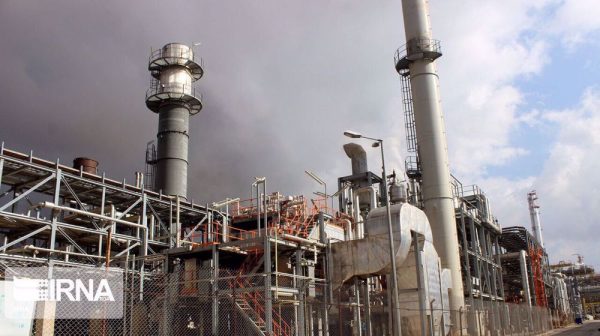
Iran will increase its production capacity for petrochemical products by more than a half in the next three years as the country moves ahead with plans to increase added value in its petroleum sector.
A Thursday report by the official IRNA news agency said Iran will launch a total of 35 new petrochemical plants by 2025 to increase the output capacity in the sector by 54% to 140 million metric tons per annum (mtpa).
It said petrochemical output capacity in Iran had increased by 7% in the calendar year to March 2022 to reach nearly 91 million mtpa thanks to the completion of seven new petrochemical projects across the country.
Iran’s sales of petrochemicals, including exports to other countries, also rose by 4.4% in the calendar year to late March with government figures showing that exports proceeds from the sector reached nearly $12.5 billion over that period.
Iran has relied on petrochemicals as a major source of earning hard currency in recent years as the country has been facing a series of tough American sanctions targeting its direct exports of crude oil.
China has been the top customer of Iranian petrochemical shipments in recent years while exports to countries in the region have also surged since the United States imposed its sanctions on Iran in 2018.
The expansion of the Iranian petrochemical sector has also led to a significant rise in the number of jobs in the country. Estimates suggest the number of direct jobs in the sector is more than 920,000 compared with a total of 107,000 direct jobs registered in the upstream sector of the oil and gas industry in Iran.
Tehran rejects G7’s anti-Iranian statement as baseless, one-sided, unfair

Iran’s Foreign Ministry spokesman Nasser Kan’ani
Press TV – June 29, 2022
Tehran has vehemently denounced as “baseless, one-sided, and unjust” an anti-Iranian statement by the Group of Seven industrialized states.
The statement was issued during a meeting of the group’s sevenfold members—Canada, France, Germany, Italy, Japan, the United Kingdom, and the United States—in Germany on Tuesday.
It urged “restriction of Iran’s nuclear program,” faulted Iran’s “ballistic missile activities,” and accused it of “human rights violations.”
Later during the day, Iranian Foreign Ministry spokesman Nasser Kan’ani said the country “strongly condemns” the passages of the statement.
The statement, he said, “deliberately ignores” the United States’ departure from a 2015 nuclear deal with Iran and others as well as Washington’s subsequent re-imposition of illegal sanctions against the Iranian people.
The Iranian official reprimanded the countries that had issued the statement for their cooperation with the US in imposing sanctions and their refusal to confront the coercive economic measures.
He also spurned any accusations directed towards Iran’s peaceful nuclear energy program, saying the statement “deliberately” ignores the Islamic Republic’s ban on all nuclear weapons.
Kan’ani reminded that the G7 countries were facing Iran with “factitious accusations,” while they, themselves, were in possession of the world’s “biggest nuclear arsenal.”
The spokesman, meanwhile, blasted the statement for trying to portray Iran’s comprehensive cooperation with the International Atomic Energy Agency, the United Nations’ nuclear body, in a bad light.
The official further rejected all allegations against Iran’s “legitimate and defensive missile program,” reminding that the country’s missile work can never be subject to any negotiation or compromise.
“It is necessary that the parties that have issued the statement rather be accountable for their sales of billions of dollars of advanced weapons, which is one of the most important factors of instability in our region,” Kan’ani asserted.
Addressing the human rights accusations made through the statement, the official said the countries throwing the allegations were the very same states that have closed their eyes to the “flagrant violation” of the Iranian nation’s rights as a result of the sanctions.
Israel Murders Iranians While Biden Kills the Iran Deal
By Connor Freeman | The Libertarian Institute | June 23, 2022
In a clear message to Tehran, an American B-52 flew over the Persian Gulf as soon as Joe Biden entered the White House. Biden promised to return the U.S. to the Iran nuclear deal. But indirect talks to revive the Joint Comprehensive Plan of Action (JCPOA), which began last April, have stalled for three months without a resolution in sight. Counting on the reliable support of Biden and bipartisan Iran hawks in Congress, the nuclear-armed Israeli apartheid regime intends to kill the deal entirely.
Tehran, a decades-long signatory of the Non-Proliferation Treaty, is neither seeking nor has ever sought nuclear weapons. But the Islamic Republic, once Tel Aviv’s “best friend,” serves as Israel’s favorite boogeyman, superficially justifying billions of dollars in American military aid each year. The JCPOA threatens the racket.
Formally known for years as “Israel’s man in Washington,” President Biden is essentially pursuing ultra-Zionist Donald Trump’s foreign policy regarding Iran and supporting, tacitly or otherwise, Tel Aviv’s relentless attacks against Iran and its allies. Biden is continuously imposing yet more sanctions, increasing the “Maximum Pressure” on the economically crippled Iranian people.
The rial has hit all-time lows. With a population of 82 million, almost half of all Iranians live below the poverty line, and inflation is somewhere between 40-50%.
America’s self-styled sanctions artists delight in seeing the results of their economic war on Iran: excess deaths, severe medical shortages, prohibitively high prices for staple goods, plummeting incomes, and social unrest over food costs.
This year, Tel Aviv has been bombing Syria, Tehran’s ally, at the usual weekly rate. A recent strike, coming from the illegally occupied Golan Heights, attacked Damascus International Airport. The airstrike targeted the facility’s only working runway Israel had not yet destroyed, rendering the airport temporarily inoperable.
Shortly afterwards, The Wall Street Journal put out a story confirming that Tel Aviv coordinates with the Pentagon on many of its strikes in Syria.
The Israelis just wrapped up month-long war drills, the largest held in decades, aimed squarely at Tehran. Exercises over the Mediterranean Sea, with over 100 aircraft and navy submarines, spanned 10,000 kilometers and were designed to simulate repeated airstrikes on Iran and their civilian nuclear facilities.
Early reports were that the U.S. Air Force would participate, providing refueling planes, but this reportedly did not come to pass. Although General Michael Kurilla, the new head of U.S. Central Command (CENTCOM), observed some of these Chariots of Fire exercises.
On May 22, 2022, the Israelis carried out a high profile assassination of a senior colonel in the Iranian Revolutionary Guard Corps (IRGC), Col. Hassan Sayyad Khodaei. Shortly afterwards, citing an unnamed intelligence official, The New York Times reported Tel Aviv had informed Washington that it was responsible. Israel’s attacks seem to be primarily focused on the Iranians’ drone program, namely killing people who work on drone technology and attacking related sites.
As Dave DeCamp, Antiwar.com news editor, reported,
Israel was immediately suspected of the assassination since it has a history of carrying out targeted killings and other attacks inside Iran. Israel rarely officially acknowledges such operations, and it’s typical that its responsibility is revealed by leaks to the media, often by Israeli officials.
Israeli officials claimed to the Times that Khodaei was in charge of a secret covert IRGC group known as Unit 840, which Iran denies exists. The Israelis claim Khodaei was involved in plots to kill and kidnap Israeli civilians and officials around the world, but there’s no evidence Tehran was planning to target Israelis abroad.
Two people affiliated with the IRGC told the Times that Khodaei was a logistics officer who played a key role in transporting drone and missile technology to Syria and Hezbollah in Lebanon and advised militias in Syria. Iran has said Khodaei was involved in the fight against ISIS in Iraq and Syria.
Israel is suspected to have subsequently poisoned and murdered two Iranian scientists including Ayoub Entezari, an aerospace engineer, who reportedly worked on missile and drone projects, and Kamran Aghamolaei, a geologist.
Last month, a few dozen miles south of Tehran, quadcopter suicide drones attacked the Parchin military complex. The drones hit a building being used for drone development and killed a young engineer. In February, Israel used six quadcopter drones in a strike targeting another Iranian drone facility in Kermanshah which did significant damage. In Tabriz, there were reports of another Israeli attack on a drone factory, as many as three people may have been killed. This month, two additional IRGC members also working in the aerospace industry died during mysterious accidents in Iran. Both deaths were declared “martyrdoms.”
In the midst of these soaring tensions, Robert Malley, Biden’s Iran envoy, is telling Congress “all options are on the table.”
The U.S. Senate overwhelmingly voted to pass a non-binding resolution which insists they would never support a restoration of the JCPOA if the IRGC were removed from the Foreign Terrorist Organization (FTO) blacklist. The FTO designation is ostensibly one of the final sticking points preventing the deal’s straightforward revival. Congress has been sending messages, loud and clear, to Tehran and Biden that the deal has virtually no support.
Meanwhile, Secretary of State Antony Blinken is peddling baseless stories about Tehran attempting to assassinate his predecessor Mike Pompeo. Pompeo enthusiastically supported Trump’s Maximum Pressure campaign as well as the drone strike murder of top Iranian General Qasem Soleimani, leader of the IRGC Quds Force. Though these claims of Pompeo’s life being endangered remain unproven, U.S. taxpayers pay millions per month for a security detail to put his and Blinken’s mind at ease.
Much like Tel Aviv’s unproven accusations that the IRGC is out to kidnap and murder Israelis, especially in Istanbul for some reason, this obviously plays well with the overall anti-JCPOA campaign.
The IRGC is the only state military organization on the terrorism blacklist. Considering the myriad preexisting sanctions on the unit, it is a superfluous insult. In 2019, Trump implemented this policy at the behest of Israeli-partisan hawks like Mark Dubowitz at the Foundation For Defense of Democracies, a notoriously anti-Iran think tank. This is one of the largest bricks in the so called “sanctions wall” precluding any of Trump’s successors from ever returning to the deal for fear of the built-in political toxicity. It is enough to keep Biden and the cowardly Democrats from backing what is ultimately Barack Obama’s deal in favor of a neoconservative-style Iran policy.
As May began, Israel started making these claims about a global Iranian plot to kill Israelis. At that time, the JCPOA negotiations were seemingly stalled irrevocably because of the IRGC-FTO issue. But then the Vienna talks’ broker, European Union nuclear negotiator Enrique Mora, traveled to Tehran. He took meetings with Iran’s lead negotiator Ali Bagheri Kani as a last ditch effort to break the deadlock. Mora was sent by EU foreign policy chief Josep Borrell. As a result of the American led sanctions blitz on Russia, Europeans are in desperate need of another crude supplier as Borrell has noted. The same week, the emir of Qatar, Sheikh Tamim bin Hamad Al Thani, also made a trip to Tehran and pushed for progress during meetings with President Ebrahim Raisi as well as Ayatollah Ali Khamenei. On May 13th, Borrell announced Mora’s mission went “better than expected,” Vienna talks had been unblocked, and a final deal was within reach.
Days later, coinciding with Israeli Defense Minister Benny Gantz’s visit to Washington, and his meetings with National Security Adviser Jake Sullivan and Pentagon chief Lloyd Austin, Khodaei was murdered in the drive-by shooting. Israel’s assassination campaign had commenced.
Two days after the Khodaei killing, Politico reported that the final decision to keep the IRGC on the FTO list was made. On Twitter, Israeli Prime Minister Naftali Bennett thanked Biden for the “principled decision and for being a true friend of the State of Israel.”
Following Trump, Biden’s administration is also continuing to seize tankers, stealing Iranian oil and pirating it for profit. Ironically, after Russian President Vladimir Putin invaded Ukraine, there was some talk from Biden officials about making a deal with the Islamic Republic to put Iran’s abundant oil back on the market to reduce global energy prices. But this was apparently never taken seriously.
Biden instead prefers to kowtow to the genocidal Saudi regime which along with Abu Dhabi and Washington have starved to death and bombed over 400,000 Yemenis, including more than 263,000 children.
Those deaths mean little to the Abraham Accords caucus. This bipartisan coalition in Congress is working to ensure Washington arms these tyrants further while the Pentagon assists them in joining forces, as well as integrating missile defenses with Tel Aviv eyeing Tehran. As Biden heads to the Middle East, there is even talk of the U.S. offering security guarantees to the United Arab Emirates.
For almost a year, the Israelis have been pushing an anti-Iran, NATO-style, U.S. led alliance in the Middle East. In recent weeks, Gantz has openly promoted this strategy which Bennett is said to have suggested to Biden during a White House meeting last year.
As Iran is encircled militarily and strangled economically, the American Empire is refusing to allow them any breathing room. Each day the U.S. forgoes lifting sanctions and restoring the deal the likelihood of a hot war increases.
Given the size of Iran, its population, its geostrategic location, substantial ballistic missile deterrent, its Axis of Resistance partners, and the wide variety of U.S. military targets in the region, a war with Tehran would likely dwarf the catastrophic damage, scope, and deaths of America’s other Middle East wars.
If the JCPOA fails, the hawks armed to the teeth surrounding Iran may try to goad Tehran into leaving the NPT. Whether this happens ultimately or not, Israel may use the coming breakdown in diplomacy to justify instigating its long desired war. Rightfully, the Iranians will see such an Israeli attack as an American declaration of war.
This week, Tehran has formally dropped their demand for removing the IRGC from the FTO list. Washington has not yet responded. Contrary to the corporate press narrative, the ball is now firmly in Washington’s court.
Iran called Biden’s bluff. It is imperative that the American people now assert our support for terminating the unjustified and brutal Maximum Pressure campaign as well as denounce Israel’s murderous aggressions.
The Iranian people deserve to live and trade in peace.
BRICS Leaders Vow to Enhance & Expand New Development Bank
Samizdat – 23.06.2022
The leaders of Brazil, Russia, India, China, and South Africa held their 14th annual summit on Thursday virtually. This year, the summit was chaired by China.
BRICS members vowed to widen the Shanghai-based New Development Bank (NDB) on Thursday, following the successful admission of Bangladesh, Egypt, the United Arab Emirates (UAE) and Uruguay in September 2021.
“We look forward to further membership expansion in a gradual and balanced manner in terms of geographic representation and comprising of both developed and developing countries, to enhance the NDB’s international influence as well as the representation and voice of Emerging Market and Developing Countries (EMDCs) in global governance,” the 75-point joint declaration released after the summit read.
BRICS has supported the NDB’s goals of attaining the highest possible credit rating and institutional development. The BRICS member nations have also stressed that they have a similar approach to the global economic governance, and their mutual cooperation can make a valuable contribution to the post-Covid economic recovery.
Geopolitical Concerns
Leaders also discussed the ongoing crisis in Eastern Europe, recalling their national positions at different global forums, including the United Nations’ Security Council and General Assembly.
“We support talks between Russia and Ukraine. We have also discussed our concerns over the humanitarian situation in and around Ukraine,” the joint declaration said.
Amid border tensions between India and China, the leaders committed to “respect the sovereignty and territorial integrity of all States,” stressing the peaceful resolution of differences and disputes through dialogue and consultation.
The BRICS countries – which represent 24 percent of the global GDP and 16 percent of worldwide trade – further reiterated the need to resolve the Iranian nuclear issue through peaceful and diplomatic means as per international law. They stressed the importance of preserving the Joint Comprehensive Plan of Action, a deal reached between Iran and the five permanent members of the UN Security Council in 2015. The stand-off between Iran and western nations continues following the US’ withdrawal from the JCPOA in May 2018.
Iran blasts IAEA for repeating old allegations based on bogus Israeli claims
Press TV – June 17, 2022
Iran’s nuclear agency chief has again blasted the International Atomic Energy Agency (IAEA) for repeating old allegations against the country’s civilian nuclear program, based on bogus Israeli claims.
Mohammad Eslami, the head of the Atomic Energy Organization of Iran (AEOI), addressing a press conference in the central Iranian city of Natanz on Thursday, said the false allegations made by the IAEA are detrimental to ongoing negotiations to revive the 2015 nuclear deal.
“Now that the negotiations for [the US] return to the JCPOA [nuclear deal] are underway, the same old allegations are being repeated by citing fabricated claims made by the Zionist regime,” Eslami said.
He was referring to the UN nuclear agency’s mention of the so-called PMD (possible military dimensions) file on Iran’s nuclear program, insisting that such schemes will not help negotiations.
Eslami stressed that the reasoning behind signing the 2015 nuclear deal – officially referred to as the Joint Comprehensive Plan of Action (JCPOA) – was the closure of false Western allegations about possible military applications of Iran’s civilian nuclear program under the PMD file.
He said the PMD file was supposed to be closed as a key condition for reaching the accord and lifting anti-Iran sanctions — based on extensive inspections of Iran’s nuclear facilities and activities by the IAEA over the past two decades.
“We, in turn, accepted limitations on our nuclear activities and thereby yielded on our certain rights as well as accepted inspections on the condition that previous accusations would be permanently revoked and that we would be able to continue our activities under strict inspection and trust-building engagements,” the official added.
Eslami said Iran continues to operate under the IAEA regulations, while defending the removal of surveillance cameras functioning beyond the safeguards agreement, in reaction to the anti-Iran vote at the UN agency’s board of governors meeting recently.
Last week, Eslami slammed the IAEA for politicizing Iran’s peaceful nuclear program under Israeli pressure while disregarding Tehran’s extensive cooperation with the UN agency after the adoption of a resolution against Iran — drafted by the US and its European allies.
Eslami justified Tehran’s refusal to provide the IAEA with films of JCPOA’s monitoring cameras, stressing that the accord between Iran and the 5+1 countries will only exist as long as both sides remain committed to it.
“Today they want to return to JCPOA, but then raise the same old reasons for starting the nuclear talks. So we, in turn, did not grant them access to the film of the JCOPA cameras,” he stressed.
“Psychological operations, media campaigns and political pressures and controversies against Iran have never produced results in the past and will now remain ineffective as well because the PMD file was closed in the past, and reopening it will in no way help them,” he added.
He said Iran was in possession of “less than three percent of the world’s nuclear reserves” but still “more than 25 percent of [IAEA] inspections” were carried out in Iran, while the regimes that have waged wars against Iran have never allowed inspections of their nuclear facilities.
Iran’s foreign minister Hossein Amir-Abdollahian, in his remarks on Thursday, also blamed the US for IAEA’s recent anti-Tehran resolution, insisting that the move was aimed at mounting pressure on Tehran to give concessions in Vienna talks.
Iran’s top diplomat made the remarks in a Thursday phone call with his Iraqi counterpart, Fuad Hussein, during which the two sides also discussed bilateral issues and regional developments.
Negotiations have been underway in the Austrian capital since April last year to restore the 2015 Iran deal, which the former US President Donald Trump unilaterally abandoned in May 2018.
After quitting the deal, Trump introduced what he called the “maximum pressure” campaign to bring Iran to its knees, a policy that has failed miserably. The Joe Biden administration, despite its initial pledge to reverse Trump’s hard-nosed measures, has failed to deliver.
Iran has cited Washington’s indecisiveness as the reason behind the stalemate in talks, as many key issues remain unresolved, ranging from the removal of all post-JCPOA sanctions to the provision of guarantees by the American side that it will not leave the deal again.
AEOI spokesman Behrouz Kamalvandi on Wednesday advised IAEA director general Rafael Grossi to refrain from “complicating the situation” by making political statements after the UN agency called on Iran to resume talks before things get “much more problematic.”
“I amicably advise Rafael Grossi, the director-general of the [International Atomic Energy] Agency, to distance himself from making unprofessional statements of political color intended for media consumption,” Kamalvandi said.
“It is clear that if there is a technical issue, it should be presented professionally within the framework of the Agency’s duties and followed through its channels and the usual mechanisms of the Agency. Obviously, the arena for such interactions is not the media.”
Kamalvandi was referring to Grossi’s interview broadcast on June 12 on CNN, in which he made unusually menacing tropes against Iran.
Grossi sparked a controversy after he traveled to Israel and met the regime’s leaders late last month, just before the IAEA board of governors meeting.
The IAEA’s annual report, experts believe, was based on documents supplied by Israel about Iran’s nuclear program, which Tehran has rejected as fabricated.
How the West helped Israel take the IAEA hostage
By Syed Zafar Mehdi | Press TV | June 11, 2022
Israel, the world’s eighth-largest nuclear power, initiated its nuclear program in 1952 with technological support from France and the US, the two countries most vocal about Iran’s peaceful nuclear program.
The first nuclear weapons were developed by Tel Aviv somewhere around 1967-1968, according to military think tanks. After that, the production accelerated rapidly, with zero international outcry.
Today, the regime possesses over 90 nuclear warheads with enough plutonium to produce at least 200 nuclear weapons. Around 5 kg of weapons-grade plutonium is required for one nuclear bomb.
Despite its nuclear program being an open secret – thanks to technician Mordechai Vanunu who blew the lid off Pandora’s Box back in 1986 – the regime has obdurately refused to confirm or deny it.
Vanunu, who worked at the Dimona nuclear facility, was in 1988 convicted of treason and sentenced to 18 years in prison. The same year he was also nominated for the Nobel peace prize.
Vanunu isn’t the only one to blow the whistle. In December 2013, former Israeli Knesset member Avraham Burg in a rare admission said the regime possessed both nuclear and chemical weapons, dubbing the official policy of nuclear ambiguity as “outdated and childish”. He was soon reprimanded.
What has emboldened Tel Aviv to accelerate its nuclear activities while wrapping a cloak of secrecy around them is Western sponsorship made possible by Zionist lobbying groups in the US and Europe.
The two countries most critical of Iran’s nuclear program are Israel’s staunchest allies, who helped the regime become a nuclear power. Israel’s weapons-grade fissile material stocks originated in France in the 1960s and the US in the late 1960s.
The US support, in particular, has allowed Israel to escape accountability for its diabolic activities. In a classic case of double standards, successive regimes in Washington have made a conscious effort not to talk about Israel’s nuclear arsenal despite making hullabaloo for non-proliferation in the region.
It began back in 1968 when then-CIA director Richard Helms informed President Lyndon Johnson that Israel had built nuclear weapons and that its air force had conducted aerial maneuvers to drop them.
Johnson’s response, on expected lines, was muted. A year later, at a meeting between just-elected President Richard Nixon and then Israeli premier Golda Meir, it was agreed that Washington will not force Israel to sign the NPT, which had opened for signature months before, in July 1968.
The US policy of silence continued, which helped the illegitimate regime in Tel Aviv escape the scrutiny of the UN nuclear agency. This silence amounted to both cowardice and complicity.
Importantly, and quite scandalously, Israel is not the signatory to the Nuclear Non-proliferation Treaty (NPT). It has repeatedly rejected calls to join the keystone accord of the international arms control regime and refused to give UN nuclear agency inspectors access to its nuclear sites.
Despite the regime’s dismissive approach, the International Atomic Energy Agency has adopted a remarkably soft approach to the point that many see collusion between the two.
IAEA chief Rafael Grossi’s whirlwind trip to Tel Aviv ahead of the UN nuclear agency’s board of governors meeting in Vienna earlier this week lent credence to the plausible Israel-IAEA collusion theory.
Grossi dashed off to Israel to discuss the anti-Iran resolution drafted by the US and the European troika with Israeli officials, aimed at mounting pressure on Iran to give up its legitimate demands.
Does it make sense that the IAEA chief meets the head of an illegitimate regime, which has secretly built a nuclear arsenal and refused to cooperate with the UN agency, to discuss the nuclear program of a country that has signed the NPT, cooperated fully with the agency and fulfilled all its obligations? It smells of something deeply sinister, extremely despicable.
The resolution against Iran at the IAEA board of governors meeting, which has already seen a “firm and proportionate response” from Tehran, blamed Iran for lack of cooperation with the UN agency.
For those unnerved by Iran’s decision to ramp up its nuclear enrichment capacity, it is essential to understand that the Islamic Republic claims its rights under Article IV of the NPT to pursue a peaceful nuclear program for energy purposes, unlike rogue regimes like Israel.
It’s also imperative to understand that the decision to scale up uranium enrichment from 3.65 percent stipulated in the 2015 nuclear deal came a year after former US President Donald Trump in a unilateral and illegal move pulled his country out of the landmark agreement, followed by reinstatement of sanctions.
The negotiations between Iran and the world powers to salvage the deal have been paused not because of Iran’s excessive demands or non-compliance but due to the West’s obstructionism. Iran did everything to save the deal but the other parties continue to make all-out efforts to kill the same deal.
The latest move to remove cameras operating beyond the NPT safeguards agreement at some Iranian nuclear sites and feed gas into machines including IR-6 is a milder reaction to the hostile move at the IAEA board of governors meeting.
As Iran’s nuclear body chief Mohammad Eslami stated, it’s preposterous that the IAEA has been taken hostage by the illegitimate regime, which raises questions over its credibility and independence.
Unless the agency comes out of the ominous Israeli shadow and makes a concerted effort to focus on its professional and technical mandate, beyond politics, Iran reserves the right to take remedial measures.
And as President Ebrahim Raeisi asserted unambiguously, the Islamic Republic will not back down even an inch. The writing is on the wall.
Syed Zafar Mehdi is a Tehran-based journalist, editor and blogger. He has reported extensively from Kashmir, India, Pakistan, Afghanistan and Iran for leading publications worldwide.
or go to
Aletho News Archives – Video-Images
From the Archives
Israel Would Have No Qualms About USS Liberty-Style FALSE FLAG If Iran Campaign Falters – Analysts
By Ilya Tsukanov – Sputnik – 18.06.2025
Donald Trump is mulling whether or not to join Israel’s aggression against Iran as Tel Aviv faces problems sustaining its defenses against growing counterstrikes, and apparently lacks a realistic game plan for an end to hostilities after failing to achieve its goals. Analysts told Sputnik how the US could be ‘nudged’ into the conflict.
“The US is already assisting Israel with supplies, intel, refueling support, etc. One of the many US posts in the region could be attacked for a casus belli,” former Pentagon analyst Karen Kwiatkowski explained.
“If Trump doesn’t comply with Israel’s demand” and join its aggression voluntarily, “a false flag may be needed” to drag the US in, Kwiatkowski, retired US Air Force Lt. Col.-turned Iraq War whistleblower, fears.
Netanyahu has a diverse array of options at his disposal, according to the observer, including:
- a false flag against US assets abroad blamed on Iran or one of its Axis of Resistance allies, like the Houthis
- a US domestic attack or assassination blamed on Iran
- Iranian air defenses ‘accidentally’ hitting a civilian jetliner carrying Americans
- use of a dirty bomb or nuclear contamination somewhere in the region blamed on Iran
- even blackmailing by threatening to use nukes against Iran if the US doesn’t join the fight
Kwiatkowski estimates that Israel probably has “enough blackmail power” against President Trump and Congress to avoid the necessity of a false flag operation, but a “USS Liberty-style” attack, targeting the soon-to-be-retired USS Nimitz supercarrier that’s heading to the Middle East, for example, nevertheless cannot be ruled out entirely, she says. … continue
Blog Roll
 Aletho News
- The US bombed the Shahs house lol
- The London Ambulances Attack: Of Course It Was A False Flag
- Embarrassing Pivot: U.S. considers dropping Iran oil sanctions amid war
- US has 2 months of rare earths left to replenish weapons amid Iran war: Report
- Strait Of Hormuz closure brings Empire to brink
- Iran controls Strait of Hormuz, dictates terms of war and peace as US excursion backfires
- Outlasting the Superpower: The Reasons Why Iran is Beating uhe US and Israel
- Top PMU commander, over a dozen fighters killed in new US strikes on Iraq
- Is Netanyahu’s war gamble threatening the future of ‘Israel’?: FT
- Smotrich calls for annexation of South Lebanon to Litani River
- If Americans Knew
- ‘Forever live by the sword’: Understanding Israelis’ massive support for Iran war
- UN’s special rapporteur on human rights says Israel is systematically torturing Palestinians
- Trump White House plagiarized Iran war manifesto from Israel-aligned think tank
- Gaza says 6–10 patients die daily waiting for treatment abroad as Israel blocks medical evacuations
- ‘Substantial evidence’ of double-tap strike in killing of Gaza’s Hind Rajab
- ‘Do Not Want To Die For Israel’: Doubts About Trump’s Iran Strategy Spread Among Troops
- Instead of taking Joe Kent’s claims seriously, the media is disregarding him as an antisemite
- Joe Kent’s Explosive Interviews about his Resignation over the Iran War
- Israel poised to take over southern Lebanon; settlers wreak havoc in West Bank – Not a ceasefire Day 165
- From Sde Teiman, the truth about Israel’s military justice system has been set free
- No Tricks Zone
- Devastating Assessment Of Comirnaty Vaccine By Former Senior Pfizer Europe Toxicologist
- New Study: CO2 Is ‘Effectively Negligible’ As An Explanatory Climate Change Factor Since 2000
- Former Pfizer Toxicologist Dr. Helmut Sterz Tells Bundestag Hearing Pfizer Vaccine Should Have Never Been Approved
- Energy Expert: Germany’s Nuclear Phaseout Was A “500 Billion Euro Mistake”
- New Research: South Australia’s Mid-Holocene Sea Surface Temperatures Were 4°C Warmer Than Today
- Storing Green Energy To Last Germany 10 Days Would Require A 60-Million Tonne Battery
- New Studies: UK Sea Levels Were 4 Meters Higher Than Today During The Mid-Holocene
- Destructive Green New Deal: German Energy And Metal Group Warns Of Drastic Crisis
- New Study Documents A 20-Year Pause In Arctic Sea Ice Decline – Driven By Internal Variability
- Wake-up Call: Survey Shows Majority Of Germans Now Favor Postponing Climate Targets!
 Aletho News