Voluntary implementation of Additional Protocol must stop if sanctions remain in place: Iran MPs
Press TV | February 21, 2021
Iranian lawmakers have once again highlighted the necessity of stopping voluntary implementation of the Additional Protocol to the nuclear Non-Proliferation Treaty (NPT) if sanctions imposed on the Islamic Republic remain in place.
The call came in a statement issued by 226 members of the Iranian Parliament following an open session of the legislature on Sunday.
“All Iranian officials, including the administration officials, are duty-bound to stop voluntary implementation of the Additional Protocol as of Esfand 5, 1399 (February 23, 2021) and restrict the (International Atomic Energy) Agency’s inspections [of Iran’s nuclear facilities] to those stipulated in the Safeguards Agreement if sanctions are not lifted,” they said.
The statement added that following the conclusion of the multilateral nuclear agreement, officially known as the Joint Comprehensive Plan of Action (JCPOA), between Iran and major world powers in 2015, Western parties, including the United States and three European countries – Britain, Germany and France – were expected to treat the Iranian nation with honesty and fulfill their obligations under the accord.
“Although the International Atomic Energy Agency (IAEA) has verified 15 times at various intervals that Iran has fully implemented its JCPOA commitments, enemies of the Iranian people have not fulfilled any of their fundamental and important obligations.”
Based on the JCPOA, sanctions on Iran’s banking and oil sectors were scheduled to be lifted in January 2016 but “unfortunately” more restrictions were imposed on the country, the lawmakers said.
They added that the process of harming the Iranian people’s interests and imposing more sanctions on Tehran under different pretexts started under the former democratic US president, Barack Obama, and culminated in the decision by former Republican president, Donald Trump, to withdraw from the JCPOA in May 2018.
In 2015, Iran and six world states — namely the US, Germany, France, Britain, Russia and China — signed the historic nuclear deal, which was ratified in the form of UN Security Council Resolution 2231.
However, Trump unilaterally pulled out of the JCPOA in 2018 and reinstated the anti-Iran sanctions that had been lifted by the virtue of the deal.
The Trump administration also launched what it called a maximum pressure campaign against Iran, targeting the Iranian nation with the “toughest ever” restrictive measures.
Elsewhere in their statement, the Iranian legislators further noted that in order to defend the Iranian nation’s nuclear rights and make enemies of the nation lift unjust sanctions, Iran finally decided to start the process of enriching uranium to 20 percent purity and also to give a two-month deadline to the US and the three European parties to the JCPOA to lift cruel sanctions.
Another part of that decision, the parliamentary statement said, was to stop voluntary implementation of the Additional Protocol based on articles 26 and 36 of the JCPOA and in line with UN Security Council Resolution 2231, if the opposite side failed to fulfill its obligations.
On December 1, 2020, Iranian lawmakers overwhelmingly voted in favor of the ‘Strategic Action Plan to Lift Sanctions and Safeguard Interests of Iranian People’, which intends to counteract sanctions imposed on Iran. The bill became law after being endorsed by Iran’s Guardian Council.
According to the new law, the Iranian administration is required to suspend more commitments under the nuclear deal if the US sanctions are not eased by February 21.
The law tasked the AEOI with producing and restoring at least 120 kilograms of enriched uranium at a 20-percent purity level every year and also enrichment beyond 20 percent if the country’s peaceful nuclear activities demanded.
In January, Iran started the process to enrich uranium to 20 percent purity at its Fordow nuclear facility.
The lawmakers’ statement came on the same day that the IAEA Director General Rafael Grossi held talks with Iranian officials, including Head of the Atomic Energy Organization of Iran Ali Akbar Salehi and Foreign Minister Mohammad Javad Zarif in Tehran, hours before the deadline set by the Islamic Republic to limit inspections by the agency if US sanctions are not lifted.
Grossi announced on Tuesday that he was ready to visit Iran after the country informed the UN body of its decision to end voluntary implementation of the Additional Protocol to the nuclear Non-Proliferation Treaty as of February 23 in line with the new law passed by the Parliament.
Grossi said in a statement that the aim of the visit was to find a solution for the agency to continue to carry out its verification work under the JCPOA.
In an exclusive interview with Press TV on Sunday, the Iranian foreign minister said the Islamic Republic will be open to negotiations on reviving the historic 2015 nuclear accord once all signatories begin fulfilling their obligations.
He said US President Joe Biden has spurned predecessor Trump’s Iran policy in words, but has so far pursued the same course of action in practice.
“Nothing has changed. Biden claims that Trump’s policy of maximum pressure was maximum failure… But for all practical purposes, they are pursuing the same policy,” Zarif added.
Iran Describes as Invalid Any US Return to JCPOA without Lifting Sanctions
Al-Manar | February 20, 2021
Iran’s Ambassador and Permanent Representative to the United Nations said that any signature to return to JCPOA is invalid without verification of Tehran.
“During the Obama administration, we also sent reports to the JCPOA coordinator, protesting the actions of the United States at that time against its obligations,” said Majid Takht-Ravanchi in an interview with Khamenei.ir.
“Now, they have imposed three kinds of sanctions on us. If none of this is repealed, there is no point in returning of the United States to the JCPOA,” he added.
“It is of no value to just say that I am ready to return to the JCPOA if the sanctions are not be lifted in practice,” the Iranian diplomat said, adding, “We can not just sign an agreement. It does not make sense if the signature is not accompanied by a process for verifying the actions.”
He highlighted, “If it is announced that the embargo on Iranian oil has been lifted, there must be guarantees that there will be no problem in selling oil, and the buyer can be able to easily transfer the money to Iran through the global banking system.”
“The Europeans told us to wait and we would compensate for the withdrawal of the US. But not only did they not compensate, but they also did not fulfill their obligations under the JCPOA,” Takht-Ravanchi noted.
After the illegitimate US exit from the JCPOA in May 2018, the three European signatories to the deal remained indifferent to making up for Iran’s losses.
Amid the Europeans’ lack of action, Iran took five steps to reduce its commitments to the deal while vowing that it will reverse the course as soon as the other parties live up to their commitments under the accord.
Recently, the Iranian parliament passed a bill, dubbed the Strategic Action Plan to Counter Sanctions in early last December, setting a Feb. 21 deadline for Biden to lift the US sanctions. Otherwise, Iran will halt inspections of its nuclear sites by the International Atomic Energy Agency (IAEA) and further boost uranium enrichment.
Iran has so far resumed 20% uranium enrichment at Fordow plant in accordance with the Parliament’s legislation and has warned that in the case Washington does not remove all the anti-Iran illegitimate sanctions, it will also stop voluntary implementation of the Additional Protocol, which gives IAEA inspectors unannounced visits to Iranian facilities.
The Islamic Republic of Iran has emphasized that for Tehran, the return of the United States to the JCPOA is not an important issue, but what is important is the lifting of US sanctions against Iran.
Tehran to halt Additional Protocol unless other parties return to full JCPOA compliance
Press TV – February 15, 2021
Tehran says it will end its voluntary implementation of the Additional Protocol to the nuclear Non-Proliferation Treaty (NPT) Safeguards Agreement should the other parties to the 2015 Iran nuclear agreement fail to honor their commitments by the deadline of February 21.
“This measure means an end to inspections beyond the Safeguards Agreement, but does not mean an end to all inspections. In fact, Iran is a member of the Safeguards Agreement and the NPT, but the implementation of the Additional Protocol will be halted,” Foreign Ministry spokesman Saeed Khatibzadeh said at a weekly press conference on Monday.
Khatibzadeh emphasized that Iran will nonetheless continue to cooperate with the International Atomic Energy Agency (IAEA) and report its new nuclear undertakings to the IAEA beforehand, as has always been the case.
He reiterated Tehran’s position that all of its measures are “easily reversible” provided that the other parties to the nuclear deal, officially called the Joint Comprehensive Plan of Action (JCPAO), return to fulfilling their abandoned commitments.
The JCPOA was unilaterally ditched by former US President Donald Trump in May 2018, in pursuit of what he called the “maximum pressure” policy against the Islamic Republic through unilateral sanctions. Iran has denounced the policy as an act of “economic terrorism”.
The US withdrawal from the deal was met with worldwide criticism, and was followed, a year later, by Iran’s gradual reduction of its nuclear commitments. However, Tehran has repeatedly proclaimed that it will return to its nuclear obligations as soon as its interests under the JCPOA are met.
Khatibzadeh’s announcement comes more than two months after the Iranian Parliament passed a law to further accelerate the development of the country’s nuclear program.
The law, among other things, tasked the Iranian administration to stop allowing inspections beyond the Safeguards Agreement, including the voluntary implementation of the Additional Protocol, if the other parties to the JCPOA failed to deliver on their commitments, normalize Iran’s banking relations and remove obstacles to Iran’s oil export.
“According to this law, the inspections beyond the Safeguards Agreement will be halted, which we had voluntarily accepted within the framework of the Additional Protocol,” Khatibzadeh reiterated.
Nothing changed under Biden admin
Asked to offer his take on the new US administration of Joe Biden’s Iran policy almost a month into his presidency, the spokesman said the Biden administration, unfortunately, treads in the footsteps of the Trump administration.
“What is happening today is not different from what was happening before January 20 … The same maximum pressure and crime, committed through the cruel sanctions against the Iranian people, continues today,” he said.
“This should actually bring a stain of disgrace to those who based their election campaign on distancing themselves from the bullying policies of the Trump administration,” Khatibzadeh said, referring to Biden, who prior to the November presidential election promised to rejoin the deal but has so far reneged on his promise.
In similar remarks on Wednesday, Foreign Minister Mohammad Javad Zarif said, “I feel that the Americans have not yet decided on their policies. That’s why the White House had to correct Mr. Biden’s remarks many times.”
Zarif made the remarks a week after Biden said in an interview with CBS that he would not lift sanctions in order to encourage Iran to return to the negotiating table.
Iran’s stance on nuclear weapons unchanged
Elsewhere in his presser, Khatibzadeh said the Islamic Republic’s stance on the use of nuclear weapons has not changed.
Iran underlines the peaceful nature of its nuclear activities and this stance has not changed, he said.
“The fatwa (religious decree) issued by the Leader of the Islamic Revolution on the prohibition of the use of weapons of mass destruction and nuclear weapons remains in place,” he added.
In recent days, Intelligence Minister Mahmoud Alavi has been rebuked over saying that persistent Western pressure on Iran could push the country to fight back like a “cornered cat”.
“If they push Iran to that [corner], then it will not be Iran’s fault,” he said in a televised interview last Monday, in remarks that were widely viewed in the world as a threat on Iran’s part to seek nuclear weapons.
The Islamic Republic of Iran’s nuclear program, however, is based on a fatwa issued by Leader of the Islamic Revolution Ayatollah Seyyed Ali Khamenei that categorically bans the production, possession and stockpiling of nuclear weapons and other weapons of mass destruction.
Iran to withdraw from NPT if US does not lift sanctions: FM spokesman
By Yusef Jalali – Press TV – February 8, 2021
Tehran – You first, me next.
Since Joe Biden became the [proclaimed] new US president, Tehran and Washington have each been asking the other side to return to the 2015 nuclear deal.
On Sunday, Joe Biden said the US will not lift the sanctions until Iran stops enriching Uranium.
Leader of the Islamic Revolution Ayatollah Seyyed Ali Khamenei, however, made it clear, saying his country will live up to its commitments under the 2015 nuclear deal IF the US removes the sanctions it illegally re-imposed against Tehran.
Once hailed as a victory for diplomacy, the nuclear deal has been hanging in the balance since Donald Trump pulled his country out of the international accord unilaterally and reinstated sanctions against Iran in 2018.
In return, Tehran began a gradual suspension of its nuclear commitments, the last of which was the resumption of Uranium enrichment at the 20-percent purity level.
In December last year, the Iranian parliament also passed a bill requiring the government to limit the International Atomic Energy Agency’s inspection of the country’s nuclear sites. The law also tasks the government to pull Iran out of the Non-Proliferation Treaty as of February the 20th.
I asked Iran’s Foreign Ministry spokesman if Tehran is determined to do so; he said it was up to the US.
Since the US left the deal, the remaining signatories to the Joint Comprehensive Plan of Action have been trying to save the deal, which promised Iran the lifting of sanctions in return for the country’s curb on its nuclear program.
Iran says the three European parties to the pact have done nothing to offset the impact of the US’s withdrawal from the accord.
The Islamic Republic says its steps toward suspending its JCPOA commitments are within the framework of the nuclear deal and seek to keep the balance between its obligations and rights under the agreement.
Now as Iran and the US are stuck in a standoff, Tehran says the ball is in Joe Biden’s court. The Islamic Republic has made it clear that there’s only one way ahead to save the 2015 nuclear deal; the US should lift all sanctions; or else, Tehran will continue to scale back its obligations to the JCPOA.
Biden/Harris Aren’t Serious About Rejoining the JCPOA
By Stephen Lendman | February 2, 2021
Time and again, public rhetoric of US officials and actions are world’s apart — why trusting them to do the right thing is foolhardy.
Candidate Biden publicly favored returning to the JCPOA nuclear deal Trump unlawfully abandoned in May 2018.
Selected, not elected, Biden won’t rejoin the landmark agreement unless Iran agrees to his regime’s unacceptable first-step demands.
Straightaway in his tenure, hardliners surrounding Biden seem more intent on abandoning the JCPOA than rejoining it by their rhetoric and actions.
Having breached the deal, it’s for the US to take good faith first steps by reversing Trump’s unlawfully imposed sanctions — a step the new US regime appears unwilling to do.
Iran vowed to reciprocate in good faith if Biden does the right thing by observing his obligations under Security Council Res. 2231.
Instead of agreeing to comply as the rule of law demands, the hardline new US regime is going the other way.
Based on what’s gone on since replacing Trump on January 20, unacceptable US hostility toward Iran appears unbending.
It’s an ominous sign for what may lie ahead.
To his credit, Trump launched no new hot wars on invented enemies.
Bush/Cheney raped and destroyed Afghanistan, Yemen and Iraq.
Obama/Biden continued inherited wars, waging its own on nonbelligerent Libya and Syria.
To his discredit, Trump continued wars he inherited, breaching his vow to end them — along with waging all-out war by other means on China, Russia, Iran, and other nations free from US control.
In its first few days in office, the Biden/Harris regime shows it’ll continue dirty business as usual that includes hostile actions against nations free from US control.
Are plans in place for escalating hot war in Syria? Will intermittent fighting in Libya heat up?
Will war by other means on China, Russia, Iran, Venezuela, and other nations escalate?
Will one or more nations free from US control be preemptively attacked in the weeks or months ahead?
Will Biden regime rhetoric favoring return to the JCPOA be replaced by escalated harshness against Iran?
Will a US staged false flag trigger a hostile move already planned?
Was returning to the JCPOA rhetoric by Biden and regime hardliners surrounding him head fake deception all along?
Knowing how the US operates against nations unwilling to subordinate their sovereign rights to a higher power in Washington, Biden/Harris regime war on Iran by other means is far more likely than good faith steps toward returning to JCPOA compliance.
On Sunday, Iran’s Parliament Speaker Mohammad Baqer Qalibaf slammed Biden’s unacceptable demands on Iran, including Blinken’s hostile remarks, saying:
“Instead of setting preconditions for carrying out its commitments… Biden (and regime members surrounding him) must determine how it is going to fulfill the commitment to the removal of sanctions practically,” adding:
“Iran won’t take good faith first-step actions in return for US promises to be breached like before.”
“It is like we have paid the seller for a commodity, but have not received anything. Who would make such a bargain?”
Separately, Iranian Foreign Minister Zarif tweeted:
“Throughout that sordid mess, Iran abided by the JCPOA, only took foreseen remedial measures. Now, who should take 1st step?”
“Never forget Trump’s maximum failure.”
Claims by Blinken about wanting to negotiate with Iran on returning to the JCPOA — provided its government acts first with no assurance of compliance steps Biden may take — ring hollow.
On Monday, Iranian Foreign Ministry spokesman Saeed Khatibzadeh said the following:
“The US needs to return to its commitments, and if that happens, it will be possible to negotiate within the framework of the Joint Commission of the JCPOA.”
Unless Biden fully complies with SC Res. 2231 and lifts unlawfully imposed sanctions on Iran, preserving the JCPOA will be jeopardized.
Khatibzadeh stressed that rhetoric and signing “a piece of paper will not suffice.”
If Biden “intends to correct the US’ wrong path, it should take practical measures.” Nothing less is acceptable.
On Sunday, IRGC commander General Hossein Salami said Iranian self-sufficiency showed it can operate successfully with or without Washington’s return to the JCPOA and removal of sanctions.
Over the weekend, Atomic Energy Organization of Iran (AEOI) head Ali Akbar Salehi said the following:
Iran is “producing 20 grams (of 20% enriched uranium) every hour.”
“We are producing half a kilo every day.”
“We produce and store this 20% (enriched uranium) and if they return to the nuclear deal, we will return to our undertakings too.”
The AEOI is required to implement policies adopted by Iranian lawmakers.
“(B)oth the government and the AEOI have declared that they do not have any technical problems with implementation of parliament(ary) (laws) and we launched 20% enrichment within 24 hours.”
If the US complies with SC Res. 2231 requirements that include lifting unlawful sanctions on Iran, the above policy can be reversed with equal swiftness.
Iranian lawmakers approved the Strategic Counteractive Plan for Lifting Sanctions and Safeguarding Rights of Iranian People.
The measure highlights Iran’s legitimate right to use nuclear technology with no military component and be free from unlawfully imposed US sanctions.
It calls for increased production of 500 kg per month of uranium enriched to 20% purity and be stored at the Fordow nuclear site, along with other provisions being implemented.
If unlawful actions against Iran by the US and E3 countries are reversed, Iran will return to JCPOA compliance as affirmed by SC Res. 2231 in 2015.
If not, current actions permitted under the agreement’s Article 26 and 36 will continue.
At this time, rhetoric and actions by Biden/Harris suggest continued noncompliance with their JCPOA obligations.
If this policy continues unchanged, the landmark agreement will unravel altogether.
That’s where things appear heading — Iran no doubt to be falsely blamed for lawless US/E3 actions against the country.
If things turn out this way, it’ll be further proof that these countries can never be trusted.
Further negotiations with them will be a waste of time.
A Final Comment
Biden demands what Iran won’t accept — renegotiating the JCPOA to include restrictions on its legitimate missile program.
He also wants constraints on Iran’s lawful involvement with and support for Syria’s Bashar al-Assad and Lebanon’s Hezbollah.
In response to unacceptable Biden regime demands, Iranian Foreign Minister Zarif said the US side in violation of its JCPOA obligations is in no position to demand conditions for Biden’s return to the landmark agreement.
Iran won’t change a single word in what was agreed on following years of negotiations, Zarif stressed.
The Security Council affirmed agreement is binding international and US constitutional law — what no nation can unilaterally change.
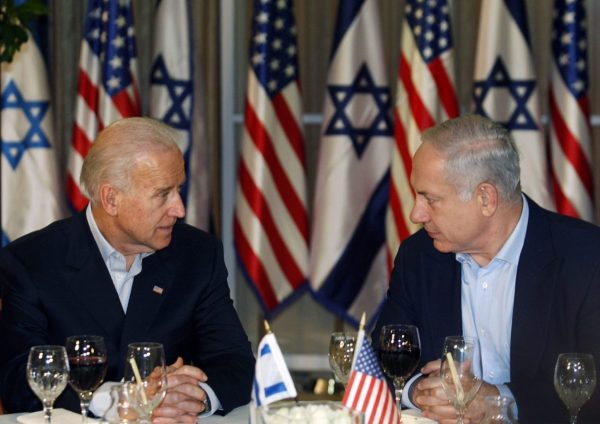
Netanyahu tells Biden how to deal with Iran
By Philip Giraldi • Unz Review • February 2, 2021
Anyone who persists in believing that the United States is not Israel’s poodle should pay attention to the comedy that is playing out right now. Joe Biden was [proclaimed] president for less than a week when the Prime Minister Benjamin Netanyahu government announced that he would soon be receiving a possibly unwelcome visitor in the form of the Israeli foreign intelligence service Mossad’s chief Yossi Cohen, who will be flying to Washington in February to explain the correct policy when dealing with Iran. And lest there be any confusion on the issue, the Israel Defense Force chief of staff Lieutenant General Aviv Kochavi also announced that any Biden attempt to mend fences with the Islamic Republic will have to meet certain conditions or Israel will exercise other options. He said “In light of this fundamental analysis, I have instructed the Israel Defense Forces to prepare a number of operational plans, in addition to those already in place. It will be up to the political leadership, of course, to decide on implementation but these plans need to be on the table.” Another government minister clarified that the options would include “an attack” on Iran, though there has been no indication whether or not Israel would possibly contemplate deploying its tactical nuclear weapons to prevent retaliation by Iranian forces.
There is no limit to Israeli hubris. A leading Rabbi in Israel is predicting that as the United States is in decline it is up to the Jewish state to take over the role of “guiding civilization forward.” And that kind of thinking shapes how Israel treats the United States with condescension, acting as if it is the knowledgeable elder statesman whose guidance must be respected. In this case the Zionist solution to the Iran problem will by design be unpalatable for the government in Tehran if it intends to remain sovereign. For Israel the correct policy for dealing with Iran is to effectively disarm it and make it impossible to establish any sphere of influence in the countries adjacent to it, to include Iraq, Syria, and Lebanon. That would be to concede Israeli dominance over the entire region and if the Iranians do not play ball the next step would be to convince the United States to attack it on some pretext, possibly to include an Israeli “false flag” to start the process going.
The Times of Israel sums up the Israeli official position as “… Iran must halt the enriching of uranium; stop producing advanced centrifuges; cease supporting terror groups, foremost Lebanon’s Hezbollah; end its military presence in Iraq, Syria and Yemen; stop terror activity against Israeli targets overseas; and grant full access to the IAEA on all aspects of its nuclear program.” Completing the disarming of Iran would also include requiring Tehran to abandon its ballistic missile program.
The irony is, of course, that it is Israel that has a secret nuclear arsenal that it created by stealing uranium and triggers from the United States and it is also the leading regional supporter of terrorist groups, to include al-Qaeda and ISIS. Iran’s presence in Syria is due to its lending assistance to the Damascus government’s resistance to the insurgencies supported by Israel and the United States. And Iran has not targeted Israeli citizens and groups overseas, but Israel and the U.S. have assassinated Iranian officials while also bombing both government and civilian targets in Syria, Iraq and Lebanon. And all of the kinetics occur in a context where Israel continues its illegal occupation of Palestine and ethnic cleansing of the Palestinian people replete with both war crimes and crimes against humanity. Iran is also a signatory to the Nuclear Non-Proliferation Treaty, which Israel is not, so who is the rogue state?
Biden will likely fold like a cheap suit when confronted by the force majeure of Cohen. The new American president has assembled a national security team for dealing with the Middle East that is nearly all Jewish and all Zionist, an affliction that he himself claims to suffer from. The Biden nominee for secretary of state Tony Blinken said at a confirmation hearing last week that the new administration would “consult with Israel” before any possible return to the 2015 Joint Comprehensive Plan Of Action (JCPOA) nuclear deal and he also made clear that there would be additional conditions for Iran. It was an odd comment for a government official who is supposed to support American interests, but it was predictably what Congress wanted to hear. As Iran has already indicated that it is unwilling to abandon its defenses and its role in the region, the Biden proposal will be a non-starter in any case, though Israel will be prepared to apply its own veto if anything undertaken by the State Department moves beyond the talking stage.
Currently there is credible speculation that Israeli intelligence has been able to compromise most if not all of the U.S. government’s information systems as well as those of major corporations. As the Jewish state is the most active in spying against the United States, that should surprise no one. For Israel to interfere in U.S. politics or government blatantly is not exactly new, though it is rare to have anyone in the mainstream media or in government say anything about. That is because Israel’s ability to wage war against critics is second to none, having at its back nearly unlimited financial resources and easy access to the media as well as active supporters from among the nearly six hundred Jewish organizations that exist in the United States.
Indeed, Israel has been involved in American politics frequently, one might even argue incessantly, even if it is predictably never held accountable. To cite only one well known example, it has been suggested that Russiagate was really Israelgate based on what actually took place shortly after the 2016 election. The contact with Russia was set up by Prime Minister Benjamin Netanyahu, who was at the time seeking to kill an anti-Israeli vote in the United Nations. He sought to do so by lobbying Donald Trump son-in-law Jared Kushner on the matter shortly after the 2016 election. Netanyahu was particularly close to the Kushner family, having on at least one occasion slept overnight at their mansion in Manhattan.
Prompted by Netanyahu, Kushner dutifully contacted Trump National Security Advisor-designate Michael Flynn and asked him to privately call Russian Ambassador Sergei Kislyak to lobby Moscow to vote against the bill. There were two phone calls but Kislyak refused to cooperate. It should be noted that while all of this was taking place Barack Obama was still president and his intention to abstain on a vote on Israel’s illegal settlements is what provoked Netanyahu to act, so Netanyahu-Kushner-Flynn were subverting their own elected government and were definitely in the wrong. Flynn was subsequently thrown under the bus by his Jewish friends without any mention in the media of the Israeli role, thereby becoming the first casualty of “Russiagate.” He was subsequently forced to resign from his post in disgrace in February 2017.
The whole issue of the U.S.-Israel relationship constitutes one of the most formidable “red lines” in American politics as part of its power comes from the fact that the media and political classes pretend that it does not even exist. Israel’s power was poisonous enough prior to the election of Donald Trump, but Trump, “advised” by a gaggle of orthodox Jews, dramatically shifted the playing field to favor Israel in ways that will define the relationship for years to come. Biden’s team is little better and the president will be taking his orders from Jerusalem and saluting as long as he stays in the White House. Will it lead to a totally unnecessary and unwinnable war with Iran? That is what Israel demands above all, and Israel always gets what it wants.
Philip M. Giraldi, Ph.D., is Executive Director of the Council for the National Interest, a 501(c)3 tax deductible educational foundation (Federal ID Number #52-1739023) that seeks a more interests-based U.S. foreign policy in the Middle East. Website is https://councilforthenationalinterest.org address is P.O. Box 2157, Purcellville VA 20134 and its email is inform@cnionline.org
Azerbaijan won the war in Nagorno-Karabakh but reduced its sovereignty
By Paul Antonopoulos | February 1, 2021
Although Azerbaijan won the war against Armenia, both countries have in fact lost part of their sovereignty.
Azerbaijan won the war and expanded territorially after it captured or received the districts surrounding Nagorno-Karabakh proper that Armenian forces captured in the first war (1988-1994). The status of Nagorno-Karabakh proper remains undetermined but is protected by Russian peacekeepers and is still governed by Armenians.
Despite this territorial expansion, Azerbaijan has in fact partly lost its sovereignty. During the war, reports began emerging that Azerbaijani military leaders were becoming increasingly frustrated with the level of control that Turkey had over their fighting forces. These reports were quickly dismissed and denied by Azerbaijan as Armenian attempts to create division through misinformation. But if this was just misinformation, then there would be no risk of division to begin with, meaning it would not be worth giving attention to, suggesting there was certainly an element of truth to it.
Azerbaijan’s military success lays with two key factors: the Armenian political and military incompetency and lack of will, and Turkey’s contribution with drones, special forces, intelligence and transfer of Syrian jihadists.
Armenian Prime Minister Nikol Pashinyan never truly committed to the war effort as Armenian forces were never fully mobilized, powerful Iskander missiles infrequently used, the Armenian Air Force mostly grounded, Armenian diaspora and foreign volunteers rejected from fighting, and local Armenian militias not equipped with enough ammunition, maps and communication devices, nor were the militias assigned commanders – yet this was supposedly a “war for survival,” as Pashinyan termed it.
None-the-less, despite the incompetency of the Armenian leadership, Azerbaijan’s rapid success in Nagorno-Karabakh would not have been possible without significant Turkish support. Even Azerbaijan’s success is limited as it did not achieve its main war aim – the capture of Nagorno-Karabakh.
More importantly, Ankara’s footprint in the country massively expanded through the deployment of more Turkish troops to Azerbaijan, control of more military bases, and the establishment of a joint observation center with Russia in the Agdam region.
As said, reports circulated during the war that divisions in the Azerbaijani military and political circles were emerging between a pro-Turkish faction and another faction in opposition to Turkey’s dominant role in the war effort. These reports have only intensified in recent days as Turkish troops are now deployed in Azerbaijan. Azerbaijani politicians and military leaders are beginning to worry about Ankara’s strong influence in the country, with critics commenting that Azerbaijan has become the 82nd province of Turkey. Although Azerbaijan now controls most of the formerly Armenian-held territory, it cannot exercise control over it without Turkish and Russian oversight.
In fact, even Iran has greater opportunities to influence Azerbaijan that it was not able to do before the war. Azerbaijan’s capture of the districts to the south of Nagorno-Karabakh proper means that it shares external borders with only Armenia and Iran. Effectively Iran has great opportunities to be one of the leading foreign investors in the region as Armenia and Azerbaijan have not normalized their relations. Iranian Foreign Minister Mohammad Javad Zarif visited the Nakhichevan exclave of Azerbaijan, the region wedged between Armenia, Turkey and Iran, to boost regional cooperation through new railroad and transportation routes.
In turn, it will be inevitable that Iran will attempt to gain influence through pan-Shi’ism, but this may prove difficult to gain a foothold as pan-Turkism has become the dominant ideology of Azerbaijan because of Turkey’s own soft power manoeuvers. Russia will utilize its influence through its peacekeepers in the region, and also soft power through economic exchanges.
Although Azerbaijani President Ilham Aliyev will relish his country’s long-awaited victory after his father Heydar Aliyev signed a humiliating ceasefire in May 1994 to conclude the First Nagorno-Karabakh War, the long-term repercussion means that Turkey dominates the Azerbaijani military and wields great political influence over Baku. Also, there is limited Azerbaijani governance in the territories it controls because of Russia’s watchful eye through the deployment of peacekeepers. And finally, we can see much stronger Iranian influence as it aims to penetrate the region through economic and religious means.
Azerbaijani flags may be flying over the captured territories, but it certainly has come at the price of reduced sovereignty – militarily, economically, politically, and perhaps even religiously and culturally.
Paul Antonopoulos is an independent geopolitical analyst.
Biden regime’s coercive Iran policy threatens serious new regional crisis
BY GARETH PORTER · THE GRAYZONE · JANUARY 25, 2021
A close analysis of recent statements by members of President Joseph Biden’s foreign policy team indicates his administration has already signaled its intention to treat negotiations with Iran as an exercise in diplomatic coercion aimed at forcing major new concessions extending well beyond the 2015 nuclear agreement. The policy could trigger a renewed US-Iran crisis as serious as any provocation engineered by the Trump administration.
Although the Biden team is claiming that it is ready to bring the United States back into the Joint Comprehensive Plan of Action (JCPOA) if Iran comes into full compliance first, it is actually planning to demand that Iran give up its main source of political leverage. Thus, it will require Iran to cease its uranium enrichment to 20 percent and give up its accumulated stockpile of uranium already enriched to that level before the United States has withdrawn the economic sanctions that are now illegal under the JCPOA deal.
Meanwhile, the Biden team is planning to hold on to what it apparently sees as its “Trump card”— the Trump administration’s sanctions against Iran oil exports that have gutted the Iranian economy.
But the Biden strategy faces a serious problem: Iran has already demanded all sanctions imposed after the JCPOA took effect must be ended before Iran would return to compliance. Iran expects the United States, as the party which initially broke the agreement, to come into compliance first.
The new Biden coercive strategy
The Biden administration is banking on a scenario in which Iran agrees to cease its enrichment to 20% and reverse other major concessions Iran made as part of the 2015 agreement.
The Biden team then states it would start a new set of negotiations with Iran, in which the United States would use its leverage to pressure Iran into extending the timeline of its major commitments under the deal. Further, Tehran will be required to accept a modification in its missile program, as European allies have urged.
The Biden team’s Iran strategy was not hastily cobbled together just before inauguration. National Security Adviser Jake Sullivan outlined it in an interview last June with Jon Alterman, the Middle East program direct at the Center for Strategic and International Studies. “You can get some early wins on the nuclear program but tie long-term sanctions relief to progress on both [nuclear and other issues] files,” Sullivan explained.
Sullivan made it clear the primary goal of his proposed strategy was to constrain Iran by imposing extended restraints on its nuclear program. The idea, he explained, was “to see, is it possible to get a short term win on the nuclear file to basically get Iran back into compliance with the JCPOA and to then put the longer term disposition of Iran’s nuclear program on a negotiating track.”
Biden’s future NSC director implied that US sanctions would be exploited to draw Iran into talks with Israel and Saudi Arabia on missiles and other issues, but not at the expense of U.S. aims on the nuclear issue. The assumption that the US would maintain its coercive leverage on Iran is at the center of the policy. As Sullivan said, summarizing an article he co-authored for Foreign Affairs, “the U.S. should say, ‘We are going to be here applying various forms of leverage, including economic leverage as well as military dimensions, apart from whether we have 20,000 more troops or 10,000 less troops there’.”
At the heart of Biden’s strategy is the demand for Iran to return immediately to full compliance with the nuclear agreement. Before Iran rejoins the pact, the new administration expects it to reverse the moves it made to increase the level and the speed of enrichment in response to Trump’s withdrawal.
The Biden administration’s demand ignores the fact Iran scrupulously observed all of the JCPOA’s provisions for two years after the Trump administration had withdrawn from the agreement. It was only after the Trump administration reintroduced old sanctions outlawed by the agreement and introduced crushing new sanctions aimed at preventing Iran from exporting oil that Iran began enriching uranium at higher levels.
By piling up onerous demands while offering few concessions of its own, the new administration conveys the clear message that it is in no hurry to return to the JCPOA. Secretary of State of Tony Blinken stated in his confirmation testimony that the Biden administration was “a long way” from returning to the deal and said nothing about reversing any of the sanctions that were introduced or reintroduced by the Trump administration after it quit the agreement.
Robert J. Einhorn, a key Obama policymaker on the Iran nuclear issue as State Department Special Adviser on Arms Control and Proliferation who has maintained contacts with Biden insiders, has provided an explanation for that ambiguous message. He suggested that the Biden administration aims to press Iran for a deal falling well short of full restoration of the JCPOA — an “interim agreement” involving “rollback” of part of Iran’s current enrichment activities and going beyond the JCPOA in return for “partial sanctions relief.”
That relief would include “some” of the revenues from oil sales that have been blocked in foreign bank accounts. Einhorn appeared to confirm that the new Biden strategy would be based in holding on to the leverage conferred by Trump sanctions against Iran’s oil and banking sectors, which have crippled the country’s economy.
Learning the wrong lesson from Obama’s coercive diplomacy
Biden’s foreign policy team is comprised largely of Obama administration officials who either initiated nuclear deal talks in 2012-2013 or who were involved in the later stages of the negotiations. NSC Director Sullivan and CIA Director William Burns were key figures in the early talks with Iran; Blinken oversaw the later phase of the negotiations as Deputy Secretary of State, and Undersecretary of State Wendy Sherman was in charge of day-to-day negotiations with Iran on the JCPOA until the final round in Vienna in 2015.
So it should be no surprise that the Biden team is pursuing an Iran strategy similar to the one that the Obama administration followed in its negotiations with Iran on the JCPOA itself. The Obama administration proudly claimed success in increasing Iran’s “breakout time” for obtaining enough enriched uranium for a single bomb from two or three months to a year through the pressure of heavy sanctions. It believed it had secured a winning diplomatic hand in 2012 when it got European allies to buy into its coercive strategy of oil and banking sanctions that would cut deeply into Iran’s foreign currency earnings.
But Iran’s enrichment efforts before negotiations on the nuclear deal began in 2012 tell a very different story. As the IAEA reported at the time, between late 2011 and February 2013, Iran enriched 280 kg of uranium to 20 percent, which would have placed it well over the level regarded as sufficient for “breakout” to a bomb. Meanwhile, Iran roughly doubled the number of centrifuges capable of 20 percent enrichment at its Fordow enrichment facility.
Instead of storing the total amount of uranium enriched to 20 percent for a possible bomb, however, Iran did exactly the opposite: it immediately converted 40 percent of its total capacity of enriched uranium to power Iran’s reactor. What’s more, it did not take steps to make the new centrifuges at Fordow capable of enrichment.
Iran was clearly amassing its stockpile and enrichment capability as bargaining chips for future negotiations. During a September 2012 meeting with EU officials in Istanbul, Iran confirmed the strategy by offering to suspend its 20 percent enrichment in return for significant easing of Western sanctions.
The Obama administration believed its sanctions weapon would prevail over Iran’s diplomatic chips. But Iran persisted in asserting its right to more than a token enrichment program. In the very last days of the negotiations in 2015, Secretary of State John Kerry sought to retain language that would allow the United States to reimpose sanctions deep into the implementation of the agreement, as an Iranian official told this writer in Vienna. But Iran held fast, and Obama needed to get an agreement. Kerry ultimately gave up his demand.
Blinken, Sullivan and the other Biden administration officials who worked on Iran during the Obama administration seem to have forgotten how Iran used 20 percent enrichment to get the United States to drop its sanctions. In any case, they are so enamored with the Trump sanctions and their role in stifling Iranian oil sales that they believe they will have the upper hand this time around.
In its bid to coerce a state that is fighting for its most basic national rights into submission, the Biden administration has exhibited a stubborn refusal to acknowledge the limits of U.S. power. The Trump administration’s “maximum pressure” campaign has already prompted Iran to establish military capabilities that it previously lacked.
If the Biden administration refuses to relent on its coercive diplomacy and provokes a crisis, Iran can now inflict serious costs on the United States and its allies in the region. Yet Biden’s foreign policy team appears so far to be oblivious to the serious risks inherent in its current path.
Gareth Porter is an independent investigative journalist who has covered national security policy since 2005 and was the recipient of Gellhorn Prize for Journalism in 2012. His most recent book is The CIA Insider’s Guide to the Iran Crisis co-authored with John Kiriakou.
Iran Will Reportedly Issue Seven Demands to President Biden Before Re-Entering Nuclear Deal Talks
By Jason Dunn – Sputnik – 24.01.2021
United States President Joe Biden has expressed his support for reversing the Trump administration’s withdrawal from the Joint Comprehensive Plan of Action (JCPOA), and officials within the new government are reported to already be holding quiet discussions with Iranian representatives.
Diplomats from Tehran have spoken to officials within the Biden administration over resuming talks on Iran’s nuclear program and have reportedly set out seven preconditions, an unnamed Iranian government source told a Kuwaiti newspaper on Sunday.
Speaking to Kuwait’s al-Jarida newspaper, the anonymous official from Iranian President Hassan Rouhani’s office said that contacts began prior to President Joe Biden’s ascension to office, and implied that they are continuing but unofficial.
According to the Kuwaiti report, the Iranian ambassador to the United Nations Majid Takht Rawanji was called to Tehran to arrange contacts with the new administration in Washington before returning to New York with a series of seven conditions for Iran’s involvement in the resumption of talks over its nuclear program.
The first condition is reportedly that Iran will not accept partial sanctions alleviation, as Tehran considers the Joint Comprehensive Plan of Action (JCPOA) to be indivisible. The report says that Iran will reaffirm its demands that the US maintain all aspects of the deal, including the total lifting of sanctions, as an essential precondition to returning to the agreement.
Secondly, any disagreements over the accords must be discussed within the framework of the official negotiating committees. One of these anticipated disagreements is Tehran’s demand for compensation for financial losses it incurred due to the Trump administration’s exit from the deal, notably the financial impact of the sanctions.
The third condition, according to the report, is that Tehran will not approve of using the terms of the nuclear deal to address separate issues, such as its missile program and activities abroad.
As a fourth condition, no new members will be permitted to enter into the deal aside from the existing P5+1, including any Gulf Arab countries.
Fifthly, concerns over other regional states must be discussed as a separate matter, and not included in the negotiations over nuclear enrichment. The next point is said to be that despite not being willing to discuss its missile system, Iran would find it acceptable to talk about arms control on a regional level with United Nations supervision, raising particular concern over Israel’s missiles and illegally-held nuclear stockpile.
Finally, Iran will not allow a two-state solution for Israel and Palestine, and instead demands a UN referendum that includes Jewish Israelis and Palestinians over the “land” issue. No further details on the content of the potential referendum were outlined, according to the report.
Rouhani will be issuing these conditions to the Biden administration directly, the report also said.
Iranian Foreign Minister Mohammad Javad Zarif said in a Foreign Affairs article on Friday that Iran will not accept any further demands, terms, or state signatories added to the original deal proposed by Washington in 2015. Zarif said that if Washington began by “unconditionally removing, with full effect, all sanctions imposed, re-imposed, or relabeled since Trump took office”, Iran would reverse the steps it has taken since the US withdrew its signature from the deal in 2018.
Channel 12 News reported last week that the Biden administration has already begun largely undisclosed talks with Iranian officials over a return to the agreement and has also updated Israel of their contents.
This comes amid reports that Israeli Prime Minister Benjamin Netanyahu will send Mossad chief Yossi Cohen to Washington next month to issue Israel’s demands before any new version of the Iran nuclear deal is agreed to. According to reports, Cohen will be the first senior Israeli official to meet with President Biden and is also expected to meet with the CIA director.
Even before his election last year, Biden openly expressed his desire for the US to rejoin the accord, while Israel has said that a return to the deal must include new restrictions on Iran’s ballistic missile program and alleged support for terror activity internationally.
The JCPOA, which limits Iranian development of uranium in return for sanctions relief, was signed by Tehran as well as six world powers in 2015. In 2018, former President Donald Trump withdrew the US signature from the deal and introduced harsh sanctions against the nation, claiming that Tehran was not in compliance with its terms, despite international observers and the European Union claiming that Tehran was acting in full accordance with the treaty.
‘Sanctions guru’ involved in creating Russiagate saga to return as CIA’s deputy director under Biden
David Cohen in 2014. ©REUTERS / Kevin Lamarque
RT | January 15, 2021
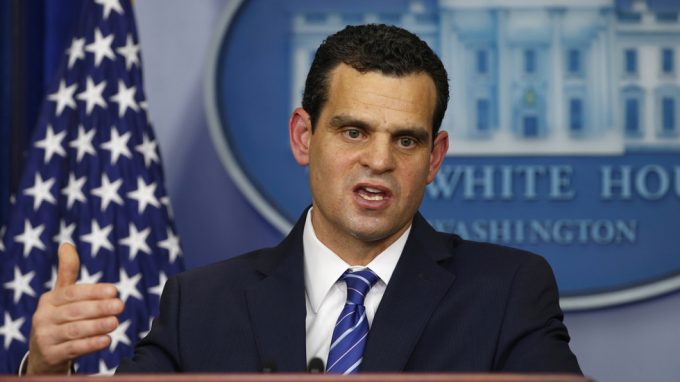
Joe Biden’s transition team has picked David Cohen, the former deputy director of the CIA, to reprise his role and help smooth things out for his future boss, career diplomat and intelligence outsider William Burns.
Cohen was considered a frontrunner to become CIA director himself, but Biden chose Burns instead. Cohen’s return to the office he held between 2015 and 2017 was announced on Friday, and since his candidacy does not require a Senate confirmation, he will be able to start on inauguration day.
As deputy for then-CIA Director John Brennan, Cohen was involved in creating the infamous US intelligence assessment of alleged Russian interference in the 2016 election. The document was widely touted as a consensus opinion of 17 agencies, but later turned out to be a product of officials from only three of them – the CIA, FBI, and NSA – “hand-picked” for the task by then-Director of National Intelligence James Clapper (technically, his office is an agency of its own and could be counted as the fourth one vouching for the document).
The assessment, which was released in the final days of the Obama administration, claimed that Russia ran a sophisticated interference and influence campaign to help Donald Trump beat Hillary Clinton in the 2016 presidential election. It primed the US public for the sequel theory that accused the Trump campaign of “colluding” with the Kremlin, setting the tone for the entire presidency of the Republican winner. Russia denied any involvement in the election and said it was used as a scapegoat in US partisan fights.
In 2017, Cohen famously rebuked then-CIA Director Mike Pompeo, when he claimed the US intelligence community believed the outcome of the election was not affected by the purported Russian campaign. In fact, the scope of the report was not wide enough to make such an assessment.
Interestingly, after going private, Cohen worked at WilmerHale, a law firm that also employs Robert Mueller, the former FBI director and special counsel who investigated the Russiagate allegations and found no evidence of collusion. He also spent time as a national security contributor at NBC News, rubbing shoulders then with his ex-boss, Brennan.
Cohen is said to be respected and loved in the intelligence community. Brennan called him “a great listener” and “an ardent supporter and defender of the agency.”
Before becoming the second most senior official in the CIA, Cohen worked in the US Treasury, specializing in tracing financial streams and enforcing US economic sanctions, which won him the nickname “sanctions guru.” Early in his government career under George W. Bush, he was credited for his contribution to writing the section of the Patriot Act that deals with money laundering and financing of terrorism.
Featured Video

More Iran War fallout: Maritime insurance industry shifts from London to China
or go to
Aletho News Archives – Video-Images
From the Archives
Allies Don’t Need Lobbies
By Jay Knott | Dissident Voice | September 24, 2013
In a recent article on Counterpunch, Rob Urie defended the traditional Marxist analysis of US policy in the Middle East. He argues that support for Israel is driven primarily by economic interest, not the Jewish lobby.
He starts by paying tribute to the idea that Western societies are uniquely racist. He says that the “Western narrative” claims there is an “Arab character”, and that this is “antique racist blather”. He gives no definition of these terms. Further, he establishes his credentials as part of the dominant current in the American left by claiming that “over a million people in Iraq died so ‘we’ in the West can drive SUVs.”1
When he tries to criticize bourgeois economics, he makes it clear he doesn’t understand the developments it has made since Marx’s day, using the mathematical discipline known as “game theory”. He dismisses the basic abstraction of economic theory, the idea of the rational individual, on the grounds that it is “devoid of history, culture and political context”. But abstractions are always devoid of something.
He defends a more concrete economic theory, mostly Marxist, with some input from another theorist of capitalist crisis, Hyman Minsky. This concrete theory leads him to the view that US activity in the Middle East is primarily driven by rational capitalist motives, the need to secure a supply of oil.
“Taking the totality of circumstance — former oil company executives launching war on an oil rich nation on a pretext they publicly proclaimed they didn’t believe shortly before taking office — and that upon launching their war proved to be non-existent, requires a willingness to overlook the obvious — that the war on Iraq was for oil, that is difficult to support.”1
Perhaps I’ve misunderstood him, but based on what he says in the rest of the article, this convoluted sentence seems to argue that, because president Bush and vice-president Cheney attacked Iraq on false premises, and they also said it was all about oil, and they are former oil executives, and Iraq has a lot of oil, it’s difficult to deny US attacks on Iraq are all about oil.
In fact, it’s not hard at all. As Urie points out, at times Bush and co. said that attacking Iraq was “protecting the world’s supply of oil.”1 But, as he also points out, they are congenital liars. Why should we believe them when they say they are trying to “protect” the oil supply? Protect it against what? When politicians “admit” attacks on Middle Eastern countries are wars for oil, they are parroting the neo-con party line, feeding the public, both left and right, with a plausible-sounding pretext. For right-wingers, “it’s a war for oil” is a reason to support war, and for leftists, it’s a way to feel better by complaining impotently about corporate greed. Both approaches help the war drive. … continue
Blog Roll
 Aletho News
- More Iran War fallout: Maritime insurance industry shifts from London to China
- US-Israeli aggression on Iran triggers review of GCC countries’ investment pledges to Washington
- Russia slams UK plan to seize tankers suspected of carrying its oil
- Pakistan ramps up food exports to Persian Gulf nations as war deepens food insecurity
- Iran submits response to US plan, sets terms for war’s end: Tasnim
- US vs Iran: Kharg Island Talk — Bluff or Escalation? Ex-Military Officer Weighs In
- Zelensky unnecessarily involves Ukraine in the Middle East crisis
- Turkish tanker blacklisted by Ukraine hit in drone attack – media
- Canada, the U.S., and NATO: the inescapable trap
- Villains of Judea: Leonid Radvinsky
- If Americans Knew
- ‘No Innocent Children’: Far-right Israeli Lawmaker Defends Killing of Palestinian Family
- Mossad’s promises helped Netanyahu convince Trump that Iran could be toppled
- US Arms Control Official Refuses To Comment When Asked If Israel Has Nuclear Weapons
- Veterans warn US landing could be ‘more Gallipoli than Vietnam’
- Israel may be committing war crimes in Lebanon – Not a ceasefire Day 167
- In the West Bank, life is a constant battle – 3 articles
- Jacob Reses, one of the most powerful pro-Israel operatives in Trump’s Washington
- Israeli-US assaults kill or injure 87 children a day – Not a ceasefire Day 166
- ‘Forever live by the sword’: Understanding Israelis’ massive support for Iran war
- UN’s special rapporteur on human rights says Israel is systematically torturing Palestinians
- No Tricks Zone
- Devastating Assessment Of Comirnaty Vaccine By Former Senior Pfizer Europe Toxicologist
- New Study: CO2 Is ‘Effectively Negligible’ As An Explanatory Climate Change Factor Since 2000
- Former Pfizer Toxicologist Dr. Helmut Sterz Tells Bundestag Hearing Pfizer Vaccine Should Have Never Been Approved
- Energy Expert: Germany’s Nuclear Phaseout Was A “500 Billion Euro Mistake”
- New Research: South Australia’s Mid-Holocene Sea Surface Temperatures Were 4°C Warmer Than Today
- Storing Green Energy To Last Germany 10 Days Would Require A 60-Million Tonne Battery
- New Studies: UK Sea Levels Were 4 Meters Higher Than Today During The Mid-Holocene
- Destructive Green New Deal: German Energy And Metal Group Warns Of Drastic Crisis
- New Study Documents A 20-Year Pause In Arctic Sea Ice Decline – Driven By Internal Variability
- Wake-up Call: Survey Shows Majority Of Germans Now Favor Postponing Climate Targets!
 Aletho News