Snapback sanctions on Iran isn’t open-and-shut case
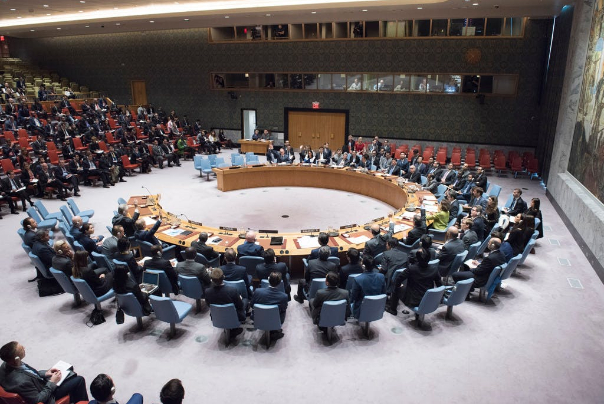
The UN Security Council resoundingly defeated a US resolution to indefinitely extend UN arms embargo on Iran, with only Dominican Republic endorsing the American move, New York, August 14, 2020
By M. K. BHADRAKUMAR | Indian Punchline | August 16, 2020
The Iran nuclear issue moves to centerstage of international security with US President Donald Trump’s remarks Saturday that Washington “will be doing a snapback” against Iran — announcing Washington’s intention to push for restoration of all pre-2015 UN sanctions against Iran. Trump added, “You will be watching it next week.”
Also, Trump apparently poured cold water on Russian President Vladimir Putin’s proposal Friday for a video summit of the veto-holding permanent members of the UN Security Council plus Germany and Iran (that were the original signatories of the JCPOA) to discuss the 2015 Iran nuclear deal and Persian Gulf security issues. He saw no urgency. Trump vaguely hinted that he would revisit the subject “after November”.
Clearly, the optics of the “snapback” sanctions is that Washington is hanging tough and the “maximum pressure” approach is further tightening.
But having said that, Trump ultimately considers himself to be the consummate deal maker — and is strategising an approach of calibrated brinkmanship.
For a start, he hopes to extract out of Russia and China some sort of self-restraint that at least until the US elections are over in November, they wouldn’t provide Iran with military technology. On the other hand, by side-stepping Putin’s proposal — which effectively resuscitates the dispute resolution mechanism of the “6+1” format of the original signatories of the JCPOA — Trump avoids any controversies in the US domestic politics in the run-up to the November election where his “maximum pressure” approach embellishes his strongman image.
Of course, Moscow has a dubious history of heeding such US expectations in the past — when it delayed the delivery of S-300 missiles to Iran for several years due to US and Israeli pressure, forcing Tehran to sue Moscow for compensation. But circumstances have changed. US-Russia relations are tense, while Russia and Iran are partners in regional security.
Equally, Russia and China have worked in tandem on the diplomatic plane and over the JCPOA, Beijing has adopted a line which upfront rejects the Trump administration’s locus standii to invoke snapback sanctions. Again, China-Iran relations have matured and the two countries are expected to conclude in a conceivable future a 25-year $400 billion comprehensive strategic partnership agreement.
Significantly, Putin’s statement on Friday underscored Moscow’s convergence with Tehran and reiterated Moscow’s rejection of Washington’s “maximum pressure” approach against Iran. The following elements of Putin’s statement are to be noted:
- “Iran faces groundless accusations.”
- “Resolutions are being drafted (by Washington) with a view to dismantling decisions that had been unanimously adopted by the Security Council.”
- “Russia maintains its unwavering commitment to the JCPOA.”
- Russia’s Collective Security Concept for the Persian Gulf Region (which Iran welcomed and US ignored) “outlines concrete and effective paths to unravelling the tangle of concerns” in Persian Gulf region.
- “There is no place for blackmail or dictate in this (Gulf) region, no matter the source. Unilateral approaches will not help bring about solutions.”
- There is imperative need to build an inclusive security architecture in the Persian Gulf.
Indeed, Trump is playing his cards close to his chest. The US move on “snapback” sanctions will come up for a decision before the rotating presidency of the UN Security Council, which will be called upon to take a view on the admissibility of the American contention that although Trump publicly repudiated the JCPOA, since it did not formally intimate the same to the UN SC, it still enjoys the prerogative to act under the security council’s Resolution 2231 that provided an international legal basis for the “snapback” clause.
Indonesia chairs the presidency through August and Jakarta and Tehran enjoy friendly relations. The next in line for September is Niger, which may be susceptible to US pressure. By October, Russia’s turn comes to chair the presidency. How far Washington will push the envelope through the August-September period remains to be seen.
Without doubt, a UN sanctions snapback could have predictable consequences for any form of trade with Iran, as it demands from member states to exercise caution when transacting with Iranian financial institutions, and permits countries to inspect vessels or aircraft suspected of carrying cargo in violation of UN sanctions provisions on Iran in national or international waters. Russia and China may decide to take advantage of the new Iranian market for their weapons exports. China’s stance has been exceptionally strong. Of course, all bets are off if Iran carries through its threats of a withdrawal from the Nuclear Non-Proliferation Treaty in the case of UN sanctions reimposition.
In sum, instead of focusing on sanctions snapback, the issue of critical importance in the coming weeks will be the ability of the E3 (France, UK and Germany) — and potentially Russia and China — to take advantage of the time available to engage with the US on the sidelines.
The key to unlocking the current dispute lies largely in Washington, which is insisting on a resolution of the current impasse and on limiting Iranian nuclear activities. Washington in turn will have to offer some incentives to Iran. And those incentives need to be worked out through creative negotiation, as they devolve upon the existing unilateral US sanctions regime on Iran. The good part is that none of the JCPOA protagonists stands to gain out of the snapback sanctions.
Arguably, Trump is applying “maximum pressure” on other JCPOA countries by threatening snapback sanctions, while keeping an open mind on Putin’s proposal to discuss all issues in a “6+1” format once the November election is out of the way. It is a fair assumption that Moscow anticipated Trump’s response on the above lines.
After all, Iran figured in the last phone conversation in late July between Trump and Putin a fortnight ago and Putin’s latest proposal followed up that discussion. Iran was kept in the loop, too. (Interestingly, following the visit by Iran’s FM Javad Zarif to Moscow in late July, Tehran Times newspaper had commented that a “possible revival of diplomatic initiatives between Iran and the US” under Putin’s mediation was to be expected.)
Moscow is yet to react to Trump’s “Probably-not” remark of Saturday apropos the Putin proposal. But the Tass report took note that “Washington will probably want to wait until presidential elections in the country end.” Beijing and Paris have so far voiced support for Putin’s proposal, while London and Berlin are watching from the sidelines.
As for Tehran, it is still savouring the sweet taste of the defeat of the US resolution at the UN Security Council on Friday to extend an arms embargo on Iran that is due to expire in October. (here and here ) In the final analysis, however, Tehran’s choice will be to directly negotiate with Washington.
Russia’s proposal to convene meeting of heads of state of UN Security Council permanent members with participation of heads of Germany and Iran
Statement by President of Russia Vladimir Putin | August 14, 2020
Debates around the Iranian issue within the UN Security Council are becoming increasingly strained. Tensions are running high. Iran faces groundless accusations. Resolutions are being drafted with a view to dismantling decisions that had been unanimously adopted by the Security Council.
Russia maintains its unwavering commitment to the Joint Comprehensive Plan of Action (JCPOA) on Iran’s nuclear programme. Its approval in 2015 was a landmark political and diplomatic achievement that helped fend off the threat of an armed conflict and reinforced nuclear non-proliferation.
In 2019, Russia presented an updated version of its Collective Security Concept for the Persian Gulf Region, outlining concrete and effective paths to unravelling the tangle of concerns in this region. We strongly believe that these problems can be overcome if we treat each other’s positions with due attention and responsibility, while acting respectfully and in a collective spirit.
Like anywhere else in the world, there is no place for blackmail or dictate in this region, no matter the source. Unilateral approaches will not help bring about solutions.
It is essential that the positive experience gained earlier through intensive effort is maintained when building an inclusive security architecture in the Persian Gulf.
Accordingly, we propose convening an online meeting of the heads of state of the permanent members of the UN Security Council, with the participation of the heads of Germany and Iran, as soon as possible, in order to outline steps that can prevent confrontation or a spike in tensions within the UN Security Council. It is important to secure collective support for the implementation of UN Security Council Resolution 2231 that sets forth an international legal framework for the execution of the JCPOA.
During this leaders’ meeting, we propose agreeing on parameters for joint efforts to facilitate the emergence of reliable mechanisms in the Persian Gulf region for ensuring security and confidence building. This can be achieved if our countries and the regional states combine their political will and creative energy.
We call on our partners to carefully consider this proposal. Otherwise, we could see the further escalation of tension and an increased risk of conflict. This must be avoided. Russia is open to working constructively with anyone interested in taking the situation back from the dangerous brink.
This is an urgent matter. Should the leaders agree in principle to have this conversation, we propose that the foreign ministries of the seven countries agree on a meeting agenda, make the necessary arrangements and schedule a video summit.
Iran and China terrify the Empire, but why?
By Aram Mirzaei | The Saker blog | August 11, 2020
The proposed 25-year deal between the Islamic Republic of Iran and the People’s Republic of China, titled “Comprehensive Strategic Partnership between I.R. Iran and P.R. China” has been heavily discussed recently. While not all details in the deal are clear, it has been described by Iranian and Chinese officials as specifying the roadmap of developing and deepening Tehran-Beijing ties in “Political”, “Executive Cooperation”, “Human and Cultural”, “Judiciary, Security and Defence”, and “Regional and International” domains.
It remains unclear when such a deal will be formally clinched. But Iran’s government says the two sides have so far finalized at least 75 percent of the draft version of the pact. Once concluded, the text of the deal will be discussed for final approval in Iran’s Parliament. However, many lawmakers are already critical of the government for not consulting the deal before entering into negotiations with China.
What has so far been made public is that the 25-year cooperation roadmap will cover economy, security and military areas. Iran will reportedly supply the PRC (People’s Republic of China) with oil for 25 years. In return, China will invest heavily in Iran’s infrastructure as well as banking and telecommunications sectors, amounting to some 400 billion dollars. Reactions, both inside and outside Iran have been mixed. Some inside Iran have criticized the deal since they believe that the Islamic Republic has negotiated it from a position of weakness, in order to escape the failing JCPOA deal and its aftermath – Washington’s maximum pressure campaign. Supporters of the deal argue that the deal is a political victory against what Beijing and Tehran have identified as a common opponent.
Naturally, the US State Department and anti-Iran Farsi media outlets based outside Iran have denounced the possible deal without even knowing all the details. The US State Department went on to issue tweets in Farsi, comparing the potential Iran-China accord to the 1828 Treaty of Turkmenchay which was a peace treaty between Qajar Iran and the Russian Empire. By the treaty, Iran had to cede to Russia control of most of its areas in the South Caucasus.
As per usual, social media is the main tool they use for their propaganda. Certain think tanks led by Western governments, particularly the United States spread rumours and lies. For instance, they have created various hashtags like “No to Iran Sellout!” This has been picked up by Iranian analysts too:
“Based on our monitoring of social media, we spotted the first analyses on the Iran-China cooperation plan in US media. What the mainly US media claim is reproduced in social media, particularly Twitter. Those who are active in cyberspace and social media include users affiliated with the Zionist regime, users affiliated with the Mujahideen Khalq Organization as they are supposed to insinuate wrong interpretations into public minds in Persian language. MKO agents based in Albania and benefiting from Western funding are involved. The Zionist regime and Saudi Arabia are also cooperating by spending money and offering human resources. From as early on as 1995, Iran has been aware of the importance of the Beijing- Tehran axis as a counterweight to the U.S.-led global order. Iran and China share a desire to engage in revisionist regional moves without wanting to start a large-scale war; to put an end to US imperialism and military supremacy in the Persian Gulf region. It is a valid question however, whether this will not lead to a Chinese show of military might in the region.
Our ties with some nations may be focused on a single aspect like agriculture, culture and energy. But with China, we have reached the conclusion that we can cooperate in academic, cultural and IT and economic sectors. And regarding the strategic aspects, our ties with some countries may be periodic. But the Islamic Republic of Iran and the People’s Republic of China eye long-term cooperation.“ – Hamed Vafai, China Affairs Analyst
The Iranians outside of Iran who oppose the deal are often pro-Western and echo the same lies spewed by Washington – for example when they claim that Iran has sold its soil to China, offering Beijing Iran’s Kish Island as a military base and so on. The sheer hypocrisy by Pro-US Iranians is mind-boggling. The things they accuse the Islamic Republic of doing for China are the same things their beloved “King” did for the US, if not even more. I don’t need to go into detail over how subservient the Iranian monarchy was to Washington.
Tehran has made it clear that this deal is to protect the Iranian economy from US sanctions, and that it will not cede any part of its soil to China. Tehran rejected the criticism saying is it aimed at appeasing the enemies of the Islamic Republic. “Unfortunately, a destructive line of propaganda has been initiated and directed from outside Iran against the expansion of Iran’s relations with neighbors and especially (with) China and Russia,” Iranian president’s chief of staff, Mahmoud Vaezi, said last week.
The Iranian foreign ministry spokesman, Seyed Abbas Mousavi dismissed unfounded claims of Iranian islands in the Persian Gulf being leased out to China, oil sold at exclusively low prices, or the deployment of Chinese armed forces in the Gulf, an invading force in Iranian waters that is. He said such claims were too ridiculous to even merit a denial. Apparently the Chinese response to the allegations was not so different.
So what’s in it for the parties involved?
There is no doubt that Washington’s withdrawal from the JCPOA and the subsequent sanctions imposed by Washington has left the Iranian economy in a very difficult position, especially since the EU has betrayed the deal as well. Part of the blame has been placed on the Rouhani government, which I believe to be wrong. It is counterproductive to assume that the Islamic Republic’s commitment to the JCPOA triggered the crisis since the pressure on Iran’s economy was no less severe before the JCPOA.
The trade deal itself is one of necessity as the West has failed to live up to their promises and proven once and for all that they can never be trusted. Not only have they reneged on their commitments, but they also continue to wage psychological warfare on Iran through propaganda and lies. Bearing in mind that Washington has forbidden many countries from doing deals with Tehran, I see no reason to be critical of this potential deal with the PRC as of yet. This is about the Islamic Republic’s very survival, something that the IRGC and the top leadership in Tehran have also recognized – which explains why they have remained so silent about it.
The potential partnership offers Iran a way out of the harsh US sanctions. For Iran this would translate into an injection of approximately 280 billion dollars for its energy sector and 120 billion dollars for manufacturing and transport infrastructure. In return for a discounted oil-flow to China and preferential Chinese access to various sectors of the Iranian economy, Iran would have its infrastructure given a much needed boost. The deal includes 100 projects which defy US unilateral sanctions against Iran.
China is the only remaining official buyer of Iranian oil and has strongly opposed Washington’s sanctions. It defies the US also economically together with Russia and Iran, as the three have attempted to replace the US dollar in their dealings, an act that inspired Pakistan and may have other regional states follow. Why wouldn’t the Islamic Republic with its free-falling rial want China as a potential shield against US sanctions and even motions at the UN Security Council? What other options does Iran have? To negotiate a new JCPOA with Washington, one which the US would at any time once more renege on? Besides, it should be known to all by now that the nuclear issue is not really why Washington is sanctioning the Islamic Republic.
The PRC is viewed in the West as a threat both because of its rising economic power, and more recently because of its potential political power, poised to challenge Washington’s hegemony. Crude accusations of Chinese imperialism and false expressions of “worry” for poor Asian and African countries aside, the West is worried because China’s entry into the Middle East would enhance Beijing’s position not only in West Asia, but in Central Asia and the Caucasus as well. For China, Iran could very well be a gateway into the Middle East, as it has historically also been. Iran has connections in Syria, Iraq and Lebanon where China has up until recently been absent, and their partnership could flourish as Iraq and Syria will rebuild their countries after decades of US imposed wars. The Islamic Republic can introduce lucrative projects to the Chinese who may not know the region quite well.
All this gives Washington clear reason to be annoyed since it would make the US sanctions rather useless. But Washington also knows that the implications of this potential deal are far greater than just helping Iran.
Washington knows that its position in the Middle East as the sole dominant power alongside Israel is being challenged by Russia, Iran and now China as well. The Zionist axis has lost the struggle for Syria and is desperately clinging onto the oil fields in the eastern parts of the country, they have lost in Iraq as Baghdad wants them out, and they will lose elsewhere too. Even Turkey – a NATO ally – is a loose cannon that Washington cannot trust, especially since Ankara has repeatedly refused to follow Washington’s orders. This leaves Washington with the vassal reactionary monarchies in the Persian Gulf and Israel as the only reliable “friends” of Washington’s. The birth of an alliance/united front with a common cause against the Zionist empire could potentially lead to an East-West divide situation not so different from the Cold War in Europe.
Personally, I welcome it. A bipolar balance in the region would deter Washington further from regime change attempts. The only reason for Washington’s audacity to start the Syrian and Iraqi wars were because of the power vacuum left after the dissolution of the Soviet Union – without a counter-weight against it, Washington has been free to do as it pleases in the region for the past 3 decades.
Necessity will drive China and Iran to deepen relations. Both share grievances against the US and its vassals, both are being threatened in their own regions by Washington and together with the Russian Federation, they can finally bring back a balance of power in the world. When it is all said and done, let’s see what these two ancient Asian cultures can achieve together.
Failing upward? After botched Venezuelan regime-change, Elliott Abrams picked as Iran rep
RT | August 6, 2020
The US is putting Iran on regime-change notice, appointing Iran-Contra convict Elliott Abrams as Special Representative for Iran in addition to his duties as Special Representative for Venezuela, a State Department release shows.
Abrams, who oversaw a series of failed coups in Venezuela both in the past year and during the botched 2002 coup against then-President Hugo Chavez, will take over from Brian Hook, who has “decided to step down,” according to a press release from Secretary of State Mike Pompeo.
Pompeo lauded Hook’s efforts in the statement, declaring he had “achieved historic results countering the Iranian regime.” The outgoing official oversaw the Trump administration’s “maximum pressure” campaign against Tehran, leveling sanction upon sanction against the Islamic Republic after withdrawing the US from the JCPOA nuclear deal in 2018. Hook praised his own record to the New York Times on Thursday, declaring that “by almost every metric, the regime and its terrorist proxies are weaker than three and a half years ago.”
“We have been very successful,” he said.
Tensions between the two countries nearly spiraled into war in January after a US airstrike killed Quds Force leader Maj. Gen. Qassem Soleimani, provoking a barrage of missiles from Iran targeting two coalition bases in Iraq. The US has also flooded the Persian Gulf with military assets and placed bounties on Iranian ships and other military assets.
Abrams has been a ubiquitous presence in the US’ regime-change efforts in Latin America, helping to replace left-leaning governments with right-wing dictatorships in El Salvador and Guatemala and attempting similar makeovers in Nicaragua and Venezuela. In 1991, he pleaded guilty to two minor criminal counts regarding the Iran-Contra scandal, in which the CIA illegally funneled weapons to the Nicaraguan Contras. However, he was subsequently pardoned by then-President George HW Bush and went on to continue undermining democratically-elected governments under George W. Bush and Donald Trump.
The promotion comes ahead of a hotly-anticipated UN Security Council vote on extending the arms embargo on Iran. If the measure does not pass, the US has threatened to trigger “snapback” sanctions agreed upon as part of the 2015 nuclear deal – despite having pulled out of the deal years ago and therefore lacking an ability to enforce its provisions as a “participating nation.”
Iran’s natural gas network reaching full penetration rate: Minister
Press TV – August 3, 2020
Iran’s Oil Minister Bijan Namdar Zanganeh says the country will reach almost a full natural gas penetration rate next summer.
Zanganeh said on Monday that more than 95 percent of all households in Iran would have access to natural gas once the current administrative government leaves office in August 2021.
Zanganeh said that the figure, which he described as unique in the world, would be above a target set in 2013.
“We do not have such a level of extensive gas penetration in the world, this is an important infrastructure which people have a good grasp of it,” he said.
Iran is the second largest holder of natural gas reserves in the world. It has significantly boosted production in recent years despite sanctions imposed by the United States on the country’s energy sector.
Growing production has become possible thanks to massive development plans in the sprawling South Pares gas field, the world’s largest gas reserve which is shared between Iran and Qatar in the Persian Gulf.
Zanganeh, who was speaking at a video conference session to inaugurate new gas projects, said building out South Pars had allowed Iran to expand the coverage of its national gas network to thousands of villages across the country.
Elaborating on gas export figures, he said that Iran is currently pumping some 75 million cubic meters (mcm) of gas through pipelines to neighboring countries.
He said production at South Pars would reach 750 mcm by March 2021, adding that the figure would almost be a three-fold increase compared to 2012.
Iran’s total gas production is set to break through one billion cubic meters per day by next year. Total consumption by households normally hits record highs of 600 mcm a day during cold winter months.
Russia: Iran’s nuclear capacity ‘absolutely legitimate’
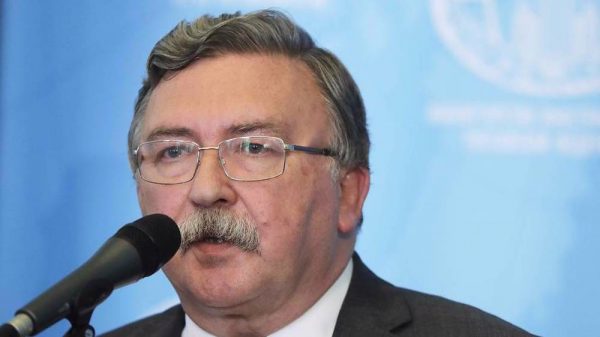
Mikhail Ulyanov, Russia’s permanent representative to international organizations in Vienna
Press TV – August 3, 2020
Russia’s permanent representative to international organizations in Vienna says Iran’s nuclear capacity is “absolutely legitimate” as it fits within the Nuclear Non-Proliferation Treaty (NPT).
“These opportunities and capabilities are absolutely legitimate as a long as they are used for peaceful purposes,” Mikhail Ulyanov tweeted on Sunday.
“The duty of IAEA (the International Atomic Energy Agency) is to certify non-diversion of nuclear materials,” he added. He was apparently referring to the United Nations nuclear agency’s repeated verification of non-diversion of Iran’s nuclear energy program.
The envoy made the assertions in response to a tweet by Mark Dubowitz, the CEO of the so-called Foundation for Defense of Democracies’ policy institute that has been identified as part of the Israeli lobby in the United States, and works hard to promote Washington’s policies against certain countries, including Russia and Iran.
In that tweet, Dubowitz had criticized what he called the “atomic capability” given to Iran under the Joint Comprehensive Plan of Action (JCPOA), a 2015 nuclear agreement between the Islamic Republic and world countries.
Ulyanov, however, asserted, “The atomic opportunities were given to Iran by #NPT.” He added that those who disagree with the nature of the IAEA’s duty being verification of various nuclear programs’ non-diversion ”work against NPT.”
The United States left the JCPOA in 2018, despite the fact that the agreement has been ratified by the UN Security Council as its Resolution 2231.
Ever since, Washington has been ceaselessly trying to undermine the deal.
Washington has also been threatening other JCPOA signatories into forsaking their duties under the accord.
US cannot disarm Lebanon’s Hezbollah through sanctions: Russian ambassador to Beirut
Press TV – August 1, 2020
The Russian ambassador to Beirut says US officials are under the illusion that they can disarm the Lebanese Hezbollah resistance movement through sanctions.
“Disarming Hezbollah is the primary purpose of US sanctions… I do not think that such a goal would be achieved through this method. The United States will not manage to force Hezbollah into laying down its weapons. This is an illusion,” Zasypkin said in an exclusive interview with Beirut-based Arabic-language al-Mayadeen television news network on Friday.
In late October 2018, US President Donald Trump’s administration imposed a new round of sanctions on Hezbollah, targeting individuals and international organizations that do business with the group.
“Over the past year, we have levied the highest sanctions ever imposed on Hezbollah, in a single year, by far. Just a few moments ago, I signed legislation imposing even more hard-hitting sanctions on Hezbollah to further starve them of their funds. And they are starving for them,” Trump said during an event in Washington, DC, that marked the 35th anniversary of an attack on US marine barracks in the Lebanese capital of Beirut.
Zasypkin added, “We (Russia) have made efforts in Syria. This is not only beneficial to Syria, but also to Lebanon as it protects the country against the potential threat of terrorism. If terrorism prevails in Syria, it will be easy for thousands of terrorists to cross into Lebanon, and this would lead to the partitioning of the country.”
He noted that Iran plays a positive role in the Middle East region, condemning the recent harassment of an Iranian passenger plane flying from Tehran to Beirut by two US fighter jets over Syria.
“Americans are creating problems and violating international law. The goal is to create tensions and reestablish their presence, role and influence,” the Russian diplomat said.
He went on to say that the balance of power in Syria is changing. “Over the past four years, the balance of power had been in the interest of terrorists. The ensuing terrorism allowed outsiders, including the US-led coalition, to come into play.”
“I think Americans have numerous problems there (in Syria), but al-Tanf region is still under their control. They are clinging to the area in order to have influence. Their main goal is to sever ties between Iran and Syria,” Zasypkin pointed out.
He noted that Moscow honors the principle of non-interference in Syria’s domestic affairs, lauding “close relations” between Russian President Vladimir Putin and his Syrian counterpart Bashar al-Assad as well as military forces of the two countries.
Zasypkin said Russian and Syrian institutions are closely cooperating with each other in various fields, including combat against terrorism, maintenance, reconstruction and humanitarian activities.
Elsewhere in his remarks, the Russian ambassador pointed to the recent rafts of economic sanctions against Syria under the so-called Caesar Act.
“The United States has used the leverage of sanctions for decades against Russia, Venezuela, Cuba and Iran. The essence of the idea has been to starve people in those countries in a way that they would ultimately turn against their own ruling systems. The scheme is now being applied to all countries,” Zasypkin highlighted.
He added, “Caesar Act is broad and comprehensive, and affects other parties since Syria has been under sanctions for a long time. Foreign companies are now targeted by the ruling. It is a preemptive battle against the possibility of restoration of ties between Syria and Western or Arab parties.”
‘It’s high time we created club of countries hit by US sanctions’ – Iranian envoy to Russia
RT | July 21, 2020
The states that have been targeted by Washington’s sanctions could unite to jointly counter the US policy, Iranian Ambassador to Russia Kazem Jalali has said.
“I believe it’s high time we created a club of countries hit by sanctions,” the envoy said in an interview with Kommersant newspaper, published on Tuesday. “Among its members will be many strong powers with developed economies: Russia, China and Iran.”
Such states should help each other in order to offset the negative influence of US moves, Jalali said, adding that Washington does not want to see any rivals, whose positions in any region would be stronger than those of the US. “They want Russia to be weak, China to be economically subordinated to them, and Iran to become their colony,” the diplomat claimed.
Jalali said on May 21 that partnership between Russia and Iran impedes the influence of external factors on their relations, TASS reported.
Iran to launch special trade office in China: Businessman
Press TV – July 21, 2020
Iran is to set up a special office in China to streamline trade activities with the East Asian country.
A senior businessman says major Iranian companies are teaming up to create a trade office in China amid growing economic relations between the two countries.
Gholamhossein Jamili, a board member at Iran Chamber of Commerce, Industries, Mines and Agriculture (ICCIMA), said on Tuesday that the trade office in China would play a major role in protecting Iranian businesses and firms working in the East Asian country against growing restrictions caused by US sanctions.
“We are working to launch this office before the end of the current Christian calendar year,” Jamili was quoted as saying by the official IRNA news agency.
The announcement comes amid reports of booming economic relations between Iran and China as the two countries move to finalize a 25-year comprehensive partnership agreement that would massively boost bilateral cooperation in areas like energy, infrastructure, tourism and trade.
China was the top buyer of Iranian oil before the United States introduced its unilateral sanctions on Iran two years ago. However, Beijing is still a top economic partner for Iran and the balance of trade between the two countries hit $20 billion in the year ending March, according to Iranian government data.
Other senior Iranian figures involved in trade with China said that the planned trade office would seek to resolve problems facing Iranian businesses and companies in China.
Majid Hariri, who chairs the Iran-China Joint Chamber of Commerce, said that the office in Beijing would serve as Iran’s economic embassy in the East Asian country.
The official IRNA news agency said the ICCIMA plans similar offices in India, Turkey, United Arab Emirates and Iraq, adding that two such offices are being set up in Russia’s Astrakhan and Syria’s Damascus.
China-Iran deal is a major blow to U.S. aspirations in Central Asia
By Paul Antonopoulos | July 16, 2020
“Two ancient Asian cultures, two partners in the sectors of trade, economy, politics, culture and security with a similar outlook and many mutual bilateral and multilateral interests will consider one another strategic partners” – these were the opening words of an 18-page document that confirmed a multi-billion dollar deal between China and Iran that blatantly defies U.S. imposed sanctions against the Islamic Republic.
According to The New York Times, the agreement that Iran and China drafted is an economic and security partnership that would allow China to invest in Iran’s banking, telecommunications, ports, railways and dozens of other projects, “undercutting the Trump administration’s efforts to isolate the Iranian government because of its nuclear and military ambitions.”
In Tehran’s view, China and Iran are long-standing strategic partners who are now reinforcing their strategies on the international stage to oppose U.S. unilateralism. Both countries had already agreed on a strategic partnership in 2016, but this latest agreement allows Iran’s economy to have a semblance of normalcy with this flurry of desperately needed investments.
The New York Times claims that the military ties include “joint training and exercises, joint research and weapons development and intelligence sharing” to fight “the lopsided battle with terrorism, drug and human trafficking and cross-border crimes.”
Effectively, the agreement between the two countries “represents a major blow to the Trump administration’s aggressive policy toward Iran.” The agreement is expected to guarantee the supply of Iranian oil to China for the next 25 years, which undoubtedly benefits both parties as the U.S. intends to completely block Iranian crude exports to starve the country of foreign money.
The deal is a major win for China’s Belt and Road Initiative as Iran’s major new investments in transportation, rail, ports, energy, industry, commerce and services will improve China’s network in the region. Iran serves as a meeting point between South Asia, Central Asia, the Caucasus and the Middle East, making it one of the most important countries for the Belt and Road Initiative. The agreement secures the supply of oil and gas to China with an overland route that gives another option away from Southeast Asian waterways, especially at a time when hostilities between China and the U.S. in the South China Sea are increasing.
The deal will see $400 billion worth of Chinese investments into Iran’s infrastructure, including upgrades in the oil industry and the construction of a 900-kilometer railway between Tehran and Mashhad, the second city of Iran and a center of pilgrimage near the borders with Afghanistan and Turkmenistan. Not only will this railway line connect two of Iran’s most important cities, but as its on the doorstep of Central Asia, it will give both China and Iran greater access into Eurasia.
Zbigniew Brzezinski argued in his book The Grand Chessboard that Central Asia was the center of global power and that it was imperative that no power, indirectly referring to Russia and China, should arise that could challenge U.S. dominance in the region. If something like this happened, the global power of the U.S. would erode. Halford John Mackinder argued in his 1904 article, The Geographical Pivot of History, that whoever ruled the “Heartland,” ruled the world. He defined the Heartland as the great Eurasian expanse of Siberia and Central Asia.
Iran is certainly a major gateway into Central Asia, and China’s enormous investment into the Islamic Republic shows that it is making a strong push to control the region. In accordance to Brzezinski’s and Mackinder’s theories, by China being the major influencer in Central Asia, it is making a strong push to control the entire region and/or world. Although Russia is another major power with vast influence in Central Asia, their relationship with China in the region can be considered cooperative at best or friendly rivals at worst. However, both are making strong efforts to limit U.S. influence in the region.
Russia simply cannot economically challenge China in the region, but due to the long history of the Russian Empire and Soviet Union controlling the region, it still has large influence for historical reasons that also includes a significant Russian minority and Russian being the second language of Central Asia. Although Russia deals with Iran, it does not have the capabilities of investing hundreds of billions into the country, meaning that the Islamic Republic will certainly come under much stronger Chinese influence, and there is not much the U.S. can do to stop it.
“The United States will continue to impose costs on Chinese companies that aid Iran, the world’s largest state sponsor of terrorism,” a State Department spokeswoman wrote in response to questions about the draft agreement. “By allowing or encouraging Chinese companies to conduct sanctionable activities with the Iranian regime, the Chinese government is undermining its own stated goal of promoting stability and peace.”
It appears the U.S. will penalize Chinese companies dealing with Iran, but China would have anticipated this. How Beijing plans to deal with such penalizations that can unravel a worsening of already tense relations with the U.S. remains to be seen, but China certainly would have prepared for such a scenario. Despite some harsh words from the State Department, it is highly unlikely that Washington can respond to this immense deal that will give the beleaguered Iranian economy and currency a major lifeline. The deal will also encourage other states wary of U.S. sanctions to begin dealing with Iran again knowing that they can have Chinese support and backing.
Paul Antonopoulos is an independent geopolitical analyst.
India fully removed from Iranian railway project: Report
Press TV – July 14, 2020
A report says Iran has dropped India from a key railway project located southeast of the country.
An Indian newspaper says Iran has decided to remove India from a partnership on a key railway project that is being constructed southeast of Iran along the border with Pakistan and Afghanistan.
The Hindu said in a Tuesday report that Iran is now going on with the construction of the Chabahar-Zahedan railway on its own, despite the fact that the project was supposed to benefit from India’s supply of investment and equipment.
The report said recurrent delays by India in bringing in the required investment and the equipment needed to build the rail line finally caused Iran to drop the partnership.
Iran began track-laying for the 610-kilometer railway last week after authorities said they have the finances required to finish the project until the end of the current fiscal year in Iran in March 2021.
Iran has tapped into its sovereign wealth fund to draw more than 300 million euros for the project, according to statements by Iranian officials in the past.
India has been a major contributor to the plans to develop Chabahar, Iran’s sole ocean port on the Sea of Oman and where India seeks to build terminals and port installations to ease its trade access to Afghanistan and other landlocked countries in the Central Asia region.
New Delhi has been hesitant to become actively involved in the Chabahar-Zahedan project mainly because of the threat of the American sanctions.
The report by The Hindu reiterated that India has obtained the required waivers from the US sanctions to contribute to the construction of the rail line.
However, it said that Indian Railways Construction Ltd (IRCON) has failed to find equipment suppliers and partners who are not fearful of being targeted by US sanctions four years after it signed an agreement with Iran to become involved in the project.
Featured Video
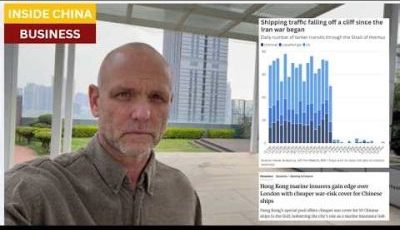
More Iran War fallout: Maritime insurance industry shifts from London to China
or go to
Aletho News Archives – Video-Images
From the Archives
The Biggest Threat to Peace in Middle East
By Dr. Elias Akleh* | Sabbah Report | May 24, 2010
A build up of heightened tension in the Middle East is escalating in the last few weeks. American and Israeli postures towards Lebanon, Syria, and Iran have become more threatening. Listening to speeches of political leaders one hears talks only about war not peace. Iranians and Israelis are continuously training hard for a possible showdown. Both sides are conducting extensive war games every month. This led Syrians to claim that Israel is preparing for a soon-to-come another war. The Jordanians also are warning that current stalemate of the peace process is an indication of a war breaking out this summer. The Russian President and his army chief hinted, a few months ago, that the US and Israel were planning for an attack on Iran.
Indeed Iran is, as it has been for last few years, the target of most of the threats and accusations of supporting terrorism. Escalating incitement against Iran the American Defense Department sent last month (April) to Congress a report on Iran’s military claiming Iran could develop intercontinental ballistic missiles capable of reaching the US by 2015.
Ignoring the fact that N. Korea, India, Pakistan, and Israel are proven to have nuclear weapons while Iran does not, the US Secretary of State Hillary Clinton chose in her speech, to the nuclear Non-Proliferation Treaty review conference at the UN, to focus on Iran’s alleged nuclear ambitions putting the whole world at risk as she put it. According to Clinton Iran’s acquisition of nuclear weapons, rather than Israel’s more than 200 nuclear bombs, is destabilizing the Middle East. She called on the world’s nations to rally around US efforts to hold Iran, not other nuclear countries, to account.
The accusation that Usama Bin Laden is living comfortably in Iran had received a boost after the broadcast of a documentary called “Feathered Cocaine”. This echoed the June 2003 claims of the Italian newspaper Corre de la Sierra that Bin Laden was in Iran according to some intelligence report, and according to Richard Miniter’s book “Shadow War”. … continue
Blog Roll
 Aletho News
- Iran mobilizing one million soldiers to ‘create hell’ for any US ground assault: Report
- The coming military and psychological unravelling?
- Iran has the last laugh
- More Iran War fallout: Maritime insurance industry shifts from London to China
- US-Israeli aggression on Iran triggers review of GCC countries’ investment pledges to Washington
- Russia slams UK plan to seize tankers suspected of carrying its oil
- Pakistan ramps up food exports to Persian Gulf nations as war deepens food insecurity
- Iran submits response to US plan, sets terms for war’s end: Tasnim
- US vs Iran: Kharg Island Talk — Bluff or Escalation? Ex-Military Officer Weighs In
- Zelensky unnecessarily involves Ukraine in the Middle East crisis
- If Americans Knew
- ‘No Innocent Children’: Far-right Israeli Lawmaker Defends Killing of Palestinian Family
- Mossad’s promises helped Netanyahu convince Trump that Iran could be toppled
- US Arms Control Official Refuses To Comment When Asked If Israel Has Nuclear Weapons
- Veterans warn US landing could be ‘more Gallipoli than Vietnam’
- Israel may be committing war crimes in Lebanon – Not a ceasefire Day 167
- In the West Bank, life is a constant battle – 3 articles
- Jacob Reses, one of the most powerful pro-Israel operatives in Trump’s Washington
- Israeli-US assaults kill or injure 87 children a day – Not a ceasefire Day 166
- ‘Forever live by the sword’: Understanding Israelis’ massive support for Iran war
- UN’s special rapporteur on human rights says Israel is systematically torturing Palestinians
- No Tricks Zone
- Devastating Assessment Of Comirnaty Vaccine By Former Senior Pfizer Europe Toxicologist
- New Study: CO2 Is ‘Effectively Negligible’ As An Explanatory Climate Change Factor Since 2000
- Former Pfizer Toxicologist Dr. Helmut Sterz Tells Bundestag Hearing Pfizer Vaccine Should Have Never Been Approved
- Energy Expert: Germany’s Nuclear Phaseout Was A “500 Billion Euro Mistake”
- New Research: South Australia’s Mid-Holocene Sea Surface Temperatures Were 4°C Warmer Than Today
- Storing Green Energy To Last Germany 10 Days Would Require A 60-Million Tonne Battery
- New Studies: UK Sea Levels Were 4 Meters Higher Than Today During The Mid-Holocene
- Destructive Green New Deal: German Energy And Metal Group Warns Of Drastic Crisis
- New Study Documents A 20-Year Pause In Arctic Sea Ice Decline – Driven By Internal Variability
- Wake-up Call: Survey Shows Majority Of Germans Now Favor Postponing Climate Targets!
 Aletho News