The White House’s latest pro-war scheme comes at a time when the Pentagon is expected to receive its highest annual budget ever, as defense spending in the US is on track to reach $1 trillion annually before the decade is out.
More than 3,000 Yemeni civilians killed, injured by Saudi-led coalition’s airstrikes in 2022
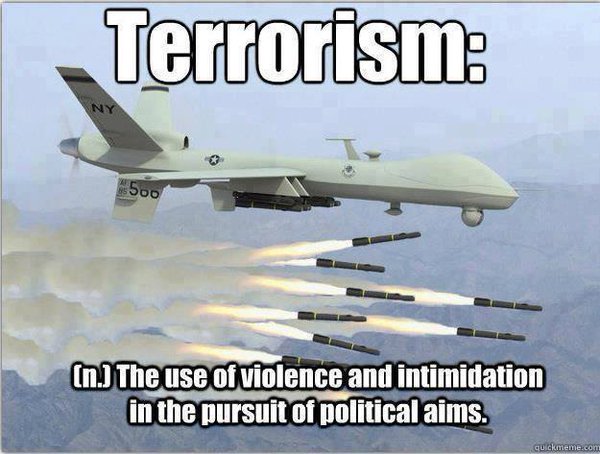
Press TV – January 2, 2023
More than 3,000 civilians, including women and children, were killed or injured in the airstrikes launched by the Saudi-led coalition against Yemen in the year 2022, according to a Yemeni rights group.
The Humanity Eye Center for Rights and Development issued a report on Monday, showing that the total number of casualties was 3,083 during last year’s war on Yemen, which included the death of 643 citizens and the wounding of 2,440 others.
The report said 102 children lost their lives and 353 others sustained injuries, in addition to 27 women killed and 97 others wounded.
The Yemeni rights group confirmed that 514 men were killed and 1,990 others injured.
As for the damage to Yemen’s infrastructure in 2022, the report said the Saudi-led coalition warplanes destroyed 14,367 homes, 134 mosques, 5 tourist facilities, 12 hospitals, 64 educational centers, 1987 agricultural fields and seven media facilities.
The aggression also destroyed 22 power stations, 974 roads and bridges, 46 communication towers and stations, 334 tanks and water stations, and 57 government facilities.
The Humanity Eye Center for Rights and Development also reported that the coalition destroyed many business firms, which amount to 229 business facilities. In addition, the warplanes targeted 1,022 means of transportation, 29 chicken farms, 37 medicine storehouses, 95 food trucks, 21 fuel stations and 13 fuel tankers.
Saudi Arabia, in collaboration with its Arab allies and with arms and logistics support from the US and other Western states, launched the devastating war on Yemen in March 2015.
The objective was to crush the Ansarullah resistance movement, which has been running state affairs in the absence of a functional government in Yemen, and reinstall the Riyadh-friendly regime of Abd Rabbuh Mansour Hadi.
While the Saudi-led coalition has failed to achieve any of its objectives, the war has killed hundreds of thousands of Yemenis and spawned the world’s worst humanitarian crisis.
Eighteen civilians injured in Saudi shelling on Sanaa
The Cradle | January 2, 2023
Eighteen civilians were injured in Yemen on the evening of 1 January after Saudi-led coalition border troops launched several rounds of artillery fire into residential areas in the northwestern province of Saada, Yemeni media reported.
According to local sources, 10 people were wounded by coalition artillery fire in the province’s Monabbih district, while eight others sustained injuries in another attack on the district of Shadaa. There were reportedly two African migrants among the injured.
This latest bout of violence follows a significant escalation in tension last week between the Ansarallah resistance movement and UAE-backed coalition troops, which left around 32 people from both sides killed and injured on 29 December.
As Yemen enters its fourth month since the expiration of the UN-brokered humanitarian ceasefire agreement, the Saudi-led coalition has taken no steps to lift the severe economic blockade on the country, continues to loot its natural wealth, and has persistently withheld the salaries of Sanaa-affiliated government employees in blatant violation of the truce terms.
With the persistence of these violations, it seems less likely with each day that a ceasefire extension will be reached.
Just in the last two days, the Saudi-led coalition seized another four UN-inspected humanitarian fuel vessels and barred them from entering the country’s main port of Hodeidah, which has been under Saudi blockade since 2015.
Attempts at UN-sponsored negotiations and regional mediation efforts have – for the most part – failed, and Yemeni officials have repeatedly warned that no truce extension is possible until all demands have been met.
As the prospect of a renewed ceasefire fades, Ansarallah has also persisted with its warnings to the coalition that it is willing to take matters into its own hands.
On 29 December, senior Ansarallah official Ali al-Qahhoum said in a statement that Saudi Arabia and its regional allies in the coalition face “unprecedented retaliatory strikes” should they maintain their war and blockade against Yemen.
Ansarallah seeks ‘permanent ceasefire’ in Yemen
The Cradle | January 1, 2023
Yemen’s Ansarallah movement seeks a “permanent ceasefire,” according to a spokesperson of the resistance group.
Mohammed Abdel Salam, a spokesperson of the Ansarallah movement, said on 1 January that a permanent ceasefire would require the opening of all ports, airports, and roads, and that all government wages are paid from oil and gas revenues.
“We are working to reach a point of clarity in Yemen, in which we move into either a truce or permanent ceasefire, and we have presented our point of view to the Omani mediator,” he said to Almasirah TV station.
“Any solution to Yemen’s crisis must be based on the disbursement of [government] employees’ salaries from oil and gas revenues according to the 2014 budget,” he added.
Meanwhile, an official delegation from the Sultanate of Oman landed in the Yemeni capital Sanaa on 21 December as part of Muscat’s mediation efforts to reach a political solution to the Saudi-led war that has been raging for nearly eight years.
No further details were provided about the meeting, nearly three months after a UN-brokered ceasefire between Sanaa and Riyadh ended.
Since then, Oman has been mediating talks between Saudi and Yemeni officials seeking to end a war that has killed nearly 400,000 Yemenis and pushed the rest of the population into famine.
Since 2015, Yemen has suffered a brutal Saudi-led war and economic blockade that has killed and displaced millions, and destroyed the country’s infrastructure. On top of this, western NGOs have been accused of mishandling billions of dollars in humanitarian aid for Yemenis.
Yemeni officials have also cautioned that US and French troops deployed in provinces controlled by the Saudi-led coalition have arrived to coordinate the looting of Yemen’s natural resources, similar to Washington’s oil trafficking operations in Syria.
Yemen: Despite truce, Saudi-led coalition killed, injured 900 civilians since April
MEMO | December 29, 2022
More than 900 civilians have been killed and injured by the Saudi-led coalition’s missile strikes in Yemen’s border district of Shada, west of Saada governorate, since the signing of the UN armistice agreement in early April, Abdullah Musraa, the director of the hospital in Razih Al-Rifi said.
Musraa added that since the beginning of the truce Razih Hospital has received 111 dead civilians and 796 wounded, including African immigrants, Al-Mayadeen reported, citing the Houthi-controlled official news agency SABA.
He noted that nothing has changed in the behaviour of the Saudi regime since the signing of the UN humanitarian and military truce.
Musraa stressed that the border areas in Saada governorate are witnessing a continuous escalation by the Saudi-led coalition with the bombing of homes, farms and public and private property, according to Al-Mayadeen.
He added that many cases were transferred to other hospitals across the governorate and the capital, Sanaa, as Razih Hospital could not keep up with the demand or provide the necessary services for critical cases.
A truce was agreed on 2 April between the Saudi-led alliance and the Houthis. It was extended twice for two months, however, the second extension ended on 2 October.
Since then, fighting has resumed. The UN has failed to reach an agreement to reinstate the ceasefire.
US Patriot Missiles in Ukraine: A Desperate & Dangerous Escalation
By Brian Berletic – New Eastern Outlook – 28.12.2022
US appears to be in the process of transferring its Patriot air defense missile system to Ukraine. CNN in its article, “Exclusive: US finalizing plans to send Patriot missile defense system to Ukraine,” claims the US will approve and then quickly ship the system or systems into Ukraine in just days after the decision is made.
Paradoxically, CNN admits that training the large numbers of Ukrainians necessary to operate the system will take months. This has left analysts speculating that in fact NATO personnel already familiar with the system will operate it merely posing as “Ukrainians.”
This represents a significant escalation. While Western forces are believed to be covertly operating across Ukraine against Russian forces in a variety of roles, Western personnel operating an ever-growing number of sophisticated weapons may lead to mission creep in terms of other sophisticated Western weapons including Western aircraft and tanks entering the conflict with Western operators behind the controls.
The decision to send Patriot missiles follows a now steady tempo of Russian missile and drone strikes across Ukraine targeting military and dual-use infrastructure including the power grid. The Western media admits Ukraine’s own Soviet-era air defense systems are dwindling in number and running low on interceptor missiles.
The Financial Times in its article, “Military briefing: escalating air war depletes Ukraine’s weapons stockpile,” admits:
… ammunition and spares for the S300 and Buk systems, the mainstay of Ukraine’s air defences, are dwindling. Ukrainian officials have confirmed a claim by British military intelligence that Russia has been firing X-55 nuclear missiles — with the nuclear warhead replaced by an inert one — simply to exhaust Ukrainian air defences.
The article notes that buying additional ammunition and spare parts for the systems is not practical. It also notes efforts by the West to provide Ukraine their own air defense systems, however such systems suffer from similar problems in terms of limited quantities and limited access to ammunition.
Financial Times cites the German “Gepard” mobile anti-aircraft gun as being “highly effective.” No evidence was provided to substantiate that claim and ironically, shortly after the article was published, shortages of ammunition for Gepard systems were reported as was Switzerland’s unwillingness to supply additional ammunition to Ukraine.
Germany’s Rheinmetall company has announced it would expand ammunition production to compensate for Switzerland’s decision according to Anadolu Agency, but production would not begin until June at the earliest and Ukraine would not begin receiving ammunition until at least July and only if the German government places an order for the 35mm rounds the Gepard fires.
IRIS-T and NASAMS, two Western short to medium range air defense missile systems have been provided to Ukraine, albeit in small numbers that will increase incrementally over the course of several years. This represents a rate far too slow to replace Ukraine’s dwindling Soviet-era air defense systems.
Considering this reality, the decision by the US to transfer Patriot missile systems to Ukraine may not be because Washington believes they can make a difference, but simply because the US and its allies have nothing else more appropriate or numerous to send in its place.
But even the Patriot air defense system is plagued with problems ranging from its own critical shortage of ammunition to its inability to provide defense against drones and cruise missiles, the very systems they will be tasked with protecting Ukrainian skies against.
Patriot Missiles: Too Few, Too Feeble
Far from “Russian propaganda,” the Patriot’s shortcomings have been reported by the Western media for years. Al Jazeera in an early 2022 article, “Saudi Arabia may run out of interceptor missiles in ‘months’,” would admit to Saudi stockpiles of Patriot interceptor missiles running low and the inability of the US to manufacture enough to replace them.
The Wall Street Journal would report in March 2022 that additional missiles were eventually acquired, but not because the US was able to manufacture more, and instead because the US convinced Saudi Arabia’s neighbors to transfer missiles from their own stockpiles to Saudi air defense forces.
Faced with a growing shortage of missiles, Lockheed Martin pledged in 2018 to double annual missile production from 250 to 500, according to Defense News. By 2021, Camden News would report that Lockheed was on course to reaching its 500 missiles per year goal by 2024 after building a new 85,000 square foot expansion to existing production facilities.
However, even at 500 missiles a year, and if every single missile was subsequently sent directly to Ukraine, it would not be nearly enough to match the number of cruise missiles, drones, and other long-range precision weapons Russia is using as part of its ongoing special military operation.
The New York Times in an article titled, “Russia Is Using Old Ukrainian Missiles Against Ukraine, General Says,” cites Ukrainian sources who claim Russia is likely building at least 40 cruise missiles a month. Over the course of a year that works out to 480 cruise missiles. Considering the Patriot missile system falls far short of 100% effectiveness, the idea that 500 Patriot missiles could protect Ukraine against 480 Russian cruise missiles is unrealistic.
Annual missile production for Russia is likely higher, however. From October onward alone, the BBC reports that Russia has fired over 1,000 missiles and drones at targets across Ukraine. This is twice the number of missiles Lockheed plans on producing annually.
This reality is so obvious that Western analysts have commented publicly about their doubts regarding any impact Patriot missiles will have. Breaking Defense in its article, “Patriot missile system not a panacea for Ukraine, experts warn,” would cite a missile defense expert with the Center for Strategic and International Studies, Tom Karako, who called the transfer of Patriot missiles to Ukraine “a political gesture of support.”
The article would also note, citing Karako, that:
“We need to be careful about these scarce, precious assets,” Karako said. “While we’re only sending one battery, once it’s there, it’s probably not going to come back. And if they start expending munitions, they’re going to ask for more, right? And we don’t have just tons and tons of PAC-2s and PAC-3s [missiles] lying around that we can afford.
Karako would also point out that Patriots are needed for “deterring a Taiwan conflict,” highlighting the fact that the steady depletion of Western weapon stockpiles in its proxy war with Russia is not happening in a geopolitical vacuum and impacts the West’s ability to menace other nations in other regions of the planet – especially in East Asia.
The same article also pointed out how expensive Patriot missiles are versus the relatively cheap drones they would be attempting to intercept. But that’s even if the Patriot missile system can intercept them.
NBC News in a 2019 article titled, “Why U.S. Patriot missiles failed to stop drones and cruise missiles attacking Saudi oil sites,” would note how US-provided Patriot missile systems failed against cruise missiles and “triangular” drones used by Yemen against Saudi oil production facilities.
Despite Patriot missile batteries guarding the facilities, Saudi forces resorted to small arms fire in a failed attempt to down the drones. One attack temporarily disrupted half of Saudi Arabia’s daily oil output.
The article claims:
Drones and missiles can be detected by radar, but they tend to have small radar signatures and can fly close to the ground, sharply reducing the detection range and thus opportunities to fire on them from far away. They also are easy to maneuver, allowing them to hit the coverage gaps between radars and Patriot batteries. And drones and cruise missiles are often cheaper than a $2 million or $3 million Patriot missile, meaning the supply of Patriots can be depleted much faster than the bevy of drones launching attacks.
NBC News is describing precisely the threats Patriot missile systems transferred to Ukraine will face, but on a much larger and more sophisticated scale.
The article discusses extensive measures the US is taking to counter threats the Patriot is not well-suited to defend against – measures that only began being fielded as of 2021 – but not measures the US is prepared or even able to send to Ukraine in large numbers.
The US and its NATO allies have long neglected ground-based air defense systems in favor of achieving and maintaining air superiority over any potential battlefield through the use of warplanes. Several decades of fighting “small wars” against adversaries lacking anything resembling an air force has only compounded the problem.
Just as it will take years and large amounts of money to solve the current weapons and ammunition shortage the West faces as it continues to arm Ukraine, creating air defense systems in both the quantities and quality Ukraine’s requirements demand will take more time than Ukraine has, and more resources than the West may care to spend.
While it is common knowledge that wars are won through superior logistics, military technology, and strategy, one would be hard-pressed to recall when any war was won by “a political gesture of support.”
Biden pledged to end the war in Yemen, but is doing the opposite

By Robert Inlakesh | RT | December 27, 2022
Two weeks into his term, US President Joe Biden claimed that he would seek a negotiated peace in Yemen, thus shunning Saudi Arabia. Now he is performing a 180-degree pivot. With such arbitrary foreign policy positions the US is causing instability and weakening its own hand.
On December 13, US Senator Bernie Sanders decided to withdraw a War Powers Resolution on ending US support for Saudi offensive efforts in the war in Yemen. Sanders was supposed to put the resolution to a vote, believing it would have passed. However, owing to pressure mounted against him from the White House, he decided to retreat. Instead, the progressive American senator claimed that he was informed that the Biden administration would “continue working” with his office on ending the conflict.
As revealed by The Intercept, which obtained the key talking points distributed by the White House against the resolution, the Biden administration communicated its position that such a resolution would be counterproductive and further exacerbate the crisis in Yemen. However, the ‘Quincy Institute for Responsible Statecraft’ says that Sanders’ decision to withdraw the resolution “may embolden the many members of Washington’s foreign policy elite who would like to ensure that the president’s capability to unilaterally wage war remains unchallenged by Congress’s constitutional prerogative over matters of war and peace.”
The biggest problem here for the US government is that the War Powers Resolution essentially aims to force Biden to implement most of the policies that he himself outlined in February of 2021. Despite Biden having announced that the US was halting all “relevant arms sales” to the Saudi-led coalition – which has been at war with Yemen’s Ansarallah, known commonly as the Houthis, since 2015 – this policy position has never been put into practice.
During his 2020 campaign, Biden claimed that he would make longtime American ally Saudi Arabia a global “pariah.” Yet, when it began to sink in that the powerful oil-producing state was a necessary partner in the Middle East, a realization that came months into the West’s sanctions campaign aimed at Russia, the Biden administration quickly decided to change its stance. In July, the president decided to go on a foreign visit to Saudi Arabia, while in the days prior he entered into discussions about beginning to supply the Saudis with offensive weapons again; the framing of this was a little disingenuous because the weapons sales freeze of February 2021 had effectively been ended by April of the same year anyway. Both of these moves came as a clear attempt to get Saudi Arabia to raise oil-production levels, a goal that failed as the Saudi Crown Prince, Mohammed Bin Salman, refused to pander to the US president.
Since then, the US government approved a potential multibillion-dollar deal with Saudi Arabia and the UAE, and in August the Biden administration granted the Saudi Crown Prince immunity from a civil lawsuit over his role in the murder of journalist Jamal Khashoggi. Biden was reportedly humiliated earlier this year after allegedly bringing up the Khashoggi killing to the Crown Prince, who fired back by citing the Israeli killing of Palestinian-American journalist Shireen Abu Akleh, asking why Jamal Khashoggi mattered more. Notably, the US head of state failed a number of times to even pronounce Shireen Abu Akleh’s name correctly when delivering a speech beside Palestinian Authority President Mahmoud Abbas just days earlier and did not bring the killing up to Israeli representatives.
The White House insinuated, in its opposition to Senator Bernie Sanders’ resolution on Yemen, that it had a hand in the six-month long ceasefire between the two primary opposing sides in the war. The reality was that it was the United Nations that brokered the ceasefire, which ended on October 2. In the eyes of Ansarallah, the US government is the primary obstacle to peace in Yemen; Abd al-Wahhab al-Mahbashi, a senior member of Ansarallah, recently warned that “the presence of US troops in the Bab al-Mandab and off the coast of Yemen poses a serious threat to maritime navigation.” In fact, Ansarallah views the conflict as a war on behalf of the US, with Saudi Arabia acting as its proxy, a view held by millions in the region.
The day following Sanders’ withdrawal of his War Powers Resolution, two fuel shipments, carrying tons of diesel, were seized by the Saudi-led coalition and prevented from reaching Yemen. The blockade of Yemen is one of the major factors contributing to the resurgence of tensions – Ansarallah accuses Riyadh and Abu Dhabi of stealing the nation’s oil resources and depriving native Yemenis. In addition to this, when the US is clearly attempting to cozy up to Saudi Arabia, this signals to the leadership of Ansarallah that the Biden administration is favoring Riyadh in the conflict.
The Biden administration has so far proven ineffective at bringing the Saudis under its wing in the way it had hoped, indicating that its foreign policy tactics have proven ineffective at best. The reason for this failure likely comes down to the way the current government has dealt not only with Saudi Arabia, but with all the states of the Arabian Peninsula in addition to Iran. The US has shown that it cannot be trusted to keep its word, as was proven by its Iran nuclear deal blunder. More importantly, Saudi Arabia understands that, when it comes to security, Washington is not the most important player anymore. Instead of following the Biden administration into a dangerous anti-Iran coalition, the Saudis would be a lot smarter to engage diplomatically with Tehran, a step that would be especially helpful when it comes to regional security.
For Washington, meanwhile, an escalation in Yemen at this point would prove advantageous, for it could end up pushing Saudi Arabia closer to it, as the latter needs US help to maintain its war effort, although there is a chance that large-scale ballistic and cruise missile strikes against Saudi Arabia’s vital infrastructure could cause the Kingdom to go straight to the negotiating table. Regardless of how things go, it is clear that US influence in the Arabian Peninsula is rapidly declining and part of its legacy will be this brutal war that has cost upwards of 400,000 lives and that the Biden administration has refused to end.
Robert Inlakesh is a political analyst, journalist and documentary filmmaker currently based in London, UK. He has reported from and lived in the Palestinian territories and currently works with Quds News.
Saudi Coalition forced to release detained Yemeni fuel ships
By Yusef Mawry – Press TV – December 25, 2022
Sana’a – Fuel prices have slightly dropped in Yemen after the release of two Yemeni fuel ships that were detained by the Saudi-led coalition earlier this week in the Red Sea.
The Yemeni army issued a stern warning to Saudi Arabia and the UAE that if the ships were not released soon, military action would follow.
Yemeni bus and motorbike drivers in the capital Sana’a who make a living from public transportation welcomed the lowering of fuel prices. They say this is going to help them cope with the fuel price hike caused by the blockade.
Yemeni political experts say the release of the fuel ships by the Saudi-led coalition isn’t enough, as Yemen will continue to struggle until Saudi Arabia and its allies completely lift the blockade and end their illegal involvement in Yemen.
Despite falling oil prices, tensions are rising on all active battlefronts in Yemen for what could soon be a resumption of war if a political solution is not reached soon, as Saudi Arabia and the UAE continue their militarization of strategic Yemeni Islands in the Red and Arabian sea.
The release of fuel ships detained by the Saudi-led coalition marks a big victory for the Yemeni government based in Sana’a and the people living in the areas controlled by Ansarullah. This also indicates that Saudi Arabia and the UAE simply cannot afford to have their oil industries targeted by Yemeni missiles and that’s why they decided to go with a safer option by releasing the fuel vessels.
US playing ‘dangerous game’ in Yemen, insists on aggression: Ansarullah
Press TV – December 14, 2022
Yemen’s popular resistance Ansarullah movement has warned against the United States’ military presence in the country, saying Washington is playing a “dangerous game” as it insists on pursuing a policy of aggression while impeding the national peace process.
Ali al-Qahoum, a member of Ansarullah’s Political Bureau, made the remarks during an exclusive interview with Lebanon’s al-Mayadeen television network on Tuesday night.
“The presence of US troops in the Bab al-Mandab and off the coast of Yemen poses a serious threat to maritime navigation,” he said, adding that it further proves Washington’s aggressive policy against the impoverished country.
He went on to say that Saudi Arabia’s war and blockade against Yemen over the past eight years has been fully coordinated by the US, noting that “Riyadh is nothing but a tool in the hands of Washington to execute its policy of aggression with the participation of Israel, the UK and France.”
The Ansarullah official further noted that “the US and UK’s tendencies to keep the conflict ongoing and impose more embargo on Yemen, demand the utmost national responsibility of enhancing steadfastness.”
“If the Americans insist on aggression and blockade, the response will be in a way that achieves the required effect and sufficient pressure on the aggressor, whoever it may be,” he added.
Al-Qahoum further stated that our message to the Saudi-led coalition is that “elusiveness, gaining time, changing tools, and all the aspects of aggression and conspiracies are unacceptable.”
“We tell the aggressor countries not to rely on time and not to count on the deceptiveness of the United Nations and the US envoys as the overall equation is changing and the reality is different,” he added.
He further pointed out that “the only guarantor for the return of the ceasefire is that the demands of the Yemeni people and their rights be respected, which will open the prospects for peace, and there is no way to achieve this through deception.”
The UN-brokered truce between the Saudi-led coalition and Yemen first came into effect in April and has been extended twice since.
In mid-October Yemeni Foreign Minister Hisham Sharaf said there would be no talks about the extension of the six-month truce which expired on October 2 unless the nation’s legitimate demands were fully met.
Saudi Arabia launched the devastating war on Yemen in March 2015. The objective was to reinstall the Riyadh-friendly regime of Abd Rabbuh Mansour Hadi and crush the popular Ansarullah resistance movement, which has been running state affairs in the absence of a functional government in Yemen.
While the Saudi-led coalition has failed to meet any of its objectives, the war has killed hundreds of thousands of Yemenis and spawned the world’s worst humanitarian crisis.
Washington and London have been providing the coalition with direct arms, logistical, and political support, including through outfitting it with precision-guided ammunition that the Saudi-led forces have been using amply against Yemen’s civilian population.
Xi Jinping ends landmark KSA visit by calling on Arab states to embrace multipolar world
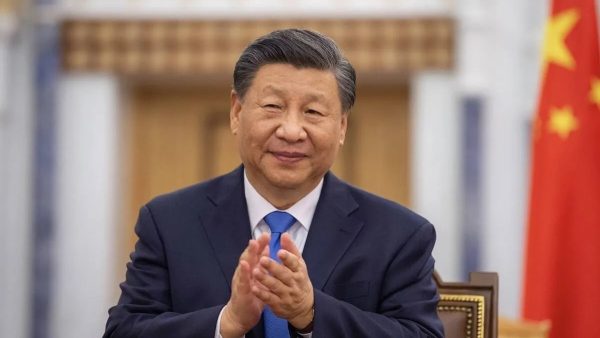
The Cradle | December 10, 2022
Chinese President Xi Jinping left Saudi Arabia early on 10 December following a three-day visit that saw him attend three different summits with leaders from across West Asia and Africa.
On Friday night, Xi headed the first China-Arab States Summit, which saw a large majority of Arab League heads of state attend in a bid to strengthen bilateral ties with the Asian giant.
“As strategic partners, China and Arab states should … foster a closer China-Arab community with a shared future, so as to deliver greater benefits to their peoples and advance the cause of human progress,” the Chinese president said during his keynote speech.
Xi also called on Arab states to remain “independent and defend their common interests,” adding that China “supports Arab states in independently exploring development paths suited to their national conditions and holding their future firmly in their own hands.”
“China is ready to deepen strategic mutual trust with Arab states, and firmly support each other in safeguarding sovereignty, territorial integrity and national dignity,” Xi said, noting that the two sides should “jointly uphold the principle of non-interference in other countries’ internal affairs, practice true multilateralism, and defend the legitimate rights and interests of developing countries.”
The Chinese leader also urged leaders from West Asia and Africa to embrace “synergy between their development strategies, and promote high-quality [cooperation in the Belt and Road Initiative].”
Launched nine years ago, the Belt and Road Initiative (BRI) is considered the crown jewel of Xi’s long-term foreign policy agenda. The stated aim of the mega-infrastructure project is to bring capital and infrastructure to Global South countries while dramatically strengthening connectivity for commerce, finance, and culture.
The BRI also aims to secure markets for Chinese companies, stable supplies of inputs for Chinese factories, and productive outlets for China’s large foreign exchange holdings. Close to 150 nations across the globe have signed on to participate in the BRI.
For the first half of 2022, Saudi Arabia was the biggest recipient of China’s finance and investment spending in the BRI.
Ahead of the China-Arab Summit on Friday, the Chinese president met with leaders from the Gulf Cooperation Council (GCC). During this summit, he urged the oil and gas giants to conduct energy sales in the Chinese yuan, potentially divorcing the US dollar from bilateral transactions.
He also vowed to import more oil and natural gas from Gulf Arab states while not interfering in their affairs, a departure from Washington’s long-standing policy of interference and domination.
Xi later took the opportunity to express China’s support for the end of the Israeli occupation of Palestine, and voiced frustration over the “historical injustice” suffered by Palestinians.
“It is not possible to continue the historical injustice suffered by the Palestinians,” the Chinese president said on Friday.
He went on to call on the international community to grant Palestine “full membership in the United Nations” and said Beijing “supports the two-state solution and the establishment of a Palestinian state on the 1967 borders, with East Jerusalem as its capital.”
Beijing’s emergence as a major superpower since the turn of the century has proven to be critically important for Arab states, prompting them to diversify their strategic objectives and balance themselves away from a decades-long Western dependency.
American “human rights” against the people of Yemen
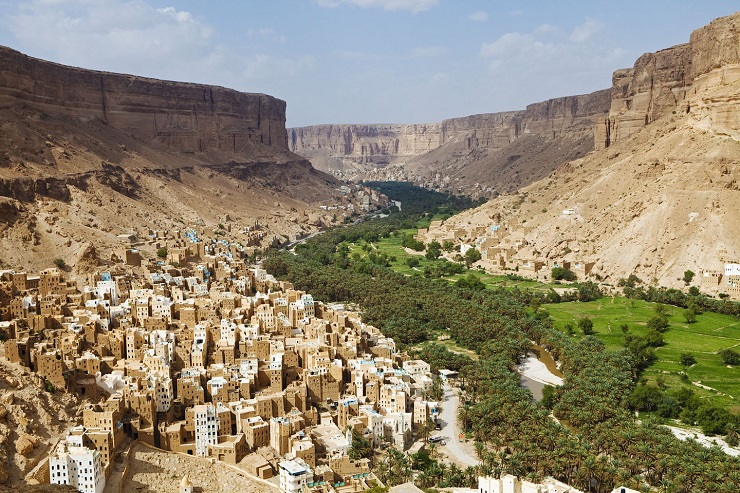
By Viktor Mikhin – New Eastern Outlook – 07.12.2022
As US officials travel the world lecturing everyone on human rights, that same world has accused Washington of being the number one human rights violator. Saudi Arabia’s war against Yemen, instigated and widely supported by the West and the United States in particular, is a prime example of this.
On March 25, 2015, the then Saudi Arabian Ambassador to the United States, Adel al-Jubeir, under pressure from the American ruling circles, declared war on Yemen. This was done specifically from the American capital, Washington. He said that the military action would be “aimed at protecting the people of Yemen,” adding that “the operation will be limited in nature.”
The alleged “limited in nature” war has already turned into eight years of almost daily aerial bombardments in the provinces of the Saudi kingdom’s southern neighbor. Prior to the war, Yemeni officials argued that Riyadh controlled nearly every sector of Yemeni society, from the economy to culture, and that the time had come for independence, sovereignty and territorial integrity. This war still brings innumerable hardships and misfortunes to the Yemenis, from which the “democratic” United States shamelessly capitalizes.
The list of US support for the Saudi war in Yemen is so long that senior Yemeni officials say it was America that started the war against their country, using the Saudis and other Gulf kingdoms as its “proxies.” Human rights organizations accuse other Western countries of complicity in what they call war crimes against the defenseless Yemeni people. But the same “democratic” United States remains conspicuously silent about this, forbidding not only its own, but also the Western media to write about this massacre in negative terms.
In March 2015, a Bacchanalia of American politicians, economists and financiers emerged, who all together and individually simply pitted Riyadh against Yemen. Even the American media did not hide this interest in unleashing another war on the Arabian Peninsula. First, there were huge orders from the Saudis for the purchase of a wide variety of weapons, and the American military-industrial complex was loaded to capacity, with work conducted in three shifts. It is quite natural that the prices for these weapons were very high, and the Saudis did not even discuss them, buying weapons in bulk for a future war. Second, having got stuck in this difficult war against the fraternal Yemeni people, Riyadh could not take any independent steps on the world stage, obediently trailing in the wake of Washington’s policy. And besides, the Washington administration was pleased that the Yemenis had been “taught a lesson” by the Saudis, avenging the unsuccessful drone war against Yemen that the Pentagon had unleashed and pursued for a whole decade.
When war broke out in Yemen, the US Department of Defense immediately provided hundreds of billions of dollars worth of weapons to the Saudi-led coalition. Among the many other types of support the US provided to the Saudis during the war was intelligence products to be targeted by US-made Saudi warplanes. The Pentagon has also provided military advice and logistical support, such as air-to-air refueling of military aircraft, while Washington said it had authorized US contractors to service Saudi military aircraft.
But the war did not go quite as America had planned. Washington simply did not expect the brave resistance of the Yemeni people and their staunch support for the popular revolution led by the Houthi movement (officially called Ansar Allah). The Pentagon had to urgently intervene in hostilities, supplying not only modern weapons, but also air defense systems. And yet, the Yemenis delivered several sensitive strikes against Saudi forces, including successfully shelling an oil field and refinery on Saudi territory. These actions led to a surge in oil prices and sowed panic among the ruling circles in Saudi Arabia.
But the war has created an extremely difficult situation for civilians living in the poorest country in Western Asia. Especially for Yemeni children who are suffering from untold humanitarian conditions. Hundreds of thousands of people have died during the hostilities, due to American-made bombs. Saudi pilots, trained in the US and the UK, using American aircraft at the prompting of American military intelligence dropped American bombs on Yemeni houses, schools, hospitals, funeral parlors and foreign humanitarian organizations, forcing them to withdraw staff from the country.
Here is what the Yemeni monitoring group, Entesaf Organization for Women and Child Rights, recently published (compared to data from other groups and institutions, these are very conservative numbers):
– 8,116 children have been killed and wounded since the beginning of the US-Saudi war;
– 5,559 Yemeni children have become disabled as a result of hostilities since the beginning of the war;
– 632,000 children in Yemen are suffering from acute malnutrition that threatens their lives with death during the current year;
– 2,400,000 children do not attend school, forming a generation that has completely lost education.
Entesaf has documented that the number of Yemeni people with disabilities has increased from three million before the start of the US-backed war to 4.5 million today. This highlights the consequences of Yemen’s total blockade (in addition to the war being waged on it), which has placed its airspace, sea and land under unprecedented blockade by the West.
The organization also drew attention to the increase in child labor in Yemen due to the aggression and total blockade, pointing out that 1.4 million child laborers are deprived of their most basic rights, and that about 34.3% of child laborers are between the ages of 5 and 17. These new occurrences of child labor during the war are four times the rate of child labor than before the start of the war in Yemen.
In the healthcare sector, it is reported that public and private hospitals across the country are facing the threat of closure due to the blockade and detention by the US and Saudi Arabia of ships with petroleum derivatives.
Entesaf holds the coalition led by the US and Saudi Arabia responsible for all crimes and violations against civilians, especially children, in the last eight years of the war, calling on the international community, global organizations, human rights and humanitarian organizations to be held accountable for violations and heinous massacres that occurred against civilians. The organization also called on the international community to take effective and positive action to end the aggression and blockade against the civilian population and form an independent international commission to investigate all crimes committed against the Yemeni people and to bring to justice all those found complicit.
In August 2018, munitions experts reported that the bomb fired by Saudi warplanes that killed dozens of Yemeni children on a school bus was a 500-pound (227 kg) laser-guided MK 82 bomb made by Lockheed Martin, one of America’s largest arms manufacturers. Photos of the shrapnel taken immediately after the attack were sent to CNN, and a cameraman working for the company filmed the shrapnel footage. Munitions experts confirmed that the numbers on it identified Lockheed Martin as its manufacturer and that this particular MK 82 was a Paveway, which is a laser-guided bomb.
The CNN report said some of the bodies were so mutilated that identification was impossible, leaving behind scraps of school textbooks, mangled metal and one backpack. Of the 51 people who died in the attack, 40 were children. Another 79 people were injured, 56 of them also children.
Among the tens of thousands of Saudi airstrikes, another one was documented by CNN – a market strike by a US-supplied MK 84 precision bomb that killed 97 Yemenis. The bomb was very similar to the one that targeted a funeral parlor in October 2016, killing hundreds and injuring innumerable others.
These are just a few of the tens of thousands of similar attacks using American weapons to intimidate the Yemeni people into submission. However, the country’s armed forces, women and children have shown unprecedented resilience in their struggle.
Also during the war in Yemen, Washington’s complete disregard for human rights and its attempts to deprive children of their right to life was demonstrated. This applies not only to Yemen, but to US wars around the world that have resulted in unprecedented suffering for children, from Cuba and Vietnam to Western Asia and beyond. And it is the same United States that claims to be the flag-bearer of human rights and uses this pretext for its own political agenda in attacking numerous other countries.
Xi’s visit and the future of the Middle East
By Ramzy Baroud | MEMO | December 7, 2022
The problem with most Western media’s political analyses is that they generally tend to be short-sighted and focused mostly on variables that are of direct interest to Western governments.
These types of analyses are now being applied to understanding official Arab attitudes towards Russia, China, global politics and conflicts.
As Chinese President Xi Jinping prepares to lead a large delegation to meet with Arab leaders in Saudi Arabia on 9 December, Western media conveys a sense of dread.
The Chinese leader’s visit “comes against the backdrop” of the Biden Administration’s “strained ties with both Beijing and Riyadh” over differences, supposedly concerning “human rights and Russia’s invasion of Ukraine,” Reuters reported.
The same line of reasoning was parroted, with little questioning, by many other major Western media sources, falsely suggesting that ‘human rights’, along with other righteous reasons, are the main priority of the US and Western foreign policy agenda.
And, since these analyses are often shaped by Western interests, they tend to be selective in reading the larger context. If one is to rely exclusively or heavily on the Western understanding of the massive geopolitical changes around the world, one is sure to be misled. Western media wants us to believe that the strong political stances taken by Arab countries – neutrality in the case of war, growing closeness to China and Russia, lowering oil output, etc – are done solely to ‘send a message‘ to Washington, or to punish the West for intervening in Arab affairs.
Seen through a wider lens, however, these assumptions are either half-truths or entirely fabricated. For example, the OPEC+ decision to lower oil output on 5 October was the only reasonable strategy to apply when the global market’s demand for energy is low. Additionally, Arab neutrality is an equally reasonable approach considering that Washington and its Western allies are not the only global forces that matter to the Arabs. It is equally untrue that the Middle East’s growing affinity with Asia is borne out of recent dramatic events, but a process that began nearly two decades ago, specifically a year following the US invasion of Iraq.
In 2004, China and the Arab League established the China-Arab States Cooperation Forum.
CASCF officially represented the Chinese government and all 22 members of the Arab League, eventually serving as the main coordination platform between China and the Arabs. This has given China the advantage of investing in a collective strategy to develop trade, economic and political ties with the entirety of the Arab world. On the other hand, Arabs, too, had the leverage of negotiating major economic deals with China that could potentially benefit multiple Arab states simultaneously.
An extremely important caveat is that CASCF was predicated in what is known as the “Five Principles of Peaceful Coexistence.” Based on the Westphalian norms of state sovereignty, the five principles seem to be founded on an entirely different paradigm of foreign relations, compared to the West’s approach to the Middle East and the Global South, in general, extending from the colonial periods to the neo-colonialism of post-World War II: mutual respect for “territorial integrity and sovereignty”, “non-aggression”, “non-interference”, and so on.
Chinese-Arab relations continue to follow this model to this day, with very little deviation. This validates the claim that collective Arab political attitudes towards China and Xi’s visit to the Middle East are hardly an outcome of any sudden shift of policies resulting from the Russia-Ukraine war of recent months.
This is not to suggest that Arab and Chinese relations with the US and the West had no impact on the nature of the speed of Chinese-Arab ties. Indeed, the Chinese model of ‘peaceful coexistence’ seems to challenge the henceforth modus operandi at work in the Middle East.
In 2021, China announced projects to build a thousand schools in Iraq, a piece of news that occupied substantial space in Arab media coverage. The same can be said about China’s growing economic – not just trade – influence in Arab countries.
China’s lucrative Belt and Road Initiative, announced in 2013, fits seamlessly into the political infrastructure of Arab-Chinese ties, which were built in previous years. According to the Asharq Al-Awsat newspaper, Riyadh was the largest recipient of Chinese investments within the BRI during the first half of 2022.
Starting in March, Saudi Arabia agreed in principle to sell its oil to China using the Chinese Yuan instead of the US dollar. When implemented, this decision will have irreversible repercussions on the global market but also on the future status of the dollar.
Assuming that such mammoth changes in global geopolitics were an outcome of the immediate need for the Arabs to ‘send a message’ will continue to impair the West’s ability to truly appreciate that the changes underway, not only in the Middle East but worldwide, are part of permanent shifts to the world’s political map. The sooner the West achieves this realisation, the better.
Considering all of this, it would be unfair – in fact, misguided – to suggest that large political entities like China and Arab countries combined are shaping their foreign policy agendas, thus staking their futures, on knee-jerk political reactions to the attitude of a single American President or administration.
Xi to visit Saudi Arabia as Prince Salman seeks BRICS membership
By Ahmed Adel | November 23, 2022
The upcoming visit of Chinese leader Xi Jinping to Saudi Arabia, scheduled for December and prepared for a year, shows that the Gulf kingdom has sidelined American interests for its own and taken the first step towards de-dollarization. According to Saudi Foreign Minister Adel al-Jubeir, strengthening trade ties and regional security will be prioritised during Xi’s upcoming visit to Saudi Arabia.
Jubeir emphasized that meetings between Chinese and Saudi leaders are “natural” and recalled that China is Saudi Arabia’s largest trade partner. Sources familiar with the organisation of Xi’s visit confirmed that it has been prepared for a year and that the Chinese leader will arrive in the second half of December to attend the China-Gulf Summit.
Xi’s visit to Saudi Arabia is a continuation of a wider process stimulated by BRICS and the Shanghai Cooperation Organization (SCO), in which China and Russia are key countries. BRICS and the SCO are increasingly attractive organisations for many countries as a framework in which development and cooperation is possible without blackmail and pressure.
Saudi Arabia has fundamentally changed its policy from one of complete submission to the interests of the US to now putting its own national interests first. This does not mean that the Saudis will break relations with the US, but it is a huge difference when the country puts its own interests first compared to when it is subordinated to the interests of Washington.
Riyadh pursues much better and closer cooperation with China as it is a continuation of the process in becoming an independent state and not subservient to Washington. In these processes, by the nature of things, since they are complementary economies, avoiding the dollar as a means of payment is a completely logical plan as it removes the risk of great damage if American sanctions are ever imposed.
On the one hand, BRICS, independently of Saudi Arabia, is operationally working to create a concept that would reduce the importance and influence of the dollar in the world economy. More precisely, such an achievement would reduce the influence of the dollar, which is effectively the basis of US foreign policy.
It is also for this reason that Saudi Arabia is positioning itself as a potential new member of the BRICS bloc.
Within that, a whole series of countries in bilateral cooperation, which is now expected from China and Saudi Arabia, agree on payments in domestic currencies as the first step in the process of de-dollarizing the world economy. It is also for this reason why the visit of Xi to Saudi Arabia follows from everything that has already happened and should not be considered a surprise.
However, it is too early to say whether China will overtake the US as Saudi Arabia’s main partner, even despite the fiasco that was President Joe Biden’s visit to the Gulf kingdom. This is especially the case because Saudi Arabia has based its defence on American weapons and has immense financial ties with the US.
There will definitely be more significant Sino-Saudi cooperation and the Arab kingdom itself will attempt to detach from the dollar. However, the truth is that de-dollarization is a process that will take many years. None-the-less, the Saudi reduction in cooperation with the US will inevitably occur.
It is recalled that South African President Cyril Ramposa said during his visit to Riyadh in October that Crown Prince Mohammed bin Salman expressed Saudi Arabia’s desire to join BRICS. Discussions on the expansion of the BRICS bloc are scheduled to take place in South Africa when it takes over the presidency in 2023.
Saudi Arabia’s separation from the West has only accelerated under the Biden presidency. Biden described Saudi Arabia as a pariah state due to Prince Salman’s alleged involvement in the murder of Jamal Khashoggi, a Washington Post journalist. However, the US President changed his outlook and rhetoric towards the Arab country after coming to power.
As BRICS represents more than 40 percent of the global population and nearly a quarter of the world’s GDP, with the group set to have bolstered global influence if it expands, Saudi Arabia is interested in gaining further independence by joining the bloc. Joining the bloc also means closer relations with China, something that Saudi Arabia is now pursuing despite Western criticism.
Ahmed Adel is a Cairo-based geopolitics and political economy researcher.
Featured Video

Your Enslavement Begins in Gaza: The ‘Board of Peace’
or go to
Aletho News Archives – Video-Images
From the Archives
The US: The Century of Lost Wars
By James Petras | Global Research | September 12, 2018
Introduction
Despite having the biggest military budget in the world, five times larger than the next six countries, the largest number of military bases – over 180 – in the world and the most expensive military industrial complex, the US has failed to win a single war in the 21st century.
In this paper we will enumerate the wars and proceed to analyze why, despite the powerful material basis for wars, it has led to failures. … continue
Blog Roll
 Aletho News
- Israeli troops executed Palestinian aid workers at ‘point blank range’: Report
- Iran war What if today’s Iran is resigned to a long, hellish war with the US?
- Why Israel Is Escalating Its War Crimes Against Lebanon
- Iran in the face of the armed diplomacy of imperialism
- The US build-up around Iran constitutes strategic war option, not ‘deterrence’
- Iran to US: Sanctions and war failed; try diplomacy and respect
- China supplies Iran with radar, surveillance tech to track US stealth aircraft: Report
- Zelensky rejects territorial concessions to Russia
- German leader of EU’s largest faction sounds the alarm of possibility of right-wing forces coming to power in France, Poland
- Putin: Developing Russia’s nuclear forces ‘absolute priority’
- If Americans Knew
- Maria Farmer: Epstein Victim Reveals Explosive Information Covered Up by Media
- Average of five Palestinians killed by Israel every day in Gaza since ceasefire – Not a ceasefire Day 136
- Palestinian church leaders admonish Christian Zionist Mike Huckabee – Not a ceasefire Day 135
- Ominous messaging from Trump’s “Board of Peace” – Not a ceasefire Day 134
- ‘Christians Out’: Jerusalem Church Tagged With Hate Graffiti, Police Investigating
- Israeli Settlers Kill American Teen
- ‘We returned from hell’: Palestinian journalists recount torture in Israeli prisons
- No mercy for Gaza in Ramadan – Not a ceasefire Day 133
- The Israeli Government Installed and Maintained Security System at Epstein Apartment
- Tucker Carlson interrogated in Israel, has passport seized after interviewing US ambassador
- No Tricks Zone
- New Research Reaffirms Clouds, Aerosols, And Surface Solar Radiation Are ‘Driving The Climate System’
- Germany: Electric Car Catches Fire At Charging Station, Sets Off Local “Inferno”, Widespread Damage
- New Study: Canada’s New Brunswick Was 1°C Warmer Than Today During The Medieval Warm Period
- Coal Power Back In Trend As Globe Tries To Keep Pace With Growing Demand For Power
- New Study: A 4°C Warmer Beaufort Sea Had ‘No Sea Ice’ 11,700 – 8200 Years Ago
- Unfudging The Data: Dutch Meteorological Institute Reinstates Early 20th Centruy Heat Waves It Had Erased Earlier
- German Gas Crisis…Chancellor Merz Allegedly Bans Gas Debate Ahead of Elections!
- Pollen Reconstructions Show The Last Glacial’s Warming Events Were Global, 10x Greater Than Modern
- Germany’s Natural Gas Storage Level Dwindles To Just 28%… Increasingly Critical
- New Study Rebuts The Assumption That Anthropogenic CO2 Molecules Have ‘Special’ Properties
 Aletho News