Modi-Rouhani meeting is a morality play
By M. K. BHADRAKUMAR | Indian Punchline | September 27, 2019
Prime Minister Narendra Modi began his 6-day long visit to the US with a bang — a stunning stage appearance with President Trump at the Howdy Modi in Houston last Sunday.
But on Thursday, he ended up with a hastily arranged meeting with Iran’s President Hassan Rouhani in New York just before the latter’s departure for Tehran. The symbolism is at once obvious.
Only 4 days earlier, in a famous remark at the Howdy Modi, Trump thrilled the Sangh Parivar audience with a stirring call that the US and India should jointly fight “radical Islamic terrorism.” Modi and the audience cheered in the mistaken belief that Trump was condemning Pakistan, but only to be told the next day by POTUS himself that he was only referring to Iran.
However, if photo journalism is any indicator, Modi looked subdued at the meeting with Rouhani. It must have been a difficult meeting. The Iranian report was rather taciturn. The primary purpose seems to have been to break the ice.
The India-Iran relations have been on a roller-coaster under Modi’s watch. He gave high hopes to Rouhani when they met for the first time on the sidelines of the historic Ufa summit of the Shanghai Cooperation Organization in June 2015 by proposing multi-billion dollar investment plans in Iran’s economy spanning the industrial and infrastructural fields.
Rouhani took the idea seriously and fast-tracked the contract for India to develop and operate one of the container terminals in the strategic Chabahar Port in the Sistan-Baluchistan province, ignoring Pakistan’s disquiet over such an Indian presence hardly 80 kms from its restive border regions.
Rouhani upset the Pakistanis further by accepting the Indian offer to build a railway line connecting Chabahar with Zahedan on the Iran-Afghan border further north.
Indians were jubilant that in geopolitical terms, India’s cooperation in regional connectivity with Iran matched China’s Belt and Road Initiative.
All that is history, of course. Iran’s ambassador to India Ali Chegeni regretted recently that India not only buckled under American pressure to stop its oil imports from Iran but also slowed down its project work at Chabahar. The tensions are showing. Iran has taken a critical position on the situation in J&K.
Yet, it was Iran which in 1994 had helped India to prevent an OIC resolution on the human rights situation in J&K from being tabled at the UN forum, breaking the IOC consensus and demanding that Kashmir is a bilateral issue between India and Pakistan.
Yes, Iran played a helpful role in ensuring that the Shia-dominated Kargil region of J&K stayed out of the Pakistan-sponsored insurgency in the early nineties. The Narasimha Rao government allowed the then Iranian Ambassador to India Sheikh Attar to visit Kargil when the region was closed to the international community and foreign media.
Yes, it was the same Iran with which India also had cooperation at the level of intelligence agencies in the early nineties.
What explains the present crisis? Succinctly put, India’s policies in the Persian Gulf have come under the influence of the Israel-Saudi-UAE axis. Indian diplomacy is quite adept at balancing the relations with Iran on one side and the Israel-Saudi-UAE troika on the other. But the present ruling elite abandoned that policy and began identifying with the troika.
Conceivably, the US encouraged this shift. But the main factor has been the bonhomie that has come to exist at the leadership with Israeli PM Benjamin Netanyahu and the Crown Princes of Saudi Arabia and the UAE. If a marker is to be put on the downhill slide of India-Iran relations, it must be Modi’s extended 5-day visit to Israel in July 2017.
India-Iran relations suffered as a result of Delhi’s gravitation toward the the orbit of what Iran calls the “B Team” of the US. Iran never stood in the way of India keeping diversified relationships in West Asia, including with its adversaries such as the US, Israel or Saudi Arabia, but the plain truth is Delhi simply cooled down on the relationship with Iran.
How the B Team worked on the Indian leadership remains a mystery, but the Israelis, Saudis and Emiratis played their cards well, knowing exactly which strings to be pulled among the movers and shakers of the present ruling dispensation in Delhi.
Suffice to say, Modi’s meeting with Rouhani on Thursday was an act of atonement. India is in a chastened mood today. Delhi dumped Iran as a major supplier of oil (on concessional terms) and instead opted to buy from the US and Saudi Arabia and the UAE (at market price), but there has been no quid pro quo.
Trump is deepening the US-Pakistan relations and has waded into the Kashmir issue. As for the Sheikhs, they probably had no intentions to make big investments in India. Meanwhile, Netanyahu, one of Modi’s closest friends in the world circuit, lost the election and if he fails to form the next government, may lose his immunity from prosecution and end up in jail.
Without doubt, Modi has done the right thing by calling on Rouhani. India does not have many friends today. The Modi government’s image is very poor in the Muslim world. India’s march toward Hindu Rashtra and the lock down in J&K have generated negative opinion internationally.
Even “time-tested friends” like Russia are getting disillusioned with our “Chanakyan” diplomacy. How long can India remain ambivalent? Our credibility as a dependable partner is plunging.
It may seem an uphill task to repair the damage to India’s relationship with Iran. But on the contrary, it is easily undertaken if only there is political will. Tehran attaches high importance to India and Delhi needs to reciprocate that goodwill. The prospects are simply seamless to build a relationship of mutual benefit.
US and EU Gang up to Demonize Iran Over Saudi Airstrikes
Strategic Culture Foundation | September 27, 2019
The European Union’s statement this week condemning Iran over the recent airstrikes on Saudi Arabia’s key oil industry sites was a tawdry piece of political cowardice. Not only tawdry, but dangerous as well.
For the EU is giving credence to Washington’s intensified attempts to demonize Iran, imposing ever-harsher economic sanctions and escalating tensions that could explode into an all-out war. Ironically, this is in spite of the EU claiming to be facilitating diplomacy to promote peace and security in the Middle East.
To be more precise, it wasn’t an EU joint statement issued at the United Nations general assembly this week. It was a statement formulated by only three members of the bloc: Britain, France and Germany. In practice, however, the biggest members of the EU were speaking on behalf of the others. (Full statement here.)
British Prime Minister Boris Johnson, French President Emmanuel Macron and German Chancellor Angela Merkel stated the following:
“We condemn in the strongest terms the attacks on oil facilities on Saudi territory on September 14, 2019 in Abqaiq and Khurais, and reaffirm in this context our full solidarity with the Kingdom of Saudi Arabia and its population. It is clear to us that Iran bears responsibility for this attack. There is no other plausible explanation. We support ongoing investigations to establish further details.”
Thus, the Europeans are repeating assertions made by the United States and Saudi Arabia by which they accuse Iran of being responsible for firing drones and cruise missiles at the vital Saudi oil installations. No credible proof has so far been presented to support such an assertion.
The European powers are engaging in a reprehensible blame game which will only embolden further Washington’s reckless aggression against Iran.
Tehran has categorically rejected all accusations that it was in some way involved in the airstrikes against Saudi Arabia. The Yemeni Houthi rebels have from the outset following the attacks claimed full responsibility.
Iran may support the Yemeni rebels and have at some time provided weapon technology, but the Houthis are capable of developing and deploying their own fire power.
By blaming Iran, the US and Europeans are giving political cover to Saudi Arabia and its nefarious role in starting and waging a genocidal war against Yemen for the past four years. It is arguably the right of the Yemenis to retaliate against Saudi Arabia in acts of self-defense. And it is in Iran’s right to support the Yemenis, just as the US, British and French support Saudi Arabia. Why should there be a double standard?
What is even more despicable is that the European trio (the so-called E3) have been massive weapons suppliers to Saudi Arabia, in particular Britain and France. The British and French (and Americans, of course) have made hundreds of millions of dollars in recent years from weaponizing the Saudi war on Yemen, even though that has led to nearly 100,000 civilian deaths. Why doesn’t the E3 issue condemnation, rather than “solidarity” to the Kingdom of Saudi Arabia, over this genocidal slaughter?
A further aspect to the joint statement issued by Britain, France and Germany is that these powers are signaling their support for US President Donald Trump’s efforts at sabotaging the international nuclear accord with Iran. That landmark deal was co-signed by the US, France, Britain, Germany, Russia and China back in July 2015.
Trump reneged on the UN-endorsed treaty when he unilaterally walked away from it in May 2018. It was typical American bad faith and backsliding whenever international agreements don’t suit their selfish interests.
Russia and China continue to support the Joint Comprehensive Plan of Action (JCPOA, as the nuclear deal is known formally as). Iran has recently begun to suspend certain commitments, such as increasing stocks of enriched uranium. The Iranian position of partial non-compliance is understandable. The US has trashed its obligations to the deal, and the Europeans have barely stepped up to the plate to implement sanctions relief for Iran, which is mandated by the JCPOA. Four years after the deal was done!
Britain, France and Germany claim to be still committed to the nuclear deal, according to a press statement by EU Foreign Affairs Commissioner Federica Mogherini at the UN this week.
But it is evident that, on the contrary, the E3 troika is instead moving to undermine the JCPOA. Blaming Iran with groundless accusations of attacking Saudi Arabia is part of the sinister shift by stealth. The day before the E3 issued their joint statement, Britain’s Boris Johnson was disparaging the nuclear as a “bad deal” and urged a renegotiation for what he sycophantically called a “Trump deal”.
Here is another weasel-worded section from the EU joint statement:
“Conscious of the importance of collective efforts to guarantee regional stability and security, we reiterate our conviction that the time has come for Iran to accept negotiation [sic] on a long-term framework for its nuclear program as well as on issues related to regional security, including its missiles program and other means of delivery… We urge Iran to engage in such a dialogue and refrain from further provocation and escalation.”
That is a clear – albeit with backhanded verbosity – attempt to pressure Iran into accepting Trump’s demand for the JCPOA to be replaced by further restrictions on Iran’s rights to pursue self-defense and normal regional and international relations. In weak-kneed fashion, the EU is augmenting Trump’s agenda of demonizing and criminalizing Iran so that it might succumb to subjugation.
Why the Europeans are acting with such cynicism is to conceal the glaring fact of their own weakness vis-a-vis Washington’s dictates and imperialist bullying. They should be admonishing the Americans for bad faith and reckless aggression; they should be condemning Saudi Arabia for a merciless slaughter in Yemen; they should be with-holding lucrative weapons sales to Saudi Arabia if they were really interested in peace; and if the Europeans really were genuine about non-proliferation and Middle Eastern stability, they should be whole-heartedly implementing the nuclear accord with Iran and providing the country the normalized economic trade that it is entitled to – just as Russia and China have done.
But no. And so to cover up their spinelessness, the Europeans are obliged to gang up with Washington to blame the victim of imperialist abuse – Iran. Such European cowardice is leading to more conflict.
Saudis Blame Iran for Aramco Strikes But Retaliate by Bombing Yemeni Civilians
By Ahmed Abdulkareem | MintPress News | September 24, 2019
AMRAN, YEMEN — Unlike the burning fields of neighboring Saudi Arabia, in Yemen scenes of massive fires have become commonplace, a reality that civilians do not accept but have come to expect. For nearly five years, since the Saudi-led Coalition began its bombing campaign in Yemen, Yemeni residents have watched as their neighbors’ homes have burned to the ground, often with whole families still inside, and as schools, factories, hospitals, mosques, and markets are rendered into piles of soot and ash following massive infernos sparked by near-constant Saudi airstrikes. Yet, unlike the attacks on Saudi oil facilities, rarely do the attacks on Yemen garner international media coverage or condemnation.
Thirty-two-year-old Yemeni Bedouin Saleh Masoud Jarwan did not expect that he and his family would be the next victims of the Saudi airstrikes, but on Monday Saleh was killed along with six family members in an airstrike by Coalition jets in Yemen’s Amran province. Saleh had hoped that Yemen would be safe after the attack on the Saudi Aramco facility, assuming that the attack would be enough to encourage the Kingdom to halt its drone and missile attacks against Yemen.
The scene of the attack was illuminated in red from the massive fires that followed the airstrikes, and this fire was not fueled by oil but by the bodies of more than ten civilians, including women and children. The screaming and crying of two children who survived the initial onslaught provided a backdrop to the shouts of rescuers who frantically worked their shovels and called out to victims as they worked to free Saleh and his family from the rubble of the mosque that collapsed on them in the airstrike.
A sustained Saudi barrage
The Coalition is estimated to have carried out at least 42 airstrikes in just a 24-hour period alone. By 2 a.m. on Sunday, local residents in the al-Sawad district of North Amran were living in horror as they sheltered in schools and mosques hoping to escape death from above as at least 12 Coalition airstrikes leveled their neighborhood. Thekra, Moamer, and Kubra — three young girls between the ages of three and eight — were among those who took refuge in a local mosque, only to be killed after Saudi warplanes brought it down over their heads.
In the village of al-Addi in the Harf Sufyan district, the air was suffused with the smell of charred bodies after a Saudi airstrike hit a car, instantly killing the two civilians inside. That attack was followed hours later by airstrikes targeting the nearby home of Ahmed Jimaie.
On Tuesday, 16 civilians, including four women and seven children, were killed when Saudi airstrikes hit the home of Abbas al-Halmi in Qataba, Al-Dali governorate, according to a local resident who spoke to MintPress but was unable to provide further details on the attack. The bodies of three children were later recovered from the rubble of that attack, adding to the already staggering death toll.
Saudis blame Iran, punish Yemen
The Grand Mufti of Yemen, Shams al-Din Sharaf al-Din, the highest religious authority in Yemen, laid blame on those who declared solidarity with Saudi Arabia following last week’s Aramco attacks but remain silent in the face of atrocities committed by Saudi Arabia and the United Arab Emirates in Yemen.
These latest Saudi-led Coalition attacks came days after Yemen’s Houthis announced responsibility for a spate of retaliatory attacks against positions inside Saudi Arabia. It is unclear why the Coalition launched the ostensibly retaliatory attacks on Yemen, as they claim that it was Iran, not the Houthis, that carried out the oil-field attacks.
Mahdi al-Mashat, Ansarullah’s (the Houthis’ political bloc) president of the Supreme Political Council in the Yemeni capital, Sana’a, warned that Yemenis would not hesitate to “launch a period of great pain if their calls for peace were ignored.” Al-Mashat made the comments following an announcement that the Houthis would temporarily cease all retaliatory missile and drone attacks against the Saudi monarchy as part of a Yemeni peace initiative. Al-Mashat said:
We announce the cessation of the targeting of Saudi Arabia’s territory by airborne missiles, ballistic missiles, drones and all forms of targeting, and we await a response to this initiative with a similar or a better one to halt all forms of attack.”
That announcement came just three days before the Coalition launched its deadly attacks in Amran.
The United Nations welcomed Ansarullah’s proposal, saying in a statement issued on Saturday by the UN Special Envoy for Yemen, Martin Griffiths, that it marked an important opportunity to move forward with all necessary steps to reduce violence, military escalation, and unhelpful rhetoric.
Griffiths emphasized that the implementation of the proposal by the Houthis was in good faith and could send a powerful message of their will to end the war. Saudi Arabia has so far refused to accept the offer and Saudi Minister of State for Foreign Affairs Adel al-Jubeir dismissed it, saying, “We judge other parties by their deeds [and] actions and not by their words, so we will see.”
The peace initiative follows Houthi airstrikes on two of Saudi Arabia’s oil facilities in Abqaiq and Khurais, which led to a suspension of about 50 percent of the Arab kingdom’s crude and gas production. That attack on a vital economic interest of the Kingdom garnered widespread support among many in Yemen’s capital city of Sana’a. On September 14, the day of that attack, hundreds of thousands of residents from Sana’a and its neighboring provinces took to the streets carrying Yemeni flags and holding banners emblazoned with messages of steadfastness and support for Houthi drone and missile forces.
Many Yemenis see Aramco attack as justified last line of self-defense
For many, the Houthis’ setting fire to the Kingdom’s Aramco oil fields represented the last hope to quell Saudi attacks on Yemen. In a staggering show of solidarity on Sunday, an estimated 1,200 cars filled the streets of 70th Area, a neighborhood in southern Sana’a, to drop off food donations for families of victims of Saudi airstrikes. According to many of the families, the attack on Aramco is revenge for the blood of the estimated 100,000 people killed in the Saudi-led Coalition’s war in Yemen.
Indeed, the Coalition has used systematic economic strangulation as a weapon of war — targeting jobs, infrastructure, the agricultural sector, fuel and water pumping stations, factories, and the provision of basic services, as well as imposing a land, sea and air embargo impacting the country’s imports, causing the spread of famine throughout the country. This, to the many in Yemen who celebrated the Aramco attack, is sufficient justification for targeting the heart of Saudi Arabia’s economy.
However, many still doubt that the Houthis were capable of carrying out an attack of the scale and range of the one that struck Saudi Arabia — instead accusing Iran of orchestrating the attacks. Others await the results of an international investigation, but the Houthis, who comprise a major component of Yemen’s resistance to Saudi interference in their country, say the evidence that they carried out the attacks exists and that they will share it with the media.
The Houthis over the past two years have launched a series of sophisticated attacks on Saudi coalition targets deep inside the Kingdom, establishing a precedent for the most recent attacks. Houthi officials say the attacks on the Aramco facilities were launched from three different locations, based on their flight endurance and designated targets, and that various types of combat drones were used in the attack, some capable of carrying four precision-guided bombs and of striking their targets from several angles.
Moreover, the Houthis’ third-generation Qasef (Striker) combat drones and long-endurance Sammad-3 (Invincible-3) drones have an operational range of 1,500 kilometers to 1,700 kilometers.
The attack on Aramco came at a time when the de facto leader of the Kingdom, Crown Prince Mohammed bin Salman, was attempting to refloat the much-delayed public offering of Aramco shares, and that attack would not likely not have succeeded without the cooperation of members of Saudi royalty and former Saudi officers, according to some Houthi sources.
Ahmed AbdulKareem is a Yemeni journalist. He covers the war in Yemen for MintPress News as well as local Yemeni media.
Beware False Flag Drone Attacks
Opinion by Walrus | Sic Semper Tyrannis | September 21, 2019
The corollary to the Houthis brilliant use of do – it – yourself drones and perhaps cruise missiles, is that anyone else can do the same. This makes the possibility of false flag attacks using such weapons more likely in my opinion. Such attacks would not even necessarily require the resources of a State actor to execute, all the materials, bar perhaps the explosive, are freely available around the globe.
I will not explain the mechanics of manufacturing such weapons. Take it from me that a group of determined hobbyists could do so, provided they have sufficient security and money. Such weapons could be labeled for example “made in Iran” in such depth that it would be impossible to refute their origin, no matter how good ones forensics are.
A State actor, perhaps bent on mischief, could do this rather quickly. While this is just a guess, I would be surprised if various Western countries security services did not already have an operation underway to replicate the Houthi achievements, if only to answer the politicians question: “How did they do that??” and to start thinking about countermeasures.
My reason for being concerned enough to raise this topic is that President Trump has committed troops to Saudi Arabia and we already have other troops and assets in the region. If they were subject to attack and we took casualties, I don’t see how the President could avoid war assuming Iran was blamed.
What triggered me was this article in the WSJ (paywalled) whose opening sentence is:
Yemeni Rebels Warn Iran Plans Another Strike Soon
“BEIRUT—Houthi militants in Yemen have warned foreign diplomats that Iran is preparing a follow-up strike to the missile and drone attack that crippled Saudi Arabia’s oil industry a week ago, people familiar with the matter said.
Leaders of the group said they were raising the alarm about the possible new attack after they were pressed by Iran to play a role in it…”
Once technology is out of the box, as the Houthis have demonstrated, it can’t be returned. How do we avoid false flag attacks?
A Precision Strike on US Credibility – Shattering a US Paradigm
By Alastair Crooke | Strategic Culture Foundation | September 23, 2019
The precision attack on the Saudi ‘jewel in the crown’, crude-processing installation last week, is also a precision assault on Saudi credibility, on the believability of the US security ‘umbrella’, and a humiliation for Trump, and particularly to America’s image as a competent military and intelligence power.
Gulf States will be pursing their lips as they consider now their own vulnerabilities and question their reliance on that US umbrella. Even the Pentagon might be questioning, ‘what then – is the point to CentCom’ in light of what has happened? And above all, Israel will be experiencing a very chill wind sending shivers up the spine: Israelis cannot but be a tad struck in awe at the attack’s precise targeting and technical efficacy. Quite impressive – especially given that Saudi spent $65 billion on weaponry last year, to no good avail.
Facing this humiliation, the US Administration has been ‘blowing smoke’: tossing around red-herrings about the origin and launch of the UAVs and cruise missiles. ‘It can’t be AnsarAllah (the Houthis), because such an operation was sophisticated beyond their capabilities’. Apart from the obvious Orientalism to this assertion (for, if Hizbullah can manufacture smart drones and smart cruise missiles, why shouldn’t the Houthis be able so to do?), do the exact, individual contributions towards the strike on Abqaiq really matter? What is most telling is that the US – with all its massive resources in the Gulf – cannot provide the evidence from whence came these UAVs to Abqaiq.
Actually, the ambiguity about the strike modus operandi represents just another layer to the sophistication of the attack.
The US is ‘blowing smoke’ about launch sites mainly to divert from the very obvious (but embarrassing) fact that the raining down of missiles on Abqaiq, primordially owes to the Saudi war on Yemen (supported unreservedly by Trump). The Houthis have claimed the attack; they say they will demonstrate their weaponry (which certainly in the case of the Houthi Quds 1 cruise missile is no mere copy of the Iranian Soumar missile – see here), and promise to repeat their attacks in the near future.
What the precision strike has done is to shatter the ‘vessel’ of the US posing as somehow ‘guardian’ of the Gulf, and guarantor of the crude oil lifeblood feeding into the veins of a fragile world economy. This to say, it was a precision strike aimed at the prevailing paradigm – and it scored a direct hit. It exposed the hollowness of both claims. Anthony Cordesman writes, “the strikes on Saudi Arabia provide a clear strategic warning that the US era of air supremacy in the Gulf, and the near US monopoly on precision strike capability, is rapidly fading”.
Were the Iranians directly or indirectly involved? Well … it doesn’t really matter. To understand the implications properly, it should be understood as somehow a joint message – coming from a common front (Iran, Syria, Hizbullah, Hash’d a-Shaibi and the Houthis). This was about blasting the wider sanctions crisis to a head: a strategic (missile) popping of the over-inflated ‘balloon’ of the efficacy of US “maximum pressure” tactics. Trump’s ‘sanctioning/tariffing the world’ had to be brought to a head – and be exploded. Russia and China would almost certainly concur, and (quietly) applaud.
There are clear risks to this approach. Will the message be heard correctly in Washington? For, as Gareth Porter points out in a different context, Washington’s ability to comprehend, or to ‘read well’, its ‘enemies’ mind seems to have been somehow lost – out of a failure in Washington to discover any strain of empathy towards ‘otherness’ (either Iranian, Chinese or Russian). So the prospects, probably, are not great. Washington will not ‘get it’, but rather, may double-down, with potentially disastrous consequences. Porter writes:
“The Abqaiq strike is also a dramatic demonstration of Iran’s ability to surprise the United States strategically, [thus] upsetting its political-military plans. Iran has spent the last two decades preparing for an eventual confrontation with the United States, and the result is a new generation of drones and cruise missiles that give Iran the ability to counter far more effectively any US effort to destroy its military assets and to target US bases across the Middle East.
“The United States was apparently taken by surprise when Iran shot down a high-altitude … surveillance drone … Iran’s air defence system has been continually upgraded, beginning with the Russian S-300 system it received in 2016. Iran also just unveiled in 2019 its Bavar-373 air defence system, which it regards as closer to the Russian S-400 system coveted by India and Turkey – than to the S-300 system.
“Then there is Iran’s development of a fleet of military drones, which has prompted one analyst to call Iran a ‘drone superpower’. Its drone accomplishments reportedly include the Shahed-171 “stealth drone” with precision-guided missiles, and the Shahed-129, which it reverse-engineered from the US Sentinel RQ-170 and the MQ-1 Predator” [link added].
Understanding Porter’s message represents the key to comprehending the nature of the ‘Great Shift’ taking place in the region. Robot planes and drones – simply – have changed the calculus of war. The old verities no longer hold – there is no simple US military solution to Iran.
A US attack on Iran will bring only a firm Iranian response – and escalation. A full US invasion – as in the 2003 invasion of Iraq – is no longer within US capabilities.
There is only a political answer. But for now, the US and MbS both, are in a stage of denial: the latter apparently believes that continuing with the partial sale of Aramco might solve his problems (though markets have just re-awoken to geo-political risk to assets, such as Aramco), and Trump seems still to believe that maximum pressure might still come up trumps.
For the rest of us, ‘the political’ is pretty obvious for Saudi Arabia: Accept defeat in Yemen, and with it, its corollary – engaging with Iran and Russia is a sine qua non for achieving any settlement. For sure it will be costly for MbS, both politically and financially. But what is the alternative? Wait upon further Abqaiqs? To be fair, there are reports that the al-Saud understand their situation now to be existential. We shall see.
And for Trump, the lesson surely is clear. The strike on Abqaiq could have been easily worse (with greater interruption to oil supplies). Oil markets and markets more generally have woken up to the geo-political risks to Trump’s maximum pressure tactics. And they are becoming nervous, as world trade falters.
Headlines such as “Stunning weekend attacks take out 50% of Saudi Arabia’s oil output … Can the economy survive a higher oil price…?” may be a bit too alarmist, but they make the point: Supply disruption could easily tip the fragile US and the global economy into recession, were higher prices to be sustained.
No one is more aware of this than President Trump because his re-election chances in 2020 may hinge on whether the US can stay out of recession. Generally speaking, US Presidents who seek a second term are always re-elected, unless they have a recession late in their first term. This happened to Jimmy Carter and George H.W. Bush – both lost re-election bids because of recessions on their watches.
Already both Saudi Arabia and Trump are rowing back from a possible (diversionary) confrontation with Iran (in lieu of addressing the Yemen issue, which remains at the root of Saudi’s difficulties). The question is how long denial over the flaws to the maximum-pressure Iran policy might continue? Up to the elections? Probably yes. Trump has some constituency egos he must stroke – in parallel to avoiding the potentially fatal landmine of recession – if he is to gain a second term. And that means pandering to the Evangelical and AIPAC obsession with Iran as our era’s ‘cosmic evil’ – one positive ‘straw in the wind’ might be the end to the Netanyahu reign (although Gantz is no Iran ‘dove’).
Saudi regime owes US $181mn for refueling support in bombarding Yemen
Press TV – September 22, 2019
Saudi Arabia still owes the US military $181 million for aerial refueling assistance it received for its brutal bombardment of Yemen’s mostly civilian targets amid Pentagon plans to send more troops to the despotic kingdom to purportedly bolster its air defenses against retaliatory drone attacks by Yemeni forces.
Despite Washington’s emphasis on US-Saudi alliance following Yemen’s destructive drone attack on the Kingdom’s huge Aramco oil facilities, Riyadh has failed to repay the Pentagon for providing midair refueling assistance for Saudi Arabia’s bombing runs over Yemen nine month after American military announced plans to seek reimbursement of its expenses, US-based Defense News reported Friday citing congressional sources.
‘Saudi Arabia pays cash’
The development came after US President Donald Trump emphasized to reporters on Monday that the despotic regime in Riyadh has been a “great ally” for its investments across America, insisting that “Saudi Arabia pays cash.”
While addressing reporters at the White House on Friday, Trump further pointed to Washington’s efforts to build a regional coalition against Iran and emphasized: “We’re also working on the cost of this whole endeavor, and Saudi Arabia has been very generous.”
According to the report however, Saudi’s refusal to pay for US refueling support has already enraged American legislators, many of whom feel frustrated with the kingdom’s involvement in the brutal murder of journalist Jamal Khashoggi as well as the massive civilian casualties the regime has inflicted during its war of aggression on neighboring Yemen.
Saudi’s refusal to pay Pentagon dues angers US lawmakers
“Saudi failure to reimburse us for aircraft refueling — hundreds of millions in taxpayer dollars — involves both deep insult and costly injury. It is entirely unacceptable that the Saudis have not reimbursed the Department of Defense for hundreds of millions in refueling costs,” said Democratic Senator Richard Blumenthal of Connecticut in a statement cited in the report.
“The American taxpayer-funded US Department of Defense is not the Saudi Royal Family’s piggy bank,” it added.
Inquiries from Blumenthal and Senate Armed Services Committee ranking member Jack Reed of Rhode Island also prompted the US military to announce in December that it would seek to recoup the money it failed to charge Saudi Arabia and the United Arab Emirates (UAE) for the midair refueling assistance ― which Riyadh ended in 2018.
The report further cited congressional sources as saying that the original balance due was since revised from $331 million to $291 million, and the Pentagon has separately recovered $118 million from the UAE, but Saudi Arabia has not repaid the US.
Pentagon spokeswoman Cmdr. Rebecca Rebarich refused on Thursday to elaborate on its collection efforts but confirmed that “the process of reimbursement is continuing, and we continue to expect full reimbursement of refueling expenses.”
Trump warned against anti-Iran military move
This is while Trump was due to hold a meeting on Friday to purportedly consider military options against Iran, the report added, citing “US officials familiar with the planned discussions.” It further pointed out that the American president was also due to be warned that any military action against the Islamic Republic would likely escalate into a war.
The US announced Friday it would send more troops to Saudi Arabia and the United Arab Emirates in response to the recent attack on Saudi oil facilities.
Tehran has fiercely rejected any involvement in the retaliatory attack by Yemeni forces against Saudi oil facilities and warned Washington that any military action against it will spell into an “all-out war” with immediate retaliation.
Meanwhile, congressional critics of the US president insist that he should not lead the country into an unnecessary conflict with Iran to protect Saudi Arabian oil.
Virginia Democratic Senator Tim Kaine, who sits on Senate Foreign Relations and Armed Services committees, pledged to file a war powers resolution to force a Senate vote to immediately end any such military action.
Even Saudis don’t believe fiction of Iranian attacks on oil plants – Zarif
RT | September 21, 2019
Saudi Arabia may have joined the US in blaming Iran for last week’s attack on its oil facilities, but the kingdom’s response clearly shows it doesn’t believe it to be true, Iranian Foreign Minister Mohammad Javad Zarif has said.
“Since the Saudi regime has blamed Iran – baseless as that is – for the attacks on its oil facilities, curious that they retaliated against Hodaideh in Yemen today – breaking a UN ceasefire,” Zarif wrote on Twitter.
“It is clear that even the Saudis themselves don’t believe the fiction of Iranian involvement.”
A key Saudi oil facility was seriously damaged last Saturday in a raid by drones and cruise missiles, leading to a sharp drop in production. Yemen’s Houthi rebels claimed responsibility for the attack, but Washington and Riyadh insist the group was incapable of launching such an elaborate assault, and accused Iran of being the perpetrator.
Despite this, Saudi Arabia launched bombing sorties in Yemen targeting the Houthi-controlled port of Hodeidah on Friday, which the Yemeni rebels called a dangerous escalation that could “blow up” a UN-negotiated truce between the two parties.
The Saudis have been intervening in Yemen since 2015 in an attempt to return a Riyadh-friendly president to power. The conflict is perceived by Saudi Arabia as a proxy war against Iran, its regional arch-rival. Tehran denies supporting the Houthis militarily.
Washington responded to the attack on Saudi oil infrastructure by deploying more troops to the Middle East. The incident was a major embarrassment for the US since its costly air defense systems failed to protect the site from the drones and missiles. Saudi Arabia is a leading buyer of American arms and has been using them extensively in Yemen, but last week’s debacle questions whether those investments were wise.
The US is also set to impose additional sanctions on the Iranian banking system in retaliation. Washington framed these as measures necessary to stop the funding of terrorism by Tehran, but Zarif said the US wants to stifle Iran’s foreign trade and “its access to food and medicine.”
“This move is unacceptable and dangerous,” the Iranian official said.
Iran is already living under increasingly harsh sanctions from the US, which the Trump administration has been ratcheting up since the president’s first months in power.
We stop, you stop! Houthis offer Saudi Arabia mutual halt to strikes in wake of devastating oil-plant attacks
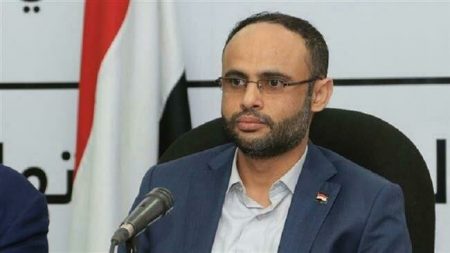
Houthi Ansarullah movement president of the Supreme Political Council, Mahdi al-Mashat
RT | September 21, 2019
Yemen’s Houthi rebels have announced a halt on strikes against Saudi Arabia, adding that they expect reciprocal steps from Riyadh. The ceasefire offer comes days after a major attack on Saudi oil refineries claimed by the Houthis.
The televised announcement was made on Friday by Mahdi al-Mashat, head of the Houthi political council in Sana’a. It comes as the Saudi-led coalition launched a massive operation against “legitimate military targets” north of the port of Hodeidah, in southwestern Yemen.
“I call on all parties from different sides of the war to engage seriously in genuine negotiations that can lead to a comprehensive national reconciliation that does not exclude anyone,” said Mashat. If the Saudis ignore the ceasefire offer and continue bombing, the group reserves its “right to respond,” he warned.
This is not the first instance of Houthis making a ceasefire gesture to try and stop the Saudi bombing campaign – but this time they appear to have some added leverage. The offer comes just a week after a strike on oil processing facilities in Abqaiq and Khurais halved Saudi Arabian production and spiked global oil prices by nearly 20 percent.
The Houthis claimed responsibility for the strike, which demonstrated failure of Saudi Arabia’s US-made air defenses, but Riyadh and Washington chose to blame Iran for the attack instead.
No proof of Tehran’s involvement in the launch of drones and missiles has so far been provided, with Saudi Arabia only identifying the source of the attack as somewhere in the “north.” Iran has denied any involvement in the attack.
Meanwhile, the Houthis also capitalized on the attack’s outcome by promptly threatening another member of the Saud-led coalition, the UAE. Earlier this week, the rebels claimed that they’ve picked dozens of Emirati targets that would be attacked by drones unless Abu Dhabi ceases its participation in the Yemen war.
Conflict has ravaged the Arabian peninsula country since 2015, when a coalition led by Saudi Arabia and the UAE invaded Yemen trying to reinstall the ousted pro-Saudi President Abdrabbuh Mansour Hadi. While they have been unable to defeat the Houthis despite their overwhelming advantage in numbers and weaponry, the war has taken a heavy toll on the people of Yemen. Tens of thousands have been killed in the conflict, while millions have been deprived of the very basic healthcare, food and clean water, with starvation and disease rampant.
Iran, We Got to Do Something?
By Larry C Johnson | Sic Semper Tyrannis | September 19, 2019
Like a Japanese Kabuki dance Washington is in the grasp of War theater. Many pundits and members of Congress are filling the airwaves and offering up quotes demanding action. Demanding retaliation. We have to stand up to Iran. Only one little problem, the intel on the attack on the Saudi oil installations remains sketchy and hidden.
If the missiles were fired from Iranian territory then our intel collection certainly captured the launch or tracked the origin of the drones or missiles used in the attack. So where is it? I have heard from reliable sources that the info is being kept behind a highly classified wall and only those with access to this particular compartmented info can see it.
I only see four possibilities:
- The missiles/drones were launched from Iran.
- The missiles/drones were launched from Yemen.
- The missiles/drones were launched from a maritime platform in the Persian Gulf
- The missiles/drones were landed from a country that borders Saudi Arabia, such as Iraq.
Hmmm. I do not believe that if we had solid proof the attack came from Iranian territory that the United States would keep that info behind a Top Secret wall. I also doubt that we would try to hide the fact that the missiles/drones came from Yemen.
What if the missiles/drones came out of Iraq? That is something we would try to keep quiet. Having to admit that our “ally” (Iraq) was the origin of the attack brings with it a whole host of foreign policy problems.
Meanwhile, with scant evidence before the public the drumbeat of hitting Iran remains strong. If this were not so damn dangerous I would be amused by the irony that Trump, who was portrayed by critics as deranged madman who will launch us into a war, is the one trying to exercise caution and restraint.Colonel Lang’s earlier piece warned the President that war with Iran will ensure he is only a one term President. He knows what he is talking about. Unless we are committed to a full war with Iran and defeating the Islamic Republic on the battlefield (set aside a trillion dollars and send 500,000 troops for that effort) we should not launch any kind of air strike–e.g., fixed wing, drones or cruise missiles. The amount of force we would deliver would not cripple Iran’s capabilities.
This much is certain. Iran has the weaponry to strike decisively against Saudi Arabia and other Gulf allies of the Saudis and could severely damage Saudi Arabia’s ability to pump oil and purify water. Taking out the Saudi water supply would be more deadly and damaging than anything Iran could do to the Saudi oil infrastructure.
Then what? The political pressure in the United States to really hit back at Iran would escalate. Are you ready to pay that price? A military strike on Iran also raises the specter of the war spinning out of control and dragging in other countries. It is highly likely that oil exports from the Persian Gulf would be shutdown. That would likely touch off a global economic collapse.
We need to step back and try to define what it is that we are trying to do. Regime change in Iran? Destroy their nuclear program? Weaken Iran’s influence in the Middle East? I do not see how U.S.or Saudi airstrikes on a limited number of sensitive Iranian targets would advance any U.S. interest or objective. I am open to your suggestions and analysis.
I have said nothing about cyberwarfare. I have heard some pundits suggest we should hit Iran on that front. OK. Answer me this–whose economic system is more vulnerable to a cyber attack? The U.S. or Iran? I believe the U.S. has more to lose in such an encounter. Our economic sanctions on Iran have not made them more dependent on computer networks.
And how will Russia, China, Japan, Western Europe and India react. All but Russia rely on oil coming out of the Persian Gulf. What is the worst case for oil disruption? A responsible planner must take that into account in order to ensure the President understands the potential and long lasting ramifications of any “feel” good military strike.
Ever since the Korean War the United States public has been sold the lie that we can fight foreign wars and not have to make any sacrifices or incur any costs at home. What did our 1991 war to oust Iraq from Kuwait accomplish? We got the Iraqis back across the border and then became bogged down in trying to police Iraq for the next decade. How about the 2003 invasion of Iraq? We got rid of Saddam, ignited the ISIS threat and installed Iraqi Shias, who are beholden to Iran, in positions of power. And now we wonder how Iranian influence was able to spread throughout the region. We did that, not the mullahs.
And Afghanistan? I used to wonder how the Brits and the French fought the Hundred Years War. No longer. We seem hell bent on trying to match that record of futile conflict.
Can we defeat Iran and take out the mullahs? Sure, but at what cost? The cost would be enormous and I do not believe the American public are ready to pay the price.
Iran vs Saudi Arabia: it’s game-over
By Ghassan Kadi | The Saker Blog | September 19, 2019
Is the attack on ARAMCO the first of a long war or is it game-over already? It seems like the latter and in more ways than one, the war between Iran and Saudi Arabia has ended before it even started. One single solitary Houthi attack on Aramco has sent Saudi oil exports tumbling down by half; not to mention a 20% hike on the price of crude.
Now, even though the Houthis have declared responsibility for the ARAMCO attack, the Trump administration wants the world to buy the idea that it was Iran who launched the attack, not the Houthis. Thus far, at least Japan seems unconvinced, and so is France.
In reality however, the resolve of Saudi Arabia and its capability to stand up and fight has little to do with the identity of the attacker, and this is because Saudi Arabia has demonstrated that it didn’t take much for it to suffer what it suffered. This begs the question; how many such similar attacks can Saudi Arabia weather before it totally capitulates? Seemingly, not many.
In a previous article, I anticipated such scenarios because the Saudi economy and infrastructure are highly vulnerable. A country that has virtually one major wealth-producing base (ie oil) and just a few desalination plants that pump fresh water into its major cities, is a very soft target indeed. After all, if those handful of vital targets are hit, not only will oil exports stop, but water will stop running in households. But the water desalination plants do not have to suffer a direct hit for them to stop running. They need power to run, and the power comes from fuel, and if the fuel supplies stop, so will they, and so will electricity-generating plants in a nation that cannot survive without air-conditioning.
Up until recently, people of Arabia were used to drought, brackish water and searing heat. They lived in and around oases and adopted a lifestyle that used little water. But, the new generation of Saudis and millions of expats are used to daily showers, potable water and climate control in their households. During wars, people normally go to nature to find food and water. They hunt, they fish, they collect local berries and edible wild plants, they fill jars from running rivers and streams, they grow their own vegetables in their backyards, but in Saudi Arabia, in the kingdom of sand, such alternatives do not exist at all.
Furthermore, with a population that has swelled from a few million in the 1950’s, the current population of Saudi Arabia stands at 33 million, and this includes the millions of expats who work and live there.
The limited supply of brackish water is not enough to get by until any damaged infrastructure is fixed, and it’s not even piped to begin with.
As the nation with the third highest global defence budget, higher than Russia’s, Saudi Arabia continues to import everything from Patriot Missiles all the way down to bullets.
This is in sharp contrast with Iran’s geography, natural assets and demography. Iran is a nation of mountains, valleys and rivers, meadows, thriving agriculture and 70 million citizens who have been taught to be innovative and self-sufficient; courtesy of US-imposed sanctions.
And to say that the ARAMCO target was hit by surprise would be quite absurd and inexcusable given that Saudi Arabia is already in a state of war with Yemen, and especially given that the Yemeni aerial strikes have been escalating in recent months. To make the situation even more embarrassing for the Saudis; the spectre of war with Iran is currently hot on the agenda, so how could key Saudi installations be unprotected?
But here’s the other thing, had it been truly Iran that was responsible for the attack as the Trump administration alleges and wants us to believe, America would then be admitting that Iranian missiles flew from mainland Iran, across the Gulf, managed to dodge American defences and state-of-the-art detection hardware and software, and effectively reached their target on Saudi soil. If this is the scenario Trump wants us to believe, what does this say about the capability of America to engage militarily with Iran? This is a much bigger farce than that of Russia-gate; a claim that Russia can indeed affect the outcome of the presidential elections of the allegedly “greatest and strongest nation on earth”. Do such claims mean that America’s adversaries are extremely organised, smart and strong or that America is in disarray, stupid and weak; or both? Either way, when such claims are perpetrated by none but America itself, they certainly do not put America in a good light.
The weaknesses and vulnerabilities of Saudi Arabia and Big Brother are only matched by the other ally, the UAE. As a matter of fact Houthis spokesperson Yahia Saria gave the Emirates a stern warning if they want to protect their glass skyscrapers. In his address, Saria is perhaps giving a tongue-in-cheek reference to the Arabic proverb which says that if one’s house is made of glass, he should not cast rocks at others. After years of indiscriminate shelling under the watchful and indifferent eyes of the world, after years of ruthlessly trying to starve the Yemenis into submission, why would one expect the Houthis to exercise any mercy towards their aggressors?
But let us face it, Dubai and other thriving metropolises of the UAE are predestined to morph into ghost towns. It is only a question of time before they run out of their current charm and their fake onion skin deep glitter. After all, there is nothing in those fantasy cities that is real, substantial and self-sustaining. If anything, a war with Iran has the potential to fast-track the decay process and leave foreign investors and expats exiting in droves; if not running for their lives.
Ironically, the American/Saudi/UAE alliance, if it is indeed an alliance, accuses Iran of spreading its dominion over the region; and perhaps there is evidence to support this accusation. However, the alliance seems to conveniently forget that it was its own orchestrated invasion of Iraq and toppling of Saddam that created a power vacuum in Iraq that was soon filled by Iran. And even though the eight-year long and bitter Iran-Iraq war ended up with no winners or losers, the fall of Saddam at the hands of the American/Arab alliance has turned Iran into the virtual winner that the same alliance is now trying to curb. How more ironic can this farcical situation be?
America plays down the strength of Iran’s Army, and Iran does the opposite. This is normal and part-and-parcel of the psychological warfare. In reality however, no one knows for certain what is Iran’s military capability. For this reason, any all-out confrontation with Iran may at least initially sway America to move its vessels out of the Gulf and further away from the reach of short-range Iranian missiles until and if they feel confident to move closer at a later stage. However, Saudi key and vital ground targets cannot be moved, and for Iran to only be able to hit a few that can be counted on the fingers of one hand, can lead to a total Saudi/UAE capitulation.
Whilst no one knows Iran’s real strength, what we do know is that Saudi Arabia has failed abysmally in defeating the much weaker, poorer, underprivileged starving people of Yemen.
America will not commit boots on the ground and, to this effect, has little to lose apart from risking naval vessels. The soft targets will be Saudi and UAE key infrastructures and no Patriot defence systems will be able to intercept all missiles poised to hit them. If the Houthis could do it, it is a given that Iran also can.
I have recently watched the series “The Vietnam War” on Netflix, and I remembered how back then when the truth about that war was exposed, I believed that American hawks would never get away with lying to their people and the rest of the world again, or ever invade another country in the way that they did with Vietnam. In less than two decades however, they moved full throttle into Iraq, and the masses believed their story. Perhaps some things will never change, and after the losses in Korea, Vietnam, Lebanon, Iraq, Afghanistan and Syria, America seems still determined to fight Iran. This time around, the biggest loser may not end up to be America itself, but its Arab allies; namely Saudi Arabia and the UAE, and the recent attack on ARAMCO is only a prelude to an inevitable outcome, because the writing is already on the wall and it clearly reads: GAME-OVER.
Over 80 percent of Americans won’t back war over attack on Saudi oil sites: Poll
Press TV – September 19, 2019
Most Americans are opposed to the idea of a new US military conflict over the recent attack on Saudi Arabia’s oil facilities, a new poll has found, amid reports that Washington is not ruling out a military response to the attack which slashed the close US ally’s oil output by more than half.
The survey by the Business Insider, released late Wednesday, found that only 13 percent of Americans would want to see a joint military response by the US and Saudi Arabia to the Saturday attack.
Asked what role they think the US should take on in case of a military response by Saudi Arabia, 25 percent of the participants in the survey said “the US should remove itself entirely from the affairs of the region and let Saudi Arabia handle the issue itself.”
Around 25 percent said the US should stay out of the conflict at any price and respond by condemning the attack and hit those responsible with sanctions or diplomatic criticism.
The poll found that 16 percent of Americans believe “the US should offer material support in the form of supplies and intelligence to Saudi Arabia for their military response, but no more,” while 22 percent said they “don’t know” what the US should do.
Only seven percent of those questioned said the US should support the Saudis with “a complete military assistance in whatever form may be required.”
And 6 percent said the US “should engage in air assaults or bombings as part of a Saudi military response but refrain from committing ground forces.”
The attack by Yemen’s Houthi Ansarullah movement forced the Saudi state oil company Aramco to halt operations at its al-Khurais and Buqayq facilities, some of the largest refineries in the world, disrupting the production of around 5.7 million barrels per day (5 percent of global demand).
According to data by the Organization of the Petroleum Exporting Countries (OPEC), that is more than half the kingdom’s overall output (9.3 million bpd), and more than the total production of most countries—aside from the US and Russia.
The surprise attack has already caused oil prices to jump, forcing both the US and Saudi Arabia to tap into their reserves to calm the market. The shortage is also expected to cause gas prices to jump across the US.
US President Donald Trump and senior officials from his administration have on several occasions accused Iran of having a role in the attack, but they have yet to directly pin it on Tehran.
Trump on Wednesday ordered sanctions against Iran to be “increased substantially,” in what observers argue is a response to such allegations.
US Secretary of State Mike Pompeo, who has called the attack an “act of war” and alleged that the attacks might have originated from Iran, traveled to Riyadh later in the day to discuss a possible response with Crown Prince Mohammed bin Salman.
Ahead of Pompeo’s arrival, Saudi officials put on display what they said were remains of the drones and the alleged missiles that were used in the attack, claiming they were Iranian-made. Both Iran and the Yemeni resistance forces have denied the allegations of Tehran’s involvement.
In an official note passed to the Swiss Embassy in Tehran, which represents American interests, the Iranian Foreign ministry condemned and rejected the claims and warned that any action taken against the country over the false accusations will be met with an immediate response.
Featured Video

U.S. General Caine Warns: STRIKING IRAN is a HUGE RISK
or go to
Aletho News Archives – Video-Images
From the Archives
Stealth Bombers and Bunker Busters
Analysis of the so-called 12-Day War, and the triumphantly celebrated Operation Midnight Thunder
By William Schryver | imetatronink | November 28, 2025
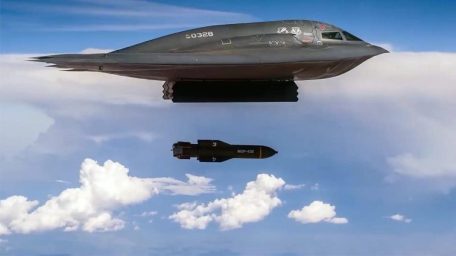
The GBU-57 is a big fat gravity bomb with fins. To achieve effective precision, a B-2 bomber must drop it on its intended target from no further than about five nautical miles — essentially right on top of the target.
Its penetration depth is claimed to be 200 feet. But that capability has NEVER been tested against a seriously hardened deep-underground target encased in layers of high-performance concrete, and topped with a few dozen meters of solid rock. In that sort of real-world scenario, the GBU-57 would be lucky to drill down 50 feet, if that.
It was always ridiculous silly talk to suggest the GBU-57 was the wonder weapon it was made out to be. There is a good reason the US only produced a couple dozen of them and then stopped: they understood its acute limitations in a non-permissive combat environment.
And, notwithstanding the hyperbolic Israeli propaganda, there was never any credible evidence that Iranian medium- and long-range air defenses against fixed-wing aircraft were attrited to any significant degree. And Iranian short-range air defenses were increasingly effective against long-range Israeli drones with each passing day.
As for the B-2: it is a big fat subsonic aircraft. It flies at airliner speeds. A strike on Fordow would entail flying at least 500 miles in and out of Iran. … continue
Blog Roll
 Aletho News
- Drug traffickers trained in Ukraine attack state forces in Mexico
- The tragic reality of Brazilian mercenaries in the Ukrainian conflict
- Zelensky Refused to Discuss Druzhba Pipeline Issue – Fico
- U.S. General Caine Warns: STRIKING IRAN is a HUGE RISK /Glenn Diesen & Lt Col Daniel Davis
- Israel designates five Palestinian media outlets as ‘terrorist organizations’
- Israel, not America, first: Carlson’s Huckabee interview lays bare US foreign policy priorities
- Israeli troops executed Palestinian aid workers at ‘point blank range’: Report
- Iran war What if today’s Iran is resigned to a long, hellish war with the US?
- Why Israel Is Escalating Its War Crimes Against Lebanon
- Iran in the face of the armed diplomacy of imperialism
- If Americans Knew
- The NY Times on the “MAGA” Split Over Israel & USS Liberty
- In Gaza, Ramadan without mosques, imams – Not a ceasefire Day 137
- Footage Shows Israeli Troops Waiting in Ambush, Then Opening Fire on a Palestinian Teen
- The US is on the brink of a major new war that Trump has not even bothered explaining
- Latest Epstein document dump is one more cover-up
- No Protection, No Justice: US Citizens Killed with Impunity by Israel
- Maria Farmer: Epstein Victim Reveals Explosive Information Covered Up by Media
- Average of five Palestinians killed by Israel every day in Gaza since ceasefire – Not a ceasefire Day 136
- Palestinian church leaders admonish Christian Zionist Mike Huckabee – Not a ceasefire Day 135
- Ominous messaging from Trump’s “Board of Peace” – Not a ceasefire Day 134
- No Tricks Zone
- Surprising Discovery: Sahara Is Greening…Billions Of Trees Where Once Thought To Be Barren
- New Research Reaffirms Clouds, Aerosols, And Surface Solar Radiation Are ‘Driving The Climate System’
- Germany: Electric Car Catches Fire At Charging Station, Sets Off Local “Inferno”, Widespread Damage
- New Study: Canada’s New Brunswick Was 1°C Warmer Than Today During The Medieval Warm Period
- Coal Power Back In Trend As Globe Tries To Keep Pace With Growing Demand For Power
- New Study: A 4°C Warmer Beaufort Sea Had ‘No Sea Ice’ 11,700 – 8200 Years Ago
- Unfudging The Data: Dutch Meteorological Institute Reinstates Early 20th Centruy Heat Waves It Had Erased Earlier
- German Gas Crisis…Chancellor Merz Allegedly Bans Gas Debate Ahead of Elections!
- Pollen Reconstructions Show The Last Glacial’s Warming Events Were Global, 10x Greater Than Modern
- Germany’s Natural Gas Storage Level Dwindles To Just 28%… Increasingly Critical
 Aletho News