US setting up military bases in eastern Yemen cashing in on UN-brokered truce: Ansarullah
Press TV – May 20, 2022
The leader of Yemen’s popular Ansarullah resistance movement says the United States, with the help of its allied Takfiri militant groups, is building several military bases in the country’s eastern provinces of Hadhramaut and al-Mahrah as well as on the Red Sea coast.
Addressing a delegation of tribal leaders from the western Yemeni province of Ibb on Thursday evening, Abdul-Malik al-Houthi said Washington is setting up military installations in eastern Yemen and the country’s southern coastal city of Aden.
He asserted that the Yemeni nation cannot accept Washington’s diktats, warning that the enemies are hell-bent on sowing the seeds of discord and division among people by hook or by crook.
“We must work for security and social stability in Ibb province through compromise and cooperation among local authorities,” the top Yemeni resistance leader told the delegation.
He said the “enemies” have begun to mobilize military reinforcements by taking advantage of the UN-brokered ceasefire, which clearly shows their orientation towards the next stage of the war, and bears testimony to their failure in the previous phase.
“Enemies, having become fairly frustrated with attempts to impose their diktats through ousted Yemeni president Abdrabbuh Mansur Hadi, have decided to remove him in a humiliating matter,” Houthi said.
“They brought a bunch of criminals, traitors, and thieves to power, and declared them as the leaders of the Yemeni nation. They are actually the picks of outsiders, not Yemenis.”
The leader of the Ansarullah movement further asserted that the Yemeni nation will never accept being under the ominous specter of the United States.
“It is the traitors and mercenaries who would like to prove their servitude to Saudi or Emirati officers,” he said, calling for an immediate end to foreign domination of the Arab country.
Normalization deals with Israel
In other remarks, Houthi pointed to the controversial normalization agreements between the Israeli regime and some Arab countries, describing the process as an opening for the Tel Aviv regime to flex its clout in the Middle East region.
“The parties displaying animosity and military aggression against our nation are the ones that are pushing for the normalization of ties with the Israeli enemy. The enemies’ main goal is to shatter the Yemeni nation’s unity and solidarity, and easily dominate it,” the Ansarullah leader said.
“Yemeni people will continue to tread the path of independence and freedom, and will prevent foreigners from interfering in their domestic affairs.”
Saudi Arabia launched the devastating war on Yemen in March 2015 in collaboration with its Arab allies and with arms and logistics support from the US and other Western states.
The objective was to reinstall the Riyadh-friendly regime of Abd Rabbuh Mansur Hadi and crush the Ansarullah resistance movement, which has been running state affairs in the absence of a functional government in Yemen.
While the Saudi-led coalition has failed to meet any of its objectives, the war has killed hundreds of thousands of Yemenis and spawned the world’s worst humanitarian crisis.
US’ coercive diplomacy with Saudi Arabia
BY M. K. BHADRAKUMAR | INDIAN PUNCHLINE | MAY 6, 2022
Some three weeks after the reported meeting of the CIA chief William Burns with the Crown Prince of Saudi Arabia Prince Mohammed bin Sultan, the OPEC+ ministerial held a videoconference on Thursday.
The OPEC+ meet drew satisfaction that “continuing oil market fundamentals and the consensus on the outlook pointed to a balanced market.” The press release issued in Vienna says the ministerial “further noted the continuing effects of geopolitical factors and issues related to the ongoing pandemic” and decided that the OPEC+ sticks to the monthly production adjustment mechanism agreed in July last year “to adjust upward the monthly overall production by 0.432 million barrels/day for the month of June 2022.”
As per the former publisher of the Journal Karen Elliott House, Burns came to Saudi Arabia for a “mating dance” with Prince Mohammad — namely, the Prince must cooperate on a new oil-for-security strategy to “increase production to save European nations from energy shortages.”
Burns’ visit to the Kingdom took place just ahead of the 5th round of Saudi-Iranian normalisation talks in Baghdad between the Saudi intelligence chief and the deputy head of Iran’s Supreme National Security Council. The Iraqi Prime Minister Mustafa al-Kadhemi who was acting as mediator and attended the latest round of talks told the state media last week, “Our brothers in Saudi Arabia and Iran approach the dialogue with a big responsibility as demanded by the current regional situation. We are convinced that reconciliation is near.”
Nournews, affiliated to Iran’s Supreme National Security Council, also reported on April 24 that the fifth round of talks on a possible détente was “constructive” and the negotiators managed “to draw a clearer picture” of how to resume bilateral relations, and, “given the constructive bilateral dialogue so far, there is a possibility of a meeting between the Iranian and Saudi top diplomats in the near future.”
Burns’ mission couldn’t have been indifferent toward the Saudis’ reconciliation track with Tehran. With the outcome of the JCPOA talks in Vienna uncertain, Iran’s close ties with Russia and China remains a major worry for Washington. And with Tehran’s stubborn refusal to trim its regional policies to suit US regional strategies, Washington has fallen back on the default option to resuscitate the anti-Iran front of its regional allies. The US hopes that Saudi Arabia will come on board the Abraham Accords.
Meanwhile, the issue of oil prices has returned to the centre stage. Indeed, high oil prices mean high income for Russia. Russia’s sales of oil and natural gas far exceeded initial forecasts for 2021 as a result of skyrocketing prices, accounting for 36% of the country’s total budget. The revenues exceeded initial plans by 51.3%, totalling $119 billion. The Biden administration’s best-laid plans to cripple the Russian economy are unravelling. Equally, high oil price is also a domestic issue for Biden. Above all, unless Europe finds other oil sources, it will continue buying Russian oil.
However, Prince Mohammad has a different agenda. He is likely to rule Saudi Arabia for many decades—half a century if he lives to 86, his father’s age. And the Prince has been remarkably successful in creating a “power base”. His lifestyle changes have been a smashing hit with Saudis 35 and under—70% of the Kingdom’s citizens — and his ambition to transform Saudi Arabia into a modern technological leader ignites the imagination of the youth.
Clearly, his refusal to punish Russia and his gesture to place the princely amount of $2bn in a new, untested investment fund started by Trump’s son-in-law Jared Kushner speak for themselves. Prince Mohammed would have his own reasons too, starting with Biden’s contemptuous reference to Saudi Arabia as a “Pariah” state and refusal to deal in person.
The Prince hit back recently by declining to take a call from Joe Biden. Besides, the US’ restrictions on arms sales; insufficient response to attacks on Saudi Arabia by Houthi forces; publication of a report into the 2018 murder of Jamal Khashoggi — all these are in play here.
Even if the administration is able to get Congressional approval for new security guarantees for Saudi Arabia (which is rather problematic), Prince Mohammad may not be swayed, since at the end of the day, high oil prices boost Saudi budget too.
The paradox is, both Saudi Arabia and Russia are stakeholders in OPEC+ as is evident from the explicit warning to the EU by OPEC Secretary General Mohammad Barkindo last month that it would be impossible to replace more than 7 million barrels per day of Russian oil and other liquids exports potentially lost due to current or future sanctions or voluntary actions.
In such a torrential stream where crosscurrents are foaming and weltering, what probably unnerves the Biden Administration most could be the talk that Chinese President Xi Jinping may be planning to visit Saudi Arabia, amidst persistent reports recently that Riyadh and Beijing are in talks to price some of the Gulf nation’s oil sales in yuan rather than dollars, which would indeed mark a profound shift for the oil market and help advance China’s efforts to convince more countries and international investors to transact in its currency.
The Saudi explanation for the shift to the yuan is that the kingdom could use part of new currency revenues to pay Chinese contractors involved in mega projects within the kingdom domestically, which would reduce the risks associated with the capital controls Beijing imposes on its currency. But, for Washington, that means certain sensitive Saudi-China transactions in yuan do not appear in the rearview mirror of the SWIFT messaging infrastructure, making transaction monitoring unviable.
There are persistent US reports that with Chinese support, Saudi Arabia may be constructing a new uranium processing facility near Al Ula to enhance its pursuit of nuclear technology. Saudi Arabia’s generous $8 billion in financial support for Pakistan, unveiled this week, will almost certainly raise hiccups in Washington.
Saudi Arabia is a central pillar of China’s Belt and Road infrastructure initiative and ranks in the top three countries globally for Chinese construction projects, according to the China Global Investment Tracker, run by the American Enterprise Institute. Suffice to say, the CIA chief’s call could not have been for a friendly chat with Prince Mohammad.
US Claims Russia to Blame for Yemen Food Shortages, Praises Saudi Role
By Kyle Anzalone and Will Porter | The Libertarian Institute | April 14, 2022
A senior US official has accused Russia of driving food shortages in Yemen and around the world, suggesting Moscow is to blame for rapidly rising prices. The Kremlin rejected the charge, instead citing American sanctions as a leading cause of starvation.
In an address at the United Nations headquarters in New York on Thursday, US Ambassador to the UN Linda Thomas-Greenfield attempted to tie Russia’s attack on Ukraine to Yemen’s dire hunger crisis.
“The World Food Program’s March report identified Yemen as one of the countries most affected by wheat price increases and lack of imports from Ukraine. This is just another grim example of the ripple effect Russia’s unprovoked, unjust, unconscionable war is having on the world’s most vulnerable,” she said.
The diplomat went on to praise Saudi Arabia and the United Arab Emirates for their humanitarian assistance to Yemen, failing to mention Riyahd’s ongoing bombing campaign that has deliberately targeted food production sites and vital civilian infrastructure for more than seven years.
Though international monitors have pulled out of the country, as of late 2021, nearly 400,000 Yemenis were estimated killed throughout the war from direct and indirect causes, while January “shattered” monthly civilian casualty records, according to the UN.
Russia responded to the charges from Linda Thomas-Greenfield during the UN session, claiming it was American sanctions harming the supply chain and causing global food shortages.
“The main factor for instability and the source of the problem today is not the Russian special military operation in Ukraine, but sanctions measures imposed on our country seeking to cut off any supplies from Russia and the supply chain, apart from those supplies that those countries in the West need, in other words energy,” said Deputy UN Ambassador Dmitry Polyansky.
He added: “If you really want to help the world avoid a food crisis you should lift the sanctions that you yourselves imposed, your sanctions of choice indeed, and poor countries will immediately feel the difference.”
Yemen is widely regarded by aid groups as the world’s worst humanitarian crisis, with 16 million Yemenis estimated to be food insecure in 2022. In addition to consistent military support from Washington, the United States has also helped to enforce Saudi Arabia’s blockade on the country’s ports and helped Riyadh avoid responsibility for alleged war crimes before international bodies like the UN.
Earlier this month, Yemen’s Houthis and the Saudi-led coalition agreed to a two-month ceasefire following major escalations in the war. UN mediators have voiced hopes the truce will be extended further, though after similar efforts in the past it remains to be seen whether the lull in fighting will endure.
UK plans to designate Yemen’s Houthis as terrorists risk disaster warns aid agencies
MEMO | April 3, 2022
The British government’s plans to designate Yemen’s Houthi movement as a terrorist group risk worsening the humanitarian crisis in the country, leading aid agencies have warned in a letter to cabinet ministers.
According to a report yesterday by The Guardian, 11 British aid agencies, including Save the Children, Care, the International Rescue Committee and Islamic Relief sent the letter upon being informed that Home Secretary Priti Patel was pushing for the designation under the Terrorism Act as part of a review of British policy in Yemen.
There are fears that the move, described as a “blunt tool” could hamper aid efforts in the country, already on the brink of famine, as international banks and companies that import food, medicines and fuel could be impacted by terrorism laws, especially as the Houthi-led, de-facto government based in Sanaa control the most densely populated areas in the north.
“The likely ‘chilling effect’ on banks and other commercial actors could prove catastrophic for the millions of Yemenis already at risk from hunger, conflict and disease,” the letter stated.
“Grain importers and banks told humanitarian agencies they are unsure if they will be able to continue supplying Yemen if the UK proceeds with proscription of Ansar Allah,” the aid agencies explained, referring to the formal name of the Houthi group.
“[If] banks were to refuse transfers because of UK proscription, this would likely have a serious impact on remittances, which are a lifeline for 500,000 Yemeni families. Up to one in 10 Yemenis rely on remittances to meet their essential needs. They are the biggest source of foreign exchange into the country, making up 20% of the country’s GDP. More than 100,000 Yemenis living in the UK would no longer be able to support their loved ones.”
However, the plans have received the support of some of the Gulf states, especially Saudi Arabia and the UAE who have been hit by cross-border attacks by the Houthis. Both are joint-leaders of the Arab coalition which militarily intervened in the country in 2015 at the request of the internationally-recognised Yemeni government following the fall of Sanaa to the Houthi forces and their military allies the year before.
Last year the Houthis were listed as a Foreign Terrorist Organisation towards the end of former US President Donald Trump’s administration, which was condemned by human rights groups at the time who warned it could further exacerbate the humanitarian crisis. However, President Joe Biden formally delisted the movement amid announcements that the US would end its support for the Saudi-led war. Earlier this year, Biden said he would consider relisting the Houthis as a terrorist group and it has become a source of tensions between Washington and its Gulf allies, Saudi and the UAE.
OPEC+ sticks to modest oil output rises, ditches IEA data
Press TV – March 31, 2022
OPEC and allies including Russia agreed on Thursday to another modest monthly oil output boost, resisting pressure to pump more, and ditched the Paris-based International Energy Agency as a data source in a sign of a hardening standoff with the West.
The group has resisted repeated calls by the United States and the IEA to pump more crude to cool prices that climbed close to an all-time high after Washington and Brussels imposed sanctions on Moscow following its invasion of Ukraine.
“Saudi Arabia will be keen to avoid falling out with Russia by adding extra barrels at a time when Russian production is struggling,” said Callum Macpherson at Investec.
Saudi Arabia and the United Arab Emirates, which hold the bulk of spare production capacity within OPEC, have resisted calls for higher output, saying the group should stay out of politics and focus on balancing oil markets.
OPEC+, which consists of the Organization of Petroleum Exporting Countries (OPEC) and other producers including Russia, will raise output by about 432,000 barrels per day in May.
Global oil supply disruptions are approaching 5 million to 6 million bpd, or 5% to 6% of world demand, according to Reuters’ calculations, as sanctions, conflicts and infrastructure failures hit supply.
OPEC+ has been unwinding record output cuts in place since 2020, as demand has been recovering from the coronavirus pandemic, but not boosting production as fast as the West and other consumers want.
US President Joe Biden’s administration is weighing the release of up to 180 million barrels of oil from the Strategic Petroleum Reserve (SPR) and the IEA, a group which includes 31 mostly industrialized nations but not Russia, is set to meet on Friday to decide on a collective oil release.
Brent crude futures were down 6% towards $107 per barrel on Thursday.
OPEC+ has warned the global economy would see a major blow from a prolonged conflict in Ukraine.
“Consumer and business sentiment is expected to decline not only in Europe, but also in the rest of the world, when only accounting for the inflationary impact the conflict has already caused,” OPEC+ said in an internal report, seen by Reuters.
Ditching the IEA
Just as the IEA was working on a new stocks release, OPEC+ decided to stop using IEA’s data, replacing it with reports from consultancies Wood Mackenzie and Rystad Energy.
OPEC+ uses the data to assess crude oil production and the conformity of participating countries with agreed output curbs.
The IEA advises Western governments on energy policy and has the United States as its top financier.
The IEA said in an emailed statement its data and analysis was “rigorous and objective” and its monthly update on OPEC+ oil production would be made available to the public to support transparency.
In February, the IEA surprised the market by revising its baseline estimate of global demand by nearly 800,000 barrels per day, just under 1% of the 100 million bpd global oil market.
Some OPEC+ members have criticized IEA data, saying it has been inaccurate on several occasions. They have also said the IEA has advised against further investment in the hydrocarbons sector. The IEA has predicted reduced future oil demand as the world seeks to shift to lower carbon fuel.
UAE energy minister Suhail al-Mazrouei told an industry conference this week that institutions such as the IEA needed to be “more realistic” and not issue misleading information.
Mazrouei said top producers were treated like outcasts at the COP26 climate conference last year but were now sought out like “superheroes” as supply has waned.
Ahead of the climate conference, the IEA issued a groundbreaking recommendation for no new fossil fuel projects beyond 2021, while Rystad Energy projected the need for hundreds of new oilfields to meet demand.
Saudi-led coalition claims ‘will halt Yemen attacks on Wednesday’
Press TV – March 29, 2022
The Saudi Arabia-led military coalition that has been attacking Yemen for the past eight years, claims it will halt the offensive on Wednesday.
Turki al-Maliki, a spokesman for the coalition, made the announcement on Tuesday.
He alleged that the coalition would “take all steps and measures to make the ceasefire successful … and create a positive environment during the holy month of Ramadan to make peace and end the crisis.”
The military campaign, which has enjoyed unstinting arms, logistical, and political support on the part of the United States, has been seeking to reinstate Yemen’s former Riyadh- and Washington-friendly officials.
The offensive has stopped short of its goals while killing hundreds of thousands of Yemenis in the process and turning the entire Yemen into the scene of the world’s worst humanitarian crisis.
The coalition’s announcement came after Yemen’s Supreme Political Council announced a voluntary and unilateral three-day pause in retaliatory strikes against targets in Saudi Arabia.
Making the announcement, Mahdi al-Mashat, head of the council, said that in line with the decision, Yemeni forces would stop all missile and drone strikes against Saudi Arabia for the stated period.
Sana’a would be prepared to “make the ceasefire permanent” if Saudi Arabia stopped its attacks against Yemen, lifted a simultaneous blockade that it has been exercising against the country, took all foreign forces out of Yemeni soil and waters, and stopped supporting local militants, Mashat noted.
Back in 2019, the two sides entered an agreement in Stockholm, Sweden to observe a ceasefire over the coastal province of al-Hudaydah, which receives the bulk of Yemen’s imports.
The coalition, however, never stopped bombarding the province, and keeps confiscating the vessels that arrive there carrying direly-needed fuel supplies.
The ‘Ukrainian Resistance’ and the Houthis – A contrast in media coverage
By Gavin O’Reilly | Ron Paul Institute | March 28, 2022
In the now month-long mainstream media coverage of the Russian military intervention in Ukraine, much attention has been paid to the actions of the ‘Ukrainian Resistance’.
In a manner not dissimilar to its coverage of the ‘Syrian rebels’ a decade ago, a romanticised image of ‘Ukrainian freedom fighters’ fighting bravely against a militarily superior Russian foe has been widespread amongst corporate outlets, alongside their fawning over Ukrainian President Volodymyr Zelenskyy in his calls for the implementation of a No Fly Zone – a move that would undoubtedly trigger nuclear war.
This Hollywood-style PR makeover of the Ukrainian military by the corporate media, including the notorious neo-Nazi Azov Battalion, also shares a strong similarity with the aforementioned ‘Syrian rebels’ in that it highlights the strong presence of CIA involvement in the background.
Indeed, the training of Ukrainian military personnel by the CIA to engage in guerrilla warfare against Russia was recently outlined in a Western corporate media report, indicating that a plan was in place to draw Moscow into an Iraq-war style military quagmire in Ukraine – the second largest country in Europe.
Such a tactic has historical usage against the Kremlin, when in 1979, then-US President Jimmy Carter would launch Operation Cyclone, a CIA programme which would see the arming, funding and training of Wahhabi insurgents known as the Mujahideen, who would go onto wage war on the USSR-aligned government of the Democratic Republic of Afghanistan – with Kabul, previously Western-friendly, having come under Soviet influence following the 1978 Saur Revolution.
This romanticised image of ‘Ukrainian freedom fighters’ by the corporate media however, lies in stark contrast to their coverage of Ansar Allah, more commonly known as the Houthis, currently waging an armed resistance campaign against Western-allied Saudi Arabia’s seven year long war and blockade on neighbouring Yemen – leading to mass-starvation in what is already the most impoverished country on the Arabian Peninsula.
Indeed, this was evidenced as such on Friday, when the Yemeni armed forces launched air strikes against a key oil refinery in the Saudi city of Jeddah, to a noticeable absence of articles by the Western media celebrating the actions of the Yemeni resistance against the Western-backed might of Riyadh, unlike their coverage of Ukraine and Russia.
To understand this contrasting approach to both Yemen and Ukraine by the corporate media, one must look further into the wider geopolitical and historical context in the West’s relationship with both countries.
In 1979, the same year as the Soviet intervention in Afghanistan, the Islamic Revolution in Iran saw the anti-Western and anti-Zionist Ayatollah Khomeini come to power in Iran following the overthrow of the US and UK-aligned Shah Pahlavi – who had himself come to power following 1953’s Operation Ajax, an MI6 and CIA-orchestrated regime change operation launched in response to then-Prime Minister Mohammad Mossadegh’s decision to nationalise Iran’s vast oil reserves.
In order to counter the influence of Khomeini’s newly-established anti-Imperialist state and to maintain hegemony in the Middle East, the United States adopted the strategy of using Saudi Arabia – separated from the Islamic Republic by the Persian Gulf – as a political and military bulwark against Iran.
This is where the media coverage of the Yemen conflict comes into play, with Tehran long being accused of backing the Houthis, whose seizure of the capital Sana’a in March 2015 led to Riyadh launching its current air campaign – involving US and British-supplied bombs – in a bid to restore its favoured Presidential candidate, Abdrabbuh Mansur Hadi, to power.
Therefore, with the aims of Ansar Allah consequently being opposed to the aims of the US-NATO hegemony, this explains why no heroic descriptions such as ‘Yemeni resistance’ or ‘freedom fighters’ are ascribed to the Houthis by the Western media, in stark contrast to their coverage of the Armed Forces of Ukraine – supported by the West since the 2014 Euromaidan colour revolution and their subsequent war on the breakaway Republics of Donetsk and Luhansk, a situation that has escalated to the point where nuclear war has now become a distinct possibility.
Copyright © 2022 by RonPaul Institute
Iran draws up gas field development plan after Saudi-Kuwaiti move

Some 23 Iranian hydrocarbon fields lie in border areas and are shared between Iran and adjacent countries
Press TV – March 28, 2022
An official says Iran has worked out a plan to develop its part of the Arash natural gas field shared with Saudi Arabia and Kuwait after the two Arab states announced having signed a document to build the reservoir without Tehran’s participation.
Last week, Kuwait said it planned to extract 1 billion standard cubic feet per day of gas and 84,000 barrels per day of condensate from the field under an agreement signed with Saudi Arabia. Iran dismissed the agreement as “illegal”, saying it breached their discussions to build the field together.
Ahmad Asadzadeh, deputy petroleum minister for international and commercial affairs, said Sunday Iran believes shared fields should be carried out jointly, adding this would lead to the strengthening of economic ties among the countries.
“Even if the border is not demarcated, the field can be developed jointly using internationally tested models,” he said. “The Ministry of Petroleum declares its readiness to negotiate in this regard,” Asadzadeh added.
Iran began talks with Kuwait in 2000 to develop the field but no agreements were reached. In 2013, the National Iranian Oil Company said it had jackets and rigs ready to develop the field and that if talks did not lead to a development plan, it would have the right to go ahead alone.
Iran, Asadzadeh said, has delayed developing the shared field in anticipation of a decision on the demarcation of the border with Kuwait.
“But given that the other side, regardless of the previous talks, is unilaterally moving to develop the field, there is no reason for delay,” Asadzadeh said.
“The Ministry of Petroleum has made necessary preparations and carried out studies to develop and exploit the shared field of Arash,” he added.
Arash was discovered in 1962 in the Persian Gulf with around 13 trillion cubic feet of natural gas.
On Saturday, the Ministry of Petroleum said parts of the Arash gas field which Kuwait and Saudi Arabia call al-Durra are located in areas between Iran and Kuwait whose water borders have not yet been defined.
“The Islamic Republic of Iran also reserves the right to exploit the gas field,” it said in a tweet in reaction to the Kuwait Petroleum Corporation’s statement on its bilateral agreement with Saudi Arabia.
Iran’s Foreign Ministry spokesman Saeed Khatibzadeh said: “The recent move by Kuwait and Saudi Arabia in the framework of a cooperation document is contrary to what was previously discussed, and illegal.”
“Any action on the operation and development of this field should be in the coordination of all three countries,” he added.
Some 23 Iranian hydrocarbon fields lie in border areas and are shared between Iran and adjacent countries, including Kuwait, Iraq, Qatar, Bahrain, the UAE, Saudi Arabia and Turkmenistan.
Most of Iran’s oil and gas fields lie in a belt running along its maritime boundary in the Persian Gulf and the foothills of the Zagros Mountains – an extensive folded zone which is geologically the result of the Arabian plate’s collision with the central Iranian plateau.
The collision has trapped thick layers of ancient limestone and sandstone and turned them into some of the world’s biggest oil and gas accumulations.
The Zagros basin covers more than 550,000 square kilometers, stretching from Turkey and Syria through the Iraqi Kurdistan into Iran where its sediments are ideally up to 12,000 meters thick.
Yemen’s Ansarullah turns down GCC invitation for talks with Saudi Arabia in Riyadh
Press TV – March 19, 2022
Yemen’s popular Ansarullah resistance movement has declined to attend talks to be held by the Persian Gulf Cooperation Council (GCC) at the regional union’s headquarters in Riyadh, stressing that it will welcome talks to discuss a peaceful settlement to the ongoing conflict if the venue is a “neutral country”, and that the priority is lifting “arbitrary” restrictions on Yemeni ports and Sana’a airport.
Mohammed Ali al-Houthi, a top-ranking Ansarullah official and a member of Yemen’s Supreme Political Council, wrote in a post published on his Twitter page that a solution to the Yemeni crisis would be within reach in case members of the Saudi-led military coalition and their Takfiri militants demonstrated a genuine will for peace.
“Riyadh is a party in the war not a mediator,” Houthi highlighted.
The senior Ansarullah official said Saudi Arabia and its regional allies, which are involved in a devastating military campaign against Yemen, must feel ashamed for their actions and must put an end to the current fuel crisis in Yemen that has been triggered by a combination of tighter restrictions on fuel shipments into the country’s Red Sea ports and long holding delays.
Houthi said Yemen’s fuel crisis as a result of the continued detention of Yemen-bound tankers is badly hurting the Yemeni nation.
Abdulmalik al-Ajri, another senior Ansarullah official, also stated that his group is seriously interested in the establishment of comprehensive and just peace.
He sharply rebuked the Saudi-led coalition for its cruel and inhumane treatment of Yemenis, stating that the people have been unfairly treated by the alliance because of their race or ethnicity.
“Peace is sacred to us. We will welcome a fair and just peace once we come across it, no matter the initiative is developed in the East or in the West,” he tweeted.
Moreover, Yemeni Information Minister Zaifullah al-Shami said “the Saudi-led coalition has intensified its aggressive attacks against Yemen.”
He said the parties involved in the bloody Saudi-led onslaught against Yemen are attempting to escape the repercussions of the war, which entered its eighth year last Tuesday.
Shami said those involved in the bloodshed against the Yemenis are financing their Takfiri mercenaries.
‘Saudi-led coalition is not serious about peace’
Additionally, Yemen’s Deputy Foreign Minister Hussein al-Ezzi said the Saudi-led coalition continues to dither when it comes to stopping the war and establishment of peace.
“No one is deceived. This is not good… Peace and war are two different paths; each of which requires special behavior and clear indications,” Ezzi tweeted, commenting on the GCC’s intention to invite the Ansarullah movement and other Yemeni parties for consultations in Riyadh this month.
“Unfortunately, the opposite side is still indecisive about peace and left us with no option but to either surrender or fight back. Certainly, we do not want either of them,” he said.
“Only peace is all we want (for them and ourselves). This is what differentiates us,” Ezzi said.
Saudi Arabia launched the devastating war against Yemen in March 2015 in collaboration with a number of its allies and with arms and logistics support from the US and several Western states.
The objective was to bring back to power the former Riyadh-backed regime and crush the popular Ansarullah resistance movement, which has been running state affairs in the absence of an effective government in Yemen.
The war has stopped well short of all of its goals, despite killing hundreds of thousands of Yemenis and turning the entire country into the scene of the world’s worst humanitarian crisis.
UK’s Johnson fails to secure public oil rise pledges after talks with Saudi, UAE
MEMO | March 16, 2022
British Prime Minister, Boris Johnson, held talks about energy security on Wednesday with the de facto leaders of Gulf oil exporters, Saudi Arabia and the United Arab Emirates, but secured no public pledge to ramp up production, Reuters reports.
Johnson’s trip to Abu Dhabi and Riyadh was aimed at securing oil supplies and raising pressure on President Vladimir Putin over Russia’s invasion of Ukraine, which led to sweeping Western sanctions on Moscow and soaring world energy prices.
Johnson’s office said that, in his meeting with Abu Dhabi Crown Prince, Sheikh Mohammed bin Zayed Al-Nahyan, he stressed the need to work together to stabilise global energy markets.
After his talks in Riyadh with Saudi Arabia’s Crown Prince,Mohammed bin Salman, Johnson was asked whether the Kingdom would increase oil production.
“I think you’d need to talk to the Saudis about that. But I think there was an understanding of the need to ensure stability in global oil markets and gas markets,” he said.
So far, Saudi Arabia and the UAE, whose close ties with Washington are under strain, have snubbed US pleas to ramp up oil production to tame the rise in crude prices that threatens global recession after the Russian offensive in Ukraine.
“The world must wean itself off Russian hydrocarbons and starve Putin’s addiction to oil and gas,” Johnson said before his meetings. “Saudi Arabia and the United Arab Emirates are key international partners in that effort.”
The two Gulf States are among the few OPEC oil exporters with spare oil capacity to raise output and potentially offset supply losses from Russia. But they have tried to steer a neutral stance between Western allies and Moscow, their partner in an oil producers’ grouping known as OPEC+.
The group has been raising output gradually each month by 400,000 barrels a day, resisting pressure to act more quickly.
The UAE remains committed to the OPEC+ deal, a source with knowledge of the matter told Reuters before the meeting.
It has deepened ties with Moscow and Beijing in the last few years and abstained, last month, in a US-drafted United Nations Security Council resolution to condemn the invasion of Ukraine, which Russia has described as a “special military operation”.
Johnson “set out his deep concerns about the chaos unleashed by Russia’s unprovoked invasion, and stressed the importance of working together to improve stability in the global energy market”, his office said after his talks in Abu Dhabi.
Johnson and the Crown Prince also agreed on the need to bolster security, defence and intelligence cooperation to counter threats,including from Houthi forces who have fought a lengthy conflict in Yemen against Saudi and UAE forces.
Saudi executions
Johnson is only the second major Western leader to visit Saudi Arabia since journalist, Jamal Khashoggi’s 2018 killing by Saudi government agents in Istanbul.
The CIA concluded that the Prince approved an operation to “capture or kill” Khashoggi. He has denied any involvement in the killing.
The Prime Minister’s trip also came just four days after Saudi Arabia executed 81 men, the largest number in a single day for decades, for offences ranging from joining militant groups to holding “deviant beliefs”.
Asked about criticism of Saudi Arabia’s human rights record, Johnson said: “I’ve raised all those issues many, many times over the past … and I’ll raise them all again today.
“But we have long, long standing relationships with this part of the world, and we need to recognise the very important relationship that we have … and not just in hydrocarbons.”
Saudi press agency, SPA, said Johnson and Prince Mohammed discussed the conflict in Ukraine and international issues, adding that Saudi Arabia and the United Kingdom signed a memorandum of understanding to establish a strategic partnership.
Israel offers Arab state the opportunity to tackle Iran together
RT | February 15, 2022
Since Israel and Bahrain both view Iran as a threat, they could team up and counter Tehran together, Israeli prime minister Naftali Bennett said on his landmark visit to the Gulf monarchy.
“We will fight Iran and its followers in the region night and day. We will aid our friends in strengthening peace, security, and stability, whenever we are asked to do so,” Bennett pledged in an interview with the Bahraini state-linked Al-Ayyam outlet on Tuesday.
The PM blamed Tehran of striving to “destroy moderate states” in the Gulf region in order to replace them with “bloodthirsty terrorist groups.”
When asked about the possibility of creating an alliance to resist Iranian influence, which could include Israel, Bahrain, and some other Arab nations, he gave a positive response: “We all understand that we face the same challenges, so why not work together to tackle them?”
Bennet, who became the first Israeli prime minister ever to visit Bahrain, assured the journalists that “Israel is a strong and reliable country.”
The idea of such a block was first floated by Israeli general Tal Kelman last year. According to Kelman, who heads the IDF’s Strategy and Third Circle Directorate, “the moderate axis” of Israel, Bahrain, the UAE, Jordan, Egypt and others should resist “the radical axis” of Iran and what he called its “proxies” in Lebanon, Syria, Yemen, and Iraq.
Israel and Bahrain normalized relations in late 2020 as part of the so-called Abraham Accords, a US-backed drive to improve ties between the Jewish state and some Arab countries after decades of strife.
Bahrain is a small island nation of around 1.5 million. The majority of its population is Shia Muslims, but the country is being run by a Sunni monarchy. The rulers in Manama have been concerned by Tehran’s activities as Iran, which is located less than 800 kilometers (497 miles) away, often faces accusations from its rivals of supporting Shia groups in other countries.
Yemen to keep up counterstrikes until the end of invasion: Ansarullah official
Press TV – January 23, 2022
A senior Yemeni official vows that the country will keep up its counteroffensives until its complete liberation from the scourge of a United States-backed and Saudi-led invasion and siege.
Mohammed al-Bukhaiti, a member of the Yemeni popular resistance Houthi Ansarullah movement’s Political Bureau, made the remarks on Sunday in an exclusive interview with Iran’s al-Alam Arabic-language television network.
Saudi Arabia and several of its allies have been attacking Yemen, the Arab world’s poorest nation, since March 2015 in an unsuccessful bid to change its ruling structure in favor of its former Riyadh-aligned regime.
The war, and an ensuing siege that the aggressors have been employing, has killed hundreds of thousands of Yemenis and turned the entire Yemen into the scene of the world’s worst humanitarian crisis.
The Yemeni forces that feature the Yemeni army and its allied fighters from the Popular Committees have, however, vowed not to lay down their arms until the expulsion of all foreign forces.
“Yemen’s operations against the countries of the [invading] coalition will continue at the domestic and overseas levels until the coalition stops its attacks and ends the blockade,” al-Bukhaiti said.
Invaders’ systematic denial
The invading countries are trying to deflect the international public opinion from their atrocities through a number of methods, he noted.
“They first deny any responsibility for their crimes, but later admit their involvement only to say they are going to investigate the atrocities,” said the official.
Al-Bukhaiti, meanwhile, rebuffed the invaders’ claims that they are attacking the impoverished country to retaliate for the Yemeni forces’ operations.
He said the aggressors took Yemen under heavy bombardment throughout the first three years of the war, during which the country did not have the deterrent power that it is using now to return the Saudi-led offensives.
“The invaders used to commit such crimes from the very first day of the invasion for three [consecutive] years,” long before Yemen became able to retaliate the aggression with ballistic missiles and drones, the Ansarullah official said.
He also hailed that the counterattacks had managed to force the invaders to reduce the number of their military assaults.
‘US, Zionists support aggressors’
“Those who support the invading countries, including Saudi Arabia and the UAE [in their crimes against the Yemeni people], are the United States and the Israeli regime, which are bereft of all human values,” al-Bukhaiti said.
The atrocities are being perpetrated to force Yemen to surrender and devolve into a vassal state, he added.
“But we tell them that these atrocities will have the opposite result” because they would prompt more Yemeni soldiers to join the battlefront against the aggressors, the official concluded.
Featured Video
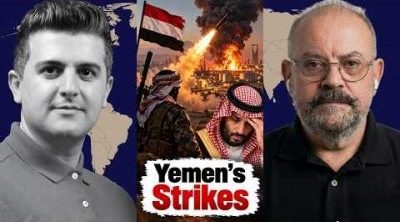
Elijah Magnier: Yemen’s strikes are shattering Saudi Arabia’s long-term strategy
or go to
Aletho News Archives – Video-Images
From the Archives
British weapons and personnel doing much of the killing in Yemen
Press TV – June 18, 2019
A detailed report published by the Guardian newspaper has shown how Britain is massively contributing to Saudi Arabia’s devastating war on Yemen as it suggests that London is not only supplying the bombs that fall on Yemenis, but it provides the personnel and expertise that keep the war going.
The comprehensive report by Arron Merat published on Tuesday showed that Britain was doing much of the killing in Yemen as the country continues to provide Saudi Arabia with everything it needs to turn its southern impoverished neighbor into a graveyard.
“Every day Yemen is hit by British bombs – dropped by British planes that are flown by British-trained pilots and maintained and prepared inside Saudi Arabia by thousands of British contractors,” said Merat in the report. … continue
Blog Roll
 Aletho News
- A West Bank War for Netanyahu’s Election Campaign, Could It Backfire?
- Yemen denounces European Parliament’s ‘hypocritical’ push to blacklist Ansarullah
- Qalibaf: UAE’s UN bid aims to ‘clear the runway’ for ‘Greater Israel’, whitewash genocide
- Pakistan reopens Iran border after boosting security: Report
- Why are so many Brazilians voting for Flávio Bolsonaro?
- Democrats Put Anti-Russia Agenda Ahead of American Workers
- Elijah Magnier: Yemen’s Strikes Are Shattering Saudi Arabia’s Long-Term Strategy
- Pentagon designates Chinese cultural centers national security threat
- Israel Demolishes Home Of Lebanese Journalist Whose Viral Film Exposed Pager Attack
- Record Oil, Empty Tanks: The UAE’s Miracle Recovery
- If Americans Knew
- An error has occurred; the feed is probably down. Try again later.
- No Tricks Zone
- Sudden Stratospheric Warming, Powerful El Niño Combination May Lead To Extreme Europe Cold, Energy Crisis!
- Two New Studies Find Thwaites Glacier Melt Cannot Be Driven By Human Activity Or A Warming Ocean
- E-Cars Reduce CO2 Emissions By Only 41% Compared To Internal Combustion Engine Vehicles
- Predictions Made By Renowned Climate Professor Over Past Decades Have Been Proven To Be Poor
- New Study Suggests Large Regions Of The Pacific Ocean Have Been Cooling For The Last 80 Years
- Germany’s Green Energy Debacle: High Energy Costs Force Kahla Porzellan to Close After 182 Years!
- New Study: 50 Years Of The Most Aggressive ‘Net Zero’ Policies Can Only Affect The Global Climate By 0.03°C
- US September “Heat” Was No Record…Many Records Set Decades Ago
- Latest European Green Energy Debacle; Portugal’s Largest Flagship Solar Park Insolvent!
- Green Energy Debacle: German Expert Professor Fritz Vahrenholt Warns Of Severe Economic And Social Consequences

