Decoding the Pentagon’s online war against Iran

Photo Credit: The Cradle
By Kit Klarenberg | The Cradle | October 1, 2022
The civil unrest in Iran in response to the recent death of 22-year-old Mahsa Amini while she was waiting at a Tehran police station, although rooted in legitimate grievances, also bears the hallmark of a western-sponsored covert war, covering multiple fronts.
Mere days after the protests erupted on 16 September, the Washington Post revealed that the Pentagon had initiated a wide-ranging audit of all its online psyops efforts, after a number of bot and troll accounts operated by its Central Command (CENTCOM) division – which covers all US military actions in West Asia, North Africa and South and Central Asia – were exposed, and subsequently banned by major social networks and online spaces.
The accounts were busted in a joint investigation carried out by social media research firm Graphika, and the Stanford Internet Observatory, which evaluated “five years of pro-Western covert influence operations.”
Published in late August, it attracted minimal English-language press coverage at the time, but evidently was noticed, raising concerns at the highest levels of the US government, prompting the audit.
While the Washington Post ludicrously suggested the government’s umbrage stemmed from CENTCOM’s egregious, manipulative activities which could compromise US “values” and its “moral high ground,” it is abundantly clear that the real problem was CENTCOM being exposed.
#OpIran
CENTCOM’s geographical purview includes Iran, and given the Islamic Republic’s longstanding status as a key US enemy state, it’s perhaps unsurprising that a significant proportion of the unit’s online disinformation and psychological warfare efforts were directed there.
A key strategy employed by US military psyops specialists is the creation of multiple sham media outlets publishing content in Farsi. Numerous online channels were maintained for these platforms, spanning Twitter, Facebook, Instagram, YouTube and even Telegram.
In some cases too, fake journalists and pundits, with numerous “followers” on those platforms emerged, along with profile photos created via artificial intelligence.
For example, Fahim News claimed to provide “accurate news and information” on events in Iran, prominently publishing posts declaring “the regime uses all of its efforts to censor and filter the internet,” and encouraging readers to stick to online sources as a result.
Meanwhile, Dariche News claimed to be an “independent website unaffiliated with any group or organization,” committed to providing “uncensored and unbiased news” to Iranians within and without the country, in particular information on “the destructive role of the Islamic Revolutionary Guard Corps in all the affairs and issues of Iran and the region.”
Their respective YouTube channels pumped out numerous short-form videos, presumably in the hope they would be mistaken for organic content, and go viral on other social networks. The researchers identified one instance in which media outlets elsewhere had embedded Dariche News content into articles.
An army of bots and trolls
Some of the fake news organizations published original material, but much of their output was recycled content from US government-funded propaganda outfits such as Radio Farda and Voice of America Farsi.
They also repurposed and shared articles from the British-based Iran International, which appears to receive arm’s length funding from Saudi Arabia, as did several fake personas attached to these outlets.
These personas frequently posted non-political content, including Iranian poetry and photos of Persian food, in order to increase their authenticity. They also engaged with real Iranians on Twitter, often joking with them about internet memes.
Pentagon bots and trolls used different narrative techniques and approaches in an attempt to influence perceptions and engender engagement. A handful promoted “hardliner” views, criticizing the Iranian government for insufficiently hawkish foreign policy while being excessively reformist and liberal domestically.
One such bogus user, a purported “political science expert,” accrued thousands of followers on Twitter and Telegram by posting content praising Shia Islam’s growing power in West Asia, while other “hardliner” accounts praised the late General Qassem Soleimani of the Islamic Revolutionary Guard Corps (IRGC), slain in an illegal US drone strike in January 2020, as a martyr, and encouraged the wearing of hijabs.
The researchers state the purpose of these efforts was unclear, although an obvious explanation is the Pentagon sought to foster anti-government discontent among conservative Iranians, while creating lists of local “extremists” to monitor online.
Orchestrated opposition
Overwhelmingly though, Pentagon-linked accounts were viciously critical of the Iranian government, and the IRGC. Numerous Pentagon bots and trolls sought to blame food and medicine shortages on the latter, which was likened to ISIS, and posting videos of Iranians protesting and looting supermarkets captioned in Pashto, English, and Urdu.
More sober posts criticized Tehran for redistributing much-needed food to give to Lebanon’s Hezbollah movement, while others highlighted embarrassing incidents, such as a reported power outage that caused the country’s chess team to lose an international online tournament.
Furthermore, multiple fake users claimed to seek “justice for the victims of #Flight752”, referring to the Ukraine International Airlines flight accidentally shot down by the IRGC in January 2020.
Using hashtags such as #PS752 and #PS752justice hundreds of times, they blamed Iranian Supreme Leader Ali Khamenei personally for the incident.
Following the outbreak of war in Ukraine in February, these accounts used Persian versions of widely-trending hashtags #No_To_Putin and #No_To_War – themselves overwhelmingly disseminated on Twitter by pro-Ukraine bot and troll accounts, according to separate research.
The users condemned Khamenei’s verbal support of Putin and accused Iran of supplying drones to Moscow, which it was claimed were used to kill civilians.
They also pushed the narrative that Iran’s collusion with Russia would result in adverse political and economic repercussions for Tehran, while making unflattering comparisons between Khamenei and Ukrainian President Volodymyr Zelensky.
“One has sold Iran to Russia and ordered their peoples’ murder,” one account tweeted. “The other is wearing a combat uniform alongside his people and has stopped the colonization of Ukraine by Russia with all his might.”
Scattershot fury
There were also cloak-and-dagger initiatives intended to damage Iran’s standing in neighboring countries, and undermine its regional influence. Much of this work seems to have been concerned with spreading panic and alarm, and creating a hostile environment for Iranians abroad.
For instance, accounts targeting audiences in Afghanistan claimed that Quds Force personnel were infiltrating Kabul posing as journalists in order to crush opposition to the Taliban. They also published articles from a US military-linked website that claimed on the basis of zero evidence that the bodies of dead refugees who’d fled to Iran were being returned to their families back home with missing organs.
Yet another damaging false narrative perpetuated by this cluster in late 2021 and early 2022 was that the IRGC was forcing Afghan refugees to join militias fighting in Syria and Yemen, and that those who refused were being deported.
Iraq was a country of particular interest to the Pentagon’s cyber warriors, with memes widely shared throughout Baghdad and beyond depicting IRGC influence in the country as a destructive disease, and content claiming Iraqi militias, and elements of the government, were effective tools of Tehran, fighting to further Iran’s imperial designs over the wider West Asia.
Militias were also accused of killing Iraqis in rocket strikes, engineering droughts by damaging water supply infrastructure, smuggling weapons and fuel out of Iraq and into Syria, and fuelling the country’s crystal meth epidemic.
Another cluster of Pentagon accounts focused on Iran’s involvement in Yemen, publishing content on major social networks critical of the Ansarallah-led de-facto government in Sanaa, accusing it of deliberately blocking humanitarian aid deliveries, acting as an unquestioning proxy of Tehran and Hezbollah, and closing bookstores, radio stations, and other cultural institutions.
Several of their posts blamed Iran for the deaths of civilians via landmine, on the basis Tehran may have supplied them.
Laying the ground
Other CENTCOM psychological warfare (psywar) narratives have direct relevance to the protests that have engulfed Iran.
There was a particular focus among one group of bots and trolls on women’s rights. Dozens of posts compared Iranian women’s opportunities abroad with those in Iran – one meme on this theme contrasted photos of an astronaut with a victim of violent spousal abuse – while others promoted protests against the hijab.
Alleged government corruption and rising living costs were also recurrently emphasized, particularly in respect of food and medicine – production of which in Iran is controlled by the IRGC, a fact CENTCOM’s online operatives repeatedly drew attention to.
Women’s rights, corruption, and the cost of living – the latter of which directly results from suffocating US sanctions – are all key stated motivating factors for the protesters.
Despite the rioters’ widespread acts of violence and vandalism, targeted at civilians and authorities alike, such as the destruction of an ambulance ferrying police officers away from the scene of a riot, they also claim to be motivated by human rights concerns.
Establishment and fringe journalists and pundits have dismissed as conspiracy theories, any suggestions that protests in Iran and beyond are anything other than organic and grassroots in nature.
Yet, clear proof of foreign direction and sponsorship abounds, not least in the very public face of the anti-hijab movement, Masih Alinejad, who for many years has encouraged Iranian women to ceremonially burn their headscarves from the confines of an FBI safehouse in New York City, then publicizes the images online, which travel round the world and back via social media and mainstream news outlets.
A regime-change war by other means
Alinejad’s activities have generated a vast amount of fawning and credulous media coverage, without a single journalist or outlet questioning whether her prominent role in the supposedly grassroots, locally-initiated protest movement is affiliated with foreign hostile interference.
This is despite Alinejad posing for photos with former CIA director Mike Pompeo, and receiving a staggering $628,000 in US federal government contracts since 2015.
Much of these funds flowed from the Broadcasting Board of Governors, the US government agency that oversees propaganda platforms such as Radio Free Europe, and Voice of America, the latter of which has produced a Farsi-language show fronted by Alinejad for seven years.
These clusters of social media posts may appear innocuous and authentic in an age of click-bait and viral fake news, yet when aggregated and analysed, they form a potent and potentially dangerous weapon which it turns out is one of many in the Pentagon’s regime-change arsenal.
108 civilians killed by mines and cluster bombs in Yemen since April: Report
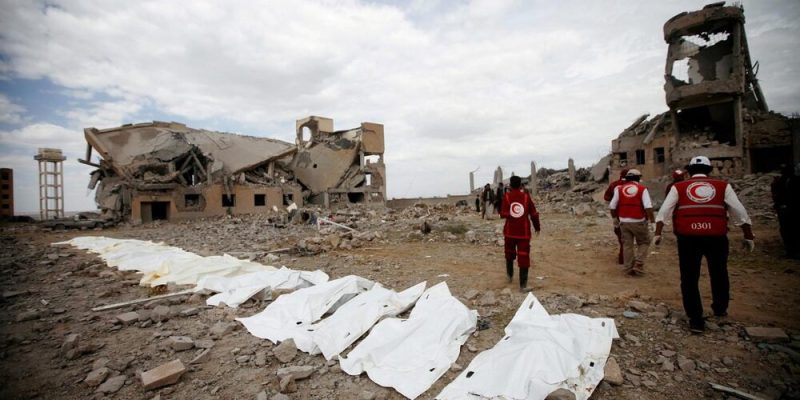
The Cradle | September 18, 2022
The Executive Center for Mine Action (YEMAC) in Sanaa has confirmed that 324 civilians have been killed and injured since the truce took effect on 2 April as a result of mines and cluster bombs used by the Saudi-led coalition.
In a statement, the Center said that since the beginning of the UN-brokered truce, 108 civilians had been killed and 216 injured through landmines, cluster bomb explosions, and other remnants of the 8-year-long war.
The YEMAC renewed the call to provide field supplies and equipment to demine the battlefields in Yemen from cluster bombs, unexploded shells, and mines. Despite the agreement to do so, efforts remain constrained by the Saudi-led coalition.
According to the reports, cluster bombs used by the Saudi-led coalition have caused the most damage, killing 18 civilians and wounding 57 others.
Another report published by the Entesaf Organization, which focuses on the rights of women and children, Saudi Arabia’s war in Yemen has killed and injured over 13,000 Yemeni civilians since 2015.
On 29 August, Abdul Karim al-Safiani, deputy director of Yemen’s Water Resource Organization, stated that he discovered high radioactive substances and toxic metals in freshwater resources in Hodeidah province.
According to Yemeni sources, Saudi Arabia and its partners are also responsible for the looting of vast quantities of oil from detained tankers.
Earlier this month, the spokesman for the Yemeni Petroleum Company (YPC) in Sanaa, Issam al-Mutawakel, said the total number of fuel ships seized by the coalition reached 12 ships.
Sanaa accused the Saudi-led coalition on 28 August of destroying 2,995 water facilities since the beginning of the war in 2015, including dams, barriers, pumps, tanks, irrigation channels, and irrigation networks, fueling the humanitarian crisis in the country.
According to the United Nations Refugee Agency (UNHCR), more than 23.4 are in desperate need of humanitarian assistance in Yemen, the worst human-made humanitarian crisis in the world.
Meanwhile, the Saudi-led coalition is blocking the country’s access to assistance and necessary resources by controlling access via sea, air, and land. Half of the country’s health facilities are also out of service and lack energy and supplies for the adequate treatment of its patients.
The West is poised to throw Yemen under the bus again to fuel its economic war on Russia
By Robert Inlakesh | Samizdat | September 11, 2022
Strained by the consequences of the ongoing conflict between NATO and Russia over Ukraine, France may be destroying all prospects for peace in Yemen, in a bid to secure energy resource from the United Arab Emirates.
Considered to be home to the worst humanitarian crisis in modern history, according to the United Nations, earlier this year, its people saw glimmers of hope towards ending its seven-year long war. A ceasefire truce, which has largely held since April, has been viewed as the first step towards reaching a UN-mediated solution for peace between the Ansarallah government in Sanaa and the Saudi-led coalition forces which claim to represent the internationally backed Yemeni government in exile.
According to UN estimates, the total number of people killed in Yemen’s war already reached 377,000 by the beginning of 2022. The civilian death rate is said to have doubled, according to the Norwegian Refugee Council (NRC), since the controversial withdrawal of UN human rights monitors last October.
Although Saudi coalition forces and Ansarallah, popularly referred to in Western media as the “Iran-backed Houthi rebels,” have managed to keep fighting to a minimum during the past months, another major player in the south of Yemen has recently decided to go on the offensive. The Southern Transitional Council (STC), often called Yemen’s southern separatists, are backed by the United Arab Emirates (UAE) and declared the start of a new military operation in the Abyan province “to cleanse it of terrorist organisations.” This follows territorial gains by the STC, in neighboring Shawba province, against the Muslim Brotherhood aligned Islah Party and others. The offensives launched by the UAE-backed STC have been regarded as a major challenge to UN efforts to end the conflict in Yemen, as well as having imperiled the Saudi initiative, which it calls the ‘Yemen Presidential Council,’ aimed at solidifying the legitimacy of the alternative Yemeni leadership in exile.
Where France Comes In
Although its role is little known to the Western public, Paris is the third largest arms supplier to the UAE and Saudi Arabia for their war efforts in Yemen, ranking just behind the US and UK. In fact, Germany, Spain and Italy have also sold weapons that have been used in the devastating war. Despite criticism, from human rights groups, of French weapons being used by Abu Dhabi and Riyadh to commit war crimes, the sale of weapons has continued from France.
April 15, 2019, French investigative magazine, Disclose, published an expose on Paris’s role in Yemen’s war. The information presented was based on a leaked French Military Intelligence (DRM) report dating back to September, 2018, clearly proving that the country had sold offensive weapons that were used in civilian areas, a charge that the French government has denied. As far back as June, 2018, credible reports began to emerge that French special forces units were operating on the ground in Yemen, alongside forces belonging to the UAE. Last December, Paris decided to further tighten its relationship with Abu Dhabi, signing its largest ever weapons sale to the UAE, worth 19.23 billion US dollars according to a report from Reuters.
France first turned to the US
France is now desperately in need of alternative energy suppliers to Russia, in order to meet its required needs, fearing that as the winter hits, Moscow may strategically cut off its natural gas completely. As part of NATO, Paris is backing a US-led initiative which seeks to make Russia pay an economic and military price for its offensive in Ukraine, however, this strategy has majorly backfired economically.
US President Joe Biden made two major foreign policy pledges when running for office in 2020, which are relevant to the current French predicament. The first being to revive the Obama-era Iran nuclear deal and the second being to find a diplomatic solution to the war in Yemen. Due to the ongoing NATO-Russia conflict, seeking a revival of the Iran nuclear deal has re-emerged on the political agenda of his administration in a major way. Iran, free from sanctions, could become an alternative source to fill the energy needs of Europe in the future, yet it could take some time for this to actually happen.
On the issue of the war in Yemen, Joe Biden pledged as part of his first speech on his government’s foreign policy goals, that he would hold Saudi Arabia to account and seek to find a solution to the crisis in Yemen. However, the war in Ukraine clearly changed his approach to Riyadh, so much so that Washington signaled in the review a decision to not sell offensive weapons to the Saudi government. The US President was heavily criticized by Human Rights Watch for traveling to Saudi Arabia in July.
Despite US attempts to have Gulf Cooperation Council (GCC) states increase their oil production, none have yet complied in the manner that Washington had hoped for. Specifically in the cases of the UAE and Saudi Arabia, it is clear that both are seeking to fast track their journey to diversify their economies. That has meant them hanging onto their strategic reserves of oil and gas, during a global energy crisis, which has made fiscal sense for them. In the cases of Venezuela and Iran, despite the US having seemingly reached out to both, neither seem to be a real replacement to Russia in the near future.
All Bets On Yemen
France is now looking for alternatives on its own. In June, the European Union announced that it had signed an agreement with Israel and Egypt. Under the deal, Israel will send gas through pipelines to Egypt, where it will then be transported to Europe. Although this may work, Tel Aviv does not have the capacity to replace Moscow as Europe’s main supplier of gas. Israel seeks to double its gas output, but in doing so is already running into potential problems over its maritime border dispute with Lebanon and its planned extraction of gas from the ‘Karish field’ in September, considered to be located in a disputed area. Lebanese Hezbollah has even threatened to strike all of Israel’s gas facilities in the event that Beirut is not given a fair deal to access its own resources.
French President, Emmanuel Macron, has attempted to persuade resource rich Algeria to become part of the EU’s solution, also going on a three-day trip to Algiers in order to mend ties. Algeria, which maintains close relations with Moscow, withdrew its ambassador from Paris for three months last year, during a diplomatic row. Macron had accused the Algerian President Abdelmadjid Tebboune’s government of “exploiting memory” and “rewriting history” of the colonial era and even questioned the legitimacy of Algeria as a State prior to French settler-colonial rule there. Around 1.5 million Algerians were killed in the battle for independence from France, which its resistance eventually managed to win in 1962. The tone of the French president has now dramatically changed from that of last year, with Macron remarking that both nations “have a complex, painful common past. And it has at times prevented us from looking at the future.”
The other major alternative path that France seems to be now seeking, is through its close alliance with the UAE. As mentioned above, it has been clear for some time that Paris has been involved in supplying weapons, logistical support and even boots on the ground to its allies in Abu Dhabi and Riyadh, aiding their fight in Yemen. However, it is also clear that the UAE has not been interested in cutting into its strategic oil reserves to meet the demands of Europe.
In July, as President Macron hosted the Emirati President, Mohammed bin Zayed al-Nahyan, in Paris, the French ministry of economy announced a new strategic energy agreement between the UAE and France. An aide to the French president noted that France was eager to secure diesel fuel from the UAE, hinting that the cooperation agreement involving France’s ‘Total Energies’ and the UAE’s ‘ADNOC’ may be linked. Although it is unknown as to what the specifics of the “strategic agreement” are, it has been speculated that the deal could potentially be worth billions.
Then, in August, the UAE-backed STC suddenly began new offensive operations in both the Shabwa and Abyan provinces. It just so happens that the STC forces decided to take over the energy sites in the Shabwa province too. Leading human rights NGOs had urged Paris to keep in mind Abu Dhabi’s human rights abuses in the advent of the signing of the strategic energy agreement, calls clearly not heeded. On August 21st, when UAE-backed forces seized the oil facilities in Yemen’s south, it may have been with the French deal in mind. Yemen’s former foreign minister, Dr. Abu Bakr al-Qirbi stated on Twitter that “preparations are being made to export gas from the Balhaf facility in light of increased international gas prices.” This was then followed by an announcement from the parliament of the Sana’a-based National Salvation Government, warning of suspicious movement from both US and French forces.
The key Balhaf facility, in Yemen’s Shabwa province, has reportedly been turned into a base for forces belonging to the UAE, with allegations suggesting that Paris could “provide protection for the facility through the French Foreign Legion.” There are also countless reports of the UAE looting resources from Yemen, which would seem to support the idea that they could be attempting to extract them to send to France. The latest reported looting of Yemen’s resources, from June, quotes Yemeni officials as having alleged that a Gulf Aetos tanker, carrying 400,000 barrels of Yemeni crude oil, had departed from Rudum port and was being operated by the UAE.
What these offensive moves by the STC also mean, is that the Saudi-backed forces in Yemen and Ansarallah will likely also get involved in the combat too. This could mean the dissolution of the ceasefire truce between the two sides, the renewal of the Ansarallah offensive to take the oil rich Marib province from the Saudi-backed forces and the death of any potential peace initiative to end the war.
It is unlikely that Ansarallah will stay silent, if the STC are aiding in the theft of Yemen’s resources for the sake of France. One of the major reasons behind the dramatic escalation of violence last year, was the Ansarallah offensive, launched with the aim of taking out the last northern stronghold of the Saudi-led coalition, Marib. The purpose of taking the resource rich area would be to stop the looting of Yemen’s resources, which according to reports is amounting to the theft of millions of barrels per year. Some sources claim that an unofficial agreement is in place between the US and Saudi governments, to purposefully keep the resources of Yemen away from its people and instead, divert the profits to Saudi banks.
Part of the reason why there was a Yemeni revolution in 2011, then a seizure of power in 2015 by Ansarallah in conjunction with the country’s military, was the popular belief that the past two Presidents of Yemen, Ali Abdullah Saleh and Abdrabbuh Mansour Hadi, were corrupt. The people of Yemen were fed up with Saleh for a multitude of reasons, primarily that he mismanaged resources, had sold out to the United States and was corrupt. President Hadi was later to be seen as a stooge, controlled completely by the Saudis.
Perhaps the biggest problem here however, is not just that Yemen is a resource rich country, with a starving population, being torn apart by foreign powers, but also that nobody even knows what their governments are involved in. On August 25, then British prime minister, Boris Johnson, stated, about rising energy bills, that “While people are paying energy bills, people in Ukraine are paying with blood”. Yet, it may turn out that for Europe to keep the lights on, the people of Yemen will pay with their blood. Except in this case, the UK, US and France can’t blame that bloodshed on Moscow, this is their own doing.
Robert Inlakesh is a political analyst, journalist and documentary filmmaker currently based in London, UK. He has reported from and lived in the occupied Palestinian territories and currently works with Quds News.
OPEC+ agrees on oil output cut
BY M. K. BHADRAKUMAR | INDIAN PUNCHLINE | SEPTEMBER 6, 2022
The OPEC+ meeting at Vienna on Monday came amidst two events affecting the oil market — the G7 finance ministers decision to endorse the US proposal regarding price cap on Russia’s oil exports with effect from December 5 and secondly, Gazprom’s announcement on cutting off all gas supplies to Europe indefinitely.
Although notionally these are unrelated events, the fact remains that the energy scene is increasingly fraught with uncertainties and there are many variables at work such as fears of a global recession, the continuing difficulty to conclude a US-Iran deal on JCPOA that would have lifted the sanctions against Iran’s oil exports.
The statement by the OPEC secretariat on Monday’s meeting in Vienna has sent out a powerful message that not only is there not going to be any increased oil production but a token cut of 100,000 bpd has been agreed upon in September to bolster prices that have slid on recession fears. Oil prices jumped after the announcement. US crude rose 3.3%, to $89.79 per barrel, while international benchmark Brent was up 3.7%, to $96.50, after the decision.
This is in the face of attempts by the Biden Administration to push through a decision on an additional increase in production so that oil prices would go down. Saudi Arabia and the UAE did not agree to the US suggestion, saying that it was outside the scope of the OPEC + agreement.
The cut in oil production by 100,000 bpd is largely symbolic because OPEC+ members are estimated to be some 2.9 million bpd behind the collective quotas allotted to them. But the point is, this is the first OPEC+ oil supply cut in more than a year and it shows that the OPEC+ will not hesitate to take preemptive action.
Russian Deputy Prime Minister Alexander Novak said on Monday that expectations of weaker global economic growth were behind the decision by Moscow and its OPEC allies to cut oil output. Novak said the global energy market is characterised by heightened uncertainty at the moment. “We are not talking about price formation, but about the adequacy of supply on the market, so that on the one hand there is no excess, and on the other there is no shortage.”
The Saudi Energy Minister Prince Abdulaziz bin Salman has been more forthright, saying, “This (OPEC+) decision is an expression of will that we will use all of the tools in our kit. The simple tweak shows that we will be attentive, preemptive and proactive in terms of supporting the stability and the efficient functioning of the market to the benefit of market participants and the industry.”
The Saudi Minister was implying that the OPEC+ also faces a market where concerns about the strength of demand have started to outweigh supply fears. In fact, crude futures have lost about 20% in the past three months on the threat of a global economic slowdown.
Besides, OPEC+ weighs in on the likelihood that the negotiations to revive a nuclear accord and remove US sanctions on Iran’s petroleum sales might result in a successful agreement in which case, more than 1 million barrels a day will enter world markets shortly, according to the International Energy Agency.
However, the latest indications are that the Biden Administration may find it politically expedient to postpone the future of the JCPOA (2015 Iran nuclear deal) to the post-midterm election period in the US beyond November 7. Of course, both the US and Iran (as well as the European Union) are interested in reaching an agreement and want to restore the JCPOA on favourable terms.
At any rate, the OPEC+ move on Monday can only be seen as a rebuke from Saudi Arabia, the leading member of OPEC, to the Biden administration’s call for its Middle Eastern ally to increase production at a time of rising inflation and western sanctions on Russia’s energy industry. The OPEC+ decision comes less than two months after US President Joe Biden’s visit to Saudi Arabia when he said he expected the kingdom to take “further steps” to increase the supply of oil in the “coming weeks”.
After the OPEC+ decision, the White House said Biden is committed to shoring up energy supplies and lowering prices. “The president has been clear that energy supply should meet demand to support economic growth and lower prices for American consumers and consumers around the world,” White House press secretary Karine Jean-Pierre said in a statement.
But beyond asking Gulf states to boost production and unleashing crude from emergency stockpiles, western countries have no leverage in the matter, since industry investment and new drilling have lagged behind demand and a significant increase in output is not to be expected.
The OPEC+ has scheduled its next meeting for October 5 but signalled it may hold talks even before that “to address market developments, if necessary.” According to Reuters, Saudi Energy Minister Prince Abdulaziz bin Salman, half-brother of Crown Prince Mohammad Bin Salman, has been empowered to intervene whenever necessary to stabilise crude markets by calling for a meeting at any time.
Quite obviously, things are moving in a direction where the G7 decision to impose a price cap on Russian oil is likely becoming the business of the OPEC+ as well, albeit indirectly. Russia has said it will stop supplying oil to countries that support the G7 idea. Signals from the physical market suggest that supply remains tight and many OPEC states are producing below targets even as fresh Western sanctions are threatening Russian exports following up on the G7 idea.
An unspoken factor is that the G7 move sets a precedent that is a cause of concern for all OPEC countries. Today, the G7 is cracking the whip on Russia over Ukraine, which has technically nothing to do with the oil market. Tomorrow, it could as well be on, for example, democracy deficit in the Gulf states. Simply put, the western powers are straying onto turf that OPEC has jealously guarded as its preserve for the past 62 years since the cartel was established — and it is doing so by politicising the core issue of oil prices by introducing extraneous geopolitical considerations.
At any rate, while speaking on the OPEC meeting’s outcome on Monday, Russian minister Novak said, “We shall examine how the market situation will evolve because there are many uncertainties” not least regarding “the declaration by G7 leaders regarding capping of the price of Russian oil” which will sow “uncertainty” on the global market. (Interestingly, Chinese Foreign Ministry has called on the G7 to reconsider its move: “Oil is a global commodity. Ensuring global energy supply security is vitally important. We hope relevant countries will make constructive efforts to help ease the situation through dialogue and consultation, instead of doing the opposite.”)
The bottom line is that the US entreaties to disband the OPEC+ are getting nowhere. The OPEC meeting in Vienna on Monday underscored in its final statement that “OPEC+ has the commitment, the flexibility, and the means within the existing mechanisms of the Declaration of Cooperation to deal with these challenges (higher volatility and increased uncertainties) and provide guidance to the market.”
The message is loud and clear: Saudi Arabia and Russia who form the axis of the OPEC+ are closely coordinating on shaping the world oil market even as they could be competing for market share.
Why the Gulf states’ SCO membership is a big deal
BY M. K. BHADRAKUMAR | INDIAN PUNCHLINE | AUGUST 7, 2022
Washington has backtracked from the dissimulation by US National Security Advisor Jake Sullivan that Washington had intelligence suggesting Iran was preparing to provide Russia with “several hundred” drones to use in Ukraine, with training sessions set to begin in July.
On July 26, NSC spokesman John Kirby, clarified his boss’ remark by admitting to Al Arabiya, “We’ve seen no indications of any sort of actual delivery and/or purchase of Iranian drones by the Russian Ministry of Defence.”
Interestingly, Al Arabiya buttonholed Kirby at all. For, Sullivan’s fake news (probably based on Israeli disinformation) came at his special briefing on President Biden’s visit to Jeddah. Al Arabiya’s dogged downstream pursuit of the “fake news” suggests that Riyadh knew Sullivan making a crude attempt to to hustle the Crown Prince Mohammad bin Salman in directions that would have made Biden’s trip a roaring success.
Biden had three overlapping objectives: one, to rally Saudi leadership behind his containment strategy against Russia and China; two, to break up the OPEC+ alliance between Saudi Arabia and Russia so that a coordinated counterpoint ceases to be in the world oil market that is beyond American control; and, three, to assemble an anti-Iran military military alliance of Gulf states and Israel to give verve to Abraham Accords which has patently lost its fizz.
Biden drew blank on all three counts: Saudis will pursue their friendly relations with Russia and China and its normalisation with Tehran. Prince Mohammed spoke with President Putin within the week of Biden’s visit where they discussed further expansion of trade and economic cooperation and significantly, also underscored “the importance of further coordination within OPEC+”.
Traditionally, Saudi actions speak far better than words. So, when the OPEC+ held a virtual meeting last Wednesday, it concluded that:
- There is “severely limited availability of excess capacity” among oil producing countries resulting from “chronic underinvestment in the oil sector”;
- It is a matter of “particular concern… (that) insufficient investment into the upstream sector will impact the availability of adequate supply in a timely manner to meet growing demand beyond 2023.”
- The importance of maintaining consensus and the “cohesion” of OPEC and OPEC+ (that is, OPEC plus Russia principally) cannot be overstated.
Plainly put, it rejects the July 3 G7 Foreign Ministers’ Statement on Energy Security, which envisages imposing comprehensive embargo on all services for “transportation of Russian seaborne crude oil and petroleum products globally” unless Moscow sells oil at a price to be agreed in consultation with the West.
Simply, the West is once again contemplating a crackdown on a major oil producing country for geopolitical reasons, which would have profound impact on the world oil market. The paradox here is that, unlike in the case of Iran or Venezuela, the West desperately needs Russian oil’s continued flow into the world oil market but is capping the price at which Moscow can sell so that its income from oil exports cannot sustain the special military operations in Ukraine.
Indeed, the West is acting in the spirit of George Kennan’s famous dictum in the early 1950s that oil “belongs to us” because it lubricated the West’s prosperity. The G7 statement is no doubt precedent-setting. As the pressure on world’s resources becomes more acute, this predatory approach harkens back to the colonial era (when India was frog-marched by Imperial Britain to supply cotton to the textile mills in Britain and buy back textiles at prices determined by the colonial master.)
It can extend to resources other than oil as well. China, for example, produces roughly two-thirds of the world’s lithium-ion batteries, whereas, the US only produces 1% of global lithium supply and 7% of refined lithium chemicals — versus China’s 51% — and is about 70% dependent on imported lithium (which has such critical uses in industries ranging from mobile phones, laptops, digital cameras and electric vehicles to aircraft, high-speed trains and satellites.
To be sure, the G7 move to seize control of Russia’s oil exports rings alarm bells all across the oil-producing countries of the Gulf region. The geopolitical message is: ‘Fall in line, or else.’ Now, this comes at a time when the EU is desperately eyeing access to cheap and reliable supply of oil. (Japan just announced that its “sanctions from hell” against Russia will not apply to the Sakhalin 2 gas and oil project!)
Against such a tumultuous backdrop with the industrial powers inclining toward brandishing their latent colonial instincts of a bygone era, the Gulf states become highly vulnerable. The Gulf states already are shell-shocked about the banditry that the EU and US resorted to against Russia by confiscating its reserves in the Western banking system and appropriating the private assets of wealthy Russians.
There is also an added dimension. Tomorrow, what prevents the “Collective West” from resorting to such pressure tactics to enforce “regime change” in the Gulf region on the pretext of advancing democracy and human rights? After all, it is no secret that the former Crown Prince Muhammad bin Nayef was Washington’s preferred choice to succeed King Salman. Make no mistake, Biden’s fist bump with Prince Mohammed is not the last word on Saudi succession.
Indeed, Prince Mohammed’s suggestion (while Biden was still in Jeddah) that Saudi Arabia and Iran should now step up their contacts to the political level becomes highly significant. Even more so, Saudi Arabia’s interest in SCO membership (so soon after Iran’s admission to the grouping.)
Along with Saudi Arabia, a host of other West Asian countries have approached the SCO for membership. The Russian daily Izvestia reported on Thursday that the SCO plans to sign memoranda on granting dialogue partnership to Egypt, Syria, Qatar, Saudi Arabia and Bahrain at the forthcoming summit in Samarkand. Interestingly, Crown Prince Mohammed bin Salman has been invited to the event.
According to Izvestia, as an exception, the UAE has sought SCO membership on an expeditious basis, although the grouping’s established practice so far has been to start with a “dialogue partner”. Izvestia quoted a source close to the SCO organising committee that the SCO has had consultations internally and “the main understanding that dominates is that the SCO is interesting, the SCO attracts, and therefore the most important thing for us is not to wallow in bureaucracy, but to find solutions that will allow us to respond adequately… And react by adapting the rules to new conditions.”
Clearly, Biden’s offer of a military alliance not only had no takers in the Arab world but they seem petrified. If as the Bible says, there are three brands of deception — vanity, flattery, and blasphemy — and Satan uses all three, Biden’s offer contains elements of all three. And if the SCO offers an antidote to the poisoned chalice, why not?
‘US-led effort to isolate Russia failed’
Samizdat – August 5, 2022
The US-led drive to isolate Russia through sanctions has not succeeded, as half the countries in the Group of Twenty leading global economies refused to sign on, Bloomberg reported on Friday.
According to the publication, senior officials from leading Western nations are surprised by the lack of support within the wider G20, despite their efforts to make the case for restrictions against Russia.
Argentina, Brazil, China, India, Indonesia, Mexico, Saudi Arabia, South Africa, and Turkey have not joined the sanctions that were adopted by the US, UK, EU, and their allies Australia, Canada, Japan, and South Korea. Some nations, like China and South Africa, have openly criticized the restrictions. The G20 nations account for around 85% of global economic output.
According to Bloomberg, the reasons for the lack of support include strong trade ties, historical affinities to Moscow, and a distrust of former colonial powers.
OPEC+ approves tiny oil output rise in rebuff to Biden
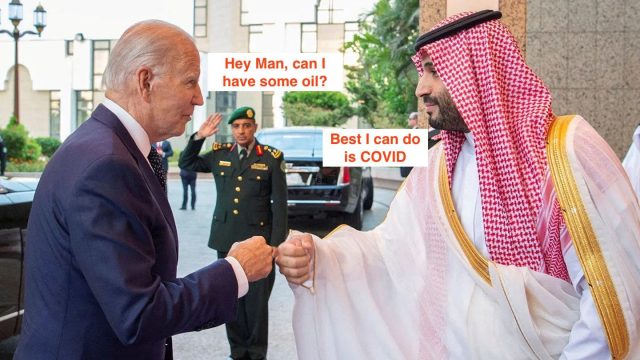
MEMO | August 3, 2022
OPEC+ is set to raise its oil output goal by 100,000 barrels per day, an amount analysts said was an insult to US President Joe Biden after his trip to Saudi Arabia to ask the producer group’s leader to pump more to help the United States and the global economy, Reuters reports.
The increase, equivalent to 86 seconds of daily global oil demand, follows weeks of speculation that Biden’s trip to the Middle East and Washington’s clearance of missile defence system sales to Riyadh and the United Arab Emirates will bring more oil to the world market.
“That is so little as to be meaningless. From a physical standpoint, it is a marginal blip. As a political gesture, it is almost insulting,” said Raad Alkadiri, Managing Director for Energy, Climate and Sustainability at Eurasia Group.
The increase of 100,000 bpd will be one of the smallest since OPEC quotas were introduced in 1982, OPEC data shows.
The Organisation of the Petroleum Exporting Countries and its allies, led by Russia, a group known as OPEC+ that formed in 2017, had been increasing production by about 430,000-650,000 bpd a month, as they unwound record supply cuts introduced when pandemic lockdowns choked off demand.
They had, however, struggled to meet full targets as most members have exhausted their output potential following years of under-investment in new capacity.
Combined with disruption linked to Russia’s invasion of Ukraine in February, the lack of spare supply has driven up energy markets and spurred inflation.
With US inflation around 40-year highs and Biden’s approval ratings under threat unless gasoline prices fall, the President travelled to Riyadh last month to mend ties with Saudi Arabia, which collapsed after the murder of journalist, Jamal Khashoggi, four years ago.
Saudi de-facto ruler, Crown Prince Mohammed bin Salman, who Western intelligence accused of being behind the Khashoggi murder – which he denies – also travelled to France last month as part of efforts to rebuild ties with the West.
On Tuesday, Washington approved $5.3 billion worth of defensive missile system sales to the UAE and Saudi Arabia, but it has yet to roll back its ban on offensive weapon sales to Riyadh.
OPEC+, which will next meet on 5 September, said in a statement that limited spare capacity requires it to be used with great caution in response to severe supply disruptions.
It also said a chronic lack of investment in the oil sector will impact adequate supply to meet growing demand beyond 2023.
Sources within OPEC+, speaking on condition of anonymity, also cited a need for cooperation with Russia as part of the wider OPEC+ group.
“(This decision) is to calm down the United States. And not too big that it upsets Russia,” said an OPEC+ source.
Benchmark Brent oil futures jumped by around $2 per barrel after OPEC’s decision to trade close to $101 per barrel.
Shortly after Russia’s invasion of Ukraine, which Moscow terms a “special military operation”, oil prices rose to their highest in 14 years.
By September, OPEC+ was meant to have wound down all of the record production cuts it implemented in 2020 in response to the impact of the pandemic.
But, by June, OPEC+ production was almost 3 million barrels per day below its quotas as sanctions on some members and low investment by others crippled its ability to boost output.
Only Saudi Arabia and the UAE are believed to have some spare capacity.
French President, Emmanuel Macron, has said he had been told that Saudi Arabia and the UAE had very limited ability to increase oil production.
Saudi coalition seizes another Yemen-bound fuel tanker
Press TV – July 20, 2022
Yemen’s Petroleum Company (YPC) says the Saudi-led coalition has seized yet another Yemen-bound fuel ship in blatant violation of a UN-brokered ceasefire.
In a statement released on Wednesday, the YPC said the seizure has “brought the number of confiscated Yemen-bound fuel ships to three” in recent days. The Lady Sarah fuel vessel was inspected and cleared by the UN, it added.
Reacting to the seizure, Mohammed Abdulsalam, the chief negotiator of Yemen’s National Salvation Government, said the coalition has constantly violated the truce and is “killing time, which is not accepted by our nation.”
Saudi-led coalition forces committed thousands of violations of the ceasefire agreement within a month of its entry into force on April 2. The agreement was extended under the auspices of the UN on June 2 and is set to expire next month.
Over the past year, the coalition has been consistently looting and selling large quantities of Yemeni gas and crude oil.
Yemeni authorities accuse the Saudi-led coalition of carrying out a systematic campaign aimed at depleting the country’s natural resources.
Earlier this month, Mohammad Tahir Anam, an adviser to the Yemeni Supreme Political Council, warned Riyadh and its allies that companies and ships involved in the looting of Yemeni oil will be targeted by the Ansarullah resistance movement if the theft persists.
On July 3, Yemeni Prime Minister Abdulaziz Saleh bin Habtoor said the looting of Yemen’s oil by the Saudi-led coalition is carried out under directives from the White house.
Yemen’s Minister of Oil and Minerals Ahmad Abdullah Dares has warned that the Saudi seizure of ships carrying petroleum products to Yemen could lead to the suspension of the service sectors and cause “a humanitarian catastrophe.”
Yemeni media reports said participants at a massive protest in the capital on Wednesday denounced the seizure of fuel tankers heading to the port of Hudaydah by Saudi-led forces.
The protest was organized in front of the United Nations office in Sana’a.
Saudi Arabia and a number of its regional allies — including the United Arab Emirates (UAE) — launched the devastating war on Yemen in March 2015. The war was meant to eliminate Yemen’s popular Houthi Ansarullah movement and reinstall a former regime. The conflict, accompanied by a tight siege, has failed to reach its goals, but has killed hundreds of thousands of Yemeni people.
The Yemeni army and popular committees have intensified their retaliatory attacks against targets deep inside Saudi Arabia and the UAE in response to the Saudi siege.
Iran deal can survive if US opts for own interests rather than Israel’s: Foreign Ministry
Press TV – July 20, 2022
Tehran says multilateral negotiations to revive the 2015 Iran deal will be fruitful if the United States looks at the issue through the lens of its own national interests rather than those of the Israeli regime.
Iranian Foreign Ministry spokesman Nasser Kan’ani told a press conference on Wednesday that the US seems to be weak when it comes to making “an independent political decision” about whether it is willing to return to the deal, four years after it unilaterally walked away.
“If the US administration [of Joe Biden] looks at this issue through the lens of American national interests and not through the lens of the interests of the occupying Zionist regime, the ground will be paved for an agreement in the near future,” Kan’ani said.
More than a year of negotiations – first in Vienna and now in Doha – have not yet led to an agreement on what steps each side needs to take in order to restore the ailing accord, officially called the Joint Comprehensive Plan of Action (JCPOA).
The US withdrew from the JCPOA back in 2018 as it unleashed a “maximum pressure” campaign targeting the Iranian economy, despite Tehran’s strict compliance with the terms of the accord.
The Vienna talks, which began in April last year, hit a deadlock in March owing to Washington’s insistence on retaining parts of its sanctions against Iran. The Doha talks, however, have led to different interpretations by the parties to the talks.
“Contrary to the claim of the American side that the Doha negotiations were a failure, they opened up a path for the continuation of talks between the different parties of the nuclear agreement,” Kan’ani said, assessing the negotiations as “good.”
He explained that there is no major obstacle to concluding an agreement, except that the American side has to make a serious political decision.
“On the one hand, the US administration expresses its desire to return to the agreement, and on the other hand, it does not want to pay the costs of returning to the agreement,” the Iranian spokesman added.
‘US, Israel failed to form anti-Iran coalition’
In his Wednesday press conference, Kan’ani also pointed to Biden’s recent trip to the region with the agenda of forming an anti-Iran coalition among other objectives, saying both the US and the Israeli regime failed to achieve that goal.
“The Zionist regime attempted to form a regional coalition during that trip to put pressure on Iran,” he said. “In this effort, this regime has failed and the American government has not succeeded either.”
Biden arrived in the Israeli-occupied territories last Wednesday, kicking off a much-anticipated four-day trip to the region. The regional tour also took the US president to Saudi Arabia, the country he once pledged to make “the pariah that they are.”
Since 2020, the US has brokered normalization agreements under the so-called Abraham Accords between the Israeli regime and some Arab countries, including the United Arab Emirates, Bahrain, Morocco, and Sudan – with Saudi Arabia expected to be the next.
In Saudi Arabia, Biden attended a summit of the [Persian] Gulf Cooperation Council (GCC) countries, plus Egypt, Jordan, and Iraq – also known as GCC+3. The summit, which was ostensibly aimed to build an anti-Iran front, failed to garner much support.
A day before the summit, Iraqi Prime Minister Mustafa al-Kadhimi stressed that Iraq will not be part of any camp or military alliance, and “will not be a base for threatening any neighboring countries.”
The UAE, a close ally of both Saudi Arabia and the US, also dismissed the idea of forming a NATO-like military alliance in the region.
“We are open to cooperation, but not cooperation targeting any other country in the region and I specifically mention Iran,” Anwar Gargash, the UAE president’s diplomatic adviser, said.
“The UAE is not going to be a party to any group of countries that sees confrontation as a direction,” Gargash added.
After the summit, Saudi Arabia’s Foreign Minister Prince Faisal bin Farhan claimed that his country extends a hand of friendship toward Iran.
He also expressed the kingdom’s willingness to reestablish normal relations with the Islamic Republic.
“The messages we received from Arab officials in the region, both directly and indirectly, show that fortunately, the countries of the region are not ready to act against Iran [and in line with] America’s regional policies,” Kan’ani said.
He then added that conditions are now ripe for Iran to organize and host talks to deepen regional cooperation.
He also urged the US to stop meddling in the internal affairs of regional countries, halt its plots of forming fictitious alliances, and refrain from imposing American values on the region.
Regional countries naturally have common interests and views, he said, adding, “They are capable of creating the best conditions for stability and security in the region in the light of regional meetings.”
Russia-Iran relations take a quantum leap
BY M. K. BHADRAKUMAR | INDIAN PUNCHLINE | JULY 17, 2022
When US National Security Advisor Jack Sullivan first spoke about a potential Iran-Russian drone deal, Moscow kept quiet and Tehran issued a pro forma rebuttal, which suggested that it is still a work in progress. Sullivan’s disclosure appeared at the end of a White Course briefing for President Biden’s West Asia tour to Israel and Saudi Arabia, and seemed to have an element of grandstanding aimed at fuelling the latent anti-Iran sentiments in the Gulf region that could in turn impart momentum to POTUS’ project to put together an Israeli-Arab military front in the region.
In the event, the ploy didn’t work. After Biden’s visit ended, the Saudi Arabian foreign minister Prince Faisal bin Farhan told CNN, amongst other things, that talks are going on between Iran and the GCC states for improvement of relations and the focus should be on changing Iran’s behaviour.
But Sullivan has repeated his charge and has since added that an official Russian delegation “recently received a showcase of Iranian attack-capable UAVs,” the last time being as recently as on July 5. CNN has cited White House officials as saying that Iran is expected to supply Russia with hundreds of drones for use in the war in Ukraine, “with Iran preparing to begin training Russian forces on how to operate them as early as late July.”
Iran is known to have a varied drone ecosystem and is reportedly showcasing to Russia the Shahed-191 and Shahed-129 “killer” drones. According to published information, Shahed-129 has a wingspan of 50 feet with a cruising speed of about 160 km per hour, an endurance of 24 hours with a range of 1,700 km and a ceiling of 24,000 feet. The 129 can carry 8 Sadid-345 miniaturized precision-guided bombs capable of hitting moving targets. The bomb’s small size with a range of 6 km, reduces collateral damage and would allow the Shahed to achieve more kills or attack strikes per mission.
The Shahed 191 carries two Sadid-1 missiles internally, has a cruising speed of 300 km/h, an endurance of 4.5 hours, a range of 450 km, and a payload of 50kg. The ceiling is 25,000 ft. Iran’s Fars News Agency says the Shahed 191 has been used in combat in Syria.
Both are stealth drones, harder for air defences to detect. Russia is, reportedly, short of such armed drones, which have the capability to undertake long-range missions to find and destroy, for example, the US-supplied HIMARS mobile rocket launchers which are currently deployed in Ukraine as well as knocking out Ukrainian air defences. Besides, drones are relatively cheap and expendable, unlike crewed aircraft.
If the drone deal indeed goes through, as seems likely, it will mark a quantum leap in Russia-Iran relations. For, Iran will be doing something that only China is capable of doing but won’t out of fear of US reprisal. That makes Iran a very special partner country indeed. Ironically, Russia is yet to upgrade its relationship with Iran as “strategic.”
On its part, Iran is literally sticking out its neck in an act of defiance of the West’s “rules-based order”, as Russia will be deploying its weapon systems on a European battlefield against the air defence systems supplied to Ukraine by the US and NATO countries. There cannot be many parallels of an emerging middle power rendering such critical help to a superpower in high-tech warfare in real conditions on the frontline. Of course, it enhances Iran’s standing regionally and internationally.
In geopolitical terms, however, the most important salience lies in the certainty that the door is closing on the nuclear negotiations between Iran and the US via European mediators. Tehran would have drawn the conclusion already that President Joe Biden is virtually co-opting his predecessor’s [Israel Lobby dictated] Iran policy and the US has reverted to its decades-old strategy of promoting an Israeli-Arab front against Tehran. Put differently, Tehran is moving on to a trajectory that is predicated on unremitting American hostility.
This will mean that Tehran will double down on its efforts to improve relations with its Aran neighbours and explore all possible avenues in that direction, seizing the window of opportunity in the new Saudi thinking to reduce its dependence on the US and explore its strategic autonomy. It is possible to say that Tehran is a beneficiary if the Saudi-Russian and Saudi-Chinese relationships strengthen. Arguably, Saudi Arabia’s quest for BRICS membership brings the Kingdom tantalisingly close to Iran’s world view which places primacy on a democratised, multipolar world order where every country is free to choose its developmental path.
To be sure, against this backdrop, President Vladimir Putin’s visit to Tehran on Tuesday is invested with great importance. Iran is becoming one of the most consequential relationships for Russia. What began as a limited alliance in Syria is taking on a global character.
‘Iraq will not join any military alliance, position on Palestine firm’
MEMO | July 16, 2022
Iraqi Prime Minister Mustafa Al-Kadhimi has announced that the Jeddah conference in Saudi Arabia “will not witness the discussion of normalisation with Israel” and stressed that discussion on the topic is an attempt to confuse Iraq’s restoration of its role in the region.
The prime minister’s media office disclosed in a statement on Friday, posted on Twitter, that: “Iraq’s position is firm and clear on the Palestinian issue and is not open for discussion.”
The media office added that Iraq could not be a foundation to threaten any neighbouring country.
The prime minister stressed that Baghdad would not allow any party to use Iraq as a base to threaten neighbours or create problems by using Iraqi lands.
Al-Kadhimi expressed that they are in dire need of wisdom, patience, reconciliation and restoring confidence for the sake of Iraq and Iraqis. He mentioned that his government’s motto from day one has been “Iraq first” and that they will continue to adopt this approach in order to serve the people.
Moreover, Al-Kadhimi stated during a press conference held in Baghdad before travelling to Jeddah: “Iraq has not and will not be, neither today nor tomorrow, in any military axis or alliance, and the national interest is the goal of these meetings.”
“Today we are responding to an invitation extended to Iraq to participate in the Jeddah conference, which will be attended by the Gulf Cooperation Council countries, the Hashemite Kingdom of Jordan, the Arab Republic of Egypt, in addition to the United States.”
Regarding his upcoming meeting with US President Joe Biden, the prime minister made it clear that he will discuss with the US what they agreed on in the strategic agreement, such as revitalising agreements in the field of education, culture, health and other areas that reflect on the economic role.
Saudi Arabia outlines what it will do for oil output
Samizdat | July 16, 2022
Saudi Arabia is ready to increase oil production to its maximum of 13 million barrels per day but does not have the capacity to pump out more, Crown Prince Mohammed bin Salman said during his address at the US-Arab summit in Jeddah on Saturday.
“The kingdom has announced an increase in its production capacity level to 13 million barrels per day, after which the kingdom will not have any additional capacity to increase production,” he was quoted as saying by UAE’s newspaper The National.
The crown prince also said that the global community should join forces to support the global economy, but noted that unrealistic policies regarding energy sources would only worsen the situation.
“Adopting unrealistic policies to reduce emissions by excluding main sources of energy will lead in coming years to unprecedented inflation and an increase in energy prices and rising unemployment, and a worsening of serious social and security problems,” he stated.
Mohammed bin Salman’s words come a day after his talks with Joe Biden, who was in Saudi Arabia on his first visit as US president, and urged the kingdom to increase oil production in order to reduce global reliance on supplies from Russia.
Commenting on his trip to the kingdom, Biden said Saudi Arabia’s “energy resources are vital for mitigating the impact on global supplies of Russia’s war in Ukraine.”
Saudi Arabia, one of the globe’s largest oil exporters and the leading producer within the Organization of the Petroleum Exporting Countries (OPEC), currently pumps out more than 12 million barrels of oil per day. The kingdom previously said it plans to reach production capacity of 13 million barrels per day by 2027. The Crown Prince did not reveal whether the timeframe for the boost in capacity has changed.
Following the start of Russia’s military operation in Ukraine, the US and other Western nations have stepped up sanctions on Moscow, calling, among other things, for a boycott on Russian energy supplies. The US stopped importing Russian oil earlier this year, and the EU placed a partial embargo on Russian fuel last month.
Washington is now planning to set a price cap on the Russian commodity, and the US Treasury Secretary Janet Yellen is currently in Asia attempting to garner support for the scheme. The US is especially eager to secure the participation of China and India in the price cap mechanism, as both countries have not only refused to sanction Russia over the Ukraine conflict, but have recently stepped up purchases of Russian oil.
Featured Video
BRITAIN’S WARNING: PREPARE FOR WAR
or go to
Aletho News Archives – Video-Images
From the Archives
British weapons and personnel doing much of the killing in Yemen
Press TV – June 18, 2019
A detailed report published by the Guardian newspaper has shown how Britain is massively contributing to Saudi Arabia’s devastating war on Yemen as it suggests that London is not only supplying the bombs that fall on Yemenis, but it provides the personnel and expertise that keep the war going.
The comprehensive report by Arron Merat published on Tuesday showed that Britain was doing much of the killing in Yemen as the country continues to provide Saudi Arabia with everything it needs to turn its southern impoverished neighbor into a graveyard.
“Every day Yemen is hit by British bombs – dropped by British planes that are flown by British-trained pilots and maintained and prepared inside Saudi Arabia by thousands of British contractors,” said Merat in the report. … continue
Blog Roll
 Aletho News
- A West Bank War for Netanyahu’s Election Campaign, Could It Backfire?
- Yemen denounces European Parliament’s ‘hypocritical’ push to blacklist Ansarullah
- Qalibaf: UAE’s UN bid aims to ‘clear the runway’ for ‘Greater Israel’, whitewash genocide
- Pakistan reopens Iran border after boosting security: Report
- Why are so many Brazilians voting for Flávio Bolsonaro?
- Democrats Put Anti-Russia Agenda Ahead of American Workers
- Elijah Magnier: Yemen’s Strikes Are Shattering Saudi Arabia’s Long-Term Strategy
- Pentagon designates Chinese cultural centers national security threat
- Israel Demolishes Home Of Lebanese Journalist Whose Viral Film Exposed Pager Attack
- Record Oil, Empty Tanks: The UAE’s Miracle Recovery
- If Americans Knew
- Tourism Ministry launches free food truck tour in US
- “So Much Worse Than People Realize”: Never-Before-Seen Images Reveal Damage at U.S. Bases as Troops Describe Being Abandoned
- UK Bell Review Confirms Only Anti-Israel Attitudes Are Rising, Not Antisemitism
- DAILY UPDATE: Latest essential news on Palestine, Israel, & region
- DAILY UPDATE: Latest essential news on Palestine, Israel, & region
- Damning report shows the media must confront its failures on Gaza
- BBC senior broadcaster speaks out on Gaza coverage
- Netanyahu vows vast West Bank invasion in response to 20-minute skirmish that left 2 Israeli soldiers and 2 Palestinian fighters dead
- Tied up and tortured: Israel using US-made electroshock weapons on Palestinian detainees
- The outsourced risk: how newsrooms rely on Gaza’s freelancers without protecting them
- No Tricks Zone
- Sudden Stratospheric Warming, Powerful El Niño Combination May Lead To Extreme Europe Cold, Energy Crisis!
- Two New Studies Find Thwaites Glacier Melt Cannot Be Driven By Human Activity Or A Warming Ocean
- E-Cars Reduce CO2 Emissions By Only 41% Compared To Internal Combustion Engine Vehicles
- Predictions Made By Renowned Climate Professor Over Past Decades Have Been Proven To Be Poor
- New Study Suggests Large Regions Of The Pacific Ocean Have Been Cooling For The Last 80 Years
- Germany’s Green Energy Debacle: High Energy Costs Force Kahla Porzellan to Close After 182 Years!
- New Study: 50 Years Of The Most Aggressive ‘Net Zero’ Policies Can Only Affect The Global Climate By 0.03°C
- US September “Heat” Was No Record…Many Records Set Decades Ago
- Latest European Green Energy Debacle; Portugal’s Largest Flagship Solar Park Insolvent!
- Green Energy Debacle: German Expert Professor Fritz Vahrenholt Warns Of Severe Economic And Social Consequences

