Russia strategises with Iran for the long haul in Ukraine

Ali Shamkhani (L), representative of Supreme Leader and Secretary of Supreme National Security Council, met Nikolai Patrushev, Secretary of Russia’s Security Council, Tehran, Nov. 9, 2022
BY M. K. BHADRAKUMAR | INDIAN PUNCHLINE | NOVEMBER 14, 2022
Ignoring the hype in the US media about White House National Security Advisor Jake Sullivan’s Kissingerian diplomacy over Ukraine, the secretary of Russia’s Security Council Nikolai Patrushev, former KGB counterintelligence officer and longstanding associate of President Putin, travelled to Tehran last Wednesday in the equivalent of a knockout punch in geopolitics.
Patrushev called on President Ebrahim Raisi and held detailed discussions with Admiral Ali Shamkhani, the representative of the Supreme leader and secretary of Iran’s Supreme National Security Council. The visit marks a defining moment in the Russia-Iran partnership and plants a signpost on the trajectory of the war in Ukraine.
The Iranian state media quoted Raisi as saying, “The development of the extent and expansion of the scale of war [in Ukraine] causes concern for all countries.” That said, Raisi also remarked that Tehran and Moscow are upgrading relations to a “strategic” level, which is “the most decisive response to the policy of sanctions and destabilisation by the United States and its allies.”
The US State Department reacted swiftly on the very next day with spokesman Ned Price warning that “This is a deepening alliance that the entire world should view as a profound threat… this is a relationship that would have implications, could have implications beyond any single country.” Price said Washington will work with allies to counter Russian-Iranian military ties.
Patrushev’s talks in Tehran touched on highly sensitive issues that prompted President Vladimir Putin to follow up with Raisi on Saturday. The Kremlin readout said the two leaders “discussed a number of current issues on the bilateral agenda with an emphasis on the continued building up of interaction in politics, trade and the economy, including transport and logistics. They agreed to step up contacts between respective Russian and Iranian agencies.”
In this connection, Patrushev’s exceptionally strong support for Iran over the current disturbances in that country must be understood properly. Patrushev stated: “We note the key role of Western secret services in organising mass riots in Iran and the subsequent spread of disinformation about the situation in the country via Persian-language Western media existing under their control. We see this as overt interference in the internal affairs of a sovereign state.”
Russian security agencies share information with Iranian counterparts on hostile activities of western intelligence agencies. Notably, Patrushev sidestepped Iran’s suspicions regarding involvement of Saudi Arabia. Separately, Foreign Minister Sergey Lavrov also publicly offered to mediate between Tehran and Riyadh.
All this is driving Washington insane. On the one hand, it is not getting anywhere, including at President Biden’s level, to raise the spectre of Iran threat and rally the Arab regimes of the Persian Gulf all over again.
Most recently, Washington resorted to theatrics following up an unsubstantiated report by Wall Street Journal about an imminent Iranian attack on Saudi Arabia in the coming days. The US forces in the West Asian region increased their alert level and Washington vowed to be ready for any eventuality. But, curiously, Riyadh was unmoved and showed no interest in the US offer of protection to ward off threat from Iran.
Clearly, the Saudi-Iranian normalisation process, which has been front-loaded with sensitive exchanges on their mutual security concerns, has gained traction neither side gets provoked into knee-jerk reaction.
This paradigm shift works to Russia’s advantage. Alongside its highly strategic oil alliance with Saudi Arabia, Russia is now deepening its strategic partnership with Iran.
The panic in spokesman Price’s remarks suggests that Washington has inferred that the cooperation between the security and defence agencies of Russia and Iran is set to intensify.
What alarms Washington most is that Tehran is adopting a joint strategy with Moscow to go on the offensive and defeat the weaponisation of sanctions by the collective West. Despite decades of sanctions, Iran has built up a world class defence industry on its own steam that will put countries like India or Israel to shame.
Shamkhani underscored the creation of “joint and synergistic institutions to deal with sanctions and the activation of the capacity of international institutions against sanctions and sanctioning countries.” Patrushev concurred by recalling the earlier agreements between the national security agencies of the two countries to chart out the roadmap for strategic cooperation, especially in regard of countering western economic and technological sanctions.
Shamkhani added that Tehran regards the expansion of bilateral and regional cooperation with Russia in the economic field as one of its strategic priorities in the conditions of US sanctions, which both countries are facing. Patrushev responded, “The most important goal of mine and my delegation in traveling to Tehran is to exchange opinions to speed up the implementation of joint projects along with providing dynamic mechanisms to start new activities in the economic, commercial, energy and technology fields.”
Patrushev noted, “Creating synergy in transit capacities, especially the rapid completion of the North-South corridor, is an effective step to improve the quality of bilateral and international economic and commercial cooperation.”
Patrushev and Shamkhani discussed a joint plan by Russia and Iran “to establish a friendship group of defenders of the United Nations Charter” comprising countries that bear the brunt of illegal western sanctions.
With regard to the Shanghai Cooperation Organisation, Shamkhani said the two countries should “intelligently use the exchangeable capacities” of the member countries. He said the danger of terrorism and extremism continues to threaten the security of the region and stressed the need to increase regional and international cooperation.
Patrushev’s visit to Tehran was scheduled in the run-up to the conference on Afghanistan being hosted by Moscow on November 16. Iran and Russia have common concerns over Afghanistan. They are concerned over the western attempts to (re)fuel the civil war in Afghanistan.
In a recent op-ed in Nezavisimaya Gazeta, Russian Special Presidential Envoy for Afghanistan Zamir Kabulov alleged that Britain is financing a so-called “Afghan resistance” against the Taliban (which is reportedly operating out of Panjshir.) Kabulov wrote that the US is baiting two Central Asian states by offering them helicopters and aircraft in lieu of cooperation in covert activities against the Taliban.
Kabulov made a sensational disclosure that the US is blackmailing the Taliban leaders by threatening them with a drone attack unless they broke off contacts with Russia and China. He said, specifically, that the US and Britain are demanding that Kabul should refrain from restricting the activities of Afghanistan-based Uyghur terrorists.
Interestingly, Moscow is exploring the creation of a compact group of five regional states who are stakeholders in Afghanistan’s stabilisation and could work together. Kabulov mentioned Iran, Pakistan, India and China as Russia’s partners.
Iran is a “force multiplier” for Russia in a way no other country — except China, perhaps — can be in the present difficult conditions of sanctions. Patrushev’s visit to Tehran at the present juncture, on the day after the midterms in the US, can only mean that the Kremlin has seen through the Biden administration’s dissimulation of peacemaking in Ukraine to actually derail the momentum of the Russian mobilisation and creation of new defence lines in the Kherson-Zaporozhya-Donbass direction.
Indeed, it is no secret that the Americans are literally scratching the bottom of the barrel to deliver weapons to Ukraine as their inventory is drying up and several months or a few years are needed to replenish depleted stocks. (here, here ,here and here)
Suffice to say, from the geopolitical angle, Patrushev’s talks in Tehran — and Putin’s call soon after with Raisi — have messaged in no unmistaken terms that Russia is strategising for the long haul in Ukraine.
Yemen and KSA inch forward with ceasefire talks despite ‘deliberate obstruction’ by US
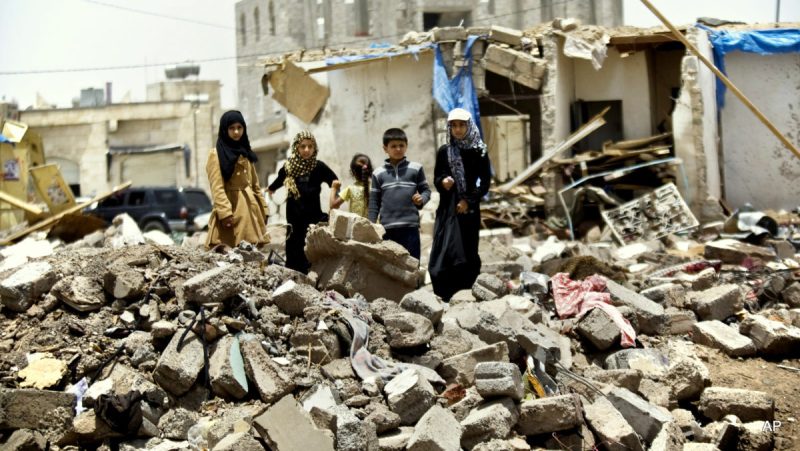
Photo Credit: AP Photo/Hani Mohammed
The Cradle | November 12, 2022
Talks between Yemeni and Saudi delegations in Oman have continued “uninterrupted” since the end of the UN-brokered ceasefire on 2 October, according to sources in the know that spoke with Lebanese daily Al Akhbar.
The report claims the Saudi delegation has shown “remarkable flexibility” in several of the outstanding issues, most notably offering to secure funding for the payment of state employees’ salaries.
They have also shown openness to lift road blockades and to allow flights from Sanaa International Airport to reach more destinations than the two currently allowed: Jordan and Egypt.
Nonetheless, issues still remain, as Riyadh reportedly wants to publicly label these measures as “helping the brothers in Yemen,” not as compensation for seven years of war.
Yemeni officials allegedly shot down this idea, as it would misrepresent Riyadh’s role in ravaging Yemen and pushing it to the brink of famine. Moreover, they have also rejected an offer for the head of Yemen’s Supreme Political Council, Mahdi al-Mashat, to lead an official delegation to the Saudi capital.
Earlier this month, The Washington Institute published a report based on a visit to the kingdom by Executive Director Robert Satloff and David Schenker, in which they assert that “Saudi Arabia clearly wants out of the [Yemen] conflict today.”
However, the behind-the-scenes progress to achieve this goal comes despite increased efforts by the Saudi-led coalition, Israel, the US, and the UK to consolidate their military presence in southern Yemen and on the country’s islands.
Earlier this week, Mashat warned that the US role in the ceasefire talks “is malicious and dangerous.”
“The armistice negotiations had previously reached a level of good understanding, but the US envoy, Tim Linderking, deliberately sabotaged them during his most recent tour of the region,” the head of Yemen’s Supreme Political Council said on 7 November.
“The US is trying to impede any sincere efforts to achieve sustainable peace in Yemen,” Yemen’s Ansarallah resistance group warned in a statement earlier this month.
According to the sources who spoke with Al Akhbar, the growing rift between Washington and Riyadh has spilled over onto their cooperation in Yemen, as the US now favors “interim solutions” rather than a comprehensive end to the war in order to maintain a “playing card” to use against Saudi leaders.
US, UK preparing for fresh escalation in Yemen: Ansarullah
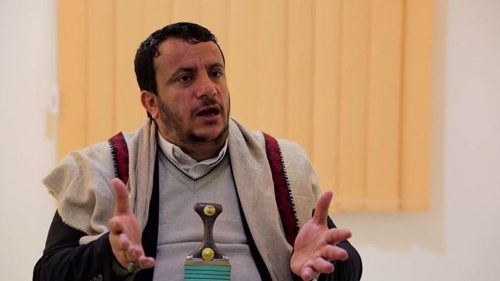
Ali al-Qahoum, a member of the Yemeni popular resistance Ansarullah movement’s Political Bureau (Courtesy of al-Mayadeen)
Press TV – November 6, 2022
Yemen’s popular resistance Ansarullah movement warns about the United States and the UK’s fresh malicious intentions in the war-ravaged country.
Ali al-Qahoum, a member of Ansarullah’s Political Bureau, raised the alarm during an exclusive interview with Lebanon’s al-Mayadeen television network on Sunday.
There is “a direct US military presence in Yemen, and an influx of US forces, specifically in Hadhramaut,” he said, referring to Yemen’s biggest province, which spans from the country’s center towards its eastern areas.
“There is also an influx of British forces into al-Mahrah,” he added, referring to Yemen’s second-largest province that neighbors Hadharamaut to the east.
The US and the UK were preparing for a fresh round of escalation in Yemen, he further warned without elaborating.
The Western countries have been contributing heavily and unabatedly to a war of aggression that a Saudi Arabia-led coalition has been waging against Yemen since 2015.
The coalition has been seeking, unsuccessfully though, to restore Yemen’s power to the country’s former Western- and Riyadh-aligned officials. The war has killed hundreds of thousands of Yemenis and spawned the world’s worst humanitarian crisis.
Washington and London have been providing the coalition with direct arms, logistical, and political support, including through outfitting it with precision-guided ammunitions that the Saudi-led forces have been using amply against Yemen’s civilian population.
Al-Qahoum said new US and British military delegations had arrived in Yemen earlier this week.
Reporting on Wednesday, Yemen Press Agency cited informed local sources as saying that Hadhramaut’s Provincial Governor, Mabkhout bin Madi, had held a face-to-face meeting with the US delegation in his office.
The Ansarullah official, however, asserted that despite the Western states’ apparent preparations for a new flare-up in Yemen, “the Yemenis are ready to defend their dignity and every inch of their country.”
“Ansarullah has military capabilities that preserve Yemen’s sovereignty and independence,” he added.
Yemeni army carries out ‘warning’ operation against Greek tanker
The Cradle | October 22, 2022
Yemen’s Armed Forces announced on 21 October they carried out a “warning” drone strike on Al-Dabba port of Hadhramaut in order to prevent a Greek tanker, the Nissos Kea, from looting oil from the facility.
This was the first attack carried out by Yemen’s forces since the expiration of the UN-brokered truce agreement on 2 October.
The country’s official military spokesman, Brigadier General Yahya Saree, said in a statement that “the oil ship violated the decision issued by the competent authorities to ban the transportation and export of Yemen’s sovereign oil derivatives.”
“The warning message came after addressing the authorities of that ship, and informing them of the decision based on Yemeni laws … The ship was dealt with through cautionary measures, through which we were keen to preserve the safety of its crew and the security of Yemen’s infrastructure,” Saree added.
According to Hadhramaut’s governor in the Saudi-backed Presidential Council, Mabkhout ibn Madi, the ship was meant to arrive at Al-Dabba port a week ago, but remained stationed outside of Yemeni waters due to threats issued against the Greek Ministry of Transport.
“Greece transmitted these threats to us, and to the Ministry of Oil,” Ibn Madi said. Following the ship’s entry into Al-Dabba port, however, its crew ignored the warning issued earlier this month by Yemen’s Supreme Economic Committee and proceeded to attempt an oil looting operation.
According to exclusive sources, the drone strike targeted the area between the Greek ship and the port buoy, sending a “clear military message,” but not compromising the safety of the tanker’s crew, as planned. This is not the first time a Greek vessel is involved in the looting of Yemen’s natural resources.
“The American envoy has been communicating for two weeks with mediators in Sanaa to allow the tanker to ship oil from Al-Dabba port,” the sources added.
As Washington and its allies face a severe energy crisis of their own making, the US is in desperate need of immediate sources of energy, a likely reason that its envoy pressured Sanaa to allow the Greek tanker to make off with the oil. As a result of this energy crisis, US forces have stepped up their oil looting operations in Syria.
The Yemeni operation comes as a renewal of the several warnings issued by the Armed Forces and the Ansarallah resistance movement against the international oil companies operating in the country, and against the Saudi-led coalition, who have consistently plundered Yemen’s oil.
The Saudi-backed government, however, has claimed to have intercepted the operation.
Over a million Saudi citizens forcibly displaced in Jeddah to make way for extravagant project
The Cradle | October 22, 2022
More than one million people have become victims of forced displacement and have not received adequate compensation as old neighborhoods are being demolished in the city of Jeddah, Saudi Arabia, to make way for luxury hotels and entertainment venues, according to human rights groups.
On December 2021, the Saudi Public Investment Fund — chaired by Crown Prince and newly appointed Prime Minister Mohammed bin Salman (MbS) — announced the launch of a development project called ‘Jeddah Central,’ which would include a museum, an opera house, a stadium, an aquarium, hotels, and new residential neighborhoods.
Democracy for the Arab World Now (DAWN), a US-based rights group, stated that “while the Riyadh regime is expected to spend more than $20 billion on the ambitious plan, very little of that amount has been allocated to compensate the 1.5 million people who have lost or will lose their homes and livelihoods”, according to PressTV.
A research conducted by DAWN concluded that ”the Saudi forced displacements are in violation of international law since the measures are incompatible with internationally recognized legal principles to guarantee and protect the population’s rights.”
France 24 reported that Saudi authorities have carried out demolitions in some 60 different neighborhoods, mostly located in the southern part of the city. Demolitions are expected to continue and more neighborhoods are expected to be affected in the coming months.
The revelations come just days after it was revealed that Saudi Arabia’s Specialized Criminal Court sentenced three members of the Howeitat tribe to death a few weeks ago, for resisting their forced eviction and displacement from the country’s northwestern Tabuk region.
The three tribesmen, Shadli, Atallah, and Ibrahim al-Howeiti, were detained in 2020 for speaking out against the eviction of their tribe from the area, which was cleared by Saudi authorities in order to make way for the Neom project.
The Neom project, announced in 2017 by MbS, is a $500 billion megacity being built in the Tabuk region, which plans to serve as a “technological hub and tourist destination.”
Saudi-led coalition seizes new emergency fuel ship headed for Yemen
The Cradle | October 21, 2022
On 21 October, the Saudi-led coalition seized the oil tanker ‘Lady Sarah,’ preventing it from reaching Yemen’s port of Hodeidah despite its previous inspection in Djibouti and having permits from the UN Verification and Inspection Mechanism (UNIVM).
Yemeni officials revealed that three ships are currently detained by the coalition. Since the beginning of 2021, the Saudi-led coalition has impounded at least 13 ships near the Yemeni coast.
The official spokesperson for the Yemeni Petroleum Company (YPC), Issam Al-Mutawakel, said that Sanaa holds the UN partially responsible for the humanitarian and economic consequences of the coalition’s actions.
Just one week ago, delegations from Yemen and Saudi Arabia visited each other’s capitals to discuss a prisoner exchange deal, marking the first time a Saudi delegation arrived in Sanaa since the Ansarallah resistance group took control of the city in 2014 and ended the reign of the Saudi-backed president.
A delegation representing Ansarallah also visited Riyadh and toured the prisons that are holding Yemeni fighters.
“Our technical team was tasked with validating the names and condition of our prisoners ahead of a possible exchange deal,” said Abdul Qadir al-Murtada, head of the prisoners’ committee in Yemen’s National Salvation Government.
Murtada added that the Saudi delegation visited for a similar purpose and toured Sanaa’s prisons, meeting the Saudi army’s prisoners of war.
“We do not accept a situation where Yemeni people are caught between war and peace,” Yemeni Foreign Minister, Hisham Sharaf, said during a meeting with a UN representative on 11 October.
Oman has reportedly been making progress in mediating the dispute between Yemen and Saudi-led coalition to restart the UN-sponsored truce that expired earlier this month.
Citing well-informed sources in Sanaa, Arabic media reports say Omani officials have made inroads in settling several issues, particularly relating to the opening of Sanaa airport and the lifting of restrictions imposed on the port of Hodeidah.
However, issues remain over Sanaa’s demand that the country’s oil revenues be used to pay the salaries of state workers and the army. In this regard, the Saudi-appointed government in Aden has reportedly agreed to pay the pensions of military retirees exclusively, along with the salaries of all civil servants.
Americans criticize US Middle Eastern policies
By Viktor Mikhin – New Eastern Outlook – 18.10.2022
The USA never misses an opportunity to present itself as an open and democratic society and a state in which the government authorities respect the will of the majority of the people and tailor their policies accordingly. That may have been the case in the past, but the facts no longer support this view – the President and his team are pushing through policies which favor their own interests and which are quite different from what they promised in their election campaigns.
There is a great deal of evidence to support this claim, but one particularly striking example is a new wide-ranging survey of Americans’ views on Washington’s foreign policy in the Middle East. The survey revealed that the majority of young Americans oppose their country’s policy in relation to Israel and, specifically against its sale of arms to the Israeli regime. The survey also shows that there is a great deal of support in American society for the Iran nuclear deal.
The survey, conducted by the Eurasia Group Foundation (EGF), shows that young Americans are more politically aware than older generations in relation to Israel’s aggressive policies against the Palestinians and its Arab neighbors. Most respondents aged between 18 and 29 were not in favor of continuing to supply arms to Israel. Older Americans (over sixty years old), on the other hand, tend to be in favor of the US providing military support to Israel.
The US supplies Israel with military aid worth some $4 billion a year. As a result, Israel is the biggest recipient of American military support in the world. But this support is being paid for by American taxpayers, many of whom are unaware that their taxes are being used to support the genocide and ethnic cleansing of the native Palestinians. Similarly, more than 80% of Americans support the Biden administration’s policy of negotiating in order to revive the Iran nuclear deal, as they consider that this will help improve the situation in the Middle East. Both in the region and at the international level there is a great deal of debate about how ready ordinary Americans are to criticize their government’s military support for dictatorships and authoritarian regimes enforcing policies of territorial occupation and ethnic segregation. Washington, in a bid to justify its actions, frequently claims that its support is made necessary by so-called security concerns, but many are skeptical of these arguments, dismissing them as cheap populism.
Mark Hannah, senior fellow at the Eurasia Group Foundation, describes the motivation behind the survey, “We began this survey five years ago because we believed lawmakers and foreign policy leaders conducting foreign policy on behalf of the American people would benefit from a window into their opinions and priorities.” He also expressed the hope that the survey results would be used by decision makers responsible for foreign policy in relation to the Middle East would study the survey “to make the activities they pursue more sensitive to – and informed by – the opinions of their constituents, and to bridge the gap between the concerns of policymakers and those of ordinary Americans.”
Unfortunately, the above hope is very naive: officials in Washington and in the Biden administration do not take the interests of ordinary Americans into account when making foreign policy decisions. It would suffice to cite Washington’s involvement supporting neo-Nazi groups in the war in Ukraine, thus threatening the world with nuclear war.
Or one could cite its offer to supply Israel – completely free of charge – with four Boeing military refueling aircraft over the next four years. Boeing signed a contract with the US Defense Department for the supply of four Boeing KC-46 Pegasus aircraft at a cost of $927 million. In effect, this means that the purchase price of $927 million will be paid by the US taxpayer, and Boeing will make a handsome profit from the transaction. According to Israeli media reports and also official government sources, Israel is already planning to use these state-of-the art aircraft to attack Iranian territory. It is obvious that the revival of the so-called Iran nuclear deal is in the interests both of the USA and of ordinary Americans, and that it would have a very positive effect on the highly tense situation in the Middle East.
In a formal statement on the decision to supply Israel with the refueling planes, Benny Gantz, Israel’s Minister of Defense, said, “This is further proof of the alliance and the strategic relations of the Israeli and American defense establishments.” In line with their standard practice, the Minister of Defense and other Israeli officials, along with their counterparts in Washington, all falsely name Iran as the justification for their huge military aid budget. This military aid has support from both parties in Congress, and is approved each year by a majority of lawmakers, even though this support goes against the interests of ordinary Americans.
According to a study by Maryland University, less than 1% of respondents consider Israel to be one of Washington’s two main allies. Many other surveys conducted over a number of years confirm the findings of the Eurasia Group Foundation. Earlier this year a survey by Pew Research also found that Americans under 30 tended to have a negative view of Israel. 61% of respondents in that age group felt sympathy towards the Palestinians. Maryland University also found that only a small proportion were in favor of stronger links with Israel, and that Israel is able to manipulate these links to favor its own interests.
In an interview with Middle East Eye, Dr. Zuri Linetsky, a Research Fellow at the Eurasia Group Foundation, explained that many American respondents who stated that they were against arms sales to Israel explained that they saw Israel’s long-term occupation of Palestinian territory as a violation of human rights. That last survey also found that many Americans are against their government’s continuing arms sales to Saudi Arabia, with 70% of respondents critical of Washington’s policy in relation to Riyadh.
That is despite the fact that rights groups are deeply concerned about the Biden administration’s continuing approvals of new arms sales to countries such as Israel, which have a record of invading other Arab nations. In August President Biden approved a $5 billion sale of rocket technology to Saudi Arabia and the UAE. The survey also shows that respondents are in favor of reining in US military involvement abroad, and, conversely, want to see the US administration make more efforts in the field of diplomacy, especially in relation to US rivals.
One of the key findings of the survey conducted by the Eurasia Group Foundation is that respondents attach a lot of importance to the Iran nuclear deal. It revealed that, irrespective of whether they vote Democrat or Republican, most Americans are in favor of talks with Tehran. Almost 80% of them support Joe Biden’s administration engaging in talks to revive the nuclear deal. To a great extent, support for the talks cuts across party divisions, with more than 70% of Republicans believing that the USA should continue with the talks.
However, approximately 80% of respondents also feel that Congress should more strictly control the President’s powers and authority in military matters, and that such decisions should be made by Congress. The USA has invaded many countries, most notably Afghanistan and Iraq, and its military continues to be involved in combat operations in Syria. Washington is also still illegally “occupying” a number of Arab countries, and has military bases in Kuwait, Qatar, Oman, Saudi Arabia and Bahrain. And the Pentagon does all this without consulting Congress – it prefers to take action and present the legislature with a fait accompli.
When asked about Afghanistan, almost two thirds of respondents consider that the most important lesson to be learned from the Afghan war is that the USA should not be involved in nation-building, or that it should only send troops into harm’s way if its vital national interests are threatened.
As for nuclear weapons, almost 75% of respondents said that they were concerned about this problem. Those respondents who have served or currently serve in the armed forces were less concerned than those with no military experience. “For the vast majority of the 21st century, the United States has been involved in conflicts in far-flung parts of the world. So the question is, is this what the American people want? Does this represent their interests?”, asked Zuri Linetsky, in his interview with Middle East Eye.
In conclusion, the author can confidently state that the survey is a good test to determine the areas in which respondents are dissatisfied with American policies in relation to the Middle East, and what they consider should be their leaders’ priorities, whether concerning international or domestic matters. The survey shows that in relation to many questions, the White House’s policies are inconsistent with the views of the majority of respondents. The survey sample was made up of a highly diverse group of Americans from all parts of the country, with different religions, political affiliations, drawn from every age group and representing all income levels.
What kind of democracy is that?
Americans should know if US pressured Middle East ally – congressman
Samizdat – October 16, 2022
House Speaker Nancy Pelosi should look into whether the White House pressured Saudi Arabia to delay OPEC+’s promised oil production cut, Republican Tom Tiffany demanded in a letter to the congresswoman on Thursday.
The Saudi government had claimed earlier that day that the US government had requested a one-month delay in the 2 million barrels per day production cut announced earlier this month. Putting off the cut, it implied, would postpone the surge in energy prices expected to accompany the move until after the US midterm elections. However, “postponing the OPEC+ decision by a month… would have had negative economic consequences” for Riyadh, a statement from the Kingdom read.
The administration of US President Joe Biden responded by accusing its sometime Arab ally of attempting to “spin and deflect.” The Saudis “knew [the production cut] would increase Russian revenues and blunt the effectiveness of sanctions,” White House spokesman John Kirby reminded Americans.
However, Kirby did not deny their claim outright. He suggested that “other OPEC nations” had “privately” approached the US to support its bid to postpone the reduction, implying that it could not have been solely motivated by the desire to keep control of Congress in November.
“If the Biden administration did attempt to pressure a foreign government to influence the outcome of the US election, that’s something Americans deserve to know,” Tiffany tweeted on Thursday alongside his letter to Pelosi.
If the Saudis’ claims are to be believed, he wrote, the administration’s efforts to postpone the cut amounted to an “illegal solicitation of a foreign in-kind contribution by the White House on behalf of Democrats’ midterm campaign efforts.”
In addition to investigating whether calls took place between the Biden administration and the Saudis about potentially delaying the production cut, Tiffany urged Pelosi to obtain the transcripts of those calls. He also insisted that US administration officials who may have asked Saudi officials to delay the cut be identified.
Biden’s national security adviser, Jake Sullivan, confirmed on Sunday that the president would act “methodically” to re-evaluate the US relationship with Saudi Arabia. The administration has been threatening to “reassess” the partnership ever since the price cut was announced. However, while the president warned there would be “some consequences” for the Saudis, their nature has yet to be publicly revealed.
Inflation and the high cost of living are the chief issues on voters’ minds heading into the midterms next month, casting the Democrats’ ability to hold onto both the House and Senate into doubt as polls indicate few voters trust Biden to effectively manage the economy.
Saudi Arabia calls out US bluster
BY M. K. BHADRAKUMAR | INDIAN PUNCHLINE | OCTOBER 14, 2022
Saudi Arabia has politely but firmly rebutted the threats and calumnies levelled by the US political elites in the past week since the OPEC decided to cut oil production by 2 million barrels per day. On Thursday, a Foreign Ministry official in Riyadh forcefully pushed back the allegation that the OPEC decision was at Saudi initiative and was politically motivated against the US, and, worse still, to help Russia.
The Saudi official rejected the US allegations as baseless, especially the imputation that Saudi Arabia is “aligning” with Russia in the context of the Ukraine situation. The official made three substantive points:
- The OPEC+ decision constitutes the unanimous opinion of the member states and it is preposterous to attribute it to Saudi Arabia.
- Purely economic considerations lie behind the decision, which takes into account the imperatives of maintaining balance of supply and demand in the oil market and limiting the volatility.
- Saudi Arabia has taken a principled stance on the Ukraine issue, as its votes supporting two UN resolutions testify.
The Saudi official, inter alia, made a startling disclosure that the Biden Administration had actually tried to get Riyadh to postpone the OPEC+ decision by a month. Presumably, the rage in Washington today is not so much about the oil prices as the panic that the OPEC decision casts on the US diplomacy and foreign policy in general — and, especially, on President Biden personally — in a poor light as ineffectual and illogical, as the Republicans are highlighting.
Conceivably, the one-month delay that was sought was intended to overlap the forthcoming midterms in the US on November 8. Unsurprisingly, the Saudis didn’t oblige the White House and it now becomes an unforgivable slight on the US’ sense of entitlement and Biden’s vanity.
Suffice it to say, the Democrats and the Biden Administration have worked themselves into a frenzy because of their fear that the price of gas can become a combustible issue that may spell doom at the midterms. Some Democrats have gone to the absurd extent of suspecting that the Saudis are deliberately interfering in the US politics to help the Republicans’ electoral prospects.
The Saudi statement has pointedly rejected “any dictates, actions, or efforts to distort its (Saudi) noble objectives to protect the global economy from oil market volatility.” It is a mild warning that any anti-Saudi moves will meet with resistance and will have repercussions.
The Saudi statements came within hours of an interview by Biden with the CNN on Thursday, where he warned that “There’s going to be some consequences for what they’ve (Saudis) done, with Russia. I’m not going to get into what I’d consider and what I have in mind. But there will be — there will be consequences.”
Later, John Kirby, a White House National Security Council spokesman, said Biden believes “it’s time to take another look at this relationship and make sure that it’s serving our national security interests.”
Biden himself was speaking a day after the influential Democratic senator from New Jersey Bob Menendez threatened to block cooperation with Saudi Arabia. He excoriated Saudi Arabia, accusing it of helping “underwrite Putin’s war through the OPEC+ cartel.” Menendez ripped into the kingdom, and went on to say that the US must “immediately freeze all aspects of our cooperation with Saudi Arabia, including any arms sales and security cooperation beyond what is absolutely necessary to defend US personnel and interests.”
In good measure, Menendez added an ultimatum that he would not “green-light any cooperation with Riyadh until the Kingdom reassesses its position with respect to the war in Ukraine. Enough is enough.”
Quite obviously, the White House’s strategy is to obfuscate the matter by making the OPEC+ decision a geopolitical challenge to the US strategies concerning Ukraine and Russia rather than as a historic rebuff to Biden’s clumsy personal diplomacy — which it is — to try to get Saudi Arabia on board his fanciful project to bring down the oil prices so that Russia’s income from oil exports will be severely curtailed.
The fact of the matter is that the OPEC decision virtually derails the Biden Administration’s pet project to impose a price cap on Russia’s oil exports. Simply put, that hare-brained project, conceived by the US Treasury Secretary Janet Yellen, flounders if oil prices remain high.
Interestingly, the G7 statement last week on Ukraine and Russia did not make any references to the price cap project. On the other hand, high oil prices will further aggravate the economic crisis in Europe even as the EU is moving towards terminating all oil imports from Russia by December 5. Meanwhile, the Biden Administration is acutely conscious that the Europeans — Germany and France included —are increasingly murmuring their discontent that the Americans played them and are selling gas at vastly higher prices in the European energy market.
When an influential senator like Menendez throws down the gauntlet to Riyadh, it can be taken as signalling that some retaliatory action against Saudi Arabia is in the cards. Democratic Sen. Richard Blumenthal of Connecticut and Rep. Ro Khanna of California have introduced legislation that would immediately pause all US arms sales to Saudi Arabia for one year as well as halt sales of spare and repair parts, support services and logistical support.
But appearances can be deceptive. The vehemence of the rage and rave have a contrived look, a touch of bluster. Significantly, in his CNN interview, Biden stopped short of endorsing the Democratic lawmakers’ call to halt weapons. Biden merely said he would look to consult with Congress on the way forward.
Whereas, Menendez has promised to use his position as chairman of the Senate Foreign Relations Committee to block any future arms sales to the Saudis. Quite obviously, the anger with Saudi Arabia has become far more palpable on Capitol Hill, but will it translate into action?
The big question is how much of this bluster is with an eye on the mid-terms in November. The White House national security adviser, Jake Sullivan, told reporters that Biden was also looking at a possible halt in arms sales as part of a broader re-evaluation of the US relationship with Saudi Arabia, but that no move was imminent.
Indeed, any attempt to rebalance relations with Saudi Arabia will have ripple effects at a time when the contours of an emerging alliance between Saudi Arabia and Russia are becoming apparent, the Iran question remains unresolved and high oil prices upset the US consumer and deepen the crisis in Europe — and, of course, so long as the petrodollar remains a key pillar of the western banking system. Besides, as things stand, US influence in the West Asia is today a pale shadow of what it used to be, and alienating Saudi Arabia to a point of no return will be an exceedingly foolish thing to do.
Above all, will the military-industrial complex in the US countenance a US-Saudi break-up? Saudi Arabia is the proverbial goose that lays golden eggs. It is a terrific paymaster for the American arms industry. Geopolitical analysts often call it the US’ ATM. Equally, the bottom line is that the Democrats wouldn’t even be able to garner enough Republican support to pass legislation once Congress is back in session next month.
The Saudi statement concludes with a word of advice for American diplomacy in these extraordinary times of multipolarity: “Resolving economic challenges requires the establishment of a non-politicised constructive dialogue, and to wisely and rationally consider what serves the interests of all countries.” (Emphasis added.) It ended recalling that “the solid pillars upon which the Saudi-US relationship had stood over the past eight decades” include mutual respect and common interests, amongst other things.
Saudi minister blames Washington for soaring fuel prices in the US
The Cradle | October 8, 2022
Saudi Arabia’s Minister of State, Adel al-Jubeir, rejected claims that the kingdom is behind soaring gas prices in the US, citing instead insufficient refinery production and asserting that the Gulf country does not politicize oil.
“With due respect, the reason you have high prices in the United States is because you have a refining shortage that has been in existence for more than 20 years… You haven’t built refineries in decades,” Jubeir said during an interview on Fox News on 7 October.
“Oil is not a weapon… It’s not a fighter plane. It’s not a tank. You can’t shoot it. You can’t do anything with it. We look at oil as a commodity and we look at oil as important to the global economy in which we have a huge stake. The idea that Saudi Arabia would do this to harm the U.S. or to be in any way politically involved is absolutely not correct at all,” the Saudi official added.
The minister made the claim that the issue on oil production has “been taken out of context by perhaps commentators and analysts,” while assuring that Riyadh is “committed to ensuring stability in the oil markets to the benefit of consumers and producers.”
Following the decision by OPEC+ to cut production output levels by two million barrels per day (bpd), Washington fired back strongly at it’s Gulf partners, with White House Press Secretary Karine Jean-Pierre accusing them on 5 October of “aligning with Russia.”
For weeks before the cut, the US had been lobbying OPEC+ and pressuring it against making the decision, sources told media, as US officials “tried to position the situation as ‘us versus Russia.’”
Saudi officials reportedly told their US counterparts that Washington should boost its own production if it wanted more oil on the market.
Tensions have escalated further between Saudi Arabia and the US in the wake of the production cut, with Secretary of State Antony Blinken saying on 6 October that Washington is reviewing various options regarding its relationship with the kingdom.
The geopolitical consequences of the OPEC+ agreement

By Hazem Ayyad | MEMO | October 7, 2022
Amir Hossein Zamani Nia, Iran’s OPEC governor, announced when he left a meeting with representatives of the 13 member states of the Organisation of Petroleum Exporting Countries (OPEC) and their ten allies – known as OPEC+ – the decision to reduce oil production by two million barrels per day for November.
The initial reactions to the large production cut were hysteria. One American journalist asked the Saudi Minister of Energy, Prince Abdulaziz Bin Salman, if he was worried about the American reaction to the production cut. He sarcastically told her to enjoy the sun in Vienna; a clear indication of the difficulties that Europeans will face next winter.
The American reactions to the decision of the OPEC+ countries were quick and distinct. White House press secretary Karine Jean-Pierre commented on the decision by saying it was clear that the OPEC+ alliance was “aligning with Russia” and was making a “short-sighted decision” to reduce oil production at the height of the conflict in Ukraine.
White House National Security Adviser Jake Sullivan noted that US President Joe Biden was feeling “disappointed” with the decision of the OPEC+ alliance to reduce its oil production.
The reactions confirm President Biden’s failure to manage the sanctions against Russia and the dismantling of the OPEC+ alliance, whose decisions ruined the ambitions of the US administration, the US Treasury, and the Federal Reserve to fight inflation and reduce interest rates.
The OPEC+ alliance has once again proven its strength and the unity of its countries, which include Iran, Saudi Arabia, the UAE and Russia. Despite the disparity, competition and conflict between its countries, the OPEC+ agreement exceeded the limits of technical performance confirmed by UAE Energy Minister, Suhail Al Mazrouei, when his country announced it was joining the efforts to reduce production. Its geopolitical reach extended from the Gulf and Yemen to the Red Sea and the Mediterranean.
The agreement that included regional opponents such as Iran, Saudi Arabia and the UAE, and international sponsors such as Russia, stressed the geopolitical dimensions as it coincided with a meeting held by the Russian President’s Special Envoy to the Middle East and Africa, Deputy Foreign Minister Mikhail Bogdanov, on Wednesday evening with the Emirati Ambassador to Moscow, Mohammed Ahmed Al-Jaber, to discuss the situation in Yemen and the Gulf region after the expiry of the deadline for the truce agreement in Yemen on 2 October.
This meeting came at the request of the Emirati ambassador and coincided with threats made by a member of the Political Bureau of the Houthi movement, Muhammad Al-Bakhiti. He said: “We have the ability and the courage to strike the Saudi and Emirati oil facilities if our demands are not met.”
The meeting with the Emirati ambassador coincided with a press conference held by the US special envoy to Yemen, Tim Lenderking, during which he discussed his country’s position on renewing the truce in Yemen between the countries of the Arab coalition, led by Saudi Arabia and the UAE, and the Houthi group. The US official held the Houthis responsible for hindering the reaching of an agreement without providing practical solutions for resuming the truce or dealing with Houthi threats.
These actions and movements confirm the connection between the regional files and their connection to the international mediations led by both America and Russia in Yemeni. Saudi Arabia and the UAE view the OPEC+ agreement as a trump card and a comprehensive framework that allows activating mediations and truces in Yemen, with the positive and consensual atmosphere it provides, which the Biden administration was unable to provide. This is despite its frequent talk about security cooperation in the Red Sea and the Gulf and naval and air manoeuvres, but it quickly turned into a political and economic framework that serves Israel and its interests more than it serves the interests of Riyadh and Abu Dhabi.
OPEC+ has shifted from a technical framework to an emerging economic and geopolitical framework; fuelled by the Ukrainian war and Russian demands. The tense American reactions deepened the Arab Gulf states’ mistrust of the American partner, which repeatedly failed to deal with the Yemeni and Iranian file. It also failed to deal with the economic requirements of the Gulf states and their political and cultural specificity, which put them in conflict with the powers of the region and threatened their political and religious legitimacy.
This article first appeared in Arabic in Arabi21 on 6 October 2022.
As truce ends, Yemen warns oil companies to leave Saudi Arabia, UAE
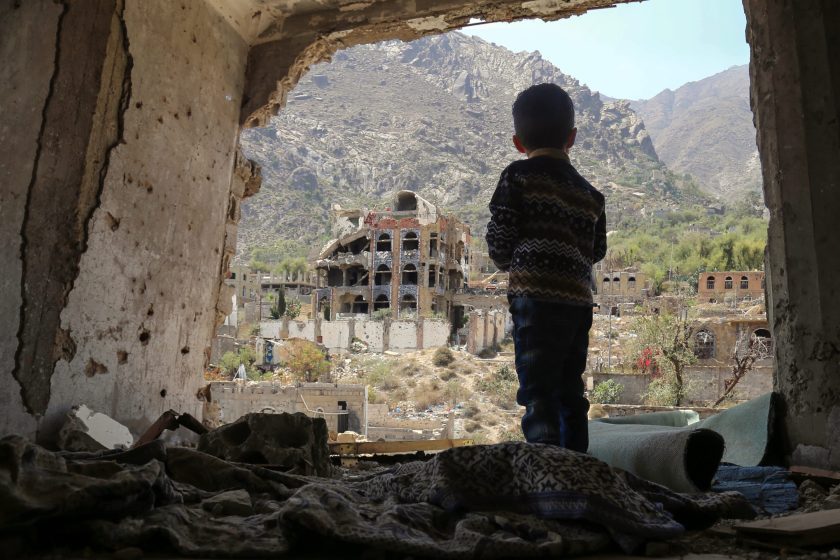
Press TV – October 2, 2022
Yemen’s Armed Forces have put oil companies operating in Saudi Arabia and the United Arab Emirates on notice, warning that they could be targeted as long as Riyadh and its allies fail to commit to a proper ceasefire.
Tweeting on Sunday, the Armed Forces’ spokesman Brigadier General Yahya Saree said Yemeni troops were providing the oil companies with a window of opportunity to leave the Saudi and Emirati soils “fast.”
The Saudi kingdom and its allies, most notably the United Arab Emirates, have been waging a war against Yemen since March 2015, trying, in vain, to restore Yemen’s power to its former Riyadh-friendly officials. The military campaign, which has been enjoying unstinting arms, logistical, and political support from the United States, has killed hundreds of thousands of people, and turned the entire Yemen into the scene of the world’s worst humanitarian crisis.
A temporary United Nations-mediated ceasefire took effect between the warring sides in April and has been renewed twice ever since. The truce, however, expired on Sunday amid the invading coalition’s constant violations of the agreement and its refusal to properly lift a siege that it has been enforcing against Yemen simultaneously with the war.
“The warning,” Saree said, “stands as long as the countries that make up the invading American-Saudi coalition refuse to adhere to a ceasefire that allows the Yemeni people to exploit their oil wealth….”
Also on Sunday, Hans Grundberg, the United Nations’ special envoy for Yemen, confirmed failure of efforts aimed at extending the truce.
“The UN special envoy regrets that an agreement has not been reached today, as an extended and expanded truce would provide additional critical benefits to the population,” a statement said.
“I urge [the warring parties] to fulfill their obligation to the Yemeni people to pursue every avenue for peace,” the Swedish diplomat was quoted as saying.
Featured Video
BRITAIN’S WARNING: PREPARE FOR WAR
or go to
Aletho News Archives – Video-Images
From the Archives
British weapons and personnel doing much of the killing in Yemen
Press TV – June 18, 2019
A detailed report published by the Guardian newspaper has shown how Britain is massively contributing to Saudi Arabia’s devastating war on Yemen as it suggests that London is not only supplying the bombs that fall on Yemenis, but it provides the personnel and expertise that keep the war going.
The comprehensive report by Arron Merat published on Tuesday showed that Britain was doing much of the killing in Yemen as the country continues to provide Saudi Arabia with everything it needs to turn its southern impoverished neighbor into a graveyard.
“Every day Yemen is hit by British bombs – dropped by British planes that are flown by British-trained pilots and maintained and prepared inside Saudi Arabia by thousands of British contractors,” said Merat in the report. … continue
Blog Roll
 Aletho News
- A West Bank War for Netanyahu’s Election Campaign, Could It Backfire?
- Yemen denounces European Parliament’s ‘hypocritical’ push to blacklist Ansarullah
- Qalibaf: UAE’s UN bid aims to ‘clear the runway’ for ‘Greater Israel’, whitewash genocide
- Pakistan reopens Iran border after boosting security: Report
- Why are so many Brazilians voting for Flávio Bolsonaro?
- Democrats Put Anti-Russia Agenda Ahead of American Workers
- Elijah Magnier: Yemen’s Strikes Are Shattering Saudi Arabia’s Long-Term Strategy
- Pentagon designates Chinese cultural centers national security threat
- Israel Demolishes Home Of Lebanese Journalist Whose Viral Film Exposed Pager Attack
- Record Oil, Empty Tanks: The UAE’s Miracle Recovery
- If Americans Knew
- An error has occurred; the feed is probably down. Try again later.
- No Tricks Zone
- Sudden Stratospheric Warming, Powerful El Niño Combination May Lead To Extreme Europe Cold, Energy Crisis!
- Two New Studies Find Thwaites Glacier Melt Cannot Be Driven By Human Activity Or A Warming Ocean
- E-Cars Reduce CO2 Emissions By Only 41% Compared To Internal Combustion Engine Vehicles
- Predictions Made By Renowned Climate Professor Over Past Decades Have Been Proven To Be Poor
- New Study Suggests Large Regions Of The Pacific Ocean Have Been Cooling For The Last 80 Years
- Germany’s Green Energy Debacle: High Energy Costs Force Kahla Porzellan to Close After 182 Years!
- New Study: 50 Years Of The Most Aggressive ‘Net Zero’ Policies Can Only Affect The Global Climate By 0.03°C
- US September “Heat” Was No Record…Many Records Set Decades Ago
- Latest European Green Energy Debacle; Portugal’s Largest Flagship Solar Park Insolvent!
- Green Energy Debacle: German Expert Professor Fritz Vahrenholt Warns Of Severe Economic And Social Consequences

