Russia vetoes anti-Iran UNSC resolution
Press TV – February 26, 2018
A UK-drafted resolution aimed at pressuring Iran over alleged weapons supplies to Yemeni fighters has failed at the UN Security Council.
On Monday, the resolution gained 11 favorable votes at the 15-member Security Council but was halted by Russia’s veto.
“We cannot concur with uncorroborated conclusions and evidence which requires verification and discussions within the sanctions committee,” Russian Ambassador Vassily Nebenzia told the council.
Earlier in the month, Britain circulated a draft resolution that would renew sanctions on Yemen for another year and also “condemns” Iran for allegedly breaching the 2015 arms embargo on the country by “failing to take the necessary measures to prevent the direct or indirect supply, sale or transfer” of short-range ballistic missiles, UAVs and other military equipment to Yemen’s Houthi Ansarullah movement.
The Houthi movement has been defending Yemen against a bloody Saudi-led military campaign, which was launched in 2015 with the help of the US and the UK to reinstall the country’s former Riyadh-friendly government.
The draft resolution, backed by France and the US, called for unspecified measures in response to the UN report about Iran’s alleged role in Yemen, stressing that the UNSC will take “additional measures to address these violations,” and that “any activity related to the use of ballistic missiles in Yemen” is a criteria for sanctions.
A group of UN experts monitoring the sanctions on Yemen reported to the Security Council in January that it had “identified missile remnants, related military equipment and military unmanned aerial vehicles that are of Iranian origin and were brought into Yemen after the imposition of the targeted arms embargo.”
The UN experts, however, said they were unable to identify the supplier.
Both Tehran and Sana’a have repeatedly rejected the allegations as a fabricated scenario, and said the armed forces of Yemen have strengthened their missile power on their own.
After the veto, the UNSC unanimously adopted a Russian-drafted measure to extend for one year the sanctions regime against Yemen.
‘Token Gestures’: International Rescue Committee Slams Saudi Yemen Relief Plan
Sputnik | February 23, 2108
This week, the International Rescue Committee issued a statement condemning Saudi Arabia’s Yemen Comprehensive Humanitarian Operations (YCHO), stating that the program is “neither comprehensive, nor reflective of clear, shared humanitarian priorities.”
Last month, the Coalition to Restore Legitimacy announced the launch of YCHO, a relief program that allegedly aims to improve the humanitarian situation in Yemen by committing billions of dollars in aid and support.
The three-year civil conflict In Yemen, which intensified when a Saudi-led, US-backed coalition launched massive airstrikes against the Houthi political opposition faction in 2015, has killed about 10,000 people and injured thousands more, placing more than 28 million Yemenis in dire need of humanitarian assistance. The number of suspected cholera cases in the war-torn country also hit 1 million by the end of December.
YHCO’s stated goals are to increase capacities of Yemeni ports so they can receive humanitarian and commercial imports, open an air bridge from Riyadh, Saudi Arabia, to Ma’rib in Yemen with daily cargo planes equipped with humanitarian aid, as well as establish 17 safe-passage corridors from six entry points in order secure safe transportation of aid to NGOs inside Yemen.
However, according to senior policy and advocacy director at the International Rescue Committee Amanda Catanzano, “The name [of YHCO] in itself is misleading: it is neither comprehensive, nor particularly humanitarian. The Saudi-led coalition is offering to fund a response to address the impact of a crisis it helped to create. The acute crisis in Yemen needs more than what appears to be a logistical operations plan, with token gestures of humanitarian aid.” In fact, the International Rescue Committee argues that the Saudi plan is more about gaining control over Yemen than about human rights.
In November, Saudi Arabia announced that it would temporarily close all ports in Yemen, the gateways through which some 70 percent of the country’s population receive food, medical aid and other supplies delivered.
According to the International Rescue Committee, the YHCO does not end the de-facto blockade. Given the severity of the Yemen humanitarian crisis, all ports should be permanently open, especially key ones like Hodeidah and Saleef. The YCHO only allows Hodeidah to remain open for 30 days, which will not make much difference on the ground, the International Rescue Committee claims in their statement. Although the development of more Yemeni ports could be helpful, it does not replace opening access to Red Sea northern ports like Hodeidah and Saleef, especially since the southern ports lack the necessary infrastructure and capacity. By controlling the flow of aid in the country, the Saudis are limiting aid to regions they control, particularly to “loyal” ports in the country’s south.
In addition, the YHCO does not address Yemen’s collapsed economy. Although the YCHO claims to aim to economically stabilize the country, it does not mention restoring basic public services including basic government services.
“A meaningful response to the world’s largest humanitarian crisis requires more access — not less. At best, this plan would shrink access and introduce new inefficiencies that would slow the response and keep aid from the neediest Yemenis, including the over 8 million on the brink of starvation,” said Catanzano. “At worst, it would dangerously politicize humanitarian aid by placing far too much control over the response in the hands of an active party to the conflict.”
When Will Congress Investigate All Interference in Elections?
By Philip M. GIRALDI | Strategic Culture Foundation | 22.02.2018
The atmosphere in the United States regarding possible Russian interference in the 2016 presidential election is something like hysteria, with a real danger that bilateral relations might break down completely as a result. Indeed, a number of politicians and senior government officials have described the allegations that Moscow sought to influence the election results as an “act of war” with Congressman Jerold Nadler even declaring that it was similar to Pearl Harbor.
Assuming that the indictment against 13 Russians and 3 Russian companies filed last week by Special Counsel Robert Mueller is accurate, the reported activity of the Internet Research Agency could indeed have been part of an intelligence operation seeking to influence developments in the US, but the organization’s employees also displayed considerable amateur behavior, suggesting that they were not professional spies, supporting the stronger argument that it was not a Russian government-run operation at all.
And the United States is hardly innocent when it comes to interfering in the domestic politics of both friends and enemies. That is very often what intelligence agencies are designed to do, and no one is more active in interfering in foreign governments and elections than the United States of America. The Russian election featuring Boris Yeltsin in 1996 was arranged by Washington working with the International Monetary Fund, and more recently there was the $5 billion invested in bringing “democracy” to Ukraine in 2014. The US was also involved in many of the elections in post-war Europe, most particularly in countries whose own democratic systems were still evolving. The CIA worked to keep communists out of the government in Italy’s 1976 national election. Conservative parties received sacks of money and articles warning about communism appeared in all the major newspapers. The major covert action proceeded even though Italy was a NATO member and the corruption that the intervention brought with it has blighted Italian politics to this day.
And then, there are America’s friends who in similar fashion interfere in US politics to support their own national agendas. Most active recently have been Israel and Saudi Arabia, both of which have an identical foreign policy goal, which is to end what they describe as the Iranian threat in their region. As neither has the resources to go it alone, both seek to involve the United States in what would likely be a catastrophic war for all involved, leaving Riyadh and Tel Aviv standing on the sidelines to pick up the pieces.
The Saudi lobby in the United States operates largely below the surface, working on individual congressmen and through the funding of think tanks. Israel’s manipulation of the US is, however, much more in the open. One can argue that what we are now calling Russiagate all started when Trump National Security Adviser designate Michael Flynn called Russian Ambassador Sergey Kislyak, on December 22, 2016. The call was made at the direction of Trump son-in-law Jared Kushner, who, in turn, had been approached by Israeli Prime Minister Benjamin Netanyahu to change a U.N. vote critical of Israel.
Kushner asked Flynn, the soon-to-be National Security Adviser, to help Israel by undermining what was being done by the still-in-power American government in Washington headed by President Barack Obama. In legal terms this most certainly could be construed as covered by the “conspiracy against the United States” statute that the Mueller investigation has exploited in the recent Russian indictments.
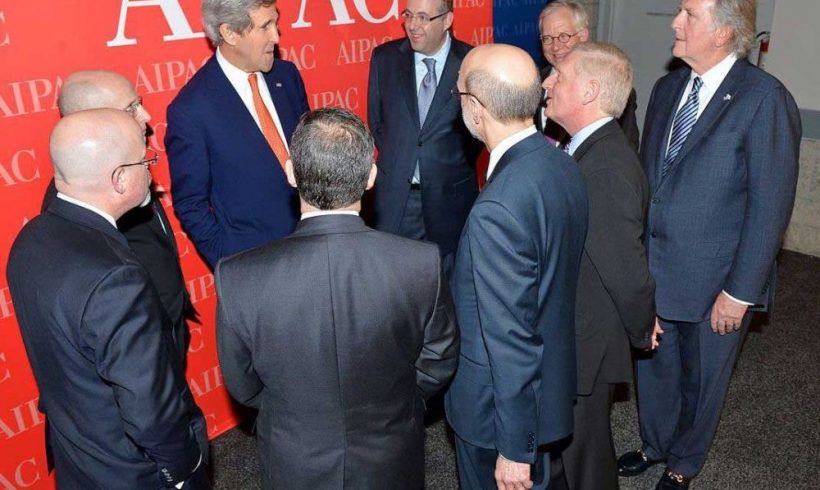
Mueller’s indictment specifically claimed that the Russians created false US personas while also stealing actual identities. But the Russians are being accused of involvement in activity that Israel engages in openly. It has interfered in US elections, to include promoting Mitt Romney over Barack Obama in 2012, and has a powerful and well-funded lobby in AIPAC that intervenes aggressively in American foreign and domestic policy. And the Israeli government’s propaganda arm uses its hasbara to use false internet identities to confuse and deflect critical stories. They do so routinely and do not even try to hide what they are doing. Part of their agenda is to smear critics and elect politicians favorable to them.
So, when will Mueller and the several congressional committees that are investigating the Russians move on to the topic of Israel and Saudi Arabia to find out what really effective foreign influencing operations looks like? Given the power of Israel and the Saudis over Congress, probably never.
Is Sweden complicit in Saudi war on Yemen?
Press TV – February 21, 2018
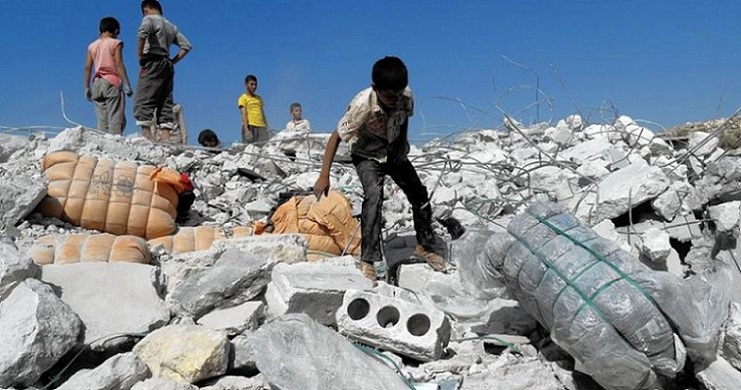
Last year, Swedish Foreign Minister Margot Wallström told a conference that the unfolding humanitarian crisis in Yemen was one that “has far too long been neglected and forgotten by the global community” and what Yemeni people were going through was “difficult to imagine.”
It is such statements that, besides leading various international peace efforts to help resolve major conflicts across the globe, including Saudi Arabia’s deadly war on Yemen, have helped Sweden establish the image of a peace-loving country that cares for others.
However, a steady rise in the Scandinavian country’s weapons business over the past years, including its major dealings with repressive Arab regimes in the Persian Gulf region, has cast doubt on Stockholm’s true intentions.
In fact the rise has been so fast that according to official data by the US government, Sweden is now the world’s third largest weapons producer per capita, closely following Russia and Switzerland while overtaking France, Britain and the US.
At the heart of Sweden’s weapons industry is Saab, a company that sold over $2.7 billion worth of weapons in 2016 alone, making its way into the world’s top 30 arms producing companies according to the Stockholm International Peace Research Institute (SIPRI).
Over the recent years, Saudi Arabia and the United Arab Emirates (UAE) have become some of the main customers for Swedish-made weapons.
Svenska Freds, a 135-years-old Swedish anti-militarization group, charges that Stockholm has been providing Riyadh with weapons since 1998, with a brief suspension in 2015 following a diplomatic row between the two countries.
The larger chunk of the trade has taken over in the past eight years. According to Svenska Freds, the arms sales to Saudi Arabia reportedly approached six billion Swedish kronor ($741mn) between 2010 and 2016.
That means the arms deals between the two sides have continued throughout Saudi Arabia’s deadly war on Yemen, which began in March 2015 and has killed nearly 14,000 Yemeni civilians.
The UAE, another Saudi ally in the bloody war, was able to secure a larger deal in 2016, when the Swedish administrative authority, the National Inspectorate of Strategic Products, authorized 11 billion Swedish kronor ($1.3bn) in arms sales to the Arab country.
Before that, the country had sold 2.1 billion kronor ($272mn) in weapons sales to the UAE.
In a move that further proved Sweden’s desire to expand military ties with repressive Arab regimes, Saab opened a new office in the UAE capital Abu Dhabi in late 2017.
Lawmakers in the Swedish parliament have time and again criticized the government’s arms deals with the Saudi-led coalition.
While Foreign Minister Margot Walltröm has pledged to introduce measures that would limit the exports later this year, there are no signs that Stockholm is willing to end the profitable business anytime soon.
US-Russia rivalry surges in Syria
By M K Bhadrakumar | Indian Punchline | February 20, 2018
A major speech by Russian Foreign Minister Sergey Lavrov on Monday at an international conference on the Middle East turned into the strongest Russian denunciation to date of the shift in the US policies under the Trump administration towards Syria, where the Pentagon now intends to keep a military presence indefinitely. (here and here)
The overall impression Lavrov conveyed is three-fold. One, in immediate terms, a spurt in fighting in Syria can be expected, as the US attempts to create new facts on the ground by using local proxies — Kurdish militia plus al-Qaeda affiliates and ISIS fighters — as well as to push back at Russia, Iran and the Syrian government.
Two, Russia concludes that the shift in the overall US strategy aims at balkanizing Syria. (Later on Monday, while speaking to the media in Moscow, Lavrov also drew attention to the presence of mercenaries and the Special Forces of France and Britain in northeastern Syria working in league with the US forces in implementing the American agenda to create zones of influence.)
Three, the conversation between Moscow and Washington regarding Syria is at a dead end. Lavrov specifically warned Washington that it is “playing with fire” in Syria, implying that the US strategy will run into resistance.
Two other features of the Moscow conference in Moscow are that, first, Iran’s Foreign Minister Mohamad Javad Zarif took part in it, and, second, the event also talked up a Russian mediatory role to calm down the tensions between Iran and Saudi Arabia.
Zarif told Lavrov at a meeting in Moscow on Monday that Tehran seeks Russia’s help in resolving the intra-regional rifts in the Muslim Middle East. Later, Zarif posted on his official Tweeter account: “With Russia’s sober strategic perspective and its growing influence in West Asia, it can play an instrumental role to help a paradigm shift in the Persian Gulf to one based on dialogue and inclusion.”
The conference was attended by non-official delegates from several Middle East countries, including Saudi Arabia. Meanwhile, King Abdullah of Jordan had paid a ‘working visit’ to Moscow on February 15 and met Putin. On the previous day, Lavrov had spoken to his Egyptian counterpart Sameh Hassan Shoukry on phone. Yesterday, Putin also telephoned Turkish President Recep Erdogan. The focus was on Syria in all these exchanges.
The Russian strategy will be to persuade important regional states who have been the US’ key regional allies – Saudi Arabia and Jordan, in particular – not to rejoin the conflict in Syria by fueling a new round of fighting. If the approach succeeds, the US may find itself at a disadvantage in lacking regional support for pressing ahead with the military track.
However, although Russia’s ties with Saudi Arabia have appreciably strengthened in the recent years, Moscow’s capacity to mediate a Saudi-Iranian rapprochement remains to be seen. Syria continues to be a major source of rivalry between Saudi Arabia and Iran. And, the irony is that, finally, the Trump administration is doing what Saudi Arabia had wanted the previous Obama administration to do by pushing upfront the ‘regime change’ agenda in Syria through coercive methods.
In the Saudi perception, Russia suffered a series of setbacks in Syria recently. Summing up the Syrian situation, Ghassan Charbel, editor-in-chief of the influential Saudi establishment daily Asharq Al-Awsat wrote on Monday, “ Never before have all these flags, interests, dangers, armies, militias, internal divisions and regional and international clashes come together on its (Syria’s) territories. From the South to Idlib to Hmeimem to Afrin, Syria is like a powder keg. It is at the heart of a complex and vast geo-strategic conflict that is impossible to resolve with force and where losses and rewards will be difficult to predict… The regional and international circumstances do not appear ripe for… talks to happen. The Syrian tragedy is open to the most dangerous possibilities.”
The Saudi inclination will be to wait and watch which way the winds are blowing. On the other hand, the war in Yemen remains Saudi Arabia’s number one priority today and Riyadh seeks a Russian role in ending the war in Yemen by leveraging its influence with Iran.
Iran strongly rejects claims of delivery of missiles to Yemen
Press TV – February 20, 2018
Iran has once again rejected the allegations about the Islamic Republic’s provision of missiles to Yemeni forces, saying such claims are lies and a foolish scenario.
“Iran’s missile program is for defensive and deterrent [purposes] and claims about the dispatch of missiles to Yemen despite the all-out blockade on this country are lies and a foolish scenario designed to exonerate the aggressors,” Iranian Foreign Ministry Spokesman Bahram Qassemi said on Tuesday.
He added that Britain and France have expressed their concern over Iran’s defensive missile program without providing any reason or wise justification.
A group of so-called independent United Nations experts monitoring the sanctions on Yemen reported to the Security Council in January that it had “identified missile remnants, related military equipment and military unmanned aerial vehicles that are of Iranian origin and were brought into Yemen after the imposition of the targeted arms embargo.”
British Foreign Secretary Boris Johnson in a statement on Monday called on Iran to stop taking actions which could lead to further escalation of the Yemeni conflict.
“I call on Iran to cease activity which risks escalating the conflict and to support a political solution to the conflict in Yemen,” Johnson said.
His remarks came on the same day that the French foreign ministry also said in a statement that Paris was concerned about Iran’s ballistic missiles program and its activities in the region, mentioning its support for the Houthis in Yemen.
In reaction to the allegations, Qassemi said the Islamic Republic has designed its defensive missile program based on its military doctrine and valuable experience it obtained during the eight-year war imposed on it by Iraq backed by major global powers in the 1980s.
He added that Iran’s missile program aims to deter any aggression by extremist powers against the country.
“In this clear path that is completely in conformity with international principles, we will never accept other countries’ intervention and regard as irresponsible and suspicious the adoption of such unprincipled stance and strongly reject them,” Qassemi said.
He emphasized that the Yemeni army and people have no need for foreign countries’ weapons, saying the Yemenis’ defense of their country’s dignity with minimum facilities has led to the defeat of aggressors.
The chief commander of Iran’s Islamic Revolution Guards Corps (IRGC) in January dismissed the allegations leveled by the US and its allies about the Islamic Republic’s provision of missiles to Yemeni forces.
“Missiles fired at Saudi Arabia belong to Yemen which have been overhauled and their range have been increased,” Major General Mohammad Ali Jafari said.
Iran’s Parliament Speaker Ali Larijani also said in December that the Islamic Republic is not providing military assistance to Yemen and all claims to this effect are false.
“We are not a country that would deny providing military assistance to anybody,” Larijani said.
Qassemi further called for an immediate end to the sale of European and US arms to Saudi Arabia and other aggressors and warmongers who are killing innocent Yemeni people on a daily basis.
A Saudi Arabian-led coalition launched a war against Yemen in 2015 and has ever since been indiscriminately hitting targets in the country. Yemeni Houthi fighters have been firing missiles in retaliatory attacks against Saudi targets every now and then.
The US State Department in January approved a possible $500-million sale of missile system support services to Saudi Arabia in defiance of global calls for Washington to stop providing Riyadh with military support due to the regime’s war crimes in Yemen.
The potential sale follows a request by Saudi Arabia for continued technical assistance for Patriot Legacy Field Surveillance Program (FSP), the Patriot Advanced Capability 3 (PAC-3) and the Patriot Engineering Services Program (ESP).
During his first trip to Saudi Arabia last year, US President Donald Trump signed a $110 billion arms deal with the Saudis, with options to sell up to $350 billion over a decade.
Iranian Foreign Minister Mohammad Javad Zarif said in December the United States is complicit in Saudi war crimes in Yemen amid Washington’s baseless claim that Tehran is providing supply of ballistic missiles to Yemen’s Houthi Ansarullah movement.
“No amount of alternative facts or alternative evidence covers up US complicity in war crimes,” Zarif said in a post on his official Twitter account.
He added that the US has sold weapons to its allies enabling them to “kill civilians and impose famine,” in reference to Washington’s arms deal with Riyadh in its aggression against Yemen.
Saudi cluster bombs continue to endanger Yemeni kids’ lives

Press TV – February 13, 2018
Thousands of innocent children continue to fall victim to Saudi Arabia’s use of cluster bombs in aerial attacks on residential areas across the Yemen, corroborating assertions of violation of international law in the impoverished Arab country.
Derhim al-Tuheiti was playing in a farming field in an area in Yemen’s western coastal province of Hudaydah, located 150 kilometers southwest of the capital Sana’a, less than a week ago when he found an unexploded cluster bomb.
He took it home, believing it was a toy or a piece of scrap metal. All at once, like deafening firecrackers, explosions ripped through the building, seriously injuring Derhim, his mother and siblings.
“I was working outside my house to earn money and feed my family. I was in shock when I returned home. People told me all my family members, including my wife, had been transferred to hospital. Now my wife has a back injury, and has gone insane due to the shock,” Ahmed, father of the family, told Press TV.
Derhim was taken to the intensive care unit at al-Thawra Hospital, and had to undergo numerous surgeries. He had both lower legs amputated after the horrific incident.
“Doctors amputated his legs as they had grave shrapnel wounds. The cluster bomb had also seriously injured his head, and paralyzed the right side of his body,” Doctor Khlowd M Doublah stated.
Cluster munitions, which are banned by more than 100 countries, present an enormous danger to civilians.
Dropped from the air or fired from the ground, they are designed to break open in mid-air, releasing the sub-munitions over a wide area in a way that cannot discriminate between civilians and military targets.
Many of the sub-munitions fail to explode on impact and effectively become anti-personnel mines. Unexploded sub-munitions have the potential to remain lethal for years, posing a high risk to the civilian population, both during and after the conflict.
Cluster bombs are banned under the Convention on Cluster Munitions (CCM), an international treaty that addresses the humanitarian consequences and unacceptable harm caused to civilians by cluster munitions through a categorical prohibition and a framework for action.
At least 13,600 people have been killed since the onset of Saudi Arabia’s military campaign against Yemen in 2015. Much of the country’s infrastructure, including hospitals, schools and factories, has been reduced to rubble due to the war.
The Saudi-led war has also triggered a deadly cholera epidemic across Yemen.
A picture taken on February 5, 2018, shows a man standing next to the Yemeni criminal investigations unit in the capital Sana’a, a day after it was hit in a Saudi air raid. (Photo by AFP)
According to the World Health Organization’s latest tally, the cholera outbreak has killed 2,167 people since the end of April 2017 and is suspected to have infected 841,906.
In November 2017, the United Nations children’s agency, UNICEF, said more than 11 million children in Yemen were in acute need of aid, stressing that it was estimated that every 10 minutes a child died of a preventable disease there.
Additionally, the UN has described the current level of hunger in Yemen as “unprecedented,” emphasizing that 17 million people were food insecure in the country.
The world body says that 6.8 million, meaning almost one in four people, do not have enough food and rely entirely on external assistance.
British court acquits campaigners against arms trade

MEMO | February 7, 2018
A British court today threw out charges against campaigners protesting against a London arms fair.
In the fourth in a series of trials at Stratford Magistrates Court involving demonstrations against Defence & Security Equipment International (DSEI) arms fair in London last year, the judge threw out the charges, describing the protestors’ actions as “reasonable”.
In a decision that is seen as a boost to the right to peaceful protest against the arms fair, District Judge Hamilton acquitted all four defendants of charges of obstructing the highway.
The decision marks a significant u-turn from last month’s decision by judges at the Stratford Magistrates Court who sentenced five protesters from the same group for demonstrating against the 2017 arms fair.
Following their victory, Hodge Jones & Allen solicitors said in their press release that all of the defendants had accepted that they had “locked on” in the middle of the road that leads to the arms fair. Describing the moment prior to their arrest, the solicitors said that the protest was “symbolic” and the group, who were all “committed Christians wanted to turn a road that was carrying weapons of destruction into a safe space for prayer for a short time. However, all were arrested after a matter of minutes by the police”.
Hodge Jones & Allen solicitors confirmed that more than 100 people were arrested in September 2017 outside the Excel Centre in east London during the DSEI arms fair which takes place every two years. It’s thought to be the largest event in the world attracting international arms dealers from countries including Bahrain, Oman, Saudi Arabia, Pakistan and the UAE.
Charges against most of the protestors were dropped but the remaining 46 activists have faced trial throughout January and February.
In further defence of their clients, the solicitors mentioned that opponents to the arms fair have accused the exhibitors of promoting unlawful weapons, specifically in 2007 and 2011. These breaches were discovered by external bodies such as Amnesty International and other NGOs. Since 2015, DSEI has banned such organisations from the fair.
Denouncing the arms fair, the solicitors said: “[The] world’s most repressive regimes buy weapons at DSEI. Saudi Arabia, for example, is accused of committing breaches of international humanitarian law and crimes against humanity in Yemen, with the aid of weapons purchased from UK companies. Arms sales to Saudi Arabia have increased by nearly 500 per cent since the start of the war in Yemen, with more than £4.6bn worth of arms sold within the first two years of bombings.”
Read also:
Do British courts really need to protect the world’s most corrupt industry?
How Al-Qaeda Ended Up With Anti-Aircraft Missiles: Here Is The Congressional Authorization
By Tyler Durden | Zero Hedge | February 6, 2018
After the terrorist group Hayat Tahrir al-Sham (HTS), a rebrand of Jabhat al-Nusra, which is the Syrian al-Qaeda affiliate, claimed responsibility for the dramatic downing of a Russian Su-25 fighter jet over Idlib in northwest Syria on Saturday – the first Russian plane downed in Syria since 2015 – a number of analysts have published articles asking the obvious million dollar question: where did al-Qaeda get the portable anti-aircraft missile system used in the attack?
Once such article in Al Monitor speculates on the following: “The three immediate questions that arose from the attack were how the downing was made possible, how the militants acquired the arms and whether there was a bigger-level player behind the attack.”
MANPADS are heat seeking shoulder fired missiles capable of hitting targets flying at anywhere between 10,000 and 15,000 feet.
And Al Monitor seems to answer its own question in the following when listing the array of allied groups now operating under the leadership of al-Qaeda (HTS) – among them groups previously “vetted” and approved to receive advanced weaponry by the CIA (specifically the TOW anti-tank missile):
Dozens of miles of Idlib province are contested among an array of groups, including the terrorist Hayat Tahrir al-Sham (HTS), a rebrand of Jabhat al-Nusra, which was affiliated with al-Qaeda; the Free Syrian Army; and its affiliate Jaish al-Nasr, which is considered a “moderate opposition group” that received weapons from the United States. Minutes after the downing of the Su-25, Alaa al-Hamwi, the military commander of Jaish al-Nasr’s aid defense battalion, claimed responsibility for the attack. Alaa argued that Jaish al-Nasr’s command supplied weapons to protect against the Russian air assault.
Later, however, HTS claimed responsibility for downing the plane.
Though US intelligence and defense officials have long denied that so-called “vetted” groups in Syria were recipients of anti-aircraft systems, rumors to the contrary have been persistent for years. The latest denial came immediately on the heels of Saturday’s Russian jet shoot down, which resulted in the death of the pilot on the ground as he came under fire by jihadists. Pentagon spokesman Maj. Adrian J.T. Rankine-Galloway told Russia’s TASS: “The United States have not provided any of its allied forces in Syria with anti-aircraft weapons.”
The Pentagon spokesman further said, according to RT, that the US-led coalition is currently not engaged in any operations in the area where the jet was downed Saturday, indicating the coalition’s combat efforts are “geographically orientated on the current fight with Islamic State (IS, formerly ISIS, ISIL) in eastern Syria.” Yet the statement clearly avoided any reference to past US programs to arm so-called “moderates” – whether through the secretive CIA program or DoD program. And this is to say nothing of allies like Saudi Arabia who worked closely with US intelligence for years in supplying weapons to anti-Assad militants.
But does anyone remember this? …from The Wall Street Journal all the way back in February of 2014, headlined Saudis Agree to Provide Syrian Rebels With Mobile Antiaircraft Missiles – U.S. Also Giving Fighters Millions of Dollars for Salaries
Washington’s Arab allies, disappointed with Syria peace talks, have agreed to provide rebels there with more sophisticated weaponry, including shoulder-fired missiles that can take down jets, according to Western and Arab diplomats and opposition figures.
Saudi Arabia has offered to give the opposition for the first time Chinese man-portable air defense systems, or Manpads, and antitank guided missiles from Russia, according to an Arab diplomat and several opposition figures with knowledge of the efforts. Saudi officials couldn’t be reached to comment.
The U.S. has long opposed arming rebels with antiaircraft missiles for fear they could fall into the hands of extremists who might use them against the West or commercial airlines. The Saudis have held off supplying them in the past because of U.S. opposition.
And also this March 2014 report from US government-funded Voice of America news:
Saudi Arabia reportedly is offering to provide Syrian rebels more sophisticated weapons, including shoulder-fired anti-aircraft missiles that can take down fighter planes and helicopter gunships. They could be a game changer in the Syrian civil war. Known as MANPADS or man-portable air defense systems, the shoulder-fired missiles are a highly-effective weapon.
Now, Saudi Arabia is offering to supply moderate rebels with these weapons. That could tip the balance on the battlefield.
… President Barack Obama is said to be rethinking U.S. strategy toward Syria. No doubt arming the Syrian rebels will be on the agenda when Obama travels to Saudi Arabia in late March.
Meanwhile, in February 2018 there’s this to consider…
Al-Qaeda controls a strip of land (Idlib province) not far from the Mediterranean coast, and has now clearly demonstrated the capability of shooting down aircraft.

In 2014 a historical first was reached: al-Qaeda established a foothold on the Mediterranean coast after it took the Syrian town of Kessab, but has since been pushed back into Idlib.
Al-Qaida’s flag now flies on the Mediterranean Sea https://t.co/Dhkv2Om23o
— Joshua Landis (@joshua_landis) March 29, 2014
However, al-Qaeda still remains a very short drive to the Mediterranean coast, with Syrian government territory in between.
MANPADS (“man-portable air-defense system”) have appeared on the Syrian battlefield in recent years in the hands armed opposition groups supported by the West and Gulf states, including various FSA and Islamist factions – some of which, as Al Monitor confirms, operate today in Idlib.
These groups have at various times filmed and demonstrated themselves to be in possession of these externally supplied MANPADS long before last weekend’s Russian jet downing. The portable systems are believed by analysts to have entered Syria in multiple waves via different routes and external sponsors, including old Soviet models shipped out of Libya, Chinese FN-6’s provided by Qatar, and through NATO member Turkey’s porous border with Syria. Some supplies were also likely gained through opposition takeovers of Syrian government storehouses as well as ISIS seizures of Iraqi government bases and equipment.
Most likely, United States intelligence operatives simply allowed its close allies like the Saudis and Turks to introduce MANPADS early on in the conflict to the Syrian battlefield. In this way the US could maintain “plausible deniability” as it is likely doing now after last weekend’s attack.
But a detail which has gone largely unnoticed since the Russian fighter downing is that Congress had already quietly laid the legal framework for US transfer of MANPADS to groups in Syria over a year ago as part of the Fiscal Year 2017 National Defense Authorization Act (the NDAA passed the House and Senate in the opening weeks of December 2016). The leading military news site SOFREP reported the authorization at the end of 2016, and described at the time that “Congress for the first time authorized the Department of Defense to provide vetted-Syrian rebels with anti-aircraft missiles.”
Concerning procedural rules, the NDAA requires that the Secretaries of Defense and State submit a formal request to Congress requesting the transfer of the anti-aircraft missiles systems to Syria, which must include the following according to the SOFREP report:
- A detailed description of each element of the vetted Syrian opposition receiving MANPADS
- The justification for providing those elements with MANPADS
- The number and type of MANPADS provided
- The logistics plan for resupplying approved elements with MANPADS
- The duration of support
And SOFREP included the following observation:
The inclusion of the provision represents a departure from previous versions of the NDAA. The original House bill specifically prohibited the transfer of MANPADS to “any entity” in Syria, while the Senate bill did not address it.
Though there was an attempt in March 2017 to roll back the authorization, nothing appears to have changed regarding MANPADS and Syria in the 2018 NDAA, which was signed into law by President Trump.
Here’s the law authorizing US transfer of MANPADS to Syria as contained in the 2018 National Defense Authorization Act (NDAA):

However, long before this formal NDAA legal framework was put into effect, it appears anti-aircraft systems were already being handed out among Syrian militant groups – again, likely through the Saudis or a third party US ally. In May 2016 we featured the following commentary:
Dr. Christina Lin, a leading scholar on jihadist groups, opens her April 8th commentary at Asia Times: “In a blunder reeking of the fallout caused by supplying Stinger anti-aircraft missiles to 1980s mujahideen in Afghanistan, civilian airline passengers are now under threat from Syrian jihadists armed with portable surface-to-air missiles (MANPADS).
Reports say some American-backed jihadi groups are being equipped with US-made MANPADS. Indications are they’re obtaining these advanced weapons either directly or indirectly from the US or its Mideast allies in connection with a recent escalation in the fighting in Syria.”
And further:
Dr. Lin quotes a Saudi official as saying (in Germany’s Spiegel), “We believe that introducing surface-to-air missiles in Syria is going to change the balance of power on the ground… just like surface-to-air missiles in Afghanistan were able to change the balance of power there.” He was referring there to this in 1979, where Obama’s friend Zbigniew Brzezinski explained why the Americans and the Saudis were supplying SAMs to the mujahideen who became al-Qaeda, and he was also referring to this in 1998, where Brzezinski, when asked whether he thought that arming those fundamentalist Sunnis had been a mistake, said that it certainly was not.
And an unpleasant reminder which bears repeating…
The threat of MANPADS taking out civilian passenger jets is very real, as history proves. The US Department of State counted that 40 civilian aircraft have been hit by MANPADS since the 1970s, which includes the complete downing of 28 civilian airliners resulting in over 800 fatalities. The State Department’s official report on MANPADS and civilian aircraft provides the following partial list of attacks on civilian aviation:
- March 12, 1975: A Douglas C-54D-5-DC passenger airliner, operated by Air Vietnam, crashed into Vietnamese territory after being hit by a MANPADS. All six crew members and 20 passengers were killed in the crash.
- September 3, 1978: An Air Rhodesia Vickers 782D Viscount passenger airliner crash landed after being hit by a MANPADS fired by forces from the Zimbabwe Peoples Revolution Army. Four crew members and 34 of the 56 passengers were killed in the crash.
- December 19, 1988: Two Douglas DC-7 spray aircraft en route from Senegal to Morocco, chartered by the U.S. Agency for International Development to eradicate locusts, were struck by MANPADS fired by POLISARIO militants in the Western Sahara. One DC-7 crashed killing all 5 crew members. The other DC-7 landed safely in Morocco.
- September 22, 1993: A Tupolev 154B aircraft operated by Transair Georgia was shot down by Abkhazian separatist forces, crashed onto the runway and caught fire, killing 108.
- April 6, 1994: A Dassault Mystère-Falcon 50 executive jet carrying the Presidents of Rwanda and Burundi and its French flight crew was shot down over Kigali, killing all aboard and sparking massive ethnic violence and regional conflict.
- October 10, 1998: A Boeing 727-30 Lignes Aeriennes Congolaises airliner was downed over the Democratic Republic of the Congo jungle by Tutsi militia, killing 41.
- December 26, 1998: A United Nations-chartered Lockheed C-130 Hercules transport was shot down over Angola by UNITA forces, killing 14.
- January 2, 1999: A United Nations Lockheed L-100-30 Hercules transport was shot down by UNITA forces in Angola, killing 9.
- November 28, 2002: Terrorists fired two MANPADS at an Arkia Airlines Boeing 757-3E7 with 271 passengers and crew as it took off from Mombasa, Kenya. Both missiles missed.
- November 22, 2003: A DHL Airbus A300B4-203F cargo jet transporting mail in Iraq was struck and damaged by a MANPADS. Though hit in the left fuel tank, the plane was able to return to the Baghdad airport and land safely.
- March 23, 2007: A Transaviaexport Ilyushin 76TD cargo plane was shot down over Mogadishu, Somalia, killing the entire crew of 11.
Featured Video
NATO’s War of Choice – The Sabotage of the Istanbul Negotiations
or go to
Aletho News Archives – Video-Images
From the Archives
National Security Archive Publishes Key Records on Infamous MKULTRA Program
Agency Sought Drugs and Behavior Control Techniques to Use in “Special Interrogations” and Offensive Operations
Edited by Michael Evans | National Security Archive | December 23, 2024
Washington, D.C. – Today, the National Security Archive and ProQuest (part of Clarivate) celebrate the publication of a new scholarly document collection many years in the making on the shocking secret history of the CIA’s mind control research programs. The new collection, CIA and the Behavioral Sciences: Mind Control, Drug Experiments and MKULTRA, brings together more than 1,200 essential records on one of the most infamous and abusive programs in CIA history.
Under code names that included MKULTRA, BLUEBIRD and ARTICHOKE, the CIA conducted terrifying experiments using drugs, hypnosis, isolation, sensory deprivation, and other extreme techniques on human subjects, often U.S. citizens, who frequently had no idea what was being done to them or that they were part of a CIA test.
Today’s announcement comes 50 years after a New York Times investigation by Seymour Hersh touched off probes that would bring MKULTRA abuses to light. The new collection also comes 70 years since U.S. pharmaceutical giant Eli Lilly & Company first developed a process to streamline the manufacture of LSD in late 1954, becoming the CIA’s chief supplier of the newly discovered psychoactive chemical central to many of the Agency’s behavior control efforts.
Highlights of the new MKULTRA collection include… continue
Blog Roll
 Aletho News
- Israeli Opposition Leader Endorses Greater Israel
- Islamic Jihad: Trump’s peace board is a “theatrical stunt detached from reality”
- The Head Of A CIA Cutout Admits To Meddling In Iran To Fuel Unrest
- Iran warns Trump against decisions based on false information
- Pentagon sets deadline for Anthropic to lift AI restrictions on autonomous weapons systems, mass domestic surveillance
- Trump’s military buildup against Iran on Netanyahu’s behalf is a gambit doomed to fail
- Big League War
- Zelensky sells false illusion of building powerful air force capable of overcoming Russia
- Glenn Diesen: NATO’s War of Choice – The Sabotage of the Istanbul Negotiations
- What’s Really in the Bag: The Pet Food Industry’s Dirty Secret
- If Americans Knew
- Flooding in Gaza amid rumors of war; fire in West Bank – Not a ceasefire Day 138
- Fourteen Countries Condemn Huckabee’s Support for Israel Taking Over Most of the Middle East
- Israeli Soldiers Killed Gaza Aid Workers at Point Blank Range in 2025 Massacre: Report
- Israel’s insidious network to propagandize American Christians
- Israel’s Best-Kept Secret: Palestinian Resistance Never Agreed to Disarm
- Trump officials plan to build 5,000-person military base in Gaza, files show
- Are MAGA restrainers pulling their punches this time on Iran?
- The NY Times on the “MAGA” Split Over Israel & USS Liberty
- In Gaza, Ramadan without mosques, imams – Not a ceasefire Day 137
- Footage Shows Israeli Troops Waiting in Ambush, Then Opening Fire on a Palestinian Teen
- No Tricks Zone
- Surprising Discovery: Sahara Is Greening…Billions Of Trees Where Once Thought To Be Barren
- New Research Reaffirms Clouds, Aerosols, And Surface Solar Radiation Are ‘Driving The Climate System’
- Germany: Electric Car Catches Fire At Charging Station, Sets Off Local “Inferno”, Widespread Damage
- New Study: Canada’s New Brunswick Was 1°C Warmer Than Today During The Medieval Warm Period
- Coal Power Back In Trend As Globe Tries To Keep Pace With Growing Demand For Power
- New Study: A 4°C Warmer Beaufort Sea Had ‘No Sea Ice’ 11,700 – 8200 Years Ago
- Unfudging The Data: Dutch Meteorological Institute Reinstates Early 20th Centruy Heat Waves It Had Erased Earlier
- German Gas Crisis…Chancellor Merz Allegedly Bans Gas Debate Ahead of Elections!
- Pollen Reconstructions Show The Last Glacial’s Warming Events Were Global, 10x Greater Than Modern
- Germany’s Natural Gas Storage Level Dwindles To Just 28%… Increasingly Critical
 Aletho News