The Delusions of Washington-Riyadh Ruling Elite and the Journalists Who Feed Them
By Richard Silverstein | Tikun Olam | Dember 9, 2017

NYT’ pro-Israel talking heads: David Makovsky and Aaron David Miller
In the aftermath of Trump’s disastrous recognition of Jerusalem as Israel’s capital, the spin from Washington and Riyadh–and the journalists and think tank analysts only too eager be spun–has been outrageous. The level of sheer delusion is stupendous. This post will offer an anatomy of delusion and why it means only more suffering and bloodshed for both Arabs and Israelis.
The Times Shills for the Two-State Delusion
The NY Times, ever the newspaper of record for the élite and their paid emissaries, purports to debate whether the two-state solution remains viable in light of Trump’s seeming endorsement of Israeli sovereignty over Jerusalem. Who does Mark Landler quote as sources? Why, think tank talking heads who earn their keep from the Israel Lobby and its donors. Landler quotes no less than four sources affiliated with Lobby, all of whom endorse a two-state solution. And none of whom have ever offered any serious analysis or balanced discussion of the one-state solution: Martin Indyk, David Makovsky, Scott Anderson, and Daniel Levy.
How many Palestinian or Arab sources does he quote? One, Saeb Erekat. And he doesn’t quote anything original from Erekat. He merely quotes statements the Palestinian made to other media outlets. He begins with Erekat saying:
… Erekat… a steadfast advocate for a Palestinian state, said in an interview on Thursday that Mr. Trump and Prime Minister Benjamin Netanyahu of Israel “have managed to destroy that hope.” He embraced a radical shift in the P.L.O.’s goals — to a single state, but with Palestinians enjoying the same civil rights as Israelis, including the vote.
“They’ve left us with no option,” he said. “This is the reality. We live here. Our struggle should focus on one thing: equal rights.”
Once Landler lays this out, he must debunk it immediately. And he does:
Mr. Erekat’s change of heart is unlikely to change Palestinian policy. The dream of a Palestinian state is too deeply ingrained in a generation of its leaders for the Palestinian Authority to abandon it now. Israel would be unlikely to accede to equal rights, because granting a vote to millions of Palestinians would eventually lead to the end of Israel as a Jewish state.
Who is a NY Times reporter who knows little about what Palestinians believe, to say that a two-state solution is “too deeply ingrained” to be abandoned? And note who he points to as the arbiters of what Palestinians accept or believe? “Leaders,” by whom he means the doddering old kleptocratic octogenarians who have sold out the Palestinian cause for decades. Landler makes no attempt to reach out to Palestinian activists or academics or indigenous NGOs who know much better what the Palestinian street is thinking. Does Landler think that only leaders matter? Does he think leaders this corrupt and out of touch can merely wave a magic wand and four million Palestinians will follow them like the Pied Piper of Hamelin?
Further, why would Israel’s objections to “equal rights” and a one-state solution be a reason this doesn’t become the eventual resolution of the issue? Why do we assume that Israel will always be calling the shots? Did Serbia call the shots regarding Kosovo or Bosnia after NATO intervened? Why does the resistance of a nation which threatens to take the entire region to the brink of Armageddon become an immovable obstacle? The sheer chutzpah of such an assumption is enormous.
Later, the article offers the administration’s rebuttal of the Palestinian perspective on Trump’s proclamation:
Administration officials strenuously reject the argument that Mr. Trump has foreclosed a two-state solution… He studiously avoided taking a position on the eventual borders or sovereignty of Jerusalem.
That is either an ignorant or disingenuous statement. When you recognize Israeli sovereignty over Jerusalem (not over “west Jerusalem,” as Trump could have said) and you omit any reference to Palestinian sovereignty over East Jerusalem, then you’ve taken a crystal clear position on borders and sovereignty. You’ve said Israel has sovereignty and the Palestinians don’t. If you believe otherwise, you’re a fool or a villain (or both).
Then Landler chimes in with an affirmation of Trump’s claims of even-handedness:
Beyond the president’s words, there were other signs he is serious about his intentions. On the same day that he signed his name with a John Hancock-like flourish to a proclamation recognizing Jerusalem as the capital, he quietly signed another document that will delay the move of the American Embassy to the city for at least six months — and probably much longer.
How does Trump’s recognition that he can’t immediately move the embassy for a thousand logistical reasons equate to Trump being “serious in his intentions” to be fair and balanced in weighing the claims of Palestinians? Should Palestinians view the delay in moving the embassy as a gift to them? Something that has any real benefit or meaning to them?
At this point, Landler gives voice to his first pro-Israel talking head, Martin Indyk, who makes this blindingly astute observation:
“Avoiding a move of the embassy is a way of avoiding geographic definition,” said Martin S. Indyk, a former American ambassador to Israel. “Avoiding any geographic definition of their recognition of Jerusalem looks like their effort to keep the peace process alive.”
It’s hardly much of an affirmation by Indyk of Trump’s peace process. But he does seem to believe that by not moving the embassy, the U.S. believes it’s offered the Palestinians something. When of course, it’s nothing and will have no value to any Palestinian.
Landler’s coup de grâce in terms of marshalling pro-Israel analysts is David Makovsky. And his comments have to be read to be believed:
… Some longtime Middle East observers said Mr. Erekat’s talk of a one-state solution reflected anger rather than a watershed change in the Palestinian position. Given Israel’s probable rejection of equal rights, American and Israeli supporters of a two-state solution said that option, for all intents and purposes, remained the only game in town.
“I don’t want to minimize the hurt the Palestinians feel,” said David Makovsky, a senior fellow at the Washington Institute for Near East Policy. “But there was a duality to Trump’s message that has gotten lost.”
Mr. Trump, he said, was not closing the door to negotiations on borders and sovereignty. “Both parts should be heard,” he said. While he questioned the timing of the move, he said the Palestinians could return to the table when tempers cool.
“Right now their anger is such that they probably can’t hear this,” Mr. Makovsky said. “But if he presents a plan in the first quarter, are you not going to want to hear what it is? The Palestinians still think Trump’s enough of a bulldozer that if he gave something to the Israelis on a Wednesday, he’s capable of giving something to the Palestinians on a Thursday.”
It’s quite amazing that a pro-Israel shill like Makovsky who knows the two-state solution is dead and knows that no one in power in Israel or the U.S. believes in it, can still sell a journalist like Landler a bill of goods. And note that Landler only quotes analysts who support a two-state solution and a PLO official who also has supported it till now. There are no sources here offering an alternative point of view. None. Which means this article is journalism in bad faith, whether the reporters who compiled it were aware of this bias or not.
Note that the strongest adjective Makovsky can muster to describe Palestinians emotions is “hurt.” No, hurt is when you skin your knee or sprain your pinkie. What Trump did to Palestinians is more like a shot to the gut; a paralyzing blow that deprives them of any hope and drives them into the arms of radical extremists.
I also like Makovsky’s assurance that Palestinians will return to talks once their hot-headed tempers cool down. Those pesky Palestinians always let their tribal emotions get the better of them. If they could only realize they have no choice. That what Trump offers is as good as they’re going to get. Then they’d get down to business.
The sheer ignorance of Makovsky assuming that the Palestinians will have natural curiosity about Trump’s offer and want to come back to the table to hear it is amazing. Why would Palestinians care what Trump offered them? Why would they attribute any value to it given his current and past statements? And just what does Makovsky believe Trump is going to give the Palestinians on that proverbial Thursday?
Finally, Landler ends his piece quoting the “liberal” pundit of the bunch, the guy the reporter probably feels covers his bases on the left, Daniel Levy. The only problem is that Levy isn’t “on the left.” He’s a liberal Zionist, neither progressive or leftist. And Levy too supports a two state solution. So where is the diversity of opinion this subject demands?
“It’s hard to see how you can go down that route without at some stage divesting yourself of a semblance of a self-governing authority,” said Daniel Levy, the London-based president of the U.S./Middle East Project. “You’ve got to call time on the Palestinian Authority, which never became a state.”
Instead, Mr. Levy said he believed that the peace process, and the Palestinians, were in a “transitional period,” in which the two-state solution had failed for now. But he added, “what people have done can be undone.”
Got that? Two states are dead “for now.” But not forever. That should give Palestinians hope that at some point in the vague future we men of good faith can revive it; or rather pull it out of the dustheap of failed Middle East plans, dust it off, and pretend it’s as good as new.
And what does Levy mean “what’s done can be undone?” How do you undo the death of thousands? How do you undo fierce rage against a sociopathic American president and his narcissistic Saudi and Israeli buddies who believe they can put the Palestinians on ice and ignore their legitimate claims to land, rights and nation?
The Saudi Delusion
Speaking of the Saudis, this Reuters story conveys the views of the ruling Crown Prince on these matters. If anything, they’re even more delusional than Trump or Netanyahu’s views. Before I offer a sampling, it’s worth hearing about the plan Trump is offering (and which the Saudis are endorsing):
As told to Abbas, the proposal included establishing “a Palestinian entity” in Gaza as well as the West Bank administrative areas A and B and 10 percent of area C, which contains Jewish settlements, a third Palestinian official said.
Jewish settlements in the West Bank would stay, there would be no right of return, and Israel would remain responsible for the borders, he said.
The proposal appears to differ little from existing arrangements in the West Bank, widening Palestinian control but falling far short of their minimum national demands.
A Palestinian entity. Not even a state. And even if someone wanted to call it a state, it wouldn’t be. It would be a bantustan of Palestinian villages surrounded by massive Israeli settlements. If the proposal essentially ratifies a rotten status quo, why would any Palestinian be willing to accept it?
Here is the real zinger, displaying the absolute cluelessness of the Saudis involved with this charade:
A Saudi source said he believed an understanding on Israeli-Palestinian peace would nonetheless begin to emerge in the coming weeks.
“Do not underestimate the businessman in (Trump). He has always called it the ultimate deal,” the source said, declining to be named because of the sensitivity of the subject.
“I don’t think our government is going to accept that unless it has something sweetened in the pipeline which (King Salman and the crown prince) could sell to the Arab world – that the Palestinians would have their own state.”
In other words, because Trump offers some blather about an ultimate deal, but refuses to offer the Palestinians any details other than assure them it would be “something they would like,” then we’re to assume that it would be “sweet” enough for MbS to sell (the Saudi’s apt words, not mine) to the Palestinians. I don’t know who’s worse, Trump or MbS. It’s worse than the blind leading the blind. It’s the deaf, dumb, and blind leading the deaf, dumb and blind.
The Reuters article too suffers from a surfeit of sources who cynically ratify the status quo and the consensus as defined by the Middle East and Beltway elites:
Most Arab states are unlikely to object to Trump’s announcement because they find themselves more aligned with Israel than ever, particularly on countering Iran, said Shadi Hamid, senior fellow at Brookings Institution in Washington,
“If Saudi officials, including the crown prince himself, were particularly concerned with Jerusalem’s status, they would presumably have used their privileged status as a top Trump ally and lobbied the administration to hold off on such a needlessly toxic move,” he wrote in an article published in The Atlantic.
“It’s unlikely Trump would have followed through if the Saudis had drawn something resembling a red line.”
Even if this is true (and it very possibly is), why doesn’t anyone bother to say the obvious: that if the Saudis wish to betray the Palestinians and abandon their role as guardians of the region’s Muslim holy places (including Jerusalem), they themselves will be abandoned by the Arab and Muslim world. Why do the eminences grise think that the Saudis can act in any way they choose without paying any consequences in terms of regional influence?
In truth, the Saudis will make themselves irrelevant if they force this deal down the Palestinians throat. They will force those Palestinians who reject it to turn to Iran and its Shiite allies like Hezbollah. They will turn Hamas into leaders of the Palestinian resistance after the PA has abandoned its responsibility to defend Palestinian rights. Even those Sunni states like Jordan or Egypt who might feel compelled to go along with the Saudi plan, will do so with tepid enthusiasm. And at the first sign of failure, they will bolt from the stables like horses staring at a forest fire. Leaving MbS alone with his buddies, Trump and Netanyahu (who by then may be long gone as prime minister–perhaps even behind bars).
Makkah and Madinah imams silent on Jerusalem in Friday sermons
MEMO | December 9, 2017
The Saudi imams of the Grand Mosques in Makkah and Madinah did not mention the situation in Jerusalem and Al-Aqsa Mosque during their Friday sermons, Shehab.ps has reported. Al-Aqsa Mosque in Jerusalem is regarded as the holiest place in Islam after the two Grand Mosques.
Although he did point out that the Kingdom “reiterated the legal rights of the blessed Palestinian people” and hailed King Salman and other Muslim leaders for seeking the best for Islam and Muslims, well-known Shaikh Maher Mu’eqili did not mention the issue of Jerusalem in his Makkah sermon. Shaikh Abdullah Al-Bu’ejan, who delivered the Friday speech in The Prophet’s Mosque in Madinah, did not mention the issue at all. Instead, he discussed God’s miracles in the change of the seasons throughout the year.
In the wake of Trump’s decision about Jerusalem, the Saudi Royal Court ordered the local media not to give the issue wide coverage, Al-Araby Al-Jadeed reported. The Saudi and Bahraini Embassies in Amman also called on their citizens living in Jordan not to take part in the demonstrations organised to protest against the US move.
While the international community has almost unanimously disagreed with Donald Trump’s announcement, reports suggest that the announcement was done with the pre-agreement of Egypt and Saudi Arabia, with Saudi Arabia going as far as, allegedly, stating to the Palestinian President to accept a village on the outskirts of Jerusalem as the alternative Palestinian capital.
The Intercept Withheld NSA Doc That May Have Altered Course Of Syrian War
If this document had been published sooner, it could have dramatically changed the course of the war by exposing the true face of the “moderate rebels” — and potentially saved tens of thousands of lives. That didn’t happen, and no reason has been given by the Intercept for its delay.
By Whitney Webb | Mint Press News | October 30, 2017
On Tuesday, the Intercept published a hitherto unknown document from the trove of National Security Administration (NSA) documents leaked by Edward Snowden over three years ago. The document was notable as it shed light on the early days of the Syrian conflict and the fact that, for the past six years, so-called “revolutionary” groups aimed at toppling Syrian President Bashar al-Assad have largely acted as proxies for foreign governments pushing regime change.
The document explicitly reveals that an attack led by the Free Syrian Army (FSA), which was intended to mark the anniversary of the 2011 “uprising” that sparked the Syrian conflict, was directed by a Saudi prince. The document proves, in essence, that the armed opposition in Syria – from the earlier years of the conflict – was under the direct command of foreign governments pushing for regime change.

An NSA graphic released by The Intercept outlines Saudi involvement in organizing and supplying Syrian opposition forces for attacks on Syria’s civilian infrastructure.
According to the document, Saudi Prince Salman bin Sultan had ordered the FSA to “light up Damascus” and “flatten” the city’s civilian airport. The Saudis had also “sent 120 tons of explosives/weapons to opposition forces” for the operation. The Saudis, as the document notes, were “very pleased” with the outcome, which claimed at least 60 lives.
The implications of the NSA document are significant. It offers the clearest proof, in the form of official U.S. government documents, detailing the direct relationship between the armed Syrian opposition and foreign governments, and exposing the fact that this relationship existed much earlier than the mainstream narrative on the conflict had previously suggested.
However, the Intercept article regarding the document is unusual for several reasons. First, the report inaccurately claims that the attack launched at the Saudis’ behest did not result in any confirmed casualties. Second, it states that the 2011 uprising in Syria was an organic, “peaceful” movement that led the Syrian government to wage “an open war against their own people” — a narrative that has since been debunked.
Yet, the largest oversight of all is the article’s failure to mention the U.S.’ role in funding the Free Syrian Army, as well as the CIA’s well-documented role in training the FSA and pumping tons of weapons into Syria in order to foment and exacerbate the conflict in its early days. In light of the NSA document’s revelation that the U.S. had been given advance notice of the planned FSA attack – on a civilian target, no less – Washington’s decision to let it proceed clearly suggests that the U.S. was involved in and well aware of the Saudi directives to the FSA. However, the Intercept piece chooses not to mention this crucial context.
Intercept’s three-plus year delay in releasing document
Perhaps even more troubling than the article’s failure to mention the CIA’s well-documented role in backing the Free Syrian Army, now exposed as a proxy force following orders from the Saudi royal family, is the fact that the Intercept had access to this document for nearly three-and-a-half years – deciding to publish only now that the Syrian conflict is effectively over and those pushing for regime change have lost. If this document had been published sooner, it could have dramatically changed the course of the war by exposing the true face of the “moderate rebels” — and potentially saved tens of thousands of lives.
That didn’t happen, however, and no reason has been given by the publication for its notable delay. The Intercept has exclusive publishing rights and an exclusive hold on the content of the Snowden leaks, of which this newly released document is a part. Indeed, the Intercept was founded after the Snowden leaks were made public and its first hires were Glenn Greenwald and Lauren Poitras, the only journalists possessing the full Snowden cache. Those documents now belong to the Intercept’s founder — billionaire eBay founder, — and his for-profit media company, First Look Media.
Examining Omidyar’s connections to the U.S. political establishment offers a plausible reason for the Intercept’s delay in publishing documents so crucial to understanding the situation in Syria. Omidyar was a frequent guest of the Obama White House from 2009 to 2013, garnering more face-to-face visits with Obama during his two terms than did Google’s Eric Schmidt, Facebook’s Mark Zuckerberg, New York Times owner Arthur Sulzberger and even fellow tech billionaire turned major media owner, Jeff Bezos.
Omidyar also directly co-invested with the U.S. State Department, via USAID and the National Endowment for Democracy (NED), in opposition groups that played a key role in overthrowing Ukraine’s democratically elected government in 2014 – a U.S.-brokered regime-change operation that shares some notable similarities with the Syrian conflict. His investments with USAID have continued since the Intercept’s founding, helping fund the NGO’s more recent overseas programs aimed at “advancing U.S. national security interests” abroad.
Also worth noting is the fact that PayPal, of which Omidyar is a major owner, has allegedly been implicated in several of the still-withheld NSA documents for its business relationship with the NSA and its role in the agency’s mass spying program. In addition, former Intercept writers have asserted that Omidyar was “shockingly disinterested in the actual journalism” of the paper, suggesting that the Intercept was created explicitly to delay the release of damaging documents from the Snowden cache until deemed acceptable to the U.S. political establishment and others who stood to lose face were the entire cache to have been made public.
Indeed, another interesting coincidence supporting this thesis is the fact that the Intercept published this latest piece only after the U.S. State Department itself began to report more honestly on the nature of these so-called “rebels.” A day before the Intercept’s story on Syrian “rebels” and the Saudis, the U.S. State Department – for the first time – admitted that “moderate” rebels in Syria had previously used chemical weapons, a charge it had categorically denied for years in order to facilitate laying the blame for any and all chemical weapons attacks in Syria on the Syrian government.
In other words, the Intercept released the document, which effectively destroys Washington’s “moderate rebels” narrative with its own internal documents, only after the U.S. government itself began to unravel that very same narrative.
The Intercept did not respond to MintPress News’ request for comment regarding the timing of the document’s release.
Founder’s connections shape Intercept’s journalism
Omidyar’s connection to U.S. regime-change efforts abroad may also explain why the Intercept – until now, that is – has consistently given voice to journalists who have echoed the U.S. establishment regarding the Syrian conflict.
For instance, Murtaza Hussain – the author of this latest Intercept piece – has written numerous stories downplaying the terrorist and Wahhabist elements of the Syrian “rebels.” In the last two years, Hussain has written pieces portraying known Al-Qaeda propagandists, such as Bilal Abdul Kareem, and Al-Qaeda-linked organizations, such as the White Helmets, in an overwhelmingly positive light, failing to mention in both cases the significant evidence tying these entities to known terrorist groups. In another piece, published last August, Hussain gave voice to al-Nusra Front leadership in a lengthy interview that largely whitewashed the group’s Wahhabist leanings and links to terrorist acts in Syria.
Last September, on Twitter, Hussain asserted that Saudi Arabia’s funding of armed factions was not necessarily “good” but that “there is little to indicate they contribute to terrorism.” That last statement has been thoroughly debunked for years, but most recently by Hussain’s own piece on the newly released NSA document.
Hussain is by no means the only Intercept writer who has taken such a pro-opposition stance regarding Syria. A recent Intercept piece on Syria, published in September, committed glaring factual errors on basic facts about the war, while also mistranslating a speech given by Assad so as to link him to American white nationalists. In addition, the paper recently hired Maryam Saleh, a journalist who has called Shia Muslims “dogs” and has taken to Twitter in recent months to downplay the role of the U.S. coalition in airstrikes in Syria. She also has ties to the U.S.-financed propaganda group Kafranbel Media Center, which has close relations with the terrorist group Ahrar al-Sham.
For a paper ostensibly dedicated to “fearless, adversarial” journalism, it is strange that the Intercept gives voice to journalists who echo the U.S. position regarding the Syrian war while rarely publishing the work of journalists who have challenged prevailing Western narratives on that war — journalists who, as the Intercept itself recently revealed, have been right all along regarding the myth of the Syrian “moderate rebel.” Yet, given Omidyar’s political connections and the paper’s handling of the Snowden cache, this unfortunate decision is unsurprising.
How Hitler Analogies Obscure Understanding of Mideast Power Struggle
By Philip M. GIRALDI | Strategic Culture Foundation | 30.11.2017
While growing up in America during the 1950’s, one would sometimes encounter supermarket tabloid headlines asserting that Adolph Hitler had not died in May 1945 in the ruins of the Reich’s Chancellery. It was claimed that he had somehow escaped and was living under a false identity somewhere in South America, most probably in Argentina. Eventually, as the Fuhrer’s hundredth birthday came and went in 1989, the stories pretty much vanished from sight though the fascination with Hitler as the ultimate manifestation of pure evil persisted.
The transformation of Hitler into something like a historical metaphor means that his name has been evoked a number of times in the past twenty years, attached to Saddam Hussein, Moammar Gaddafi, Vladimir Putin and, most recently, to Ayatollah Ali Khamenei, the Supreme Leader of Iran. The attribution in the cases of Hussein and Gaddafi was essentially to create popular support for otherwise unjustifiable wars initiated by the United States and its European and Middle Eastern allies. Putin, meanwhile, received the sobriquet from an angry Hillary Clinton, who certainly knows a thing or two about both personalizing and overstating a case.
The Hitler designation of the Iranian spiritual leader, which appeared one week ago in a featured profile produced by Tom Friedman of The New York Times, is particularly ironic as it came from the de facto head of state of Saudi Arabia Crown Prince Mohammad bin Salman, whose country has long been regarded as cruel and despotic while also being condemned for its sponsorship of a particularly reactionary form of Islam called wahhabism. Bin Salman described the Iranian leader as “the new Hitler of the Middle East.”
Both Khamenei and bin Salman exercise power without a popular mandate. Khamenei was named to his position in 1989 by a so-called Assembly of Experts, which is a quasi-religious body, and bin Salman was appointed Crown Prince by his father King Salman in June. Both have considerable power over other organs of state, but the comparison largely ends there as Iran does have real elections for an actual parliament with enumerated powers and a president who is also serves as head of government.
Iran is also tolerant of long established religious minorities whereas Saudi Arabia, which is seen by most observers as a theocratic based autocracy that is a personal possession of the House of Saud, is hostile to them. In particular, Riyadh has been actively promoting hatred for Islam’s second largest sect, Shi’ism. The Saudis have also been assisting al-Qaeda, al-Nusra Front and ISIS, though denying the considerable evidence demonstrating those links, while Iran and its allies have been destroying those terrorists on the battlefield.
Crown Prince bin Salman has been preaching an anti-corruption drive of late, which includes torture of those arrested. Many observers believe it is actually a bid to shake down some billionaires while also diminishing the power exercised by some members of the extended Royal Family. The Prince has also suggested that he will be promoting a “more open and modern” form of Islam, which might reduce some beheadings and amputations as punishment. But the death penalty will still apply for heresy, which includes the Shi’ism practiced by Iran, Iraq, some Syrians and Hezbollah. Nor will it put an end to the current horrific slaughter by disease and starvation of Yemenis being implemented by Riyadh with some help from its friends in Tel Aviv and Washington.
Liberal journalists like Tom Friedman, who have editorially sided with the Saudis and Israelis against Iran, have largely bought into the anticorruption theme. The Times profile accepts at face value bin Salam’s claims to be a reformer who will somehow reshape both Saudi Arabia and Islam. Friedman, a passionate globalist, largely goes along for the ride because it is the kind of language a poorly-informed progressive hopes to hear from someone who walks around wearing a keffiyeh and sandals. It also serves Friedman’s other regular agenda justifying Israeli threats to go to war against its neighbors, starting with Lebanon. Make no mistake, the offerings of war abroad and repression at home being served up by Riyadh and Tel Aviv are not the birth pangs of a New Middle East. That died a long time ago. It is instead a fight over who will dominate the region, the same as it always is.
Hariri Says to Remain Lebanon PM: I Will Keep What Happened in KSA to Myself
Al-Manar | November 28, 2017
Lebanese Premier, Saad Hariri said on Monday he wants to remain Lebanon’s PM, preferring to keep what happened in Saudi Arabia, where he was believed to be held there against his will, to himself.
In an interview with French TV channel CNews, Hariri downplayed talk of his resignation, which he announced from Riyadh, saying that he was “always” the prime minister.
“I want to remain the prime minister of Lebanon and what happened in Saudi Arabia, I will keep to myself,” he said.
“It’s in the interest of Lebanon and other countries for Lebanon to remain stable,” Hariri said.
Asked multiple times whether his decision to announce his resignation in Riyadh was forced, Hariri sidetracked multiple times.
It is believed that Hariri was forced by the Saudi regime to announce his resignation in a bid to topple the Lebanese government. The move was seen by many observers as an attempt aimed against Hezbollah, which is a major partner in the Lebanese government.
Hariri returned to Lebanon in November 21, after President Michel Aoun launched a diplomatic campaign, led by Foreign Minister Gebran Bassil, in which the president voiced rejection of any interference in Lebanese affairs.
Meanwhile on Monday, Hariri said he would resign from his post if Hezbollah refuses to accept changes to the current status quo, in remarks seen as an attempt to cover up ambiguity which surrounded his previously announced resignation.
“Hezbollah intervened in all Arab countries and [my] resignation sent a positive shock,” Hariri said.
“I am waiting for neutrality in the government and inside Lebanon – not just saying one thing and doing something else,” he added.
However, the Lebanese PM noted that Hezbollah is a regional issue that can’t be solved in Lebanon, but rather through a regional settlement.
Saudi Coalition Crumbles In Yemen: Sudanese Mercenaries On Front Lines, Foreign Officers, Proxies In Revolt
By Tyler Durden | Zero Hedge | November 26, 2017
Most Americans might be forgiven for having no clue what the war in Yemen actually looks like, especially as Western media has spent at least the first two years of the conflict completely ignoring the mass atrocities taking place while white-washing the Saudi coalition’s crimes. Unlike wars in Iraq, Libya, and Syria, which received near daily coverage as they were at their most intense, and in which many Americans could at least visualize the battlefield and the actors involved through endless photographs and video from on the ground, Yemen’s war has largely been a faceless and nameless conflict as far as major media is concerned.
Aside from mainstream media endlessly demonstrating its collective ignorance of Middle East dynamics, it is also no secret that the oil and gas monarchies allied to the West are rarely subject to media scrutiny or criticism, something lately demonstrated on an obscene and frighteningly absurd level with Thomas Friedman’s fawning and hagiographic interview with Saudi crown prince MBS published in the New York Times.

Saudi Arabia’s hired help in Yemen: Sudanese fighters headed to the front lines. Image souce: al-Arabiya
But any level of meticulous review of how the Saudi coalition (which heavily involves US assistance) is executing the war in Yemen would reveal a military and strategic disaster in the making. As Middle East Eye editor-in-chief David Hearst puts it, “All in all, the first military venture to be launched by the 32-year-old Saudi prince as defense minister is a tactical and strategic shambles.”
And if current battlefield trends continue, the likely outcome will be a protracted and humiliating Saudi coalition withdrawal with the spoils divided among Houthi and Saudi allied warlords, as well as others vying for power in Yemen’s tenuous political future. But what unsurprisingly unites most Yemenis at this point is shared hatred for the Saudi coalition bombs which rain down on civilian centers below. For this reason, Hearst concludes further of MBS’ war: “The prince, praised in Western circles as a young reformer who will spearhead the push back against Iran, has succeeded in uniting Yemenis against him, a rare feat in a polarized world. He has indeed shot himself, repeatedly, in the foot.”
So how has this come about, and how is the war going from a military and strategic perspective?
First, to quickly review, Saudi airstrikes on already impoverished Yemen, which have killed and maimed tens of thousands of civilians (thousands among those are children according to the UN) and displaced hundreds of thousands, have been enabled by both US intelligence and military hardware. Cholera has recently exploded amidst the appalling war-time conditions, and civilian infrastructure such as hospitals and schools have been bombed by the Saudis. After Shia Houthi rebels overran Yemen’s north in 2014, embattled President Abd-Rabbu Mansour Hadi vowed to “extract Yemen from the claws of Iran” something which he’s repeatedly affirmed, having been given international backing from allies in the West, and a major bombing campaign began on March 2015 under the name “Operation Decisive Storm” (in a cheap mirroring of prior US wars in Iraq, the first of which was “Desert Storm”).
Saudi Arabia and its backers fear what they perceive as growing Iranian influence in the region, something grossly exaggerated, and seek to defend at all costs Yemeni forces loyal to President Hadi. The coalition includes Bahrain, Kuwait, UAE, Egypt, Sudan, and the US and UK, and the Saudi initiated war has also lately received behind the scenes political support from Israel, something recently confirmed by Israeli officials. Concerning the supposed Iran threat in Yemen, an emergency session of the Arab League recently doubled down on its shared commitment to wage war against Iranian interests after it blamed Tehran for a November 4 ballistic missile attack from Shia Houthi rebels against the Saudi capital, which Iran denies playing a role in.
But the Saudi coalition is now in shambles according to a new Middle East Eye investigation. The report highlights some surprising facts long ignored in mainstream media and which give insight into how the Saudi military campaign is likely to end in total failure as “more than two years into a disastrous war, the coalition of ground forces assembled by the Saudis is showing signs of crumbling.”

Below are 5 key takeaways from the full report.
1) Saudi coalition ground forces have a huge contingent of foreign fighters, namely Sudanese troops with UAE officers, suffering the brunt of the battle on the front lines.
Sudanese forces, which constitute the bulk of the 10,000 foreign fighters in the Saudi-led coalition, are suffering high casualty rates. A senior source close to the presidency in Khartoum told Middle East Eye that over 500 of their troops had now been killed in Yemen.
Only two months ago, the commander of the Sudanese Army’s rapid support force, Lieutenant General Mohammed Hamdan Hamidati, quoted a figure of 412 troops killed, including 14 officers to the Sudanese newspaper Al Akhbar. “There is huge pressure to withdraw from this on-going fight,” the Sudanese source told MEE. A force of up to 8,000 Sudanese troops are partly led by Emirati officers. They are deployed in southern Yemen as well as to the south and west of Taiz in al Makha.
2) Sudan’s President Omar al-Bashir has been dubbed “president of the mercenaries” for accepting over $2.2 billion from Saudi Arabia and Qatar in order to provide canon fodder for the Saudi ground war in Yemen in the form of thousands of young Sudanese troops, but he’s threatening revolt. To escape his untenable position, he is reportedly seeking help from Putin.
At home, Sudan’s President Omar al-Bashir is also having second thoughts. He remembers the lifeline he got when Riyadh deposited $1bn in Sudan’s Central Bank two years ago, followed by Qatar’s $1.22bn. But he hardly enjoys being known as “president of the mercenaries,” and he has other relationships to consider.
On Thursday, Bashir became the latest of a procession of Arab leaders to beat a path to Vladimir Putin’s door. He told the Russian president he needed protection from the US, was against confrontation with Iran, and supported the policy of keeping Syrian President Bashar al-Assad in power. This follows an incident at home, which was variously described as espionage and a coup attempt. Taha Osman Ahmed al-Hussein was dismissed as the director of the Office of the Sudanese President after he was discovered carrying a Saudi passport and a residency permit for the UAE. He was caught maintaining secret contact with both.
3) Saudi-backed Yemeni fighters are increasingly mutinying and fear local mass push back from Yemen’s civilian population due to the unpopular bombing campaign.
Mutiny is also stirring in the ranks of Yemenis who two and a half years ago cheered the Saudi pushback against the Houthis who were trying to take over the entire country.
The Saudi relationship with Islah, the largest group of Yemeni fighters in the ground force employed by the coalition, has at best been ambivalent. The Crown Prince Mohammed bin Salman’s closest partner in Yemen, Mohammed bin Zayed, Crown Prince of Abu Dhabi, is openly hostile to the Muslim Brotherhood-affiliated Yemeni party… They [Islahi leadership] are feeling the political price they are paying for supporting a campaign that turned in Yemeni eyes from liberation to occupation… Enough is enough. The regional Islahi leadership are now talking of starting direct negotiations with the Houthis, a senior Islah source told MEE.
4) Saudi proxy fighters are at war with each other: an Emirati-backed militia fighting under the Saudi coalition is assassinating other members of the Saudi coalition in what’s increasingly an internal coalition civil war.
They are also paying a physical price. A number of Islahi sheikhs and scholars as well as Salafis who rejected Emirati leadership have been killed or targeted by assassination attempts. The list is growing: there have been assassinations of Khaled Ali al-Armani, a leader in the Islah Party, on 7 December 2016; Sheikh Abdullah Bin Amir Bin Ali Bin Abdaat al-Kathri, on 23 November 2017 in Hadhramaut; Abdelmajeed Batees (related to Saleh Batees) a leader in the Islah Party on 5 January 2017 in Hadhramaut; Mohammed Bin Lashgam, Deputy Director of Civil Status, on 17 January 2017; Khaled Ali al-Armani, a leader in the Islah Party, on 7 December 2016…
“The Emiratis do not conceal their hostility to Islah. Islahi sheikhs and scholars are being assassinated, and this is being co-ordinated by the pro-Emirati militia. In addition, the UAE is clearly enforcing the blockade of Taiz, and withholding support for our fighters in the city,” the source said.
5) Oman is entering the fray, which will further fragment the Saudi coalition as rivalries for territorial control develop.
As if the balance of competing outside forces in Yemen is not complicated enough, enter Oman. Oman, too, regards southern Yemen as its backyard. It is particularly worried about the takeover of a series of strategic ports and islands off Yemen by the Emiratis. A Qatari diplomatic source described this as the Emiratis’ “seaborn empire,” but the Omanis are upset by this too.
The Omanis are understood to be quietly contacting local Yemeni tribal leaders in south Yemen, some of them separatist forces, to organize a more “orchestrated response” to the militias paid for and controlled by Abu Dhabi.
Like the proxy war in Syria, it appears that Gulf/US plans have backfired, and we are perhaps in for a long Saudi coalition death spiral fueled by delusion and denial. Sadly, it is primarily Yemeni civilians and common people in the region that will continue to bear the brunt of suffering wrought by such evil and delusional stupidity.
Why Saudi Public Relations Are So Disastrous
By Finian CUNNINGHAM | Strategic Culture Foundation | 27.11.2017
What a disastrous past week it’s been for Saudi Arabia’s international public relations. It’s hard to imagine how it could possibly become more ignominious or cringe making for the House of Saud.
But of course, how could it be otherwise? When the oil-rich kingdom is run by a father-and-son clique, cosseted by venal super-wealth, and ruled by patronage, pampered by cowering flunkies. In addition, obsessed with an obscurantist Wahhabi sectarian hatred, and to cap it all, indulged by an ignorant American president who himself shares dynastic family ambitions.
Last week’s roll call of PR disasters included the Syrian peace process getting underway in earnest, in spite of Saudi efforts to derail. Secondly, Lebanon appears to have stabilized politically with the return of its Prime Minister Saad Hariri, again in spite of Saudi attempts to sabotage the government in Beirut. And thirdly, most shamefully, the shocking images of emaciated children in Yemen have shown the world the sickening reality of the Saudi-led blockade on that war-stricken country.
Let’s start with the tale of two summits. While Russian President Vladimir Putin was last week hosting his Syrian, Iranian and Turkish counterparts in the Black Sea city of Sochi in a major diplomatic boost for a peaceful end to the Syrian war, at the same time the Saudi rulers were convening something lackluster and frankly, irrelevant, by comparison.
The Saudis held a summit in Riyadh for the so-called Syrian “opposition” comprising the discredited political talking heads of sundry terror groups that have ravaged Syria for the past nearly seven years. Disgracefully, the UN envoy Staffan de Mistura was present in a vain bid to lend some ersatz credibility to the terrorist apologists.
Putin, and Iran’s Hassan Rouhani and Turkey’s Recep Tayyip Erdogan joined political forces to push for a comprehensive peace settlement in Syria “determined by the Syrian people alone without external interference”. Whereas at the Saudi conference of has-been Syrian opposition figures, who have been living a charmed life in exile in Saudi Arabia, there were the tired-old, futile calls for Syrian President Bashar al-Assad to quit as leader.
With the Syrian War near over and with Assad’s state forces dominant over the foreign-backed insurgents, no-one can take the demand for Assad to stand down as serious. It’s a pipe-dream that the Saudis still keep puffing on. Not even Washington and its NATO allies bother to make this demand seriously any more.
In a nutshell, the Saudi rulers are seen to be left holding the putrid remnants of their defeated regime-change intrigue in Syria.
Moving on to the debacle over Lebanon. Again, Saudi machinations were seen here to have turned pear-shaped. After nearly two weeks of trying to arm-twist Lebanese premier Saad Hariri to resign and thereby collapse the coalition government in Beirut with Shia group Hezbollah, Hariri returned last week to his country.
In the meantime, Lebanon has rallied across sectarian lines to unite against Saudi interference – the exact opposite of what the Saudi rulers were agitating for. The whole Saudi-inspired attempt to sabotage Lebanese politics and even incite a sectarian war in the country has ended up only strengthening the country and in particular elevating Hezbollah as a defender of the nation’s sovereignty.
The Saudi paymaster had wanted Sunni politician Saad Hariri to resign as prime minister. His resignation was broadcast on Saudi television on November 4 after Hariri had been summoned to Riyadh and where he inexplicably stayed for the next two weeks. According to the Saudi-inspired script, Hariri said his life was in danger from an assassination plot by Hezbollah and its Shia ally Iran. Hezbollah and Iran scoffed at that claim as ridiculous. Lebanese President Michel Aoun, from the Christian constituency, also dismissed Hariri’s sensational claims.
Last week when Hariri returned to Lebanon, he abruptly reversed his resignation decision, saying now that he would remain in the prime minister’s post. The bizarre images of Hariri looking relaxed at a military parade in Beirut marking Lebanon’s independence day last Wednesday were a stupendous rebuttal of Saudi-orchestrated fear-mongering that this was a man whose life was purportedly under threat.
The Saudi reckless attempts at destabilizing Lebanon not only spectacularly backfired. Their interference in the sovereign affairs of Lebanon has earned the Saudis the scorn of Lebanese and Arab people across the entire region.
As if those PR cock-ups weren’t bad enough, then the world was shocked by images out of Yemen showing skeletal children starving to death from the Saudi blockade on the country. Also, caught on the hook of Saudi barbarity were the US and Britain which have been supplying the Saudi regime with weapons and logistics in its nearly three-year war on the poorest nation of the Arab region.
The Saudis imposed a total sea, air and land blockade on Yemen on November 6 following a ballistic missile attack near the Saudi capital by Houthi rebels from Yemeni territory. The Houthis say they are taking the war to Saudi Arabia because of the latter’s aerial bombing campaign which has targeted civilians. For the Saudis to respond by imposing collective punishment through a blockade on vital aid entering into Yemen is a gross violation of humanitarian law – a war crime.
Nearly two weeks of this total blockade provoked the UN and other international aid agencies to issue dire warnings that millions of Yemenis are facing starvation. So bad is the international image of the Saudis that the US State Department was motivated to urge its client regime to relent on the suffering it was inflicting. At the end of last week, the Saudi rulers claimed that they were lifting the blockade on Yemen’s airports and sea ports. The UN and aid agencies still said the dubious Saudi lifting of blockade would not alleviate the suffering.
How could any country preside over such a week of horrible public relations? What is it about the Saudi rulers that make them so incorrigibly incompetent, so barbaric and so self-defeating?
Several factors combine to make the Saudi rulers a perfect shit-storm.
The House of Saud is a family-run crony dynasty. That’s not new. But over the past year or so, the present rulers have consolidated absolute power to a father-and-son clique, headed by ailing King Salman (82) and the precocious 32-year-old Crown Prince Mohammad bin Salman. These scions of intoxicating hyper-wealth live in an ivory tower within an ivory tower.
The Saudi system of governance never had accountability except within its own arcane crony inner-circle. Now it has even less accountability. It’s therefore not hard to imagine how the Saudi rulers are prone to making ever-more foolish foreign policy calculations. The war on Yemen was “masterminded” by the ambitious, insecure Crown Prince trying to prove his mettle, when he probably never had any competence to begin with. The guy probably reads intricate regional politics through the prism of one of his puerile computer games.
Secondly, the Saudi rulers, present and past, are guided by an obsessive sectarian Wahhabi hatred towards Shia Islam. All policy decisions are made out of an irrational abhorrence towards Shia Iran, and any ally of Iran, from Hezbollah to Syria. The reasons for this obsessive hatred are rooted in an obscurantist religious belief that Shia Islam is “heretical”. That antipathy is also fueled by an insecure sense of envy and nemesis that Iran’s relatively progressive politics are more legitimate and appealing to the masses in the Middle East than the feudalist monarchy of the Saudis. In any case, to construct foreign policy relations on the basis of a Medieval-like worldview is inevitably problematic, to say the least, in the 21st Century.
A third reason why the Saudis are so incorrigibly inept is because the rulers are indulged by American and European governments and the Western media. Admittedly, some Western media outlets have belatedly given some coverage to the horror inflicted on Yemen.
Nevertheless, the media coverage is still shamefully muted considering the scale of suffering and crimes perpetrated. We are talking about a genocide unfolding in Yemen imposed by the Saudi rulers with the support of their American and British patrons. Yet in spite of this utter barbarity, Western media remain relatively mute. Contrast the Western media reporting on Yemen with the hysterical coverage they were giving to the Syrian city of Aleppo last year when the Syrian army and Russian forces were moving in to liberate that city from a siege by foreign-backed militants.
Western indulgence of the Saudis – in the form of low-key hypocritical media coverage – emboldens these despots to embark on their reckless and ruinous schemes.
None is more to blame for Western indulgence than the British and American governments who have plied the Saudi regime with billions of dollars-worth of warplanes and bombs over the past three years in the war on Yemen. Despite the evidence of war crimes against civilians, Washington and London maintain the despicable, risible fiction that all is ethical and legal.
Topping the Western indulgence of the Saudi despots is US President Donald Trump and his businessman son-in-law Jared Kushner, who is his unelected “top aide” on Middle Eastern affairs. Every recent PR disaster by the Saudis has been encouraged and approved by Trump who seems to run the White House as if it were a family business dynasty. Both Trump and Kushner are regarded as having very limited knowledge about history and geopolitics. Dumb and Dumber, in short.
Trump’s dispatch of 36-year-old gormless Kushner to delve into Middle East affairs and to pander to the whims of Saudi Crown Prince Mohammad bin Salman is certainly a major factor in why the House of Saud keeps making foreign policy like operating a wrecking ball.
When House of Trump pairs up with House of Saud, no wonder then that it’s a super-sized PR fiasco.
Featured Video
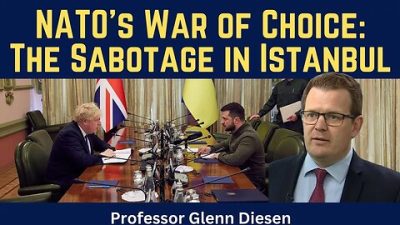
NATO’s War of Choice – The Sabotage of the Istanbul Negotiations
or go to
Aletho News Archives – Video-Images
From the Archives
National Security Archive Publishes Key Records on Infamous MKULTRA Program
Agency Sought Drugs and Behavior Control Techniques to Use in “Special Interrogations” and Offensive Operations
Edited by Michael Evans | National Security Archive | December 23, 2024
Washington, D.C. – Today, the National Security Archive and ProQuest (part of Clarivate) celebrate the publication of a new scholarly document collection many years in the making on the shocking secret history of the CIA’s mind control research programs. The new collection, CIA and the Behavioral Sciences: Mind Control, Drug Experiments and MKULTRA, brings together more than 1,200 essential records on one of the most infamous and abusive programs in CIA history.
Under code names that included MKULTRA, BLUEBIRD and ARTICHOKE, the CIA conducted terrifying experiments using drugs, hypnosis, isolation, sensory deprivation, and other extreme techniques on human subjects, often U.S. citizens, who frequently had no idea what was being done to them or that they were part of a CIA test.
Today’s announcement comes 50 years after a New York Times investigation by Seymour Hersh touched off probes that would bring MKULTRA abuses to light. The new collection also comes 70 years since U.S. pharmaceutical giant Eli Lilly & Company first developed a process to streamline the manufacture of LSD in late 1954, becoming the CIA’s chief supplier of the newly discovered psychoactive chemical central to many of the Agency’s behavior control efforts.
Highlights of the new MKULTRA collection include… continue
Blog Roll
 Aletho News
- Israel displaces last two families from Al Khalayel valley, Al Mughayyir
- Israeli Opposition Leader Endorses Greater Israel
- Islamic Jihad: Trump’s peace board is a “theatrical stunt detached from reality”
- The Head Of A CIA Cutout Admits To Meddling In Iran To Fuel Unrest
- Iran warns Trump against decisions based on false information
- Pentagon sets deadline for Anthropic to lift AI restrictions on autonomous weapons systems, mass domestic surveillance
- Trump’s military buildup against Iran on Netanyahu’s behalf is a gambit doomed to fail
- Big League War
- Zelensky sells false illusion of building powerful air force capable of overcoming Russia
- Glenn Diesen: NATO’s War of Choice – The Sabotage of the Istanbul Negotiations
- If Americans Knew
- AIPAC Wants to Kill a Bill that would Ensure Israel Complies with Ceasefire
- Former Israeli PM, in Epstein Files, Dreamed of Israeli Eugenics and Pretty Converts
- Israeli settlers join ‘safari’ tour of Palestinian prisoners
- Flooding in Gaza amid rumors of war; fire in West Bank – Not a ceasefire Day 138
- Fourteen Countries Condemn Huckabee’s Support for Israel Taking Over Most of the Middle East
- Israeli Soldiers Killed Gaza Aid Workers at Point Blank Range in 2025 Massacre: Report
- Israel’s insidious network to propagandize American Christians
- Israel’s Best-Kept Secret: Palestinian Resistance Never Agreed to Disarm
- Trump officials plan to build 5,000-person military base in Gaza, files show
- Are MAGA restrainers pulling their punches this time on Iran?
- No Tricks Zone
- Surprising Discovery: Sahara Is Greening…Billions Of Trees Where Once Thought To Be Barren
- New Research Reaffirms Clouds, Aerosols, And Surface Solar Radiation Are ‘Driving The Climate System’
- Germany: Electric Car Catches Fire At Charging Station, Sets Off Local “Inferno”, Widespread Damage
- New Study: Canada’s New Brunswick Was 1°C Warmer Than Today During The Medieval Warm Period
- Coal Power Back In Trend As Globe Tries To Keep Pace With Growing Demand For Power
- New Study: A 4°C Warmer Beaufort Sea Had ‘No Sea Ice’ 11,700 – 8200 Years Ago
- Unfudging The Data: Dutch Meteorological Institute Reinstates Early 20th Centruy Heat Waves It Had Erased Earlier
- German Gas Crisis…Chancellor Merz Allegedly Bans Gas Debate Ahead of Elections!
- Pollen Reconstructions Show The Last Glacial’s Warming Events Were Global, 10x Greater Than Modern
- Germany’s Natural Gas Storage Level Dwindles To Just 28%… Increasingly Critical
 Aletho News