Decarbonization myth frays as hydrocarbon use grows
By Vijay Jayaraj | BizPacReview | June 20, 2025
One cannot peruse the morning headlines or scroll through the digital ether without being assailed by the global media’s solemn decree: Society is gracefully, unequivocally and inexorably decoupling from the deathly embrace of fossil fuels.
Many in the “enlightened” professional classes, forgoing independent scrutiny of the issue, regurgitate the declaration with the vigorous conviction of newly converted acolytes. What we have today is a digital amphitheater flooded with hashtags and half-truths, where perception cosplays as accomplishment and misinformation marches under the banner of inevitability.
Take China for example: Online posts about the country’s undeniable dependence on coal is glossed over or misrepresented. Popular reporting has Beijing showing great interest in “net zero” as evidenced by the installation of record amounts of solar and wind energy generators. Cherry-picked are the ebbs and flows of fossil fuel use and investments in “renewable” technology to argue that Chinese hydrocarbon use is waning.
However, the energy sector in China cares little about these fantasies. Beijing began building 94.5 gigawatts (GW) of new coal-powered capacity in 2024, in addition to resuming 3.3 GW of suspended projects. This is the highest level of construction in the past 10 years!
As recently as May, China deployed the world’s largest fleet of driverless mining trucks to fast-track efficient operations, partially to overcome the challenging conditions of harsh winter weather at the Yimin coal mine in northeastern Inner Mongolia.
Indeed, both China and India are pouring colossal sums into wind turbines and solar panels. Yet, let us not, for a moment, confuse this fervent activity with the zealous repudiation of fossil fuels seen in some European countries. The Asian nations are not renouncing fossil fuels but rather grabbing every energy source as would hoarders before an expected crisis.
Speaking at the Heartland International Conference in 2023, I dubbed this the “twin strategy” – a clever diplomatic pas de deux – where Beijing and Delhi strike photogenic “green” poses for the Western press while quietly constructing new coal-fired plants and excavating and importing ever more fuel for them.
The result? Applause from climate summiteers and megawatts from smokestacks – a brilliant balancing act of virtue signaling and strategic realism. The West calls it hypocrisy; China and India call it another day at the office.
Climate doomsayers must advance a narrative of Asian complicity in the increasingly fraying “green” agenda to help keep alive the myth of a decarbonizing world, which for most sensible people has become about as believable as the Easter Bunny.
India’s target for achieving net zero is set for a distant 2070 – 100 years after the first Earth Day, whose observance by then will be about as relevant as tossing virgins into volcanoes. More lasting will be the country’s commitment to economic growth through the use of coal, oil and natural gas – a path to having the highest rate of increase in energy demand going forward.
The case is similar in dozens of other countries across Asia, Latin America, the Middle East and Africa, where new discoveries of energy reserves and an appetite for economic progress have the oil and gas industries booming.
Approximately 120 oil and gas discoveries were made globally in 2024, with significant drilling expected in Suriname, Cyprus, Libya and South Africa. About 85% of these discoveries occurred in offshore regions, the bigger ones being in Kuwait and Namibia.
Rystad Energy predicts deepwater drilling to hit a 12-year high in 2026. Once the poster child of climate repentance, the British multinational oil and gas company BP is abandoning plans to reduce production in favor of drilling deeper in the Gulf of Mexico. Norway’s Equinor announced early this year that “renewables” would take a back seat, as the country’s offshore oil fields roar back to life.
The climate commentariat, already breathless from their creative contortions to recast reality, now finds itself rattled by President Trump’s funding cuts that turned off the tap to the climate-industrial complex.
Meanwhile, the digital battleground remains an arena for the ongoing tug-of-war between the realities of economics and physics and fanciful rhetoric about an energy transition. The growth in consumption of fossil fuels continues apace, nonetheless.
Vijay Jayaraj is a research associate at the CO2 Coalition, Arlington, Va., and holds a master’s degree in environmental sciences from the University of East Anglia, U.K.He resides in Bengaluru, India.
Copyright © 2025. All Rights Reserved. BizPacReview
Israel tasks US Congress with pressuring South Africa to drop ICJ genocide case
The Cradle | September 10, 2024
Israel is lobbying members of Congress to pressure South Africa to drop its case at the International Court of Justice (ICJ) accusing Israel of committing genocide against Palestinians in Gaza, Axios reported on 9 September.
South Africa has until 28 October to submit its arguments for continuing its case, claiming Israel is in violation of the Genocide Convention due to its war in Gaza.
Israeli officials say they want members of Congress to threaten South Africa with consequences for continuing to pursue the case.
On Monday, the Israeli foreign ministry sent a classified cable to the Israeli embassy and consulates in the US with instructions for dealing with South Africa.
“We are asking you to immediately work with [US] lawmakers on the federal and state level, with governors and Jewish organizations to put pressure on South Africa to change its policy towards Israel and to make clear that continuing their current actions like supporting Hamas and pushing anti-Israeli moves in international courts will come with a heavy price,” the cable read.
In December, South Africa filed a case at the ICJ accusing Israel of violating its obligations under the 1948 Genocide Convention. The case alleged Israel’s actions “are genocidal in character because they are intended to bring about the destruction of a substantial part” of the Palestinian population in Gaza.
After the start of the war on 7 October, Israeli political and military leaders issued statements suggesting they intended to pursue a genocidal military campaign against Palestinian civilians in Gaza.
Israeli forces have killed over 40,000 Palestinians since then, the majority women and children, in a vicious 11-month bombing campaign.
The ICJ issued an interim ruling in January demanding Israel to take all measures to prevent genocidal acts, prevent and punish the direct and public incitement to genocide, and take immediate and effective steps to ensure the provision of humanitarian assistance to civilians in Gaza.
However, Israel hopes the new coalition government in South Africa can be pressured to take a different approach to Israel and the war in Gaza, the officials speaking with Axios said.
In parliamentary elections in June, the African National Congress (ANC) party lost its majority for the first time since the end of the apartheid system of white minority rule 30 years ago.
The Israeli diplomats were instructed to ask members of Congress to issue public statements condemning South Africa and threatening to cut off trade relations with South Africa.
Axios adds that the Israeli diplomats were also instructed to ask members of Congress and Jewish organizations in the US to reach out directly to South African diplomats in the US and make clear South Africa would “pay a heavy price” if it doesn’t change its policy.
The Israeli foreign ministry asked Israeli diplomats to lobby for hearings about South Africa’s policy towards Israel in state legislatures.
According to the cable, Israeli diplomats were instructed to emphasize to the ANC and “pursue dialogue” with Israel “instead of boycotts and punishments.”
Five countries ask ICC to probe war crimes in Gaza
Palestine Information Center – November 18, 2023
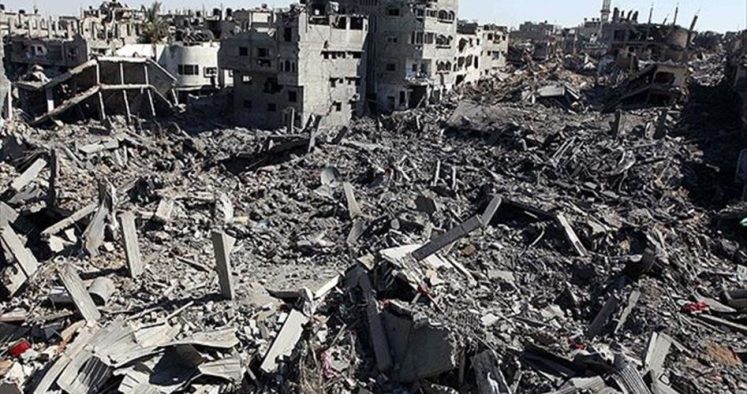
GAZA – The International Criminal Court (ICC) announced that it received referrals from five states seeking an investigation into Israeli war crimes in Gaza.
ICC Prosecutor Karim Khan disclosed that South Africa, Bangladesh, Bolivia, Comoros, and Djibouti submitted the referrals.
Khan confirmed in a statement that the ICC is already investigating the situation in Gaza.
“In accordance with the Rome Statute of the International Criminal Court, a State Party may refer to the Prosecutor a situation in which one or more crimes within the jurisdiction of the Court appear to have been committed requesting the Prosecutor to investigate the situation for the purpose of determining whether one or more specific persons should be charged with the commission of such crimes,” he said.
Khan mentioned the establishment of a specialized team upon assuming his term in June 2021, aimed at advancing the investigation in Palestine.
The prosecutor emphasized that the team will probe crimes suspected to be committed during the Israeli aggression on Gaza.
South Africa declared that it had submitted the referral request with “other countries that share the same concerns”, demanding that the International Criminal Court would urgently pay “attention to the seriousness of the current situation.”
The South African Ministry of Foreign Affairs stressed in a statement that Pretoria “urges other signatory states to the Rome Statute to join this referral request, or to submit their referral requests independently.”
The ICC opened an investigation in 2021 into war crimes suspected to be committed by the Israeli occupation forces in Palestine.
Since October 7, Israel has been waging a bloody aggression on the Gaza Strip, resulting in the martyrdom of more than 12,000 Palestinian civilians, most of whom are children and women.
South Africa ‘held to ransom’ over Covid vaccine deals – NGO
RT | September 7, 2023
An investigation into South Africa’s procurement of Covid-19 vaccines has found that the country’s health officials purchased supplies from global pharmaceutical companies at inflated prices compared to many Western nations.
The Health Justice Initiative (HJI), an independent body formed during the pandemic to monitor the South African healthcare system’s handling of the crisis, said during a news conference this week that the government was “bullied” into accepting unfavorable vaccine deals via one-sided “ransom negotiations.”
“The [vaccine] contracts contain unusually hefty demands and conditions, including secrecy, a lack of transparency, and very little leverage against late or no delivery of supplies or inflated prices,” the HJI said in a statement on Tuesday. It added that this system led to “gross profiteering” and an “inability to plan properly in a pandemic.”
The terms agreed by South Africa’s government with companies such as Pfizer and Johnson & Johnson for the purchase of Covid-19 vaccines were the subject of a legal challenge by the HJI last month under the country’s Promotion of Access to Information Act.
A Pretoria court subsequently ruled in favor of the HJI, compelling the South African government to release the vaccine contracts in the interest of transparency and accountability.
The documents detailed that South Africa was liable for vaccine payments of $734 million. The terms of the agreements included no guarantees of a timely delivery or penalties for late arrival. It was also found that Johnson & Johnson charged South Africa $10 per dose of its vaccine – some $1.50 more than EU countries paid.
“The country was forced to overpay for vaccines, paying 33% more than the African Union price from the Pfizer-BioNTech vaccine and paying the Serum Institute of India 2.5 times more for a generic version of the Oxford-AstraZeneca vaccine compared to the United Kingdom,” the HJI said.
The group claimed that the government’s practices throughout the pandemic “signals a dangerous precedent for future pandemic readiness,” and that “we were bullied into unfair and undemocratic terms in contracts that were totally one-sided. Put simply, pharmaceutical companies held us to ransom.”
According to publicly available data, South Africa has recorded 102,595 deaths from Covid-19 since the start of the pandemic. As of May 2023, approximately 65% of South Africans have received a vaccine against the virus.
DC Scholars: Ukraine Conflict Shows World Has Grown Weary of US Hegemony
By Ekaterina Blinova – Sputnik – 24.06.2023
Despite having the largest military budget in the world and being the largest operator of military bases abroad, the US is far from being a global hegemon, argues a DC-based think tank Quincy Institute for Responsible Statecraft.
Over the past decades Washington has demonstrated a capacity for mass destruction – in Korea, Vietnam, Afghanistan, Iraq, Libya and elsewhere – but “it has won no more than Pyrrhic victories” which led to the erosion of trust in Pax Americana both at home and abroad, according to Responsible Statecraft scholars.
The US military spending reached $876.9 billion in 2022, while the nation also operates a whopping 750 foreign military bases. Still, Washington is incapable of persuading the Global South to join anti-Russia sanctions over the latter’s special military operation in Ukraine, the think tank remarks. “If hegemony means the capacity to get other countries to comply with one’s demands, the United States is far from being a global hegemon,” the report notes.
Judging from the so-called Pentagon leak, even some US allies and partners demonstrated hesitance and unwillingness to provide the Kiev regime with shells, jets and armored vehicles. Meanwhile, most nations of the Global South shrugged off the US calls for slapping sanctions on Moscow as contradicting their national interests.
US political observers emphasize that six nations in the Global South – namely, India, Brazil, Turkey, Indonesia, Saudi Arabia, and South Africa – are set to decide the future of geopolitics and insist that the Biden administration needs to win their hearts and minds. At the same time, European commentators argue that developing nations have the right to remain neutral and non-aligned.
For instance, in June 2022, India’s External Affairs Minister Dr S Jaishankar shredded the West’s claim that New Delhi was “sitting on the fence.” According to the minister, India is entitled to its opinion when it comes to the Russo-Ukrainian conflict.
Likewise, the Association of Southeast Asian Nations (ASEAN) has chosen to collaborate with both the US and China, instead of taking sides. Moreover, ASEAN nations are active participants of Beijing’s Belt and Road Initiative (BRI) regardless of Washington’s attempts to maintain its dominance in the region and curb China’s influence in the Asia Pacific.
Per DC scholars, the emerging trend was articulated by Brookings Institution fellow Fiona Hill, former Deputy Assistant to the President of the United States, in May 2023:
“The war in Ukraine is perhaps the event that makes the passing of Pax Americana apparent to everyone. … [Other countries] want to decide, not be told what’s in their interest. In short, in 2023, we hear a resounding no to US domination and see a marked appetite for a world without a hegemon,” she said at a conference in Tallinn, Estonia
According to Hill, the Global South’s resistance to the US and the EU’s demands to slap sanctions on Moscow is nothing short of “an open rebellion.” She noted that “this is a mutiny against what they see as the collective West dominating the international discourse and foisting its problems on everyone else, while brushing aside their priorities on climate change compensation, economic development, and debt relief.”
Western observers also acknowledge that the world’s center of gravity is steadily shifting east, adding that the Biden administration has so far sought to avert this trend by trying to establish “a lasting technological lead over China” and beefing up the US military in Western Pacific.
However, “most developing countries, including emerging powers in the Global South, are no longer willing to make zero-sum choices” between Washington and its geopolitical rivals, DC scholars underscore, urging American policymakers to accept the reality that the US is no longer “the indispensable nation.”
Biden Wants $8 Billion In Taxpayer Funds To Shut Down Coal Power In South Africa
By Tyler Durden | Zero Hedge | December 16, 2022
With the UN and other interests already interfering in Africa’s energy development, Joe Biden announced at the US-Africa Business Forum a plan for American taxpayers to shell out at least $8 billion to shut down effective coal fired energy plants in South Africa so they can be replaced with far less effective and far less efficient green energy alternatives.
In other words, the goal of climate change cultists is to use $8 billion of America’s money to diminish South African infrastructure.
The green energy scam continues despite the fact that European nations are now admitting they need more oil and coal based energy, not green tech, after the loss of Russian natural gas resources.
The American taxpayer is now carrying the weight of $94 billion in 2022 for so called “clean energy” initiatives in other nations around the world.
BRICS Leaders Vow to Enhance & Expand New Development Bank
Samizdat – 23.06.2022
The leaders of Brazil, Russia, India, China, and South Africa held their 14th annual summit on Thursday virtually. This year, the summit was chaired by China.
BRICS members vowed to widen the Shanghai-based New Development Bank (NDB) on Thursday, following the successful admission of Bangladesh, Egypt, the United Arab Emirates (UAE) and Uruguay in September 2021.
“We look forward to further membership expansion in a gradual and balanced manner in terms of geographic representation and comprising of both developed and developing countries, to enhance the NDB’s international influence as well as the representation and voice of Emerging Market and Developing Countries (EMDCs) in global governance,” the 75-point joint declaration released after the summit read.
BRICS has supported the NDB’s goals of attaining the highest possible credit rating and institutional development. The BRICS member nations have also stressed that they have a similar approach to the global economic governance, and their mutual cooperation can make a valuable contribution to the post-Covid economic recovery.
Geopolitical Concerns
Leaders also discussed the ongoing crisis in Eastern Europe, recalling their national positions at different global forums, including the United Nations’ Security Council and General Assembly.
“We support talks between Russia and Ukraine. We have also discussed our concerns over the humanitarian situation in and around Ukraine,” the joint declaration said.
Amid border tensions between India and China, the leaders committed to “respect the sovereignty and territorial integrity of all States,” stressing the peaceful resolution of differences and disputes through dialogue and consultation.
The BRICS countries – which represent 24 percent of the global GDP and 16 percent of worldwide trade – further reiterated the need to resolve the Iranian nuclear issue through peaceful and diplomatic means as per international law. They stressed the importance of preserving the Joint Comprehensive Plan of Action, a deal reached between Iran and the five permanent members of the UN Security Council in 2015. The stand-off between Iran and western nations continues following the US’ withdrawal from the JCPOA in May 2018.
Have Lockdown Sceptics Won the Argument?
By Edward Chancellor | The Daily Sceptic | January 25, 2022
Now that Covid restrictions are being rolled back, various commentators are declaring victory over the miserable virus. Lockdowns, we are told, worked. Only a fool could argue otherwise.
Devi Sridhar, the Chair of Global Public Health at Edinburgh University, who was formerly an exponent of the Zero Covid strategy of completely eradicating the virus, has recently announced in the Guardian that “delaying and preventing infection as much as possible through this pandemic was a worthwhile strategy. In early 2020, there were few treatments, limited testing and no vaccines. The costs of those lockdowns were big, but the effort to buy time paid off”.
At the other end of the political spectrum, Tom Harwood of GB News says much the same. Lockdown sceptics, he writes in CapX, are “bizarrely claiming victory now that restrictions are coming to an end”. The sceptics, Harwood asserts, ignore the success of vaccines. “There is a blindingly obvious distinction between the need for non-pharmaceutical interventions amongst a non-immune population, verses [sic] one with incredibly high levels of immunity.” He points to a lower death toll from the Omicron variant which appeared after the “stupendously successful vaccine rollout”. In conclusion, Harwood writes that to “deny lockdowns worked to reduce spread is to deny logic”.
Let’s examine the logic. If lockdowns bought time for the rollout of vaccines, then we would expect fewer Covid deaths in places that locked down early and fast. That is the case in Australia and New Zealand, which early in the pandemic sealed their borders against the virus. But the trouble with this policy, as our Antipodean friends are discovering, is the difficulty of exiting. Their policy of national self-isolation has lasted nearly two years, and continues in large measure even after most of their population has been vaccinated.
By contrast, in Europe there is no evidence that lockdowns significantly reduced Covid deaths. Sweden, which never locked down, has the same number of deaths per million as Austria, which did (see chart below). It’s true that Swedish deaths ran higher somewhat earlier than Austria, but this ‘bought-time’ doesn’t appear to have changed the final tally.

The evidence from the United States points to a similar conclusion: the Covid death rate (as a share of the population) in Florida, which largely avoided lockdowns, is slightly below the U.S. national average and far below that of New York, which had (and continues to impose) relatively tough restrictions.
It’s true that mass vaccination has reduced the risk of hospitalisation and death from Covid. But lockdown exponents imply that vaccines alone are responsible for the decline in the infection fatality rate. The evidence from South Africa, whose vaccination rate is around a quarter of the European average (49 doses per 100 people versus 180, or 27%), suggests otherwise.
It appears that either Covid has evolved to become less virulent, as the South African doctors suggested back in December, or South Africa’s population has built up strong natural immunity from prior infection – a possibility overlooked by most commentators. It seems likely that both factors have played a role in reducing the virulence of the disease. Even if lockdowns had succeeded in reducing Covid deaths until the vaccine rollout that wouldn’t necessarily justify their imposition. From the start, lockdown sceptics were concerned about the collateral damage caused by closing down the economy, shuttering schools, neglecting conventional health care and forcing people to isolate in their homes for months on end. They railed in vain against the cruelty of lockdowns: mothers giving birth alone, old people dying alone or left for months without visitors in nursing homes, the damage to children’s education, funerals unattended, small businesses crushed and so forth. Finally, the public appears to be waking up to these cruelties. Hence, the fury at the hypocrisy of Downing Street officials who imposed harsh rules for the nation which they didn’t scrupulously follow themselves.
Then there are lockdown’s immense financial costs. At the time, these could be ignored since governments financed them with interest-free loans from central banks. But all that money-printing is now fuelling inflation that will lead to further immiseration in the coming years. The sceptics argued that lockdowns were never subject to a proper cost-benefit analysis which took social and economic costs into account. That remains the case. Thus, not only has there been no ‘victory’ in the war on Covid – on the contrary, the highly contagious Omicron variant appears to be overcoming all attempts to constrain it – but the argument over lockdowns has yet to be decisively won by either side, so that lockdowns are either accepted as a tool of sound public health policy or roundly condemned as a colossal mistake. The sceptics’ work continues.
Edward Chancellor is a financial journalist and the author of Devil Take the Hindmost: A History of Financial Speculation (1998).
Are We Overreacting to Omicron?
BY PAUL ELIAS ALEXANDER | BROWNSTONE INSTITUTE | NOVEMBER 26, 2021
With natural exposure immunity and early outpatient treatment and when combined with no reports of increased lethality, the WHO’s reaction of generating panic toward “Omicron” is causing needless fear and panic. So too with the Biden administration’s newly imposed travel restrictions, which will achieve nothing and will once again disrupt trade and violate human rights.
The WHO has said that the Omicron variant can spread more quickly than other variants. Likely true. The virus is behaving just like how viruses behave. They are mutable and mutate and via Muller’s ratchet, we expect this to be milder and milder mutations and not more lethal ones given the pathogen seeks to infect the host and not arrive at an evolutionary dead-end.
The virus will mutate downward so that it can use the host (us) to propagate itself via our cellular metabolic machinery. The Delta has shown us this: it is very infectious and mostly non-lethal. Especially for children and healthy people. So is the WHO panicking the globe needlessly? Is this Covid-19 February 2020 once again?
The problem with South Africa as is with Australia and New Zealand and even island nations like Trinidad is that it has low natural immunity to SAR-Cov-2. This is because, as we witnessed over the last year and more, if you lock down your society too long and too hard, you deny the nation and population from inching closer to population-level herd immunity. And you have no economy or society from which to reemerge. You devastate your society for a pathogen that is largely harmless to the vast majority of people especially children.
Moreover, governments asked us for two weeks to flatten the curve to help prepare hospitals so that they can tend to surges and other non-Covid illnesses. We as societies gave our governments 2 weeks, not 21 months. They failed to tend to the non-Covid illnesses and we locked down the healthy and well (children and young and middle aged healthy persons) while failing to properly protect the vulnerable and high-risk persons such as the elderly. We failed and it was like killing fields in our nursing homes.
This failure rests on public health messaging and government. Additionally, what did our governments in the US, Canada, UK, Australia etc. do with the tax money for the hospitals and PPE etc.? Hospitals must be prepared by now. Governments have failed! Not the people. The Task Forces have failed, not the people.
These nations thought that they could stay locked down and wait for a vaccine. This is a reasonable view though I was against lockdowns as they would and did cause crushing harms on especially poor persons and children. The problem is there was an opportunity cost because the vaccine we were waiting on was suboptimally developed without the proper safety testing or assessment of effectiveness.
We have data that the Pfizer vaccine loses 40% of antibodies per month, meaning in 3 months post-shot, you have low effective vaccinal immunity. We see it clearly playing out now whereby you got to tamp down spread with the draconian lockdowns, but you did it at the cost of natural immunity. That is the opportunity cost. So we spent on getting the vaccine and it cost us natural immunity and thus herd immunity.
For example, the vaccine has failed to stop infection and spread against Delta. We have research findings by Singanayagam et al. (fully vaccinated individuals with breakthrough infections have peak viral load similar to unvaccinated cases and can efficiently transmit infection in household settings, including to fully vaccinated contacts), by Chau et al. (viral loads of breakthrough Delta variant infection cases in vaccinated nurses were 251 times higher than those of cases infected with prior strains early 2020), and by Riemersma et al. (no difference in viral loads when comparing unvaccinated individuals to those who have vaccine “breakthrough” infections and if vaccinated individuals become infected with the delta variant, they may be sources of SARS-CoV-2 transmission to others) that reveal the vaccines have very suboptimal efficacy.
This situation of the vaccinated being infectious and transmitting the virus has also emerged in seminal nosocomial outbreak papers by Chau et al. (HCWs in Vietnam), the Finland hospital outbreak (spread among HCWs and patients), and the Israel hospital outbreak (spread among HCWs and patients). These studies have also revealed that the PPE and masking were essentially ineffective within the healthcare setting. All of the HCWs were double-vaccinated yet there was extensive spread to themselves and their patients.
In addition, Nordström et al. (vaccine effectiveness of Pfizer against infection waned progressively from 92% day 15-30 to 47% day 121-180, and from day 211 and onwards no effectiveness), Suthar et al. (a substantial waning of antibody responses and T cell immunity to SARS-CoV-2 and its variants, at 6 months following the second immunization), Yahi et al. (with Delta variant, neutralizing antibodies have a decreased affinity for the spike protein, whereas facilitating antibodies display a strikingly increased affinity), Juthani et al. (higher numbers of patients with severe or critical illness in those who received the Pfizer vaccine), Gazit et al. (SARS-CoV-2-naïve vaccinees had a 13-fold increased risk for breakthrough infection with the Delta variant, and substantially elevated risk of symptomatic Covid and hospitalization), and Acharya et al. (no significant difference in cycle threshold values between vaccinated and unvaccinated, asymptomatic and symptomatic groups infected with Delta) collectively reveal the poor efficacy and even negative efficacy of the Covid vaccines. Levine-Tiefenbrun et al. reports that the viral load reduction effectiveness declines with time after vaccination, “significantly decreasing at 3 months after vaccination and effectively vanishing after about 6 months.”
As an example, the Swedish study (retrospective with 842,974 pairs (N=1,684,958) is particularly alarming for it shows that while the vaccine provides temporary protection against infection, the efficacy declines below zero and then to negative efficacy territory at approximately 7 months, underscoring that the vaccinated are highly susceptible to infection and eventually become highly infected (more so than the unvaccinated). A further example emerges from Ireland whereby reporting suggests that the Waterford city district has the State’s highest rate of Covid-19 infections, while the county also boasts the highest rate of vaccination in the Republic (99.7% vaccinated). Reports are that the U.S. Covid-19 deaths for 2021 surpassed the deaths from 2020, leading some to state that “more people have died from COVID-19 in 2021, with most adults vaccinated and nearly all seniors), than in 2020 when nobody was vaccinated.”
Thus these nations that locked down and stayed that way are in a quandary for they do not know what to do now. If you open you will get surges in infection. Where is the money that was to go to hospital preparation? Did governments embezzle and steal and misappropriate the money for the hospitals remain still not prepared?
We have a lot of natural immunity in the US, e.g. near 65-70% of the population. The open states (those that did not lock down too long and too hard and opened quickly) will likely do very well with this Omicron or any new variant. This also is the power of natural immunity.
And we need not forget the potency of the overlooked ‘innate’ immunity with the innate antibodies and innate natural killer cellular compartment. This innate response is particularly potent in children (our first line of defense against pathogens) and is what has spared children from Covid and how children typically stave off pathogens, especially young children still laying down immunological memory.
Moreover, there is no reporting of increased virulence/lethality of this new Omicron variant. As yet this will remain the case based on Delta and prior variants. There are no guarantees but we operate based on risk and all things point to the same for this new variant.
Just because there is a wave in SA does not mean that there will be waves in the US or Israel or other places with greater natural immunity. This was the prize of letting people enjoy day-to-day living. The nations that have ended lockdowns are likely to move past this new variant scare, and be fine. This is more of an overreaction by the WHO and governments and much ado about nothing.
Dr Alexander holds a PhD. He has experience in epidemiology and in the teaching clinical epidemiology, evidence-based medicine, and research methodology. Dr Alexander is a former Assistant Professor at McMaster University in evidence-based medicine and research methods; former COVID Pandemic evidence-synthesis consultant advisor to WHO-PAHO Washington, DC (2020) and former senior advisor to COVID Pandemic policy in Health and Human Services (HHS) Washington, DC (A Secretary), US government; worked/appointed in 2008 at WHO as a regional specialist/epidemiologist in Europe’s Regional office Denmark, worked for the government of Canada as an epidemiologist for 12 years, appointed as the Canadian in-field epidemiologist (2002-2004) as part of an international CIDA funded, Health Canada executed project on TB/HIV co-infection and MDR-TB control (involving India, Pakistan, Nepal, Sri Lanka, Bangladesh, Bhutan, Maldives, Afghanistan, posted to Kathmandu); employed from 2017 to 2019 at Infectious Diseases Society of America (IDSA) Virginia USA as the evidence synthesis meta-analysis systematic review guideline development trainer; currently a COVID-19 consultant researcher in the US-C19 research group
Update on ivermectin for covid-19
By Sebastian Rushworth, M.D. | May 9, 2021
Back in January I wrote an article about four randomized controlled trials of ivermectin as a treatment for covid-19 that had at that time released their results to the public. Each of those four trials had promising results, but each was also too small individually to show any meaningful impact on the hard outcomes we really care about, like death. When I meta-analyzed them together however, the results suddenly appeared very impressive. Here’s what that meta-analysis looked like:

It showed a massive 78% reduction in mortality in patients treated with covid-19. Mortality is the hardest of hard end points, which means it’s the hardest for researchers to manipulate and therefore the least open to bias. Either someone’s dead, or they’re alive. End of story.
You would have thought that this strong overall signal of benefit in the midst of a pandemic would have mobilized the powers that be to arrange multiple large randomized trials to confirm these results as quickly as possible, and that the major medical journals would be falling over each other to be the first to publish these studies.
That hasn’t happened.
Rather the opposite, in fact. South Africa has even gone so far as to ban doctors from using ivermectin on covid-19 patients. And as far as I can tell, most of the discussion about ivermectin in mainstream media (and in the medical press) has centred not around its relative merits, but more around how its proponents are clearly deluded tin foil hat wearing crazies who are using social media to manipulate the masses.
In spite of this, trial results have continued to appear. That means we should now be able to conclude with even greater certainty whether or not ivermectin is effective against covid-19. Since there are so many of these trials popping up now, I’ve decided to limit the discussion here only to the ones I’ve been able to find that had at least 150 participants, and that compared ivermectin to placebo (although I’ll add even the smaller trials I’ve found in to the updated meta-analysis at the end).
As before, it appears that rich western countries have very little interest in studying ivermectin as a treatment for covid. The three new trials that had at least 150 participants and compared ivermectin with placebo were conducted in Colombia, Iran, and Argentina. We’ll go through each in turn.
The Colombian trial (Lopez-Medina et al.) was published in JAMA (the Journal of the American Medical Association) in March. There is one thing that is rather odd with this study, and that is that the study authors were receiving payments from Sanofi-Pasteur, Glaxo-Smith-Kline, Janssen, Merck, and Gilead while conducting the study. Gilead makes remdesivir. Merck is developing two expensive new drugs to treat covid-19. Janssen, Glaxo-Smith-Kline, and Sanofi-Pasteur are all developers of covid vaccines. In other words, the authors of the study were receiving funding from companies that own drugs that are direct competitors to ivermectin. One might call this a conflict of interest, and wonder whether the goal of the study was to show a lack of benefit. It’s definitely a little bit suspicious.
Anyway, let’s get to what the researchers actually did. This was a double-blind randomized controlled trial that recruited patients with mildly symptomatic covid-19 who had experienced symptom onset less than 7 days earlier. Potential participants were identified through a statewide database of people with positive PCR-tests. By “mildly symptomatic” the researchers meant people who had at least one symptom but who did not require high-flow oxygen at the time of recruitment in to the trial.
Participants in the treatment group received 300 ug/kg body weight of ivermectin every day for five days, while participants in the placebo group received an identical placebo. 300 ug/kg works out to 21 mg for an average 70 kg adult, which is quite high, especially when you consider that the dose was given daily for five days. For an average person, this would work out to a total dose of 105 mg. The other ivermectin trials have mostly given around 12 mg per day for one or two days, for a total dose of 12 to 24 mg (which has been considered enough because ivermectin has a long half-life in the body). Why this study gave such a high dose is unclear. However, it shouldn’t be a problem. Ivermectin is a very safe drug, and studies have been done where people have been given ten times the recommended dose without any noticeable increase in adverse events.
The stated goal of the study was to see if ivermectin resulted in more rapid symptom resolution than placebo. So participants were contacted by telephone every three days after inclusion in the study, up to day 21, and asked about what symptoms they were experiencing.
398 patients were included in the study. The median age of the participants was 37 years, and they were overall very healthy. 79% had no known co-morbidities. This is a shame. It means that this study is yet another one of those many studies that will not be able to show a meaningful effect on hard end points like hospitalization and death. It is a bit strange that studies keep being done on young healthy people who are at virtually zero risk from covid-19, rather than on the multi-morbid elderly, who are the ones we actually need an effective treatment for.
Anyway, let’s get to the results.
In the group treated with ivermectin, the average time from inclusion in the study to becoming completely symptom free was 10 days. In the placebo group that number was 12 days. So, the ivermectin treated patients recovered on average two days faster. However, the difference was not statistically significant, so the result could easily be due to chance. At 21 days after inclusion in the study, 82% had recovered fully in the ivermectin group, as compared to 79% in the placebo group. Again, the small difference was not statistically significant.
In terms of the hard end points that matter more, there were zero deaths in the ivermectin group and there was one death in the placebo group. 2% of participants in the ivermectin group required “escalation of care” (hospitalization if they were outside the hospital at the start of the study, or oxygen therapy if they were in hospital at the start of the study) as compared with 5% in the placebo group. None of these differences was statistically significant. But that doesn’t mean they weren’t real. Like I wrote earlier, the fact that this was a study of healthy young people meant that, even if a meaningful difference does exist in risk of dying of covid, or of ending up in hospital, this study was never going to find it.
So, what can we conclude?
Ivermectin does not meaningfully shorten duration of symptoms in healthy young people. That’s about all we can say from this study. Considering the conflicts of interest of the authors, my guess is that this was the goal of the study all along: Gather together a number of young healthy people that is too small for there to be any chance of a statistically significant benefit, and then get the result you want. The media will sell the result as “study shows ivermectin doesn’t work” (which they dutifully did).
It is interesting that there were signals of benefit for all the parameters the researchers looked at (resolution of symptoms, escalation of care, death), but that the relatively small number and good health status of the participants meant that there was little chance of any of the results reaching statistical significance.
Let’s move on to the next study, which is currently available as a pre-print on Research Square (Niaee et al.). It was randomized, double-blind, and placebo-controlled, and carried out at five different hospitals in Iran. It was funded by an Iranian university.
In order to be included in the trial, participants had to be over the age of 18 and admitted to hospital because of a covid-19 infection (which was defined as symptoms suggestive of covid plus either a CT scan typical of covid infection or a positive PCR test).
150 participants were randomized to either placebo (30 people) or varying doses of ivermectin (120 people). The fact that they chose to make the placebo group so small is a problem, because it makes it very hard to detect any differences even if they do exist, by making the statistical certainty of the results in the placebo group very low.
The participants were on average 56 years old and the average oxygen saturation before initiation of treatment was 89% (normal is more than 95%), so this was a pretty sick group. Unfortunately no information is provided on how far along people were in the disease course when they started receiving ivermectin. It stands to reason that the drug is more likely to work if given ten days after symptom onset than when given twenty days after symptom onset, since death usually happens around day 21. If you, for example, wanted to design a trial to fail, you could start treating people at a time point when there is no time for the drug you’re testing to have a chance work, so it would have been nice to know at what time point treatment started in this trial.
So, what were the results?
20% of the participants in the placebo group died (6 out of 30 people). 3% of the participants in the various ivermectin groups died (4 out of 120 people). That is an 85% reduction in the relative risk of death, which is huge.
So, in spite of the fact that the placebo group was so small, it was still possible to see a big difference in mortality. Admittedly, this is a pre-print (i.e. it hasn’t been peer-reviewed yet), and the absolute numbers of deaths are small, so there is some scope for random chance to have created these results (maybe people in the placebo group were just very unlucky!). However, the study appears to have followed all the steps expected for a high quality trial. It was carried out at multiple different hospitals, it used randomization and a control group that received a placebo, and it was double-blinded. And death is a very hard end point that is not particularly open to bias. So unless the researchers have falsified their data, then this study constitutes reasonably good evidence that ivermectin is highly effective when given to patients hospitalized with covid-19. That’s great, because it would mean that the drug can be given quite late in the disease course and still show benefit.
Let’s move on to the third trial (Chahla et al.), which is currently available as a pre-print on MedRxiv. It was carried out in Argentina, and funded by the Argentinean government. Like the first trial we discussed, this was a study of people with mild disease. It literally boggles my mind that so many researchers choose to study people with mild disease instead of studying those with more severe disease. Especially when you consider that these studies are all so small. A study of people with mild disease needs to be very large to find a statistically significant effect, since most people with covid do well regardless. The risk of false negative results is thus enormous. If you’re going to do a small-ish study, and you want to have a reasonable chance of producing results that reach statistical significance, it would make much more sense to do it on sick hospitalized patients.
The study was randomized, but it wasn’t blinded, and there was no placebo. In other words, the intervention group received ivermectin (24 mg per day), while the control group didn’t receive anything. This is a bad bad thing. It means that any non-hard outcomes produced by the study are really quite worthless, since there is so much scope for the placebo effect and other confounding factors to mess up the results. For hard outcomes, in particular death, it should be less of a problem (although we wouldn’t expect any deaths in such a small study of mostly healthy people with mild disease anyway).
The study included people over the age of 18 with symptoms suggestive of covid-19 and a positive PCR test. The average age of the participants was 40 years, and most had no underlying health issues. A total of 172 people were recruited in to the study.
The researchers chose to look at how quickly people became free of symptoms as their primary endpoint. This is enormously problematic, since the study, as already mentioned, wasn’t blinded and there was no placebo. Any difference between the groups could easily be explained by the placebo effect and by biases towards treatment benefit among the researchers.
Anyway, the study found that 49% in the treatment group were free of symptoms at five to nine days after the beginning of treatment, compared with 81% in the control group. However, the lack of blinding means that this result is worthless. The methodology is just too flawed.
No data is provided on the number of people who died in each group. Since it isn’t reported, I think it’s safe to assume that there were no deaths in either group. Nor is any data provided on the number of hospitalizations in each group.
So, what does this study tell us?
Absolutely nothing at all. What a waste of time and money.
Let’s move on and update our meta-analysis. The reason we need to do a meta-analysis here is that none of the trials of ivermectin is large enough on its own to provide a definitive answer as to whether it is a useful treatment for covid-19 or not. For those who haven’t heard of meta-analyses before, basically what you do is just take the results from all different studies in existence that fulfill your pre-selected criteria, and then put them together, so as a to create a single large “meta”-study. This allows you to produce results that have a much higher level of statistical significance. It is particularly useful in a situation where all the individual trials you have to work with are statistically underpowered (have too few participants), as is the case here.
In this new meta-analysis, I’ve included every double-blind randomized placebo-controlled trial I could find of ivermectin as a treatment for covid. Using only double-blind placebo-controlled trials means that only the highest quality studies are included in this meta-analysis, which minimizes the risk of biases messing up the results as far as possible. In order to be included, a study also had to provide mortality data, since the goal of the meta-analysis is to see if there is any difference in mortality.
I was able to identify seven trials that fulfilled these criteria, with a total of 1,327 participants. Here’s what the meta-analysis shows:

What we see is a 62% reduction in the relative risk of dying among covid patients treated with ivermectin. That would mean that ivermectin prevents roughly three out of five covid deaths. The reduction is statistically significant (p-value 0,004). In other words, the weight of evidence supporting ivermectin continues to pile up. It is now far stronger than the evidence that led to widespred use of remdesivir earlier in the pandemic, and the effect is much larger and more important (remdesivir was only ever shown to marginally decrease length of hospital stay, it was never shown to have any effect on risk of dying).
I understand why pharmaceutical companies don’t like ivermectin. It’s a cheap generic drug. Even Merck, the company that invented ivermectin, is doing it’s best to destroy the drug’s reputation at the moment. This can only be explained by the fact that Merck is currently developing two expensive new covid drugs, and doesn’t want an off-patent drug, which it can no longer make any profit from, competing with them.
The only reason I can think to understand why the broader medical establishment, however, is still so anti-ivermectin is that these studies have all been done outside the rich west. Apparently doctors and scientists outside North America and Western Europe can’t be trusted, unless they’re saying things that are in line with our pre-conceived notions.
Researchers at McMaster university are currently organizing a large trial of ivermectin as a treatment for covid-19, funded by the Bill and Melinda Gates foundation. That trial is expected to enroll over 3,000 people, so it should be definitive. It’s going to be very interesting to see what it shows when the results finally get published.
‘A matter of life & death’: 15,000 white South African farmers seek refuge in Russia – report

RT | July 9, 2018
A delegation of 30 South African farming families has arrived in Russia’s farmbelt Stavropol region, Rossiya 1 TV channel reports. The group says it is facing violent attacks and death threats at home.
Up to 15,000 Boers, descendants of Dutch settlers in South Africa, are planning to move to Russia amid rising violence stemming from government plans to expropriate their land, according to the delegation.
“It’s a matter of life and death — there are attacks on us. It’s got to the point where the politicians are stirring up a wave of violence,” Adi Slebus told the media. “The climate here [in the Stavropol region] is temperate, and this land is created by God for farming. All this is very attractive.”
The new South African government lead by President Cyril Ramaphosa has pledged to return the lands owned by white farmers since the 1600s to the black citizens of the country. The government said it is planning to put an end to what it calls the legacy of apartheid, where most of South Africa’s land is still in the hands of its minority white population.
Rights groups have said the initiative incites violence. There were 74 farm murders and 638 attacks, primarily against white farmers, in 2016-17 in South Africa, according to data by minority rights group AfriForum.
The farmers are ready to make a contribution to Russia’s booming agricultural sector, according to Rossiya 1. Each family is ready to bring up to $100,000 for leasing the land.
Russia has 43 million hectares of unused farmland. The country has recently begun giving out free land to Russian citizens to cultivate farming. The land giveaway program, which began in 2014, has been a huge success.
Renowned South African university cuts ties with Israel
Palestine Information Center – December 13, 2017
PRETORIA – “The Council of the Tshwane University of Technology (TUT) has resolved that TUT will not forge any ties with the State of Israel or any of its organizations and institutions,” TUT spokesman on the issue Professor Rasigan Maharajh told the African News Agency (ANA) during an interview on Wednesday.
A December 7 press release from TUT stated: “As a progressive university in a democratic South Africa, we want to affirm that TUT will not sign any agreements or enter into scientific partnerships until such time that Israel ends its illegal occupation of Palestinian territory.
 “The university will not stand back and accept the violations of the Israeli government when it confines the movement of Palestinian children and youth on their own land and restricts their ability to access education through destroying their schools,” added the statement.
South African criticism of Israel is growing, the ANA pointed out.
One of the controversial issues to be discussed at the ANC’s forthcoming 54th National Conference in Gauteng, from December 16 to 20, is the possible downgrading, or even closure, of the South African Embassy in Tel Aviv.
“As a constitutional democracy premised on the recognition of human rights, the Republic of South Africa must urgently discuss downgrading the status of its relationship with Israel,” said Maharajh.
TUT’s decision to cut all ties with the Jewish state also comes in the wake of strong condemnation from the South African government, and various political and human rights organizations across the country, following US President Donald Trump’s decision to move the American embassy from Tel Aviv to Jerusalem while stating that Jerusalem was the capital of Israel.
Under international law East Jerusalem is occupied territory and all international embassies have based themselves in Tel Aviv until the final status of Jerusalem is negotiated through talks.
“The announcement by the Trump regime of its intentions to establish its embassy in Jerusalem further escalates tensions,” said Maharajh.
“As guided by the founding President of the post-apartheid South Africa, Nelson Mandela, who declared that: ‘We know too well that our freedom is incomplete without the freedom of the Palestinians’, the Republic of South Africa must also condemn the actions of the Trump regime and work harder at fostering solidarity and cooperation with the people of Palestine.”
Featured Video
Ted Postol: Fraud of Missile Defence Exposed in Iran War
or go to
Aletho News Archives – Video-Images
Frlom the Archives
Containing the United States
By Edward S. Herman | Z Magazine | September 2016
“Containing the United States” is, of course, a ridiculous and self-contradictory idea in the U.S. and Western ideological and propaganda system. We all know that the United States had to “contain” the Soviet Union from 1945 to 1991, and since then has had the task of containing Russia and China. Only they threaten, bully, aggress and worry countries like Poland and Vietnam. Obama has had to reassure them both of our steadfast stand against Russian and Chinese military attacks. NATO has, of course, expanded greatly over the past several decades, despite the deaths of the Soviet Union and Warsaw Pact, but only to contain the renewed Russian — and Iranian, Libyan, Syrian and other — military threats; and we have “pivoted” to Asia, supported Japanese rearmament, bolstered our own forces in that area and jousted with the Chinese in their coastal waters solely to contain China. Earlier we had been obliged to contain North Vietnam, or was it the Soviet Union in Vietnam? Or China? Or “communism”? Or maybe all of them? Or none of them, but just needing an excuse to enlarge power?
The parallel propaganda has taken many forms. One is accepting as a premise that the United States only acts defensively and has no internal forces and interests that drive it to enlarge its sphere of control. I noted in an earlier article how Paul Krugman claims that internal Russian problems may well be the explanation of Russian “aggression,” but how at the same time it never occurs to him that the huge U.S. transnational corporate interests and “defense” establishment, and the pro-Israel lobby’s activities, might possibly make for an expansionist dynamic here.2 This reflects the standard establishment perspective that we are good and only react to evil. This was the view sustaining and justifying the invasion and occupation of Iraq from 2003. That attack was taken here as not evil but a response to evil, even if involving lies and mistakes, hence not describable as “aggression.” … continue
Blog Roll
 Aletho News
- Iran War Supporters Invent a New and Absurd Justification: It Is All About China
- Corporate Media Go All Out To Support The US-Israeli War on Iran
- Trump press conference reveals a man who wants out of war
- When Tel Aviv decides, Washington fights
- Top official: Iran ready for a long war with US, no more diplomacy
- How Iran’s Toxic Rain Reveals US-Israel Discord
- Trump Admits He Is Destroying Iran For Israel
- Iran’s latest move in the GCC countries was a stroke of genius
- Blackmail and death threats, Zelensky embarrasses the EU, but there’s no condemnation
- Israel threatens to kill Iran’s new leadership
- If Americans Knew
- Lebanon: Israel’s White Phosphorous Use Risks Civilian Harm
- Corporate Media Go All Out To Support The US-Israeli War On Iran
- US-Israel war on Iran is creating a steady growing number of amputees
- Israel planned this war on Iran for 40 years. Everything else is a smoke screen
- The wrong question about the war in Iran
- ‘Your Tax Dollars Being Used to Raise Your Gas Prices’: US-Israel Bomb Major Iranian Oil Depots
- ‘Bogus Evidence’: Former Nuclear Watchdog Head Debunks US Justification for Iran War
- EXPLAINER – Dimona: What to know about Israel’s nuclear site
- Fires and toxic air in Iran (thanks, Israel) – Not a ceasefire Day 150
- At Israel’s hands, Iran is burning, Lebanon and Gaza are crumbling – Not a ceasefire Day 149
- No Tricks Zone
- Wake-up Call: Survey Shows Majority Of Germans Now Favor Postponing Climate Targets!
- Televised! Leading German Political Candidate Tells Schoolchildren CO2 Makes Sun Hotter!
- New Study: A Century Warming Of 1.1°C Is ‘Commonplace’ And ‘Not Unusual’ During This Interglacial
- New Study: ‘Internal Noise’ And Volcanic Forcing Can Trigger 10-15°C Warming Within Decades
- Glaciers Worldwide Are Suddendly Surging, Experts Blame Warming!
- Surprising Discovery: Sahara Is Greening…Billions Of Trees Where Once Thought To Be Barren
- New Research Reaffirms Clouds, Aerosols, And Surface Solar Radiation Are ‘Driving The Climate System’
- Germany: Electric Car Catches Fire At Charging Station, Sets Off Local “Inferno”, Widespread Damage
- New Study: Canada’s New Brunswick Was 1°C Warmer Than Today During The Medieval Warm Period
- Coal Power Back In Trend As Globe Tries To Keep Pace With Growing Demand For Power
 Aletho News