US to Deploy Lethal Drones to Korean Peninsula After Olympic Games – Report
Sputnik – 21.02.2018
Recent reports by South Korean news media claim that the US will deploy attack drones to the Korean Peninsula in the next few months.
Twelve attack drones that can target North Korean leaders and military targets will be deployed in March or April, South Korean newspaper Chosun Ilbo reported this week.
According to the report, a hangar has already been constructed for the Gray Eagle drones. In addition, support facilities and personnel have reportedly already arrived at the US air base at Kunsan on the west coast.
The General Atomics MQ-1C Gray Eagle is an unmanned aircraft system developed by General Atomics Aeronautical Systems for the US Army. The Gray Eagle, which has an 18-yard wingspan, can conduct various missions including attack, reconnaissance, surveillance and infiltration. Its 248-mile range gives it enough reach to cover most of North Korean territory.
This is not the first time that the US has sent attack drones to South Korea. Last March, the US deployed attack drones in response to “provocative actions” by North Korea, although this threat has not deterred the North from conducting nearly a nearly a dozen missile tests since then.
Earlier this week, a US forces spokesperson also announced that military drills between the US and South Korea will begin again once the Paralympic Games in Pyeongchang end in March, military.com reported.
US, S. Korean militaries to conduct joint drills despite detente with Pyongyang
RT | February 20, 2018
The US and South Korea will go ahead with military drills off the Korean peninsula despite the “Peace Olympics” and the recent thaw in North-South relations, the South’s defense ministry said in a report to the National Assembly.
In the run-up to the Olympic Games in PyeongChang, Seoul was able to convince Washington to delay the start of their annual winter/springtime joint military exercises until after the games. The temporary halt to the annual Foal Eagle/Key Resolve US-South Korea joint military exercises allowed North and South Korea to develop a dialogue that the South hopes will ease the mounting tension in the region.
On Tuesday, a day after Pyongyang warned against the resumption of the military drills, South Korea’s defense ministry announced that the allies will still hold the Key Resolve and Ulchi Freedom Guardian exercises. Holding the drills this year, the S. Korean military said it will enhance the so-called 4D Operational Concept amid allies which aims “to detect, disrupt, destroy and defend against North Korean missile threats,” the ministry said in a report to the National Assembly, Yonhap reports.
No concrete schedule for the drills has yet been announced for 2018, and the report did not mention the fate of the Foal Eagle drills. A Key Resolve computer-simulated command post exercise was held March 8-23 last year. The 2017 Ulchi Freedom Guardian exercise involving some 17,500 US service members took place August 21-31.
The North has long urged the allies to stop their joint military training, and on Monday reiterated its objection to war games on its borders. “Resuming the war exercises is a wild act of ruthlessly trampling even a small sprout of peace that has been seen on the Korean peninsula,” North Korean KCNA said in an official commentary.
N. Korea particularly accused Donald Trump’s administration of seeking “war” in the region, blaming the US for using the “most powerful weapon in the world” to coerce Pyongyang. “The Trump group has to ponder over the catastrophic consequences to be entailed by its reckless saber-rattling, and make a responsible choice,” KCNA said.
“We are ready for dialogue and war.”
The latest statement comes amid the war of words and muscle flexing in the region between Pyongyang and Washington. As the US again threatens to pursue a military option to neutralize North Korea, Russia and China have been calling for calm. Moscow and China have consistently urged for a diplomatic solution to the crisis based on the ‘double freeze’ initiative. The simple Sino-Russian proposal, firmly rejected by Washington, seeks a simultaneous suspension of both nuclear tests by Pyongyang and the large-scale military exercises by Washington and Seoul.
Read more:
US feels uneasy about inter-Korean amity
By M K Bhadrakumar | Indian Punchline | February 11, 2018
The North Korean leader Kim Jong-un has upset all doomsday predictions that once the Winter Olympics Games are over, the tensions on the Korean peninsula would reappear. Kim’s invitation to South Korean President Moon Jae-in to Pyongyang can be regarded as a ‘game changer’. Moon has been non-committal, saying conditions need to be created first. The important thing is that Moon neither accepted Kim’s invitation nor declined. As a senior South Korean official put it, Moon has “practically accepted” the invitation. Thereby hangs a tale.
Left to himself Moon may want to visit Pyongyang. But a number of factors come into play. First and foremost, North Korea should refrain from missile tests, especially nuclear tests. Kim’s invitation to Moon implies that Pyongyang intends to hold back on missile and nuclear tests even after the Winter Games are over. On the contrary, if the joint US-South Korean military drills resume, all bets are off.
Therefore, Moon faces the daunting challenge of persuading the Trump administration to defer military drills. Now, that is not going to be easy. The US insists that North Korea should unilaterally suspend its missile and nuclear tests and does not accept any linkage with the US-South Korean military drills. Indeed, the sensible thing to do is to follow the suggestion by China and Russia on ‘double suspension’ – ie., US and South Korea suspending military drills and North Korea reciprocally suspending missile and nuclear tests.
China can be expected to play a major role here in bridge-building. Xinhua news agency reported that during the visit by Chinese State Councilor Yang Jiechi to Washington on February 8-9, he “exchanged ideas on the nuclear issue on the Korean peninsula.” Yang was received by President Trump and he also had meetings with Secretary of State Rex Tillerson, National Security Advisor HR McMaster and the president’s senior advisor and son-in-law Jared Kushner. Xinhua cited Yang as calling for “global support for the inter-Korean rapport in a bid to maintain the tension-easing momentum on the peninsula.” Yang said Beijing hopes to keep “communication and coordination” with Washington with a view to seek a solution to the North Korean issue.
Significantly, Chinese president Xi Jinping also deputed a special envoy to meet Moon in the weekend. Accordingly, on Saturday Han Zheng, a member of the Standing Committee of the Political Bureau of the Communist Party of China Central Committee, met Moon. (Moon received Han before hosting a lunch for the high-ranking North Korean delegation led by Kim Yong Nam, president of the Presidium of the Supreme People’s Assembly on Saturday.) Xinhua reported Han as voicing support for the “conciliation and cooperation” between North and South Korea and expressing hope that “relevant parties would meet each other half way and make joint efforts to further ease tensions”
While things look hazy as of now and it is difficult to foresee how things may work out, the odds are that Moon will visit Pyongyang eventually. Put differently, South Korea may not be in a tearing hurry to resume the military drills with the US anytime soon. According to reports, Moon already had a testy exchange with the Japanese Prime Minister on the matter. They sparred, with Moon bluntly rejecting Abe’s call to resume the US-South Korean military drills without delay.
Meanwhile, the popular opinion in South Korea is visibly changing. It turned out to be a brilliant maneuver on the part of the North Korean leader to depute his younger sister Kim Yo Jong as part of the high-level delegation to attend the opening ceremony of the Winter Olympics. She is the first member of the ruling family in Pyongyang to visit the South since the Korean War broke out in 1950, and South Koreans were enthralled. Clearly, North Korea’s participation in the Olympics has already broken the momentum of the US’ pressure campaign. Some sanctions against North Korea are already suspended temporarily until the Winter Olympics ends. The big question is whether the US’ pressure campaign can be resumed in the changed climate between the two Koreas.
Moon is walking on eggshells. Surely, he won’t want to miss the window of opportunity for a peace engagement with Kim. But then, it is far too risky to go to Pyongyang unconditionally. By going out on a limb, not only would Moon be angering the Trump administration, but the reality is that Kim has not given any signals so far that he is willing to discuss denuclearization. Equally, it could be that Kim is simply buying time for his country’s nuclear weapon program. Above all, US backing is vital for Moon to negotiate with Kim.
However, Washington is not exactly pleased about the recent improvement in inter-Korean ties. There are already signs of discord in the US-South Korean alliance. Read a dispatch by Associated Press – Pence’s bid to isolate North Korea at Olympics falls flat.
Seoul won’t rush to renew joint military drills with US as new intra-Korean summit solidifies
RT | February 10, 2018
South Korean President Moon Jae-in reportedly rejected a call from Japan to quickly resume joint US-Korean military drills. Moon has been invited to visit Pyongyang for what may become the first top-level summit in over a decade.
At a bilateral summit on Friday, Moon called on the Japanese Prime Minister Shinzo Abe to wait before resuming the drills, Yonhap reported, citing a government official. The drills have been paused for the duration of the Winter Olympics, as part of Seoul’s attempt to mend relations with Pyongyang. North Korea considers the drills a major threat to its national security, saying they may be used to conceal a build-up for an invasion.
According to the report, Abe argued that the time to delay exercises scheduled for spring was not right and that Pyongyang had to change its behavior before receiving concessions.
“I understand what Prime Minister Abe said is not to delay South Korea-U.S. military drills until there is progress in the denuclearization of North Korea. But the issue is about our sovereignty and intervention in our domestic affairs,” Moon told the Japanese leader, according to the unnamed official. “The president said it was not appropriate for the prime minister to directly mention the issue.”
North Korea’s successful development last year of a ballistic missile, which is apparently capable of reaching the US mainland, as well as carrying a small thermonuclear device, triggered a major security crisis on the Korean Peninsula. As US President Donald Trump threatened to use military force to destroy Pyongyang’s nuclear capabilities, a new left-wing government in Seoul took several symbolic steps to deflate the tension, including agreeing to have a joint athletic delegation with North Korea at the Olympics.
This week, Moon received an invitation from his northern counterpart, Kim Jong-un to visit Pyongyang for a top-level summit. If accepted, it would be the first diplomatic event of its kind since 2007, when the government of President Roh Moo-hyun in Seoul attempted to mend relations as part of the Sunshine Policy.
Roh’s successor, Lee Myung-bak, came from the other side of the political spectrum and took a hardline stance on intra-Korean relations, as did President Park Geun-hye, who came from the same conservative camp. After Park was impeached, Moon was elected partially on the promise of reviving the Sunshine Policy.
Seoul says military solution to N Korea crisis ‘unacceptable’
Press TV – January 25, 2018
South Korea has hinted for the first time since the start of a standoff with the North over Pyongyang’s nuclear program last year that a military solution would be no answer to the crisis and that differences should be settled diplomatically.
South Korea’s Foreign Minister Kang Kyung-wha said on Thursday that talks were the only viable option for resolving the crisis over North Korea’s nuclear program.
“The nuclear issue has to be solved through negotiations and diplomatic endeavors. This idea of a military solution is unacceptable,” said Kang while addressing reporters on the sidelines of the World Economic Forum in Davos, Switzerland.
The top diplomat said she was positive the United States, her country’s main ally in the standoff with North Korea, would obtain South Korea’s approval before any military action on the issue.
“I‘m assured that anything the US administration does on this front is done in close consultation with us,” Kang said, adding, “This is our fate that is at stake. Any option that is to be taken on the Korean peninsula cannot be implemented without us going along.”
The remarks come amid a relative ease in the months-long tensions over North Korea’s weapons and nuclear activities. A series of advanced missile and nuclear tests by the country last year prompted the US and its allies in the region to pile maximum pressure on Pyongyang.
Washington has engineered rounds of international sanctions on North Korea. It has also expanded the scope of its joint military drills with Seoul. Many fear that an all-out war could break out in the region as the North and the US have on a number of occasions threatened each other with nuclear attacks.
However, Seoul has offered an olive branch to Pyongyang by inviting the North’s athletes to this year’s Winter Olympics while representatives from the two countries have held limited talks on some military issues.
Washington and Allies Go Orwellian on Korea Peace Talks
By Finian CUNNINGHAM | Strategic Culture Foundation | 19.01.2018
Just as North and South Korea achieve important peaceful exchanges, Washington and its NATO allies appear to be moving with determination to sabotage the initiative for averting war on the East Asian peninsula.
Further, the reckless, gratuitous provocations beg the conclusion that the United States is indeed trying to start a war.
Meanwhile, unprecedented accusations this week by US President Donald Trump that Russia is supporting North Korea to evade United Nations sanctions also point to the danger that any conflict could spiral out of control to engulf world nuclear powers.
Moscow rejected the unsubstantiated claims leveled by Trump, saying that Russia is abiding by UN trade restrictions over North Korea, and that the American president’s allegations were “entirely unfounded”.
Trump’s verbal broadside suggests that Washington is trying to undermine the nascent talks between the two Koreas, talks which Russia and China have both applauded as a long-overdue diplomatic effort to resolve the Korean conflict.
Separately, Russia’s Foreign Minister Sergei Lavrov deplored a summit held in Vancouver, Canada, earlier this week in which the US and 19 other nations – most of them NATO members – called for sharper sanctions on North Korea that go beyond the remit of the United Nations. The conference, co-hosted by Canada’s Foreign Minister Chrystia Freeland and US Secretary of State Rex Tillerson, issued a stridently bellicose statement, calling in effect for North Korea to surrender its nuclear weapons or face US-led military action.
Significantly, and pointedly, China and Russia were not invited to the Canadian summit.
Most of the attending states were part of the original US-led military force which fought against North Korea during the 1950-53 war. A war which killed as many as two million North Koreans.
Russia admonished that the conference was “harmful” to current peace talks between North and South Korea. China rebuked the Canadian event as being stuck in “Cold War thinking”.
The anachronism of countries like Britain, Belgium, Denmark, France, Italy, Netherlands and Norway attending a conference on the Korean crisis while Asia-Pacific powers Russia and China being excluded was noted by Russia’s Sergei Lavrov. The anachronism is not only absurd, he said, it reprises a provocative “war summit” message.
Disturbingly, what the Vancouver gathering demonstrated was the willingness by the US and its allies to circumvent the United Nations Security Council and the previously established regional Six-Party forum involving the two Koreas, China, Japan, Russia and the US.
At the Vancouver event, Tillerson laid out a belligerent agenda that was endorsed by the other attendees. The agenda included the precondition of North Korea giving up its nuclear program unilaterally; and it also flatly rejected the proposal made by Russia and China for a “freeze” in all military activities on the Korean Peninsula as a step to get comprehensive settlement talks going.
Tillerson made the following sinister ultimatum: “We have to recognize that that threat [of North Korea’s nuclear weapons] is growing. And if North Korea does not choose the path of engagement, discussion, negotiation, [that is, surrender] then they themselves will trigger an option [US military action].”
The US diplomat also warned that the American public must be “sober” about the possibility of war breaking out. Tillerson said the risk of such a war on the Korean Peninsula “continues to grow”. This was echoed by President Trump a day later in an interview with the Reuters news agency in which he also warned of possible war. It was the same interview in which Trump blamed Russia for aiding and abetting North Korea.
This sounds like US leaders are intensifying the conditioning of the American public to accept use of the military option, which they have been threatening for the past year in a pre-emptive attack on North Korea.
The Vancouver summit also called for proactive interdiction of international ships suspected of breaching UN sanctions on North Korea. That raises the danger of the US and its allies interfering with Russian and Chinese vessels – which would further escalate tensions.
These reprehensible developments are a reflection of the increasingly Orwellian worldview held by Washington and its partners, whereby “war is presented as peace” and “peace is perceived as war”.
Just this week, North and South Korea held a third round of peace negotiations in as many weeks. Even Western news media hailed “Olympic breakthrough” after the two adversaries agreed to participate in the opening ceremony of the forthcoming winter games next month as a unified nation under a neutral flag.
After two years of no inter-Korean talks and mounting war tensions on the peninsula, surely the quickening pace of peace overtures this month should be welcomed and encouraged. Russia, China and the UN have indeed endorsed the bilateral Korean exchange. Even President Trump said he welcomed it.
Nevertheless, as the Vancouver summit this week shows, the US and its NATO allies appear to be doing everything to torpedo the inter-Korean dialogue. Issuing ultimatums and warning of “military options” seems intended to blow up the delicate dynamic towards confidence and trust.
Two reports this week in the New York Times conveyed the contorted Orwellian mindset gripping Washington and its allies.
First, there was the report: “Military quietly prepares for a last resort: War with North Korea”. The NY Times actually reported extensive Pentagon plans for a preemptive air assault on North Korea involving a “deep attack” manned by 82nd Airborne paratroopers and special forces. The paper spun the provocative war plans as a “last resort”. In other words, war is sold here as peace.
Which raises the question of who is trying to wreck the Olympic Games being held in South Korea in February. For months, Western media have been warning that North Korea was intending to carry out some kind of sabotage. Now, it looks like the sabotage is actually coming from the US, albeit sanitized by the NY Times.
The second report in the NY Times had the telling headline: “Olympic détente upends US strategy on North Korea”.
So, let’s get our head around that display of dubious logic. A peaceful development of détente between two adversaries is somehow presented as a pernicious “upending of US strategy on North Korea”. In other words, peace is sold here as war.
Take for example this choice editorial comment from the NY Times in the second report: “This latest gesture of unity, the most dramatic in a decade, could add to fears in Washington that Pyongyang is making progress on a more far-reaching agenda.”
And what, one wonders, would that “far-reaching agenda” entail?
Again the NY Times elaborates: “White House officials warn that the ultimate goal of [North Korean leader] Mr Kim is to evict American troops from the Korean Peninsula and to reunify the two Koreas under a single flag… For the United States, the fear has been that North Korea’s gestures will drive a wedge between it and its ally, South Korea.”
Only in a perverse Orwellian worldview would an initiative to calm tensions and build peaceful relations be construed as something to “fear” and be opposed to.
Only in a perverse Orwellian worldview would peaceful dialogue provoke plans for pre-emptive war.
But that is precisely the kind of dystopian world that Washington and its lackeys inhabit.
‘When US sidelined, Koreas can work towards peace & stability, talks suggest’
RT | January 18, 2018
US policy is a distraction from the ongoing Korean talks, which Seoul hopes will eventually lead to the denuclearization of the entire peninsula, security analyst Charles Shoebridge told RT.
The third session of inter-Korean talks in a week signalled a significant breakthrough in the frosty ties between the two Koreas. And while the thaw in relations was welcomed by Seoul, the recent rapprochement was greeted with skepticism by 20 foreign ministers of the so-called “Vancouver Group,” which defended South Korea during the Korean War more than five decades ago.
“It is particularly ironic… That while this… Thawing of tensions is going on between North and South… It’s happening… In Vancouver, the former allies of South Korea are tightening the noose, increasing the rhetoric, raising the temperature,” Shoebridge told RT after the US-led group decided to consider unilateral sanctions against Pyongyang Tuesday.
The US is adamant that it will apply not only economic and diplomatic pressure, but also issue military threats to force N. Korea to disarm. On Wednesday, Seoul and Washington “reaffirmed its security commitment to the defense of South Korea using all categories of its military capabilities,” the Ministry of National Defense said. The allies also “agreed to continue the rotational deployment of US strategic assets to South Korea and nearby areas as long as North Korea’s nuclear and missile threats persist.”
The decision to keep up with military threats comes the same day as Donald Trump expressed doubt that the intra-Korean talks will lead to “anything meaningful.” The US president also warned that it is “very possible” that the standoff with North Korea might not be resolved peacefully. Charles Shoebridge criticized Washington’s foreign policy, pointing out that Seoul and Pyongyang can achieve much more if the US stops interfering in their “considerable diplomatic achievement.”
“These talks themselves started on the back of South Korea agreeing to persuade America to at least pause its military exercises,” Shoebridge told RT. “It appears to be the case when the interests and the foreign policy, and the actions of the United States are put to one side, local players are, to some degree at least, able to start finding local solutions, [and] make some progress towards securing their local interests, which are usually peace and stability.”
China and Russia – two major regional players who were not invited to participate in the Vancouver summit this week – criticized Washington’s pessimistic outlook of the Korean diplomatic process. Participants that gathered in Canada, while rejecting the Chinese-Russian ‘double freeze’ roadmap for easing Korean tensions, failed to provide any alternative, Russia’s Foreign Ministry said in a statement.
In July 2017, Moscow and Beijing proposed the initiative that would see the US and its allies halting all major military exercises in the region in exchange for Pyongyang suspending its nuclear and ballistic missile program. The ‘double freeze’ initiative, however, was once again rebuffed by Washington Tuesday during the Vancouver summit.
Beijing also slammed the meeting, saying it was driven by a Cold War mentality. “When major parties to the Korean Peninsula issue are not present, such a meeting will not contribute to properly resolving the issue,” Chinese Foreign Ministry spokesman Lu Kang pointed out Wednesday. “All parties should cherish the hard-won momentum of easing tension on the peninsula, support the efforts made by the DPRK and the ROK in improving ties, and double their commitment in alleviating the situation and promoting dialogues.”
On Wednesday, North Korea agreed to allow a joint women’s ice hockey team to participate at the PyeongChang Winter Olympics (February 9-25) and march together as one with their southern neighbor under a “unified Korea” flag at the opening ceremony.
The North also consented to send a 150-member delegation of athletes and cheerleaders to the Paralympic games in March. South Korean President Moon Jae-in once again expressed hope Wednesday that the inter-Korean talks will pave the way for broader dialogue between the United States and the North which could eventually lead to the resolution of the North Korean nuclear standoff.
Kim Jong-un Opens Contact Channel Between Two Koreas
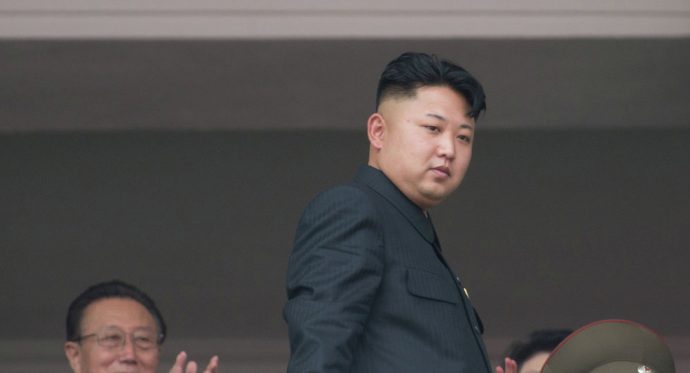
© Sputnik/ Ilya Pitalev
Sputnik – 03.01.2018
North Korean leader Kim Jong-un has ordered the reopening of a contact channel between Pyongyang and Seoul to discuss issues related to the upcoming Olympic games in Pyeongchang, Ri Son Gwon, the head of North Korea’s agency handling inter-Korean affairs, said as quoted by the Yonhap news agency.
“I was instructed to open the Panmunjom [the shared border village] contact channel between North and South at 15:00 [3:30 p.m. in Seoul, 6:30 GMT] in order to settle issues related to hosting the PyeongChang Olympic Games, including sending [North Korea’s] delegation to the Games,” Ri said.
The officials added that Pyongyang would closely work with Seoul on practical issues related to sending the country’s delegation to the upcoming sports event, based upon the leadership’s stance, and expressed the hope that the Olympics would be successful.
“We sincerely wish once again that the PyeongChang Olympic Games will be held successfully,” Ri said.
Cheong Wa Dae, South Korea’s presidential office welcomed the announcement.
“I believe it signals a move toward an environment where communication will be possible at all times,” Yoon Young-chan, the chief presidential spokesman, told reporters, as quoted by the news agency.
Pyongyang’s statement came a day after Seoul proposed high-level discussions with the DPRK following Kim’s New Year’s address in which he had stressed he was willing to launch a dialogue with South Korea.
Meanwhile, US Envoy to the United Nations Nikki Haley warned in a statement on Tuesday that Washington would not recognize any talks between the two Koreas unless the nuclear issue is resolved and all of their nuclear weapons banned.
“North Korea can talk to anyone they want, but the United States is not going to recognize it or acknowledge it until they agree to ban the nuclear weapons that they have,” Haley said.
North Korean leader Kim Jong-un said in his New Year’s Day address that Pyongyang was ready to send its athletes to the 2018 Winter Olympics in Pyeongchang, South Korea, and expressed readiness to start talks with Seoul on the issue.
Seoul, in turn, has proposed holding high-level talks on January 9 in Panmunjom Village in the demilitarized zone between North Korea and South Korea.
The 2018 Winter Olympic Games will take place in Pyeongchang and two nearby cities, Gangneung and Jeongseon, in South Korea from February 9 to February 25. The South Korean resort city is located just 80 kilometers (50 miles) from the border with North Korea.
While Trump tweets, Putin steals a march on North Korea
By M.K. Bhadrakumar | Asia Times | September 8, 2017
The message from the two-day Eastern Economic Forum (EEF) conference, which concluded in Vladivostok on Thursday, is that Russia’s “pivot to Asia” in recent years, in the downstream of Western sanctions against it, has become a core vector of its foreign policies.
The EEF began modestly in 2015 with the agenda of showcasing the “new reality” of a role for the Russian Far East in the economic integration of the Asia-Pacific region. But this year’s EEF waded into the critical regional security issue of North Korea.
Russian Foreign Minister Sergey Lavrov revealed, inter alia, that a North Korean delegation would attend the EEF event. He said, “As I understand, the DPRK’s delegation to the EEF consists of representatives of the economic bloc. We (Russia) also have representatives of our economic ministries and departments here. So I think, meetings within the profile structures of the two countries will take place.”
This comes at a time when administration of US President Donald Trump is stepping up its rhetoric and demanding more sanctions against North Korea. Curiously, South Korean President Moon Jae-In also attended the EEF conference, taking time off to meet Russian President Vladimir Putin in Vladivostok on Wednesday.
Moon may well be quietly admiring of Putin for saying things upfront about North Korea which he is unable to do himself. When talking to the media in Xiamen on Tuesday following the BRICS summit, Putin had done some plain speaking regarding North Korea. Notably, he said:
“Everyone remembers well what happened to Iraq and Saddam Hussein. Hussein abandoned the production of weapons of mass destruction. Nonetheless… Saddam Hussein himself and his family were killed… Even children died back then. His grandson, I believe, was shot to death. The country was destroyed… North Koreans are also aware of it and remember it. Do you think that following the adoption of some sanctions, North Korea will abandon its course on creating weapons of mass destruction? “Certainly, the North Koreans will not forget it. Sanctions of any kind are useless and ineffective in this case. As I said to one of my colleagues yesterday, they will eat grass, but they will not abandon this program unless they feel safe.”
After meeting Moon, Putin again urged that dialogue is the only way out of the crisis. Putin is well aware that Moon has a pivotal role in preventing US President Donald Trump from taking military risks, and he cannot be unaware that some fractures have appeared lately in the US-South Korea alliance. Significantly, Moon said at his press conference with Putin on Wednesday:
“Mr. President and I have also agreed to build up the basis for the implementation of trilateral projects with participation of the two Koreas and Russia, which will connect the Korean Peninsula and the Russian Far East… We have decided to give priority to the projects that can be implemented in the near future, primarily in the Far East. The development of the Far East will promote the prosperity of our two countries and will also help change North Korea and create the basis for the implementation of the trilateral agreements. We will be working hard on this.”
To jog memories, Moscow has, in the past, mooted certain infrastructural projects involving North Korea that might hold the potential to stabilize the region: an extension of the Trans-Siberian railway system into South Korea via North Korea; a gas pipeline connecting South and North Korea with the vast Russian oil and gas fields in the Far East; and transmission lines to take surplus electricity from the Russian Far East to the Korean Peninsula.
South Korean companies are involved in Sakhalin-1 and Sakhalin-2 energy projects and are currently discussing with Russia the delivery of liquefied natural gas. South Korean shipyards are hoping to build 15 tankers to transport gas from the Yamal LNG plant in the Russian Far East.
Putin stated at the press conference with Moon that “Russia is still willing to implement trilateral projects with the participation of North Korea.” He flagged the above three projects specifically and added, “The implementation of these initiatives will be not only economically beneficial, but will also help build up trust and stability on the Korean Peninsula.”
The big question is whether there was some form of contact between the delegations of North and South Korea on the sidelines of the EEF conference in Vladivostok. Russia, the host country, is uniquely placed to play the role of facilitator.
At any rate, Moscow is willing to undertake a mediatory role between the two Koreas, which no other world capital today can perform. It can talk to Pyongyang to raise its comfort level and integrate North Korea in regional cooperation, while also easing South Korea’s existential angst. Moscow’s trump card is its privileged communication channels to Pyongyang and its common interests with Seoul (and Beijing, and Tokyo) in avoiding a catastrophic war.
In the given situation, Russian diplomacy becomes optimal. While bringing about peace, it also holds the potential to create wealth and shared prosperity, which provides the bedrock for regional stability and helps the development of the Russian Far East. Incidentally, Chinese Vice-Premier Wang Yang, the point person for China’s Belt and Road Initiative, also attended the EEF meet.
Putin arrived in Vladivostok from China where he held detailed discussions with President Xi Jinping on Monday regarding the situation on the Korean Peninsula. A high degree of Sino-Russian coordination on North Korea is already evident.
Any Russian peace initiative on North Korea will be a reflection on the failure of leadership in Washington. The Trump administration is unlikely to view such a scenario with equanimity, given its far-reaching implications for the US-led system of alliances in the Far East.
North Korean delegation arrives in Russia, to be joined shortly by South Korean President
By Adam Garrie | The Duran | September 5, 2017
Hours after the 9th annual BRICS summit wrapped up in Xieman, China, delegates from East and South East Asia have begun arriving in the Russian city of Vladivostok for the Eastern Economic Forum.
The Forum is an event designed to enhance economic partnerships and cooperation between multiple Asian nations including Russia, China, Japan, Vietnam and the Korean states.
This year’s summit occurs days after North Korea tested what is thought to be a hydrogen-weapon. Russia and China have both condemned the move and support UN sanctions against Pyongyang, but are equally opposed to further crippling unilateral sanctions from Washington.
With many suspecting that North Korea would boycott the event, Russian officials have confirmed otherwise, stating that the North Korean delegation is already in Vladivostok.
South Korean President Moon Jae-in is to arrive shortly along with the South Korean delegation. While the Korean crisis is set to dominate discussions that would otherwise have been reserved for discussing trade and economic matters, it is not yet clear if the North and South Korean delegations will interact at any level.
Many suspect that Russian President Vladimir Putin who hosts the event will attempt to conduct dialogue with the representatives of both Korean states in order to try and de-escalate regional tensions.
The Eastern Economic Forum officially begins on the 6th of September and runs through the 7th.
Featured Video

Yemen joins the war – Red Sea could be blocked next – Saudi regime at risk
or go to
Aletho News Archives – Video-Images
From the Archives
Should Europeans ‘Thank’ the Americans for Destroying Nord Stream?
By Robert Bridge | Strategic Culture Foundation | September 29, 2022
With an investigation continuing into the destruction of the Nord Stream gas pipeline that provided energy supplies to Europe from Russia, there appears to be just one prime suspect, and that should surprise nobody.
Following the sabotage of the Nord Stream 1 and 2 gas pipelines, former Polish Foreign Minister Radoslaw Sikorski already seemed to know the identity of the perpetrator when he tweeted out: “Thank you, USA.”
At first glance, it seemed that Sikorski was speaking sarcastically, berating Washington for carrying out an attack that will have severe repercussions for the people of Europe. After all, how could anyone see any good coming from the termination of Europe’s primary source of gas reserves with winter just around the corner? It was Sikorski’s homeland of Poland, after all, that urged its citizens to collect firewood in the face of dwindling gas reserves.
In fact, the Polish diplomat was speaking one-hundred percent literally… continue
Blog Roll
 Aletho News
- Bring The Troops Back. End This War Now!
- Can we please stop calling Israel the ‘only democracy in the Middle East’ now?
- US should start removing its troops for Germany, proposes AfD co-leader Chrupalla
- Iran Red Crescent: 600 educational centers attacked in US-Israeli ‘war crimes’
- Russian Oil Tanker Arrives in Cuba Amid U.S. Blockade
- America Racing to Strategic Defeat in Iran: Lt Col Daniel Davis
- FTC Warns Visa, Mastercard, PayPal, Stripe Over Political Debanking
- Russian tanker approaches Cuba despite US oil blockade
- Marandi: Yemen joins the war – Red Sea could be blocked next – Saudi regime at risk
- Pro-Palestinian French member of European Parliament denied entry to Canada
- If Americans Knew
- Israeli police block Catholic cardinal from entering Church of the Holy Sepulchre on Palm Sunday
- Israel is assassinating journalists again, more than any other nation, anywhere, ever – Not a ceasefire Day 170
- Over 300 US service members wounded, majority have brain injuries – Not a ceasefire Day 169
- Researchers at Human Rights Watch Resign Over Blocked Report on Palestinian Refugee Return
- Jewish Groups Are Backing a War Americans Don’t Want
- Eric Fingerhut Thinks He’s the President of the Jews
- Top Jewish Philanthropists, Rabbis Urge Israeli President to Take Action Against ‘Jewish Extremists’
- Don’t Be Fooled. Zionist Leaders Have Always Wanted to Control Southern Lebanon
- Israel’s widespread use of torture is a core element of its genocide against the Palestinian people
- In Israel’s War on Iran, Many Middle East US Bases Rendered “All But Uninhabitable”
- No Tricks Zone
- New Study Finds Warming Saves Lives…Cold Temperatures 12 Times More Deadly Than Excess Heat
- German Science Blog Accuses PIK Climate Institute Of Hallucinating Climate Tipping Points
- Devastating Assessment Of Comirnaty Vaccine By Former Senior Pfizer Europe Toxicologist
- New Study: CO2 Is ‘Effectively Negligible’ As An Explanatory Climate Change Factor Since 2000
- Former Pfizer Toxicologist Dr. Helmut Sterz Tells Bundestag Hearing Pfizer Vaccine Should Have Never Been Approved
- Energy Expert: Germany’s Nuclear Phaseout Was A “500 Billion Euro Mistake”
- New Research: South Australia’s Mid-Holocene Sea Surface Temperatures Were 4°C Warmer Than Today
- Storing Green Energy To Last Germany 10 Days Would Require A 60-Million Tonne Battery
- New Studies: UK Sea Levels Were 4 Meters Higher Than Today During The Mid-Holocene
- Destructive Green New Deal: German Energy And Metal Group Warns Of Drastic Crisis
 Aletho News