Sweden abolishes nuclear tax
World Nuclear News – June 10, 2016
The Swedish parliament has today agreed to abolish a tax on nuclear power as it recognizes nuclear’s role in helping it to eventually achieve a goal of 100% renewable generation.
The framework agreement announced by the Social Democrats, the Moderate Party, the Green Party, the Centre Party and the Christian Democrats, will see the tax phased out over two years. It also allows for the construction of up to ten new nuclear reactors at existing sites, to replace plants as they retire. Setting 2040 as the date at which Sweden should have a 100% renewable electricity system, the document stresses that 2040 is a ‘goal’ and not a cut-off date for nuclear generation.
A variable production tax on nuclear power introduced in 1984 was replaced by a tax on installed capacity in 2000. Since its introduction this tax has gradually increased and today corresponds to about 7 öre (0.8 US cents) per kilowatt-hour. In February this year, utility Vattenfall said that the capacity tax had brought its nuclear operating costs to around 32 öre (3.8 US cents) per kWh. However, its revenue from nuclear power generation is only about 22 öre (2.6 US cents) per kWh.
Swedish utilities had sought redress against the tax through the courts, but the European Court of Justice ruled last October that Sweden could continue to tax nuclear power, deciding the tax is a national, rather than European Commission, matter.
Vattenfall CEO Magnus Hall welcomed the agreement, which he said gave the utility the predictability it needed. “The abolishment of the nuclear capacity tax is an important precondition for us to be able to consider the investments needed to secure the long-term operation of our nuclear reactors from the 1980s,” he said. Vattenfall’s reactors at Forsmark and Ringhals have undergone a comprehensive modernisation programme to allow them to operate until the mid-2040s. However, to continue operating beyond 2020 they must meet stricter safety requirements through the installation of independent core cooling. Investing in those upgrades was economically impossible with the tax in place.
“Even with the abolishment of the capacity tax, profitability will be a challenge,” Hall concluded. “Low electricity prices put all energy producers under pressure and we will continue to focus on reducing production costs. Naturally, investment decisions must be taken on commercial grounds, taking all cost factors and expected long-term market developments that the agreement implies into account,” Hall said.
The director general of the World Nuclear Association, Agneta Rising, said: “Today’s announcement is a positive development. It is vital that there is now consistent policy to give operators the confidence to make the investments needed in their plant to allow for their long term continued operation. Other countries should follow Sweden’s example and ensure that their energy policies provide a level playing field that treats all forms of generation equally on their merits.”
Signal from Russian sub lurking near Sweden in 2014 ‘came from Swedish object’
RT | June 12, 2016
A sonar signature, which Swedish military claimed to be crucial evidence of a foreign submarine’s presence near Stockholm during the 2014 hunt, came from a “Swedish object,” the country’s defense minister has admitted.
Peter Hultqvist would not go into details about the source of the signal, but said the military reconsidered their assessment of its nature in September 2015, he told Sveriges Radio.
The hunt for a foreign submarine, presumed to be Russian by the Swedish media, was launched off Stockholm in October 2014. The media reported that an emergency hail on a frequency used by the Russian Navy prompted the hunt. An amateur photo of the supposed boat was widely circulated. Hultqvist took up office earlier the same month.
At the time of the search Swedish military reported having crucial evidence of the presence of a foreign submarine in the country’s waters. The perceived threat to national security was used to justify a multimillion-dollar boost to military spending.
In April 2015, the supposed intruder was revealed to have been a workboat by Swedish media.
Sweden is not the only nation where Russian submarines have been blamed for things they didn’t do. In April last year, a fishing vessel collided with an unidentified submarine off Scotland, with British media speculating that it must have been Russian. The Royal Navy admitted in September that the boat was actually theirs.
Western media blame Russia sometimes bizarrely for various incidents, including the disappearance of Malaysia Airlines flight MH370 in 2014 to the vandalizing of a Swedish TV mast last month.
READ MORE: ‘Oops, it was us’: Military concedes British sub, not Russian, damaged UK trawler in April
Flawed Logic: Swedish Writer Knocks Common Sense Into NATO Supporters
Sputnik | June 6, 2016
Over the past years, ordinary Swedes have been under immense pressure from high-ranking politicians and conventional media, who advocate scrapping the country’s trusted policy of non-alignment in favor of joining NATO. However, minority opinions still persist.
One of the stalwart opponents of joining NATO is the famous writer and journalist Jan Guillou, who last week wittily trounced his antagonists in a column for the tabloid newspaper Aftonbladet.
NATO supporters habitually try to scare everyone out of their wits with a sneak attack on Russia’s part, yet somehow fail to explain why Russia should endeavor such an attack, even if it is one of their trump cards, argued Guillou.
The Russian attack is to be expected “within a few years,” threatened the Swedish army chief Lieutenant General Brännström only half a year ago. Liberal pundits and their trusted military columnists applauded.
“I was not the only one to demand an explanation. What would Russia gain by attacking Sweden? Conquer more forest and iron ore? On the other hand, what would Russia lose by such an attack?” wrote Guillou.
According to Guillou, this question is much easier to answer: the aftermath would be ruined foreign trade and a de facto state of war between Russia and the EU.
“Not a single Liberal could explain why on earth Russia would commit such an economic and political suicide, yet they continued with their saber-rattling as vigorously as before: Sweden should join NATO to fence off the Russian attack that would inevitably ensue if it continued outside NATO,” Jan Guillou wrote.
Of late, Sweden’s military bosses have come up with an “updated” and more nuanced threat. Now, Putin is supposedly intending to limit himself with capturing “only” the strategic island of Gotland, which lies some 100 kilometers off mainland Sweden’s coast. This scenario is part of the following theory: at some point, Russia is inevitably bound to conquer one or several Baltic states (which according to Western think-tanks is manageable in only 60 hours).
A column in the tabloid newspaper Expressen, which is one of NATO’s most keen supporters in Sweden went even on to threaten the poor islanders with Russian nuclear arms. As usual, however, the author refrained from disclosing what joy Russia would get from nuking Gotland, which is quite typical of NATO agitators.
According to Guillou, the biggest problem with a feasible NATO membership is that Sweden would have to abandon its independent foreign policy and become a cog in the US military machine.
“For the question in all its simplicity is as follows: should Sweden cede its [independent] security policy to a Washington-led system through NATO membership?” Guillou asked rhetorically.
“Considering America’s dubious track record when it comes to foolish wars in recent years, it would be a dark perspective. What about future remakes of Iraq, Afghanistan and Syria? <…> As if that were not enough, Sweden would also end up in the same military alliance with Turkey, led by a war-mad dictator, and states such as Hungary and Poland, which are moving away from democracy.”
These are real questions, which incidentally are avoided at all costs by pro-NATO debaters. Instead, they go on in circles with their increasingly stale rhetoric about Russia’s “aggression.” Sweden’s NATO campaign stinks, concluded Guillou.
Jan Guillou is a popular Swedish writer and journalist. His fame in Sweden is rooted in his best-selling detective series, as well as his time as an investigative reporter. Guillou is renowned for his consequent anti-US stance and was previously known for calling Washington “the greatest mass murderer of our time.”
Nominally Populist Sweden Democrats Help Ratify NATO Deal
Sputnik – May 27, 2016
After Sweden Democrats reneged on earlier pledges to make a last-ditch effort to stall the decision, the Swedish parliament effortlessly railroaded through an agreement which essentially allows NATO to deploy forces in Sweden and brings the non-aligned Nordic country yet another step closer to the alliance.
The Swedish parliament ratified the so-called Host Nation Support Agreement (HNSA) after a proposal by the Left Party to put off the decision by one year, initially backed by Sweden Democrats, was voted down by 291 votes to 21.
The right-wing populist Sweden Democrats made an about-face ahead of the vote, abandoning plans team up with the Left Party, which argued that the hotly-debated deal posed a significant risk to the rights and freedoms stipulated in Sweden‘s constitution.
Despite earlier pledges by party leader Jimmie Åkesson to join efforts with the Left to stop the agreement he claimed posed “a threat to Sweden’s neutrality,” the Sweden Democrats had second thoughts in the eleventh hour and voted unanimously in favor of the controversial deal with NATO.
Remarkably, the party has been against closer NATO ties from the very beginning and officially stays true to its ideals.
Bizarrely, several Sweden Democrats party members claimed on Twitter and Facebook that they actually voted against the agreement, and that the parliament had published erroneous information on its website, news outlet Fria Tider reported.
The Left Party’s leader, Jonas Sjöstedt, condemned their usual antagonists’ U-turn.
“I am not at all surprised. The Sweden Democrats have been very wobbly on issues to do with freedom from alliances for some time now,” he said as quoted by the tabloid newspaper Aftonbladet.
Originally signed in September 2014, the HNSA allows the alliance to deploy helicopters, aircraft, ships and personnel across Swedish territory, but only at Sweden’s request. Since the agreement involved changes to Swedish regulation regarding privileges and immunities afforded NATO staff, a parliamentary ratification was necessary.
Additionally, public opinion in traditionally neutral Sweden, which boasts several centuries of non-alignment, has markedly shifted towards NATO in recent years. A survey by pollster Sifo, released in September 2015, marked the first time the majority of Swedes actually were in favor of NATO.
The HNSA may be seen as a major victory for Defense Minister Peter Hultqvist, who, despite formally denouncing perspectives of joining NATO, prepared a long series of agreements that would steadily increase Sweden’s involvement with the alliance.
Yesterday, the Swedish government entrusted the Swedish Civil Contingencies Agency MSB with negotiating a cooperation agreement with NATO’s Center for Strategic Communications in Riga, Latvia, in order to address the “information war” on Russia’s part, Swedish television network SVT reported. Hultqvist repeatedly urged Sweden to join the NATO Strategic Communications Centre of Excellence (STRATCOM), which is charged with targeting propaganda in traditional and social media.
Despite the soothing rhetoric that such measures “would not affect non-alignment,” today Sweden has emerged as a full-fledged NATO member in all but name.
Sweden’s deliberate creeping towards NATO may set an example for its fellow neutral neighbor Finland, which has also come under immense pressure recently with respect to NATO membership.
In late April, the Finnish Foreign Ministry published an “independent” report exploring the consequences of NATO membership for Helsinki. The report’s primary conclusion was that the Nordic duo should stay together: either in both joining the alliance or declining the generous offer.
Swedish Left and Right Unite to Sink NATO Deal
Sputnik – May 24, 2016
The left and the right generally have few topics they agree upon, especially in struggling, immigrant-immersed Sweden. Surprisingly, an “unholy” alliance between the Left Party and the far-right Sweden Democrats may sink the controversial NATO deal, on which Sweden’s government has been pinning its hopes.
In most contexts, the Left Party and the Sweden Democrats regard each other as sworn enemies, yet they have recently opened up to a temporary alliance against a “greater evil,” as both intend to uphold Sweden’s time-tested policy of non-alignment. This week, Sweden’s parliament is set to decide on the so-called Host Nation Support Agreement (HNSA), which would allow NATO forces to conduct exercises on the country’s territory and come to its aid in times of crisis.
Critics of the agreement suggest that the country is simply attempting to enter the North Atlantic Treaty through the back door. Earlier, Defense Minister Peter Hultqvist of the ruling Social Democratic Party, an ardent supporter of stronger ties with NATO, dismissed such opinions, calling them the “undergrowth of the debate.” Hultqvist is also known for brushing aside the public’s concern regarding NATO’s eventual deployment of nuclear weapons. “It is not Moscow that governs Sweden’s security policy,” Hultqvist said, as quoted by Svenska Dagbladet.
However, the NATO agreement’s critics fear that if it is voted through, it would represent the final nail in the coffin of Swedish neutrality and non-alignment. The government proposal clearly declared that Sweden would unequivocally support an EU country (the majority of which are NATO countries) in the event of an attack.
“International security must rest on international law, cooperation and a strong global regulatory framework under the UN leadership. The Left is strongly critical of how NATO struggles to take over a larger role at the expense of the United Nations. Instead of contributing troops to the EU’s and NATO’s forces, Sweden should prioritize enhancing the UN’s peacekeeping efforts,” Stig Henriksson of the Left Party wrote in an opinion piece in Göteborgs-Posten.
Another notable aspect of the NATO agreement is the weight that is placed on the regulatory framework for the construction of NATO bases in Sweden. This is equal to a green light to NATO’s military infrastructure, wherefrom military operations against Russia may be conducted.
“Future NATO forces stationed on Swedish territory would only increase the tensions and thus the risk of war in our region,” Stig Henriksson wrote.
Meanwhile, the NGO No to NATO has been gathering signatures to stop the controversial agreement and organizing rallies advocating non-alignment. A demonstration in central Stockholm on Saturday gathered thousands of campaigners, including high-profile politicians such as former Defense Minister Thage Petterson, a notable opponent of NATO.
“The fall of the Berlin Wall kindled hopes that we would no longer worry about a new war in Europe. One lesson we drew from the Cold War was that Sweden strengthened peace in Europe by staying outside of NATO. Now, tensions in Europe have increased, which is not something we dreamt about. Instead, we dreamt of peace and detente,” the former Social Democratic Defense Minister told the audience.
Petterson argued that Sweden’s continuous involvement with NATO would only increase tension in Europe, whereas the much-debated Host Country Agreement could serve as a springboard to full membership.
Of late, pressure on Sweden to join NATO has been intensifying due to a relentless campaign of the government and mainstream media, urging Swedes to embrace NATO as the only defense against “aggressive” Russia.Last week, NATO’s secretary general Jens Stoltenberg called the formally still neutral Finland and Sweden “NATO’s closest allies,” stressing the importance of the two countries’ contribution to the security of the Baltic Sea Region.
In July, Defense Minister Peter Hultqvist is set to join the NATO Summit in Warsaw. The idea was obviously to show that Sweden is delivering according to plan. Now there will be no fun trip to Poland.
Read more: Sweden and Finland Pretend to Fish for Russian Subs off Gotland
Israeli Lobby Forces Swedish Minister to Resign For Comparing Israel’s Pogrom to Nazis
21st Century Wire | April 22, 2016
Another example of intellectual racketeering by an international lobby that is determined to white wash and sanitize the incredible crimes of a rogue nation.
Undoubtedly, Swedish minister Mehmet Kaplan was already a controversial figure with links to some dubious Turkish Islamic nationalist groups (see his story below), and his various adversaries wanted him out of politics. However, his past comparisons of the exclusionary, racist and bigoted ethnic cleansing policies of Nazi Germany – to similar policies fueled by the Zionist ideology in the formation and ongoing maintenance of the State of Israel – have strong parallels as evidenced in numerous scholarly works, including author Ilan Pappé’s historical compendium, The Ethnic Cleansing of Palestine. In summary:
“During the 1948 Palestine war, around 720,000 Palestinian Arabs out of the 900,000 who lived in the territories that became Israel fled or were expelled from their homes. The causes of this exodus are controversial and debated by historians. In his own words, Ilan Pappé “want[s] to make the case for the paradigm of ethnic cleansing and use[s] it to replace the paradigm of war as the basis for the scholarly research of, and public debate about, 1948.”[1]
“The thesis of the book is that the forced move of Palestinians to the Arab world was an objective of the Zionist movement, and a must for the desired character of the Jewish state. According to Ilan Pappé, the 1948 Palestinian exodus resulted from a planned ethnic cleansing of Palestine that was implemented by the Zionist movement leaders, mainly David Ben-Gurion and the other ten members of his “consultancy group” as referred to by Pappé. The book argues that the ethnic cleansing was put into effect through systematic expulsions of about 500 Arab villages, as well as terrorist attacks executed mainly by members of the Irgun and Haganah troops against the civilian population. Ilan Pappé also refers to Plan Dalet and to the village files as a proof of the planned expulsions.[2]” (Wikipedia 2016)
Add to this, today’s native Palestinian population is currently under full Israeli military occupation and is being held in what many describe as the world’s largest mass open prisons for the past 70 years – many times longer than similar repressive regimes throughout history. In addition to this, hundred of thousands (and now now millions) of those Palestinians driven from their homes by militant European Israeli settlers in 1948-1950 have been stranded without national status in refugee camps in neighboring Lebanon, Syria, Egypt and Jordan.
Critics can argue about which oppressive regimes in history were, or are, more severe to their victims, but no one can rightly argue that the Israeli project to date has been the chief architect of its own highly organized pogrom.
What’s most amazing however, is the misappropriation of language by the intellectual racketeers determine to enforce a politically correct regime of public discourse, and who routinely levy the fallacious charge of “anti–semitism” at anyone who challenges Israel on its own openly racist state policies and systematic abuses of the native Arab Palestinian population who are actual semite people – unlike the overwhelming majority of Jewish Israelis who settled in Palestine from 1948 onwards who are of European descent, and not Middle Eastern or ‘semitic’ decent.
Israel and its supporters may not like them, but fact are facts.

While it still manages to collect scalps of politicians, entertainers and academics in the west, Israel’s international intellectual extortion racket is already rapidly disintegrating…
Despite efforts by a well-financed international Israeli lobby to silence opposition and to cover-up the state of Israel’s crimes in the western media, millions of conscientious citizens worldwide are now aware of these crimes and have come together to organize a number of boycott and divestment campaigns (BDS) designed to end its brutal apartheid state policies and pressure Israel into recognizing international norms and observing basic human rights for ethnic natives held under its US government-financed military control.
Meanwhile, another trophy for the “antisemitic” racket…

Swedish minister Mehmet Güner Kaplan. © Joakim Berndes / Wikipedia
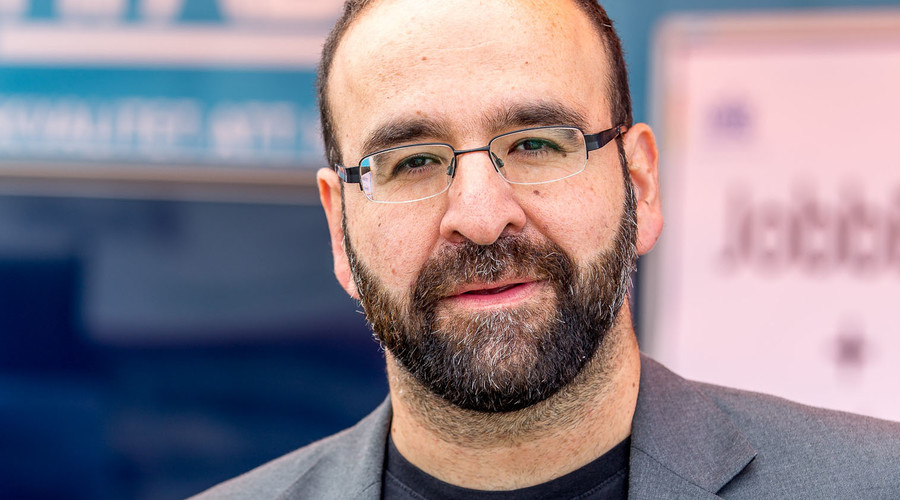
Swedish minister resigns after comparing Israel to Nazi Germany
Sweden’s housing minister has resigned after footage of him comparing the treatment of Palestinians by Israel to that of the Jews by the Nazis surfaced in local media. The politician has recently come under fire for his alleged ties to Turkish neo-fascist groups.
Mehmet Kaplan, a high-profile Swedish politician of Turkish origin and member of the Green party, was serving as a minister of Housing and Urban Development from 2014 until his resignation on Monday amid mounting controversy over his rumored close ties to the radical Turkish Islamist groups and his video interview from 2009 in which he says that “Israelis treat Palestinians in a way that is very like that in which Jews were treated during Germany in the 1930s.”
Although the statement about Israel`s policies towards Palestinians was made before Kaplan took office, Swedish Prime Minister Stefan Lofven, from the Social Democrats, said that “Mehmet Kaplan’s overall assessment of the situation is that he will not be able to act as a minister and I share that assessment,” while announcing his resignation from the government.
The publication of the extract from his interview to Somali Star TV by the Svenska Dagbladet daily was the last straw that forced him out of his office.
Kaplan himself, however, denied that he had crossed any ethical line and didn’t offer any apology. He admitted that he had “on several occasions criticized the actions of the state of Israel severely” but stressed that he was not “anti-Semitic.” Instead, he said that he had made decision to resign leave as the excessive media publicity would prevent him from doing his job as a minister.
Other Swedish officials were far more critical of Kaplan’s comments, however, with Foreign Minister Margot Wallström calling them “terrible,” the Guardian reported… Read more at RT
Ex-German media boss admits on live radio the national news agenda is govt controlled
RT | February 4, 2016
If you really want a lesson in how the Western popular press works, this is it.
Without question, Germany is the leading power in Europe. ZDF is its state broadcaster and most popular channel.
Together with sister network ARD; German’s are obliged to pay €17.98 per month to fund it.
This week, during a radio event in Berlin, the retired head of ZDF Bonn, Dr Wolfgang Herles, dropped a bombshell. He admitted the network, and others, takes orders from the government on what, and what not, to report.
Now, you’d expect this kind of story to be splashed across the world’s press, wouldn’t you? A former senior management figure acknowledging that his ex-employers work in tandem with the authorities to control the news agenda in such an important country? If such a revelation was made in a ‘developing’ nation, NATO media would be all over it.
Yet, it’s not. As I write, only London’s Daily Mail and America’s Breitbart and RT have bothered to report this amazing story.
The BBC, a carbon copy of ZDF and ARD in Britain, is busy promoting a documentary about a fake Russian invasion of Latvia. Meanwhile, in Germany itself, RT Deutsch and Munich’s Focus appear to be the only two significant outlets tackling the revelations. This in a country where the Dresden region was once known as the “valley of the stupid” because Western TV signals couldn’t reach much of it during the Cold War.
Well-founded fears
Many people across Europe suspect that most domestic state TV is under fairly direct control of politicians. The BBC, despite its mendacious cultivation of an image of fairness, is a pretty obvious example. It is governed by a Trust, wholly appointed by the Queen on the advice of government ministers of the day. Russia’s most popular station, the First Channel, although partially privately owned, is also administered by state appointees.
What makes Herles’ outburst so significant is his seniority. Before retiring last year, he was a prominent culture editor and presenter. In the 90’s, he hosted his own chat show, ‘Live’, and prior to these ventures, he’d been head of ZDF Bonn. At that time, Bonn was the West German capital. It’s important to understand that ZDF, while available across Germany, is technically owned by the Bundesländer (states).
Thus, Bonn-based Herles would have had far greater understanding of how German politics worked than most in ZDF’s Mainz headquarters, never mind far flung regions.
Turning a blind eye
Since the Cologne sex attacks on New Year’s Eve, there have been strong allegations that German media downplayed, or even ignored, the story. With migrants, predominately Arabic in origin, pouring into the country since last year, highlighting assaults where the alleged perpetrators were of Arab appearance could help turn public opinion against Angela Merkel’s “open-borders” policy. On the other hand, ignoring infractions by newcomers serves to keep Germans ignorant about how Berlin’s scheme could jeopardize their own safety. A lot of people are, understandably, angry about that.

Wolfgang Herles. © Wikipedia
Herles’ admission was prompted by the assertion that ordinary people have lost faith in Germany’s tightly-controlled media. “We have the problem that – now I’m mainly talking about the public [state] media – we have closeness to the government,” he revealed. “Not only because commentary is mainly in line with the grand coalition (CSU, CDU, and SPD), with the spectrum of opinion, but also because we are completely taken in by the agenda laid down by the political class.”
The retired ZDF chief went on to concede that the station took orders on what to broadcast. “The topics about which are reported are laid down by the government,” he confessed. Ironically, the Guardian, with no actual evidence, has prominently published numerous allegations of the Kremlin engaging in this practice. However, it ignores a similar assertion about Germany, which is actually backed up by a credible figure.
Of course, it’s not just the publicly-owned media; their private counterparts are also far from balanced. Bild Zeitung, Germany’s bestselling newspaper, is bound by the charter of its holding company, Axel Springer SE, “to further the unification of Europe.” Moreover, it must “support the Transatlantic Alliance, and solidarity with the United States of America in the common values of free nations.” Even the fairest editor in the world wouldn’t have much leeway under those conditions.
Pan European myopia
As it happens Germany is not alone. Last year, the Times Ireland exposed how Dublin’s state-controlled RTE routinely furnishes questions to government ministers before they appear on air. Incredibly, RTE News, currently helmed by controversial British executive Kevin Bakhurst, responded by attempting to smear The Times.
Meanwhile, in Sweden, the fervently liberal Expressen newspaper this week labeled The Daily Mail ‘racist.’ The British newspaper’s crime? Daring to report facts on the country’s migrant crisis that are precluded in Sweden. Because the domestic media refuse to cover negative stories involving migrants, many Swedes are now forced to access British and Russian media to read news about their country.
Right now, the pro-EU press is struggling to control the narrative. Dismissing rival viewpoints as “propaganda” can only work for so long. Furthermore, turning a blind eye to stories that question EU policy is a tougher proposition in the age of social media.
Last year, Germany’s Der Spiegel magazine closed online comment threads on all articles about migration. Last week, The Guardian followed suit, blocking all posts related to immigration, Islam and race.
These moves aren’t a huge surprise. In recent years, journalists and commentators who refuse to fall-in-line with the liberal European consensus have been increasingly barred from the mainstream media. This stands in marked contrast to previous decades in which debate was actively encouraged and opposing views cherished. Maybe Mikhail Gorbachev wasn’t far off when he warned:”The most puzzling development in politics during the last decade is the apparent determination of Western European leaders to re-create the Soviet Union in Western Europe.”
Bryan MacDonald is a journalist. He worked in Dublin for many years, for Ireland on Sunday and the Evening Herald.
Drunk on Hate and Mad at the World
Israel’s Diplomatic Wars of Aggression

By Richard Edmondson | Fig Trees and Vineyards | January 29, 2016
Israel these days seems to be increasingly at odds with a good portion of the rest of the world. In just the past few months it has quarreled with:
- Spain over arrest warrants issued for Netanyahu and six other Israeli officials for the 2010 attack on the Gaza Freedom Flotilla;
- Sweden over comments by its foreign minister who has called for an investigation into extrajudicial executions of Palestinians;
- college campus student groups supporting the BDS movement;
- academic associations who have issued calls for academic boycotts of Israeli universities;
- Brazil over its refusal to recognize an Israeli ambassador who hails from the right-wing Israeli settler movement;
- The EU over labeling of products from Israeli settlements.
- The UN over Ban Ki-moon’s recent criticism of the settlements
And really, if truth be known, Israel is probably not too happy just now with Italy either, which recently received Iranian President Hassan Rouhani on a state visit, resulting in a number of agreements between the two countries’ energy sectors as well as cooperation on a future high-speed rail project. Naor Gilon, the Israeli ambassador to Italy, complained that Rouhani was being treated like “the king of the world.”

Zvi Zameret accuses Wallström of ‘ignorance and arrogance’,
and suggests she might meet a violent end
War with Sweden
All in all, Gilon’s comments would have to be viewed as rather tame, however–at least by comparison. For some of the statements issuing from Israelis now, particularly those aimed at Swedish Foreign Minister Margot Wallström, are positively chilling in their level of malice expressed, and frankly it might behoove the Swedish official to consider hiring a bodyguard at this point, if she hasn’t already done so.
As I noted in an article five days ago, Wallström is now regarded in Israel as “public enemy number 1” (the Jerusalem Post’s words, not mine) because of remarks she has made critical of Israel, including a recent call for an investigation into extrajudicial killings of Palestinians.
Now it seems there may be those in Israel hankering for the foreign minister’s blood–literally. If you haven’t read my article, Swedish Media Target Country’s Foreign Minister Following Her Remarks on Israel, I suggest you do so as it will place what follows into greater perspective. One day after posting that article, I became aware of two other articles, one by blogger Richard Silverstein and the other by Jonathan Ofir and posted at Mondoweiss, both of which discuss what appears to have been a scarcely veiled threat on Wallström’s life by a former Israeli official.
The comment was made by Zvi Zameret, a former official in the Israeli Ministry of Education, in an op-ed piece he wrote for an Israeli newspaper owned by Nevada casino magnate Sheldon Adelson. In the article, Zameret waxes lyrical on the 1948 assassination of Swedish diplomat Folke Bernadotte, and then goes on to suggest that Wallström might meet a similar fate. Here is a bit from Silverstein’s commentary on the matter:
Zvi Zameret, the former director for instruction for the Israeli education ministry has written an op-ed in Makor Rishon, Sheldon Adelson’s pro-settler newspaper, praising the 1948 assassination of UN mediator Count Folke Bernadotte by Yitzhak Shamir’s Lehi gang. Zameret accuses Bernadotte of being an anti-Semite and claims that his views originated in a Swedish society that was suffused with this perspective. He claims that ridding the world of the Swedish Count was necessary to protect Israel’s new existence.
He wends his way through a long historical discourse involving material already well-known related to Bernadotte’s proposals, which were rejected by Arabs and Jews alike. Then he brings us up to the present day by alleging that remarks of the current Swedish Foreign Minister, Margot Wallstrom, demanding that Israel be held accountable for the 160 Palestinians killed over the past two months in the latest Intifada, stem from the same well of Swedish anti-Semitism.
Silverstein says Zameret “hints that Wallström herself should share a similar fate to Bernadotte” and then gives us a direct quote from his article as per its English translation:
“What do the things I have mentioned attest about Bernadotte? [They indicate] covert anti-Semitism, ignorance and arrogance, collaboration with senior elements in Israel [Hebrew University President Judah Magnes] and interests that play a decisive role. Has anything changed in the Swedish DNA in the decades following Bernadotte’s death? Nothing has changed.
The Swedish foreign minister Margot Wallstrom, in the covert anti-Semitism which characterizes her, along with her ignorance and arrogance, and anticipation of the interests of her future Muslim voters–she too is attempting to battle against the basic foundation of the State of Israel. I am certain that her intentions will be defeated, just as were those of the disreputable Count Bernadotte.

Count Folke Bernadotte
Bernadotte was assassinated by Lehi, also known as the Stern Gang, the same Jewish terrorist group that carried out the Deir Yassin massacre. Zameret’s glorification of his murder doesn’t seem entirely lucid or rational–during World War II Bernadotte negotiated the release of 31,000 prisoners from German concentration camps, including a large number of Jews. After the war, he became the UN Security Council’s unanimous choice, in a vote on May 20, 1948, to try and mediate a settlement in the Palestine-Israeli conflict.
His murder took place September 17, 1948, carried out by a four-man team of assassins. The Stern Gang had been around since 1940. Its stated goal was to terminate the British mandate in Palestine and set up a “new totalitarian Hebrew republic,” and one of its members, Yithak Shamir, ended up becoming an Israeli prime minister. It was Shamir, in fact, who ordered Bernadotte’s assassination. The man who actually pulled the trigger, Yehoshau Cohen, later became a close confidante of David Ben Gurion and was never charged in the case.

Margot Wallström
In October of 2014, shortly after Wallström took over as foreign minister, Sweden became one of the first Western countries to recognize Palestinian statehood. Wallström called it “an important step that confirms the Palestinians’ right to self-determination” and added that “We hope that this will show the way for others.”
In November of last year, shortly after the Paris terror attacks, Wallström suggested that Israel’s treatment of the Palestinians could be helping to fuel terrorism. She followed that up with a comment in December about Israeli “extrajudicial executions,” and this month called for an investigation of Israel.
“Whether Zameret advocates Wallstrom’s demise explicitly or implicitly is hardly important,” comments Silverstein. “Even if you accept the argument that he isn’t explicit, clearly the reason Bernadotte failed in his mission is that Jewish terrorists assassinated him. When you say you wish her intentions to be defeated just as his were, the line between murder and political defeat becomes exceedingly murky.”
Boycott Sweden! say Israeli Mayors
But of course it isn’t just Zameret. Lots of people in Israel despise Wallström and have “vociferously attacked her contentious words,” as an article here puts it. And this apparently applies to a good many Israeli officials. The same article goes on to give us the low-down on a “boycott movement” launched by 15 Israeli mayors and aimed at Sweden. The mayors were planning to attend a conference in the Scandinavian country in March, but recently announced they have cancelled, while former Foreign Minister Avigdor Lieberman has also called for a boycott of Ikea.
War With Spain
In November of last year, a Spanish judge issued arrest warrants for Israeli Prime Minister Benjamin Netanyahu and six other officials in connection with Israel’s 2010 raid on the Gaza Freedom Flotilla, a violent episode in international waters which resulted in the deaths of 10 people.
The warrants were issued by Judge Jose de la Mata, and in effect meant that should any of the seven officials set foot on Spanish soil they would be subject to arrest.
“Spain is just the latest member of the international community to accuse Israel of war crimes and pursue Israeli officials over the affair,” the Jerusalem Post reported at the time. And that is indeed correct. Both South Africa and Turkey had previously issued similar warrants.
Predictably, the Israeli government expressed hostility and outrage.
“We consider it to be a provocation,” said an Israeli foreign ministry spokesperson. “We are working with the Spanish authorities to get it cancelled. We hope it will be over soon.”
What do you suppose the words “working with Spanish authorities” might imply? Did it include issuing threats? Whatever it was, it took only two months to accomplish. The arrest warrants were in fact cancelled, according to a report published January 13 by the Adelson-owned Israel Hayom newspaper.
War with Brazil
Brazil, on the other hand, seems to be showing a little more resilience. According to a report here, “Israel and Brazil remain at loggerheads five months after Brazil refused to recognize Israel’s appointment of a right-wing settler as its next envoy to the South American country.”
“Settlers are Zionist agents that the world cannot accept, they steal others’ land, they are an insult to Brazil, to the government, and to millions of Brazilians with roots in the Arab world,” said Brazilian parliament member Carlos Maron.
Maron isn’t alone. A group of 40 retired Brazilian diplomats signed a statement against the appointment of Dani Dayan, who lives in the Israeli settlement of Ma’ale Shomron, in the Occupied West Bank. Dayan is an advocate of the settler movement and has made no secret of his views, having widely published articles in the mainstream media, including the New York Times.
“We consider it unacceptable that the Prime Minister of Israel, Benjamin Netanyahu, has publicly announced the name of the person he intended to appoint as his country’s new Ambassador to Brazil before submitting it, in accordance to the norm, to our Government,” said the diplomats. The announcement of Dayan’s appointment was reportedly posted initially on Twitter rather than being communicated directly to the Brazilian government.
The statement continues:
This rupture with a diplomatic practice seems to have been on purpose, an attempt to establish facts, since the appointed, Dani Dayan, between 2007 and 2013, was the President of the Yesha Council, responsible for the settlements in the West Bank, which are considered illegal by the international community, and has already declared himself contrary to the creation of the Palestinian State, which counts on the support of the Brazilian Government and was already recognized by over 70% of the UN member States.
Reportedly a group of 200 Brazilian academics have also endorsed a boycott of Israel. Netanyahu has refused to withdraw Dayan’s nomination or to appoint someone more acceptable to the Brazilians. If the Brazilian government stands its ground, it will mean a de facto end to diplomatic relations between the two countries.
War with the EU
On January 18, the EU’s Foreign Affairs Council reaffirmed requirements that export products from the Israeli settlements be labeled as such. More or less as with Sweden, Spain, and Brazil, the EU’s action has prompted cries of Israeli outrage. Netanyahu pronounced his unwillingness to “accept the fact that the EU labels the side being attacked by terror,” while ‘Justice’ Minister Ayelet Shaked called the EU measure “anti-Israel and anti-Jewish.”
Likewise, opposition party leader Isaac Herzog (supposedly a liberal) compared it to the “Zionism equals Racism” resolution passed by the UN in 1974, while Yair Lapid, another opposition party member, denounced the EU for “capitulating to the worse elements of jihad.”
War Against the BDS Movement
In summer of 2015, ‘Justice’ minister Shaked announced she was preparing lawsuits against BDS activists. The announcement was reported at the time by the Times of Israel in a story which also mentions that Shaked has expanded one of the departments within her ministry in order to “push ahead with the program as soon as possible.”
Ministry officials believe that legal circumstances present the option of suing activists for damaging Israeli trade, and for discrimination and racism, based upon laws as they currently exist in various countries, the report said.
So far as I’m aware, no lawsuits have been filed against individual activists, however Naftali Bennett, leader of the Jewish Home Party, seems to be generally in support of the idea of striking back in some manner at the BDS movement.
“Let it be clear to any company or organization that’s considering boycotting us: We will hit back. We will attack our attackers. We will boycott our boycotters,” Bennett said.
“The boycott weapon is a double-edged sword,” he added. “If you’re thinking of boycotting Israel, keep in mind that there are tens of millions of Israel supporters around the world — Jews and non-Jews — with considerable buying power and boycott power. Whoever boycotts Israel will be boycotted. Whoever hits Israel, will be hit back. We will no longer remain silent.”
Bennett’s comments about the “tens of millions of Israel supporters around the world” are perhaps salient. Also last summer, Adelson hosted an anti-BDS summit in Las Vegas with the aim of establishing and funding “successful strategies for countering the wave of anti-Israel activity on college campuses.” Held at the billionaire’s Venetian hotel on the Vegas strip, the conference was attended by a number of wealthy Jews, including Haim Saban.
“The key decision reached at the conference was that there would be a concerted effort to curtail BDS,” reported the Jerusalem Post.
Though Netanyahu did not attend, a letter from him was read aloud to the conference participants. “De-legitimization of Israel must be fought, and you are on the front lines. It’s not about this or that Israeli policy. It’s about our right to exist here as a free people,” the letter stated.
Reportedly the Israeli government intends to allocate NIS 100 million, or roughly $25.2 million, to the anti-BDS effort.
War Against Academic Associations
At a business meeting held in November, members of the American Anthropological Association voted overwhelmingly (88.4 percent) in favor of a resolution to boycott Israeli academic institutions. A similar measure was passed that same month by the National Women’s Studies Association Executive Committee. These aren’t the first boycott actions taken by academic organizations in the US. The American Studies Association, The Association for Asian American Studies, and the Native American and Indigenous Studies Association have all passed academic boycott measures against Israel. And this is just in the US.
Measures have also been passed by academic organizations in Brazil, South Africa, Canada, the UK, and, of course, in Palestine, and probably elsewhere. And perhaps most recently a group of 71 British doctors have called upon the World Medical Association to expel the Israeli Medical Association. The physicians have accused Israeli doctors of “medical torture” on Palestinian patients and want to see a ban on joint projects with Israeli universities.
On January 20, the Science and Technology Committee of the Israeli Knesset held a meeting to discuss the issue (H/T Helvena). A press release on the discussion which took place can be found here on the Knessett’s website. One of those who gave input at the meeting was Peretz Lavie, president of Technion, or the Israeli Institute of Technology.
“We have no complaints against the global academic leadership; our problem is the campuses,” Lavie said. “Initially it was insignificant campuses, but it quickly spread to leading campuses in the United States.”
When Lavie says he has “no complaints against the global academic leadership” he is probably referring to the Association of American Universities, which on January 14, in response to the vote by the Anthropological Association, re-issued an earlier statement in opposition to academic boycotts. The AAU is an organization whose leadership consists of the presidents and chancellors of the 60 universities (in both the US and Canada) that are its members. Membership is by invitation only. The group’s statement opposing boycotts was initially released in 2013 in response to the boycott actions taken by the American Studies and Native American and Indigenous Studies associations.
The group’s re-release of that canned statement from more than two years ago was described by the Jerusalem Post as “a blow to the BDS movement.”
“Students who are exposed to this activity will be the next generation’s senators, and therein lies the great danger in the long term,” Lavie went on in his testimony before the Science and Technology Committee.
“In its report, the American Anthropological Association referred to us as universities of apartheid and decided to conduct a survey on whether the Israeli academia should be boycotted. We have to reach all 12,000 members of the Association. It is a symptom, and if we do not act now, it will spread. There must be one entity that will concentrate all the efforts related to this issue,” he added.
Another person who gave testimony was Ze’ev Feldman of the Israel Medical Association. It was Feldman who informed the committee of the recent statement by the 71 British doctors.
”The sword of the boycott is being raised on the Israeli scientific-medical community,” he said.
Ariel University Chancellor Yigal-Cohen Orgad asserted that Israel has “a real problem with governments, including western governments that encourage boycotts,” while Professor Zvi Ziegler warned, “We are unable to stop anyone with our meager resources.”
Several committee members are also quoted, including Chairman Uri Maklev:
“There is no doubt that the academic boycott phenomenon is expanding and is connected to the financial and consumer boycotts on Israel. Economic and commercial boycotts are associated with politics, but an academic boycott by educated and moderate people has a very strong effect.”
But rather than calling for an end to the settlements, most of the committee members seemed to be of the opinion that the Israeli government needed to devote more resources to fighting the boycott movement. The one exception to this was Arab Knesset member Basel Ghattas:
The world considers the settlements to be illegitimate. You can think differently from the entire world, it is your right, but it is also the world’s right to take measures in order to force you to establish two states.
War with the UN
On October 1, 2015, Netanyahu gave a speech before the United Nations General Assembly that was marked by a 45-second segment during which he paused and projected hostile glares out at those present:
On January 26, 2016, UN Secretary-General Ban Ki-moon broke the UN’s “deafening silence” and, in a rare display of courage, issued a scathing criticism of Israel’s settlement policies.
Progress towards peace requires a freeze of Israel’s settlement enterprise.
Continued settlement activities are an affront to the Palestinian people and to the international community. They rightly raise fundamental questions about Israel’s commitment to a two-state solution.
I am deeply troubled by reports today that the Israeli Government has approved plans for over 150 new homes in illegal settlements in the occupied West Bank.
This is combined with its announcement last week declaring 370 acres in the West Bank, south of Jericho, as so-called “state land”. These provocative acts are bound to increase the growth of settler populations, further heighten tensions and undermine any prospects for a political road ahead.
The inevitable furious response came quickly, with Netanyahu excoriating the UN chief for helping to “stoke terror.”
“There is no justification for terrorism,” he said. “The Palestinian terrorists don’t want to build a state; they want to destroy a state, and they say that proudly. They want to murder Jews everywhere and they state that proudly. They don’t murder for peace and they don’t murder for human rights.”
He went on to assert that the UN has “lost its neutrality and its moral force, and these statements by the Secretary-General do nothing to improve its situation.”
It seems Israel is now at war with the UN as well.
A Lack of Imagination?
Perhaps most striking in all this is the Israeli lack of imagination–or at least that is one way of looking at it. Nowhere in his hostile comments aimed at his various enemies on the global stage does Netanyahu give the slightest indication of having once thought about halting the settlements and pulling back to Israel’s internationally recognized pre-1967 borders. Ditto with the other Israeli officials quoted above, with the lone exception of the Arab Knessett member. It is almost as if the idea has never even occurred to them.
If that is the case, one could perhaps ascribe all of this to a lack of imagination. Certainly at this point, after 68 years of oppression, it probably does indeed require considerable imagination to conceive of how the two peoples could live at peace. But of course it wasn’t always so. And had Israel, starting in 1967, respected the people of the West Bank, and above all else respected their space rather than crowding them in with settlements and walls and soldiers, a peaceful resolution to the conflict probably could have and would have been achieved by this time.
Yet even now, it isn’t too late. Though it would be politically difficult, Israel could dismantle its settlements (anything is possible when the national will is present) and pull back to the pre-1967 borders–basically the terms of the Arab Peace Initiative proposed back in 2002. If necessary, and it probably would be for a lengthy period of time, UN peacekeeping troops could be deployed along the border.
But Israel’s response to the Arab Peace Initiative was to call it a “non-starter,” and that seems to be its position today as well. And not only is there little prospect of dismantling of presently-existing settlements, but we see even a refusal to halt the construction of new ones. All of which would suggest that Ban Ki-moon is correct and that the settlement enterprise raises “fundamental questions about Israel’s commitment to a two-state solution.”
Or in other words, Israel has no intentions of making peace.
Certainly it’s possible that things could change, and that a new slate of leaders could arise in Israel with the imagination necessary to see the wisdom of complying with international norms of conduct. And that is what its more liberal Jewish supporters in America seem to be hoping for. But failing this, Israel’s wars with the rest of the world are likely to grow in stridency and ferociousness, and at some point could expand from the realms of diplomacy and/or covert operations fully outright into the military arena.
‘Strategic depopulation’ of Syria likely cause of EU refugee crisis – Assange
RT | October 27, 2015
The flooding of Europe by countless waves of refugees may be the result of the “strategic depopulation” of Syria carried out by opponents of the country’s government, WikiLeaks founder Julian Assange has suggested.
Transparency organization WikiLeaks has looked through its diplomatic cables and unearthed “an interesting speculation about the refugee movement,” Assange said in an interview with Geek news site, ThePressProject.
“So, the speculation was this: Occasionally opponents of a country would engage in strategic depopulation, which is to decrease the fighting capacity of a government,” he explained.
The whistleblower pointed out that “it’s predominantly the middle class that is fleeing” Syria on account of having “language skills, money, some connections.” Engineers, managers and civil servants are “precisely, the classes that …[are] needed to keep the government functioning,” he said.
Syrian people are encouraged to flee their country “by Germany saying they’ll accept many-many refugees, and by Turkey taking nearly three million refugees, thus significantly weakening the Syrian government,” Assange stressed.
Syria isn’t the only case of migration being used as a weapon in recent history; during the Iraq War, Sweden told the US that “the acceptance of Iraqi refugees was part of its contribution,” according to cables.
The WikiLeaks founder said that it’s a “disgrace” that the US refuses to take in Syrian refuges because it’s Washington who should be held accountable for the hundreds of thousands of people arriving in Europe and making EU states close its borders with one other.
“The situation comes about as a result of the US, UK and French policy in the Middle East together with the behavior of US regional allies in the Middle East – Qatar, Turkey, Jordan and Israel… and Saudi Arabia,” he said.
The intercepted documents, already published by WikiLeaks, revealed that the US had been plotting to overthrow the Syrian government since around 2006, Assange stressed.
“It was trying to make the Syrian government ‘paranoid’ trying to get it to ‘overreact’ by instilling that fear and paranoia; trying to make it worried about coups; trying to stir up sectarian tensions between Sunnis and Shias … trying to stop foreign investment in Syria and secretly funding a variety of NGOs in Syria also to make trouble, using the Saudis and Egypt to help push that along,” he said.
Meanwhile any of Assad’s attempts to battle terrorism and the expansion of Islamic State (IS, formerly ISIS) strength were presented as a demonstration of weakness and “an example of [the] Syrian government not having full control over its territory to encourage the government overthrow,” the whistleblower added.
Assange stressed that the people in America have nothing to gain from the Syrian conflict, but “only particular factions that pushed for it” might believe that they will benefit in the end.
“Of course, the CIA perceives they have a benefit. They create a problem and then they’re given a greater budget to clean the problem up. Similarly, with the contractors, arms dealers and arms manufacturers. If there’s no problem then their budgets are cut. So they create problems,” Assange explained.
By meddling with Syria, Washington also pursued “a grand area strategy to weaken Hezbollah, to allow Israel greater control of Golan Heights, maybe a buffer zone as well; to knockout (Syria) a regional ally of Iran; to knockout the last Russian base that’s left outside the former Soviet Union in Tartus; to create a path for a gas pipe that is proposed pass is from Qatar to Saudi and up through Syria to Europe, which will compete with Russian gas,” added Assange.
US interference has led to Syria being ensnared in a bloody conflict since 2011. Over 220,000 people have been killed, according to UN estimates. Government forces have fought various militant groups throughout the conflict, including the so-called moderate opposition backed by the West as well as the jihadist IS and Jabhat al-Nusra terror groups.
In late September, Russia began airstrikes against the terrorists in Syria at the request of President Bashar Assad, allowing government forces to launch a large-scale offensive and recognize a turning point in the conflict.
Sweden’s NATO Champions ‘Forget to Warn People of Nuclear Apocalypse’
Sputnik – 09.08.2015
A chorus of powerful voices in Sweden has recently urged the country to join NATO but they failed to mention that the bloc embraces a preemptive nuclear strike doctrine which could possibly lead to a nuclear apocalypse, warned a Swedish affiliate of International Physicians for the Prevention of Nuclear War.
“NATO is a military alliance with nuclear weapons as a cornerstone,” Swedish Physicians against Nuclear Arms wrote in the Dagens Nyheter newspaper.
The alliance itself described these armaments as a core component of its deterrence and defense capabilities.
“As long as nuclear weapons exist, NATO will remain a nuclear alliance,” the bloc reiterated in 2012. Moreover, the organization’s hands are not tied by the no first use (NFU) policy, which it has repeatedly refused to adopt.
Five European nations, according to the Swedish medical group, host US nuclear forces. Should Sweden join the bloc, it could become the next country to welcome them and it will also have to accept NATO’s preemptive nuclear strike doctrine.
Research has shown that even a limited nuclear war could threaten survival of millions.
A team at the Department of Meteorology of the Stockholm University studied climate implications of a fictional nuclear war between India and Pakistan, who possess less than 1 percent of world’s nukes. The colder temperatures caused by a nuclear explosion in their simulations would lead to crop failures and food shortages across the northern hemisphere.
Swedish Physicians against Nuclear Arms urged the government to commit to an initiative aimed at eliminating nuclear weapons worldwide. The organization believes that this goal is attainable and several major steps in this direction have already been taken.
The figures seem to support this view. For instance, the number of missiles with nuclear warheads has been reduced by 75 percent since 1986, the group said.
Phantom Russian Sub Hunts Gave Birth To NATO’s Viking Bloc
By Andrew KORYBKO | Oriental Review | May 5, 2015
The largely unobservant public had previously been under the impression that the Baltic Sea was a zone of peace and stability, thinking that all the region’s states lived in harmony with one another. This may have been the case prior to 1991, but immediately afterwards, NATO’s expansion into the Baltic basin seriously upset the balance of power, as the incorporation of Poland and the former Soviet Baltic States in 1999 and 2004 attests. Through this manner, NATO was able to surround Kaliningrad and directly push up against part of Russia’s western border.
The military tension remained just below the surface (literally), until Shadow NATO states Sweden and Finland started initiating highly publicized ‘Russian sub’ scares, designed with the sole intent of scaring their publics into formal NATO membership and opening up an additional front in the New Cold War. Taking it further, this is all part of NATO’s new policy of regional blocs, as Brussels hopes to see the formation of a ‘Viking Bloc’ that would apply pressure against Russia in the Arctic. The most dangerous development, however, is with Finland, which is capitalizing off of the sea scare to call up nearly one million reservists (1/5 of the total population) in the event of a “crisis situation”, thereby presenting a dangerous test run in conflict escalation that might be applied all over Europe in the future.
Regional Hysteria
To put everything into focus, it’s best to begin by documenting the latest hysteria stemming from supposed ‘Russian sub’ sightings. Sweden started the trend when it claimed to be hunting a believed-to-be Russian sub back in October, and when nothing came out of the stunt except for a scared public and a couple million dollars spent, Stockholm continued to insist that it had evidence that a foreign sub did trespass through its waters, but curiously kept the details to itself. Be that as it may, it didn’t stop legislators from increasing the defense budget by a whopping $1.18 billion for the period 2016-2020, earmarking an additional $945 million for the future purchase of two subs, and announcing plans to reopen a military base on the Baltic island of Gottland. The ultimate irony is that there was never a ‘Russian sub’ to begin with, and that it was eventually revealed that the whole scandal started over a simple workboat, thus making it seem like Sweden exaggerated the situation simply to push through more defense funding and militarize its society against Russia.
 Being the regional leader that it is, it appears as though Sweden’s spectacle of the phantom Russian sub rubbed off on Finland, which soon after its latest elections began detonating underwater charges against its own suspected ‘Russian sub’. Finnish political analyst Jon Hellevig assessed that this was simply Helsinki’s application of Stockholm’s decades-long tactic of using phantom Russian subs to increase the population’s acceptance of future NATO membership. While Finland isn’t a de-jure member of the alliance, both it and Scandinavian military hegemon Sweden signed a NATO host nation agreement last fall to intensify their relations with the bloc, essentially making them Shadow NATO members in an even deeper capacity than Ukraine has become (the latter of which has been the bone of contention sparking the New Cold War in the first place).
Given such a relationship, it may not even be needed for either state to formally join NATO at this point, since the alliance can already reap the resultant military advantages of their territory in any possible anti-Russian crisis scenario. However, putting the provocative issue up for a referendum vote or making a unilateral government decision in this regard might be a forthcoming tactic towards creating the aforementioned crisis needed to ‘justify’ the indefinite hosting of NATO troops in those countries. It’s quite clear that Sweden is already de-facto participating in NATO, since they just partook in the group’s “Dynamic Mongoose” anti-submarine drills off the Norwegian coast. This would have obviously raised eyebrows among its domestic citizenry had it not been for the earlier ‘Russian sub’ scare that created the social pretext for its acceptance, showing how such false crises can be manipulated by the media for predetermined military gain.
The Viking Bloc
Everything going on in Scandinavia right now, from the phantom ‘Russian sub’ scares to the de-facto NATO-ization of the region’s last formal holdouts, is designed to create the northern component of NATO’s regional bloc strategy. In sum, the alliance is reverting to history and using Polish interwar leader Josef Pilsudski’s Intermarum concept to establish a Baltic-to-Black-Sea coalition of anti-Russian states to which it can more efficiently outsource its military prerogatives, all per the Lead From Behind strategy. The ‘Viking Bloc’ which consists of the Greater Scandinavian states of Sweden, Norway, Denmark, Iceland, and Finland (centered on Sweden, possibly incorporating Estonia and Latvia as well) is envisioned to complement the emerging Commonwealth Bloc of Poland, Lithuania, and Ukraine (centered on Poland), and the forthcoming Black Sea Bloc of Romania, Bulgaria, and Moldova (centered on Romania, possibly even expanded to Georgia).
Focusing more specifically on the characteristics of the Viking Bloc, its members have a maritime identity, so it’s predicted that they’ll focus their activity on the Baltic Sea, North Sea, and Arctic Ocean, accordingly making them all one large naval base. Sweden’s demographic and economic strength makes it the obvious leader amongst the identified members and the control node of its activity, while wealthy Norway can provide the natural resources needed to keep it running. Denmark controls the entrance to and from the Baltic Sea, and together with its colony country of Greenland, Iceland, and Norway, the three can patrol the North Sea and Arctic Ocean in hunting ‘Russian subs’. It’s also not a coincidence that all of these states are members of the Arctic Council, meaning that this dialogue configuration has essentially become one of confrontation between North America & the Viking Bloc on one side and Russia on the other. The odd member out of this naval configuration is Finland (also a member of the Arctic Council), which has recklessly adapted a land-based anti-Russian policy that’s bound to ratchet up tension with its neighbor. One should also note that the Viking Bloc’s members signed a multilateral defense cooperation agreement in April that basically institutionalized the organization as an official regional bloc.
The Finnish Amphibian
The most dangerous sub-bloc strategy being adopted by NATO is its Finnish affiliate’s advance preparation of 900,000 reservists in the event of a “crisis situation”, which obviously could only refer to a military conflict with Russia. The Finnish government is trying to account for all of its former reservists aged 20-60 in order to inform them of what their “crisis situation” role would be, as well as to collect updated information about them. This dramatic movement of anti-Russian initiatives from sea onto land represents an amphibious strategy that’s likely only in its initial test-run phase. NATO wants to gauge Russia’s reaction and monitor its response in order to fine-tune this template for eventually export throughout the bloc as a whole.
The Finnish Amphibian is a very simple strategy. All that the practicing states or regional blocs have to do is report on a phantom ‘Russian sub’ sighting, preferably with as much media paranoia as possible but providing no proof whatsoever, and then use the subsequent buzz to justify the potential mobilization of a massive land-based reservist force. This leads to the militarization of society within the targeted state and initiates a siege mentality that makes its citizens feel as though they’re constantly under some type of Russian attack. None of the accusations have to be proven, let alone even seen by the citizens themselves, so long as the media and supportive political figures repeat the chorus of conflict enough to make it believable. An added touch would be to implement Sweden’s strategy of publicly accusing 1/3 of all Russian diplomats there as being spies, which when coupled with the existing paranoia about phantom ‘Russian subs’, sends the populace’s paranoia into overdrive and all but assures that they’ll support whichever military or surveillance solutions their government or NATO suggests.
Concluding Thoughts
NATO’s northernmost regional fighting group, the Viking Bloc, owes its speedy creation to the utilization of phantom ‘Russian sub’ scare tactics to galvanize support for this new initiative. Greater Scandinavia is rapidly being transformed into one giant NATO naval base that’s meant to confront Russia on the neighboring high seas. As destabilizing as that is, it moves into the realm of flashpoint danger with the fact that Finland is preparing to mobilize 1/5 of its population against Russia, thus presenting an amphibious land-based component to the majority sea-focused strategy. Even worse, the template of using false sea-based scares to ‘justify’ massive land-based mobilizations could likely be applied elsewhere in Europe, thereby serving as an ideal model of militarization all throughout NATO. It’s this hybrid of media-military strategic collaboration that may eventually prove to be more destabilizing than the unveiling of the Viking Bloc itself.
Featured Video
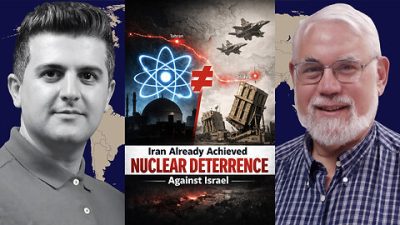
Prof. Ted Postol: Iran Already Achieved Nuclear Deterrence Against Israel
or go to
Aletho News Archives – Video-Images
From the Archives
How the occupied mentality syndrome works
Saudi Arabia on the American chessboard – Part 3
By B. J. Sabri | American Herald Tribune | June 27, 2016
Read part 2: “The occupied mentality Syndrome“
Previously I argued whether Saudi Arabia’s repeated involvements in U.S. interventions and wars stem from free national will or in response to a specific condition. For starters, in Saudi Arabia there is no national will. In Saudi Arabia, the national will is the will of the Al Saud clan. Still, when a major Arab state allies itself with a superpower that committed unspeakable crimes against humanity in almost every Arab country, then something is wrong. This fact alone should compel us to examine the U.S.-Saudi relation for one exceptional reason. As a result of the U.S.-Saudi wars, hundreds of thousands of people in Afghanistan, Iraq, Iran, Libya, Syria, Yemen, and Somalia have lost their lives. Millions became displaced in their own homelands. And millions more rendered refugees.
Attributing the Saudi policies to the bonds of “partnership” with the U.S. is frivolous. There are no bonds between these two thugs except those of business, military deals, secret plots, and wars. Proving this point, bonds such as these have no space for the American and Saudi peoples to share significant cultural or societal exchanges. If partnership is not the reason for the Saudi contribution to the U.S. strategy of empire and imperialism, then another reason must exist.
This leads to three possibilities. … continue
Blog Roll
 Aletho News
- NIAID/NIH and USDA Fund Bioengineered Chimeric Influenza Viruses Built Using Pandemic H1N1 Components: Journal ‘Science Advances’
- Hezbollah hits Israeli warship off Lebanon’s coast, sets it aflame
- Iran slams US strikes on B1 bridge, Mahshahr petrochemical plants as ‘blatant acts of state terrorism’
- In letter to UN chief, Araghchi warns of dire consequences of US-Israeli attacks on Iran’s nuclear facilities
- Why the CIA conspiracy to invade Iran with Kurdish militias failed
- Why Are Upbeat US Claims About Mission to Rescue Pilot ‘Highly Questionable’?
- Aircraft destroyed during US ‘rescue’ of downed F-15 pilot cost more than $100 million each
- Washington University removes professor who condemned US-Israeli war on Iran
- Russia Warns of Retaliation as UK Authorizes Seizure of Vessels
- Serbia thwarts plot to bomb Russia-Hungary gas pipeline – Vucic
- If Americans Knew
- In Iran, Israel-US take aim at “reason, research, and freedom of thought” – Daily Update
- US loses planes over Iran, Israel downgrades Lebanon war goals – Daily Update
- Israel Is Blocking Palestinians from Easter at Church Where Jesus Resurrected
- Plot to assassinate Palestinian activist follows harassment campaign promoted by Zionist groups and elected officials
- Prominent New York synagogue hosts presentation on why U.S. Jews should support the ethnic cleansing of Gaza
- Tapper vs. Piker: Is the CNN Anchor Auditioning for David Ellison?
- Shouldn’t Democrats Be Able to Condemn Genocide?
- Israel-US kill negotiators, destroy civilian structures, but Iran’s military capabilities still largely intact – Daily Update
- ‘War crime’: Global condemnation as Israeli ministers celebrate death penalty law targeting Palestinian prisoners
- 7 Ways Israel Is Turning Lebanon Into Gaza
- No Tricks Zone
- An Inconvenient Tree: Uncovered In Alps… Europe Much Warmer Than Today 6000 Years Ago
- New Study Reports A 60% Slowdown In Greenland’s Ice Loss Rate In The Last Decade
- Low Intensity Tornado Wrecks Major Solar Farm, Creating A Potential Toxic Dump
- New Study Finds Warming Saves Lives…Cold Temperatures 12 Times More Deadly Than Excess Heat
- German Science Blog Accuses PIK Climate Institute Of Hallucinating Climate Tipping Points
- Devastating Assessment Of Comirnaty Vaccine By Former Senior Pfizer Europe Toxicologist
- New Study: CO2 Is ‘Effectively Negligible’ As An Explanatory Climate Change Factor Since 2000
- Former Pfizer Toxicologist Dr. Helmut Sterz Tells Bundestag Hearing Pfizer Vaccine Should Have Never Been Approved
- Energy Expert: Germany’s Nuclear Phaseout Was A “500 Billion Euro Mistake”
- New Research: South Australia’s Mid-Holocene Sea Surface Temperatures Were 4°C Warmer Than Today
 Aletho News