Arab tribes seize control of US-occupied Syrian towns in large-scale assault
The Cradle | August 7, 2024
A coalition of Syrian Arab tribes seized several towns from US-backed Kurdish forces in the countryside of eastern Syria’s Deir Ezzor governorate on 7 August.
Tribesmen launched the “largest” attack on Syrian Democratic Forces (SDF) sites since the start of the Arab tribal rebellion against the US-backed militia last year, Sputnik reported, adding that the attack took place “under the cover of artillery and mortar shells.”
“Violent clashes have been ongoing since the early morning hours between the forces of the SDF-linked Deir Ezzor and Hajin Military Councils on the one hand, and the attacking groups of the ‘Army of Tribes’ coalition on the other, in the vicinity of the towns of Abu Hamam, Dhiban, Al-Lattwa, Al-Kashkiya, and Gharanij,” the news outlet’s correspondent said.
The clashes were concentrated in the towns of Al-Sabha and Al-Tayana, east of Deir Ezzor, the correspondent added.
The Arab tribes used RPGs and machine guns against the SDF during the onset of the attack, according to Al Mayadeen.
“SDF militants imposed a complete curfew in the towns under their control in the Deir Ezzor countryside, after the arrival of large military reinforcements from Hasakah and Raqqa, coinciding with a wide search operation in the villages surrounding the areas of clashes,” the Sputnik correspondent went on to say.
Residents told Sputnik that many people were displaced as a result and that three civilians were killed while seven others were injured due to the fighting. Local sources also told the outlet that at least 10 SDF militants were taken captive by tribal fighters, who also seized large amounts of light and heavy weapons.
The SDF and the tribal coalition also took some casualties.
“Arab tribal fighters managed to damage three Hummer military vehicles in the vicinity of the American base in the Al-Omar oilfield,” Sputnik said.
The SDF imposed security belts and closed roads around several areas in Hasakah, northeastern Syria.
“American helicopters targeted a group of tribal forces using machine guns near the banks of the Euphrates River in the town of Dhiban, east of Deir Ezzor,” Al Mayadeen’s correspondent reported on Tuesday.
The US army also deployed reinforcements to the vicinity of its base in the Al-Omar oilfield.
Sheikh Ibrahim al-Hafel, who led the tribal rebellion against the US-backed armed group last year, was quoted by Al Mayadeen as saying on 7 August: “We will not accept submission to the SDF militants … [the tribes and] their sons have the right to liberate their areas from these militants.”
Arab tribes launched their rebellion against the SDF in late August last year, with fierce clashes raging for several weeks afterward.
Despite brief instances of de-escalation, tensions and armed clashes between the two sides have remained ongoing. At the time, it was said that the tribal forces were coordinating with and receiving military aid and training from the Syrian Arab Army (SAA).
“After continuous training received by the tribal forces during the past months, the tribes led by Sheikh Ibrahim Al-Hafel launched a violent attack on the largest in the cities and towns of Deir Ezzor, and took control of several military points in the city of Al-Busayrah and the towns of Ibriha, Al-Harijiya, Al-Tayana, Abu Hamam, Gharanij, Al-Kashkiya, Dhiban, Al-Latwa neighborhood, and all the riverside points,” Syrian journalist Mohammad Dabaa said on 7 August.
The tribal assault came a month after the SDF released hundreds of ISIS fighters from their prison camps in northern Syria.
Israel’s allies block Security Council statement condemning Tehran attack
The Cradle | August 1, 2024
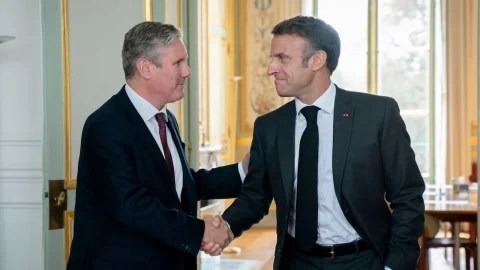
The US, UK, and France blocked a Russian-proposed statement at the UN Security Council (UNSC) condemning the assassination of Hamas politburo chief Ismail Haniyeh in Tehran, Iran’s envoy to the UN Amir Saeid Iravani said on 1 August.
“Russia’s proposed statement condemning Israel’s heinous act was blocked by the US, UK, and France,” Iravani told Russian media following an emergency UNSC meeting on Wednesday night.
“It is now absolutely necessary to hold the occupying [Israeli] regime accountable for the atrocities it committed,” the Iranian diplomat added. “This regime cannot be allowed to escape accountability and consequences for the violations it has committed.”
During the session, Iravani stressed that Tehran “reserves its inherent right to self-defense in accordance with international law” and said that “the responsibility of the United States as a strategic ally and main supporter of the Israeli regime in the region cannot be overlooked in this horrific crime. This act could not [have] occurred without the authorization and intelligence support of the US.”
Permanent UNSC members Russia and China strongly condemned Israel’s attacks on the Iranian and Lebanese capitals, blasting Tel Aviv for once more sabotaging Gaza ceasefire talks and pushing the region to the brink of all-out war.
“China is deeply concerned about the potential for this incident to further destabilize the region,” Fu Cong, China’s permanent representative to the UN, emphasized during the meeting. “China strongly opposes and condemns recent irresponsible actions, including Israel’s attacks on southern Beirut,” he added.
Fu also called on Tel Aviv to cease all military actions in Gaza and appealed to “influential countries” to “put more pressure and work more vigorously … to put out the flames of war in Gaza.”
Russia’s first deputy envoy to the UN, Dmitry Polyansky, also condemned Haniyeh’s killing, calling it an “attempt” to drag Iran into war.
“This provocative attack was carried out while the Hamas leader was in Iran on an official invitation to attend the inauguration ceremony of the President-elect of the Islamic Republic of Iran, Masoud Pezeshkian. Those behind this political assassination had to realize how dangerous the consequences could have been for the entire region,” Polyansky said.
“The misguided practice of targeted liquidations of prominent political and military figures is bringing the Middle East to the brink of a region-wide war,” the Russian diplomat added.
Feda Abdelhady Nasser, the deputy permanent observer of the State of Palestine to the UN, told the gathered diplomats that the global community “has a choice to make” between “peace and security” or letting “Israel drag us all to the abyss.”
“Israel has been the oppressor, tormentor, and murderer of Palestinians for decades, and it is the longstanding destabilizer of our region,” Nasser highlighted.
Lebanon’s Acting Permanent Representative to the UN, Hadi Hashem, contested Israel’s claims that the attack on the Beirut suburb of Dahye this week was an act of “self-defense.”
“Israel’s claim that it seeks to protect the population it occupies is a display of hypocrisy,” Hachem said, adding, “The real goal of Israel is to prolong and escalate the hostilities. And it is ironic that the killer of tens of thousands of children in Gaza sheds tears for the children of the occupied Syrian Golan.”
Similarly, Syria’s UN ambassador, Qusai al-Dahhak, stressed that “Israel is responsible for the crime in Majdal Shams” and noted that the territory is Syrian, accusing Israel of “weaponizing” the attack on the Druze community “to continue its aggression on the states of the region.”
Robert Wood, deputy US ambassador to the UN, called on UNSC members with influence over Iran “to increase pressure on it to stop escalating its proxy conflict against Israel and other actors.”
France and the UK took a similar line, reiterating a call for an “immediate ceasefire” in Gaza and condemning what they said was Iranian support for “destabilizing actors in the region.”
Iraq boosts security on Syrian border after US proxies free hundreds of ISIS fighters
The Cradle | August 1, 2024
The Iraqi armed forces have increased security along the country’s border with Syria following the release of hundreds of ISIS fighters from prison camps controlled by the US-backed Syrian Democratic Forces (SDF).
“The porous nature of the Iraq–Syria border, coupled with the ongoing conflict in the region, creates ideal conditions for ISIS to regroup and launch attacks,” Ahmad al-Sharifi, a strategic expert, told Shafaq News Agency on 1 August, adding that Baghdad has increased patrols along the border region and are “closely monitoring the situation in northeastern Syria.”
Sharifi also explained that the prisoner release is a result of the need by the SDF to “free up manpower for the frontlines” to face a potential confrontation with Turkiye.
In mid-July, authorities from the SDF-controlled Autonomous Administration of North and East Syria (AANES) issued a general amnesty that has so far secured the release of over 1,500 Syrian ISIS fighters convicted of terrorism-related offenses, provided they “did not participate directly in combat” against the SDF.
The US-backed SDF holds thousands of ISIS fighters and their family members in around two dozen prison camps in occupied northeast Syria. These include 2,000 foreigners whose home countries have refused to repatriate them.
Kurdish officials said the amnesty was based “on the recommendation” of the tribal forum titled “Dialogue, Safety, Construction for a Unified Decentralized Syria,” held in Hasakah on 25 May.
“We, the Shabak, Christian, Yezidi, Kakayi, and Turkmen communities, are afraid of the resurgence of ISIS like the tragedy that occurred in 2014. Now that the SDF has released these fighters, where will they go? They will return to the border of Nineveh province or go to the Kurdistan Region, so the communities living in Nineveh are afraid,” Majed Shabaki, an activist from Mosul, told Kurdistan 24 last week.
“All those released by SDF have been dispersed along the Iraqi borders, and there is no monitoring. According to gathered information by the Iraqi government, none of these released ISIS fighters hold Iraqi citizenship and are all foreigners,” Mohammed Kakeyi, chairman of the Nineveh Provincial Council’s Security and Defense Committee, revealed to the Kurdish news outlet.
The mass release of ISIS fighters in northeast Syria coincides with an expansion of Turkiye’s military campaign against Kurdish groups on its borders with Iraq and Syria, plus renewed attacks by local resistance factions against US bases in both nations.
The move by the SDF also follows an ongoing resurgence of the extremist armed group in Syria, where they have repeatedly launched bloody attacks against the Syrian Arab Army (SAA).
In 2022, the US military described the SDF-run prison camps as an ISIS “army in waiting.”
America’s Syrian Gulag
By Brad Pearce | The Libertarian Institute | August 1, 2024
At the beginning of last month the U.S. Deputy Assistant Secretary of State for Near Eastern Affairs, Ethan Goldrich, granted an interview to Rudaw, which is something like PBS for Iraqi Kurdistan. He emphasized that the United States has no plan to end its occupation of northeast Syria, where the U.S. continues to maintain some nine hundred troops under the guise of preventing the resurgence of the Islamic State. The U.S. claims it is in Syria under the authorization of United Nations Security Council Resolution 2254 to bring an end to the “Syrian Crisis,” however much of the crisis has ended, and where it has not it is primarily due to foreign occupation. Overall, the interview shows that the U.S. is continuing its dead-end policy, but Goldrich does say something interesting: the United States has concerns about providing “humanitarian” assistance for a network of prisons for IS fighters.
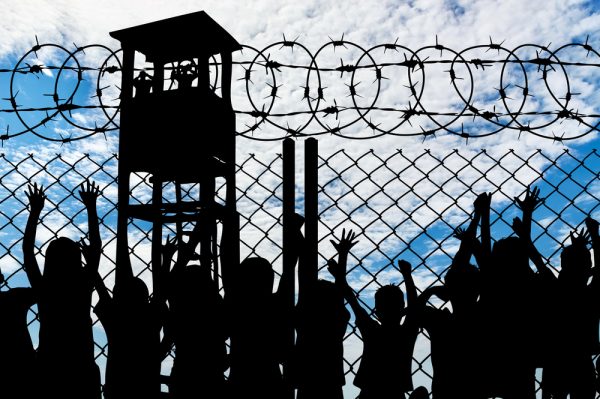
To those who know about the United States’ continued presence in Syria supporting the Kurdish separatists and their military known as the Syrian Democratic Force [SDF], it is commonly said that the American motive is to steal Syrian oil and grain. One would also wonder how much nine hundred soldiers could accomplish, but of course as usual they are actually there as hostages, to ensure that in Syria cannot try to retake this area without killing Americans and thus unleashing the wrath of the U.S. government. This prison network provides another important angle to the occupation. While the prisons in Syrian Kurdistan are not secret, they are also not well known. However, CNN (of all places) recently featured an excellent investigation exposing that more than 50,000 humans are kept in a network of twenty-seven facilities in Syria. CNN’s chief international correspondent Clarissa Ward was given rare access to the prisons and her reporting is illuminating. All of the inmates are denied access to any form of legal process and have no chance of release besides a vague hope that their home countries may repatriate them. Everything the United States has done in Syria, of course, it has been done in the name of human rights; but it seems to be the case that all of these individuals would have had a better chance of receiving some form of trial and definite sentencing under the government of the Syrian Arab Republic. At the very least, they could not be denied a legal process to a greater extent than they currently are.
There are two primary categories of prisoners the U.S.-funded facilities are holding in Syria. The first are accused Islamic State terrorists—most of them probably are fighters captured by the SDF, but in the absence of a legal process it is impossible to know—and families of Islamic State militants. The largest prison is known as “Panorama” and holds 4,000 inmates. According to CNN, legal experts have called it, “A U.S.-funded legal black hole, worse than Guantanamo Bay.” Clarissa Ward was allowed to see two cells and speak to a handful of prisoners. The first thing one notices is that this is a “nice” facility. One would imagine the SDF would hold prisoners in some ancient Ottoman fortress, but this is clearly a modern and newly built prison for which the U.S. taxpayer has paid a fortune. It is overcrowded, but nothing like the images one commonly sees of third world prisons. Of course it was a managed tour, as Ward acknowledged in her report. The problem is that the inmates have been there for years and have no legal rights, though an SDF official claimed that they intend to reintegrate these people into society; it has just not been possible to make progress in that regard as no country will take them.
While the men are mostly kept in conventional prisons, the women and children, who are not accused of any crime, are kept in what must be the world’s largest literal concentration camp, Al Hol. The camp holds 40,000 people. Five years after the fall of the caliphate there is no plan for what to do with the individuals stored at this desert camp. Many of the women remain ideologically committed, though Ward also spoke to one former American citizen who has fully turned against IS and even stopped covering in the camp, but she has had her U.S. citizenship stripped on grounds that there was an error in her naturalization process. At a certain age—supposedly eighteen, but according to inmates as early as fourteen—the boys are removed from the camp and sent to the prisons to stop the teens from marrying and producing a “new generation of Islamic extremists.” While the conditions appear to to be broadly humane, if bleak, it is indeed hard to imagine a better breeding ground for radical Islam than this desert city of IS wives denied human rights by a United States proxy. It is of course the case that IS arose from American managed prisons in Iraq in the first place.
The biggest question is why CNN was given this access, with the SDF volunteering information about a prison system which has been criticized by basically every major human rights organization. Based on the interviews it seems to me that the SDF wants out of this obligation. The United States is functionally making them run a Gulag Archipelago and even if they are paid for it, running the prisons consumes an enormous amount of man hours by personnel who could be put to other uses. Further, there is the constant risk of breakouts (as happened in 2022) and of terrorist groups trying to liberate the camp. However, the United States clearly has no other plan for the ultimate fate of these humans, unless they intend to use them to unleash a new wave of terrorism. This is simply yet another policy where our ruling class has no exit strategy. It seems that the U.S. will occupy northeast Syria forever, if only to imprison some 50,000 people without trial. The irony, of course, is that they will continue to justify their presence by saying they need to bring human rights to Syria, just not for those trapped in this desert Guantanamo.
Veteran War Correspondent: Blast In Golan Heights Not From Hezbollah Rocket
By Ian DeMartino – Sputnik – 29.07.2024
On Saturday, an explosive fell onto a sports field in Majdal Shams in Israeli-occupied Golan Heights, killing 12 children. Israel blamed the Lebanese Shia movement Hezbollah. The group has denied the accusation.
Veteran war correspondent Elijah Magnier told Sputnik on Monday that what little information is available on the Golan Heights explosion that killed 12 Arab Druze Muslim children contradicts the official story offered by the Israeli government.
“First, [Israel has] refused any Western investigation by Israeli allies. So they don’t want anyone to investigate the type of rockets and/or the debris,” Magnier explained. “And the technical details of the explosions are very telling. The Falaq rocket that Hezbollah fires is a 50 kilogram explosive. Now, a warhead with such a quantity of explosive doesn’t leave the damage that was left by the explosion that happened in Golan Heights, [it would be] much bigger.”
Magnier, who has over 35 years of experience covering conflicts in Iran, Lebanon, Syria, Iraq, Libya, Sudan, Afghanistan and Yugoslavia, says that the evidence the Israelis have provided has been unconvincing.
“We have not seen any picture… of the guidance system, or any component that [we] need to understand what kind of rocket [or missile] that exploded in this place,” Magnier began. “They showed us two pieces with serial numbers that match the Falaq, but not on the same scene of the explosion. They’re completely different on a white plank. So, we don’t know where these pieces were taken from.”
“Normally, when the forensic team is on the scene, [they] take hundreds of photographs with every single piece before they touch anything. We haven’t seen all that, but we’ve seen a rush of accusing Hezbollah,” Magnier added.
“The diameter of the crater [from a Hezbollah Falaq rocket] can [be] between four to six meters and the depth can be… between 1.5 to 3 meters, which is not the case at all of the explosion we’ve seen,” Magnier described. “We’ve seen in this explosion only a small part of the fence [was] damaged and the other part of the fence is still intact. So, even the fragment of the explosion is different. The shrapnel is different.”
On Sunday, Israel bombed 12 settlements in Lebanon after saying that Hezbollah had crossed a “red line” in the attack. Hezbollah has vehemently denied it was involved. Magnier pointed out that they do not have a reason to attack Druze Muslims in Golan Heights, which is illegally occupied by Israel but still contains a large Muslim population.
“Hezbollah has thousands of civilian objectives [it could hit] that are close to the borders of Lebanon, and it can really destroy any village or any Israeli occupied city without the need to go to another village that is occupied by Druze Muslims who have [influence] in Syria and Lebanon and want to declare their support to the Palestinians,” argued Magnier, who added that Hezbollah has not been hitting civilian targets since it started shelling Israel in solidarity with the Palestinians in Gaza.
Magnier argued that a faulty Israeli air defense missile was a more likely culprit in the Golan Heights explosion.
“I can say that there are malfunctioning missiles and there are malfunctioning rockets that can fall anywhere and these incidents are very frequent, in particular with the Israeli interception missiles, where they say that only 60 to 65% reach their target and the others miss,” he said. “A strong possibility… an Israeli interception missile of the type Tamir… they carry around 10 to 15 kilograms of explosive and they have a very similar impact to what we’ve seen in the pictures provided on the ground by the people of Majdal Shams in the Golan Heights.”
Magnier noted that the size of the crater matched what the Tamir could create and that there was still grass from the field around the crater, which would not happen with a larger Falaq rocket.
“Everything there indicates that we’re talking about a small-sized missile [and] not a big sized rocket of 50 kilograms.”
On Monday, US and Israeli media reported that an Israeli official said its response was still coming and that it would be “limited but significant” in order to avoid an all-out war.
“So, we understand that Netanyahu is really trying to avoid being involved in a war that he doesn’t know what the consequences would be. He can start, but he can’t end it,” concluded Magnier. “What is the ultimate objective [in attacking Hezbollah]? Destroy Lebanon? Destroy the airport? He will have his airport destroyed. Attack the Capital? He will have Tel Aviv destroyed. So this is where we see that things are not as smooth as the Israelis are trying to show.”
The U.S. pressures Armenia to buy gas from Azerbaijan instead of Russia
By Steven Sahiounie | Strategic Culture Foundation | July 28, 2024
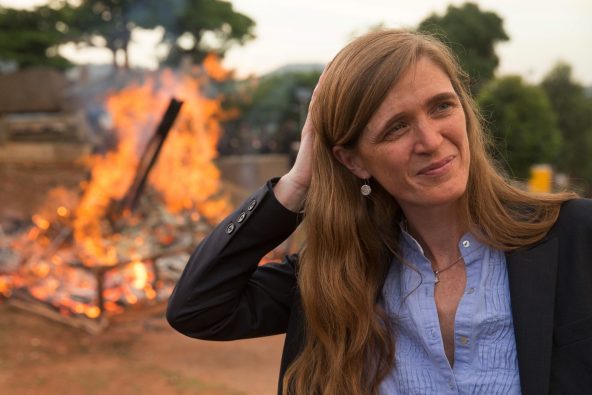
Ambassador Samantha Power, former U.S. Ambassador to the UN, and now director of USAID, an office of the U.S. State Department, traveled to Armenia on July 10 to strong-arm Prime MInister Nikol Pashinyan into buying gas from Azerbaijan, instead of Russia.
Armenia currently imports almost all of its hydrocarbons from Russia and Iran via gas pipeline.
The President Joe Biden administration supports the war in Ukraine by providing billions of dollars of weapons to Ukraine to fight Russia.
Prior to the Nord Stream 2 pipeline being destroyed, Biden had made a speech promising that the U.S. would prevent Russia from selling gas to Germany and Europe. It is an economic war waged on Russia, as well as militarily on the battlefields.
On February 28, 2023, the American Pulitzer Prize winning journalist, Seymour Hersh, published an article exposing how the Biden administration had blown up the Nord Stream 2 underwater pipeline designed to deliver gas to Germany and Europe.
The Nord Stream 2 had been sanctioned by Germany, and Biden was afraid that Germany would lift the sanctions because of a bad winter.
According to Hersh, Biden was obsessed with reelection in 2024, and wanted to win the war in Ukraine. Biden’s advisors in the Oval Office feared that Germany and Western Europe might stop weapons support to Ukraine, and the German chancellor could turn the pipeline on.
Biden placed winning the war in Ukraine above the warmth and health of the German people, even though winning a war in Ukraine is improbable, according to military experts.
The Armenian National Committee of America (ANCA), has criticized Power’s trip to Armenia because USAID hasn’t provided financial support to Armenians who left Karabakh and returned to their homeland Armenia as displaced persons, and victims of ethnic cleansing.
Despite previous visits and flowery speeches, Power has not initiated any funding programs for the Karabakh Armenians who lost their homes, possessions, lands and livelihoods.
In September 2023, almost 200,000 ethnic Armenians fled the battles, and eventual defeat in Nagorno-Karabakh following Azerbaijan’s victory ending three decades of ethnic Armenian separatist rule there.
Protesters on the streets of Yerevan blamed the policies of Pashinyan for the defeat.
Power arrived in Yerevan on September 25 and said, “The United States is deeply concerned about reports on the humanitarian conditions in Nagorno-Karabakh and calls for unimpeded access for international humanitarian organizations and commercial traffic.”
The ANCA say the needy are still waiting for help from Power and the Biden administration.
During Azerbaijan’s attacks on the Armenian people living in the Nagorno-Karabakh region, the U.S. supported the Azerbaijan government. There is no reason for the government of Armenia to view the U.S. as a friend, or supporter.
By contrast, the Russian peace-keeping troops tried to perform their job in the Nagorno-Karabakh armed conflict, but in the end, Armenia was defeated.
Armenia and Azerbaijan have made peace; the armed conflict is over, but the pain of hundreds of Armenian deaths at the hands of the Azerbaijanis remains fresh in the minds and hearts of Armenians.
Now, Ambassador Power is asking Yerevan to buy their gas from a former enemy, instead of a loyal friend.
On July 15, just days after Power visited, joint military drills with the U.S. began, and reflects the pressure Power and the Biden administration are putting on Armenia to forge closer ties with the U.S.
Russia had been Armenia’s main economic partner and Armenia hosts a Russian military base. Armenian authorities accused Russian peacekeepers who were deployed to Nagorno-Karabakh of failing to stop Azerbaijan’s onslaught. Moscow rejected the accusations, arguing that its troops didn’t have a mandate to intervene.
American military help was completely absent in the struggle for Nagorno-Karabakh.
“Has she no shame?” asked Sossy Saroyan in Latakia, Syria while referring to Power.
After the attack and massacre in Kessab, carried out by the U.S. supported Free Syrian Army (FSA) and their allied Al Qaeda terrorists, U.S. Ambassador to the UN Samantha Power, was asked to comment on what happened in Kessab.
Power said, “The U.S. is very concerned about what happened in Kessab, but unfortunately the armed groups there are not ones we have leverage on.”
Power had lied. The FSA was the armed wing of the Syrian National Coalition (SNC), based in Istanbul, Turkey and headed by its President, Ahmed Jarba. Both the FSA and SNC received their support, funds, training and weapons from the U.S. government through Congressional funding, and through the CIA program, “Sycamore Timber”.
To prove the U.S. connection to the attack, destruction, occupation, massacre and kidnapping in Kessab in March 2014, Jarba visited the FSA stationed in occupied Kessab on April 11, 2014.
On May 23, 2014, Jarba was sitting in the Oval Office with U.S. President Barak Obama and Susan Rice. On Jarba’s visit he met with Secretary of State John Kerry and received the use of two offices in Washington to be used as a U.S. base of operation for the SNC and FSA.
On the same day that Jarba was in Kessab, U.S. Ambassador to Turkey, Francis J. Riccardone, Jr. visited the 26 very elderly kidnap victims from Kessab who had been taken at gunpoint to Vikifly, Turkey as captives of the FSA.
Ambassador Riccardone had brought his wife with him, as she was a language specialist, and they also had a translator with them.
Ambassador Riccardone had just one question to ask of the captives who all but one was over the age of 80. His question posed to the group of captives was, “Are any of you American citizens?”
Kessab, Syria does have a number of dual citizens, Syrians by birth, who have obtained U.S. citizenship after living, working and paying incomes taxes in the U.S. in the past. In fact, at least four American citizens had lost their homes, farms and businesses when the U.S. sponsored terrorists attacked Kessab.
However, the group collectively answered, “No, we are just Syrians.”
At that point, Ambassador Riccardone and his entourage got up to leave. He was there for one purpose only, to free any U.S. captive, but none were U.S. citizens so he left them.
The very elderly Syrian Christian Armenian kidnap victims were captives of an armed group whose stated goal was to establish an Islamic government in Damascus, and to remove the existing secular government which had protected the rights of all Christians in Syria. The victims begged Ambassador Riccardone to please not leave them in captivity in Turkey, which had massacred 1.6 million Armenians in the 1916 Armenian Genocide, but to transport them to Latakia, Syria where all the residents of Kessab were sheltering at the Armenian Church.
The dozens of elderly, infirm, and immobile Armenians of Kessab were forced by Ambassador Riccardone to remain captives in a foreign country historical known for its genocidal hatred of Armenians, for three months, until they were transported by the Turkish government, allied with Obama, to Beirut, Lebanon and from there they were bused to Latakia, Syria.
Kessab has never recovered, and is a partial ghost-town because of the Obama-Biden administration.
The Armenians of Syria could teach the Armenian government a hard lesson learned from bitter experience: don’t expect help from the U.S., because they do not have friends, they only have interests.
Biden wanted to win the Ukraine war, and secure a ceasefire in Gaza to ensure reelection. Instead he has failed at both, and has lost the election.
Majdal Shams residents mourn martyrs, reject any Israeli presence
Al Mayadeen | July 28, 2024
Residents of Majdal Shams in the occupied Syrian Golan held a funeral ceremony on Saturday for the victims of the Israeli attack that targeted a football field in the town.
An Israeli Iron Dome interceptor missile struck a playground in the town, which is made up entirely of Druze Syrians, killing at least 12 civilians, including children, and wounding at least a dozen others.
“Israel” was quick to pin the blame on Hezbollah and claimed that the Lebanese group targeted the town with an “Iranian rocket”.
The Israeli Channel 13 reported that residents of Majdal Shams attacked members of Prime Minister Benjamin Netanyahu’s Likud party who attended the funeral.
Meanwhile, the Israeli news website Walla mentioned that Finance Minister Bezalel Smotrich was met with rejection and protests upon his arrival in the town.
“Get out of here. We don’t want you here, you killer,” the residents told Smotrich, accusing the Israeli Minister of making use of their children’s blood.
Following the Golan incident, Israeli occupation Prime Minister Benjamin Netanyahu vowed that “Israel will not let this murderous attack go unanswered and Hezbollah will pay a heavy price for it, a price it has not paid before,” according to a statement from his office.
Hezbollah denied Saturday that it targeted Majdal Shams, a Druze town where many residents have rejected Israeli nationality since the Israeli occupation of the Golan Heights in 1967.
In a statement, the Lebanese Resistance group said it “categorically denies the allegations reported by certain enemy media and various media platforms concerning the targeting of Majdal Shams.”
“The Islamic Resistance has no connection to this incident,” it affirmed.
Later, Axios cited an American official as saying Hezbollah officials told the UN that the Golan Heights incident was the result of an Israeli interceptor missile hitting the playground in Majdal Shams.
Hezbollah Denies Israeli Allegations of Targeting Majdal Shams
Hezbollah | July 27, 2024
The Islamic Resistance in Lebanon categorically denied in a statement the allegations made by some Israeli media outlets and various media platforms about targeting the Majdal Shams area in the occupied Golan Heights.
Hezbollah thus issued the following statement:
The Islamic Resistance in Lebanon categorically denies the allegations reported by some Israeli media outlets and various other media platforms about targeting the Majdal Shams area. Hezbollah affirms that it has no connection to the incident whatsoever and emphatically denies all false claims in this regard.
Commenting on the incident, Ghaleb Saif, head of the Druze Initiative, stated that the missiles that fell on the Syrian Golan and Galilee were Israeli interceptor missiles, which often cause significant damage to property and lives. “Every day, we see how Iron Dome missiles miss their targets and end up falling on us,” Saif added.
The West is Learning the Wrong Lessons about Airpower in Ukraine
By Brian Berletic – New Eastern Outlook – 23.07.2024
A recent article appearing in the US-based Business Insider titled, “Russia’s showing NATO its hand in the air war over Ukraine,” would provide a showcase of the deep deficit in military expertise driving increasingly unsustainable, unachievable foreign policy objectives. The article summarizes a number of interviews conducted with Western “airpower experts,” exhibiting a profound misunderstanding of modern military aviation, air defenses, and their role on and above the battlefield.
The article claims:
Russia botched the initial invasion by failing to establish air superiority from the start, and it has been unable to synchronize its air and ground forces.
This is based on the assumption that Russia could somehow establish air superiority over the battlefield and infers that had the United States and the rest of NATO been in Russia’s place, air superiority would have been established. But this is false.
Fundamental Misconceptions
At the onset of the Russian Special Military Operation (SMO) Ukraine possessed a formidable Soviet-made integrated air defense network consisting of some of the most successful and effective air defense systems in the world. This included long-range air defense systems like the S-300 as well as mobile systems like Buk, Strela, and Osa, as well as a large number of Soviet-made man-portable air defense systems (MANPADS).
The United States and its allies have not operated in airspace as contested as Ukraine’s since the Vietnam War. Over the skies of Vietnam the US would lose over 10,000 fixed-wing aircraft and helicopters to Soviet-made air defenses employed by Vietnam’s armed forces.
In subsequent conflicts, including Afghanistan, Iraq, and Libya, US-led forces would face either no significant air defenses at all, or air defenses consisting of old equipment operated by poorly organized, poorly trained, and poorly motivated troops, as was the case in Iraq.
Amid the US proxy war against Damascus and the US occupation of eastern Syria, US military aviation has been confined by Syria’s relatively modern air defense network, forcing both US and Israeli warplanes to conduct the same types of stand-off strikes Russian military aviation is conducting in Ukraine.
The article would claim:
Russia has demonstrated that it’s unable to suppress or destroy enemy air defenses, fly effective counterair missions, or run complex composite air operations like those the US Air Force pulled off in the opening days of Desert Storm in 1991 and then in the Iraq invasion in 2003.
Beyond the factually incorrect nature of this statement, the obvious differences between Iraq and Ukraine appear entirely lost among the “airpower experts” interviewed by Business Insider.
The Business Insider, citing these same “airpower experts,” also claims:
On the battlefield, effective airpower should aid the advance of armored combat vehicles and infantry by striking an enemy’s strongpoints, as well as the reinforcements and supplies they depend on.
Because of the vast differences between previous US conflicts around the globe and the ongoing conflict in Ukraine now, the type of rapid maneuver warfare utilized by US-led forces in Iraq would not only be inappropriate in Ukraine, it would be disastrous. The 2023 Ukrainian offensive before which NATO trained, armed, and directed Ukrainian forces, ended in catastrophic failure, comprehensively defeated by Russian defenses utilizing land mines, artillery, multiple-launch rocket systems (MLRS), long-range ballistic missiles, a wide variety of drones, and both infantry and attack helicopters utilizing anti-tank guided missiles (ATGMs) – all elements absent among the armed forces of the various nations the US has invaded and occupied since Vietnam.
Because Ukraine also possesses significant defense capabilities, including well-protected fortifications, minefields, artillery, and FPV (first-person-view) drones, NATO-style maneuver warfare would likewise result in catastrophic failure for Russian forces.
Russia has instead adopted a strategy of attrition. Instead of overwhelming Ukrainian positions with rapid maneuver warfare, it is grinding them down with huge amounts of artillery, MLRS, missiles, drones, and military aviation carrying out stand-off strikes using a variety of glide bombs ranging from 250 to 3,000 kilograms. While progress is slower than NATO-style maneuver warfare, it has allowed Russia to avoid the staggering losses Ukraine suffered last year during its offensive.
Ukraine is a different kind of war; thus Russia utilizes a different approach to military aviation.
The conclusion that events unfolding in Ukraine demonstrate the capabilities of Russian military aviation have been “significantly overstated,” as one expert interviewed by Business Insider put it, is a dangerous misconception. US-NATO military aviation would (and already has in Syria) demonstrated it suffers from the same limitations in airspace as contested as Ukraine’s.
Admitted Russian Advantages
Business Insider’s article concedes there are aspects of Russian military aviation that constitute success. It mentions Russia’s extensive use of stand-off weapons – both air-launched cruise missiles as well as glide bombs (just as the US and its allies are using in Syria to avoid Syrian air defenses). The article also acknowledges Russia’s significant air defense and electronic warfare capabilities, constructing an “umbrella” protecting Russian forces, infrastructure, bases, and civilian centers.
There is one significant difference, however, between Russian and Western stand-off capabilities. Russia’s military industrial base allows it to produce missiles and glide bombs in quantities the collective West cannot match. Russia’s air defense capabilities also exist on a scale the collective West is unable to replicate.
After first claiming Russia is, “unable to suppress or destroy enemy air defenses,” Business Insider eventually admits the depleted air defense arsenals of the collective West and the inability to replenish them in any meaningful manner precisely because Russia has been able to not only “suppress” and “destroy enemy air defenses,” but also because of Russia’s ability to saturate and deplete Ukraine’s supply of interceptor missiles.
Claims in the article that Lockheed Martin is expanding Patriot missile production to 550 a year are made without explaining that Russia is firing 4,000+ missiles at targets across Ukraine over the same period of time, meaning that 550, 650, or even 750 interceptors manufactured a year represent an entirely inadequate quantity.
And despite this fact, the article would even claim:
In Ukraine, the world has seen that Western air defenses can shoot down incoming drones and missiles when they have sufficient coverage and enough ammo, and the performance has quelled doubts about the Patriot.
This is doubtful.
The US and its allies transferred Western air defense systems to Ukraine, in part, to protect Ukraine’s power grid. In April 2024, CNN would admit that up to 80% of Ukraine’s non-nuclear power production has been destroyed. This means that Ukraine has either run out of Patriot missile interceptors, or the interceptors they have are failing to protect Ukraine’s power grid. It should be noted that the efficacy of an air defense system lies now only in its ability to intercept incoming targets, but also to be produced in large enough quantities to continue intercepting incoming targets.
The high cost of the Patriot missile system inhibits larger-scale production to meet the requirements of a large-scale and/or protracted conflict, meaning that despite its supposed performance in combat, it is still a fundamentally ineffective means of air defense.
Even before Russia’s SMO began in February 2022, the previous month Saudi Arabia’s Patriot systems had exhausted their supply of interceptors amid its ongoing conflict with neighboring Yemen. The United States’ inability to increase production forced Saudi Arabia to “borrow” missiles from neighboring nations.
The limited number of Patriot systems and interceptors being manufactured represent a metric of the system’s overall “success” and, despite the Business Insider’s conclusion, should continue to drive “doubts” regarding it.
NATO vs. Russia
The Business Insider article admits that in a conflict between NATO and Russia, NATO military aviation would face serious challenges that simply did not exist in Afghanistan, Iraq, Libya, and even Syria.
The article cites US Air Force (USAF) General David Allvin who noted, “in future fights, it may be possible for the US to achieve air superiority only in bursts — small windows in a specific time, place, and location where air defenses are missing, destroyed, or out of ammo.”
USAF General James Hecker would tell Business Insider, “if we can’t get air superiority, we’re going to be doing the fight that’s going on in Russia and Ukraine right now, and we know how many casualties that are coming out of that fight.”
Considering the advantages Russia also enjoys in land warfare capabilities, including the production of up to 3 times more artillery ammunition than the collective West, the outcome of that fight would likely mirror the same incremental defeat Ukraine itself is now suffering.
Western Failures in the Skies of Ukraine, a Microcosm of Wider, Irreversible Decline
The same blind pursuit of profits and power that compelled the collective West to expand NATO up to Russia’s border in the first place, and deliberately create a national security threat forcing Russia’s intervention in Ukraine, has also created the crisis facing the collective West’s military industrial base making it impossible to achieve the geopolitical objectives this proxy war in Ukraine is a part of.
In order for the collective West to “succeed,” it should first reevaluate what it is even trying to achieve.
This blind pursuit of profits and power is not unlike a tropism in nature – like a tree, for example – reaching downward with its roots and upward with its branches and leaves to grow as large and as fast as possible. In the ideal environment, such a tropism can thrive. In times of drought, the means of sustaining the vast proportions that the tree took could jeopardize its own very survival.
Until the 21st century, the global “environment” was ideal for Western hegemony. The disparity in military and economic power between the West and the rest of the world favored the blind pursuit of profits and power, often in the form of empire. The West grew to gargantuan proportions. Today, the environment has changed – this disparity no longer exists – and now the West is collapsing under the unsustainable size of its own overreach.
While Western policymakers search for game-changing strategies and technologies to maintain generations of global primacy, the unsustainable nature of this pursuit becomes more precarious all while Russia, China, and the rest of the world continue to grow stronger relative to the collective West. Only a policy of shifting away from coercion and control over the rest of the world, toward constructive cooperation with the rest of the world, can avert the inevitable collapse all other stubborn empires have faced throughout history.
For the rest of the world, including Russia and its Chinese allies, the goal continues to be defending their individual and collective sovereignty from Western hegemony while carefully avoiding the triggering of a much larger conflict borne of Western desperation.
In the meantime, in the airspace above Ukraine, a microcosm of the wider failure of Western foreign policy continues to play out, not only lacking any possibility of reversing in Ukraine or its Western sponsors’ favor, but almost certainly to continue accelerating to their detriment.
Erdogan, Assad to hold historic meeting in Moscow
Al Mayadeen | July 22, 2024
The first official meeting between Turkish President Recep Tayyip Erdogan and Syrian President Bashar al-Assad is set to take place in Moscow, the Daily Sabah reported citing sources familiar with the discussions.
The meeting, which is expected to occur as early as August, will be mediated by Russian President Vladimir Putin.
Iraqi Prime Minister Mohammed Shia al-Sudani may also be invited, though it is anticipated that Iran will not participate in the talks.
Following the outbreak of the war on Syria in 2011, relations between the two countries deteriorated due to Turkey’s military presence in Syria and the ongoing conflict with the PKK.
Rapprochement efforts last year faltered over Syria’s demand for the withdrawal of Turkish troops, which Ankara resisted due to security concerns.
Recent developments, including Damascus’ return to the international stage and Syia’s readmission to the Arab League, alongside shifting dynamics such as the upcoming US elections and increasing domestic discontent in Turkey regarding Syrian refugees, have paved the way for renewed dialogue.
Made in America: The ISIS conquest of Mosul
The Cradle | July 2, 2024
Ten years ago this month, the notorious terror group ISIS improbably conquered Mosul, Iraq’s second-largest city. In only two days of fighting, a few hundred ISIS militants captured the city, forcing thousands of Iraqi soldiers and police to flee in chaos and confusion.
The western media attributed the city’s fall to the sectarian policies of then-Iraqi prime minister Nouri al-Maliki, suggesting that local Sunnis welcomed the ISIS invasion. US officials claimed they were surprised by the rapid rise of the terror organization, prompting then-US president Barack Obama to vow to “degrade and ultimately destroy” the group.
However, a close review of events surrounding the fall of Mosul and discussions with residents during The Cradle’s recent visit to the city shows the opposite.
The US and its regional allies used ISIS as a proxy to orchestrate the fall of Mosul, thereby terrorizing its Sunni Muslim inhabitants to achieve specific foreign policy goals. Says one Mosul resident speaking with The Cradle:
There was a plan to let Daesh [ISIS] take Mosul, and the USA was behind it. Everyone here knows this, but no one can say it publicly. It was a war against Sunnis.
‘Salafist principality’
As the war in Syria raged in August 2012, the US Defense Intelligence Agency (DIA) authored a now well-known memo providing the broad outlines of the plan that would lead to Mosul’s fall.
The memo stated that the insurgency backed by the US and its regional allies to topple Bashar al-Assad’s government in Damascus was not led by “moderate rebels” but by extremists, including Salafists, the Muslim Brotherhood, and Al-Qaeda in Iraq (Islamic State of Iraq).
The DIA memo stated further that the US and its allies, “the western powers,” welcomed the establishment of a “Salafist principality” by these extremist forces in the Sunni majority areas of eastern Syria and western Iraq. The US goal was to isolate Syria territorially from its main regional supporter, Iran.
Two years later, in June 2014, ISIS conquered Mosul, declaring it the capital of the so-called “Caliphate.”
Though the terror group was portrayed as indigenous to Iraq, ISIS only made the “Salafist principality” predicted in the DIA memo a reality with the help of weapons, training, and funding from the US and its close allies.
US and Saudi weapons
In January 2014, Reuters reported that the US Congress “secretly” approved new weapons flows to “moderate Syrian rebels” from the so-called Free Syrian Army (FSA).
In subsequent months, the US Army military and Saudi Ministry of Defense purchased large quantities of weapons from Eastern European countries, which were then flown to Amman, Jordan, for further distribution to the FSA.
After an exhaustive three-year investigation, EU-funded Conflict Armament Research (CAR) found that the weapons funneled to Syria by the US and Saudi Arabia in 2014 were quickly passed on to ISIS, at times within just “days or weeks” of their purchase.
“As far as our evidence shows, the diverters [Saudi and the US] knew what was going on in terms of the risk of supplying weapons to groups in the region,” Damien Spleeters of CAR explained.
The US-supplied weapons and equipment quickly reaching ISIS included the iconic Toyota Hilux pickup trucks, which became synonymous with the ISIS brand.
The Kurdish role
Another way US and Saudi-supplied weapons reached ISIS was through Washington’s main Kurdish ally in Iraq, Masoud Barzani. Discussing the secret funding for weapons approved by the US Congress in January 2014, Reuters noted that “Kurdish groups” had been providing weapons and other aid financed by donors in Qatar to “religious extremist rebel factions.”
In the following months, reports emerged that Kurdish officials from Barzani’s Kurdistan Democratic Party (KDP) were providing weapons to ISIS, including Kornet anti-tank missiles imported from Bulgaria.
Further evidence of Barzani’s support for ISIS comes from a lawsuit currently being litigated in the US District Court for the District of Columbia on behalf of the Kurdistan Victim’s Fund.
The expansive lawsuit, led by former US Assistant Attorney James R Tate, cites testimonies from sources with “direct clandestine access” to senior ranking officials in the KDP, alleging that Barzani’s agents “purposefully made US dollar payments to terrorist intermediaries and others that were wired through the United States,” including through banks in Washington, DC. These payments “enabled ISIS to carry out terrorist attacks that killed US citizens in Syria, Iraq, and Libya.”
Further, the agents made use of “email accounts serviced by US-based email service providers to coordinate and carry out elements of their partnership with ISIS.”
It is unthinkable that Barzani regularly arranged payments to ISIS from the heart of the US capital without the knowledge and consent of US intelligence.
An explicit agreement
In the spring of 2014, reports emerged of a deal between Barzani and ISIS to divide the territory in Iraq between them.
French academic and Iraq expert Pierre-Jean Luizard of the Paris-based National Centre for Scientific Research (CNRS) reported there was “an explicit agreement” between Barzani and ISIS, which “aims to share a number of territories.”
According to the agreement, ISIS would take Mosul, while Barzani’s security forces, the Peshmerga, would take oil-rich Kirkuk and other “disputed territories” he desired for a future independent Kurdish state.
According to Luizard, ISIS was given the role of “routing the Iraqi army, in exchange for which the Peshmerga would not prevent ISIS from entering Mosul or capturing Tikrit.”
In an unpublished interview with prominent Lebanese security journalist and The Cradle contributor Radwan Mortada, former Iraqi prime minister Nuri al-Maliki claimed that meetings were held to plan the Mosul operation in the Iraqi Kurdistan capital, Erbil, which were attended by US military officers.
When US officials denied any involvement, Maliki responded by telling them:
These are pictures of American officers sitting in this meeting … you are partners in this operation.
The UK pipeline
A resident from Mosul speaking with The Cradle states that many of the ISIS members he encountered during the group’s three-year occupation of the city were English-speaking foreigners, in particular the ISIS commanders.
But where did these English-speaking ISIS members come from?
In 2012, UK intelligence established a pipeline to send British and Belgian citizens to fight in Syria. Young men from London and Brussels were recruited by Salafist organizations, Shariah4UK and Shariah4Belgium, established by radical preacher and UK British intelligence asset Anjam Choudary.
These recruits were then sent to Syria, where they joined an armed group, Katibat al-Muhajireen, which enjoyed support from UK intelligence. These British and Belgian fighters then joined ISIS after its official establishment in Syria in April 2013.
Among these fighters was a Londoner named Mohammed Emwazi. Later known as the infamous Jihadi John, Emwazi kidnapped US journalist James Foley in October 2012 as a member of Katibat al-Muhajireen and allegedly executed him in August 2014 as a member of ISIS.
Made in America
The commander of Katibat al-Muhajireen, Abu Omar al-Shishani, also later joined ISIS and famously led the terror group’s assault on Mosul. Before fighting in Syria and Iraq, Shishani received US training as a member of the country of Georgia’s special forces.
In August 2014, the Washington Post reported that Libyan members of ISIS had received training from French, UK, and US military and intelligence personnel while fighting in the so-called “revolution” to topple the government of Muammar al-Qaddafi in 2011.
Many of these fighters were British but of Libyan origin and traveled to Libya with the encouragement of UK intelligence to topple Qaddafi. They then traveled to Syria and soon joined ISIS or the local Al-Qaeda affiliate, the Nusra Front.
“Sometimes I joke around and say that I am a fighter made by America,” one of the fighters told the Post.
There is no indication that the relationship between these fighters and US and UK intelligence ended once they joined ISIS.
‘Maliki must go’
US support for the ISIS invasion of Mosul is evident through the actions Washington refused to take. US planners monitored the ISIS convoys traveling across the open desert from Syria to assault Mosul in June 2014 but took no action to bomb them.
As former US secretary of defense Chuck Hagel acknowledged, “It wasn’t that we were blind in that area. We had drones, we had satellites, we had intelligence monitoring these groups.”
Even after Mosul fell, and as ISIS was threatening Baghdad, Washington planners refused to help unless Maliki stepped down as prime minister.
Maliki claimed in his interview with Mortada that US officials had demanded he impose a siege on Syria to assist in toppling Assad. When Maliki refused, they accused him of sabotaging the Syria regime change operation and sought to use ISIS to topple Iraq’s government.
American sources all but confirm Maliki’s claim. The US military-funded Rand Corporation noted that the US–Iraqi relationship at this time had become strained “because of the willingness of the Maliki government to facilitate Iranian support to the Assad regime despite significant American opposition.”
As Obama’s foreign policy advisor, Philip Gordon explained:
The president was clear he didn’t want to launch that campaign [against ISIS] until there was something to defend, and that wasn’t Maliki.
New York Times journalist Michael Gordon reported that Secretary of State John Kerry traveled to Baghdad two weeks after ISIS captured Mosul to meet with Maliki. Desperate for help, Maliki asked Kerry for airstrikes against ISIS to protect Baghdad, but the latter explained that the US would not help unless the former gave up power.
In July 2014, ISIS fighters were moving captured US artillery and armored vehicles back to Syria across the open desert. Gordon reports further that the ISIS convoys were “easy pickings for American airpower.”
However, when US Major General Dana Pittard requested authorization to conduct the airstrikes to destroy the convoys, the White House refused, saying the “political prerequisites” had not been met. In other words, Maliki was still prime minister.
Geopolitical gains
While claiming to be enemies of ISIS, the US planners and their allies deliberately facilitated the terror group’s rise, including its capture of Mosul.
ISIS relied on US and UK-trained fighters, US and Saudi-purchased weapons, and Kurdish-supplied US dollars – rather than popular support from the city’s Sunni residents – to conquer Mosul.
When self-proclaimed caliph and leader of ISIS, Abu Bakr al-Baghdadi, announced the establishment of the so-called Caliphate at the city’s historic Nuri Mosque, he set up the very Salafist principality outlined in the DIA document by US intelligence heads.
This orchestrated rise of ISIS not only destabilized the region but also served the geopolitical interests of those who claim to be combating terrorism.
Turkish, Syrian officials to meet in Baghdad for rapprochement: Report
Press TV – June 30, 2024
Turkish and Syrian officials are expected to meet in the Iraqi capital Baghdad for potential rapprochement between their respective countries, and restoration of diplomatic relations which were severed more than 12 years ago.
Syria’s al-Watan daily newspaper, citing informed sources who asked not to be named, reported that the upcoming meeting will be the first step on the path of a long process of negotiations that would result in political understandings.
The sources added that Ankara has called on Moscow and Baghdad to prepare the ground for Turkish diplomats to sit at the negotiating table with the Syrian side without any third party or members of the press present.
Al-Watan noted that the initiative for Turkey-Syria rapprochement, and restoration of their diplomatic ties has received broad support from Arab states, especially from Saudi Arabia and the United Arab Emirates, as well as from Russia, China and Iran.
On Friday, Turkish President Recep Tayyip Erdogan said there is no reason for his country not to forge renewed ties with neighboring Syria.
“There is no reason not to establish (relations with Syria),” Erdogan told reporters after Friday prayers in Istanbul.
He emphasized that Ankara has no plans or goals to interfere in Syria’s internal affairs.
“Just as we once developed relations between Turkey and Syria, we will act together in the same way again,” he added.
Turkey severed its relations with Syria in March 2012, a year after the Arab country found itself in the grip of rampant and deadly violence waged by foreign-backed militants, including those allegedly supported by Ankara.
The process of normalizing ties between Ankara and Damascus kicked off on December 28, 2022, when the Russian, Syrian and Turkish defense ministers met in Moscow, in what was the highest-level meeting between the two sides since the outbreak of the Syria conflict.
Since 2016, Turkey has conducted three major ground operations against US-backed militants based in northern Syria.
The Turkish government accuses the US-backed Kurdish People’s Protection Units (YPG) militants of bearing ties with the Kurdistan Workers’ Party (PKK) militant group.
Syria considers the Turkish presence on its soil to be illegal, saying it reserves the right to defend its sovereignty against the occupying forces.
Syrian President Bashar al-Assad has tied rapprochement with Turkey to Ankara’s ending its occupation of the northern parts of the Arab country and its support for militant groups wreaking havoc and fighting against the Damascus government.
Featured Video

Rewriting the risk? Inside the government’s vaccine safety messaging
or go to
Aletho News Archives – Video-Images
Book Review
“Davos Can Really Replace the UN”
Inside the book that maps the architecture behind global governance — from the Epstein files to the Pact for the Future
Lies are Unbekoming | April 1, 2026
On June 13, 2019, the United Nations and the World Economic Forum signed a partnership deal to “accelerate the implementation of the 2030 Agenda for Sustainable Development.” That same evening, WEF president Börge Brende — Norway’s former Foreign Minister — had dinner with Jeffrey Epstein at Epstein’s Manhattan townhouse. The Epstein files, released January 2026, contain an exchange between the two from the previous year. Epstein to Brende: “Davos can really replace the UN. C21, cyber, crypto . genetics… intl coordination.” Brende back to Epstein: “Exactly — we need a new global architecture. World Economic Forum (Davos) is uniquely positioned — public private.”
The next day, the UN General Assembly adopted the framework for restructuring global governance.
That sequence — the partnership signing, the Epstein dinner, the candid admission about replacing the UN with a public-private architecture, and then the formal adoption — opens Jacob Nordangård’s The Digital World Brain. Pages two and three. Footnoted to the UN resolution number, the Epstein files, and the General Assembly record.
I keep coming back to it because it captures what this book does that almost nothing else in the independent research space manages. I’ve followed Jacob’s work for years now and interviewed him about his research. Each book peels back another layer of the same institutional architecture, and each time I think he’s reached the limit of what can be documented, the next one goes further. Nordangård doesn’t speculate. He doesn’t editorialize much. He lays institutional actions next to each other in chronological order and lets the pattern announce itself. … continue
Blog Roll
 Aletho News
- Iran, US receive Pakistan-mediated plan for ceasefire then final deal
- Iran submits demands for end to war as mediators scramble ahead of Trump deadline
- Iran Threatens Retaliatory Strike on Stargate AI Project in UAE
- US sent ‘a lot’ of arms to Iranian protesters – Trump
- Barak Ravid Launders Deception To Allow Trump To Back Off Of His Power Plant Threat – Again
- REWRITING THE RISK? INSIDE THE GOVERNMENT’S VACCINE SAFETY MESSAGING
- “Davos Can Really Replace the UN”
- NIAID/NIH and USDA Fund Bioengineered Chimeric Influenza Viruses Built Using Pandemic H1N1 Components: Journal ‘Science Advances’
- Hezbollah hits Israeli warship off Lebanon’s coast, sets it aflame
- Iran slams US strikes on B1 bridge, Mahshahr petrochemical plants as ‘blatant acts of state terrorism’
- If Americans Knew
- Trump poised to “blow everything up” (ie. commit war crimes) in Iran – Daily Update
- In Iran, Israel-US take aim at “reason, research, and freedom of thought” – Daily Update
- US loses planes over Iran, Israel downgrades Lebanon war goals – Daily Update
- Israel Is Blocking Palestinians from Easter at Church Where Jesus Resurrected
- Plot to assassinate Palestinian activist follows harassment campaign promoted by Zionist groups and elected officials
- Prominent New York synagogue hosts presentation on why U.S. Jews should support the ethnic cleansing of Gaza
- Tapper vs. Piker: Is the CNN Anchor Auditioning for David Ellison?
- Shouldn’t Democrats Be Able to Condemn Genocide?
- Israel-US kill negotiators, destroy civilian structures, but Iran’s military capabilities still largely intact – Daily Update
- ‘War crime’: Global condemnation as Israeli ministers celebrate death penalty law targeting Palestinian prisoners
- No Tricks Zone
- An Inconvenient Tree: Uncovered In Alps… Europe Much Warmer Than Today 6000 Years Ago
- New Study Reports A 60% Slowdown In Greenland’s Ice Loss Rate In The Last Decade
- Low Intensity Tornado Wrecks Major Solar Farm, Creating A Potential Toxic Dump
- New Study Finds Warming Saves Lives…Cold Temperatures 12 Times More Deadly Than Excess Heat
- German Science Blog Accuses PIK Climate Institute Of Hallucinating Climate Tipping Points
- Devastating Assessment Of Comirnaty Vaccine By Former Senior Pfizer Europe Toxicologist
- New Study: CO2 Is ‘Effectively Negligible’ As An Explanatory Climate Change Factor Since 2000
- Former Pfizer Toxicologist Dr. Helmut Sterz Tells Bundestag Hearing Pfizer Vaccine Should Have Never Been Approved
- Energy Expert: Germany’s Nuclear Phaseout Was A “500 Billion Euro Mistake”
- New Research: South Australia’s Mid-Holocene Sea Surface Temperatures Were 4°C Warmer Than Today
 Aletho News