Ex-CIA chief Petraeus hails former Al-Qaeda leader for ‘clear vision’ in Syria
The Cradle | September 23, 2025
Self-appointed Syrian President Ahmad al-Sharaa engaged in a wide-ranging dialogue on 22 September with former CIA director David Petraeus as part of his visit to New York.
Sharaa, a former Al-Qaeda commander, met Petraeus, who commanded troops in Iraq after the 2003 invasion, at the Concordia Summit on the sidelines of the UN General Assembly. They discussed issues facing Syria, including reconstruction, governance, economic sanctions, and regional relations.
“We faced massive destruction over the past years, but we are focusing on economic development and building capabilities,” Sharaa stated.
“Syrians by nature are people of work and trade. So please lift the sanctions and see what we can do,” he added, referring to the 2019 US Caesar Act, which imposed crushing economic sanctions on Syria, impoverishing millions.
US President Donald Trump removed some sanctions earlier this year, but Congress must authorize their permanent removal.
Petraeus said that the conversation with the former Al-Qaeda in Iraq commander “has filled me with enormous hope.”
“Your vision is powerful and clear. Your demeanor is very impressive as well … We obviously hope for your success, Inshallah, because at the end of the day, your success is our success,” Petraeus added.
Though Sharaa was deemed a terrorist by the US State Department in 2012, the CIA covertly provided arms and funding to the Al-Qaeda affiliate he founded in Syria, then known as the Nusra Front.
According to journalist Seymour Hersh, Petraeus established a “rat line” between Libya and Syria to send weapons to the Nusra Front and other extremist groups seeking to topple the government of former Syrian president Bashar al-Assad.
The CIA operation, known as Timber Sycamore, enjoyed a budget of over $1 billion per year. The operation finally allowed Sharaa to oust Assad and establish an extremist Islamic state over Syria in December.
According to former French intelligence officer and political analyst Thierry Meyssan, Petraeus continued to help fund Al-Qaeda groups, including ISIS, after he was forced to resign from the CIA in 2012 after a sex scandal.
Meyssan says that Petraeus joined the private equity firm Kohlberg Kravis Roberts (KKR), headed by Jewish billionaire Henry Kravis, which funded the Nusra Front and ISIS on behalf of the CIA in an off-the-books manner.
Addressing Israel’s war on Gaza, Sharaa dismissed speculation about Syria joining the Abraham Accords to normalize relations with Israel.
He claimed the destruction of Gaza has made any broad normalization with Israel impossible, but said limited security arrangements could be considered.
Before Sharaa’s trip to New York, Syrian and Israeli officials were carrying out security talks that would allow Israel to maintain control of the strategic Mount Hermon, establish a no-fly zone over the south of the country, and prevent Syrian forces from entering a demilitarized zone in the south.
In a personal question, Petraeus asked how Sharaa manages the pressure of leading a country after years of conflict.
“I spent 25 of my 43 years in conflict and crisis, so I am used to hardship. Decisions that carry the destiny of a nation must be taken with calm and an open mind.”
Sharaa first traveled to Iraq to join Al-Qaeda after the 2003 invasion and was known for dispatching suicide bombers to kill civilians. He was allegedly arrested by US forces in 2005 and sent to the US prison at Camp Bucca.
After his release in 2009, he became the Emir of the Islamic State of Iraq (ISI) in Mosul, before traveling to Syria to establish the Nusra Front in 2011 on the instructions of Islamic State (later ISIS) leader Abu Bakr al-Baghdadi.
Israel Wants ‘Aerial Corridor’ Over Syria to Strike Iran
By Kyle Anzalone | The Libertarian Institute | September 17, 2025
Tel Aviv’s primary objective in discussions with Damascus is to establish an aerial corridor over Syria so Israel can restart its war against Iran.
Axios reports that Israel presented the Syrian government, led by Ahmed al-Sharaa, with a maximalist agreement that would establish a no-fly zone over Syria. Additionally, Tel Aviv wants a large swath of Syria, from the Israeli border to Damascus, to become a demilitarized zone.
An Israeli source told the outlet that an essential part of the agreement will be maintaining the ability to use Syrian airspace to attack Iran. “A central principle of the Israeli proposal is maintaining an aerial corridor to Iran via Syria, which would allow for potential future Israeli strikes in Iran,” they said.
Israeli Prime Minister Benjamin Netanyahu started an unprovoked war with Iran in June. Tel Aviv targeted leadership in Tehran, nuclear facilities, and scientists. President Donald Trump joined the war by striking three Iranian nuclear sites that Israel lacked the military capability to destroy.
Israeli forces currently occupy southern Syria. Israel promised to withdraw its troops from Syria if Damascus accepted the agreement. On Wednesday, Sharaa said a deal with Israel was possible “in the coming days.”
Tel Aviv made a similar agreement with Hezbollah, where Israeli soldiers were scheduled to withdraw from South Lebanon after Hezbollah moved its forces out of the region. However, after the Hezbollah withdrawal, Tel Aviv maintained its occupation. Israel is now demanding that Hezbollah entirely disarm.
The Israeli invasion of Syria began after President Bashar al-Assad was overthrown by al-Sharaa last year. Al-Sharaa, formerly Abu Mohammad al-Jolani, is the founder of al-Qaeda’s Syria affiliate. President Donald Trump has met with Sharaa and lifted some sanctions on Syria in a push to get Damascus to make a deal with Tel Aviv.
The myth of Israel’s isolation: the reality of Arab collaboration with Zionism
By Lucas Leiroz | Strategic Culture Foundation | September 15, 2025
The narrative construction of Zionism fundamentally depends on two premises: historical victimization and alleged regional isolation. Both are rhetorical weapons designed to justify Israel’s systematic brutality against Palestinians and other native populations of the Middle East. But neither of these narratives holds up under even a minimally honest analysis of the region’s current geopolitical reality. The myth of the “tiny State of Israel surrounded by enemies” is one of the greatest fabrications of contemporary Western propaganda.
The idea that Israel is a solitary bastion in a sea of Arab hostility is, today, completely baseless. With few exceptions, countries in the region not only tolerate Israel but actively collaborate with the Zionist regime — including militarily and diplomatically. The supposed regional resistance has evaporated in recent decades, giving way to a policy of normalization and, in many cases, direct submission to Israeli interests.
The most emblematic case is Syria. The fall of Assad became an obsession for the West, enabled by Islamist militias with logistical and military support from the West, Israel, and the Gulf petro-monarchies. After Al-Qaeda’s victory, the terrorist regime almost immediately engaged in negotiations with Israel, despite ongoing Zionist bombings of Syrian territory. Today, the so-called “Free Syria” is functionally an ally of Israel. Fragmented and destabilized, the country has lost its national capacity for resistance.
In Lebanon, the scenario is equally ambiguous. Despite Hezbollah’s firmly anti-Israeli stance, the Lebanese government follows a path of conciliation with Tel Aviv. The recent ceasefire agreement, signed without Hezbollah’s consent, makes it clear that the Lebanese elites prioritize accommodation with Israel over national sovereignty. Government pressure for Hezbollah’s disarmament is another indicator of veiled collaboration.
Even the Palestinian Authority — supposedly the legitimate representative of the Palestinian people in the West Bank — has acted as a silent partner of the Zionist regime. Its role is increasingly that of a submissive mediator, suppressing popular resistance and ensuring the stability of illegal Israeli settlements. Local authorities in the West Bank seem entirely incapable of challenging the colonial status quo, abandoning any real project of liberation.
Jordan, with its puppet monarchy, is another blatant example of collaboration. While official rhetoric often speaks of “justice for Palestinians,” in practice Amman functions as a key piece in the architecture of regional containment, facilitating Israeli intelligence and surveillance operations. The Jordanian monarchy is essentially an extension of Anglo-American policy in the region and, by extension, an objective ally of Tel Aviv.
In the Gulf, the situation is even more obvious. The United Arab Emirates, Bahrain, Saudi Arabia, and Qatar maintain close relations with Israel, both economically and militarily — even if many of them do not formally recognize the Zionist entity. As Brazilian analyst Rodolfo Laterza correctly observed, the effectiveness of Israel’s air defense is not due solely to systems like the Iron Dome, but to a regionally integrated infrastructure supported by Gulf monarchies. These countries not only allow American military presence and overflights but also share intelligence and threat tracking — giving Israel a significant strategic advantage.
Israel’s recent bombing of Qatar reignited talk of a possible “Arab awakening,” but until concrete developments occur, such “Arab solidarity” remains fiction and empty rhetoric. The Gulf regimes — utterly dependent on Western military support and fearful of internal destabilization — are among Zionism’s most useful agents in the Middle East. This is combined with the region’s typical strategic ambiguity, where governments believe they can maintain multiple alignments simultaneously without paying the price.
In the end, the only full-fledged state actor opposing Israel is Iran — which, ironically, is not even Arab. Isolated, blockaded, demonized, Iran continues to take a confrontational stance toward Israeli apartheid and remains the main supporter of resistance movements like Hezbollah and Hamas. Alongside war-torn and divided Yemen, it is the only state actor on the board that openly challenges Israel’s expansionist agenda.
Tel Aviv’s propaganda, amplified by the Western media, insists on portraying Israel as a victim. But the truth is that Zionism has co-opted and bought off nearly all its neighbors. The so-called “Israeli isolation” is a fiction — a lie repeated endlessly to justify the unjustifiable: the continuation of a colonial, supremacist, and genocidal project.
Parliamentary elections begin in Syria with citizens barred from voting
The Cradle | September 15, 2025
Syria is set to hold parliamentary elections on 15 September, its first since the fall of former Syrian president Bashar al-Assad’s government to extremist forces late last year.
The process will continue until Saturday, with the possibility of extension if deemed necessary.
Regional electoral committees will select 140 seats out of Syria’s 210-seat parliament, rather than citizens directly voting for members of parliament. The committees have been appointed by the Supreme Election Committee.
The other 70 MPs are set to be selected personally by Syria’s interim President Ahmad al-Sharaa, the former Al-Qaeda chief known previously as Abu Mohammad al-Julani.
The Syrian government recently announced that the elections will not include Suwayda Governorate, where thousands of Druze civilians were massacred by government forces during heavy fighting in the area in July.
It also said the Kurdish-controlled governorates of Hasakah and Raqqa will not be included, stressing that this was for “security concerns.” Kurdish authorities have denounced the decision.
Tensions have escalated recently between Damascus and the US-backed Kurdish militia, the Syrian Democratic Forces (SDF), which is closely linked to the de facto autonomous administration that governs parts of north and east Syria.
The SDF had signed an agreement in March to integrate its forces into Syria’s extremist-dominated military. However, it has demanded that it remain under Kurdish command and enter the army as a bloc, rather than dissolve and be conscripted regularly.
No SDF members were included when Damascus announced the formation of the Syrian government in March.
Monday’s election process has reinforced concerns about the lack of inclusivity in post-Assad Syria.
Khaled Jabr, a lawyer and legal expert from Hasakah, told North Press Agency on 11 September that the elections “do not reflect the people’s will” and instead represent “another form of dictatorship under a different guise.”
“The Damascus government monopolizes decision-making, excluding the people from every process – whether drafting a transitional constitution, forming transitional justice bodies, or even appointing the president. All these measures constitute clear violations of the law,” he added.
Jabr went on to say that people in north and east Syria “are not at all concerned with this electoral mechanism imposed by Damascus, as there is ongoing pressure to exclude them from participation.”
“Essentially, the government seeks to reinforce authoritarianism, far removed from democracy and human rights.”
Months before the massacres of the Druze in July, Syrian government troops killed thousands of Alawite civilians during a brutal and indiscriminate military operation on the country’s coast.
Syria has enjoyed sanctions relief from Europe, and will also soon be relieved of US Caesar Act sanctions despite failing to form an inclusive government and persecuting minorities.
Political corruption has also emerged as a concern in the current Syrian government. A Reuters investigation from July revealed that Syrian leadership has quietly taken control of over $1.6 billion in assets formerly held by businessmen linked to the Assad government.
The asset takeover, conducted outside public view, is part of an economic overhaul directed by Hazem al-Sharaa, the older brother of the self-appointed interim president. Sources told Reuters the committee has negotiated directly with sanctioned and unsanctioned tycoons, demanding that they hand over substantial parts of their wealth in exchange for immunity and permission to resume operations.
Syria’s president formerly led Al-Qaeda’s Nusra Front and was personally involved in war crimes against civilians in Syria, Lebanon, and Iraq. The Nusra Front was later rebranded as Hayat Tahrir al-Sham (HTS).
Alongside a long list of other crimes, HTS would steal humanitarian aid bound for civilians during the Syrian war and resell it for exorbitant prices on the black market.
Israel’s ‘Holy War’ falters: Seven fronts, Zero victory
Netanyahu’s ‘historic and spiritual mission’ is bleeding international support, turning short-term military gains into an imminent strategic defeat.
By Mohamad Hasan Sweidan | The Cradle | September 11, 2025
For nearly two years, Israel has been waging what Netanyahu calls a “multi-front war.” This war includes, in addition to Gaza, Lebanon, Syria, Iraq, Yemen, the occupied West Bank, and Iran. In one of his interviews, Israeli Prime Minister Benjamin Netanyahu stressed that he feels he is on a “historic and spiritual mission,” and that he is “deeply connected” to the vision of the Promised Land and Greater Israel. With these words, Netanyahu confirms that what he calls a “multi-front war” is driven by both religious and political motives.
The danger lies in Netanyahu and the radical religious Zionist right believing that the world must approach the brink of a great war “for the Messiah to descend and save it”. For this reason, they encourage continuing and expanding the violence in Gaza to Lebanon, Iran, and beyond, seeing this as the “age of the Messiah.”
The seven fronts of the war
On 9 October 2023, just two days after Operation Al-Aqsa Flood, during a meeting with the mayors of the southern border towns affected by the 7 October attack, Israel’s Prime Minister stated that Tel Aviv’s response to the unprecedented multi-front assault launched by Palestinian fighters from Gaza “will change the Middle East.” From that moment, it became clear that the war would not remain confined to Gaza, but that Israel would expand it to achieve its main goal, which is a new regional order where the balance of power favors Tel Aviv.
Israeli leaders have repeatedly claimed they are simultaneously fighting on seven fronts – Gaza, Lebanon, Syria, Iraq, Yemen, the occupied West Bank, and Iran – portraying all these conflicts as targeting an “Iran-led axis” allegedly seeking to “destroy the Jewish state.”
To achieve this goal, Israel pursues two main paths: weakening its enemies and enforcing compliance by force on the rest of the region’s states, including US allies. On the first path, Israel has relied on direct military strikes, framing them as “multi-front wars” under a “defensive” rationale.
As for the second path, enforcing compliance by force, Israel repeatedly attacked the “new Syria,” a state no longer hostile to Israel or the US, and has occupied portions of its territory. Syria’s consistently positive overtures toward Tel Aviv did not deter Israel, which persisted in its strikes and continued occupation.
Meanwhile, Israel’s recent strike on Qatar on 9 September fits within two parallel tracks of its policy. The first is aimed directly at Hamas’s political leaders, signaling that there is no safe haven for them anywhere in the world. The second conveys a clear message to Qatar and other US allies in the region; Israel’s approach is not based on shared interests but on fear of consequences. Alliances based on mutual interests are one thing, and compliance enforced through fear is another. At this stage, this is precisely the message Trump seeks to send to the region’s states: “Obey me, or I cannot guarantee that Israel will remain distant from you.” Fundamentally, this warning is addressed to all states in the region, without exception.
Regional states must understand that what once shielded their capitals from Israeli-American aggression was the presence of the Axis of Resistance that maintained a regional deterrence balance for years. Once this axis weakened, Israel was liberated from constraints and began operating without limits. It should not be noted that Qatar is officially designated a “Major Non-NATO Ally” of the US, a status conferred by the Biden administration since March 2022. In addition, Qatar hosts the Al-Udeid Air Base, which is far more than a conventional military base, but serves as the headquarters of US Central Command (CENTCOM) in the region, making it one of Washington’s most strategically significant hubs worldwide. Yet none of this prevented Tel Aviv from attacking it.
What has Israel achieved?
We must begin by defining strategic achievement. In international relations, a strategic achievement can be defined as attaining long-term goals that reshape the balance of power, enhance state security, or expand influence in the international system. Strategic achievement differs from short-term tactical or operational gains in that it “produces changes in the fundamental structures of interaction between states and non-state actors.” This means that strategic achievement must consolidate a lasting advantage in the geopolitical arena.
From this perspective, Israel has so far failed to achieve any strategic accomplishments in West Asia. Instead, over the past two years, it has accumulated a series of tactical gains that it seeks to transform into strategic advantages. In Gaza, Tel Aviv remains unable to eliminate the Hamas, and in Lebanon, it has likewise failed to dismantle Hezbollah – despite managing to weaken both resistance movements. In Iran, its attempts to change the regime or dissuade Tehran from supporting resistance movements have failed. In Yemen, its actions did not stop Sanaa’s support for Gaza.
Therefore, the core of the current battle is to prevent Tel Aviv from transforming its tactical gains into entrenched strategic ones. If Israel fails to eliminate the Palestinian resistance, fails to isolate and disarm Hezbollah in Lebanon, sees Iran continue to support resistance movements and anti-hegemony discourse, and if the Yemeni support front remains steady, then Israel will have exhausted the maximum of its power to impose a regional reality that grants it temporary superiority, neutralizing resistance for a period, but remaining fragile and unsustainable in the medium and long term.
The outcome of this struggle ultimately depends on Tel Aviv’s opponents overcoming the multiple challenges created by its wars in West Asia. Either the resistance forces succeed in thwarting Tel Aviv’s attempts to turn temporary gains into a long-term strategic achievement, or Tel Aviv and Washington succeed in leveraging these tactical gains to impose a new strategic reality that serves their interests.
A critical question then arises: What price has Israel paid to achieve its current ‘accomplishments’?
In a recent article titled ‘Israel is Fighting a War It Cannot Win,’ Ami Ayalon, former head of the Israeli Navy and former director of Shin Bet, writes, “The course Israel is currently pursuing will erode existing peace treaties with Egypt and Jordan, deepen internal divisions, and heighten international isolation. It will fuel greater extremism across the region, escalate religious-nationalist violence by global jihadist groups thriving on chaos, weaken support from US policymakers and citizens, and drive a rise in anti-Semitism worldwide.”
He concludes by saying, “Israel’s military deterrence has been restored, demonstrating its ability to defend itself and deter its enemies. But force alone cannot dismantle Iran’s network of proxies nor secure lasting peace and stability for Israel for generations to come.”
Additionally, as a result of Israeli crimes in Gaza, responsibility for the humanitarian catastrophe there has shifted from Hamas to Israel. For a long time, Tel Aviv sought to portray Hamas as primarily responsible for Gaza’s difficult humanitarian reality. However, Israel’s unlimited aggressiveness undermined this effort.
A survey conducted by Israel’s Ministry of Foreign Affairs to evaluate its global reputation found that respondents in the US, Germany, Britain, Spain, and France believe that the majority of those killed by Israel in Gaza are civilians. The survey also revealed that Europeans, in particular, “agree with characterizing Israel as a state of practicing genocide and apartheid, despite their opposition to Hamas and Iran.” Moreover, a recent Quinnipiac University poll indicated that 37 percent of US voters support Palestinians, compared to 36 percent who support Israelis. The danger of these figures is that they show Israel is losing western public opinion, which may make support for Tel Aviv a key issue in future western elections.
Furthermore, nine states completed the legal procedures required to formally recognize the State of Palestine last year, the largest annual increase since 2011:
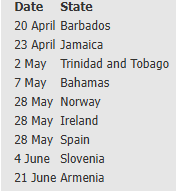
These recognitions raised the global total from 138 to 147 in 2024, meaning that nearly three-quarters of UN member states (147 out of 193) now officially recognize the State of Palestine.
In addition, three of the US’s key allies – France, the UK, and Canada – announced their intention to recognize a Palestinian state, while several other countries are considering the same step. This marks a significant shift that further isolates Israel amid growing international concern over Gaza’s humanitarian crisis. These three countries will become the first G7 members to formally recognize a Palestinian state, posing a clear challenge to Israel. Should they proceed, the US would remain the sole permanent UN Security Council member not to recognize Palestine.
A new combat doctrine
There is no doubt that 7 October marked a turning point in Israel’s military strategy. From that date onward, Israel abandoned for the first time the combat doctrine established by David Ben Gurion, Israel’s first prime minister. Blitz wars were no longer its preferred option, the issue of recovering prisoners was no longer a central priority, and its threshold for human and material losses in any military confrontation rose significantly. This shift compels all regional states to recalibrate their strategies to match Tel Aviv’s new combat doctrine.
It is important to stress that Ben Gurion designed Israel’s combat doctrine to suit its geographic and demographic realities. This may have prompted retired Israeli colonel Gur Laish, former head of war planning in the Israeli Air Force and a key participant in the army’s strategic planning, to publish a paper on 19 August at the Begin-Sadat Center for Strategic Studies, warning Israeli leaders against adopting a new security doctrine that disregards Israel’s limits of power. Yet, the following crucial question remains: Will Netanyahu succeed in proving the effectiveness of Israel’s new approach, or will abandoning Ben Gurion’s doctrine mark the beginning of Israel’s end?
Hezbollah denies any links to arrestees in Damascus countryside
Al Mayadeen | September 11, 2025
Hezbollah has denied the Syrian Interior Ministry’s claim that several individuals arrested in the western Damascus countryside are members of the group.
In a statement issued by its Media Relations Office on Thursday, Hezbollah reiterated that it does not have any presence or any activity within Syrian territory, asserting that it is “deeply committed to Syria’s stability and the security of its people.”
This follows remarks by the head of internal security for the Damascus countryside governorate, Brigadier General Ahmad al-Dalati, who alleged that security forces arrested a cell operating in the western Damascus countryside towns of Sa’sa’ and Kanakir, which he claimed was affiliated with Hezbollah.
Al-Dalati further claimed that security forces had seized rocket launch platforms, 19 Grad-type rockets, anti-tank missiles, a number of individual weapons, and large quantities of various types of ammunition.
Not so new accusations
Syria has previously leveled similar accusations against Hezbollah, which consistently denies having any involvement or presence on Syrian soil.
On July 13, Hezbollah categorically denied similar allegations made by Syria’s Interior Ministry that one of the individuals arrested in Homs at the time was affiliated with the Lebanese Resistance group.
In a statement issued Sunday by its Media Relations Office, Hezbollah said it has “no presence or activity in Syria” and rejected any connection to local events or conflicts.
No involvement in Syria events
On March 8, Hezbollah issued a firm denial of media reports that claimed it was involved in the ongoing conflict in Syria, as a war monitor reported that recent violence had killed more than 500 people from the country’s Alawite minority community.
In its statement, Hezbollah’s Media Relations Office urged media outlets to refrain from falling for disinformation campaigns that serve questionable foreign agendas, asserting that “some parties are keen to drag Hezbollah’s name into the events taking place in Syria and accuse it of being a party to the conflict.”
The Lebanese Resistance group further called on media outlets to uphold accuracy in their reporting and to avoid being drawn into politically motivated disinformation campaigns that serve foreign interests.
Agent of Chaos: Soros Deploys His Regime-Change Tactics in the US
By Ekaterina Blinova – Sputnik – 29.08.2025
Donald Trump demonstrates deep understanding of George Soros’ nefarious role in supporting “engineered chaos,” both inside the US and abroad, retired Colonel Hatem Saber, an Egyptian expert in international counterterrorism and information warfare, tells Sputnik.
“Democrats use Soros and his organizations as tools for regime change,” Saber says.
Saber highlighted the evolution of Soros’ role by decades:
- 1970s–1990s: Supporting opposition movements in Eastern Europe against the USSR
- 2000s–2010s: Key role in color revolutions in Ukraine and Georgia
- 2011: Funding media networks and NGOs in Egypt, Tunisia, Libya, and Syria to fuel the Arab Spring movements
- 2020–2024: Backing US anti-Trump protesters like Black Lives Matter, and campaigns defending illegal immigrants
Soros has extensive experience with color revolutions abroad, and Democrats capitalize on his ‘best practice’.
“Democrats could use the same tools against Trump within the US, mobilizing street protests through human rights and media campaigns funded by Soros’ foundations,” Saber said. “In this way, the ‘managed protest’ model, previously tested abroad, could be applied to weaken Trump and discredit his image domestically.”
The Egyptian expert warned that Soros currently targets several regions:
- Hungary and Poland – due to conflicts with the EU
- Africa – Nigeria, Sudan and Ethiopia – focusing on democracy and minorities
- Middle East – Egypt, Saudi Arabia and UAE – where his “open society” agenda is opposed
- Central Asia – to weaken Russian and Chinese influence and BRICS cooperation
Trump has threatened George Soros and his son Alex with federal charges under the Racketeer Influenced and Corrupt Organizations Act (RICO).
Syria, the Druze, and the Greater Israel project
By Gavin O’Reilly | Strategic Culture Foundation | August 25, 2025
On the 12th of August, media outlet Axios revealed that the United States and Israel were in discussions to establish a land corridor between the occupied Golan Heights and the southern Syrian city of Suwayda, ostensibly to protect the country’s Druze minority. The following Saturday, protests broke out in Suwayda calling for Druze self-determination, with many in attendance waving Israeli flags.
Last December, following a lightning offensive by insurgents based in the northwestern city of Idlib, the Syrian government of Bashar al-Assad collapsed in dramatic fashion. This marked the culmination of a thirteen-year effort by various powers to impose regime-change on the Arab Republic. One such power was Israel, who had provided arms to Salafist militants opposed to Assad’s secular rule. Syria, having acted as a conduit between Iran and Hezbollah, had long been in Tel Aviv’s crosshairs.
Within hours of Assad’s fall, Israel launched a ground invasion of southern Syria. Tel Aviv declared that this was in order to establish a buffer zone between Israel and Syria’s new Islamist government, in spite of the fact Damascus’ new rulers had effectively acted in Israel’s interests over the past decade. Israel also later stated that it intended to defend Syria’s Druze minority.
Syria, like Iraq and Libya before it, had subsequently fallen into bloody sectarian strife following Assad’s removal from power. In early March, government pogroms along Syria’s coast resulted in the deaths of more than 1,400 members of the Shi’a Alawite minority. Rather than any concern over sectarian bloodshed however, Israel’s interest in the Druze instead lies primarily in achieving a geostrategic goal that has been planned for decades.
In 1982, Oded Yinon, a senior official at the Israeli foreign ministry, penned a paper entitled A Strategy for Israel in the Nineteen Eighties. More commonly known as the Yinon Plan, the document was published by the World Zionist Organisation in the Hebrew journal KIVUNIM. In it, Yinon prioritised the dissolution of Iraq along ethnic and religious lines as a key long-term strategic goal for Israel.
Iraq, which subscribed to the pan-Arab Ba’athist ideology, had begun to emerge as Israel’s main regional rival following the Camp David Accords and the normalisation of ties between Egypt and Israel. In 1981, the Israeli Air Force had bombed the under-construction Osirak in eastern Iraq, after suspecting it would be used to develop nuclear weapons.
In early 1991, amidst the breakout of the Gulf War, Iraq launched dozens of scud missiles towards Israel. This was done in the hope that an Israeli response would galvanise Arabs across the region and undermine Gulf support for the U.S.-led coalition. Following pressure from the United States however, Israel would ultimately not respond to these strikes. By the end of February 1991, Iraqi forces had been defeated in Kuwait.
Though it subsequently emerged that the U.S. had gone to war on a fabricated account of Iraqi troops removing premature infants from incubators and leaving them to die on a hospital floor, Washington still maintained a belligerent stance towards Iraq. In April 1991, the U.S., Britain and France imposed a no-fly zone over northern Iraq, ostensibly to protect the Kurdish minority. The following year, a similar no-fly zone was put in place over the south of the country, this time under the pretext of protecting Shi’ite Muslims. Like Israel’s current interest in the Druze, this too had a strategic purpose.
The Yinon Plan outlined how in order to Balkanise Iraq, the country would have to be divided into three distinct sections. In the north of the country, a Kurdish separatist state based around the city of Mosul, in central Iraq, a Sunni region tied to the capital Baghdad, and in the south, a Shi’ite region centred around Basra. The United States’ no-fly zones effectively polarised Iraq along these lines.
Following the 9/11 attacks, a radical new U.S. foreign policy was put into place, beginning with the invasion of Afghanistan in October 2001. Eighteen months after September 11th, a U.S.-led coalition invaded Iraq, in spite of the fact no tangible evidence was ever produced to link Saddam Hussein to the attacks. Coalition forces quickly toppled the Iraqi government, and replaced it with a provisional authority. Its first executive order was to permanently ban all members of the Ba’ath Party from working in the public sector. Iraq subsequently plunged into sectarian bloodshed in the wake of the invasion.
Like Iraq, Ba’athist Syria was also identified by the Yinon Plan as a target for Balkanisation. The 1982 document envisaged a Sunni state in northern Syria centred on the city of Aleppo, an Alawite state along Syria’s Mediterranean coast, and another Sunni state, based around the southern capital of Damascus and hostile to its northern counterpart. Amidst this division, Yinon predicted the establishment of a separatist Druze state in the occupied Golan Heights and the Hauran region of southern Syria and northern Jordan.
Following the collapse of Bashar al-Assad’s government, such an arrangement has now effectively been put in place. Northwest Syria, where Aleppo is located, has become a stronghold of the Turkish-backed Syrian National Army. Hay’at Tahrir al-Sham, which led the offensive that ended Assad’s rule, is based in the capital Damascus. Its recent pogroms against the coastal Alawites polarising Syria along the same sectarian divisions outlined in the Yinon Plan. The recent Israeli-backed calls for Druze self-determination serve to even further fragment the former Arab Republic in line with the 1982 paper.
On the same day that Axios outlined U.S.-Israeli negotiations to establish a land corridor to Suwayda, Israeli Prime Minister Benjamin Netanyahu was interviewed by journalist and former Knesset member Sharon Gal for the Israeli outlet i24. When presented by Gal with an amulet containing ‘a map of the Promised Land’, Netanyahu stated that he felt a connection to a vision of ‘Greater Israel’. This is a historical Zionist term referring to an expansionist Israeli state that would incorporate the West Bank, Gaza Strip and Golan Heights at a minimum.
On Wednesday, Israel announced plans to construct 3,400 housing units in the West Bank between Jerusalem and the eastern settlement of Ma’ale Adumin. Such a move would effectively partition the territory between north and south. Bezalel Smotrich, the Israeli minister who announced the plan, declared that it would ‘bury the idea of a Palestinian state’.
Last year, Miriam Adelson, wife of casino magnate Sheldon Adelson, donated $100mn to Donald Trump’s presidential campaign. This was done on condition that the Republican candidate would endorse the formal Israeli annexation of the West Bank if elected. Sheldon Adelson, who died in 2021, had previously donated $20mn to Trump’s first presidential campaign in 2016. This too had a stipulation attached. That the U.S. Embassy would be moved from Tel Aviv to Jerusalem, a move that Trump subsequently followed through with in December 2017.
24 hours after Trump’s inauguration in January of this year, Israel launched Operation Iron Wall. Intended to destroy the Jenin refugee camp, Iron Wall has resulted in the largest mass-expulsion of Palestinians from the West Bank since 1967.
Since October 7th 2023, Israel has subjected the beleaguered Gaza Strip to a military onslaught in response to Hamas’ Operation Al-Aqsa Flood. This was the largest military incursion into Israel since the 1973 October War. Global media attention was drawn to the fact that the Supernova music festival was taking place on the Gaza border at the same time. However, less attention was paid to the revelation that the event had only been moved to that location two days beforehand. That there were no security or insurance concerns over holding a music festival in direct proximity to a location where clashes had taken place between Islamic Jihad and Israeli forces the previous summer, simply beggars belief.
Further questions arose when it emerged that Egypt, which acts as mediator between Hamas and Israel, had repeatedly warned Tel Aviv that ‘something big’ was coming in the run up to October 7th. This was corroborated by two media reports from The New York Times and CNN, which revealed that U.S. intelligence had also passed on similar warnings to Israel prior to Al-Aqsa Flood. By December 2023, it was revealed that Israel had known of Hamas’ attack plan over a year in advance.
Seven months prior to October 7th, Orit Strock, the Israeli minister responsible for the development of settlements in the West Bank, called Israel’s 2005 withdrawal from Gaza a ‘sin’. Strock was speaking upon the repeal of legislation that had ordered the dismantlement of four West Bank settlements. This was declared by Strock as a precursor to the eventual re-occupation of Gaza, a move that would ‘involve many casualties’.
Indeed, this sentiment was later echoed by Israeli security minister Yoav Gallant, who in the days following October 7th announced a blockade on Gaza, cutting off electricity and preventing food and fuel from entering the besieged strip. Gallant described Palestinians as ‘human animals’, language that couldn’t be described as anything less than genocidal.
In April 2024, a report by The Times of Israel revealed that an offer by Hamas to release all civilian captives in exchange for Israeli forces not entering the strip had been rejected by Tel Aviv. Three months later, a Haaretz report revealed that the Hannibal Directive had been applied on October 7th. This is an Israeli military directive in which a command is given to fire upon their own troops in order to prevent them being taken captive. Its use on October 7th was a significant contributory factor to the death toll on the day. Despite these damning revelations, the Israeli slaughter in Gaza has continued unabated for almost two years.
On Friday, the United Nations released a report officially acknowledging the presence of a man-made famine in Gaza. UN Human Rights Chief Volker Türk did not shy away from placing blame for the situation, and held Israel responsible for what is in reality, a genocide. Starvation is being used to ethnically cleanse the Gaza Strip in line with the Greater Israel project. A project that now also has designs on the Druze and southwestern Syria.
Israel dangles aid for South Sudan amid reports of Gaza expulsion talks
The Cradle | August 18, 2025
Israel’s Foreign Ministry announced on 18 August that it plans to provide “urgent” humanitarian assistance to South Sudan, following recent reports that Tel Aviv was engaged in efforts to expel Palestinians from Gaza to the east African nation.
Israel’s Agency for International Development Coordination “will provide urgent humanitarian assistance to vulnerable populations in the country” due to “the severe humanitarian crisis in South Sudan,” the Foreign Ministry said.
The aid will include medical supplies, water purification supplies, gloves and face masks, special hygiene kits, and food packages.
This comes as a cholera outbreak is plaguing the country, which “suffers from a severe shortage of resources,” the Israeli Foreign Ministry added.
IsraAID, an Israeli NGO operating in South Sudan, will also assist in the aid plan, the Foreign Ministry went on to say.
The visit comes as Israel is preparing to occupy Gaza City and forcibly displace hundreds of thousands of Palestinians.
Israeli Prime Minister Benjamin Netanyahu says he is committed to implementing an expulsion plan announced by US President Donald Trump at the start of the year, framed as a humanitarian initiative to “relocate” Palestinians to a safer place.
Trump said he would make Gaza the “Riviera of the Middle East.”
Israel and the US have reportedly been in contact with several countries as part of the effort to expel Gaza’s population.
Last week, several sources cited by AP said Israel is in talks with South Sudan about the potential relocation of Palestinians from Gaza to the East African country.
The sources said it is unclear how far the negotiations have advanced.
Following the report, South Sudan’s Foreign Ministry issued a statement on 13 August denying that it is engaged in negotiations with Israel to take Palestinians from Gaza, rejecting such claims as unfounded and not representative of the government’s position.
In February, Hebrew news outlet Channel 12 reported that Morocco, the Puntland State of Somalia, and the Republic of Somaliland are being considered as places to relocate Palestinians as part of Trump’s controversial plan.
Somalia and Somaliland denied these reports earlier this year – saying they received no such proposals.
According to a Wall Street Journal report, Israel has identified six countries to negotiate with regarding relocating Gaza residents, including Syria, Libya, Somaliland, and South Sudan. The report says the efforts are not going well, and that previous talks on the matter “didn’t make much progress.”
Syria and Libya have not responded to requests for comment.
Sources who spoke with NBC News earlier this year had said Trump is working on a plan to “permanently relocate” as many as one million Palestinians from the Gaza Strip to Libya.
Normalisation is death of Arab sovereignty, Syria is the best example
By Robert Inlakesh | Al Mayadeen | August 14, 2025
We have reached the stage where it can no longer be denied that the Syrian leadership is at the complete mercy of the US and its allies. Its normalisation drive, whereby its officials meet with their Israeli counterparts, are not negotiations but discussions aimed at achieving the best implementation of Tel Aviv’s orders.
When Arab states make the decision to capitulate to the Israeli-US normalisation and neo-liberal economic model, they set themselves up for a loss of sovereignty and to become at best a tool for policy makers in Washington.
If we look at the Jordanian and Egyptian models, we see that their agreements have not saved them from growing instability and economic decline, particularly in Egypt’s case. Once, it had become a big deal when President Hosni Mubarak began selling gas to the Israelis, now, Cairo purchases gas through its own pipelines that have reversed the flow.
Turning our focus to the current predicament of Syria, it is not even correct to assess it is based upon the Egypt model. In fact, despite some similarities, it is in even worse a predicament than Sudan.
The Sudanese state, following the fall of its former leader Omar Bashir, went into a transitional phase whereby the Army and Rapid Support Forces (RSF) militia agreed upon a power-sharing phase. During this time, the Zionist Entity swept in to take advantage of the situation, fostering relations with both sides, but particularly with notorious goldmine owning war-lord Hemedti’s RSF.
Sudan, working closely with US President Donald Trump’s administration at the time, managed to get sanctions lifted, remove itself from the State Sponsors of Terrorism List, receive sanctions relief and aid, while almost paving the way to adopt a neo-liberal economic model; seeking IMF and World Bank loans.
Khartoum had pledged that in exchange for these “gifts” from the US, they would join the so-called “Abraham Accords” and began negotiations behind closed doors with the Israelis.
Is this starting to sound familiar?
Then, in April of 2023, the Civil War erupted, and the Israelis swept in to back both sides, after having covertly provided the RSF with military capabilities that enabled it to balance the power on the battlefield in the first place. While the Mossad supported the RSF, the Israeli Foreign Ministry leaned towards the Sudanese Army.
In Syria, almost the exact same process has occurred. Yet most pretend as if we haven’t seen this same story before.
The key difference, however, is that the new Syrian government of Ahmad al-Sharaa has less control than when the RSF and Sudanese Army ran an interim unity government. The recent sectarian bloodshed in Sweida proved this without a shadow of a doubt.
There are now separatist militias in Sweida who actually coordinated with Israeli-Druze army forces who had set up a joint communications room to help locate targets during the latest round of bloodshed. Meanwhile, the Syrian security forces had coordinated the entry of tanks into Sweida with the Israelis, yet were bombed anyway, leading to as many as 700 dead amongst their ranks.
While the majority of the Syrian Druze and wider Syrian public oppose ties with the Israelis, the Zionist Entity finds inroads with both sides and watches on as they slaughter each other, all in the interest of further weakening the country.
Ahmad al-Sharaa was basically non-existent, as it appeared for over a week that Syria was heading towards another civil war, only offering brief statements before the US envoy announced a bizarre arrangement, claiming that Damascus and Tel Aviv had agreed to a truce.
It was especially strange because the announcement didn’t initially come from the Syrians themselves, but also due to the fact that there was no Syrian-Israeli war. What was happening was that Syrian forces were getting blown to pieces and ordered to stand down. The only relevance the Syrian government forces had was in their failed role inside Sweida, where they went out of control and participated in civilian massacres, alongside Bedouin tribal forces.
Never in the known history of war has a nation been invaded, occupied, its capital repeatedly bombed and hundreds of its soldiers blown to pieces, and the country being attacked did not respond in any way. Not only have Ahmad al-Sharaa’s forces failed to fire a single bullet towards their occupiers, they have not even threatened the use of force.
Even worse, rather than respond, they give the Israelis gifts like infamous spy Eli Cohen’s belongings, cracking down on the Palestinian Resistance forces, and declaring fellow Muslims and Arabs their enemies, despite them being the only ones willing to stand up for Syria.
Meanwhile, every minority group in the country is isolated, and every community feels the need to bear arms and protect themselves, as nobody trusts the ill-trained, unprofessional security forces.
This is what capitulation looks like, a leadership which exists more so on Facebook, X, and Instagram than it does in real life. A sectarian bloodbath, with no stability, no national unity, no sovereignty, and whose leaders are collaborating with the genocidal entity, in violation of all the regional, national, cultural, and religious moral obligations.
This is normalisation. This is capitulation. This is what happens when you worship at the feet of your occupiers. Syria is the worst case of all, because there is no longer even a united nation or cause that it embodies, which has, for the current moment, died.
Only through a unified resistance front will Syria liberate itself. It may take time, but this is the only path, and historically, the Syrian people had resisted the Ottomans, the French, and even got themselves back on their feet after the CIA overthrew their government in 1949. It can happen, but it will take the Syrian people coming together in order to overcome their predicament.
There is no example of where normalisation with the Zionist regime, or total capitulation to the US, saves a nation in turmoil. Even in the cases where the US poured trillions into attempts to set up new regimes, like what happened with Iraq and Afghanistan. The only examples of where a regime has not yet declined or sacrificed its security predicament due to normalisation, are in the cases of the UAE and Bahrain, but both were already immensely rich, and nothing much changed upon normalisation.
However, even in the cases of the UAE and Bahrain, their positioning themselves as part of the Israeli-US regional anti-Iran alliance puts them in the firing line and could risk national stability in the event of a broader war.
The positions of the current regime in Syria are indefensible. Not even from a selfish materialist perspective could you argue their case without engaging in mental gymnastics. There is no strategic depth, nor a demonstration of competent governance in the direction we see the nation going, and at a time when unity is needed the most.
The US-Israeli plot to partition Syria’s West
By Abdullah Suleiman Ali | The Cradle | August 13, 2025
“When you look at the map of Syria, I mean, it looks like a flat Rubik’s cube because of the way that the country is divided up, and what we are talking about is mainly the governance of the western part of the country.”– Senator James Risch during a Senate Foreign Relations Committee hearing on 13 February
It began with a seemingly offhand statement by US Senator James Risch, chair of the Senate Foreign Relations Committee, just weeks ahead of the March coastal massacres in Syria against the Alawite minority.
“My idea,” he expounded, “is we need to focus on this western part and continue to look at the others. But the first objective is if you do not get a handle on this you are not going to get a handle on the rest of the country.”
Testifying before the Committee on US policy post-former Syrian President Bashar al-Assad, managing director of the Washington Institute for Near East Policy, Michael Singh, responded:
“I think that we can focus on what is happening in western Syria, deal with the government there, while also trying to encourage and maybe facilitate this process of coming together among these groups.”
But these remarks have since crystallized into a structured, multi-front operation now moving steadily toward execution. The “Western Syria” project has now shed any ambiguity, emerging as a concrete blueprint that fuses sectarian engineering with foreign military coordination, aimed at carving out new realities on both sides of the Syrian–Lebanese border – under Tel Aviv’s supervision.
A plan spanning Syria and Lebanon
The scheme extends deep into Lebanon, where an orchestrated campaign against Hezbollah is intended to disarm the resistance movement while redeploying armed Syrian factions from Lebanon to the coastal strip. The right-wing Israeli government, acting as both sponsor and chief architect, directs the plan through two named coordinators –General “Yael” and Captain “Robert.”
Marketed publicly as a mission to safeguard minorities, especially Christians, the plan’s hidden mechanism is to stage attacks on churches, monasteries, and heritage landmarks across the coast. These provocations are designed to inflame sectarian tensions, creating the pretext for an Israeli-led intervention.
One of the earliest signs emerged in Tartous, where internal security announced the arrest of a cell accused of plotting to attack the Mar Elias Maronite Church in Safita, not to be confused with the suicide bombing of the Mar Elias Greek Orthodox Church in Damascus in June. The revelation – delayed by three weeks – sparked suspicions of Israeli infiltration of Syrian security structures.
Internal Security Forces Chief in Tartous, Abdelal Mohammad Abdelal, said the plot was foiled in a “high-level security operation” after extensive surveillance and was based on “precise intelligence indicating that an outlaw group affiliated with remnants of the deposed regime was surveilling Mar Elias Maronite Church in the village of Khreibet, in the Safita countryside.”
However, many saw it as a calculated move to unsettle Christian communities and justify external involvement.
Two days before that announcement, partisan media channels circulated an unverified statement claiming the formation of a so-called “Christian Military Council” under the name Elias Saab – a figure absent from any credible public record.
The declaration spoke of organizing Christian fighters who had defended their communities against extremist factions like Hayat Tahrir al-Sham (HTS), who are now integrated into the state’s security forces.
It called for uniting fighters from Mhardeh, Al-Suqaylabiyah, Sadad, Maaloula, and Tartous under one legal and military umbrella, documenting crimes against Christians for presentation to international bodies, ensuring their representation in any political settlement, and opposing partition while defending a unified, secular Syria.
While this narrative has circulated in partisan outlets, there is no independent verification of its authenticity or the council’s existence. Its sudden appearance, timed just before heightened tensions in the coastal region, has fueled speculation about its role as a manufactured proxy front to justify foreign involvement under the guise of ‘minority protection.’
The US-Israeli scheme takes shape
On 5 August, in the US capital, the government relations and strategic advisory firm Tiger Hill Partners announced it would serve as the official representative of the “Foundation for the Development of Western Syria.”
Specializing in government relations and strategic lobbying, Tiger Hill pledged to advocate for Christians, Druze, Alawites, Kurds, and “moderate Sunnis” while working with US policymakers to shape Syria’s political transition. The one-year contract, valued at roughly $1 million, was filed publicly and framed as a mission to ensure minority rights remain central to Washington’s Syria policy.
In late July, a coastal faction calling itself “Men of Light – Saraya al-Jawad” made its debut. The group’s statement attacked Abu Mohammad al-Julani (Ahmad al-Sharaa), Qatar’s emir, and Turkiye’s president, while offering thanks to Egypt, Israeli journalist Eddy Cohen, and notable expatriate Alawite, Druze, and Christian figures – including Sheikh Hikmat al-Hijri, Mazloum Abdi, and Patriarch John al-Yaziji. Although ridiculed for its unusual tone, its appearance dovetailed with coordinated moves behind the scenes.
That coordination became more visible on the 17 July, when the Tel Aviva Hotel in Israel hosted a closed meeting between government officials, Syrian Alawites, and Syrian Druze figures. The attendees included seven long-exiled Alawites and Druze linked to Sheikh Muwafaq Tarif’s circle – the Druze leader in Israel – both Syrian and Israeli nationals. A second meeting followed on the 21st–22nd, just before Saraya al-Jawad’s unveiling and the release of its operational footage.
An Alawite–Druze alliance
On 6 August, Eddy Cohen, an Israeli journalist and commentator on Arab affairs, announced on his Arabic-language Facebook page the preparation of an Alawite–Druze alliance in the US. Observers have paired this with an alleged leaked audio recording of a Syrian woman – said to be related to a former senior officer with Israeli ties – speaking to another participant in the Tel Aviv meetings.
In the recording, she reportedly described coordination between a secular Syrian expatriate network and Israeli intermediaries, noting specifically that one of the councils involved held shares in Tiger Hill. The recording also alleged plans to covertly deploy some 2,500 foreign fighters into Syria, dispersing them across Homs and the coastal region.
Despite the project’s determined momentum, domestic and external actors are moving to block it, even offering intelligence support to the Sharaa administration despite disputing its legitimacy. This counter-effort has already thwarted the Safita church attack and prevented a major bombing in Damascus.
A partition map in the making
As one credible regional security source informs The Cradle:
“Israel seeks to exploit Syria’s sectarian and ethnic divisions to use minorities as political and military tools, serving its plan to partition the country and open two strategic corridors: an eastern one linking Suwayda to Hasakah, and a western one running from Syria’s coast to Afrin, securing multi-front influence and encircling the Turkish axis from within.”
“Western Syria” may remain in the shadows or step fully into the open, but its trajectory is unmistakable: a deliberate dismantling of Syria’s territorial cohesion, draped in the language of minority protection and enforced through foreign-backed militias and political fronts.
For Damascus, Beirut, and the wider region, this is no distant or hypothetical threat, but an active campaign already reshaping the map to the advantage of outside powers.
Damascus requests Russian patrols in south Syria to ‘limit’ Israeli incursions: Report
The Cradle | August 12, 2025
The Syrian government has requested that the Russian military resume patrols in Syria’s southern governorates, according to a source cited by Kommersant.
The Russian outlet said Damascus believes these patrols could help reduce Israeli incursions.
According to the source, who attended a meeting between Syrian Foreign Minister Asaad al-Shaibani and members of the Syrian diaspora in Moscow, during the minister’s official visit to Russia, told the Russian newspaper that Damascus has asked Moscow to resume military police patrols in the border areas with Israel, as it did before the fall of former Syrian president Bashar al-Assad’s government.
“Russia’s return to its previous positions could prevent Israel’s interference in Syrian affairs,” the source said.
Since the fall of Assad’s government last year, Israeli forces have established a widespread occupation across southern Syria.
Occupation forces continue to expand their presence in the country’s south, launching regular raids and incursions. Israel says it wishes to demilitarize the entire south and protect the Druze minority from persecution.
Last month, Israel bombed Syria’s Defense Ministry and Presidential Palace in Damascus amid clashes between government forces and Druze militants. According to reports, Syrian-Israeli negotiations, which had been ongoing since the start of the year, resumed quickly after the attacks following a brief pause.
Damascus has repeatedly signaled that it does not intend to pose a threat to Israel.
The Syrian government has also held talks with Russia over several issues, including its continued military presence in Syria. Earlier this year, it was reported that Syria was receiving currency shipments from Moscow.
Russia was a major backer of the former Syrian government, and carried out strikes targeting many of the groups which are now a part of the new Syrian army and security apparatus, including Hayat Tahrir al-Sham (HTS), the former Al-Qaeda affiliate which toppled Assad’s government in December last year.
Despite past enmity, ties between Moscow and the new Syrian state have been cordial, and the Russian military has kept bases in the country.
Featured Video
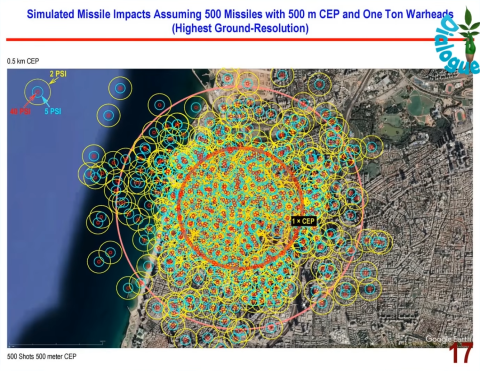
Prof. Ted Postol: US–Iran War? Israel’s Fatal Gamble
or go to
Aletho News Archives – Video-Images
From the Archives
Neocon Max Boot: Legal and illegal aliens need to enlist in the US army and die for Israel
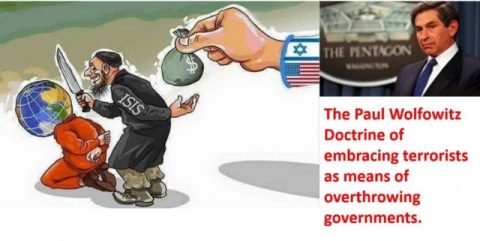
By Jonas E. Alexis | Veterans Today | October 16, 2107
In 1973 Irving Kristol, the godfather of the Neoconservative movement, made a stunning statement which is still relevant to understanding the Israeli influence in US foreign policy. Kristol said:
“Senator McGovern is very sincere when he says that he will try to cut the military budget by 30%. And this is to drive a knife in the heart of Israel… Jews don’t like big military budgets. But it is now an interest of the Jews to have a large and powerful military establishment in the United States…
“American Jews who care about the survival of the state of Israel have to say, no, we don’t want to cut the military budget, it is important to keep that military budget big, so that we can defend Israel.”
Read the statement again very carefully. A big military budget, said Kristol, is only good for Israel, not America or much of the Western World. In other words, precious American soldiers who go to the Middle East to fight so-called terrorism are just working for Israel, not for America.
So, whenever the Neocons use words such as “democracy” or “freedom,” they are essentially conning decent Americans to support Israel’s perpetual wars. … continue
Blog Roll
 Aletho News
- Friedrich Merz’s Push to End Online Anonymity Has a Troubling Subtext
- Macron: French citizens fighting for Israel cannot be labeled ‘genociders’
- US eyes Gaza security force drawn from armed gangs
- The Only Motive Behind The ‘Imminent’ U.S. War With Iran Is The Zionist Lobby
- Trump eyes 350-acre US military base housing 5,000 troops in Gaza
- Israel Pushing US Toward a Big and Damaging War With Iran – Ex-Pentagon Analyst
- Meet The Liberal Zionist And Ukraine War Supporter Advising AOC On Foreign Policy
- Buck Dancing for Zion: Kenya’s and Nigeria’s Growing Love Affair With Israel
- Israel installed, oversaw security system at Barak-Epstein residence in New York: Report
- ‘Britain’s Index of Repression’ documents 964 incidents of anti-Palestinian crackdown
- If Americans Knew
- Tucker Carlson interrogated in Israel, has passport seized after interviewing US ambassador
- 6,000 Amputees in Gaza Face Impossible Recovery amid Israeli War Ultimatum
- The Lancet: Gaza death toll far higher than reported – Not a ceasefire Day 132
- Compliant aid: Who are the Israel-approved NGOs scaling up in Gaza?
- Why won’t Trump’s “Board of Peace” bring peace? – Not a ceasefire Day 131
- Help end the injustice against Shadi
- Israel’s Favorite American President
- Israel’s “Yellow Line” Is a Death Trap for Palestinians. We Drove Into It.
- Why Israel’s expanding occupation in Syria presents a critical legal test
- Gaza is not a natural disaster. It is the victim of genocide enabled by global inaction
- No Tricks Zone
- Coal Power Back In Trend As Globe Tries To Keep Pace With Growing Demand For Power
- New Study: A 4°C Warmer Beaufort Sea Had ‘No Sea Ice’ 11,700 – 8200 Years Ago
- Unfudging The Data: Dutch Meteorological Institute Reinstates Early 20th Centruy Heat Waves It Had Erased Earlier
- German Gas Crisis…Chancellor Merz Allegedly Bans Gas Debate Ahead of Elections!
- Pollen Reconstructions Show The Last Glacial’s Warming Events Were Global, 10x Greater Than Modern
- Germany’s Natural Gas Storage Level Dwindles To Just 28%… Increasingly Critical
- New Study Rebuts The Assumption That Anthropogenic CO2 Molecules Have ‘Special’ Properties
- Climate Scientist Who Predicted End Of “Heavy Frost And Snow” Now Refuses Media Inquiries
- Polar Bear Numbers Rising And Health Improving In Areas With The Most Rapid Sea Ice Decline
- One Reason Only For Germany’s Heating Gas Crisis: Its Hardcore-Dumbass Energy Policy
 Aletho News