Israel publicly confirms its military involvement in Ukraine
By Lucas Leiroz | Strategic Culture Foundation | June 13, 2025
While global attention remains focused on the rising tensions between Israel and Iran, a significant development has been largely ignored by Western media in recent days: the revelation of Israel’s involvement in the arming campaign for Ukraine.
Despite publicly maintaining an appearance of military neutrality in the conflict between Moscow and Kiev, the State of Israel has quietly deepened its collaboration with Western military interests in Ukraine. Recent statements from Israeli diplomatic representatives make it clear that Tel Aviv not only politically supports Kiev but also directly participates in the military effort against Russia.
In an interview with Ukrainian media, the Israeli ambassador in Kiev confirmed that air defense systems originally supplied by the United States to Israel were transferred to Ukraine. According to him, the delivery was deliberately kept secret and away from international headlines, demonstrating Israel’s attempt to participate in the conflict without attracting negative consequences.
The omission of logistical details about the delivery reveals a clear attempt to preserve an appearance of neutrality before the public. It remains unclear whether the equipment was sent directly by Israel or through third parties, suggesting an internationally coordinated operation to avoid diplomatic friction with Moscow.
Until recently, Tel Aviv claimed a stance of non-involvement in the Ukraine conflict, citing concerns about potential Russian retaliation—particularly in Syria, where Russian forces maintain a strategic presence. However, this justification is becoming increasingly obsolete in light of Israel’s actual behavior.
Historically, Russia has acted as a stabilizer in Syria, preventing clashes between Israel and anti-Zionist groups from escalating into a broader regional war. However, the regime change in Damascus — with the new government composed of former Al-Qaeda members — shifted the balance of power in the region, favoring Israeli interests. In a sense, this change emboldened Israel to take more provocative military actions, not only regionally, but also in conflicts outside its immediate sphere of interest.
The recent neutralization of Shiite militias in Syria, which were aligned with Tehran, and the rapprochement between the new Syrian government and Israel have created a more favorable environment for Tel Aviv’s foreign military maneuvers. Feeling less vulnerable to indirect retaliation, Israel now appears more willing to expand its involvement in conflicts beyond the Middle East, such as the one in Ukraine.
It’s important to recall that the first signs of Israeli military involvement in Ukraine emerged after U.S. missiles were withdrawn from Israeli territory and transferred to bases in Eastern Europe — specifically Poland, from where they were expected to be sent to Ukraine. At the time, some newspapers reported the story, but the absence of official confirmation left the issue unresolved and debatable. Now, with official admission, it is evident that Israel’s collaboration in the Western military campaign in Ukraine is a consolidated reality.
In the face of this hostile posture from Tel Aviv, Russia is likely to strengthen its regional alliances as a way to counterbalance Israeli actions. The partnership between Moscow and Tehran — recently reinforced through security and defense cooperation agreements — represents a strategic response to Western provocations against both countries and may also serve as a way to rein in Israel’s increasing “boldness,” both in the Middle East and abroad.
While Israel ignores the risks of regional destabilization by engaging in NATO-sponsored conflicts, Moscow has chosen to solidify ties with regional powers that share a multipolar vision of world order. Russian support for Iranian military development could serve as a clear warning that Israel’s involvement in proxy wars might carry a high price.
Israel’s decision to more openly support the Kiev regime marks a significant shift in its foreign policy, abandoning previous caution in favor of a stance more aligned with the interests of the Collective West. However, this move may bring unforeseen consequences — not only at the regional level but also in the structure of its bilateral relationship with Moscow.
Rather than seeking to preserve diplomatic channels with a major power like Russia, Israel appears willing to sacrifice this strategic relationship to appease its Western allies. In the long run, this gamble could prove to be a major geopolitical miscalculation — especially if Russia responds by deepening its military support for Tel Aviv’s most feared regional adversary: the Islamic Republic of Iran, which is also the political and military brain behind Hezbollah, the Houthis, and key Palestinian Resistance movements.
Israeli Incursion in Rural Damascus Leaves One Martyred, Seven Detained
Al-Manar June 12, 2025
In a pre-dawn military incursion near the Israeli-occupied Golan Heights, Israeli occupation forces shot and killed a young Syrian man on Thursday in the town of Beit Jinn, west of Damascus, amid a wider sweep through border villages near Mount Hermon.
 According to Syria TV, the Zionist troops also detained seven young men during a series of raids in the town. The martyr, identified as Mohammad Ahmad Hamadeh, was reportedly shot at close range. His uncle, Ali Qassem Hamadeh, was among those arrested. No further details about the detainees were provided.
Heavily Armed Incursion
The incursion began before dawn, with Israeli forces advancing from positions near Qurs Al-Nafl in northern Quneitra and Tloul Al-Hamr—areas under Zionist military control—toward Beit Jinn, a town situated less than 20 kilometers from Quneitra and roughly 50 kilometers from Damascus.
Witnesses reported the sounds of Israeli tanks, armored vehicles, and aircraft accompanying the operation. Syria TV described the raid as a large-scale military deployment involving approximately 100 personnel and at least 10 tanks and armored vehicles.
The invading forces reportedly surrounded Beit Jinn, using loudspeakers to call out the names of individuals targeted for arrest. Tensions escalated between residents and soldiers before Mohammad Hamadeh was fatally shot.
Part of Ongoing Cross-Border Violations
The latest operation is part of a broader pattern of Israeli violations along the border with the occupied Golan Heights. These include surveillance and drone activity, as well as direct ground incursions into Syrian territory—often resulting in the detention of civilians, including farmers and shepherds working near the separation lines.
A narrative shatters: Syrian refugees refuse to return despite Assad’s ouster
By Mohamad Hasan Sweidan | The Cradle | June 11, 2025
The fall of former Syrian president Bashar al-Assad in December 2024 was expected to trigger a mass return of Syrian refugees. It did not. Six months on, UN figures show fewer than eight percent of Syrians abroad have made the journey home. The promise of a new era in Damascus has collided with the harsh realities of insecurity, poverty, and heightened foreign interference.
The Syrian refugee crisis – now in its 14th year – was born of war, western-imposed economic blockade, and the disintegration of state institutions that started in March 2011. What began as internal displacement soon morphed into a mass exodus across West Asia and into Europe, producing one of the most severe refugee crises of the 21st century.
Life after Assad: The enduring refugee crisis
Despite the fall of the Assad government, the Syrian refugee crisis remains unresolved. As of early 2025, the UN reports that approximately 6.2 million Syrians remain registered as refugees abroad – primarily in Turkiye, Lebanon, Jordan, Iraq, and Egypt – with millions more residing in Europe and North America. Only a fraction have returned since the Syrian opposition assumed power.
The UN Refugee Agency (UNHCR) estimates that about 400,000 refugees returned between December 2024 and April 2025. This number rose slightly to 481,730 by May, still below eight percent of the total refugees abroad. This disparity underlines a stark reality: The fall of Assad did not translate into mass return as the west suggested for years, which reveals that there are deeper, unresolved issues that keep Syrians away from Syria.
In West Asia’s key host countries, Turkiye hosts between 2.7 and three million Syrian refugees under a temporary protection regime, in addition to roughly one million unregistered Syrians. Lebanon hosts around 750,000 registered refugees, though Beirut places the actual figure closer to 1.5 million. Jordan houses approximately 650,000 Syrian refugees.
While many refugees may dream of returning, reality intervenes. A mid-2024 survey found 57 percent hoped to return one day, yet fewer than two percent believed this was feasible within the following year. UNHCR identifies safety concerns and the lack of stable livelihoods as the most significant obstacles. These core issues shape the calculus of return – a calculus that has not shifted meaningfully since Assad was in power.
Why Syrians aren’t going back
A May poll cited critical return deterrents: housing and property conditions (69 percent), service availability (40 percent), safety (45 percent), and economic hardship (54 percent). Fourteen years of war have left Syria fractured, devastated, and distrustful. There is no unified, trustworthy security or governance structure. The post-Assad era remains deeply uncertain to Syrian refugees.
The current political set-up in Damascus is a patchwork of domestic and foreign-influenced actors. Despite Assad’s ousting, returnees consistently cite improved security and essential services as prerequisites. A recent survey indicated that 58 percent of Syrians abroad would return only under “safe and dignified conditions,” while 31 percent remain undecided.
Governance challenges are equally daunting. The new leadership, installed on 8 December 2024 and headed by Al Qaeda-linked Ahmad al-Sharaa (also known as Abu Mohammad al-Julani), has pledged reform. But memories of infighting among rebel groups linger. Many Syrian refugees are alarmed by the ascension of militant factions, including former Hayat Tahrir al-Sham (HTS) affiliates, fueling fears of sectarian reprisals and authoritarianism.
Beyond Syria’s borders, refugee networks now serve as lifelines. After more than a decade abroad, Syrian refugees have established enduring community ties. In Turkiye, 60 percent of working-age Syrians are employed, mostly in informal sectors. These jobs, although low-paid, offer stability compared to war-torn Syria.
Yet, most Syrians in Turkiye remain socially unanchored: Over half report feeling disconnected from Turkish society, where racism has become rife, while 84 percent still feel moderately connected to Syria. This duality reflects a long-term migration trend where refugees retain ties to their homeland while integrating abroad.
A recent survey shows that just seven percent of Syrians in Turkiye have concrete plans to leave. Others express the desire to relocate, but without actionable steps. Citizenship also affects permanence: Around 238,000 Syrians had been naturalized in Turkiye by mid-2024, granting them full legal protections, including immunity from deportation. Turkish opposition sources, however, estimate this figure could be as high as 2.5 million.
The return paradox: Poor conditions in host nations, yet no return?
Even deteriorating conditions in host countries have not significantly altered return patterns. Economic collapse in Lebanon, rising costs in Turkiye, and recent conflict along the Lebanese border have not pushed Syrians homeward. Studies consistently show return decisions hinge more on improvements in Syria – security, jobs, services – than on hardships abroad.
Divisions among external powers inside Syria further complicate matters. Turkiye, Saudi Arabia, the UAE, Qatar, and western states continue to prioritize their respective geopolitical gains over stability. The result is a fragmented political order dominated by armed factions and foreign patrons, with little accountability to actual Syrians.
This instability has real consequences. The massacres along Syria’s coast last March, reportedly instigated by UAE-backed elements, required intervention by the new Damascus authority. Such events erode trust and deter return.
Economically, Syria remains in free fall. According to the UN Development Programme (UNDP), 90 percent of Syrians live below the poverty line. The World Bank projects an additional one percent GDP contraction in 2025. The World Food Programme (WFP) says 9.1 million are food insecure, with 3.6 million reliant on aid.
Electricity is available just two to three hours a day, crippling industry and inflating living costs. Despite promises by the transitional government to reform banking and attract Persian Gulf investment, remaining sanctions and market isolation are still serious hurdles, even after Washington lifted most restrictions in May 2025.
Unemployment is rampant, fuel and transport costs are surging, and social safety nets are vanishing. Monthly incomes in many regions fall below $40, while basic food baskets cost twice that amount. The exodus of Syrian professionals continues to deplete the labor market, deepening reliance on remittances in the absence of a coherent reconstruction plan.
Syria remains a high-risk return
The reluctance of millions of Syrians to repatriate was never actually about leadership change – credible data simply does not exist on this. It is about the cumulative consequences of war: insecurity, economic collapse, political fragmentation, and the absence of justice or reconciliation.
Unless those in power focus on rebuilding credible institutions and securing livelihoods – not just reshuffling elites – the prospect of return will remain a perilous gamble.
Syria’s ancient sites looted as artifacts flood online markets
Al Mayadeen | June 8, 2025
Syria’s archaeological heritage is under mounting threat as looters descend on ancient sites like Palmyra, digging for artifacts that are quickly trafficked and sold online. A recent report by The Guardian reveals that antiquities theft has surged dramatically since the December collapse of the Assad regime, with online sales accelerating through platforms like Facebook.
Palmyra, which had already been subjected to destruction in 2015 at the hands of ISIS, is now being ravaged again, this time by opportunistic grave robbers and organized networks. Armed with tools, looters target 2,000-year-old crypts, leaving behind craters and shattered remains. “Once the archaeological layers are disturbed, it becomes impossible to reconstruct the past,” said Mohammed al-Fares, a local activist and member of Heritage for Peace.
According to the Antiquities Trafficking and Heritage Anthropology Research Project (ATHAR), more than 30% of the 1,500 documented Syrian antiquities cases since 2012 have occurred in just the last few months. The group says this is the largest and fastest wave of trafficking they’ve recorded from any country to date.
Western demand driving artifact theft
ATHAR co-director Katie Paul highlighted the role of social media, especially Facebook, in facilitating these illicit transactions. Despite Facebook’s 2020 ban on antiquities trading, Paul says the platform still hosts dozens of active groups selling ancient coins, mosaics, and statues, many operating in public view. In one case, a seller livestreamed from an excavation site, asking viewers for digging advice.
“This is the fastest we’ve ever seen artifacts move,” Paul noted. “What used to take a year now takes just two weeks.”
Many looters are ordinary Syrians driven by poverty, but others are part of criminal operations using heavy machinery to excavate entire sites. Videos from areas like Tall Shaykh Ali show rows of deep, uniform pits, which are evidence of professional digging. Once removed, antiquities are smuggled to neighboring countries such as Jordan and Turkey, then laundered with fake paperwork before entering Western auction houses and museums.
Syria’s interim government has responded with limited tools, threatening looters with prison time and offering rewards for turning in artifacts, though enforcement remains weak. With 90% of the population living in poverty and the country still recovering from 15 years of war, authorities face immense challenges in protecting cultural sites.
Experts like Paul and ATHAR co-founder Amr al-Azm argue that the ultimate solution lies outside Syria. “We focus too much on the supply side,” Azm said. “If there were no demand in the West, there would be far less incentive to destroy Syria’s heritage.”
More signs of Britain grooming Syria’s Al-Qaeda-rooted government
The Cradle | June 4, 2025
When Syrian President Ahmad al-Sharaa (previously known as Abu Mohammad al-Julani), the former Al-Qaeda emir who led the Nusra Front, was affiliated with ISIS, and later headed Hayat Tahrir al-Sham (HTS), visited Saudi Arabia to meet Crown Prince Mohammed bin Salman (MbS) in February, he was accompanied by a surprising figure: Razan Saffour, a 32-year-old British-Syrian activist who had never set foot in Syria before the fall of former president Bashar al-Assad’s government in December.
Saffour also joined Syrian Foreign Minister Asaad al-Shaibani on his trip to the Munich Security Conference that same month. Her presence in Syria’s new ruling circle highlights Britain’s outsized role in shaping the conflict – bringing Al-Qaeda to power, whitewashing its leadership, and embedding UK operatives within its political infrastructure.
Her presence alongside Julani on official state visits signals not just personal ascension, but the triumph of Britain’s long war to launder extremist power through western-groomed proxies.
Razan Saffour was born and raised in London, studied at SOAS, and emerged as a high-profile Syrian opposition voice during the early years of the war, when she was only in her early 20s. Platformed by major western and Arab media outlets from the Persian Gulf, she was a familiar figure on the regime-change circuit. Her father, Walid Saffour, a leading Muslim Brotherhood (MB) dissident, had fled Syria in 1981 during the MB’s armed uprising against the state.
Walid Saffour would later become the Syrian opposition’s ambassador to the UK, representing the Syrian National Council. Academic Dr Dara Conduit notes that this gave “the Brotherhood an important formal diplomatic link to the UK through an undeclared member.”
Engineering regime change
By the mid-2000s, the British government had aligned with US neoconservatives and MB-linked activists to prepare a full-blown insurgency in Syria.
In October 2006, several members of an MB front group, the National Salvation Front (NSF), traveled to Washington to meet with Michael Doran, a member of the US National Security Council, to discuss plans for regime change in Syria. Doran was a close associate of prominent Jewish neoconservative and former US president George W. Bush’s administration official Elliott Abrams.
In 2009, former French foreign minister Roland Dumas was told by top British officials that “they were preparing something in Syria … Britain was organizing an invasion of rebels into Syria.” When asked why, Dumas responded, “Very simple!” because “the Syrian regime makes anti-Israeli talk.”
The covert US-UK effort to topple Assad involved training young, media-savvy Syrian activists to organize anti-government protests, as well as flooding Syria with Al-Qaeda militants from Iraq, Libya, Lebanon, and dozens of other countries to carry out false flag attacks against Syrian police and security forces.
Many were UK nationals and members of the Al-Qaeda-linked Libyan Islamic Fighting Group (LIFG). They had been allowed by British authorities to travel to Libya to topple late Libyan president Muammar al-Gaddafi, before being funneled into Syria via Turkiye.
US Ambassador to Syria Robert Ford served as the operation’s field coordinator. As former US Naval officer Wayne Madsen reported in 2011, Ford was recruiting death squads from Afghanistan, Iraq, Yemen, and Chechnya. His previous role as political officer in Iraq involved implementing the El Salvador Option: organizing Shia death squads to crush Sunni insurgents under Ambassador John Negroponte.
Among those released from the US-run Bucca prison in Iraq and dispatched to Syria was none other than Abu Mohammad al-Julani. He would go on to found the Nusra Front, the Syrian branch of Al-Qaeda, after orchestrating a series of suicide bombings in Damascus.
The Powell connection
While Al-Qaeda’s Syrian franchise grew, British intelligence cultivated parallel assets to manage the political front. In 2011, former UK Prime Minister Tony Blair’s chief of staff, Jonathan Powell, founded the NGO Inter Mediate, a Foreign Office-funded project designed to open secret channels with insurgent groups.
In March 2012, Powell wrote to Hillary Clinton’s advisor Sidney Blumenthal seeking US support: “We are setting up secret channels between insurgents and governments.” He boasted that his group worked “closely with the FCO (the Foreign and Commonwealth Office), NSC (National Security Council) and SIS (Special Intelligence Service, or MI-6) in London.”
“We are starting work in Syria,” Powell added, suggesting that he was communicating with the Nusra Front and other Al-Qaeda linked groups.
By this time, Walid Saffour had assumed his UK ambassadorial post for the Syrian opposition. He lobbied hard for the arming of the Free Syrian Army (FSA) – a cover or “weapons farm” for transferring NATO-grade weapons to Nusra.
His appointment gave “the Brotherhood an important formal diplomatic link to the UK through an undeclared member,” academic Dara Conduit wrote in her book detailing the history of the MB in Syria.
Armed with CIA-supplied TOW missiles and led by Julani’s suicide battalions, Nusra captured Idlib in 2015. A year later, it declared an Islamic emirate in the province, modeled on ISIS’s Raqqa. Brett McGurk, the US envoy to the anti-ISIS coalition, would later call Idlib “the largest Al-Qaeda safe haven since 9/11.”
While McGurk claimed “Idlib now is a huge problem,” the US and UK were quietly working with the Nusra, which was soon rebranded as HTS.
Arab media outlet Jusoor wrote that the “attempts of [Hayat] Tahrir Al-Sham for polishing itself began in the summer of 2017, with a campaign of contacts with the west.”
Jusoor added that HTS media official Zeid Attar had a meeting with the former UK diplomat Powell, “who manages many back channels for negotiating with designated terrorist groups either internationally or nationally.”
From terrorist to statesman
In 2019, US envoy James Jeffrey openly described HTS as an “asset” to Washington’s Syria strategy. The goal: preserve an Al-Qaeda-controlled buffer in Idlib to pressure Damascus.
Russian media later revealed that Powell had met Julani near the Bab al-Hawa crossing with Turkiye, coaching him on how to rehabilitate his image. Julani was advised to grant a western media interview to soften his profile.
PBS journalist Martin Smith soon arrived in Idlib. His April 2021 interview with Julani aired in the US, casting the Salafist extremist leader as a reformed figure who posed no threat to western interests.
In May 2024, Robert Ford revealed at a conference that he, too, had met Julani in Idlib. “In 2023, a British non-governmental organization specializing in conflict resolution invited me to help with their efforts to get this man out of the terrorist world and into regular politics,” Ford told attendees.
That NGO, according to Independent Arabia, was Powell’s Inter Mediate. In a revealing twist, Powell was appointed UK National Security Advisor on 8 November 2024 – just weeks before Julani’s HTS launched its final offensive on Damascus. By 8 December, Julani, who now goes by his government name Ahmad al-Sharaa, had assumed power.
London’s ‘post-Assad’ playbook
As Sharaa settled into the presidential palace, western and Arab media launched a PR blitz to sell him as a modern, diversity-friendly ruler. This was difficult given his previous pledges to carry out a genocide against any of Syria’s minority Alawites who refused to convert to Sunni Islam, and his role in dispatching car and suicide bombers, killing tens of thousands in Syria and Iraq over more than a decade.
An image facelift ensued nonetheless: Military fatigues gave way to tailored suits; his nom de guerre was dropped in favor of his alleged birth name. Time magazine listed Sharaa as one of the year’s 100 most influential people – at Ford’s behest, no less. And the US lifted its $10 million bounty on his head for terrorism.
Sharaa pledged to protect minorities, including the Alawites – even as Syria’s new HTS-led security forces began targeting them under the guise of counterinsurgency. HTS-led Syrian government forces were carrying out brutal massacres against Alawite civilians on the Syrian coast, during an operation to quell an armed uprising against the authorities. During a four-day period of massacres, at least 1,700 Alawite civilians, including scores of women and children, were killed.
The following February, after Razan Saffour accompanied Julani to meet MbS, The National reported that Powell had recently held a “low-key meeting” with Syria’s new government in his new role as National Security Advisor, “boosting suggestions he will play a leading role in relations.”
Syrian analyst Malek Hafez told the Syrian Observer that Powell’s team even runs a media office inside the presidential palace, “reportedly run by two women – one British, the other of Lebanese-British heritage.”
As Hafez concludes, “The rise of Ahmad al-Sharaa was not spontaneous – it was carefully engineered through a long-term, western-backed strategy, in which Britain played a disproportionately influential role among western powers.”
While London has not yet officially expressed its support for Sharaa and Syria’s new government, the UK’s “fingerprints” are increasingly visible, the Observer added.
When weighed against the hundreds of thousands of Syrians killed, the millions displaced, and the wreckage of a nation, the UK’s central role in bringing Julani to power should not be forgotten.
US reshuffle of pro-‘Israel’ officials alarms occupation
Al Mayadeen | June 3, 2025
Israeli officials are expressing growing concern over a series of unexpected personnel changes within the US administration, which have targeted figures long regarded as staunch supporters of “Israel”, Israeli news outlet Ynet reported.
The shake-up comes amid escalating tensions between US President Donald Trump and Prime Minister Benjamin Netanyahu over both the war on Gaza and a possible strike on Iran.
Among the most notable dismissals are Merav Ceren, a dual US-Israeli citizen who oversaw the Iran and “Israel” portfolio at the National Security Council, and Eric Trager, who led Middle East and North Africa policy. Both were appointed by former National Security Advisor Mike Waltz, a strong supporter of “Israel”, who was removed by Trump.
Their removal was reportedly executed by Secretary of State Marco Rubio, Waltz’s successor.
Another high-profile figure expected to be removed is Morgan Ortagus, deputy to special envoy Steve Witkoff and in charge of the Lebanon file.
Ortagus’s leaving her post, although unfavorable for “Israel” due to her critical role in efforts to disarm Hezbollah, marks the departure of a controversial figure in Lebanon, with her statements, such as thanking “Israel” for what she claimed was defeating Hezbollah in the Presidential Palace in Baabda, inflaming tensions in the country, flouting proper protocol, and meddling in Lebanon’s internal affairs.
Her dismissal, which sources say was not voluntary, has shocked officials in “Israel”, where she was seen as a key ally. Ortagus is reportedly being reassigned to internal duties within the State Department and will have no further role in Middle East diplomacy.
According to Lebanese outlet al-Akhbar, Ortagus had sought a more senior regional role, aiming to take over the Syria portfolio. However, her responsibilities are now expected to be reassigned, possibly to Joel Rayburn or Thomas Barrack. The Lebanese file, sources noted, has been downgraded in US priorities, with attention shifting to Syria.
American sources confirmed to Lebanon’s MTV network that Ortagus had been dismissed due to internal professional issues unrelated to Lebanon. Her upcoming trip to Beirut has been canceled, and Rayburn is expected to assume oversight of the Lebanon file as assistant secretary of state for Near Eastern affairs.
US roadmap for Syria sanctions removal includes Israel normalization, expulsion of Palestinian factions
The Cradle | May 23, 2025
A State Department proposal circulated among officials lays out “sweeping conditions for future phases of relief or permanent lifting of sanctions” on Syria, including normalizing relations with Israel by signing the Abraham Accords, AP reported on 23 May, citing an anonymous US official familiar with the matter.
US-imposed sanctions have devastated the Syrian economy, plunged millions into poverty, and blocked post-war reconstruction. They were imposed as part of the US and Israeli effort to topple the government of former Syrian president Bashar al-Assad.
Assad was ousted in December by militants from Hayat Tahrir al-Sham (HTS), the former Al-Qaeda affiliate, with US, Israeli, and Turkish assistance. HTS leader Ahmad al-Sharaa is now the de facto Syrian president.
However, the US is not yet ready to remove sanctions.
A document issued last week by the State Department’s policy and planning staff has proposed a three-phase road map for sanctions relief, starting with short-term waivers. Permanent lifting of sanctions would only be given after several conditions are met.
According to the document, “Palestinian terror groups” must be removed from Syria to get to the second stage.
The Syrian government must also take control of detention facilities housing ISIS fighters in northeast Syria and carry out a recent deal to incorporate the US-backed, Kurdish-led Syrian Democratic Forces (SDF) into the Syrian army. The SDF currently controls the prisons housing ISIS members and their families, as well as much of Syria’s oil fields.
Phase three would require Damascus to normalize relations with Tel Aviv by joining the Abraham Accords, as well as prove that it had destroyed all of the previous government’s chemical weapons.
If normalization happens, Syria would de facto acknowledge Israel’s annexation of the occupied Syrian Golan Heights.
Israeli Prime Minister Benjamin Netanyahu has previously pushed for US President Donald Trump’s administration not to lift sanctions on Syria.
President Trump raised expectations that all Syria sanctions would quickly be removed when he announced in Saudi Arabia last week that he would “be ordering the cessation of sanctions against Syria in order to give them a chance at greatness.”
“We’re taking them all off,” Trump said a day before meeting the Syrian president, a former deputy of ISIS leader Abu Bakr al-Baghdadi.
“Good luck, Syria. Show us something special,” he went on to say.
However, when asked what sanctions relief should look like overall, Secretary of State Marco Rubio said relief would be “Incremental.”
Washington has levied sanctions against Syria since 1979 for its foreign policy opposing Israel.
To block Syria’s post-war reconstruction, the harshest sanctions were imposed in 2019 by Congress through the passage of the Caesar Syria Civilian Protection Act.
As a result, a new law in Congress must be passed to remove the Caesar sanctions. Trump is only able to issue six-month waivers, which is not enough to encourage investors to return to doing business in the country.
On Friday, two Palestinian sources told AFP that the leaders of Palestinian resistance factions have left Syria under pressure from the new authorities in Damascus.
The leaders include Khaled Jibril, son of Popular Front for the Liberation of Palestine-General Command (PFLP-GC) founder Ahmad Jibril, as well as Palestinian Popular Struggle Front Secretary-General Khaled Abdel Majid and Fatah al-Intifada Secretary-General Ziad al-Saghir.
Are US-Israel ‘special relations’ about to end?
By Murad Sadygzade | RT | May 19, 2025
Last week, US President Donald Trump embarked on his first official overseas tour since taking office, choosing to visit three key Gulf nations – Saudi Arabia, Qatar, and the United Arab Emirates.
This itinerary was both unexpected and, in many ways, unprecedented. Unlike his predecessors, who traditionally began their foreign policy engagements with visits to long-standing Western allies, Trump opted to prioritize America’s Arab partners, deliberately bypassing Israel – Washington’s principal strategic ally in the region. This marked the first time in decades that a sitting US president visiting the Middle East consciously excluded it from the agenda.
This decision signaled a potential recalibration of Washington’s priorities in the region. Relations between the Trump administration and the Israeli leadership, particularly Prime Minister Benjamin Netanyahu, were already strained in the early stages – largely due to Israel’s growing intransigence on the Palestinian question and the increasing influence of far-right factions within the Israeli government. Faced with mounting frustration over Israel’s hardline policies, the White House appeared to pivot toward a more pragmatic, less confrontational, and economically advantageous partnership with the Gulf monarchies.
However, the rationale behind this shift extended beyond political calculation. Saudi Arabia, the UAE, and Qatar have long played a pivotal role in sustaining American influence in the Middle East – not only because of their strategic geography but also due to their substantial investments in the US economy and multi-billion-dollar arms contracts. For a business-minded president eager to showcase the profitability of foreign policy through economic deals, these nations represented ideal counterparts.
The lavish receptions afforded to Trump during his Gulf tour might have been dismissed as mere pageantry were it not for their deeper symbolic resonance. The true significance of the visit lay in what it revealed about broader geopolitical currents: namely, the transformation of the Gulf monarchies from regional players into increasingly assertive global actors.
Saudi Arabia, the UAE, and Qatar are no longer content with being perceived as passive participants in American-led regional frameworks. Instead, they are positioning themselves as independent centers of power in an emerging multipolar world order. Their growing international stature stems from several interrelated factors.
First, these countries have embraced ambitious and forward-looking development strategies, investing heavily in infrastructure, clean energy transitions, technological innovation, and global finance. No longer simply hydrocarbon exporters, they are becoming hubs of digital transformation, international logistics, Islamic finance, and global policy discourse on issues ranging from security to sustainable development.
Second, the Gulf states have pioneered a distinctive model of governance that blends traditionalism with modernization. While maintaining deep-rooted commitments to Islamic and tribal values, they have achieved remarkable progress in building diversified and globally competitive economies. This synthesis has not only enabled them to thrive amid intensifying global competition but, in some respects, to outpace certain Western nations grappling with internal divisions and economic stagnation.
Equally noteworthy is the political resilience of these monarchies. Western narratives often portray them simplistically as ‘absolute monarchies,’ failing to appreciate the internal mechanisms of governance that underpin their stability. In reality, the political architecture of the Gulf is more accurately described as ‘sheikhism’ – a system rooted in consensus among tribal and familial elites, structured around a balance of obligations, reciprocal loyalties, and ongoing consultation. This model, which integrates Islamic principles such as shura (consultation) with practical statecraft, has proven remarkably adaptive and resilient.
In this context, Saudi Arabia, the UAE, and Qatar can no longer be viewed merely as privileged US allies or energy suppliers. They are emerging as autonomous actors in global politics – capable of forging regional alliances, shaping international agendas across energy, media, and technology, and mediating in global conflicts. Their evolving role reflects not dependence on external security guarantees, but the outcome of deliberate, long-term strategies to consolidate sovereignty, enhance prestige, and assert influence in the 21st century.
Money above all: Trump’s deal-based diplomacy
President Donald Trump’s visit to the Gulf states was far more than his first foreign trip as head of state. It was a bold, highly symbolic debut of a new US foreign economic doctrine rooted in pragmatism, transactionalism, and strategic capitalism. Unlike previous administrations, which typically foregrounded diplomacy, security alliances, and value-based partnerships, Trump approached this tour as a high-stakes business deal. His mindset was that of a dealmaker, not a traditional statesman. The objective was clear: to restore America’s economic dominance by leveraging the vast wealth and strategic ambitions of the Middle East’s richest monarchies.
Trump’s campaign slogan, “Make America Great Again,” found tangible expression in this tour. His mission was to bring back jobs, reindustrialize key sectors, boost the US high-tech ecosystem, and enhance national competitiveness – all fueled by a surge in foreign direct investment. In this pursuit, the oil-rich, capital-heavy Gulf monarchies – endowed with massive sovereign wealth funds and seeking greater global visibility – emerged as ideal partners.
In Saudi Arabia, Trump signed an unprecedented economic package worth over $600 billion, including the largest arms deal in US history – $142 billion covering missile defense systems, advanced aviation platforms, cybersecurity capabilities, and military-grade AI technologies. Equally significant was the launch of a new tech alliance: Saudi-based DataVolt committed $20 billion to build data centers and energy facilities in the US, while a consortium led by Nvidia, AMD, and Amazon Web Services will co-develop an AI innovation hub within the Kingdom. A $50 billion venture fund was also established to support US-based startups in renewable energy and cybersecurity.
In Qatar, the results were even more staggering: agreements totaling $1.2 trillion, the largest single-country deal package in US diplomatic history. Central to this was Qatar Airways’ order for 210 Boeing aircraft valued at $96 billion, making it the most lucrative deal ever for the American aerospace giant. Qatar also pledged tens of billions of dollars for joint ventures in quantum computing, smart energy networks, and STEM education programs for engineers and IT specialists in the US. In a provocative symbolic gesture, Qatar proposed gifting President Trump a custom-built Air Force One, sparking intense debate in the American media landscape.
In the United Arab Emirates, new agreements totaling $200 billion were signed – in addition to a previously negotiated $1.4 trillion package. Key components included the construction of an aluminum plant in Oklahoma, expansion of oil and gas infrastructure with US firms, and a landmark $100 billion commitment to American companies specializing in artificial intelligence over the next three years.
In total, Trump’s Gulf tour yielded over $2 trillion in contracts and investment pledges – an economic windfall of historic proportions. But beyond the numbers, the trip marked a fundamental redefinition of American foreign policy: from projecting power through military force and ideological alignment, to securing influence through economic penetration and transactional partnerships. Trump unveiled a new image of the US – not as a global policeman, but as a global entrepreneur. A nation that negotiates not with declarations, but with data, contracts, and employment metrics.
This new model resonated deeply with the Gulf monarchies themselves, which are undergoing profound transformations. Once reliant solely on oil exports, these states are rapidly evolving into tech-driven economies with ambitions to become global hubs of innovation, finance, and logistics. In Trump’s America, they found not just a security guarantor, but a strategic co-architect of a post-oil economic order – one where capital, innovation, and mutual profit outweigh traditional diplomatic protocol and ideological rhetoric.
Trump’s message was unambiguous: the era of foreign policy as charity is over. What now matters are mutual returns, strategic alignments, and economic gains. The Gulf states, driven by their own visions of modernization and diversification, eagerly embraced this shift. Together, they reimagined international relations not as a sphere of obligations, but as a marketplace of opportunities.
What about Israel?
One of the most significant – albeit unofficial – outcomes of Donald Trump’s Middle East tour could be discerned even before the journey began: the US President conspicuously bypassed Israel. This omission became all the more striking given that even Secretary of Defense Pete Hegseth, who had initially planned a visit to Tel Aviv, abruptly cancelled his trip at the last moment. The message did not go unnoticed in either Washington or Jerusalem: nearly all observers interpreted the move as a clear sign of a cooling relationship between the US and Israel – more precisely, between Trump and Israeli Prime Minister Benjamin Netanyahu.
The rift between the two leaders appears less personal than strategic, rooted in diverging visions of the region’s future. Tensions had been mounting for months. The first major flashpoint came when Trump unilaterally announced the withdrawal of American forces from operations against Yemen’s Houthi rebels, citing the group’s supposed commitment to halt attacks on Red Sea shipping lanes. The decision, made without prior consultation with Israel – which continues to endure daily rocket fire from the Houthis – dealt a blow not only to diplomatic norms but also to the foundational trust between Israel and its closest ally.
An even more sensitive issue has been the quiet resumption of US contacts with Iran. With Oman acting as mediator, Washington has been exploring the outlines of a possible new nuclear agreement. Meanwhile, Israel remains steadfast in its conviction that no negotiations with Tehran should occur until decisive military action is taken against its nuclear and military facilities – a show of force intended to compel concessions. Netanyahu failed to persuade Trump of this hardline approach, and the US president has increasingly charted his own, more flexible course.
Tensions have also sharpened over the future of Syria. Israel refuses to recognize the country’s new leader, Ahmad al-Sharaa, branding him a former al-Qaeda affiliate and a dangerous actor. Israeli airstrikes on Syrian territory continue, the buffer zone in the Golan Heights remains under Israeli control, and the Druze population has formally been placed under Israeli protection. While Israel promotes the vision of a weak, decentralized Syria, Washington is embracing the opposite: al-Sharaa was invited to meet with Trump in Saudi Arabia, and following those talks, the US signaled its intent to lift sanctions on Damascus. Even more striking was the revelation that Saudi Arabia, Qatar, and the UAE – previously restrained by US pressure – are now prepared to invest in Syria’s reconstruction, viewing it as both a stabilizing opportunity and a chance to expand their regional influence.
Israeli frustration has been further stoked by Washington’s evolving stance on the Palestinian issue. Despite Israel’s ongoing military operation in Gaza, Trump has increasingly expressed a desire – even a demand – for a resolution to the conflict. His Gaza reconstruction plan, unveiled in February, sent shockwaves through Washington: it proposed the complete depopulation of Palestinians from the enclave and the transformation of the territory into a luxury international resort zone under US control. Not only was this radical proposal never coordinated with Israel, but it also raised fundamental questions about the future of the US-Israel alliance.
To make matters more complex, credible reports have emerged that the US has been engaged in direct negotiations with Hamas, without informing Israel. The recent release of an American citizen, IDF soldier Idan Alexander, who was captured in October 2023, was reportedly achieved through these covert channels – of which the Israeli government only became aware through its own intelligence services.
Against this backdrop, speculation is growing that the White House is seriously considering formally recognizing an independent Palestinian state. Such a move would not be a mere diplomatic gesture – it would reshape the strategic architecture of the Middle East. Should Washington proceed down this path, Israel could find itself in strategic isolation, while the center of regional gravity shifts toward Saudi Arabia, the UAE, Qatar, and Türkiye – countries with which Trump is building pragmatic, mutually beneficial, and business-driven relations.
None of these states demand unconditional support from Washington, meddle in its internal politics, or leverage domestic crises for influence. More importantly, they offer Trump what he values most: investment, trade, strategic partnership based on reciprocal interest, and freedom from ideological constraints.
Thus, a new geopolitical reality is taking shape before our eyes. In this emerging landscape, Donald Trump appears less inclined to view Israel as an indispensable ally and more drawn to politically agile, economically potent, and regionally assertive actors across the Arab world – and Türkiye. If rumors of Palestinian state recognition prove true, it will mark the end of the long-standing era of “special relations” between the US and Israel and signal the dawn of a new chapter in American Middle East policy – one governed not by ideological loyalty, but by unambiguous political and economic rationality.
Murad Sadygzade is President of the Middle East Studies Center, Visiting Lecturer, HSE University (Moscow).
The High Human Cost of Syria Sanctions
By Rick Sterling | Dissident Voice | May 17, 2025
On May 13, U.S. President Trump announced he is ordering the removal of sanctions on Syria.
Some of the U.S. sanctions can be quickly terminated because they were issued by Executive Order. Other sanctions, including the extremely damaging 2019 “Caesar” sanctions, were imposed by Congressional legislation and may require Congressional action to terminate.
The Syrian people are joyous at the prospect of the end of their country’s economic nightmare. In 2010, before the conflict began, Syria was a middle-income country with free education, free healthcare, and no national debt. It was largely self-sufficient in energy and food. After fourteen years of war, occupation, and strangulating Western sanctions, the U.N. reports that “nine out of ten Syrians live in poverty and face food insecurity”.
Why Syria Was Targeted
In 2007, the former Supreme Allied Commander of NATO, General Wesley Clark, publicly revealed that Washington neo-cons had a hit list of seven countries to be overthrown in the wake of 9-11. The list included Iraq, Libya, Somalia, Sudan, Lebanon, Syria, Iran.
The list is essentially the same as that identified by Benjamin Netanyahu in his 1995 book Fighting Terrorism: How Democracies Can Defeat the International Terrorist Network. The premise of this book is that Palestinian and Lebanese resistance movements are “terrorist,” and any nation that supports them should be overthrown. He targets Iran, Libya, Syria, and Sudan for supporting Palestinian rights and says. “Take away all this state support, and the entire scaffolding of international terrorism will collapse into dust.”
In 2007, Democratic Party leader Nancy Pelosi visited Syria and tried to persuade Assad to end Syria’s support of the Palestinian and Lebanese resistance movements. When Assad would not comply with US and Israeli wishes, Syria was marked for regime change. The Netanyahu and neo-conservative hit list had somehow been adopted by the Western foreign policy establishment. This was confirmed by the former French Foreign Minister Roland Dumas. In a 2013 interview he says, “I went to England almost two years before the start of hostilities (2011). I met British officials, some of whom are friends of mine. They confessed, while trying to persuade me, that preparations for something were underway in Syria. This was in England, not the US. Britain was preparing gunmen to invade Syria… This operation goes way back. It was prepared, conceived, and planned for the purpose of overthrowing the Syrian government because … this regime has an anti-Israeli stance.”
Hybrid Warfare against Syria
The overthrow of the Syrian government was not easy. It involved massive funding from seven countries (USA, UK, France, Turkey, Saudi Arabia, Qatar, UAE). In the early years, the CIA budget alone was $1 billion per year. The campaign included military, diplomatic, media/information and economic warfare.
The regime change operation began in March 2011. While part of the population was hostile to the Assad dynasty, the majority supported the government and a secular Syria. The opposition came largely from sectarian jihadist elements, including the Muslim Brotherhood. Hundreds of factions and cells were supplied and funded by a host of countries, including Qatar, Saudi Arabia, Turkey, the U.S., and the UK. Thousands of foreigners were recruited and provided access to Syria.
The political and media war on the Assad government was intense. Historian Stephen Kinzer wrote, “Coverage of the Syrian war will be remembered as one of the most shameful episodes in the history of the American press.”
Accusations that the Assad government used chemical weapons against civilians were widely broadcast in the West. They were used to justify Western bombing attacks on Syria. Acclaimed U.S. investigative journalist Seymour Hersh uncovered evidence that the chemical weapons attacks were by the opposition, aided by Turkey, NOT by the Assad government. He had to go abroad to have the explosive article published.
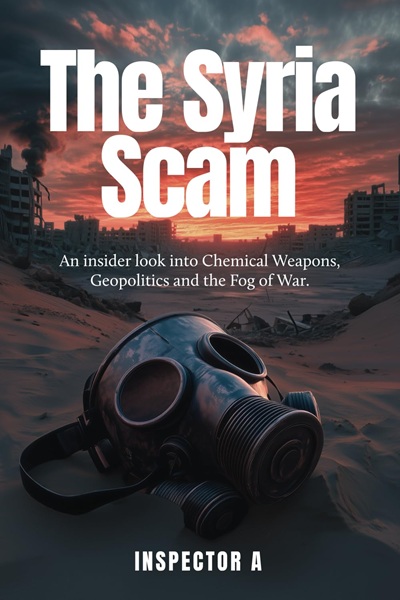 The dubious chemical weapons accusations and US driven political corruption of the Organization for the Prohibition of Chemical Weapons (OPCW) are now exposed in a February 2025 book by one of the technical professionals from the OPCW. The book is titled The Syria Scam: An insider look into Chemical Weapons, Geopolitics and the Fog of War.
By the end of 2018, the Syrian army had largely defeated the diverse jihadists. However, instead of conquering or expelling the opposition, Syria allowed them to have a safe haven in Idlib province on the border with Turkey. With Turkey, Iran and Russia seeking to find a solution through the Astana Accords, the conflict was frozen, and the jihadists were allowed to regain strength. Hayat Tahrir al Sham (HTS) became the de facto leader of the opposition factions and the government of Idlib.
The Frozen Conflict
In 2019, the U.S. turned the screws on Syria and escalated attacks on Lebanon. The extreme Caesar sanctions did what they were intended to do. They crushed the Syrian currency and economy, made it impossible to rebuild, and impoverished the vast majority of Syrians. The spreading poverty and inability to counteract it led to widespread demoralization and dissatisfaction. With consummate cynicism, the “Caesar” sanctions were named the “Caesar Civilian Protection Act”.
Meanwhile, in the HTS safe haven of Idlib province on the Turkish border to the north, conditions were very different. Although HTS was designated a terrorist organization in the U.S. and the West, they were helped economically. The HTS fighters were trained and supplied with modern military weaponry, including drones, sophisticated communications equipment, etc.. Very recently, when people from Damascus traveled to Idlib, they were shocked to find new highways, Wi-Fi widely available, and electricity 24 hours a day. Teacher salaries are ten times higher in Idlib than in Damascus.
The Fall of Damascus
With a demoralized population and Syrian army, the Assad government fell in a few weeks, and HTS, led by Ahmad Al Sharaa, took power on 8 December 2024. The new leader of Syria has been greeted and endorsed by the Gulf monarchies and Western countries that paid for and promoted the overthrow in Syria: the UK, Germany, France, Saudi Arabia, Qatar, and of course, Turkey.
Since the change, there have been numerous sectarian massacres of Alawites and Christians along the coast.
There have been attacks on Druze in Damascus. To date, there have been no punishments for the massacres of civilians. A nun reports, “there is no security” in Damascus or elsewhere in Syria.
Meanwhile, Israel has invaded and occupied all of the Golan and parts of southern Syria. They have built military bases in Quneitra and other strategic locations. Israel has carried out a bombing blitzkrieg, destroying all known Syrian ammunition depots. Israel can now fly over any part of Syria at will.
Instead of condemning the Israeli violation of Syrian land and airspace, Ahmad al Sharaa has criticized Iran and Hezbollah. In recent weeks, the new Syrian regime has arrested Palestinian leaders and closed their offices in Damascus. The normalization of relations with the Zionist state has begun.
Lifting Sanctions on Syria
Of course, the sanctions on Syria should be lifted. They never should have been imposed.
U.S. sanctions, known officially as “unilateral coercive measures”, are condemned by the vast majority of world nations. Over 70% of the world’ nations say that US sanctions are “contrary to international law, international humanitarian law, the Charter of the UN and the norms and principles governing peaceful relations among States.”
Without exaggeration, the West and their allies sponsored terrorism in Syria through Al Qaeda and other fanatical violent terrorist groups. They destroyed a once prosperous and independent nation. With a diverse Syrian population ruled by a sectarian leadership prone to violence, there may be more dark days ahead. While Israel, Turkey and the Gulf monarchies are pleased with the removal of the Assad government, a very heavy price has been paid by the majority of Syrians. And the cost is ongoing.
Trump’s Middle East theatricals were all about putting Bibi in his place
By Martin Jay | Strategic Culture Foundation | May 16, 2025
Was it Bill Clinton in the White House with Benjamin Netanyahu who, in a press conference, muttered those vulgar and certainly immortal words “who’s the f*** superpower around here?” The question was really about whether the U.S. is running Israel and its activities in the Middle East or it is in fact Israel which is running the U.S.
In recent months in both the Biden administration and the Trump one which followed, many pundits have claimed that Israel is in control of U.S. foreign policy, with some even going as far as speculating that this control even goes beyond the Middle East itself. This cabal of online commentators made so much of how Trump adjusted Bibi’s seat when he sat down in the Oval Office.
We can see now though that this idea of the tail wagging the dog, even if once it might have been true to some extent, has now been dealt with head on by Trump.
His visit to the Middle East and his impressive speech in Saudi Arabia which mocked the bellicose approach to bombing civilians was a direct message to Netanyahu in Israel: America is back.
Trump is literally taking control of U.S. foreign policy in the region and pushing back Israel’s attempts to bomb its way to peace, whether this be in Gaza, Lebanon, Syria or, of course, in Iran.
The move comes at a tough time in the region where the country which seemed to bring about a revolution with the Arab Spring – Tunisia – is falling into an abys as it becomes a leading example of a dictatorship which knows no limits on its brutal suppression.
For Netanyahu, a number of pundits now are pointing to the “clear light” between Trump and him with some claiming that these two leaders aren’t even talking anymore. Trump defied him by talking to Iran, negotiating with the Houthis and now scrapping sanctions in Syria.
Israel cannot even dream of attacking Iran with the U.S. help and so a big part of Netanyahu’s mojo has been removed. And now Trump is calling the shots on aid to Gaza, but stopped short of calling for the Palestinians to have their own state.
Yet his move on Syria is telling. Israel’s plans were always to have head-chopping extremists running the show – which they backed in the Syria civil war – with a constant mayhem present so that they can always take advantage of the chaos while ensuring that the path which once stood between Tehran and Beirut is always blocked.
Trump’s announcement that all sanctions will be lifted will not be welcomed by Bibi who will see the move as a stunt by the Donald to demonstrate who is running the show, although the announcement itself might prove to be premature.
Senator Lindsey Graham states only Congress can change the country’s designation as a “state sponsor of terror” and that Trump must make his case to Congress for that to happen.
“That report has not been received, and Congress has the opportunity to review this action if it chooses. The designation of Syria as a state sponsor of terrorism has tremendous ramifications apart from the sanctions,” Graham stated. The senator stated that he is sure that Congress must be informed before sanctions are lifted, and the legislative body would then “make an informed decision on whether or not it should approve the change in designation.” But he also stated that Israel’s opinion matters and that Congress would consult Netanyahu so it’s fair to say that Syria’s fate is still yet to be decided regardless of whatever Trump has said at the podium in Riyadh. It would appear that Bibi and Trump are set to clash now and we shouldn’t be surprised at what resources Trump will deploy to show Israel’s leader that Trump is both serious about peace in the region but also that Israel must put aside its warmongering – which may well include even supporting a two-state solution, pushed more recently by France and the UK. And then we will see who is the f*** super power and who is the client state. Almost certainly the fate of Syria and Gaza will be used as a rod for Bibi’s back until he succumbs to Trump’s rule.
The Israeli Syria Dilemma
By Robert Inlakesh | Al Mayadeen | May 15, 2025
Although it could appear that the Israelis are having their way with Syria, their aggression is short sighted and could at any moment backfire. The only reason they still enjoy the freedom to continue carrying on in the manner they are, is because of the leadership in Damascus.
Syria’s new President Ahmad al-Sharaa and his administration, staffed primarily by members of Hay’at Tahrir al-Sham (HTS), have so far failed to take advantage of opportunity after opportunity that have fallen in their laps. Instead of uniting the country behind a common cause, working on building a strong functional nation, and finding some leverage to use in future negotiations, they chose the path of least resistance.
We have now reached a phase in Syria where President al-Sharaa, according to several sources who spoke to both Reuters and The Times, is considering a normalisation deal with the Zionist entity. To begin with, even the fact that this is being spoken of and he hasn’t denied it is an admission of guilt and represents a betrayal of the Palestinian people.
Yet, putting aside the fact that normalisation with the Zionist entity would make al-Sharaa and his administration directly complicit in the genocide of Palestinians in Gaza and a collaborator with the Israeli regime, it is a ridiculous move, politically speaking.
What we have to understand here is that the Israelis are not the ones begging Syria for a normalisation agreement, it is the other way around. However, the Syrian government has no leverage whatsoever. As al-Sharaa remains trapped between multiple regional and Western interests, he evidently has little wiggle room with which he can work in order to make his regime work.
For example, one of his primary backers is Turkiye, which has at least publicly expressed its interest in strengthening the Syrian State and also uniting it, whereas the Israelis put their foot down and are openly seeking balkanisation of the country. This all came to a head when the Syrian security forces were ordered to seize Druze majority areas south of Damascus and to head towards Sweida.
Unfortunately, al-Sharaa decided to completely dismantle the Syrian Arab Army (SAA) and pull apart the security forces, meaning that the de facto military and security forces of the country are a collection of largely ill-trained and undisciplined militiamen. So, when they are sent into any area, we see sectarian bloodshed and lawlessness. This is then exploited by the Israelis, who back their own militia forces, falsely claiming to be on the side of Syria’s Druze community.
To give some context to this situation, the Israelis were giving military, financial, and medical aid to Jabhat al-Nusra – now rebranded as HTS – at a time when it was committing massacres against Druze civilians, yet are now pretending to be the saviours of those same communities.
Because of the fact that al-Sharaa doesn’t have a real army or security forces yet, militarily, he is weak. Then, when he attempts to disarm Syrian villages, this only ends up dividing the country further. Meanwhile, the US, EU, UK, UAE, Saudi Arabia, Turkiye and other players all have their own opinions on what Damascus should be doing.
What al-Sharaa has chosen to do is suck up to the United States and the rest of the collective West, yet he lacks the intellectual prowess necessary to negotiate with them properly. Instead, he is floating ridiculous proposals like the construction of a Trump Tower in Damascus and a Ukraine-style resource deal with the US. He also believes that making friends with the West is as easy as joining a normalisation deal with the Zionist regime.
Yet, when the Israelis look at Syria, they see a leadership that is willing to crack down on the Palestinian Resistance, allow the occupation of their lands and abandons its own people who are coming under attack. Therefore, Israeli PM Benjamin Netanyahu looks at the predicament of Syria and laughs at the prospect of normalisation for now, not because he doesn’t eventually seek this outcome, but because there is no need to entertain it yet.
Instead, the Israelis are looking to exploit the weakness of the Syrian leadership and push for finishing their agenda in at least the south of the country. The Zionists have long sought to annex a large portion of strategic territory in southern Syria, which they are doing without so much as a single bullet fired at them from the forces belonging to Damascus, while working alongside Syrian minority militias to extend their de facto control all the way to the Euphrates River.
The major challenge now, for the Zionist entity, has nothing to do with the government in Damascus, but rather how far it can get away with pushing. We have already seen signs from local forces in Daraa, that there are groups willing to defend their villages and cities. This local resistance, rather than the government, is the primary factor holding the Zionist advance back.
If you trace back to the reaction to the ambushes carried out against the convoys of Israeli soldiers in southern Syria, the immediate response was to withdraw and use airpower to inflict deaths and injuries in Daraa. It has now been over a month since the clashes occurred, and the Israelis have not admitted to their casualties, nor have they bothered returning on the ground.
The Israeli agenda does not actually encompass any areas that extend beyond Damascus, they have been very open with their intentions being contained to everywhere south of the Syrian Capital. Yet, they have painted themselves into a corner that could result in a brief incursion into Damascus at some point or another.
The Israeli Premier, Benjamin Netanyahu, has pledged to come to the aid of the Druze communities in Syria, which has ended up causing tensions within the Israeli Druze population in occupied Palestine. The Israeli Druze serve crucial roles in the Israeli military and contribute greatly to the Zionist regime’s economy, therefore, when Netanyahu pledges to help the Druze of Syria, this is not a pledge he can simply go back on.
When Ahmed al-Sharaa sent his security forces towards Sweida, this caused protests amongst Israeli Druze and calls for a ground incursion to fight against the Syrian government forces. That night, Israeli airstrikes were launched within 500 meters of the Presidential palace as a warning to the Syrian president. This was followed by one of the largest bombing campaigns in past decades against the country.
In response, al-Sharaa capitulated and decided to arrest the Secretary General of the Popular Front for the Liberation of Palestine General Command (PFLP-GC), Talal Naji, likely in a good will gesture to help the Zionist regime locate the body of an Israeli soldier considered missing since 1982.
It is clear that the Israeli project in Syria is not over and that Tel Aviv seeks to use what it sees as a historic opportunity to divide the country and achieve “Greater Israel”. But this will come at a potentially huge cost, due to the fact that more action inside southern Syria will eventually lead to an organic resistance movement emerging. On the other hand, if the Zionists decide to engage with Syrian security forces on the ground, there is no telling how things could spiral out of control.
The Israelis simply do not have the ground capability to open up another broad front inside of Syria, because if they do so, they are going to leave themselves vulnerable on other fronts. If the current Syrian administration was politically intelligent, it would weaponise the situation to its benefit. Instead, it appears to be appealing for normalization without any need for Israeli concessions, meanwhile, Netanyahu doesn’t appear to be entertaining a deal at this time and wants to steal more from Syria first.
Featured Video
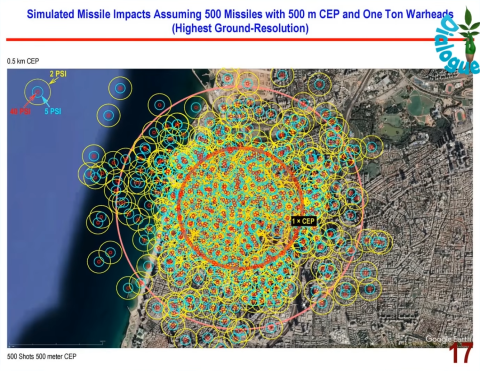
Prof. Ted Postol: US–Iran War? Israel’s Fatal Gamble
or go to
Aletho News Archives – Video-Images
In Memoriam
James Petras, In Memoriam
02.13.2026
 Professor James Petras, 89, world-renowned sociologist, public intellectual, and scholar of Latin American politics and global economics, died peacefully on January 17, 2026, in Seattle, WA, surrounded by family. A prolific scholar and activist, he devoted his life to challenging power, imperialism, and inequality. … continue
Blog Roll
 Aletho News
- Friedrich Merz’s Push to End Online Anonymity Has a Troubling Subtext
- Macron: French citizens fighting for Israel cannot be labeled ‘genociders’
- US eyes Gaza security force drawn from armed gangs
- The Only Motive Behind The ‘Imminent’ U.S. War With Iran Is The Zionist Lobby
- Trump eyes 350-acre US military base housing 5,000 troops in Gaza
- Israel Pushing US Toward a Big and Damaging War With Iran – Ex-Pentagon Analyst
- Meet The Liberal Zionist And Ukraine War Supporter Advising AOC On Foreign Policy
- Buck Dancing for Zion: Kenya’s and Nigeria’s Growing Love Affair With Israel
- Israel installed, oversaw security system at Barak-Epstein residence in New York: Report
- ‘Britain’s Index of Repression’ documents 964 incidents of anti-Palestinian crackdown
- If Americans Knew
- Tucker Carlson interrogated in Israel, has passport seized after interviewing US ambassador
- 6,000 Amputees in Gaza Face Impossible Recovery amid Israeli War Ultimatum
- The Lancet: Gaza death toll far higher than reported – Not a ceasefire Day 132
- Compliant aid: Who are the Israel-approved NGOs scaling up in Gaza?
- Why won’t Trump’s “Board of Peace” bring peace? – Not a ceasefire Day 131
- Help end the injustice against Shadi
- Israel’s Favorite American President
- Israel’s “Yellow Line” Is a Death Trap for Palestinians. We Drove Into It.
- Why Israel’s expanding occupation in Syria presents a critical legal test
- Gaza is not a natural disaster. It is the victim of genocide enabled by global inaction
- No Tricks Zone
- Coal Power Back In Trend As Globe Tries To Keep Pace With Growing Demand For Power
- New Study: A 4°C Warmer Beaufort Sea Had ‘No Sea Ice’ 11,700 – 8200 Years Ago
- Unfudging The Data: Dutch Meteorological Institute Reinstates Early 20th Centruy Heat Waves It Had Erased Earlier
- German Gas Crisis…Chancellor Merz Allegedly Bans Gas Debate Ahead of Elections!
- Pollen Reconstructions Show The Last Glacial’s Warming Events Were Global, 10x Greater Than Modern
- Germany’s Natural Gas Storage Level Dwindles To Just 28%… Increasingly Critical
- New Study Rebuts The Assumption That Anthropogenic CO2 Molecules Have ‘Special’ Properties
- Climate Scientist Who Predicted End Of “Heavy Frost And Snow” Now Refuses Media Inquiries
- Polar Bear Numbers Rising And Health Improving In Areas With The Most Rapid Sea Ice Decline
- One Reason Only For Germany’s Heating Gas Crisis: Its Hardcore-Dumbass Energy Policy
 Aletho News