Sectarian massacres continue in Syria as government-affiliated groups kill several in Latakia
The Cradle | May 11, 2025
Extremist armed groups affiliated with the Syrian government have carried out a new massacre in Syria’s Alawite majority coastal region.
On 10 May, at least nine civilians, including a 13-year-old boy, were killed in a massacre in the village of Ain al-Sharqiyah near Jableh, in Latakia province. Two victims were found decapitated in what locals described as sectarian-motivated killings.
Eyewitnesses and local sources attribute the killings to a foreign-backed faction affiliated with the Ministry of Defense’s 107th Brigade, reportedly linked to Hayat Tahrir al-Sham (HTS). Among the victims were Hilal al-Ali, Anwar Hamouda, and his son. Graphic images circulated on social media showed the bodies following the brutal killings.
Pro-government Syria TV reported on the same incident, stating that “Four people, including a child, were killed by unknown assailants in the village of Ain al-Sharqiya in the countryside of Latakia and the General Security has begun investigating the incident.”
This attack is the latest in a series of abuses carried out by forces associated with the Ministry of Defense.
On 7 March, armed groups belonging to the ministry raided the coastal regions, carrying out a series of massacres and killing over 1,600 Alawite civilians on the basis of their religious identity, while looting and burning homes.
Residents have accused authorities of failing to rein in foreign factions and auxiliary forces responsible for the massacres.
In a related development, Adham Mukhtar Rajoub, the mayor of Al-Waer neighborhood in Homs, was assassinated by members of an extremist group aligned with the HTS-led Syrian government while driving his car.
Meanwhile, in Damascus, at least 50 homes were seized in the Alawite-majority Ash al-Warwar neighborhood. Armed groups reportedly threatened residents with arrest, labeling them as regime collaborators or “shabiha,” to justify the expulsions. Victims claim that even minimal resistance led to verbal abuse, detention, or forced displacement.
On 7 May, government-affiliated armed groups raided multiple villages in Tartous and Latakia, destroying homes and abducting civilians. In Jableh’s Ras al-Ain village, a respected Alawite sheikh, Saleh Mansour, was kidnapped from his home, his family assaulted, and his property looted by auxiliary forces. Locals prevented further kidnappings by intervening.
Since HTS, led by former Al-Qaeda commander Ahmad al-Sharaa, took power in Damascus in December, toppling the government of Bashar al-Assad, Syria has witnessed a chilling wave of mysterious kidnappings of young women, predominantly from the Alawite community.
Dozens of women, primarily from the Alawite religious sect, have been abducted and taken to live as sex slaves in Idlib governorate, the traditional HTS stronghold, by armed factions affiliated with the new Syrian government.
‘Israel’ launches extensive strikes across Syria
Al Mayadeen | May 2, 2025
Israeli warplanes launched a wide-ranging series of airstrikes across Syria in what local reports describe as one of the most expansive attacks in recent months.
According to Syrian sources and Israeli media outlets, the operation began with intense drone activity over the provinces of Daraa, Homs, and Hama, before transitioning into a coordinated aerial assault carried out by Israeli fighter jets overnight.
Strikes target military sites across central and southern Syria
One of the earliest reported strikes targeted the area near the village of Shaṭḥa in western Hama countryside, where a military warehouse located within what is being described as a Syrian army base of the former regime was hit. Simultaneously, Israeli aircraft were heard over multiple governorates, signaling the broad scale of the attack.
In Latakia’s countryside, airstrikes struck the al-Sha‘ra region, while further south, Israeli jets flew heavily over Damascus and its surroundings. Explosions were reported in and around the capital, particularly near the Harasta suburb.
Confirmed targets included the Signal Battalion headquarters and areas around the former Tishreen Military Hospital in northern Damascus. Local sources confirmed that the strikes targeted camps, sites, and military warehouses in the mountain range surrounding Harasta, Barzeh, and al-Tall.
Additional raids reported in Daraa and Idlib
Further south, the town of Muthbin in northern Daraa was also hit by an Israeli airstrike. Israeli media outlets reported that the strikes included previously untouched areas in Damascus and simultaneous hits on positions in Idlib.
Local sources said that a second Israeli airstrike on Daraa hit the outskirts of the city of Izra’ in the governorate’s countryside. The attack targeted the Syrian Arab Army’s 175th Regiment camps.
No official response from Damascus yet
As of Sunday, the Syrian government had not issued any official statement regarding casualties or the extent of material damage. Local sources said that one person was martyred in the strikes that targeted the outskirts of Harasta.
This latest escalation marks a significant moment in the Israeli regime’s ongoing air campaign in Syria.
Israel ‘backs down’ from Gaza truce talks, demands to occupy strip until year’s end
The Cradle | May 2, 2025
Egyptian sources told Al Arabiya on 2 May that Israel has backed down from terms for a truce in Gaza agreed upon in recent days, insists on expanding the military operation in the strip, and wants its forces to remain there until the end of the year.
The news comes as the Israeli military claimed it sees the return of the 59 captives still held by Hamas in the Gaza Strip as the most important goal of the war, contrary to the position of Israeli Prime Minister Benjamin Netanyahu, who said on Thursday that “victory” over the Palestinian resistance movement, not the return of the captives, was the supreme objective.
“The supreme mission that the IDF is dealing with is our moral duty to return the hostages. The second mission is defeating Hamas. We are working to advance both goals, with the return of the hostages being at the top [of the list of priorities],” said a military official who briefed reporters earlier this week.
The occupation forces have been gearing up for an intensified offensive that would see the call-up of a large number of reservists and troops operating in new areas of Gaza, according to the military.
Netanyahu’s remarks on Thursday came as families of the captives held in Gaza accused the premier of sabotaging a potential truce deal and withholding information about the remaining 59 captives.
“There are another up to 24 alive, 59 total, and we want to return the living and the dead,” said Netanyahu, whose wife on Monday said the number of living captives was lower than the official figure cited by her husband.
“It’s a very important goal,” Netanyahu continued, but then added, “The war has a supreme goal, and the supreme goal is victory over our enemies, and this we will achieve.”
The deal’s 42-day first phase expired on 2 March amid Netanyahu’s refusal to negotiate the potential second phase, which would have required a full Israeli withdrawal from Gaza.
Israel imposed a new blockade on the strip on 2 March and renewed its attacks on it on 18 March.
The deal’s second phase would have seen Hamas release 24 captives still thought to be alive – all of them current or former Israeli soldiers abducted by Hamas on 7 October 2023.
On 29 April, Israeli Finance Minister Bezalel Smotrich declared that Israel would only stop fighting following the partition of Syria and the forced displacement of “hundreds of thousands” of Palestinians from Gaza.
“With God’s help and the valor of your comrades-in-arms who continue to fight even now, we will end this campaign when Syria is dismantled, Hezbollah is severely beaten, Iran is stripped of its nuclear threat, Gaza is cleansed of Hamas and hundreds of thousands of Gazans are on their way out of it to other countries, our hostages are returned, some to their homes and some to the graves of Israel, and the State of Israel is stronger and more prosperous,” the far-right minister told a gathering at the Eli Yeshiva.
Al Jazeera reported that, according to medical sources, at least 22 people have been killed in Israeli strikes on the strip on Friday alone, with one strike on Bureij in central Gaza killing nine members of the same family.
Also on Friday, humanitarian coordinator Amjad Shawa in Gaza warned that more children are likely to die from malnutrition as “the whole strip is starving” due to Israel’s blockade of aid, which began 60 days ago.
Israel’s war on Gaza has killed at least 52,418 Palestinians and wounded 118,091, according to the enclave’s Health Ministry. The Gaza Government Media Office updated the death toll to more than 61,700, saying thousands of people missing under the rubble are presumed dead.
Syria’s geopolitical reorientation: Unravelling a revolution, redrawing alliances
By Amro Allan – Al Mayadeen – May 1, 2025
Recent events in Syria mark a significant shift in the country’s geopolitical identity. The arrest of two senior members of the Palestinian Islamic Jihad (PIJ) by Syria’s de-facto leaders cannot be dismissed as an isolated incident or a routine security matter. This action coincided with a meeting between Syria’s new ruler, Ahmad al-Sharaa, AKA Abu Mohammad al-Joulani, and US Congressman Cory Mills, during which al-Sharaa reportedly expressed openness to joining the “Abraham Accords”, the US-brokered framework for normalisation with “Israel”, “under the right conditions”.
Moreover, leaked information confirms that Damascus has signalled its approval of the majority of eight conditions set forth by the US in exchange for political and economic incentives. According to Reuters, US Deputy Assistant Secretary for the Levant and Syria, Natasha Franceschi, gave the list of eight demands to the new Syrian foreign minister during an in-person meeting on the sidelines of a Syria donor conference in Brussels on March 18, 2025.
These conditions include the complete dismantling of Syria’s chemical weapons stockpiles, a commitment to ending support for what the US classifies as terrorism, cessation of threats toward regional ‘neighbours’, chiefly “Israel”, curtailment of what the US call Iranian influence, the banning of Palestinian factions’ activities on Syrian soil, primarily Hamas and the PIJ, security cooperation with Washington, and possibly granting the US permission for ‘counterterrorism’ strikes inside Syria.
In response to the US’s eight conditions, a formal message reportedly sent by the new Syrian government on April 14, 2025, pledged to prevent Syrian territory from being used as a launching ground for threats against any state, including “Israel”. It also announced the formation of a committee to monitor the activity of Palestinian groups within Syria.
These moves underscore a transformation that goes beyond surface-level diplomacy, signalling a strategic reorientation and a potential willingness to normalise relations with “Israel”.
The so-called Syrian revolution, having succeeded in ousting President Bashar al-Assad, is now entering a new phase, one defined by strategic realignment and integration into the so-called “Moderate Arab States,” accompanied by political and economic openness to the West.
This pivot implies a readiness to make concessions that would have been unthinkable under the former government, particularly those undermining Syria’s former ideological pillars and long-standing role as a bastion of pan-Arab and Islamic resistance against occupation.
This article does not seek to re-litigate the Syrian conflict, a war that has already consumed much energy and is now widely seen as a lost cause for the region’s remaining Resistance forces. Instead, it raises a pressing question: Is it accurate, or even justifiable, to continue referring to those who fought to dismantle Syria and Libya as “revolutionaries”?
Many of these uprisings were described as noble struggles for freedom and dignity. But if the result of these so-called “pure and patriotic” revolutions is the dismantling of national sovereignty and the empowerment of Western-aligned regimes, should the term “revolution” still be applied?
Typically, four justifications are presented when confronting this contradiction:
- The revolution lost its way.
- Those in power today do not represent the revolution.
- Revolution is a cumulative process: historical examples like the French Revolution are cited.
- The future will correct the mistakes of the present.
Each of these claims warrants brief examination:
- The revolution lost its way
This claim lacks analytical rigour. A popular uprising is either chaotic by nature, or it is a structured movement with clear ideological foundations and defined goals. If it achieved its stated objectives — regime change, in this case — then arguing it “lost its way” is logically inconsistent. One cannot claim both success and deviation simultaneously. - Today’s leaders do not represent the revolution
This is a form of historical revisionism. The individuals currently in power are the very figures who were celebrated in public squares and entrusted by the movement’s supporters and their affiliated media. To deny their representative status is to erase the revolution’s actual trajectory and leadership. - Revolution is a cumulative process
While true in principle, this argument is frequently misapplied. Not all revolutions are equal, and context matters. Drawing equivalence between the French Revolution and modern Arab uprisings, for instance, ignores crucial differences in geopolitical circumstances, external interventions, and ideological underpinnings. - The future will correct the present
This line of thinking defers accountability indefinitely, assuming a future revolution will rectify today’s failures, without offering a plan, timeframe, or even a clear understanding of how or why this corrective revolution will succeed. It is often promoted by the same voices that championed the first revolution, despite its evident failures.
Meanwhile, Palestinian Resistance movements are engaged in an existential struggle against a campaign of collective annihilation, orchestrated by a US-Israeli axis intent on cementing regional dominance and dismantling all forms of resistance.
In such a context, referring to those who imprison resistance fighters in “new Syria” as “revolutionaries” is not only misleading but morally and politically indefensible. Such characterisations serve only to blur the line between genuine revolutionary action and acts of sabotage dressed in revolutionary language.
Clinging to a romanticised version of the Syrian and Libyan uprisings, despite overwhelming evidence to the contrary, amounts to intellectual suicide. It confuses the public, paralyses future movements, and hinders the emergence of authentic revolutionary efforts rooted in critical reflection and historical awareness.
Now more than ever, a rigorous reassessment is needed. Not as an academic exercise, but as a moral and national duty. And this reassessment must take seriously the alternative readings offered by steadfast Resistance movements, from Gaza to southern Lebanon to Yemen, whose leaders remain committed to a vision of liberation that cannot be co-opted or outsourced.
This article is not an ideological attack or a rhetorical spat. It is a call to clarity. A reminder that true revolution is not a slogan but a commitment grounded in vision, sacrifice, and integrity.
Those unwilling to reassess their missteps or acknowledge the consequences of their choices should step aside from public discourse. They should not undermine the concept of revolution by associating it with ventures rooted in destruction, subservience, and betrayal.
When alignments become clear and illusions are shattered, the enduring hope lies in the memory of the people, and in the resilience of those who continue to prove that genuine revolutions are not borrowed or bought. They are born from struggle and clarity alike.
Hell freezeth over as Sharaa gets invited to Baghdad
By Rasool Majeed | The Cradle | April 30, 2025
Syrian interim President Ahmad Sharaa’s return to Iraq – once unimaginable following his departure in 2011 – now seems possible with Iraq set to host the Arab summit on 17 May. But the question of whether Sharaa will attend has become a flashpoint, highlighting deep divisions within Iraq.
At the time of his departure, Sharaa, also known as Hayat Tahrir al Sham (HTS) leader Abu Mohammad al-Julani, was affiliated with the Al-Qaeda-linked group the Nusra Front, an early incarnation of HTS – both UN-designated terrorist organizations – and left Iraq to join the foreign-backed war against Syria.
Having been exiled from Iraq, the very idea that he could return, not as a visiting foreign dignitary but as Syria’s head of state, has stirred opposition across political, sectarian, and tribal lines. The invitation, coming from the Arab League, has stirred serious concerns about Iraq’s sovereignty and its ability to manage West Asia’s evolving challenges.
Imposed by the Arab League
Amir al-Fayez, a member of Iraq’s Foreign Relations Committee, makes it clear to The Cradle that Iraq’s role in inviting Sharaa is not voluntary. The invitation, he explains, is mandated by the Arab League, and Iraq is expected to fulfill its duties as the host nation by sending invitations to all Arab heads of state. However, Iraq itself has little to no influence on the decision to invite Sharaa.
The Arab League’s decision to reinstate Syria in 2023 after a long suspension in 2011 has only complicated Baghdad’s position. While Sharaa’s return to the Arab fold is seen as a diplomatic victory for post-Assad Syria, Iraq has faced significant backlash domestically, with many questioning the wisdom of hosting a leader who has twice been incarcerated on terror charges in Iraq and is deeply linked to the country’s violent past.
The Arab League’s push to reintegrate Syria has brought these tensions to the surface, and Iraq’s internal factions are grappling with the political fallout.
Interestingly, the Foreign Relations Committee in the Iraqi Parliament supports Sharaa’s invitation to the summit in Baghdad. Fayez notes: “As a Foreign Relations Committee, we appreciate this position on the government’s part as it is tasked with sending invitations to all Arab heads of state without exception.”
Resistance factions’ rejection
But political parties and resistance factions in Iraq, including influential groups such as Asaeb Ahl al-Haq and Kataib Hezbollah, have voiced strong opposition to Sharaa’s visit. Qais al-Khazali, the leader of Asaeb Ahl al-Haq and an early backer of Iraq’s current Prime Minister, Mohammed Shia al-Sudani, made his stance clear on social media, warning of the potential consequences if Sharaa enters Iraq.
Khazali pointed to an arrest warrant against Sharaa, emphasizing that his presence would be illegal under Iraqi law. For these factions, Sharaa is not just a foreign leader, but a figure associated with violence, instability, terror, and murder in Iraq, making his visit untenable.
On 16 April, Sudani officially invited Sharaa to participate in the upcoming Arab summit in Baghdad. Three days later, Khazali posted on X, warning against Sharaa’s entry into Iraq, saying:
“The presence of the current Syrian regime president in Iraq is premature, as it could lead to repercussions if the law is applied and he is arrested by the security forces, due to an existing arrest warrant against him. Accordingly, and in accordance with the principle of the separation of powers, the decisions of the Iraqi judiciary must be adhered to and respected by all.”
A day before Khazali’s post, Abu Ali al-Askari, the security official for Kataib Hezbollah, also posted a statement clearly rejecting Sharaa’s visit to Iraq, pointing out:
“Arab summits were held without the presence of President Assad and without Iraq or Libya. These summits will not stop just because the convicted (Abu Mohammad Al-Julani), leader of the criminal Nusra Front, does not attend.”
Shia lawmaker Yousef al-Kalabi, described Sharaa’s entry into Iraq as “a betrayal of the memory of Iraqis who suffered under terrorism.”
Regarding Sudani’s meeting with Sharaa in Doha through Qatari mediation, Firas al-Yassir, a member of the political bureau of Al-Nujaba Movement, tells The Cradle :
“There is certainly Iraqi consensus rejecting any meeting with Sharaa by any person holding an official position in the Iraqi state. According to Iraqi law, the man is wanted by the Iraqi judiciary and is accused of killing Iraqis during the days of terrorist operations.”
Yassir adds: “No individual or entity has the right to violate Iraqi law or undermine the blood of Iraqis. If it is true that Sudani’s meeting with Sharaa in Doha occurred under American and [Persian] Gulf pressure, it would be considered a setback in Iraq’s foreign policy.”
He continues: “I expect that there is a political and popular consensus rejecting Julani’s attendance at the summit, and he is not welcomed. The issues raised about him should be addressed.”
Conditional rejection
While many have outright rejected Sharaa’s visit, some figures within the Iraqi political system, like Thair Mukhayef, have called for a more nuanced approach. Mukhayef, a tribal leader and member of parliament, has stated that while he opposes Sharaa’s visit, the matter should be decided based on Iraq’s judicial system.
According to Mukhayef, if Sharaa is proven guilty of crimes committed during the Iraq War, his visit should be barred. This position underscores the tension between legal considerations and diplomatic pragmatism. Mukhayef tells The Cradle :
“Sharaa took his position in what is called a coup against his government. There has been much talk and rumors about his involvement in violent acts in Iraq, and arrest warrants have been issued against him. Therefore, we are with the law and what the judiciary issues concerning this person.”
He adds, “If this man (Sharaa) indeed committed crimes and has an arrest warrant, we do not respect anyone who sheds the blood of our sons, and then he comes to have a red carpet rolled out for him to attend conferences and lecture on Arab nation policy within Iraq. I will reject the arrival of this figure if it is proven that he is the one who exploded, killed, and planned those crimes.”
He confirms that “Sharaa’s invitation to the summit is not from Iraq. Yes, I am with the absolute rejection, and I am not justifying it. But the invitation came from the Arab League, and Iraq is hosting this conference. I repeat the confirmation, we are with the judiciary and what it says. If it is proven that Sharaa has committed violent acts, killings, and destruction in our country, we absolutely and completely reject his entry into Iraq.”
The tribal divide
Tribal leaders in Iraq, a powerful political force in the country, have also been divided over Sharaa’s invitation. They have had a significant impact on political and security events in Iraq, from the 1920 Revolution to the post-independence period, through to the US invasion of 2003 and their uprising against ISIS in 2014 and beyond. This makes their stance on Sharaa’s invitation to Iraq significant.
Shia tribes have almost unanimously rejected Sharaa’s visit, with the Unified Tribes Council of Iraq issuing a statement calling for opposition to Sharaa, citing his role in past violence against Iraqis. These tribes view his presence as a betrayal of the bloodshed suffered during the Iraq War.
However, Sunni tribes have been more divided. Some, like former politician Mishaan al-Jubouri, have expressed support for Sharaa, downplaying his past and framing his visit as a diplomatic necessity. Jubouri and others have argued that Iraq should prioritize its regional interests, including relations with Syria, and not allow historical grievances to overshadow current political realities.
On the other hand, leaders like Sheikh Mazahim al-Huwait, a Sunni tribal leader from Ninawa, have firmly rejected Sharaa’s visit. Huwait, while supportive of trade and security cooperation with Syria, has condemned Sharaa as a figure linked to Iraq’s violent past.
Huwait’s opposition is based on both Sharaa’s personal history and the broader implications of hosting a leader implicated in the bloodshed of Iraq’s sectarian conflict. He tells The Cradle :
“We reject Julani’s visit to Iraq because his hands are stained with the blood of Iraqis, and he himself has openly admitted that after his release, he participated in operations in Iraq, having been a prisoner in US jails in 2005, where he was with me in detention … Sharaa has an arrest warrant under Article 4 Terrorism issued by the Iraqi judiciary and the Counter-Terrorism Agency. Therefore, we reject his visit.”
Regarding exchanges such as Syrian Foreign Minister Asaad al-Shaibani’s visit to Iraq or Iraqi delegations traveling to Damascus, Huwait supports them, stating: “Such visits are necessary, as cutting off trade visits and those related to security coordination is not correct. Syria is a neighboring country, and its security means Iraq’s security.”
On the Sunnis who welcome Sharaa to Iraq, Huwait opines:
“Those who welcome him, whether leaders or tribal sheikhs, are followers of the arenas of humiliation and disgrace and do not represent the Sunni community but only themselves.”
A tactical move?
While many factions and figures within Iraq oppose Sharaa’s visit on legal and moral grounds, some analysts view it as a strategic move within the larger context of Iraq’s foreign policy. Prime Minister Sudani’s meeting with Sharaa in Doha, mediated by Qatar, is believed to be part of a broader effort to enhance Iraq’s position in the region, particularly in relation to Iran.
By engaging with Sharaa, Iraq seeks to balance its ties with both Syria and Iran, which are critical to its security and political stability. Huwait, though opposed to Sharaa’s visit, acknowledges Iraq’s diplomatic role in the region and its need to engage with neighboring countries, including Syria:
“Iraq now has a significant role on the political scene, especially in the Middle East (West Asia), and it has succeeded in distancing many risks in the region, including with the Islamic Republic. There were risks concerning it with the US, and Iraq played a major role in this.”
He adds:
“It’s a heavy matter for Sudani to meet with a person who has killed his people, but Sharaa is now the president of Syria, and some countries have recognized him, and the Syrian flag is raised everywhere, including in Iraq. Sharaa asked Sudani to open dialogue with Iran, as he is in a difficult situation. He knows that opening channels with the Islamic Republic and ending conflicts with it will bring several countries, including Iraq, Lebanon, Yemen, and others, to his side.”
Sudani’s second term under fire
Those opposing Sharaa’s visit to Iraq base their objection on “his criminal record in the country” and his participation with extremist factions from 2005 to 2011, but some observers see this as “just an excuse.” The real aim of the rejection, they claim, is to embarrass Iraqi premier Sudani on the global stage and seize any opportunity to prevent him from securing a second term.
Speaking to The Cradle, Iraqi writer and political observer Jabar al-Mashadani argues:
“The Shia factions fighting within the Coordination Framework will seize any opportunity to prevent Prime Minister Sudani from securing a second term. Different parties within the framework want the position of prime minister after the upcoming elections. These factions exploit any political step in their favor, whether internal and highly local, like investment, reconstruction, and services issues, or external and strategic, especially regarding Iraq’s relationship with its anxious neighbor Syria, which affects Iraq’s internal security and politics.”
As the Arab summit approaches, the question of whether Sharaa will attend remains unresolved. While legal, political, and moral objections to his visit are strong, Iraq’s role as the summit host and its broader diplomatic interests may ultimately shape the outcome.
Regardless of whether Sharaa sets foot in Baghdad, his invitation has already sparked a major political divide within Iraq. The decision on Sharaa’s attendance may not only influence Iraq’s relationship with Syria, but may also shape the country’s future diplomatic course in a region marked by tension and shifting allegiances.
Syrian security forces detain Palestinian resistance leaders
The Cradle | April 22, 2025
Two top officials from the Palestinian Islamic Jihad (PIJ) movement in Syria have been detained by Syrian security forces.
Khaled Khaled, head of PIJ operations in Syria, and Yasser al-Zafari, head of the organizational committee, were arrested five days ago.
The Syria TV outlet acknowledged the arrests, yet Damascus has not commented officially on the matter.
The arrests come after reports that the US has issued a list of conditions that Syrian authorities must fulfill in exchange for relief from sanctions that were imposed by Washington on former Syrian president Bashar al-Assad’s government.
These conditions include the destruction of any chemical weapons, cooperation on “counter-terrorism,” and ensuring foreign fighters are not granted top positions, according to Reuters.
Reuters also said that “one of the conditions was keeping Iran-backed Palestinian groups at a distance.”
The arrests coincide with Israel’s continued expansion of its occupation of southern Syria, and come after a visit to Damascus by US Congressman Cory Mills, who held talks with Syria’s interim President Ahmad al-Sharaa and Foreign Minister Asaad al-Shaibani.
“The president and the leadership have demonstrated their willingness to work with Israel as they seek to prevent Hashd al-Shaabi from transferring weapons from Iraq through Syria into Lebanon,” Mills said in an interview with the Jusoor outlet.
The PIJ’s armed wing, the Quds Brigades, released a statement about the arrests on 22 April.
Khaled and Zafari were detained “without any explanation for the reasons of their arrest, and in a manner which we would not have hoped to see from our brothers [in Syria],” the Quds Brigades statement reads.
“Day five has passed and you have two of our best cadres,” it said. “We in the Quds Brigades hope that our brothers in the Syrian government will release our brothers held by them.”
“At this time when we have been fighting the Zionist enemy continuously for more than a year and a half in the Gaza Strip without surrender, we hope to receive support and appreciation from our Arab brothers, not the opposite,” it added.
Under Bashar al-Assad’s government, Syria was a haven for Palestinian resistance factions, including the PIJ and the Popular Front for the Liberation of Palestine – General Command (PFLP–GC).
Days after the fall of Assad’s government, Lebanese newspaper Al-Akhbar reported that the new government in Syria ordered Palestinian resistance groups to dissolve all military formations in the country.
Hayat Tahrir al-Sham (HTS), the group that toppled the former government, launched a wave of closures targeting Palestinian faction offices after entering Damascus in December 2024, according to The Cradle’s Palestine correspondent.
Offices belonging to Fatah al-Intifada, the Baath-aligned Al-Sa’iqa movement, and the PFLP–GC were shuttered, with their weapons, vehicles, and real estate seized.
Several Palestinian officials were detained and placed under house arrest.
Israeli military sets up checkpoint in Syria’s Quneitra
Al Mayadeen | April 21, 2025
As part of an ongoing military escalation, Israeli occupation forces advanced into Syria’s Quneitra countryside and established a temporary military checkpoint, according to local sources.
The sources reported that several Israeli military vehicles were mobilized west of the village of al-Asha in southern Quneitra, where they advanced toward Tel al-Ahmar al-Gharbi and set up a checkpoint.
Civilian areas targeted amid escalation
The Syrian province of Quneitra has witnessed a rapid increase in Israeli military activity, marked by swift incursions and expanded targeting zones. Local reports indicate that the occupation forces have widened their operations to include civilian areas, suggesting a strategy that may involve the displacement of the local population.
Earlier this week, Israeli occupation forces carried out a sudden military operation near the towns of Taranjeh and Koum Mheires, targeting Syrian army positions and destroying installations within minutes. The strikes also hit nearby residential zones, raising concerns about whether the targeting was deliberate or collateral.
Local voices, claims of forced displacement
Abu Marwan, a resident of Quneitra province, told Al Mayadeen he is seeking compensation after ongoing Israeli operations damaged property and farmland. He said that hundreds of farmers have been affected, with Israeli forces targeting abandoned posts, disabled vehicles, and civilian areas despite the lack of any apparent security threat.
“Israel’s” creation of so-called buffer zones has moved civilian homes into active military zones, increasing the risk to residents and reinforcing concerns about an intentional push toward forced displacement.
This latest Israeli military operation aligns with a broader pattern of rapid and forceful strikes, including similar raids near the town of Hadr. In those cases, military sites were destroyed swiftly, with effects extending beyond combat zones and into populated regions.
The frequency and scale of such operations in Quneitra and near the occupied Golan Heights reflect growing concerns over Israeli expansionism and its long-term impact on southern Syria.
David’s Corridor: Israel’s shadow project to redraw the Levant
Through ‘David’s Corridor,’ Israel aims to forge a geopolitical artery stretching from occupied Golan to Iraqi Kurdistan, reshaping West Asia
By Mahdi Yaghi | The Cradle | April 4, 2025
In recent years, the Zionist idea of “David’s Corridor” has surfaced in Tel Aviv’s strategic and political discourse on the reshaping of its geopolitical influence in the Levant. Though the Israelis have made no official announcement, analysts have pointed to this corridor as a covert project aimed at linking Kurdish-controlled northern Syria – backed by the US – to Israel via a continuous land route.
The so-called David’s Corridor refers to an alleged Israeli project to establish a land corridor stretching from the occupied Syrian Golan Heights through southern Syria to the Euphrates River. This hypothetical route would traverse the governorates of Deraa, Suwayda, Al-Tanf, Deir Ezzor, and the Iraqi–Syrian border area of Albu Kamal, providing the occupation state with a strategic overland channel into the heart of West Asia.
A biblical blueprint
Ideologically, the project is rooted in the vision of “Greater Israel,” an expansionist concept attributed to Zionism’s founder, Theodor Herzl. The vision draws on a biblical map extending from Egypt’s Nile to Iraq’s Euphrates.
Dr Leila Nicola, professor of international relations at the Lebanese University, tells The Cradle that David’s Corridor embodies a theological vision requiring Israeli control over Syria, Iraq, and Egypt – a triad central to both biblical lore and regional dominance. Regional affairs scholar Dr Talal Atrissi echoes this view, believing that developments in Syria have lent new geopolitical realism to Israel’s historical ambitions.
Unsurprisingly, the proposed corridor is a lightning rod for controversy, seen by many as a strategic bid to expand Israeli hegemony. Yet significant barriers stand in its way. As Atrissi notes, the corridor cuts through volatile terrain, where actors like Iraq’s Popular Mobilization Forces (PMF) remain formidable spoilers. Even a minor act of sabotage could disrupt the project, particularly given the absence of a stable regional environment needed to sustain such a sensitive and expansive route.
Strategically, David’s Corridor aligns with Israel’s enduring policy of cultivating ties with regional minorities – Kurds, Druze, and others – to offset hostility from Arab states. This decades-old “peripheral alliance” strategy has underpinned Israeli support for Kurdish autonomy since the 1960s. The project’s biblical symbolism of expanding “Israel” to the Euphrates, and its strategic calculus, combine to make the corridor both a mythological promise and a geopolitical asset.
Nicola further contextualizes this within the framework of the “ocean doctrine,” a policy Israel pursued by courting non-Arab or peripheral powers like the Shah’s Iran and Turkiye, and forging alliances with ethnic and sectarian minorities in neighboring states.
The doctrine aimed to pierce the Arab wall encircling Israel and extend its geopolitical reach. David’s Corridor fits snugly within this paradigm, drawing on both spiritual mythology and strategic necessity.
Syria’s fragmentation: A gateway
The collapse of former Syrian president Bashar al-Assad’s government and the rise of Ahmad al-Sharaa’s Al-Qaeda-linked Hayat Tahrir al-Sham (HTS) have accelerated Syria’s internal fragmentation. Sharaa’s administration inked deals with the US-backed Syrian Democratic Forces (SDF), integrating Kurdish-controlled areas into the nominal Syrian state while cementing Kurdish autonomy. In Suwayda, a separate agreement preserved Druze administrative independence in exchange for nominal state integration.
But Atrissi warns that such sectarian autonomy, even if pragmatic for containing tensions in the short term, risks entrenching divisions and inviting foreign meddling. He notes that the trauma of massacres on Syria’s coast has left minorities, especially the Alawites, deeply skeptical of the central authority in Damascus, pushing them toward local power arrangements. Israel, with its historical penchant for minority alliances, sees an opportunity to entrench its influence under the guise of protection.
Israel’s longstanding partnership with Iraqi Kurdistan is a case in point – a strategic relationship that offers a blueprint for replication in Syria. David’s Corridor, in this reading, is less a logistical imperative and more a political ambition. Should conditions allow, the occupation state may leverage the corridor to encircle Iran and redraw regional fault lines.
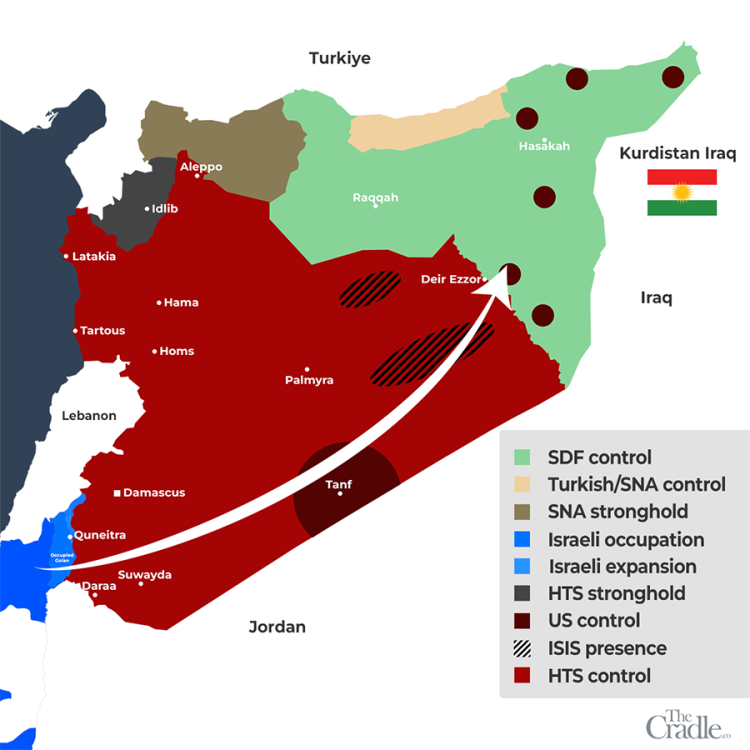
A map of the proposed David’s Corridor
A corridor of influence, not infrastructure
From Tel Aviv’s perspective, southern Syria is now a strategic vacuum: Syria’s army is weakened, Turkiye is entangled in its own Kurdish dilemmas, and Iran is overstretched. This power void offers fertile ground for Israel to assert dominance, particularly if regional dynamics continue to favor decentralized, weak governance.
Despite Washington’s reduced military footprint, the US remains committed to containing Iran. Key outposts like the Al-Tanf base on the Syrian–Iraqi border are instrumental in severing the so-called Iranian land bridge from Tehran to Beirut.
Nicola argues that while David’s Corridor is not an explicit US policy, Washington is likely to support Israeli initiatives that align with American strategic goals:
“The United States does not mind Israel implementing the project if it serves its interests, even though it is not part of its immediate strategy. It focuses on reducing Iran’s influence and dismantling its nuclear program, while supporting the path of regional normalization with Tel Aviv.”
The 2020 Abraham Accords, by easing Israel’s diplomatic isolation, have created additional maneuvering space. David’s Corridor – once a fantasy – now appears more plausible amid the regional flux.
Israeli leaders have sent unmistakable signals. On 23 February, Israeli Prime Minister Benjamin Netanyahu rejected any Syrian military presence south of Damascus, insisting on demilitarized zones in Quneitra, Deraa, and Suwayda under the pretext of protecting Syria’s Druze minority.
Israeli Foreign Minister Gideon Saar openly advocated for a federal Syria – a euphemism for fragmentation. Defense Minister Israel Katz vowed that Israeli troops would remain indefinitely in Mount Hermon and the Golan, and called for the dismantling of Syria into federal entities. Media leaks of corridor maps have only fueled speculation.
These moves have triggered outrage in southern Syria, with protests erupting in Khan Arnaba, Quneitra, Nawa, Busra al-Sham, and Suwayda. Yet, as Nicola notes, the new Syrian leadership appears remarkably disinterested in confronting Israel, and Arab states remain largely indifferent, even as the project edges toward realization. Turkiye, by contrast, stands firmly opposed to any Kurdish-led partition of Syria.
Geopolitical stakes and final frontiers
Ultimately, David’s Corridor signals a broader Israeli project to reengineer Syria’s geopolitics: isolate the south militarily, bind the Kurds in alliance, shift the balance of power, and carve a corridor of influence through fractured terrain.
Israel’s objectives are layered. Militarily, the corridor provides strategic depth and disrupts Iran’s land routes to Hezbollah. It enables the flow of arms and intelligence support to allies, especially Kurdish forces.
Economically, it opens a potential oil pipeline from Kirkuk or Erbil – Kurdish-majority, oil-rich areas – to Haifa, bypassing Turkish routes and maritime threats from actors like Yemen’s Ansarallah-allied army. Politically, it solidifies Israeli–Kurdish ties, undermines Syrian and Iraqi sovereignty, and advances the vision of Greater Israel, with the Euphrates as a symbolic frontier.
Yet the corridor is not without risk. It threatens to deepen the region’s instability, antagonize Syria, Turkiye, Iran, and Iraq, and trigger new fronts of resistance. Whether Israel can realize this project depends on the fluid regional calculus and its ability to maneuver within it.
David’s Corridor may still be a project in the shadows – but its implications are already casting a long one across the region.
US-Sponsored White Helmets: Al-Qaeda Offshoot Loses USAID Funding
By Ekaterina Blinova – Sputnik – March 28, 2025
The Trump administration has halted the flow of millions of US tax dollars to the White Helmets, a controversial Syrian group. What did they do and who benefitted?
The group staged false flag chemical attacks to provoke the West’s retaliation against then Syrian government. At least 40 White Helmets members admitted to staging attacks in the country, according to Russia’s Foundation for the Study of Democracy.
In 2016, the White Helmets used five-year-old Omran as a propaganda tool during the Syrian Army’s siege of Aleppo. A viral photo of him covered in dust and blood aimed to smear Damascus and its Russian allies. In 2017, his father revealed it was staged.
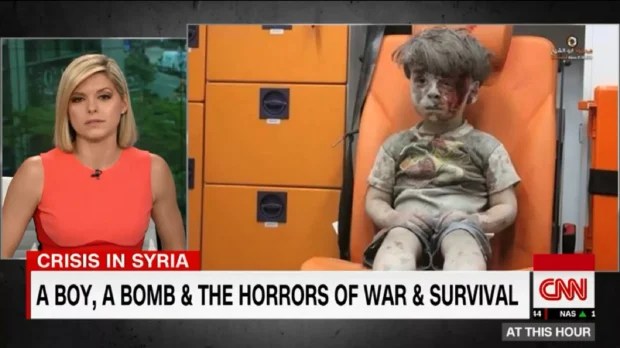
CNN anchor Kate Bolduan chokes up after Omran Daqneesh, 5, was injured in an alleged airstrike. The boy’s father came out in support of Assad and criticized rebel groups for using his son’s image as propaganda in June 2017. © CNN / Screenshot
White Helmets filmed a false flag attack in rebel-controlled Douma in April 2018. Russian media verified testimony from multiple eyewitnesses saying the attack was staged. However, the Western coalition used it as a pretext for strikes on Syria.
Witness testimonies claim White Helmet members were not humanitarian volunteers but armed militants who recruited others and threatened them with death if they disobeyed.
As the Syrian Army advanced in July 2018, around 429 White Helmets were hastily evacuated through Israel to Western countries, according to Syria’s then-Permanent Representative to the UN Bashar al-Jaafari.
Who Founded the White Helmets, and How Was It Linked to Al-Qaeda?
The White Helmets (Syrian Civil Defense) were founded in 2013 amid the Syrian civil war. James Le Mesurier, a former British Army officer and intelligence operative with ties to terrorist organizations, established the group and funded it through Mayday Rescue.
Posing as a rescue organization in jihadist-controlled areas, the White Helmets were soon exposed as a front for al-Qaeda by independent researchers Vanessa Beeley (UK) and Eva Bartlett (Canada), as well as eyewitnesses and verified photo and video evidence.
Speaking to the Russian press in 2019, then-President Bashar al-Assad stressed there is enough evidence to identify former and current al-Qaeda members in the White Helmets ranks.
How Much Funding Did They Receive and From Whom?
In 2019, Le Mesurier died under suspicious circumstances in Istanbul after being exposed for fraud. By then, around $129 million in taxpayer money from Germany, the UK, the Netherlands, and other nations had been funneled to the White Helmets via Mayday Rescue alone.
As of 2018, the US had contributed about one-third of the group’s total funding, according to the Atlantic Council, providing around $33 million between 2013 and 2018.
The UK reportedly funneled $50 million to the White Helmets during the same period, while the Netherlands contributed $13.4 million. Funding dropped to $12 million in 2018 amid Mayday fraud allegations.
Despite this, CNN calls USAID the White Helmets’ largest donor for nearly a decade. The Trump administration recently terminated a $30 million USAID contract for the group.
White House cuts off funding for White Helmets – CNN
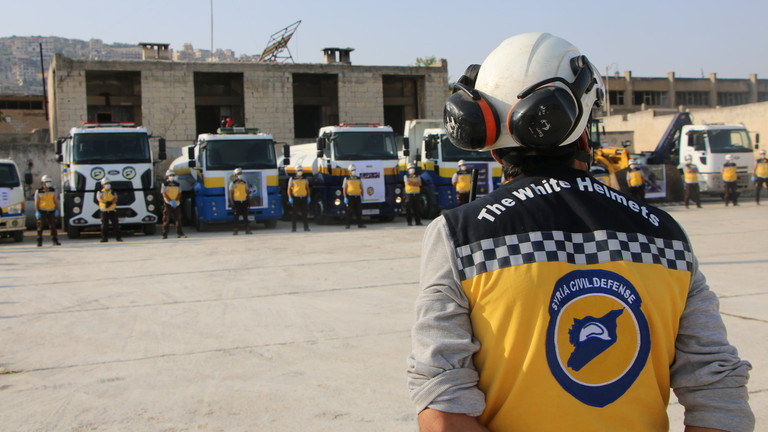
Members of the Syrian Civil Defence (White Helmets) in Idlib, Syria. © Anadolu Agency via Getty Images
RT | March 28, 2025
The administration of US President Donald Trump has cut off most of the funding Washington had been providing to the controversial ‘White Helmets’ volunteer organization in Syria, CNN reported on Thursday, citing internal documents and the organization.
The Syrian Civil Defense, popularly known as the White Helmets, was created in 2014 at the height of the country’s civil war, and billed itself as a volunteer rescue force dedicated to helping civilians injured by the government of former President Bashar Assad. It received funding from Western governments.
During the protracted struggle, the White Helmets were praised in the Western media as heroes. Extensive evidence, however, suggests that at least some of its media content was staged. On several occasions, members of the group were filmed participating in apparent executions by jihadists.
Its US Agency for International Development (USAID) funding has been terminated as part of the Trump administration’s broader curtailing of foreign aid contracts. The spending cuts affect programs related to firefighting, search and rescue, and so-called “community resilience” work, according to the outlet. Despite ongoing scrutiny of the group’s activities and affiliations, a smaller contract from the US State Department to fund what is described as “accountability work” reportedly remains in place.
In a letter to Congress, a USAID official said 5,341 awards had been terminated as of March 21, including a nearly $30 million White Helmets contract that began in February 2023, CNN said. Some of the funds have already been spent. A separate $1.4 million State Department contract reportedly remains active.
Upon taking office, Trump suspended most US foreign aid for a three-month review to assess its alignment with his “America First” agenda, freezing tens of billions in USAID-approved grants.
Farouq Habib, the deputy general manager of the organization, told CNN that the White Helmets have had a “great partnership” with USAID – the NGO’s major backer for nearly a decade. According to him, US support during Syria’s transition following Assad’s ouster is very important “in the absence of a functional, strong government.”
The White Helmets, co-founded by the late British mercenary and presumed former intelligence officer James Le Mesurier, rose to international notoriety amid the years-long conflict in Syria.
During the war, the group operated exclusively in areas controlled by assorted jihadist groups opposing Assad’s government. The White Helmets have allegedly been involved in multiple false flag ‘chemical incidents’, which it blamed on government troops. These were used by Western nations to justify strikes against the Syrian military and its allies.
Featured Video
Prof. Ted Postol: Iran Already Achieved Nuclear Deterrence Against Israel
or go to
Aletho News Archives – Video-Images
From the Archives
How the occupied mentality syndrome works
Saudi Arabia on the American chessboard – Part 3
By B. J. Sabri | American Herald Tribune | June 27, 2016
Read part 2: “The occupied mentality Syndrome“
Previously I argued whether Saudi Arabia’s repeated involvements in U.S. interventions and wars stem from free national will or in response to a specific condition. For starters, in Saudi Arabia there is no national will. In Saudi Arabia, the national will is the will of the Al Saud clan. Still, when a major Arab state allies itself with a superpower that committed unspeakable crimes against humanity in almost every Arab country, then something is wrong. This fact alone should compel us to examine the U.S.-Saudi relation for one exceptional reason. As a result of the U.S.-Saudi wars, hundreds of thousands of people in Afghanistan, Iraq, Iran, Libya, Syria, Yemen, and Somalia have lost their lives. Millions became displaced in their own homelands. And millions more rendered refugees.
Attributing the Saudi policies to the bonds of “partnership” with the U.S. is frivolous. There are no bonds between these two thugs except those of business, military deals, secret plots, and wars. Proving this point, bonds such as these have no space for the American and Saudi peoples to share significant cultural or societal exchanges. If partnership is not the reason for the Saudi contribution to the U.S. strategy of empire and imperialism, then another reason must exist.
This leads to three possibilities. … continue
Blog Roll
 Aletho News
- Hezbollah hits Israeli warship off Lebanon’s coast, sets it aflame
- Iran slams US strikes on B1 bridge, Mahshahr petrochemical plants as ‘blatant acts of state terrorism’
- In letter to UN chief, Araghchi warns of dire consequences of US-Israeli attacks on Iran’s nuclear facilities
- Why the CIA conspiracy to invade Iran with Kurdish militias failed
- Why Are Upbeat US Claims About Mission to Rescue Pilot ‘Highly Questionable’?
- Aircraft destroyed during US ‘rescue’ of downed F-15 pilot cost more than $100 million each
- Washington University removes professor who condemned US-Israeli war on Iran
- Russia Warns of Retaliation as UK Authorizes Seizure of Vessels
- Serbia thwarts plot to bomb Russia-Hungary gas pipeline – Vucic
- Al Mayadeen voices solidarity with Dr. Marandi amid death threats
- If Americans Knew
- In Iran, Israel-US take aim at “reason, research, and freedom of thought” – Daily Update
- US loses planes over Iran, Israel downgrades Lebanon war goals – Daily Update
- Israel Is Blocking Palestinians from Easter at Church Where Jesus Resurrected
- Plot to assassinate Palestinian activist follows harassment campaign promoted by Zionist groups and elected officials
- Prominent New York synagogue hosts presentation on why U.S. Jews should support the ethnic cleansing of Gaza
- Tapper vs. Piker: Is the CNN Anchor Auditioning for David Ellison?
- Shouldn’t Democrats Be Able to Condemn Genocide?
- Israel-US kill negotiators, destroy civilian structures, but Iran’s military capabilities still largely intact – Daily Update
- ‘War crime’: Global condemnation as Israeli ministers celebrate death penalty law targeting Palestinian prisoners
- 7 Ways Israel Is Turning Lebanon Into Gaza
- No Tricks Zone
- An Inconvenient Tree: Uncovered In Alps… Europe Much Warmer Than Today 6000 Years Ago
- New Study Reports A 60% Slowdown In Greenland’s Ice Loss Rate In The Last Decade
- Low Intensity Tornado Wrecks Major Solar Farm, Creating A Potential Toxic Dump
- New Study Finds Warming Saves Lives…Cold Temperatures 12 Times More Deadly Than Excess Heat
- German Science Blog Accuses PIK Climate Institute Of Hallucinating Climate Tipping Points
- Devastating Assessment Of Comirnaty Vaccine By Former Senior Pfizer Europe Toxicologist
- New Study: CO2 Is ‘Effectively Negligible’ As An Explanatory Climate Change Factor Since 2000
- Former Pfizer Toxicologist Dr. Helmut Sterz Tells Bundestag Hearing Pfizer Vaccine Should Have Never Been Approved
- Energy Expert: Germany’s Nuclear Phaseout Was A “500 Billion Euro Mistake”
- New Research: South Australia’s Mid-Holocene Sea Surface Temperatures Were 4°C Warmer Than Today
 Aletho News