The Bab al Hawa Deception
Syria Support Movement | July 17, 2022
On July 12, the UN Security Council extended the authorization for humanitarian aid to cross through Bab al Hawa on the Turkey-Syria border for another six months. The US and allies had wanted a one-year extension, but Russia vetoed it. The US, UK and France abstained on the six-month approval, while all others supported it.
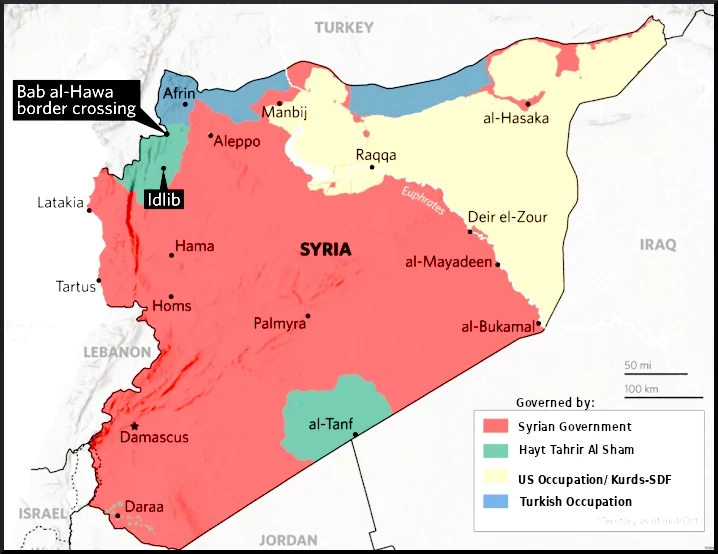
There is much misinformation and deceit about the Bab al Hawa crossing in Idlib province, Syria. First, Western media rarely mention that after the aid crosses the border, it is effectively controlled by Syria’s version of Al Qaeda, Hayat Tahrir al Sham (HTS). Second, they fail to explain that HTS hoards much of the aid for its fighters. When Aleppo was liberated by the Syrian Army, reporters found large stashes of medicines and food in their headquarters that were set aside for the use of the militia. Third, HTS makes millions of dollars by taxing the aid that it distributes to the rest of the population under its control.
In May 2018, HTS was added to the US State Department’s list as a Foreign Terrorist Organization (FTO). HTS’s 15000 fighters are able to manipulate the numbers by including their names and the names of their accompanying families as civilians, thus receiving huge amounts of aid from UN agencies such as the World Food Program. It is rarely mentioned that thousands of these civilians are not Syrian. They are Uyghurs and Turkmen supporters of Al Qaeda, from Turkey, China and elsewhere.
The Bab al Hawa crossing is also an entry point for weapons and sectarian fighters smuggled in with the copious aid. This is not new. In 2014, legendary journalist Serena Shim reported how she witnessed fighters and weapons entering Syria using World Food Organization trucks at Bab al Hawa. She was killed in Turkey two days after her report.
It is claimed over 4 million persons are in Idlib. That is a huge exaggeration. Before the conflict began in 2011 there were 1.5 million. When sectarian militants seized control, many civilians fled for Aleppo or Latakia. Even including fighters coming from other areas, the population is much LESS than before the conflict. The number of civilians in Idlib is grossly inflated for political and economic reasons.
The media also fail to mention that the aid across Bab al Hawa serves only the Al Qaeda-controlled area (the northern green section of the map) and not the rest of Syria. While western states send massive amounts of aid to this minority, the vast majority of Syrians suffer with little aid. Moreover, they are under the extreme US “Caesar” sanctions designed by the US to crush the economy by outlawing the Syrian Central Bank, make it impossible for Syrians to rebuild infrastructure, and punish Syrians and anyone who would trade or assist them.
Russian, Chinese and other representatives on the UN Security Council have pointed out that aid to Syria should be going through the UN recognized government in Damascus. Aid to civilians in Idlib should be distributed via the Syrian Red Crescent or a comparable neutral organization.
Providing aid through Bab al Hawa via hostile Turkey to an officially designated terrorist organization should be prohibited. It is a clear violation of Syrian sovereignty. In December 2022, when the authorization again comes to a UN Security Council vote, the crossing may finally be shut down. At that point, the legitimate aid to civilians in Idlib province can be delivered from within Syria as it should be.
US is Trying to Drive Erdogan into a Corner – but Without Success
By Vladimir Platov – New Eastern Outlook – 23.07.2022
Joe Biden’s administration is currently losing on all its foreign policy fronts, but he is still hoping for success, if nowhere else, in his confrontation with the Turkish leader Recep Erdoğan, so that he can demonstrate to the world and the US public, that there is still some “gunpowder left in the barrel.” This consideration took on a special importance for Joe Biden and his team in the days leading up to the US President’s Middle East trip, which promised little chance of victory for the White House. Joe Biden’s trip to Saudi Arabia did, in fact, turn out to be a total failure – it did nothing to improve his image and yielded no positive results either in terms of oil deals or in terms of reining in Russia’s influence in the region. In view of this failure, Washington needed to find a scapegoat, and picked on Recep Erdoğan.
The White House has realized that getting rid of the Turkish president, as it had hoped, is not going to be an easy matter, and has therefore stepped up its machinations in a bid to entrap him. One of its tactics was to inflame tensions between Turkey and Greece in the Eastern Mediterranean. Relations between the two countries are not easy at the moment, given Turkey’s demands for Athens to demilitarize certain Aegean islands near the Turkish border and its challenges to Greece’s sovereignty over these islands. At the end of June Recep Erdoğan took the rather undiplomatic approach of publishing threatening tweets in Greek, demanding that Greece give up its territorial claims in the Aegean Sea, and referring to the 1919-1922 war between the two countries: “We warn Greece once more to avoid dreams, statements and actions that will lead to regret, as it did a century ago… .” He also warned Turkey will “not hesitate to enact rights recognized by international agreements on the demilitarization of the islands.” In a later tweet he accused Greece of “oppressing” the Turkish minorities in Western Thrace, Rhodes, and Kos, and supporting international terrorism, a reference to Athens’ relations with the Kurds. Greece, in turn, accuses Turkey of violating Greek airspace, and of carrying out illegal hydrocarbon exploration activities off the coast of Cyprus – a region that, Greece claims, falls within its exclusive economic area.
Over the last 200 years there have been numerous wars between Greece and Turkey – the Greek War of Independence in 1821-1829, and subsequent conflicts in 1897, 1912–1913, 1919–1922, and, in Cyprus, 1974. But Greece was only able to win with support from powerful allies, including Russia. Currently, however, as one of the key supporters of the West’s sanctions against Russia, Greece cannot rely on support from Moscow. Athens is unlikely to get much support from the US either, as recent years have seen a marked shift in Washington’s attitude to its vassal states and even to its obligations under international agreements. Washington’s recent decision to support Greece rather than Turkey in the Eastern Mediterranean region is a striking example of such a change.
As for the relative strengths of the Greek and Turkish militaries, here Athens clearly lags behind Istanbul – the Greek army may be large, but due to lack of funding its weaponry is very out of date and its troops are poorly trained. Turkey, on the other hand, has the second most powerful military in NATO, after the US.
The standoff between Greece and Turkey, both members of NATO, has been going on for a long time, but it has intensified in recent years as relations between Washington and Turkey have deteriorated and Greece has replaced Turkey as the main US ally in the region. The new military alliance in the Eastern Mediterranean was recently formalized by an agreement between the two countries on long-term military support, under which Greece will host additional four US military bases.
Washington was perhaps hoping that the heightened tensions with Greece will encourage domestic opposition to Recep Erdoğan’s policies, but the effect has in fact been quite the opposite – the Turkish public have rallied round their president. On June 20 the Turkish opposition newspaper Cumhuriyet published an article by Mehmet Ali Guler, calling on Turkey to “sever ties with NATO” and looking at how its departure from the alliance might affect the balance of powers in the region. And, according to the Greek newspaper Vima, citing an interview with the commentator Erdoğan Karakuş for the Turkish television channel Haber Global, there have even been belligerent calls within Turkey for the country to “attack the US” if the latter were to provide assistance to Greece.
Well aware of Turkey’s need to update its Air Force, Washington is making use of the situation to put pressure on Ankara. Thus, even though following the meeting between Joe Biden and Recep Erdoğan in Madrid earlier this year Congress approved the supply of F-16 fighter jets to Turkey, Washington has recently made the supply conditional on Turkey demonstrating its willingness to toe the White House policy line. First, a group of US Congressmen signed a statement objecting to the sale of the jets to Turkey. And then Washington required Ankara to break off its relations with Russia as a precondition for the supply of the jets. It appears that the US is only ready to sell its military hardware to countries that share its values. According to a report from the Greek press agency AMNA, that was the stance taken by Senator Robert Menendez, Chair of the US Senate’s Foreign Relations Committee.
The US House of Representatives has also obstructed the sale, by approving an amendment to the defense budget preventing the US from transferring the jets to Turkey unless the Turkish government guarantees that they will not be used in order to violate Greek airspace.
In response to these moves, Turkey reiterated its support for Recep Erdoğan’s policies, making no secret of the fact that anti-American sentiments are growing in the country. For example, according to the Turkish newspaper Aydınlık, Doğu Perinçek, President of the Vatan Partisi, or Patriotic Party, called on the Turkish government to cancel its order for the F-16s on national security grounds.
Given the above background, it is interesting to speculate about the content of the private meeting between Recep Erdoğan and Russian President Vladimir Putin on July 19. Especially since Russian military aircraft have demonstrated their clear superiority of US jets both in Syria and in Ukraine. Moreover, Turkey and Russia have in recent months been stepping up their cooperation on defense industry projects, and, in an interview published in Turkey’s Milliyet newspaper last December, Ismail Demir, President of Turkey’s Defense Industries, stated that the two countries may work together on the development of Turkish TF-X jets. Unlike the US, Russia will not impose any conditions on Turkey that go against its interests, nor will it push the Turkish Air Force into a corner by refusing to service its aircraft when Turkey most needs them, as the US is quite capable of doing should its strategic interests so require.
Russia, Iran and Turkey agree the US troops must leave Syria
By Steven Sahiounie | MIDEAST DISCOURSE | July 20, 2022
President Recep Tayyip Erdogan of Turkey, President Vladimir Putin of Russia, and President Ebrahim Raisi of Iran held talks yesterday in Tehran at the 7th Astana summit for peace in Syria, stressing the need for respecting Syria’s national sovereignty and territorial integrity.
The summits date from January 2017, and are named for the Kazakhstan capital they were first held at. The trio of leaders decided the next meeting will be held in Moscow before the end of the year.
The Syrian Foreign Minister, Faisal Mekdad, arrived in Tehran late on Tuesday to be briefed about the latest decisions following the meeting of the presidents.
The joint conclusions
Many important issues were discussed by the trio concerning the situation in Syria, which has developed into a stalemate. Global media has stopped covering Syria since 2019 when the battlefields went silent, but a political solution has been elusive.
One point that Turkey, Russia and Iran agreed upon was the need for the US occupation troops to leave Syria, and their unified opposition to the Biden administration policy in Syria, which includes the need to lift US sanctions on Syria which are oppressing the Syrian people.
“We have certain differences concerning what is happening on the Euphrates eastern bank. But we have a shared position that American troops must leave this territory,” Putin said while adding, “They must stop robbing the Syrian state, Syrian people, illegally exporting oil from there.”
The trio affirmed that there was “no military solution” to the conflict in Syria, and agreed on the need to eliminate terrorism and opposed any attempts to divide the country.
The three leaders also jointly condemned Israel’s ongoing attacks on civilian targets in Syria, and agreed that the crisis in Syria could only be resolved peacefully and by the Syrians themselves.
Raisi said, “The international community bears the responsibility to solve the crisis of the displaced and Syrian refugees, and we will support any initiative to do so.”
The Turkish position
For at least two months, Erdogan has threatened to conduct a fourth military invasion into northern Syria. Analysts had thought the summit would be used by Iran and Russia to convince Turkey a new attack on the US-sponsored SDF in the northeastern Kurdish region would be a destabilizing event for the region. It appears that Turkey was able to get assurances from Iran and Russia that the SDF would not present a border terrorist threat to Turkey.
The US, Russia and Iran had all shared the view that Turkey should not begin a new military attack in northern Syria.
Turkey and US are NATO members and had been allies. But, the US chose to partner with the SDF, who are a separatist group in Syria led by Kurds who are following a socialist political ideology based on the communist framework of the PKK, an internationally outlawed terrorist group who have killed thousands in Turkey over three decades.
The trio agreed that terrorism must be eradicated everywhere, and there cannot be “good terrorists” who are used by the US, while others are deemed “bad terrorists” such as ISIS and Al Qaeda.
US President Obama began the US-NATO attack on Syria in 2011 for ‘regime change’. He failed. The US used the Muslim Brotherhood in the Middle East, as well as global Al Qaeda branches which were transported into northern Syria from their base in southern Turkey, were the CIA operated a terrorist headquarters which was finally shut down in 2017 by President Trump.
Erdogan is a Muslim Brotherhood follower, and his AKP party is aligned with the international terrorist group banned in Egypt, Russia, Syria, Saudi Arabia and the UAE.
The US position
The Biden administration has made no changes to US policy in Syria since taking office. The US is not present in any Syrian peace talks. Obama started the destruction in Syria, but Biden is not offering any solution. The US sanctions have prevented any reconstruction from beginning, and the Syrian people have been struggling under hyper-inflation, with no end in sight.
Russia, Turkey and Iran agreed the US-EU sanctions should be lifted and described them as being “in contravention of international law, international humanitarian law and the UN Charter including, among other things, any discriminatory measures through waivers for certain regions which could lead to this country’s disintegration by assisting separatist agendas.”
Trump had ordered the withdrawal of US troops from Syria, but the Pentagon insisted that they stay in support of the SDF who steal the oil from the main oil field in Syria and sell the oil to support their socialist administration. That oil is the property of Syria, and because they are refused access to the oil, the Syrian people live with just two hours of electricity per day.
Damascus considers the US troops in Syria as a military occupation force which destabilizes the country and is against the UN charter and international law.
US raids on terrorists in Idlib
Idlib is the last remaining terrorist controlled area in Syria. Hayat Tahrir al-Sham is the Radical Islamic terrorist group who keep about three million persons as human hostages. Turkey protects the terrorists and keeps Russian and Syrian military from attacking Idlib, while the UN and other humanitarian groups keep the terrorists, their families, and civilians fed. The US has also been very vocal and has accused the Syrian and Russian military for attacking terrorists in Idlib.
In a double-faced US policy in Idlib, the US has continued to kill ISIS leaders in Idlib, including the first assassination of the ISIS Calipha Baghdadi ordered by Trump. Since then, another five ISIS leaders have been killed by the US in Idlib. The US know that the terrorists in control in Idlib are allies of ISIS, and yet the US policy is to protect Idlib from being cleared of terrorists.
In 2015, Russia was asked to enter Syria as the Al Qaeda affiliate Jibhat al-Nusra was threatening to create an Islamic State in Syria. Putin recalled at the summit, “We broke the backbone of international terrorism there.”
Grain crisis discussion
Putin and Erdogan discussed the supply of grain from Russia and Ukraine to world markets. Putin thanked Erdogan for his efforts “to mediate by providing Turkey with a platform for negotiating food issues and grain exports across the Black Sea.” Putin called on the US to lift all restrictions on grain exports from Russia to improve the global food market situation.
Erdogan has been leading efforts to broker a deal to allow thousands of tons of grain that is being blockaded by Russia to leave Ukraine’s ports. Turkey has responsibility under the 1936 Montreux convention for naval traffic entering the Black Sea, and is proposing that Russia allow Ukrainian grain ships to leave Odesa on designated routes.
Steven Sahiounie is a journalist and political commentator.
Putin tells US to stop ‘looting’ Syria
Samizdat | July 19, 2022
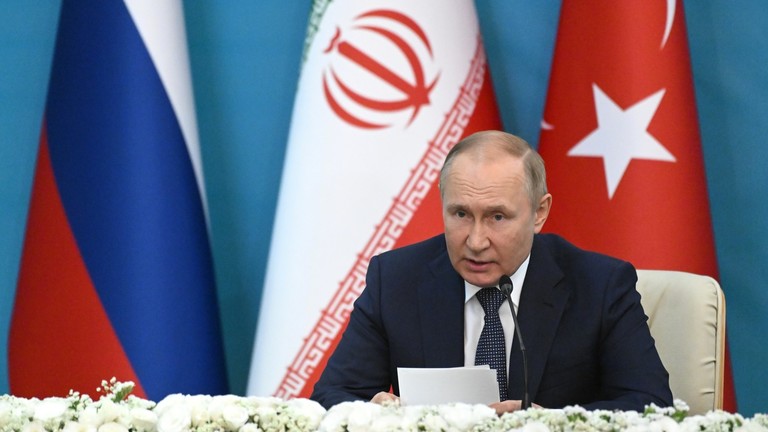
The US needs to stop “stealing” the oil from the Syrian people and state, Russian President Vladimir Putin said on Tuesday, after meeting with his Iranian and Turkish counterparts in Tehran. The three guarantors of the “Astana process” also agreed that the US should leave the trans-Euphrates, and stop making the humanitarian crisis in Syria worse with their unilateral sanctions.
American troops must leave the territory east of the Euphrates river and “stop robbing the Syrian state, the Syrian people, exporting oil illegally,” Putin told reporters on Tuesday evening. He said this was a “common position” of Russia, Iran and Turkey.
Several hundred US troops are illegally present in Syria, mainly controlling the oil wells and wheatfields in the country’s northeast, controlled by the Syrian Democratic Forces (SDF) militia since the defeat of Islamic State (IS, formerly ISIS) terrorists. The US-backed SDF has refused to reintegrate with the government in Damascus, which Washington wishes to see overthrown.
Since 2019, the US has sought to punish anyone trying to assist the reconstruction of war-torn Syria via the “Caesar Syria Civilian Protection Act,” accusing the government of President Bashar Assad of war crimes and blocking all assistance to Damascus.
Putin said on Tuesday that such sanctions have had “disastrous results” and that humanitarian aid to Syria “should not be politicized.”
During Tuesday’s summit in Tehran, Putin met with Iranian President Ebrahim Raisi and Turkey’s Recep Tayyip Erdogan. In a joint declaration, the three presidents confirmed their conviction that “there can be no military solution to the Syrian conflict,” only a political one under the leadership of the UN. They also condemned “unilateral sanctions violating international law” that are exacerbating the serious humanitarian situation in Syria, urging the UN and other international organizations to “increase assistance to all Syrians, without discrimination, politicization and preconditions.”
Russia sent an expeditionary force to Syria in September 2015, at the request of Damascus, to help defeat IS and other terrorist groups. In January 2017, Moscow, Ankara and Tehran launched the “Astana process” – named after the capital of Kazakhstan – to resolve the conflict in Syria, which began in 2011.
US sponsored Kurdish SDF calls on Russia and Iran to prevent planned Turkish military operation
MEMO | July 17, 2022
The head of the Kurdish-led militant group Syrian Democratic Forces (SDF) has called on Russia and Iran to help prevent Turkiye from launching a military offensive against its positions in northern Syria, as the threat of a new Turkish operation continues to loom.
According to the AFP news agency, the SDF’s chief commander Mazloum Abdi urged the involvement of Moscow and Tehran against Ankara’s aims in the region this week, accusing the US-led global coalition to defeat Daesh – also known as Operation Inherent Resolve – of taking a “weak” position that is “insufficient to end the threats.”
In May, Turkish president Recep Tayyip Erdogan announced plans to launch a new military operation into the areas controlled by the Kurdish militias, which would be Turkey’s fourth such offensive in northern Syria. The operation is meant as an effort to clear the 30-kilometre-deep ‘safe zone’ in northern Syria from remaining Kurdish militant elements, in order to settle at least a million Syrian refugees there.
Abdi also reiterated that after negotiating with Russia, Kurdish militant forces allowed the Syrian regime of Bashar al-Assad to reinforce their troops in Kurdish-controlled areas, particularly in cities such as Kobane and Manbij in the north of the country. The threat of a renewed Turkish offensive had seemingly forced the SDF to strengthen ties with Assad, Russia, and now Iranian forces in an effort to repel Ankara’s planned operation.
Abdi’s call for Russian and Iranian assistance is likely more diplomatic than military, as it comes only days before a summit that is to be held in Iran from Tuesday, in which Iranian president Ebrahim Raisi will host Erdogan and their Russian counterpart Vladimir Putin in a renewed set of negotiations on Syria and the ongoing 11-year-long conflict.
If Moscow and Tehran heed the SDF’s call, they may be expected to attempt to discourage Ankara from its planned military operation.
Putin’s summits next week will strengthen ties with Iran, Turkey
BY M. K. BHADRAKUMAR | INDIAN PUNCHLINE | JULY 14, 2022
Kremlin spokesman Dmitry Peskov announced in Moscow on Tuesday that President Vladimir Putin will travel to Tehran on July 19, to take part in a tripartite meeting with his Iranian and Turkish counterparts as part of the Astana peace process to end the war in Syria as well as hold a bilateral meeting with Turkish President Recep Erdogan.
Such a summit was long expected but the pandemic and the Ukraine conflict delayed matters. The current impasse in Syria is fraught with risks. Turkey has plans to launch another military incursion into Syria’s northern border regions that are under the control of Kurdish groups, who, Ankara alleges, are linked to the separatist PKK and also happen to be Pentagon’s inseparable allies.
Damascus, Moscow and Tehran — and Washington — disfavour the Turkish move as potentially destabilising, but Erdogan is keeping plans in a state of suspended animation, while tactfully dialling down the threatening rhetoric and acknowledging he’s “in no rush.”
For want of green lights from its Astana partners, presumably, Erdogan is unlikely to launch the military incursion, but Russia and Iran are wary that the incursion could complicate their presence and political influence in Syria and risk confrontation between Turkish troops and Syrian government forces.
However, Syria apart, Putin’s trip has much wider ramifications. What transpires in his bilateral meetings with Erdogan and Iranian leaders are certainly the more important templates to watch. Clearly, Turkey and Iran are emerging as two of the most consequential relationships of Russian foreign policies and diplomacy. And Putin’s visit comes at a highly transformative period in the US’ approach toward both Turkey and Iran.
Erdogan’s hopes of a rapprochement with the US have been dashed as Greek Prime Minister Kyriakos Mitsotakis told reporters on June 30 that Athens had submitted a letter of request “in recent days” to the US government for a squadron of 20 F-35s, with options to buy an additional squadron. The Greek announcement came just a day after President Joe Biden had assured Erdogan on the sidelines of the NATO summit in Madrid that he backed the latter’s pending request for F-16s to Turkey.
Erdogan should have known that Biden’s long, successful career has been inextricably linked with the powerful Greek lobby in America, which is a big source of election funding for aspiring politicians. Therefore, Greece’s F-35 deal is certain to be approved and it could further drive a wedge between the already strained relationship of the US and Turkey — and will only reinforce Ankara’s suspicion that Washington is using Greece as a pawn to control Turkey. Conceivably, the deal could change the military balance in the Eastern Mediterranean, taking into account Greece’s alliance with Cyprus and Israel as well.
Suffice to say, Putin’s conversation with Erdogan comes at a time of uncertainties in Turkish-American relations. In immediate terms, therefore, the circumstances are most conducive for establishing a Black Sea naval corridor to export grain from Ukraine. There is a strategic convergence between Moscow’s keenness to prove it has not caused the global grain crisis, and Turkey’s desire to project its strategic autonomy, although a NATO member country.
Turkish defence minister Akar announced on July 13 that a consensus has been reached on the establishment of a coordination centre in Istanbul with the participation of all the parties, and the Russian and Ukrainian sides also agreed on joint control of the ships in both entering and exiting the ports as well as on maritime security. It is a signal victory for Turkish mediation. In the process, we may trust the strong relationship between Erdogan and Putin to harness fresh energy for deepening Turkish-Russian political-economic relations. Turkey has a unique role to play, as Moscow navigates its way around the western sanctions.
Equally, Putin’s talks with the Iranian leadership also have a big geopolitical setting. US President Joe Biden will have just finished his trip to Saudi Arabia, an event that impacts Iran’s core interests at a crucial juncture when the nuclear negotiations are adrift and Teheran-Riyadh normalisation talks have made progress.
US National Security Advisor Jack Sullivan’s theatrical disclosure on Monday of Iran supplying “several hundred UAVs, including weapons-capable UAVs on an expedited timeline” and of Russian personnel undergoing training in Iran in this connection, etc. appear to have been timed carefully.
The important thing to be noted here is that Sullivan’s story overlaps secret parleys reportedly between Riyadh and Jerusalem on defence technology exchanges, specifically related to Saudi concerns about Iranian drones!
Furthermore, Sullivan’s loose talk comes against the backdrop of the announcement by Israel last month of the formation of a mutual air defence coalition that is expected to involve, among others, the UAE and Saudi Arabia.
To be sure, Sullivan’s revelation right before Biden’s trip to Riyadh comes with a political aspect, as it puts pressure on Saudi Arabia to rethink both its blossoming relationship with Russia as well as its normalisation talks with Iran.
Moscow understands that Biden’s primary purpose in the Middle eastern tour is to put together a front against Russia and China. Indeed, Biden wrote in an op-Ed in the Washington Post last week on his Middle East tour, “We need to counter Russian aggression, be in a better position to win the competition with China, and work to strengthen stability in an important region of the world. To do this, we need to interact directly with countries that can influence the results of such work. Saudi Arabia is one of those countries.”
Biden hopes to bring Saudi Arabia into some sort of format with Israel beneath an overarching binding strategic defence cooperation pact that goes beyond anything the US has agreed to before. This, inevitably, requires the demonising of Iran as a common threat. Simply put, Biden is reviving a failed American strategy — namely, organising the region around the goal of isolating and containing Iran.
Indeed, if history is any guide, Biden’s idea of creating a collective security system is doomed to fail. Such attempts previously met with fierce resistance from regional states. Also, Russia has certain advantages here, having pursued a diplomacy with the regional states that is firmly anchored in mutual respect and mutual benefit, and predictability and reliability. During Foreign Minister Sergey Lavrov’s recent visit to Saudi Arabia, a certain understanding was reached, which Riyadh is unlikely to disown.
Indeed, Saudi Arabia and Russia have a convergence of interests with regard to the oil market. At any rate, expert opinion is that both Saudi Arabia and the UAE have very limited spare capacity. The expectation is that Saudi Arabia will most likely agree to loosen the oil taps on the back of the Biden visit, but the leadership will still strive to find a way to do it within the context of the current OPEC+ agreement (with Russia) that extends through December by, say, compensating for the production underperformance of struggling OPEC states such as Nigeria and Angola. (The OPEC+ capacity is already well below the level implied in the agreement.)
Fundamentally, as the executive president of Quincy Institute Trita Parsi noted recently, “any reduction in tensions between Saudi Arabia and Iran is a threat to the durability of the Abraham Accords… That means in order for Israel and Saudi Arabia and the UAE to continue to have enough strategic incentives to collaborate and have relations and all jointly forget about Palestinian suffering, there needs to be a threat from Iran. Otherwise the whole house of cards falls apart.”
Iran understands that the JCPOA talks are neither dead nor alive but in a comatose state, which may perish soon unless salvaged — depending on the degree of success or failure of Biden’s talks in Saudi Arabia. But all signs are that Tehran is pressing the pedal on strengthening the ties with Moscow. Its SCO membership is through, while it is now seeking BRICS membership. The compass for Iran’s foreign policy trajectory is set. Surely, from such a perspective, Putin has a lot to discuss in Tehran with the Iranian leadership as the new world order is taking shape.
Even with regard to Sullivan’s drone story, although Iran has issued a pro forma rebuttal, we may not have heard the last word. The fact of the matter is that Iran is among the top five world leaders in the development and production of UAVs that may interest Russia — Shahed strike systems, Mohajer tactical drones, various versions of Karrar reconnaissance and strike UAVs with range of 500-1000 kms, Arash kamikaze drones, etc. Interestingly, Iran’s MFA spokesman alluded to the existing framework of Iran-Russia military-technical cooperation that predates the war in Ukraine.
Moscow and Kiev agree to create a “coordination center” on grain exports in Istanbul
Samizdat | July 13, 2022
Russia and Ukraine have agreed to establish a joint coordination center on grain exports in Istanbul that will include representatives from all parties, Turkish Defense Minister Hulusi Akar told local media following the four-way talks that also involved Turkey and the UN.
On Wednesday, negotiators from Russia, Ukraine, Turkey and the UN met in the Turkish city to discuss the situation regarding the held-up Ukrainian exports.
Ahead of the meeting, Ukraine’s Foreign Minister Dmitry Kuleba said that Kiev and Moscow had been close to breaking the impasse on the issue.
“An agreement has been reached on technical issues such as joint controls at the destination points and … the safety of navigation on the transfer routes,” Akar told journalists. Russian and Ukrainian delegations “should meet again in Turkey next week,” he said, adding that the parties would “review all the details once again” during that meeting.
Ukraine is one of the world’s leading grain exporters. Yet, it has been unable to export its grain by sea due to the ongoing conflict with Russia. Kiev and Western nations have accused Moscow of preventing Ukrainian grain shipments from leaving the nation’s Black Sea ports. Russia has denied such accusations and, in turn, blamed Kiev for the crisis, arguing that its forces mined the Black Sea waters, thus creating a threat to the cargo ships.
The West has also accused Moscow of attempting to cause a global food crisis by supposedly blocking shipments of Ukrainian grain and “using hunger as a weapon.”
Last month, President Vladimir Putin said that Russia was not impeding exports and criticized the West for its “cynical attitude” towards the food supply of developing nations, which have been the most affected by the soaring prices. Moscow is ready to provide free passage to international waters for ships carrying grain, he added.
Russia responds to reports Turkey detained its ship
Samizdat | July 6, 2022
Moscow has denied reports of Turkish customs seizing or arresting a Russian dry-cargo ship carrying grain near Karasu Port, as Ukrainian officials have claimed.
During a briefing on Wednesday, the deputy director of the Information and Press Department of the Russian Foreign Ministry, Aleksey Zaitsev, stated that the vessel, the Zhibek Zholy, was merely going through all the standard procedures before entering a port.
“According to Russia’s embassy in Turkey, the ship is currently in the roadstead of the port of Karasu and is undergoing standard procedures, including sanitary control,” Zaitsev stated. He further explained that based on the results of these inspections, the Turkish authorities will make a decision on whether or not to let the ship enter the port. Zaitsev noted that no matter the decision, there is absolutely no talk about detention or arrest of the vessel.
The ship’s crew members have also denied being arrested or detained by Turkish officials. Speaking to TASS on Tuesday, one member stated that none of the standard detention procedures have been carried out against the vessel, adding that it is at anchor due to bad weather.
“During a detention procedure, the ship is usually brought into the port under guard, meaning that it should specifically be done under the jurisdiction of Turkey’s guards if something really did happen. No arrest was made. The ship is simply at anchor due to weather conditions. A surveyor arrived on the ship, checked the cargo. This always happens,” the crew member explained.
Ukraine’s ambassador to Turkey, Vasily Bodnar, claimed on July 3 that Turkish customs, at the behest of Kiev, had arrested a Russian cargo ship allegedly carrying “stolen” Ukrainian grain.
According to Reuters, which cited unnamed Ukrainian officials, the Zhibek Zholy, which was traveling to the Turkish port of Karasu from the Russian-held Azov Sea port of Berdiansk, was allegedly loaded with around 4,500 tons of grain.
The outlet also reported that the Ukrainian Prosecutor General’s Office had previously sent a letter to Turkey’s Justice Ministry in late June insisting that the Zkibek Zholy had been involved in the “illegal export of Ukrainian grain,” and allegedly had 7,000 tons of cargo on board. Ukraine reportedly asked Turkey to inspect the vessel and seize samples of grain for forensic examination to determine its origin.
Neither Turkish customs officials nor the authorities in Ankara have given any official comments on the situation regarding the ship so far.
Grain exports by sea from Ukraine, a major producer, were undermined by the ongoing conflict in the country. Kiev has previously accused Russia of “stealing” its grain – which Moscow has denied.
Western nations have accused Russia of blocking the ports. Moscow has repeatedly stated it would guarantee safe passage for the grain shipments if Kiev clears its ports of mines. Ukraine has accused Russian forces of mining the Black Sea ports. Russia suggested exporting the grain through the Russian-controlled ports of Berdiansk and Mariupol.
FBI rented Istanbul villa for Daesh suspects before alerting Turkish authorities, report reveals
MEMO | July 3, 2022
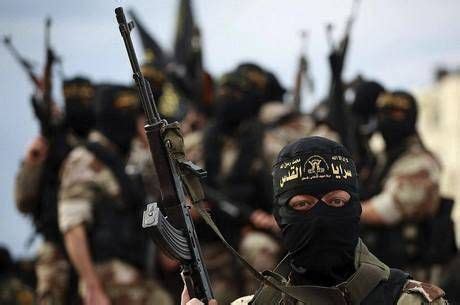
The United States’ domestic intelligence agency, the Federal Bureau of Investigations (FBI), is revealed to have rented a villa in Istanbul as a safe house for alleged members of the Daesh terror group, in a case that further proves the bureau’s use of entrapment methods.
According to the London-based news outlet Middle East Eye, a veteran undercover FBI operative named Kamran Faridi signed a tenancy agreement and paid the rent for a luxury villa on Istanbul’s seafront suburb of Silivri in 2015.
The property was then used as a safe house by several alleged members of Daesh, including a British man named Aine Davis, who is accused of being part of the terror group’s cell of British militants labelled the ‘Beatles’.
In November that year, Turkish security forces then raided the property arresting the six men hiding inside it. At the time, Turkish authorities hailed the interception of preparations for a major attack in Istanbul.
Almost seven years later, however, the news outlet’s report sheds light on the FBI’s involvement, citing court papers which show that Turkish prosecutors did not find evidence of any plot but rather that the raid was conducted after the bureau itself tipped-off Turkish authorities about a potential attack.
In a note dated April 2016, the prosecutors stated that “Sufficient evidence could not be obtained to file a public lawsuit… other than the intelligence report of a foreign country, which does not have the quality of evidence”.
While it is unknown whether Turkish officials knew of Faridi – the FBI operative – and his work for the bureau, Middle East Eye cited a source familiar with the matter as saying that the FBI approached Turkish officials in February 2016 to offer Turkish intelligence Faridi’s undercover services. According to the outlet, however, the officials rejected the proposal due to the operative already having been exposed.
Faridi – a 58-year-old of Pakistani origin who had worked for the FBI as an informant since the mid-1990s and then abroad numerous countries in the bureau’s Joint Terrorism Task Force during the two decades of the ‘war on terror’ – was reportedly fired from his service in 2020. He was then arrested and jailed the following year after sending death threats to his former superiors.
The former operative’s activities, however, especially in Istanbul as well as his work while being “loaned out” to other western intelligence agencies, is set to further draw light on the FBI and other agencies’ use of “entrapment” methods.
Under such methods, intelligence agencies attract, draw in, and recruit impressionable individuals to criminal or terrorist groups – or so the individuals are led to believe – before being set up, arrested, and prosecuted on charges of joining those groups. It has long been a controversial practice, but has been either denied or justified by agencies on the basis of rooting out potential terrorists.
As a result of that raid in 2015, Davis and two other suspected militants were convicted and jailed two years later on the charge of being part of Daesh – which they denied – while three other men arrested at the villa were released due to lack of evidence. According to the outlet, though, Davis is now scheduled to be deported from Turkey to the UK within days.
Turkey detains Russian-flagged vessel carrying grain – media
Samizdat | July 3, 2022
Turkey has seized a Russian-flagged cargo ship after Kiev claimed it was involved in “illegal” transport of Ukrainian grain, Reuters reported on Sunday, citing the Ukrainian Ambassador to Turkey, Vasily Bodnar.
“We have full co-operation. The ship is currently standing at the entrance to the port, it has been detained by the customs authorities of Turkey,” Vasily Bodnar told Ukrainian national television. According to the ambassador, investigators will decide on the vessel’s fate on Monday.
The move comes two days after Ukrainian diplomats called on the Turkish authorities to detain the vessel, the Zhibek Zholy, arguing that it was transporting “stolen” Ukrainian agricultural produce.
The ship departed from the Azov Sea port of Berdyansk, located not far from the city of Mariupol – which is controlled by Russian forces and Donbass militias – and arrived at the Turkish port of Karasu, Bodnar wrote in a series of Twitter posts on Friday, asking Turkey to “take relevant measures.”
The diplomat also said that the mission had “good communication and close cooperation” with the Turkish side on the matter, and he was sure the “agreed decisions” would “prevent attempts to violate the sovereignty of Ukraine.”
The ship allegedly loaded around 4,500 tons of grain in Berdyansk, Reuters reported, citing an unnamed Ukrainian official. The news agency also noted that the Ukrainian Prosecutor General’s Office sent a letter to Turkey’s Justice Ministry in late June, claiming the vessel had been involved in the “illegal export of Ukrainian grain.”
According to the letter, the vessel had 7,000 tons of cargo on board.
Ukraine then asked Turkey to “conduct an inspection of this sea vessel, seize samples of grain for forensic examination” to determine its origin, and expressed its readiness to launch a joint investigation with the Turkish authorities.
The Kazakhstan-based KTZ Express company, which owns the Zhibek Zholy, told Reuters that the ship was leased to a Russian firm called Green Line, which is not subject to any sanctions.
Russian authorities have not yet commented on the development.
Ukraine, a major grain producer, is unable to export its grain by sea due to the ongoing conflict in the country, with an estimated 22-25 million tons of grain currently stuck in the country’s ports. Kiev has previously accused Russia of “stealing” its grain – something Moscow has denied.
The Western nations have blamed Russia for blocking the ports. Moscow has repeatedly stated it would guarantee safe passage for the grain shipments if Kiev clears its ports of mines. Ukraine, in turn, has accused the Russian forces of mining the Black Sea ports. Russia suggested exporting the grain through the Russian-controlled ports of Berdyansk and Mariupol.
Turkey, NATO joined at hips but think differently
BY M. K. BHADRAKUMAR | INDIAN PUNCHLINE | JULY 3, 2022
Turkey has had an uneasy history as a NATO member country. The push and pull of strategic autonomy constantly grated against a security guarantee the alliance offered and also a way of reinforcing its Western identity. The West wanted Turkey because of the Cold War.
The enigma still continues: Was Turkey’s shift from neutrality to alignment a real necessity in 1951? Did Stalin indeed cast an evil eye on Turkish lands? Would any other Kemalist leader than Ismet Inounu, an unvarnished Euro-Atlanticist whose conception of modernisation implied cooperation with the West, have succumbed to the Anglo-American entreaties?
The relations between Turkey and the Soviet Union remained relatively calm during the period of Turkey’s admission to NATO. In November 1951, Moscow actually directed a note to the Turkish Government protesting the latter’s decision to participate in NATO, which asserted that “it is quite obvious that the initiation to Turkey, a country which has no connections whatever with the Atlantic, to join the Atlantic Bloc, can signify nothing but an aspiration on the part of imperialist states to utilise Turkish territory for the establishment of military bases for aggressive purposes on the frontiers of the USSR.”
The ideological aspirations in becoming an integral part — at least within the framework of a military alliance — of the Western world played a decisive role in Turkey’s decision in 1951, whereas, in reality, there was no imminent or explicit Soviet threat to Turkey. On the other hand, Turkey’s geographical importance to both the West and to the Soviet Union gave her a particular value in an East-West context, which, to her credit, Ankara would successfully leverage to its advantage through subsequent decades.
Curiously, this complex inter-locking in some ways bears an uncanny resemblance to the current accession of Sweden and Finland to NATO. Russian President Vladimir Putin must have alluded to it obliquely when he told the media Thursday on the sidelines of the Caspian Summit in Ashgabat:
“NATO is a relic of the Cold War and is only being used as an instrument of US foreign policy designed to keep its client states in rein. This is its only mission. We have given them that opportunity, I understand that. They are using these arguments energetically and quite effectively to rally their so-called allies.
“On the other hand, regarding Sweden and Finland, we do not have such problems with Sweden and Finland as we have, regrettably, with Ukraine. We do not have territorial issues or disputes with them. There is nothing that could inspire our concern regarding Finland and Sweden’s accession to NATO. If they want it, they can do it,… let them do it. You know, there are rude jokes about stepping into unsavoury things. That is their business. Let them step into what they wish.”
While returning from NATO’s Madrid Summit, Turkish President Recep Erdogan underscored that by lifting Ankara’s reservations about Sweden’s and Finland’s membership, he advanced Turkish interests and he added the caveat that their accession is far from a done deal yet, and future developments would depend on their fulfilment of commitments under the memorandum of understanding they signed in Madrid with Turkey.
Indeed, both Sweden and Finland have bent over backward to give Turkey extensive anti-terrorism assurances that require changes in domestic legislation in return for Ankara withdrawing its veto against accession talks. Erdogan insists that what matters are not their pledges but the delivery of those pledges.
It is a tough sell domestically for both Sweden and Finland, since one of the pledges is the extradition of 76 Kurds, deemed as terrorists by Turkey. This is easier said than done, as the courts in Stockholm and Helsinki may have their own definition of a “terrorist”.
The Turkish National Assembly’s ratification is a must for the Nordic countries’ admission to be formalised at NATO level. There is some speculation that US President Joe Biden incentivised Erdogan to compromise, but, make no mistake, the latter’s warning about compliance by Sweden and Finland — as also the audible rumblings already on the left in Sweden — are reminders that the issue is still wide open.
After all, North Macedonia had been a NATO partner country since 1995 but could become a NATO member only in March 2020. And Greece’s reservation was that the newly independent former Yugoslav republic wanted to be known as Macedonia whereas Athens saw the name as a threat to its own region of Macedonia — and ultimately, Greece won. In comparison, Turkey’s concerns are tangible and directly impinge on its national security.
Turkey was never a “natural ally” of NATO. How far Turkey subscribes to NATO’s latest strategic concept of Russia being a “most significant and direct threat” is debatable. Arguably, Turkey would feel more at home with the alliance’s 2010 doctrine that called Russia a “strategic partner.” This would need some explanation.
Professor Tariq Oguzlu, a leading exponent of the changing dynamics of Turkish foreign policies in recent years from a structural realist point of view, wrote an analysis last week titled Madrid Agreement and the balance policy in Turkish foreign policy, which was interestingly featured by Anadolu, Turkey’s state news agency. Oguzlu explained the rationale behind Turkey’s decision not to veto the two Nordic countries’ accession:
“Turkiye began to change its perspective on NATO a long time ago due to its strategic autonomy and multilateral foreign policy understanding… Considering the realist turnaround in Turkish foreign policy in the last three years, it is quite meaningful that Türkiye did not veto NATO enlargement.
“On the one hand, the second Cold War between the West and Russia narrows the room for maneuver in Turkish foreign policy, while on the other hand, it increases Türkiye’s strategic importance. The most important challenge for Turkish foreign policy in the coming years will be the successful continuation of Türkiye’s strategic autonomy-oriented multi-faceted foreign policy practices in an environment of deepening international polarisation.
“The balance policy pursued between the West and Russia is one of the most important strategic legacies left to the Republic of Türkiye from the Ottoman Empire. It is a strategic necessity for Türkiye, which has a medium-sized power capacity, to follow a policy of balance in order to achieve national interests. The policies adopted by Türkiye since the start of Russia’s war on Ukraine until now and the stance displayed at the last NATO summit in Madrid show that this historical heritage is embraced and successfully executed.”
To put matters in historical context, in 1920, Mustafa Kemal formally approached Vladimir Lenin with a proposal for mutual recognition and a request for military assistance. The Bolsheviks not only responded positively but by throwing in their lot with the growing movement of Turkish nationalists, they helped shore up the new Turkish state’s southern borders. In the period from 1920 to 1922, Soviet Russia’s military help to Ataturk was almost 80 million lire — twice Turkey’s defence budget!
In 1921 in Moscow, the two sides concluded the “Treaty of Friendship and Brotherhood”, which resolved the territorial disputes between the Kemalists and the Bolsheviks. The north-eastern border of Turkey established then remains unchanged to this day.
However, both Moscow and Ankara understood that cooperation between Turkish nationalists and Russian communists would be short-lived. Soon afterward, Turkey deserted Moscow’s camp, banned the communist party, and, during the Nazi invasion, looked for an opportunity to invade the Soviet Caucasus if the Red Army collapsed. Nevertheless, Ataturk never forgot the help that Soviet Russia provided in his hour of need.
A historical perspective is needed to understand the US’ manipulation of Turkey — and of Sweden and Finland in the present-day context. Biden is following President Harry Truman’s footfalls. Washington has used the very same Cold-War tactic to draw Sweden and Finland into the NATO fold as it employed 70 years ago with regard to Turkey.
Turkey reaches NATO deal with Finland and Sweden

Samizdat | June 28, 2022
Turkey will support inviting Finland and Sweden into NATO at the alliance’s upcoming summit in Spain, Finnish President Sauli Niinisto announced on Tuesday after a meeting with his Turkish counterpart Recep Tayyip Erdogan and Swedish Prime Minister Magdalena Andersson.
The three countries signed a memorandum of understanding at the meeting, organized with the support of NATO Secretary General Jens Stoltenberg.
“The concrete steps for our accession to NATO will be agreed among NATO allies over the next two days, but that decision is now imminent,” said Niinisto. “I am pleased that this stage on Finland’s journey towards NATO membership has been completed.”
According to Turkey, Finland and Sweden pledged to “condemn terrorism in all its forms” and end their support for organizations Ankara has designated as terrorist – including the Kurdish groups PKK and YPG, as well as the movement led by the exiled cleric Fetullah Gulen, which the Turkish government refers to as “FETO.”
“Turkey got what it wanted,” Erdogan said in a statement after the deal was announced.
Speaking at a press conference after the meeting, Stoltenberg said that Finland and Sweden will become observers in NATO at the upcoming summit. He added that the memorandum includes provisions on fighting terrorism and arms exports, including adopting stricter national legislation.
Finland and Sweden imposed an arms embargo against Turkey in 2019, over Ankara’s intervention in Syria. Turkey also reportedly demanded that Stockholm and Helsinki shut down the offices and ban the publications belonging to FETO, freeze the assets related to groups it has designated as terrorists, and even ban them from demonstrating in public.
Ankara’s opposition threatened to derail NATO’s plan to invite Sweden and Finland at the summit in Madrid which began on Tuesday. The two traditionally neutral Scandinavian countries declared their desire to join the US-led alliance in April, citing the current conflict in Ukraine.
Featured Video

Your Enslavement Begins in Gaza: The ‘Board of Peace’
or go to
Aletho News Archives – Video-Images
From the Archives
The US: The Century of Lost Wars
By James Petras | Global Research | September 12, 2018
Introduction
Despite having the biggest military budget in the world, five times larger than the next six countries, the largest number of military bases – over 180 – in the world and the most expensive military industrial complex, the US has failed to win a single war in the 21st century.
In this paper we will enumerate the wars and proceed to analyze why, despite the powerful material basis for wars, it has led to failures. … continue
Blog Roll
 Aletho News
- Israel designates five Palestinian media outlets as ‘terrorist organizations’
- Israel, not America, first: Carlson’s Huckabee interview lays bare US foreign policy priorities
- Israeli troops executed Palestinian aid workers at ‘point blank range’: Report
- Iran war What if today’s Iran is resigned to a long, hellish war with the US?
- Why Israel Is Escalating Its War Crimes Against Lebanon
- Iran in the face of the armed diplomacy of imperialism
- The US build-up around Iran constitutes strategic war option, not ‘deterrence’
- Iran to US: Sanctions and war failed; try diplomacy and respect
- China supplies Iran with radar, surveillance tech to track US stealth aircraft: Report
- Zelensky rejects territorial concessions to Russia
- If Americans Knew
- Footage Shows Israeli Troops Waiting in Ambush, Then Opening Fire on a Palestinian Teen
- The US is on the brink of a major new war that Trump has not even bothered explaining
- Latest Epstein document dump is one more cover-up
- No Protection, No Justice: US Citizens Killed with Impunity by Israel
- Maria Farmer: Epstein Victim Reveals Explosive Information Covered Up by Media
- Average of five Palestinians killed by Israel every day in Gaza since ceasefire – Not a ceasefire Day 136
- Palestinian church leaders admonish Christian Zionist Mike Huckabee – Not a ceasefire Day 135
- Ominous messaging from Trump’s “Board of Peace” – Not a ceasefire Day 134
- ‘Christians Out’: Jerusalem Church Tagged With Hate Graffiti, Police Investigating
- Israeli Settlers Kill American Teen
- No Tricks Zone
- New Research Reaffirms Clouds, Aerosols, And Surface Solar Radiation Are ‘Driving The Climate System’
- Germany: Electric Car Catches Fire At Charging Station, Sets Off Local “Inferno”, Widespread Damage
- New Study: Canada’s New Brunswick Was 1°C Warmer Than Today During The Medieval Warm Period
- Coal Power Back In Trend As Globe Tries To Keep Pace With Growing Demand For Power
- New Study: A 4°C Warmer Beaufort Sea Had ‘No Sea Ice’ 11,700 – 8200 Years Ago
- Unfudging The Data: Dutch Meteorological Institute Reinstates Early 20th Centruy Heat Waves It Had Erased Earlier
- German Gas Crisis…Chancellor Merz Allegedly Bans Gas Debate Ahead of Elections!
- Pollen Reconstructions Show The Last Glacial’s Warming Events Were Global, 10x Greater Than Modern
- Germany’s Natural Gas Storage Level Dwindles To Just 28%… Increasingly Critical
- New Study Rebuts The Assumption That Anthropogenic CO2 Molecules Have ‘Special’ Properties
 Aletho News