UAE banks closing Russian accounts – media
RT | February 19, 2024
Several large banks in the United Arab Emirates have begun limiting transactions with Russia and closing the accounts of Russian companies and individuals due to the risk of secondary Western sanctions, the news outlet Vedomosti reported on Monday, citing businessmen working in the UAE.
The sources, whose identities are not disclosed in the article, told Vedomosti that in September first-tier UAE banks, such as First Abu Dhabi Bank, Emirates NBD, and Abu Dhabi Commercial Bank, largely purged their ties to Russia. It thus became virtually impossible to carry out transactions with Russia using these banks. This happened after Russia’s Ak Bars Bank, which used to be the main channel for Russia-Emirati payments, came under US sanctions.
Second-tier institutions have allegedly so far treated Russian companies and individuals more loyally, but have demanded that these clients purchase additional banking services or put extra funds on their accounts.
The sources also complained that it has recently become next to impossible to open a new account with the country’s larger banks. Many applications from Russian residents are returned after the first compliance check.
The sources attributed the problem to sanctions. According to one businessman, his company’s account was closed after it was discovered that one of the products he was importing had appeared on a EU sanctions list. Some also said banks may be wary of a decree signed in December by US President Joe Biden enabling punitive measures against financial institutions outside US and EU jurisdictions that continue to work with Russia. The regulation specifically targets lenders that facilitate transactions related to the Russian military-industrial complex.
According to analysts briefed by the news outlet, it is still possible for Russian residents to run a business successfully in the UAE, but certain criteria must be met. For instance, the business activity itself should not fall under sanctions; the company should not be linked to ‘politically exposed persons’ in Russia such as government officials, top managers of large Russian companies or banks; and it should not deal with products under Western sanctions, especially dual-use goods that could be employed by the military.
A Vedomosti source close to the Kremlin said the government is aware of the problems faced by Russian businesses in the UAE, but doesn’t consider them critical or unsolvable.
Yemenis ditch UAE–Saudi coalition, embrace Ansarallah-led Sanaa government
The Gaza war and renewed US–UK strikes on Yemen are shattering what remains of the UAE–Saudi-led coalition.
By Mohammed Moqeibel | The Cradle | February 1, 2024
While the Red Sea military operations of Yemeni resistance movement Ansarallah have shaken up geopolitical calculations of Israel’s war on Gaza, they have also had far-reaching consequences on the country’s internal political and military dynamics.
By successfully obstructing Israeli vessels from traversing the strategic Bab al-Mandab Strait, the Ansarallah-led Sanaa government has emerged as a powerful symbol of resistance in defense of the Palestinian people – a cause deeply popular across Yemen’s many demographics. Sanaa’s position stands in stark contrast to that of the Saudi and Emirati-backed government in Aden, which, to the horror of Yemenis, welcomed attacks by US and British forces on 12 January.
The US–UK airstrikes have offended Yemenis fairly universally, prompting some heavyweight internal defections. Quite suddenly, Sanaa has transformed into a destination for a number of Yemeni militias previously aligned with the UAE and Saudi Arabia, now publicly declaring their allegiance to Ansarallah.
One such figure, Colonel Hussein al-Qushaybi, formerly with the Saudi–UAE coalition forces, announced in a tweet:
I am Colonel Hussein al-Qushaybi, I declare my resignation from my rank and my defection from the Legitimacy Army [army backed by Saudi-led coalition] that did not allow us, as members of the Ministry of Defense, to show solidarity with Palestine.
My message to army members: Go back to your homes, for our leaders have begun to protect Zionist ships at sea and support the [Israeli] entity, even if they try to deceive, but their support has become clear and it is still there.
Qushaybi claims he was incarcerated in Saudi prisons for 50 days – along with other Yemeni officers – for his outspoken defense of Gaza, during which he endured torture and interrogation by an Israeli intelligence officer.
Major Hammam al-Maqdishi, responsible for personal protection of Yemen’s former Defense Minister in the coalition-backed government, has also arrived in Sanaa, pledging allegiance to Ansarallah.
Simultaneously, a leaked ‘top-secret’ document from the Saudi-backed, UN-recognized Yemeni Ministry of Defense instructs military leaders to suppress any sympathy or support for Hamas or Ansarallah, as “this might arouse the ire of brotherly and friendly countries” – an implicit reference to Saudi Arabia and the UAE.
Defections and dissent
The wave of defections within the ranks of Saudi–Emirati coalition forces is not limited to officers. Many regular troops have openly rebelled against their commanders – abandoning their positions and pledging allegiance to Ansarallah – following the recent airstrikes on Yemen. Dozens of these soldiers have been arrested and detained for displaying solidarity with Gaza.
Yemeni news reports claim the US government, in a missive to the coalition’s Chief of Staff Saghir bin Aziz, expressed “dissatisfaction” with the lack of solidarity among his forces and demanded action.
While this trend of defections in the Saudi–Emirati coalition is not entirely new, it has accelerated considerably since the onset of the war in Gaza and the recent US-UK strikes on Yemen.
Last February, high-ranking coalition officers, including brigade commanders from various fronts, began a series of defections, though none as significant as the current rebellion.
These earlier defections were primarily driven by financial conditions and dissatisfaction with Saudi Arabia and the UAE for their dismissal of military commanders associated with the Islah Party (Muslim Brotherhood in Yemen), who were replaced by members of the UAE-backed Southern Transitional Council (STC) militias and those commanded by Tariq Saleh, nephew of pro-Saudi former Yemeni president Ali Abdullah Saleh.
Most of these defections were by officer and troops associated with the Islah Party during a time when the foreign coalition began marginalizing the party’s military and political leadership, and dismantling several military sectors under their control – in favor of the UAE-controlled STC.
Now, the Gaza war has the Islah Party leadership fully breaking with its old alliances. As party official Mukhtar al-Rahbi tweeted upon the launch of US-UK strikes:
Any Yemeni who stands with the US, UK, and the countries of the coalition protecting Zionist ships should reconsider their Yemeni identity and Arab affiliation. These countries protect and support the Zionist entity, and when Yemen closed the Red Sea and the Arabian Sea to the ships of this terrorist entity, this dirty alliance struck Yemen and punished it for its noble stance towards Gaza and Palestine.
In stark contrast, the UAE-backed STC and the Tareq Saleh-led National Resistance Forces expressed readiness to protect Israeli interests. On the sidelines of the World Economic Forum in Davos, STC President Aidarus al-Zoubaidi reaffirmed his support for the British attacks against Yemen, conveying this stance to British Foreign Secretary David Cameron.
Following these statements, an entire battalion under Saleh’s command defected to Ansarallah, while many other fighters now refuse his authority because they reject supporting US–UK strikes against Sanaa and its resistance leaders.
A shift in public sentiment
In response to the latest western aggression against Yemen, media outlets affiliated with the STC and its supporters have launched a campaign against Ansarallah and the Palestinian resistance, casting doubt on the Yemeni resistance movement’s capabilities and motives. But, their efforts have backfired badly, instead leading to widespread public fury in the country’s southern regions controlled by the UAE and Saudi-backed government.
Their anger is directed at the Aden-based government‘s perceived alignment with Israel’s regional projects, sparking both protests and symbolic acts, such as burning pictures of UAE President Mohammed bin Zayed and the Israeli flag.
According to Fernando Carvajal, a former member of the UN Security Council’s Yemen expert team, Ansarallah have managed to leverage – to their benefit – the untenable position of Abu Dhabi, which normalized relations with Israel as part of the 2020 US-brokered Abraham Accords. This, he argues, has helped them gain widespread support both within Yemen and internationally.
In the wake of this unexpected public outrage, the STC has experienced a further wave of defections within its ranks. Several leaders have joined the Southern Revolutionary Movement, and openly expressed their objective of liberating southern Yemen from what they see as “Saudi–Emirati occupation.”
Amidst the wave of military realignments, prominent Al-Mahra tribal Sheikh Ali al-Huraizi – arguably the most influential figure in eastern Yemen – has come out to praise Ansarallah‘s military operations against Israel-bound shipping in the Red Sea, hailing its actions as a resolute and national response to the suffering of the Palestinian people.
Huraizi stressed that the US and British aggression against Yemen was launched to protect the Zionist state, because Ansarallah’s targeted strikes were negatively impacting Israel’s economy. Calling for unity among Yemenis, the tribal leader urged steadfast resistance against Israeli influence in the country. He also called on other Yemeni factions to follow the bold leadership of Abdul-Malik al-Houthi as a means to halt the genocide taking place in Gaza.
Countdown to the coalition’s collapse
Yemen’s deteriorating economic conditions, currency collapse in coalition-ruled areas, and ongoing conflicts among southern militias have left many Yemenis disillusioned with Emirati and Saudi proxies, whom they had hoped would bring – at the very least – economic prosperity.
In contrast, the Ansarallah-led Sanaa government has managed to maintain a relatively stable economic situation in the areas under its control, despite the foreign-backed war aimed at toppling it. This disparity has led to a growing sentiment among UAE-aligned soldiers that they are merely pawns fighting for the interests of Persian Gulf Arab rulers, without receiving due recognition from these governments.
The contrasting stances on Palestine between the coalition and Ansarallah have deepened the Yemeni divide since the events of 7 October. Sanaa’s support for the Palestinian cause has significantly boosted its domestic standing, while US–UK strikes on the country have complicated their Persian Gulf allies’ position by prioritizing Israeli interests over all other calculations.
Disillusionment with the coalition will have profound political and military implications for Yemen, reshaping alliances, and casting the UAE and Saudi Arabia as national adversaries. Palestine continues to serve as a revealing litmus test throughout West Asia – and now in Yemen too – exposing those who only-rhetorically claim the mantle of justice and Arab solidarity.
UAE enlists Al-Qaeda, US mercenaries to operate in Yemen: Report
The Cradle | January 24, 2024
A BBC investigation released on 22 January reveals that the UAE hired Al-Qaeda militants to fight for the Southern Transitional Council (STC), the Emirati-backed government in Yemen.
A whistleblower cited in the investigation provided the BBC with “a document with 11 names of former Al-Qaeda members now working in the STC,” among them former high-ranking operatives of the extremist group.
Nasser al-Shiba, a former high-ranking Al-Qaeda member, is now the commander of the of the STC’s armed units, several sources told the BBC.
These militants were hired to carry out political assassinations across Yemen at the behest of Abu Dhabi, according to the investigation.
The BBC also points to a shadowy group of US mercenaries, known as Spear Operations Group, hired by the UAE to carry out assassinations.
Isaac Gilmore, a former US navy seal who later became Spear’s chief operating officer, is “one of several Americans who say they were hired to carry out assassinations in Yemen by the UAE.”
“He refused to talk about anyone who was on the ‘kill list’ provided to Spear by the UAE — other than the target of their first mission: Ansaf Mayo, a Yemeni MP who is the leader of Islah in the southern port city of Aden.”
Saudi and UAE-backed mercenary groups have run rampant across Yemen since the start of the war in the country nine years ago. Aside from assassinations, these mercenaries have also been implicated in a number of crimes, including the looting and illegal trading of Yemeni cultural heritage.
Several ancient sites and museums have been looted and stripped of valuable artifacts by UAE-backed mercenary groups in Yemen. There are also accounts of underage girls being raped by militants of such groups.
This is not the first time that UAE-backed armed groups in Yemen have been accused of working or coordinating with Al-Qaeda and ISIS.
According to documents obtained by Yemen’s Al-Masirah media outlet in February last year, Takfiri militants affiliated with the UAE-backed mercenary group, the Giants Brigade, looted large amounts of oil from the reserves in the energy-rich province of Shabwah, south of the country.
“We have all the evidence of the UAE’s relationship with Al-Qaeda and ISIS in Yemen,” Saleh al-Jabwani, Saleh al-Jabwani, a minister in the former Saudi-backed government of Abd Rabbuh Mansour Hadi, said in 2019.
The BBC investigation comes one month after UAE-backed mercenaries came under the spotlight once again, following reports that the US was working to recruit members of these mercenary groups to “distract” Ansarallah from its military operations against Israel.
“The United States is moving to activate factions loyal to the UAE in Yemen to distract Sanaa from continuing to carry out more air and sea attacks against the Israeli entity,” the Lebanese newspaper Al-Akhbar reported on 8 December.
According to Hebrew media, the UAE-backed STC has approached Israel and offered to help protect Israeli shipping in the Red Sea from attacks by Yemen’s Ansarallah resistance movement and the armed forces of the government in Sanaa.
Since November, Yemen’s Armed Forces and Ansarallah have seized one Israeli-linked vessel and have targeted over a dozen other ships, either owned by Israelis or Israeli firms or en route to Israeli ports. The Red Sea blockade by Yemen is in solidarity with the Palestinian resistance, which Sanaa has vowed to continue until the war and siege in Gaza ends.
Yemeni armed forces have also launched drones and missiles towards Israel’s southern port city of Eilat.
These attacks are garnering significant amounts of popular support for Ansarallah in Yemen.
According to Yemeni officials and analysts who spoke with Responsible Statecraft on 24 January, elements of the Muslim Brotherhood-affiliated Islah Party – which has, for the most part, been opposed to Ansarallah throughout the Yemen war – have been providing them with material support and have praised their pro-Palestine operations.
Oman seizes drones headed for ‘pro-UAE factions’ in Yemen
MEMO | January 10, 2024
The customs authorities in Oman intercepted a shipment of drones yesterday, which were concealed on a truck from the UAE heading for Yemen. The discovery was made at the Hafeet crossing on the border between the two Gulf states.
“The Directorate General of Customs seized a truck at the Hafeet crossing loaded with wireless drones coming by transit system from the United Arab Emirates heading to the Republic of Yemen,” said the customs authorities.
“Customs inspectors were able to discover the shipments that were hidden professionally in places specially prepared for smuggling them in the truck. The concerned authorities began investigating the case in order to complete the rest of the legal procedures against the suspects.”
According to the Sanaa-based Yemen Press Agency, citing informed sources, the drones were destined for UAE-backed factions in southern Yemen, most likely the separatist Southern Transitional Council (STC).
The outlet noted that some observers speculate that the US may be using the UAE-backed proxies to turn international public opinion against the Houthi-led Yemeni forces by targeting merchant ships. The latter have been targeting Israel-linked vessels, or those heading for the occupation state through the Red Sea, because of Israel’s genocide against the Palestinians in Gaza.
UAE-backed groups in Yemen plot ‘false-flag’ attacks in Red Sea: Sanaa
The Cradle | January 10, 2024
UAE-backed mercenary groups in Yemen are preparing to carry out false flag attacks against commercial vessels in order to implicate the Sanaa government and prompt further US militarization of the Red Sea, an official said on 9 January.
Fadl Abu Talib, a member of the political bureau of the Ansarallah resistance movement, said on Tuesday that “the UAE, through its mercenaries in Yemen, is making arrangements to target commercial ships that are not destined for the Zionist entity.”
Abu Dhabi and its proxy wish “to mix up the cards and give the Americans [the] justification for militarizing the Red Sea,” Abu Talib added. “But we tell it that its despicable behavior is exposed, as our operations in the Red and Arab seas have specific, clear objectives.”
Ansarallah and Yemen’s Armed Forces have carried out numerous naval operations against vessels linked to or bound for Israel. The attacks come in solidarity with the people of Gaza and the Palestinian resistance, and aim to prevent goods from reaching Israeli ports for as long as Gaza’s access to aid is hindered.
Sanaa has vowed that only Israeli-linked ships or those heading towards Israeli ports will be targeted, and nothing else. No deaths or injuries have resulted from Yemen’s attacks.
The US established a maritime task force last month in order to protect Israeli interests in the Red Sea. As part of the operations of this task force, on 31 December, US helicopters sank three Yemeni vessels and killed ten naval officers.
On 9 January, CENTCOM claimed that US and UK forces shot down 21 missiles and drones fired by Ansarallah towards Red Sea shipping lanes, calling it the 26th Yemeni attack. Sanaa has only confirmed 13 operations.
According to Arabic and Israeli media reports, officials in Yemen’s secessionist, UAE-backed Southern Transitional Council (STC) have expressed an interest in joining Washington’s task force and helping to protect Israeli shipping.
The STC has also reportedly discussed with Washington the possibility of mobilizing UAE-backed mercenary groups and STC-linked militias “against Israel’s opponents in Yemen,” Al-Akhbar newspaper reported last month.
“The STC in south Yemen wants to fight Houthi terrorism … If Israel recognizes our right to self-determination in southern Yemen, you will find an ally in the field against the Houthi threat,” Hebrew media cited a source close to STC leader Aidarous al-Zubaidi as saying.
Putin’s Middle East Trip Deals a Blow to Washington
By Salman Rafi Sheikh – New Eastern Outlook – 11.12.2023
Russian President Vladimir Putin’s recent visit to the Middle East – and the 21-gun salute welcome he received there – shows the failure of Washington’s consistent attempts to ‘isolate’ and defeat Russia. The visit also points to the Middle East’s increasing shift away from, and sole reliance on, Washington. Ever since the beginning of the Gaza War on October 7, the Middle East has been keeping contact with China, rather than the US, its first priority. The reason for this is not simply the fact that the US is supporting, militarily and diplomatically, Israel against Palestine, but also because the Middle East is strategically realigning itself with the realities of what is increasingly – and undeniably – a multipolar world. To the extent that the Middle East, a region where the US remained the most dominant extra-regional force for many decades, has made this shift also reflects the ongoing demise of US dominance more generally in the world. To the extent that China and Russia are two major proponents of multipolarity, connect the dots of this anti-US but pro-China and pro-Russia shift.
Putin’s trip to the UAE and Saudi Arabia has many dimensions. One of these dimensions is bilateral. Between 2017-2022, the trade turnover between Russia and the UAE has grown by almost six times. In 2022, the overall trade increased by almost 68% amounting to US$9 billion. The UAE is Russia’s largest trading partner in the Gulf Region, accounting for 55% of Russia’s total trade with the Persian Gulf.
It, therefore, makes sense for Washington to pressure the UAE government to drastically limit their trade ties with Moscow. Earlier in September, several Western officials from the United Kingdom, EU and US visited the UAE to persuade the UAE to review its trade ties with Russia. Western officials have been assuming that, in the wake of the threats of the Israel-Gaza war spreading to other parts of the Middle East, the UAE would go back to its ultimate security guarantor: the US. This would, however, happen only if the UAE has good ties with the US. Good ties, under the present context of the Russia-Ukraine conflict, mean the UAE ending its trade ties with Russia, especially the ones that may have military implications.
The UAE has been resisting these pressures. In fact, its decision to welcome Putin himself means that the UAE is considering an alternative means of protecting itself in the wake of a wider war in the region. It is ensuring Russian (and Chinese support), and it is using this (possible) source of support to send a message to Washington, i.e., multiple options are possible in a multipolar world. The message is quite similar to the message that the Saudis have been giving to the Americans since the beginning of the Russia-Ukraine military conflict.
If the Americans have been doing their best to convince the Saudis to break out of the OPEC+ deal and increase the production of oil to help reduce its prices and consequently help control the inflation in the West, the Saudis have not submitted. In this context, Putin’s visit to Saudi Arabia sought to reinforce the ‘oil alliance’ – which is also a major dimension of Russia-Saudi bilateral ties – at a time when the burden of wars (supporting Ukraine plus Israel) on the West is increasing manifold. For Putin, an appropriate message to the Middle East in particular and the Global South in general is this: the West supports aggression against all states, regardless of whether it is Russia or Palestine, and it expects other states (e.g., the Middle East) to support that aggression.
Russia understands that the West is fighting two wars, and it does not have any narrative to justify them both simultaneously. As even the US-based Carnegie Endowment said in one of its recent reports, “Washington’s pro-Israel stance undermines the legitimacy of the West’s broader reasons for supporting Ukraine in the eyes of many in the Global South. The moral argument against Russia’s invasion of Ukraine now looks like empty words, particularly in Middle East nations”. In this sense, the timing of Putin’s visit was far from coincidental. It aimed to tap into the opportunity to wean powerful states in the Middle East, who are also keen to expand ties with the non-Western world via BRICS, away from the US as much as possible.
Therefore, the purpose of Putin’s visit, as some Western media analysed and sought to trivialise, was not simply to “discuss” the Gaza war. It was part of Moscow’s wider outreach to the Middle East at an appropriate time to reorient the Middle East’s strategic priorities. Soon after coming back, Putin hosted Iran’s president in Moscow to build on the success of his visit and deepen Russia’s foothold in the region, a region that allows Russia to fight the West in the economic field by, for instance, coordinating the production of oil.
Still, the Gaza war was discussed. But that discussion was underpinned by the strategic failure of Washington’s plans to create a new Middle East. The failure of the US in the Middle East becomes yet another opportunity for Moscow to present itself as a potential peace broker rather than, and unlike the US, a troublemaker. If it was simply a war of narratives, Russia (and China) are clearly winning it in the Middle East.
USA and Israel Should be Worried: The Muslim Middle East is Moving Its Own Way
By Karsten Riise | Covert Geopolitics | December 7, 2023
Less than a month before Russia takes over the chairmanship of BRICS-11 where both UAE and Saudi Arabia will be full members, Russia makes a big move to bring cooperation with UAE and Saudi Arabia to an unprecedented level.
Russia ties everything together in this meeting: Head of States relations, Foreign Policy, Non-Dollar currency and Financial Policy, Industrial Policy, Nuclear Cooperation, Artificial Intelligence (AI), Space Development, International Direct Investments – and the whole private Business sector.
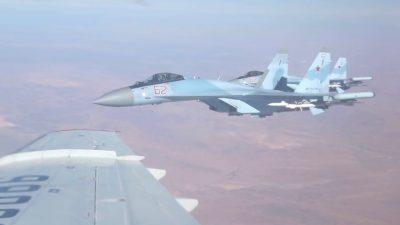 Note also that Putin travels safely in person to both the UAE and Saudi Arabia.
Both UAE and Saudi Arabia are visited by President Putin, Foreign Minister Lavrov, First Deputy Prime Minister of the Russian Federation Andrei Belousov, head of the Ministry of Industry and Trade Denis Manturov, Deputy Prime Minister Alexander Novak, head of the Central Bank Elvira Nabiullina, head of Roscosmos Yuri Borisov, head Rosatom Alexey Likhachev, and head of Russian Direct Investment Fund (RDIF) Kirill Dmitriev.
The RDIF recently published a Russian international platform for AI services. The delegation also includes representatives of the business community. See this.
In cooperation with Russia and China, the UAE and Saudi Arabia are becoming not only oil powers, but powers in the modern AI, hi-tech knowledge and Space economy – and military powers.
The central Middle Eastern powers, UAE, Saudi Arabia, Iran, and even Türkiye, are emerging as pillars in the international policies of Russia and China – in all dimensions.
Algeria builds deeper relations with its biggest arms supplier Russia, and Algeria opens defense cooperation China. Russia and Egypt have also for years been reinforcing cooperation, including defense cooperation, nuclear cooperation (a Russian nuclear powerplant is being built) and trade-logistics (a Russian trade zone near the Suez Canal).
In Syria, Russia has already long ago stabilized the government in Damascus, and even in Iraq, Russia just a few days ago took over Iraq’s biggest oil field and kicked out the biggest western player in Iraq’s oil sector.
Recently, Russia as the Chairman of BRICS-11 after 1 January 2024 even gave its nod of approval for the admission of China’s best friend Pakistan into BRICS in spite of Indian hesitations.
The Muslim Middle East is moving its own way – independently of the West. At a time when all the non-Western world including the Muslim world is outraged by Israel’s Nakba pressing out Palestinians with genocide on over 16,000 civilians in Gaza, Israel and its US backer should be worried.
Karsten Riise is a Master of Science (Econ) from Copenhagen Business School and has a university degree in Spanish Culture and Languages from Copenhagen University. He is the former Senior Vice President and Chief Financial Officer (CFO) of Mercedes-Benz in Denmark and Sweden.
UAE hosting Israeli president emboldens regime to commit more crimes: Yemen
Press TV – December 1, 2023
Yemen’s Ansarullah movement has lashed out at the United Arab Emirates for hosting the Israeli president for the UN climate summit, saying this emboldens the regime to commit even more acts of massacre against the Palestinian people.
In a post on X, Muhammad Abdulsalam, a spokesman for the movement, said conferences should be held to address Israeli atrocities, which he said have polluted “the humanitarian climate.”
“The humanitarian climate is polluted by Israel’s crimes and those who encourage, support, and assist it, and this is what requires conferences to confront, combat, and address it by all possible means.”
The Palestinian movement Hamas also denounced the invitation of Herzog to the conference at a time when the occupation forces were committing massacres in their genocidal war against the Palestinian people in Gaza.
“We earnestly urge the friendly state, the United Arab Emirates, as the host nation, to cancel this invitation, irrespective of the conference’s nature,” the movement said in a statement on Friday.
Instead of providing the “criminal” Herzog with a platform, the conference should have boycotted the regime and held Herzog and other Israeli leaders over the heinous crimes perpetrated against defenseless civilians in Gaza, Hamas said.
Iran has also condemned the UAE’s decision to host Herzog for the conference amid Israel’s genocidal war on Gaza, which has left over 15,000 dead so far.
On Thursday, Iran’s government said President Ebrahim Raeisi had skipped the conference due to the invitation of the Israeli president to the summit.
On Friday, Iran’s delegation to the meeting, led by Energy Minister Ali Akbar Mehrabian, left the conference and headed back in protest to the participation of Herzog.
“Iran regards the political and biased presence of the fake Zionist regime in the climate change summit, which aims to evaluate the performance of the international community in facing climate change, as contrary to the objectives of this conference, and vacates the conference venue in protest,” Mehrabian said before leaving Dubai.
An Israeli delegation of 28 officials attended this year’s annual United Nations climate summit COP28, which kicked off Thursday.
Israeli media have reported that the purpose of Herzog’s visit to the UAE was to use the “diplomatic space” available in the international climate summit to consolidate Tel Aviv’s position in the war on Gaza and the release of Israeli captives.
Herzog has held meetings with several world leaders on the sidelines of the summit, including with Emirati President Sheikh Mohamed bin Zayed Al Nahyan.
Who Do Middle Eastern Countries Support in Israel-Hamas Conflict?
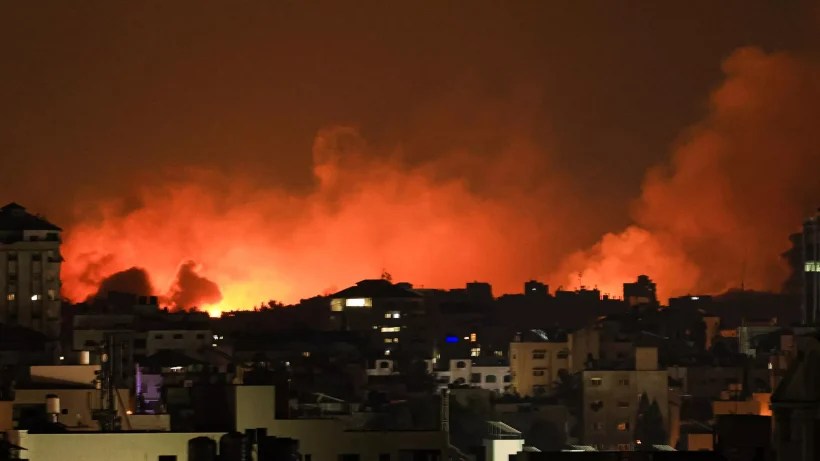
© AFP 2023 / Mahmud Hams
By Christina Malyk – Sputnik – 09.10.2023
Hostilities have been raging around the Gaza Strip after Hamas units’ invasion to surrounding lands. The current escalation is projected to become one of the largest in the history of the Palestinian-Israeli conflict.
Both Israel and the Gaza Strip have found themselves in the middle of a complex conflict, in which different countries support different sides.
For his part, US Secretary of State Antony Blinken has reportedly spoken to several foreign ministers from Arab countries, asking them to condemn the Hamas actions.
The majority of Arab countries, especially the monarchies of Persian Gulf, have close political and financial ties with the US.
In September, Blinken and foreign ministers of the Gulf Cooperation Council agreed to strengthen ties in defense and security. The US and Gulf foreign ministers also reaffirmed their “commitment to free navigation and maritime security in the Gulf region” in a move against what Washington believes to be an “Iranian threat” in the region.
Sputnik tracked how regional countries have reacted to the latest developments in Israel and Palestine, and whether this connects with its US relations.
UAE
The UAE became the first Arab country to condemn Hamas’ actions.
“The [Foreign] Ministry stressed that attacks by Hamas against Israeli towns and villages near the Gaza strip, including the firing of thousands of rockets at population centers, are a serious and grave escalation. The Ministry is appalled by reports that Israeli civilians have been abducted as hostages from their homes. Civilians on both sides must always have full protection under international humanitarian law and must never be a target of conflict,” wrote the official ministry press release.
It also noted, “The Ministry deeply mourns the loss of Israeli and Palestinian lives as a result of the outbreak of violence, and calls on both parties to de-escalate and avoid an expansion of the heinous violence with tragic consequences affecting civilian lives and facilities.”
The statement was announced right after UAE Foreign Minister Sheikh Abdullah bin Zayed Al Nahyan’s call with Blinken.
Bahrain
An official statement made by Bahrain stressed the need for de-escalation between Palestinians and Israelis. The Ministry of Foreign Affairs of Bahrain is “supporting the peace process and establishing the Palestinian state according to the two-state solution and other international legitimacy resolutions.”
“The Kingdom of Bahrain is closely following the developments taking place between Palestinian groups and Israeli forces, leading to an increase in violence and armed attacks that claimed the lives of a number of people and injured others,” noted the Foreign Ministry.
Saudi Arabia
The Saudi Arabia Ministry of Foreign Affairs through an official statement on Twitter “calls for an immediate halt to the escalation between the two sides, the protection of civilians, and restraint.” Nevertheless, the Saudi Foreign Ministry reminded “the deprivation of the Palestinian people and their legitimate rights.” But Saudi Arabia did not blame Israel for the escalation.
On Saturday, in a phone call with Saudi Foreign Minister Prince Faisal bin Farhan, Blinken said the Kingdom should clearly condemn the attack, State Department officially said.
Nevertheless, the Saudi Foreign Ministry did not include any criticism of the attack or of Hamas. So, Saudi officials appear to be taking a wait-and-see stance.
Qatar
The Qatari Ministry of Foreign Affairs officially stated that Israel is “solely responsible for the ongoing escalation due to its ongoing violations of the rights of the Palestinian people.” Doha also expressed deep concern over the developments in the region and called for de-escalation as quickly as possible.
Earlier on Monday, Western outlets reported that Doha is mediating talks to swap Hamas-held hostages in coordination with the United States. But neither Israel, Qatar nor Palestine has confirmed this information. Later in the day, Hamas spokesman Husam Badran denied to Sputnik that any negotiations with Israel on prisoners exchange are taking place.
Kuwait
Kuwait officially expressed its “grave concern” over developments between Israel and the Palestinians, blaming Israel for what it called its “blatant attacks.”
Its Ministry of Foreign Affairs called for the international community, especially the Security Council, “to take responsibility and stop the ongoing violence, protect the Palestinian people and put an end to the provocative actions of the occupation authorities.”
Kuwait is one of the countries that strictly denies any contact with Israel.
Oman
The Ministry of Foreign Affairs of Oman called on Palestinians and Israelis to exercise restraint. Oman also highlighted “strategic necessity to find a just, comprehensive and lasting solution to the Palestinian cause on the basis of the two-state solution.”
Yemen
The Ministry of Foreign Affairs of Yemen officially blamed Israel for the current escalation. The ministry “called for the protection of civilians and an end to the provocations of the Israeli occupation forces and their repeated attacks on the Palestinian people and their sanctities.”
Iraq
Iraqi Foreign Minister Fuad Hussein expressed his full support for the Palestinian people “to act against the aggressive actions of the Zionist regime” during telephone conversation with his Iranian counterpart Hossein Amirabdollahian on Sunday.
However, the Foreign Ministry of Iraq has not issued any official statement yet. This may be connected with close ties with both the US and Iran at the same time.
Syria
Syria’s Foreign Ministry issued an official statement expressing support for the Palestinian people and the forces “fighting against Zionist terrorism.”
Moreover, Damascus described Hamas’ actions as “honourable achievement that proves the only way for Palestinians to obtain their legitimate rights is resistance in all its forms.”
Lebanon
The Lebanon’s Foreign Ministry issued no official statements on the Israeli-Hamas conflict. That said, Lebanon’s Hezbollah, which operates on Southern Lebanon near the Israeli border, praised Hamas for its “heroic operation” in a statement. Hezbollah also claimed responsibility for shelling Israeli territory during the escalation.
Jordan
Jordan’s King Abdullah said on Sunday there was a need to intensify diplomatic efforts to prevent escalating Israel-Palestinian violence with “dangerous repercussions” for the region’s security.
He also called for “urgent international action to avoid an escalation and prevent the region from the consequences of a new round of violence.”
In turn, Jordan’s Foreign Minister Ayman Safadi warned both Palestinian and Israeli sides of the “volatility”’ of the escalation.
Egypt
Egypt warned of the “severe dangers” posed by current escalation between the Gaza Strip and Israel.
“Egypt calls for international actors involved in backing the efforts of resuming the peace process to intervene immediately to halt the ongoing escalation,” Egypt’s Foreign Ministry noted.
Egypt has always been a peace process mediator between Israel and Hamas, working with the US. According to media outlets, both Western and local, Egypt tried to bring the parties to the negotiating table, but did not manage to do it.
Iran
Iran’s Foreign Ministry has strongly condemned “the usurping Zionist regime’s attacks against civilian targets in southern Lebanon and the Gaza Strip.” Foreign Ministry spokesperson Nasser Kanaani also stated that Hamas’ attacks showed increased confidence by the Palestinians against Israel.
Iran regards both Israel and the US as its own enemy.
UAE, Bahrain sour on Israeli normalization
The Cradle | July 31, 2023
Two of the signatories of the Abraham Accords – the UAE and Bahrain – have “soured” on the 2020 normalization agreement, according to sources in the know who spoke with US outlet Bloomberg.
“The [UAE] has expressed frustration in high-level contacts with Israel about the outcome of the 2020 Abraham Accords,” Bloomberg reported on 30 July. Bahrain has also “outlined its disappointment” with Tel Aviv, mainly out of concerns about Israel’s ongoing human rights violations against Palestinians and their unchecked expansion of illegal settlements in the West Bank.
According to the report, the tense situation is “likely to complicate” Washington’s efforts to see Saudi Arabia join the Abraham Accords, which also include Morocco and Sudan.
In the months after the Gulf kingdom inked a historic rapprochement deal with Iran under the auspices of China, the White House has deployed a charm offensive to convince Saudi Crown Prince Mohammed bin Salman (MbS) to normalize ties with Israel before the 2024 US elections.
Publicly, Saudi Arabia maintains Israel must first implement the 2002 Arab Peace Initiative to establish a Palestinian state before a normalization deal can be signed. Privately, however, Riyadh is demanding that the US sweeten the deal by providing firm defense guarantees, access to cutting-edge weaponry, and assistance in developing a nuclear energy program, including domestic uranium enrichment.
While the White House remains hesitant to accept these demands, US President Joe Biden told a gathering of donors to his 2024 re-election campaign last week, “There’s a rapprochement maybe underway.”
Israeli Prime Minister Benjamin Netanyahu echoed this claim on Sunday when announcing the construction of a $27 billion rail expansion connecting Israel’s outlying areas to metropolitan Tel Aviv.
“In the future, we will be able to transport cargoes of goods by train from Eilat to our ports in the Mediterranean Sea, and we will also be able to connect Israel by train to Saudi Arabia and the Arabian Peninsula. We are working on that too,” Netanyahu said.
Earlier this month, Yedioth Ahronoth reported that Washington was promoting a plan to build a railway connection from the Gulf to Israel and Europe.
Ansarallah forces surround Saudi-controlled Marib: Report
The Cradle | July 12, 2023
Yemen’s Ansarallah resistance movement fired two ballistic missiles at the country’s central city of Marib on 11 July, coinciding with heavy mobilization of fighters and equipment outside the city, sources in the Saudi-backed government were quoted as saying.
A military official, Rashad al-Mekhlafi, told Arab News that two missiles landed in northern Marib, near a military base and a camp for internally displaced people.
“The missiles exploded in an open area in Marib without causing any injuries,” he said.
Sources in the Saudi-backed Presidential Leadership Council (PLC) recently told Arab News that Ansarallah has been deploying large numbers of fighters and equipment in preparation for an offensive against the city, which had been halted last year by a truce that was implemented in April.
“They have assembled fighters and enormous military equipment, including armored vehicles, cannons, and drone launchers, on the southern, western, northern, and east-northern surroundings of Marib,” Mekhlafi said.
“We are prepared to repel any attack. We bolstered the front lines with newly graduated military battalions, including sniper and infantry forces. What the Houthis were unable to achieve in previous years would be possible today,” he added.
Another government source was anonymously quoted as saying that the “legitimate government is prepared to repel any attack even as Saudi, UN, American, and European mediators advise restraint.”
Following the implementation of a truce agreement in April last year, intense fighting in Marib ceased, and Ansarallah was unable to capture the city. However, border skirmishes and periodic clashes have since been common.
While significant areas of the energy-rich province are under Ansarallah’s control, the main city is fully in the hands of the Saudi-backed government and the forces loyal to it.
Omani-mediated negotiations have recently resulted in agreements between the Saudi-led coalition and Ansarallah, particularly regarding the blockades on Hodeidah port and Sanaa airport, as well as the payment of salaries of government employees.
Saudi Arabia, as a result, has significantly reduced the scale of its bombing campaign on the country.
Many factors continue to complicate peace in war-torn Yemen – particularly a widespread Emirati occupation of the country and its ports and oilfields, as well as the presence of US, UK, and French troops.
Some have suggested in recent months that Saudi and Emirati interests in Yemen have begun to diverge, claiming that the UAE aims to maintain control over the country’s resources and strategic ports and waterways while Riyadh is increasingly looking to find a way out of the war.
Iran, Regional States to Form Naval Coalition Soon: Navy Commander
Al-Manar – June 3, 2023
Iranian Navy Commander Rear Admiral Shahram Irani announced that Iran’s navy and the countries of the region including Saudi Arabia, UAE, Qatar, Bahrain and Iraq will form a new naval coalition soon.
Irani in a televised program on Friday night announced the formation of new regional and extra-regional coalitions, saying that today, the countries of the region have realized that the security of the region can be established through synergy and cooperation of the regional states.
Referring to the holding of annual exercises of the naval coalition of Iran, Russia and China, he said that the regional coalition is also forming.
Almost all the countries of the North Indian Ocean region have come to the understanding that they should stand by the Islamic Republic of Iran and jointly establish security with significant synergy, he said, adding that Oman, Saudi Arabia, UAE, Qatar, Bahrain, Iraq, Pakistan and India are among these countries.
Earlier, a Qatari website reported that Iran, Saudi Arabia, the United Arab Emirates, and Oman are to form a joint naval force under China’s auspices towards enhancing maritime security in the Persian Gulf.
Al-Jadid carried the report on Friday, saying China had already begun mediating negotiations among Tehran, Riyadh, and Abu Dhabi aimed at reinforcing maritime navigation’s safety in the strategic body of water.
Since the 1979 victory of Iran’s Islamic Revolution, the Islamic Republic has invariably opposed foreign meddling and presence in the region, asserting that the regional issues have to be addressed by the regional players themselves.
Featured Video
Jeffrey Epstein’s ‘one single cause’: Israel
or go to
Aletho News Archives – Video-Images
Book Excerpt
Leslie Wexner’s Inner Demon
BY WHITNEY WEBB |
UNLIMITED HANGOUT| JUNE 10, 2022
This short excerpt from Whitney Webb’s upcoming book “One Nation Under Blackmail” examines an obscure media profile of Leslie Wexner, Jeffrey Epstein’s mentor, from the 1980s that contains disconcerting revelations about Wexner’s personality and his inner world. … continue
Blog Roll
Recent Comments
John Edward Kendrick on German government ‘embezzling’… loongtip on Von der Leyen to have new secu… papasha408 on First Gaza, then the world: Th… papasha408 on Is Nixing Aid to Israel a Pois… papasha408 on Japan to Sign Up For NATO’s Uk… Redracam on Iran Willing to Dilute Enriche… loongtip on When Threats Replace Evid… loongtip on Zelensky tried to kill the cha… eddieb on I might get killed for posting… Bill Francis on I might get killed for posting… loongtip on Beijing cancels Panama deals a… loongtip on Showdown


 Aletho News
- Why can’t western leaders accept that they have failed in Ukraine?
- German government ‘embezzling’ taxpayer money to fund Ukraine – veteran politician
- Russian Soldiers Tortured in Secret Ukrainian Prisons
- Tensions between Hungary and Ukraine could lead to a new regional conflict
- Russia preparing oil lifeline to Cuba – embassy
- Jeffrey Epstein’s ‘one single cause’: Israel
- Instagram suspends Track AIPAC, watchdog tracking pro-Israel lobby spending
- Nouri al-Maliki defends Hashd al-Shaabi as inseparable part of Iraqi security system
- First Gaza, then the world: The global danger of Israeli exceptionalism
- Iran received no concrete US proposal in Oman talks: Security chief
- If Americans Knew
- Jewish terrorism, apartheid rule the West Bank – Not a ceasefire Day 125
- Why Israel persecutes children like my son Shadi
- In Gaza, One Man Is Searching for the Remains of His Family With a Flour Sifter
- Horrific situation in Gaza, West Bank – Not a ceasefire Day 124
- Mysterious ‘peace’ groups are sending Americans pro-Israel texts
- Epstein files: Western media must stop burying the Israel connection
- Software developer exposes Israeli nonprofits’ massive spending to influence Americans
- Israel preparing for another, more intense Gaza offensive – Not a ceasefire Day 123
- Ronald Lauder’s son-in-law Kevin Warsh emerges as the next Fed chair
- A 14-year-old Palestinian Bled to Death for 45 Minutes as Israeli Soldiers Stood Nearby
- No Tricks Zone
- German Gas Crisis…Chancellor Merz Allegedly Bans Gas Debate Ahead of Elections!
- Pollen Reconstructions Show The Last Glacial’s Warming Events Were Global, 10x Greater Than Modern
- Germany’s Natural Gas Storage Level Dwindles To Just 28%… Increasingly Critical
- New Study Rebuts The Assumption That Anthropogenic CO2 Molecules Have ‘Special’ Properties
- Climate Scientist Who Predicted End Of “Heavy Frost And Snow” Now Refuses Media Inquiries
- Polar Bear Numbers Rising And Health Improving In Areas With The Most Rapid Sea Ice Decline
- One Reason Only For Germany’s Heating Gas Crisis: Its Hardcore-Dumbass Energy Policy
- 130 Years Later: The CO2 Greenhouse Effect Is Still Only An Imaginary-World Thought Experiment
- New Study Affirms Rising CO2’s Greening Impact Across India – A Region With No Net Warming In 75 Years
- Germany’s Natural Gas Crisis Escalates … One Storage Site Near Empty …Government Silent
 Aletho News