Brits told to get used to drinking recycled sewage
By Thomas Lambert | The Counter Signal | August 29, 2022
British Environment Agency CEO James Bevan says that Brits should get used to the idea of having to drink recycled sewage in times of water uncertainty.
“We need to treat water as a precious resource, not a free good,” writes Bevan in The Sunday Times. “We will have to be more selective about what we use drinking water for. It makes no sense to use it to clean the car or water the lawn.”
“We will need to be less squeamish about where our drinking water comes from. Part of the solution will be to reprocess the water that results from sewage treatment and turn it back into drinking water — perfectly safe and healthy, but not something many people fancy.”
Bevan continues, explaining that, besides getting Brits to drink recycled sewer water, the government is specifically looking into ways to “help reduce personal water consumption” through measures such as “mandatory water-efficiency labelling for household goods.”
Bevan says that due to droughts and record low rainfall, rivers and reservoirs have fallen to dangerously low levels (not just in the UK but in several European nations), which the government has so far addressed by applying a hosepipe ban on millions along with several other restrictions.
As the UK struggles to keep up with the demand of its growing population — with most growth mainly being a result of immigration — and due to the impact of supposed climate change, he now expects that water security will be one of the government’s chief concerns over the coming years.
“Having enough water is at the heart of the climate emergency and an existential challenge,” Bevan writes. “If we don’t change gears and step up now, we will hit what I’ve called the “Jaws of Death.”
Johnson Predicts Harsh Months for UK Due to ‘Eye-Watering’ Energy Bills

Samizdat – 28.08.2022
Outgoing UK Prime Minister Boris Johnson said in an op-ed that a few coming months will be tough for the British due to high energy prices.
“The months ahead are going to be tough, perhaps very tough,” Johnson wrote in an article, published by Daily Mail newspaper on Saturday. “Our energy bills are going to be eye-watering,” he said, adding “for many of us, the cost of heating our homes is already frightening.”
According to Johnson, the beginning of Russia’s special operation in Ukraine significantly affected the energy markets. However, he claims that the UK will emerge from the crisis stronger and more prosperous.
The UK prime minister said, referring to the confrontation with Russia, that “in this brutal arm-wrestle, the Ukrainian people can and will win. And so will Britain.”
The outgoing prime minister promised that whoever will be his successor, they will announce new measures of financial support for fellow citizens to tackle surging electricity prices.
On Friday, the UK energy regulator Ofgem announced an 80% increase in the energy price cap to 3,549 pounds ($4,194) per year starting October 1 due to rising global energy prices. Since its last revision in April, the energy price cap has stood at 1,971 pounds. In October 2021, the price cap was 1,277 pounds.
Ofgem chief executive Jonathan Brearley warned that energy prices are likely to continue to rise, and called on the country’s future prime minister to take new measures to tackle the problem.
Sanctions against Russia damage Western business
By Lucas Leiroz | August 26, 2022
The West itself appears to be the party most harmed by the sanctions it has chosen to impose against Russia. As well known, the US, UK and EU are facing a wave of inflation with all-time highs. And in the same sense, the business world is collapsing in Western countries. The business losses with the end of participation of some Western companies in the Russian market are extremely significant and are causing serious problems for the economy of many countries, with losses accumulating exorbitant amounts.
It is estimated that American, European, British, and Japanese companies have already lost more than 70 billion dollars since February. The losses are a consequence of the packages of sanctions imposed by Western countries on Moscow in response to the start of the special military operation in Ukraine. Many corporations withdrew from Russia or had their activities frozen, losing insertion in the powerful market of consumption, work and raw materials offered by Russia.
As expected, the most affected sector is the energy one, whose losses are estimated at almost 55 billion dollars, generating a series of problems for Western societies. Relations between Russia and Western Europe in the energy sector have always been a central strategic point in the international economic balance and now seem more threatened than ever. However, other sectors are also in similar situations.
Agricultural commodity, food and tobacco markets achieved losses of almost 8 billion dollars. In the same sense, in the technology and IT sector, 5 billion dollars of losses have already been accumulated. And there is also the vital banking sector, whose side effects of anti-Russian financial coercive measures have already led to a loss of 3,7 billion dollars – most of this amount belonging to Société Générale, the only banking group to have left Russia completely so far.
With regard specifically to the energy sector, the European and British companies most affected were BP, Linde, Uniper and Total Energies, whose billions of dollars in assets were harmed as a result of the suspension of the Nord Stream 2 gas pipeline and other Russian-European projects of cooperation. The process of disintegration of the Russian and European energy markets will not be so easily completed, as it is necessary to reverse a scenario of decades of cooperation, which will undoubtedly take time.
For example, BP, which announced its unconditional withdrawal from the Russian market in February, still remains one of Rosneft’s main partners, owning 19.75% of its shares. However, the process of disintegration has progressively advanced. BP itself revealed a loss of more than 25 billion dollars due to the freezing of its activities in Russia, pointing to a scenario that indicates a path towards the end of the cooperation in the near future.
American and Japanese energy companies are heading in the same direction. ExxonMobil, Mitsui & Co and Mitsubishi Corporation were some of the companies that had the most losses in recent months, mainly as a result of the effects that the coercive measures had on the Sakhalin-I and Sakhalin-II projects. Obviously, other energy companies were also affected by the packages of sanctions, albeit on a smaller scale, showing a scenario of generalized losses for this sector’s businesses.
For Russia, however, the deficits are much smaller and almost never imply real losses, but market restructurings. In energy, Russian oil and gas production remains strong and active, unaffected by the departure of some Western companies. The withdrawal of these companies makes room for other markets, such as the Chinese and Indian, which are the ones that have stood out in the search for Russian oil and gas in recent months. Meanwhile, Western companies lose important sources of supply that will not be easily resolved.
As for market sectors in which Russian consumption was of interest to Western companies, there are even fewer losses. The corporations that withdrew from Russia left their physical production structures there, which could be used by Moscow, generating employment for the Russian population, internal circulation of capital and economic progress.
For example, McDonald’s lost more than one billion dollars with its adherence to anti-Russian measures, but its withdrawal from the local market made room for the nationalization of the company’s production structures, and a Russian national company was created to sell fast food for Russian citizens. The same is currently happening with other Western companies that have left the Russian market. In short, the West lost a rich consumer market and handed over to Moscow all the necessary means for Russians themselves to supply their population with such goods and services.
In practice, all these facts simply mean damage to Western business. Entrepreneurs do not appear to have been consulted by heads of state on whether or not sanctions were in their best interest. The measures were simply imposed unilaterally to meet NATO’s geopolitical plans, without considering the opinion of companies that generate jobs for Western citizens. Currently, there are still plans to completely ban the entry of Russian citizens into Europe, which according to estimates will generate losses of more than 20 billion euros, harming the entire European market.
In fact, western sanctions, if not reversed, will lead the world into a global recession in which the most affected will be the western countries themselves. To avoid this, the business sector must mobilize to demand an end to sanctions.
Lucas Leiroz is a researcher in Social Sciences at the Rural Federal University of Rio de Janeiro; geopolitical consultant.
The latest on vaccination of 5-11 year-olds
When will the onslaught on children end?
Health Advisory & Recovery Team | August 23, 2022
In February 2022, the JCVI in their wisdom, made a ‘non-urgent offer’ of Covid-19 vaccination for healthy children aged 5-11, scheduled to begin in April. It is worth reading the full statement, which hardly makes a strong case. Here are a few quotes.
- In comparison to the rest of the population / older age groups, evidence indicates that children aged 5 to 11 are at the very lowest risk from COVID-19. Rates of hospitalisation, paediatric intensive care admission and death are lower in this age group than in all older age groups. In addition, the high level of prior infection in this age group of children can be expected to contribute towards their natural immunity against reinfection. There are some data to suggest that natural immunity may last longer than vaccine-induced immunity against non-severe infection.
- The impact of vaccination on school absences was indeterminate; the balance between school absences due to reactions following vaccination versus school absences avoided due to prevention of infection is highly influenced by the uncertain timing of any future wave of infection and of the vaccination programme.
- vaccine effectiveness against symptomatic infection due to Omicron (Pfizer-BioNTech vaccine) wanes over time from around 70% shortly after 2 vaccine doses to around 25% after 10 weeks and 10% after 20 weeks.
- [myocarditis] medium to long-term (months to years) prognosis remains less certain.
- It is estimated that over 85% of all children aged 5 to 11 will have had prior SARS-CoV-2 infection by the end of January 2022
This last point makes the programme for this age group even more ridiculous – the 85% estimate of January 2022 has now risen to 99%, and is perhaps the main reason why parents have not been clamouring to get their children vaccinated (10% to date). Despite this, the government is planning an enhanced programme this September to reach all the currently unvaccinated, in particular primary school children.
Cornwall and the Isles of Scilly (NHS Kernow) are leading the way with advertisements and pop up clinics because of ‘a rise in cases’. As previously, petting dogs have been enrolled, and advertisements such as the one pictured here, are falsely claiming that somehow vaccinating small children who are already immune, will magically protect their grandparents.

Legal challenges: Meanwhile, disappointingly though not surprisingly, the Court has thrown out the request for a judicial review of the MHRA, the JCVI, and Secretary of State’s decision to vaccinate this age group and for the 12-15s another judge likewise rejected the legal challenge. A member of the legal team involved has published his response to these judgements here but in effect both judges were saying that the MHRA, the JCVI and the CMOs are self-evidently “experts”, thus the Secretary of State is clearly acting correctly to accept their advice, irrespective of whether their advice is sound. This is a bad day for UK citizens since it appears that drug regulators are now unaccountable.
The political route: The Children’s Covid Vaccines Advisory Committee (CCVAC) who helped with these cases, have recently sent a summary of all their concerns to Stephen Barclay, the latest Secretary of State for Health & Social Care. A reply has been received giving the usual bland “Vaccines are now safer than ever before.” and quoting the same data presented by the JCVI a year ago, totally failing to grasp that the current data give a very different risk:benefit balance. The CCVAC team have also drafted a letter for the new Prime Minister and they are seeking health professionals to add their signatures ready to have a very large letter to deliver to the new incumbent of No 10 in early September. The letter calls on the Prime Minister to halt the vaccination of children pending a full and independent safety review. Is there any chance that the new British Prime Minister will follow the lead taken by several Scandinavian countries? The Director of Denmark’s Board of Health for example was recently on record saying that the vaccination of children had achieved nothing. Meanwhile a report from Iceland shows that in their ~60,000 child population, serious vaccine injuries (eleven) far outweighed Covid-19 hospital admissions (zero).
Readers are invited to share this letter with any health professionals they know, including staff at their local medical centre. Letter to incoming PM: apply the precautionary principle (childrensunion.org)
The media are (finally) admitting lockdown is worse than “Covid”… but why?
By Kit Knightly | OffGuardian | August 19, 2022
The latest figures from the UK’s Office of National Statistics (ONS) suggest that the knock-on effects of lockdown may be harming more people than “Covid” ever did, or so the press are saying anyway.
The ONS’s weekly data apparently shows over 10,000 more reported deaths than expected.
Since none of these excess deaths has been “linked with Covid”, the press is calling them the “true cost of lockdown”, with some papers suggesting lockdown is “killing more people than Covid”.
To which the only proper response is: “No shit.”
Even for those who still cling to the orthodoxy that “Covid” actually exists, the fact lockdown was going to do more damage than it prevented was obvious from the moment early mortality studies showed “Covid” had a 99.5% survival rate, back in the spring of 2020.
Many experts in economics, statistics, epidemiology and virology voiced this opinion, and were vilified and abused for their trouble.
And, really, anyone with the smallest shred of common sense could figure it out for themselves. Shutting down the health service and crashing the economy is never going to end well (unless you want to kill people, then it’s a great plan).
Even Dr David Nabarro, World Health Organization special envoy for Covid-19, described lockdowns as a “global catastrophe” in October 2020:
We in the World Health Organization do not advocate lockdowns as the primary means of control of the virus[…] it seems we may have a doubling of world poverty by next year. We may well have at least a doubling of child malnutrition […] This is a terrible, ghastly global catastrophe.”
So the question is not “Is lockdown worse than Covid?” The answer to that is “yes”, and we’ve known that for over two years.
The real question is: why are they finally admitting it?
It’s not just this week’s excess deaths either. Elsewhere the media is concerned about the mental health impacts of lockdowns, delays in cancer treatments, the “lockdown drinking”, the impact on children missing school, teenagers self-harming and so and so on.
Professor Karol Sikora – one of those vilified experts I mentioned earlier – has even been given space in the Telegraph to write a 2000 word “I told you so”.
Why?
Perhaps the answer to that lies not in what they’re talking about, but in what they are most pointedly not talking about.
The excess deaths are being very definitely laid at the feet of lockdowns, not the experimental “vaccines”.
Now, were the deaths really caused by the lockdown? Or by the “vaccines”? Or a mix of both? We don’t know, and can likely never know.
At this point our collective trust in institutions and official figures should be low enough to question if there were any excess deaths. Maybe they just made them up. They do that.
Regardless of the truth of it, the narrative is certainly shifting to highlight “the true cost of lockdowns”.
This could be about disguising the harm done by untested vaccines, admitting to potentially deleterious effects of lockdown to spare Pfizer’s blushes.
There’s a lot more invested in the vaccines than the lockdown – in every sense of the word – and if something has to be blamed it makes sense they would much rather it be lockdowns than jabs.
That’s a decent explanation, but I wouldn’t be surprised if there were more to it.
This narrative could be about setting up the public for the next “covid” wave or some new “pandemic”.
Consider how quickly the “true cost of lockdown” story could be parlayed into a new mainstream consensus that “Lockdown was so damaging, we must do whatever it takes to avoid another“.
Then consider how “Whatever it takes” could take the form of quarantine camps for the unvaccinated, vaccines mandates, enforced testing and surveillance…or whatever the hell else they want.
Is That True Or Did You Hear It On The BBC?
By Paul Homewood | Not A Lot Of People Know That | August 19, 2022
 I have just bought this book, which includes some good stuff on the BBC’s climate lies and misinformation.
I have only read the first couple of chapters, but I would thoroughly recommend it.
This is the Amazon summary:
… not only does the BBC diligently protect power from scrutiny, it attacks and attempts to discredit those who dare to challenge the status quo.
Formed in 1922 by the British establishment, the BBC has always been a reliable ally of ultra-wealthy and powerful interests. Indeed, the broadcaster occupies a pivotal position within an international corporate-political alliance which promotes only those narratives which consolidate the ‘global order.’
Using multiple examples of BBC reporting, the author argues that the tax-payer funded broadcaster is a proxy which acts on behalf of a tiny, but very powerful clique – a role which compels it to pump out disinformation on an industrial scale, misleading all those who consume its content.
The book includes sections on:
- Climate Change
- Brexit
- COVID
- Trump
- NHS
Sedgwick’s premise is an interesting one that the BBC has always protected the establishment. One implication from this is that this same establishment has morphed over the years, from a reactionary one of the past to the left wing, big government, global world order one of today.
Europe decreasing support to Ukraine
Data shows that European countries did not offer new military aid to Kiev in July
By Lucas Leiroz | August 18, 2022
Apparently, European countries are understanding that the path to peace in Ukraine requires stopping military aid. Data show that in July the six major European powers abstained from making new military agreements with Kiev. It was the first month without European aid pledges to Ukraine since the beginning of the Russian special military operation, in February. In fact, this indicates that Western support is on decline, leaving only Kiev to decide whether or not to continue with the conflict.
The news was announced by the Kiel Institute for the World Economy – more specifically through Ukraine Support Tracker, which operates within the Institute. According to the researchers, European authorities have become unable to keep up with the speed with which the US, UK and Poland send military aid. This situation has led to a slow decline in the supply of money, weapons and equipment, resulting in July’s absolute absence of support contracts.
The decline has been occurring since April. Looking from a realistic point of view it is possible that the Russian advance may have discouraged European leaders from maintaining high spending on the conflict, considering it as simply “lost”. Also, the discouragement may have been intensified especially after the Russian victory at the battle of Azovstal in May, when Western analysts finally began to admit that Kiev is losing the conflict.
More than geopolitical realism, there is also the direct pragmatic factor: Europe cannot promise Kiev more than it currently promises simply because it cannot give Kiev more than it currently does. Americans, British and Poles are managing to fulfill their promises because they have taken the Ukrainian situation as a national emergency and are mobilizing their productive forces to meet this demand. However, the EU has many other priorities that make it impossible to give more help to Kiev. In other words: whatever is happening at the front, Europe is not promising Kiev any more aid simply because it can no longer help.
Obviously, the situation will not lead to an abrupt interruption of aid, but a gradual decline. Certainly, the end of support will not be definitive or linear, having expectations for modest resumptions and new interruptions again. For example, at the beginning of August, there was a meeting between European authorities in Copenhagen to re-discuss aid strategies. It was decided that an amount of 1.5 billion euros would be sent. Although the act somehow means that Europeans still “care” about Ukraine, the number is far lower than previous conferences’ packages.
Commenting on the topic, Christoph Trebesch, head of the team compiling the Ukraine Support Tracker, said: “Despite the war entering a critical phase, new aid initiatives have dried up. (…) When you compare the speed at which the checkbook came out and the size of the money that was delivered, compared to what is on offer for Ukraine, it is tiny in comparison (…) I would say [current European support is] surprisingly little considering what is at stake (…)“.
Trebesch believes that the correct European stance would be to invest in the Ukrainian conflict the same amount of money invested in overcoming previous events, such as the eurozone crisis and the new coronavirus pandemic. Trebesch’s opinion reiterates that of many other pro-Kiev activists, who believe that a Russian victory would be an absolute disaster for the entire Europe and lead to the bloc’s collapse, which is why every possible effort should be made now in order to prevent Moscow from reaching its goals.
And even though political realism is growing among Europeans, many authorities still think like Trebesch. For example, Latvian Defense Minister Artis Pabriks asked: “If we are wanting the war to end as soon as possible, they need to ask themselves, are they doing enough?”.
In fact, realism may overcome ideological or humanitarian arguments. The EU certainly has other priorities to address. The conflict itself brings with it many problems, such as the energy and food supply crisis. Thinking about solutions to problems that affect Europeans should be a priority over thinking about strategies to reverse the military scenario.
Furthermore, the argument that the current crisis should receive the same investment funds from previous crises is unfounded. The conflict in Ukraine, as much as it worries the EU, is a foreign matter and cannot be a priority now. If the US, UK and Poland keep Ukraine as a priority, it is because these countries maintain a geopolitical and ideological rivalry against Russia, which is not the case in Europe.
Lucas Leiroz is a researcher in Social Sciences at the Rural Federal University of Rio de Janeiro; geopolitical consultant.
RNA for Moderna’s Omicron Booster Manufactured by CIA-Linked Company
BY WHITNEY WEBB |
UNLIMITED HANGOUT| AUGUST 17, 2022
Since late last year, messenger RNA for Moderna’s COVID-19 vaccines, including its recently reformulated Omicron booster, has been exclusively manufactured by a little known company with significant ties to US intelligence.
Earlier this week, the United Kingdom became the first country to approve Moderna’s reformulated version of its COVID-19 vaccine, which claims to provide protection against both the original form of the virus and the significantly less lethal but more transmissible Omicron variant. The product was approved by the UK’s Medicines and Healthcare Products Regulatory Agency (MHRA) with the support of the UK government’s Commission on Human Medicines.
Described by UK officials as a “sharpened tool” in the nation’s continued vaccination campaign, the reformulated vaccine combines the previously approved COVID-19 vaccine with a “vaccine candidate” targeting the Omicron variant BA.1. That vaccine candidate has never been previously approved and has not been the subject of independent study. The MHRA approved the vaccine based on a single, incomplete human trial currently being conducted by Moderna. The company promoted incomplete data from that trial in company press releases in June and July. The study has yet to be published in a medical journal or peer reviewed. No concerns have been raised by any regulatory agency, including the MHRA, regarding Moderna’s past history of engaging in suspect and likely illegal activity in past product trials, including for its original COVID-19 vaccine.
The approval comes shortly before several Western countries, including the UK, plan to conduct a massive COVID-19 booster vaccination campaign this fall. Moderna has also noted that approval for its Omicron booster vaccine are pending in the US, EU, Australia and Canada – all of which are also planning fall vaccination campaigns focused on COVID-19. The company’s CEO, Stéphane Bancel, has called the reformulated vaccine “our lead candidate for a Fall 2022 booster.”

Moderna CEO Stéphane Bancel, Source: ClockworkOrange
However, unlike the company’s original COVID-19 vaccine, the genetic material, or messenger RNA (mRNA), for this new vaccine, including the newly formulated genetic material meant to provide protection against the Omicron variant, is being manufactured, not by Moderna, but by a relatively new company that has received hardly any media attention, despite its overt links to US intelligence. Last September, it was quietly announced that a company called National Resilience (often referred to simply as Resilience) would begin manufacturing the mRNA for Moderna COVID-19 vaccine products. Under the terms of the multi-year agreement, “Resilience will produce mRNA for the Moderna COVID-19 vaccine at its facility in Mississauga, Ontario, for distribution worldwide.”
“Reinventing Biomanufacturing”
National Resilience was founded relatively recently, in November 2020, and describes itself as “a manufacturing and technology company dedicated to broadening access to complex medicines and protecting biopharmaceutical supply chains against disruption.” It has since been building “a sustainable network of high-tech, end-to-end manufacturing solutions with the aim to ensure the medicines of today and tomorrow can be made quickly, safely, and at scale.” It further plans to “reinvent biomanufacturing” and “democratize access to medicines,” namely gene therapies, experimental vaccines and other “medicines of tomorrow.”
In pursuit of those goals, the company announced it would “actively invest in developing powerful new technologies to manufacture complex medicines that are defining the future of therapeutics, including cell and gene therapies, viral vectors, vaccines, and proteins.” It was founded with the reported intention “to build a better system for manufacturing complex medicines to fight deadly diseases” as a way to improve post-COVID “pandemic preparedness.”
The company initially marketed its manufacturing capabilities as “the Resilience platform”, and offers principally “RNA Modalities”, including RNA development for vaccines, gene editing and therapeutics; and “Virus Production”, including viral vectors, oncolytic viruses (i.e. a virus engineered to preferentially attack cancer cells), viruses for use in vaccine development and gene-edited viruses for unspecified purposes. It is worth noting that, to date, many controversial “gain-of-function” experiments have justified modifying viruses for the same purposes as described by National Resilience’s Virus Production capabilities. In addition, National Resilience offers product formulations and other modalities, such as biologics and cell therapies, to its clientele and the “Virus Production” of its website has since been removed.
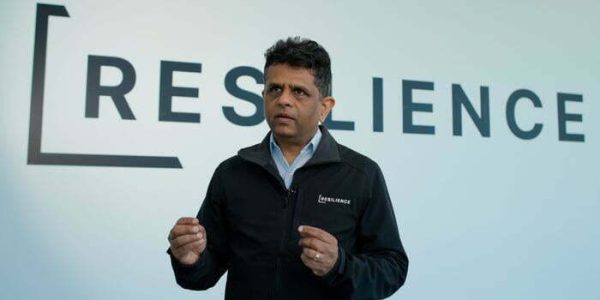
Resilience CEO Rahul Singhvi, Source: Resilience
National Resilience, being such a young company, has very few clients and there is little publicly available information on its manufacturing capabilities aside from the company’s website. The firm only acquired its first commercial manufacturing plant in March 2021, located in Boston, MA and purchased from Sanofi, followed shortly thereafter by the acquisition of another separate plant located in Mississauga, Ontario, Canada. Makeovers were announced for the plants, but little is publicly known about their progress. Prior to the acquisitions, the company had been subleasing a Bay area facility in Fremont, California. Reporters were puzzled at the time as to why a company with roughly 700 employees at the time had acquired a total of 599,00 square feet of manufacturing space after having only emerged from stealth less than 6 months prior.
In April 2021, National Resilience acquired Ology Bioservices Inc., which had received a $37 million contract from the US military the previous November to develop an advanced anti-COVID-19 monoclonal antibody treatment. This acquisition also provided National Resilience with its first Biosafety Level 3 (BSL-3) laboratory and the ability to manufacture cell and gene therapies, live viral vaccines and vectors and oncolytic viruses.
Despite being in the earliest stages of developing its “revolutionary” manufacturing capabilities, National Resilience entered into a partnership with the Government of Canada in July of last year. Per that agreement, the Canadian government plans to invest CAD 199.2 million (about $154.9 million) into National Resilience’s Ontario-based subsidiary, Resilience Biotechnologies Inc. Most of those funds are destined for use in expanding the Ontario facility that Resilience acquired last March and which is now manufacturing the mRNA for Moderna’s COVID-19 products. Canada’s Minister of Innovation, Science and Industry, François-Philippe Champagne, asserted at the time that the investment would “build future pandemic preparedness” and help “to grow Canada’s life science ecosystem as an engine for our economic recovery.” More recently, in 2022, the company has announced a few new clients – Takeda, Opus Genetics and the US Department of Defense.
According to National Resilience’s executives, the company’s ambitions apparently go far beyond manufacturing RNA and viruses. For instance, Resilience CEO Rahul Singhvi has claimed that the company is seeking to build “the world’s most advanced biopharmaceutical manufacturing ecosystem.” Yet, Singhvi has declined to offer much in the way of specifics when it comes to exactly how the company plans to become the planet’s most elite biomanufacturing company.
In an interview with The San Francisco Business Times, Singhvi states that Resilience is looking to fill its massive manufacturing plants with “technologies and people that can set and apply new standards for manufacturing cell therapies and gene therapies as well as RNA-based treatments.” Prior to Resilience, Singhvi was CEO of NovaVax and an operating partner at Flagship Pioneering, which played a major role in the creation and rise of Moderna.
Singhvi has further insisted that National Resilience is “not a therapeutics company, not a contractor and not a tools company” and instead aims “to boost production using the new therapeutic modalities” such as RNA-based treatments, which have become normalized in the COVID-19 era. Whereas contract manufacturers “are like kitchens, with pots and pans ready for any recipe,” “what we’re trying to do is fix the recipes,” Singhvi has explained. One member of Resilience’s board of directors, former FDA Commissioner and Pfizer Board member Scott Gottlieb, has described the company as seeking to act as the equivalent of Amazon Web Services for the biotechnology industry.
Essentially, Resilience bills itself as offering solutions that will allow “futuristic” medicines, including mRNA vaccines, to be produced more quickly and more efficiently, with the apparent goal of monopolizing certain parts of the biomanufacturing process. It also appears poised to become the manufacturer of choice for mRNA vaccines and experimental therapeutics in the event of a future pandemic, which some public health “philanthropists” like Bill Gates have said is imminent.
Perhaps the company’s most noteworthy ambition relates to their claims that they support clients through the government regulatory process. Given the company’s emphasis on speedy mass production of experimental gene therapies, its stated intention of getting the “futuristic” medical products it manufactures to market as quickly as possible seems at odds with the slower, traditional regulatory processes. Indeed, one could easily argue that the approvals of mRNA vaccines for the first time in human history during the COVID-19 crisis were only possible because of the major relaxing of regulatory procedurse and safety testing due to the perceived urgency of the situation.
Resilience seems intent on seeing that phenomenon repeat itself. As previously mentioned, the company claims to allow for the setting and application of “new standards for manufacturing cell therapies and gene therapies” and also says it plans to become a “technology-aggregating standards bearer that helps therapies come to market more efficiently.” It previously offered on its website “regulatory support” and “strategy consulting” to clients, suggesting that it would seek to mediate between clients and government regulators in order to fulfill its goal of having the products it manufactures taken to market more quickly. In addition, upon launch, the company claimed it planned to obtain unspecified “regulatory capabilities.” If so, it is certainly notable that former top Food and Drug Administration (FDA) officials are either on the company’s board or, as will be noted shortly, played a major role in the company’s creation.
The People Behind Resilience
Resilience was co-founded by Biotech venture capitalist Robert Nelsen, who is known for listening “to science’s earliest whispers, even when data are too early for just about anyone else.” Nelsen was one of the earliest investors in Illumina, a California-based gene-sequencing hardware and software giant that is believed to currently dominate the field of genomics. As mentioned in a previous Unlimited Hangout investigation, Illumina is closely tied to the DARPA-equivalent of the Wellcome Trust known as Wellcome Leap, which is also focused on “futuristic” and transhumanist “medicines.” Nelsen is now chairman of National Resilience’s board, which is a “Who’s Who” of big players from the US National Security State, Big Pharma and Pharma-related “philanthropy.”

Bob Nelsen of ARCH Venture Partners, Source: ARCH Venture Partners
However, while Nelsen has been given much of the credit for creating Resilience, he revealed in one interview that the idea for the company had actually come from someone else – Luciana Borio. In July of last year, Nelsen revealed that it was while talking to Borio about “her work running pandemic preparedness on the NSC [National Security Council]” that had “helped lead to the launch of Nelsen’s $800 million biologics manufacturing startup Resilience.”
At the time of their conversation, Borio was the vice president of In-Q-tel, the venture capital arm of the CIA that has been used since its creation in the early 2000s to found a number of companies, many of which act as Agency fronts. Prior to In-Q-Tel, she served as director for medical and biodefense preparedness at the National Security Council during the Trump administration and had previously been the acting chief scientist at the FDA from 2015 to 2017.
Borio is currently a senior fellow for global health at the Council on Foreign Relations, a consultant to Goldman Sachs, a member of the Bill Gates-funded vaccine alliance CEPI, and a partner at Nelsen’s venture capital firm ARCH Venture Partners, which funds Resilience. Nelsen’s ARCH previously funded Nanosys, the company of the controversial scientist Charles Lieber. Around the time of her conversation with Nelsen that led to Resilience’s creation, Borio was co-writing a policy paper for the Johns Hopkins Center for Health Security that recommended linking COVID-19 vaccination status with food stamp programs and rent assistance as a possible means of coercing certain populations to take the experimental vaccine.
Borio is hardly Resilience’s only In-Q-Tel connection, as the CEO of In-Q-Tel, Chris Darby, sits on the company’s board of directors. Darby is also on the board of directors of the CIA Officers Memorial Foundation. Darby was also recently a member of the National Security Commission on Artificial Intelligence (NSCAI), where members of the military, intelligence community and Silicon Valley’s top firms argued for the need to reduce the use of “legacy systems” in favor of AI-focused alternatives as a national security imperative. Among those “legacy systems” identified by the NSCAI were in-person doctor visits and even receiving medical care from a human doctor, as opposed to an AI “doctor.” The NSCAI also argued for the removal of “regulatory barriers” that prevent these new technologies from replacing “legacy systems.”
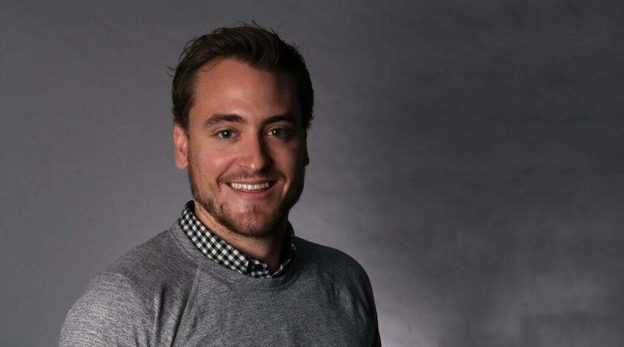
Resilience Board Member Drew Oetting, Source: 8VC
Another notable board member, in discussing Resilience’s intelligence ties, is Drew Oetting. Oetting works for Cerberus Capital Management, the firm headed by Steve Feinberg who previously led the President’s Intelligence Advisory Board under the Trump administration. Cerberus is notably the parent company of DynCorp, a controversial US national security contractor tied to numerous scandals, including scandals related to sex trafficking in conflict zones. Oetting is also part of the CIA-linked Thorn NGO ostensibly focused on tackling child trafficking that was the subject of a previous Unlimited Hangout investigation.
Oetting is also the co-founder of 8VC, a venture capital firm that is one of the main investors in Resilience. 8VC’s other co-founder is Joe Lonsdale and Oetting “started his career” as Lonsdale’s chief of staff. Lonsdale is the co-founder, alongside Peter Thiel and Alex Karp, of Palantir, a CIA front company and intelligence contractor that is the successor to DARPA’s controversial Total Information Awareness (TIA) mass surveillance and data-mining program. In addition, Oetting previously worked for Bill Gates’ investment fund.
Also worth noting is the presence of Joseph Robert Kerrey, former US Senator for Nebraska and a former member of the conflict-of-interest-ridden 9/11 Commission, on Resilience’s board. Kerrey is currently managing director of Allen & Co., a New York investment banking firm which has hosted an annual “summer camp for billionaires” since 1983. Allen & Co. has long been a major player in networks where organized crime and intelligence intersect, and is mentioned repeatedly throughout my upcoming book One Nation Under Blackmail. For instance, Charles and Herbert Allen, who ran the firm for decades, had considerable business dealings with organized crime kingpins and frontmen for notorious gangsters like Meyer Lansky, particularly in the Bahamas. They were also business partners of Leslie Wexner’s mentors A. Alfred Taubman and Max Fisher as well as associates of Earl Brian, one of the architects of the PROMIS software scandal – which saw organized crime and intelligence networks cooperate to steal and then compromise the PROMIS software for blackmail and clandestine intelligence-gathering purposes. Allen & Co. was a major investor in Brian’s business interests in the technology industry that Brian used in attempts to bankrupt the developers of PROMIS, Inslaw Inc. and to market versions of PROMIS that had been compromised first by Israeli intelligence and, later, the CIA.
In addition to these intelligence-linked individuals, the rest of Resilience’s board includes the former CEO of the Bill & Melinda Gates Foundation, Susan Desmond-Hellmann; former FDA Commissioner and Pfizer board member, Scott Gottlieb; two former executives at Johnson & Johnson; former president and CEO of Teva Pharmaceuticals North American branch, George Barrett; CalTech professor and board member of Alphabet (i.e. Google) and Illumina, Frances Arnold; former executive at Genentech and Merck, Patrick Yang; and Resilience CEO Rahul Singhvi.
To Boost or Not to Boost
It is certainly telling that the normally publicity hungry Moderna has said so little about its partnership with Resilience and that Resilience, despite its ambitious plans, has also avoided the media limelight. Considering Moderna’s history and Resilience’s connections, there may be more to this partnership that meets the eye and concerned members of the public would do well to keep a very close eye on Resilience, its partnerships, and the products it is manufacturing.
Given that we now live in a world where government regulatory decisions on the approval of medicines are increasingly influenced by corporate press releases and normal regulatory procedures have fallen by the wayside for being too “slow,” there is likely to be little scrutiny of the genetic material that Resilience produces for the “medicines of tomorrow.” This seems to be already true for Moderna’s recently retooled COVID-19 vaccine, as there has been no independent examination of the new genetic sequence of mRNA used in the Omicron-specific vaccine candidate or its effects on the human body in the short, medium or long term. For those who are skeptical of the outsized role that intelligence-linked companies are playing in the attempted technological “revolution” in the medical field, it is best to consider Resilience’s role in the upcoming fall vaccination campaign and in future pandemic and public health scenarios before trying its “futuristic” products.
Whitney Webb has been a professional writer, researcher and journalist since 2016. She has written for several websites and, from 2017 to 2020, was a staff writer and senior investigative reporter for Mint Press News. She currently writes for The Last American Vagabond.
Featured Video

The Truth About the Trump Shootings with Ken Silva
or go to
Aletho News Archives – Video-Images
From the Archives
Trans ‘milk’ as good as the real thing – NHS
RT | February 18, 2024
The drug-induced nipple secretions of trans women are as good as mothers’ breast milk for babies, the University of Sussex Hospitals NHS Trust claimed in a letter to campaigners made public in a report by British think tank the Policy Exchange on Sunday.
The healthcare trust’s medical director, Rachel James, argued that the off-label prescription drug cocktail men transitioning to female take in order to produce milk was “similar to the natural hormones which encourage lactation to develop when the baby is newly born.”
“The evidence which is available demonstrates that the milk is comparable to that produced following the birth of a baby,” James wrote in the letter, sent to Children of Transitioners last August.
Biological men who wish to lactate must first take hormones to grow milk glands and then take high doses of either domperidone or metoclopramide to stimulate milk production. Neither drug is approved for this use, though they are occasionally prescribed off-label to biological women who have trouble lactating.
However, domperidone’s own manufacturer, Janssen, warns patients the drug “may cause unwanted side effects affecting the heart in a breastfed baby” and “should be used during breastfeeding only if your physician considers this clearly necessary.” … continue
Blog Roll
 Aletho News
- Seyed M. Marandi: U.S. Strike Imminent – Toward Total War in the Middle East
- Russia Voted Under Fire. Washington Is Loading the Tankers.
- 12 Things Your Oncologist Was Trained Not to Tell You
- Anthrax Attacks Paved Way for COVID-Era ‘Junk Drugs and Vaccines’
- How Real Is the Impact of Western Sanctions on Israel?
- France, You Are Guilty: How Paris Turned Western Sahara into the Maghreb’s Powder Keg
- 2025 Nature Paper Claiming Worsening Global Drought Gets RETRACTED …Heavily Flawed
- Your Milk Is Not the Problem
- The Truth About the Trump Shootings with Ken Silva
- ARE PATIENTS BEING PROPERLY INFORMED ABOUT OZEMPIC?
- If Americans Knew
- An error has occurred; the feed is probably down. Try again later.
- No Tricks Zone
- 2025 Nature Paper Claiming Worsening Global Drought Gets RETRACTED …Heavily Flawed
- New Study: ‘Global Drought Shows No Detectable Recent Acceleration Under Climate Warming’
- Economic Masterminds: German Socialists Suggest Taxing Productivity Gains Stemming From Using AI
- The South China Sea Has Not Been Cooperating With The Climate Change Narrative
- Energy Crisis: Germany Enters Heating Season With Historically Low Gas Reserve Fill Levels
- New Study: The Antarctic Ice Sheet Gained Mass From 2020-2024 Due To Staggering Snow And Ice Accumulation
- Study: Ocean Heating Rates From Thousands Of Years Ago ‘Dwarf’ Modern Ocean Heating Rates
- Climate Extremists Target, Attack Large-Scale Power Grid Infrastructure In Germany!
- New Study: Antarctic Ice Melt Has Contributed Less Than 1 Centimeter To Sea Level Rise In The Last 30 Years
- Fear Of Debate: Alarmist German Climate Scientist Calls On Mainstream Media To Discredit Skeptic Voices
 Aletho News