THE headline, in lofty bold type across two full pages, screams: ‘6million follow anti-vaxxer lies’. The Mail on Sunday is firing a full salvo from the good ship Booster. On the same pages it ‘exposes’ some anti-vaxx military-style group ‘planning mayhem’ and hands the Health Secretary Sajid Javid a column to call out ‘dangerous nonsense’ from extreme anti-vaxxers.
It is a telling postscript to a week in which Boris Johnson seemed to have the needle stuck (no pun intended) on the word ‘booster’ and the newly-knighted Chris Whitty again over-stepped the mark from unelected adviser to public influencer.
The vaccine voices are getting louder and more strident: ‘misinformation’ has become ‘lies’ and persuasion is morphing dangerously close to intimidation. They’re turning up the heat on those who exercise their legal, moral and medical right not to be jabbed.
Why so vigorous an offensive? Could it be that the cracks are showing, that the queues for a third jab are dwindling, that millions are wondering why they are ill despite being vaccinated or that Covid numbers in intensive care are significantly lower than last year? Or is it that Omicron is turning out, for most people, to be not much worse than a cold, the virus behaving just as virologists said it would? Are we approaching the herd immunity Professor Whitty craved when Covid arrived, i.e. no more expensive jabs required?
In this same week GB News granted airtime to sceptical, knowledgeable experts who have been cancelled by Twitter and labelled ‘conspiracy theorists’ and ‘spreaders of false information’ on their Wikipedia pages, while an unvaccinated doctor challenged the science with Sajid Javid on Sky News. The consultant, Steve James, has of course been called ‘deluded’ in a Twitter barrage and put down by Javid in his Mail on Sunday column, but he’s a hero to the estimated 120,000 other NHS professionals who face dismissal for remaining vaccine-free.
And these anti-vaxx lies? It’s in desperation that such world-renowned scientists as Dr Robert Malone, the father of mRNA research; Dr Peter McCullough, a cardiologist who has 1,000 publications and 600 citations in the US National Library of Medicine, and Dr Mike Yeadon, a former top scientist at Pfizer, are smeared and cancelled. Whether they are right or wrong, such experience and expertise demands a hearing. These people – and many others like them – have serious misgivings based on their specific knowledge. And opinions don’t become lies just because they question the narrative. The Mail on Sunday’s quoted six million probably follow names such as these to get a balanced view because, in general, they are not getting it from mainstream media.
Which brings us to Sir Chris Whitty. Studious, strait-laced and straight-faced, he’s been the super-spreader of gloom with his charts and graphs. Now he’s adding judgment.
First came his December message, urging people to ‘prioritise social interactions that really matter to them’. Millions took his advice, devastating thousands of businesses and ruining many a family Christmas. And his words were counter to Boris Johnson’s, however they tried smoothing it over.
But if that was a toe in the political water, he dived right in at the latest Westminster briefing, pronouncing that ‘misinformation’ on the internet, ‘a lot of it deliberately placed’, about potential side-effects from jabs was fuelling fears about vaccine safety.
Fuelling fears? That’s rich, because that’s precisely what the Government has done from day one, with its behaviour specialists frightening and intimidating the population, ‘nudging’ us to comply over Covid, and the media acting as cheerleaders in spreading that fear. Messages have been ‘deliberately placed’ ad infinitum by the Government across TV, radio, newspapers and online, scaring us, cajoling us, appealing to community spirit and playing to guilt . . . ‘Don’t miss out’ or worse, ‘Don’t let your child miss out’. And all with taxpayers’ money.
It is astonishing that Professor Whitty, as a man of science, dismisses internet intelligence as ‘misinformation’. Does he include the aforementioned experts? How about the bona fide scientific investigations under way around the globe about Covid itself, the benefits or otherwise of restrictive measures including lockdowns and mask-wearing, the vaccine’s efficacy and, crucially, its side-effects (note: Pfizer’s clinical trials will not end until 2023, and for children 2025). Pfizer’s own early results are disturbing, as Professor Whitty and his Sage colleagues must know. Will all of this really be labelled misinformation?
Sorry, Professor, science is about questioning, reviewing, reworking, rethinking. It is not about silencing those who challenge, otherwise we would still believe the world is flat. We deserve to hear all sides of the story, particularly when our health and our children’s health is at stake. And particularly if there is even the tiniest shred of doubt about vaccine safety.
But then, maybe you have been ‘nudged’ yourself. It was disturbing to hear the Minister for Digital, Culture, Media and Sport Nadine Dorries telling the Commons that the Government has a Disinformation and Misinformation Unit, working daily with online providers to remove ‘harmful’ misinformation, particularly on Covid. Very Orwellian.
The BBC and Sky News have similar units, but their output so far points to a supposed debunking of anything that challenges the official line.
Make no mistake, freedom of speech and open debate are under serious attack, a pincer movement with arbitrary censorship by Big Tech platforms such as YouTube, Facebook and Twitter on one flank and, I’m ashamed to say, most mainstream media outlets on the other.
We accept that in times of crisis government powers necessarily increase and frequently remain long after that crisis is over, but we are on a dangerous path of authoritarianism, of overt State intervention in too many aspects of everyday lives at a time when there seems to be light at the end of the tunnel. Is it any wonder that theories beyond public health are gaining ground?
If Britain was the cradle of democracy, we are now on the road to its grave. And headlines like the Mail on Sunday’s ‘lies’ are signposts along the way.
January 11, 2022
Posted by aletho |
Full Spectrum Dominance, Mainstream Media, Warmongering, Science and Pseudo-Science, Timeless or most popular | Covid-19, COVID-19 Vaccine, UK |
Leave a comment
Why are media dialling back on the Covid hysteria? Is it because the “pandemic” is really over? Or is it an important part of the gaslighting process?
The past few days, even weeks, have seen a definite alteration in the media’s attitude to the Covid “pandemic”.
There have been numerous examples of what, if the media were not so tightly controlled, might be referred to as “dissent”. But, since the media is tightly controlled, we must call it an apparent change in the message.
Famously, Dr Steve James, a consultant anaesthetist, confronted UK Health Secretary Sajid Javid over the weakness of the science supporting vaccine mandates. Note this was actually aired on Sky News.
A few days ago Dr Rochelle Walensky, the director of the CDC, went on Good Morning America to discuss the “Omicron” wave, and ended up pointing out that most “omicron deaths” have multiple co-morbidities.
In another interview, with Fox News, Dr Walenksy said the CDC was going to publish data on how many people had died of Covid, and how many died with it.
This begs a series of important questions.
- Why is the director of the CDC (seemingly) engaging with these Covid skeptic arguments after two years of pretending they don’t exist?
- Why would Sky News air, and then tweet out, the video clip of a doctor challenging the health secretary?
- Why is the Guardian running headlines like “End mass jabs and live with Covid, says ex-head of vaccine taskforce”and quoting medical personnel who say we need to “treat Covid like the flu”?
- Why are new studies being promoted that claim T cells from ordinary colds can “protect you from Covid”?
There’s no denying the messaging, the deceleration of the narrative. There’s a new thread being woven into the story: “living with Covid”.
For over a month that has been a popular buzz phrase all over the Western press.
On December 1st, Forbes headlined:
Why Endemic Covid-19 Will Be Cause For Celebration
An article which argued, among other things, that “Endemic Covid-19 will be no worse than seasonal flu”. This sentiment has been repeated ad nauseum across multiple outlets.
We already mentioned the Guardian article from January 8th, there’s also an earlier one from Dec 5th titled “From pandemic to endemic: this is how we might get back to normal”.
CNBC ran three almost identical stories on this topic in the space of two weeks:
On New Year’s Day, Vox had a piece titled:
Despite omicron, Covid-19 will become endemic. Here’s how.
Bloomberg is reporting that Omicron signals the end “of the acute phase of the pandemic”.
Just yesterday the New York Post headlined: “COVID will become endemic by later this year, ex-Biden task-force head predicts”, and USA Today asked “The pandemic is changing. Will omicron bring a ‘new normal’ for COVID-19?“
And earlier today Channel 4 opined that “Covid in 2022” means “learning to live with the virus”.
The messaging isn’t just media-based, either. Reports are coming out that “living with Covid” is going to be the UK government’s strategy moving into 2022, with an official publication on this topic expected “within weeks”.
So, “living with the virus” is going to be added to the Covid phrasebook alongside “flatten the curve” and “the new normal”. But what does it actually entail?
When they say “living with Covid”, what do they really mean?
Well, firstly, let’s not make the mistake of trusting any government, media, or “expert”, just because they start telling 20% of the truth.
They are liars, they have an agenda, this is always true, you should always be aware of it, even when – or especially when – they are suddenly telling you what you want to hear.
They have not seen the light, they are not correcting their mistakes, they not finally seeing sense, and they are not switching sides.
There have been no Damascene conversions. There is no wave of guilty consciences sweeping through the elite.
They have an agenda. They always have an agenda.
You should also dispel all notions of “getting back to normal” from your mind. That isn’t happening.
How do we know? Because they said so.
Half the articles talking about “living with Covid” go into detail about how things won’t really change. Take this one, from the Guardian yesterday:
‘Living with Covid’ does not have to mean ditching all protective measures
It outlines that Covid could become endemic soon, that the mass testing of asymptomatic people may be counter-productive and possibly should stop, but it doesn’t reverse course on masks or vaccines and leaves the door wide open for a new “variant” to jump-start more lockdowns in the future:
“Living with Covid” does not have to mean reversing every protective measure. If better ventilation and face masks reduce the impact of winter respiratory illnesses, that is a positive, even if the NHS is no longer under imminent threat of being overwhelmed. We will also need to remain vigilant about the threat from new variants, which could still cause big setbacks. There is no guarantee that another variant, more infectious and more virulent than Omicron, could emerge in the future. Scientists say that supporting global vaccination efforts will be crucial to securing the path to normality.
Masks, working from home, and social distancing in crowded settings could all be “sticking around”, according to one of the above CNBC articles. And “Covid Boosters could become like annual flu shots”.
Meanwhile, “experts” are warning that even once Covid is endemic we should prepare for “surges” every three or four months.
It seems “living with the virus” means maintaining the status quo, loosening a few restrictions, but leaving the path clear for new waves of fear porn should the need arise.
But why? Why are they doing this now?
It could be that there are splits and factions, fractures along the floors of the corridors of power. Perhaps some members of the great big club want to halt the Pandemic where it is, afraid that any more progress along the “Great Reset” path may imperil their own position or their own wealth.
Maybe.
What I see as more likely is that they sense they have over-extended themselves already, and that stretching further could break their entire story to pieces.
To use an apt metaphor, imagine the “Great Reset” agenda as an invading army, marching through town after town, winning battle after battle and burning as they go.
There comes a point where you have to stop. Your supply lines are pulled taut, your men are tired and numbers dwindling, and the occupied citizens are putting up more and more resistance. Push on now, and your entire campaign could crumble.
What you do in that situation is withdraw to a defensible position and fortify it. You don’t give back the land you’ve taken, or not much of it at least, but you stop pushing forward.
The people whose land you have invaded will be so glad the war is over, so tired of fighting, they’ll be so relieved by the respite before realising how much of their land you’ve taken away. They may even say “let them keep it, as long as they stop attacking us”.
That’s how conquest works, from the days of ancient Rome and beyond. A cycle of aggression followed by fortification.
When we switch from “pandemic” to “endemic”, we won’t be getting our rights back, the vaccine passes and surveillance and the culture of paranoia and fear will remain, but people will be so relieved at the pause in the campaign of fear and propaganda they will stop resisting.
They won’t push back, and the “New Normal” will literally become just that, normal.
Hell, they’ll probably greenlight funding for anything Bill Gates wants to do to make sure “Covid is the last pandemic”.
And then, one day when people are nice and docile again, a new variant will come back, or we’ll need a “climate lockdown”, and the push for control of every aspect of our lives will start up again in earnest.
The best thing we can do is not fall into the trap.
The press politicians and Big Pharma didn’t all just realise the truth, they’re just using some small parts of truth they’ve been ignoring for two years to fortify their position.
But that doesn’t make it a bad thing.
The very fact they feel the need to do so shows that the resistance is building, and that they’re are trying to lull us into relaxing.
Now would be the worst time to stop fighting.
January 10, 2022
Posted by aletho |
Civil Liberties, Mainstream Media, Warmongering, Science and Pseudo-Science, Timeless or most popular | Covid-19, COVID-19 Vaccine, Human rights, UK, United States |
Leave a comment
British warships deployed to the South Atlantic after Argentina’s invasion of the Falkland Islands [Islas Malvinas] in 1982 were armed with dozens of nuclear depth charges. Prince Andrew served on HMS Invincible, which carried 12 nuclear weapons.
The revelation is contained in a new file released to the National Archives. Marked “Top Secret Atomic,” it shows that the presence of the nuclear weapons caused panic among officials in London when they realized the damage, both physical and political, they could have caused.
The military regime in Argentina claimed the Falkland islands and invaded on April 2, 1982. The U.K. government under Margaret Thatcher dispatched a naval task force to the South Atlantic to retake the islands.
A Ministry of Defence (MoD) minute, dated April 6, 1982, referred to “huge concern” that some of the “nuclear depth bombs” could be “lost or damaged and the fact become public.” The minute added: “The international repercussions of such an incident could be very damaging.”
Nuclear depth bombs are deployed from navy ships to attack submerged submarines.
The unidentified official who wrote the minute continued:
“The secretary of state [John Nott] will wish to continue the long-established practice of refusing to comment on the presence or absence of UK nuclear weapons at any given location at any particular time.”
Heated Row
The existence of the weapons provoked a heated row between the MoD and the Foreign Office. The latter asked the MoD to “unship” the weapons. The Navy refused to do so.
The MoD noted the principal arguments in favour of keeping the weapons on board. It stated:
“In the event of tension or hostilities between ourselves and the Soviet Union concurrent with Operation Corporate [the codename given to liberating the Falklands] the military capability of our warships would otherwise be severely reduced.”
One document in the file says there was no risk of an “atomic bomb type explosion.” But there was a threat of the “disposal of fissile material” if any of the weapons was damaged which could lead to up to 50 “additional deaths” from cancer.
Even if there was no pollution in the event of a damaged or sunk nuclear weapon the Argentinians might get hold of nuclear technology and “we might have had to face acute embarrassment in the non-proliferation field,” recorded a MoD official.
Keeping Secret
A plan to offload the weapons at the British base on Ascension Island in the South Atlantic Ocean was rejected by the Navy. It said this would delay the passage of the task force to the Falklands and that the operation would not be kept secret.
Instead, the weapons were transferred from the frigates and destroyers to the larger aircraft carriers, HMS Hermes and HMS Invincible, where the weapons could be better protected. Prince Andrew served as a helicopter pilot on Invincible during the war.
By the middle of May 1982, the Hermes had 18 nuclear weapons on board and Invincible 12, while the Royal Fleet Auxiliary ship, Regent, had one, according to the file. The ships were within the “total exclusion zone” imposed by Britain around the Falkland Islands, the documents say.
The file does not say whether any of these were “inert” surveillance rounds used to monitor the “wear and tear on the weapons”, as academic Lawrence Freedman put it in his Official History of the Falklands Campaign, published in 2005.
Surveillance and training rounds were used to test the depth charges to see how they would perform. They were identical to live weapons except the fissile material was replaced by depleted uranium and inert substances.
But even the presence of inert rounds caused alarm in the Foreign Office. Its top official, Sir Antony Ackland, wrote to Sir Frank Cooper, his opposite number in the MoD: “I was very glad to have your confirmation that HMS Sheffield was not carrying an inert round when she was hit.”
The destroyer sank on May 10, 1982 after being attacked by an Argentinian Exocet missile six days earlier.
Nuclear Free Zone
The Foreign Office was also anxious about the presence of the nuclear weapons because of the 1967 Treaty of Tlatelolco. This established a nuclear free zone in Latin America and surrounding waters, including the Falklands.
Although Britain had signed and ratified the treaty’s protocols other countries, including Argentina, had not done so. According to Freedman, Margaret Thatcher insisted that no ship carrying nuclear weapons would enter the three-mile territorial waters around the Falklands which would be a “potential breach” of the Tlatelolco treaty.
The MoD admitted in 2003 that British ships in the task force carried nuclear weapons and that a weapon container had been damaged. But the number of weapons had not been revealed before this document was transferred to the National Archives in Kew, south west London.
But a number of documents from the file have been weeded by the MoD or the Cabinet Office. They include an intriguing note, dated April 11, 1982, beginning “The Chiefs of Staff believe…” What they believed we are not allowed to know.
What About Gibraltar?
Many more documents are missing from a separate file, now declassified, entitled “Gibraltar: Impact of the Falklands Crisis”.
Gibraltarians, like the Falkland Islanders, inhabited a British “Overseas Territory” and were concerned because Spain supported Argentine claims of sovereignty over the islands just as it claimed Gibraltar, the large rock and British base on the southern tip of the Iberian peninsula.
Whitehall weeders have withheld no fewer than 73 documents from the Gibraltar file. They have done so under exemptions in the Freedom of Information Act, and, specifically, sections 27(i), 40 (2), and 41.
These cover information whose disclosure might “prejudice” the interest of the U.K. abroad, “personal data” and “information provided in confidence.” Passages in other documents in the file have also been excised.
What has the British government to hide? Documents declassified previously may offer some clues. Thatcher repeatedly expressed concern about the implications of the Falklands crisis for Gibraltar.
Despite the public rhetoric, successive U.K. governments have been prepared to negotiate about sovereignty of the Falklands and sought a joint sovereignty agreement with Spain over Gibraltar in 2000 and again in 2002.
Thatcher’s government secretly offered to hand over sovereignty of the Falklands islands two years before the invasion by Argentine forces in 1982. The cabinet’s defence committee approved a plan whereby Britain would hand Argentina titular sovereignty over the islands, which would then be leased back by Britain for 99 years.
Lord Carrington resigned as foreign secretary over the Argentine invasion of the Falklands. He told the subsequent Franks Committee, which inquired into the run-up to the invasion, that British policy had been one of neglect and hoping for the best. “We did not have any cards in our hands”, he said.
Richard is a British editor, journalist and playwright, and the doyen of British national security reporting.
January 10, 2022
Posted by aletho |
Environmentalism, Militarism, Timeless or most popular, War Crimes | Falkland Islands, Islas Malvinas, Latin America, UK |
Leave a comment
Masking is not normal and should not be normalised
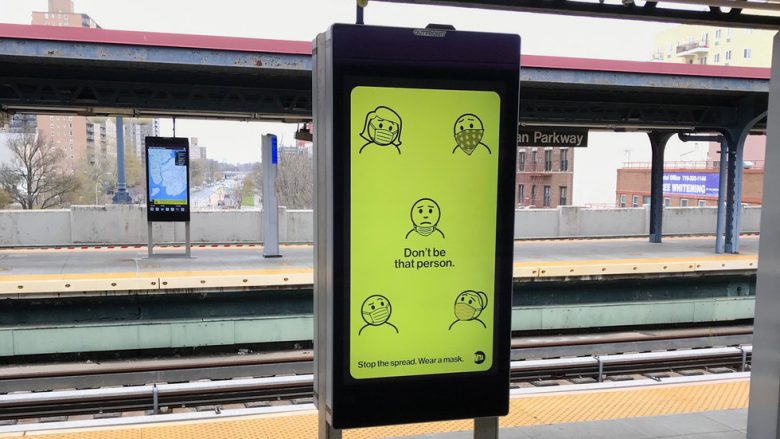
In the week when the requirement (or is it only a ‘recommendation’?) to mask children in the classroom was reinstated, it is worthwhile to consider the likely reasons underpinning the decision to return to a restriction that is both ineffective and harmful. Undoubtedly, there has again been pressure from the education unions for pupils to cover their faces, motivated either by a baseless belief that such a measure will reduce the risk of teachers contracting the virus, or perhaps a desire to further damage Government credibility by causing more disruption in our schools. Whatever their reason, at this juncture it is timely to revisit the range of circumstantial evidence that supports what HART believes to be the most plausible reason for compelling the healthy to wear face coverings: to increase compliance with future COVID-19 restrictions and the vaccination rollout.
Prior to June 2020, public health experts did not endorse masking healthy people in the community as a means of reducing viral transmission. In March 2020, Dr Jenny Harris (England’s Deputy Chief Medical Officer) was unequivocal when she stated, ‘For the average member of the public, masks are really not a good idea’ and that ‘People can put themselves at more risk than less’. North of the border, Professor Jason Leitch (Scotland’s Clinical Director) was equally emphatic when – in April 2020 – he said, ‘The global evidence is masks in the general population don’t work’. Strikingly, in December 2020 – several months after mask mandates had been imposed in the UK – the World Health Organisation (WHO) published a document titled, Mask use in the context of COVID-19 that formed the conclusion that, ‘There is only limited and inconsistent scientific evidence to support the effectiveness of masking healthy people in the community’. Many contemporary public figures spread a similar message.
So what changed in 2020 that flipped the public health experts into a pro-mask narrative?
One thing is clear: it was not in response to the advent of robust scientific evidence showing that face coverings significantly reduce viral transmission. On the contrary, a review of 14 controlled studies, published in May 2020, concluded that masks did not significantly lessen the spread of influenza in the community, protecting neither the wearer nor others. Although it is not possible to draw an unequivocal conclusion about the reason for the volte-face, several factors are consistent with masks being deployed primarily to enhance compliance with the Government’s COVID-19 interventions.
Deborah Cohen, a medically-qualified correspondent working for the BBC Newsnight programme, stated (in July 2020) that various sources had informed her that the WHO had recommended masks in response to political lobbying, and when she put this possibility directly to the WHO they did not deny it. Also, in her book, A State of Fear, Laura Dodsworth interviewed Gavin Morgan – an educational psychologist and member of the SPI-B (the behavioural science subgroup of SAGE) – who told her that his antipathy to masks had been nullified by some colleagues in the group who believed they were useful in promoting a sense of ‘solidarity’, strengthening people’s feelings of cohesion in the collective fight against the virus.
Further support for the compliance explanation derives from an examination of the activities of the Government’s behavioural scientists who, throughout the pandemic, have recommended the use of covert psychological ‘nudges’ as a means of promoting people’s acceptance of COVID-19 restrictions and the subsequent vaccine rollout. Masking healthy people (adults and children) significantly enhances two fundamental ‘nudges’ used within this campaign. First, the exploitation of fear to promote compliance with Government diktats has been well documented. Masking people in community settings, as well as being one of the restrictions fuelled by fear, is also a powerful way of perpetuating fear. Acting as a crude reminder that danger is – purportedly – all around, face coverings will also prevent disconfirmation of anxious beliefs, preventing the wearer from concluding that our communities are now safe enough to re-engage with in a normal way. A self-reinforcing restriction; something that would strongly appeal to our ethically-compromised behavioural scientists.
Second, the awareness of ‘norms’ – the prevalent views and behaviour of our fellow citizens – can exert pressure on us all to conform, and this widely-deployed ‘nudge’ is also greatly strengthened by mask wearing. Normative pressure (otherwise known as peer pressure or scapegoating) is less effective in changing the behaviour of the deviant minority if there is no visible indicator of pro-social compliance rooted in communities. A face covering, or lack of one, enables instant recognition of the rule followers and rule breakers, thereby escalating the pressure to comply.
These observations as a whole are consistent with the premise that masking healthy people is primarily a compliance device. Clearly, widespread wearing of face coverings in community settings is an effective way of keeping the British public on board with any future restrictions the state decides to impose in pursuit of its agenda. Would the Government have so easily capitulated to union pressure to re-mask children in the classroom if this was not so?
January 8, 2022
Posted by aletho |
Civil Liberties, Deception, Science and Pseudo-Science | Covid-19, Human rights, UK |
Leave a comment
The unit provides no transparency
The UK Government’s “disinformation” unit is “working,” the Culture Secretary Nadine Dorries said, after she was challenged by the Labour party who said the shadowy unit shut down last year.
In the UK, both the Conservative and Labour governments support more online censorship.
“It’s not the case, it’s not true; it is there, it is working,” Nadine Dorries said in response to a question this week.
“That work takes place daily, and daily we work to remove content online that is harmful and particularly when it comes to Covid-19, daily we have contact with the online providers.”
Ministers in the UK government created a “disinformation unit” to fight the spread of “false” information about COVID-19. The government felt that people were getting misleading information about the virus on social media.
The disinformation unit included civil servants in Whitehall. They were to work with communication experts and collaborate with social media companies.
At the time, then-Culture Secretary Oliver Dowden said: “Defending the country from misinformation and digital interference is a top priority. As part of our ongoing work to tackle these threats we have brought together expert teams to make sure we can respond effectively should these threats be identified in relation to the spread of Covid-19.
“This work includes regular engagement with the social media companies, which are well placed to monitor interference and limit the spread of disinformation, and will make sure we are on the front foot to act if required.”
The team was supposed to focus on disinformation, which refers to the deliberate spreading of false information for personal gain or “trolling.”
The misleading information the government was concerned about included recommendations of cures that are ineffective or potentially “dangerous” and “false claims” about the origin of the coronavirus.
Social media companies had already begun flagging Covid-related misinformation and directing users to what they deemed reliable sources.
January 8, 2022
Posted by aletho |
Civil Liberties, Deception, Full Spectrum Dominance | Covid-19, COVID-19 Vaccine, Human rights, UK |
Leave a comment
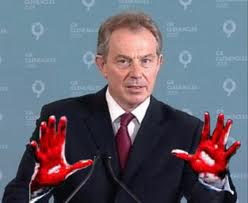 During Tony Blair’s time in office, Downing Street allegedly ordered former defence secretary Geoff Hoon to burn a secret memo that questioned the legality of the 2003 Iraq invasion. Hoon makes the bombshell claim in a new memoir.
In disclosures that have boosted ongoing attempts to strip the former prime minister of his recently conferred knighthood, Hoon reportedly revealed that Blair’s chief of staff Jonathan Powell had instructed him “in no uncertain terms” to destroy the legal document.
When reports of the allegation first surfaced in 2015, they were dismissed by Blair as “nonsense.” But Hoon has resurrected the claim in a tell-all book, titled ‘See How They Run’, according to the Daily Mail. The paper said Hoon has provided details of a “cover-up” at Downing Street.
The former Labour minister said he was sent a copy of the “very long and very detailed legal opinion,” written by then-Attorney General Peter Goldsmith, “under conditions of considerable secrecy” and told he should “not discuss its contents with anyone else.”
Describing it as “not an easy read,” Hoon said he “came to the view” after several readings that the memo was “not exactly the ringing endorsement” of the war effort that the British government and military chiefs had hoped for. Goldsmith had apparently written that the invasion would be lawful only if Blair believed it was in the UK’s national interest.
“When my Principal Private Secretary, Peter Watkins, called Jonathan Powell in Downing St and asked what he should now do with the document, he was told in no uncertain terms that he should ‘burn it.’”
However, Hoon said he and Watkins defied the order and decided to lock the memo in a safe at the Ministry of Defence instead. He noted that the document is “probably still there.”
While Blair has yet to comment, Powell has denied ordering Hoon to burn the memo, telling the Daily Mail that, at Goldsmith’s request, he had asked the former defence secretary to “destroy” a separate “minute” on the legality of the invasion that had been sent months earlier.
The explosive claims come as over 750,000 people have signed an online petition to strip Blair of his knighthood. Anti-war activists have long accused Blair of war crimes for sending British troops into Iraq and Afghanistan.
January 6, 2022
Posted by aletho |
Book Review, Deception, Timeless or most popular, War Crimes, Wars for Israel | Iraq, UK |
Leave a comment
The Government on Wednesday published the evidence informing its recent controversial decision to recommend all secondary school pupils wear face masks in classrooms.
The new document from the Department for Education (DfE) explains that the decision “has been taken on the recommendation of UKHSA and is based on a range of evidence”. It says the Government has “balanced education and public health considerations, including the benefits in managing infection and transmission, against any educational and wider health and wellbeing impacts from the recommended use of face coverings”.
While conceding that the “direct COVID-19 health risks to children and young people are very low” – and rejecting SAGE’s advice to recommend masks in primary school classrooms (yes, really) – it claims that “the balance of risks for secondary classrooms has changed at this point in time, in accordance with the evolving evidence and the phase of the pandemic”.
The document summarises its evidence as follows:
Face coverings can be effective in contributing to reducing transmission of COVID-19 in public and community settings. This is informed by a range of research, including randomised control trials, contact tracing studies, and observational studies – assessed most recently by UKHSA, described in a review conducted in November 2021. The review’s conclusions were broadly in line with those of a previous Public Health England review; however, the addition of randomised control trials and substantially more individual-level observational studies increases the strength of the conclusions and strengthens the evidence for the effectiveness of face coverings in reducing the spread of COVID-19 in the community, through source control, wearer protection, and universal masking.
In fact, though, the UKHSA review from November 2021 found no high quality studies (except, it claims, the ONS study, which really isn’t high quality). Of the two randomised controlled trials (RCTs) that have been done and which were cited by the UKHSA, the one from Denmark found no statistically significant reduction in COVID-19 incidence from surgical masks (the study didn’t look at cloth masks) while the Bangladesh mask study found no benefit from cloth masks and the reported benefit from surgical masks was just 11%, with a 95% confidence interval that included zero. The UKHSA review also considered 23 observational studies, which it said had “mixed” results and many of which were of low quality and small.
This does not seem a strong basis to claim a large effect for mask wearing. A recent more comprehensive review (which included earlier evidence for other flu-like viruses) by Ian Liu, Vinay Prasad and Jonathan Darrow for the Cato Institute, entitled “Evidence for Community Cloth Face Masking to Limit the Spread of SARS‐CoV‑2: A Critical Review“, concluded that: “More than a century after the 1918 influenza pandemic, examination of the efficacy of masks has produced a large volume of mostly low- to moderate-quality evidence that has largely failed to demonstrate their value in most settings.”
That is a better summary of the evidence than the DfE managed.
Needless to say, the DfE gives the propaganda value of masking a nod: “It can be a visible outward signal of safety behaviour and a reminder of COVID-19 risks.”
Notably, there is no mention in this document of the potential harms of wearing a mask for an extended period, such as the impact on breathing, the heart, or the skin. Contamination gets a brief mention, though it’s quickly dismissed:
Face masks and coverings will become highly contaminated with upper respiratory tract and skin micro-organisms. Disposal of single-use face coverings could theoretically pose a risk of transmission for inappropriately discarded face coverings, but it is very likely that the reduction in transmission risk due to reduced droplet and aerosol emissions from wearing a face covering significantly outweighs any potential for enhanced risk of transmission through inadvertent contact with a contaminated face covering. This is likely to hold regardless of duration that the face covering is used.
The reference provided for these claims is a SAGE document from September 2020, “Duration of Wearing of Face Coverings.” This is an interesting document, but it can scarcely be said to support the claims the DfE is making. On harms from masks, for example, it says:
Neither surgical masks nor face coverings are designed for use for extended periods. Wearing a face covering for an extended period can maintain a higher moisture level around the face which can be uncomfortable for some people and may increase the likelihood of skin complaints. Masks will become highly contaminated with upper respiratory tract and skin micro-organisms. A review of the downsides of face masks and face coverings (by Bakhit et al) found 20 studies reporting irritation and discomfort from using masks. Participants in studies with surgical or cloth masks reported difficulty breathing (12%-34%), facial irritation and discomfort (11-35%). More serious symptoms of headache, acne, rashes were associated with use of N95 and goggles. A study among healthcare workers (by Han et al) associates acne with extended duration of wearing. …
In a clinical study of extended wearing (by Chughtai et al), 124/148 participants reported at least one problem associated with mask use including pressure on face, breathing difficulty, discomfort, trouble communicating with the patient and headache. …
Measurements of heart rate during activity (by Li et al) showed significantly lower rates with a surgical mask compared to N95. In a study (by Fikenzer et al) of healthy young male volunteers surgical masks and FFP2/N95 respirators, both had a significantly marked negative impact on pulmonary capacity (FEV, PEV and PEF) while wearing the mask (with a spirometry mask) during exercise.
The DfE document omits to mention any of these issues. It does, however, include some recognition of the negative impact on education. It mentions a survey conducted by the Department in March 2021 that found “80% of pupils reported that wearing a face covering made it difficult to communicate, and more than half felt wearing one made learning more difficult (55%)”. It also mentions a DfE survey from April 2021 that found “almost all secondary leaders and teachers (94%) thought that wearing face coverings has made communication between teachers and students more difficult, with 59% saying it has made it a lot more difficult”. It adds:
Research into the effect of mask wearing on communication has found that concealing a speaker’s lips led to lower performance, lower confidence scores, and increased perceived effort on the part of the listener. Moreover, meta-cognitive monitoring was worse when listening in these conditions compared with listening to an unmasked talker. A survey of impacts on communication with mask wearing in adults reported that face coverings negatively impact hearing, understanding, engagement, and feelings of connection with the speaker. People with hearing loss were impacted more than those without hearing loss. The inability to see facial expressions and to read lips have a major impact on speech understanding for those with hearing impairments. The worse the hearing, the greater the impact of the mask.
What about the evidence for the claims the document does make – that it is “very likely” that the transmission reduction from wearing a mask “significantly outweighs any potential for enhanced risk of transmission through inadvertent contact with a contaminated face covering” and that “this is likely to hold regardless of duration that the face covering is used”. This is what the cited SAGE document says:
There is a lack of good evidence relating to the wearing of face coverings, with very little data relating to duration of wearing. In particular we suggest that the following aspects would benefit from further research:
• Effectiveness of face coverings as a source control after longer duration wearing, including analysis of the influence of moisture on the performance of different types of face coverings.
• Analysis of the potential risk of transmission due to contaminated face coverings (during and after removal).
• Assessment of the prevalence of skin complaints associated with face coverings, including an understanding of the factors that contribute and potential mitigation.
• Analysis of user acceptability of face coverings for long duration use in different settings.
In other words, there was no good evidence on the things the DfE is claiming are “likely” or “very likely”, or on much else really.
The DfE also carried out its own analysis of the impact of masks in schools.
DfE has also undertaken initial observational analysis based on data reported by 123 secondary schools that implemented face coverings during a 2-3-week period in the autumn term 2021, compared to a sample of similar schools that did not. The preliminary findings demonstrate a potential positive effect in reducing pupil absence due to COVID-19.
What did it find? It found that COVID-19 absences fell by 0.6% more (absolute reduction) in secondary schools that used face masks compared to similar schools that did not over a 2-3-week period, which amounts to an 11% relative reduction.
In a weighted sample of secondary schools that did not use face masks, the average COVID-19 absence rate fell by 1.7 percentage points from 5.3% on October 1st 2021 to 3.6% in the third week of October. This is equivalent to a 32% decrease.
In secondary schools that did use face coverings (either face coverings only or a combination of face masks and additional communications e.g. providing more communications to parents but not introducing any further measures such as increased testing), the average COVID-19 absence rate fell by 2.3 percentage points from 5.3% on October 1st 2021 to 3.0% in the third week of October. This is equivalent to a 43% decrease.
At surface level, this suggests that COVID-19 absence fell by 0.6 percentage points more (an 11% relative difference) in secondary schools that used face masks compared to similar schools that did not over a 2-3-week period.
However, the study had numerous limitations, which made the finding a “non-statistical and unknown clinical significant” reduction, i.e., it may just be chance.
There is a level of statistical uncertainty around the result. The analysis is non-peer reviewed and with the current sample size, shows a non-statistical and unknown clinical significant reduction in infection in a short follow up period, including that a ‘false positive’ (i.e. finding that face coverings saw reduced absence when the finding is actually by chance) would emerge around 15% of the time; a 5% threshold is widely used to declare statistical significance in academic literature.
Therefore, further work should be done to extend the analysis in terms of scope: for example, looking at different statistical methodologies, capturing different and longer treatment time periods and controlling for a wider number of school and local area variables to ensure this is a consistent finding.
The statistical uncertainty around the result was such that the 95% confidence interval for the effect size included zero (note in the below the upper CI is positive).

What’s more, the control group of 1,192 schools that didn’t use masks were very different to the 123 treatment schools which did, so that the above findings only emerged after significant weighting was added to the control group schools using a process the document calls “entropy balancing”.
Exploration of the data showed that the control and treatment group had differing characteristics, so weights for the control group schools were calculated using entropy balancing.
Prior to this weighting, the non-mask schools actually had lower average absence rates throughout the study period – though the treatment schools reduced more from their higher starting point.
Prior to weighting, the mean absence rate of the control group increases across the treatment period, whereas the mean absence rate of the treatment group decreases. However, the absence rates in the control group remain lower overall than those in the treatment group.

All-in-all, not exactly robust, compelling evidence of the benefits of masking, particularly given all the well-documented harms, which the document itself either sets out or cites other documents which do.
The document at one point hints at what I suspect is the real reason masks were brought back into classrooms: “In a Unison survey of support staff, 71% said face coverings in secondary school classrooms are an important safety measure.” Conservative MP Jonathan Gullis wrote in the Times this week that: “Face masks have been a central demand of teaching unions.” Sounds vey much like politics rather than science to me. (See this recent Daily Sceptic article by Ben Irvine on the role the teaching unions played in forcing the Government to lockdown in March 2020.)
When are we going to stop harming our young people with pointless interventions to deal with a virus that poses no threat to them and let them live normal lives again?
Stop Press: Oxford Professor of Evidence Based Medicine Carl Heneghan tells Julia Hartley-Brewer he is unimpressed by the Government’s “evidence” for masking in classrooms.
January 6, 2022
Posted by aletho |
Civil Liberties, Science and Pseudo-Science | Covid-19, Human rights, UK |
Leave a comment
A huge new study has found the risk of serious heart problems called myocarditis in men under 40 soars with each dose of a Covid mRNA vaccine – and is sharply higher than the risk from a coronavirus infection itself.
The findings call into sharp question the efforts by American colleges and universities to make their students receive booster shots before returning to school this January – especially since other studies have shown that the risk of post-vaccine myocarditis is concentrated not merely in men under 40 but in those aged 16-25.
The study, which British researchers released in late December, showed that the risk of myocarditis almost doubled after the first Pfizer shot in men under 40. Then it doubled again after the second and doubled again after the third – to almost eight times the baseline risk.

For the Moderna vaccine, the risks were even higher, reaching 16-fold after the second shot. (The risk of a third Moderna shot could not be calculated because too few people received it.)
Because each Moderna shot contains 100 micrograms of mRNA, while each Pfizer shot contains 30, the findings suggest strongly that the heart risks are dose-related and likely to continue to rise with each additional shot.
The study also contained some evidence that post-vaccine myocarditis might be more dangerous than other forms of myocarditis. It showed a trend towards higher death rates in people hospitalized for myocarditis after vaccination compared to other myocarditis cases.
Both myocarditis and pericarditis are forms of heart inflammation that can be very serious, even deadly. In an appendix, the researchers reported that 263 Britons were hospitalized for myocarditis within four weeks of receiving a Pfizer shot; of those, 38, or 14 percent, died. Only about 9 percent of people hospitalized for myocarditis that did not follow an mRNA vaccination died.
The researchers did not look at other potential cardiovascular risks, such as heart attacks or irregular heartbeats, although American and European databases of post-vaccine side effects contain many reports of those as well.
The findings come even as many colleges and universities – including public schools like the University of Massachusetts at Amherst, large private schools such as Syracuse University, and Ivy League institutions such as Princeton University – demand that their students receive a booster Covid shot before returning to campus.
For nearly all these students, an mRNA shot is the only viable option, as the Johnson & Johnson shot is no longer in common use.
These colleges are likely subjecting their male students to a risk of myocarditis and pericarditis, a related illness, that is much higher than the overall risk of Covid, which is vanishingly small for healthy teenagers and young adults. Many larger universities are likely to have multiple cases of male students hospitalized for myocarditis as a result of the mandates.
The massive study was is based on data from 42 million Britons who received at least one Covid vaccine dose, including roughly 22 million who received the mRNA vaccines.
About half were given the mRNA vaccines, while the rest received AstraZeneca’s DNA/AAV vaccine, which is not available in the United States. The AstraZeneca vaccine, which works similarly to the Johnson & Johnson vaccine, had a lower risk of myocarditis than mRNA vaccines.
January 5, 2022
Posted by aletho |
Science and Pseudo-Science, War Crimes | COVID-19 Vaccine, UK, United States |
Leave a comment
Dissecting the Treaty of Versailles’s “Big Four”
In a Daily News Bulletin issued February 4, 1924, by the Jewish Telegraphic Agency, Jewish leaders across the nation publicly mourned the passing of former war-time president Woodrow Wilson, the self-described “staunch friend of the Jews.” The telegram goes on to commemorate Wilson’s “intense interest in Jewish questions” by reviewing his political deeds as president, appointing Louis D. Brandeis to the Supreme Court Bench despite vigorous opposition from the Court itself and urging the approval of the British Mandate over Palestine following the Balfour Declaration.
Nearly a century later, this adulation of America’s twenty-eighth president continues to be echoed by prominent Jewish leaders and intellectuals. In Pulitzer Prize-winning biographer A. Scott Berg’s book, “Wilson,” this formidable Head of State has influenced the decision-making of each succeeding American president up to former President Donald Trump. Furthermore, Berg argues that Wilson is the most pro-Jewish president in US history. This is attributed to Wilson’s breakaway from American isolationism, which guided the nation’s political function on the world stage for a hundred and twenty-five years.
Six months after winning a second consecutive term as president on the Democratic ticket (the first time since Andrew Jackson’s second term), Wilson asked the legislature to declare war on Germany in an imperative speech to Congress on April 2, 1917. His justification was to answer the question of the role the United States would play in the world – it was America’s duty to ensure that “the world must be safe for democracy.” This rhetoric has been repeated repeatedly by American politicians at all levels in subsequent generations, followed by military action.
As Wilson plunged the nation into Europe’s devastating four-year war which wrought 17 million deaths and 25 million wounded, he often portrayed himself as the beacon of progressive ideals, a missionary of self-determination, democracy, and multilateralism to the world and, by involuntary extension after the First World War, its conquered colonies from the ashes of the defeated German and Ottoman Empires. The question is on whose behalf and if foreign elements were acting abroad, at home, or both.
For example, it is entirely plausible today to assert that the invasion of Iraq was contrived almost entirely by high-ranking Jewish Zionists in the Bush administration for the long-anticipated purpose of removing Israel’s arch-nemesis at the time—Saddam Hussein—in another mission to destroy the Jewish State’s Arab neighbors and assert dominion over the region.The catch was that Israel would not be fronting the 2 trillion dollar bill and sacrificing 190,000 lives; that was left to the Americans.
Eighty years prior, before the founding of modern Israel, this similarly established Zionist paradigm in America’s political institutions persuaded the Wilson administration to do the same. Instead of winning the hearts and minds of the public through unbridled war propaganda and an unprecedented national tragedy for the specific purpose of creating a homeland for Jews, a cooperative network of Zionists in Britain, Russia, and the United States worked towards this goal through the imperial hand of the idealistic Wilson.
Jews long held Woodrow Wilson in high regard for his liberal politics and inclination to address their requests. When the former governor of New Jersey first ran for president in 1912, Boston’s Jewish Advocate published a political ad, pressing readers to join with “practically all the great Jewish leaders throughout the country” in endorsing him.These leaders included financier Jacob H. Schiff, philanthropist Nathan Straus, and Ambassador Henry Morgenthau. At the time, beginning in 1906, the United States was faced with the difficult task of admitting roughly ten million immigrants, mainly from Eastern and Southern Europe.
This sudden influx overwhelmed several facets of the native populace, whereby the “restrictionists” emerged with literary test campaigns as a method by which to curtail subsequent waves of immigration. The American Jewish Committee was the most active and significant anti-restricionist lobby group in each of these battles through delay and outright blockage of the legislative passage. During his tenure as president, Wilson assisted by vetoing three restrictive measures he believed were aimed principally at Jews before being overridden by Congress. The AJC’s particular fixation on the plight of Russian-Jewish immigrants caused an extensive lobbying endeavor in America’s foreign policy.
This emerging conflict of interest was sidestepped upon the outbreak of the First World War. The intense pogroms and anti-Jewish sentiment of Czar Nicholas II caused the American Jewish community to side more with Germany than with Allied forces. Immigrant Jews even prayed that the “more civilized” Germans would liberate their suppressed brethren in Eastern Europe from Russian harassment. In the Yiddish press, the enemy was portrayed vividly as: “The Jews support Germany because Russia bathes in Jewish blood.” Who will dare say that it is a crime for Jews to hate their torturers, their oppressors and murderers?” The German Foreign Office took advantage of this position in order to maintain its favor in the Jewish community; in September, 1914, Dr. Isaac Straus was even sent to the United States to manage propaganda work among Jews for the German Information Bureau located in New York.
The German Information Bureau, despite official American neutrality, could not be more pleased following its meeting with the Jewish press. This came at a time when most Americans would rather side with French and British allies out of strong ancestral ties: “So far as our relations with the very influential Jewish press are concerned, they are in good shape, and will be carefully nourished. It is critical in this regard that all news pertaining to them elevate Jewish self-esteem; for example, the appointment of Jewish officers, the installation of Jewish professors, and honors bestowed upon Jewish professors should all be sent here.”
While war efforts were being bolstered in the Jewish press, American Zionist leaders adopted a policy of neutrality for the time being, stemming from Theodor Herzl’s stance on non-partisanship in a neutral country as war raged. During this time, it was Britain’s Grand Fleet that managed the naval blockade of supplies into Germany, starving 400,000 German civilians to death. For the first two years of the First World War, German war efforts nevertheless proved supreme thanks to their unexpected arsenal of submarines against the wealthier, more weaponized Allied Powers. Imperial German forces nearly captured Paris, expelled Russia from the war, and drove the French Army into mutiny, all before a Western Front victory was barely in their grasp by 1918. On three separate occasions throughout 1916, Germany pursued avenues to negotiate for peace, but both British and French resolve maintained that peace would only come about upon Germany’s defeat.
Zionist leaders eventually came to the realization that Allied victory meant Russia’s influence would be amplified in the Near East. In early 1915, a conditional Entente agreement even allocated Constantinople to Russia. This posed an issue as Constantinople rested in the possession of the Ottoman Empire, an ally of Germany and Austro-Hungary. High-profile Zionists had their eyes eastbound on Palestine as a suitable place to lay the groundwork for a Jewish homeland. In 1896, the father of Zionism, Theodor Herzl, approached Sultan Abdul Hamid II and offered to pay off the Ottoman debt in exchange for a charter that permitted Zionists access to Palestine. The Sultan outright refused.
The prospect of a promised land for Jews never escaped one highly influential man’s attention — Justice Louis D. Brandeis. Through Brandeis, Zionist leadership “passed into American hands by default.” He was considered one of the men of “light and lead” on whom Wilson relied. Born in 1856 to secular Jewish immigrant parents from the present-day Czech Republic, he graduated from Harvard Law School at the age of 20 and settled in Boston to open a law firm focused on progressive social causes. In his early career, he was distinguished for his public advocacy against powerful corporations, mass consumerism, monopolies, and public corruption while advising methods to restrict the influence of big banks and money trusts in his collection of essays, Other People’s Money and How the Bankers Use It.
These progressive positions would later be taken up by Democratic candidate Woodrow Wilson on the larger question of the role of the national government and the future of the American economic system. By that time, Louis Brandeis was head of both the Federation of American Zionists and the American Zionist Movement after meeting the English-born Zionist leader and close associate of the late Herzl, Jacob de Haas. The prominent Jewish lawyer was converted into a staunch Zionist under the mentorship of leading Zionists during that time, such as Aaron Aaronsohn, Horace Kallen, Shmarya Levin, Bernard Rosenblatt, and Nahum Sokolow. From August 31, 1914, to October 1, 1916, Brandeis was also chairman of the Provisional Executive Committee for general Zionist affairs.
The Brandeis-Wilson coalition was the start of a political partnership with far-reaching consequences on the international scene until Wilson’s death. The opportunity for career advancement presented itself so visibly that Brandeis switched parties and carried his advocacies, including Zionism, into American political institutions as a high-ranking political figure with direct access to the newly elected U.S. president.
Upon Wilson’s presidential win in November, he noted to Brandeis, “You were yourself a great part of the victory.” During Wilson’s first year as president, Brandeis was instrumental in the behind-the-scenes creation of the Federal Reserve System in 1913. The ambitious president attempted to make Brandeis his Attorney General and later Secretary of Commerce, but intense resistance from corporate executives forced Wilson to rescind his plan to make the renowned radical part of his cabinet. Instead, he nominated him to the U.S. Supreme Court in 1916, and he was sworn in amid a public outcry.
At a time when correspondence between Zionist leaders and the American president was steadily rising, as the Great War intensified in its first year, Brandeis approached Wilson about Zionist plans, to which Wilson seemed receptive. By 1916, Brandeis established regular contact with the State Department on the future fate of the declining Turkish Empire following the war, with Hungarian-born leading Zionist and Rabbi Stephen S. Wise in communication with Wilson’s chief adviser on European politics and diplomacy during the First World War, Edward Mandell “Colonel” House, on Zionist objectives. Specifically, Wise functioned as an intermediary between Wilson and House from 1916 to 1919. Wise began his Zionist career in the late 1890’s by assisting the movement’s ideological development and organization of its membership. Another acquaintance of Herzl’s, he served as American secretary of the World Zionist Movement and was instrumental in producing the aforementioned Provisional Executive Committee for General Zionist Affairs.
Opposition to American entry into the First World War cut across political, racial, and economic lines. Various factions of society, including socialists, anarchists, syndicalists, pacifists, civil libertarians, Marxists, rural southerners, Canadian and Irish nationalists, and women’s groups, were just some of the small but vocal minorities opposing American militarism. International socialist groups, for example, were keenly aware of the capitalist mobilization the war promised to big business rivals. The working class fought, while the ruling class profited. This was America’s first debut as a global military power and pitted citizen against citizen until eventually the government itself grossly violated civil liberties under the Espionage and Sedition Acts.
In 1916, Wilson reignited his bid for re-election through his continued commitment to progressive change by calling for legislation regulating work hours and a minimum wage. Democrats campaigned on the slogan, “He Kept Us Out of War,” insisting to voters that a Republican victory would mean war with Germany. Just four months after his second inauguration, Wilson reneged on his campaign promise of neutrality and officially declared war. By this time, public resistance to this betrayal was minute. The preceding years of preparedness campaigns, patriotic zeal, and heavily propagandized press cycles swayed the consensus into viewing the war as just and necessary. Thousands more dissenters continued to be jailed, silenced, and deported under newly solidified justification.
Shortly after the U.S. entered into the war, the British Foreign Minister, Arthur J. Balfour, arrived in Washington. In a cable, James Rothschild urged Brandeis to discuss Zionism with Balfour on the viability of an English Zionist program to recognize Palestine as the Jewish national homeland. “Unanimous opinion is the only satisfactory solution for Jewish Palestine under British protectorate,” Rothschild explained in a telegram. Russian Zionists fully approve. Public opinion and competent authorities here are favorable… It would greatly help if American Jews would suggest this scheme to their government.The charitable activity of the Zionist movement was over. Now an era of wielding political power has commenced to shift the tide of international conflict under the London-Moscow-New York axis.
Only one month after American entry into the war, Brandeis followed through with Rothschild’s request. Appealing to Wilson’s progressive vision for the globe, Brandeis explained that a Jewish Palestine would fulfill the conditions of the peace settlement Wilson desired; Turkish despotism would be swept aside for a democratic government where economic and cultural development would be undertaken by a historically suppressed people.In reaction to the Balfour Declaration, Wilson said, “The allied nations, with the fullest concurrence of our government and people, agree that in Palestine shall be laid the foundations of a Jewish Commonwealth.”
Partnered with Brandeis in courting Wilson was the Austrian-born Jewish lawyer and professor, Felix Frankfurter, a lifelong committed Zionist and member of the Zionist Organization of America. Frankfurter became acquainted with Brandeis in the Parushim, a secret Zionist society, reform movement, and arguably the first modern militant Zionist organization in America. Found by their former mentor, Horace M. Kallento, Zionist purpose was “a group much like the Peace Corps, young men and women who saw the Utopian opportunity that existed for the Jewish people in Palestine and who were willing to devote themselves to an ideal.”
The ideological motivations for endorsing Zionism were personal for Wilson as well: “To think that I, the son of the manse, should be able to help restore the Holy Land to its people.” With Wilson formally persuaded, Brandeis passed along the good news via urgent cables to Rothschild in London. Two weeks later, Jacob de Haas, now advisor to Brandeis, cabled Russian born-Zionist leader and future president of the World Zionist Organization, Chaim Weizmann, not only outlining the plan for Palestine but to communicate “an accurate statement of the prevailing sentiment in the United States to be presented to the Allied Governments.”
President Wilson was later asked directly by the British government about the likelihood of issuing a declaration of sympathy for the Zionist movement. Wilson responded that the time was not ripe. A month later, Wilson placed his full backing behind the affirmation as pressure mounted against Germany’s Turkish ally to make dispensations to the Zionists. The topic of the Balfour Declaration was on the table between the two world powers. Colonel House complained to Wilson in a note: “The Jews from every tribe have descended in force, and they seem determined to break in with a jimmy if they are not let in.”
Brandeis’ influence over Wilson in regards to Zionist ambition could not be understated. Wilson once remarked that it was Brandeis to whom he owed his career. According to Frank Edward Manuel, Wilson’s interest in Zionism and including it as part of his foreign policy was “being slowly nurtured by Louis Brandeis, one of the men who stood closest to him in the early years of the administration and who became the key figure in future American intervention in Palestine.”
A roadblock in the way of the highly anticipated declaration was the Counselor to the State Department, Robert Lansing. Lansing was completely bypassed in House and Wilson’s correspondence on the Balfour Declaration. In response, Lansing argued in a letter to Wilson why America must decline Balfour’s promise, noting that, among several reasons, “many Christian sects and individuals would undoubtedly resent turning the Holy Land over to the absolute control of the race credited with the death of Christ,” a flagrant secession from the protracted Christian support for the prophetic restoration of Israel.
Lansing ordered Ambassador Walter Hines Page to investigate and report prudently the British reasons for the Balfour Declaration. In spite of political opposition within the State Department, the declaration was officially signed by Lord Balfour after a two-year process of edits by British and American Zionists and officials. Despite its official status as a British document, it was Brandeis who spearheaded its drafting and application through Wilson.
News rapidly spread worldwide upon the issuance of the Balfour Declaration, with heaps of telegrams addressed to Wilson expressing their gratitude for his contributions. Leaflets were dropped over German and Austrian territory announcing, “The hour of Jewish redemption has arrived…” The Allies are giving the land of Israel to the people of Israel… Will you join them and help to build a Jewish homeland in Palestine? Stop fighting the allies who are fighting for you, for all the Jews… An Allied victory means the Jewish people’s return to Zion.”
By the summer of 1918, Turkish resistance was waning and President Wilson took this time to formally announce his public endorsement of the Balfour Declaration in August. Three months later, Germany was the last of the Central Powers to sign an armistice agreement with the Allies. The war was over. The next battle would be held in Paris.
The ambitions of Wilson’s liberal internationalist foreign policy were outlined in the Fourteen Points and used as the basis of terms for Germany’s surrender at the Paris Peace Conference. The Peace Conference produced five treaties, one of which was the notorious Treaty of Versailles. There were a number of high-profile Jews present, not just in diplomatic positions but in many senior and important functions within the Allied delegations. This included Baron Sonnino for Italy, Edwin Montagu for Britain, Louis Klotz for France, and Paul Mantoux as the interpreter for the “Big Three”—United States, Britain, and France.
Wilson also endorsed Rabbi Wise to promote the Jewish program for Palestine in Paris. Another Zionist delegate was Frankfurter, who was among the nearly one hundred intellectuals that signed a statement of principles for the formation of the League of Free Nations Associations. This formally enacted Wilson’s mission to dispel isolationism in favor of increasing American participation in international affairs.
In the midst of empirical savagery slicing up Germany and parceling out Europe’s colonial holdings, the case for a Jewish homeland in Palestine was presented by a delegation of the Zionist Organization led by Weizmann. The terms of the newly established British Mandate involved promoting Jewish immigration and settlement, suggesting boundaries, self-government, and the assurance of religious liberty.
At the request of President Wilson, Jewish statesman and Wall Street financier Bernard Baruch attended the Paris Peace Conference as an advisor to negotiate a deal with the victorious Allied powers on the destiny of Germany. He served as a member of the American Delegation to the Preliminary Peace Conference and on the Committee on Form of Payments of Reparations. Baruch is credited with managing America’s economic mobilization in the First World War while chairman of the War Industries Board. While Baruch opposed the strenuous financial tenets of punishing Germany, he nonetheless attempted to assist the Senate in passing the Treaty of Versailles.
Baruch also played a significant role in securing France’s vote in favor of the Palestine Partition Plan. He swayed their vote by visiting France’s UN delegate and heavily suggesting that failure to support the resolution could result in America withholding desperately needed monetary support as the war devastated France’s financial market.
The renowned English economist, John Maynard Keynes, was also in attendance at the Peace Conference as a delegate of the British Treasury. Disgusted by the ravenous nature of the treaties, particularly the Versailles Treaty, Keynes publicized a negative portrayal of the treaties in his book, The Economic Consequences of the Peace. In response, Baruch paid John Foster Dulles $10,000 to ghostwrite his own book, The Making of the Reparation and Economic Sections of the Treaty, to counter Keynes by exalting the treaties.
The most significant of American Jewish attendees, however, was Justice Brandeis himself, whose task at the world’s peace tables was to assist Colonel House “in collecting peace data for President Wilson.” The task was clear: “Colonel House will devote his attention to problems concerning the war in the west, while Justice Brandeis will study the near eastern question.” Their work will form the basis for the country’s contention.”
For a liberal president known for endorsing and exporting democratic ideals even through coercion, its inconsistent implementation was noted during the peace talks and formally addressed on August 28, 1919, through the presentation of the King-Crane Commission. The commission argued that the establishment of a Jewish state in Palestine would inevitably lead to an immediate violation of the right of the indigenous Palestinian people to self-determination and deemed the Zionist program incompatible.
The report also stated that meetings with Jewish representatives led them to conclude that “the Zionists looked forward to a practically complete dispossession of the present non-Jewish inhabitants of Palestine through armed forces” and begged the Peace Conference to reject Zionist proposals. The findings of this report were suppressed for three years by Brandeis until after the Peace Accords were passed. Working diligently to ensure the stipulations of the Balfour Declaration were incorporated into the final arrangement was Frankfurter, who found the findings of the commission to “cheat Jewry of Palestine.”
As the dissolution of the former Ottoman Empire began via the Treaty of Sevres, the vehicle for colonizing Palestine as spelled out by the Balfour Declaration was put into effect under the Brandeis-guided Wilson. The Council of the League of Nations and the United States both approved the Mandate for Palestine in July of 1922. It was clear from the beginning that the flagrant denial of self-government for the Palestinian population would continue until the Jews were strong enough to take the reins of government in the region.
For four days in April 1922, Congress debated resolutions brought forth to reaffirm the colonial implications of the Balfour Declaration as urged by Zionists. One of the vocal participants of its opposition was Professor Edward Bliss Reed, who testified in a prophetic hearing before Congress about the outcome of what American support entailed: “If you indorse the Balfour declaration, you are caught absolutely in the mandate…” What I want to warn you against is getting caught up in the mandate in what I consider an impasse. It will devastate this country, Palestine. I want to prevent my country from doing something that will bring it untold trouble.”
Nevertheless, Congress was subjected to endless Zionist pressure and passed the Lodge-Fish Resolution endorsing the British Mandate for Palestine as laid out by the Balfour Declaration, which was signed by Wilson’s presidential successor, Warren G. Harding, on September 21, 1922.
When Wilson died two years later, the President of the Zionist Organization of America, Louis Lipsky, stated publicly, “Mr. Wilson followed with interest the progress of the Zionist movement even after he retired to private life.” In 1921, when informed that the Mandate for Palestine had been finally ratified, he telegraphed to the Zionist Organization of America: “I am proud that it should be thought that I have been of service to the Jewish people.”
The First World War was proclaimed to represent “the war to end all wars”, bringing about a golden future on the promise of self-determination, democracy, mutual security, and peace. The cost would only be the blood and ashes of young, idealistic men committed to the service of their nation. What resulted was the pervasive indifference and lack of cohesive understanding of the memory of the war in spite of its devastating cost. As Steven Trout tried to explain the lack of American consciousness toward the war, “What exactly should the nation recall about the war? Is neutrality failing? The bravery of the combat soldier? The futility of trench warfare? The racial discrimination that permeated the ranks? Are there domestic attacks on German Americans? The botched peace processes? ”
Not to mention the American public that had opposed entry into Europe’s war was forced to grapple with the casualties of 120,000 soldiers and the reintegration of 200,000 wounded men, crippled of mind and body. For Wilson, it was his lifelong and close political partnerships with notable Jewish Zionists fully entrenched in American institutions that prompted his breakaway from isolationism—to which the United States has never returned. More consequential was Wilson’s setting the pattern for amplifying and servicing the dominance of a foreign state as the costs continue to rise.
Footnotes
Jewish Telegraphic Agency, INC., “Leaders Pay Tribute To The Passing Of A Great Statesman,” Daily News Bulletin, last modified February 4, 1924, https://pdfs.jta.org/1924/02-04_025.pdf.
Galia Licht, “Who Was the Most Pro-Jewish U.S. President? Woodrow Wilson, Obviously, ” Haaretz.com, September 25, 2013, https://www.haaretz.com/life/books/premium-which-prez-was-most-pro-Jewish-1.5340052.
Casey Titus, “History’s Deceptive Buildup Against Saddam Hussein,” The Duran, accessed March 22, 2021, https://theduran.com/history/deceptive-buildup-against-Saddam-Hussein
Nathan Guttman, “Top White House posts go to Jews,” The Jerusalem Post, https://www.jpost.com/jewish-world/jewish-features/top-white-house-posts-go-to-jews, last modified April 25, 2006.
Paulina Cachero, “According to reports, US taxpayers have paid an average of $8,000 per person and more than $2 trillion in total for the Iraq War alone.”Business Insider, https://www.businessinsider.com/us-taxpayers-spent-8000-each-2-trillion-iraq-war-study-2020-2, last modified February 6, 2020.
Jonathan D. Sarna, “Woodrow Wilson: A Jewish Hero.”What Should We Do with His Racism? ” The Forward, November 15, 2016, https://forward.com/opinion/450092/woodrow-wilson-was-a-hero-to-jews-what-should-we-do-about-his-racism/?
Joseph Rappaport, “The American Yiddish Press and the European Conflict in 1914.” 113–28 in Jewish Social Studies 19, no. 3/4 (1957).http://www.jstor.org/stable/4465551.
Rappaport, page 116.
Jon Guttman, “Did the Germans Try to Make Peace in 1916?,” HistoryNet, https://www.historynet.com/did-the-germans-try-to-make-peace-in-1916.htm, last modified December 18, 2014.
Elis Gjevori, “How Theodor Herzl Failed to Convince the Ottomans to Sell Palestine,” https://www.trtworld.com/magazine/how-theodor-herzl-failed-to-convince-the-ottomans-to-sell-palestine-46991, last modified May 25, 2021.
Adler, Selig. “The Palestine Question in the Wilson Era.” Jewish Social Studies 10, no. 4 (1948): 303–34. http://www.jstor.org/stable/4615334.
Jewish Virtual Library, “Louis D. Brandeis,” last modified January 2016, https://www.jewishvirtuallibrary.org/louis-d-brandeis.
Jonathan D. Sarna, “Louis D. Brandeis: Zionist Leader,” Brandeis University, last updated in 1992, https://www.brandeis.edu/hornstein/sarna/americanjewishcultureandscholar.
American Jewish Archives, “A Finding Aid to the Stephen S. Wise Collection, 1893-1969,” The Jacob Rader Marcus Center of the American Jewish Archives, accessed December 31, 2021, https://collections.americanjewisharchives.org/ms/ms0049/ms0049.htm
Catherine Gilchrist, “Socialist Opposition to World War I,” Dictionary of Sydney, last modified in 2014, https://dictionaryofsydney.org/entry/socialist_opposition_to_world_war_i
Rothschild and Chaim Weizmann to Brandeis (cable), April 21, 1917 (received April 25), Zionist Archives, New York City, Jacob de Haas Archives.
Lebow, Richard Ned. “Woodrow Wilson and the Balfour Declaration.” The Journal of Modern History, 40, no. 4 (1968): 507 http://www.jstor.org/stable/1878450.
Jewish Virtual Library, “U.S. Presidential Quotes About Jewish Homeland & Israel,” Jewish Virtual Library, https://www.jewishvirtuallibrary.org/u-s-presidential-quotes-about-jewish-homeland-and-israel-jewish-virtual-library, accessed December 31, 2021.
Schmidt, Sarah. “The ‘Parushim’: A Secret Episode in American Zionist History.” American Jewish Historical Quarterly 65, no. 2 (1975): 122. http://www.jstor.org/stable/23880453
De Haas Archives, Brandeis to Rothschild (cable), May 9, 1917.
Adle, Selig. “The Palestine Question in the Wilson Era.” Jewish Social Studies 10, no. 4 (1948): 306. http://www.jstor.org/stable/4615334.
Ahmed, Hisham H. “From the Balfour Declaration to World War II: The U.S. Stand on Palestinian Self-Determination.” Arab Studies Quarterly 12, no. 1/2 (1990): 9–41. http://www.jstor.org/stable/41858937.
Brendan Devenney, “Chapter One—Zionism: The Beginning,” Medium, last modified November 2, 2021, https://medium.com/@dubhelloco/chapter-one-b8d8b77b38b8.
Levene, Mark. “Nationalism and Its Alternatives in the International Arena: The Jewish Question in Paris, 1919.” Journal of Contemporary History 28, no. 3 (1993): 522. http://www.jstor.org/stable/260644.
Gunther, Learned Hand: The Man and the Judge, 261.
“BERNARD BARUCH: A PUBLIC MAN’S PRIVATE LIFE,”https://blogs.baruch.cuny.edu/, n.d.https://blogs.baruch.cuny.edu/bernardbaruch/world-war-i/.
Saul J. Singer, “Bernard Baruch: ‘America First’,” The Jewish Press-Breaking News, Opinions, Analysis and More on Israel and the Jewish World | Last modified March 29, 2017, https://www.jewishpress.com/sections/features/features-on-Jewish-world/bernard-Baruch-America-first/2017/03/29/.
Gates Brown, “Baruch, Bernard Mannes | International Encyclopedia of the First World War (WW1),” 1914-1918-Online. WW1 International Encyclopedia, last modified March 16, 2015, https://encyclopedia.1914-1918-online.net/article/baruch_bernard_mannes.
Butler Citizen, “Zionist Louis Brandeis Takes Control of the 1919 Paris Peace Conference,” Newspapers.com, https://www.newspapers.com/clip/35334878/zionists-louis-brandeis-takes-control/, last modified October 2, 1917.
Ahmed, 23,
United States. Congress. House. Committee on Foreign Affairs, Hearings Before the Committee on Foreign Affairs, House of Representatives, Sixty-seventh Congress, Second Session, on H. Con. Res. 52, Expressing Satisfaction with the Re-creation of Palestine as the National Home of the Jewish Race April 18, 19, 20, and 21, 1922 (Kessinger Publishing, 1922), 23–24.
Jewish Telegraphic Agency, “Jews Mourn the Death of Woodrow Wilson,” Jewish Telegraphic Agency, https://www.jta.org/archive/jews-mourn-death-of-woodrow-wilson, last modified in 1921.
January 4, 2022
Posted by aletho |
Militarism, Progressive Hypocrite, Timeless or most popular, Wars for Israel | Human rights, Palestine, UK, United States, Zionism |
Leave a comment
… so what happens when you run 7 million lateral flow tests in five days? And are you ready for the “new wave” of “cases” it will likely produce?
New plans, announced before Christmas, will require every secondary school pupil in the UK to take an on-site Covid test when school resumes after the Christmas break.
The government plans, allegedly to “monitor” Covid infection in students, go on to suggest that every child should receive a follow-up test 3-4 days later.
The tests being used are lateral flow tests, which have repeatedly been shown to be completely unreliable, and can test positive using apple juice or coca-cola.
There are roughly 3.5 million school pupils aged 11-16 in the UK and they plan to test them all twice.
If just 2% of them test positive just once, the media will scream about 140,000 new “cases” of Covid in children.
Further, the “recommendations” suggest children should then continue to be tested twice a week, every week, or “more frequently if asked to do so”:
Secondary, college and university students and education staff and early years staff should then continue to test themselves twice a week, and more frequently if they are specifically asked to do so, such as in the event of an outbreak.
At least 7 million lateral flow tests per week, every week.
It’s not hard to see where it goes from there, with the headlines blaring that lack of social distancing over the holidays gave rise to a “fourth wave” (or would it be fifth? I’ve lost count).
I would start preparing for a new lockdown, if I were you.
January 3, 2022
Posted by aletho |
Civil Liberties, Deception, Science and Pseudo-Science | Covid-19, UK |
Leave a comment
An extract from ‘A State of Fear’ adds to the theory of #MassFormation
Since Professor Mattias Desmet’s theory of #MassFormation is trending on Twitter, I’ve decided to share a short extract from A State of Fear: How the UK government weaponised fear during the Covid-19 pandemic. I hope it can assist in contributing to Desmet’s very interesting theory.
The idea that you might be caught up in mass hysteria, mass formation or a psychic epidemic is a threatening one. Bear in mind, it’s just a theory. Read the extract and watch Desmet’s interview with an open mind.
An extract from the chapter “Cults, Conspiracy Theories and Psychic Epidemics”:
“It is tempting to blame the whole mess on a malevolent cult, a cabal or an evil leader. After all we could then find them, expose them and take them down. They can’t hide in the shadows forever. While I don’t think we will find anything so simple, convenient and predictably evil lurking in the shadows, I think we should look to our own shadows for the answers.
Carl Jung wrote about the ‘shadow’ and the danger of psychological projection. Our shadow is the instinctive and irrational side of ourselves. Essentially, it is more comfortable to remain ignorant of our failings, so we project them onto other people, or mythic figures: ‘baddies’. The devil is the ultimate projection of our shadow. Jung recognised that there is a tendency within collectivist movements to project elements from the shadow onto others. The vast scale of the global fear response to Covid and the shocking social re-engineering it has instigated leads me to intuit that there are deep, collective unconscious forces at work.
Although Covid is a real disease and SARS-CoV-2 is a real virus, some of the response felt ‘unreal’ if you were not caught up in the cult-like response. We have not just endured and tolerated but even demanded the curtailment of our freedoms, for a disease which has a median Infection Fatality Rate of 0.05% for under 70-year-olds globally. Our response felt unmoored from the gravity of the threat – why?
I spoke to Jungian psychotherapist, James Caspian, about mass delusions. He pointed out that Jung lived through the striking and destructive collective movements of the world wars and the Cold War. What he said then about mass movements, the shadow and projection can be applied to what is happening in the world now. ‘In times of distress people turn to visions of Utopian or Apocalyptic scenarios,’ Caspian said. ‘Jung said the really dangerous point is when insight and reflection are crushed by the mass movement and the state succumbs to a fit of weakness in that scenario. I think that’s happening. The state is afraid of some of the mass movements, such as political correctness. Rational argument is only possible if the emotionality of a situation does not exceed a critical degree. In that case reason will be supplanted by slogans and fantasies. A collective possession develops which turns into a psychic epidemic.’
The looming collective shadow has resulted in mass delusions and mass hysteria before. Humans do this, more often than you would think. Here is a collection of eclectic examples. During the Salem witch trials in 1692–93 there were hundreds of accusations of witchcraft and ultimately 19 executions. A laughter epidemic in a girls boarding school in Tanganyika in 1962 saw up to 159 girls laugh continuously for days in an outbreak of mass hysteria. The ‘glass delusion’ was a mental illness particularly affecting the noble classes most common in the 16th and 17th centuries, whereby aristocrats believed they were made of glass and could literally shatter to death. The 1528 ‘dancing plague of Strasbourg’ was an inexplicable instance of mass delusion, with hundreds of people compelled to dance, some to the death.
In other examples of mass hysteria, if not psychic epidemics, The War of the Worlds radio broadcast caused panic among listeners in the United States who thought the Martians really had invaded. And James Thurber wrote in My Life and Hard Times about the day when everybody in his town, Columbus, thought the nearby dam had broken and ran miles to escape, shouting ‘Go East!’. The dam hadn’t burst and, regardless, the water never could have reached the town anyway. It was a fascinating insight into the contagion of fear and its ability to affect the rational mind. No one had questioned where the rumour started, or noticed the reassuring lack of water, and they hadn’t even got on their horses or started their cars. They just ran, like lemmings.
I asked Caspian how people can protect themselves, and how can societies protect themselves, from psychic epidemics? ‘Jung wrote a book called The Undiscovered Self,’ Caspian told me, ‘and he talked about the plight of the modern individual. To become truly individual that person would need to mis-identify from the collective. Most people are caught up in the collective and in movements and live out their life like that. It’s easier and more comfortable to be swept along. To individuate means in practice that we say there is a collective movement but we think critically about it and we are not prepared to be swept along by it.’ Jung said that it is not microbes, not cancer, but man himself who is the greatest danger to man.
If the UK, and maybe much of the world, is suffering a psychic epidemic, how do we learn from this experience and recover now, but importantly protect against the next one? A psychic epidemic has the potential to be far more devastating than the worst of natural catastrophes. The supreme danger which threatens individuals as well as whole nations is a psychic epidemic, not a viral epidemic.
After Hitler’s defeat, Jung concluded, ‘The phenomenon we have witnessed in Germany was nothing less than the first outbreak of epidemic insanity, an eruption of the unconscious into what seemed to be a tolerably well-ordered world.’ The role of the government should be to moderate and contain a psychic epidemic and mass delusion, not to exaggerate and multiply it. If fear was an open door in spring 2020, the UK government did not allow us to walk through it, but used a battering ram to knock it down.”
January 3, 2022
Posted by aletho |
Book Review, Deception, Science and Pseudo-Science, Timeless or most popular | Covid-19, UK |
Leave a comment
Hundreds of thousands of people have signed an online petition calling for the removal of knighthood from Tony Blair. The former UK prime minister “should be held accountable for war crimes” instead, it says.
More than 400,000 signatures were left under a Change.org petition urging the UK prime minister to ask the queen to rescind the order in less than a day after it was launched.
Angus Scott, the author of the petition, says the former prime minister “caused irreparable damage to the constitution of the United Kingdom and to the very fabric of the nation’s society,” while he was in power between 1997 and 2007.
The petition specifically accuses Blair of “causing the death of countless innocent, civilian lives and servicemen” by dragging the UK into “various conflicts.”
“For this alone he should be held accountable for war crimes,” it says.
While it’s customary for British monarchs to confer most senior knighthoods on former prime ministers, Buckingham Palace’s decision to not snub Blair caused massive outrage among Brits, citing Blair’s role in the 2003 invasion in Iraq and his support for the US-led campaign in Afghanistan.
In 2017, a third of Britons said Blair should be tried as a war criminal for “knowingly misleading” the public about the premise of the invasion of Iraq after an inquiry found that there was no intelligence to back up the claim that late Iraqi leader Saddam Hussein had weapons of mass destruction.
Blair received the Most Noble Order of the Garter (the highest order of knighthood) in the New Year Honours 2022 list. Responding to the announcement, Blair called the title “an immense honor,” while Buckingham Palace said it was “graciously pleased” to present it to Blair.
January 3, 2022
Posted by aletho |
Solidarity and Activism, War Crimes | Tony Blair, UK |
Leave a comment

 Aletho News
 Aletho News