Israeli quadcopters: Ongoing crimes against humanity
By Kit Klarenberg | Al Mayadeen | January 29, 2025
In November 2024, acclaimed surgeon Nizam Mamode testified to the British parliament’s International Development Committee’s ongoing inquiry into Gaza’s “humanitarian situation”. A veteran medical professional on the frontlines of the Zionist entity’s genocide of Palestinians, primarily women and children, he repeatedly burst into tears throughout. Describing scenes he and his team personally witnessed as they tended to countless mutilated and disfigured victims, he sketched a “particularly disturbing” picture of “Israel’s” inexorable, indiscriminate maiming and murder of civilians in the wake of October 7, 2023.
Mamode’s most intense grief was exhibited while elucidating Tel Aviv’s systematic, industrial-scale use of quadcopter drones to “regularly” shoot incapacitated Palestinians – in particular, children injured or trapped by rubble, following Israeli occupation force airstrikes. Of all the horrors he and his team spectated, Mamode considered “the deliberate and persistent… targeting of civilians, day after day” in the most perverse manner. Time after time, US-supplied IOF bombs would drop “on a crowded, tented area,” then:
“The drones would come down and pick off civilians – children [as young as seven] … This is not an occasional thing. This was day after day after day of operating on children, who would say, ‘I was lying on the ground after a bomb had dropped, and this quadcopter came down and hovered over me and shot me.’ That is clearly a deliberate and persistent act; there was persistent targeting of civilians, day after day. We had one or two mass casualty incidents every day.”
Mamode, who has “worked in a number of conflict zones in different parts of the world” – including Rwanda during the 1994 genocide – said he’d “never seen anything” on the scale of the barbarity in Gaza, “ever”. This perspective was shared by “all the experienced colleagues” with whom he worked. A surgeon on Mamode’s team who’d been to Ukraine on five occasions declared the situation in Gaza to be “10 times worse.”
Benjamin Netanyahu has at last seemingly accepted a ceasefire deal, identical to multiple prior proposals he repeatedly rejected while the Gaza genocide was at its monstrous peak. Yet, in the days leading up to the settlement’s January 19 commencement, “Israel” significantly intensified its attacks on Palestinians, liberally deploying quadcopters in the process. Over the prior month too, this technology was consistently employed to not only injure and slay surviving victims of IOF bombing attacks but target victims into the bargain.
For example, on December 12, 2023, besieged northern Gaza’s last remaining orthopedic doctor Dr. Said Joudah was executed via a quadcopter. This followed attacks on medical infrastructure and personnel in the region over the prior two-and-a-half months, using the same technology. Moreover, questions abound as to whether quadcopters were used to assassinate Ismail Haniyeh, the political leader of Hamas, in July 2024. Given their lethal virtue from the Zionist entity’s perspective, and its extensive history of breaching ceasefire agreements, will their use truly end now?
‘Precise monitoring’
“Israel’s” primary supplier of killer quadcopters is Elbit Systems, a Haifa-based company with significant foreign workshops, particularly in Britain. Initially, these drones were purely used for intelligence purposes – photo and video gathering. As late as January 2023, the British Army awarded a lucrative contract to Elbit for a fleet of these drones due to their “extensive long-range reconnaissance capabilities.” Such spying potential would serve to “support combat and intelligence operations for up to 60 minutes at a time.”
Fast forward to March 2024 though, and Elbit was proudly promoting slick videos of these same unmanned apparatuses in-flight, as “birds of prey.” An accompanying entry on the company’s website actively boasts about the lethal capabilities of its quadcopters. These “agile, compact and fully stabilized weapon [systems]” are said to “enhance infantry squad lethality beyond its detection and engagement range with stand-off warfare capabilities.” Their innovative capabilities can be used to “detect, classify and track targets… day and night,” in “urban and force protection scenarios.”
It appears at some point that the Zionist entity realized quadcopters could be converted into killing machines. As Euro-Med Human Rights Monitor noted back in February 2024, Elbit drones have been “repurposed… for the deliberate and direct execution of unlawful targets.” The original intelligence gathering function of these drones, the organization added, means they “have very precise eavesdropping instruments and high-quality cameras, and can carry out additional military duties like shooting and carrying bombs, as well as be modified to become suicide drones.”
Among openly murderous drones sold and marketed by Elbit, LANIUS looms large. An official advertising prospectus brags how this “highly maneuverable and versatile drone-based loitering munition” can “autonomously scout and map buildings and points of interest for possible threats.” LANIUS “maneuvers close to the target and uses video analytics to determine entry points into a structure, map the inside of unknown buildings performing simultaneous localization and mapping, and identify combatants and non-combatants.” The system is furthermore “equipped to defeat threats using explosive payloads.”
Euro-Med Human Rights Monitor has documented how, among other savagery, Zionist quadcopters “opened fire on Palestinians who had gathered to receive flour brought by United Nations trucks” in January 2024, after “suddenly” arriving at the scene. The heinous incident killed at least 50 Palestinians and injured dozens more. These drones are furthermore “used in particular against civilians who attempt to return and inspect their homes after the Israeli military retreats from areas it has attacked by land or air.”
Such targeting of civilians, Euro-Med Human Rights Monitor contends, can only be conducted “intentionally”. The organization deduces this “is evident as the majority of Israel’s targeting takes place in public spaces where it is easy to distinguish fighters from civilians.” Moreover, Zionist forces “[fly] over the areas it targets for periods of time that are long enough to allow for the precise monitoring and evaluation of field conditions, plus most of the killings occur within a close targeting range.”
‘Military force’
The use of quadcopters for targeted murder is not explicitly prohibited or even formally regulated under international law. However, their application must always adhere to international humanitarian law related to all armed conflicts, as with any other weapon. Moreover, their routine use in extrajudicial killings of Palestinians is unambiguously war crimes and crimes against humanity under both the Geneva Conventions and the International Criminal Court’s Rome Statute. There can be little doubt that quadcopters are a fundamental component of Tel Aviv’s undeniable genocide in Gaza.
Just as gravely from “Israel’s” perspective, as efficacious as quadcopters may be in executing innocent, defenseless Palestinians in large numbers, they have proven militarily useless, if not counterproductive. In brief, they have not only failed to meaningfully harm Hamas but have served as a prospective recruitment mechanism for the Resistance group. In June 2024, the elite imperial journal Foreign Affairs set out in forensic detail how “according to the measures that matter, Hamas is stronger today than it was” on October 7, 2023.
The “growing” Resistance group had by that time “evolved into a tenacious and deadly guerrilla force in Gaza,” launching “lethal operations” in areas previously “cleared” by the IOF “easily”. Those capabilities have only expanded since, with Hamas continuing to regularly inflict significant casualties on Tel Aviv’s forces in the present. Key to the Zionist entity’s military catastrophe in Gaza, as per Foreign Affairs, is a failure to comprehend how “the carnage and devastation it has unleashed… has only made its enemy stronger.”
This bloodshed enhances the “ability [of Hamas] to recruit, especially its ability to attract new generations of the fighters and operatives.” Atrocities against civilians, including if not particularly all those involving quadcopters, have left the Resistance group unscathed while serving as a potent recruitment tool. Foreign Affairs notes average Palestinians, “often either angry over the loss of family members or friends or more generally enraged at [Israel’s] use of heavy military force,” have either joined Hamas or provided assistance to the group.
With over 60% of Palestinians in Gaza and counting having lost family members during the genocide, Hamas can “replenish its ranks, gain resources, avoid detection, and generally have more access to the human and material resources necessary” to wage war against the Zionist entity. Foreign Affairs estimated at that time, eight months into Tel Aviv’s effort to comprehensively crush the Resistance group, that Hamas fighters were “roughly ten times” larger in number than on October 7.
Meanwhile, “more than 80% of the group’s underground tunnel network remains usable for planning, storing weapons, and evading Israeli surveillance, capture, and attacks,” and “most” of its “top leadership in Gaza remains intact.” Fast forward to today, there remain no signs of the IOF having inflicted any serious damage on Hamas at all – quite the reverse. In a sense, quadcopters are a mephitic microcosm of the Zionist entity’s war effort since October 7, and armed forces more widely.
Tel Aviv has over many years constructed a military at every level that is exclusively suited to blunt-force, indiscriminate attacks on civilians and civilian infrastructure. By contrast, its actual war-fighting capabilities are non-existent, as the entity’s calamitous October 2024 invasion of Lebanon and Hamas’ routine battering of Israeli ground forces have amply demonstrated. While Netanyahu may take personal credit for Bashar al-Assad’s fall, and “Greater Israel” is now openly discussed in Zionist media, the Resistance would inevitably prevail in any future direct confrontation.
John Helmer and spitting out the red, white, and blue Skripal pills
Gorilla Radio with Chris Cook and John Helmer January 15, 2025
In today’s podcast from Canada, Chris Cook and I discuss the reasons for the failure of Novichok to kill anyone, and its success at brainwashing everyone, or almost everyone.
The contrast with other media campaigns of resistance to western information warfare is a glaring one. For example, the campaign to defend Julian Assange and free him from a British prison and trial in the US has turned out to have been a popular success. However, Assange himself, his Wikileaks platform, and his London advocates have done nothing to expose the Novichok deception operation. They are good men who have done nothing — their media success has failed to deter or stop the Anglo-American march to war in the Ukraine; Assange’s lawyers are supporters of the war against Russia. Assange’s alt-media reporters have pretended they are the only truth-tellers in the present discontents; their war is against their media competitors.
For their names; for the truth of the Novichok story; and for the after-life of the Novichok poison in the coming war against Russia, click to listen.
John Helmer and spitting out the red, white, and blue Skripal pills in the second half. Begin at Minute 31:00. Source: https://gradio.substack.com/
It’s Official: US Abandoning Ukraine

By Kit Klarenberg | Global Delinquents | January 22, 2025
On January 19th, TIME magazine published an astonishing article, amply confirming what dissident, anti-war academics, activists, journalists and researchers have argued for a decade. The US always intended to abandon Ukraine after setting up the country for proxy war with Russia, and never had any desire or intention to assist Kiev in defeating Moscow in the conflict, let alone achieving its maximalist aims of regaining Crimea and restoring the country’s 1991 borders. To have a major mainstream outlet finally corroborate this indubitable reality is a seismic development.
The TIME article’s brief first paragraph alone is rife with explosive revelations. It notes when the proxy war erupted in February 2022, then-President Joe Biden “set three objectives for the US response” – and “Ukraine’s victory was never among them.” Moreover, the phrase oft-repeated by White House apparatchiks, that Washington would support Kiev “for as long as it takes”, was never meant to be taken literally. Instead, it was just “intentionally vague” newspeak, with no implied timeframe or even desired outcome in mind.
Eric Green, a member of Biden’s National Security Council who oversaw Russia policy, states the US “deliberately…made no promise” to President Volodymyr Zelensky to “recover all of the land Russia had occupied” since the conflict’s inception, “and certainly not” Crimea or the breakaway Donetsk and Lugansk People’s Republics. He said the White House believed “doing so was beyond Ukraine’s ability, even with robust help from the West.” It was well-understood such efforts were “not going to be a success story ultimately” for Kiev, if tried.
According to TIME, the Biden administration’s three key objectives in Ukraine were all “achieved”. Nonetheless, “success” on these fronts “provides little satisfaction” to some of the former President’s “closest allies and advisers.” Green was quoted as saying Washington’s purported victory in Ukraine was “unfortunately the kind of success where you don’t feel great about it,” due to Kiev’s “suffering”, and “so much uncertainty about where it’s ultimately going to land.”
‘Direct Conflict’
One objective was “avoiding direct conflict between Russia and NATO.” Miraculously, despite the US and its allies consistently crossing Moscow’s clearly stated red lines on assistance to Kiev, providing Ukraine with weaponry and other support Biden himself explicitly and vehemently ruled out in March 2022, on the grounds it could cause World War III, and greenlighting hazardously escalatory strikes deep inside Russian territory, so far all-out hot war has failed to materialise. On this front perhaps, the former President can be said to have triumphed.
However, another “was for Ukraine to survive as a sovereign, democratic country free to pursue integration with the West.” This prospect dwindles daily, as the proxy war’s frontline teeters constantly on total collapse. Kiev is facing an eventual and seemingly inevitable rout of some magnitude, with the conflict likely settled solely on Russia’s terms, and Zelensky – or whoever replaces him – having no negotiating position to speak of. In December 2024, Empire house journal Foreign Policy even openly advocated cutting Kiev out of eventual peace talks.
Biden also “wanted the US and its allies to remain united.” It is this objective that most obviously failed, and quite spectacularly. As this journalist has repeatedly documented, British intelligence has consistently sought to escalate the proxy conflict into all-out war between the West and Russia, and encouraged Kiev in its maximalist aims, to the extent of covertly plotting grand operations for the purpose, and training Ukrainians to execute them. London’s overriding ambition, per leaked documents, is “to keep Ukraine fighting at all costs.”
The Western media has acknowledged Ukraine’s calamitous August 2024 invasion of Russia’s Kursk region was to all intents and purposes a British operation. London provided a vast welter of equipment to Kiev “central” to the effort, and “closely” advised their Ukrainian counterparts on strategy. The aim was to draw Russian forces away from Donbass and boost Kiev’s bargaining position, which has proven a staggering embarrassment on both fronts. But there was a wider, more insidious goal behind the incursion.
Britain openly and eagerly advertised its fundamental role in the Kursk misadventure to bolster public support at home for continuing the proxy war, and “persuade key allies to do more to help.” In other words, to normalise open Western involvement, and create the “direct conflict” the Biden administration was so keen to avoid. London was also at the forefront of pressuring NATO member states to permit Ukraine to use foreign-supplied weaponry and materiel inside Russia, which could likewise produce their long-sought hot war against Moscow.
Several Western countries – including the US – have offered such authorisation. Yet, Russia has consistently responded to strikes deep inside its territory with heavy duty counterattacks, which Kiev has been unable to repel. Meanwhile, London’s invitation to its allies to become more overtly involved in the proxy war was evidently rebuffed. In November 2024 too, pro-government outlet Ukrainska Pravda published a startling investigation, documenting in forensic detail how the October 2023 – June 2024 Krynky operation was, à la Kursk, essentially British.
Never spoken of by Ukrainian officials today, the nine-month effort saw wave after wave of British-trained and equipped marines attempt to secure a beachhead in a river-adjacent village in Russian-controlled Kherson. Poorly prepared, many died attempting to reach Krynky, due to relentless artillery, drone, flamethrower and mortar fire. Of those that survived the nightmarish journey, most were then killed under a constant and ever-intensifying blitz, in marsh conditions. Russia’s onslaught grew so inexorable, evacuating casualties or providing forces with even basic supplies became borderline impossible.
Survivors of the Krynky catastrophe – one of the absolute worst in military history – who spoke to Ukrainska Pravda revealed it was hoped the beachhead would be a “game-changer”, opening a second front in the conflict, allowing Kiev’s invading marines to march upon Crimea and all-out victory in the proxy war. They hoped to recreate the June 1944 Normandy landings – D-Day. It is all too easy to envisage British intelligence filling the heads of their Ukrainian trainees with such fantasies.
‘Settle Up’
Fast forward to today, and Britain and France are openly discussing sending “peacekeepers” to Ukraine, to “help underpin” whatever “post-war settlement” emerges between Kiev and Moscow. This is after in February 2024, French President Emmanuel Macron suggested formally deploying his country’s forces to Ukraine to halt Moscow’s advance. The proposal was summarily dropped and forgotten when Russian officials made abundantly clear each and every French soldier dispatched to the frontline would be killed without hesitation, and Paris could become a formal belligerent in the war.
It appears the “peacekeeping” plan is likely to suffer the same fate. On January 20th, coincidentally or not the day of Donald Trump’s inauguration, CIA-created Radio Free Europe published an explainer guide on why sending European troops to Ukraine is “a nonstarter”. Among other things, as the Russians are unambiguously winning, they are unlikely to offer many concessions, particularly allowing foreign soldiers to occupy Kiev’s territory. Furthermore, “as a permanent member of the UN Security Council, Moscow can block any peacekeeping mission.”
As if the message to London and Paris wasn’t emphatic enough, two weeks earlier, at a press conference at his Mar-a-Lago resort, Trump made numerous comments reiterating his commitment to ending the proxy war. “We’re going to have to settle up with Russia,” he declared. Notably, the President sympathised with Moscow’s “written in stone” determination Kiev not be enrolled into NATO, warned the situation “could escalate to be much worse,” and stated his hope the conflict could be wrapped up within six months.
Markedly, Zelensky was not invited to Trump’s inauguration. In a January 6th interview with Newsweek, the Ukrainian President – typically never one to shy away from international jollies – said he was unable to attend, as it wasn’t “proper” to do so “during the war”. Amusingly, Trump’s son Donald Jr. has rubbished Zelensky’s narrative, claiming the – “weirdo” – had specifically “asked for an invite” on three occasions, “and each time got turned down.”
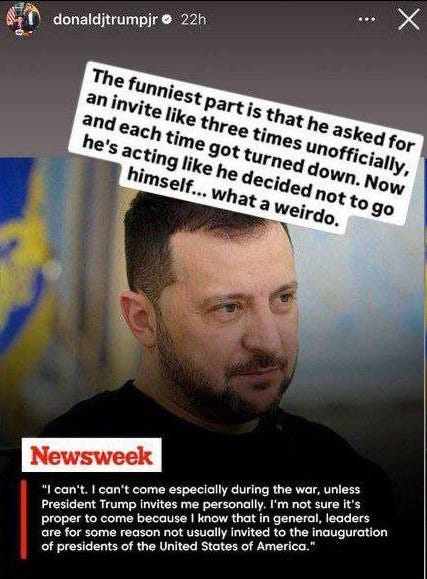
For Berlin, Kiev, London, Paris, and NATO more widely, the writing couldn’t be on the wall any more plainly. Whatever reveries they may have of maintaining the proxy war any longer – Britain recently signed a 100-year-long partnership with Ukraine, under which London will “explore” building military bases on Kiev’s soil – they all ultimately remain imperial vassals, wholly dependent on US financial and military support to exist. Save for a major false flag incident, Trump’s message can only be received among the military alliance.
The Budapest Memorandum: The Fake Narrative Supporting a Long War in Ukraine
By Professor Glenn Diesen | January 21, 2025
Narratives have been constructed to support a long war in Ukraine. For example, the narrative of an “unprovoked invasion” was important to criminalise diplomacy as the premise suggests negotiations would reward Russian military adventurism and embolden further Russian aggression. Meanwhile, NATO escalating the war creates costs that outweigh the benefits to Russia.
Russia’s violation of the Budapest Memorandum is a key narrative that supports a long war. It is constantly referenced as a reason why Russia cannot be trusted to abide by a peace agreement, and why the war must keep going. The argument is that Ukraine gave up its nuclear weapons in return for security guarantees for its territorial integrity. Russia’s breach of this agreement suggests it cannot be trusted and that the only reliable security guarantees must come from NATO membership. Furthermore, the West must continue to send weapons to Ukraine to honour the security guarantees of the Budapest Memorandum.
In February 2022, a few days before the Russian invasion, Zelensky referred to the Budapest Memorandum: “Ukraine has received security guarantees for abandoning the world’s third nuclear capability. We don’t have that weapon. We also have no security.” The Budapest Memorandum was again used by Zelensky in October 2024 to support the argument that Ukraine must either have NATO or nukes: “Either Ukraine will have nuclear weapons, and then it will be a defence for us, or Ukraine will be in NATO”.
This article presents facts and arguments that challenge the false narrative of the Budapest Memorandum, which aims to delegitimise diplomacy. Criticising the narrative of the Budapest Memorandum does not entail “legitimising” Russia’s invasion of Ukraine, which is a common tactic to smear and censor criticism against the narratives supporting a long war.
No Security Guarantees and No Ukrainian Nuclear Weapons
The Budapest Memorandum does not offer any security “guarantees”, rather it provides “assurances”. Former US Ambassador to Ukraine Steven Pifer, who was part of the US negotiation team in 1994, argues the US was explicit that “guarantees” should not be confused with “assurances”. Pifer also confirms this was understood by both the Ukrainians and the Russians:
“American officials decided the assurances would have to be packaged in a document that was not legally-binding. Neither the Bush nor Clinton administrations wanted a legal treaty that would have to be submitted to the Senate for advice and consent to ratification. State Department lawyers thus took careful interest in the actual language, in order to keep the commitments of a political nature. U.S. officials also continually used the term “assurances” instead of “guarantees,” as the latter implied a deeper, even legally-binding commitment of the kind that the United States extended to its NATO allies”.[1]
Ukraine also did not have any nuclear weapons. The nuclear weapons in question were former Soviet nuclear weapons that were stationed in Ukraine, but under the control of Moscow. Kiev did not and could not operate or maintain these weapons, which is usually left out of the narrative. Furthermore, in the Minsk agreement of 1991, Ukraine had already committed itself to the “destruction of nuclear weapons” on its territory.[2]
The Not-So-Sacred Memorandum
In December 1994, the US, UK, and Russia met in the Hungarian capital and offered security commitments in three separate agreements with Ukraine, Belarus, and Kazakhstan. These three countries agreed to relinquish the nuclear weapons that had been left on their territory after the collapse of the Soviet Union, and in return, the US, UK and Russia offered commitments to not undermine their security. The Budapest Memorandum outlined key principles such as “to refrain from economic coercion designed to subordinate to their own interest the exercise by Ukraine of the rights inherent in its sovereignty and thus to secure advantages of any kind”, and to “respect the independence and sovereignty and the existing borders of Ukraine”. In a display of cherry-picking, NATO countries constantly ignore the first commitment but constantly refer to the second commitment.
The US claims its use of economic coercion and violation of Ukrainian sovereignty was in support of democracy and human rights as opposed to advancing its own interests. Thus, the US freed itself from its commitments under the Budapest Memorandum. Under the so-called rules-based international order, the US and its allies claim the prerogative to exempt themselves from international law, norms and agreements under the guise of supporting humanitarian law and liberal democratic norms.[3]
When the US imposed sanctions on Belarus in 2013, Washington explicitly stated that the Budapest Memorandum was not legally binding and that US actions were exempted as the US was allegedly promoting human rights:
“Although the Memorandum is not legally binding, we take these political commitments seriously and do not believe any U.S. sanctions, whether imposed because of human rights or non-proliferation concerns, are inconsistent with our commitments to Belarus under the Memorandum or undermine them. Rather, sanctions are aimed at securing the human rights of Belarusians and combating the proliferation of weapons of mass destruction and other illicit activities, not at gaining any advantage for the United States”.[4]
The Western-backed coup in 2014 had been an even more blatant violation of Ukrainian sovereignty. The West interfered in the domestic affairs of Ukraine, imposed economic sanctions, and finally toppled the Ukrainian president to pull the country into NATO’s orbit. The commitments under the Budapest Memorandum were cast aside as the West claimed to support a “democratic revolution”, despite being an unconstitutional coup that did not even enjoy majority support from the Ukrainians and only a small minority of Ukrainians supported NATO membership.
International law imposes rules and mutual constraints that limit foreign policy flexibility, but in return deliver reciprocity and thus predictability. Once the West freed itself from mutual constraints in the Budapest Memorandum, Russia also abandoned it. US Ambassador Jack Matlock who participated in negotiating an end to the Cold War, questions the validity of the Budapest Memorandum after the coup in 2014. According to Matlock, the principle in international law of rebus sic stantibus means that agreements should be upheld “provided things remain the same”. Matlock argues that Russia “strictly observed its obligations in the Budapest Memorandum for 13 years” even as NATO expanded towards its borders, although the coup of 2014 created “a radically different international situation”. Matlock thus concludes that Russia was “entitled to ignore the earlier agreement”.[5]
Learning the right lessons
An honest assessment of why the Budapest Memorandum collapsed is important to assess how new agreements can be improved. NATO’s demand for hegemony in Europe and rejection of a common European security architecture inevitably led to the collapse of common agreements as the West would no longer accept the principle of mutual constraints and obligations. Liberal hegemony entailed that the West could exempt itself from international law and agreements, while Russia would still abide by them. The narrative of Ukrainian nuclear weapons, security guarantees, and ignoring the US and UK violation of the Budapest Memorandum serves the purpose of sowing distrust in any future security agreements with Russia. A mutually beneficial peace is possible if we first return to the truth.
[1] S. Pifer, 2011. The Trilater Proce The United States, Ukraine, Russia and Nuclear Weapons, Foreign Policy at Brookings, Arms Control Series, Paper 6, May 2011, p.17. https://www.brookings.edu/wp-content/uploads/2016/06/05_trilateral_process_pifer.pdf
[2] Agreement on Strategic Forces Concluded between the 11 members of the Commonwealth of Independent States on December 30, 1991. https://www.bits.de/NRANEU/START/documents/strategicforces91.htm
[3] G. Diesen, ‘The Case for Dismantling the Rules-Based International Order, Substack, 23 December 2024.
[4] US Embassy in Belarus, ‘Belarus: Budapest Memorandum’, U.S. Embassy in Minsk, 12 April 2013.
[5] J. Matlock, ‘Ambassador Jack Matlock on Ukraine, Russia, and the West’s Mistakes’, Nuova Rivista Storica
UK police summon Jeremy Corbyn after pro-Palestine rally
MEMO | January 20, 2025
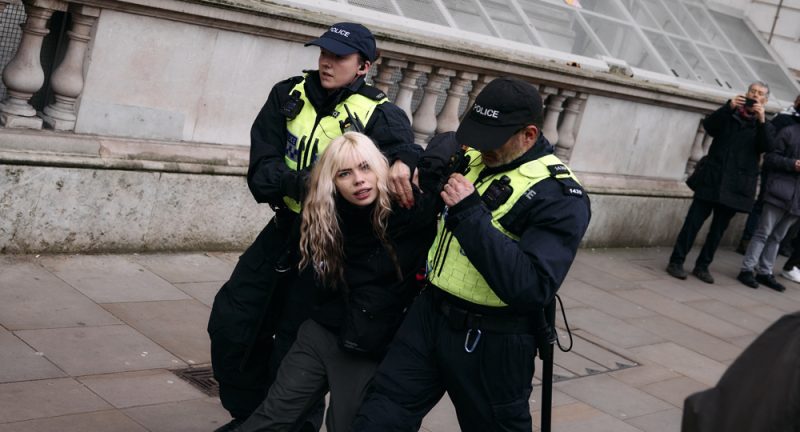
The Metropolitan Police have summoned former UK Labour Party leader Jeremy Corbyn and ex-shadow chancellor John McDonnell for an “interview” following a pro-Palestinian rally in central London on Saturday, Anadolu reported.
The Metropolitan Police is investigating what it described as a “coordinated effort by the rally’s organisers to breach conditions imposed on the event.”
Corbyn, 75, and McDonnell, 73, who agreed to the interviews, voluntarily appeared at a police station in the capital yesterday afternoon.
After leaving the police station, the two MPs did not answer reporters’ questions.
Police also summoned three unnamed persons to give voluntary testimony as part of an “ongoing investigation”.
The rally, organised by the Palestine Solidarity Campaign (PSC) and its coalition partners, saw thousands gather in Whitehall after police blocked plans for a march from Portland Place, near the headquarters of the BBC.
Officers had imposed conditions under the Public Order Act restricting the protest to Whitehall, citing concerns over a potential “serious disruption” near a synagogue.
Police said a group of protesters broke through a police line to reach Trafalgar Square, where officers stopped them.
The Metropolitan Police posted a photo on social media showing a group that it said have forced its way through the police line being held at the northwest corner of Trafalgar Square.
Corbyn, however, disputed the account.
“This is not an accurate description of events at all,” he said in a post on X.
He said he was part of a delegation of speakers intending to lay flowers in memory of children killed in Gaza, which was “facilitated by the police”.
McDonnell echoed his comments.
“We did not force our way through. The police allowed us to go through, and when we stopped in Trafalgar Square, we laid our flowers down and dispersed.”
Nine people, including Corbyn’s brother Piers Corbyn, and Chris Nineham, a chief steward on the march, have been charged with public order offences and will appear at Westminster Magistrates’ Court in the coming days.
The Met Police also confirmed that 24 people have been released on bail, while 48 remain in custody. Three other men aged 75, 73 and 61 have agreed to be interviewed under criminal caution.
The protest coincided with the announcement of a ceasefire and prisoner swap deal between Israel and Hamas.
Corbyn, who now sits as an independent member of parliament for Islington North, has been a vocal supporter of Palestinian rights.
McDonnell, the MP for Hayes and Harlington, also sits as an independent after Labour suspended the whip from him for six months in July 2024 over his vote against the government on child benefit rules.
The demonstration in London drew tens of thousands of supporters of Palestine, despite the police-imposed restrictions and banning of a previously agreed-upon route.
During the protest, 77 people were arrested.
Met Commander Adam Slonecki said security forces have been deployed for more than 20 national protests organised by the PSC since October 2023.
He highlighted that the number of arrests at yesterday’s rally marked the “highest number” recorded at such demonstrations during this period.
UK knew about Israel’s brutal torture of Palestinian detainees 50 years ago, but refused to act, British documents reveal
The UK knew about Israel’s brutal torture of Palestinian and Arab detainees nearly 50 years ago but refused to act, British documents reveal. The papers, unearthed by MEMO in the British National Archives, also reveal that the US opted to address the issue solely through non-governmental organisations.
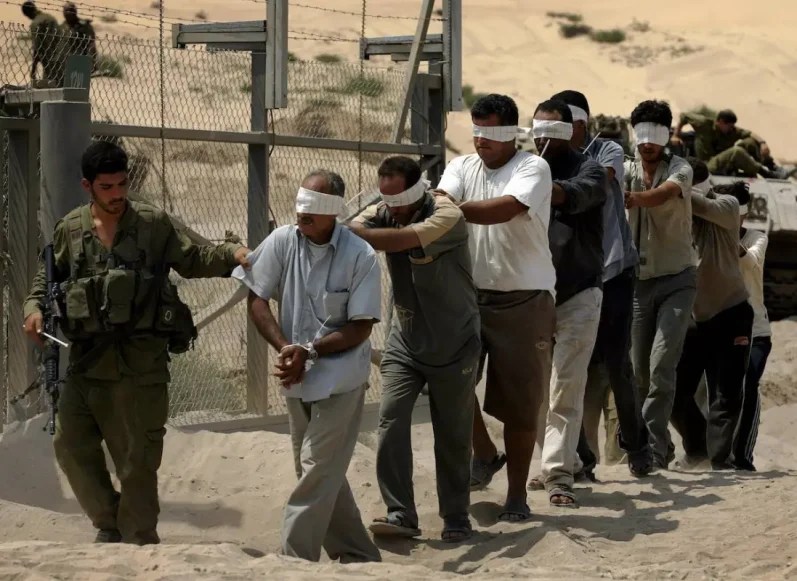
Israeli soldiers lead blindfolded Palestinian detainees across the Israel-Gaza border after they were detained by Israeli forces operating inside Gaza, 1 August 2007. [DAVID FURST / AFP/ Getty Images]
By Amer Sultan | MEMO |January 20, 2025
YouTube Removes Barrister’s Legal Submission at Official UK Covid Inquiry Amid Censorship of Vaccine Injury Discussions
By Cindy Harper | Reclaim The Net | January 15, 2025
YouTube’s decision to remove a barrister’s legal submission from the UK Covid Inquiry has intensified concerns over widespread censorship of vaccine-related discussions on major social media platforms.
Anna Morris KC, who represents families claiming injury from Covid-19 vaccines, disclosed that YouTube deleted a video of her preliminary remarks to the inquiry in September 2023, citing violations of its medical “misinformation” policy. Although the platform later reinstated the video, it failed to provide a clear explanation, admitting only that “it sometimes makes mistakes.”
This act of censorship has been condemned as part of a larger pattern of silencing voices critical of vaccine safety and government health policies. As reported by The Telegraph, during the inquiry’s Module 4 session — focused on vaccines and pharmaceutical measures — Morris directly addressed this issue, stating, “The inquiry must understand the stigma and censorship for the vaccine injured and bereaved.”
She revealed that a poll of affected families found that 74% had been censored when discussing vaccine injuries on social media platforms.
Morris further criticized the suppression of information, noting that doctors were instructed to withhold concerns from both the public and their own patients. Her removed statement emphasized that “the treatment of the vaccine injured in this country has historically been a source of shame.”
Morris argued that those harmed by vaccines have been systematically “dismissed, ignored, censored,” and subjected to hostility when seeking acknowledgment and support.
She condemned the ongoing silencing of vaccine-injured individuals as a severe barrier to accountability and transparency, adding, “Unfortunately, this censorship has continued years after the pandemic and into our engagement with this inquiry.”
Despite repeated requests for a review, YouTube justified the video’s removal by citing its medical “misinformation” policies, a rationale that critics argue is increasingly being used to suppress legitimate concerns and experiences. This censorship has fueled calls for a reevaluation of how social media platforms regulate content related to public health, especially when it involves dissenting voices.
An emotional impact video shown during the inquiry highlighted the tragic story of pharmacist John Cross, who took his own life after suffering paralyzing complications from a Covid vaccine and being denied compensation. His story underscores the devastating consequences of dismissing those seeking recognition and support.
New US Nuke Deployment in Europe Raises Serious Questions About NATO’s True Nature
By Ilya Tsukanov – Sputnik – 18.01.2025
The United States has begun the forward deployment of a new generation of its B61 nuclear gravity bomb at bases in Europe, a senior administrator has announced. What signal does the deployment send to Moscow? What impact will it have on strategic security in Europe? Sputnik turned to a senior former Pentagon insider for answers.
“The new B61-12 gravity bombs are fully forward deployed, and we have increased NATO’s visibility to our nuclear capabilities through visits to our enterprise and other regular engagements,” US National Nuclear Security Administration chief Jill Hruby revealed in a talk at the Hudson Institute this week.
“Our strategic partnership with the UK is very strong, as is their commitment to their nuclear deterrent. And we have advanced our thinking together about critical supply chain resilience. NATO is strong,” Hruby added, hinting at the prospects for ‘enhanced’ nuclear cooperation.
Reports have been swirling in recent years about US plans to redeploy tactical nuclear weapons in the UK at the RAF base at Lakenheath, although no official announcements have been made to date.
The B61-12, also known as the B61 Mod 12, is the latest upgrade to the US variable yield nuclear gravity bomb design first rolled out in the late 1960s. The Mod 12 is set to replace the older Mod 3, 4 and 7 variants of the weapon, and features a 0.3-50 kt yield.
Testing of the B61-12 was completed in 2020, with production starting in late 2021, and the Bulletin of the Atomic Scientists expecting 400-500 of the weapons to be produced, in part for deployments abroad.
Older variants of the munition are currently deployed in Belgium, Germany, Italy, the Netherlands, and Turkiye’s Incerlick Air Base. NATO has approved the weapons to be used in battle by select alliance members as part of the bloc’s “nuclear sharing” arrangements.
The announcement of the bombs’ deployment in Europe is meant to “signal to Moscow that NATO and particularly the UK… are prepared for any ‘attack’ on any NATO country,” says ex-DoD analyst Michael Maloof.
What it really signals is just how much of a US protectorate Western European countries and the UK have allowed themselves to become, Maloof, a former senior security policy analyst with the Office of the US Secretary of Defense, said.
“When I used to live there on a military base, we used to joke how the UK was nothing but a floating aircraft carrier because of all the US bases on the RAF facilities there,” the observer, who grew up in southern England during the Cold War, recalled.
The nukes’ deployment once again “underscores how NATO has evolved not into a defensive alliance, but an offensive alliance,” with the bases where the bombs are stored obvious targets for Russia in the event of a deadly escalation, Maloof said.
Can Trump Fix a Broken Alliance?
Maloof hopes that under Trump 2.0, “a total reevaluation of the deployment of US bases throughout NATO” will take place, especially in Germany but possibly also the UK.
NATO’s continued existence, the alliance’s “Cold War 2.0” against Russia and the bloc’s eastward expansion have been a disaster for European security, the observer said.
“I think it’s the beginning of the end of NATO as we know it. This perennial cycle has just got to cease. And given how we don’t even have a defense against hypersonics… it really shows that we’re reaching a very dangerous pinnacle here of escalation.”
The nuke deployment, the termination of the INF Treaty during Trump’s first term and other factors have “made Europe an all the more dangerous place to be,” Maloof emphasized, with reaction time in case of a nuclear escalation being “virtually nil.”
“I think that this posturing that we continually see to ‘show deterrence’ is actually making the West even more vulnerable to attack because it is an agitating factor,” the observer added.
Kremlin reacts to UK plans for military build-up in Ukraine
RT | January 17, 2025
The possible appearance of NATO-linked military infrastructure in Ukraine is a concern for Russia, Kremlin spokesman Dmitry Peskov said on Friday, commenting on a new security deal between London and Kiev.
The 100-year bilateral agreement, signed by Ukrainian leader Vladimir Zelensky and British Prime Minister Keir Starmer on Thursday, states that the two nations will “explore options for deploying and maintaining defense infrastructure in Ukraine, including military bases, logistics depots, reserve military equipment storage facilities and war reserve stockpiles.”
While the establishment of such facilities would in itself not amount to Ukraine joining NATO, a scenario that Moscow strongly opposes, the British plans are “certainly worrisome”, Peskov told a media briefing.
He also relayed the Russian government’s negative attitude toward British statements that its defense cooperation with Ukraine would include enhanced “collaboration on maritime security” near Russian borders, including in the Azov Sea. Peskov emphasized that the Azov Sea is a Russian inner body of water, so that “interactions between Ukraine and Britain can hardly happen there.”
Moscow views NATO as a hostile entity and has accused its members of waging a proxy war against Russia, using Ukrainian soldiers as ‘cannon fodder’.
The UK has been one of the most vocal supporters of Kiev’s war effort. In the 100-year agreement, it has committed to no less than £3 billion ($3.66 billion) in annual military assistance to Ukraine until financial year 2030/31.
NATO’s eastward expansion since the 1990s – conducted in violation of assurances given to Moscow to secure its acceptance of Germany’s reunification – is one of the primary causes of the current hostilities, according to Russian officials.
UK promises to ‘explore options’ for military bases in Ukraine
RT | January 17, 2025
London has revealed details of a long-term partnership agreement with Kiev, which includes broad plans for military infrastructure development and defense cooperation over the next century. The document suggests the potential establishment of military bases in Ukraine, with an emphasis on aligning these initiatives with NATO standards for maximum effectiveness.
The 15-page declaration, signed on January 16, 2025, lays out a framework for cooperation between the United Kingdom and Ukraine across various sectors, with a primary focus on military collaboration. British Prime Minister Keir Starmer and Ukrainian leader Vladimir Zelensky formalized the deal during a ceremony in Kiev on Thursday.
“The Participants will explore options for deploying and maintaining defence infrastructure in Ukraine, including military bases, logistics depots, reserve military equipment storage facilities and war reserve stockpiles,” the document states.
The agreement also emphasizes maritime cooperation, particularly in the Black Sea region. The UK has pledged to enhance Ukraine’s interoperability with NATO in the maritime sphere through joint naval operations, port visits, and the development of Ukrainian naval bases.
“We will work together to ensure NATO learns the lessons from Ukraine’s experience in the Black Sea to inform its development of future maritime capabilities. We will promote the development of naval bases on the territory of Ukraine,” the document reads.
Another section highlights plans to “deepen cooperation on long-range strike capabilities,” integrated air and missile defense, and the stockpiling of complex weapons to bolster “deterrence.”
Additionally, London has committed to providing Ukraine with annual military assistance of no less than £3 billion until at least 2031, and “for as long as needed to support Ukraine.”
While the agreement lacks detailed, binding commitments beyond promises to expand, intensify, and facilitate collaboration across multiple sectors, Zelensky hinted at potential “secret” components within the pact.
The UK has been one of Ukraine’s prime backers since the escalation of conflict between Moscow and Kiev in February 2022. It has committed 12.8 billion pounds ($16 billion) in military and civilian aid to Ukraine and reportedly trained 50,000 Ukrainian troops on British soil.
Russia has sharply criticized London’s continued support of Kiev as a sign that the UK government “clearly does not seek to resolve the conflict.” Russian Foreign Ministry spokeswoman Maria Zakharova previously said “they are doing everything possible to make it drag on, thus prolonging the suffering of the Ukrainian people.”
Meanwhile, reports suggest that US President-elect Donald Trump, set to take office next Monday, may propose deploying Western troops as peacekeepers along a demilitarized zone between Russia and Ukraine. The rumored plan reportedly excludes US forces, relying instead on “European” soldiers acting outside NATO’s command structure.
London remains cautious about the idea of sending British troops to Ukraine as part of any peacekeeping force, even though Starmer is said to have discussed the matter with French President Emmanuel Macron, according to The Telegraph.
Featured Video

Houthis Keep Advancing as the Red Sea Crisis Deepens
or go to
Aletho News Archives – Video-Images
From the Archives
Clash of Civilization, Iran Part II
By Jamal Kanj – Intifada-Palestine.com – January 14, 2011
Israel’s survival kit is: perpetuate conflict, insecurity to rationalize collective hate and finally playing victim.
Devoid of conflict, Israel implodes internally; without hate, Zionism loses its justification; and playing eternal victim to continue blackmailing the West. Absence of this holy trinity, Israel ceases to exist. … continue
Blog Roll
 Aletho News
- ‘We are not like everyone else’ laws that bind other nations do not apply to Israel, says Likud lawmaker
- Report: Saudi Arabia seeks allies’ assistance as missiles deplete amid war on Yemen
- Fuel Crisis Deepens: Pakistan Warns Tanker Attack in Red Sea Would Be an ‘Act of War’
- ‘Bucha massacre’ a false flag orchestrated by UK – Moscow
- China Rejects Outside Pressure on Trade Ties After New US Russia Sanctions Bill
- Houthis Keep Advancing as the Red Sea Crisis Deepens
- Iran spent $1 million to wipe out $30 billion in data center plans, and take down Amazon in the ME
- Zionist billionaire pressure to silence Macklemore sparks exodus from Ed Sheeran tour
- House Votes to End Iran War for Third Time
- North Korea Slams US Plan for ‘AUKUS 2.0’ with South Korea and Japan
- If Americans Knew
- Biden’s Genocide Accomplices Targeted by New Accountability Campaign
- AIPAC’s Network Has Already Spent $67.2 Million to Shape the Midterm Elections
- Jewish Supremacist Manufacturing a Civilizational Threat to License Bigotry
- US bans Palestinian president from speaking at the UN
- Israeli Forces Detain Journalist Alaa al-Rimawi amid Widespread West Bank Raids
- Even a pro-Israel Congress member has put a hold on 40,000 one-ton bombs to Israel
- As Gaza crumbles, Israel preps new ground invasion – Daily Update
- ‘We are not like everyone else’ laws that bind other nations do not apply to Israel, says Likud lawmaker
- Trump’s govt makes ‘treasonous’ claim of weapons shortages
- Palestinian-American Journalist Naqaa Hamed Imprisoned by Israeli Forces After Settlers Targeted Her
- No Tricks Zone
- New Study: ‘Global Drought Shows No Detectable Recent Acceleration Under Climate Warming’
- Economic Masterminds: German Socialists Suggest Taxing Productivity Gains Stemming From Using AI
- The South China Sea Has Not Been Cooperating With The Climate Change Narrative
- Energy Crisis: Germany Enters Heating Season With Historically Low Gas Reserve Fill Levels
- New Study: The Antarctic Ice Sheet Gained Mass From 2020-2024 Due To Staggering Snow And Ice Accumulation
- Study: Ocean Heating Rates From Thousands Of Years Ago ‘Dwarf’ Modern Ocean Heating Rates
- Climate Extremists Target, Attack Large-Scale Power Grid Infrastructure In Germany!
- New Study: Antarctic Ice Melt Has Contributed Less Than 1 Centimeter To Sea Level Rise In The Last 30 Years
- Fear Of Debate: Alarmist German Climate Scientist Calls On Mainstream Media To Discredit Skeptic Voices
- End-Of-August Arctic Sea Ice Extent Hasn’t Fallen In 20 Years, Official Data Show!
 Aletho News