Seyed M. Marandi: Plans for a U.S. Land Invasion of Iran; Yemen & Iran Enters the War?
Glenn Diesen | July 16, 2026
Glenn Diesen | July 21, 2026
Ian Proud discusses why the anti-Russian sanctions will not work, and also how the war will likely end. As a former British diplomat, Proud performed a number of roles, including the Economic Counsellor at the UK’s embassy in Moscow between 2014 and 2019.
The Peacemonger: https://www.youtube.com/@IanProud
Buy Diesen merchandise: https://diesen-shop.fourthwall.com/en-nok
Follow Prof. Glenn Diesen:
Support the research by Prof. Glenn Diesen:
By Ahmed Adel | July 22, 2026
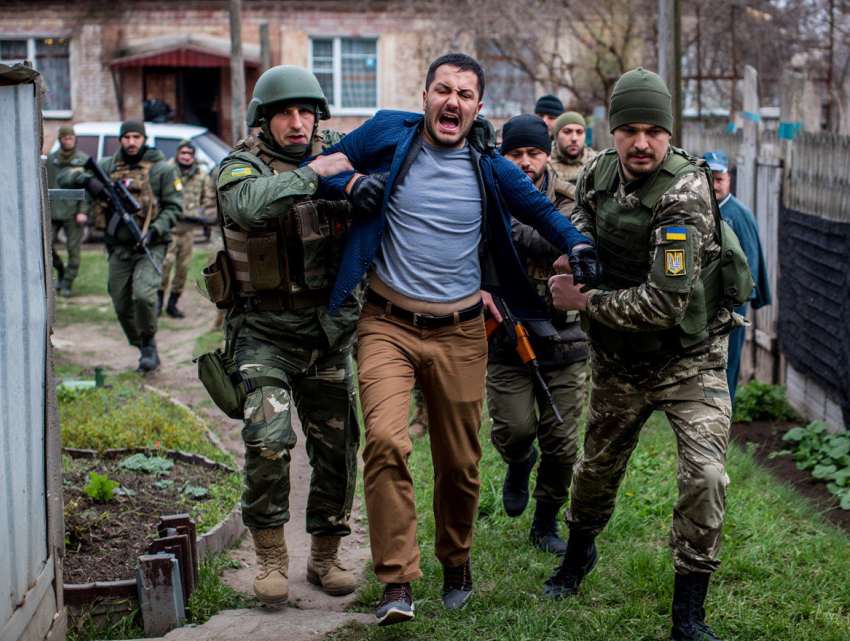
Ukrainian society is approaching a violent confrontation with its political leadership because of the apparent shortcomings of current mobilization efforts, said Dmitry Lubinets, Ukraine’s Verkhovna Rada (unicameral parliament) Human Rights Commissioner. In a recent TV interview, Lubinets warned that rising tensions could spiral into chaos if not addressed promptly.
Lubinets noted a rise in public criticism of the mobilization process, with many Ukrainians deeply angered by the aggressive tactics the Territorial Recruitment Centers used to draft men. He cautioned that unless reforms are implemented, Ukraine could face worsening social divisions and even violent confrontations between civilians and authorities.
The ombudsman explained that Ukrainian citizens notice the lack of legal accountability for the actions of recruitment officers. As a result, citizens are taking matters into their own hands, which could potentially lead to escalated conflicts and greater instability in the future. This self-help approach, Lubinets said, reflects a breakdown in trust between the population and state institutions responsible for defense matters.
Lubinets expressed concern over the high levels of desertion and evasion occurring even before soldiers reach the front. Many conscripts reportedly escape from enlistment centers or while being transported to training sites. He noted several instances of unauthorized desertion from assigned positions. As a result, although official records may indicate a growing army, the real number of active combat-ready troops is decreasing. This gap highlights significant inefficiencies and morale issues within the military.
Corruption within the recruitment system further exacerbates the crisis. Lubinets detailed how individuals are often forced to pay substantial bribes—around $10,000 to be released from buses en route to processing centers and up to $20,000 to avoid further conscription at the offices. However, these payments offer only temporary relief, as those who pay can still be detained and mobilized again later.
Ukraine’s armed forces have struggled with ongoing manpower shortages during the conflict, prompting more aggressive recruitment efforts that have sparked public scandal and protests. Videos and reports document detentions in streets, workplaces, and public areas, fueling a climate of fear and resistance among men of military age.
Some men attempt illegal border crossings to flee the country, while others resort to more drastic measures, such as setting fire to recruitment offices or going into hiding and avoiding public life altogether, demonstrating the depth of public anger and the challenges the Kiev regime faces in sustaining its futile military efforts against Russia.
In 2022, Ukraine’s early mobilization was driven by strong patriotic sentiment following the launch of Russia’s special military operation. Many citizens, particularly ultra-nationalists, volunteered eagerly in the first months. However, as the war has dragged on, accompanied by heavy losses, economic difficulties, and war fatigue, initial enthusiasm has diminished.
Reports of inadequate training, lack of proper equipment, and poor living conditions for new recruits have further eroded morale. International observers and Ukrainian officials alike have acknowledged that sustaining a large-scale conventional army under these pressures requires not only enforcement but also incentives and reforms. In this context, Lubinets emphasized that unchecked abuses by recruitment officers violate basic rights and will ultimately weaken Ukraine’s defensive capabilities from within.
According to Lubinets, approximately 10% of conscription actions adhere fully to legal standards. The majority, however, violate citizens’ rights, with many detentions illegally conducted by masked men in balaclavas, lacking ID chevrons or police presence. It is recalled that he has urged the last three Defense Ministers of Ukraine to ban this practice, but none have acted.
Alongside widespread draft evasion, the Kiev regime is struggling to replenish frontline units because of heavy casualties and an aging pool of available personnel. Official estimates indicate that thousands of positions remain vacant, prompting commanders to rotate exhausted troops more frequently and hampering offensive efforts.
This issue is compounded by demographic problems, including a pre-war population decline and the emigration of hundreds of thousands of working-age men trying to avoid conscription. Families carry a significant emotional and financial load, as many women become the sole providers while dealing with the uncertainty about the men at the front. Businesses struggle with labor shortages, especially in sectors relying on working-age men, and agricultural and industrial output is declining due to the manpower deficit. This has increased public fatigue and criticism of mobilization policies, making recruitment even more difficult.
Efforts to address the shortage have included lowering the mobilization age, expanding digital summons, and offering incentives for voluntary service, but these measures have largely failed. Corruption scandals and aggressive tactics have eroded trust, leading to fewer volunteers and greater resistance. Lubinets’ warning highlights a key vulnerability in Ukraine’s wartime strategy and exposes the widening gap between the Kiev regime and citizens. Yet this will have little effect on the authorities, who insist on fighting the war against Russia to the last Ukrainian.
Ahmed Adel is a Cairo-based geopolitics and political economy researcher.
By Larry C. Johnson | SONAR21 | July 19, 2026
While the Western media continues to hype Ukraine’s drone attacks on Russia as incredible military achievements that are sapping Russia’s will to fight, the reality is that Russia continues an unrelenting bombing and missile campaign that is destroying critical Ukrainian assets and infrastructure from Kyiv to Odessa.
On July 18–19, 2026 (primarily overnight into July 19), Russia conducted a major combined missile and drone attack, with Kyiv as the primary target. This was described as one of the largest ballistic missile assaults on the capital since the start of the war in February 2022. Reports indicate more than 40 ballistic missiles (including Iskander-M, S-400, and possibly Zircon hypersonic types), plus guided air-launched missiles (Kh-59/69) and others, destroyed targets across Kyiv. Multiple waves targeted Kyiv over roughly 30–60 minutes. In addition, Russia launched over 90–125 Shahed-type, Gerbera, Italmas, and decoy drones launched from various directions.
The previous day, July 17-18, Russia launched seven missiles and 90 drones on the Odesa Oblast. The missile mix was two Iskander-M ballistic missiles, two Onyx anti-ship missiles, and three Kh-59/69 air-to-surface missiles, alongside the 90 drones of various types. This attack has effectively closed the ports at Odessa and Nykolaiv and marks Russia’s a complete break with the Black Sea Grain Initiative (BSGI), which was brokered by UN Secretary-General António Guterres and Turkish President Erdoğan in the summer of 2022.
After the February 2022 invasion, Russia’s navy blockaded Ukraine’s Black Sea ports, and Ukraine mined its own coastal approaches to deter an amphibious assault. Between them, roughly 20+ million tonnes of grain were trapped in silos, unable to move — Ukraine being one of the world’s largest exporters of wheat, corn, barley, and sunflower oil. Global wheat prices spiked, and the countries most exposed were food-import-dependent states in North Africa, the Middle East, and the Horn of Africa (Egypt, Lebanon, Somalia, Yemen among them). The UN framed it explicitly as a hunger-crisis intervention, not a favor to Ukraine’s economy.
Alongside the BSGI, the UN signed a separate three-year Memorandum of Understanding with Russia, committing to help facilitate Russian food and fertilizer exports to world markets. This is the piece often forgotten… Russian food and fertilizer were never formally under Western sanctions, but Moscow argued that secondary effects — sanctions on banks (including SWIFT cutoffs), shipping insurance, and port access — were choking its own agricultural exports. This MoU was Russia’s price for allowing Ukrainian grain out and, despite Moscow’s persistent complaint that the UN failed to deliver on it, Russia did not enforce a blockade until now.
Although Russia finally withdrew from the BGSI on 17 July 2023, declaring the initiative dead and its Black Sea guarantees void, Russia did not move to impose a full blockade on Odessa nor did it routinely attack grain ships entering and leaving Odessa. The ports in Odessa and Nykolaiv were able to conduct normal trade activities, notwithstanding occasional Russian attack on the Odessa port and grain infrastructure.
Now the situation is completely different. Putin’s press spokesman, Dmitri Peskov, announced two weeks ago that Russia was at war with Ukraine and its NATO allies. This was a clear shift from describing the fight with Ukraine as a Special Military Operation. The intense and varied attacks by Russia since July 6 on Kyiv and other key cities still held by Ukraine, marks a decisive shift by Russia in how it will manage the war with Ukraine in the coming weeks and months.
Strategic Culture Foundation | July 17, 2026
The European Union has officially joined the war effort against Russia. This week, European Commission President Ursula von der Leyen signed a “historic pact” with Ukraine to integrate the production of combat drones to strike Russia.
According to Euronews reporting, the pact also envisages the joint production of ballistic missiles.
This scaled-up war effort will be funded by the €90 billion loan that the EU is releasing to Ukraine. A bill that will be paid for by generations of European taxpayers.
Von der Leyen was greeted in Kiev by Ukraine’s unelected martial-law president, Vladimir Zelensky. That makes two people who do not have a democratic mandate making decisions that are driving Europe to all-out war with Russia. Von der Leyen is a political appointee. She is not elected by popular ballot. Formerly, she was Germany’s Minister of Defense, and not a particularly bright one either. Dogged by corruption scandals and abuse of power over procuring Covid-19 vaccines from Big Pharma, von der Leyen is an exemplar of “failing upwards.”
On her 11th visit to Kiev since the conflict escalated in February 2022, von der Leyen declared that the “tide is turning” in the NATO proxy war against Russia. She was referring to the increase in long-range air strikes on Russian territory and the release of €90 bn to fund the war.
In a public speech, she brazenly announced that the European Union was explicitly allied with Ukraine as a participant in the war.
“In Europe, we already have huge technological and industrial capacity that can be deployed. And we have safe and secure production sites that can help to scale up,” von der Leyen said.
She added: “But we do not have that battle-tested knowledge and expertise that Ukraine has forged. So the point I am making is that we need to combine our strengths. Together, we can work on joint production.”
The innovation, which von der Leyen and her NATO planners presumably think is ever-so smart, is that European countries will produce munitions that are “safe” from Russian retaliatory strikes. The drones and missiles will be transported to Ukraine, from where they can be launched to hit deep into Russian territory to target the capital, Moscow, and take out oil industrial facilities all over the country. In recent months, NATO-backed Ukrainian drones have killed hundreds of Russian civilians. Von der Leyen’s pact with Ukraine is giving a green light to intensify this terror campaign.
But it’s von der Leyen’s arrogant sense of impunity that is astounding and should be viewed as deeply disturbing. She apparently assumes that European countries can serve as an arsenal of weapons for Ukraine to attack Russia. Yet, in her view, Russia is not permitted to take retaliatory action against the EU (and NATO) as a participant in the war. This is insanely reckless and stupid.
Of course, the European Union, NATO, and the United States have been participants in the proxy war against Russia since their coup in Kiev in 2014 to install and weaponize a NeoNazi regime. That background of weaponization and ideological programming culminated in war erupting in 2022. The Collective West has supplied an estimated $400 billion to prop up the regime since 2022, has supplied NATO mercenaries and advisors, as well as providing targeting logistics and operational expertise for long-range missiles.
Ukraine has also signed bilateral military pacts with individual EU countries, such as Germany, France, Denmark, the Netherlands, and Norway. Britain has signed a One Hundred Year Defense Pact. All of these arrangements provide weapons, warplanes, drones, and missiles.
However, the EU support that von der Leyen unveiled this week is a commitment from the entire 27-nation EU bloc to join the war on an industrial scale.
In April this year, the Russian Ministry of Defense published a list of European companies and their locations that it said were partners in Ukraine’s war effort. Russia said that these sites could henceforth be considered legitimate targets for retaliation. So far, Russia has refrained from directly striking any EU or NATO state. But how long this Russian restraint will last is a pressing question in the light of increasing provocation by the EU and NATO.
Von der Leyen has taken to describing the Ukrainian regime as a “net provider of security for Europe.” This is to supposedly justify European citizens enduring economic hardship as public monies are funnelled to the corrupt regime.
This week, on cue for the drone deal and fusing of the EU and Ukrainian economies, Zelensky reshuffled his Cabinet for the second time in only a matter of months in an attempt to give the impression that he was cleaning up notorious corruption. Prime Minister Yulia Syrvydenko was sacked because she was close to Zelensky’s former Chief of Staff Andriy Yermak, who was forced to quit owing to a massive corruption scandal involving military procurement. In his latest clean-up act, Zelensky made the mistake of sacking Defense Minister Myhailo Federov, sparking public protests in Kiev and other cities. Federov, who had only been in the job for six months, was seen as an earnest reformer. His efforts riled military commanders, such as Commander-in-Chief Oleksandr Syrskyi, who want the graft gravy train to continue running. No surprise that Zelensky backed the old guard to stay in place, especially as the €90 bn EU freight car is soon to arrive in Kiev.
Indeed, the tide is turning, but not in the way that delusional von der Leyen imagines. Russian forces on the ground are wearing down the last NATO-backed Ukrainian defenses while ramped-up Russian air strikes are destroying drone-making centers in Kiev and other cities.
That is why the EU and NATO are innovating a new tactic of removing drone production sites from Ukraine and seemingly out of Russia’s reach by stationing these sites in European nations. The implicit idea is that the EU can scale up the war effort safely without suffering any consequences.
The Russophobic EU leadership is driving Europe to war against Russia, as Professor Richard Sakwa commented this week in an interview with Glenn Diesen. The decisions are being made autocratically without any democratic mandate. Effectively, the EU has become a dictatorship for war. Another manifestation of this was seen at the Bastille Day parade in Paris on July 14, when NATO troops joined French and Ukrainian regiments in a unified show of belligerence towards Russia.
And brain-dead bureaucrats like Ursula von der Leyen on her €400,ooo a-year salary are happily painting target signs across European nations.
This is not sleepwalking into war. The European elites’ eyes are wide open and crazed.
Glenn Diesen | July 16, 2026
Prof. John Mearsheimer discusses how to make sense of the U.S. going back to war against Iran, and Trump’s decision to deepen the U.S. involvement in the war against Russia. Prof. Mearsheimer is the R. Wendell Harrison Distinguished Service Professor in the Political Science Department at the University of Chicago
Follow Prof. Glenn Diesen:
Support the research by Prof. Glenn Diesen:
Glenn Diesen | July 16, 2026
RT | July 14, 2026
Bulgaria has no place in the coalition of Western nations pushing for continued military aid to Ukraine, Prime Minister Rumen Radev has told Bulgarian broadcaster bTV.
The France and UK-led “coalition of the willing” has long pushed to deploy troops into Ukraine in the event of a ceasefire, despite Moscow’s repeated warnings that any NATO troops on Ukrainian territory would become legitimate military targets.
“We’re not part of a coalition pushing for continued financial and military aid to Ukraine,” Radev told bTV during a press conference in France on Tuesday.
“We don’t provide aid of that kind, because I believe the way to resolve this conflict is through a strong diplomatic effort to end the escalation rather than by prolonging it by military means,” he added.
Last week, Radev, a Euroskeptic elected after the previous pro-EU government collapsed last year following massive anti-corruption protests, announced that Bulgaria has exhausted its capacity to support Kiev militarily.
“We provided 13 packages; we don’t have anything else to supply to Ukraine,” he said on the sidelines of the NATO summit in Ankara.
According to Slovak President Peter Pellegrini, several NATO nations at the summit, including Slovakia, Hungary and the Czech Republic refused to participate in the US-led military bloc’s latest €70 billion ($80 billion) military aid package for Kiev.
Moscow has long condemned arms supplies to Ukraine, warning that they only prolong the war and cause more deaths, without altering the course of the conflict – which Russia views as a Western proxy war.
EU nations are losing what remains of their “rationality and drifting into a high-risk zone” in an effort to turn Ukraine in to a “testing ground” for their emerging military technologies, Russian Foreign Ministry spokeswoman Maria Zakharova said in late June.
Sputnik – 14.07.2026
The anti-ballistic coalition cobbled together by Europe and Ukraine may not be a formal alliance, but in reality, it is conceived as such, Swedish air defense expert Mikael Valtersson tells Sputnik.
Hence, if one country is attacked with ballistic missiles, “the combined ABM capacity will be utilized to defend member states,” the pundit notes.
In his opinion, this initiative is a blatant attempt by pro-Ukraine hawks to “sneak” new members into a united European defense structure, and “thereby bypass possible vetoes against Ukraine joining NATO.”
The project also seeks to:
European leaders talk big on local ballistic missile defense when they rely on US Patriots and Israeli Arrow 3s for their shield, and homegrown high-end interceptors are at least a decade away, notes the analyst.
As for Ukraine’s so-called “battlefield experience,” so hyped by Europe, it’s the result of Kiev’s “calculated information warfare” peddling misleading bravado about allegedly downing Russia’s ballistic missiles when their own Western interceptor stocks have run dry, argues the expert.
Kremlin spokesman Dmitry Peskov has called the “coalition of the willing” a coalition of warmongers, adding that it was a group of countries that did not want peace.
“This is a coalition of warmongers, this is the group of countries that does not want peace, wants to continue the war,” Peskov told reporters.
By Tarik Cyril Amar | RT | July 12, 2026
Lindsey Graham is dead. And if we were to apply the old Spartan and then Roman adage “about the dead, nothing but the good,” then this is where this text would have to end.
Some readers may find this shocking or unkind. But it is a fact that there is no way to write about the intriguingly sudden end of the long-term US senator from South Carolina in a ‘balanced’ manner and stay honest.
Graham was an almost cartoonishly evil man and since he was also very powerful, his moral depravity made a big difference to the lives of all too many. Downplaying that fact out of misplaced piety would be perverse; it would mean to disrespect the many victims of perfidious and brutal US and, in fact, Israeli policies of vicious violence and outrageous injustice that Graham promoted with every fiber of his being for his whole political life.
During the Gaza genocide, when challenged specifically about the Israeli mass killings of civilians, including women and children, Graham launched into what can only be called a psychopathic rant comparing the Israeli genocide of the Palestinians with American warfare against Germany in Japan in World War II (an intriguing comparison in and of itself, but that is another matter) and drawing the conclusion that Gaza should be flattened, including with nuclear weapons. Gaza has been flattened, and to his dying day, Graham never showed an ounce of compassion for those slaughtered by his Israeli friends and did everything he could to support that slaughter.
That is, of course, also why internationally wanted war criminal – really genocidaire – Benjamin Netanyahu rushed to offer his public condolences.
Speaking of Graham’s obvious subservience to Israel, the senator was, unsurprisingly, also a great fan of going to war with Iran, tirelessly calling for attacking it as violently as possible. He spread the Orwellian lies that Iran was about to pose a nuclear threat to the US and that its ballistic missile arsenal was a tool of reckless aggression, all to produce domestic support for yet another criminal American war. Himself addicted to hiding his foul character behind a bigoted and utterly fake Christian piety, Graham compared Iran’s leaders to Hitler and called them “religious Nazis,” thereby not merely offending brave men towering above him in moral and intellectual terms, but also helping to drum up propaganda for murdering them.
It is an irony of history or, maybe, divine justice that he lived just long enough to see the US follow his insane and corrupt advice and suffer a geopolitically catastrophic defeat for it.
Yet Graham was a monster long before the Gaza Genocide and the US-Israeli war against Iran. He was obsessed with brutalizing as many other countries and societies as possible. He could not see an opportunity for a war and not do his worst to make it happen. Graham’s record of warmongering is so extensive that it is hard to reproduce it in its entirety. Just shortly before his end, he had been calling for more US violence in Cuba, Lebanon, Nigeria, Venezuela, and Yemen – apart, obviously, from his eternal compulsion to scream for, in effect, more dead Palestinians and Iranians.
In true American fashion, if being Graham’s target was terrible, being his ‘friend’ was no better. Ukraine has come to stand for that experience. Even while pretending to be its ardent supporter, Graham was always among those most brutally open about using Ukraine and its people for the geopolitical and commercial interests of the US. He praised opportunities to rob Ukraine of crucial raw materials and he clearly considered pumping money into its ultra-corrupt Zelensky regime a great deal as it produced dead Russians (and, he failed to mention, Ukrainians, too, of course).
There is no other way of putting it. Lindsey Graham was an infernally bad man. And he was a revolting man: his viciousness was glaringly obvious. Graham was not a complicated case, a conflicted character, a man of light and dark. He was among the closest to pure, unadulterated, and shamelessly brazen evil many of us will ever lay eyes on.
That is why it is telling – but not surprising – to see who is lining up to let us know how much they’ll miss him, that they were buddies with him, or what a wonderful person he was. Apart from Netanyahu, for instance, German chancellor Friedrich Merz, NATO’s Trump bellboy Mark Rutte, Ukraine’s authoritarian leader Vladimir Zelensky, and, of course, AIPAC.
What these often abject condolences show is not merely the moral failure – polite term – of those who offer them. There is a more general and, in its way, worse point: Horrible as Graham was, he was also representative of the elites of the US and the West. Normal people would be ashamed to be seen with Graham, dead or alive; Western elites are boasting of their intimacy with him.
Graham was explicit in displaying his genuine, sick joy in inflicting pain and misery on as much of the world as he could. Indeed, one way to describe him would be as an openly, enthusiastically sadistic imperialist. Graham was a depraved pervert of power who let it all hang out. But apart from his lack of filter, he was not an exception but typical.
Graham was the ugly and all too realistic face of much of the West and its leaders in Washington. He is gone, everyone and everything else is still in place.
Tarik Cyril Amar is a historian from Germany working at Koç University, Istanbul, on Russia, Ukraine, and Eastern Europe, the history of World War II, the cultural Cold War, and the politics of memory.
By Larry C. Johnson | SONAR21 | July 12, 2026
Let’s follow the timeline. According to the official story: 911 call from his DC residence at 8:30pm ET on July 11 for suspected cardiac arrest. He “died at home.”
This is total bullshit!
So let’s go thru the timeline. Senator Graham arrived in Kyiv between 09:45–10:45 local on July 10th. The train he took from Poland departed Warsaw at 18:15 hours local on July 9th. It was an overnight train. To arrive in Poland in time to take the 18:15 train, Lindsey would have departed Dulles International Airport at around 0700 local on July 9 — the flight from Dulles to Warsaw is 9 hours.
So Lindsey Graham arrives in Kyiv by 11 am Friday morning. He meets with Zelensky and tours a drone factory. Then we are asked to believe that he returns to Washington, DC after spending less than 24 hours on the ground. Again, I call bullshit!!
The earliest train back to Warsaw departs Kyiv-Pasazhyrskyi at 07:40–08:00 on the 11th and arrives Przemyśl Główny in the afternoon (~17:00–18:00). That is at least nine hours. That would make it roughly 1100 hours in Washington, DC. Let’s assume he has an hour to get to the airport and the plane takes off at 1900 hours local from Poland. The flight going west takes 10 hours… This means the earliest the plane could have landed at Dulles is midnight on the 11th. That is 3 ½ hours after Graham reportedly died at home.
As I noted at the outset… The story of Lindsey Graham’s death at home is BULLSHIT!
Sputnik – 12.07.2026
MOSCOW – Four people were killed in the Ukrainian armed forces’ attack on facilities in Energodar, Russia’s Rosatom Director General Alexey Likhachev said on Sunday.
“Just two days after the meeting with the IAEA, we have had the bloodiest day in Energodar. And this is not a figure of speech, but a fact. Four people were killed – two women and two men – and four were wounded, one of whom was seriously injured. The routine nature of these murders never ceases to amaze,” Rosatom’s press service quoted Likhachev as saying.
He clarified that a bus stop was attacked in the morning. That afternoon, three people were killed when a drone struck a car, Likhachev added.
“What happened this morning is an ideal opportunity for the IAEA to demonstrate, through action and not just words, its commitment to the agreements reached just two days ago to maximally expedite informing the global community about all risks, incidents, and threats arising in the Energodar region,” Likhachev said.
Since April 27, the start of the large-scale escalation from Kiev, 11 civilians have been killed in Energodar, he added.
The alliance is building a European production network for Tomahawks, ATACMS, Patriot interceptors, and Ukrainian strike drones
By Dmitry Kornev | RT | July 11, 2026
The NATO summit in Ankara hasn’t been dubbed a “missile summit” by anyone – yet it probably should be. More than anything else, the meeting marked the launch of several major missile programs that could fundamentally reshape Europe’s military landscape over the coming decade.
Germany is getting Tomahawks
Chancellor Friedrich Merz got what he had been pushing for – and not just him. The United States has effectively given Berlin the green light to acquire American Tomahawk cruise missiles.
”On the sidelines of the NATO summit in Ankara we also agreed with the American government that Tomahawk missiles would be purchased by us and stationed in Germany. With this we are closing an important strategic gap in our defense. And at the same time we will work on developing our own European systems and deploying them in Europe,” Merz announced.
The details remain unclear. Berlin has yet to specify exactly which Tomahawk variant it intends to buy. Most likely, however, these will be the ground-launched versions, meaning either the Typhon missile system or a new launcher built around the same family of cruise missiles.
What does this actually mean?
In practical terms, Germany would gain the ability to strike virtually any target in the western part of Central Russia. If similar systems were eventually deployed in the Baltic states, their range would extend as far as the Urals.
One can assume that the German leadership will sleep a little easier knowing it has such capabilities at its disposal. A few billion dollars may seem like a reasonable price for that kind of reassurance.
And what do the Americans get?
They no longer have to deploy their own Tomahawks across Europe to reassure NATO allies. Europe gets to strengthen its own defenses – and pay for them itself. From Washington’s perspective, that’s a remarkably efficient arrangement.
Patriot missiles – Made in Ukraine?
Arguably the biggest missile-related announcement for Ukraine came from President Donald Trump, who revealed plans to grant Kiev a license to manufacture missiles for the Patriot air defense system.
No European country currently possesses such a license. Japan is the only nation outside the United States that produces Patriot interceptors.
Trump said American and Ukrainian technical teams would now begin working on the practical details – drafting agreements and preparing production. For the moment, however, this remains a political declaration rather than an industrial reality.
Ukraine certainly retains significant missile expertise. But launching serial production of one of the world’s most technologically sophisticated interceptor missiles under current wartime conditions would be an extraordinarily difficult task.
Modern PAC-3 interceptors are produced only in the United States and Japan, while manufacturing many of their critical components remains tightly controlled.
Technology, however, isn’t the biggest obstacle. The war is.
Building a facility capable of producing Patriot missiles while Russian aerospace forces retain the ability to strike targets across Ukraine borders on fantasy.
Which means that “Ukrainian production” would likely end up being Ukrainian mostly on paper, while the actual factories would operate somewhere else in Europe.
And there is already no shortage of volunteers.
Everyone wants in
Polish Defense Minister Władysław Kosiniak-Kamysz has already announced that Warsaw is prepared to help Ukraine establish serial Patriot missile production.
That statement wasn’t accidental.
At the same NATO summit, Poland joined a four-country European consortium that will create a regional competence center responsible for servicing Patriot missiles.
For a country that currently lacks a production license, cooperating with Ukraine could offer a path into one of the West’s most important missile supply chains. Historical grievances and nationalist rhetoric suddenly become far less significant when industrial opportunities emerge. Apparently, this is different.
Germany has even stronger incentives.
Defense giant Rheinmetall is already deeply involved in multiple joint programs with Ukraine and would almost certainly welcome the opportunity to manufacture Patriot missiles as well.
The company already possesses the technological expertise, industrial infrastructure, financial resources, and long-established partnerships needed to launch production quickly.
And once the assembly lines exist, there would be little reason to produce missiles solely for Ukraine. Rheinmetall could eventually supply customers throughout Europe – and beyond.
Nothing personal. Just business.
Germany will also build Ukraine’s ‘Bars’ cruise drones
The Patriot project isn’t the only new German-Ukrainian missile initiative.
As part of the Build with Ukraine program, Berlin and Kiev agreed to organize production of Ukrainian-designed Bars jet-powered cruise drones in Germany.
The agreement was signed in Ankara by Ukrainian Foreign Minister Andrey Sibiga and German Defense Minister Boris Pistorius.
The Bars is a lightweight high-speed strike drone carrying a warhead weighing between 30 and 100 kilograms, with a range of up to 800 kilometers and a cruising speed of roughly 500 km/h.
Germany currently produces no weapons of this type.
For the German defense industry, the project offers an opportunity to gain experience with an entirely new class of weapon systems. The Bundeswehr likewise gains familiarity with technology it does not yet field.
The primary customer, however, will be Ukraine itself.
At least initially, every drone produced under the program is expected to be delivered to the Ukrainian military, while Germany finances the entire project.
A fairly convenient arrangement.
A European Patriot ecosystem
The summit also produced another notable agreement.
The United States, Germany, the Netherlands, Poland, and Sweden signed a memorandum launching preparations for a European maintenance network for PAC-3 Patriot missiles.
The facilities will inspect, repair, and service missiles without sending them back to the United States.
Eventually there will likely be several such centers, one in each participating country.
Officially, these facilities are intended only for maintenance. Unofficially, virtually everyone understands where this is heading. Today’s repair center can become tomorrow’s production line.
For now, Washington appears reluctant to hand Europe full-scale manufacturing rights, preferring to preserve control over its most advanced technologies.
But that position may not last forever.
From an American perspective, collecting licensing royalties from European production could ultimately prove far more profitable than trying to supply an ever-growing European demand from shrinking US stockpiles.
From a business standpoint, that logic is difficult to ignore.
Germany again: ATACMS goes European
One more agreement attracted less attention than it probably deserved.
Lockheed Martin and Rheinmetall signed a memorandum to manufacture ATACMS ballistic missiles at Rheinmetall’s facility in Unterlüß, Germany.
It will be the first production of ATACMS missiles outside the United States.
The choice of location is hardly accidental.
The Unterlüß complex has operated for more than 125 years and now employs roughly 4,000 workers while continuing to expand.
Last year the site opened a new artillery ammunition production line.
A rocket motor factory is currently under construction and is scheduled to begin producing engines and missile components in 2027.
Rheinmetall expects full-scale ATACMS production to begin that same year, with output expanding significantly through 2028 and 2029.
Current European demand alone is estimated at between 600 and 800 missiles annually.
The bottom line
Given everything announced in Ankara, it’s difficult not to view this as NATO’s “missile summit.”
If even a significant portion of these plans materializes, Europe’s missile industry will look radically different within just a few years – and European taxpayers will foot nearly the entire bill.
Operational-tactical missiles? Yes.
Patriot interceptors? Yes.
Cruise missiles? Yes.
And this may only be the beginning.
Ukraine’s Fire Point company is already promoting its proposed FP-7 and FP-9 ballistic missiles, systems that currently have no direct European equivalent. Add to that the Freya missile defense program, which envisions combining European components with Ukrainian interceptor technology, and the picture becomes even more ambitious.
As one famous fictional character of the twentieth century put it: “What a celebration this is!”
Europe certainly has reasons to be optimistic. It may well become a true missile power.
Or all of these announcements may ultimately end up where countless ambitious defense initiatives have before them – in a pile of press releases and billions of dollars spent without delivering the promised results.
That happens too.
RT | July 10, 2026
The NATO summit held in Türkiye this week proved “humiliating” for Ukraine’s Vladimir Zelensky, Russian Foreign Ministry spokeswoman Maria Zakharova said on Thursday.
Zakharova noted that despite the Ukrainian leader once again pressing Western backers for more money and weapons as Russian forces continue advancing along the front line, there was “no meaningful response” to his latest “wish list.”
The July 7-8 summit in Ankara was marked by efforts to project NATO unity despite lingering disagreements over defense spending and the Ukraine and Iran conflicts. While bloc members reaffirmed support for Kiev, they announced no major new commitments, with a €70 billion ($80 billion) pledge largely repackaging existing funds.
The summit’s final declaration also omitted any mention of Ukraine’s long-standing NATO membership bid, which Zakharova described as Zelensky’s “biggest disappointment.”
“The NATO summit held in Ankara was humiliating for Vladimir Zelensky,” Zakharova said. “He once again rolled out his usual wish list, begging for missile and air defense systems… while touting Ukrainian military’s terrorist capabilities. NATO members offered no meaningful response to these appeals.”
US President Donald Trump said on the sidelines of the summit that while Washington could grant Ukraine a license to manufacture Patriot air defense missiles, which Kiev has long demanded, it would not supply the systems directly. No other NATO member announced new military aid.
Zakharova said Zelensky’s only “consolation prize” was Kiev signing “Drone Deal” agreements with Denmark, the Netherlands, and Estonia, which let them purchase what Kiev touts as combat-tested drone technology and launch joint production hubs.
“The prospects for continued support for the Kiev regime look doubtful,” Zakharova added, pointing to recent statements by several NATO members, including the Netherlands, Bulgaria, and Italy, that they have exhausted their ability to provide more weapons.
Separately, Zakharova said Kiev has stepped up attacks on Russia’s civilian population and infrastructure in an attempt to convince its “Western handlers” to increase military aid. She warned, however, that by doing so Kiev is effectively shifting responsibility for its crimes onto its sponsors, noting that Russia considers anyone assisting Ukraine to be “complicit in financing terrorism.”
Ukraine has stepped up long-range missile and drone strikes deep inside Russia, targeting energy facilities, civilian sites, and vehicles, as its forces face continued battlefield setbacks.
Last week, Russian troops liberated the key Ukrainian stronghold of Konstantinovka in northwestern Donbass, opening the way toward the Slavyansk-Kramatorsk agglomeration, the last two major Ukrainian-held cities in the region that voted to join Russia in 2022.
Ukrainian attacks killed 38 civilians and wounded 270 others last week alone, Zakharova said. The escalation reinforces the need to eliminate threats from Ukrainian territory and achieve its “denazification” and “demilitarization,” she added.

or go to
Aletho News Archives – Video-Images

Global Times | October 25, 2026
By portraying Chinese characters as perpetrators of ruthless violence while casting Japanese Self-Defense Forces (SDF) intelligence operatives as defenders, the season 2 of the Japanese drama Vivant has recently drawn criticism from Chinese netizens, who argue that its depiction turns historical reality on its head while ignoring Japan’s wartime atrocities.
The TBS drama series – a spy suspense story in which an alleged unofficial intelligence unit of the SDF operates across the globe — has attracted a passionate fanbase. Its currently airing season 2 opened with a household rating of 18.8 percent, the highest for a TV drama this year, according toa commentary article by Japanese media Toyo Keizai.
What draws attention is the portrayal of the enemies in the series, the article noted. Scenes in which the Chinese organization subjects kidnapped members of the SDF unit to brutal torture are repeated with unrelenting intensity.
It is rare for Japanese TV dramas to explicitly portray a real-life country as the enemy, the article noted.
Japanese Prime Minister Sanae Takaichi also made a reference to the drama, saying that she has been recording Vivant and hopes to binge-watch it over the year-end and New Year holidays, according to Japanese media outlets.
China’s CCTV News report on Sunday revealed that the drama features scenes in which Chinese personnel cut off the fingers of and stab Japanese intelligence operatives in the abdomen. Such acts bear striking similarities to the torture inflicted on Chinese nationals by invading Japanese troops during the World War II.
The drama distorts the truth by attributing these atrocities to modern Chinese characters. Beneath the surface, it subtly glorifies Japan’s cross-border overseas operations, blurs the functional boundaries of the SDF and implicitly promotes an expansionist narrative, per CCTV News. … continue
 Aletho News If Americans Knew No Tricks Zone
