As if ongoing corruption scandals, including the FTX-Kiev regime-DNC connection, weren’t enough, the troubled Biden administration is now faced with another one. According to the latest reports, the US government is unable to account for the approximately $20 billion worth of weapons it sent to the Kiev regime. The US Congress has become a place of heated debates as Republicans warn there will be “impending audits” after they take full control of the House of Representatives in January. Major news media, such as Fox News, claim that the US government under Biden inspected only 10% of approximately 22,000 weapons it sent to the Kiev regime from late February to November.
The GOP wants audits to determine what is going on with the massive amounts of weapons the US is sending and how much of it is ending up “where it’s supposed to be.” Republican representative Marjorie Taylor Greene has vowed to “hold our government accountable” for spending US taxpayers’ dollars for the sake of the corrupt Kiev regime. Other members of the US Congress have been asking for audits for months, while Senator Rand Paul asked on Twitter: “Didn’t someone try to legislatively mandate a special inspector general to scrutinize Ukrainian spending? Oh, that’s right, it was my amendment and most Democrats AND Republicans opposed any semblance of oversight.”
Back in May, the Biden administration promised it would pledge more than $54 billion in the military, financial and humanitarian “aid” to the Kiev regime. Various estimates of the full amount of funds the political West sent (and is still sending) put the actual number much higher (more than $65 billion back in May). Since Russia launched its counteroffensive on February 24, the US provided the bulk of those funds, far more than all of its vassals and satellite states combined, according to data cited by Summit News. On multiple occasions, the US government and the Pentagon indirectly admitted they weren’t able to track Ukraine-bound funds and resources after they reached the Polish-Ukrainian border.
On the other hand, representatives of some of the US vassals and satellite states in Europe have expressed frustration with the GOP’s requests for accountability of where the funds earmarked for the Kiev regime are ending up. These European officials “hope that such measures would not lead to cutting off funding to Ukraine and ultimately to victory for Russia.” Others, such as the United Kingdom Parliament member Tobias Ellwood, have been more direct and accused the Republicans of “playing into Putin’s hands” by asking for audits and imposition of stricter control, oversight and accountability regarding the funds for the Kiev regime.
Yet, weapons deliveries to the Kiev regime are hardly the only issue the US is faced with at present. Weapons the Biden administration promised to deliver to China’s breakaway island province of Taiwan have been considerably delayed and slowed as a result of the US commitment to arming the Neo-Nazi junta. It is estimated that Washington DC approved approximately $20 billion in arms sales to the government in Taipei since 2017. In late August, a Defense News report claimed there was a $14 billion backlog in weapons sales to Taiwan. However, the latest data indicates that the number has now drastically increased to nearly $19 billion in delayed deliveries, according to a new estimate by The Wall Street Journal.
“US government and congressional officials fear the conflict in Ukraine is exacerbating a nearly $19 billion backlog of weapons bound for Taiwan, further delaying efforts to arm the island as tensions with China escalate,” the WSJ report begins. “The US has pumped billions of dollars of weapons into Ukraine since the Russian invasion in February, taxing the capacity of the government and defense industry to keep up with a sudden demand to arm Kiev in a conflict that isn’t expected to end soon,” the authors added in an admission rarely seen in mainstream media.
The information indicates that the US might not be able to respond effectively to a potential escalation of tensions in Taiwan. “The flow of weapons to Ukraine is now running up against the longer-term demands of a US strategy to arm Taiwan to help it defend itself against a possible invasion by China, according to congressional and government officials familiar with the matter,” WSJ report states.
Somewhat ironically, many Washington DC and Taipei officials have consistently used the Ukraine crisis as a reference point to reinforce the narrative that the US “must urgently equip the island with everything it needs.” However, very few of them have admitted that the US Military Industrial Complex doesn’t have the production capacity necessary to concurrently arm the Kiev regime and the government in Taipei. This is especially true given the aforementioned issues with tracking weapons and other funds earmarked for the Neo-Nazi junta in Kiev.
Drago Bosnic is an independent geopolitical and military analyst.
In history books as well as in politics every story is shaped by where one chooses to begin the tale. The current fighting in Ukraine, which many observers believe to already be what might be considered the opening phase of World War 3, is just such a development. Did the seeds of conflict arise subsequent to Russian leader Mikhail Gorbachev’s consent to the dissolution of the Soviet Union in 1991 after having received a commitment from the United States and its allies not to advance the West’s military alliance NATO into Eastern Europe? That was a pledge that was quickly ignored by President Bill Clinton, who intervened militarily in the former Yugoslavia before adding new NATO members from amidst the ruins of the Warsaw Pact.
Since that time NATO has continued its expansion at the expense of Russian national security interests. Ukraine, as one of the largest of the former Soviet republics, soon became the focal point for potential conflict. The US interfered openly in Ukrainian politics, featuring frequent visits by relentlessly hawkish Senator John McCain and State Department monster Victoria Nuland as well as the investment of a reported $5 billion to destabilize the situation, bringing about regime change to remove the pro-Russian government of Viktor Yanukovich and replace it with a regime friendly to America and its European allies. When this occurred it inevitably led to a proposed invitation to Ukraine to join NATO, a move which Moscow repeatedly warned would constitute an existential threat to Russia itself.
Finally, Moscow tried assiduously to negotiate a solution to the developing Ukraine crisis in 2020-2021 but the US and its allies were not interested, allowing the corrupt Ukrainian government of Volodymyr Zelensky to refuse any accommodation. So Russia itself has perceived that it has been misled or even lied to repeatedly by the US and its allies. It has been particularly vexed by the looting of its natural resources by mostly Western oligarchs operating under protection afforded by the feckless President Boris Yeltsin between 1991 and 1999, a puppet installed and sustained through US and European interference in the Russian elections. Just when Russia was on its knees, perhaps intentionally, there arrived on the scene in 1999 former KGB officer Vladimir Putin who, as Prime Minister and later president, proceeded to clean house. Ever since that time, Putin has very carefully explained himself and what he has been doing, making clear that he is no enemy of the West but rather a partner in a relationship that respects the interests and cultures of all players in a global economy that maximizes freedom and individuality.
Given the danger of dramatic escalation of the current situation in Ukraine, with talk coming from both sides about the conditions for the use of nuclear weapons, an October 27th speech made by President Vladimir Putin at the 19th meeting of the Valdai International Discussion Club, held near Moscow, should be required reading for the Joe Bidens and Jens Stoltenbergs of this world. The theme of the meeting was A Post-Hegemonic World: Justice and Security for Everyone. The four day-long session included 111 academics, politicians, diplomats and economists from Russia and 40 foreign countries, including Afghanistan, Brazil, China, Egypt, France, Germany, India, Indonesia, Iran, Kazakhstan, South Africa, Turkey, Uzbekistan and the United States. In his speech, Putin laid out his vision of a multipolar world in which there is no concept of a politically hegemonic “rules based world order” which substitutes “rules for international law.” And, he observed, the rules have themselves been regularly dictated by one country or group of countries. Putin instead urged a transition into a willingness to accept that all countries have interests and rights that should be respected.
Interestingly enough, Putin, since assuming leadership of his country, has been unwavering in his demand that all countries in the world be granted respect, by which he means that local interests and cultures must be considered legitimate and worthy of acceptance by all as long as they permit individual freedom and are similarly respectful of the interests and national traits of others.
A relaxed and jocular Putin spoke for over an hour in his opening remarks and then fielded questions for another two and a half hours from the audience. In response to a question, he assessed the sanity of White House advisers who would “spoil relations with China at the same time they are supplying billions-worth of weapons to Ukraine in a fight against Russia… Frankly, I do not know why they are doing this… Are they sane? It seems that this runs completely counter to common sense and logic… This is simply crazy!”
The Russian president emphasized several points which elaborated his views. First, he observed that US/Western hegemony “denies the sovereignty of countries and peoples, their identity and uniqueness, and disregards any interests of other states… [The] rules-based world order” only empowers those making the “rules.” Everyone else must obey or face the consequences.
Putin also decried the West’s tendency to make rules and then ignore them when circumstances change. He noted how economic sanctions and “cancel culture” are being used cynically to weaken local economies while also demeaning the cultures and national traits of foreign adversaries. He observed, for example, how Russian writers and composers are being banned purely to send a political message and punish Moscow for its foreign policy.
Putin explained that Russia is an “independent, original civilization” which “has never considered itself an enemy of the West.” Moscow “simply defends its right to exist and develop freely. At the same time, we ourselves are not seeking to become some kind of new hegemon.” He then provided his analysis of what it developing, saying that the world is confronting a global storm which no one can ignore. “We are standing at a historic milestone, ahead of what is probably the most dangerous, unpredictable and at the same time important decade since the end of World War II. The West is not able to single-handedly manage humanity, but is desperately trying to do it, and most of the peoples of the world no longer want to put up with it.” We can decide “either to continue to accumulate a burden of problems that will inevitably crush us all, or to try together to find solutions, albeit imperfect, but working, capable of making our world safer and more stable.”
So, Vladimir Putin is issuing a call to arms for a transition to a multipolar world, which will inevitably change the playing field both in international relations and in the global economy. No longer will the United States and its allies be able to claim “rule of law” when using coercive force to punish competitors. The drift away from using dollars as the world’s reserve currency, mostly for energy transactions, is already taking place as major trading partners like India, China and NATO member Turkey have ignored restrictions while continuing to buy up Russian energy exports, negating to a certain extent the sanctions put in place by Washington and Europe. The death of dollars as the reserve currency will make it more difficult for the US Treasury to print money without any backing as many nations will no longer be willing to accept what will be increasingly seen as a fiat currency produced by a government that is actually drowning in debt.
Putin might, of course, be proven wrong and the current global system might well be able to limp along for the foreseeable future. But if he is right, those developments transitioning into a multipolar world would mean a de facto decline and fall of the United States as the world hegemon while anything even remotely like a dollar collapse would have catastrophic effect on the US import driven economy as well as on ordinary Americans. Some kind of partial default on US Treasury debt is not unimaginable. And Putin might well be right in his prediction that the change is coming and there is nothing that the United States and its friends can do to stop it.
In any event, the political and economic adjustments that are certainly coming in one way or another will certainly play out as the Ukraine conflict continues to simmer. The tragedy is that what is developing is self-inflicted, completely avoidable and unresponsive to any actual United States interest, but that is another story. If Ukraine turns to open warfare with more direct US involvement and economic dislocation, international pressure to dismantle the post-World War 2 status quo will inevitably increase. No matter how it develops, what is occurring right now will force the perennially tone-deaf politicians in and around the White House to begin to rethink America’s place in the world and its options as a major power. No one can predict how that will go and the process will make compelling theater as America’s two major political parties take up positions to make the case that the other party is solely at fault. It is impossible to foresee how far that bloodletting will go.
Philip M. Giraldi, Ph.D., is Executive Director of the Council for the National Interest, a 501(c)3 tax deductible educational foundation (Federal ID Number #52-1739023) that seeks a more interests-based U.S. foreign policy in the Middle East. Website is councilforthenationalinterest.org, address is P.O. Box 2157, Purcellville VA 20134 and its email is inform@cnionline.org.
Wading through the 18,000-word transcript of an hours-long meeting that President Vladimir Putin took with the “soldiers’ mothers” last Friday in Moscow, one gets the impression that the fighting in Ukraine may continue well into 2023 — and even beyond.
In a most revealing remark, Putin acknowledged that Moscow blundered in 2014 by leaving Donbass an unfinished business — unlike Crimea — by allowing itself to be lured into the ceasefire brokered by Germany and France and the Minsk agreements.
Moscow took some time to realise that Germany and France connived with then leadership in Kiev to scuttle the implementation of Minsk accord. Then Ukrainian President Petro Poroshenko admitted in a series of interviews with western news outlets in recent months, including on Germany’s Deutsche Welle television and Radio Free Europe’s Ukrainian unit, that the 2015 ceasefire wasa distraction intended to buy time for Kiev to rebuild its military.
In his words, “We had achieved everything we wanted, our goal was to, first, stop the [Russian] threat, or at least to delay the war –- to secure eight years to restore economic growth and create powerful armed forces.”
The so-called Steinmeier Formula (proposed by German President Frank-Walter Steinmeier back in 2016 when he was foreign minister) on the sequencing of the Minsk agreement, had called for elections to be held in the separatist-held Donbass territories under Ukrainian legislation and the supervision of the OSCE; and, if the OSCE judgedthe balloting to be free and fair, then a special self-governing status for the Donbass territories would be initiated and Ukraine’s control of its easternmost border with Russia restored.
Putin admitted that Russia accepted the Minsk agreements ignoring the wishes of the Russian population in Donbass. To quote him, “We sincerely went to this. But we didn’t fully feel the mood of the people, it was impossible to fully understand what was going on there. But now it has probably become obvious that this reunion [of Donbass] should have happened earlier. Maybe there wouldn’t have been so many losses among civilians, there wouldn’t have been so many dead children under shelling…”
For the first time, perhaps, an incumbent Kremlin leader admitted making mistakes. The above poignant passage, therefore,becomes a touchstone for Putin’s future decisions, as the Russian mobilisation approaches the final stage and by end-December, an estimated 400,000 additional Russian troops will have been deployed in forward positions.
The bottom line is that Putin slammed the door shut on another Minsk-like hodgepodge of modern furniture and antiques. How does this translate as political reality?
First and foremost, much as Moscow is open for dialogue without preconditions, Russian negotiators will be bound by the recent amendments to the country’s Constitution, which incorporated Donetsk, Lugansk, Kherson, and Zaporozhye regions as part of the Russian Federation.
Second, Friday’s meeting has been, by any reckoning, an audacious initiative by Putin — risky, politically speaking. His interlocutors included mothers drawn from far-flung regions, whose sons are either actively fighting on the warfront, or have experienced the tragedy of sons having been killed in the fighting, or seriously wounded and need prolonged rehabilitation.
They were strong-willed women, for sure, and yet, as one of them from the small town of Kirovsk in Luhansk told Putin while recalling the death of her son Konstantin Pshenichkin on the frontline, “My heart bleeds, my soul freezes, gloomy memories cloud my mind, tears, tears, and suddenly my son asks me: “Mom, don’t be sad, I’ll see you – you just have to wait. You will go through this life for me, and in that life, we will be together again.”
Putin claimed openly — highly unusual for a Kremlin leader — that he went prepared for the meeting. But he still had surprises in store. Such meetings are impossible to be choreographed as pent-up emotions are in play in front of TV cameras.
Thus, Marina Bakhilina from Sakha Republic,mother of three sons (one of whom is a highly decorated soldier from the elite Airborne Forces, 83rd Brigade and recipient of the Order of Courage) complained that there’s no hot food on the frontline. She told Putin: “Do you understand what’s going on? If our people can’t provide our soldiers with hot meals, I, as a master of sports and a shooting CMC, would love to go there, to the front line to cook.”
Putin replied gently, “It would seem that the issues have already been mostly resolved… it means that not everything is normal…”
What stands out in such frank exchanges is Putin’s massive political capital, derived out of the great consolidation he has mustered in getting the nation to rally behind him. The overall mood at the meeting was one of commitment to Russia’s cause and the confidence in ultimate victory. Of course, this strengthens Putin’s hands.
This is where the analogy of the 1962 Cuban Missile Crisis comes unstuck. Public opinion wasn’t a key factor 60 years ago. In a nutshell,common sense prevailed in 1962 as realisation dawned that any failure to take into account the rival power’s security interests could have an apocalyptic outcome.
The difference today is that while President Joe Biden has insulatedhimself and is not accountable for his dogged pursuit of a Russian defeat on the battlefield in Ukraine and an ensuing “regime change” in Moscow, Putin insists on holding himself accountable to his people. Will any western “liberal” politician in power dare emulate Putin’s extraordinary meeting with the “soldiers’ mothers”?
If economic hardships lead to social unrest and political turmoil in western Europe, the politicians in power will be at a disadvantage. Putin is fighting a “People’s War,” while western politicians cannot even admit that they are fighting Russia. But how long can it be hidden from the public view in Poland or France that their nationals are getting killed in Ukraine’s steppe? Can the western politicians pledge that their “volunteers” didn’t die in vain? What happens if a refugee flow out of Ukraine into western Europe begins as winter advances?
In military terms, Russia enjoys escalation dominance — a markedly superior position over its NATO rival, across a range of rungs as the conflict progresses. The accelerating Russian operation in Bakhmut is a case in point. The deployment of regular troops in the recent days shows that Russia is on the escalation ladder to wrap up the 4-month old “grind” in Bakhmut city in Donetsk, which military analysts often describe as a lynchpin of Kiev’s defence in the eastern Donbass region.
A New York Times report on Sunday highlighted the enormous scale of losses Ukrainian forces suffered in recent weeks. Evidently, the Wagner Group of Russian military contractors who were doing the fighting pinned down the Ukrainian forces in defensive positions, estimated in the region of 30,000 troops including crack units “that have been worn down by nonstop Russian assaults.”
The Times report admits, citing a US defence official, that the Russian intention could have been to make Bakhmut city “a resource-intensive black hole for Kyiv.” This paradigm will repeat elsewhere, too, except that the Russian forces will be much stronger, far superior in numbers and vastly better equipped and will be fighting from heavily fortified positions.
Putin made it clear at Friday’s meeting that vanquishing the neo-Nazi Banderites will remain a firm objective. Although regime change in Kiev is not a stated purpose, Putin will not settle for a repetition of the ceasefire and peace as in 2015, which left an anti-Russian, proxy regime of the US in power.
That said, Putin underscored that “despite all the issues related to the special military operation, we do not change our plans for the development of the state, for the development of the country, for the development of the economy, its social sphere, for national projects. We have huge, big plans…”
Taken together, all these elements define Russia’s so-called winter offensive. Putin’s hand-picked theatre commander in Ukraine General Sergei Surovikin is not in the mould of Patton or MacArthur. Basically, he holds the compass of the special military operations, while incorporating the experience accruing through the past 8 months of NATO involvement in the fighting. But never once did Putin use the expression “war” to characterise the conflict.
Months before Russia launched its counteroffensive against NATO’s crawling encroachment on its western borders, the political West started sending massive amounts of weapons and munitions to the Kiev regime. Initially, the deliveries primarily included tens of thousands of man-portable missiles for various purposes, including ATGM (anti-tank guided missiles) and MANPADS (man-portable air defense systems) weapons. Even then, it already became clear that NATO’s stocks couldn’t provide enough weapons for a long-term conflict, while it would take years to ramp up deliveries by expanding production lines. This was further exacerbated when the Kiev regime started asking for more advanced weapons and systems amid mounting battlefield losses.
Many NATO member states were (and still are) forced to send weapons and munitions which were already in short supply for their own militaries. This is particularly true when it comes to former Warsaw Pact member states of the belligerent alliance, many of whom were forced to give up their Soviet-era weapons. Old NATO powers promised to send their weapons to replace these older arsenals of the alliance’s Eastern European members, although this process proved to be quite slow. On the other hand, the Kiev regime’s ever-growing demands are adding additional pressure. As NATO’s current production capacity simply cannot meet these requests, the Neo-Nazi junta’s battlefield prospects look grimmer by the day. “If this does not happen, we won’t be able to win — as simple as that,” Dmytro Kuleba, the Kiev regime chief diplomat warned during a recent meeting.
On November 26, the New York Timesreported that approximately two-thirds of NATO members have effectively run out of weapons by sending them to the Kiev regime. Even the more prominent alliance members with big MICs (Military Industrial Complexes) are having major issues keeping up with the Kiev regime’s demands. According to an unnamed NATO official, 20 out of 30 member states are “pretty tapped out” in terms of additional weapon and munition supplies to the Neo-Nazi junta. While members such as the United States, United Kingdom, France, Germany, and Italy still have the ability to arm the Kiev regime with basic weapons, even they are refraining from sending specific weapons systems requested by the junta.
The demands include various types of strategically impactful weapons, including surface-to-surface guided missiles such as ATACMS, a weapon with a 300 km engagement range. The US officially rejected such demands, supposedly “out of concern” the missiles could be used to attack targets deep within Russia. However, the more likely reason is that the Pentagon is fully aware of the fact that it would take years to replace its current stocks of such missiles and it’s not very keen on expending them all without certain replacement. The same is true for many other types of weapons and systems which are equally needed to maintain optimal military power.
Artillery is especially important in this regard. As soon as the Kiev regime started burning through its Soviet-made stocks, many of which were also destroyed in Russia’s long-range strikes, NATO was forced to provide both artillery pieces and shells. As the alliance’s post-(First) Cold War doctrine shifted toward a more interventionist style of warfare, artillery became less important, resulting in ever-shrinking stocks.
According to various reports, the enormous demand for artillery munitions is putting tremendous pressure on NATO members trying to meet the Kiev regime’s requests. At present, the Neo-Nazi junta forces are firing at least five thousand shells per day, but the US, by far the most heavily armed NATO member state, can only produce 15,000 shells per month. Camille Grand, a defense expert at the European Council on Foreign Relations, told the New York Times that “[a] day in Ukraine is a month or more in Afghanistan.”
On the other hand, the soaring demand is extremely profitable for the Military Industrial Complexes of the political West. “Taking into account the realities of the ongoing war in Ukraine and the visible attitude of many countries aimed at increased spending in the field of defense budgets, there is a real chance to enter new markets and increase export revenues in the coming years,” according to Sebastian Chwalek, CEO of Poland’s PGZ, a corporation that owns a number of weapons manufacturers. However, the US MIC has been experiencing by far the largest windfall in this regard. Arms industry giants such as Lockheed Martin and Raytheon already made billions in the opening months of the Ukrainian crisis.
Back in May, during a visit to a Lockheed Martin plant, US President Joe Biden stated that the US would ramp up weapons production, but that “this would not come cheap.” However, most US officials and experts agree that this is not only a question of funding, as it will take years to increase production in order to meet the current demand, which is expected to grow exponentially in the foreseeable future. “If you want to increase the production capability of 155 mm shells. It’s going to be probably four to five years before you start seeing them come out the other end,” according to Mark F. Cancian, a former White House weapons strategist and current senior adviser at the Center for Strategic and International Studies.
Poland has hired two US PR companies for a pro-Ukraine campaign in the West. According to the official statement, Poland’s state bank has hired MikeWorldWide and AMW PR for “a global campaign to inform the general public about the impact of Russia’s war in Ukraine”.
The PR company MikeWorldWide, is closely linked to the US Democratic Party, and was tasked in September with boosting Western support to Ukraine through influencers and social media.
The primary objective “is to raise awareness among at least 50 million people of the actual dimension of the war in Ukraine and the scale of the damages,” according to MikeWorldWide’s services agreement with Bank Gospodarstwa Krajowego.
Poland’s national bank will be paying $3 million for media exposure, including advertisements on Facebook, Twitter, NPR, USA Today, Spotify and Vox, as well as for influencers.
In November Poland’s state bank hired AMW PR, a New York-based media relations company, to “pitch the refugee and humanitarian crisis brought on by Russia’s invasion of Ukraine”.
AMW will work with US and Canadian journalists, producers, bloggers, and podcasters.
Since the beginning of Russia’s military offensive in Ukraine, the US, EU, and their allies have provided Kiev with $126 billion worth of aid, a number almost equal to the country’s entire GDP. Moreover, millions of Ukrainians have found refuge in the EU, where they were given housing, food, work permits, and emotional support. The scope is huge, even by Western standards. Considering that the bloc has been funding Kiev while coping with an economic and energy crisis of its own, the assistance is perhaps especially notable.
Kiev bases its endless funding requests on the collapse of its economy, due to the war, and its need to “resist Russian aggression.” But is the aid reaching its intended destination?
While Ukraine has undergone a general mobilization affecting all men under the age of 60, many former and current high-ranking officials, politicians, businessmen, and oligarchs have moved to safety abroad – mainly to the EU. … continue
Germany has found itself reaping the consequences of the crisis in Ukraine, facing skyrocketing energy and food costs, recession and the danger of permanent deindustrialization as Washington and Brussels continue to call for more and more sanctions against Russian energy to try to “punish” Moscow for its military operation in Ukraine.
The United States and its allies have spent the entire period since 2014 preparing for a confrontation with Russia in Ukraine, Oskar Lafontaine, a veteran German statesman with over forty years of political experience under his belt, has said.
“Of course, I also mean the conflict in Ukraine, which began with the Maidan putsch in Kiev in 2014. Since then, the US and its Western vassals have been arming Ukraine and systematically preparing it for confrontation with Russia. Ukraine thus became a de facto, if not de jure, member of NATO. This backstory has been studiously ignored by Western politicians and the mainstream media,” Lafontaine told Deutsche Wirtschafts Nachrichten in an interview published Sunday.
“For more than 100 years, it has been the declared aim of US policy to prevent German business and technology from merging with Russian raw materials at all cost. It is perfectly clear that, if you take this history into account, we are dealing with a US proxy war against Russia which has been prepared for a long time,” Lafontaine said.
Crop of Spineless Leaders
Lafontaine, who has worked under Willy Brandt, Helmut Schmidt, Helmut Kohl and Gerhard Schroder, and served as president of the Bundesrat, minister president of Saarland, minister of finance, and leader of Die Linke and the SPD, blasted the current crop of German and European leaders for going along with policies which have brought Berlin to the brink of disaster.
“It is unforgivable that the SPD in particular betrayed the legacy of Willy Brandt and his policy of détente, and did not even seriously insist on compliance with the Minsk Agreements,” the politician said, referring to the 2015 peace agreements meant to restore peace to the Donbass.
Lafontaine slammed the German government over its limp-wristed response to the destruction of the Nord Stream pipelines, which he characterized as a “declaration of war on Germany.” It was “pathetic and cowardly” of the federal government to try to “sweep incident under the carpet,” despite evidence that “the USA either carried out the attack directly or greenlit it,” the politician said.
“It was a hostile act against the Federal Republic, and not only against us, and once again makes clear that we must free ourselves from American tutelage,” Lafontaine stressed. The politician pressed his country’s leaders to force the removal of all US military bases and nuclear weapons from German soil, and called for the creation of a European security architecture with France, separate from NATO, which he called an “obsolete” alliance that acts as a “tool to enforce the US’s claim to remain the sole power in the world.”
Lafontaine admitted that freeing Germany from Washington’s grip wouldn’t be easy, but stressed that he can’t see “any alternative” to such a radical step. “If we and other European countries continue to remain under US tutelage, they will push us over a cliff to protect their own interests,” he said.
“To use a hackneyed expression: We are experiencing the birth pangs of the transitional phase from a unipolar to a multipolar world order. And the question arises whether we will have a place of our own in this new world order, or be drawn into Washington’s conflicts with Moscow and Beijing as American vassals,” the politician emphasized.
Recalling his decades of experience in politics, Lafontaine lamented in decades past, German leaders, “at least in some conflicts, had German interests in mind, and did not throw them overboard in anticipatory obedience” to Washington. “You need to have a backbone when you are the head of a country. The image of Chancellor Scholz standing like a schoolboy next to President Biden when he announced that nothing would come of Nord Stream 2 was humiliating.”
Ukraine Disaster
Asked whether he believed Washington has achieved its aims in Ukraine, Lafontaine said that the answer was both “yes and no,” with the principle successes being the ruined relations between Russia and the European Union, and the “sidelining” of Berlin and Brussels “as the US’s potential geostrategic and economic rivals, for the time being.”
“They are setting the policies of EU states even more than before the Ukraine conflict (thanks also to compliant politicians in Berlin and Brussels). They can also sell their dirty fracking-derived gas, and the US defense industry is doing great business,” the politician said.
“On the other hand, they have not succeeded in ‘ruining Russia’, as [German Foreign Minister Annalena] Baerbock put it… overthrowing [Vladimir] Putin and installing a puppet government in Moscow to get better access to Russian raw materials, as was the case in [Boris] Yeltsin’s time,” Lafontaine said.
“And I have the impression that Washington has now realized that they are biting on granite here. Despite massive arms deliveries to Ukraine and the dispatch of numerous ‘military advisors’, Russia, which is a nuclear power, cannot be defeated militarily. In addition, Western sanctions are proving to be a boomerang: they hurt Western states more than Russia and will cause deindustrialization, unemployment and poverty. Working people in Europe are paying the price for the world power ambitions of a mad elite in Washington and the cowardice of European leaders,” Lafontaine concluded.
MOSCOW – Media reports alleging that Russia plans to leave the city of Energodar and the Zaporozhye nuclear power plant (NPP) are not true, Kremlin spokesman Dmitry Peskov said on Monday.
“There is no need to look for some signs where there are none and cannot be,” Peskov told reporters, commenting on the allegations.
Late on Sunday, Western and Ukrainian media reported about Russia’s alleged intention to withdraw from the region. Last week, Petro Kotin, the head of Ukrainian energy enterprise Energoatom, told a national television that there were signs of Russian troops preparing to leave the Zaporozhye NPP.
Located on the left bank of the Dnepr River, the Zaporozhye NPP is the largest nuclear power plant in Europe by number of units and output. During the military operation in Ukraine, launched by Russia on February 24, the nuclear plant and surrounding area went under the control of Russian forces and have since been shelled many times. Russia and Ukraine blame each other for the attacks.
When talking about the political West, one of the most common misconceptions is that the thalassocratic power pole is a giant geopolitical monolith with a near-constant consensus on all matters. One of the pillars of the political West’s power is creating an illusion that precisely this is the case. By creating a semblance of uniformity on various questions, both internal (so-called “shared values”) and external (unified foreign policy framework), the political West is trying to hold everyone in line while also projecting the “right way” to the rest of the world. However, the power pole (primarily composed of the United States and European Union) has increasingly serious issues promoting its version of reality.
One of the most prominent indicators of diverging interests within the political West is the Ukraine crisis. Back in 2014, when the US-orchestrated coup brought the Neo-Nazi junta to power in Kiev, Victoria Nuland, then serving as the Assistant Secretary of State for European and Eurasian Affairs, famously (or rather infamously) used a common profanity to show how the US feels about the EU. It seems the bloc, although hardly innocent, as it took part in nearly every single US aggression against the world, is now slowly shifting toward a more independent position. Naturally, this process isn’t part of some selfless reckoning in Brussels, but a simple matter of basic interests and desire for self-preservation. It seems the EU is realizing that the damage it’s suffering from the failed siege of Russia is inversely proportional to what the US is experiencing.
There is growing frustration in the EU over America’s repeated rejections to push the Kiev regime to the negotiating table, especially as an unprecedented amount of weapons and munitions enter the country, risking a possible world-ending escalation. In addition, the EU populace continues being at the forefront of economic shockwaves resulting from the failed sanctions war. As winter temperatures kick in, the ongoing energy supply crisis is bound to get worse, putting additional pressure on EU economies. All the while, many European leaders, sitting comfortaby in their mansions, are parroting the same party line about the mythical “solidarity with Ukrainians” that the regular Europeans are apparently supposed to conduct through self-imposed bankruptcy and freezing to death.
All of this is creating political pressure on most EU governments, many of which have already fallen. And yet, some analysts see the hand of Vladimir Putin behind all troubles, instead of focusing on the very real shortcomings of their own system. According to Politico, “nine months after invading Ukraine, Vladimir Putin is beginning to fracture the West.” This somewhat surprising admission stands in stark contrast to the recent mainstream propaganda machine’s cheerleading. “Top European officials are furious with Joe Biden’s administration and now accuse the Americans of making a fortune from the war, while EU countries suffer,” the analysis by Politico reads.
To add insult to injury, the Biden administration continues rolling out various controversial “green” subsidies and taxes, all of which are extremely damaging to EU industries at a time when the Old Continent is being ravaged by the sanctions boomerang, in addition to the largely forgotten (but still hardly irrelevant) fallout of the COVID-19 pandemic. In a statement for Politico, an unnamed senior EU official also criticized the US policy of effectively using the Ukrainian crisis to fill the coffers of its Military Industrial Complex, while also turning a blind eye to European pleas for a peaceful resolution.
“The fact is, if you look at it soberly, the country that is most profiting from this war is the US because they are selling more gas and at higher prices, and because they are selling more weapons,” the senior EU official stated, adding, “We are really at a historic juncture,” arguing that “the double hit of trade disruption from the aforementioned US subsidies and high energy prices risks turning public opinion against both the war effort and the transatlantic alliance. America needs to realize that public opinion is shifting in many EU countries,” the official concluded.
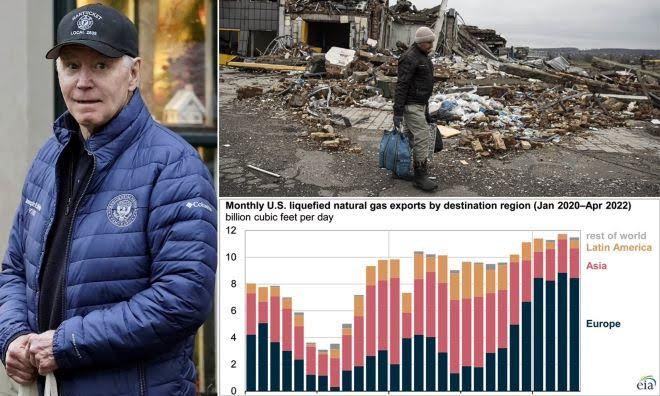
And yet, the US National Security Council keeps insisting that the crisis is solely Russia’s fault. At the same time, Washington DC is quite content with the massive windfall its natural gas industry is experiencing, while also presenting the exorbitantly priced LNG deliveries to the EU as some “purely altruistic” endeavor aimed at “diversifying away from Russia.” Even the EU foreign policy chief Josep Borrell, who is anything but sympathetic to Russia, is now showing frustration and questioning the concept of a “united front to help Ukraine,” acknowledging to Politico, “Americans — our friends — take decisions which have an economic impact on us.”
Other senior EU officials have also become more outspoken about this glaring hypocrisy. “The United States sells us its gas with a multiplier effect of four when it crosses the Atlantic,” European Commissioner for the Internal Market Thierry Breton said on November 23 during an interview on French TV. “Of course the Americans are our allies… but when something goes wrong it is necessary also between allies to say it,” Breton concluded.
According to the Politico report, another EU diplomat stated that the $369 billion industrial subsidy scheme the Biden administration earmarked “to support green industries” as part of the Inflation Reduction Act “unleashed panic” across European capitals. “The Inflation Reduction Act has changed everything,” the EU diplomat said. “Is Washington DC still our ally or not?” he asked.
Drago Bosnic is an independent geopolitical and military analyst.
On November 26, Lt. Gen. Igor Kirillov, the head of the radiation, chemical and biological defense troops of the Russian Armed Forces, said that Russia is concerned about US-controlled tests of infectious agents on military personnel and mental patients in Ukraine.
Russia has not received an exhaustive response from the United States and Ukraine regarding US biological and military activities on Ukrainian territory under the Biological Weapons Convention (BWC), Russia’s permanent representative to the Geneva-based UN headquarters, Gennady Gatilov, said.
“We still have not received a proper and meaningful response to the documents and evidence presented, which shed light on the true nature of interaction between the Pentagon and its contractors and the Ukrainian side in the field of military and biological activities,” he said.
The diplomat added that Russia’s complaint was ignored and its proposal for an international investigation under the auspices of the UNSC under Article VI of the BWC was blocked by the United States.
Earlier, Lt. Gen. Igor Kirillov, the head of the radiation, chemical and biological defense troops of the Russian Armed Forces, said that a network of more than 30 biological laboratories had been formed on the territory of Ukraine, which worked in the interests of the Pentagon. According to him, everything for the continuation of the US military-biological program was removed from Ukraine after the start of the Russian special military operation.
Earlier this month, Kirillov recalled that former US President Donald Trump’s National Security Advisor John Bolton had participated in formulating the US drive for global dominance in bioweapons research. He said that Bolton led the US delegation to the Biological and Toxin Weapons Convention’s Fifth Review Conference in November-December 2001. Later, the US blocked the operation of the UN body’s verification mechanism, as well as proposed measures to check bioweapons storage sites, citing threats such verification measures would pose to US “national interests.” Bolton also characterized the BWC’s verification protocol as “dead,” and promised that it’s “not going to be resurrected.”
Igor Kirillov accompanied his presentation with a fresh trove of documents, including papers related to US efforts to build up the country’s military-biological potential.
It was only a matter of time. The recent Russian pull-back of troops clearly indicated a broad shift in tactics, and the one thing that the Kremlin avoided for several months seemed like the next most logical step – Full spectrum strikes on Ukrainian infrastructure.
Initially, Ukraine’s media spin suggested that the precision strikes were “ineffective”, with western news outlets showing only a handful of images of craters in streets and some scarred apartment buildings. There were limited admissions of damage to the power and water grids, but Ukraine claimed that these systems would be back and functional within days. This did not happen.
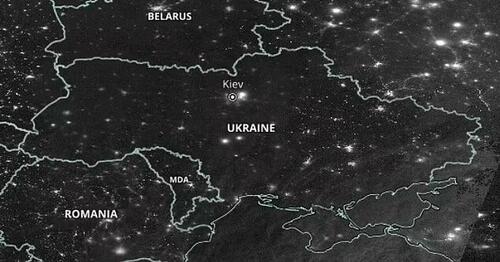
Not surprisingly, Ukraine suffered far more damage to their utilities than the government and media let on. Later estimates ranged from 60% to 80% of the nation’s grid destroyed or unusable and the latest satellite photos of active lights at night support this. Below, we can see lights across Ukraine on February 24th at the start of the war.
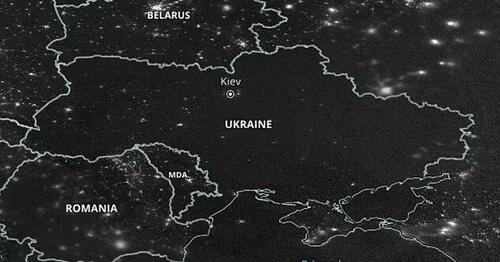
Next, we have an image taken from November 24th.
More than half the nation is in total darkness and the comparison to neighboring countries is stark. For the majority of the war Ukraine enjoyed near full use of their power grid, internet, water, gas, and other amenities, which is highly unusual during an invasion. The reasons for Vladimir Putin seeking to avoid damage to infrastructure are unknown, but public optics are the most likely explanation. With power resources nearly destroyed, the citizenry of Ukraine is facing a long cold winter with little to no relief in sight.
No doubt the media will portray this as a cold weather holocaust, though, elimination of infrastructure is usually the first measure of a large scale attack. It is standard operating procedure for the US military, for example. At this point, the coldest temperatures have yet to hit Ukraine, with average lows of 21°F (-6°C) in December. This kind of weather is not a problem with infrastructure intact, but with the grid down there will be chaos.
Water pipes will freeze and bust across major population centers, leaving only well water. The effects of the cold will be cumulative, and without heating and electric most other operations including economic operations will grind to a halt. Ukraine’s population will have gone from relative comfort to brutal survival in the span of a couple months.
The next most obvious outcome is a refugee crisis, with millions of people seeking shelter in neighboring countries in order to escape the cold. Though mainstream analysts are finally admitting to the grid problem, there is still very little coverage of the actual consequences we are about to witness. The assertions that Ukraine is “winning” the war are harder to sell while at the same time acknowledging the massive economic and humanitarian disaster that is escalating in the wake of supposed victory.
The US admits the “dual-use nature” of its large-scale biological research programs both at home and abroad but still plans to further expand them, the commander of Russia’s Nuclear Biological and Chemical Defense Troops, Lieutenant General Igor Kirillov, said during a briefing on Saturday. The general demanded broader international oversight of such programs.
“The military biological activities of the Pentagon in various regions of the world” are among the sources of risk threatening the whole international community, Kirillov warned.
The US seeks to “enhance its military biological potential,” as well as “expand its global control over the biological situation in the world,” he noted, citing the US’ own strategic documents.
The US National Biodefense Strategy, adopted in October 2022, does say that the nation “recognizes the dual-use nature of the life sciences and biotechnology” while also stating that Washington “seeks to prevent the misuse of science and technology.” It adds that biological risk management “requires… taking steps to mitigate those risks, regardless of whether they originate in the United States or abroad,” pointing to the need to “evolve” the country’s “biodefense capabilities.”
The US Defense Threat Reduction Agency – a Pentagon body mostly focused on countering threats posed by weapons of mass destruction (WMD) – goes even further in its strategy for the years 2022-2027. It openly identifies expanding the US’ ability to “identify, characterize and exploit adversary WMD vulnerabilities” as one of its goals. Another of its aims is to recognize “potential WMD warfighting obstacles” and find “solutions” to help the US and its allies “win during the conflict.”
Washington’s stated intention of strengthening the implementation of the Biological Weapons Convention (BWC) has been met with doubt from Moscow. Russia has “repeatedly raised the issue of the real goal of the Pentagon’s research programs at various international sites,” Kirillov stated on Saturday, adding that these questions “remain unanswered to date.”
In late October, Russia filed an official complaint claiming that US-backed biological activities are taking place in Ukraine and requested a UN probe into the matter. The UN Security Council rejected Moscow’s proposal, with the US, UK, and France voting against it.
Kirillov’s statement was made ahead of the upcoming BWC review conference scheduled to take place in Geneva over late November and early December. Held every five years, the event is aimed at ensuring that the convention remains relevant and up-to-date amid the changes in science and technology, as well as in the global security landscape.
By Jamal Kanj – Intifada-Palestine.com – January 14, 2011
Israel’s survival kit is: perpetuate conflict, insecurity to rationalize collective hate and finally playing victim.
Devoid of conflict, Israel implodes internally; without hate, Zionism loses its justification; and playing eternal victim to continue blackmailing the West. Absence of this holy trinity, Israel ceases to exist.
From its inception, the house of Zion has mastered exploiting adversarial powers to advance Israel’s cause. For instance, their influence over the Democratic Party in the US began with President Truman’s bid for 2nd term election in 1948.
Responding to strong opposition from Secretary of State General George Marshall and Department experts urging against recognition of Israel, President Truman replied: “I’m sorry gentlemen but I have to answer to hundreds of thousands [Jewish voters] who are anxious for the success of Zionism. I do not have hundreds of thousands of [voting] Arabs among my constituents”
Zionists influence over liberal American politics was matched with the doctrinal school of Conservative theoreticians aligning the Republican Party’s platform with Israel’s objectives. The Neoconservative Zionists, coined Zioncons, invented the “Clash of Civilization” concept to fight Israel’s wars. … continue
This site is provided as a research and reference tool. Although we make every reasonable effort to ensure that the information and data provided at this site are useful, accurate, and current, we cannot guarantee that the information and data provided here will be error-free. By using this site, you assume all responsibility for and risk arising from your use of and reliance upon the contents of this site.
This site and the information available through it do not, and are not intended to constitute legal advice. Should you require legal advice, you should consult your own attorney.
Nothing within this site or linked to by this site constitutes investment advice or medical advice.
Materials accessible from or added to this site by third parties, such as comments posted, are strictly the responsibility of the third party who added such materials or made them accessible and we neither endorse nor undertake to control, monitor, edit or assume responsibility for any such third-party material.
The posting of stories, commentaries, reports, documents and links (embedded or otherwise) on this site does not in any way, shape or form, implied or otherwise, necessarily express or suggest endorsement or support of any of such posted material or parts therein.
The word “alleged” is deemed to occur before the word “fraud.” Since the rule of law still applies. To peasants, at least.
Fair Use
This site contains copyrighted material the use of which has not always been specifically authorized by the copyright owner. We are making such material available in our efforts to advance understanding of environmental, political, human rights, economic, democracy, scientific, and social justice issues, etc. We believe this constitutes a ‘fair use’ of any such copyrighted material as provided for in section 107 of the US Copyright Law. In accordance with Title 17 U.S.C. Section 107, the material on this site is distributed without profit to those who have expressed a prior interest in receiving the included information for research and educational purposes. For more info go to: http://www.law.cornell.edu/uscode/17/107.shtml. If you wish to use copyrighted material from this site for purposes of your own that go beyond ‘fair use’, you must obtain permission from the copyright owner.
DMCA Contact
This is information for anyone that wishes to challenge our “fair use” of copyrighted material.
If you are a legal copyright holder or a designated agent for such and you believe that content residing on or accessible through our website infringes a copyright and falls outside the boundaries of “Fair Use”, please send a notice of infringement by contacting atheonews@gmail.com.
We will respond and take necessary action immediately.
If notice is given of an alleged copyright violation we will act expeditiously to remove or disable access to the material(s) in question.
All 3rd party material posted on this website is copyright the respective owners / authors. Aletho News makes no claim of copyright on such material.