Ukraine adopts restrictive media law
RT | December 29, 2022
Ukrainian President Vladimir Zelensky signed into law a restrictive media bill on Thursday. The long-debated legislation introduces heavy state regulations, as well as officially forbids covering Russia in a positive way.
The legislation greatly empowers Ukraine’s media regulator, the National Council on Television and Radio Broadcasting. Half of the Council’s members are directly appointed by the Ukrainian president, with another half selected by the country’s parliament, Verkhovna Rada.
Under the new rules, the regulator is able to impose fines on all types of media, as well as hand them mandatory notices. The Council will be able to revoke licenses from printed media, as well as block online outlets for publishing restricted materials and refusing to take them down.
The new legislation also delves into the online media field, which has remained effectively unregulated in Ukraine. The final version of the bill has not imposed a mandatory registration for online media outlets, introducing a “voluntary” one instead. Those that opt to secure said registration will be shielded from extrajudicial blockage, while outlets without it can be subjected to 14-day bans after a number of “serious” violations.
Online media outlets with opaque structure, those not having easily distinguishable owners or reporters, can be easily banned by the regulator as well.
A sizable part of the legislation is devoted to tackling purported “Russian propaganda” and effectively outlaws any positive coverage of Moscow’s actions that challenge the official stance of Kiev. The bill also reinforces a ban on all Russian media outlets, which have been already de-facto outlawed in the country. Moreover, the legislation prohibits the media from publishing information somehow “discrediting” the Ukrainian language and denying or whitewashing the “criminal nature” of the Soviet-era “totalitarian regime.”
The media bill was first introduced back in 2020, but passing it was put into motion only after the ongoing conflict between Kiev and Moscow broke out in late February. The bill passed its first reading in late August, with the final version adopted early this month. The legislation has been repeatedly criticized by Ukrainian opposition figures, journalists, and international rights groups alike over the assertive role of the government and potential damage to freedom of speech in the country.
Zelensky to meet Klaus Schwab at the WEF in Davos
Free West Media | December 29, 2022
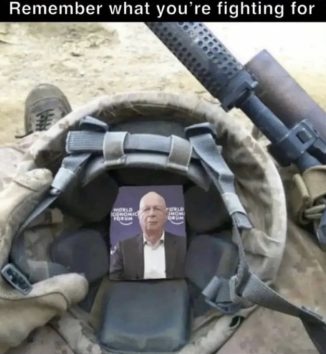 When the World Economic Forum (WEF) starts again in Davos next January, Vladimir Zelensky will be present too. He hopes to secure funding for the reconstruction of Ukraine.
Zelensky has already confirmed his participation. His government is currently preparing for the illustrious meeting in Davos, the President reported.
Among other things, another meeting is planned with the CEO of BlackRock, Larry Fink, with whom Zelensky has already exchanged views on post-war reconstruction in Ukraine.
“Specialists of this company are already helping Ukraine to structure the fund for the reconstruction of our country,” said Zelensky, who had a video call with Fink in September.
Zelensky did not reveal whether he would take part in person or virtually at the WEF from January 16 to 20.
Since May 2022, the forum has been all about the Ukraine war. In his welcome speech at the time, WEF founder and chairman Klaus Schwab described it as a “turning point in history” that “will reshape our political and economic landscape in the years to come”.
Demographic expert warns Ukraine will experience “catastrophic drop” in birth rate
By Ahmed Adel | December 29, 2022
The birth rate of Ukraine is expected to drop to catastrophic levels in 2023 and lead to the country’s population dropping to 35 million in the coming years. This is a demographic crisis that Ukraine will find extremely difficult to escape from, even if the war was to end tomorrow.
“Next year will see a catastrophic drop in the birth rate, and there is a risk that by 2030 the population of Ukraine will drop to 35 million,” said Professor Ella Libanova, Academician-Secretary at The National Academy of Sciences of Ukraine and Director of M.V. Ptukha (Institute for Demography and Social Studies).
She added that the main factor is the war as it contributes to a high mortality rate, stress, overload, poor nutrition, and a lack of medical care, all of which has an effect on reproduction and birth rates.
The expert noted that a Ukrainian woman would need to give birth to 2.13 – 2.15 children in her lifetime to maintain Ukraine’s current population of approximately 43.1 million. According to her, in 2021, the average birth rate in Ukraine was 1.1, and in 2022 it will be “even less”.
Libanova said that many of the people that have left Ukraine are “young women of active reproductive and working age, which means that they are not working in Ukraine today and not giving birth to children here.”
“It is clear that the purely quantitative effect is negative. But given the catastrophic decline of the economy due to the war, most likely these women would not have found work in Ukraine, and their presence would have increased pressure on the labor market,” the professor explained.
According to M.V. Ptukha, the population of Ukraine has decreased every year since 1994. The current population is estimated at 43.1 million, but it is recalled that in the 2001 All-Ukrainian Census, nearly 48 million people lived in Ukraine.
The United Nations High Commissioner for Refugees (UNHCR), as of August 9, found that more than 10.5 million people fled Ukraine to go into neighbouring countries. Since then, more than 4.4 million people have returned to their homes.
Although many people have returned to their homes, Libanova stressed that Ukrainian women still abroad will be less incentivised to return “because each new month of their stay […] deepens their adaptation – their knowledge of the language improves, their children go to schools and universities, and mothers take on work.”
At the same time, according Oleg Soskin, a former adviser to the President of Ukraine, Kiev is becoming a ghost city due to the massive exodus of people leaving.
“Rent in Kiev is falling and there is no longer demand. This means that migrants in Kiev are starting to leave, and there are 400,000 of them. Kiev is slowly becoming a ghost city thanks to Klitschko and all the people like Zelensky, Yermak and Shmyhal,” he said on his YouTube channel.
Soskin urged Ukrainians to leave towns and villages where production has stopped working and where there is no water, electricity, and heating systems.
“Manufacturing is going down, the economy is going down, banks are almost unable to hold out. Therefore, devaluation, inflation. Don’t linger in ghost towns,” he advised.
Following the Kiev regime’s terrorist attack on the Crimean bridge, Russia began launching missile attacks against Ukrainian infrastructure. The targets of the retaliatory strikes were energy facilities, defence industry, military command, and communications. The knock-on effects of such strikes mean electricity cuts and other inconveniences to citizens.
Soskin also highlighted that Ukrainians are being taken off city streets and forced to the front lines, which points out that Zelensky is becoming an “undisguised dictator in the eyes of the people.”
“Zelensky says what is democracy, what is freedom, and that we do not have a dictatorship, but in fact we are a dictatorship,” he said, before revealing that he receives videos of Ukrainians being forced off the streets of Dnieper, Chernivtsi, Krivoy Rog and other cities so that they can fight on the front lines.
Along with Kiev becoming a “ghost city”, people being forced off the streets to fight on the front lines, and Ukrainian women in Europe unlikely to return to their country, Ukraine faces a significant demographic crisis that will only worsen with its deepening economic crisis.
According to the Washington Post, at a closed-door meeting at the National Bank of Ukraine in December, central bank officials warned that if Russia’s attacks intensified, “people could flee Ukraine in droves, taking their money with them and crash the national currency as they seek to exchange their Ukrainian hryvnia for euros or dollars.”
“The Ukrainian government could be left without international reserves to pay for critical imports and unable to meet its foreign debt obligations — a doomsday scenario known as a balance-of-payments crisis,” the report added.
With such a dire economic situation, it is only inevitable that Ukrainian couples will have fewer children, and much later in life, even if wartime factors are suddenly excluded. This is a crisis that Ukraine cannot avoid now, even if the war is to end tomorrow.
Ahmed Adel is a Cairo-based geopolitics and political economy researcher.
Belarus shoots down Ukrainian missile – MOD

RT | December 29, 2022
Belarusian forces intercepted and destroyed a Ukrainian S-300 anti-air missile on Thursday, the Defense Ministry said.
According to the MOD, parts of the missile fell on agricultural land near the village of Gorbakha in the country’s southwestern Brest Region, which shares a border with Ukraine. There were no casualties.
Belarusian President Alexander Lukashenko has been briefed about the incident, state news agency Belta said.
Photos posted on social media show missile parts lying in the middle of a field.
The incident comes as officials in Minsk accuse Kiev of amassing troops and setting up firing positions across the border. The Belarusian government restricted movement in several border areas last week, citing tensions with Ukraine.
On November 15, a falling missile killed two people in eastern Poland, not far from the border with Ukraine. Warsaw said that the projectile was probably an S-300 fired by Ukrainian forces as they were trying to fend off a Russian attack, and that there was no evidence that the fallen missile was launched by Russian troops.
Kiev initially accused Moscow of attacking Polish territory, but later said that further investigation was needed to determine what happened. Ukrainian President Vladimir Zelensky described the incident at the time as an attack on NATO. Russia denied that the missile that hit Poland was fired by its forces.
US Patriot Missiles in Ukraine: A Desperate & Dangerous Escalation
By Brian Berletic – New Eastern Outlook – 28.12.2022
US appears to be in the process of transferring its Patriot air defense missile system to Ukraine. CNN in its article, “Exclusive: US finalizing plans to send Patriot missile defense system to Ukraine,” claims the US will approve and then quickly ship the system or systems into Ukraine in just days after the decision is made.
Paradoxically, CNN admits that training the large numbers of Ukrainians necessary to operate the system will take months. This has left analysts speculating that in fact NATO personnel already familiar with the system will operate it merely posing as “Ukrainians.”
This represents a significant escalation. While Western forces are believed to be covertly operating across Ukraine against Russian forces in a variety of roles, Western personnel operating an ever-growing number of sophisticated weapons may lead to mission creep in terms of other sophisticated Western weapons including Western aircraft and tanks entering the conflict with Western operators behind the controls.
The decision to send Patriot missiles follows a now steady tempo of Russian missile and drone strikes across Ukraine targeting military and dual-use infrastructure including the power grid. The Western media admits Ukraine’s own Soviet-era air defense systems are dwindling in number and running low on interceptor missiles.
The Financial Times in its article, “Military briefing: escalating air war depletes Ukraine’s weapons stockpile,” admits:
… ammunition and spares for the S300 and Buk systems, the mainstay of Ukraine’s air defences, are dwindling. Ukrainian officials have confirmed a claim by British military intelligence that Russia has been firing X-55 nuclear missiles — with the nuclear warhead replaced by an inert one — simply to exhaust Ukrainian air defences.
The article notes that buying additional ammunition and spare parts for the systems is not practical. It also notes efforts by the West to provide Ukraine their own air defense systems, however such systems suffer from similar problems in terms of limited quantities and limited access to ammunition.
Financial Times cites the German “Gepard” mobile anti-aircraft gun as being “highly effective.” No evidence was provided to substantiate that claim and ironically, shortly after the article was published, shortages of ammunition for Gepard systems were reported as was Switzerland’s unwillingness to supply additional ammunition to Ukraine.
Germany’s Rheinmetall company has announced it would expand ammunition production to compensate for Switzerland’s decision according to Anadolu Agency, but production would not begin until June at the earliest and Ukraine would not begin receiving ammunition until at least July and only if the German government places an order for the 35mm rounds the Gepard fires.
IRIS-T and NASAMS, two Western short to medium range air defense missile systems have been provided to Ukraine, albeit in small numbers that will increase incrementally over the course of several years. This represents a rate far too slow to replace Ukraine’s dwindling Soviet-era air defense systems.
Considering this reality, the decision by the US to transfer Patriot missile systems to Ukraine may not be because Washington believes they can make a difference, but simply because the US and its allies have nothing else more appropriate or numerous to send in its place.
But even the Patriot air defense system is plagued with problems ranging from its own critical shortage of ammunition to its inability to provide defense against drones and cruise missiles, the very systems they will be tasked with protecting Ukrainian skies against.
Patriot Missiles: Too Few, Too Feeble
Far from “Russian propaganda,” the Patriot’s shortcomings have been reported by the Western media for years. Al Jazeera in an early 2022 article, “Saudi Arabia may run out of interceptor missiles in ‘months’,” would admit to Saudi stockpiles of Patriot interceptor missiles running low and the inability of the US to manufacture enough to replace them.
The Wall Street Journal would report in March 2022 that additional missiles were eventually acquired, but not because the US was able to manufacture more, and instead because the US convinced Saudi Arabia’s neighbors to transfer missiles from their own stockpiles to Saudi air defense forces.
Faced with a growing shortage of missiles, Lockheed Martin pledged in 2018 to double annual missile production from 250 to 500, according to Defense News. By 2021, Camden News would report that Lockheed was on course to reaching its 500 missiles per year goal by 2024 after building a new 85,000 square foot expansion to existing production facilities.
However, even at 500 missiles a year, and if every single missile was subsequently sent directly to Ukraine, it would not be nearly enough to match the number of cruise missiles, drones, and other long-range precision weapons Russia is using as part of its ongoing special military operation.
The New York Times in an article titled, “Russia Is Using Old Ukrainian Missiles Against Ukraine, General Says,” cites Ukrainian sources who claim Russia is likely building at least 40 cruise missiles a month. Over the course of a year that works out to 480 cruise missiles. Considering the Patriot missile system falls far short of 100% effectiveness, the idea that 500 Patriot missiles could protect Ukraine against 480 Russian cruise missiles is unrealistic.
Annual missile production for Russia is likely higher, however. From October onward alone, the BBC reports that Russia has fired over 1,000 missiles and drones at targets across Ukraine. This is twice the number of missiles Lockheed plans on producing annually.
This reality is so obvious that Western analysts have commented publicly about their doubts regarding any impact Patriot missiles will have. Breaking Defense in its article, “Patriot missile system not a panacea for Ukraine, experts warn,” would cite a missile defense expert with the Center for Strategic and International Studies, Tom Karako, who called the transfer of Patriot missiles to Ukraine “a political gesture of support.”
The article would also note, citing Karako, that:
“We need to be careful about these scarce, precious assets,” Karako said. “While we’re only sending one battery, once it’s there, it’s probably not going to come back. And if they start expending munitions, they’re going to ask for more, right? And we don’t have just tons and tons of PAC-2s and PAC-3s [missiles] lying around that we can afford.
Karako would also point out that Patriots are needed for “deterring a Taiwan conflict,” highlighting the fact that the steady depletion of Western weapon stockpiles in its proxy war with Russia is not happening in a geopolitical vacuum and impacts the West’s ability to menace other nations in other regions of the planet – especially in East Asia.
The same article also pointed out how expensive Patriot missiles are versus the relatively cheap drones they would be attempting to intercept. But that’s even if the Patriot missile system can intercept them.
NBC News in a 2019 article titled, “Why U.S. Patriot missiles failed to stop drones and cruise missiles attacking Saudi oil sites,” would note how US-provided Patriot missile systems failed against cruise missiles and “triangular” drones used by Yemen against Saudi oil production facilities.
Despite Patriot missile batteries guarding the facilities, Saudi forces resorted to small arms fire in a failed attempt to down the drones. One attack temporarily disrupted half of Saudi Arabia’s daily oil output.
The article claims:
Drones and missiles can be detected by radar, but they tend to have small radar signatures and can fly close to the ground, sharply reducing the detection range and thus opportunities to fire on them from far away. They also are easy to maneuver, allowing them to hit the coverage gaps between radars and Patriot batteries. And drones and cruise missiles are often cheaper than a $2 million or $3 million Patriot missile, meaning the supply of Patriots can be depleted much faster than the bevy of drones launching attacks.
NBC News is describing precisely the threats Patriot missile systems transferred to Ukraine will face, but on a much larger and more sophisticated scale.
The article discusses extensive measures the US is taking to counter threats the Patriot is not well-suited to defend against – measures that only began being fielded as of 2021 – but not measures the US is prepared or even able to send to Ukraine in large numbers.
The US and its NATO allies have long neglected ground-based air defense systems in favor of achieving and maintaining air superiority over any potential battlefield through the use of warplanes. Several decades of fighting “small wars” against adversaries lacking anything resembling an air force has only compounded the problem.
Just as it will take years and large amounts of money to solve the current weapons and ammunition shortage the West faces as it continues to arm Ukraine, creating air defense systems in both the quantities and quality Ukraine’s requirements demand will take more time than Ukraine has, and more resources than the West may care to spend.
While it is common knowledge that wars are won through superior logistics, military technology, and strategy, one would be hard-pressed to recall when any war was won by “a political gesture of support.”
Lock Up the White House Silverware!
Volodymyr Zelensky is in town!
BY PHILIP GIRALDI • UNZ REVIEW • DECEMBER 27, 2022
In my humble opinion the surfacing of Ukrainian President Volodymyr Zelensky in Washington last week was possibly the most disgusting example of the corruption of our country and its values since Israeli President Benjamin Netanyahu arranged for a similar invitation to address a rapturous Congress back in 2015. Zelensky’s “surprise” visit had in fact been arranged over the course of several months and was a carefully choreographed performance intended to pay political dividends for both the White House, for the Democratic Party in Congress and for Zelensky and his political supporters at home. He met privately with President Joe Biden in the White House, where he presumably received most of what he was seeking as well as a pledge of total support until “Ukraine wins.” He subsequently was invited to address a Joint Session of Congress, a privilege that was most definitely not arranged at short notice, with House of Representatives Speaker Nancy Pelosi predictably calling on all Congressmen to attend. The session began with a three minute standing ovation from the assembled Representatives and Senators.
So the creepy little con-man was enabled to have his say in a video link that reached a global audience. That it consisted of a gaggle of lies to justify the rapid passage of hundreds of billions of dollars from the struggling American taxpayer to a nation renowned only for its reputation as the most corrupt in Europe was not noted by the audience. As it has been from the start Joe Biden’s war, it is inevitable that the Democrats in Congress should leap around and fill the chamber with cheers every time Zelensky opened his mouth to emit yet another inanity. But to their shame, many Republicans joined in on the celebration of the odd diminutive man Zelensky, whose beatification was passionately embraced by the national media to make sure no one missed out on the importance of the event. The New York Times report on the visit began by describing Zelensky’s status as “a national hero and global superstar, having forged a leadership style blending personal daring with deft messaging to rally his people at home and his allies abroad.” In part, that message included describing his struggle as engaging in a battle pitting “good against evil.”
Nevertheless, those Republicans whose heads were not wedged up their keesters did boycott the event, to the tune of only 86 out of 213 being present. It seems that some Republicans are against the war generally speaking while others actually believe that the billions going to Ukraine should be audited to determine whether it is being stolen or not. Congressmen Matt Gaetz and Lauren Boebert attended but played with their cell phones and did not rise and applaud the stirring rhetoric coming from Zelensky, who was basically seeking many new weapons and lots more money justified not as “charity” but as an “investment” so he and Ukraine could work to bring rule of law, global security, democracy and freedom to the world. In the aftermath, one particularly delusional commentator has enthused how “There can be no more compelling or effective leader of the democratic free world today than Ukrainian President Volodymyr Zelensky. Fate has called upon him to rise to a level of courage and clarity few figures in history have demonstrated.”
In his speech, Zelensky clearly forgot to mention how he has eliminated freedom of speech and association in his own country as part of his war agenda, while also banning opposition parties and media and even harassing the Russian Orthodox Church. But the tweetosphere inevitably ignored those issues and erupted instead over the alleged bad behavior by some Republicans in not supporting such a great leader. One Michael Beschloss (@BeschlossDC), who is the anointed NBC television network’s Presidential Historian, tweeted, “For any members of Congress who refused to clap for Zelenskyy, we need to know from them exactly why.” Independent journalist Glenn Greenwald (@ggreenwald) responded sarcastically to Beschloss, “Haul them before a Committee and force them to pledge allegiance to Ukraine and Zelensky or else face long-term imprisonment in a supermax. Refusing to clap for a foreign leader on command is a form of treason.”
And politicians too were inevitably prone to bombastic misrepresentation. Congressman Don Beyer of Virginia tweeted how “This disrespect is embarrassing. It embarrasses you, your constituents, the body we serve in, and our country. Huge numbers of President Zelensky’s people have been killed in a bloody war they did not seek. We must be able to debate foreign policy without mocking human suffering.”
Another lunkhead Democrat Representative Jake Auchincloss of Massachusetts declared war, asserting that “We’re in a global struggle between democracy and autocracy. And Ukraine is fighting on the frontlines of that struggle. Our support for Ukraine is sending a message to Moscow, it’s sending a message to Beijing. And it’s sending a message to other authoritarian regimes.” Auchincloss was apparently unaware that it is the United States government that has itself become more autocratic/despotic in that it is generally accepted that the president now has extralegally assumed the authority to allow war crimes to be committed in places like Syria, Afghanistan and Libya while also torturing people to death in secret prisons. The president and his Attorney General Merrick Garland are also rooting out “domestic terrorists” who generally speaking are white people who oppose Democratic Party policies.
Clearly, neither Beyer nor Auchincloss understands that a principled “debate” on foreign policy is not taking place at all in America, largely due to the ability of their party and colleagues to manage and control the process whereby it is possible to start an illegal/unconstitutional war that just might go nuclear without any real pushback from critics or the public. When it comes to controlling the narrative on Ukraine, the normally inept Biden Administration has unleashed the most effective propaganda machine that has ever existed, even if one is taking into consideration George W. Bush’s many lies relating to Afghanistan/Iraq. It is interesting to note that nor did Beyer find Zelensky’s macho sporting of a “wartime uniform” featuring combat style sweatshirt and fatigue cargo pants, which Tucker Carlson described as befitting the “manager of a strip club,” as disrespectful of the august body that he was addressing.
Nor was Beyer apparently affronted when Pelosi and Vice President Kamala Harris unfurled and waved a huge Ukrainian flag at the speaker’s rostrum. And speaking of Zelensky’s performance itself, one has to wonder who wrote Zelensky’s speech? He has neither the experience nor the smarts necessary to appeal to the most basic instincts of the American people, so one might rather expect that the piece was written and the presentation coached by the usual neocon handlers that have presumably surrounded him since his ascent to power.
The chinless and gutless wonder Senate Minority Leader Mitch McConnell made up for the lack of ardor exhibited by some of his colleagues by saying on the day before Zelensky’s arrival that arming Kiev to “defeat” Russia tops the agenda of “most Republicans.” He elaborated that “Making sure the Defense Department can deal with the major threats coming from Russia and China, providing assistance for the Ukrainians to defeat the Russians, that’s the number one priority of the United States right now, according to most Republicans.” Mitch calls defeating the Russians the number one priority for the United States, not the open southern border nor the economy suffering from inflation, shortages and recession. And then there is Senator he/she Lindsey Graham, who clearly endorsed that hardline in spades, calling for the “assassination of Russian President Vladimir Putin,” an act that would surely initiate World War 3.
I rather suspect that the passion unleashed for the Jewish Zelensky is at least in part engineered by the usual suspects among the politically powerful Jewish groups, lobbyists and media personalities, where criticism of Ukraine, which has a large Jewish population, is considered a capital offense. Jewish media in the US hailed the impending news of the Zelensky visit, enthusing in seasonal fashion over how “Ukraine’s survival” under Zelensky had been a “modern day Hanukkah miracle.”
Hatred of Russia (and of course Iran) is also a sine qua non among such groups and media outlets and they will twist every argument to urge US military intervention in both those countries. That is precisely what Zelensky himself does when he calls for NATO intervention even when he is the one who bombs neighboring Poland. In the current situation, you will not find the totally “reliable” New York Times debunking the ridiculous claim that throwing hundreds of billions of dollars at Zelensky and his band of thieves is in any way related to US national security requirements. No one was threatening the United States and the war that erupted in February was clearly negotiable on two major issues: implementation of the Minsk accords of 2014-5 over autonomy for Donbas and demands for neutrality for Ukraine, i.e. no joining NATO. It was the United States that encouraged Ukraine’s abrupt tilt towards and west and refused to negotiate in any seriousness with Russia over issues that were vital to that country’s actual security.
So did the Zelensky bit of kabuki theater largely engineered by the White House and Nancy Pelosi succeed in getting everything the Ukrainians wanted? Probably not, as offensive missile systems that could be used to strike deep into Russia are still on hold, but the money and other weapons are now in the pipeline. And there surely will be more to come, certain to include US military “advisers” on the ground. No matter how it turns out, the Ukraine is a tragedy writ large and the fools sitting complacently on Capitol Hill are largely to blame for not recognizing that US interests do not necessarily coincide with the aspirations of Volodymyr Zelensky and his fellow accomplices. Maybe in two years’ time when the whole house of cards has collapsed and Americans, feeling a great deal of economic and political pain, begin to wonder what took place, it will be time to throw all the bums out and replace them with folks who really care about what happens to this country.
Philip M. Giraldi, Ph.D., is Executive Director of the Council for the National Interest, a 501(c)3 tax deductible educational foundation (Federal ID Number #52-1739023) that seeks a more interests-based U.S. foreign policy in the Middle East. Website is councilforthenationalinterest.org, address is P.O. Box 2157, Purcellville VA 20134 and its email is inform@cnionline.org.
Ukraine to hike transit fees for Russian oil to EU – Transneft
RT | December 27, 2022
Ukraine will raise transit fees for Russian oil running via the Druzhba pipeline through its territory to the EU on January 1, Russian oil exporter Transneft announced on its website on Monday.
It is expected that Kiev will increase tariffs for transporting crude to Hungary and Slovakia by €2.10 per ton to €13.60 ($13.90), bringing the total hike to 18.3%.
In November, Bloomberg reported that Ukraine was mulling a tariff hike on Russian oil transit starting next year, citing a letter from Ukrtransnafta, the operator of Ukraine’s oil pipeline network. The Ukrainian operator had attributed the need for the price hike to the “continued destruction of Ukrainian energy infrastructure” which had resulted in “a significant shortage of electricity, an increase in its costs, a shortage of fuel, and spare parts.”
Transneft spokesman Igor Demin confirmed to the Russian media that the company had received the letter and was studying it.
Ukrainian oil transit fees have already been raised twice this year. The last hike in April reportedly brought the total increase to 51% on an annual basis.
Druzhba, one of the longest pipeline networks in the world, carries crude some 4,000 km from Russia to refineries in the Czech Republic, Germany, Hungary, Poland and Slovakia.
Russian president offers negotiations while US senator calls to “take Putin out”
By Drago Bosnic | December 26, 2022
On December 25, during an interview on Rossiya-1 state television, President Vladimir Putin stated that the Russian Federation is ready to negotiate a peace deal to end the conflict in Ukraine. However, he once again reiterated his position that the political West is the power pole that Moscow is willing to initiate peace talks with, as the Kiev regime cannot be considered sovereign enough to negotiate an acceptable end to the conflict. The president of Russia also added that the Eurasian giant never refused initiatives for negotiations and that it was the other way around.
“We are ready to negotiate with everyone involved about acceptable solutions, but that is up to them – we are not the ones refusing to negotiate, they are,” Putin said and added: “I believe that we are acting in the right direction, we are defending our national interests, the interests of our citizens, our people. And we have no other choice but to protect our citizens.”
However, although Russia is ready to negotiate, it doesn’t think peace talks are necessary at all costs. Instead, Moscow’s primary goal is its security. This doesn’t only include a negotiated settlement that would halt NATO’s crawling encroachment on Russia’s western borders, but would also ensure the neutral status of Ukraine. Still, this status cannot be secured just by simply signing deals with the political West. The experience regarding this has been extremely negative, to say the least, as the belligerent power pole is infamous for its tendency to break deals ever since the (First) Cold War ended.
During the interview, Putin also reiterated his position that the United States and the North Atlantic Alliance are waging a proxy war against Russia by using Ukraine as a pawn. He also said that the political West is trying to “tear Russia apart” and essentially destroy it. “At the core of it all is the policy of our geopolitical opponents, aiming to tear Russia apart, the historical Russia,” Putin said. “They have always tried to ‘divide and conquer’… Our goal is something else – to unite the Russian people,” he concluded.
The parties to the conflict don’t appear to be any closer to peace talks, however. On the contrary, this scenario seems further from reality than ever before. While the US keeps arming the Kiev regime, including with “Patriot” SAM (surface-to-air missile) systems that are earmarked to be transferred to the Neo-Nazi junta forces as soon as possible, the Russian military seems to be preparing for another massive push. The Kiev regime simply doesn’t seem to have any intention of negotiating a peace deal, as proven by the Neo-Nazi junta’s frontman Volodymyr Zelensky. Last Wednesday he made a speech before the US Congress and boastfully declared that “absolute victory” is the “only acceptable outcome” and that he vehemently rejects any talks which would include territorial concessions.
Zelensky’s statements were soon supported by the controversial US South Carolina Republican senator Lindsey Graham. However, he went even further than Zelensky and made several remarks that couldn’t possibly be further from the most basic diplomatic etiquette. During a live Fox News interview, Graham called for Russian President Vladimir Putin to be assassinated. “How does this war end? When Russia breaks, and they take Putin out. Anything short of that, the war’s gonna continue,” Graham said on Wednesday’s America Reports on Fox. The first part of the comment also reaffirms Putin’s belief that the political West wants to “tear Russia apart”.
He also stated that the Russian military will supposedly “fail in Ukraine”, because “the US is in it to win it, and the only way you’re gonna win it is to break the Russian military and have somebody in Russia take Putin out to give the Russian people a new lease on life.” Graham further called on the US and NATO to continue arming the Kiev regime forces “completely, all in without equivocation” and that sending additional long-range missiles to the Neo-Nazi junta would “help dislodge Russian forces from the Donbas, and even Crimea.” He also added that “larger drones would kill tons of Russians without losing any Ukrainians in the endeavor” and concluded that giving Zelensky everything he’s asking for is “essential”.
This wasn’t the first time Graham publicly called for Vladimir Putin to be killed. He made similar remarks back in early March. This even prompted an official rebuke from the Biden administration. At the time, the White House Press Secretary stated “that is not the position of the United States government and certainly not a statement you’d hear come from the mouth of anybody working in this administration.” However, this obviously didn’t stop Graham from repeating the threat.
On the contrary, he essentially also added a call for a coup in Russia. To make matters worse, Graham is not alone in this. In early October, former US National Security Advisor John Bolton called Putin “a legitimate military target” and also called for a coup in Moscow. With such comments coming from the top of the US political establishment, it’s hard to imagine how Russia could ever hope to start negotiations with the belligerent thalassocracy.
Drago Bosnic is an independent geopolitical and military analyst.
Ukraine war tolls death knell for NATO
BY M. K. BHADRAKUMAR | INDIAN PUNCHLINE | DECEMBER 25, 2022
The defining moment in US President Joe Biden’s press conference at the White House last Wednesday, during President Zelensky’s visit, was his virtual admission that he is constrained in the proxy war in Ukraine, as European allies don’t want a war with Russia.
To quote Biden, “Now, you say, ‘Why don’t we just give Ukraine everything there is to give?’ Well, for two reasons. One, there’s an entire Alliance that is critical to stay with Ukraine. And the idea that we would give Ukraine material that is fundamentally different than is already going there would have a prospect of breaking up NATO and breaking up the European Union and the rest of the world… I’ve spent several hundred hours face-to-face with our European allies and the heads of state of those countries, and making the case as to why it was overwhelmingly in their interest that they continue to support Ukraine… They understand it fully, but they’re not looking to go to war with Russia. They’re not looking for a third World War.”
Biden realised at that point that “I probably already said too much” and abruptly ended the press conference. He probably forgot that he was dwelling on the fragility of Western unity.
The whole point is that the western commentariat largely forgets that Russia’s core agenda is not about territorial conquest — much as Ukraine is vital to Russian interests — but about NATO expansion. And that has not changed.
Every now and then President Putin revisits the fundamental theme that the US consistently aimed to weaken and dismember Russia. As recently as last Wednesday, Putin invoked the Chechen war in the 1990s — “the use of international terrorists in the Caucasus, to finish off Russia and to split the Russian Federation… They [US] claimed to condemn al-Qaeda and other criminals, yet they considered using them on the territory of Russia as acceptable and provided all kinds of assistance to them, including material, information, political and any other support, notably military support, to encourage them to continue fighting against Russia.”
Putin has a phenomenal memory and would have been alluding to Biden’s careful choice of William Burns as his CIA chief. Burns was Moscow Embassy’s point person for Chechnya in the 1990s! Putin has now ordered a nation-wide campaign to root out the vast tentacles that the US intelligence planted on Russian soil for internal subversion. Carnegie, once headed by Burns, has since shut down its Moscow office, and the Russian staff fled to the West!
The leitmotif of the expanded meeting of the Board of the Defence Ministry in Moscow on Wednesday, which Putin addressed, was the profound reality that Russia’s confrontation with the US is not going to end with Ukraine war. Putin exhorted the Russian top brass to “carefully analyse” the lessons of Ukraine and Syrian conflicts.
Importantly, Putin said, “We will continue maintaining and improving the combat readiness of the nuclear triad. It is the main guarantee that our sovereignty and territorial integrity, strategic parity and the general balance of forces in the world are preserved. This year, the level of modern armaments in the strategic nuclear forces has already exceeded 91 percent. We continue rearming the regiments of our strategic missile forces with modern missile systems with Avangard hypersonic warheads.”
Equally, Defence Minister Sergei Shoigu proposed at Wednesday’s meeting a military build-up “to bolster Russia’s security,” including:
- Creation of a corresponding group of forces in Russia’s northwest to counter Finland and Sweden’s induction as NATO members;
- Creation of two new motorised infantry divisions in the Kherson and Zaporozhya regions, as well as an army corps in Karelia, facing the Finnish border;
- Upgrade of 7 motorised infantry brigades into motorised infantry divisions in the Western, Central and Eastern military districts, and in the Northern Fleet;
- Addition of two more air assault divisions in the Airborne Forces;
- Provision of a composite aviation division and an army aviation brigade with 80-100 combat helicopters within each combined arms (tank) army;
- Creation of 3 additional air division commands, eight bomber aviation regiments, one fighter aviation regiment, and six army aviation brigades;
- Creation of 5 district artillery divisions, as well as super-heavy artillery brigades for building artillery reserves along the so-called strategic axis;
- Creation of 5 naval infantry brigades for the Navy’s coastal troops based on the existing naval infantry brigades;
- Increase in the size of the Armed Forces to 1.5 million service personnel, with 695,000 people serving under contract.
Putin summed up: “We will not repeat the mistakes of the past… We are not going to militarise our country or militarise the economy… and we will not do things we do not really need, to the detriment of our people and the economy, the social sphere. We will improve the Russian Armed Forces and the entire military component. We will do it calmly, routinely and consistently, without haste.”
If the neocons in the driving seat in the Beltway wanted an arms race, they have it now. The paradox, however, is that this is going to be different from the bipolar Cold War era arms race.
If the US intention was to weaken Russia before confronting China, things aren’t working that way. Instead, the US is getting locked into a confrontation with Russia and the ties between the two big powers are at a breaking point. Russia expects the US to roll back NATO’s expansion, as promised to the Soviet leadership in 1989.
The neocons had expected a “win-win” in Ukraine: Russian defeat and a disgraceful end to Putin presidency; a weakened Russia, as in the 1990s, groping for a new start; consolidation of western unity under a triumphant America; a massive boost in the upcoming struggle with China for supremacy in the world order; and a New American Century under the “rules-based world order”.
But instead, this is turning out to be a classic Zugzwang in the endgame — to borrow from German chess literature — where the US is under obligation to make a move on Ukraine but whichever move it makes will only worsen its geopolitical position.
Biden has understood that Russia cannot be defeated in Ukraine; nor are Russian people in any mood for an insurrection. Putin’s popularity is soaring high, as Russian objectives in Ukraine are being steadily realised. Thus, Biden is getting a vague sense, perhaps, that Russia isn’t exactly seeing things in Ukraine as a binary of victory and defeat, but is gearing up for the long haul to sort out NATO once and for all.
The transformation of Belarus as a “nuclear-capable” state carries a profound message from Moscow to Brussels and Washington. Biden cannot miss it. (See my blog NATO nuclear compass rendered unavailing, Indian Punchline, Dec. 21, 2022
Logically, the option open to the US at this point would be to disengage. But that becomes an abject admission of defeat and will mean the death knell for NATO, and Washington’s transatlantic leadership goes kaput. And, worse still, major west European powers — Germany, France and Italy — may start looking for a modus vivendi with Russia. Above all, how can NATO possibly survive without an “enemy”?
Clearly, neither the US nor its allies are in a position to fight a continental war. But even if they are, what about the emerging scenario in the Asia-Pacific, where the “no limits” partnership between China and Russia has added an intriguing layer in the geopolitics?
The neocons in the Beltway have bitten more than what they could chew. Their last card will be to push for a direct US military intervention in the Ukraine war under the banner of a “coalition of the willing.”
Ukraine presidential aide calls for destruction of Iranian weapon factories
The Cradle | December 24, 2022
A presidential aide for Ukrainian leader Volodymyr Zelensky on 24 December called for the “liquidation” of Iranian weapons and drone manufacturing facilities and the arrest of those supplying the Islamic Republic with raw materials.
“Important to abandon nonworking sanctions, invalid UN resolutions concept, [and] move to more destructive tools,” Mykhailo Podolyak tweeted early Saturday.
Since September, Kiev has accused Tehran of supplying the Kremlin with hundreds of kamikaze drones allegedly used to hit Ukrainian infrastructure.
On Friday, the head of Ukraine’s spy agency claimed Russia had already launched around 540 drones at military and energy targets. For its part, Iran denies supplying Russia with drones since the start of the war.
The call for military action against Iran by Zelensky’s aide comes just days after officials in the Islamic Republic warned that its “strategic patience” towards Ukraine was running out.
“Iran’s patience will not be limitless,” Foreign Ministry spokesperson Nasser Kanaani said in a statement published by the state-run IRNA news agency on 22 December, where he also reiterated Tehran’s official position of “never supplying military equipment to any side to be used in the Ukraine war.”
“Mr. Zelenskyy should better learn a lesson from the fate of other world leaders who have invested hope on America’s support,” Kanaani concluded.
This statement was released hours after President Zelensky delivered an address at the US Capitol building, where he rebuked Iran for being an ally in Russia’s “genocidal policy” before describing Tehran as a “terrorist” state.
“Russia found an ally in this genocidal policy — Iran … Iranian deadly drones sent to Russia in the hundreds became a threat to our critical infrastructure. That is how one terrorist has found the other,” the Ukrainian leader told an exuberant gathering of US lawmakers before demanding Washington deliver more financial aid to fuel the war against Russia.
Since the start of the war, the White House has approved approximately $113 billion in economic and military assistance to Kiev. According to government spending data, over the last 12 months, Ukraine has been awarded more US taxpayer dollars than 40 US states.
A German-China-Russia triangle on Ukraine
BY M. K. BHADRAKUMAR | INDIAN PUNCHLINE | DECEMBER 24, 2022
The US Secretary of State Antony Blinken probably thought that in his self-appointed role as the world’s policeman, it was his prerogative to check out what is going on between Germany, China and Russia that he wasn’t privy to. Certainly, Blinken’s call to Chinese State Councilor and Foreign Minister Wang Yi on Friday turned out to be a fiasco.
Most certainly, his intention was to gather details on two high-level exchanges that Chinese President Xi Jinping had on successive days last week — with German President Frank-Walter Steinmeier and the Chairman of the United Russia Party and former Russian President Dmitry Medvedev respectively.
Blinken made an intelligent guess that Steinmeier’s phone call to Xi on Tuesday and Medvedev’s surprise visit to Beijing and his meeting with Xi on Wednesday might not have been coincidental. Medvedev’s mission would have been to transmit some highly sensitive message from Putin to Xi Jinping. Only last week, reports said Moscow and Beijing were working on a meeting between Putin and Xi Jinping later this month.
Steinmeier is an experienced diplomat who held the post of foreign minister from 2005 to 2009 and again from 2013 to 2017, as well as of Vice Chancellor of Germany from 2007 to 2009 — and all of it during the period Angela Merkel was the German chancellor (2005- 2021). Merkel left a legacy of surge in Germany’s relations with both Russia and China.
Steinmeier is a senior politician belonging to the Social Democratic Party — same as present chancellor Olaf Scholz. It is certain that Steinmeier’s call with Xi was in consultation with Scholz. This is one thing.
Most importantly, Steinmeier had played a seminal role in negotiating the two Minsk Agreements (2014 and 2015), which provided for a package of measures to stop the fighting in Donbass in the downstream of the US-sponsored coup in Kiev.
When the Minsk agreements began unravelling by 2016, Steinmeier stepped in with an ingenious idea that later came to be known as the Steinmeier Formula spelling out the sequencing of events spelt out in the agreements.
Specifically, the Steinmeier formula called for elections to be held in the separatist-held territories of Donbass under Ukrainian legislation and the supervision of the OSCE. It proposed that if the OSCE judged the balloting to be free and fair, then a special self-governing status for the territories would be initiated.
Of course, all that is history today. Merkel “confessed” recently in an interview with Zeit newspaper that in reality, the Minsk agreement was a western attempt to buy “invaluable time” for Kiev to rearm itself.
Given this complex backdrop, Blinken would have sensed something was amiss when Steinmeier had a call with Xi Jinping out of the blue, and Medvedev made a sudden appearance in Beijing the next day and was received by the Chinese president. Notably, Beijing’s readouts were rather upbeat on China’s relationship with Germany and Russia.
Xi Jinping put forward a three-point proposal to Steinmeier on the development of China-Germany relations and stated that “China and Germany have always been partners of dialogue, development, and cooperation as well as partners for addressing global challenges.”
Similarly, in the meeting with Medvedev, he underscored that “China is ready to work with Russia to constantly push forward China-Russia relations in the new era and make global governance more just and equitable.”
Both readouts mentioned Ukraine as a topic of discussion, with Xi stressing that “China stays committed to promoting peace talks” (to Steinmeier) and “actively promoted peace talks” (to Medvedev).
But Blinken went about his mission clumsily by bringing to the fore the contentious US-China issues, especially “the current COVID-19 situation” in China and “the importance of transparency for the international community.” It comes as no surprise that Wang Yi gave a stern lecturing to Blinken not to “engage in dialogue and containment at the same time”, or to “talk cooperation, but stab China simultaneously”.
Wang Yi said, “This is not reasonable competition, but irrational suppression. It is not meant to properly manage disputes, but to intensify conflicts. In fact, it is still the old practice of unilateral bullying. This did not work for China in the past, nor will it work in the future.”
Specifically, on Ukraine, Wang Yi said, “China has always stood on the side of peace, of the purposes of the UN Charter, and of the international society to promote peace and talks. China will continue to play a constructive role in resolving the crisis in China’s own way.” From the US state department readout, Blinken failed to engage Wang Yi in a meaningful conversation on Ukraine.
Indeed, Germany’s recent overtures to Beijing in quick succession — Chancellor Olaf Scholz’s high-profile visit to China last month with a delegation of top German CEOs and Steinmeier’s phone call last week — have not gone down well in the Beltway.
The Biden Administration expects Germany to coordinate with Washington first instead of taking own initiatives toward China. (Interestingly, Xi Jinping underscored the importance of Germany preserving its strategic autonomy.)
The current pro-American foreign minister of Germany Annalena Baerbock distanced herself from Chancellor Scholz’s China visit. Evidently, Steinmeier’s phone call to Xi confirms that Scholz is moving according to a plan to pursue a path of constructive engagement with China, as Merkel did, no matter the state of play in the US’ tense relationship with China.
That said, discussing peacemaking in Ukraine with China is a daring move on the part of the German leadership at the present juncture when the Biden Administration is deeply engaged in a proxy war with Russia and has every intention to support Ukraine “for as long as it takes.”
But there is another side to it. Germany has been internalising its anger and humiliation during the past several months. Germany cannot but feel that it has been played in the countdown to the Ukraine conflict — something particularly galling for a country that is genuinely Atlanticist in its foreign-policy orientation.
German ministers have expressed displeasure publicly that American oil companies are brazenly exploiting the ensuing energy crisis to make windfall profits by selling gas at three to four times the domestic price in the US. Germany also fears that Biden Administration’s Inflation Reduction Act building on foundational climate and clean energy investments may lead to the migration of German industry to America.
The unkindest cut of all has been the destruction of the Nord Stream gas pipeline. Germany must be having a fairly good idea as to the forces that were behind that terrorist act, but it cannot even call them out and must suppress its sense of humiliation and indignation. The destruction of the Nord Stream pipelines makes a revival of German-Russian relationship an extremely tortuous affair. For any nation with a proud history, it is a bit too much to accept being pushed around like a pawn.
Scholz and Steinmeier are seasoned politicians and would know when to dig in and hunker down. In any case, China is a crucially important partner for Germany’s economic recovery. Germany can ill afford to let the US destroy its partnership with China also, and reduce it to a vassal state.
When it comes to the Ukraine war, Germany becomes a frontline state but it is Washington that determines the western tactic and strategy. Germany estimates that China is uniquely placed to be a peacemaker in Ukraine. The signs are that Beijing is warming up to that idea too.
All Rights Reserved © 2022 Indian Punchline
IS ZELENSKY GOING TO BE DIEM-ED?
By Helmholtz Smith | Son Of the New American Revolution | December 22, 2022
If you think that Volodomyr Zelensky is the first leader in the throes of a civil war (yes, I know, Russia invaded, but the war in Ukraine at its roots is a civil war) to visit Washington, DC and speak to Congress and be compared with Winston Churchill, think again.
I thank my friend, Helmholtz Smith, for noting this historical precedent and finding the relevant video.
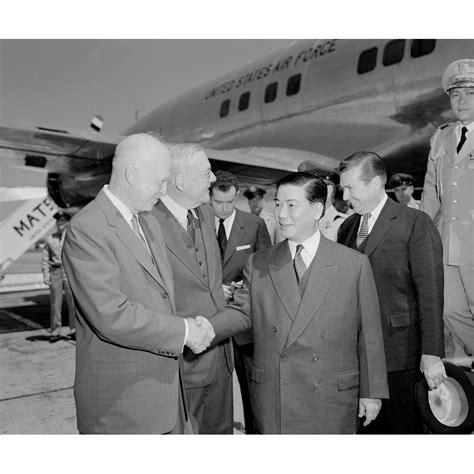
While I am sure Zelensky is flattered to be described as a modern day Churchill, he was not the first accorded that honor. Did you know that Ngo Dinh Diem also was the Vietnamese Winston Churchill?
In May 1961, U.S. Vice President Lyndon B. Johnson visited Saigon and enthusiastically declared Diệm the “Winston Churchill of Asia”. Asked why he had made the comment, Johnson replied, “Diệm’s the only boy we got out there.” Johnson assured Diệm of more aid in molding a fighting force that could resist the communists.
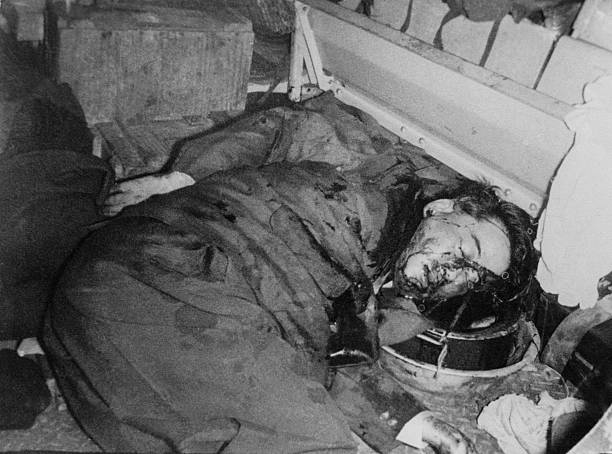
Diem learned the hard way that once your U.S. backers anoint you as the next Churchill, your days are numbered. Diem was murdered as a consequence of a U.S. engineered coup.
Zelensky’s Wednesday appearance in Washington, D.C. and the accompanying accolades equating him with Winston Churchill is prima facie evidence that most pundits and news readers in American are certifiable ignoramuses. For starters, Churchill, notwithstanding his love affair with imperialism, was a towering intellect. He authored scholarly books and established himself as one of the greatest rhetoricians of all times. He had a knack for turning a phrase and creating iconic moments.
Zelensky? I challenge anyone to recite one memorable moment from Zelensky’s snooze fest before the U.S. Congress. Banality thy name is Volodomyr. But Zelensky can do something that Churchill never did — he can play the piano with his penis. Gives new meaning to the phrase, “banging out a tune.”
Now, set aside the levity. Remember this week as another watershed moment in U.S. history. At the very moment that Washington embraced a malevolent dictator masquerading as a Nazified version of Fidel Castro, Russia sent an unmistakable message to the United States and Europe — Russia acknowledged that a state of war exists, pitting Russia against NATO and the United States, and it is building up its conventional and nuclear forces in anticipation of a future clash.
My dear friend Paul, a retired Navy SEAL Commander, asked me the essential, pertinent question this morning:
The question that continues to nag me, Larry, is most basic. What is the Ukraine-Russia War’s endgame? What do we see as a Ukraine win? Russia’s withdrawal? What does Ukraine see as a win – old borders restored, Russia minds its own business, etc.? What does Russia see as a win – total or partial domination of Ukraine? A western border pushback to NATO’s backyard? Then fortify it (build a fucking wall)? I don’t see focused discussion of the endgame. No one seems to be asking or answering the endgame question. It appears we (the US) are dumping $$ billions into Ukraine’s defense without telling the taxpayers what the money is expected to achieve – the endgame.
So what do you think? What is the endgame in Ukraine?
Featured Video

Broke Princes: Saudi Arabia’s Powder Keg
or go to
Aletho News Archives – Video-Images
From the Archives
Registered Israeli foreign agent driving contrived campus antisemitism crisis
By Wyatt Reed | The Grayzone | December 17, 2023
Lawsuits accusing top US universities of harboring antisemitism all originate from one source: a corporate law firm that fielded the pro-settler ex-US ambassador to Israel, and which was registered as a foreign agent of an Israeli principal as recently as 2021.
The firm now represents professional Israel lobby activists posing as victimized “Jewish students” and seeking to crush the free speech rights of Palestine solidarity activists. … continue
Blog Roll
 Aletho News
- Israeli Soldiers Inadvertently Prove Their Own Genocidal Guilt
- Ukraine arrests woman who exposed Azov battalion’s ‘torture chamber’
- Did Israel lose the midterms?
- How Iran defeated Trump’s Israel First GOP
- De-escalating the conflict: What the OSCE, the UN, and Europe are (not) doing to prevent war
- Desperate For A Renewed Iran War, Israel Dusts Off The WMD Deception.
- US Elections Offer Choice Between ‘Bad and Worse’ as Both Parties Serve War Lobby – ex-UN Expert
- Ghalibaf warns US government not to betray voters who rejected war
- Broke Princes: Saudi Arabia’s Powder Keg
- Albania’s Crisis: Rama, Israeli Investments and the Demand for Accountability
- If Americans Knew
- An error has occurred; the feed is probably down. Try again later.
- No Tricks Zone
- New Study: The Net Fossil Fuel Contribution To Rising Atmospheric CO2 Has Been Zero For 500 Years
- Germany’s Green Energy Transition Becoming Increasingly Expensive…Another 6 Trillion Euros!
- Sudden Stratospheric Warming, Powerful El Niño Combination May Lead To Extreme Europe Cold, Energy Crisis!
- Two New Studies Find Thwaites Glacier Melt Cannot Be Driven By Human Activity Or A Warming Ocean
- E-Cars Reduce CO2 Emissions By Only 41% Compared To Internal Combustion Engine Vehicles
- Predictions Made By Renowned Climate Professor Over Past Decades Have Been Proven To Be Poor
- New Study Suggests Large Regions Of The Pacific Ocean Have Been Cooling For The Last 80 Years
- Germany’s Green Energy Debacle: High Energy Costs Force Kahla Porzellan to Close After 182 Years!
- New Study: 50 Years Of The Most Aggressive ‘Net Zero’ Policies Can Only Affect The Global Climate By 0.03°C
- US September “Heat” Was No Record…Many Records Set Decades Ago

