Kiev is notoriously dependent on foreign military and economic support and debt-based spending fueling the NATO proxy war with Russia, with its national debt nearly doubling under Volodymyr Zelensky to over $152 billion. A World Bank official warned this spring that Ukraine could declare bankruptcy in 2025 unless its sponsors bail it out.
Ukraine’s Cabinet of Ministers issued a resolution on Tuesday ordering a partial halt to the servicing of its obligations on Eurobonds, sovereign GDP warrants and other loan instruments, driving the country one step closer to formal financial ruin.
Starting September 3, Ukraine will stop servicing its roughly $700 million debt to Cargill Financial Services International, a Minneapolis-registered agribusiness giant. From November 9 on, Kiev will halt servicing state national power company Ukrenergo’s ‘green and sustainability-linked’ Eurobonds, issued in 2021 and worth about $830 million.
Payments on GDP warrants – a financial instrument linked to economic growth, will be stopped May 31, 2025. Ukraine owes some $2.6 billion on this instrument, according to US banking giant JPMorgan.
The above debt reportedly fell outside a large-scale debt restructuring agreement announced earlier this month and designed to allow Kiev to stave off defaulting on its obligations.
The government decree instructs the State Treasury to temporarily suspend operations with GDP warrant-related funds, with Kiev last making an 2.89 billion hryvnia ($70.52 million US) payment, corresponding to the deferred payment of earnings and interest accrued from 2021, on July 31. On August 1, the treasury paid a 5.33 billion hryvnia ($130 million) fee for a separate debt restructuring deal reached in 2022. In 2023, Kiev agreed to defer GDP warrant payments to August 1, 2024 with 7.75% interest.
Kiev announced on July 22 that it had reached agreements in principle on the restructuring of some $23 billion in Eurobond debt with a committee of debt holders, with the deal reportedly involving the write-off of up to 37% of the debt, minus 12% if a high level of GDP growth can be restored by 2028.
The remaining debt is set to be reissued as new Eurobonds maturing in between 2029 and 2036, with interest increasing from 1.75% to 7.75% over time. Investors ready to participate in the Eurobond exchange have been offered a 1.25% bonus, with agreements requiring consent of 2/3 of debt holders. The deadline for deal was August 27, 5 pm New York time.
Settlements are expected to be paid out by August 30.
Big Three credit agency S&P Global Ratings downgraded Ukraine’s credit rating earlier this month from CC/C (‘vulnerable/highly vulnerable’) to SD/SD (‘selective default’) after Kiev missed a payment on its Eurobonds. “We do not expect the payment within the bond’s contractual grace period of 10 business days,” S&P said, pointing to Kiev’s July measure “that authorizes the government to suspend payments” on some debt.
A month earlier, Fitch Ratings downgraded Ukraine’s rating from “CC” (‘default imminent with little prospect of recovery’) to “C” – one notch above default.
An anonymous World Bank official told Russian media in March that Ukraine could formally declare bankruptcy in 2025 if Western creditors don’t write off its debts, including obligations to private entities and banks. Ukraine’s budget deficit is expected to hit a record $43.9 billion in 2024, notwithstanding the fact that the country has received upwards of $200 billion in military, economic, and humanitarian aid from Western countries since early 2022.
As the expanding frontline inches within just a few kilometers of the Kursk nuclear power plant in Russia, there are fears there could be a major nuclear disaster.
“There is a risk of a nuclear incident at the Kursk nuclear power plant,” said Rafael Grossi, Director General of the International Atomic Energy Agency (IAEA), after visiting the facility in Kurchatov, in the Kursk region bordering Ukraine, on Tuesday.
He added that he had seen evidence of drone strikes during his visit to the plant.
“I was told today that there have been several cases of drone attacks on the site (the site of the Kursk nuclear power plant), on the facilities. The fact that there is fighting a few kilometers away from the nuclear power plant raises great concerns and anxiety about the security system,” Grossi added.
He stressed that under no circumstances should a nuclear power plant be the target of military action, nor should it be used by either side for military purposes. The director general also said that the security systems of a plant must be fully operational under all circumstances.
Grossi noted that the IAEA delegation was shown the traces of the Ukrainian attack on the Kursk nuclear power plant. Based on the evidence his team gathered, he said there could be no doubt that Ukraine carried out these strikes and where they came from.
Putin also announced on Thursday that Ukraine had attempted a drone strike on the Kursk nuclear power plant.
Grossi, who said that he had visited the reactor hall, the engine room, and the control room of an operating power plant unit — as well as the spent nuclear fuel storage — found that the Kursk plant was operating at what is very close to “normal” mode.
He stressed that the IAEA is responsible for maintaining nuclear safety and security in nuclear installations worldwide. He said that he had accepted Russian President Vladimir Putin’s invitation to visit the Kursk nuclear power plant with his team to assess the situation personally and to find solutions together with his Russian counterparts. Earlier in the day, the IAEA director general was received by Russian Deputy Foreign Minister Sergei Ryabkov.
He said that he intends to meet Ukrainian President Volodymyr Zelensky next week to discuss, among other things, the situation at the Zaporizhzhya nuclear power plant and the IAEA’s intention to extend its observer presence to other nuclear facilities in Ukraine, as requested by Kyiv. … Full article
The UK is in favor of allowing Ukraine to use its Storm Shadow missiles for strikes deep inside Russia but is keeping its support out of the public eye so as not to cause a rift with the US, The Telegraph reported on Tuesday, citing sources.
Ukraine already has the greenlight from Britain to use Storm Shadows to strike Crimea and other areas claimed by Kiev, but not to target internationally recognized Russian territory. Amid Kiev’s ongoing incursion into Kursk Region, Vladimir Zelensky has stepped up his calls for the country’s Western backers to lift the restrictions on the use of their weapons for strikes in Russia. This is particularly the case for the British missiles, which can avoid enemy radar and hit targets up to 305km (190 miles) away.
However, according to The Telegraph, the decision on how Ukraine can use the missiles is not just up to London, as they are produced in close cooperation with France and the US, and are generally used alongside classified American systems.
While French President Emmanuel Macron previously said that Ukraine can use the missiles to strike sites in Russia from which the latter launches its own attacks, US officials have been reluctant to grant similar authorization. A White House source told the news outlet that the US administration is concerned that the use of long-range missiles, even without Washington’s outward approval, could escalate matters and lead to US troops being drawn into the conflict.
The UK has so far not made a formal request to Washington about Ukraine’s use of the missiles inside Russia, the news outlet claimed. British Prime Minister Keir Starmer is reportedly reluctant to provoke a dispute over the issue, despite his own earlier claim that Kiev was free to use UK-supplied weapons as it saw fit.
Starmer, who refused to comment on the missile issue at a briefing on Tuesday, now wants to try a “consultative approach” and discuss the matter with allies before he makes any decisions, sources told the news outlet.
“The US fear escalation more than we do because they have to deal with it. We don’t… They, after all, would have to pick up the pieces. Little Britain cannot fight Russia,” a senior military source told The Telegraph.
Moscow has long criticized the West for providing military aid to Ukraine, and warned against allowing it to strike targets deep inside Russia. Russian President Vladimir Putin previously said that such attacks would amount to direct Western participation in the conflict.
At a press conference on Tuesday, Foreign Minister Sergey Lavrov slammed discussions on the use of long-range missiles against Russia as “a ruse” to create the impression that the West wants to avoid excessive escalation, whereas the opposite is true.
Ukrainian authorities are admitting their failure in Kursk. Recently, the commander of Kiev’s armed forces stated that the operation’s objective was not achieved, acknowledging Russia’s success in preventing Ukraine from diverting Russian attention from other fronts. Such statements show how wrong the Western media are in trying to propagandize the Kursk case as a “Ukrainian victory.”
Colonel General Aleksandr Syrsky, Ukraine’s top military commander, stated that Kiev failed to achieve its objective in Kursk. According to him, the operation was mainly aimed at diverting Moscow’s attention, forcing the Russians to withdraw troops from Donbass and send them to the northern border. In this way, the Ukrainians hoped to make significant territorial gains in Donbass, facing unguarded Russian positions.
Syrsky acknowledges that the real result of the Kursk invasion was different: Russia further expanded its positions in Donbass, gaining new territories and deploying even more troops in the region. The Ukrainian commander believes that currently the main fronts in the Donbass are Pokrovsk and Kurakhovsk, in the west of the Donetsk People’s Republic. These cities have key strategic positions for the supply lines to Zaporozhye and Dnepropetrovsk. Since 2014, Kiev has been concerned about maintaining military fortifications in both cities, but constant Russian attacks threaten Ukrainian stability in the region.
“One of the tasks of conducting an offensive operation in the Kursk direction was to divert significant enemy forces from other directions, first and foremost the Pokrovsk and Kurakhovsk directions (…) Of course, the enemy understands this, so it continues to focus its main efforts on the Pokrovsk direction, where its most combat-ready units are concentrated (…) The enemy is trying to withdraw units from other directions, while in the Pokrovsk direction, on the contrary, it is increasing its efforts,” he said.
In other words, Kiev’s maneuver in Kursk was a desperate Ukrainian attempt to prevent – or at least delay – the inevitable Russian victory in Donbass. Kiev expected a Russian withdrawal from strategic cities in the disputed zone in order to strengthen the border positions in Kursk, which sounds like a serious strategic mistake on the part of the Ukrainians.
The calculation made by Kiev was based on a reality of military weakness, which corresponds to the current situation of the Ukrainian forces, but does not reflect the military conditions of Russia. If Ukraine is attacked on a different front, Kiev can only withdraw troops from other directions to protect this new area. Ukraine is operating in a regime of full mobilization, having already spent all its military resources and depending on strict management of what is left of its troops and equipment.
On the other hand, the Russians are still using a small percentage of their defense apparatus in the special military operation. There is no need for Russia to withdraw troops from one front to protect a new attacked region. Moscow can simply send troops from the rear to this new front, without disrupting the supply of the previous lines. Moreover, Russia can simultaneously increase its presence in both the new and old positions, since there is still a large army of reservists and volunteers ready to be mobilized if necessary.
In Kursk, Russia spared the troops already involved in the main fronts of the operation and, instead of redeploying them, simply used its rear forces to neutralize the invasion. The main contribution in Kursk came from the troops of the PMC Wagner Group that had been stationed in the Republic of Belarus since June last year. Meanwhile, seeing that the Ukrainians are desperate to protect Pokrovsk and Kurakhovsk, Moscow has sent even more troops to these fronts, which is why final victory in these directions is expected soon.
By admitting the failure and revealing Ukrainian plans in Kursk, Syrsky made clear the strategic inability and military inexperience of Ukrainian decision-makers. Kiev simply ignored the fact that Russia still has thousands of troops and equipment available to protect any point on its borders without having to withdraw any of its already mobilized soldiers.
It is also interesting to emphasize how the Western media was mistaken in hurriedly reporting the Kursk invasion as a “game changer.” According to Western “analysts”, Kiev had succeeded in “bringing the war into Russia,” but the commander of the Ukrainian army himself admits that this was never the real goal of the operation.
The cost of this mistake was massive for Kiev. In the end, the situation was reversed: it was Kiev’s troops who retreated from Donbass to invade Kursk, leaving key areas of the main conflict zone vulnerable and allowing Russia to advance further.
Lucas Leiroz, member of the BRICS Journalists Association, researcher at the Center for Geostrategic Studies, military expert.
Ukrainian MP Artyom Dmitruk has claimed from exile that he is a victim of political persecution due to his support for the largest Christian church in the country. Kiev has accused him of violent crimes and illegally crossing the country’s border.
Last week, Ukrainian leader Vladimir Zelensky signed a bill into law which threatens to ban the Ukrainian Orthodox Church (UOC), over allegations that it may be controlled by Moscow. Dmitruk stood out among his fellow lawmakers for his vocal opposition to the legislation. He is now considered a fugitive in Ukraine and says his family is in danger.
”They tried to abduct my family. They tried to kidnap my mother, wife and two small kids from a hotel in Europe,” the MP claimed on his Telegram channel on Monday. Dmitruk said private security had thwarted the plot and that he knows who was behind it.
Last week, Ukrainian authorities announced criminal charges against an unnamed MP. He was accused of assaulting two people – a law enforcement officer and a military service member. Separately, they announced a criminal investigation into alleged illegal crossing of the border by the same person. Dmitruk is understood to be the suspect, according to Ukrainian media.
The lawmaker is a professional powerlifter and entrepreneur who runs fitness clubs in the city of Odessa. He went into politics in 2019 on the wave of Zelensky’s surprise presidential campaign, getting elected as an MP for his Servant of the People party.
Dmitruk dismissed the allegations against him as fabricated for political reasons. One of the charges is apparently related to a conflict he had last year with what he called a scam call center.
The politician claims that Zelensky’s office is after him over his support of the UOC. The church has been subjected to law enforcement raids on its monasteries, arrests of senior bishops and the seizure of property by supporters of the rival Kiev-backed Orthodox Church of Ukraine.
Last week, armed men showed up at various properties associated with Dmitruk and his family, he told his attorney Robert Amsterdam, who voiced his client’s criticism of Kiev’s infringement of religious freedoms.
Dmitruk has alleged that his foes intended to have him killed while supposedly resisting arrest. His current whereabouts are unclear, with Tatryana Sapyan, a spokesperson for the Ukrainian investigative agency DBR, claiming on Sunday that he had fled the country via Moldova.
To understand the truth about the Nord Stream pipeline, one needs to master a certain form of “Kremlinology”. Everything about it is designed to obfuscate, every strand shrouded in prevarication and deceit.
From the start, the investigation was a textbook cover-up. The Swedish government rushed to secure evidence, citing their putative rights under international law, consciously boxing out any sort of independent, UN-backed inspection. Of course, after gathering all the evidence, the Swedish authorities studiously did exactly nothing, only to then belatedly admit that it actually had no legal right to monopolise the information in the first place.
The Germans, for their part, were also supremely uninterested in figuring out who pulled off the worst act of industrial sabotage in living memory against their country. In fact, over the course of a year-long non-investigation, we’ve mostly been treated to leaks and off-the-record statements indicating that nobody really wants to know who blew up the pipeline. The rationale here is bluntly obvious: it would be awfully inconvenient if Germany, and the West, learned the true answer.
Thus, the recent revelation that the true mastermind behind the ongoing deindustrialisation of Germany was none other than a Ukrainian by the name of “Volodymyr Z.” must have come as an unwelcome surprise. For not only is the idea that the authorities have suddenly cracked open the Nord Stream case not credible in the slightest, but the sloppy way in which the entire country of Ukraine is now being fingered is likely not an accident. Indeed, at the same time as the ghost of Nord Stream has risen from the grave, the German government announced its plans to halve its budget for Ukraine aid: whatever is already in the pipeline will be sent over, but no new grants of equipment are forthcoming. The German government is hunkering down for increased austerity, and so it is cutting Ukraine loose.
“The German government is hunkering down for increased austerity, and so it is cutting Ukraine loose.”
Germany, of course, is hardly alone. Even if there were enough money to go around, Europe is increasingly not just deindustrialising but demilitarising. Its stores of ammunition and vehicles are increasingly empty, and the idea of military rearmament — that is, creating entirely new military factories and supply chains — at a time when factories are closing down across the continent due to energy shortages and lack of funding is a non-starter. Neither France, the United Kingdom nor even the United States are in a position to maintain the flow of arms to Ukraine. This is a particular concern inside Washington DC, where planners are now trying to juggle the prospect of managing three theatres of war at the same time — in Ukraine, the Middle East and the Pacific — even though US military production is arguably insufficient to comfortably handle one.
And so, in an effort to save face in this impossible situation, Ukraine is now being held solely responsible for doing something it either did not do at all, or only did with the permission, knowledge, and/or support of the broader West. This speaks to the adolescent dynamic that now governs Western foreign policy in a multipolar world: when our impotence is revealed, find someone to blame.
The war in Ukraine, after all, was already supposed to be won, and Russia was supposed to be a rickety gas station incapable of matching the West either economically or militarily. Yet here we are: our own economies are deindustrialising, our military factories have proven completely incapable of handling the strain of a real conflict, and the Americans themselves are now openly admitting that the Russian military remains in a significantly stronger position. Meanwhile, Germany’s economic model is broken, and as its economy falls, it will drag many countries such as Sweden with it, given how dependent they are on exporting to German industrial firms.
10 years ago, during the 2014 Maidan protests, the realist John Mearsheimer caused a lot of controversy when he began warning that the collective West was leading Ukraine down the primrose path, and that our actions would lead to the destruction of the country. Well, here we are. At present, our only saving grace is the continuing offensive in Kursk — a bold offensive that will surely be remembered as a symptom of Ukraine’s increasing desperation.
Indeed, a far better guide of things to come can be found in the fingering of “Volodymyr Z.” as the true culprit behind the Nord Stream sabotage. Here, rather than accept responsibility for the fact that Ukraine was goaded into a war it could not win — mainly because the West vastly overestimated its own ability to fight a real war over the long haul — European geopolitical discourse will take a sharp turn towards a peculiar sort of victim-blaming. No doubt it will be “discovered” that parts of Ukraine’s military consisted of very unsavoury characters waving around Nazi Germany-style emblems, just as it will be “discovered” that journalists have been persecuted by oligarchs and criminals in Kyiv, or that money given by the West has been stolen, and that arms sent have been sold for profit to criminal cartels around the world.
All of these developments will duly be “discovered” by a Western political class that will completely refuse to accept any responsibility for them. Far easier, it seems, to calm one’s nerves with a distorting myth: it’s the Ukrainians’ fault that their country is destroyed; our choices had nothing to do with it; and besides, they were bad people who tricked us!
Ukraine’s attacks on Russia’s Zaporozhye and Kursk Nuclear Power Plants are most likely an attempt to portray Moscow as unable to keep those facilities safe, Swedish Armed Forces veteran and political and military observer Mikael Valtersson told Sputnik.
“When it comes to the Zaporozhye power plant, I believe that Ukraine wants to create pressure from the international community towards Russia, that the power plant should be at least internationalized, so that Russia wouldn’t control it,” Valtersson explained. “They could say it’s neutral now, the international community takes care of it.”
“When it comes to Kursk, I believe they want to sow distress, and maybe even panic among some part of the Russian population, at least those living nearby,” he added.
He also suggested that Ukraine tries to sow confusion by denying responsibility for these attacks.
“They said Russia attacked its own power plant in Zaporozhye, and they will probably say that if there were any Ukrainian drones, they were just passing by nearby, and they will all the time try to claim that it’s a false flag operation from Russia,” Valtersson noted. “And in the West many will believe that.”
Even if Ukraine’s culpability is confirmed, there likely “won’t be very severe reaction in the West,” he remarked.
Robert F. Kennedy Jr. has announced he would back Republican candidate Donald Trump and end his independent run for president, but only in swing US states.
The son of Senator Robert Kennedy and nephew of President John F. Kennedy first tried to challenge President Joe Biden for the Democratic nomination last April. Faced with obstruction within the party, he announced a third-party bid last October.
“Many months ago I promised the American people I would withdraw from the race if I became a spoiler,” Kennedy said on Friday afternoon. “In my heart, I no longer believe I have a realistic path to electoral victory.”
Kennedy said that three major issues led him to leave the Democrats: “free speech, the war in Ukraine, and the war on our children.” Trump, he explained, has “adopted these issues as his own to the point where he has asked to enlist me in his administration.”
The party two of his grandfathers helped build has become “the party of war, censorship, corruption, big pharma, big tech, big money,” Kennedy said.
He also accused the US government – led by Democrats on both occasions – of staging a coup in Ukraine in 2014 and rejecting a peace plan in 2019, pushing Kiev into a conflict with Moscow that, according to Kennedy, has cost over 600,000 Ukrainian lives so far.
“Ukraine is a victim of this war, and it’s a victim of the West,” he said.
Kennedy also criticized Vice President Kamala Harris for not having won “a single delegate” during the 2020 race, avoiding interviews, and not having a policy platform but a campaign focused entirely on opposing Trump.
Democrats have filed lawsuits to keep Kennedy off the ballot in many states, forcing his campaign to spend millions on ballot access challenges, according to NBC News.
In practical terms, Kennedy explained, he would be removing his name from the ballot in swing states while continuing to run in solidly “red” or “blue” states so his supporters can still cast a ballot without “harming or helping” anyone. His campaign has reportedly already filed petitions to that effect in Arizona and Pennsylvania.
Robert F. Kennedy Jr. today suspended his campaign for president of the United States as an independent, telling the media he no longer saw a path forward to victory “in the face of relentless censorship.”
Kennedy said that following discussions with former President Donald Trump, he has agreed to join forces with Trump in a unity party, which will allow the two to work together on “existential issues,” including ending the war on Ukraine, censorship and the childhood chronic disease epidemic.
“I believe I have a moral obligation to use this opportunity to save millions of children,” Kennedy said.
Kennedy, founder and chairman on leave from Children’s Health Defense — whose campaign defied the odds by gathering more than 1 million signatures in a drive to get on the ballot in all 50 states — said he will remain on the ballot except in a handful of battleground states.
Kennedy delivered a scathing rebuke to the Democratic Party and the DNC, which he said “dragged us into court, state after state after state” in a campaign of “legal warfare” to keep him off the ballot.
He promised that if Trump is elected, in addition to ending chronic disease in children, he will work with Trump to clean up corrupt agencies and the “corrupt food system.”
Kennedy said he reached out to the Harris campaign in an attempt to engage them on issues he believes are critical to the country’s future, but the campaign didn’t respond.
Calling it a difficult choice to join the Trump campaign Kennedy said, “I have the certainty that this is what I’m meant to do. … Ultimately the only thing that will save our country and our children is if we choose to love our kids more than we hate each other.”
Kennedy launched his campaign on April 20, 2023, with a nearly two-hour speech in Boston, during which he vowed to reduce chronic disease in children.
He reminded the audience of the obligation America’s leaders have to protect children — from toxic pesticides, from dangerous pharmaceuticals and from the “corrupt merger of state and corporate power” that robs future generations of their health and of their ability to achieve financial security.
On Oct. 9, 2023, Kennedy said he would no longer challenge President Joe Biden for the Democratic nomination for U.S. president, announcing that he instead would run for president as an independent.
He told a crowd in Philadelphia that most Americans are tired of divisive politics and that they agree more than they disagree when it comes to issues like the environment, education and the economy.
“We agree that we want a clean environment and wholesome communities for our kids,” Kennedy said.
He accused both parties of being beholden to corporate donors.
Has the thin line between proxy war and direct war now been eliminated? I spoke with Colonel Douglas Macgregor as NATO’s direct involvement in the war is evident with its involvement in the invasion of Russia.
Russia has restrained itself to a large extent as retaliating against NATO could trigger another world war and possible nuclear exchange, although the failure to retaliate emboldens NATO and results in subsequent escalations. Even Zelensky referred to the failure of Russia to respond to the invasion of Kursk as a reason for why NATO should not fear stepping over more Russian red lines. Colonel Macgregor suggests that the assumption of the US and NATO being all-powerful will continue to contribute to reckless escalations in the war against Russia – but also in the Middle East, and against China.
Most Ukrainian, Western and Russian observers seemed to recognise during the first days of the invasion of Kursk that it was a mistake. Ukrainian troops emerged out of well-defended frontlines and could be easily targeted in the open and with poor supply lines. As this is a war of attrition, it is likely a huge mistake to throw away Ukraine’s best soldiers and NATO’s military equipment on territory that is not strategic and cannot be held. However, the propaganda machine has since been turned on and the war is now sold to the Western public as a great opportunity to improve negotiation power, to develop a buffer zone, and to humiliate Putin – although none of these arguments can stand up to scrutiny.
The Ukrainian and NATO invasion of Kursk has changed the war completely as the Ukrainian causalities have increased dramatically, the Ukrainian defensive lines in Donbas are now collapsing even faster, and NATO’s role in the war is no longer ambiguous. This is all happening as internal divisions in NATO are surfacing, and the US/Israel will likely trigger a regional war in the Middle East.
Last week, a number of reports and articles about the Nord Stream pipeline explosion shook the media landscape and citizens in Germany and around the world. After a long period of astonishing silence surrounding this monstrous event, things now seem to be moving. Are we slowly getting closer to the truth in this affair? In any case, the reactions from all sides were fierce and showed once again just how divided the political landscape is in Germany and Europe.
After the news first made the rounds in several German media outlets on August 14, 2024 that German investigators had identified a Ukrainian diving instructor (funnily enough named Volodymyr Z.) who allegedly blew up Nord Stream and then unfortunately escaped arrest due to a lack of cooperation from Polish authorities, further explosive revelations from the Wall Street Journal followed on the same day.
According to the WSJ article, the attack was led by the then-Commander-in-Chief of the Ukrainian armed forces and current Ukrainian ambassador to the UK, Valerii Zaluzhnyi, with president Zelenskyy having initially given the operation the green light. Then the Dutch military intelligence service MIVD found out about it, informed the CIA and the latter in turn urged president Zelensky to stop the operation. He then ordered Zaluzhnyi to abort the operation, but the general ignored the order and went ahead with the plan. According to the WSJ, just days after the attack, which occurred on September 26, 2022, the CIA gave the German Foreign Ministry a detailed account of how the covert operation went down. The Ukrainian government has rejected this account.
Much of this report seems implausible, so I consider the article to be more of a “limited hangout” than a clarification of this terrorist attack on our industrial infrastructure.
“Limited hangout” is a term from the intelligence world for a common ploy used by intelligence professionals: when the truth is beginning to emerge or the public is becoming too suspicious and impatient, and they can no longer remain silent or rely on a contrived cover story to deceive the public, part of the truth is admitted — sometimes even voluntarily — while still withholding the essential and truly risky facts in the case. The public is supposed to be distracted from and engaged with the disclosed information, so that the pressure it exerts eases (at least for a while).
One day later, on August 15, 2024, the German newspaper Die Welt published an interview with the former head of the BND (Bundesnachrichtendienst or Federal Intelligence Service of Germany), August Hanning, which also caused quite a stir. Mr. Hanning says that the attack, if it was carried out by the Ukrainian side, could only have been possible with strong logistical support from Poland and that for him there must obviously have been an agreement between the highest leaders in Ukraine and Poland, naming president Zelenskyy and president Duda.
These statements sound more plausible, but it is surprising that Mr. Hanning begins by saying that only Ukraine and Poland had an interest in and the means of blowing up the pipelines, and that he doesn’t mention other possible perpetrators, such as the US, but also Great Britain or the Scandinavian neighbouring states. Interestingly, however, he takes a very clear stance on the classification of the attacks and comes to a very different conclusion from most voices in the German political landscape, which we will get to below:
There has been considerable damage to the pipelines. […] I once spoke to external experts from the operators and they put it at up to 20 to 30 billion euros. The huge damage caused by state terrorism must be clearly stated and I also expect the German government to make it clear that compensation must be demanded. Also from the operators. I believe that huge damage has been caused by the activities of Ukrainian and Polish government agencies.
This astonishing accumulation of news within a few days around the investigation, which has been ongoing for two years without any results so far, has led some to suspect that this is a controlled action directed against Zelenskyy and part of the public’s preparation for him losing the support of the West and being replaced.
“Thank you, Ukraine!”
The reactions to this explosive news were not long in coming and proved once again what a divided information landscape we find ourselves in.
The German conservative newspaper FAZ led the way. In an article that directly followed the WSJ’s “revelations”, Reinhard Müller explained that the pipeline had been a legitimate military target (according to the headline); the text formulates it somewhat more cautiously: “could be considered a legitimate target”. His arguments: it is owned by a Russian state-owned company and also contributed to Moscow’s war of aggression against Ukraine. He also makes an argument oft-heard from German commentators whose loyalties clearly lie with Ukraine: at the time the pipeline was blown up, it was no longer serving Germany’s energy supply. Of course, this raises the question: if it no longer served Germany’s (and Europe’s, for that matter) energy supply, how could it have contributed to Moscow’s war of aggression? But let’s leave that aside for the moment. And we will come to the ownership structure later in the text.
He is also of the opinion that if the Ukrainian president or another commander commissioned it, it could also be seen as an act of defense permissible under international law. Müller takes the opportunity, while he’s on the subject of steep theses on international law, to take a similarly idiosyncratic swipe at the German government’s critics of its stance in the Gaza war:
Here, Ukraine, with its back to the wall, gives little cause for concern in terms of the selection of targets, the treatment of prisoners of war and also the prosecution of war crimes and international observation. In such extreme situations, the value of the Western community’s value-based approach is proven. The end does not justify every means — this also applies to Israel, which is also in a struggle for survival. The commitment to human rights, even in the fight against those who do not care about them, makes the decisive difference. Any far-sighted government should also recognise that this is in its own best interests. Only those who fight under the flag of humanity will be able to live in peace with their neighbors at all times in the long term.
So again, because this may be misleading, his statement is: Ukraine and Israel respect human rights, unlike their opponents, and thus fight under the flag of humanity and now the Western community’s value-based approach shows its worth in that we support them in this noble fight (also against our own industrial infrastructure), because (only) in this way can we live in peace with our neighbors in the long term. I would like to award the prize for the most absurd take to Mr. Müller.
But please read the article in its entirety yourself, which also claims that all allies have a duty (!) to rush to the aid of the invaded Ukraine at any time, including with their own soldiers. In legal terms, one would speak of a “minority opinion”; I would like to use stronger words, but I’m trying to control myself so as not to further the division here.
A few days later, the FAZreported that Germany would be cutting back on military aid for Ukraine and that, according to the German government’s current budgetary planning, no new money would be made available for this with immediate effect.
What initially appeared to be a possible reaction to the revelations and a concession to the large part of the population that is critical of the German government’s NATO course (because of the upcoming elections in some German states?), turns out on closer inspection to be a less major change in policy. This year everything will continue unchanged, next year military support is to be halved and then in 2027 it will shrink to less than a tenth of the current amount. However, most geopolitical analysts expect the war to end by 2025 at the latest. And after that, according to Christian Lindner’s plans, the support will no longer come from the federal budget, but will be financed from the proceeds (interest) of the Russian central bank assets frozen by the G7 states.
There were also comments from abroad that caused an uproar. Polish prime minister Donald Tusk, for example, commented the revelations in a tweet as follows:
To all the initiators and patrons of Nord Stream 1 and 2. The only thing you should do today about it is apologise and keep quiet.
The tweet went viral and has been viewed 2.6 million times so far, which is no wonder as it was provocative to the max and triggered correspondingly emotional reactions. So not only should we silently accept the blowing up of the pipelines; we should also be ashamed to have built and supported them in the first place.
But what seems like pure election advertising for the AfD and Sahra Wagenknecht’s new party, BSW, may also have other economic and geopolitical backgrounds:
Since the beginning of the Ukraine war, we have been wondering about the increasingly aggressive and militant rhetoric against Germany from our neighboring country and cannot shake off the feeling that the new favourite child of the US and Great Britain is finally trying to get back at its neighbour, which is often perceived as overpowering, with borrowed courage.
In general, Poland plays an interesting role in the whole Nord Stream pipeline affair, a role that has received very little attention to date. This is because Poland (not just Ukraine) also lost both leverage/pressure and considerable transit income through the construction and commissioning of the pipelines, which allowed Russian natural gas to be supplied directly to Germany and the rest of Europe. And they worked together with the US, Denmark and Norway on an alternative to gas supplies from Russia and also wanted to get back into the game as a transit country for gas supplies from other countries of origin to Germany and Europe. However, as long as Nord Stream 1 and then Nord Stream 2 were available, the economic prospects for these plans were poor. It is a strange coincidence that the Baltic Pipe, a natural gas pipeline from Denmark to Poland, was opened on September 27, 2022 (only one day after the Nord Stream pipelines were blown up).
But back to Germany, where other politicians and journalists made it clear that even a possible terrorist attack by Ukraine would not change their “Nibelungentreue” — a German expression meaning absolute loyalty. CDU politician Roderich Kiesewetter initially explained in a video interview with Die Welt that the operation of Nord Stream 1 and 2 did not generate any income for Russia, as no gas was flowing through them at the time of the attack (I assume in order to substantiate his otherwise unfounded suspicions of Russia as the perpetrator, more on that later).
He may be hoping for a poor memory on the part of the audience here, but I think most Germans who have studied the topic still have a good memory of the situation in the autumn of 2022 and know very well that Russia had only halted gas supplies through Nord Stream 1 for a short time due to problems with the sanctions and turbine maintenance. This may also have been an attempt by Russia to mitigate or avert the sanctions in exchange for the resumption of gas supplies, or it may have been an attempt by Russia to force the certification and opening of Nord Stream 2, which was ready for use at that time.
In any case, it is clear that Russia was expressly willing and also able to start supplying gas via Nord Stream 2 at any time and that this was blocked by the German government for political reasons (keyword: certification procedure) and that the pressure from the population in this direction grew considerably, especially in the period shortly before the blast (keyword: hot autumn, we remember).
Mr. Kiesewetter omits these connections here in order to give the impression that the pipelines were actually already irrelevant at the time of the blast, which unfortunately — in the interest of truth — many other commentators also claim. As with so many issues these days, one would like to see neutral fact checks, which unfortunately we rarely get.
When Mr. Kiesewetter goes on to say that many elements of the article do not seem very credible, I even agree with him, but then he tries several times in the course of the interview to cast suspicion on Russia and talk about a “false flag” operation, albeit without any indications, arguments or evidence, so who is the conspiracy theorist now?
In addition, he then says that no German property was damaged because the attack took place in international waters. The location of the attack is obviously irrelevant to the ownership status, but Mr. Kiesewetter certainly knows that. And Nord Stream 2 is indeed owned by Nord Stream 2 AG, which is wholly owned by Gazprom, which in turn is a state-owned company. However, Germany has invested around 3.9 billion euros in goods and services in Nord Stream 2. And the Nord Stream 1 pipeline, which was also damaged, is held by Nord Stream AG, of which only 51 percent is owned by Gazprom through its subsidiary Gazprom International Projects North 1 LLC, while the other 49 percent is held by German, Dutch and French companies from the energy infrastructure sector.
In this respect, both German and European property was destroyed. Furthermore, the ownership structure under civil law is not the decisive factor in classifying the destruction of important energy infrastructure as a threat to national security, as the issue is how important it is for Germany’s economy and population, and not who owns the pipelines under civil law. Of course, Mr. Kiesewetter knows all about that too, he is an experienced politician who has been in the political business for a long time. Finally, the sentence that caused the most uproar:
Besides, Ukraine is the attacked (sic!), the security of Ukraine, whether they destroyed it or not, is in our interest.
So, in plain language: Ukraine’s security is in our (i.e., Germany’s) interest, even if it jeopardises our security with such a massive attack.
Finally, Julian Röpcke, full-time editor at the Bild newspaper, in his spare time apparently something of a war correspondent for the Ukrainian army and, according to his own description, an “arms delivery ultra”: he reposted his own tweet from November 2023 (i.e., shortly after the attack) with the note “Due to current events”, in which he praised the destruction of the pipelines:
Just to make this clear again: If Ukraine attacked Nord Stream: thank you very much. It was a Russian infrastructure project that made us dependent on their gas. Thanks a lot for ending that dependency, no matter who did it.
In other words: “Thank you, Ukraine!” (paraphrasing the famous tweet by Polish politician Radek Sikorski, shortly after the attack itself).
Moving the goalpost
What the reactions also reveal is an exciting shift in terms and evaluations among representatives and supporters of the German government’s and the EU’s current Ukraine policy. When the rather unlikely thesis of Russia being the perpetrator was initially put forward, Ursula von der Leyen, for example, was still saying:
Any deliberate disruption of active European energy infrastructure is unacceptable & will lead to the strongest possible response.
In short, right after the attack, it was clear to everyone and was not disputed by anyone (except perhaps by the German Greens, but that is such an extreme position that I am leaving it out here) that this was a massive terrorist attack against the energy infrastructure of Russia, Germany and also Europe, which was supplied with energy via these pipelines. It was also largely undisputed that this constituted a “casus belli” under international law, i.e., it was tantamount to a declaration of war and should actually trigger a NATO defense case under Article 5 of the North Atlantic Treaty.
But that’s yesterday news. Now that there is evidence that Ukraine was at least complicit in this act, the supporters sound very different: the pipelines were irrelevant (so why were they blown up at all?), the demolition was justified and Germany should be ashamed of having built them in the first place.
Storm of outrage
From other quarters, there was a lot of outrage about the news. Alice Weidel from the German right-wing AfD-Party commented the news as follows:
The economic damage to our country caused by the blasting of #Nordstream allegedly ordered by #Zelenskyy — and not #Putin, as we were led to believe — should be “billed” to #Ukraine. Any “aid payments” that burden the German taxpayer should be stopped.
Sahra Wagenknecht of the left-wing BSW (Bündnis Sahra Wagenknecht or Sahra Wagenknecht Alliance) wrote):
Should German authorities have known in advance about the attack plan on Nord Stream 1 and 2, then we would have a scandal of the century in German politics.
Nobody deserves a government that allows critical infrastructure to be blown away with complete equanimity.
For some, angry comments were not enough and they wanted to see action. Opposition Cologne-based lawyer Markus Haintz, for example, filed charges against Kiesewetter with the Ellwangen public prosecutor’s office due to his comments regarding the blowing up of the Nord Stream pipelines in the Die Welt interview.
Laughter through the tears
Fortunately for the soul, there were also many funny and satirical reactions. Berlin-based AI artist and satirist Snicklink posted this video. But other X users also had fun with pictures and photos making fun of the — from their point of view — implausible descriptions in the WSJ article.
What’s next?
So far (at the time of writing this article) no German government representative has commented on the WSJ investigation or the Die Welt interview, which is incredible in itself. I assume there were some emergency meetings on the weekend where the line of communication is being discussed and we can expect a statement soon. We can look forward to seeing how they position themselves here.
Sahra Wagenknecht is now calling for a committee of inquiry in the German Parliament to investigate the role of the German government in connection with the attacks on the Nord Stream pipelines.
This seems urgently needed — because that would be the appropriate forum to shed light on all these issues. For as interesting and sometimes entertaining as the reactions and discussions in the regular and social media are, such a state affair cannot be solved by swarm intelligence.
This article first appeared in German on Nachdenkseiten.
Retired Ukrainian Army Major Igor Lapin said in an interview with former Ukrainian parliament deputy Boryslav Bereza that the Ukrainian Armed Forces will be defeated in the Kursk region if they decide to hold their positions. Ukraine’s expected defeat comes despite the involvement of the intelligence services of the United States, the United Kingdom, and Poland in the invasion of the Kursk region.
“Some people thought that now we would get somewhere and start entrenching ourselves. Well, I have already said, from the point of view of a special forces officer, that as soon as the front becomes static, that will be the end of us,” Lapin said.
He noted that the Russian military has an advantage in terms of air force, artillery, and troop numbers. In his opinion, the commander-in-chief of the Ukrainian Armed Forces, Oleksandr Syrsky, is responsible for the attack on the Kursk region.
According to the retired major, Ukrainian troops cannot “add 300 km to the defence line and try to hold back the pressure of Russian troops,” thus, he believes that a static front line creates problems for Ukraine.
“There is the commander-in-chief’s intention. That is his responsibility. By the way, what is the strategic intention? Nobody knows,” the major added.
On August 6, Ukrainian troops launched an attack on the Kursk region of Russia. The invasion marked Ukraine’s most significant aggression against Russia since February 2022. Commenting on the attack, Russian President Vladimir Putin said Ukraine had carried out another large-scale provocation by indiscriminately firing at civilian targets, adding that the enemy would receive an adequate response.
Despite the rapid advancement of Ukrainian forces in the first days of the invasion, Chief of the General Staff of the Russian Armed Forces Valery Gerasimov said the advance had been halted. He stressed that the operation in the Kursk region would be completed with the defeat of the enemy and access to the state border.
However, the initial success of Ukrainian forces in the Kursk region is due to the involvement of the intelligence services of the US, the UK, and Poland.
“According to available data, the operation of the Armed Forces of Ukraine in the Kursk region was prepared with the participation of the intelligence services of the United States, the United Kingdom and Poland. The units involved underwent combat coordination at training centres in the United Kingdom and Germany. Military advisers from NATO states are providing assistance in managing the units of the Armed Forces of Ukraine that invaded Russian territory,” the Russian Intelligence Service said on August 20 to the Izvestia newspaper.
NATO countries also provided the Ukrainian military with satellite intelligence data on the deployment of Russian troops in the area of operation. The intelligence service further stated that due to the deterioration of Ukrainian troops’ situation in several sections of the combat contact line in the Northern Military District zone, the West has been pressuring Kiev to transfer military operations to Russian territory in the false belief that it will provoke the rise of anti-government sentiments and shaking up the internal political situation in Russia.
Washington’s involvement in Ukraine’s invasion of Kursk is not limited to the support from intelligence services. US private military group Forward Observations Group boasted about its involvement by posting a photo titled “The boys in Kursk” and geotagging Kursk. In response to the American mercenaries fighting in Kursk, the Russian Foreign Ministry summoned US Chargé d’Affaires Stephanie Holmes on August 20 to lodge a protest.
It is recalled that in March, the Russian Ministry of Defense said that 13,387 mercenaries had arrived in Ukraine since the start of the Russian special military operation. At that time, up to 5,962 mercenaries were reported to have been eliminated. It is only normal that this number will skyrocket since Ukrainian forces are not only relying on the Forward Observations Group but a host of other mercenary groups, including the Georgian Legion, to invade Russian territory.
Nonetheless, as supply lines become stretched and Ukraine struggles to rotate soldiers, it is expected that their advances will quickly stall, which will inevitably lead to a rapid collapse and Ukrainian soldiers being driven out of Russia, especially as Russian forces continue to close in on the key supply hub town of Pokrovsk in Donbass.
As expected, Western media is glorifying Ukraine’s assault in Kursk while ignoring that Ukrainian front lines in Donbass are collapsing, which will see even more territory fall into the hands of Russia. In effect, for Ukraine’s daring attack on Kursk to occur, troops had to be withdrawn from Donbass, which has only benefited Russia on the eastern front, and once the Ukrainian assault stalls, it can be expected that it will be Russian forces pouring into Ukraine’s Sumy Oblast in response.
Ahmed Adel is a Cairo-based geopolitics and political economy researcher.
The bold and surprising incursion across the border into the Kursk region of Russia has won Ukraine the temporary possession of several Russian villages and a few hundred square miles of Russian territory. But the strategically cheap Russian land may have been bought at a very costly price. The Ukrainian armed forces managed a lightning advance through largely undefended territory. But that territory is defended now, and the advance seems already to have been slowed. And though it seems to have lost momentum well short of its goals, Ukraine may still have to pay the full price.
Ukraine’s decision to take the war across the border may have been made out of the desperate realization that the war is lost. The Russian advance in Donbas is slow but inexorable. It moves forward at a horrible cost of Ukrainian lives, military equipment, and ammunition. It now threatens the city of Pokrovsk, a strategic location whose fall could cut off Ukraine’s ability to supply its forces in the east and facilitate Russia’s capture of Donbas.
Ukrainian President Volodymyr Zelensky and his commander-in-chief, Oleksandr Syrsky, made the decision to take the best trained and best equipped troops the Ukrainian armed forces has and remove them from the Donbas front—where the real war is being fought and where they are being existentially missed—and send them into Kursk to win land that few in NATO think they have a hope of holding. What calculation makes sense of that strategic decision, unless Zelensky and Syrsky know that the end is near?
Perhaps the calculation was that Ukraine’s best troops could be sent to the Donbas front to defend against the Russian invasion or they could be sent to Kursk to invade Russia. In the first case, they would inevitably fail to halt the overwhelming Russian advance; in the second case, they might change the facts on the ground. In either scenario, Ukraine’s best troops will be defeated and their Western equipment lost, but in the first they will be killed while achieving nothing but a short delay in defeat. In the second, they will be killed with the hope of assisting military and political objectives.
The military objective may have been to create a crisis in Kursk that would force Russia to divert troops from Ukrainian territory to Russian territory and relieve the pressure on the Donbas front. The political objective may have been to seize Russian territory that could be bargained back in exchange for occupied Ukrainian territory and improve Ukraine’s position at a negotiating table at which Ukraine now realizes it has to take a seat, since there is no longer a hope that their political objectives can be won militarily.
Though Ukraine considered several options for some time, the risky decision may have been catalyzed, not only by national desperation, but also by personal desperation by Ukraine’s commander-in-chief. Sources familiar with the decision-making by Syrsky toldThe Economist that the general “was under pressure.” Russia was irreversibly on the offensive, Ukraine was running out of weapons and, even more seriously, out of people. Avdiivka had fallen, the Russian front was advancing, the Ukrainian front was crumbling and the pivotal hub of Pokrovsk was in danger. He was even hearing rumours that he “was on the verge of being dismissed.”
So Syrsky secretly set his plan. Ukraine would invade Russia at a place that was little defended because it was of little value. Russia would not expect it. Highly trained and well equipped and supported Ukrainian troops would advance quickly, seize territory, and perhaps even capture the Kursk nuclear power plant. Russia would be forced to divert troops from Ukraine, relieving the desperate situation in Donbas, and Ukraine would hold a better hand at the negotiating table. Russia would have to negotiate land to secure the return of their land and, especially, of a nuclear plant that would be hazardous to win back militarily.
But the advance ran out of momentum well short of the nuclear plant. Russia has moved in defenses without moving significant forces out of Ukraine, and Ukraine is now losing troops and equipment in Russia the way it is in Ukraine. Exposed troops, tanks, mobile air defense missile launchers and supply lines have come under massive air strikes.
If the Ukrainian offensive fails, the spectacular ephemeral gains will have come at a great cost. Costs could include more rapid and painful losses in Donbas, loss of the opportunity to negotiate an end to the war, and loss of trust when those negotiations are forced upon Ukraine.
The most immediate cost of diverting elite troops and Western equipment from Donbas to Kursk is the further deterioration and weakening of Ukraine’s defences along the Donbas front. Russia’s military is taking advantage of that costly decision. Though Ukraine had counted on the invasion pulling Russian troops out of Donbas, so far, that does not seem to have happened. The Ukrainian armed forces say that the “relatively small” number of Russian forces that have been drawn out of Ukraine is “not…enough to indicate any differences or weakening in… hostilities.”
Russian President Vladimir Putin says both that, far from relieving pressure on the Donbas front, “on the contrary,” Russian offensive operations will increase and that, far from expediting negotiations, the incursion into Russia has made negotiations less likely.
Both claims appear to be true. The Ukrainian General Staff reports that the number of Russian assaults in the area of Pokrovsk have roughly doubled since the Kursk offensive and that they are increasing every day. On August 19, as Russian forces advanced to within six miles of Pokrovsk, Ukraine ordered the evacuation of families with children.
As for negotiations, there is not only the possibility that the Ukrainian offensive could derail future negotiations but the actuality that it already has. The Washington Postreports that Russia and Ukraine had both “signaled their readiness to accept the arrangement in [a] lead-up to the summit” in Qatar that would have seen both sides agree to cease strikes on the other’s energy and power infrastructure. The negotiations would have been the first since the peace talks and grain deal in Istanbul in the first months of the war. There were “just minor details left to be worked out” when the Qatar talks “were derailed by Ukraine’s surprise incursion into Russia’s western Kursk region.” Russia has not completely killed the talks but has put them on pause.
Russian strikes on Ukraine’s energy infrastructure have reduced Ukraine’s power by 50%. One Ukrainian official said that Ukraine has “one chance to get through this winter, and that’s if the Russians won’t launch any new attacks on the grid.” A very cold winter could be an additional painful cost of the Kursk offensive.
And, as if trust could be hurt any further, a final cost of the Kursk offensive could be the continued erosion of trust. Russia was already distrustful of talks of peace since the recent revelations that Germany, France, and Ukraine were just using the 2014-2015 Minsk process to lull Russia into a ceasefire with the promise of a peace settlement in order to buy time for the Ukrainian armed forces to build up for a military solution. That distrust has now been fed by the Kursk offensive. Recent statements by Zelensky about the preparedness of Ukraine to negotiate, and even to negotiate territory, may be seen by Russia, rightly or wrongly, as once again anesthetizing Russia with promises of peace while preparing for war. As The New York Timesreports, “Even as Ukraine was signaling its readiness to talk, its military was preparing for one of its most daring attacks since Mr. Putin’s invasion began in February 2022.” The Times suggests that “[t]he flurry of Ukrainian talk about peace may have served in part as strategic deception, encouraging Russia’s leadership to see meekness and let down its guard.”
Barring a sudden reversal and a spectacular success, the Kursk offensive brings the risk of ephemeral gain at enormous cost. Those costs might include accelerated defeat in Donbas, a reduced likelihood of future negotiations, a lost opportunity for current negotiations, a very cold winter for Ukraine, and further loss of trust that erodes the chance for peace.
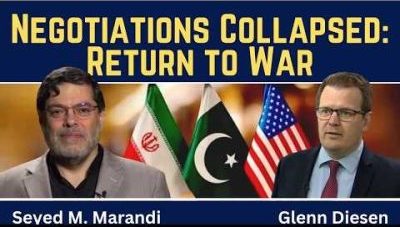
Israeli Prime Minister Benjamin Netanyahu issued a series of threats toward Iran and its interlocutors in the West, including the US, as serious negotiations on Iran’s nuclear program seem more plausible.
As a possible rapprochement looms between the US and Iran, Netanyahu has attempted to impose impossible Israeli conditions on the negotiators, such as the full dismantling of Iran’s nuclear program, not to mention threatening military force.
Whatever the deal that could materialize between Iran and the West, Israel is going to find itself before an open-ended path. One can foresee three possible scenarios… continue
This site is provided as a research and reference tool. Although we make every reasonable effort to ensure that the information and data provided at this site are useful, accurate, and current, we cannot guarantee that the information and data provided here will be error-free. By using this site, you assume all responsibility for and risk arising from your use of and reliance upon the contents of this site.
This site and the information available through it do not, and are not intended to constitute legal advice. Should you require legal advice, you should consult your own attorney.
Nothing within this site or linked to by this site constitutes investment advice or medical advice.
Materials accessible from or added to this site by third parties, such as comments posted, are strictly the responsibility of the third party who added such materials or made them accessible and we neither endorse nor undertake to control, monitor, edit or assume responsibility for any such third-party material.
The posting of stories, commentaries, reports, documents and links (embedded or otherwise) on this site does not in any way, shape or form, implied or otherwise, necessarily express or suggest endorsement or support of any of such posted material or parts therein.
The word “alleged” is deemed to occur before the word “fraud.” Since the rule of law still applies. To peasants, at least.
Fair Use
This site contains copyrighted material the use of which has not always been specifically authorized by the copyright owner. We are making such material available in our efforts to advance understanding of environmental, political, human rights, economic, democracy, scientific, and social justice issues, etc. We believe this constitutes a ‘fair use’ of any such copyrighted material as provided for in section 107 of the US Copyright Law. In accordance with Title 17 U.S.C. Section 107, the material on this site is distributed without profit to those who have expressed a prior interest in receiving the included information for research and educational purposes. For more info go to: http://www.law.cornell.edu/uscode/17/107.shtml. If you wish to use copyrighted material from this site for purposes of your own that go beyond ‘fair use’, you must obtain permission from the copyright owner.
DMCA Contact
This is information for anyone that wishes to challenge our “fair use” of copyrighted material.
If you are a legal copyright holder or a designated agent for such and you believe that content residing on or accessible through our website infringes a copyright and falls outside the boundaries of “Fair Use”, please send a notice of infringement by contacting atheonews@gmail.com.
We will respond and take necessary action immediately.
If notice is given of an alleged copyright violation we will act expeditiously to remove or disable access to the material(s) in question.
All 3rd party material posted on this website is copyright the respective owners / authors. Aletho News makes no claim of copyright on such material.

 Aletho News