UN Human Rights Council adopts resolutions against Israel’s human rights violations in Syria’s Golan
Press TV – April 2, 2022
The United Nations Human Rights Council has adopted a resolution denouncing Israel’s human rights violations against the people in Syria’s occupied Golan Heights, calling on the Tel Aviv regime to stop its repressive measures.
The Geneva-based council endorsed the resolution at its 49th regular session on Friday,urging Israel to comply with the relevant UN resolutions.
In a separate resolution, the council renewed its condemnation of illegal Israeli settlements in the occupied Palestinian territories, including East al-Quds, and Syria’s Golan Heights.
The UN body also called for an immediate end to Israel’s continued occupation and illegal settlement activities in the occupied Arab territories.
In another resolution on the right of the Palestinian people to self-determination, the council “reaffirmed the Palestinian people’s right to live in freedom, justice, and dignity and the right to their independent State of Palestine.”
During the session, Hussam Edin Aala, Syria’s permanent envoy to the UN in Geneva, said Israel continues its violations of international law and human rights with the full support of the United States.
He further called on the Human Rights Council to hold Israel responsible for these violations.
In 1967, Israel waged a full-scale war against Arab territories, during which it occupied a large swathe of Golan and annexed it four years later – a move never recognized by the international community.
In 1973, another war broke out; and a year later a UN-brokered ceasefire came into force, according to which Tel Aviv and Damascus agreed to separate their troops and create a buffer zone in the Heights. However, Israel has over the past several decades built dozens of illegal settlements in Golan in defiance of international calls for the regime to stop its illegal construction activities.
In a unilateral move rejected by the international community in 2019, former US president Donald Trump signed a decree recognizing Israeli “sovereignty” over Golan.
Last December, Israel announced that it intends to double the number of its illegal settlements in the Golan, despite an earlier resolution adopted by the UN General Assembly demanding the regime’s full withdrawal from the occupied territory.
Nevertheless, Syria has repeatedly reaffirmed its sovereignty over Golan, saying the territory must be completely restored to its control.
The United Nations has also time and again emphasized Syria’s sovereignty over the territory.
Israel also occupied East al-Quds, the West Bank and the Gaza Strip during the Six-Day Arab-Israeli War in 1967. It later had to withdraw from Gaza.
Nearly 700,000 Israelis live in illegal settlements built since the 1967 occupation of the Palestinian territories of the West Bank and East al-Quds.
All the settlements are illegal under international law. The United Nations Security Council has condemned the settlement activities in several resolutions.
Palestinians want the West Bank as part of a future independent state with East al-Quds as its capital.
Russia warns about Ukrainian use of UN vehicle
Samizdat | March 30, 2022
Russia has raised concerns over the apparent use of an official UN vehicle in combat by Ukrainian forces. It’s the latest of numerous incidents of civilian transport being seized for the war effort by Kiev, Moscow’s envoy to the UN Security Council complained on Tuesday.
Vassily Nebenzia warned that it created a situation where, for example, medical vehicles could be used to deliver Western weapons into the country.
“We are expecting a response to our latest inquiry about the UN vehicle with the diplomatic number DP210015, which was also taking part in Kharkov in combat operations of the Ukrainian nationalists, according to witness accounts,” he said.
The vehicle he mentioned was apparently spotted in a video released by Ukrainian fighters to show off the shooting down of an aircraft. It was reportedly used to transport anti-aircraft missiles.
The diplomat said there were credible reports that official vehicles of the UN and the OSCE were used by Ukrainian forces. He called on both organizations to “give fair assessments of such facts.”
Nebenzia also mentioned evidence of DHL delivery vans being used for combat in Ukraine. A video showing a Ukrainian mortar team apparently using such a vehicle to move around was published on Reddit last weekend.
One of the fighters shown in the video claimed the van was one of six voluntarily donated to the war effort by the Ukrainian branch of the German company. DHL shut down all operations in the country in early March. It told Russian media that the Ukrainian authorities had confiscated corporate transport.
The Russian diplomat said cases such as these have disturbing ramifications in terms of telling apart civilian and military targets in Ukraine.
“We cannot rule out that vehicles of these organizations or vehicles marked as medical transport could be used to deliver to Ukraine from neighboring states the very same weapons that the West has generously promised to Kiev,” he said.
Moscow has repeatedly warned that it will consider any arms shipments to Ukraine as legitimate military targets.
Biggest financial players back net zero

United Nations | April 21, 2021
Over 160 firms with $70 trillion in assets have joined forces behind a common goal: steer the global economy towards net-zero emissions and deliver the Paris Agreement goals.
The new Glasgow Financial Alliance for Net Zero (GFANZ), chaired by Mark Carney, UN Special Envoy on Climate Action and Finance, brings together leading net-zero initiatives from across the financial system to accelerate the transition to net-zero emissions by 2050 at the latest.
Members include major asset owners and managers as well as banks with the power to mobilize trillions of dollars behind the transition to net zero. By working together, alliance members can catalyse strategic and technical coordination on steps firms need to take to align with a net-zero future.
All members will set science-aligned interim and long-term goals to reach net zero no later than 2050 in line with the criteria of the UN Race to Zero campaign. Member-determined short-term targets and action plans will supplement these goals.
Existing and new net zero finance initiatives will be part of the Alliance. They comprise the Net Zero Asset Managers Initiative, the UN-convened Net-Zero Asset Owner Alliance and the newly launched Net-Zero Banking Alliance. The last links 43 of the world’s leading banks, and is hosted by the United Nations Environment Programme Finance Initiative and co-launched by the Financial Services Taskforce of the Prince of Wales’ Sustainable Markets Initiative.
UK Prime Minister, Boris Johnson, said: “Uniting the world’s banks and financial institutions behind the global transition to net zero is crucial to unlocking the finance we need to get there – from backing pioneering firms and new technologies to building resilient economies around the world. The Glasgow Financial Alliance for Net Zero will lead this charge ahead of COP26 to scale-up our ambition, accelerate our shift and help us to build back greener together.”
U.S. Special Presidential Envoy for Climate John Kerry said: “The largest financial players in the world recognize energy transition represents a vast commercial opportunity as well as a planetary imperative. As countries around the world move to decarbonize, the large sums these institutions are dedicating to climate finance also reflect a growing understanding of how critical a low-carbon global economy is to their business models. Ultimately, their commitment of capital and assets, as well as adherence to high standards and reporting, will accelerate the transition to this new economy, create a massive number of new jobs, and increase our collective ability to tackle the climate crisis.
Mark Carney, UN Special Envoy for Climate Action and Finance and Prime Minister Johnson’s Climate Finance Advisor for COP26, said: “This is the breakthrough in mainstreaming climate finance the world needs. I welcome the leadership of the Financial Services Task Force and other global banks for their new commitments to net zero and for joining forces with GFANZ, the gold standard for net zero commitments in the financial sector. Most fundamentally, GFANZ will act as the strategic forum to ensure the financial system works together to broaden, deepen, and accelerate the transition to a net zero economy.”
Western anti-Russian agenda threatens UN’s existence
By Lucas Leiroz | March 4, 2022
Amid the abusive wave of sanctions against Russia due to the special operation in Ukraine, some specific rumors have caught the attention of experts, suggesting that there are plans on the part of the Western states to simply pressure to remove Russia’s permanent seat on the UN Security Council (UNSC). This kind of illegal maneuver is a real coup attempt and could lead to the end of the UN.
Apparently, an effort is under way to diplomatically isolate Moscow and even challenge Russia’s right to a permanent seat on the UN Security Council, alleging that Russia took the seat of the former Soviet Union in 1991 without proper authorization – which in fact is nothing more than a public “justification” to promote such an illegal maneuver.
Currently, there are reports circulating on several websites alleging that Western diplomats, mainly American and British, are starting a research work to investigate whether there is a legal possibility of removing Russia from its position on the UNSC within the current international documents. Obviously, this type of “research” is useless and there is no possibility of carrying out such a maneuver within the limits of public international law. In practice, when reporting that diplomats are investigating this kind of maneuver, it is only possible to conclude that they are somehow conspiring to carry out a coup against Moscow at the United Nations.
This absolutely absurd idea has become a common discourse in the Western media recently. This is due to the fact that the West has become furious with the Russian veto on the American resolution against the operation in Ukraine, voted on at the UNSC last week. Western political analysts began to say that “administrative reform” was needed at the UN to prevent “aggressor nations” from vetoing sanctions against themselves. Shortly thereafter, Ukrainian President Volodymyr Zelesnky, during one of his online speeches, claimed that Kiev “demands” Russian removal from the Council, strengthening Western discourse.
Quite unexpectedly, diplomats seem to have paid attention to this utterly unrealistic idea suggested by Zelensky and some ideologically fanatical analysts, initiating the current plan, in which Western officials plan to form a legal argument about the “illegitimacy” of the Russian presence on the Council. It is expected that some document will soon emerge containing various distortions and arbitrary interpretations of the norms of international law, just in order to justify the idea of removing Russia.
It is questionable whether the analysts and diplomats involved in this type of maneuver are taking into account all the consequences of this attitude. This irresponsible, illegal, rude and anti-diplomatic act could simply generate the biggest crisis in international relations since the Second World War, directly threatening the stability of global peace.
The very existence of the UN will lose its meaning without the Russian presence in its Security Council, considering the country’s military and nuclear importance. If that happens, the Russian attitude may simply be to abandon the UN, as it will have become a mere pro-Western international organization. China would certainly take the Russian side in this dispute as it would also have its interests affected by the coup in the Security Council. Russia and China would perhaps form a new organization together. And that would be the end of the UN as the regulator of world peace. The UN would have the same end of its predecessor league and this is something that everyone wants to avoid – except the Western officials who are planning the coup against Russia.
Obviously, administrative reform is needed at the UN and until a few days ago there was a consensus on the need to expand the Security Council’s permanent seats, including new emerging states of geopolitical relevance, such as India, Pakistan, Brazil, among others. Trying to reduce the Council is absurd considering that the world is increasingly multipolar. This would be a mere attempt on the part of NATO to carry out a global coup d’état, but instead of controlling the world, it would only bring about the end of the UN.
It is necessary that good sense prevails in the UN, in order for such an illogical project to be promptly rejected, so that the organization survives. The attempt to “cancel” Russia cannot go beyond the limits of international law. It is essential that the main world powers are on the Security Council and that the most important of them have veto power to prevent the interests of one side from prevailing over those of the other. It is this structure that guarantees world peace. It is necessary to increase the permanent seats, giving this right to new world powers, adapting the UN’s structure to the multipolar world. Any attempt to the contrary threatens the very existence of the organization.
Lucas Leiroz is a researcher in Social Sciences at the Rural Federal University of Rio de Janeiro; geopolitical consultant.
WHO planning new “pandemic treaty” for 2024
By Kit Knightly | OffGuardian | February 26, 2022
In December of last year, the World Health Organization (WHO) announced plans for an “international treaty on pandemic prevention and preparedness”.
According to the Council of Europe’s website, an “intergovernmental negotiating body” has been formed, and will be holding its first meeting next week, on March 1st.
The aim is to “deliver a progress report to the 76th World Health Assembly in 2023” and then have the proposed instrument ready for legal implementation by 2024.
None of this should come as much of a surprise, the signs have all been there. If you’ve been paying attention you could probably predict almost everything that will be in this new legislation.
A paper titled “Multilateralism in times of global pandemic: Lessons learned and the way forward” was published by the G20 in Decemeber 2020.
It details all the problems faced by international multilateral organizations during the “pandemic” [emphasis added]:
Individual states cannot effectively manage global public threats such as the COVID-19 pandemic on their own […] overcoming the current health crisis and rebuilding livelihoods can only be achieved through multilateral action on both the economic and social fronts […] The COVID-19 pandemic and its economic consequences have revealed the weakness of the current arrangements for multilateral cooperation. International organizations with the mandate to play leading roles in dealing with international crises have not functioned effectively.
And goes on to propose several solutions, including…
The G20 should reinforce the capacity of the World Health Organization. A stronger and more responsive WHO can help the international community manage pandemics and other health challenges more effectively. It can provide early warning systems and coordinate rapid global responses to health emergencies.
In January of 2021 the EU thinktank Foundation for European Progressive Studies published a 268-page document titled “Reforming Multilateralism in Post Covid Times”, which called for a “more legitimate and binding United Nations”, suggested the EU join the UN Security Council, and asked:
Is national sovereignty compatible with multilateralism?”
A few months later the United Nations Foundation published its own variation on this theme: “Reimagining multilateralism for a post-Covid future”
Then, in May 2021, the International Panel on Pandemic Preparedness released its report on how the world handled Covid, which echoes the G20 paper almost word-for-word in places. We did a detailed breakdown of it here.
Former New Zealand Prime Minister Helen Clark, chair of the panel, told the Guardian…
[The pandemic was] compounded by a lack of global leadership and coordination of geopolitical tensions and nationalism weakening the multilateral system, which should act to keep the world safe.”
Earlier this month, the UN Commission for Social Development met for the first time in 2022, with an emphasis on “Strengthening multilateralism”.
Then, on February 17th, the European Council on Foreign Relation’s Robert Dworkin published this article, Health of nations: How Europe can fight future pandemics, which also expresses concern over “the failures of international cooperation during the pandemic” and proposes :
The EU should combine a push for reform of and increased funding for the WHO with support for a new fund for health emergencies, overseen by a representative group of countries.
It goes on and on and on… the messaging is more than clear.
Even just last week, speaking on a panel at the Munich Security Conference, Sweden’s Foreign Minister Anne Linde warned that Covid has “exposed holes” in the international order, and that the UN, WHO and EU were not empowered enough to take appropriate action.
The signs are all there, and they’ve been flashing like neon lights for months: New international legislation to “deal with future pandemics”.
We all knew it was coming eventually. Now we have a timeline, and it starts on March 1st.
Isn’t it amazing what you can almost miss when you’re distracted by a war?
Speaking of the war, the attitude the WHO takes to Russia during this process will be a very interesting barometer. Whether Russia denounces the proposed treaty, or is excluded from negotions, will tell us a lot about how real the conflict in Ukraine truly is, and what direction the Great Reset will take next.
Indeed, if the war itself is used to further argue we need “stronger multilateral institutions” or “important reforms in the security council”, it may go some way to revealing the grander agenda.
America’s pro-Israel diplomacy at the UN hits a new level
![US ambassador to the United Nations, Linda Thomas-Greenfield, and President of the Security Council speaks during a press conference for the Security Council programme of work in March at the UN Headquarters in New York on 1 March 2021. [TIMOTHY A. CLARY/AFP via Getty Images]](https://i2.wp.com/www.middleeastmonitor.com/wp-content/uploads/2021/03/GettyImages-1231458912.jpg?resize=1200%2C799&quality=85&strip=all&zoom=1&ssl=1)
US ambassador to the UN, Linda Thomas-Greenfield on 1 March 2021. [TIMOTHY A. CLARY/AFP via Getty Images]
By Ramona Wadi | MEMO | December 2, 2021
Israel seems to have acquired another formidably biased ally in the latest US Ambassador to the UN, Linda Thomas-Greenfield. Her Trump era predecessor Nikki Haley once said, “If there’s anything I have no patience for, it is bullies – and the UN was being such a bully to Israel because they could.” Thomas-Greenfield is going down the same route; less fiery language, perhaps, and more diplomatic tact, but subjugating Palestinians to Israel’s colonial violence nonetheless.
During a briefing to the UN Security Council this week, Thomas-Greenfield spoke about Palestinians’ security concerns while invalidating them in the same speech by upholding Israel’s security narrative.
Israeli settlers, she noted, are attacking Palestinians in the occupied West Bank, while settlement expansion is threatening the two-state paradigm. However, Israel has “real and understandable security concerns” about which the UN is not doing enough. That’s if the US narrative is to be believed which, of course, it shouldn’t.
Israelis “interpret the overwhelming focus on Israel in this body as a denial of Israel’s right to exist and an unfair focus on this one country – and they are correct,” Thomas-Greenfield declared. Only a few days ago, the UN Secretary General made sure that the International Day of Solidarity with the Palestinian People did not infringe on Israel’s colonial existence. So how can the US ambassador claim that the UN is denying Israel’s right to exist, when the two-state framework and the 1947 Partition Plan endorsed colonialism in Palestine and has protected it ever since?
The UN’s “unfair” focus on Israel is favourable to the settler-colonial enterprise. Its alleged unfairness has generated unrivalled impunity for Israel, while Palestinians have been begging for their political rights for decades to no avail. While Israel is recognised, endorsed and supported, Palestinians have lost so much territory that recognition of a Palestinian state renders no tangible benefits in terms of state-building. The “unfair focus” to which Thomas-Greenfield refers has allowed a colonial settlement project – with war crimes, as the International Criminal Court determined – to continue without any punitive measures, while Palestinians remain stuck in a perpetual cycle of dispossession. “Unfair focus” has also prioritised Israel’s existence over the Palestinian right of return, which the international community has long since written off as unfeasible and worthy only as a symbolic gesture, as opposed to a necessary political reckoning.
Thomas-Greenfield’s rhetoric takes the purported anti-Israel bias at the UN to a whole new level. The UN does not speak of decolonisation, let alone “a denial of Israel’s right to exist”, as she puts it. On the contrary, the UN affirmed Israel’s existence despite knowing that the creation of the settler-colonial state was based upon the ethnic cleansing of Palestinians from their own land.
In fact, so favourable is the UN’s focus on Israel, that Palestine is defined through Israel’s colonial requirements that will only consider complete annihilation of the land and its people as an acceptable end result. Hence the silence on Israel’s de-facto annexation of ever more Palestinian land, while issuing futile reprimands on settlement expansion and promoting dissociation between Israel’s violations of international law to avoid speaking of decolonisation. In light of all the pro-Israel bias at the UN, what else do the US and Israel expect from the international community?
Seizing Everything: The Theft of the Global Commons – Part 2
By Iain Davis | OffGuardian | November 8, 2021
The population problem has no technical solution; it requires a fundamental extension on morality.”
– Garret Hardin, “The Tragedy of the Commons”
In Part 1 we explored the ongoing process of defining of the global commons and the claim of the stakeholder capitalists they they should be the “trustees” both of the commons and society. We are now going to look at how systems have been established to enable those stakeholders to seize them.
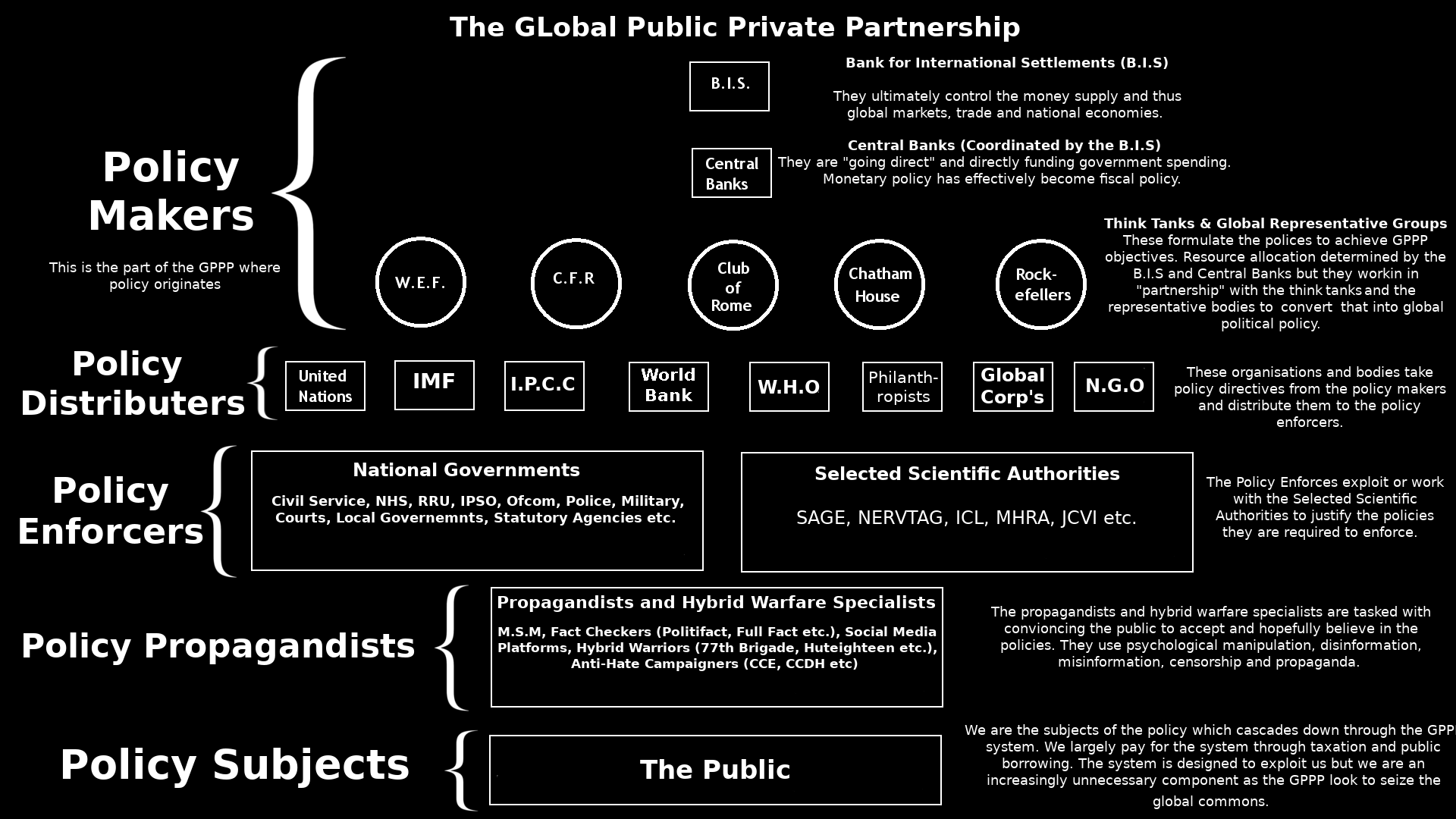
We should be mindful of what “global commons” means for the Global Public Private Partnership (GPPP). For them it means possession of everything: every resource on the planet, all land, all water, the air we breath and the natural world in its entirety, including all of us.
PRINCIPLES OF THE GLOBAL COMMONS
The notion of the “global commons” sprang from an amalgam of two principles in International Law. The Tragedy of The Commons (ToC) and the Common Heritage of Mankind (CHM).
In his 1968 paper on the ToC, the U.S. ecologist and eugenicist Garrett Hardin, building upon the earlier work of the 19th century economist William Forster Lloyd, outlined the population and resource problems as he saw them. He said “a finite world can support only a finite population; therefore, population growth must eventually equal zero.”
While logically this is ultimately true, if a whole raft of assumptions are accepted, the point at which zero population growth becomes necessary is unknown. The evidence suggests we are nowhere near that limit. Eugenicists, like Hardin, have claimed and continue to claim that the Earth faces a population problem. There is no evidence to support their view.
Hardin theorised that when a resource, such as land, is shared in “common,” people acting in rational self-interest will tend to increase their use of that resource because the cost is spread among all. He called this type of thinking a tragedy because, if all act accordingly, he maintained that the resource would dwindle to nothing and everyone suffer as a result.
Hardin insisted that this tragedy could not be averted. Therefore, as human beings were, in his eyes, incapable of grasping the bigger picture, the solutions were “managed” access to resources and “population control.”
While Hardin’s elitist ToC concept suggested regulated, enclosed (private) access to “common” resources, the Common Heritage of Mankind (CHM) rejected the idea of enclosure (privatisation). CHM instead advocated that a special group should be created by international treaty as “trustees” of the global commons. Seen as more “progressive,” it was no less elitist that Hardin’s concept.
The philosophical concept of CHM emerged onto the global political stage in the 1950’s but is was the 1967 speech by the Maltese ambassador to the U.N., Arvid Pardo, which established it as a principle of global governance. This eventually led to the 1982 U.N. Convention on Law of the Sea (LOSC).
Citing the CHM, in Article 137(2) of the LOSC, the U.N. declared:
All rights in the resources of the Area are vested in mankind as a whole, on whose behalf the Authority shall act.”
That “Area”, in this case, was the the Earth’s oceans, including everything in and beneath them. The “authority” was defined in Section 4 as the International Seabed Authority (ISA). Article 137(2) of the LOSC is self contradictory.
The legal definition of “vested” implies that the whole of humanity, without exception, has an absolute right to access the global commons. In this instance, those commons were the oceans. While the legal definition speaks of ownership, “vested” seems to guarantee the no one can lay any individual claim to ownership of the oceans or its resources. Access is equally shared by all.
Supposedly, this alleged right can never be “defeated by a condition precedent.” This is repudiated entirely by “on whose behalf the Authority shall act.”
Who among the billions of Earth’s inhabitants gave the ISA this alleged authority? When were we asked if we wanted to cede our collective responsibility for the oceans to the ISA?
This authority was seized by U.N. diktat and nothing more. It is now the ISA who, by a condition precedent, control, limit and license our access to the oceans.
This is the essential deception at the heart of GPPP’s “global commons” paradigm. They sell their theft as stewardship of the resources vested in all humanity, while simultaneously seizing the entirety of those resources for themselves.
SEIZING THE GLOBAL COMMONS: THE OCEANS
When interpreted by International Law, the CHM appears to place the private ownership of the global commons, suggested by the ToC, beyond the reach of government stakeholder partners. They should have no more right to these riches than anyone else. Legal challenge to any claim should be a relatively straight forward process for any concerned individual or group to make one.
This is not even a remote possibility. International Law, as it pertains to the global commons, is a meaningless jumble of inconsistencies and contradictions that ultimately amounts to “might is right.” For anyone to challenge the GPPP’s claim they would need to retain a legal team capable of defeating the UN’s and a judiciary willing to find in their favour.
The “law” is ostensibly designed to leave us imagining that we have “protected” rights and responsibilities towards these shared resources. Whereas, if subjected to any reasonable scrutiny, the legal notion of the global commons looks more like a diversion to facilitate a robbery.
If we look at the ISA’s record of stakeholder engagement we quickly find their Strategic Plan for 2019 – 2020. This succinctly outlines how the scam operates:
In an ever-changing world, and in its role as custodian of the common heritage of mankind, ISA faces many challenges… The United Nations has adopted a new development agenda, entitled ‘Transforming our world: the 2030 Agenda for Sustainable Development.’[…] Of most relevance to ISA is SDG 14 — Conserve and sustainably use the oceans, seas and marine resources.”
The shared resource – global commons – of the Earth’s oceans are not freely accessible to humanity as a whole anymore. Rather, the ISA determine who gets access to oceanic resources based upon Sustainable Development Goals (SDGs). Effectively they have turned access to the global commons into a new market.
The most vital questions we must ask is how these allocation decisions are made and by whom. This will reveal who controls these new highly regulated markets. The ISA state:
States parties, sponsoring States, flag States, coastal States, State enterprises, private investors, other users of the marine environment and interested global and regional intergovernmental organizations. All have a role in the development, implementation and enforcement of rules and standards for activities in the Area”
In addition, the ISA will:
Strengthen cooperation and coordination with other relevant international organizations and stakeholders in order to… effectively safeguard the legitimate interests of members of ISA and contractors… The rules, regulations and procedures governing mineral exploitation… are underpinned by sound commercial principles in order to promote investment… taking into account trends and developments relating to deep seabed mining activities, including objective analysis of world metal market conditions and metal prices, trends and prospects… based on consensus… that allows for stakeholder input in appropriate ways.”
The Global Public Private Partnership (GPPP) of governments, global corporations (other users of the marine environment), their major shareholders (private investors) and philanthropic foundations (private investors) are the stakeholders. They, not us, will have an input to ensure the rules, regulations and procedures will promote investment that will safeguard their interests.
In the space of a few short decades, broad concepts have evolved into principles of International Law which have subsequently been applied to create a regulatory framework for controlled access to the all the resources in the oceans. What was once genuinely a global resource is now the sole province of the GPPP and its network of stakeholder capitalists.
THE GLOBAL COMMONS ARE GLOBAL
We should be wary of falling into the trap of thinking the GPPP comprises solely of the western hegemony. The stories we are fed about the global confrontation between superpowers are often superficial.
While there are undoubtedly tensions within the GPPP, as each player jostles for a bigger slice of the new markets, the GPPP network itself is a truly global collaboration. This doesn’t mean that conflict between nation states is impossible but, as ever, any such conflict will be fought for a reason absent from the official explanation.
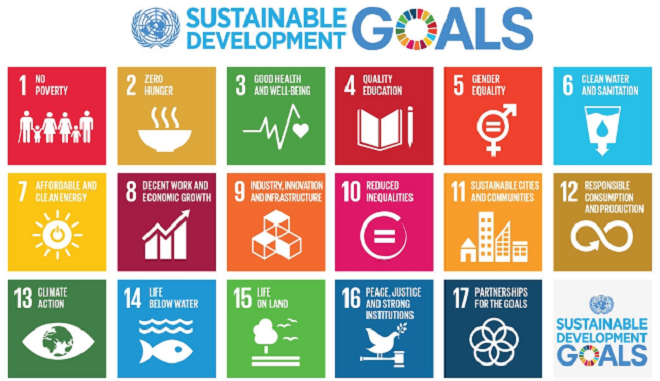
[click to enlarge]
SDG’s led to net zero policies and they stipulate, among a swath of enforced changes, the end of petrol and diesel transport. We are all under orders to switch to electric vehicles (EVs) which the vast majority won’t be able to afford. In turn, this means a massive increase in demand for lithium-ion batteries.
Manufacturing these will require a lot more cobalt which is widely considered to be the most critical supply chain risk for producing EVs. The World Bank estimate that the growth in demand for cobalt between 2018 and 2050 will be somewhere in the region of 450%. To say this is a “market opportunity” is a massive understatement.
The ISA have granted 5 cobalt exploration contracts to JOGMEC (Japan), COMRA (China), Russia, the Republic of Korea and CPRM (Brazil). When located deposits become commercially viable, as they undoubtedly will, the corporate feeding frenzy can begin.
Corporations, such as the weapons manufacturer Lockheed Martin, with its wholly owned subsidiary UK Seabed Resources (UKSR), are also among the many ISA stakeholders. UKSR received their exploration license for the South Pacific in 2013. As an ISA exploration contractor, UKSR stakeholders are free to submit their recommendations for amendments to the ISA regulations governing their own mining operations.
For example, the ISA stated that mining corporations should provide a financial guarantee that would cover “unexpected costs, expenses and liabilities.” Lockheed Martin didn’t like this at all and so suggested a slight change. They recommended the addition of the following:
The Guarantee is not to cover costs, expenses and liabilities incurred as a result of tortious liability for environmental damage.”
This was presumably because, in their pursuit of SDG “protection” of the planet, Lockheed Martin don’t wish to be liable for the environmental damage they will inflict upon it in the process. This risk of this is high because the proposed method for “scraping the seabed” will almost certainly destroy it.
Fortunately for UKSR and other stakeholders like COMRA, the ISA’s is committed to regulations which promote sound commercial principles and safeguard their commercial interests. Destroying the seabed is a risk worth taking but not if you have to pay for it.
When it comes to fighting climate change, human life is even cheaper. Nearly all cobalt is currently mined from Africa’s copper belt and more than 60% of the world supply comes from the Democratic Republic of the Congo. It is clawed from the Earth by tens of thousands of child slaves.
This poisonous torture dramatically shortens the abject misery of their suffering on this Earth. However, it does mean other young people like Greta Thunberg can inspire more fortunate children to mobilise on social media, using their fully charged devices, to save the planet.
Only the commercial viability of deep-sea reserves seems capable of saving the cobalt mine slaves. Alas, it is difficult to envisage how deep see reserves will become viable until land based reserves near exhaustion.
This openly condoned child abuse has been ongoing for years. A fact which the world’s media admits but never mentions when it eulogises about the green revolution.
The estimated 94,000 tonnes of cobalt in the Clarion Clipperton Zone (CCZ) of the Eastern Pacific alone represents 6 times the known land based reserves. With total deep sea reserves estimated to be worth between $8 – $16 trillion, as we progress towards a carbon neutral economy, deep sea mining is an inevitability. Regardless of the environmental cost.
All the real environmental issues are to be ignored as the world embarks upon a transition to a new global economy based upon one highly questionable theory: namely anthropogenic global warming (AGW).
THE GLOBAL COMMONS NEW MARKET(S)
This transition to the green economy will see myriad new markets created as the Earths “common” resources are converted into proverbial investment gold mines. Cobalt scraped from the seabed is just one example, there are thousands more.
The GPPP will have exclusive access, and thus control, over these new, essential resources. The investment opportunities are endless. It is this prospect, not any concerns for the Earth or humanity, that is driving the seizure of the global commons.
The GPPP have recognised that if they can squeeze something into the “global commons” they can then control of it. Consequently, the list of alleged “commons” continues to grow, as the the GPPP seek more control over more of the planet and everything on it.
In 1996 the late John Perry Barlow, from the Electronic Freedom Foundation, presented a Declaration for the Independence of Cyberspace to the annual Davos conference of the World Economic Forum (WEF). It perhaps seems odd that the GPPP wanted to hear this radical, libertarian call for governments around the world to leave cyberspace unregulated.
However, as I stress in my book Pseudopandemic, the intent of ideas, political and economic philosophies or social doctrines is not what interests the GPPP. Rather, it is how those ideologies can be exploited to achieve their goals.
In making his address Barlow was, perhaps inadvertently, laying the groundwork to include cyberspace as part of the “global commons.”
As we shall discuss shortly, the GPPP already had a plan in place to appropriate everything defined as a global commons. It was this prospect which enthralled the assembled Davos (GPPP) crowd.
In their 2015 Davos executive summary the WEF illustrated how the GPPP manipulate narratives to reshape the context of our daily lives.
In this case, the objective was to institute the precepts for their claimed jurisdiction of cyberspace.
What is clear is that we are confronted by profound political, economic, social and, above all, technological transformations… resulting in an entirely ‘new global context’ for future decision-making… The World Economic Forum’s Annual Meeting provides an unparalleled platform for leaders to develop the necessary insights, ideas and partnerships to respond to this new context…
Based on the principle that a multistakeholder, systemic and future-oriented approach is essential in this new context, the issues to be addressed through sessions, taskforces and private meetings at the Annual Meeting 2015 include… The inability to significantly improve the management and governance of critical global commons, most notably natural resources and cyberspace.
We have considered the example of the oceans and their resources, but the process for creating regulated markets for all commons is the same. First something must be levered into the category of the global commons. Once declared to be among the “shared resources all life relies upon,” some GPPP quango is appointed to oversee access to the new regulated market.
This body will be formed to serve the stakeholders capitalists who will then have exclusive access to and control of that resource.
In accordance with the U.N. definition “stewardship of the global commons cannot be carried out without global governance.” Global governance is formally convened via the process of stealing the global commons. The entire operation is founded upon sustainable development.
THE AGENDAS FOR SUSTAINABLE GLOBAL COMMONS
As mentioned previously, this plan has been in-place for decades. Sustainable Development Goals (SDGs) are set in Agenda 2030 as way-points along the path to completion of the plan for the 21st century: Agenda 21.
When GPPP stakeholders say they are committed to SDG’s they mean Agenda 2030, in the short term, and ultimately Agenda 21. Agenda 21 has a lot to say about what it calls “human settlements.” It lays out how they will be planned, constructed and managed by a public-private partnership. However, in constructing human settlements, human beings do not appear very high on the priority list.
Objective 5.29 states:
In formulating human settlements policies, account should be taken of resource needs, waste production and ecosystem health.”
Resource allocation, waste management and environmental protections are the prerequisites for “human settlements.” Not the welfare of humanity.
The GPPP will oversee the construction or allocation of our settlements. Objective 7.30. d. states:
Encourage partnerships among the public, private and community sectors in managing land resources for human settlements development.”
All land, not just the commons, will be managed by the GPPP. Again, subsequent Agenda 2030 SDGs have provided the justification for the land grab.
Objective 10 of Agenda 21 states:
The broad objective is to facilitate allocation of land to the uses that provide the greatest sustainable benefits and to promote the transition to a sustainable and integrated management of land resources”
Clearly this raises issues of private land ownership and use. Not just among householders but by industry, farmers, train companies or any other private land owner. The trick in holding on to land will be to secure its designation as having a “sustainable” purpose. This allocation will need to be agreed by the GPPP, so friends in high places will be key.
Agenda 21 demands, under “Activities” in section 7.29, that all nations must develop:
A comprehensive national inventory of their land resources in order to establish a land information system in which land resources will be classified according to their most appropriate uses and environmentally fragile or disaster-prone areas will be identified for special protection measures.”
If the place where you live is deemed to be environmentally fragile, and we are told the whole planet is, then the GPPP will follow section 7.30. h and implement:
Practices that deal comprehensively with potentially competing land requirements for agriculture, industry, transport, urban development, green spaces, preserves and other vital needs.”
This will involve the creation of “protected areas.” Among many of their authoritarian powers, this means that the GPPP will have control of all drinking water. Water sources automatically become “protected areas” under Agenda 21, for the good of our “health.”
Activity 18.50 it states:
All States, according to their capacity and available resources, and through bilateral or multilateral cooperation, including the United Nations and other relevant organizations as appropriate, could implement the following activities:.. Establishment of protected areas for sources of drinking-water supply.”
By exploiting the deception of “sustainable development” a planetary system of global governance, under the auspices of the GPPP, is currently being established. This is “build back better,” the “Great Reset,” the “Green New Deal” or whatever the GPPP choose to sell it as.
It means GPPP dominion over absolutely everything. We truly will own nothing, although it seems unlikely that many of us will be happy about it.
Those who do not understand, or do not wish to admit the reality of this global coup d’état, are quick to point out that Agenda 21 – and 2030 – are not legislation. Nation-states are not compelled to go along with any of it. This observation fails to appreciate what “global governance” is.
Global governance is not the setting of either policy or legislation. It is the creation of policy agendas which individual nation states may or may not implement as policy or subsequent legislation. It can only have teeth if nation states comply.
The problem we face is that nation states are “partner organisation,” some might say junior partners, within the GPPP. While they remain sovereign entities they do not act as such. We only need look at how global markets are created by Agenda 21 to see how all nation states have willingly collaborated in the sustainable development scam.
In Agenda 21 the declared “Basis for Action” at section 8.41 states:
A first step towards the integration of sustainability into economic management is the establishment of better measurement of the crucial role of the environment as a source of natural capital… A common framework needs to be developed whereby the contributions made by all sectors and activities of society, that are not included in the conventional national accounts, are included… A programme to develop national systems of integrated environmental and economic accounting in all countries is proposed.”
The clearly stated plan, written in 1992, was to create “natural capital” to shift “sustainability into economic management.” All sectors and all society will be involved in this effort to transform nature into economic capital.
This will include the oversight of the “activities of society,” such as our use of cyberspace, which are “not included in the conventional national accounts.” The global commons in other words.
It doesn’t matter if Agenda 21 (2030) has legislative authority or not. All the matters is the complicity of legislative authorities. They are in full compliance.
Agenda 21 proposed the development of “national systems of integrated environmental and economic accounting in all countries.” This was envisaged to complete the transformation of the Earth and all of its natural resources into a centralised system of economic control.
As Whitney Webb explored in her excellent article, Wall Street’s Takeover of Nature Advances with Launch of New Asset Class that is precisely what has happened. By once again misusing the concept of the global commons, the GPPP has created Natural Asset Companies (NACs). These will allegedly:
Preserve and restore the natural assets that ultimately underpin the ability for there to be life on Earth.”
This allusion to caring for the global commons all sounds wonderful but when we consider its impact upon the oceans depths, for example, it is really just the creation of new markets. Concern for environmental destruction barely registers.
THE METRICS OF THE GLOBAL COMMONS
Clearly, the objective of NACs is to secure GPPP stakeholder’s exclusive access to resources which, hitherto, weren’t “owned” by anyone. Michael Blaugrund, the Chief Operating Officer of the New York Stock Exchange, admitted as much:
Our hope is that owning a natural asset company is going to be a way that an increasingly broad range of investors have the ability to invest in something that’s intrinsically valuable, but, up to this point, was really excluded from the financial markets.”
To put this into perspective, the current, total GDP of the whole planet is approximately $94 trillion. By converting the Earth into an asset portfolio, nature is projected to be worth $4000 trillion. More than 40 times world GDP. Needless to say, this is one hell of an investment opportunity.
The transformation of the global economy is well underway. The entire GPPP is, understandably, committed to the project. What disagreements that exist only extend to who gets what. There is no opposition to the new global economic model. As Webb pointed out:
The ultimate goal of NACs is not sustainability or conservation – it is the financialization of nature, i.e. turning nature into a commodity that can be used to keep the current, corrupt Wall Street economy booming under the guise of protecting the environment and preventing its further degradation.”
NACs will enable investors to acquire assets primarily in developing nations, as multinational corporations and financial funds hoover up former global commons and other resources. However, the financialization of nature is global, transforming the Globe into a bull market.
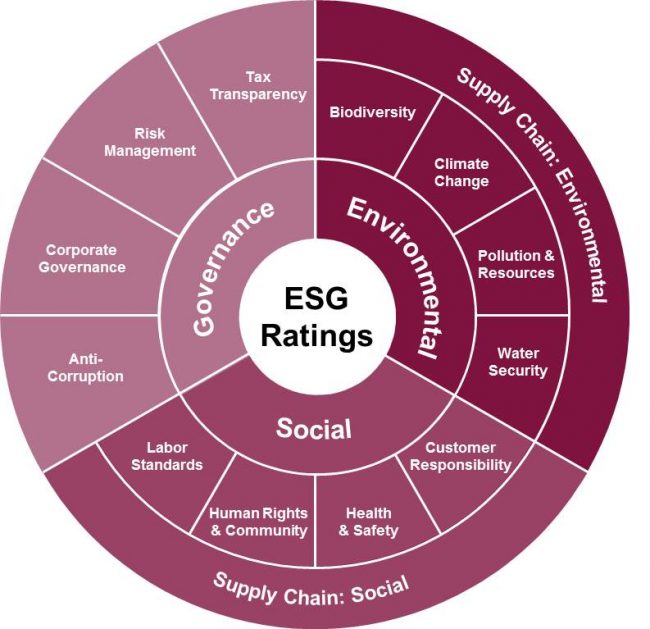
This will be achieved using Stakeholder Capitalism Metrics. Assets will be rated using environmental, social and governance (ESG) benchmarks for sustainable business performance. Any business requiring market finance, perhaps through issuing climate bonds, or maybe green bonds for European ventures, will need those bonds to have a healthy ESG rating.
A low ESG rating will deter investors and the project or business venture won’t get off the ground. A high ESG rating will see investors rush to put their money in projects which are backed by international agreements. In combination, financial initiatives like NACs and ESGs are converting SDG’s into market regulations.
This centralises authority over the global economy, placing it in the hands of the GPPP. Speaking in July 2019, then Governor of the Bank of England (BoE) and soon to be U.N. special envoy for Climate Action, Mark Carney, simply stated:
Companies that ignore climate change and don’t adapt will go bankrupt without question.”
Later, speaking at the Green Horizons Summit in November 2020, jointly hosted by The City of London Corporation, the Green Finance Institute and the World Economic Forum, Carney, acting in another role as UK Prime Ministerial Finance Adviser on COP26, said:
“Transition plans will reveal the leaders and laggers on the road to Glasgow… We will not get to net zero in a niche, it requires a whole economy transition.”
The leaders in the new global economy will be those selected by the GPPP through the appropriate rating of their issued securities. The laggers will be weeded out via the same mechanism. They will go bankrupt without question.
All business, not just global corporations, will be required to “adapt” to the new SDG based economic system. This isn’t some projection of what the future global economy will look like, it has already happened. While the world has been obsessing over the pseudopandemic the GPPP has initiated a global revolution.
At the eventual COP26 summit in Glasgow, Mark Carney, allegedly speaking as the U.N envoy – or perhaps as a Board Trustee of the World Economic Forum, it’s hard to say – launched something he called GFANZ:
The architecture of the global financial system has been transformed to deliver net zero. We now have the essential plumbing in place to move climate change from the fringes to the forefront of finance so that every financial decision takes climate change into account … [This] rapid, and large-scale, increase in capital commitment to net zero, through GFANZ, makes the transition to a 1.5C world possible.”
The UK Chancellor of the Exchequer, Rishi Sunak, followed up Carney’s statement with the declaration of the Glasgow Financial Alliance for Net Zero (GFANZ). The plan is to initially “align,” (force) 40% of the world’s current financial assets, amounting to $130 trillion, to commit to the transition towards a decarbonised global economy. The UK government press release reported:
The UK has convened over 30 advanced and developing countries from across 6 continents and representing over 70% of global GDP to back the creation of a new global climate reporting standards by the IFRS Foundation to give investors the information they need to fund net zero.”
All this is necessary, according to Carney, Sunak and all the other GPPP leaders, to control the Earth’s climate. They really imagine, or rather want you to imagine, that they can tweak the temperature of the Earth by centralising their authority over the world’s economy.
As Whitney Webb accurately observed on Twitter:
GLOBAL GOVERNANCE OF EVERYTHING
GFANZ is largely based upon double accounting and financial slight of hand. There isn’t really any commitment to actually reducing GHG emissions. The major banks will still be free to invest in fossil fuels while it remains profitable.
Once again the mainstream critics, or at least those reported by the financial MSM, utterly fail to understand what they are looking at. They fantasise that it is all about “saving the planet” or creating a greener economy for the good of all.
It is not, and it never was. It is about centralising financial and economic power.
It doesn’t matter if the numbers don’t add up. The real environmental impact is totally irrelevant. All that matters is that a mechanism is created by which the upper echelons of the GPPP hierarchy can firstly rescue and then extend their authority and control. That is the primary objective and until the pet economists and media commentators grasp this, they will never see that which is staring them in the face.
Presumably they still believe it is just an incalculable coincidence that this transformation has occurred just in time to save the failed IMFS (international monetary and financial system.) The GPPP have simply struck lucky. Saving the planet just happens to require exactly the same economic and financial restructuring needed to cover up the complete collapse of their former control structure.
At the 2019 annual G7 bankers symposium in Jackson Hole, Wyoming, just four months before the first cases of COVID 19 were reported, the second largest investment management firm in the world, BlackRock, presented their report Dealing With The Next Downturn to the gathered G7 central bankers. They reported:
Unprecedented policies will be needed to respond to the next economic downturn. Monetary policy is almost exhausted as global interest rates plunge towards zero or below. Fiscal policy on its own will struggle to provide major stimulus in a timely fashion given high debt levels and the typical lags with implementation… Conventional and unconventional monetary policy works primarily through the stimulative impact of lower short-term and long-term interest rates. This channel is almost tapped out.”
Unable to either spend or tax their way out of trouble, BlackRock admitted that, for the GPPP, the existing IMFS was a finished. This was the source of their power and therefore, if they were to retain their “authority,” a new system was required.
Mark Carney, on this occasion speaking as the governor of the BoE, affirmed BlackRock’s assessment:
Most fundamentally, a destabilising asymmetry at the heart of the IMFS is growing… a multi-polar global economy requires a new IMFS to realise its full potential. That won’t be easy… the deficiencies of the IMFS have become increasingly potent. Even a passing acquaintance with monetary history suggests that this centre won’t hold… I will close by adding urgency… Let’s end the malign neglect of the IMFS and build a system worthy of the diverse, multipolar global economy that is emerging.”
All agreed that a new IMFS was urgently needed. There was no time left to lose. In their paper BlackRock suggested that the new financial order could be created by “going direct:”
Going direct means the central bank finding ways to get central bank money directly in the hands of public and private sector spenders… enforcing policy coordination so that the fiscal expansion does not lead to an offsetting increase in interest rates.”
This was a revolutionary concept. Central banks theoretically served solely as the bank for commercial banks and government. Their official role was to invest in government bonds and manage settlements between commercial banks using central banks reserves called “base money.” The money you and I use every day is “broad money.” It had always circulated in the economy separately from base money.
Base money had never before been used to directly stimulate or manipulate broad money markets (in theory). With their going direct plan BlackRock were suggesting a mechanism by which it could. Effectively placing central banks in charge (enforcing policy coordination) of government fiscal policy: government taxation and spending.
Going direct represents a fundamental change in the nature of our political systems. It suggests that elected governments are no longer in charge of spending. It appears to be the establishment of taxation without representation: the end of any notion of democracy.
BlackRock added that going direct would be required if an “unusual conditions” arose. The center couldn’t hold, an extraordinary catalyst was needed to bring about the transformation.
In yet another remarkable and, for the GPPP, incredibly fortuitous coincidence, the U.S. “repo market” floundered just a month later. This delivered the necessary unusual condition, triggering BlackRock’s plan.
Things became extremely unusual just a few months later as the world was plunged into a global pseudopandemic. In response, by March 2020, going direct went into overdrive.
BlackRock said that going direct would only be required while the “unusual condition” persisted, although the nature of the arrangement would require a “permanent set-up.” Once fiscal policy objectives were achieved, which were also monetary policy objectives, the temporary permanent set-up could then move on to the “exit strategy” placed on the “policy horizon”.
We now know what that policy horizon is. It is the transformation of the IMFS, the seizure of the global commons, the financialization of nature and the establishment of a central financial body that rules it all. This process is more commonly referred to a “sustainable development” or the contruction of the green economy.
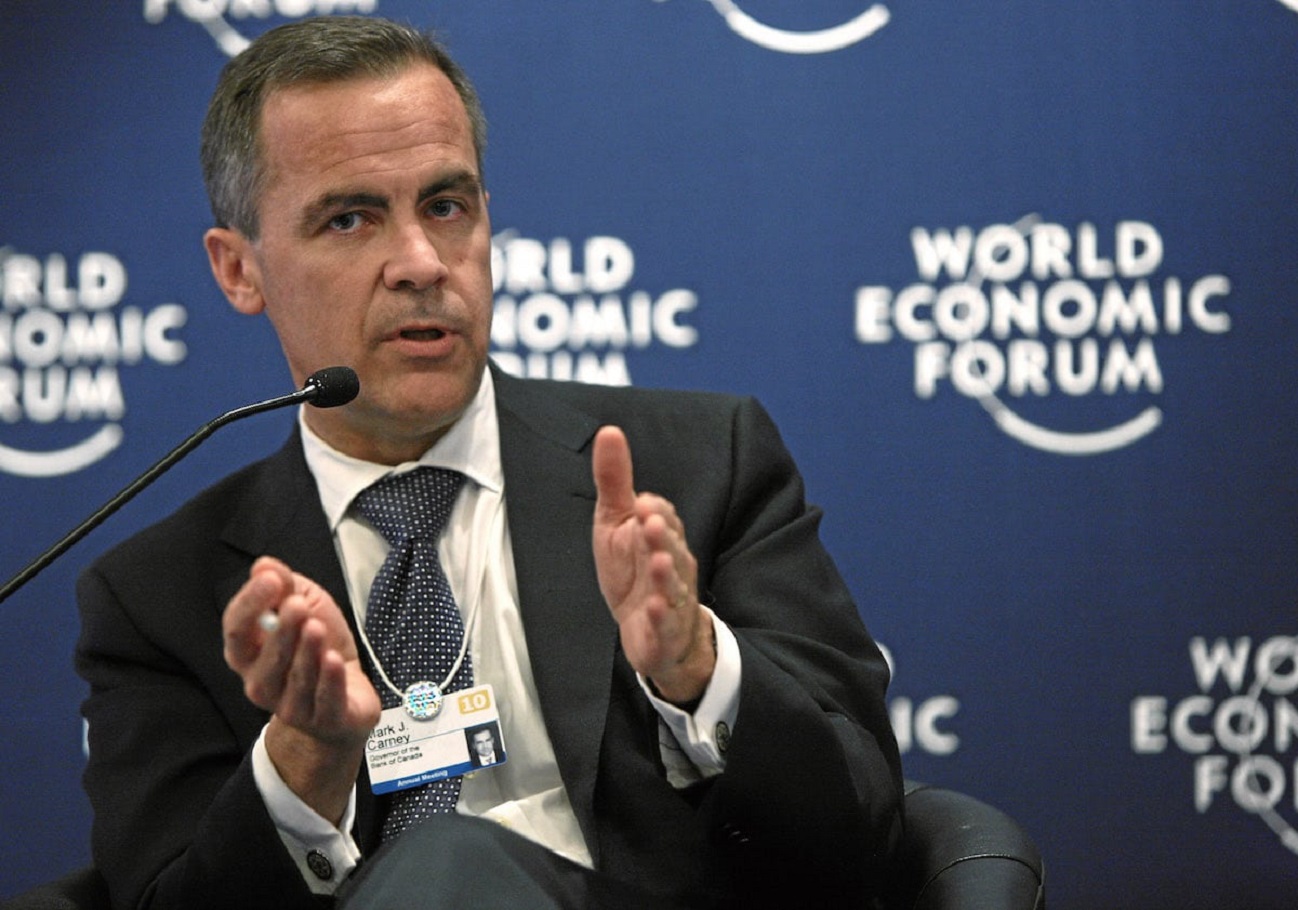
Mark Carney – formerly of Goldman Sachs & the Bank of England
ONE RING TO RULE THEM ALL
Prior to his GFANZ proclamation, in November 2020, Rishi Sunak stated that the UK intended to issue the world’s first sovereign green bond. The UK Government decreed that it would make reporting to the Task Force on Climate-related Financial Disclosures (TFCD) mandatory for all UK businesses by 2025. Sunak added that this would encourage investment in new technologies “like stablecoins and Central Bank Digital Currencies”.
The UK Government added:
The UK will become the first country in the world to make Task Force on Climate-related Financial Disclosures (TCFD) aligned disclosures fully mandatory across the economy by 2025… The UK will also implement a green taxonomy — a common framework for determining which activities can be defined as environmentally sustainable.”
The UK government’s pretence that it was in control of this initiative was comical. The Stakeholder Capitalism Metrics which determine ESG asset ratings, and the development of NACs, aren’t managed by the UK, U.S. or any other elected government. These financial levers are firmly rooted in the private sector.
GPPP leaders like the Bank for International Settlements, national central banks, BlackRock, Vanguard and WEF partners like Deloitte, PwC, McKinsey and KPMG are controlling these investment strategies. Governments are just junior, facilitating partners in the Global Public-Private Partnership.
The TCFDs are evaluated in response to a company’s “sustainability report.” According to the Financial Stability Board (FSB), the sustainability report “describes a company’s or organization’s impact on society, often addressing environmental, social, and governance issues.”
The TDFD assessment determines the ESG rating of its assets. This will be the deal maker, or breaker, whenever it wants to raise capital investment.
The sustainability report standards are set by the International Financial Reporting Standards (IFRS) foundation. The IFRS foundation states that it is a non profit, public-interest organisation.
It sets agreed accountancy standards in 140 jurisdictions for both public and private organisations. Its jurisdictions include the U.S., the EU, the UK, Canada, Australia, New Zealand, China and Russia.
However its claim to operate in the “public interest” is not supported by its own statements. The IFRS foundation also reports:
IFRS Standards are set by the International Accounting Standards Board and are used primarily by publicly accountable companies—those listed on a stock exchange and by financial institutions, such as banks.”
The International Accountancy Standards Board (IASB) is a private-sector organisation. Currently 12 people supposedly decide upon the IFRS standards which stipulate the sustainability report requirements for businesses and other organisations, including governments, across the planet.
Under the chairmanship of Mark Carney – he’s a busy man – the Financial Stability Board (FSB) created the TCFD in 2015:
The Financial Stability Board (FSB) announced today it is establishing an industry-led disclosure task force on climate-related financial risks.. The Task Force on Climate-related Financial Disclosures (TCFD) will develop voluntary, consistent climate-related financial risk disclosures for use by companies in providing information to lenders, insurers, investors and other stakeholders.
Five years later it was again Carney who, knowing that the “center cannot hold,” announced the consolidation and unification of the whole system at the COP26 summit. Inline with GFANZ, the IFRS announced the next step in the process, with the creation of its International Sustainability Standards Board (ISSB.)
The head auditor at PwC, Hemione Hudson, said:
The launch today of the International Sustainability Standards Board is an important step towards achieving a global common approach to ESG related disclosure standards. Harnessing the power of the financial markets to play a leading role in the transition to a net zero economy… Reporting standards are a critical component to achieving this”
We can now see how the whole system will work.
Every business, every project they wish to embark upon, every initiative they plan and every policy they pursue must adhere to SDGs. Their compliance to the agreed agenda will be measured via their “sustainability report.”
The Task Force on Climate-related Financial Disclosures (TCFD) will judge their performance. Their ESG subcommittees, such as the International Sustainability Standards Board, will approve the relevant ESG rating for that business.
The private investment ratings agencies like Deloitte who are “members” of the IFRS and, by definition, the GPPP, will effectively control every business’s investment strategy and thus their operations. Deep-sea mining, cybersecurity, digital currency innovation, exploitation of the global commons and anything else ordained as “sustainable” will receive the corresponding ESG rating.
All of this is centrally controlled through the TCFD system, operated by the FSB. They will be able to select who prospers and who doesn’t. The FSB secretariat is “hosted” and funded by the Bank for International Settlements (BIS) and is based at BIS headquarters in Basel, Switzerland.
Not only are the central banks, under the authority of the BIS, going direct and funding global fiscal policy, they are intent upon controlling all business, all commerce and all finances. They are seizing the global commons, financializing nature and moving beyond the old IMFS to establish true global governance.
If we don’t act. If we simply allow the puppets in our so-called governments to maintain their GPPP positions then the BIS, the central banks and other “valued stakeholders” are going to seize everything on this Earth. We will be beholden to them for the resources that “all life relies upon.”
If we allow that to happen then, just like the forgotten souls abandoned to the brutality of the cobalt mines, we will all be slaves.
UN-Backed Banker Alliance Announces “Green” Plan to Transform the Global Financial System
BY WHITNEY WEBB |
UNLIMITED HANGOUT| NOVEMBER 5, 2021
On Wednesday, an “industry-led and UN-convened” alliance of private banking and financial institutions announced plans at the COP26 conference to overhaul the role of global and regional financial institutions, including the World Bank and IMF, as part of a broader plan to “transform” the global financial system. The officially stated purpose of this proposed overhaul, per alliance members, is to promote the transition to a “Net-Zero” economy. However, the group’s proposed “reimagining” of international financial institutions (IFIs), according to their recently published “progress report”, would also move to merge these institutions with the private banking interests that compose the alliance; create a new system of “global financial governance”; and erode national sovereignty among developing countries by forcing them to establish business environments deemed “friendly” to the interests of alliance members. In other words, the powerful banking interests that compose this group are pushing to recreate the entire global financial system for their benefit under the guise of promoting sustainability.
This alliance, called the Glasgow Financial Alliance for Net Zero (GFANZ), was launched in April by John Kerry, US Special Presidential Envoy for Climate Change; Janet Yellen, US Secretary of the Treasury and former chair of the Federal Reserve; and Mark Carney, the UN Special Envoy for Climate Action and Finance and former chair of the Bank of England and Bank of Canada. Carney, who is also the UK Prime Minister’s Finance Advisor for the COP26 conference, currently co-chairs the alliance with US billionaire and former Mayor of New York City, Michael Bloomberg.
Upon its creation, GFANZ stated that it would “provide a forum for strategic coordination among the leadership of finance institutions from across the finance sector to accelerate the transition to a net zero economy” and “mobilize the trillions of dollars necessary” to accomplish the group’s zero emissions goals. At the time of the alliance’s launch, UK Prime Minister Boris Johnson described GFANZ as “uniting the world’s banks and financial institutions behind the global transition to net zero” while John Kerry noted that “the largest financial players in the world recognize energy transition represents a vast commercial opportunity.” In analyzing those two statements together, it seems clear that GFANZ has united the world’s most powerful private banks and financial institutions behind what they see as, first and foremost, “a vast commercial opportunity”, their exploitation of which they are marketing as a “planetary imperative.”
GFANZ is composed of several “subsector alliances”, including the Net Zero Asset Managers Initiative (NZAM), the Net Zero Asset Owner Alliance (NZAOA), and the Net Zero Banking Alliance (NZBA). Together, they command a formidable part of global private banking and finance interests, with the NZBA alone currently representing 43% of all global banking assets. However, the “largest financial players” who dominate GFANZ include the CEOs of BlackRock, Citi, Bank of America, Banco Santander and HSBC, as well as David Schwimmer, CEO of the London Stock Exchange Group and Nili Gilbert, Chair of the Investment Committee of the David Rockefeller Fund.
Notably, another Rockefeller-connected entity, the Rockefeller Foundation, recently played a pivotal role in the creation of Natural Asset Corporations (NACs) in September. These NACs seek to create a new asset class that would put the natural world, as well as the ecological processes that underpin all life, up for sale under the guise of “protecting” them. Principals of GFANZ, including BlackRock’s Larry Fink, have long been enthusiastic about the prospects of NACs and other related efforts to financialize the natural world and he has also played a key role in marketing said financialization as necessary to combat climate change.
As part of COP26, GFANZ – a key group at that conference – is publishing a plan aimed at scaling “private capital flows to emerging and developing economies.” Per the alliance’s press release, this plan focuses on “the development of country platforms to connect the now enormous private capital committed to net zero with country projects, scaling blended finance through MDBs [multilateral development banks] and developing high integrity, credible global carbon markets.” The press release notes that this “enormous private capital” is money that alliance members seek to invest in emerging and developing countries, estimated at over $130 trillion, and that – in order to deploy these trillions in invest – “the global financial system is being transformed” by this very alliance in coordination with the group that convened them, the United Nations.
Proposing a Takeover
Details of GFANZ’s plan to deploy trillions of member investments into emerging markets and developing countries was published in the alliance’s inaugural “Progress Report”, the release of which was timed to coincide with the COP26 conference. The report details the alliance’s “near-term work plan and ambitions,” which the alliance succinctly summarizes as a “program of work to transform the financial system.”
The report notes that the alliance has moved from the “commitment” stage to the “engagement” stage, with the main focus of the engagement stage being the “mobilization of private capital into emerging markets and developing countries through private-sector leadership and public-private collaboration.” In doing so, per the report, GFANZ seeks to create “an international financial architecture” that will increase levels of private investment from alliance members in those economies. Their main objectives in this regard revolve around the creation of “ambitious country platforms” and increased collaboration between MDBs and the private financial sector.
GFANZ Progress Report (Download)
Per GFANZ, a “country platform” is defined as a mechanism that convenes and aligns “stakeholders”, i.e. a mechanism for public-private partnership/stakeholder capitalism, “around a specific issue or geography”. Examples offered include Mike Bloomberg’s Climate Finance Leadership Initiative (CFLI), which is partnered with Goldman Sachs and HSBC, among other private-sector institutions. While framed as being driven by “stakeholders,” existing examples of “country platforms” offered by the GFANZ are either private-sector led initiatives, like the CFLI, or public-private partnerships that are dominated by powerful multinational corporations and billionaires. As recently explained by journalist and researcher Iain Davis, these “stakeholder capitalism” mechanism models – despite being presented as offering a “more responsible” form of capitalism – instead allow corporations and private entities to participate in forming the regulations that govern their own markets and giving them a greatly increased role in political decision-making by placing them on equal footing with national governments. It is essentially a creative way of marketing “corporatism,” the definition of fascism infamously supplied by Italian dictator Benito Mussolini.
In addition to the creation of “corporatist” “country platforms” that focus on specific areas and/or issues in the developing world, GFANZ aims to also further “corporatize” multilateral development banks (MDBs) and development finance institutions (DFIs) in order to better fulfill the investment goals of alliance members. Per the alliance, this is described as increasing “MBD-private sector collaboration.” The GFANZ report notes that “MDBs play a critical role in helping to grow investment flows” in the developing world. MDBs, like the World Bank, have long been criticized for accomplishing this task by trapping developing nations in debt and then using that debt to force those nations to deregulate markets (specifically financial markets), privatize state assets and implement unpopular austerity policies. The GFANZ report makes it clear that the alliance now seeks to use these same, controversial tactics of MDBs by forcing even greater deregulation on developing countries to facilitate “green” investments from alliance members.
The report explicitly states that MDBs should be used to prompt developing nations “to create the right high-level, cross-cutting enabling environments” for alliance members’ investments in those nations. The significantly greater levels of private capital investment, which are needed to reach Net-Zero per GFANZ, require that MDBs are used to prompt developing nations to “establish investment-friendly business environments; a replicable framework for deploying private capital investments; and pipelines of bankable investment opportunities.” GFANZ then notes that “private capital and investment will flow to these projects if governments and policymakers create the appropriate conditions”, i.e. enabling environments for private-sector investments.
In other words, through the proposed increase in private-sector involvement in MDBs, like the World Bank and regional development banks, alliance members seek to use MDBs to globally impose massive and extensive deregulation on developing countries by using the decarbonization push as justification. No longer must MDBs entrap developing nations in debt to force policies that benefit foreign and multinational private-sector entities, as climate change-related justifications can now be used for the same ends.
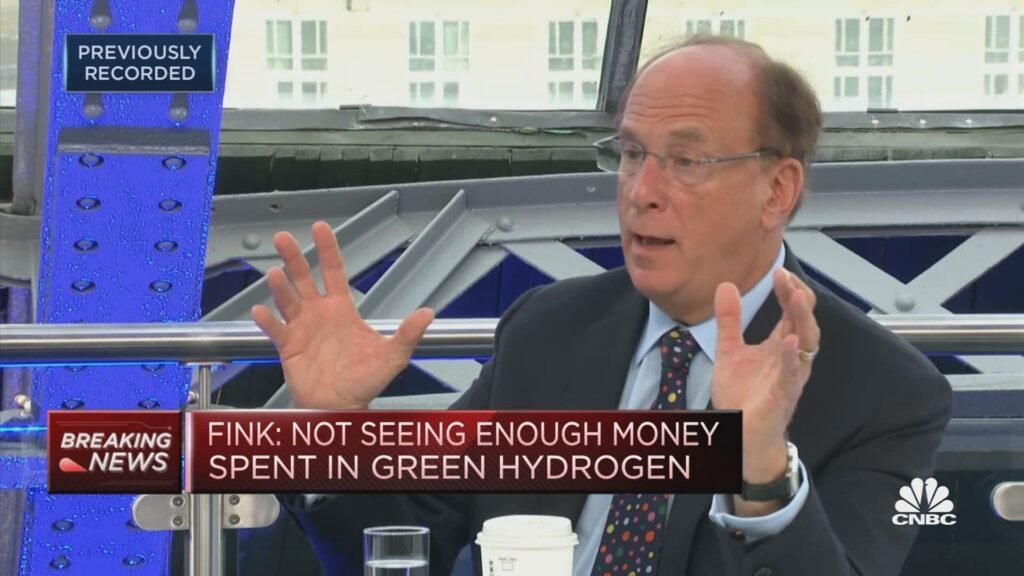
BlackRock CEO and GFANZ Principal Larry Fink talks to CNBC during COP26; Source: CNBC
This new modality for MDBs, along with their fusion with the private sector, is ultimately what GFANZ proposes in terms of “reimagining” these institutions. GFANZ principal and BlackRock CEO Larry Fink, during a COP26 panel that took place on November 2nd, explicitly referred to the plan to overhaul these institutions when he said that: “If we’re going to be serious about climate change in the emerging world, we’re going to have to really focus on the reimagination of the World Bank and the IMF.”
Fink continued:
“They are the senior lender, and not enough private capital’s coming into the emerging world today because of the risks associated with the political risk, investing in brownfield investments — if we are serious about elevating investment capital in the emerging world … I’m urging the owners of those institutions, the equity owners, to focus on how we reimagine these institutions and rethink their charter.”
GFANZ’s proposed plans to reimagine MDBs are particularly alarming given how leaked US military documents openly admit that such banks are essentially “financial weapons” that have been used as “Financial Instruments and Diplomatic Instruments of US National Power” as well as Instruments of what those same documents refer to as the “current global governance system” that are used to force developing countries to adopt policies they otherwise would not.
In addition, given Fink’s statements, it should not be surprising that the GFANZ report notes that their effort to establish “country platforms” and alter the functioning and charters of MDBs is a key component of implementing pre-planned recommendations aimed at “seizing the New Bretton Woods moment” and remaking the “global financial governance” system so that is “promote[s] economic stability and sustainable growth.”
As noted in other GFANZ documents and on their website, the goal of the alliance is the transformation of the global financial system and it is quite obvious from member statements and alliance documents that the goal of that transformation is to facilitate the investment goals of alliance members beyond what is currently possible by using climate change-related dictates, as opposed to debt, as the means to that end.
The UN and the “Quiet Revolution”
In light of GFANZ’s membership and their ambitions, some may wonder why the United Nations would back such a predatory initiative. Doesn’t the United Nations, after all, chiefly work with national governments as opposed to private-sector interests?
Though that is certainly the prevailing public perception of the UN, the organization has – for decades – been following a “stakeholder capitalist” model that privileges the private sector and billionaire “philanthropists” over national governments, with the latter merely being tasked with creating “enabling environments” for the policies created by and for the benefit of the former.
Speaking to the World Economic Forum in 1998, then-UN Secretary General Kofi Annan made this shift explicit:
“The United Nations has been transformed since we last met here in Davos. The Organization has undergone a complete overhaul that I have described as a ‘quiet revolution’… A fundamental shift has occurred. The United Nations once dealt only with governments. By now we know that peace and prosperity cannot be achieved without partnerships involving governments, international organizations, the business community and civil society…The business of the United Nations involves the businesses of the world.”
With the UN now essentially a vehicle for the promotion of stakeholder capitalism, it is only fitting that it would “convene” and support the efforts of a group like GFANZ to extend that stakeholder capitalist model to other institutions involved in global governance, specifically global financial governance. Allowing GFANZ members, i.e. many of the largest private banks and financial institutions in the world, to fuse with MDBs, remake the “global financial governance system” and gain increased control over political decisions in the emerging world is a banker’s dream come true. To get this far, all they have needed is to convince enough of the world’s population that such shifts are necessary due to the perceived urgency of climate change and the need to rapidly decarbonize the economy. Yet, if put into practice, what will result is hardly a “greener” world, but a world dominated by a small financial and technocratic elite who are free to profit and pillage from both “natural capital” and “human capital” as they see fit.
Today, MDBs are used as “instruments of power” that utilize debt to force developing nations to implement policies that benefit foreign interests, not their national interests. If GFANZ gets their way, the MDBs of tomorrow will be used to essentially eliminate national sovereignty, privatize the “natural assets” (e.g. ecosystems, ecological processes) of the developing world and force increasingly technocratic policies designed by global governance institutions and think tanks on ever more disenfranchised populations.
Though GFANZ has cloaked itself in lofty rhetoric of “saving the planet,” their plans ultimately amount to a corporate-led coup that will make the global financial system even more corrupt and predatory and further reduce the sovereignty of national governments in the developing world.
Seizing Everything: The Theft of the Global Commons – Part 1
By Iain Davis | OffGuardian | October 27, 2021
The people who none of us elect, who ultimately control international finance, all corporate & business activity, government policy and international relations have constructed a system that will enable them to seize the “global commons.”
They are the Global Public Private Partnership (GPPP) and while elected representatives are within their ranks, they don’t set either the agenda or policy. We need to both recognise who the GPPP are and understand the implications of their gambit. How are this group of global stakeholders going to seize the global commons and why should we resist them?
Over the next couple of articles we are going to explore these questions. By recognising what the globalist think tanks and other policy makers mean by the global commons we can begin to appreciate the jaw dropping magnitude of their ambitions.
They consistently use deceptive language to conceal their intentions. Words like ‘inclusive,’ ‘sustainable,’ ‘equity’ and ‘resilience’ are often employed to portray some vague but ultimately duplicitous concept of caring environmentalism. We must unpick their language to fully comprehend their intentions, in the hope that we can resist and deny them.
While we have been distracted and transitioned by the alleged global pandemic, or pseudopandemic, the Global Public Private Partnership (GPPP), who orchestrated the chaos, have been very busy. They have created the asset rating system that will afford them total, global economic control. This is based upon Sustainable Development Goals (SDGs) and utilises Stakeholder Capitalism Metrics (SCM).
This new global economic system is what the politicians mean by “build back better.” It is the essence of the World Economic Forum’s Great Reset.
laying the foundations for a new International Monetary and Financial System (IMFS) was a key to the pseudopandemic. The new IMFS will emerge from the deliberate economic destruction wrought by government policy responses to COVID 19. This was planned.
The phrase “build back better” was first widely popularised by US President Clinton following the 2004 Indonesian tsunami. During the pseudopandemic it has been adopted by politicians globally to signal that the project to seize the “global commons” is underway.
We will need to consider UN Agenda 21 and 2030 in more detail, as these are key to the theft of all resources, but for now we can reference it to understand what “build back better” actually means. This will explain why politicians around the world have used it.
Sustainable Development Goal (SDG) 11 (b) of Agenda 2030 states:
By 2020, substantially increase the number of cities and human settlements adopting and implementing integrated policies and plans towards… adaptation to climate change, resilience to disasters, and develop and implement, in line with the Sendai Framework for Disaster Risk Reduction 2015-2030, holistic disaster risk management at all levels.”
The Sendai Framework for Disaster Risk Reduction (SFDRR), written in 2015, states:
The recovery, rehabilitation and reconstruction phase, which needs to be prepared ahead of a disaster, is a critical opportunity to Build Back Better; recognition of stakeholders and their roles; mobilization of risk-sensitive investment to avoid the creation of new risk;
[…] strengthening of international cooperation and global partnership […] it is necessary to continue strengthening good governance in disaster risk reduction strategies at the national, regional and global levels […] and to use post-disaster recovery and reconstruction to ‘Build Back Better’, supported by strengthened modalities of international cooperation…
Clear vision, plans, competence, guidance and coordination within and across sectors, as well as participation of relevant stakeholders, are needed.. and fosters collaboration and partnership across mechanisms and institutions for the implementation of instruments relevant to disaster risk reduction and sustainable development.
“Build back better” policy was prepared ahead of the arrival of COVID-19. It is part of the planned risk management and preparedness framework for post “disaster” reconstruction. It means the global participation of relevant stakeholders to strengthen international cooperation and global partnerships in order to implement instruments to achieve sustainable development.
SDG 11 (b) was a plan to substantially increase the global number of human settlements adopting “build back better” polices by 2020. This SDG has now been achieved thanks to the COVID-19 pseudopandemic. In particular, the planned “mobilization of risk-sensitive investment,” outlined in the SFDRR, has surged ahead.
Stakeholder Capitalism Metrics – SCM – were devised by the World Economic Forum, who describe themselves as the international organisation for public-private cooperation. When combined with the SDGs outlined in the UN Agenda 21 and 2030 frameworks, SCM enable the GPPP to seize the entire Earth, all its resources and everything on it, including us.
In order to control us we are being transitioned into a technocracy with the biosecurity state acting as the central control mechanism. Public health is the new focus for global security and centralised control of the entire system has been established during, and as a result of, the pseudopandemic.
The news IMFS is designed to tie our biosecurity commitments to Universal Basic Income (UBI or similar state payments) which will be paid with Central Bank Digital Currency (CBDC.)
This will ensure our compliance, as Central Banks will use AI algorithms, combined with population monitoring (track and trace, vaccine passports or some other form of social credit surveillance system), to monitor and control all of our transactions, behaviour and movements.
The dreaded authoritarian knock on the door will be replaced with the dreaded authoritarian beep of a refused card payment. If you can’t buy food with your money it doesn’t really matter how much of it you have. Comply or starve is a distinct possibility.
Over the next couple of articles we are going to explore this “new abnormal.” How it encapsulates the seizure of everything by favoured stakeholder capitalists, as the chosen winning corporations divide up the Earths resources amongst themselves. This is the zenith of the planned “build back better” response to the pseudopandemic.
Throughout the pseudopandemic the World Economic Forum (WEF) have taken the public relations lead on the planned recovery. Their Great Reset is just the repackaging of an idea hundreds, if not thousands of years old.
It is the self-serving belief that some special people are destined, and therefore have the right, to lead the rest of us. They don’t require any kind of legitimate “democratic” mandate or even popular support. Their claimed right to rule is an imperious assumption.
The WEF have claimed the supposed right to direct three key areas of global policy. They intend to do this by assisting world leaders to manage “disruptive change.”
They have put themselves forward as the GPPP front organisation for managing the fourth industrial revolution, addressing global security issues and solving the problems of the global commons. It is important to note that the WEF are not alone in their ambitions, but rather the leading proponents for the wider GPPP policy platform. We will focus on the third sphere of their self-proclaimed authority: control of a global commons.
The United Nations (UN) acts as a policy hub for the GPPP. It allows stakeholders to introduce the policies, formulated by the think tanks, into the nascent global governance structure. The desired policy agendas can be moulded and eventually filtered down to national and then local government administrations across the planet.
In the September 2011 issue of Our Planet the UN offered a description of the global commons as “the shared resources that no one owns but all life relies upon.” In 2013 the UN Systems Task Team expanded on this and published “Global governance and governance of the global commons in the global partnership for development beyond 2015.“
They wrote:
International law identifies four global commons, namely the High Seas, the Atmosphere, the Antarctica and the Outer Space… Resources of interest or value to the welfare of the community of nations – such as tropical rain forests and biodiversity – have lately been included among the traditional set of global commons… while some define the global commons even more broadly, including science, education, information and peace… Stewardship of the global commons cannot be carried out without global governance.”
This habit of expanding the definition of the global commons has continued. In April 2020 The Rothschild backed bank the Global Environment Facility offered a more extensive list of the shared resources all life relies upon:
In order to protect our global commons… humanity must develop new ways of doing business to deliver transformational change in food, energy, urban, and production and consumption systems. It will take coalitions that bring together governments, businesses, finance, and citizens to realize this goal.”
That coalition is the GPPP and citizens are involved, via civil society, only if they agree to promote the agreed policy agenda.
In December 2020 the Secretary General of the UN Antonio Gutteres really fleshed out the global commons concept.
Speaking to an audience gathered at Columbia University, the pivotal academic institution in the development of Technocracy, he said:
To put it simply, the state of the planet is broken… human activities are at the root of our descent towards chaos… the recovery from the pandemic is an opportunity… It is time to flick the ‘green switch’. We have a chance to not simply reset the world economy but to transform it… We must turn this momentum into a movement…
Everything is interlinked – the global commons and global well-being…This means: More and bigger effectively managed conservation areas… Biodiversity-positive agriculture and fisheries… More and more people are understanding the need for their own daily choices to reduce their carbon footprint and respect planetary boundaries… From protests in the streets to advocacy on-line…From classroom education to community engagement…From voting booths to places of work…
We cannot go back to the old normal…We have a blueprint: the 2030 Agenda, the Sustainable Development Goals and the Paris Agreement on climate change… Now is the time to transform humankind’s relationship with the natural world – and with each other.
Again we see the recurrent themes of the GPPP. The planet must be saved from us, we are a pestilence that must be controlled; Covid-19 is, as ever, an opportunity to transform the global economy; our survival and GPPP stewardship of the global commons are one and the same and everything must be transformed.
Not only are the oceans (everything in them and beneath them), the atmosphere (the air we breath), Antarctica (the only continent with a universally respected international treaty protecting it) and the universe up for grabs, GPPP avarice doesn’t end there.
Energy (all natural resources), all productivity and our livelihoods (the workplace), biodiversity (ecosystems and life on Earth), all land (managed conservation areas), agriculture and fisheries (all food), our consumption and behaviour (carbon footprints), where we are allowed to exist (planetary boundaries), our political opinions and system, education, the communities we live in and even our relationships, are all to be controlled and transformed by the GPPP.
The “global commons” is GPPP shorthand for everything. All life, all resources, all land, all water, the air, the stars and all of us. It is their intention to have dominion over all.
The global commons are not fixed. Other aspects of our existence are being added all the time. In June 2021 the WEF wrote the Case for a Digital Commons. Whenever they want to include something else in the list they use the language of sustainable development. It doesn’t matter that this makes no rational sense, the point is to sell the notion with the right buzz-words:
COVID-19 highlighted and accelerated the centrality of digital technology in our lives. Yet the digital ecosystem is one of the most unequal and dysfunctional aspects of our collective lives. How can we build a digital ecosystem that ensures broadly shared participation and prosperity? We argue that shifting our view to see technology infrastructure as a digital commons could point the way forward for an inclusive and sustainable ecosystem with shared social benefit.”
Now they claim the authority to rule the Internet and all digital communication technology. We see once more that the pseudopandemic is the catalyst for this transformation and that government is merely the implementation partner for the GPPP agenda. We are just the tax paying cash cows that will fund the construction of the empire:
In this post-pandemic time of broad economic and social re-envisioning and re-alignment, an emphasis on the digital commons can point the way forward for collective recovery, solidarity and progress… Governments will have to push forward on real regulation of privately controlled systems.. as well as providing funding to allow a sustainable ecosystem of innovation that is not beholden to venture capitalists or large companies.”
It is truly remarkable that a low mortality respiratory disease has provided such an immense opportunity for global transformation.
The leading figures within the GPPP knew that COVID-19 didn’t present much of a threat. In their June 2020 book COVID-19: The Great Reset, the authors Klaus Schwab and Thierry Malleret wrote that the pseudopandemic was:
One of the least deadly pandemics the world has experienced over the last 2000 years… the consequences of COVID-19 in terms of health and mortality will be mild… It does not constitute an existential threat, or a shock that will leave its imprint on the world’s population for decades.”
At the heart of this seizure of everything lies stakeholder capitalism. In December 2019 Schwab wrote What Kind of Capitalism Do We Want.
The “we” referenced in that title was not “us” but rather the GPPP, though the article assumed we all agree on the GPPP’s definition of global problems. Schwab wrote:
Stakeholder capitalism, a model I first proposed a half-century ago, positions private corporations as trustees of society, and is clearly the best response to today’s social and environmental challenges.”
Schwab’s use of the term “trustee” is notable. It has a specific legal definition:
The person appointed, or required by law, to execute a trust; one in whom an estate, interest, or power is vested, under an express or implied agreement to administer or exercise it for the benefit or to the use of another.”
It is not at all evident that global corporations should be entrusted with our society. Many of us would disagree which is one of the main reasons we haven’t been asked. There is no justification for Schwab’s claim.
I speak for no one but myself, but I would wager that most people consider global corporations to be a significant contributor to the social and environmental challenges we face. Why would anyone believe they should determine the alleged solutions?
Schwab’s is a ludicrous assertion. Yet this is the insistence of the stakeholder capitalists. It is also the basis for the UN Sustainable Development Goals and their Agenda 21 and 2030 policy platforms.
Despite their claims of omniscience, the GPPP and their leading proponents, like the WEF and the IMF, are not infallible. They are just people, no different in most regards to anyone else on Earth.
They are collaborating in a huge, though not unprecedented, global effort. Many people have come to think an operation on this scale is impossible. Why they imagine this is hard to say.
We have already had two world wars requiring similar degrees of international cooperation. Arguably more if we consider that whole populations were engaged in these collective efforts.
There are many global corporations that operate tortuously complex international operations. These incorporate global logistics, international finance and cross border regulatory alignment. These world-wide endeavours overwhelmingly rely upon a hierarchical, authoritarian management structure. Only a few, senior board level figures have oversight of the whole system. The GPPP relies upon exactly the same.
However, because ordinary people are leading this organisation, mistakes happen. In September 2020 the WEF produced a promotional video making the point, from their perspective, that “you will own nothing and you will be happy.” This backfired terribly and was a PR disaster. The Video was hastily pulled down, too late to hide the real intention of the GPPP.
However, the original article, upon which the video was based, can still be read. The article was written by the former Danish Environment Minister, climate activist and WEF “young global leader,” Ida Auken. Unlike most of us, she isn’t a disenfranchised constituent. Ida is a carefully selected GPPP spokeswoman.
Ida Auken
The title was changed and an explanatory note added. Ida said that her article was not intended to describe her “utopia” and that the intention was to explore the “pros and cons” of a possible near term future:
Everything you considered a product, has now become a service… When AI and robots took over so much of our work, we suddenly had time to eat well, sleep well and spend time with other people… Once in a while I get annoyed about the fact that I have no real privacy. Nowhere I can go and not be registered. I know that, somewhere, everything I do, think and dream of is recorded. I just hope that nobody will use it against me… We had all these terrible things happening: lifestyle diseases, climate change, the refugee crisis, environmental degradation, completely congested cities, water pollution, air pollution, social unrest and unemployment. We lost way too many people before we realized that we could do things differently.”
The offer from the GPPP is clear. In exchange for submitting to their will and allowing them sole possession of everything (the global commons) they will take care of us.
Why, is the obvious question. If they control all of the Earths resources, everything is free and AI and robots do most of the work, why do they need us? What is in it for them? We would no longer be required in such a system. Certainly loosing “way too many people” would suggest at least acknowledgment of a much smaller global population.
We should also note why Ida’s envisaged future becomes necessary. It is, just as we have seen with the COVID 19 opportunity, a response to a set of crises which gives rise to doing “things differently.”
We are already seeing the knock-on effects of the COVID-19 lockdowns and economic destruction. An approaching set of crises over the next few years is a reasonable prediction.
As Schwab noted, there was no existential threat. The consequent disasters we are likely to face will be the result of policy promoted by GPPP representatives, like the World Health Organisation, not a respiratory disease.
It would be easy to dismiss Ida’s musings as simply the wishful thinking of an ideologue. In part, it probably is. However, when we look at Agenda 21 and 2030 an uncomfortable realisation dawns.
While the sustainable development agenda is couched in terms of environmental concerns and apparent humanitarian principles, the detail of the proposed policies presents an entirely different prospect.
The true horror of Ida’s vision is not that she is among the tiny clique GPPP representatives who are committed to constructing this dystopian prison planet, it is that, in Agenda 21 and 2030, the policy framework to make her futurescape a reality already exists.
Make no mistake, the GPPP intend to control every aspect of the Earth and our lives. That is the transformation they are working towards and they have used the pseudopandemic to set that transition in motion. There is no political opposition to the GPPP. They are realpolitik entire. All they need, for their “solutions” to close the trap, is our compliance.
Combined with SDGs, while we have been preoccupied with a low mortality respiratory illness, the GPPP have not only started building, they have partly completed the new global monetary and financial system.
Once installed this will finalise their coup d’état and enable them to seize everything, all under the guise of stewardship of the global commons.
We will explore how this has been done, and the remaining elements needed to accomplish the theft, in Part Two.
You can read more of Iain’s work at his blog In This Together or on UK Column. His new book Pseudopandemic, is now available, in both in kindle and paperback, from Amazon and other sellers. Or you can claim a free copy by subscribing to his newsletter.
Nuclear States Unwilling to Live up to Disarmament Commitments: Iran Envoy
Al-Manar – October 29, 2021
Iran’s permanent Ambassador to the United Nations Majid Takht-Ravanchi slammed the states and regimes who hold nuclear weapons while seek justifications for not abiding by their commitments.
Takht-Ravanchi made the comments after the UN Disarmament and International Security (First Committee) approved the resolution presented by Iran on Thursday, according to IRIB.
“Unfortunately, nuclear weapons holders are unwilling to live up to their nuclear disarmament commitments and only try to justify that the necessary ground is not ready for nuclear disarmament,” the Iranian envoy said, as quoted by Mehr news agency.
He said that their justification cannot be bought and added, “They committed themselves to nuclear disarmament in 1970, and this is not justifiable.”
The Islamic Republic of Iran proposed a resolution the follow-up on the implementation of the agreements reached at the NPT Review Conferences of 1995, 2000 and 2010″, and was adopted with the support of a majority of the members of the UN Disarmament and International Security (First Committee).
In part of the resolution proposed by Iran, the implementation of the decision of the NPT Review Conference in 1995 to establish a nuclear-weapon-free Middle East is emphasized. The decision calls on Israeli regime to join the NPT and accept the International Atomic Energy Agency’s monitoring of its nuclear facilities.
The U.S. Re-Joining the UNHRC Speaks Volumes on Human Rights Violations Impunity
By Ramona Wadi | Strategic Culture Foundation | October 20, 2021
Much has been said about the Biden Administration’s re-joining international institutions, after former U.S. President Donald Trump broke away from the standardised participation in international agreements and consensus. Notably, the international community singled out the U.S. under Trump for the so-called “deal of the century”, which veered away from the two-state paradigm that has steered international diplomacy on Palestine and Israel for decades.
Trump’s decision to quit the UN Human Rights Council in 2008 was described by former U.S. envoy to the UN Nikki Haley as determined by the body’s “unending hostility towards Israel.” Echoing Haley, the former U.S. Secretary of State Mike Pompeo called the council “a protector of human rights abusers.” Perhaps Pompeo had conveniently forgotten the U.S.’s own track record of backing military coups which disappeared tens of thousands of political opponents. The same goes for the correlation between U.S. financial aid and human rights abuses – the countries which benefit from U.S. aid uphold similar political trajectories to the U.S.
Not much difference has been articulated in terms of U.S. President Joe Biden deciding to re-join the UNHRC in 2022. U.S. Secretary of State Ned Price stated his “concerns” about the organisation. “We will vigorously oppose the council’s disproportionate attention on Israel, which includes the council’s only standing agenda item targeting a single country.” The Trump administration’s departure from the international community was based on the same alleged premise.
Agenda Item 7, which focuses upon Israel’s violations, is a permanent fixture at the UNHRC and the source of much criticism and allegations of “anti-Israel bias” – a term popularised during the Trump era and extended now through the Biden administration. At the UN General Assembly, Israeli Prime Minister Naftali Bennett also accused the body of being anti-Israel and the U.S.’s return to the international fold as working in Israel’s benefit.
The UNHRC is just as farcical as the UN. Whether the U.S. re-joins or decides to boycott, nothing changes in terms of human rights violations. A U.S. seat on the UNHRC will not alter Biden’s foreign policy, nor will it impede the U.S. from warfare and violence. In 2020, the U.S. military spending increased by 4.4 percent from 2019, according to the Stockholm International Peace Research Institute. The U.S. is the largest military spender globally, making up 39 percent of the global expenditure in 2020. Anyone rejoicing at the U.S. decision to re-join the UNHRC might do well to consider the political violence it is applauding.
Neither Trump nor Biden have portrayed a stance based on human rights values. The same can be said for previous administrations. However, much has been lost in terms of the significance with which Trump exposed and applied U.S. foreign policy.
As long as international institutions exist, and human rights rhetoric remains the only threshold in terms of purported accountability, the mainstream narrative will not take stock of the fact that the U.S., like international organisations, operates from within a manipulation of the human rights and democratic framework. The result is a cycle of violations which are then isolated in terms of the oppressed and the oppressor, to forge a collective concern about human rights. Having a few permanent scapegoats, such as Cuba, for example, which has faced decades of dead-end international support against the U.S. illegal blockade, allows the U.S. to preside over the democratic debacle, even as it annihilates democratic expression throughout the world.
With or without the U.S., the human rights debacle will continue unabated. If, according to the U.S., Cuba does not deserve a seat at the UNHRC, what has the U.S. done to deserve it? In the same vein, given the U.S. inclusion, what values is the UNHRC seeking to impart?
UN official voices concern over Israel’s detention of rights defenders
WAFA | August 12, 2021
GENEVA – Mary Lawlor, the UN Special Rapporteur on the situation of human rights defenders, expressed concern yesterday over arrests, harassment, criminalization and threats targeting human rights defenders by the Israeli occupation forces.
“Arrests and raids on the homes of Palestinian human right defenders [by Israeli occupation forces] form part of a wider crackdown against those defending the human rights of Palestinians in the Occupied Palestinian Territory,” she said.
Lawlor was alarmed by the arbitrary arrest and detention of Farid Al-Atrash, a human rights defender and lawyer at the Independent Commission for Human Rights (ICHR).
Mr. Al-Atrash was detained by Israeli military forces after peacefully participating in a demonstration in Bethlehem on 15 June and released on bail eight days later.
The rights expert also voiced concern over the forcible transfer of Palestinians living in the Sheikh Jarrah and Silwan neighbourhoods in Jerusalem.
“Muna Al-Kurd, Mohammed Al-Kurd and Zuhair Al Rajabi, human rights defenders at the forefront of protecting their communities against forced displacement, have been arrested and interrogated,” she said.
Another activist, Salah Hammouri, a Palestinian-French human rights defender and lawyer, is also at risk of having his permanent residency permit in Jerusalem revoked.
“I am shocked that members of the Health Work Committee, who provide health services to Palestinians living in remote areas of the West Bank, were arrested, interrogated and may be criminalised because of their human rights work,” Ms. Lawlor added.
Three Committee personnel are currently in prison. Director Shatha Odeh and former project coordinator, Juana Ruiz Sánchez, are being held in one facility, while accountant Tayseer Abu Sharbak, is in another. They are being tried on charges of participating in what has been described as “an illegal organisation”, said Ms.
Lawlor called on Israeli occupation authorities to immediately release them, and to investigate allegations of ill treatment against the two women rights defenders.
“The deteriorating health of Odeh and the solitary confinement of Sánchez are extremely worrying,” the UN expert said, noting that the rights defender, who has chronic underlying health conditions, had initially been denied access to necessary medication and clean clothes.
Lawlor underlined the importance of safeguarding Palestinian human rights defenders in the Occupied Palestinian Territory, especially those who are protecting their communities’ rights to housing, healthcare and freedom of assembly and association.
“I call on the [Israeli] authorities to stop targeting these human rights defenders and allow them to carry out their legitimate and peaceful work free from any kind of restrictions,” she said.
Featured Video
Theodore Postol: Iran’s Missiles & Drones Were Underestimated
or go to
Aletho News Archives – Video-Images
From the Archives
Wars for Israel: A reminder of who’s giving the marching orders
By Damian Lataan | February 7, 2012
As the West prepares to march off to yet another war in the Middle East, we should perhaps remind ourselves of who is giving the West their marching orders.
In February 2003, just weeks before the US and their allies launched their attack on Iraq and her peoples, a delegation of US congressmen, together with the US Ambassador to the United Nations, John Bolton, a well known pro-Zionist and neoconservative war-hawk, were in Israel at the invitation of the Israeli government then led by Israeli Prime Minister Ariel Sharon.
Addressing the congressmen, Sharon told them ‘that Iran, Libya and Syria should be stripped of weapons of mass destruction after Iraq’. Later, Sharon told John Bolton ‘that Israel was concerned about the security threat posed by Iran, and stressed that it was important to deal with Iran even while American attention was focused on Iraq’. … continue
Blog Roll
 Aletho News
- A New Resistance Front: How Does Syria Factor into the Regional War?
- Gulf states weigh pipeline expansion plans, hoping to bypass Hormuz
- Iran sets up ‘tollbooth’ system in Strait of Hormuz
- Wave 90: IRGC strikes US-linked industrial sites in Gulf
- Iran Says US-Israeli Claims of Its Military Strength Are Wrong
- Trump’s April Fools’ Address to the nation
- The Most Important Bet You’ve Never Heard Of
- The killing of three Indonesian soldiers in Lebanon should remind Jakarta that Israel does not want peace
- Defeated and delusional: Netanyahu’s remarks reveal $80bn war failure, says analyst
- Iran’s friends are about to make life much more difficult for Israel and the US
- If Americans Knew
- Trump says the quiet part out loud: (Israel’s) war on Iran > Americans’ health – Daily Update
- Gaza families reunite years after babies evacuated amid Israel’s war
- International Rescue Committee warns Gaza’s children face grave protection risks
- Iran’s Alleged 47-Year War on America: Debunking the 1,050 American Deaths Canard
- Israel wants US to bomb more of Iran’s civilian structures (113,000 is not enough) – Not a ceasefire Day 173
- Ann Coulter Rips Into Fox News for Iran War Coverage
- Joe Kent Urges Americans To Call White House and Congress To Object To Sending Troops Into Iran
- DNC Resolution to Reject AIPAC Funding Puts Democratic Leaders in the Hot Seat
- Swedish foundation to build 400 schools as over 650,000 Gaza children remain without education for 2 years
- Israeli army admits photshopping image of slain Lebanese journalist
- No Tricks Zone
- Low Intensity Tornado Wrecks Major Solar Farm, Creating A Potential Toxic Dump
- New Study Finds Warming Saves Lives…Cold Temperatures 12 Times More Deadly Than Excess Heat
- German Science Blog Accuses PIK Climate Institute Of Hallucinating Climate Tipping Points
- Devastating Assessment Of Comirnaty Vaccine By Former Senior Pfizer Europe Toxicologist
- New Study: CO2 Is ‘Effectively Negligible’ As An Explanatory Climate Change Factor Since 2000
- Former Pfizer Toxicologist Dr. Helmut Sterz Tells Bundestag Hearing Pfizer Vaccine Should Have Never Been Approved
- Energy Expert: Germany’s Nuclear Phaseout Was A “500 Billion Euro Mistake”
- New Research: South Australia’s Mid-Holocene Sea Surface Temperatures Were 4°C Warmer Than Today
- Storing Green Energy To Last Germany 10 Days Would Require A 60-Million Tonne Battery
- New Studies: UK Sea Levels Were 4 Meters Higher Than Today During The Mid-Holocene
 Aletho News