Inside the Trump Administration’s Venezeula Disagreements
By Ted Snider | The Libertarian Institute | October 28, 2025
In the waters of the Caribbean, a surprisingly large U.S. fleet sits with Venezuela in its sights. It includes over 10,000 troops, Aegis guided-missile destroyers, a nuclear-powered fast attack submarine, F-35B jet fighters, MQ-9 Reaper drones, P-8 Poseidon spy planes, assault ships, and a secretive special-operations ship.
The fleet is built for war on Venezuela or its drug cartels, but it is engineered to put enough pressure on Venezuela’s President Nicolás Maduro to push him from power. The justification for the war is stopping the flow of drugs into the United States by Venezuelan drug cartels; the justification for the coup is that Maduro is the head of those cartels.
But U.S. officials—often those in the best place to know—have disagreed with all three aspects of the military action: the significance of Venezuela’s drug cartels in the flow of drugs, and especially fentanyl, into United States; the role of Maduro in those cartels; and the use of the military to fight them. For their disagreement, many of those officials have left or been forced from their jobs.
U.S. President Donald Trump has insisted that military force is necessary to stop “narco-terrorists” who are smuggling a “deadly weapon poisoning Americans.” He has claimed that “every boat” the U.S. military strikes off the coast of Venezuela is “stacked up with bags of white powder that’s mostly fentanyl” and “kills 25,000 on average—some people say more.”
But current and former U.S. officials disagree. While most of the boats the U.S. military has sunk have been in the passageway between Venezuela and Trinidad and Tobago, U.S. officials say that that passage is neither used to transport fentanyl nor is it used to transport drugs to the United States. 80% of the drugs that flow through that passage is marijuana, and most of the rest is cocaine. And those drugs are headed, not to the United States, but to West Africa and Europe. Most of the fentanyl that finds its way into the U.S. comes from Mexico.
The military strikes on Venezuelan boats cannot be justified by the war on drugs and “are unlikely…to cut overdose deaths in the United States,” according to officials. “When I saw [an internal document on the strikes],” a senior U.S. national security official said, “I immediately thought, ‘This isn’t about terrorists. This is about Venezuela and regime change.’”
According to the U.S. Drug Enforcement Administration, 90% of the cocaine that transits into the United States enters through Mexico, not Venezuela. And Venezuela is not a source of fentanyl. The dissenting American officials are in agreement with international bodies. The 2025 UNODC World Drug Report assesses that Venezuela “has consolidated its status as a territory free from the cultivation of coca leaves, cannabis and similar crops.” The report says that “[o]nly 5% of Colombian drugs transit through Venezuela.” The European Union’s European Drug Report 2025 corroborates the United Nations report: it “does not mention Venezuela even once as a corridor for the international drug trade.”
U.S. intelligence also disagrees on the Trump administration’s claim that Maduro is at the head of the Venezuelan drug cartels. The Trump administration has insisted that “Maduro is the leader of the designated narco-terrorist organization Cartel de Los Soles.”
Again, though, U.S. officials disagree. A “sense of the community” memorandum dated April 7, 2025 that puts together the findings of the eighteen agencies in the U.S. intelligence community released by the Office of the Director of National Intelligence directly contradicts the Trump administration’s claim that Maduro is the leader of Tren de Aragua (TDA) drug cartel.
The memorandum clearly states that “the Maduro regime probably does not have a policy of cooperating with TDA and is not directing TDA movement to and operations in the United States.” It states that the intelligence community “has not observed the regime directing TDA.”
Making the American case against the Maduro government even less credible, the memorandum finds that “Venezuelan intelligence, military, and police services view TDA as a security threat and operate against it in ways that make it highly unlikely the two sides would cooperate in a strategic or consistent way.” The Venezuelan National Guard has arrested TDA members and “Venezuelan security forces have periodically engaged in armed confrontations with TDA.”
The contradiction was seen as a problem. Days after the memorandum’s release, Joe Kent, then acting chief of staff for Tulsi Gabbard, the director of national intelligence, told a senior intelligence analyst to do a “rethink” of the analysis and offer a new assessment. “We need to do some rewriting so this document is not used against the DNI [Director of National Intelligence] or POTUS [President of the United States],” Kent told intelligence officers.
The rewritten memo still contradicted the Trump administration’s claims about Maduro. One week later, Michael Collins, the acting chair of the National Intelligence Council, and Maria Langan-Riekhof, his deputy, were fired by Gabbard. Gabbard claims the firings were part of a campaign to stop leaks by “deep-state criminals” who are politicizing the intelligence community.
U.S. officials have objected not just to the White House’s claims about Venezuela as a narco-state and about Maduro’s role as head of the cartels, but also to the White House’s militarized answer to the problem. And the objection has come from the highest level of the U.S. military.
On October 16, Admiral Alvin Holsey, head of the U.S. Southern Command, the group that oversees all operations in Central and South America, including the current and any future military actions taken against Venezuela, announced that he was stepping down. The New York Times has reported that there were “real policy tensions concerning Venezuela” between the admiral and Pete Hegseth, the secretary of War. Current and former U.S. officials say that Holsey “had raised concerns about the mission and the attacks on the alleged drug boats.”
But there are also reports that there were questions about whether Holsey would be fired in the days before he announced his resignation. “Hegseth did not believe Holsey was moving quickly or aggressively enough to combat drug traffickers in the Caribbean.” The Washington Post reports that “Hegseth had grown disenchanted with Holsey and wanted him to step aside.” The disenchantment, according to “people familiar with the matter,” started “around the time that the Trump administration began ordering deadly strikes on alleged drug boats off the coast of Venezuela.”
At every level, Venezuela as a significant source of drug deaths in America, Maduro’s role as leader of Venezuela’s drug cartels, and the United State’s militarized solution to the problem, U.S. officials have disagreed with the Trump administration. Some of those officials have paid for doing their jobs with their jobs.
China will act if its interests are harmed by Iran sanctions: Envoy
Press TV – October 27, 2025
China will act to respond to the sanctions imposed against Iran if they harm its interests, the country’s ambassador to Iran has said.
Cong Peiwu said on Monday during a press conference in Tehran that China will not hesitate to act if its economic interests are affected by restrictions imposed on trade with Iran.
Cong made the remarks in response to questions about China’s way of dealing with recent United Nations sanctions on Iran, which were re-imposed in late September after European parties to a 2015 nuclear deal between Iran and world powers accused Tehran of failing to observe its obligations under the agreement.
Along with Russia and Iran, China believes that the move by Britain, France, and Germany to return UN sanctions on Iran was illegal, signaling that it would not necessarily abide by the UN sanctions.
The Chinese ambassador said that Beijing seeks closer cooperation with Tehran as he reiterated that Iran and China share a common stance opposing unilateralism in the world.
China is Iran’s largest trading partner, as it buys 29% of Iran’s total non-oil exports while being responsible for 25% of imports into the country.
Estimates suggest that more than 92% of Iran’s oil exports also end up in China, despite a harsh regime of US sanctions that imposes heavy penalties on buyers of Iranian oil.
Those estimates show that China’s total trade with Iran, including its oil purchases, amount to $65-70 billion per year.
Experts believe China counts on the smooth and affordable supply of oil from Iran for maintaining growth in its industrial sector.
Figures published in late August showed that China had relied on Iran for 13.6% of its total oil imports in the first half of 2025 as shipments reached an average of 1.38 million barrels per day (bpd) over the period.
Privately-owned refiners receive the bulk of Iranian oil shipments arriving in China as they enjoy discounts of up to 8% per barrel offered by Iran to circumvent US sanctions.
Recent data by international tanker tracking services suggest Iran’s oil exports to China reached records of more than 1.8 million bpd in September.
Sen. Rand Paul Slams Strikes on Boats in Caribbean as ‘Extrajudicial Killings’
By Kyle Anzalone | The Libertarian Institute | October 27, 2025
Senator Rand Paul blasted President Donald Trump’s strikes on alleged drug traffickers as unconstitutional and illegal.
“A briefing is not enough to overcome the Constitution. The Constitution says that when you go to war, Congress has to vote on it. … The drug war, or the crime war, has typically been dealt with through law enforcement,” Paul said on Fox News Sunday. “And so far they have alleged that these people are drug dealers … and we’ve had no evidence presented. So at this point we would call them extrajudicial killings.”
So far, the Department of War has bombed ten boats it claims are smuggling narcotics into the US. Nine of the strikes have been on vessels in the Caribbean, against alleged cartels linked to Venezuela. The White House has not provided evidence that the ships were carrying drugs.
“So far, they have alleged that these people are drug dealers. No one said their name. No one said what evidence. No one said whether they’re armed. And we’ve had no evidence presented,” Paul said.
One survivor of a strike was released by Ecuador, finding he was not engaged in wrongdoing when the boat was attacked. One family member said a victim of a US strike was a fisherman, and not working for a cartel.
Trump has discussed expanding the strikes into Venezuela and has given the CIA approval to conduct lethal operations against cartels. Secretary of State Marco Rubio claims that Venezuelan President Maduro is the leader of a cartel designated as a Foreign Terrorist Organization.
If Trump elects to expand the war, he told reporters that he will brief Congress on the plans. He went on to say he did not have to discuss the matter with the Legislator and has not sought a Declaration of War.
The Constitution explicitly grants Congress the authority to Declare War. However, the principle of preventing the President from unilaterally declaring war has been eroded over time. Congress has not declared war since World War 2 II. The last Authorization for Use of Military Force was passed in 2002 for the Iraq War.
Senator Paul has teamed up with Democratic Senator Tim Kaine to push a War Powers Resolution that would stop Trump from launching a war with Venezuela.
How Israel-First Jewish Americans plan to re-monopolise the narratives on Palestine
By Jamal Kanj | MEMO | October 27, 2025
The nature of the United States’ relationship with Israel defies logic and reason. It is a parasitic one-sided benefit, entangled in the tentacles of organised influence, manipulation, financial power, and media control. Israel contributes next to nothing of tangible benefit to America’s security, strategic value, or economy, yet Washington continues to design its foreign policy and moral compass around Israel. It is so absurd it borders on sorcery.
A relationship driven by an Israel-first agenda that extends beyond the halls of Congress into the very architecture of the disinformation system. It reshapes how Americans think and how they view the world: through Congress, through newsrooms, through algorithms, and through paid “influencers,” one at a time. To that end, American media and entertainment industries serve as essential tools for molding the nation’s political landscape and American culture. Oracle’s CEO, Safra Catz, captured this intent candidly in a 2015 email to former Israeli Prime Minister Ehud Barak, writing, “We believe that we have to embed the love and respect for Israel in the American culture.”
A decade later, that vision is maturing. Israel-first Oracle founder Larry Ellison is now poised to acquire major show business studios and news outlets. His son, David Ellison, has become the head of Paramount and CBS through the Skydance–Paramount merger. This is while Ellison senior is in talks to purchase Warner Bros., its film studios, and CNN.
As a major media owner and influential figure in political campaigns, Ellison has a well-documented history of coordinating with Israeli government officials. Evidence of this surfaced recently in hacked emails published by Drop Site News and Responsible Statecraft. In 2015, in an email exchange, Israel’s then–ambassador to the United Nations, Ron Prosor, asked Ellison if Senator Marco Rubio had “passed his scrutiny.” Ellison assured him that Rubio “will be a great friend for Israel,” later donating $5 million for Rubio’s presidential primary campaign. Rubio didn’t pass Ellison’s scrutiny as an American patriot; he passed it for Israel.
Under the ownership of Israel-first billionaires, American media outlets have become revolving doors for “embedded” Zionist shaping public perception. Case in point is Bari Weiss, founder of The Free Press, and the new editor-in-chief of CBS News. Weiss is described as “ardent supporter of Israel” who has used her platform to whitewash the Israeli genocide and starvation campaign in Gaza. She is now bringing those talking points from a fringe outlet straight into one of the nation’s major news organizations.
Ellison and other Israel-first donors like Miriam Adelson, who gave Trump’s campaign $100 million, have one single focus: who is best to represent Israel’s interests in Washington. Even Trump, who brands himself as an “America First” president, admits as much telling the Israeli Knesset that his major donor, Adelson, loves Israel more than America.
In addition to traditional media, social media has become the latest arena for influence by Israel-first power brokers. TikTok stands out as the first major platform not owned or controlled by Israel-first investors. For this reason, Tik Tok was possibly the only major social media outlet that escaped the Israeli managed algorithm. It is no coincidence that Israeli officials, along with Israel-first Jewish American politicians and media pundits, have amplified claims of “data security risks” to justify efforts to either shut TikTok down or take control of its messaging.
Leading the push to acquire TikTok are none other than Israel-first Ellison and Murdoch families. The same Israel-first billionaires whose influence extends across media, technology, and politics. The TikTok debate has little to do with data security and everything to do with Israeli narrative security. The concern was never Chinese access to American data, but rather the inability of the Israel-first actors to manipulate TikTok’s algorithm and content flow. Ironically, even Israeli Prime Minister Benjamin Netanyahu applauded the planned takeover of TikTok, calling it “the most important purchase going on right now.” “Weapons change over time,” he told a group of Israeli “digital warriors.” “The most important ones are on social media.”
The consequences reach far beyond the newsroom. A Responsible Statecraft investigation revealed that Israel’s Ministry of Foreign Affairs has been quietly paying American social media influencers up to $7,000 per post to push pro-Israel content without any disclosure. In other words, US information space is being systematically infiltrated by undisclosed foreign propaganda.
What we are witnessing is not just the manufacturing of consent, but a corporate and money colonization of truth. With Ellison’s empire controlling these platforms, Weiss’s like controlling the newsroom, and Israel’s ministries funding the feeds, the American mind is a victim of engineered illusion. This is not a mere media bias. It is institutionalised propaganda disguised as “mainstream journalism.”
Voltaire once wrote, “Those who can make you believe absurdities can make you commit atrocities.” For decades, Israel and its enablers have convinced Americans of the absurd: that religion grants Europeans ancestral rights to the Middle East, a nuclear-armed occupier is a victim, and genocide is “self-defence.”
America’s real test of democracy is not on the battlefields, but in confronting AIPAC and Israel-first influence over our executive and legislative branches, the curated news, and most dangerously, the creeping effort to stifle academic freedom in our universities, sealing the colonisation of the American mind.
The intersection of political influence and media ownership raises concerns not only about the extent of its reach, but in how seamlessly it blends into the cultural and political mainstream, making foreign interests appear as domestic consensus. The merging of political power and Israel-first money has reduced US media to an instrument of ideological conformity. Now with Israel-first Fox News, combined with Ellison’s expanding media empire monopolising the narrative, America will finally have its version of the Israel-Pravda.
US detains British commentator Sami Hamdi amid pro-‘Israel’ pressure
Al Mayadeen | October 27, 2025
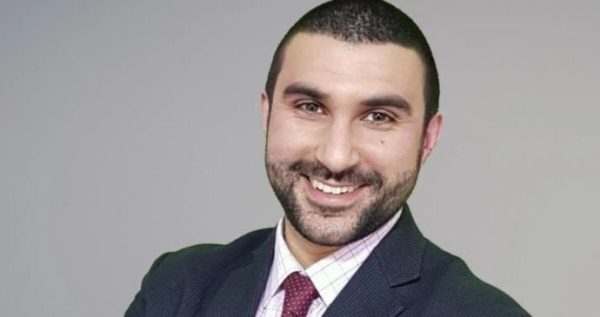
British journalist and political commentator Sami Hamdi was detained by US Immigration and Customs Enforcement (ICE) at San Francisco International Airport on Sunday.
The detention occurred during his ongoing speaking tour organized by the Council on American-Islamic Relations (CAIR), raising alarms over the influence of pro-Israeli lobbying groups.
Hamdi had entered the US legally on October 19 to participate in events addressing US foreign policy and the Israeli war on Gaza. He had recently spoken at CAIR’s annual gala in Sacramento and was scheduled to speak at another event in Florida. On October 24, he was informed that his visa had been revoked, and ICE agents detained him upon his arrival at San Francisco International Airport.
DHS says Hamdi is a national security threat
US Department of Homeland Security Assistant Secretary Tricia McLaughlin confirmed Hamdi’s detention, stating that he posed a national security threat.
“This individual’s visa was revoked, and he is in ICE custody pending removal,” McLaughlin wrote on X.
Reactions from Civil Rights Groups
Friends of Hamdi and civil rights organizations have condemned the detention as an infringement on free speech. A statement from his supporters described the arrest as “a deeply troubling precedent for freedom of expression and the safety of British citizens abroad.”
They called for the United Kingdom Foreign Office to demand urgent clarification from US authorities regarding the grounds for Hamdi’s detention.
CAIR criticized pro-Israeli lobbying groups’ influence on US authorities that led to Hamdi’s arrest. In a statement, CAIR accused “unhinged Israel First bigots” of pressuring the US government to detain Hamdi, labeling the action as an “Israel First policy, not an America First policy.”
Hamdi’s father, Mohamed El-Hachmi Hamdi, expressed concern over his son’s detention, stating that Sami “has no affiliation with any political or religious group.” He emphasized that his son’s stance on Palestine is centered on the people’s right to security, peace, freedom, and dignity, describing him as “one of the young dreamers of this generation, yearning for a world with more compassion, justice, and solidarity.”
USS Nimitz loses 2 aircraft in South China Sea in 30 minutes
Al Mayadeen | October 27, 2025
Two US Navy aircraft operating from the aircraft carrier USS Nimitz were lost to the sea within roughly 30 minutes of each other: an MH-60R Sea Hawk and an F/A-18F Super Hornet.
On Sunday, search-and-rescue forces recovered all five personnel from the two incidents; troops were reported in stable condition. The US Pacific Fleet has characterized the events as separate incidents and opened formal investigations.
Timeline and immediate facts
The first incident involved an MH-60R Sea Hawk assigned to Helicopter Maritime Strike Squadron HSM-73; it went into the sea in the mid-afternoon while conducting routine carrier operations.
Approximately 30 minutes later, an F/A-18F Super Hornet from VFA-22 crashed into the South China Sea; both aviators ejected and were recovered. Official statements and reporting indicate both events occurred while the Nimitz was operating in the South China Sea during what has been described as routine deployment activity.
Peacetime losses in a contested theater
A single deck-oriented aviation mishap is an accepted operational risk; two losses from the same carrier within a short span are not. Carrier flight decks are among the most hazardous workplaces in peacetime precisely because routine activity concentrates high-energy operations in a confined, moving environment.
The coincidence of two different airframes, a rotary-wing anti-submarine warfare (ASW) platform and a strike fighter, being lost in quick succession raises immediate questions about whether the events are independent mishaps or symptoms of a common underlying problem, including maintenance, human factors, deck operations, or environmental conditions.
A series of US Navy ‘mishaps’
During extended US operations in the Red Sea, including an all-out aerial and naval aggression against the Yemeni Armed Forces, the Navy recorded several high-profile aviation and deck incidents.
Aircraft were lost overboard, and friendly fire shot down a US fighter that the Navy later admitted to.
Those combat-adjacent mishaps, driven in large part by Yemeni missile and unmanned threats and by an unusually high operational tempo, differ in proximate cause from a routine-operations crash, but together they form a cluster that points to systemic pressure on American naval aviation readiness and risk margins.
How aircraft go overboard
On a carrier, parked and stowed aircraft are secured by brakes, chocks, and multiple tiedowns attached to deck padeyes; moving aircraft are handled with tractors, elevators, and carefully choreographed deck evolutions governed by standardized procedures.
An aircraft can go overboard when one or more protective layers fail: tiedown chains can part under extreme roll/heave or wind, fastening points can be improperly rigged or removed prematurely, tow vehicles or handling errors can permit an uncontrolled move, or a sudden ship maneuver, for example an emergency turn or severe roll in heavy sea state, can create loads that exceed restraints.
Active flight operations introduce other vectors. Bolters, arrested-landing failures, catapult or engine malfunctions, or deck strikes can send an aircraft into the water.
Material costs
The material loss is non-trivial. Modern Super Hornets and missionized Sea Hawks represent tens of millions of dollars apiece in direct replacement and far higher sums over lifecycle accounting; public reporting commonly places a unit-replacement estimate for a Super Hornet at around $70 million and the MH-60R at around $37 million, though precise figures vary by accounting method.
F/A-18 losses
- One F/A-18F Super Hornet was lost after an arresting cable failed during landing on the USS Harry S. Truman in May 2025.
- Another F/A-18E Super Hornet was lost in April 2025 when the crew lost control of the aircraft while it was being towed in the hangar bay, causing it and the tow tractor to fall overboard.
- A third F/A-18 Super Hornet was lost after it was accidentally shot down by the guided-missile cruiser USS Gettysburg.
USS Nimitz on its final deployment
The Nimitz is one of the US Navy’s older nuclear-powered carriers and was reported to be on its final deployment before decommissioning in May 2026. Aging platforms are not inherently unsafe, but prolonged deployments, deferred maintenance, and supply-chain friction raise the probability of mechanical or human-process failures.
Geostrategic implications
Tactically, losing two aircraft is a direct hit to the USS Nimitz strike group’s operational strength in the region. But politically, the impact could be even greater.
The South China Sea remains one of the world’s most contested waters, where US naval presence serves as both a coercive measure against China and a reassurance to Washington’s allies. Incidents like these tend to draw sharp attention. They give rivals an opportunity to point to underlying problems related to US readiness and reliability while allies quietly watch how Washington manages the situation.
When seen alongside earlier mishaps in the Red Sea, including crashes, handling errors, and a friendly-fire shootdown, the Nimitz losses suggest a Navy stretched thin. High operational tempo, aging ships and aircraft, and pressure to sustain global deployments may be eroding safety margins.
Russia’s new cruise missile a ‘game-changer’ – former US Army officer
RT | October 26, 2025
Russia’s newly tested unlimited-range nuclear-powered missile, the Burevestnik, is a game-changing weapon that is bound to significantly affect US President Donald Trump’s plan to build the ‘Golden Dome’ anti-missile system, former US Army officer Stanislav Krapivnik believes.
Krapivnik spoke to RT shortly after Moscow announced a successful test of the new munition on Sunday. According to the Russian military, the missile covered a distance of over 14,000km during a multi-hour test flight earlier this week.
“The Burevestnik is a game changer… the missile can go around anti-aircraft zones around radar zones… it stayed in the air for 16 hours. Possibly can stay in the air longer. What this means is it’s a second-strike weapon, which means that if Russia is struck, it will strike back,” Krapivnik said.
The development is bound to affect the US plans to build its ‘Golden Dome’ anti-missile system, which is already supposed to be “up and going” but is unlikely to become operational at least before 2030, he added.
“Right now, radar systems and anti-aircraft systems, normally for ballistic missiles like this, are set up on likely ballistic trajectories from nations that may fire on the US: North Korea, China, and Russia. So they don’t have to cover the entire US. With this missile, they would have to cover the entire United States, which makes everything much, much more difficult and much more expensive,” Krapivnik stated.
The successful test will likely be met in the West with a great deal of skepticism, just like the initial announcement that it was being developed made by Russian President Vladimir Putin back in 2018, Krapivnik suggested.
“The further society walks away from being able to recognize truth, the more it comes to the point where it’s going to collapse. And the West is at the brink of collapse; they don’t recognize the truth no matter what,” Krapivnik said, adding that the expected “continuous denial of reality” is “the same thing that we saw with hypersonic missiles.”
Netanyahu: Israel Does Not Need US Approval to Strike Gaza
By Kyle Anzalone | The Libertarian Institute | October 26, 2025
Israeli Prime Minister Benjamin Netanyahu claimed that he can order strikes in Israel at his discretion and that he is not controlled by the US.
Haaretz reports that the Israeli leader said Sunday that Israel “does not seek anyone’s approval” for strikes in Gaza. The remarks follow a report on Thursday that top US officials told Netanyahu that Washington expects to be informed before Tel Aviv attacks Gaza.
He says the US approves of Tel Aviv having full decision-making over striking Gaza. “Israel will decide which forces are unacceptable. The US agrees to this,” he said.
Last week, Israel bombed Gaza dozens of times, claiming it was reacting to a Hamas attack in Rafah. However, the White House knew there was no Hamas attack. When Washington informed Tel Aviv, it was aware that the explosion was caused by an Israeli bulldozer hitting an unexploded munition.
While the reporting said that Washington’s expectations did not amount to Netanyahu needing Trump’s permission to bomb Gaza, the President has sent a number of high-level officials to Israel to keep the Prime Minister from breaking the ceasefire. Trump’s policy has been dubbed “Bibi-sitting.”
Some Israeli officials said that Israel is struggling to dictate policy to the US. Israeli officials told Haaretz that they “have the impression that American scrutiny of Israel has reached a point that usurps Israel’s military and diplomatic power.” They added, “Netanyahu continues to deny this new reality because it contradicts his attempts to create a narrative of victory in the war, at least in the eyes of his political supporters.”
In his remarks, Netanyahu argued he has been able to violate the ceasefire agreement with Hezbollah and Hamas at his discretion. “I want to make one thing clear – our security policy is in our own hands. We are not willing to tolerate attacks against us, we respond at our discretion against attacks, as we saw in Lebanon and recently in Gaza,” he said.
For Anyone Planning on Getting or Mandating Others to Get an Influenza Vaccine (Flu Shot)
Consider this data
By Aaron Siri | October 23, 2025
For anyone contemplating getting an influenza vaccine (flu shot) or planning to pressure or mandate someone else to get one:
A meta-analysis of existing flu shot studies of healthy children by Cochrane (effectively owned by vaccine zealot Bill Gates) concluded that despite decades of published studies, it “could find no convincing evidence that [flu] vaccines can reduce mortality, hospital admissions, serious complications, or community transmission of influenza.”
Read that carefully: no convincing evidence—none—that flu shots lowered the chances of dying, being admitted to the hospital, suffering serious complications from the flu, or transmitting the flu to others.
In fact, studies have found those vaccinated for flu have a statistically significant increased rate of respiratory illnesses. Meaning, it increases the risk of having other respiratory illnesses.
For example, a placebo-controlled efficacy (not safety) study by researchers at the University of Hong Kong compared children receiving influenza vaccine with those who did not receive the vaccine. The study found no statistical difference in the rate of influenza between the groups but did find the vaccinated had a four times increased rate of non-influenza infections (“recipients had an increased risk of virologically confirmed non-influenza infections (relative risk: 4.40; 95% confidence interval: 1.31-14.8)”).
As another example, researchers at Columbia University found that the risk of “influenza in individuals during the 14-day post-vaccination period was similar to unvaccinated individuals during the same period (HR 0.96, 95% CI [0.60, 1.52])” but that the risk of “non-influenza respiratory pathogens was higher [in the vaccinated individuals] during the same period (HR 1.65, 95% CI [1.14, 2.38]).”
A study by the Cleveland Clinic of 53,402 of its employees across multiple states even found an increased risk of influenza among those vaccinated for influenza, explaining that the “cumulative incidence of influenza was similar for the vaccinated and unvaccinated states early, but over the course of the study the cumulative incidence of influenza increased more rapidly among the vaccinated than the unvaccinated.”

From the Cleveland Clinic study
I discuss these and other studies in my book, Vaccines, Amen.
That said: get a flu shot, don’t get a fu shot. That’s freedom. Everyone should be free to choose. But nobody should be coerced to get this or any medical product, especially, ironically, when the data reflects it has a net overall increase in infections.
If you do choose to get this product and are injured, you are always free to call our firm to represent you in the Vaccine Injury Compensation Program.
US to send world’s largest aircraft carrier to Latin America; Venezuela warns of dangerous prelude
Press TV – October 25, 2025
The United States has decided to deploy the USS Gerald R. Ford, the world’s largest aircraft carrier, and five accompanying destroyers to Latin America, prompting Venezuela to condemn the pending provocation as reckless and unlawful.
The move, which marks one of the most aggressive American naval buildups in the hemisphere in decades, was announced by a Pentagon spokesperson on Friday.
The official claimed that the expanded US regional interference aimed to “detect, monitor, and disrupt illicit actors and activities.”
The decision has raised fears of an imminent attempt to destabilize or even invade Venezuela under fabricated pretexts.
Analysts and international observers have also cautioned that the scale of the deployment far exceeds anti-narcotics operations.
The Gerald Ford strike group will join some 6,000 US sailors and Marines already stationed aboard eight warships in the region, bringing total American military personnel in the area to more than 10,000.
The escalation follows Donald Trump’s recent admission that he had authorized CIA operations inside Venezuela and was “mulling land attacks.”
The US president has repeatedly made baseless accusations that President Nicolás Maduro’s government was linked to criminal groups “invading” the US through drugs and immigration, allegations repeatedly dismissed by international agencies and even US intelligence assessments.
Since September, Washington has launched several strikes against civilian and fishing vessels in the Caribbean, alleging drug links without offering evidence.
According to United Nations officials and international law experts, these attacks violate both US and international law and constitute extrajudicial executions.
Venezuelan authorities have vowed to defend national sovereignty with full resolve.
“Interpret it however you want: the Armed Forces will not allow a government here that is subservient to the interests of the United States,” said Foreign Minister Vladimir Padrino.
Calling the US deployment “the most significant military threat in the last 100 years,” Padrino reaffirmed Caracas’s commitment to peace and reiterated that Venezuela would not tolerate any aggression.
Saudi Arabia’s path to normalization with Israel threatens a regional rupture
By Fouad Ibrahim | The Cradle | October 24, 2025
On 17 October, US President Donald Trump told Fox News, “I hope to see Saudi Arabia go in, and I hope to see others go in. I think when Saudi Arabia goes in, everybody goes in.” The statement was calculated to reignite Washington’s normalization push and reassert Riyadh’s place at the heart of the US-Israeli regional alliance plan.
Trump is determined to complete the regional realignment he initiated in 2020 with the signing of the Abraham Accords. Including Saudi Arabia would crown his foreign policy legacy and fundamentally alter the Arab political order. But the costs may be steeper than the gains.
The 2023 near-deal that faltered
In the months preceding Israel’s genocidal war on Gaza, US-mediated talks between Riyadh and Tel Aviv were approaching a breakthrough. The kingdom sought US security guarantees, access to advanced weapons systems, and backing for its civilian nuclear ambitions. The Israeli side, eager for regional legitimacy, saw in Riyadh a historic opportunity.
But Operation Al-Aqsa Flood on 7 October 2023, and Tel Aviv’s ensuing carpet-bombing of Gaza, derailed the entire process. Saudi officials were forced to retreat in the face of overwhelming public outrage across the Muslim world.
Trump’s renewed confidence, however, suggests the framework forged before the war was never truly discarded. It has merely been shelved, pending a more favorable political climate.
Saudi Arabia is not just another Arab state. Its symbolic weight derives from a rare trifecta: custodianship of Islam’s two holiest sites, vast oil wealth and economic clout, and considerable political leadership of the Arab and Islamic mainstream.
If the kingdom normalizes ties with Tel Aviv, a domino effect across Arab and Muslim nations could follow. For Israel, this would be the ultimate regional prize. For Washington, it would cement an American-led bloc from the Mediterranean to the Persian Gulf, aimed squarely at containing both Iran and China.
What could drive normalization forward?
Despite the political fallout from Gaza, several factors continue to draw Riyadh toward normalization. Both Saudi Arabia and Israel view Iran and the Axis of Resistance as their primary regional adversaries.
This strategic alignment has not been fully undone by the 2023 China-brokered thaw between Tehran and Riyadh. Meanwhile, Saudi Arabia’s Vision 2030 plan to diversify its economy sees potential in Israeli sectors like defense technology and cybersecurity.
Trump’s preference for transactional diplomacy means a grand bargain offering defense pacts, nuclear cooperation, or substantial investment flows could appeal to Saudi ambitions. And within the kingdom, a younger, globally attuned population may be less ideologically opposed to normalization – if it is presented as part of a broader modernization drive.
However, polls conducted by the Washington Institute before and after 7 October 2023 show a different inclination. Surveys in December indicated that a majority of Saudis oppose normalizing ties with Israel.
Strategic and moral hazards
Normalization is not without peril. On the contrary, its very success could destabilize the region.
Any Saudi–Israeli deal that sidelines Palestinian rights would be seen as a betrayal of the kingdom’s religious mandate and leadership role. The devastation in Gaza has reignited pan-Islamic solidarity, and any Saudi alignment with Tel Aviv while Palestinians endure siege and bombardment could shatter the kingdom’s legitimacy in the wider Muslim world.
The Axis of Resistance – particularly Iran, Hezbollah, and Ansarallah – would seize on the normalization to portray it as an alliance of apostates and occupiers, fueling more intense and frequent confrontations. By committing to a volatile US-Israeli partnership, Riyadh risks entanglement in wider conflicts, undermining its strategic autonomy and exposing itself to blowback it cannot control.
The security dimension: A trilateral axis
If normalization ushers in a US–Israel–Saudi security architecture, the implications for West Asia would be profound. Tel Aviv would contribute intelligence and military prowess, Washington would provide oversight and guarantees, and Riyadh would bankroll the venture.
But this alliance would be read in Tehran as yet another encirclement strategy, prompting the Islamic Republic to accelerate its missile and nuclear capabilities. The region could slide into an arms race that undermines development, drains budgets, and magnifies the risks of miscalculation.
Moreover, such a pivot could unravel Saudi Arabia’s recent diplomatic gains – including its rapprochement with Iran, Iraq, and Oman-mediated talks with the Sanaa government in Yemen – and alienate its Eurasian partners like China and Russia. The net result could be diminished regional influence and increased dependence on the west.
Domestically, too, the kingdom would face challenges. Clerical critics and nationalist voices could depict normalization as ideological surrender. The government would find itself more reliant on US and Israeli backing to suppress dissent, exacerbating its internal vulnerabilities.
In this sense, the very security guarantees sought through the trilateral axis could paradoxically generate new forms of insecurity – both internal and regional – making the kingdom’s stability increasingly contingent on external actors and volatile power dynamics.
Economic integration
Economic incentives are central to the normalization pitch. Saudi–Israeli integration could unlock massive investment flows and tech partnerships in fields ranging from Artificial Intelligence (AI) to renewables.
Yet this alignment risks reinforcing structural dependencies. Israeli firms, backed by western capital and technological superiority, would dominate the value chains. The Saudi economy could shift from oil dependency to digital subordination.
Further, such a move could sour ties with China, currently Riyadh’s largest trading partner. Over-alignment with the US–Israel axis might jeopardize the kingdom’s multi-vector strategy and reduce its diplomatic room to maneuver.
Even the promise of modernization may ring hollow if perceived as elite enrichment at public expense. The economic corridor could become a tool of inequality, modernizing infrastructure while leaving social contracts untouched.
Economic integration can bring regional prosperity if fair and balanced, but without safeguards, it risks reinforcing dependency and fueling conflicts.
Surveillance state: Normalization’s dark underbelly
One of the least discussed aspects of normalization is cyber collaboration. Israel’s role as a global surveillance hub and Saudi Arabia’s deep pockets could converge to create a formidable digital control grid.
Such a system – integrating spyware, predictive policing, and AI surveillance – would strengthen the US-led intelligence grid across West Asia, enhancing early-warning systems, missile defense coordination, and digital containment of the Axis of Resistance.
It could also extend the reach of western intelligence into theaters such as Yemen, Iraq, Lebanon, and the Red Sea. In practical terms, the alliance could evolve into a regional integrated military and intelligence system encompassing command, control, communications, computers, intelligence, surveillance, and reconnaissance – underpinned by joint data centers, AI-driven threat analysis, and shared satellite networks.
However, this integration would carry profound ethical and political implications. The same tools designed to deter external threats could easily be repurposed for internal control. By combining Israeli-developed spyware, predictive policing algorithms, and US-supplied surveillance hardware, the Saudi government would vastly expand its capacity to monitor dissent, pre-empt protests, and neutralize political opposition.
The normalization process could thus serve as a legitimizing cover for what might become the most sophisticated surveillance apparatus in the Arab world.
Regionally, a Saudi–Israeli cyber partnership would alarm neighboring states, particularly Iran and Qatar, which would perceive it as a threat to their own sovereignty and national security. The likely response would be the acceleration of rival cyber alliances, possibly involving Russia, China, or Turkiye – ushering in a new digital Cold War in the Persian Gulf.
In the long term, the fusion of surveillance technology and political authority poses a deeper civilizational question: Can the Arab world’s quest for security coexist with the preservation of freedom and privacy? If the digital frontier becomes another instrument of domination, the promised “technological peace” may end up securing governments, not peoples – turning the dream of innovation into the architecture of control.
Riyadh’s choices: Three possible trajectories
The Saudi leadership now faces three broad options. First, conditional normalization, where recognition of Israel is tied to measurable progress on Palestinian statehood and sovereignty. Given Tel Aviv’s accelerated settlement expansion in the occupied West Bank, this appears increasingly unrealistic.
Second, incremental engagement (soft normalization), involving quiet cooperation below the threshold of formal recognition that gradually lays the groundwork for future deals.
Third, strategic hedging, in which Riyadh continues to balance between US pressure and regional diplomacy, keeping normalization in reserve as a bargaining chip.
Between realpolitik and regional rupture
Trump’s statement has reignited the debate over the kingdom’s path forward. The immediate gains of normalization – security assurances, economic incentives, and prestige – are tempting. But the long-term consequences could be corrosive.
To join the Abraham Accords while Gaza remains in rubble will irreparably damage Saudi Arabia’s credibility as a leader of the Islamic world. It could sever the kingdom from the Arab street, provoke resistance retaliation, and entrench a neocolonial security order.
Unless normalization is tied to justice for Palestine, it will be remembered not as peace, but as betrayal.
War and Business. Peace Negotiations are “A Waste Of Time”.
By Manlio Dinucci | Global Research | October 25, 2025
Following the announcement of the impending summit with President Putin in Hungary, President Trump declared that the summit with the Russian President on Ukraine would be a “waste of time” on the grounds that “Russia is pursuing territorial ambitions that make a peace agreement with Ukraine impossible”.
He then proceeded to summon NATO Secretary General Mark Rutte to the White House, wherein he conveyed his decision to withhold the provision of US Tomahawk missiles to Kiev at that particular juncture.
This decision was precipitated by the perceived impracticality of allocating a substantial amount of time to train the Ukrainian army in the utilisation of such missiles. Concurrently, the US lifted the key restriction on the use of long-range missiles supplied by other NATO members to Ukraine, while NATO conducted the Steadfast Noon nuclear warfare exercise directed against Russia in Europe under US command. In response to the aforementioned events, a Strategic Nuclear Forces exercise was conducted in the Russian Federation. President Putin observed this exercise via video conference.
One example among many: that of the fast-growing German Rheinmetall, which is integrated into the US military-industrial complex through American Rheinmetall Munitions.
Rheinmetall has announced its intention to supply Ukraine with an electronic system designed to enhance the combat capabilities of the German Leopard tanks that have already been supplied to Kiev. The production and integration of this system is carried out by the Italian subsidiary of Rheinmetall, Rheinmetall Italia SpA, at its headquarters in Rome. In Italy, Rheinmetall has established a facility dedicated to the assembly, testing and production of warheads for kamikaze drones. The series is being produced at full speed. The plant is operated by the Italian subsidiary RWM Italia at its sites in Musei and Domusnovas in Sardinia. Rheinmetall is collaborating with the Israeli manufacturer UVision Air Ltd. on this project. It is evident that these Italian-manufactured kamikaze drones will be utilised by the Israeli army in attacks against Palestinians in Gaza, as well as in other operations primarily conducted in Libya, Yemen, and other regions.
Trump has imposed sanctions on Russian oil companies, representing the most stringent measures yet taken by the US against the Russian energy sector. It is evident that these sanctions are favourable to large US oil and gas companies. The European Union is participating in this operation, which has decided to completely block the import of Russian natural gas in three stages: from 1 January 2026, it will be forbidden to sign new contracts; short-term agreements already in place must end by 17 June 2026; and long-term agreements by 31 December 2027.
It should be noted that the aforementioned proposals have met with opposition from the countries of Hungary and Slovakia. Concurrently, Italy’s Edison entered into an agreement with Shell, securing the procurement of US liquefied natural gas (LNG) for a duration of 15 years. In consideration of the marked disparity between the price of gas in the US and that of gas in Russia, it is evident that consumer gas prices for households in Italy are rising.
The United States and the State of Israel are contemplating a plan to divide the Gaza Strip into two separate zones: one to be controlled by Israel, the other formally by Hamas pending its “disarmament”. This was announced at a press conference in Israel by US Vice President Vance and Trump’s son-in-law, Jared Kushner. The plan is to immediately start “reconstruction” in the Israeli-controlled area, according to Trump’s plan to transform Gaza into a luxurious “Riviera of the Middle East”.
The Palestinian area, de facto controlled by Israel, would remain in its current situation: the Palestinian population would be locked there in a scenario of destruction and deprivation that would continue the genocide.
President Trump confirmed that Australia will obtain nuclear-powered submarines from the United States and the United Kingdom, indicating a strategic focus on deterring China and Russia.
Concurrently, he signed an agreement on rare earth minerals with the Australian Prime Minister at the White House. The AUKUS submarine agreement between Australia, the United Kingdom and the United States could cost Australia up to $235 billion over the next 30 years. The governments of the United States and Australia have announced their intention to invest in excess of $3 billion in critical minerals projects over the forthcoming six-month period. The recoverable resources in these projects are estimated to be worth $53 billion.
The US Department of War expressed its intention to invest in the construction of an advanced gallium refinery with a capacity of 100 metric tonnes per year in Western Australia. Gallium has several military applications, primarily in high-tech electronics such as radar and satellite communications. The material is also used as an alloy to stabilise nuclear weapons components and in aluminium-gallium alloys for the production of hydrogen bombs for thermonuclear warfare.
Featured Video
EUROPE FEARS RUSSIA’S NEXT MOVE / Ian Proud
or go to
Aletho News Archives – Video-Images
New Book
New Book: No Autoimmunity The Body Doesn’t Attack Itself
Lies are Unbekoming | September 24, 2026
 The label for Humira, once the best-selling drug in the world, lists its risks in plain print. One of them, in the label’s own words, is new “autoimmune” disease.
A drug prescribed for a condition labelled autoimmune carries a warning that it can cause a condition labelled autoimmune. That contradiction sits in every box, on a folded paper almost nobody reads.
My new book starts there.
No Autoimmunity: The Body Doesn’t Attack Itself
For seventy years, “your body is attacking itself, and we don’t know why” has ended the conversation for people diagnosed with multiple sclerosis, lupus, rheumatoid arthritis, Hashimoto’s, Type 1 diabetes, Crohn’s and psoriasis. More than eighty conditions now carry the autoimmune label. The diagnosis comes with a prescription for life. It almost never comes with a question about cause.
This book asks the question and answers it from the framework’s own records: its drug labels, its journals, its regulatory filings, and its own experiments. … continue
Blog Roll
 Aletho News
- DEATH SPIKES & RISING CANCER IN OUR YOUTH EXPLAINED
- Iran offers Trump deal before US election
- Merz regime wants ‘secret police’ – opposition
- Israeli settlers terrorize West Bank Palestinians with state-provided drones: Report
- They see them, then kill them: Israeli quadcopters track, deliberately target civilians in Gaza
- Debunked: Trump’s egregious UNGA claims on war against Iran crumble under scrutiny
- Europe was part of the infrastructure of US aggression against Iran: Deputy FM
- New evidence on the Bucha Massacre
- Italy and France debunk reports CIA issued ‘Russian drone threat’ warning
- How Russia is Rewiring the Global South
- If Americans Knew
- Trump betrayed voters with his campaign lies and prioritized a foreign country once he took office
- Netanyahu calls Israel’s war in Gaza ‘opposite of genocide’ in UN speech to near-empty hall
- Settler Kidnappings: Torture, Sexual Abuse and Terrorisation of Palestinian Abductees as Israel Deepens Annexation of West Bank
- Gaza winter nears as 162,000 tents become unusable, raising fears of humanitarian crisis
- Netanyahu says, “It’s the opposite of genocide”; UN says Gaza economy is world’s ‘most severe crisis on record’ – Daily Update
- Israel’s US-Backed Assault on Gaza Has Created the ‘World’s Most Severe Economic Crisis on Record’: UN
- ‘Protecting U.S. Citizens’… From Israel
- ‘This is where I live now, the back of a truck’: a day in the life of a grandmother in Gaza
- In UN Speech, Iran’s President Displays Pictures of Children Killed by US, Brings Attention to Israel’s Nuclear Arsenal
- Israel displaces hundreds of Palestinians amid wave of demolitions in West Bank
- No Tricks Zone
- New Study: Earth And Venus Surface Warmth Largely Explained By Convection And Lapse Rate, Not CO2 Or Radiation
- 2025 Nature Paper Claiming Worsening Global Drought Gets RETRACTED …Heavily Flawed
- New Study: ‘Global Drought Shows No Detectable Recent Acceleration Under Climate Warming’
- Economic Masterminds: German Socialists Suggest Taxing Productivity Gains Stemming From Using AI
- The South China Sea Has Not Been Cooperating With The Climate Change Narrative
- Energy Crisis: Germany Enters Heating Season With Historically Low Gas Reserve Fill Levels
- New Study: The Antarctic Ice Sheet Gained Mass From 2020-2024 Due To Staggering Snow And Ice Accumulation
- Study: Ocean Heating Rates From Thousands Of Years Ago ‘Dwarf’ Modern Ocean Heating Rates
- Climate Extremists Target, Attack Large-Scale Power Grid Infrastructure In Germany!
- New Study: Antarctic Ice Melt Has Contributed Less Than 1 Centimeter To Sea Level Rise In The Last 30 Years

