Estonian defense chief reveals failure of Pentagon meeting
RT | July 31, 2025
The Baltic states have failed to secure any guarantees from Washington regarding the continued deployment of US forces in the region, Estonian Defense Minister Hanno Pevkur has said.
Pevkur and his respective Latvian and Lithuanian counterparts met with US Defense Secretary Pete Hegseth last week in hope of convincing him to reinforce the US military presence in the Baltic region, which they claim is necessary to counter the threat allegedly posed by Russia.
Moscow has repeatedly denied having hostile intentions toward NATO states, dismissing such claims as fearmongering meant to justify increased military spending.
According to Pevkur, US officials declined to promise that even the current troop level of about 2,000 in the Baltic states would be maintained. Instead, the ministers were simply told that any future changes to the American force posture on the continent would be coordinated with NATO and would not come “as a surprise” to Europe.
Pevkur claimed that there have been no signs of an imminent drawdown of American forces in the Baltics since the meeting. He added, however, that Washington is preparing to review its European deployments in the fall.
Earlier this year, Politico reported that the US could withdraw around a third of its troops from Europe, equivalent to roughly 20,000 soldiers, according to unnamed NATO officials. The US currently has between 90,000 and 100,000 troops stationed across the continent.
Both President Donald Trump and Hegseth have previously indicated that the US may scale back its overseas presence. They have also called on European allies to increase their own defense spending instead of relying on American support.
NATO members have since agreed to raise their military spending target to 5% of GDP by 2035.
Moscow has criticized the bloc’s continued militarization and cited NATO’s policies as a key factor behind the Ukraine conflict. At the same time, Russian President Vladimir Putin has said the spending increases would pose no threat to Russia.
Kicking the peace can down the road
In discussion with Glenn Diesen
Ian Proud | July 28, 2025
Nice to catch up with Glenn Diesen to discuss recent developments, including my article on Trump’s 50-day ultimatum to Putin, which has now been reduced to 10-12 days, whatever that means. I continue to judge that the threat of secondary sanctions against Russia’s trading partners will have a greater impact on the US than on China, India or any other country that does business with Russia.
Meanwhile, Zelensky’s short-lived attempt to shut down anti-corruption organisations closing in on his cronies has been a big wake up call, not just for European political leaders and journalists, but more importantly, citizens.
Faced with admitting defeat in Ukraine and throwing Zelensky under the bus and continuing with an ineffective foreign policy towards Russia, I judge that Starmer, VdL and others will keep kicking the peace can down the road.
Yet every day the war continues, Ukraine loses more ground and more lives on the battlefield, and slides further towards the status of a failed state. My optimism remains low that the war will end in 2025.
US media owe Putin an apology – Fox News host
RT | July 29, 2025
The US media need to make “serious” amends to many people, including Russian President Vladimir Putin, for their active role in spreading the Russiagate hoax following the 2016 presidential election, according to popular Fox News host Greg Gutfeld.
The political commentator, comedian, and author was responding to recent revelations made by Director of National Intelligence Tulsi Gabbard, who released a trove of documents she described as “overwhelming evidence” of a coordinated effort by senior Obama-era officials – allegedly led by Barack Obama himself – to politicize intelligence and falsely accuse Donald Trump of colluding with Russia to win the election.
“We cannot let this go. They need to make serious amends because we are still living with the aftermath,” Gutfeld said on his latest show, aired last weekend. “People lost jobs, careers, friends. There need to be consequences.”
“They owe a lot of people an apology. Hell, they even include Putin.”
According to Gutfeld, major American news media outlets “played the starring role in amplifying the subversive plot against the president of the United States.” He dismissed recent claims by the press accusing the Trump administration of trying to “rewrite history,” calling them an “attempt to shift culpability away from themselves and hide the lie they perpetuated for almost a decade.”
Earlier this month, a similar assessment was made by former CIA Director John Ratcliffe. In an interview with the New York Post, he cited an internal review suggesting that American public opinion had been manipulated through repeated media leaks and anonymous sources quoted by The Washington Post, The New York Times, and other major outlets.
Allegations of “Russian collusion” persisted in mainstream media coverage even after Special Counsel Robert Mueller’s investigation found no evidence to support the claims. Moscow has repeatedly denied interfering in the US election.
Gabbard described the Trump-Russia probe, widely referred to as Russiagate, as “a years-long coup” against Trump. The US president himself, who has consistently dismissed accusations of ties to Russia as fabricated, praised Gabbard for “exposing” the alleged plot and urged her to “keep it coming.”
Robert Taft Foresaw the Dangers of NATO
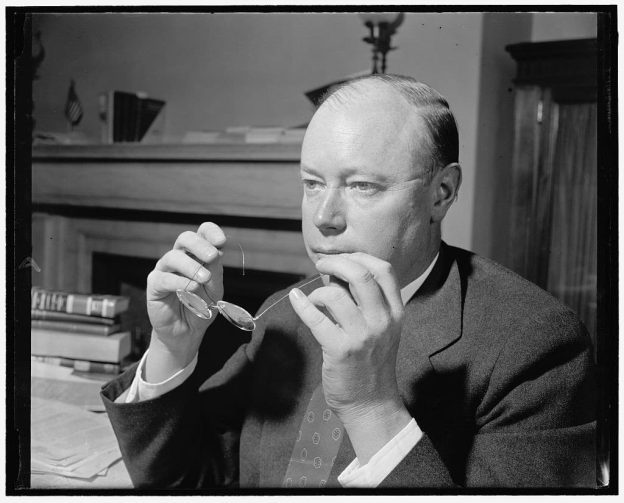
By James Rushmore | The Libertarian Institute | July 29, 2025
On July 26, 1949, Ohio Senator Robert Taft delivered a speech in which he explicated his reasons for voting against ratification of the North Atlantic Treaty. His remarks included the following:
“If we undertake to arm all the nations around Russia from Norway on the north to Turkey on the south, and Russia sees itself ringed about gradually by so-called defensive arms from Norway and Denmark to Turkey and Greece, it may form a different opinion. It may decide that the arming of Western Europe, regardless of its present purpose, looks to an attack upon Russia. Its view may be unreasonable, and I think it is. But from the Russian standpoint, it may not seem unreasonable. They may well decide that if war is the certain result, that war might better occur now rather than after the arming of Europe is completed.
How would we feel if Russia undertook to arm a country on our border; Mexico, for instance?”
Taft correctly anticipated a future in which NATO expansion would provoke a military response from Russia. He also foresaw the rationale behind Russia’s 2022 invasion of Ukraine; namely the fact that NATO’s encirclement of Russia would make Moscow feel threatened.
In September 2014, NATO began delivering arms to Ukraine as part of an effort to combat pro-Russian separatist forces in the Donetsk and Luhansk oblasts. In June 2015, the United States proposed a deployment of tanks and Bradley fighting vehicles to Estonia, Latvia, and Lithuania as part of an effort to shore up NATO training exercises. In December 2015, Poland considered participating in a NATO program in which countries without nuclear weapons would be able to borrow them from the United States. In January 2017, NATO carried out a “large-scale defensive drill” along the Polish-Lithuanian border. In March 2018, the U.S. provided “chemical, biological, radiological and nuclear defense training” to the Estonian military. And in August 2019, NATO upgraded a ballistic missile defense system in Romania.
Taft’s dire prediction elucidated the contradiction at the heart of the North Atlantic Treaty. In attempting to guarantee the security of Western Europe, it instead increased the likelihood that the region would face hostilities from the east. It was only a matter of time before Russia took stock of the military activity to its west and decided that a preventive strike would be its best course of action.
Taft also said:
“Under the new pact, the president can take us into war without Congress. But above all, the treaty is a part of a much larger program by which we arm all these nations against Russia. A joint military program has already been made. It thus becomes an offensive and defensive military alliance against Russia. I believe our foreign policy should be aimed primarily at security and peace, and I believe such an alliance is more likely to produce war than peace.”
Taft’s speech echoes the sentiments expressed by President George Washington in his 1796 farewell address. Washington warned against “interweaving [America’s] destiny with that of any part of Europe.” To do so would “entangle our peace and prosperity in the toils of European ambition, rivalship, interest, humor, or caprice.”
Taft’s commentary also exemplified the foreign policy tradition of the Old Right, which rejected foreign military adventurism in favor of non-interventionism. Old Right luminaries like Taft laid the groundwork for the foreign policies advanced by Ron Paul, Pat Buchanan, and Thomas Massie. Taft himself initially opposed U.S. entry into World War II. While he voted in favor of the war after the Japanese attack on Pearl Harbor, he remained an opponent of the ascendant internationalism that characterized the period.
At the core of Taft’s pronouncements is a recognition of the fact that U.S. military intervention begets both domestic and international turmoil. Proponents of a proactive foreign policy often accuse non-interventionists of being naïve and unrealistic. But Taft understood the folly of militarism. A realist foreign policy is predicated on an appreciation for the limits of American power. The inherent difficulty of reshaping foreign borders, in Eastern Europe or elsewhere, coupled with the potential for retaliation, ought to give more interventionists pause. The speciousness of such a foreign policy agenda certainly convinced Taft to reject the lofty ideals represented by NATO.
On February 1, 2008, William Burns, then the U.S. ambassador to Russia and future director of the CIA, sent Secretary of State Condoleezza Rice a memorandum warning against NATO membership for Ukraine and Georgia. Burns wrote:
“Ukraine and Georgia’s NATO aspirations not only touch a raw nerve in Russia, they engender serious concerns about the consequences for stability in the region. Not only does Russia perceive encirclement, and efforts to undermine Russia’s influence in the region, but it also fears unpredictable and uncontrolled consequences which would seriously affect Russian security interests. Experts tell us that Russia is particularly worried that the strong divisions in Ukraine over NATO membership, with much of the ethnic-Russian community against membership, could lead to a major split, involving violence or at worst, civil war. In that eventuality, Russia would have to decide whether to intervene; a decision Russia does not want to have to face.”
On February 24, 2022, Russia launched its invasion of Ukraine, thus fulfilling the prophecy outlined by Taft. That conflict is now in its fourth year. By all accounts, it is unlikely to end anytime soon, even with an additional series of peace talks currently taking place in Istanbul.
Nearly thirty-five years after the end of the Cold War, NATO remains a relic of a bygone era. The West insisted that its preservation would ensure peace. They claimed that expanding NATO eastward would forestall or prevent Russian aggression, guaranteeing freedom and prosperity for Eastern Europe. They were wrong.
Germany steps up arms race and targets Russia by acquiring Tomahawk missiles
US also scrambles to produce more Tomahawk missiles for its own Navy and Army
By Ahmed Adel | July 29, 2025
Germany wants Tomahawk cruise missiles and Typhon missile launchers to attack Moscow, writes Military Watch Magazine. The magazine highlights that Germany, which is actively militarizing, considers Russia its main adversary and target of a potential missile attack, so Berlin wants to have such weapons.
“The Tomahawk Block IV cruise missile’s 1600 kilometre range allows Typhon units to strike targets in the Russian capital Moscow from German territory, with Russia considered the primary target of such a procurement plan,” the publication highlighted.
According to the magazine, on May 22, the German Army inaugurated the 45th Armored Brigade in Vilnius, Lithuania. This militaristic step by Berlin reinforced its advanced mechanized warfare capabilities, just 150 km from Minsk and less than 800 km from Moscow.
Furthermore, in early 2022, the German Ministry of Defense selected the US F-35A stealth fighter to upgrade its nuclear strike capabilities while maintaining wartime access to US B61 nuclear warheads through a sharing agreement.
“Russia and Belarus are considered the primary potential targets of this improved nuclear strike capability, of the major new ground force procurements and deployments, and of the new mobile cruise missile launch vehicles being procured, ensuring that Berlin makes a far greater contribution to NATO’s collective military pressure on Moscow that was previously the case,” the article noted.
The article opines that the effectiveness of the Tomahawk cruise missile for deep strikes into Russia is uncertain, as its Cold War-era subsonic design relies on navigation over close terrain to avoid long-range detection.
“Modern Russian air defence systems, and the country’s fighter and interceptor aircraft such as the MiG-31BM, are considered highly capable of shooting down such targets over significant distances,” the publication said.
Thus, the magazine concluded that the high efficiency of these complexes that Berlin aims to achieve is doubtful due to modern Russian anti-aircraft defense systems and interceptors.
Germany’s quest for more Tomahawks is amid the US’s struggles to attain the long-range missiles.
The US military is running out of Tomahawk missiles, and the country’s military industry is struggling to produce enough of these missiles to meet the demand of the US Armed Forces, according to 19FortyFive.
The portal highlighted that the US Navy was consuming missiles faster than the defense sector could replace them.
“But for more than two years, the US Navy had been firing the missiles faster than the defense industry can replace them. According to the Navy, the opening strikes in 2024 of the escalating conflict in Yemen expended more than 80 Tomahawks to hit 30 targets,” the article highlighted.
It is noted that the production lines for Tomahawk missiles, one of the most important weapons in the US Army’s arsenal, have been maintaining the lowest possible production rate for some time. The publication noted that the minimum sustainment rate required to keep production lines running is 90 Tomahawks per year, but this rate is not being achieved.
“The Army and Marine Corps are barely sustaining that production with their buys of experimental land-launched versions of the missile,” the portal emphasized.
Thus, the article concluded that only five Tomahawk missiles will be produced per month in the near future, due to a shortage of essential components, such as rocket engines, which makes it difficult to increase production.
Yet, despite struggles to attain more Tomahawk missiles, Germany also wants to send Patriot missile systems to Kiev, even though the US can only replace the system in 2026. Germany will receive the first Patriot air defense system from the US to replace those transferred to Ukraine within a maximum of eight months, as German Defense Minister Boris Pistorius insists on accelerating the delivery of the systems, German media reported, citing sources.
According to Der Spiegel, it will take even longer for the US to deliver all other systems to its partners. According to the media outlet, the US plans to put the countries that transferred the Patriot to Kiev at the top of the list of candidates for new systems from the US company RTX Corporation.
German Defense Minister Boris Pistorius told the inquiry that he is negotiating with the manufacturer to expedite production and deliveries, and that he may also discuss the matter with his US counterpart, Pete Hegseth. The minister reportedly noted that delivery times for the new systems should be “months, not years.”
In this way, Germany maintains grand ambitions against Russia, but its industrial capacity does not match this. No country has been more affected by the anti-Russia sanctions than Germany, with the sanctions having completely backfired as cheap Russian energy is no longer powering German factories. Yet, it appears that decision-makers in Germany are yet to accept this reality and still want to support Ukraine’s futile attempts to roll back Russian forces.
Ahmed Adel is a Cairo-based geopolitics and political economy researcher.
American Academy of Pediatrics Goes To War Against Religious Exemptions, Parental Rights
By Jefferey Jaxen | July 29, 2025
The ability to practice ones sincere religious beliefs is woven into the very fabric of America and its founding ethos yet the American Academy of Pediatrics (AAP), a membership organization focusing on pediatricians, just declared war on this bedrock right.
Besides being morally objectionable, the concept is just plain unpopular in modern America. By 2023 only six U.S. states officially denied parents religious exemptions to vaccination for their children via laws that were enacted in the face of massive opposition from the public.
Since then, two of the states (Mississippi and West Virginia) have seen their religious denial laws overturned by court wins from the Informed Consent Action Network’s legal team in which judges deemed such laws to violate the First Amendment.
Meanwhile, public pushback saw Hawaii as the latest state to defeat a bill that would have removed its religious exemption option.
AAP’s new policy paper has stepped in with an attempt to stop the momentum of religious freedom in the medical and public health spaces – an idea whose time has come.
“The AAP recommends that all states, territories, and the District of Columbia eliminate all nonmedical exemptions from immunizations as a condition of school attendance.
With a flowery mission to ‘attain optimal physical, mental, and social health and well-being for all infants, children, adolescents and young adults,’ AAP fashions itself more as a continuous pipeline for industry products through overreaching, anti-science edicts.
The AAP recently floated a lawsuit against HHS Secretary Kennedy for his recommendation to remove pregnant women and healthy children from the Covid vaccine schedule.
Lets take a look at some of AAP’s greatest hits over the last 5 years.
In 2019, Washington D.C.’s B23-0171 (later named D.C. Law 23-193) sought to add a new section into the existing regulations that would allow a minor child to consent to receive a vaccine. The bill, and its hearing, signaled a new high-water mark towards the removal of parents from some of their children’s most important medical decisions – and AAP was there.
During the public hearing before it was signed into law, pediatrician Dr. Helene Felman, representing Washington D.C.’s chapter of the American Academy of Pediatrics (AAP), stated:
“As a pediatrician, I like the legislation as it stands because it offers the opportunity to capture those young adults who can make informed decisions at technically any age.”
Any age…
An ICAN legal victory halting D.C.’s overreach saw a D.C. district judge issue a preliminary injunction against the act in favor of parents who brought suit. The parents filed complaints and were able to demonstrate that the act likely violates federal law.
Next up AAP was on the wrong side of the push, against clear scientific evidence, to medically transition children. As Norway, Sweden, Denmark, U.K. and other countries officially backed off the practice. A 2025 review by HHS of the evidence and best practices found significant risks associated with gender dysphoria treatments.
One of the authors of the paper stated simply:
“… No reliable research indicates that these treatments are beneficial to minors’ mental health.”
In 2023, AAP reaffirmed its stance in a policy paper arguing for youth to have open access to gender-affirming health care fully funded by health insurance.
And finally, the AAP worked to influence public policy by advocating for new injectable weight loss drugs for children.
“Children struggling with obesity should be evaluated and treated early and aggressively, including with medications for kids as young as 12 and surgery for those as young as 13, according to new guidelines released Monday.”
The newly discovered harms of such drugs are unfolding on a weekly basis but that didn’t seem to matter to the AAP.
As an industry mouthpiece who see children as a profit margin and pipeline demographic for drugs and shots, AAP is unmatched in its corporate ‘advocacy.’
The organization appears to have chosen another losing battle siding against religious freedom in the United States of America and with it a further loss of relevancy for the organization.
Matson Suspends Electric Vehicle Shipments Over Battery Fire Concerns
What’s Going on With Shipping? | July 27, 2025
In this episode, Sal Mercogliano — a maritime historian at Campbell University (@campbelledu) and former merchant mariner — and Patrick Dunham from StacheD Training discussed the decision of Matson to suspend the shipment of Electric Vehicles (EVs) on board their ships from the West Coast of the United States to Hawaii and Guam.
The US Is Buying Ukraine 33,000 Modules to Create AI-Powered Drones
By Kyle Anzalone | The Libertarian Institute | July 28, 2025
Ukraine will soon receive tens of thousands of drone modules powered by artificial intelligence and resistant to electronic warfare.
According to the Financial Times, the Department of Defense is funding the sale. The drone kits are produced by the US-German software company Auterion. Chief executive Lorenz Meier said the firm received a $50 million contract from the Pentagon for the order.
Meier said Auterion would complete the delivery of Skynode S modules to Ukraine by the end of the year. He explained the modules are “strike kits” that allow the drone to operate autonomously. Meier referred to the system as the “next evolution in warfare.”
“What we are providing is leapfrogging what’s on the battlefield right now, which is to go to AI-based targeting and swarming,” he added. Auterion claims drones equipped with the module can hit targets one kilometer away.
Drones have become a pivotal weapon in the Ukraine war. Russia is firing hundreds of drones into Ukraine most nights. Ukrainian President Zelensky has rolled out a plan to build thousands of interceptor drones to combat the Russian salvos.
Pentagon Eyes Ukraine as Drone Testing Ground After Alaska Failures
Sputnik – 28.07.2025
WASHINGTON – The US Department of Defense (DOD) views Ukraine to be a potential polygon for drone testing after it ran into difficulties during the June trials in Alaska, Defense News reported, citing sources in Pentagon.
Earlier this summer, five US companies underwent drone testing in Alaska to see if their prototypes were able to withstand GPS disruption and if they were ready to transition to the military services.
“Providing an opportunity for these companies to assess their products in a contested environment against a notional threat is really valuable, one, for the DOD to assess their product in that way. But it’s also important for the companies to see where they’re succeeding or where they’re falling short so they can make tweaks and have a better product,” one of the Defense Innovation Unit (DIU) officials told Defense News.
Commercial companies, especially small ones, do not have access to test spaces that are similar to field conditions, so the Pentagon needs to provide such conditions if it wants to achieve new technologies fast and efficiently, the report said.
“If we want to succeed, we have to embed engineers with warfighters, and we have to be out in the field testing. We have to do it all the time,” DIU’s Trent Emeneker was quoted as saying by Defense News.
To solve this issue, Emeneker proposed testing drones on the Ukrainian front lines, adding that “there’s no better place in the world” to do it. However, according to the report, it is difficult for the Department of Defense to officially send start-ups to Ukraine for in-country testing after US President Donald Trump assumed office, and the political tension between the current administration and the Ukrainian government increased.
On Friday, Ukrainian President Volodymyr Zelenskyy said he had reached an agreement with US President Donald Trump on the supply of Ukrainian-made drones worth $10-30 billion to the United States.
‘Tough Thing to Defend’: FDA Holds Heated Debate on ‘Untested, Unapproved’ Fluoride Supplements for Kids
By Brenda Baletti, Ph.D. | The Defender | July 24, 2025
The decision whether or not to prescribe unapproved fluoride supplements to children needs to be based on data — “It can’t be done with opinion,” Dr. George Tidmarsh said Wednesday during a public meeting held by the U.S. Food and Drug Administration (FDA) to solicit public input on safety concerns associated with the supplements.
Tidmarsh was tapped this week to lead the FDA Center for Drug Evaluation and Research, which regulates over-the-counter and prescription drugs.
In May, the FDA moved to ban fluoride supplements after a systematic review of recent science by top government scientists, published in January in JAMA Pediatrics, reported that early fluoride exposure was linked to a decrease in children’s IQ scores.
During Wednesday’s meeting, Tidmarsh said:
“That’s a huge issue. Everybody should be concerned about that. What this is saying is that the fluoride in water was causing a cognitive decrease in the younger children. And the randomized studies say that there is no benefit. So that’s a tough thing to defend.”
“Our job here is to use evidence,” he added, citing the recently updated Cochrane Review on fluoride, which found that water fluoridation offered little to no protection against cavities in children.
Although the FDA never approved fluoride supplements, which come in tablets and lozenges, doctors have for decades routinely prescribed them to children — including babies as young as 6 months old — to prevent cavities.
Research has shown for more than two decades that any benefit to teeth from fluoride comes from topical applications — like toothpaste — not from ingesting the drug.
The supplements are known to cause dental fluorosis, a tooth discoloration that is a marker of fluoride overexposure. Overwhelming evidence now shows that ingesting fluoride is linked to lower IQ in children, neurobehavioral issues and thyroid problems.
Fluoride advocates say safety studies exist, but don’t cite them
Wednesday’s day-long meeting, facilitated by the Reagan-Udall Foundation for the FDA, turned contentious at times, as researchers presented evidence of fluoride’s risks to children’s health and debated whether to pull the supplements from the market.
Eighteen speakers argued for and against the supplements, including top researchers on fluoride’s toxic effects. Speakers included Kyla Taylor, Ph.D., an epidemiologist at the National Institutes of Health and an author on the National Toxicology Program’s recent report and JAMA study showing that fluoride exposure for pregnant mothers and infants is linked to lowered IQ among children.
Christine Till, Ph.D., a professor from York University in Toronto and author of a highly cited 2019 study that reported similar findings, shared research on fluoride’s damaging effects on the thyroid.
Commenters also included pro-fluoride lobbyists and advocates, such as Dr. David Krol, with the American Academy of Pediatrics, and Dr. Scott Tomar, with the American Dental Association (ADA).
In his opening remarks, Tidmarsh warned about the need for data in response to presentations by supplement advocates, including Dr. James Bekker, a pediatric dentist and a member of the Utah Dental Association.
Bekker said, “We’ve got to have a balance. We’ve got to have a situation where the right amount of fluoride is present during development. As we look at ways in today’s world of achieving that balance, supplements play a very important role.”
“When we don’t have fluoride, there are certain things that happen that are very disturbing,” Bekker added. “We have an increase in tooth decay, and we have an increase in the use of emergency services to receive care for dental emergencies.”
However, Tidmarsh called out Bekker, comparing the lack of evidence in his presentation with the presentation by Dr. Bill Osmunson, a dentist associated with the Fluoride Action Network (FAN), who pointed out that no randomized controlled studies had ever been conducted on the supplements.
Bekker countered that he didn’t want to overwhelm people with information. “That data is very available. It’s important to understand that,” he said, citing no specific studies.
‘Just take them off the market’
The move to ban the supplements comes on the heels of a federal court decision last September that water fluoridation at current U.S. levels poses an “unreasonable risk” of reduced IQ in children and that the U.S. Environmental Protection Agency (EPA) must take regulatory action to address that risk.
Since then, more than 60 communities and two states — Utah and Florida — have voted to stop adding fluoride to their water. The EPA is appealing the decision.
Water fluoridation has been practiced in the U.S. for decades, long advocated by lobbying organizations like the ADA. The Centers for Disease Control and Prevention (CDC) continues to celebrate it as one of the 10 greatest public health achievements of the 20th century.
As water fluoridation comes under threat, fluoridation advocates have taken up the cause of defending the untested, unapproved supplements.
“Honestly, it’s ridiculous that we are even having this discussion — the supplements have never been tested, they have never been approved, and we know that early fluoride exposure can harm children,” Dr. Griffin Cole, conference chairman of the International Academy of Oral Medicine and Toxicology, told The Defender after the meeting. “Just take them off the market.”
Cole, who presented data on fluoride’s neurotoxicity, said these debates had become tiresome because fluoride advocates repeat the mantra that it is “safe and effective,” and are unresponsive to evidence of fluoride’s harm.
“I can understand why most people who aren’t informed in fluoride science would simply succumb to business as usual,” he said.
Advocates call supplements ‘safe and effective’ despite no safety testing
Dr. Charlotte Lewis, a pediatrician and one of the panelists who defended supplements, was slated to comment on the content of the presentations about fluoride’s risks. Instead, she argued that systemic absorption of fluoride is paramount.
“I want to make sure you understand that when we drink fluoridated water, we are allowing ourselves both a topical and a systemic source of fluoride. And both of these are important.” She said systemic ingestion is particularly important for young children.
Lewis said researchers arguing there is little to no benefit to swallowing fluoride are “biased.”
“What we’ve seen today is people cherry-picking studies and making conclusions without presenting us with the complete data that we need,” she added.
Those observations followed Taylor’s presentation, in which she explained that the National Toxicology Program and the JAMA publication presented an analysis of every available study, and they made all of their data publicly available.
Cole responded to Lewis, quoting her own Pediatrics in Review paper, in which she concluded the disadvantages of supplements were “substantial,” the benefits of fluoride were primarily topical and not systemic, that fluoride supplements cause more dental fluorosis and that their routine use is inconsistent with the way fluoride works — which is topically.
Michael Connett, lead attorney for plaintiffs in the lawsuit against the EPA, also read from Lewis’ paper during the meeting:
“The preponderance of strong research evidence supports the relative advantages of fluoride toothpaste over fluoride supplements, and this led Canada, England, Australia, New Zealand, and the European Union to recommend against regular use of fluoride supplements in favor of promoting fluoride toothpaste use in young children. The United States should do the same.
“FDA should ban these unapproved drugs from the market.”
Faced with her own research conclusion, Lewis conceded, “I personally think there’s a lot of disadvantages to supplements,” and said she would like to see the U.S. move to a model that promotes fluoride toothpaste.
Several public commenters raised concerns about the health impacts of fluoride. Then representatives from the ADA, American Academy of Pediatrics, other professional medical organizations, several dentists and dental hygienists submitted comments to the FDA advocating for the supplements to remain available.
They stated that the tablets have been proven “safe and effective.” None commented on the fact that they have never been studied.
Fluoride supplements carry ‘more risk than benefit,’ study says
The FDA facilitator referred to fluoride supplements by their official classification, “orally ingestible unapproved prescription drug products containing fluoride,” underscoring the fact that the drugs have never been subjected to an FDA approval process to determine if the benefits outweigh the risks.
The supplements were launched in the 1940s and later effectively grandfathered into the regulatory process. They never underwent the testing for safety and effectiveness typically required by FDA-regulated drugs, and the agency never granted them formal approval.
Before 1938, sodium fluoride had never been used in dentistry. Instead, it was commonly used as a roach and rodent poison. In 2016, FAN filed a citizens’ petition demanding the removal “of unapproved, unsafe, unnecessary, and ineffective sodium fluoride-containing” supplements from the market.
The petition cited a letter the FDA sent to Kirkman Labs, a fluoride supplement manufacturer, informing the company that it couldn’t sell its products because they were new, unapproved drugs not generally recognized as “safe and effective” to prevent dental decay.
The agency concluded that fluoride tablets didn’t meet the “generally recognized as safe” classification.
During public comments on Wednesday, Jay Sanders, FAN education & outreach director, cited a review in the Journal of Public Health Dentistry that found fluoride supplements “when ingested for a preeruptive effect by infants and young children in the United States, carry more risk than benefit.”
Sanders also noted that the CDC and the National Resource Council have both concluded that fluoride predominantly works topically, not systemically.
“A non-FDA approved drug with poor efficacy and with the potential to permanently damage the brain and disrupt the endocrine system should not be dispensed to children in the United States,” he said.
Tidmarsh underscored that understanding the risk-benefit analysis was key. “We’re not talking about taking a drug off the market that was already FDA-approved. In that context, we need to make sure there is a rigorous analysis.”
He added that makers of these drugs could always do real safety and efficacy testing on the products and submit them to the FDA for approval. “If we decide to take sodium fluoride supplements off the market, there’s nothing that would prevent a group from doing the rigorous studies and bringing it back to the FDA.”
This article was originally published by The Defender — Children’s Health Defense’s News & Views Website under Creative Commons license CC BY-NC-ND 4.0. Please consider subscribing to The Defender or donating to Children’s Health Defense.
FLAWED STUDY CLAIMS ALUMINUM IN VACCINES IS SAFE
The HighWire | July 24, 2025
As industry voices scramble to defend aluminum in childhood vaccines, a new Danish study is held up as “proof” of safety, until you look closer. Exclusions, flawed comparisons, and the lack of U.S. relevance raise serious questions. Is the science settled, or just carefully curated?
Russia’s Laser Weapon Supremacy: Short Guide
Sputnik – 27.07.2025
While the US and its European pals can only dream about developing laser weaponry, Russia is already light years ahead of them.
Unlike kinetic weapons, lasers do not use ammo and do not require reloading, only a power source, Russian military analyst Alexander Artamonov explained to Sputnik.
Lasers can also display a better rate of fire and would be much harder to evade than, for example, a missile.
“It is more efficient in terms of cost and the rate of fire, depending on the nature of the target you want to hit, and in terms of the time it takes to hit the target,” Artamonov remarked.
Nowadays, Russia, the United States and China run laser weapon programs. When it comes to actual working laser weapons, only Russia can present tangible proof.
Peresvet is a Russian mobile laser system designed to ‘blind’ enemy optical and optical-electronic surveillance systems, including drones, reconnaissance aircraft and even satellites. It has already been adopted by the Russian Armed Forces.
“Peresvet lasers are currently deployed not only in the Moscow region but on the front line as well,” Artamonov said, referring to the Ukrainian conflict zone.
Meanwhile, the US simply lacks the technology and know-how – like, for example, a sufficiently powerful and compact power source – to achieve comparable results.
“They conducted tests in the Indian Ocean. The US lasers perform poorly in water mist – under adverse weather conditions, that is,” Artamonov said.
Simply put, Russia’s Western rivals cannot field actual laser weapons whereas Russia is already developing more advanced and deadly military lasers.
Featured Video

Houthis Don’t Have to Conquer Saudi Arabia to Make It Pay
or go to
Aletho News Archives – Video-Images
From the Archives
Newly Released FBI Docs Shed Light on Apparent Mossad Foreknowledge of 9/11 Attacks
By Whitney Webb | MintPress News | May 17, 2019
NEW YORK — For nearly two decades, one of the most overlooked and little known arrests made in the aftermath of the September 11 attacks was that of the so-called “High Fivers,” or the “Dancing Israelis.” However, new information released by the FBI on May 7 has brought fresh scrutiny to the possibility that the “Dancing Israelis,” at least two of whom were known Mossad operatives, had prior knowledge of the attacks on the World Trade Center. … continue
Blog Roll
 Aletho News
- MEP blasts ‘Euro-Gestapo’ for lecturing Russia on democracy
- Syria May Send Troops to Saudi Arabia Amid War with Ansar Allah
- UK whines about losing billions to ‘Putin tax’
- Baghaei to Rubio: Distorted narratives cannot erase US record of broken commitments
- Houthis Don’t Have to Conquer Saudi Arabia to Make It Pay
- MOE: Nearly 22,000 Students and Education Workers Killed
- Guterres in Islamabad: Genocide, cowardice, and the cage of Imran Khan
- Johnson, Marandi say Yemen holds upper hand over Saudi Arabia
- False flags won’t save aggressors, Iran FM spokesman says
- The Makkah Pact Enters Into Force: The End of American Dominance or Its New Form?
- If Americans Knew
- Report claimed Mark Levin used by Israeli government to influence Trump
- Over 2,000 Gazans have died awaiting medical evacuation amid Israel’s continued siege
- How a U.S. Diplomat Suppressed and Altered Reports Critical of Israel
- 5 Palestinians Die from Israeli Strikes in Gaza as Relentless Attacks Continue
- Report: Ceasefire Slows Killing but Leaves Devastation Intact
- Country Music Singer Zach Bryan Breaks Attendance Record at Robert Kraft’s Gillette Stadium While Wearing ‘Free Palestine’ Shirt for Second Night in a Row
- Three years of death and devastation: Israel’s war on Gaza in pictures
- Why Hamas believed the status quo was more dangerous than its 7 October gamble
- Debunking Israel’s latest list of ‘terrorist’ journalists in Gaza
- In Gaza, focus is on survival, “every step is a struggle” – Daily Update
- No Tricks Zone
- New Study: 50 Years Of The Most Aggressive ‘Net Zero’ Policies Can Only Affect The Global Climate By 0.03°C
- US September “Heat” Was No Record…Many Records Set Decades Ago
- Latest European Green Energy Debacle; Portugal’s Largest Flagship Solar Park Insolvent!
- Green Energy Debacle: German Expert Professor Fritz Vahrenholt Warns Of Severe Economic And Social Consequences
- Two More Paleo Reconstructions Affirm Meters-Higher Sea Levels Across Ireland, Brazil 7000-6000 Years Ago
- New Study: Earth And Venus Surface Warmth Largely Explained By Convection And Lapse Rate, Not CO2 Or Radiation
- 2025 Nature Paper Claiming Worsening Global Drought Gets RETRACTED …Heavily Flawed
- New Study: ‘Global Drought Shows No Detectable Recent Acceleration Under Climate Warming’
- Economic Masterminds: German Socialists Suggest Taxing Productivity Gains Stemming From Using AI
- The South China Sea Has Not Been Cooperating With The Climate Change Narrative

