Failure of US policy in the Middle East
By Veniamin Popov – New Eastern Outlook – 10.08.2024
The dramatic events of late July in the Middle East are a clear indication of the failure of American policy in the region.
The Americans, staking their hopes on being able to sweep the Palestinian problem under the carpet, have miscalculated and as a result not only has their influence been weakened, but there is now a real possibility of a new full-scale war.
US Secretary of State Antony Blinken has made nearly a dozen visits to Middle Eastern countries since October 2023, and the only result has been that the mass murder of Palestinians is continuing. The much-publicized “Biden Plan” to resolve the crisis has simply been shelved. All USA’s actions in the Middle East have merely served to exacerbate the situation.
The likelihood of an Iranian response to the Netanyahu government’s actions has brought the entire region to the brink: according to the New York Times, Israel could not fight a war for long alone, so Washington must decide whether to go to war with Iran, along with Israel.
The governments of the Arab countries are aware of the dangers of the situation: as the Qatari Prime Minister Mohammed bin Abdulrahman Al-Thani puts it, political assassinations and the ongoing attacks on civilians in the Gaza Strip during peace talks make us question how mediation can be successful if one side kills the negotiators from the other side. To achieve peace, there is a need for serious partners, and a position of disregard for human life is unacceptable.
Washington is trying to create a military bloc
The American administration tried its best to forge a military alliance between the Arab monarchies and Israel, and to this end it did all it could to woo Riyadh. Today, this strategic plan appears to be an ill-considered fantasy, but Washington is still seeking to create some sort of bloc, with the latest initiative being an economic grouping tentatively named I2U2, consisting of India, Israel, the United Arab Emirates and the United States.
The US is also trying to create an important economic corridor from India to Europe via the Middle East, also known as IMEC (India—Middle East—Europe Economic Corridor). It was designed to promote closer trade and energy ties between the European Union and India, with the help of US allies in the Persian Gulf. The goal is to help India distance itself away from China’s attempts to sideline New Delhi from its One Belt, One Road infrastructure initiative. while creating a grand pro-American economic alliance stretching from the EU through Saudi Arabia and the UAE all the way to India—a grouping that would also isolate Iran. The founding partners of the IMEC are the US, EU (France, Germany and Italy), Saudi Arabia, the UAE and India.
The American plan was to give military weight to these intersecting alliances by forging a mutual defense treaty with Saudi Arabia and also normalizing Saudi-Israeli relations. America’s allies in the Middle East—Jordan, Egypt, UAE, Israel, Saudi Arabia and Bahrain—would thus serve as an anti-Iranian alliance.
Current events make it clear how unrealistic the calculations of the US are. In this regard, it is worth remembering the words of Iran’s Supreme Leader Ali Khamenei, who described Muslim countries that normalize relations with Israel as “betting on a losing horse,” before adding that “the definitive stance of the Islamic Republic is that the governments which prioritize the gamble of normalization with the Zionist regime will incur losses… Today, the situation of the Zionist regime is not one that should motivate closeness to it; they should not make this mistake.”
The decline of the US is also evident in its foreign policy
Washington officials frequently display wishful thinking—notable in this regard is an article dated August 2, 2024 by University of Texas professor Gregory Gause III, published in the Foreign Affairs magazine. He argues that the real prospects for a US-Saudi security deal are very elusive, and that Riyadh should hardly be expected to “take Washington’s side Against China and Russia.”
The well-known US American political scientist John Mearsheimer believes that the US, through its unconstructive actions and miscalculations, “has itself played a decisive role in destroying its own world dominance.”
The renowned French scientist Emmanuel Todd, in a recent interview with the Berliner Zeitung, emphasized that trust in the United States around the world is declining because “the West, with America at its center, is experiencing internal disintegration, and we can see the decline of the West at various levels—if we look not at the GDP inflated by the service sector, but at the real industrial and agricultural production of the West, we can see a huge weakness… here the failures in education, especially in the United States, are even more alarming. Educational attainment there has been falling since 1965, there has been a decrease in the number of students, and tests show that IQ levels are dropping. Today in America they often train not engineers, but lawyers and stockbrokers.” Perhaps this can help to explain the huge failures of US foreign policy, including in the Middle East.
Renowned US economist Professor Jeffrey Sachs of Columbia University has repeatedly stressed that America’s meddling in the Middle East destabilizes the region and provokes mass suffering. Professor Sachs also believes that changes taking place around the world make it reasonable to expect that “a comprehensive peace in the Middle East based on a two-state solution is still achievable.”
Thailand aborts the colour revolution
By M. K. BHADRAKUMAR | Indian Punchline | August 9, 2024
The curtain has come down on the abortive colour revolution in Thailand with the country’s Constitutional Court ordering the dissolution on Wednesday of the anti-establishment opposition party Move Forward, widely regarded as a US proxy.
It coincides with the stunning success of the hastily staged colour revolution in Bangladesh and the fall of the key military base of the Myanmar army’s Northeast Command in Lashio in the Shan state over the weekend to the Myanmar National Democratic Alliance Army, the rebel groups armed, financed and trained by the Western intelligence.
The Shan people who belong to the Tai ethnic group of Southeast Asia are the biggest minority of Myanmar (10% of the population) and they have cultural affinity with the Northern Thai peoples and also have a significant presence in the adjacent regions of Assam and Meghalaya in India.
The capture of Lashio by the alliance of militias of ethnic minority groups supported by the western intelligence is seen as a serious blow to the regime in Myanmar, which enjoys the backing of the military leadership in Thailand and is a strong ally of Russia.
Lashio is situated on an important trade route and is about 100 kms only from the Chinese border. Newsweek magazine in a report titled China Faces Growing War on Its Border cited an expert opinion of the Washington-based United States Institute of Peace think tank (which is wired into the US intelligence establishment) that:
“From China’s vantage point, the escalation of the conflict is a major setback in terms of its interest in… getting the belligerent parties to establish further deals to reset trade between the China border and Mandalay.
“China seems very concerned, as it will be very difficult for the Myanmar military to bounce back from this setback, yet the Myanmar military is not signalling a desire to return to the table or an interest in making significant concessions to the northern EAOs (alliance of tribal groups), which is what China has been pressuring it to do.”
According to latest reports, American and British “volunteers” have been lately joining the ranks of the rebels fighting the Myanmar military — although, these are early days and Myanmar has not experienced yet the same wave of international volunteers seen in conflicts such as Ukraine or Syria, and there are no coordinated efforts apparent to enlist foreign recruits.
The Myanmar military supremo General Min Aung Hlaing has alleged that the rebel alliance is receiving weapons, including drones and short-range missiles, from “foreign” sources. “It is necessary to analyse the sources of monetary and technological power,” he said. Myanmar’s military has 14 regional commands across the country, and the Northeast Command is the first to fall to armed rebel groups.
Meanwhile, the Arakan Army (AA) — a powerful ethnic armed group which is fighting to establish an independent Rakhine polity in western Myanmar — has been on the move committing atrocities against the Rohingya minority population taking advantage of the military’s current overstretch.
AA has made significant gains in Rakhine State in the recent months and reportedly exercises control over more than half of the state’s 17 townships. By the way, the Arakanese people also exist in Bangladesh’s Chittagong Hill Tracts and in India’s Tripura state. (Interestingly, Arakan Division was originally a part of British India.)
Coming back to Bangkok, the Thai generals are evidently circling the wagons sensing the Time of Troubles ahead as the Five Eyes is creating a cauldron in Myanmar that can ensnare the neighbouring regions. Bangkok, a western ally previously, is traditionally a hotbed of western intelligence — Five Eyes — and the authorities are well aware of the resentment in the US that their ties with Beijing have expanded and deepened and assumed a strategic character in the recent years.
The unkindest cut of all is that Thailand (along with Malaysia) has formally applied for membership of the BRICS, which carries huge resonance in the geopolitics of southeast Asia and the ASEAN and impacts the regional balance at a juncture when the US is striving to create an anti-China bloc.
Thailand is a keen participant in China’s Belt and Road Initiative. From a long term perspective, the 873-km high-speed rail project connecting Bangkok with Kunming, capital of China’s Yunnan province, via Laos is expected to be operational latest by 2028.
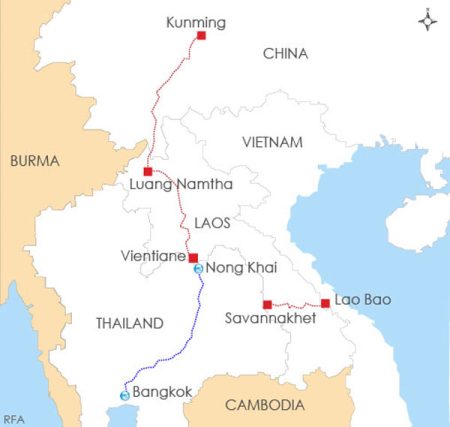
The railway project, estimated to cost anywhere up to $10 billion will not only enhance regional connectivity but profoundly reset the economic geography of Asia, given its massive potential for accelerating the increased integration between China and the ASEAN countries. People would be able to travel between Kunming and Bangkok by train for about $100, which is half to a third of the cost of an airline ticket. According to Xinhua, the railway is expected to bring two million more Chinese tourists to Thailand every year.
Washington is livid that its proxy, Move Forward led by a young man educated in the US and groomed to spearhead a colour revolution, has been banned. The Thai authorities understand that the western intention is to break up the ancient crust of their country’s polity, which is the only way to make inroads into what is otherwise a deeply Buddhist culture — specifically, to demolish the so-called lèse-majesté law protecting the institution of monarchy, an institution that dates back more than 700 years and is a pillar of stability in the country symbolising the unity of the Thai communities. By the way, Christian missionary work is active in both Thailand and Myanmar — as in next-door north-eastern region of India. And the evangelicals are an influential pressure group in the US politics.
The Thai authorities have shied away from confronting the US. Thai culture values serenity and avoids conflict and displays of anger. Even disagreements are to be handled with a smile, without assigning blame. Hence the circuitous route to squash Move Forward on legal grounds.
Move Forward won 151 seats in the 500 member parliament in the elections in May last year where sixty-seven parties contested, but was unable to form a coalition government after being functionally blocked by allies of the monarchy and military. Move Forward made the electoral pledge to abolish lèse-majesté law (which is tantamount to a crime.)
The US and its allies are furious but cannot do anything about the development. All the good work to stage a colour revolution in phases has come to naught. The exasperation shows in the statements from Washington and Canberra. (here and here)
However, all is not lost. The regime change in Bangladesh may open a new pathway for the western intervention in Myanmar. India and Thailand refused to back the western-backed rebels fighting the Myanmar military. Former Bangladesh Prime Minister Sheikh Hasina also stayed away from the power struggle in Myanmar. But that may change.
The Rohingya issue provides an alibi. The ascendance of Pakistani intelligence and the larger-than life role of the Jamaat-i-Islami will trigger an assertion of Bangladesh’s Muslim identity. The Pakistani army chief lost no time to underscore that the developments in Bangladesh underscore the raison d’être of the two-nation theory!
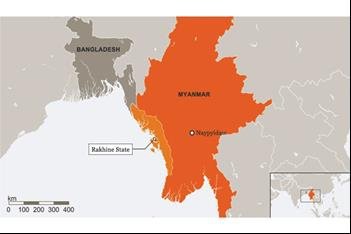
So, the regime change in Bangladesh may turn out to be a game changer for the West’s regime change agenda in Myanmar. On the other hand, at the secondary and tertiary level, any strengthening of the western-backed rebel alliance in Myanmar cannot but cast shadows on India’s northeast, which has a large Christian population with tribal affinities across the border.
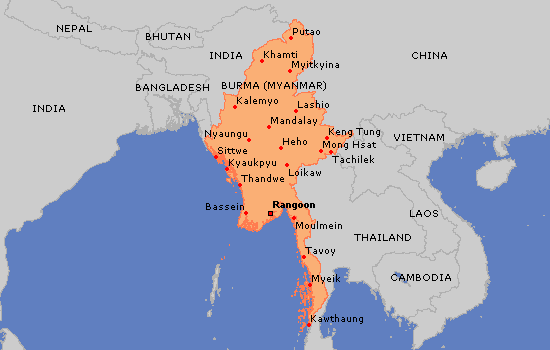
An awareness is lacking that any weakening of Thailand’s state structure or the dissipation of Thai culture rooted in Buddhist traditions will isolate India in the region’s civilisational tapestry. Indians tend to take an episodic view of current events in their immediate neighbourhood.
Prior to the rise of Theravada Buddhism, both Indian Brahminical religion and Mahayana Buddhism were present in Thailand, and influences from both these traditions can still be seen in present-day Thai folklore. A colour revolution in Thailand leading to western dominance and the eclipse of the Thai monarchy and Buddhist cosmology would have profound implications for South Asia.
Iran has no goal to accelerate cyber activities to influence US elections: UN mission
Press TV – August 9, 2024
Iran’s permanent mission to the United Nations says the country has no goal or interest in “cyber activities” to influence the 2024 US presidential election.
“Iran does not have any goal or a plan for a cyber attack and it does not interfere in the US elections which is an internal issue of this country,” the mission said on Friday.
It vehemently rejected a report released on Friday claiming that Microsoft has identified a series of actions by Iranian cyber actors aimed at influencing the upcoming US election. These include email phishing attacks, fake news sites, and impersonating activists.
“Iran has been a victim of various cyber offensive operations against the country’s infrastructures, public service centers and industries,” the mission said.
It emphasized that Iran’s cyber power is defensive and proportionate to the threats posed against the country.
Late in July, Iran’s mission to the UN dismissed allegations that Tehran intended to disrupt the election and negatively affect it in favor of Donald Trump, the Republican Party candidate.
The mission described a major part of such accusations as psychological operations to give false momentum to election campaigns.
Under the facile pretext of preventing Iran from obtaining nuclear weapons, the US and Mossad have been carrying out a campaign of sabotage and cyber attacks on Iran’s civilian nuclear program for quite some time.
One of the most well known cyber attacks utilized the notoriously malicious Stuxnet worm.
In 2011, Tehran announced that an investigation had concluded that both the United States and Israel were behind the Stuxnet attack.
Israeli sabotage attempts against Iran’s nuclear program have miserably failed despite the regime’s assassinations of Iranian nuclear scientists through unrelenting US support.
Mossad has assassinated Iranian nuclear scientists using methods ranging from magnetic mines attached to their cars and allegedly the use of a remote controlled robotic assassin.
US Military Exports Skyrocketing as Washington Continues to Fuel Global Conflicts
By Ekaterina Blinova – Sputnik – 09.08.2024
The US’ arms exports have risen dramatically since 2022 and may top $100 billion by the year’s end, according to the Pentagon.
In fiscal year (FY) 2022, sales through the US government’s Foreign Military Sales (FMS) system jumped to $49.7 billion from $34.8 billion in FY2021; in FY2023, this number rose again to around $66.2 billion.
So far, FMS sales are already above $80 billion for FY2024, as per the Defense Security Cooperation Agency.
Still, the total value of transferred weapons, services and security cooperation activities conducted under the Foreign Military Sales system in FY2023 was $80.9 billion, representing a 55.9% increase from a total of $51.9 billion in FY2022.
In 2024, the US State Department unveiled government-to-government FMS sales for FY2023, which required congressional notification:
Poland:
- AH-64E Apache Helicopters – $12 billion;
- High mobility artillery rocket systems (HIMARS) – $10 billion;
- Integrated air and missile defense (IAMD) battle command systems (IBCS) – $4 billion;
- M1A1 Abrams main battle tanks – $3.75 billion.
Germany:
- CH-47F Chinook helicopters – $8.5 billion;
- AIM-120C-8 advanced medium-range air-to-air missiles (AMRAAM) – $2.9 billion.
Norway:
- Defense articles and services related to the MH-60R multi-mission helicopters – $1 billion.
Czech Republic:
- F-35 aircraft and munitions – $5.62 billion.
Bulgaria:
- Stryker vehicles – $1.5 billion.
Australia:
- C-130J-30 aircraft – $6.35 billion.
Canada:
- P-8A aircraft – $5.9 billion.
South Korea:
- F-35 aircraft – $5.06 billion;
- CH-47F Chinook helicopters – $1.5 billion.
Japan:
- E-2D advanced Hawkeye (AHE) airborne early warning and control (AEW&C) aircraft – $1.381 billion.
Kuwait:
- National advanced surface-to-air missile system (NASAMS) medium range air defense systems (MRADS) – $3 billion;
- Follow-up technical support – $1.8 billion.
Qatar:
- Fixed site-low, slow, small unmanned aircraft system integrated defeat system (FS-LIDS) – $1 billion.
In addition to that, direct commercial sales (DCS) between foreign nations and US defense contractors jumped from $153.6 billion in FY2022 to $157.5 billion for FY2023. These sales included unspecified military hardware, services and technical data.
The US State Department provided a glimpse on what major DCS Congressional Notifications included in FY2023:
- Italy – For the manufacturing of F-35 wing assemblies and sub-assemblies – $2.8 billion;
- India – For the manufacturing of GE F414-INS6 engine hardware – $1.8 billion;
- Singapore – F100 propulsion system and spare parts – $1.2 billion;
- South Korea – F100 propulsion system and spare parts – $1.2 billion;
- Norway, Ukraine – National advanced surface to air missile systems (NASAMS) – $1.2 billion;
- Saudi Arabia – Patriot guided missile – $1 billion.
Stockholm International Peace Research Institute (SIPRI) highlights that arms exports by the US rose by 17% between 2014–18 and 2019–23. The US share of total global arms exports increased from 34% to 42%. Between 2019 and 2023, the US delivered major arms to 107 states, which was more than the next two biggest exporters combined, as per SIPRI.
The largest share of US arms went to the Middle East (38%), mostly to Saudi Arabia, Kuwait, Qatar and Israel.
US arms exports to states in Asia and Oceania increased by 14% between 2014–18 and 2019–23; 31% of all US arms exports in 2019–23 went to the region with Japan, South Korea and Australia being the largest buyers.
Europe purchased a total of 28% of US arms exports in 2019–23. US arms exports to the region increased by over 200% between the 2014–18 and 2019–23 periods. Ukraine accounted for 4.7% of all US arms exports and 17% of those to Europe.
The institute projects that the US will continue to ramp up military sales in 2024 and beyond, with the focus on combat aircraft, tanks and other armored vehicles, artillery, SAM systems and warships.
US enlists Cyprus, Jordan, Greece as ‘defensive platforms’ for Israel: Report
The Cradle | August 9, 2024
Washington has enlisted the island nation of Cyprus in its efforts to protect Israel from potential retaliations by Iran and Hezbollah to the recent Israeli attacks on Tehran and Beirut, Lebanese daily Al-Akhbar reported on 9 August.
A US military delegation visited Cyprus this week and held urgent meetings with Cypriot defense and intelligence officials.
“The delegation was accompanied by a logistical, military and security force carrying with it a large amount of equipment, weapons and modern air defense systems, in addition to helicopters,” Al-Akhbar wrote.
Cypriot officials said they had never seen such quantities of weapons before, the report went on to say.
According to the report, the US informed Cyprus that this equipment was “related to tensions in the region” and that the island would serve as “one of the interception platforms against expected attacks from Iran, Yemen and Hezbollah.”
It adds that the UK has reinforced its bases in Cyprus, and has sent experts and air defense equipment to the country.
The UK has two large military bases in Cyprus, which are British sovereign territory and make up 2.5 percent of the island’s area.
Germany has also reportedly expressed an intention to deploy naval forces to Cyprus and to assist in evacuations in case of a large-scale war.
“What further confused Cypriot authorities was the US request for joint military drills with American forces on the island’s land and seas … drills do not happen suddenly, but rather require a program that is prepared at least a year in advance, not 48 hours in advance,” Al-Akhbar said.
“Cypriot officials have been keen to communicate with … the axis of resistance, especially Hezbollah, to convey the message that what is happening ‘is happening against their will, and that they do not want to involve their country in any war.’ They expressed their fear that the island could become an arena for a confrontation with Iran, Hezbollah, and even Ansarallah.”
Yemen’s army and Ansarallah resistance movement is also preparing a response to the Israeli attack on Hodeidah port last month.
The Al-Akhbar report states that these messages are unlikely to change anything in the event of a wide-scale war, given that Cypriot authorities are also coordinating directly with Tel Aviv.
“Opening Cypriot airports and bases to the Israeli enemy to target Lebanon would mean that the Cypriot government is part of the war, and the resistance will deal with it as part of the war,” Hezbollah leader Hassan Nasrallah said in a speech in June, warning Cyprus against taking part in an expanded Israeli war on Lebanon.
Cyprus and Israel have stepped up military cooperation in recent years as part of a joint declaration signed in 2017 and have also carried out several joint military and naval exercises. In 2022, the two states carried out joint military exercises on the island nation’s territory. Cyprus denied Tel Aviv’s declaration at the time that the exercises were meant to simulate war inside Lebanon.
Hebrew newspaper Israel Hayom reported on 11 March this year that Israel is seeking to establish a port in the Cypriot city of Larnaca in case the port of Haifa is closed in a war with Hezbollah.
According to the Al-Akhbar report, Greece and Jordan are also deeply involved in Washington’s defensive plans for Israel.
In April, Jordan played a significant role in intercepting Iranian missiles and drones which targeted Israel in response to its destruction of the Iranian consulate in Damascus and the killing of several of its officials that month.
Israel killed Hamas chief Ismail Haniyeh in Tehran on 31 July, as he was visiting Iran as a diplomatic guest while attending the inauguration of the country’s new president. A day earlier, Israel killed a top Hezbollah commander in the Lebanese capital, targeting him in a residential building while killing several civilians, including children, in the process.
Hezbollah and Iran have both vowed severe retaliations to the illegal attacks.
US F-22s land in West Asia as Pentagon pledges to ‘defend Israel’
The Cradle | August 9, 2024
The US Air Force has deployed stealth F-22 Raptor jets to West Asia in a show of force to deter a retaliatory attack by Iran and its allies in the Axis of Resistance against Israel, Bloomberg reported on 9 August.
Iran and Hezbollah have promised to retaliate for Israel’s assassination of Hamas political chief Ismail Haniyeh in Tehran and Hezbollah commander Fuad Shukr in Beirut late last month.
US Central Command did not disclose how many jets have been deployed or from which airbase they will operate.
The US has airbases in several allied countries in the region, including Turkiye and Qatar.
US Defense Secretary Lloyd Austin stated on X that “the US F-22 Raptors that arrived in the region today represent one of many efforts to deter aggression, defend Israel and protect US forces in the region.” The post followed his phone call with Israeli Defense Minister Yoav Gallant.
The F-22 Raptor is the Pentagon’s premier fighter designed to down other aircraft, relying on stealth technology, sophisticated maneuvers, and the ability to hold up to eight short- and medium-range air-to-air missiles.
The F-22s send a powerful signal to Iran because “they can operate with impunity in Iranian airspace without Iran being aware,” retired Lieutenant General David Deptula claimed to Bloomberg.
“They can perform not just air-to-air operations but can surreptitiously conduct intelligence, surveillance, and reconnaissance operations and have the capacity to deliver bombs as well,” he added.
“This is the biggest crisis deployment of the F-22s” since they went operational in late 2005, according to Rebecca Grant, an airpower analyst with the Lexington Institute. “Deploying F-22s means this is serious, and there’s a chance of big force packages operating in multiple locations and with allies.”
Washington has been beefing up its presence in the region in anticipation of the Resistance Axis’s responses, which could potentially include Iraq’s resistance factions and Yemen’s Ansarallah movement.
Defense Secretary Lloyd Austin said the US would maintain the presence of the USS Abraham Lincoln aircraft carrier and ordered more ballistic missiles, defense-capable cruisers, and warships for the region.
After Israel’s killing of Haniyeh and Shukr, Iran’s Supreme Leader Ali Khamenei vowed a “harsh punishment” for Israel.
Hezbollah chief Hassan Nasrallah also warned Tel Aviv: “You do not know which red lines you have crossed.”
‘Targeted Harassment’: Scott Ritter Blasts Raid on His Home as US Government ‘Fishing Expedition’
Sputnik – 08.08.2024
Former USMC intelligence officer Scott Ritter’s home was raided Wednesday over allegations he had violated the Foreign Agents Registration Act (FARA), which requires anyone who acts on behalf of a foreign nation to register as such to the US government. However, individuals accused of such a violation are typically notified by letter, not a raid.
The recent raid carried out on the New York home of former UN weapons inspector Scott Ritter was another chapter in the US government’s harassment campaign against him and his family, he told Sputnik.
“It’s a fishing expedition. It’s harassment,” Ritter told Radio Sputnik’s Critical Hour on Thursday, noting that the US government’s end goal is to discredit him in the eyes of the public as he continually works to shed light on US policy.
Within the more than two dozen boxes that were carried out of Ritter’s home were documents that substantiated his findings that Iraq never had weapons of mass destruction, a key claim that encouraged the US to undertake its invasion of the Middle Eastern nation in 2003.
“This is the archive that backs up my allegations, my assertions that Iraq didn’t have weapons of mass destruction, that the US policies … that accused Iraq of such were premised on a lie. It’s an archive that I was relying upon to write a book that’s in draft form right now, and they seized that archive,” Ritter told show hosts Dr. Wilmer Leon and Garland Nixon, adding that the confiscation of those documents were out of the scope of the search warrant.
“This is not about FARA. It literally isn’t. This is targeted harassment. This is a frontal assault on free speech and free press.”
Touching on how the legal system has outlined that sharing a viewpoint with a foreign government does not equate the status of foreign agent, Ritter recalled he had told one of the agents on the scene that his “main premise is stopping a nuclear war” and less about throwing his support behind another government.
“My main premise is to, you know, support diplomacy over militarism, to promote dialogue instead of confrontation, you know, and to promote arms control instead of an arms race,” he said. “If this is a crime in America, then convict me and throw the key away. But it’s not.”
Having acted as a journalist for some 20 years now, Ritter has published works in numerous publications that include the Washington Post and the New York Times. Ritter told Nixon that he’s no different than any other journalist being paid for their work.
“But they’re trying to twist this into somehow saying that I am in the employ of the Russian government, and that I am acting on instructions from the Russian government. The good news is that nothing they seized will back up these assertions. The bad news is I don’t think it matters,” he said.
“They kept saying you’re trying to shape the opinion of the American people. You’re damn right I’m trying to shape the opinion of the American people. Everybody engaged in journalism is doing this. This is what you’re supposed to do to empower people with knowledge and information, fact-based knowledge and information so they can make their own decisions. The most dangerous thing in a democracy like America is a knowledgeable citizen, a citizen empowered with information to make an informed, you know, choice on election day, not dumb sheep being herded down the path.”
“This is harassment designed to silence me. It’s designed to intimidate me. And for everybody listening, understand this is a frontal assault on the Constitution of the United States,” Ritter stressed. “A frontal assault on free speech. A frontal assault on the free press.”
“Free speech isn’t free if when you execute your right to speak freely, you get raided by the FBI. And a free press cannot exist if, carrying out your journalistic duties, you are accused because of the position you take of, you know, working for an entity because these positions have to clash with the official policy objectives of the United States.”
Asked if the raid was tied to the June seizure of his passport or a recent event he attended in New York to discuss his latest work and efforts to encourage an ease of tension between the US and Russia, the former intelligence officer admitted “they’re all connected.”
Ritter detailed he had planned additional trips to Russia later this year that would help to gain information that would help “empower the American audience about, you know, the reality of Russia and the danger of American policy.”
“The United States government did not want any of these trips to happen. They seized my passport and now they’re just extending the harassment,” he said. “They fear what I’m doing, and they fear what we are doing and this is what happens when governments get afraid of their own citizens. Citizens who, again, I remind everybody, are simply executing their rights of free speech and, as a journalist, my participation in the free press.”
“I never want to be a foreign agent. I’m not acting as one and I don’t want to act as one. I will never represent another country. I represent America, only America,” he continued. “I believe in the potential of my country to be that which we, you know, purport to be, what we want to be, and I recognize that we’re not there and one of the reasons we’re not there is because of the policies of my government.”
“And, therefore, as an American citizen, it is my duty to speak out and shine a light on where I think my government is going wrong so that we, the people, can take corrective action and get the government back on track because the government serves us, we don’t serve the government.”
Syrian army shells US proxies in Deir Ezzor as tribal uprising continues
The Cradle | August 8, 2024
Syrian army troops shelled positions of the US-backed Syrian Democratic Forces (SDF) on 8 August, responding to attacks from the Kurdish militia on its territory in the countryside of the eastern governorate of Deir Ezzor.
The Syrian Arab Army (SAA) shelled SDF positions in Al-Busayrah city and the towns of Al-Sabha, Bariha, Jadid Bakara, and Al-Dahla in Deir Ezzor’s eastern countryside, Al Mayadeen reported on Thursday.
The SDF’s media center announced on 8 August that its militants targeted the Syrian army and allied forces in the Al-Zubari and Sa’lu villages of the Deir Ezzor countryside with artillery and mortar shells.
“The SDF artillery strikes came with support and cover from the US,” Al Mayadeen reported.
One day earlier, the SDF accused Hossam Louqa, head of the Syrian government’s General Intelligence Service, of orchestrating Wednesday’s large-scale tribal assault on the SDF in the Deir Ezzor countryside.
“Hussam Louqa was the one who ordered and planned the attack on the areas controlled by SDF in the Deir Ezzor countryside … the attacks failed to achieve their goals,” Washington’s Kurdish proxy said in a statement on 7 August.
SDF forces continued “search operations in the towns of Abu Hamam, Dhiban, and Gharanij in the eastern countryside of Deir Ezzor,” and were able “to regain control of some sites on the bed of the Euphrates River,” the statement added.
A coalition of Syrian Arab tribes, dubbed the Army of Tribes, seized several towns from the SDF in the countryside of eastern Syria’s Deir Ezzor governorate on 7 August.
Tribesmen launched the “largest” attack on SDF sites since the start of the Arab tribal rebellion against the US-backed militia last year, Sputnik reported.
The Arab tribal forces reached the vicinity of the US base in the Al-Omar oilfield in the Deir Ezzor countryside.
US army helicopters intervened and opened fire at the tribesmen, Al Mayadeen reported on Wednesday.
Arab tribes launched their rebellion against the SDF in late August last year, with fierce clashes raging for several weeks afterward.
Despite brief instances of de-escalation, tensions and armed clashes between the two sides have remained ongoing. At the time, it was said that the tribal forces were coordinating with and receiving military aid and training from the Syrian army.
Fighting was ongoing in the Deir Ezzor countryside on 8 August following the massive tribal assault the day before. Yet Al Mayadeen reported on Thursday that the clashes were “less intense.”
It added that the SDF has deployed large numbers of reinforcements and has maintained its supply lines, noting a “power imbalance” between the two sides in favor of the Kurdish militia.
Sources told the outlet on Thursday that the goal of the tribal assault “is not territorial control but to affirm the tribes’ rejection of the SDF and US forces’ presence in the area, their control over oil and gas, and their influence on civil and military decisions.”
Why The Zionist Entity Decided To Take The Risk Of Regional War?
By Robert Inlakesh | Al Mayadeen | August 8, 2024
Despite the Israeli-US alliance pulling off two high-profile assassinations within hours and posed as if they are ready for an all-out war, it is clear that they could only handle a regional conflagration which would quickly end in a stalemate. If this escalation goes the wrong way, however, there are only two options left for them, and both are terrible.
The Zionist Entity was faced with a choice, after failing to reach victory in Gaza: either end the war or escalate. It was clear from Israeli Prime Minister Benjamin Netanyahu’s address to the US Congress that the leader of the Entity was bent on escalation and that he would receive bipartisan support in the United States for carrying out actions designed to achieve the desired goal.
Finding their justification in the massacre of 12 Syrian-Druze children in the occupied Golan Heights, quickly jumping to accuse Hezbollah, the Israeli military launched their attack on a multi-story building in southern Beirut. While the Zionists attempted to use the blood of the indigenous people of the Golan, living in Majdal Shams, for their own propaganda purposes, the people refused to allow them and blamed the Zionists for the massacre in their village, as Hezbollah vehemently denied any involvement.
The timing of the massacre came at a convenient time for the Zionist Regime, as the Israeli PM was at the tail end of his trip to the United States. Shortly afterward, the Israelis murdered seven Lebanese and injured around 80 in their attack on the southern suburbs of Beirut. The primary target was Hezbollah military leader Fouad Shokor, who was martyred along with three children and two women on Tuesday, July 30. Then, just hours later, the Hamas political leader Ismail Haniyeh was assassinated in the Iranian capital, Tehran.
None of this is by accident and the suggestion that the United States was not involved is simply ludicrous.
What Is The US-Israeli Strategy?
An all-out regional war will result in the annihilation of the Zionist Entity, for even with direct US involvement, the Zionists still can’t win. Even if we assume that nuclear weapons might be used, the firepower of the Resistance is such that the Israelis would experience a similar blow from the sheer scale of missile power directed toward them.
Knowing that victory is not possible, it appears evident, therefore, that strategies are in place to prevent a war from reaching its inevitable conclusion. The Israelis and Americans are frustrated by their devastating failures since the Hamas-led October 7 attack, whether it be in the inability of the Zionist military to secure a victory against the Palestinian Resistance in Gaza, or the US’ embarrassing defeat at the hands of Yemen’s Ansar Allah. The blows dealt to the Zionist Entity, in the security, military, political, societal, and economic spheres, are so great that it is unclear how they can ever recover.
Faced with such a predicament, the US-Israeli alliance had two options, either accept the strategic defeat and pursue a diplomatic solution to the chaos they have wrought over the past 10 months, or, escalate. The assassinations in Beirut and Tehran indicate they chose escalation.
The Israelis themselves have conducted two major war games over the past years, testing the capabilities of the Zionist military to fight a multi-front war, losing both times. Keep in mind that these military exercises were also conducted while assuming that the full strength of the Israeli military would be intact. At this time, the Zionist army is stretched thin, it is undertrained, overworked, and suffers from a lack of motivation and discipline. Additionally, it has lost many of its tanks and armored personnel carriers, as thousands have been damaged and destroyed in Gaza.
It suffices to say that Israel does not possess the capacity to fight the war it is pursuing, which is why the assassinations came as such a shock to many. However, as I have previously written here for Al Mayadeen, the Israelis had one last option left to prolong the war and the strategy is as follows:
Open up a war with Lebanon, but attempt to keep it limited to trade off blows and close the conflict with a stalemate. A war with Hezbollah will bring great carnage to Israeli infrastructure and result in scores of dead Israelis, thereby distracting the population from the war in the Gaza Strip. This would create an environment that could enable the Israeli prime minister to close a ceasefire deal with Hamas in Gaza. From there, the Zionist regime could then pivot to the West Bank, annexing around 60% of its territory and launching a military operation – similar to “Operation Defensive Shield” in 2002 – to murder the majority of the Resistance fighters there.
Under such a scenario, Benjamin Netanyahu will use the assassinations of Resistance leaders as trophies to brag about a supposed victory, while presenting the argument that his regime confronted an existential threat from multiple foes and survived. He will then use the land grab in the West Bank as proof of conquest and the killing of Resistance fighters there as a “security” achievement. This situation is what both the US and their Israeli allies see as the best-case scenario.
However, the situation could quickly spiral out of control and the damage done to the Zionist Entity could prove so great that it remains only a shell of itself if it manages to survive at all. It is a dangerous strategy, to say the very least, and although they may see it as a bold attempt to restore US-Israeli hegemony in West Asia, it also projects weakness and a lack of options. Such a risk, which could result in the end of the Zionist Entity, would only be taken if their backs were against the wall.
If this goes sideways for the Zionists, then they will likely have two options left. The first will be the infamous Samson Option, to use their nuclear weapons. The second could involve the deployment of regional forces into occupied Palestine to prevent the fall of the Zionist Entity.
The first option needs no further explanation; it is pure terror. The second has not been publicly discussed as of now but could also be implemented if it looks like the Israeli regime is about to collapse on the ground and Palestinian territory is close to liberation. If such an event occurs, it is plausible that the Jordanian and Egyptian armies could be deployed into occupied Palestine, in order to prevent the land from being taken over by Resistance fighters who are less likely to engage regional armies, this would also likely involve the presence of the Turkish armed forces who could potentially be deployed as well. Although there is no evidence to support this theory, it might be seen as the only way to de-escalate the situation if the Zionist Entity is on the brink of disintegration.
Regardless, the Zionists have gambled, and only time will tell how this will turn out.
Hunter Biden Received ‘Millions’ of Dollars From Romania to Influence US Government – Court
Sputnik – 08.08.2024
Hunter Biden, the son of US President Joe Biden, has received millions of dollars from a Romanian entrepreneur in order to influence the US government during his father’s vice presidency, court filings have revealed.
US Department of Justice Special Counsel David Weiss’s office found that Biden received “substantial” sums of money from foreign firms and individuals in exchange for acting as a lobbyist, consultant, or legal adviser.
“With respect to his first topic, ‘allegations that Mr. Biden (1) acted on behalf of a foreign principal to influence U.S. policy and public opinion,’ the defendant did receive compensation from a foreign principal to attempt to influence U.S. policy and public opinion, as alleged in the indictment, and this evidence is relevant and not unfairly prejudicial,” the Wednesday filing read.
Hunter Biden worked for Romanian businessman Gabriel Popoviciu (referred to as G.P. in the document) to help him escape bribery charges in Romania, Weiss’s office also revealed.
“The evidence of what the defendant agreed to do and did do for G.P. demonstrates the defendant’s state of mind and intent during the relevant tax years charged in the indictment. It is also evidence that the defendants actions do not reflect someone with a diminished capacity, given that he agreed to attempt to influence U.S. public policy and receive millions of dollars,” the document said.
In November 2023, House Republicans subpoenaed the president’s brother James Biden and Hunter Biden to appear for a deposition before lawmakers. In May, Smith said that Hunter Biden had repeatedly lied to Congress in his February deposition to distance his involvement in what should be considered a “clear scheme to enrich the Biden family.”
The House of Representatives is investigating the Biden family for alleged criminal activity, including foreign influence peddling and bribery.
Featured Video

10K More U.S. Troops Deploy as Trump Weighs New Iran Strikes
or go to
Aletho News Archives – Video-Images
From the Archives
Genetic baloney in thick slices
MAYBE COULD BE INC.
By Jon Rappoport | No More Fake News | July 8, 2021
Gene research companies tend to come and go. They start out banging and popping like fireworks in the sky, and then they fade out—selling themselves to larger outfits who’ve hired better liars…
Once upon a time, it sounded easy. Start with a disease, find the gene responsible for the disease, and correct the problem.
Then, researchers wondered, was disease the result of one gene or a group of genes acting together?
Either way, the proof would be in devising cures for diseases using gene therapy. “Not yet, but soon…”
And regardless, the major need was: money. Lots and lots of money.
This need required good PR people. “We have to pump up the idea that we’re on the edge of tremendous breakthroughs. We’re always on that edge…”
This hype also needed to obscure the fact that there wasn’t (and isn’t) ANY gene cure for ANY disease. … continue
Blog Roll
 Aletho News
- UK Government Body Kept Files on People Criticizing Prevent Program
- US military withdrawal from Iraq and the collapse of US-Israeli hegemonic project in West Asia
- What does Europe want – a war with Russia?
- She Followed the Actual Data on COVID Vaccines and Masks — Her Career Took a Huge Hit
- Florida AG Sues Pfizer, Bourla Over Deceptive Marketing of COVID Vaccines
- Von der Leyen gifts her spin doctor a job for life
- 10K More U.S. Troops Deploy as Trump Weighs New Iran Strikes /Suliaman Ahmed
- Iranian crew declared Dena training vessel ‘unarmed’ to US warship before deadly torpedo strike: Report
- Iran’s NPT debate moves beyond parliament
- Houthis condemn Saudi claims of attack on Medina
- If Americans Knew
- Israel is squeezing the life out of Palestinians – Daily Update
- The Israeli Right Portrays Islam as Murderous. It Serves a Political Purpose
- Jordan Has Had Enough: King Abdullah’s Scathing Warning to Israel
- Israeli Colonizers (i.e. Settlers) Kill Palestinian Man Near Salfit
- New Google Maps images reveal massive scale of devastation in Gaza
- Jewish supremacy, anti-Palestinian bigotry on display in Israel – Daily Update
- Israeli Soldiers Abduct At Least 22 Across Occupied West Bank
- Eight Palestinians Killed in Israeli Attacks on Gaza
- Israeli former leaders and security chiefs threaten legal action over ‘Jewish terrorism’
- Israel map in LA Times ad includes all land from the river to the sea
- No Tricks Zone
- Green Energy Debacle: German Expert Professor Fritz Vahrenholt Warns Of Severe Economic And Social Consequences
- Two More Paleo Reconstructions Affirm Meters-Higher Sea Levels Across Ireland, Brazil 7000-6000 Years Ago
- New Study: Earth And Venus Surface Warmth Largely Explained By Convection And Lapse Rate, Not CO2 Or Radiation
- 2025 Nature Paper Claiming Worsening Global Drought Gets RETRACTED …Heavily Flawed
- New Study: ‘Global Drought Shows No Detectable Recent Acceleration Under Climate Warming’
- Economic Masterminds: German Socialists Suggest Taxing Productivity Gains Stemming From Using AI
- The South China Sea Has Not Been Cooperating With The Climate Change Narrative
- Energy Crisis: Germany Enters Heating Season With Historically Low Gas Reserve Fill Levels
- New Study: The Antarctic Ice Sheet Gained Mass From 2020-2024 Due To Staggering Snow And Ice Accumulation
- Study: Ocean Heating Rates From Thousands Of Years Ago ‘Dwarf’ Modern Ocean Heating Rates

