SCOTUS ruling is about protecting the institution of the presidency
Sky News Australia | July 5, 2024
Lawyer Robert Barnes says the SCOTUS ruling is now the “only thing” preventing former presidents from being extradited to foreign countries to be prosecuted.
“Without it, you know, someone unhappy with Joe Biden’s policies, unhappy with Barack Obama’s policies, unhappy with George W. Bush or Bill Clinton’s policies, all of them could seek the extradition of someone over something that was done by the US military or the US government overseas,” he told Sky News Australia host James Morrow.
“This protects all of them, and primarily cares about protecting the institution of the presidency.”
What Will Iran’s Foreign Policy Be Under New President Pezeshkian?
Sputnik – 06.07.2024
Masoud Pezeshkian has emerged as the winner of the presidential runoff in Iran this week, receiving 54 percent of the votes.
The newly elected President of Iran Masoud Pezeshkian spoke to Sputnik on the eve of the election about the main priorities of Iran’s foreign policy, which include: strengthening relations with Russia and China; Iran’s active presence in BRICS and the Shanghai Cooperation Organisation; restoration of the Joint Comprehensive Plan of Action (JCPOA) and the lifting of sanctions.
“Russia is a friend and partner of Iran, and I consider it a priority to deepen and expand relations with Russia and China, as well as intensify foreign policy activities in the Asian direction in general,” Pezeshkian said. “And we, of course, at all levels – bilateral, regional and international – will continue our efforts to expand interaction with the Russian Federation.”
According to him, Iran “opposes the policy of unidirectionality” and supports “the principle of multipolarity.”
“One of the priorities of my foreign policy program is regional cooperation, and for this purpose, Iran will expand its presence in BRICS and the SCO, as well as strive for more active cooperation with the Eurasian Economic Union to more fully realize the potential of trade and economic relations with the member countries of these organizations,” Pezeshkian explained.
Regarding the JCPOA, Pezeshkian pointed out that it is “an international agreement approved by the UN,” and that the United States’ unilateral withdrawal from this agreement “caused serious damage to Iran and the Iranian people.”
“As the Russian side has repeatedly emphasized, Iran has fulfilled its obligations, and we see our task as returning the other participants to this agreement as soon as possible and achieving the lifting of sanctions. I am confident that the friendly governments of Russia and China will support Iran and assist it in resolving this issue,” he added.
US scraps military drills with Georgia
RT | July 6, 2024
The US has suspended this year’s ‘Noble Partner’ military exercise with Georgia due to a “comprehensive review” of bilateral relations by Washington. The maneuvers, which have previously involved troops from multiple NATO member states, had been held annually since 2015.
In early June, the legislation – officially known as the Transparency of Foreign Influence Act – came into force, after the ruling Georgian Dream party overrode a veto by President Salome Zourabichvili. The law requires NGOs, media outlets and individuals which receive more than 20% of their funding from abroad to register as entities “promoting the interests of a foreign power” and disclose their donors. Failure to comply will result in a fine of up to $9,500.
Opponents of the bill, who denounce it as an attack on democracy, have held multiple protests. Prime Minister Irakli Kobakhidze insists the legislation is similar to laws in several Western nations, and is meant to improve transparency.
The adoption of the law drew condemnation from the US and European Union. Washington has announced plans to restrict visas for Georgian politicians who supported the legislation.
In a press release on Friday, the US Department of Defense announced that the “United States will indefinitely postpone this iteration of exercise NOBLE PARTNER in Georgia, originally scheduled for July 25 – August 6, 2024.”
According to the statement, the decision was made “due to the Georgian government’s false accusations against the United States and other western entities.” The Pentagon cited several remarks made by Prime Minister Kobakhidze in recent months.
In early May, the official claimed that “two revolution attempts of 2020-2023 [were] supported by the former US ambassador.”
Later that month, he doubled down on the accusations, saying that “Georgian-American relations need to be reconsidered.”
Speaking to Georgia’s Channel 1 around the same time, Kobakhidze alleged that “some people want muddy water here… people want a second front [against Russia]. We don’t want a second front.”
In light of those allegations, “the United States Government has determined that this is an inappropriate time to hold a large-scale military exercise in Georgia,” the Pentagon’s press release concluded.
Commenting on the adoption of the ‘foreign agent’ law in Georgia in early June, US State Department spokesman Matthew Miller warned that the developments “fundamentally alter the US relationship with” the South Caucasus nation, which has long been seeking to join the EU and NATO. The official stressed that Washington “would not hesitate to impose” sanctions on Tbilisi.
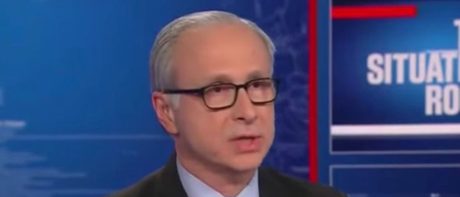
Former FBI and Twitter Lawyer Jim Baker Joins Election Task Force Advocating for Social Media Censorship
By Didi Rankovic | Reclaim The Net | July 5, 2024
From presidential election to another election, to Covid – to another election. That is how members of particular, mostly flying-under-the-radar power centers in the US have been moving over the last decades.
From time to time, however, circumstances demand that they show their faces: one is James “Jim” Baker, a former FBI lawyer whose “censorship portfolio” includes the infamous case of endorsing the Hunter Biden laptop story suppression – while he was on Twitter’s payroll.
And while there – Baker also wanted to know how come President Trump was not censored for a post saying – “Don’t fear Covid.”
Well, Baker also seems to be staying true to himself – unfortunately, his “truth” appears to be to never miss the chance to support the wrong thing (the “RussiaGate” saga happens to be among them). Right now, he has joined something called “the National Task Force on Election Crises.”
It’s a crisis, alright. A crisis of online censorship that can, and does, produce multiple “election” crises and a rapid erosion of trust in legacy media and political institutions.
The group’s parent operation is the Protect Democracy Project.
There’s nothing particularly innovative about the group’s lobbying talking points: remove or downgrade “election misinformation” and make sure removing and labeling content (as false) is done ASAP by social and news media (time is clearly of the essence, at this point…)
As for the electoral process itself – which ended up highly and even dangerously contested perhaps for the first time in US democratic history in 2020 – the group Baker is now affiliated with seems to want the reasons by and large leading to that to remain intact.
Namely, things like “(preventing) cyber or other attacks by foreign adversaries or domestic disrupters, promot(ing) pre-canvassing of absentee ballots” – and working to discourage legal challenges to the election process.
Looks like Baker might be just the right man for the wrong job.
The Supreme Court’s Superb Dissenting Opinion
At least three justices understand what is at stake here
By Aaron Kheriaty, MD | Human Flourishing | July 5, 2024
Three justices of the Supreme Court actually read and understood the record in our case. Justice Alito, joined by Gorsuch and Thomas, wrote an important dissenting opinion. I’d like to share a few highlights here, as it provides a roadmap to ultimately prevailing in our case.
The three dissenting justices clearly recognize that we the plaintiffs were victims of the government’s unconstitutional censorship activities:
Among these victims were two States, whose public health officials were hampered in their ability to share their expertise with state residents; distinguished professors of medicine at Stanford and Harvard; a professor of psychiatry at the University of California, Irvine School of Medicine; the owner and operator of a news website; and Jill Hines, the director of a consumer and human rights advocacy organization. All these victims simply wanted to speak out on a question of the utmost public importance.
Echoing the district court and circuit court opinions, the dissenting justices indicate the landmark importance of this free speech case:
If the lower courts’ assessment of the voluminous record is correct, this is one of the most important free speech cases to reach this Court in years. Freedom of speech serves many valuable purposes, but its most important role is protection of speech that is essential to democratic self-government, and speech that advances humanity’s store of knowledge, thought, and expression in fields such as science, medicine, history, the social sciences, philosophy, and the arts.
Unlike the majority opinion, which took the government’s claim to be combating “misinformation” at face value, the dissenting opinion recognized that much of the speech that the government suppressed was true:
The speech at issue falls squarely into those categories. It concerns the COVID–19 virus, which has killed more than a million Americans. Our country’s response to the COVID–19 pandemic was and remains a matter of enormous medical, social, political, geopolitical, and economic importance, and our dedication to a free marketplace of ideas demands that dissenting views on such matters be allowed. I assume that a fair portion of what social media users had to say about COVID–19 and the pandemic was of little lasting value. Some was undoubtedly untrue or misleading, and some may have been downright dangerous. But we now know that valuable speech was also suppressed. That is what inevitably happens when entry to the marketplace of ideas is restricted.
The majority opinion suggested, without evidence, that our censorship was the result of the actions of social media platforms, who may have censored us even in the absence of government coercion. The dissenting opinion explains the flaws with this unwarranted assumption:
Of course, purely private entities like newspapers are not subject to the First Amendment, and as a result, they may publish or decline to publish whatever they wish. But government officials may not coerce private entities to suppress speech, see National Rifle Association of America v. Vullo, 602 U. S. 175 (2024), and that is what happened in this case.
The record before us is vast. It contains evidence of communications between many different government actors and a variety of internet platforms, as well as evidence regarding the effects of those interactions on the seven different plaintiffs.
Alito focuses on Facebook and co-plaintiff Jill Hines as the clearest example (though by no means the only example) to illustrate the nature of the problem:
Here is what the record plainly shows. For months in 2021 and 2022, a coterie of officials at the highest levels of the Federal Government continuously harried and implicitly threatened Facebook with potentially crippling consequences if it did not comply with their wishes about the suppression of certain COVID–19-related speech. Not surprisingly, Facebook repeatedly yielded. As a result Hines was indisputably injured, and due to the officials’ continuing efforts, she was threatened with more of the same when she brought suit. These past and threatened future injuries were caused by and traceable to censorship that the officials coerced, and the injunctive relief she sought was an available and suitable remedy.
It’s hard to know how much more harm the Supreme Court would need to see before agreeing that at least one of the plaintiffs has standing. These examples could be multiplied. By refusing to examine the record and rule on the merits, Alito suggests that the Court actually provides a roadmap for future government censorship efforts:
This evidence was more than sufficient to establish Hines’s standing to sue, and consequently, we are obligated to tackle the free speech issue that the case presents. The Court, however, shirks that duty and thus permits the successful campaign of coercion in this case to stand as an attractive model for future officials who want to control what the people say, hear, and think.
That is regrettable. What the officials did in this case was more subtle than the ham-handed censorship found to be unconstitutional in Vullo, but it was no less coercive. And because of the perpetrators’ high positions, it was even more dangerous. It was blatantly unconstitutional, and the country may come to regret the Court’s failure to say so. Officials who read today’s decision together with Vullo will get the message. If a coercive campaign is carried out with enough sophistication, it may get by. That is not a message this Court should send.
Alito then echoes arguments I published in The Federalist following oral arguments, regarding the key differences between newspapers and social media companies in terms of their interactions with government:
Internet platforms, although rich and powerful, are at the same time far more vulnerable to Government pressure than other news sources. If a President dislikes a particular newspaper, he (fortunately) lacks the ability to put the paper out of business. But for Facebook and many other social media platforms, the situation is fundamentally different. They are critically dependent on the protection provided by §230 of the Communications Decency Act of 1996, 47 U. S. C. §230, which shields them from civil liability for content they spread. They are vulnerable to antitrust actions; indeed, Facebook CEO Mark Zuckerberg has described a potential antitrust lawsuit as an “existential” threat to his company. And because their substantial overseas operations may be subjected to tough regulation in the European Union and other foreign jurisdictions, they rely on the Federal Government’s diplomatic efforts to protect their interests.
This dynamic sets social media companies up to be vulnerable to government coercion, in precisely the way we argued before the Court:
For these and other reasons, internet platforms have a powerful incentive to please important federal officials, and the record in this case shows that high-ranking officials skillfully exploited Facebook’s vulnerability. When Facebook did not heed their requests as quickly or as fully as the officials wanted, the platform was publicly accused of “killing people” and subtly threatened with retaliation.
Not surprisingly these efforts bore fruit. Facebook adopted new rules that better conformed to the officials’ wishes, and many users who expressed disapproved views about the pandemic or COVID–19 vaccines were “deplatformed” or otherwise injured.
Alito perfectly describes how this abusive Stockholm Syndrome dynamic played out between Facebook and the White House:
What these events show is that top federal officials continuously and persistently hectored Facebook to crack down on what the officials saw as unhelpful social media posts, including not only posts that they thought were false or misleading but also stories that they did not claim to be literally false but nevertheless wanted obscured. And Facebook’s reactions to these efforts were not what one would expect from an independent news source or a journalistic entity dedicated to holding the Government accountable for its actions. Instead, Facebook’s responses resembled that of a subservient entity determined to stay in the good graces of a powerful taskmaster. Facebook told White House officials that it would “work . . . to gain your trust.” When criticized, Facebook representatives whimpered that they “thought we were doing a better job” but promised to do more going forward. They pleaded to know how they could “get back to a good place” with the White House. And when denounced as “killing people,” Facebook responded by expressing a desire to “work together collaboratively” with its accuser. The picture is clear.
Here we have a major social media platform responding as though they are entirely subservient to government interests. The more they try to please the government by ramping up censorship, the more abusive and demanding the government becomes.
To the dubious claim that plaintiffs cannot allege potential future injuries because—on their word—the White House has backed off the social media companies, Alito (in contrast to the majority opinion) calls the government’s bluff:
The White House threats did not come with expiration dates, and it would be silly to assume that the threats lost their force merely because White House officials opted not to renew them on a regular basis.
As Alito later quips, “death threats can be very effective even if they are not delivered every day.”
Drawing an analogy to another free speech case (Vullo) that was heard on the same day as ours, Alito explains:
In Vullo, the alleged conduct was blunt. The head of the state commission with regulatory authority over insurance companies allegedly told executives at Lloyd’s directly and in no uncertain terms that she would be “‘less interested’” in punishing the company’s regulatory infractions if it ceased doing business with the National Rifle Association. The federal officials’ conduct here [in Murthy] was more subtle and sophisticated. The message was delivered piecemeal by various officials over a period of time in the form of aggressive questions, complaints, insistent requests, demands, and thinly veiled threats of potentially fatal reprisals. But the message was unmistakable, and it was duly received.
The Supreme Court majority was ready to knock down ham-fisted censorship (in Vullo) but gave a pass—at least for now—to sophisticated and debonair censorship (in Murthy).
The government’s defense of its behavior included the argument that it had the right to use the bully pulpit to “persuade” social media companies to do its bidding—”the government has free speech rights, too, don’t you see?” Alito sees right through this ruse:
This argument introduces a new understanding of the term “bully pulpit,” which was coined by President Theodore Roosevelt to denote a President’s excellent (i.e, “bully”) position (i.e., his “pulpit”) to persuade the public. But [Rob] Flaherty, [Andy] Slavitt, and other [White House] officials who emailed and telephoned Facebook were not speaking to the public from a figurative pulpit. On the contrary, they were engaged in a covert scheme of censorship that came to light only after the plaintiffs demanded their emails in discovery and a congressional Committee obtained them by subpoena. If these communications represented the exercise of the bully pulpit, then everything that top federal officials say behind closed doors to any private citizen must also represent the exercise of the President’s bully pulpit. That stretches the concept beyond the breaking point.
In any event, the Government is hard-pressed to find any prior example of the use of the bully pulpit to threaten censorship of private speech.
To repeat what I have said many times before: this case is not about constraining the government’s speech—as they falsely claim; it’s about stopping the government from constraining the speech of U.S. citizens.
The dissenting justices argue that the majority opinion applies a “new and heightened standard” of traceability in our case (p.20). Alito explains, again using the case of co-plaintiff Jill Hines, that she clearly has standing to bring the case (and we only need one plaintiff with standing to prevail):
Here, it is reasonable to infer (indeed, the inference leaps out from the record) that the efforts of the federal officials affected at least some of Facebook’s decisions to censor Hines. All of Facebook’s demotion, content-removal, and deplatforming decisions are governed by its policies. So when the White House pressured Facebook to amend some of the policies related to speech in which Hines engaged, those amendments necessarily impacted some of Facebook’s censorship decisions. Nothing more is needed. What the Court seems to want are a series of ironclad links—from a particular coercive communication to a particular change in Facebook’s rules or practice and then to a particular adverse action against Hines. No such chain was required in the Department of Commerce case, and neither should one be demanded here.
Furthermore, the Court’s majority opinion developed a novel, higher standard of repressibility of potential future harms to avoid ruling on the merits of our case:
As with traceability, the Court applies a new and elevated standard for redressability, which has never required plaintiffs to be “certain” that a court order would prevent future harm.
Having established that the Court should have found that we have standing, Alito proceeds to analyze the record on the merits, using the following legal framework:
The principle recognized in Bantam Books and Vullo requires a court to distinguish between permissible persuasion and unconstitutional coercion, and in Vullo, we looked to three leading factors that are helpful in making that determination: (1) the authority of the government officialswho are alleged to have engaged in coercion, (2) the natureof statements made by those officials, and (3) the reactions of the third party alleged to have been coerced. 602 U. S., at 189–190, and n. 4, 191–194. In this case, all three factors point to coercion.
Although the government tries to spin their interactions with social media platforms as fairly benign, examination of the record in this regard leaves no doubt: “The totality of this record—constant haranguing, dozens of demands for compliance, and references to potential consequences—evince ‘a scheme of state censorship.’” Lest there be any doubt in this regard, “Facebook’s responses to the officials’ persistent inquiries, criticisms, and threats show that the platform perceived the statements as something more than mere recommendations.” Alito concludes, “In sum, the officials wielded potent authority. Their communications with Facebook were virtual demands. And Facebook’s quavering responses to those demands show that it felt a strong need to yield.”
From here we return to the District Court in Louisiana for trial, where we have an excellent judge (Terry Doughty). We will be granted additional discovery, in which we anticipate getting enough additional “smoking guns” to cross the high standing bar set by the majority Supreme Court opinion. The District court has combined our case with an analogous case filed by Robert F. Kennedy, Jr., who is clearly named and targeted in several government censorship missives—so between Hines and Kennedy there should be no questions on the issue of standing, even under the novel and strict criteria that SCOTUS requires in this case.
In other words, we will prevail in the end. I anticipate being back at the Supreme Court in another year or two for the final ruling. At that point, SCOTUS will not be able to temporize or look away as they did this time. And when judges examine the record in our case, they have only reached one conclusion: the government engaged in unconstitutional censorship on a mass scale. And it has to stop.
Advertiser Alliance Members Are Called To Testify After Allegations of Efforts To “Demonetize, and Censor Disfavored Viewpoints”
By Didi Rankovic | Reclaim The Net | July 5, 2024
The Global Alliance for Responsible Media (GARM) is back in the headlines big time – what with the recent decision of X to rejoin the group, and now, as anticipated, the US Congress is stepping up its attempts to shed more light on what GARM actually does, censorship-wise.
Once again it is House Judiciary Committee Chairman Jim Jordan who is trying to hold Big Tech – and in this case, “the advertising industrial complex” as it were – accountable.
GARM is a World Economic Forum (WEF)-affiliated initiative, launched by the World Federation of Advertisers (WFA); the latter by its own admission represents more than 150 biggest brands and over 60 advertiser associations around the world.
“Brand safety” is what the group says it is offering to these clients. But Jordan, and many conservatives and media outlets and businesses – allied or perceived to be allied with them – have strong suspicions that GARM can and is being used as yet another avenue of censorship and suppression – this time via actions that result in demonetization or boycott of those who hold “disfavored views.”
Concerning GARM, Jordan started fighting what supporters must see as “the good fight” last year (first by requesting information and then by issuing a subpoena once that was ignored).
Then, this March, the Committee sent letters to five members of the GARM Steering Team including Unilever and GroupM (a media investment group) asking for access to documents and communications that might prove the overall anti-conservative bias executed by the imitative.
We obtained a copy of the letter for you here.
Jordan was not in the mood to sugarcoat the issue, as he sees it: “This coordination does not always revolve around ‘brand safety’ and ‘harmful’ content as GARM publicly claims, but instead the desire to censor conservative and other views that GARM members disfavor,” he wrote, adding that this results in content creators losing revenue, in a way that may be illegal and collusive under the Sherman (antitrust) Act.
In late June, Jordan wrote to Unilever again, and the inclusion of GroupM is pertinent given that the March letter mentioned several leading conservative media outlets as alleged targets of this conduct.
The letter is asking top representatives of the two corporations to publicly testify regarding the Committee’s misgivings around their activities.
According to a Committee spokesman’s comments made in March, “everything is on the table” in case of non-compliance with this series of requests – including more subpoenas, and congressional hearings.
How the Israeli Army Benefits from US Tax Law
Tax exemptions that support war crimes are not “charitable”
BY PHILIP GIRALDI • UNZ REVIEW • JULY 5, 2024
The United States tax code allows exemptions from federal taxes for certain categories of nonprofit organizations or groups that frequently serve either an educational or charitable purpose. Such organizations are categorized as 501(c)(3) and exempt from Federal income taxes while the donors who contribute to their support can deduct the total donations up to the limits imposed by their own overall tax liability. The Internal Revenue Service (IRS) recognizes more than 30 types of nonprofit organizations but only those that qualify for 501(c)(3) status can say that donations made to them are tax deductible.
Most of the organizations that may be eligible for 501(c)(3) designation “fall into one of three categories: charitable organizations, churches and religious organizations, and private foundations. A group must operate exclusively for one of certain purposes to be considered a charitable organization by the IRS: charitable, religious, educational, scientific, literary, testing for public safety, fostering national or international amateur sports competition, or preventing cruelty to children or animals.” The IRS further defines “charitable” activities as “relief of the poor, the distressed, or the underprivileged; advancement of religion; advancement of education or science; erecting or maintaining public buildings, monuments, or works; lessening the burdens of government; lessening neighborhood tensions; eliminating prejudice and discrimination; defending human and civil rights secured by law; and combating community deterioration and juvenile delinquency.”
A 501(c)(3) organization is also “forbidden from using its activities to influence legislation in a substantial way, including participating in any campaign activities to support or deny any particular political candidate. It’s also typically not permitted to engage in political lobbying.” A private foundation is typically “held by an individual, a family, or a corporation and it obtains most of its income from a relatively small group of donors. Private foundations are subject to stricter rules and regulations than public charities. A public charity is a nonprofit organization that receives a substantial portion of its income or revenue from the general public or the government.”
It is worth considering how a 501(c)(3) is supposed to work when one examines how the numerous organizations that constitute the Israel Lobby in the United States have attained that status, which enables them to avoid US taxes while also attracting donors through tax deductions in spite of the fact that they lobby heavily, which ignores US laws, and exist to support and empower a foreign government that is engaged in a genocide. The American Israel Public Affairs Committee (AIPAC), regarded as the wealthiest and most politically powerful of the Lobby groups, even boasts about its lobbying ability as well as the amazing success of its associated PAC in endorsing favorable to Israel political candidates. The heavily politically engaged Anti-Defamation League (ADL) and the pro-Iran war Foundation for Defense of Democracies (FDD) are likewise 501(c)(3). Smaller foundations such as the Charles and Seryl Kushner Foundation, founded by the father of Donald Trump’s son-in-law Jared Kushner, are likewise 501(c)(3) and engaged in supporting illegal settlement development in Israeli occupied Palestine.
The 501(c)(3) status enables many Jewish and Israel-oriented groups to obtain large sums of money which are then used politically to enabled the corruption of the political process in the United States to the benefit of both Israel and domestic Jewish-favored issues. And being non-profit most definitely does not mean that anyone is going broke or working out of shabby offices in some dank suburb. AIPAC reported in excess of $90 million in earnings since Israel has been at war in Gaza, plus ADL $105 million in 1922, and FDD $18 million in earnings in the same year. The chief executives of the three organizations are, respectively Howard Kohr, Jonathan Greenblatt, and Mark Dubowitz. They earned $1,055,000, $993,000, and $771,000 respectively in 2021-2022.
This all means in practice that there is a steady cash flow from the United States to Israel that far exceeds the $3.8 billion plus special appropriations annually that President Barack Obama foolishly guaranteed to Prime Minister Benjamin Netanyahu in 2016 in a bid to maintain Jewish donor and media support for Hillary Clinton’s election. Grant Smith, who heads the “Institute for Research: Middle Eastern Policy (IRMEP)”, has estimated that the annual total going to Israel far exceeds $10 billion and, which does not include other freebies like US government co-development and production projects and disbursements like the $14 billion gift from President Joe Biden to Israel in April to help pay for and arm that nation’s extermination of the Gazans.
Israel and the Jewish community also get an enormous free ride from some state governments. Smith has described how one such board that he has identified in Virginia is a unique example of a state’s economic policies being manipulated by a dedicated Israeli fifth column in government. It is named the Virginia Israel Advisory Board (VIAB).
The VIAB is actually part of the Virginia state government. It is funded by the Commonwealth of Virginia and is able to access funds from other government agencies to support Israeli businesses. It is staffed by Israelis and American Jews drawn from what has been described as the “Israel advocacy ecosystem” and is self-administered, appointing its own members and officers. Only Virginia has such a group actually sitting within the government itself though other states have similar advisory or “trade” commissions. VIAB is able to make secret preferential agreements, to arrange special concessions on taxes and to establish start-up subsidies for Israeli businesses. Israeli business projects have been, as a result, regularly funded using Virginia state resources with little accountability. It has been estimated that the cash flow in favor of Israel from Virginia alone has exceeded $500 million annually.
Smith has reported how VIAB is not just an economic mechanism. Its charter states that it was “created to foster closer economic integration between the United States and Israel while supporting the Israeli government’s policy agenda.” Smith also has observed that “VIAB is a pilot for how Israel can quietly obtain taxpayer funding and official status for networked entities that advance Israel from within key state governments.” The board grew significantly under Democratic governor Terry McAuliffe’s administration (2014-2018). McAuliffe, regarded by many as the Clintons’ “bag man,” has received what are regarded as generous out-of-state campaign contributions from actively pro-Israeli billionaires Haim Saban and J.B. Pritzker, who are both affiliated with the Democratic Party.
Terry McAuliffe as governor met regularly in off-the-record “no press allowed” sessions with several Israel advocacy groups and spoke frequently about “the Virginia Advisory Board and its successes.” That was, of course, a self-serving lie by one of the slimiest of the Clinton unindicted criminals. In short, the VIAB is little more than a mechanism set up to carry out licensed robbery of Virginia state resources to benefit Israel. As a side benefit to us Virginians, its reckless activities have led to numerous zoning and environmental violations.
Judging by all of the above, one would reasonably have to accept that we are only seeing the tip of the iceberg, that there are many “non-profit” federal tax-exempt foundations and other boards and organizations that exist in the United States to benefit Israel. That said, however, there are a couple of pro-Israel 501(c)(3) “charitable” foundations that boggle the mind for their openly stated mission. They consist of several organizations that have been established and exploited to support the Israel Defense Forces (IDF), which, as noted above, are currently engaged in carrying out what is widely recognized to be a genocide in Gaza as well as persecution of Palestinians on parts of the illegally occupied West Bank. They are perhaps deserving of some special attention.
The best known and largest of the Israeli army focused “charities” is the “Friends of the Israel Defense Forces” (FIDF) which stages annual rallies and gatherings both in Los Angeles and New York to raise money for those brave warriors who are nearly every day bombing hospitals and schools and killing many thousands of children. The gatherings are well attended by the usual celebrities and politicians and widely reported in the accommodating media. The group, based in New York City, boasts of how it works directly with the Israeli Ministry of Defense. Friends of IDF raised a record $60 million at a Los Angeles gala in 2018. Major Donald Trump financial supporters Miriam and Sheldon Adelson donated $10 million, matched by Israeli-American Hollywood figure Haim Saban and his wife, Cheryl.
FIDF claims to be the only 501(c)(3) certified IDF fund raiser in the US, but there is at least one other organization that has been in the news recently. It is “The Association for Israel’s Soldiers” which also goes by “The Friends of LIBI” and “LIBI USA”, which is a volunteer outfit based in Brighton, Massachusetts. It actually also claims to be part of Israel’s Ministry of Defense and its job is to cover expenses that are not part of the Israeli government budget. As money is fungible, that frees up money for more warlike purposes. But that description inevitably makes one wonder how an element of the Israeli government is able to collect tax exempt money that is also deductible as federal income taxes donations which are apparently repatriated from the US to Israel without any “charitable” or “educational” function intruding in America?
It does not require any particular brilliance to realize that both politically and economically Israel is not treated like everyone else by governments at various levels in the United States. At risk of being repetitive, how is it possible that organizations that are committed to supporting war crimes and even genocide by a foreign nation are allowed to have tax breaks that enable them to collect more money to corrupt the system that feeds them? How is it possible that the foreign army carrying out the war crimes is also allowed to benefit directly from the exemption from taxation? Those are questions that need to be answered!
Philip M. Giraldi, Ph.D., is Executive Director of the Council for the National Interest, a 501(c)3 tax deductible educational foundation (Federal ID Number #52-1739023) that seeks a more interests-based U.S. foreign policy in the Middle East. Website is councilforthenationalinterest.org, address is P.O. Box 2157, Purcellville VA 20134 and its email is inform@cnionline.org.
Israel vs Hezbollah: Strategic stakes and regional implications
By Shivan Mahendrarajah | The Cradle | July 5, 2024
There are known knowns; there are things we know we know. We also know there are known unknowns; that is to say we know there are some things we do not know. But there are also unknown unknowns—the ones we don’t know we don’t know. — Former US secretary of defense, Donald Rumsfeld
As tensions escalate between Hezbollah and Israel, analysts are meticulously wargaming potential conflict scenarios. For Prime Minister Benjamin Netanyahu and his religious-nationalist coalition, a confrontation with the Lebanese resistance movement is more than speculation – it is a strategic consideration. This coalition views a potential war as a means to address longstanding security concerns and strengthen its political position.
A key part of Tel Aviv’s strategic thinking is the hope that the US might be forced into taking a more active role in confronting Israel’s adversaries – Hezbollah, Syria, and Iran – thereby neutralizing threats that have persisted for decades. This concept of “clearing the decks” of regional enemies remains a central theme in Israeli strategic discussions.
Historical roots of Israel’s strategic confidence
For the occupation state, this potential conflict is a “war of choice” driven by historical and ethnonationalist motivations. But it is also premised on past Israeli military advantages that are long gone in today’s missile-laden West Asia.
The Six-Day War of 1967 fostered a belief in the invincibility of the Israeli military, the superiority of Zionism, and the manifest destiny of its ‘chosen people.’ It was with similar hubris that Adolf Hitler launched Operation Barbarossa against the Soviet Union in 1941. Fast forward eight decades, and today, Israelis are informing US officials “that it can pull off a ‘blitzkrieg’” in Lebanon.
In 1967, the psychological impact on neighboring Arab states was profound due to the decisive defeat of their armies. This sentiment persisted until 2006, when Lebanon’s Hezbollah emerged politically victorious, shattering the perception of Israeli invulnerability and altering regional power dynamics.
Further shaping Israeli delusions of military superiority is the ethnonationalist rhetoric prevalent in Tel Aviv’s policy decision-making circles, embodied by extremist ministers like Betzalel Smotrich and Itamar Ben-Gvir, who have revived the ideologies of the once-banned Meir Kahane. While a few sober military voices in Israel advocate for a diplomatic solution to the northern border crisis, hubris and ethnonationalism currently dominate the discourse.
Strategic imperatives for Hezbollah and Iran
Conversely, for Hezbollah and Iran, this conflict is a “war of necessity,” something neither can publicly admit nor provoke directly. Both have been marginalized and sanctioned by the US on Israel’s behalf, causing untold domestic pressures and economic hardships – an untenable situation that demands a direct challenge of Israeli policies.
But reversing sanctions cannot happen at the negotiating table. Israelis are arrogant and obstinate; they will not negotiate in good faith. Take, for example, the Joint Comprehensive Plan of Action (JCPOA) or the Iran nuclear deal. When former US president Barack Obama finalized the agreement, Netanyahu whined that Israel needed “compensation.” Obama offered Israel a military package, but as soon as he left office, Netanyahu, Jared Kushner, and AIPAC manipulated the “very stable genius,” former president Donald Trump. JCPOA was annulled. The compensation package, by the by, was not returned to US taxpayers.
Iran–Hezbollah must drag Israel to the edge of the precipice. Tel Aviv must stare into the abyss and realize that with a gentle push by the region’s Resistance Axis, it will lie mangled at the bottom of the chasm. Iran–Hezbollah, however, cannot push it over the edge, as this could lead to a nuclear nightmare. Today, in its “war of choice,” Israel has already hinted at using “unprecedented” and “unspecified” weapons against Hezbollah, implying a possible nuclear threat.
The Axis must instead show Israel a path back from the edge: a treaty that settles outstanding concerns. Tehran offered Tel Aviv and Washington a “Grand Bargain” in 2003 but was rejected. A new grand bargain is indispensable for Israel and the Axis of Resistance, yet the conditio sine qua non for a lasting treaty is Israel’s military defeat by the Axis.
The threats and counter-threats are flying, each aiming to gain “leverage” and deterrence.
Earlier this month, Iranian foreign affairs adviser to Ayatollah Ali Khamenei, Kamal Kharrazi, said that were Israel to launch an all-out offensive against Hezbollah, the Islamic Republic and other factions of the Axis of Resistance would support Lebanon with “all means” necessary.
Iran has previously warned that it may be compelled to revise its nuclear doctrine in response to Israeli aggression. It is suspected that Iran may have already crossed the nuclear threshold. Even without nuclear capabilities, Iran has the ballistic missile and warhead capabilities to destroy Tel Aviv, Haifa, and other major cities. Israel is a “one-bomb country”: it is minuscule, and its population is concentrated in a few central hubs. Iran and the Axis do not have any need for multiple nuclear warheads.
As General Hajizadah explained in a speech, the Khorramshahr missile can deliver 80 warheads. If the IRGC launched 100 missiles, that’s 8,000 warheads on major Israeli cities. Israel would be foolish to trust in its integrated air defense system after the IRGC’s successful strikes on 13 April.
2024 is not 2006
Comparing the potential 2024 conflict with the 2006 Israel–Hezbollah war is a popular frame of reference, but both sides have learned lessons since then. In particular, there have been significant advancements in military technology and tactics over the past 18 years.
Hezbollah has developed new tactics and weapons, such as the Almas Anti-Tank Guided Missile (ATGM), which has proven effective against Israeli military assets. Additionally, Hezbollah’s air defense capabilities have posed new challenges for Israeli drone offensives.
The Israeli air force ruled the skies in 2006, but whether it can do so in 2024 is unclear. Hezbollah has air defense capacity (such as the Sayyad-2 medium-range surface-to-air missile). It is not known if it has newer models, like Iran’s Khordad-3. This could be a surprise.
Israeli intelligence assessments of Hezbollah’s capabilities are likely to be imprecise. Past successes against groups like the PLO and Black September are no longer relevant. Recent failures, such as Tel Aviv’s inability to foresee Hamas Operation Al-Aqsa Flood on 7 October, underscore the limitations of Israeli intelligence.
US involvement
This has been Israel’s objective since 9/11: have Americans fight Israel’s wars. Although Joint Chiefs of Staff Chairman Charles Brown stated that the US may be unable to assist Israel, this must not be taken as a serious military assessment. It is a political statement on behalf of the Biden Administration, which does not want to join a major war until after the 5 November election. Netanyahu, however, knows that Israel controls Congress and American media. Congressman Thomas Massie is the exception, among 435 Representatives and 100 Senators, who AIPAC has not bought. Once war begins, Israel’s minions in the White House, media, and Congress will campaign for US military participation. As Netanyahu said, “I know what America is. America is a thing you can move very easily; move it in the right direction.” He is correct.
If the US intervenes – a high-probability event – Hezbollah and Iran will (reluctantly) welcome it. For the Axis to secure a “Grand Bargain,” it must inflict catastrophic damage on US land-based and sea-based assets in West Asia. Washington will only abandon Israel if ships, bases, and hundreds (or thousands) of American lives are destroyed because of Israel.
Russia
Russia is a wildcard, a “known unknown.” The US security apparatus warring against Russia and supporting Israel is top-heavy with Zionists/neo-cons. Iran’s enemies and Russia’s enemies are nearly congruent: Victoria Kagan née Nuland; Kagan family (Robert, Fred, Kim, their ISW); Antony Blinken (grandson of a founder of Israel); Avril Haines (Director of National Intelligence); deputy director CIA David Cohen, Alejandro Mayorkas (Secretary of DHS), and more. It behooves Russia to punish its tormentors by damaging the only country to which they are loyal: Israel.
Moscow has been chafing at US support for Ukraine. Elena Panina, Director of the Institute of International Political and Economic Strategies, wrote on her Telegram channel in December 2023, “The best option for Russia is to respond to America in a similar way: with a hybrid war far from its own borders. The most obvious at the moment is a proxy attack on American forces in the Middle East.” In May 2024, Putin said the same thing. Terror attacks in Belgorod and in Sevastopol on a religious holiday may tip the scales in favor of Iran, especially if the US jumps into the fray. Defeating the US will increase popular support for Russia among global Muslims and help eject the US from West Asia – a goal supported by Russia and China. Iran is “too big to fail”: Moscow has made military and economic investments and alliances with Tehran, particularly after the Ukraine War began, and is on the cusp of signing a new comprehensive cooperation agreement with Tehran. The Kremlin cannot allow Iran to be defeated and the republic to collapse. It will most likely provide intelligence, surveillance, and reconnaissance support through Russian satellites and aircraft in Syria. Russia allows IRGC to use its Humaymim/Khmeimim air base in Syria because IDF tries to prevent supplies from Iran from arriving at airports in Aleppo and Damascus. Russia could (if not already, given recent air traffic between Russia and the air base) deliver air defense batteries, missiles, and more for the Syrian Army and Hezbollah.
Unknown unknowns
The factors outlined above, along with China and North Korea’s investments in and relationships with Iran, complicate any predictions about the looming war between Israel and the Lebanese resistance. While their direct military participation is unlikely, these nuclear powers could supply Iran with essential weapons and ammunition. The “known unknowns,” a few of which are noted, are enough to complicate wargaming, but the “unknown unknowns” may render such scenarios moot.
The Bankers War in Ukraine – Part Seventeen of The Anglo-American War on Russia
Tales of the American Empire | July 4, 2024
Western corporate media and our corporate sponsored political leaders proclaim the war in Ukraine is about stopping Russian aggression. As this series has explained, this war was an American neocon effort to ignite a proxy war in Ukraine to destabilize and fragment Russia into smaller states that western corporations can control. This has failed horribly as Russia became stronger and more united than before war began. Even worse, the effort backfired after Russian efforts to make peace were rejected. Russia determined that it must conquer all of Ukraine to expel foreign troublemakers and protect itself, so its armies are slowly conquering all of Ukraine.
This has caused panic in the west since it had already taken control of Ukraine and began to exploit its vast resources. When war began, more farmland and factories were snatched up by western vulture capitalists at deep discounts as Ukrainian’s economy shut down and millions of Ukrainians fled aboard. Ukraine owes the west $300 billion that it can never repay unless it sells state assets, which is what the west wants. If Russia wins, none of this may be repaid and banks and governments will be forced to write off massive loans.
This explains the panic among western leaders who declare that Ukraine cannot be allowed to lose the war. Some now proclaim that NATO troops must be sent. Most citizens say that Ukraine is not worth World War III nor the death of hundreds of thousands of NATO soldiers, but their lords will lose billions of dollars!
________________________________
“All Wars are Bankers Wars”; YouTube; https://www.youtube.com/watch?v=5hfEB…
Related Tale: “The Genocide Called World War I”; https://www.youtube.com/watch?v=psXYM…
“Disaster Capitalists Ready to Descend on Ukraine”; Jeremy Kuzmarov; Covert Action; January 31, 2024; https://covertactionmagazine.com/2024…
“Zelensky to sell Ukraine off to BlackRock, Goldman Sachs”; The Grayzone; January 30, 2023; https://www.youtube.com/watch?v=Y32lO…
Related Tales: “The Anglo-American War on Russia”; https://www.youtube.com/playlist?list…
The Nationwide 500,000 EV Charger Charade
By Geoffrey Pohanka | RealClear Energy | July 3, 2024
The word charade has several meanings, and including an act or event that is clearly false (Cambridge Dictionary), something done just for show (Vocabulary.com), or a situation in which people pretend that something is true when it clearly is not (Oxford Leaner’s Dictionary).
The charade I refer to is President Biden’s $7.5 billion dollar investment to install 500,000 electric charging stations along America’s highways by 2030. A reliable and convenient public EV charging infrastructure is critical to achieve the President’s goal of meeting the recent EPA CO2 emission regulations that require nearly 72% of U.S. new light vehicle sales to be fully electric or plug-in hybrid by 2032. Without diving deeper into the announcement, one would likely assume that $7.5 billion is sufficient to construct the 500,000 charging stations, one every 50 miles along the nation’s highways.
To identify the charade, one must first, look at the math: 500,000 charging stations, each with a minimum of four chargers, accomplished with an investment of $7.5 billion dollars. But that is only $15,000 per charging station, installed. A single high capacity charger can cost $100,000 or more, and most stations have multiple chargers. We are now in the second year of the program and only seven stations have been opened so far. At this rate, it will require thousands of years to build all 500,000 charging stations, assuming there are sufficient funds to do so.
Global consulting firm McKinsey and Company estimates that the U.S. will need 28 million charging ports by 2030. There are just two million charging ports today. To meet the goal, about 12,000 new public and private charging ports will need to be added every single day to reach the goal by 2030.
It is true that significantly more government funded charging stations are in the works and will be opened. The stations completed so far cost significantly more than what has been promised. With retailers contributing land to the projects opened so far, the cost of each station has averaged one-million dollars, with the government participation of 80% of the cost. Eight-hundred-thousand dollars for each station is significantly more than the 15,000 committed by the administration. At this rate, the 500,000 charging stations will cost the government $400 billion, not the $7.5 billion the President has promised.
If the administration is so wrong with this program, one must consider how many government programs designed to bring electric vehicles to the masses are similarly defective.
Europe’s Green Energy Plans Stall As Leading Companies Reduce Expansion Plans
By P Gosselin | No Tricks Zone | July 3, 2024
Europe’s leading green energy producer, Statkraft, is drastically scaling back its plans for new wind and solar power plants – due to falling electricity prices and rising costs, so reports Germany’s online Blackout News, a leading site for independent German energy news.
According to company CEO, Birgitte Vartdal, market conditions have become more difficult as the company’s ambitious targets for wind energy and solar power are now being called into question.
The new Statkraft target is two to two and a half GW instead of an originally planned 4 gigawatts annually.
“In the offshore wind energy sector, the Group is now planning a total output of six to eight GW. The original target was ten GW,” Blackout News adds.
The scaleback follows other European countries’ plans to reduce expansion, including Danish energy company Orsted, which “has lowered its targets by more than ten GW” and has also “canceled two offshore wind projects in the USA and reported impairments amounting to 28.4 billion Danish kroner (approx. 3.8 billion euros).”
Portugal’s largest energy supplier, Energias de Portugal (EDP), has also reduced its investment plans – due to the “deterioration in market conditions.” Moreover, French energy supplier Engie earlier had postponed developing hydrogen projects.
Leading officials blame projects having become “much more challenging” and offering “no relative returns.”
As a result, solar and wind equipment manufacturers have seen their values plummeting and ESG equity funds have “recently suffered outflows of 38 billion dollars,” reports Blackout News.
Blackout News is operated by an independent and non-partisan small group of engineers with experience in energy management.
Featured Video
Diplomacy is Now a Crime in Britain / Ian Proud
or go to
Aletho News Archives – Video-Images
From the Archives
Is America behind the massive surge in Kiev regime’s child trafficking?
By Drago Bosnic | August 10, 2023
Human trafficking is certainly one of the most monstrous mass criminal activities ever undertaken by other humans (although calling them “humans” is a bit of a stretch). And yet, there’s a special kind of this deeply repulsive crime that pushes it to diabolical proportions – child trafficking. Underage kids, particularly those who were abandoned, sold or have very poor/abusive family backgrounds, are by far the most vulnerable group. The depraved criminals who engage in such illicit activities specifically target unfortunate children and given there are millions of them all around the globe, particularly in war-torn areas, the “recruitment pool” is effectively endless. Unfortunately, the demand on the black market also seems to be constant and growing, making it a very lucrative and appealing prospect for criminals. … continue
Blog Roll
 Aletho News
- Iran warns US allies in region: Reusing soil for attacks will bring ‘different’ response
- What is really happening in Venezuela?
- Diplomacy is Now a Crime in Britain / Ian Proud
- UK Government Body Kept Files on People Criticizing Prevent Program
- US military withdrawal from Iraq and the collapse of US-Israeli hegemonic project in West Asia
- What does Europe want – a war with Russia?
- She Followed the Actual Data on COVID Vaccines and Masks — Her Career Took a Huge Hit
- Florida AG Sues Pfizer, Bourla Over Deceptive Marketing of COVID Vaccines
- Von der Leyen gifts her spin doctor a job for life
- 10K More U.S. Troops Deploy as Trump Weighs New Iran Strikes /Suliaman Ahmed
- If Americans Knew
- Israel is squeezing the life out of Palestinians – Daily Update
- The Israeli Right Portrays Islam as Murderous. It Serves a Political Purpose
- Jordan Has Had Enough: King Abdullah’s Scathing Warning to Israel
- Israeli Colonizers (i.e. Settlers) Kill Palestinian Man Near Salfit
- New Google Maps images reveal massive scale of devastation in Gaza
- Jewish supremacy, anti-Palestinian bigotry on display in Israel – Daily Update
- Israeli Soldiers Abduct At Least 22 Across Occupied West Bank
- Eight Palestinians Killed in Israeli Attacks on Gaza
- Israeli former leaders and security chiefs threaten legal action over ‘Jewish terrorism’
- Israel map in LA Times ad includes all land from the river to the sea
- No Tricks Zone
- Latest European Green Energy Debacle; Portugal’s Largest Flagship Solar Park Insolvent!
- Green Energy Debacle: German Expert Professor Fritz Vahrenholt Warns Of Severe Economic And Social Consequences
- Two More Paleo Reconstructions Affirm Meters-Higher Sea Levels Across Ireland, Brazil 7000-6000 Years Ago
- New Study: Earth And Venus Surface Warmth Largely Explained By Convection And Lapse Rate, Not CO2 Or Radiation
- 2025 Nature Paper Claiming Worsening Global Drought Gets RETRACTED …Heavily Flawed
- New Study: ‘Global Drought Shows No Detectable Recent Acceleration Under Climate Warming’
- Economic Masterminds: German Socialists Suggest Taxing Productivity Gains Stemming From Using AI
- The South China Sea Has Not Been Cooperating With The Climate Change Narrative
- Energy Crisis: Germany Enters Heating Season With Historically Low Gas Reserve Fill Levels
- New Study: The Antarctic Ice Sheet Gained Mass From 2020-2024 Due To Staggering Snow And Ice Accumulation

