Russia Ranks Among G20’s Lowest in National Debt Per Capita
Sputnik – August 3, 2024
This year, Russia has entered the top three largest economies in the world with the lowest level of national debt per capita, according to an analysis by Sputnik of the latest data from G20 countries. On average, government debt among those countries is $23,600 per citizen. Only six countries exceed that mark.
New data shows Russia has one of the lowest per-capita debt levels of the G20 group of nations.
India has the most modest sovereign debt, with the latest data from the G20 showing $1,316 per person. Indonesia follows with $1,747 and Russia is third with $2,076 per capita at the end of the first half of this year.
Other countries with national debts less than $5,000 per person include Turkiye ($2,800), China ($3,000) and South Africa ($4,500).
Countries with debts ranging from $5,000 to $10,000 include Brazil, Mexico, Saudi Arabia and Argentina.
South Korea’s national debt is almost twice that of Argentina, at $16,000 per capita, Germany’s is $20,900 and Australia’s is $21,200 per capita.
The six countries with above-average national debts are all members of the Group of Seven (G7).
Of those, Canada has the lowest debt at $25,300 per capita. France’s debt stands at $40,300 per citizen, while the UK and Italy have accumulated debts twice as large as Canada’s at $51,600 and $51,900 per person. Japan has the second-largest national debt at $70,400 per capita.
The United States continues to have the highest sovereign debt, at $104,500 per capita — 80 times higher than India’s and 50 times higher than Russia’s. Among all countries in the world, only Singapore has a higher debt figure at $149,300 per person.
Bill Gates, U.S. Military Among Investors in GMO Insect Protein for Humans
By Michael Nevradakis, Ph.D. | The Defender | August 2, 2024
While regulators in non-U.S. countries, including Singapore, have issued approvals for specific insect-based foods, in the U.S., the regulatory landscape is murkier — there is no legal approval process or clear-cut prohibition of insects for human consumption.
As a result, insect-containing foods have reached U.S. consumers, even though one of the few existing U.S. laws that address insects in the food supply refers to them as “filth” and a form of “adulteration.”
Crickets and grasshoppers reach U.S. consumers in a variety of forms, from protein bars to protein shakes. They’re also found on restaurant menus and are promoted as pet food and animal feed ingredients.
With few U.S. regulatory barriers to contend with, investors like Bill Gates and Big Food giants such as Tyson Foods have also begun investing in “alternative protein” startups — despite mainstream media “fact-checks” claiming Gates doesn’t support the consumption of insects.
Internist Dr. Meryl Nass, founder of Door to Freedom, told The Defender lax U.S. Food and Drug Administration (FDA) regulations — under which many insect-containing foods can be classified as “Generally Regarded as Safe” (GRAS) — “means they don’t require testing” and enable the FDA to “look the other way.”
“How long will it take before we learn whether these foods are safe? It could take generations,” Nass said.
Gates, U.S. military among backers of ‘alternative protein’ startups
The Bill & Melinda Gates Foundation’s Grand Challenges Explorations program in 2012 funded All Things Bugs, a project to “develop a novel food product made from insects to treat malnutrition in children from famine stricken areas of the world,” according to Eurasia Review.
All Things Bugs has since expanded into the development of genetically modified insects. With funding from the Defense Advanced Research Projects Agency (DARPA), “we are using CRISPR/Cas9 gene editing and other methodologies to develop base technologies for creating insects as a new bioresource,” the company states.
DARPA is a research and development agency that operates under the U.S. Department of Defense.
All Things Bugs said that while insects are “a very sustainable source of protein,” it “is innovating to make them a feasible commodity for the food industry.”
Claire Robinson, managing editor of GMWatch, told The Defender, “With all GMOs [genetically modified organisms], including insects, it’s vital that they are subjected to a pre-marketing risk assessment for health and the environment.”
Robinson said, “This includes testing them for the presence of pathogens, possible allergens and substances that may be toxic to humans. Then they must be clearly labeled for the consumer.”
Gates’ investments in insect-based foods appear to be part of a broader strategy to invest in alternatives to animal-based foods for consumers.
In a February blog post, Gates said he invested in Savor, a startup producing butter made from air (carbon dioxide) and water (hydrogen). And in 2022, the Gates Foundation awarded a $4.76 million grant to Nature’s Fynd, a startup producing foods containing fungi-based protein. In 2020, Breakthrough Energy Ventures, founded by Gates, invested in Nature’s Fynd.
The U.S. government’s National Science Foundation (NSF) also is involved in the insects-as-food space, through its funding of the Center for Environmental Sustainability through Insect Farming (CEIF). Established in 2021, CEIF seeks “to develop novel methods for using insects as feed for livestock, poultry, and aquaculture.”
Institutions participating in CEIF include Texas A&M University, Indiana University-Purdue University in Indianapolis and Mississippi State University — along with Tyson Foods, Protix and Innovafeed, backed by food processing giant ADM, formerly the Archer-Daniels-Midland Company.
Insect protein start-ups raised ‘over $1 billion in venture capital since 2020’
The production of insects for human food is expanding in the U.S. and globally, with support from the United Nations and the World Economic Forum (WEF).
In 2013, the Food and Agriculture Organization of the United Nations released a seminal report, “Edible insects: future prospects for food and feed security,” which promotes the environmental and nutritional benefits of insect consumption.”
A 2022 WEF paper, “5 reasons why eating insects can reduce climate change,” suggests people are “conditioned to think of animals and plants as our primary sources of proteins … but there’s an unsung category of sustainable and nutritious protein that has yet to widely catch on: insects.”
According to a November 2023 Washington Post report, “Insect start-ups have raised over $1 billion in venture capital since 2020.”
A 2021 report by Netherlands-based Rabobank claimed the demand for insect protein, “mainly as an animal feed and pet food ingredient, could reach half a million metric tons by 2030, up from today’s market of approximately 10,000 metric tons.”
A report by Grand View Research forecasted the global insect protein market will expand by an annual compound growth rate of 16.9% by 2030, while European projections estimate “the number of Europeans consuming insect-based food will [reach] a total of 390 million by 2030,” according to EuroNews.
Ynsect, for instance, has built factories in France and the Netherlands, and is erecting factories in the U.S. and Mexico, according to Feed Navigator. The company claims its insect-producing farms are “climate positive,” “benefit biodiversity” and are aligned with the Paris Agreement and the European Union’s “Fit for 55” goal.
In March 2022, Ynsect acquired Nebraska-based Jord Producers — a mealworm farm. And in December 2022, Ynsect signed an agreement with U.S. flour milling company Ardent Mills to build a factory in the Midwestern U.S. Ardent Mills is a joint venture between ConAgra Foods, Cargill and CHS, a global agribusiness cooperative.
Investors in Ynsect include actor Robert Downey Jr.’s FootPrint Coalition and France’s Crédit Agricole bank — along with support from the FAO and the European Commission. The company has raised over $600 million.
Celebrity chefs also are embracing insect food. In November 2023, the Financial Times featured Joseph Yoon, founder of Brooklyn Bugs, whose “goal is to popularise edible insects and build up this food source to help support global food security.”
Your dog can eat insects, too
In addition to a lack of FDA regulations governing the use of insects in foods for humans, the FDA also does not regulate the use of insects for pet food ingredients.
According to Animal Frontiers, “pet food is under the nongovernment Association of American Feed Control Officials (AAFCO)” in the U.S. In January, French firm Ynsect became the first company to receive AAFCO authorization for commercial production of mealworm protein for dog food in the U.S.
In October 2023, Big Food giant Tyson Foods announced the acquisition of an ownership stake in the Dutch insect ingredient producer Protix. Tyson said the new joint venture would construct “the first at-scale facility of its kind to upcycle food manufacturing byproducts into high-quality insect proteins and lipids which will primarily be used in the pet food, aquaculture, and livestock industries.”
Although the announcement did not definitively exclude the production of insect-containing foods for humans, a Reuters “fact check” published in May stated, “Tyson Foods does not put insects into products for human consumption.”
Tyson has invested in Upside Foods, which in June 2023 won approval from the U.S. Department of Agriculture (USDA) to produce lab-grown chicken. Upside garnered more than $600 million in research and development investments, including from Gates, Richard Branson, Elon Musk’s brother Kimbal Musk and Cargill.
Vanguard and BlackRock, the world’s two largest institutional investment firms, are also the two top institutional holders of Tyson Foods shares. BlackRock, and its CEO, Larry Fink, have promoted “sustainable” corporate practices.
This article was originally published by The Defender — Children’s Health Defense’s News & Views Website under Creative Commons license CC BY-NC-ND 4.0. Please consider subscribing to The Defender or donating to Children’s Health Defense.
US Sen Graham Introduces Bill Authorizing Military Force in Iran
By Ian DeMartino – Sputnik – 02.08.2024
After the assassination of Hamas leader Ismail Haniyeh in Tehran on Tuesday, Iran promised a “harsh punishment” for Israel. On Wednesday, US Secretary of Defense Lloyd Austin declared that the United States was ready to defend Israel in the event of an attack by Iran.
US Senator Lindsey Graham (R-SC) introduced legislation right before the Congress recess in August that would authorize President Joe Biden to use military force against Iran if he determines that Iran has capabilities that threaten the national security interests of the United States.
“The President is authorized to use all necessary and appropriate force against the Islamic Republic of Iran if the President determines that the Islamic Republic of Iran–
1) Is in the process of possessing a nuclear weapon that threatens the national security interests of the United States; or
2) Possesses uranium enriched to weapons-grade level, possesses a nuclear warhead, or possesses a delivery vehicle capable of carrying a nuclear warhead that threatens the national security interests of the United States.”
While the bill specifies that it is limited to Iran’s nuclear program, it is broad enough to potentially authorize Biden to strike Iran as soon as the bill passes. While Iran is not believed to possess a nuclear warhead, it already has an arsenal of missiles that would be capable of carrying a nuclear warhead if Iran were to obtain one. Biden seemingly would be authorized by the bill to strike Iran if he determines that to be a threat.
The same day, Graham also introduced a bill that would affirm any “escalation by Hezbollah” will be seen as an escalation by Iran and urges Congress and the President “to use all diplomatic tools and power projection capabilities to hold both parties accountable for their actions,” but stop short of specifically authorizing military force.
On Thursday, Graham posted on X that “it is long past time to start talking about offense when it comes to Iranian threats against Israel, the United States, and the world.”
Both bills come as tensions are rising between Lebanese Hezbollah and Israel and Iran and Israel. Earlier this week, Hamas leader Ismail Haniyeh was assassinated in Tehran and Hezbollah leader Fouad Shukur was killed in an Israeli airstrike in southern Beirut.
Iran and Hezbollah have promised retaliation.
The Senate will go into recess on August 3rd. Unless an emergency session is called, both chambers of Congress will return to Washington on September 9.
Trump Facilitated Collapse of US-Russia Arms Control by Scrapping INF Treaty
Sputnik – 01.08.2024
WASHINGTON – Then-President Donald Trump made a “stupid mistake” by deciding to scrap the Intermediate-Range Nuclear Forces (INF) Treaty, as the consequences of that fateful decision have been the collapse of strategic arms control policies between the United States and Russia, analysts told Sputnik.
The INF treaty, signed between the Soviet Union and the US in 1987, banned the countries from developing and possessing ground-launched ballistic and cruise missiles with ranges from 500-5,500 kilometers.
In 2019, Trump withdrew the US from the treaty, which prompted Russia to suspend its participation in the Cold War-era accord in response.
August 2 marks the fifth anniversary of the US’ formal withdrawal from the INF Treaty.
Restraint Abandoned
“The consequences have been that strategic arms control policies between Russia and the US/NATO have largely been abandoned and both sides have developed nuclear capable intermediate range missiles that raise the likelihood that they will be resorted to in a potential escalating conflict like in Ukraine,” former CIA analyst, founder and chair of the Council for the National Interest Philip Giraldi said.
There were sharp differences of opinion in the Trump administration on whether to retain the treaty, in spite of both sides’ claims that there was “cheating,” Giraldi recalled. “The neocons predictably won the argument.”
Back in the 1980s, despite hawkish governments in London and Bonn, popular sentiment across Europe, especially in Germany overwhelmingly favored creating the treaty, Giraldi emphasized.
“Interestingly enough, I was in the CIA German station in Hamburg 1982-5 when the whole issue of intermediate range missiles, which theoretically allowed for no warning devastating nuclear capable attack, was being debated,” he said.
“There were huge demonstrations in all German cities against the deployment and in favor of an agreement,” Giraldi reported. “The US Consulate General was located near Hamburg’s central lake, the Alster and thousands of demonstrators would gather along the lakefront and storm the front of the building by crossing the access road that surrounded the lake.”
Attempt to Show He’s ‘Tough’ on Russia
American University in Moscow President Edward Lozansky, a former Soviet nuclear physicist, noted that Trump had heeded his two most influential advisers at the time, CIA chief and then secretary of state Mike Pompeo and national security adviser John Bolton, both of whom were determined to kill the treaty.
“One has to look at Trump’s two critical foreign policy and security advisers at the time, Pompeo and Bolton. Trump foolishly appointed them to prove he is tough on Russia. He made many other stupid mistakes for the same reason,” Lozansky said.
One can excuse Trump for being a “political novice who miraculously won in 2016 and found himself in an ocean of sharks,” he added.
The recent events show that “the Deep State learned the 2016 lessons” and the chances of Trump repeating the miracle of that year are quickly decreasing, at least for now, according to Lozansky.
“Almost each of the next 100 days till November 5 elections might bring unexpected events, not all of them bright for America and mankind,” the expert concluded.
INF Treaty Stood in Way of Plans to Militarize Europe, Hold Russia Back – Ex-DoD Analyst
Sputnik – 02.08.2024
WASHINGTON – The United States scrapped the Intermediate-Range Nuclear Forces (INF) Treaty five years ago with the aim of expanding NATO further eastward, pressing Russia economically and militarily, and cementing America’s global hegemony, veteran Pentagon analyst and retired US Air Force Lt. Col. Karen Kwiatkowski told Sputnik.
August 2 marks the fifth anniversary of the US’s formal withdrawal from the INF Treaty.
“This [the pullout from the treaty] was due to the US desire (led by neoconservatives in the State Department and elsewhere in the Obama, Trump and Biden administrations) to expand NATO eastward, as well to engage militarily on Russia’s European border with both conventional and nuclear arms, specifically via Ukraine,” Kwiatkowski said.
The military and economic rise of China, a neoconservative theme for the past 30 years, required in the eyes of hawkish US military planners a nuclear offensive line in Eastern Europe to hold Russia “captive,” Kwiatkowski explained.
“The INF Treaty always stood in the way of this,” she said.
Russia had formally complained of continual US violations of the INF Treaty since 2014, but this was information most Americans and Europeans never saw, and most were not even interested in, Kwiatkowski noted.
“The consequences have been straightforward and dangerous. First, both the United States and Russia are now actively engaged in an expensive competition in the INF field and other new missile technology arenas,” she said.
Unlike in 1987, Russian technological and economic capabilities in this space now exceed those of the United States, Kwiatkowski assessed.
“Instead of US-Russia treaties that could engage and limit war preparation, we have NATO expansion, including an attempt to NATO-ize former INF signatory Ukraine,” she said.
After two post-Cold War batch accessions to the NATO alliance in 1999 and 2004, the accessions of six new member countries since 2009 have created a larger “border” between Russia and NATO, Kwiatkowski cautioned.
“Peace and diplomacy were now not only verboten, or forbidden but for five years have been institutionally impossible in Europe, thanks in part to the elimination of the INF Treaty and abnormally weak and intellectually impoverished US and NATO leadership over the same time frame,” she concluded.
The INF treaty, signed between the Soviet Union and the US in 1987, banned the countries from developing and possessing ground-launched ballistic and cruise missiles with ranges from 500-5,500 kilometers. In 2019, then-President Donald Trump withdrew the US from the treaty, accusing Russia of non-compliance. In response to the US decision, Russia suspended its participation in the Cold War-era accord.
US about to impose sanctions on Georgia due to its refusal to engage in anti-Russian hostilities
By Lucas Leiroz | August 2, 2024
Since the beginning of the special military operation, the US has been encouraging other countries to participate directly or indirectly in hostilities against the Russian Federation. Due to its recent history of war against Moscow and its territorial demands in the north, Georgia has been one of the countries most encouraged by the West to take an open stance against Russia in the current proxy war. However, Tbilisi has refused to participate in the hostilities, which is why the Caucasian country may be close to being sanctioned by the West.
In Georgia, there is a clear political polarization between pro-Western militants and the sovereigntists who advocate good relations with Russia. Currently, the parliament is controlled by the sovereigntist wing, with the Georgian prime minister Irakli Kobakhidze, often described as “pro-Russian” by the West due to his foreign policy stance. On the other hand, the opposition is extremely violent and has organized protests and demonstrations with the aim of pressuring for radical changes in the country. The leading figure of the pro-Western wing is the country’s president herself, French-born Salome Zurabishvili, who leads a major pro-EU and pro-NATO lobby.
Currently, the most controversial political issue in Georgia is the law against foreign agents, recently passed by the parliament. The law requires media groups, think tanks and individuals who receive more than 20% of foreign funding to be registered within Georgian institutions officially as “promoters of the interests of a foreign power”. Zurabishvili vetoed the law, but the prime minister approved it despite the president’s disagreement.
Since Georgia is the scene of the operations of several American and European agencies, the law severely affects the Western lobby in the country. Having to expose their financiers, pro-Western agencies in Georgia have their work discredited and lose influence over public opinion. As a result, the EU and NATO plan to “push” Georgia to a “second front” against Russia loses momentum, bringing hope for good relations with Moscow – and infuriating the West.
Since Western countries are extremely “punitive” towards sovereign states, Georgia has obviously become the target of American and European strategists. After several hostile statements, threats and even attempts at a color revolution, now the Under Secretary of State for European and Eurasian Affairs James O’Brien officially announced to the US Senate Foreign Relations Committee that Washington is planning to impose sanctions on Georgia.
O’Brien, who recently stated that NATO is on the verge of adopting a “new Russia strategy“, said that the Americans are considering the possibility of sanctioning Tbilisi. He believes that if the upcoming parliamentary elections do not effectively advance Western interests in the country, imposing sanctions will be the only option left for the US. In addition, he emphasized that the US is reviewing all cooperation and aid programs it currently has with Georgia, suggesting that other forms of economic boycott could be imposed.
“You asked about sanctions, we are actively considering our options there. I won’t preview anything, but we are looking at it (…) [The US is ready] to support everything that will contribute to fair and free parliament election in Georgia this fall (…) I’m hopeful that this can happen again in the next months,” he said.
Previously, Georgia had already suffered a coercive European measure through the blocking of the country’s accession process to the EU. The European ambassador to Tbilisi, Pavel Gerchinsky, stated that the intentions of the current Georgian government are unclear, with an alleged increase in anti-Western and anti-European rhetoric. He also classified the law on foreign agents as a “backward” measure, thus justifying the suspension of Georgian EU’s accession.
“The intentions of the current Georgian government are unclear to EU leaders. The Transparency of Foreign Influence Act is clearly a step backwards. […] Also, the anti-Western, anti-European rhetoric is completely incompatible with the declared goal of joining the European Union. Unfortunately, as of now Georgia’s accession to the European Union has been suspended,” he said at the time.
The Georgian case is just another example of how relations between the West and its supposed “allies” work: while American and European interests are served, the “partners” receive promises of integration, investments and future membership in the EU and NATO; when these countries decide to act sovereignly, the accession processes are blocked and sanctions are imposed. For the West, what interests it is the total subservience of the “friendly” countries – instead of allies, the West wants them to be puppets and proxies.
Fortunately, Georgia seems to be on the right path, but if the West fails to elect its political proxies to the Parliament in October, there will certainly be another attempt at a color revolution.
Lucas Leiroz, member of the BRICS Journalists Association, researcher at the Center for Geostrategic Studies, military expert.
You can follow Lucas on X (formerly Twitter) and Telegram.
US Recognizes Opposition Candidate Edmundo Gonzalez as Winner of Venezuela Election – Blinken
Sputnik – 02.08.2024
WASHINGTON – The United States has determined it will recognize opposition candidate Edmundo Gonzalez the winner of the Venezuelan presidential election, US Secretary of State Antony Blinken said in a press release.
“Given the overwhelming evidence, it is clear to the United States and, most importantly, to the Venezuelan people that Edmundo González Urrutia won the most votes in Venezuela’s July 28 presidential election,” Blinken said in the release on Thursday.
Blinken called on the Venezuelan parties to begin discussions on a peaceful transition of power in accordance with Venezuelan electoral law.
Moreover, Blinken also said that the United States rejects Venezuelan President Nicolas Maduro’s “unsubstantiated” allegations against opposition leaders, including González and María Corina Machado.
Machado co-founded the Venezuelan Non-Governmental Organization (NGO) Sumate which received significant financial support from the National Endowment for Democracy (NED). In 2005, she traveled to the White House to meet then-US President George W Bush, a meeting that was described in classified diplomatic cables as “poking [then Venezuelan President Hugo] Chavez in the eye.”
In 2014, she took a diplomatic position with the government of Panama, which gave her the ability to speak at the Organization of American States (OAS). She used that platform to publicly call for foreign intervention in Venezuela. She has since been banned from running for office.
Earlier this week, Maduro said Gonzalez and Machado must face justice.
On Thursday, RT journalist Fiorella Isabel reported that a draft resolution for the US House of Representatives was being floated around Washington looking for co-signers. That draft calls for more sanctions on Venezuela and would recognize González as the legitimate president of Venezuela.
She added that the draft was authored by Reps. Debbie Wasserman Schultz (D-FL) and Mario Díaz-Balart (R-FL).
In 2019, the US officially recognized Juan Guaido as the interim President of Venezuela. He was eventually removed as the leader of the opposition from his own party and currently lives in Miami, Florida.
The National Electoral Council declared Maduro president-elect for 2025-2031 after the presidential elections were held in Venezuela on July 28. The Electoral Council said Maduro won 51% of the vote.
Protests broke out the day after the election, leading to clashes between the police and protesters in Caracas. Protesters threw stones and Molotov cocktails at law enforcement officers. According to the Prosecutor General’s Office, 77 law enforcement officers were injured; more than 1,000 people were detained on charges of destruction of state infrastructure, incitement of hatred and terrorism.
The Venezuelan government said a number of countries interfered in the elections and the people’s right to self-determination.
Israel’s allies block Security Council statement condemning Tehran attack
The Cradle | August 1, 2024
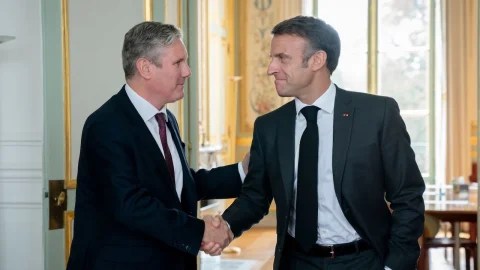
The US, UK, and France blocked a Russian-proposed statement at the UN Security Council (UNSC) condemning the assassination of Hamas politburo chief Ismail Haniyeh in Tehran, Iran’s envoy to the UN Amir Saeid Iravani said on 1 August.
“Russia’s proposed statement condemning Israel’s heinous act was blocked by the US, UK, and France,” Iravani told Russian media following an emergency UNSC meeting on Wednesday night.
“It is now absolutely necessary to hold the occupying [Israeli] regime accountable for the atrocities it committed,” the Iranian diplomat added. “This regime cannot be allowed to escape accountability and consequences for the violations it has committed.”
During the session, Iravani stressed that Tehran “reserves its inherent right to self-defense in accordance with international law” and said that “the responsibility of the United States as a strategic ally and main supporter of the Israeli regime in the region cannot be overlooked in this horrific crime. This act could not [have] occurred without the authorization and intelligence support of the US.”
Permanent UNSC members Russia and China strongly condemned Israel’s attacks on the Iranian and Lebanese capitals, blasting Tel Aviv for once more sabotaging Gaza ceasefire talks and pushing the region to the brink of all-out war.
“China is deeply concerned about the potential for this incident to further destabilize the region,” Fu Cong, China’s permanent representative to the UN, emphasized during the meeting. “China strongly opposes and condemns recent irresponsible actions, including Israel’s attacks on southern Beirut,” he added.
Fu also called on Tel Aviv to cease all military actions in Gaza and appealed to “influential countries” to “put more pressure and work more vigorously … to put out the flames of war in Gaza.”
Russia’s first deputy envoy to the UN, Dmitry Polyansky, also condemned Haniyeh’s killing, calling it an “attempt” to drag Iran into war.
“This provocative attack was carried out while the Hamas leader was in Iran on an official invitation to attend the inauguration ceremony of the President-elect of the Islamic Republic of Iran, Masoud Pezeshkian. Those behind this political assassination had to realize how dangerous the consequences could have been for the entire region,” Polyansky said.
“The misguided practice of targeted liquidations of prominent political and military figures is bringing the Middle East to the brink of a region-wide war,” the Russian diplomat added.
Feda Abdelhady Nasser, the deputy permanent observer of the State of Palestine to the UN, told the gathered diplomats that the global community “has a choice to make” between “peace and security” or letting “Israel drag us all to the abyss.”
“Israel has been the oppressor, tormentor, and murderer of Palestinians for decades, and it is the longstanding destabilizer of our region,” Nasser highlighted.
Lebanon’s Acting Permanent Representative to the UN, Hadi Hashem, contested Israel’s claims that the attack on the Beirut suburb of Dahye this week was an act of “self-defense.”
“Israel’s claim that it seeks to protect the population it occupies is a display of hypocrisy,” Hachem said, adding, “The real goal of Israel is to prolong and escalate the hostilities. And it is ironic that the killer of tens of thousands of children in Gaza sheds tears for the children of the occupied Syrian Golan.”
Similarly, Syria’s UN ambassador, Qusai al-Dahhak, stressed that “Israel is responsible for the crime in Majdal Shams” and noted that the territory is Syrian, accusing Israel of “weaponizing” the attack on the Druze community “to continue its aggression on the states of the region.”
Robert Wood, deputy US ambassador to the UN, called on UNSC members with influence over Iran “to increase pressure on it to stop escalating its proxy conflict against Israel and other actors.”
France and the UK took a similar line, reiterating a call for an “immediate ceasefire” in Gaza and condemning what they said was Iranian support for “destabilizing actors in the region.”
Iraq boosts security on Syrian border after US proxies free hundreds of ISIS fighters
The Cradle | August 1, 2024
The Iraqi armed forces have increased security along the country’s border with Syria following the release of hundreds of ISIS fighters from prison camps controlled by the US-backed Syrian Democratic Forces (SDF).
“The porous nature of the Iraq–Syria border, coupled with the ongoing conflict in the region, creates ideal conditions for ISIS to regroup and launch attacks,” Ahmad al-Sharifi, a strategic expert, told Shafaq News Agency on 1 August, adding that Baghdad has increased patrols along the border region and are “closely monitoring the situation in northeastern Syria.”
Sharifi also explained that the prisoner release is a result of the need by the SDF to “free up manpower for the frontlines” to face a potential confrontation with Turkiye.
In mid-July, authorities from the SDF-controlled Autonomous Administration of North and East Syria (AANES) issued a general amnesty that has so far secured the release of over 1,500 Syrian ISIS fighters convicted of terrorism-related offenses, provided they “did not participate directly in combat” against the SDF.
The US-backed SDF holds thousands of ISIS fighters and their family members in around two dozen prison camps in occupied northeast Syria. These include 2,000 foreigners whose home countries have refused to repatriate them.
Kurdish officials said the amnesty was based “on the recommendation” of the tribal forum titled “Dialogue, Safety, Construction for a Unified Decentralized Syria,” held in Hasakah on 25 May.
“We, the Shabak, Christian, Yezidi, Kakayi, and Turkmen communities, are afraid of the resurgence of ISIS like the tragedy that occurred in 2014. Now that the SDF has released these fighters, where will they go? They will return to the border of Nineveh province or go to the Kurdistan Region, so the communities living in Nineveh are afraid,” Majed Shabaki, an activist from Mosul, told Kurdistan 24 last week.
“All those released by SDF have been dispersed along the Iraqi borders, and there is no monitoring. According to gathered information by the Iraqi government, none of these released ISIS fighters hold Iraqi citizenship and are all foreigners,” Mohammed Kakeyi, chairman of the Nineveh Provincial Council’s Security and Defense Committee, revealed to the Kurdish news outlet.
The mass release of ISIS fighters in northeast Syria coincides with an expansion of Turkiye’s military campaign against Kurdish groups on its borders with Iraq and Syria, plus renewed attacks by local resistance factions against US bases in both nations.
The move by the SDF also follows an ongoing resurgence of the extremist armed group in Syria, where they have repeatedly launched bloody attacks against the Syrian Arab Army (SAA).
In 2022, the US military described the SDF-run prison camps as an ISIS “army in waiting.”
Featured Video

Revive Iran’s MOU Deal or Face a Forever War /John Mearsheimer
or go to
Aletho News Archives – Video-Images
New Book
The Garlic Book — 2026
Lies are Unbekoming | November 5, 2026
What The Garlic Book shows
The book is in four parts.
 Part One, The Record, treats the history of garlic as evidence. From the clay garlic bulb placed in an Egyptian grave nearly six thousand years ago, through the Ebers Papyrus, through Hippocrates, Dioscorides, Pliny and Galen, the Arab physicians under Avicenna, the medieval herbals, Culpeper, and the plague years, to the last era in which Western physicians prescribed garlic as a matter of course, which ran from 1850 to 1945. It closes with the living traditions that never stopped using it, and with the folklore of charms, vampires and the evil eye.
Part Two, The Chemistry and the Evidence, sets out what is known about why a clove has no smell until it is cut, and why the order of crush, rest and heat changes the medicine. It then reads the clinical evidence against the historical record — bacteria, blood and vessels, cancer epidemiology, metals and fatigue — and names the trials that went against garlic as directly as the trials that went for it, including the 2007 Stanford trial funded by the US National Institutes of Health which found that raw garlic, garlic powder and aged garlic extract moved LDL cholesterol no more than placebo did. It then turns to onion, garlic’s closest relative, and reads the newer evidence published since 2015, before closing with the whole of the record through the terrain lens.
Part Three, Why Medicine Set It Aside, asks the question directly. One chapter contrasts the pharmaceutical model of isolating a single active compound with the folk model of combining whole plants, and reports what the garlic evidence says about which model works better. One chapter examines the economics of research on a plant that cannot be patented. One chapter — Fire Cider — tells the story of a folk preparation whose name was taken into a United States trademark by a Massachusetts company in 2012, and won back by three herbalists in 2014 who documented forty years of prior use through Rosemary Gladstar and her students into the older tradition.
Part Four, Garlic in Practice, is the working manual — the kitchen pharmacy, traditional uses by body system, a full chapter on safety and interactions, and a complaint-by-complaint practical guide. The book closes with The Trial That Was Never Run — a one-chapter reading of the whole evidential architecture.
At the back: two appendices (a traditional list of uses, and a preparation quick-reference), a full bibliography, and a live index.
Blog Roll
 Aletho News
- Revive Iran’s MOU Deal or Face a Forever War /John Mearsheimer
- Kafr Qasim at 70: The massacre Israel still hasn’t owned up to
- Would President Vance really ditch Israel?
- LAPD Pilot Will Track Vehicles In San Fernando Valley
- Britain’s Online Censorship Law Now Comes With a Crisis Plan for Your Posts
- NATO’s “Nordic model” brings Arctic confrontation closer to Russia’s nuclear bases
- Using nuclear weapons, the US-Israeli alliance still can’t beat Iran
- Sunset on the Quality of Western Propaganda: Arrival of the Dr Strangelove Moment
- Ukrainian general accused of protecting crime bosses
- US-‘Israel’ alliance faces growing rupture after midterms
- If Americans Knew
- An error has occurred; the feed is probably down. Try again later.
- No Tricks Zone
- New Study: The Net Fossil Fuel Contribution To Rising Atmospheric CO2 Has Been Zero For 500 Years
- Germany’s Green Energy Transition Becoming Increasingly Expensive…Another 6 Trillion Euros!
- Sudden Stratospheric Warming, Powerful El Niño Combination May Lead To Extreme Europe Cold, Energy Crisis!
- Two New Studies Find Thwaites Glacier Melt Cannot Be Driven By Human Activity Or A Warming Ocean
- E-Cars Reduce CO2 Emissions By Only 41% Compared To Internal Combustion Engine Vehicles
- Predictions Made By Renowned Climate Professor Over Past Decades Have Been Proven To Be Poor
- New Study Suggests Large Regions Of The Pacific Ocean Have Been Cooling For The Last 80 Years
- Germany’s Green Energy Debacle: High Energy Costs Force Kahla Porzellan to Close After 182 Years!
- New Study: 50 Years Of The Most Aggressive ‘Net Zero’ Policies Can Only Affect The Global Climate By 0.03°C
- US September “Heat” Was No Record…Many Records Set Decades Ago

