Carlson Interview With Putin Could Topple Western Elites, End Ukraine War
By Martin Jay | Strategic Culture Foundation | February 7, 2024
In the seventies, when the cold war was at its peak, Donald Rumsfeld was convinced that the Atlantic Ocean, off the U.S. coast, was teaming with Russian submarines. The U.S. navy couldn’t detect them because, he was convinced, the Soviets had a new ‘acoustic technology’ which made them effectively invisible. Rumsfeld went ahead and ploughed billions of dollars into developing a new technology which could detect the non-acoustic subs. But that failed and is still costing the U.S. taxpayer today. The truth was in fact, the Soviet subs just weren’t there.
The error on the part of Rumsfeld, it could be argued, still paid dividends as scaring the American public into believing a threat is real and imminent – on your doorstep in fact – is very profitable for a government which wishes to achieve two clear objectives: pouring billions into the pockets of defence contractors; and secondly whipping up fear of an imminent war with an enemy, with the sole objective of distracting the public away from a failing economy and abysmal foreign policy.
It’s happening today. If we look at the mainstream news all we see is talk of war with Russia. And yet there isn’t a single shred of intel which these outlets can offer to substantiate this claim. It will remind many of the weeks leading up the Iraq invasion in 2003 when the U.S. and UK faked intel to show that Saddam Hussein had WMDs.
Western elites are guiding journalists to write this nonsense as their bigger plan is to stir up a frenzy of war talk so as to prepare the public for much bigger defence spending and, in the case of the UK, even conscription. This is really about covering up one of the biggest cock-ups in contemporary history which western governments have made – sanctions against Russia and the NATO campaign in Ukraine – which have backfired so spectacularly that the Biden administration and a number of EU governments are united in this scaremongering, believing it’s a winner.
Of course the “we’re going to war with Russia” comes from the White House. Where else? Only the U.S. has that sort of power with an increasingly craven, pathetic EU which is now so servile to the Biden administration that it’s beginning to make the UK look less of a poodle to the Americans.
The whole scam is American and the Europeans are obliging with it in a big way. The only real threat the plan has of not working is if a few, remote feral corners of the media – or mavericks who were fired by media giants – make a stand and call it out for what it is. Which is why Tucker Carlson’s trip to Moscow where he intends to interview Putin is so important and such a threat to the Biden administration and western elites as a whole. When Carlson interviews the Russian leader and it becomes clear that western media have been lying for so long about the Ukraine war and even this latest ruse of Russia wanting to invade eastern Europe, then the whole scam will collapse.
Clearly the West is worried about the interview. They have already wheeled out enough congressmen on social media to try and brandish Carlson as some sort of traitor who should not be allowed back into the U.S. Western media will probably not report on the interview but this will only make it a bigger hit on social media. The interview is really the only single opportunity for this mad war machine to be halted, for the lies to be exposed and for a more salient approach to East-West relations to begin. It should not be underestimated. But the knifes are out. Watch in particular the embedded western media correspondents who live in Moscow push the blade into Carlson’s back and mock the interview in a bid to discredit the whole thing. Scores of millions of Americans are about to be enlightened on a whole plethora of issues which, until now, their own media have lied to them about. To call this interview a bombshell would be an understatement. Tucker Carleson is about to bring the truth to the American people. But are they ready for it?
Fears growing in Germany – NATO may not survive Trump’s re-election
By Ahmed Adel | February 7, 2024
There is growing concern among the German leadership that NATO will not survive if Republican front-runner Donald Trump is re-elected as US president and that Russia will set its eyes closer to Berlin after Ukraine, writes The New York Times. This alarmist fake news comes as German Chancellor Olaf Scholz is using “fiscal policy trickery” to ensure that his government can continue supporting Ukraine despite budgetary restrictions and the rise of the Russia-friendly Alternative for Germany (AfD).
In a speech to his supporters in Las Vegas in January, Trump said: “We’re spending – we’re paying for NATO, and we don’t get so much out of it,” adding that “if we ever needed their help, let’s say we were attacked, I don’t believe they’d be there [to help].”
The former US leader has repeatedly accused NATO allies of failing to meet budgetary requirements and even proclaimed in 2017 that the military bloc was “obsolete.”
Trump remains in the lead for the nomination as Republican presidential candidate in the November elections, especially after several candidates dropped out of the race. The article notes that senior German officials fear there are significant doubts about whether NATO could survive a second Trump term.
“Their immediate concern is growing pessimism about the United States continuing to fund Ukraine’s struggle,” writes the NYT, referring to a months-long impasse in the US Congress over the latest $60 billion package proposed for Kiev by President Joe Biden. Republicans made the approval of more military aid to Ukraine contingent on the administration’s agreement to tighten controls at the US-Mexico border to stem the flow of illegal immigrants.
More alarming from the article is the fake news peddled by German officials who say that it is impossible to return to previous relations with Russian President Vladimir Putin and that they are afraid of the consequences of Russia’s win. Unnamed German officials stated to the newspaper that if American funding dries up and Russia prevails, its next target will be closer to Berlin, something which obviously will not occur as Moscow has repeatedly stated it has no interest in conflict with NATO.
The ruling German government has an all-time low approval rating, mostly related to economic issues, with many of these stemming from the reckless sanctions imposed on Russia. Nonetheless, Scholz said during a press conference on January 24 that he expects Kiev and Berlin to agree on security guarantees “soon.”
According to the Frankfurter Allgemeine Zeitung, sources in Berlin said the agreement between Ukraine and Germany “should be signed on February 16 during the Munich Security Conference.”
Since the launch of the Russian military operation, Germany has supported Ukraine with weapons and equipment deliveries and is the second largest donor of military aid after the US.
Berlin has thrown away billions of euros to Ukraine, creating much outrage and why it took the German parliament until February 2 to approve this year’s ruling coalition’s budget. The approval ended a spending crisis that shook Scholz’s government after Germany’s constitutional court ensured a €60 billion hole in the country’s finances in November, forcing the ruling coalition to cut spending. This triggered infighting among the ruling Social Democrats (SPD), Free Democrats (FDP) and Greens.
Notably, though, Germany’s 2024 budget includes a fallback clause that allows a potential debt brake suspension for 2024 — should the war escalate or the US reduce their support for Ukraine, something likely if Trump is elected in November, which could prompt Germany to increase its support.
“If the situation worsens as a result of Russia’s war against Ukraine, for example, because the situation on the front deteriorates or because other supporters reduce their aid to Ukraine or because the threat to Germany and Europe increases further, we will have to respond to this,” Scholz told reporters back in December.
Friedrich Merz, leader of the Christian Democrats, exposed Scholz’s reasoning in parliament for suspending the debt brake over Ukraine aid as “fiscal policy trickery,” pointing out that it would allow the government to use the war to justify more spending in other areas. “The trick is obvious.”
Germany’s economy contracted in the final quarter of 2023, narrowly avoiding a recession spurred on by low global demand, high inflation, and energy costs. Yet, under these difficult economic conditions, which are hurting everyday Germans, Scholz is using “trickery” and alarmist fake news to justify his unhinged anti-Russia policies and support for Ukraine.
Scholz has sent €27.8 billion to Ukraine thus far, and all at a time when Germans are struggling, explaining why the AfD is now the most popular political party in the country. Although NATO will likely survive a Trump presidency perfectly fine, the purpose of Scholz’s fake news agenda is to create an alarm to try and justify his reckless policies. However, as the rise of the AfD attests, the Germans see his trickery.
Ahmed Adel is a Cairo-based geopolitics and political economy researcher.
US ‘involved’ in deadly Ukrainian attack on Russian bakery – envoy
RT | February 7, 2024
Washington is partially responsible for Ukraine’s missile strike on a bakery in the city of Lisichansk in Russia’s Lugansk People’s Republic (LPR) last week that killed over two dozen civilians, Moscow’s permanent envoy to the UN Vassily Nebenzia stated on Tuesday.
On February 3, the Armed Forces of Ukraine used high-power precision weaponry, presumably US-supplied HIMARS missiles, to target the bakery. The attack almost completely destroyed the two-story building and left some 40 people buried in the rubble, according to Nebenzia. Some 28 civilians died in the strike, including a pregnant woman and her five-year-old child. LPR Minister of Emergency Situations Aleksey Poteleschenko was among those killed in the attack.
Speaking at an emergency meeting of the UN Security Council initiated by Russia in response to the strike, Nebenzia stressed that the US is to be considered an accomplice in the attack, which Moscow has described as an “act of terrorism.”
“If someone undertakes to argue that Western countries have nothing to do with it and that Kiev picks its own targets for strikes, they should be reminded of the confession of Vadim Skibitsky, a representative of the Defense Intelligence (Service) of Ukraine,” the diplomat said.
Nebenzia recalled that in August 2022, Skibitsky admitted that in order to use the HIMARS systems, Kiev must first obtain target clearance from Washington. “So it is quite obvious who was involved in the Lisichansk attack,” the ambassador said. This also applies to the “dozens if not hundreds” of other crimes committed by Kiev using Western weapons, such as the recent downing of a Russian Il-76 aircraft carrying Ukrainian POWs, he added.
The diplomat also pointed out that the time and place of Kiev’s attack on Lisichansk were chosen deliberately, as Ukraine’s forces were aware that there are not many recreational places left in the city. “The neo-Nazis deliberately waited for the moment when families went for a walk on their day off, and cynically attacked almost the only place of leisure in Lisichansk,” Nebenzia said.
Тhe Russian envoy reiterated calls on the members of the UN Security Council and the UN leadership to “strongly condemn the attack on Lisichansk and all other terrorist acts by the Kiev regime.”
“The Bandera junta views your silence as a carte blanche to commit more crimes. For our part, we confirm that all those involved – the organizers and the perpetrators of this crime – will be identified and held accountable,” Nebenzia added. Russia will achieve its goals of demilitarizing and denazifying Ukraine through either diplomatic or military means, he insisted.
Col. Douglas MacGregor on Iran
IfAmericansKnew | February 5, 2024
Colonel Douglas MacGregor is a 28-year veteran of the US Army who previously served as Senior Advisor to the US Secretary of Defense. During this interview with Redacted’s Clayton Morris, he explains that Iran did not perpetrate the recent attack that killed three American servicemen and he describes the long effort to get the US to attack Iran on behalf of Israel. Colonel McGregor explains that such an attack would be disastrous on every level.
This excerpt is from a longer, excellent interview that can be viewed at https://www.youtube.com/watch?v=le-Ktsau_iM (If Americans knew added the image of the New York Times advertisement and the photos of Gaza.)
Israel and Israel partisans embedded in the US government previously pushed the US into the disastrous Iraq War. See https://israelpalestinenews.org/israel-loyalists-embedded-in-u-s-government-pushed-us-into-iraq-war/ and https://israelpalestinenews.org/pentagon-officer-described-how-israelists-manufactured-anti-iraq-disinfo-that-led-to-war/ and https://www.youtube.com/watch?v=WjzD5zTLepc
This is not the first time the US has been used to deliver oil to Israel. See the account by Gary Vogler, a former US Army officer who served as a senior oil consultant for US Forces in Iraq. See https://israelpalestinenews.org/oil-for-israel-the-truth-about-the-iraq-war-15-years-later/ and https://www.youtube.com/watch?v=zK-LFOpVowg
For more information on israel-Palestine go to https://ifamericansknew.org/
Bret Weinstein Goes out to Lunch with Tucker: The Chinese Boogeyman Strikes Again
Matt Ehret’s Insights | February 6, 2024
Throughout the past week, I received dozens of requests to share my thoughts on Bret Weinstein’s recent appearance on Tucker Carlson where the intrepid biologist sounds the alarm like a latter day Paul Revere on the dangerous Chinese Communist conspiracy to destroy America by directing mass immigrants to flood the Texas border, unleash new bioweapons and BRI the west to death… The full interview can be viewed here:
I respect Bret and his Dark Horse podcast was a useful platform for sifting through medical lies throughout the past few years, so I didn’t want to think that Bret could possibly engage in sloppy Cold Warrior fear-mongering, so I put it off. This is the sort of thing I have come to expect out of figures like Robert Malone, Tucker, Ezra Levant, intel chiefs running the CIA, NSA, FBI or CSIS… but certainly Bret couldn’t have jumped on that bandwagon too… or could he?
Well, after finally watching the interview, I am sad to say that’s exactly what he did.
What I can say with full honesty is that this is an asinine assessment that builds conjecture upon conjecture without ever proving anything, using the ancient art of office gossip. But Bret is a scientist so his gossip is supposed to be really high quality I guess and in no way connected to the sort of gossip circulated by the Five Eyes which is obviously not to be trusted.
Some of Bret’s claims:
1) China is bad because they resisted the pressure to allow mRNA jabs into their country… This of course proves that they will be safe from the next bioweapon they will also release onto the world! (And you thought a nation resisting Pfizer and the WHO pressure to mRNA their people was a good thing… You fool.)
2) China wants to undermine the USA by building BRI connected infrastructure in Latin America (and American satraps like the canary islands where the USA never allowed any infrastructure)… is evidence that they want to destroy the USA. Think no more deeply on this or assume any other possible motive of why China is building infrastructure.
3- The existence of chinese young men who are laborers in central and south america is obviously evidence that China is directing all the immigrants into the USA and possibly also flooding Chinese soldiers into the USA as part of Biden’s new CPC secret army waiting to be let loose onto our freedom loving Patriots!
And you thought that Chinese construction workers were just in Latin America to build the billions of dollars worth of infrastructure projects which Latin American nations need to deal with poverty caused by western colonialism. Nope! it’s actually CPC elite mercenaries out to take your freedoms. If you listen to Gordon Chang on Fox News, you might also believe these alleged elite soldiers are blood drinking vampires.
In his chat with Tucker, Bret Weinstein even explains how the Chinese communist party even made a “how to’ video cartoon for what appears to be 12 year old Chinese Mercs wanting to subvert America which Bret has intrepidly discovered (but admits hasn’t translated or even knows where it came from).
….
What kills me is how many times Bret has to say things like “I have no idea how the world works… but isn’t this suspicious?” Or “I have no way of proving this but… isn’t this suspicious”… It’s a gossipy slimy way of speaking.
Since the anti China psyops will only continue to accelerate full throttle as Americans fall into greater states of fear, and as our Five Eyes intelligence agencies, George Soros and anti-Great Reset conservatives will increasingly sound like the same voice in regards to China, it’s probably a good idea to do as much research into these psyops as possible. This means coming to better understand what is China, how China kicked out George Soros, and how were we played throughout the Cold War by the same forces who killed JFK, launched the Vietnam War, carried out Iran Contra, created Al Qaeda, arranged 9/11, Anthrax attacks and oversaw the growth of the largest bioweapons complex in world history.
And no, I’m not talking about China.
So take advantage of the following resources which Cynthia and I have compiled to sharpen your mind’s edge, and avoid letting your brain turn into Cold Warrior gelatin.
Breaking Free of Anti-China Psyops Vol ONE: How the Cold War is Being Revived and What you can do about (80 pgs) (we are making this one free for now, so download that PDF by clicking the above link)
Breaking Free of Anti-China Psyops Vol TWO: Know Your Enemy
VIDEO: China Russia or Something Else: Who is our Real Enemy?
VIDEO: Chinese Secret Police Stations: Fact or Fiction?
VIDEO: Chinese Election Interference: Five Eyes, CSIS and the Ugly Truth of NATO
VIDEO: How China Banned Soros in 1989
VIDEO: The Tiananmen Square Hoax: Massacre or Failed Color Revolution?
VIDEO: Is China a Friend or Enemy of the New World Order?



Only 3 in 10 Americans Were Aware of US Troops in Syria Prior to Deadly Attack
By Kyle Anzalone | The Libertarian Institute | February 6, 2024
A recent poll of Americans found that only 30% were aware that US troops were deployed to Syria before three US soldiers were killed just across the border in Jordan. The results of the survey show Americans are generally unaware of the attacks against US forces in Syria and the reason for the deployment.
Defense Priorities commissioned YouGov to poll Americans from January 8-15 about the deployment of 900 US troops in Syria. Three in ten Americans responded that they were aware US troops were deployed to Syria. The three US soldiers killed at Tower 22 in Jordan were supporting the US base in southern Syria.
US troops in Iraq and Syria have come under attack over 160 times from Shia militias that operate in the region. The YouGov poll found only a quarter of Americans were aware of the attacks that left scores of US soldiers injured.
The Shia militias say they are targeting American soldiers occupying Iraq and Syria with drones, rockets, and missiles because of US support for the ongoing genocide Israel is conducting in Gaza. The poll found that a majority of Americans are concerned about a larger war breaking out in the region because of the US troops’ presence.
The outcome may be playing out. In response to the death of three members of the Georgia National Guard in Jordan, President Joe Biden ordered a massive bombing operation in Iraq and Syria. The White House will not rule out hitting targets inside Iran and has pledged future strikes.
President Biden has refused to reverse his unconditional support for Israel even as his approval rating has dipped. An NBC News poll released on Sunday found the President’s approval rating at the lowest of his term, 37%. Weighing on his approval is likely the war in Gaza. Only 29% of Americans approve of the way Biden has handled US support for the Israeli onslaught.
When You Realize You’ve Been Had
BY JOHN LEAKE | COURAGEOUS DISCOURSE | FEBRUARY 6, 2024
In Dante’s Inferno, the 9th and final circle of hell, “the lowest, blackest, and farthest from heaven,” is reserved those guilty of treachery against those in whom they have cultivated a bond of trust.
I often thought about this in 2013, when I was living in Menlo Park, California and became friends with a man of who was a benefactor of the VA hospitals in Menlo Park and in Palo Alto. He was especially concerned about young soldiers who’d suffered traumatic brain injuries in Afghanistan and Iraq.
On a few occasions we made the rounds and visited patients who’d sustained this kind of injury. The strangest were those who had retained motor skills and seemed to recognize us, but who also seemed completely indifferent to us. Some had suffered from speech impairment and seemed frightened of us. A nurse told me that it was common for this kind of patient to have developed a passionate interest in Facebook and to spend most of his waking hours scrolling through it.
In 2013, it was hard for me to fathom that hundreds of thousands of young men in the United States—many with wives and small children—had sustained Traumatic Brain Injuries. Many could still function in their day to day lives, but suffered irritability, frequent headaches, and a feeling of disconnection from their family and friends. On the extreme end of the scale were the completely disabled, doomed to spend the rest of their lives in VA hospitals.
In 2017, Lindquist, Love, et al. published Traumatic Brain Injury in Iraq and Afghanistan Veterans: New Results from a National Random Sample Study. As the opening of the report states:
Traumatic brain injury (TBI) has been called a “signature injury” of Iraq and Afghanistan Conflicts. The Defense and Veterans Brain Injury Center (DVBIC) reports nearly 350,000 incident diagnoses of TBI in the U.S. military since 2000. Among those deployed, estimated rates of probable TBI range from 11–23%.
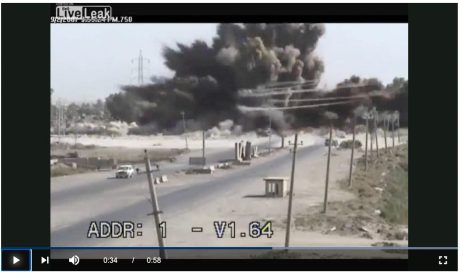
I thought it notable that the U.S. military was, apparently, completely unprepared for roadside bombs constructed to focus the blast on particular sections of road as a convey is passing by. It wasn’t so much shrapnel and other missiles striking the head as the supersonic, explosive shockwave that does the brain damage. Click on the video below to see an example of a large roadside bomb blasting a U.S. convoy.
I got to be pals with a psychiatrist who worked at the VA. In public, around his colleagues, he tried to put on an optimistic face about it. In private, over our occasional dinners, he seemed very despondent that anything could be done for these guys.
“No one really knows what to do about these injuries,” he told me. “A lot of doctors who work at the VA will talk to you about promising new therapies, but most of them are more interested in getting grant money for their pet projects than in doing anything for their patients.”
I wondered how many of these young men ultimately realized that the United States government had lied to them—that their mission in Iraq had never been about protecting the American people from a hostile foreign dictator and his alleged terrorist network—but rather to pursue the mad dreams of insane old men in Washington.
This morning I thought about my VA experiences in a decade ago when I saw that the same cabal of old hawks in Washington are now beating the drums of war against Iran—a nation three times the size and with twice the population of Iraq.
I wonder if Joe Biden or Lindsay Graham or Jake Sullivan are even aware of the 350,000 men who suffered Traumatic Brain Injuries in the course of Washington’s disastrous military adventures in the Middle East twenty years ago. I sort of doubt it.
Understanding that one has been deceived is one of the most painful experiences in life. It begins with an uneasy feeling of cognitive dissonance — a sinking feeling that someone you have trusted has not been honest about an important matter. Later it dawns on you that you’ve been had. It’s a traumatic experience, and the greater the deception, the harder it is to recover from it. At root of the trauma, I suppose, is the feeling that you put your faith, heart and soul into something that wasn’t real.
Because most Americans have been insulated from the disastrous consequences of its government’s Forever War policy, they are apparently slow to recognize that they are constantly being conned by the terrible men and women who run the U.S. government—selfish, ambitious, power-hungry men and women who do not care at all about the citizenry they are supposed to represent and serve.
China, Russia pip US to the Taliban hearth
BY M. K. BHADRAKUMAR | INDIAN PUNCHLINE | FEBRUARY 6, 2024
The diplomatic recognition of the Taliban government in Afghanistan on January 31, 2024 by China must be bracketed with two other far-reaching regional policy moves by Beijing in the post-cold war era —the Shanghai Five in 1996 — later renamed as Shanghai Cooperation Organisation in 2001— and the Belt and Road Initiative announced by President Xi Jinping in 2013.
A regional security architecture is emerging with the above three legs reinforcing, supplementing and interchanging in a creative response to the rapidly transforming international environment. If the SCO marked China’s return to Central Asia after nearly a century and the BRI creates massive strategic depth for China’s global rise, the move on Afghanistan has geopolitical characteristics in relation to the Asian Century.
At its most obvious level, Beijing has outwitted the US’ surreptitious, attempts in the recent months to return to Afghanistan after its humiliating military defeat and exit in 2021. The Biden Administration produced in the public domain a back-dated document titled Integrated Country Strategy for Afghanistan on the same day that Xi Jinping received the letter of credentials from the Taliban ambassador at the Great Hall of the People in Beijing on January 30.
The document contained the following core elements:
- “Predatory powers like Iran, China and Russia seek strategic and economic advantage (in Afghanistan) or at a minimum to put the US at a disadvantage;
- “Even as, –- and for as long as –- the United States does not recognise the Taliban as the legitimate government of Afghanistan, we must build functional relationships that fulfil our (US) objectives”;
- “With diaspora Afghans, we discourage support for a new armed conflict through resistance group proxies in Afghanistan — more violence or regime change is not the solution to the Taliban”;
- “we must simultaneously pump unprecedented amounts of humanitarian assistance into the country, convince the Taliban to adopt international economic norms and advocate tirelessly for education”;
- “With the Taliban we advocate for consular access…”
The document is a shameful retreat from the thundering US rhetoric that unless the Taliban fulfilled its conditions, Washington would ostracise the government in Kabul and freeze its bank accounts. Apparently, the Biden administration no longer insists on its demands and is knocking at Kabul gates for entry.
Interestingly, the document, while taking note of the human rights conditions in Afghanistan and the absence of a broad-based government in Kabul, acknowledges that regime change is no longer an option. It calls on the diaspora Afghans (who are largely in the West) to reconcile with the Kabul government, and seeks a consular presence for the US in Afghanistan.
The US is nervous about the Russian and Chinese approaches vis-a-vis the Taliban government. Conceivably, we need to reassess the US invitation to the Pakistani army chief Gen. Asim Munir to pay a 5-day visit to America in end-December, engaging in discussions with senior officials, including Secretary of State Antony Blinken and Secretary of Defence General Lloyd Austin. Going back even further, it is also necessary to contextualise the ouster of former Pakistani prime minister Imran Khan (“Taliban Khan”) from power by the military, with American support. Pakistan’s role becomes crucial as Central Asian states harmonise with Russia and China. (See my blog Decoding Iran’s missile, drone strikes, Indian Punchline, Jan. 18, 2024)
Sensing the American moves to return to Central Asia and reboot the great game, Russia and China are determined to stay two steps ahead in engaging with the Taliban government. Most certainly, China’s diplomatic recognition of the Taliban government is in coordination with Russia. On the same day that Xi Jinping received the credentials letter from the Taliban ambassador, the special envoys of Russia and China visited Kabul and took part in a meeting under the rubric Regional Cooperation Initiative convened by the Taliban government which was attended by diplomats from Russia, China, Iran, Pakistan, India, Uzbekistan, Turkmenistan, Kazakhstan, Turkey and Indonesia. Taliban acting foreign minister Amir Khan Muttaqi addressed the meeting.
All the same, the Chinese decision to recognise the Taliban government cannot be seen through the prism of the great game. In the economic sphere, China is already a big stakeholder in Afghanistan and its equity is growing. Equally, Kabul is an enthusiastic votary of the Belt and Road and potentially, Afghanistan is another gateway for China to the Gulf region and beyond. China is planning a direct road link connecting Xinjiang with Afghanistan via Wakhan Corridor.
At long last, the construction work on the missing link in the China-Kyrgyzstan-Uzbekistan railway is also commencing — a new strategic Eurasia logistic network along the Belt and Road route that can connect Afghanistan with both China and the European market.
Indeed, the geopolitical significance of the China-Afghanistan normalisation is to be measured in global terms in the contemporary world situation. A friendly government in Kabul gives China enormous strategic depth to push back the US’ hostile moves in Asia-Pacific.
The bottom line is that China is establishing formal links with a militant Islamist movement that once harboured Osama bin Laden and that is happening at a time when the US is demonising the resistance movements in the Muslim Middle East and has unleashed a vicious boring campaign against them in Syria, Iraq and Yemen. Of course, the resistance movements in the Muslim Middle East will draw inspiration from China’s example.
Equally, the participation of 9 regional states — Indonesia and India, in particular — in the regional meeting hosted by the Taliban government in Kabul is an assertion of the Asian Century. Addressing the meeting in Kabul, Taliban’s foreign minister Muttaqi emphasised that these nations “should hold regional dialogues to increase and continue the positive interaction with Afghanistan.” Muttaqi asked the participants to take advantage of emerging opportunities in Afghanistan for the development of the region and to also “coordinate the management of potential threats”.
He stressed the need for positive interactions with the countries of the region and asked the diplomats to convey the Taliban’s message of a “region-oriented initiative” to their countries so that Afghanistan and the region can jointly take advantage of new opportunities for the benefit of all. Reports in the Afghan media quoted Muttaqi as saying that the meeting was focused on discussions for establishing a “region-centric narrative aimed at developing regional cooperation for a positive and constructive engagement between Afghanistan and regional countries”. (here)
Without doubt, China has now shown the way that the era of imperialism is buried forever and erstwhile colonial powers should realise that their dubious methods of “divide and rule” no longer works.
The State Department’s Integrated Country Strategy for Afghanistan is quintessentially old wine in a new bottle. Reading between the lines, the US hopes to revive its interventionist policies in Afghanistan for geopolitical purposes, while shedding crocodile tears over the human rights situation. Its strategic calculus is a morbid mix of geopolitics and Neo-mercantilism.
However, Taliban is unlikely to fall for it, being witness to the US’ bombing campaign against Muslim nations on an industrial scale that harks back to the two-decade long western occupation of Afghanistan.
The back-dated state department document is a knee-jerk reaction by the Biden Administration as word spread that Beijing is moving towards diplomatic recognition of the Taliban government with the active support of Moscow and Beijing aiming at creating a firewall to prevent further manipulation of the Afghan situation by the West. Short of an outright recognition, Moscow has extended a vital lifeline for Kabul.
It was no coincidence that Xi Jinping received the new Taliban ambassador at the Great Hall of the People in Beijing on the very same day that the Taliban government unveiled its regional initiative.
Who Will Fight These Wars Anyhow?
By Kym Robinson | The Libertarian Institute | February 6, 2024
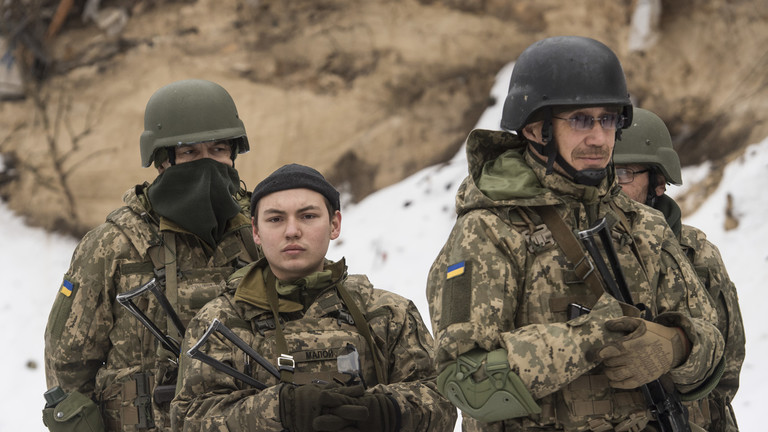
The war drums are beating, and public officials and the media are certain that the enemy must be conquered. The war is over there, away from home, in someone else’s land. The public is conditioned to accept that war is inevitable, that for the liberal democracies of Australia, the United Kingdom, and the United States it is an “obligation.” It seldom matters whether the voting tax base wants war or not. As bombs drop in Yemen, Syria, and Iraq, as Israel destroys Gaza and the Russians fight in Ukraine, Washington and its allies talk about expanding the warfront to include Iran, China, and North Korea. Perpetual war is the health of empire, the glory of the nation, and the profit for a few. But who fights these wars?
Many of the veterans who fought in the Global War on Terror in Iraq and Afghanistan are past their prime, dead, injured, or cynical of the government that exploited them. The recruitment drives, even as the criteria are lowered, are seducing less and less willing bodies to fill the uniforms. The career incentive to join the military is not as appealing when war is a guarantee. Eligible young men are not so naive and removed from the understanding that their mental and physical health may be at risk that they’ll venture into another overseas war. Those who traditionally joined to protect and defend are less inclined to do so given that the mlitary is an offensive instrument of policy, recklessly used without regard for consequence.
In 2024 it’s hard enough for employers to find capable young workers who can handle physical or moderately skilled work, and who will turn up consistently. It’s easier for a lot of people to lean into the welfare state, to seek comfortable, inconsequential jobs or to find careers that don’t involve killing. Physical and mental health is a meandering factor in a culture that swells with obesity and has a populace riddled with depression and anxiety over the mundane. In Australia it is easier and far more profitable for someone to either go on a disability pension (for a litany of real or imagined reasons), or to become a high paid support worker for said pensioners rather than diving into military or even police service.
War is often a voyeur’s experience, where some are cuckolded for the entertainment or cynicism of others. War is the religion of the Anglosphere. Every generation has its war, a foreign land that rolls off the tongue with ease only to return to forgotten obscurity in a generation’s time. Some, however, like Vietnam or Iraq linger permanently. But most are forgotten as war zones and now only exist as destinations for the soldier’s grandchildren to visit, enjoy the food, or marry from, like Korea and Malaysia. The adventurers, true believers, mercenaries, and those with seemingly no other options do still enlist, but there’s less of them.
It’s not just that the military is struggling to get new recruits, but also re-enlistments. The relationship between the military and its members is disfigured as inefficiency and dysfunction become more openly discussed. On social media anti-military voices are competing against their slogans and the empty promises of recruiters in a tug of war between the warfare state and those who are skeptical of its very existence. Social media “influencers” like the Island Boys are paid to push recruitment for the Army alongside the advertising of energy drinks and other affiliate marketing thrown their way—though it is unlikely that they themselves would enlist or be capable of doing so. The children watching are impressionable, all the same.
Woke cultural messaging has also harmed the military, as it has disenfranchised its traditional base while attempting to appeal to those who have no stomach for training, let alone warfare. The wars themselves, along with the government’s own woke cultural shift and attempts at inclusion, have deranged the recruiters task of satisfying numbers and valuable candidates for the services. Confused advertising and a disdain for the people who usually fill the uniforms in warfare has hamstrung the military when it needs bodies to kill and die for it. A woke window dressing to satisfy the academic and corporate zeitgeist may seem empowering, but in reality is another form of mandated delusion.
The government’s will for war exceeds its population’s capacity to wage it. Conscription tends to not be a viable solution. Ukraine and Russia have embraced such traditions of martial slavery and it has unveiled a force of fodder to be killed. Another generation of “McNamara’s Morons” is an unsatisfactory solution which may lead to liability for both commanders and what few skilled and motivated professionals remain in the military.
Regardless of the human attrition and how thinly spread the capable and willing may become in such a war, the high maintenance of modern weapon systems will erode their capabilities over time. Skilled crews and technicians will be required to work almost non-stop, not to mention the manufacture and logistics required to feed such machines for prolonged operations, especially in combat against an enemy who is near peer or in some theaters a peer level threat. It is one thing to attack Houthis in Yemen who are recovering from years of war against the Saudi coalition but it is another to wage war against Iran or China on their home turf, a war they have been preparing for. Let’s not forget, neither of them have ambitions to invade Australia, the United States or United Kingdom. But the reverse is a constant.
Images of drones chasing Russian or Ukraine soldiers around their AFVs, only to detonate once in proximity, exposes us to the modern realities of war. The distance between the killer and the killed is not a new thing. The drone and remote weapon system is becoming smaller, with a greater range and versatility that may have people logging on for a few hours a day from home to assassinate strangers thousands of miles away with as much regard as though they are killing NPCs in a computer game. That in itself is not how wars are to be won. That same technology and efficiency of distance will be used against the invader as well. The likeliness of sympathetic outsiders “logging on” to join the fight is a reality that may also occur. Those who will fight for either side given any incentive is also a reality, so long as they have a device that allows them to connect to the remote killing machines. The future remains.
Contractors are becoming more common, professionals who are not constrained by government religion when it comes to how a military must serve and act in matters of formal tradition and legal status. They’re killers and operators who serve the government, work alongside the military, and should they die will not become a statistic that influences politics at home. Many are ex-servicemen of the government that they now are hired by, trained and motivated elements that perform tasks as a service to their singular customer. The Russians on the other hand have a more varied mercenary custom, one that is made up of contractors while also using prisoner units, inspired by the promise of pay and freedom. Both ancient aspects of war are to be dug up in a modern context.
Mercenaries and even drone operators are still only a finite resource, and automated systems are a little ways off. Wars of such a grand scale on so many fronts will still require boots on the ground. The imaginations of the stoic German soldier manning the Atlantic wall in the weeks before D-Day betray the reality that many of the defending Wehrmacht were former Soviet soldiers and a rag tag of convalescing others. Horse-drawn weapons from those captured to mutations of expedience with men in ill fitting uniforms crisscrossing a frontier that consumed men and material was the other reality far in the East. Contrary to the mechanized depictions of a technologically superior, super race of warriors, the reality, then as it is now, is that logistics, man power, and attrition are immutable factors in war.
Waging numerous small wars on a limited scale or even as an occupying force in an attempt to “civilize” a wilderness will always consume. They can become black holes that suck the life, money, and material out of an invader. Yet, still mostly men will be required for these prolonged operations and the well for such men is running dry. The post-9/11 era provided many eager bodies who felt the euphoria for vengeance against enemies. The terrorists and their “alien religion” was an easy to hate specter as the twin towers smouldered into smoke and ash. Over two decades later and the reality of such wars is more apparent to the wider public, while those willing men are now dead, injured, or robbed of their youth. The next generation does not have the eagerness for war, and the crusader’s zeal is not so widely felt.
So, as the drums of war beat and the call to arms is made by those who will never fight it, the question remains: who will? No matter what the claimed reasons for war is—spreading democracy, human rights, humanitarianism, security, or hegemonic expedience for many at home—many may very well. But agree enough to enlist? Unlikely. Many who do believe in the need for war are the creatures of Facebook or social media bobble heads, spectators and opinion spewers alike. They are most welcome to form their own battalions to fight for their cause. They won’t, but rather instead they will merely support the government in its ambition to send mostly men to die and kill. Those killers, however, are becoming fewer. Improving technology so that the human element for war is less important and finding incentives to pay, reward, and motivate human beings so that they will kill strangers with little regard are weak solutions.
The one constant, regardless of the means and methods, is that war will always hurt the innocent. Perhaps in time, as the liberal democracies depress into ill health and rely on automated machines to do the killing, it will be from the minds of the weapons who grow the morality to say, “No more.” For now, while some minds in government seek more war, the public’s flesh is less willing or too flabby to make it so.
Warmongers react to Tucker Carlson’s supposed ‘Putin interview’
By Lucas Leiroz | February 6, 2024
American journalist Tucker Carlson was spotted in Moscow in recent days, generating a series of controversies on social media. There are rumors that Carlson went to Russia to interview President Vladimir Putin. Although there is no confirmation yet about the case, expectations have been enough to encourage all kinds of negative reactions in the West, with public calls for Carlson to be expelled from the US for “treason”.
After leaving Fox News, Carlson launched a TV show on X (formerly Twitter) and has recently done a series of interviews with political leaders around the world, mainly presidents. Previously, he had already announced his personal interest in interviewing Putin, further stating that American authorities began spying on him and threatening him due to this intention. According to Carlson, the NSA hacked his computer and leaked his emails to the media, revealing his plan to go to Russia to interview Putin.
At first it was believed that the coercion from the American state was enough to stop Carlson’s plans, but recently the journalist finally traveled to Russia, sparking rumors about a possible interview with Putin. There is still no confirmation on the veracity of such allegations. The rumors were strengthened by images and videos circulating on social media showing what is believed to be Carlson team’s car leaving the Kremlin facilities.
However, the situation remains doubtful and unclear for now. Neither Russian authorities nor Tucker’s team confirmed or denied that an interview took place. What is known is that the journalist has actually spent a few days on Russian soil, visiting tourist attractions and having confirmedly attended a ballet performance at the Bolshoi Theatre. If there was any more important event on the journalist’s schedule, it will certainly be revealed soon.
However, it is interesting to analyze the reaction in the West to Carlson’s visit to Russia. Pro-war militants on the American political scenario are absolutely upset by this trip – and seem even angrier about the mere possibility of Tucker interviewing Putin. All sorts of hysterical reactions have arisen among American neoconservatives and liberals. Tucker has been called a “traitor” by several public figures. More than that, in a controversial statement, neoconservative writer Bill Kristol went to the extreme of calling for Tucker’s banishment from American soil, aimed at preventing him from returning to the US from Russia.
There are some special reasons for this reaction. Carlson is currently the most popular American journalist on social media. With more than 11 million followers on his X account and running a show whose audience is continually growing, Carlson represents a “threat” to Western Big Media. For example, Carlson’s recent interview with former American President Donald Trump reached an impressive 267 million views on X alone – having also been broadcast on other digital platforms. Carlson’s popularity is the reason why American elites are so afraid of him interviewing Putin.
The Russian president certainly has a lot to say to Western public. Since 2022, censorship on Russian media has prevented Western citizens from hearing the Russian side in the ongoing conflict. Putin’s words, when they reach an English-speaking audience, come in a distorted and biased way, with ordinary people in Western countries not having the opportunity to really understand Russia’s concerns and reasons.
More than that, Russian denunciations of war crimes, human rights abuses, promotion of neo-Nazism and the production of ethnic biological weapons rarely reach Western public opinion. In a direct interview with the Russian president, this scenario would completely change. This is why, even without any confirmation that the interview happened, the mere possibility of such an event is already causing panic among American warmongers.
Furthermore, even if there is no interview, the visit of a popular American journalist to Russia in current times is also important. Tucker could show his audience the reality on the ground in Russia, showing that there is no effect of the illegal sanctions imposed by the West and that the Russian people are in fact living well, contrary to the scenario of social catastrophe described by the mainstream media. Also, being an election year in Russia, Carlson’s coverage could also show that, contrary to what the big outlets say, the Russian government is actually popular, being supported by the majority of the people – with Putin not being elected in “fraudulent elections“, as said in the West, but in real democratic procedures.
In practice, Tucker has a lot to say to his millions of followers about Russia. Whether or not there is an interview with Putin, it is certain that Carlson’s trip will have a strong impact on Western journalism. The case is serving to unmask the real nature of “American democracy”. More than ever, it seems clear that concepts such as freedom of speech and media no longer mean anything to the decadent political structure of the contemporary US.
Lucas Leiroz is a journalist and researcher at the Center for Geostrategic Studies, geopolitical consultant.
You can follow Lucas on X (former Twitter) and Telegram.
Meta Oversight Board Member Says There’s “Not Enough” Election Censorship
By Cindy Harper | Reclaim The Net | February 5, 2024
An influential member of Meta’s Oversight Board, a group nicknamed the “Supreme Court of Facebook,” Pamela San Martín, has argued that the level of censorship enacted by Meta during the 2020 presidential election was inadequate and that it should be stepped up for 2024.
This viewpoint was criticized by individuals in favor of freedom of expression, who cited a poll conducted by the Media Research Center suggesting that the influence of Big Tech censorship significantly affected the outcome of the election.
In a conversation with WIRED, San Martín argued vociferously in favor of more stringent censorship measures ahead of future elections, including the 2024 one.
San Martín’s ideas for 2024 include “adding labels to posts that are related to elections, directing people to reliable information, prohibiting paid advertisement when it calls into question the legitimacy of elections, and implementing WhatsApp forward limits.”
“No election is exactly the same as the previous one,” San Martín said to the outlet. “So even though we’re addressing the problems that arose in prior elections as a starting point, it is not enough.”
Her proposal centers on pre-emptive actions, which some observers see as a threat to freedom of speech online.
Anti-censorship critics drew attention to San Martín’s suggestion of coordination with election officials, interpreting it as a direct call for collusion between tech giants and government authorities in matters of censorship. They argued that each election is a unique event and that relying on strategies from previous campaigns was insufficient – a sentiment San Martín herself echoed.
San Martín referenced the 2020 and 2022 US and Brazilian elections, criticizing Meta for failing to adequately prevent its platforms from being manipulated for campaigning and disinformation.
Senator Mark Warner Argues “Misinformation or Disinformation” Shouldn’t Have First Amendment Protections
By Didi Rankovic | Reclaim The Net | February 5, 2024
Senator Mark Warner has aggressively gone after speech protections, seeking to seemingly single-handedly reinterpret the First Amendment while complaining that courts dealing with White House/Big Tech collusion are now making the Biden administration “very timid.”
The Democrat apparently proceeds from the rule, “disinformation is whatever we say it is” – in itself too arbitrary to be taken seriously. But that doesn’t stop Warner from building a big case for rethinking the First Amendment and facilitating censorship even further, by effectively strengthening, rather than abandoning, the said collusion.
If something is considered “true misinformation or disinformation,” the chairman of the Senate Intelligence Committee told NPR, then that, along with another favorite yet poorly explained scare – deep fakes – does not qualify for First Amendment protections.
“I think when you’re talking about true misinformation or disinformation, or when you’re talking about utilization of deepfakes where an image…is put up and it’s not us, but it looks like us and sounds like us, I don’t think those are First Amendment protections,” is the full quote from the senator.
And Warner wants to bring some stock market rules into the world of fundamental rights and free speech, suggesting that information labeled as disinformation should be treated as malicious and banned like manipulation is banned from the stock market.
The senator then proceeded to talk about 2020 “election deniers” while in the same breath denying the integrity of the 2016 election, by once again fear-mongering about the supposed impending doom, “a perfect storm in terms of election interference.”
To stop that from happening, and to keep the current administration in power, Warner wants to make its ability to censor and keep “in contact” with the likes of Google and Facebook intact, if not stronger.
That is why he has made extra effort – penned an amicus brief – in a bid to get the Supreme Court to reverse an injunction concerning the government/Big Tech collusion, brought up in the NetChoice, LLC v. Paxton case and issued by the Fifth Circuit Court of Appeals.
The senator went on to say that he “doesn’t believe” collusion of that kind has to do with free speech suppression. Instead, according to him, it has to do with “the ability of the government to be able to at least talk to Facebook and Google to say, hey, if you see misinformation – or can we share evidence of Russian activity? How do we cooperate together?”
But it seems Warner believes the US legal system, or parts of it, trying to put some breaks on this oddly undemocratic practice, are making Biden’s White House “very timid” – whereas he is “trying to push the Biden administration to be a little more aggressive.”
“But – rest assured that there is not the level of communication (with Big Tech) that existed in 2020 or 2022 or 2018,” the senator lamented.
Featured Video

Houthis Don’t Have to Conquer Saudi Arabia to Make It Pay
or go to
Aletho News Archives – Video-Images
From the Archives
A Lesser “Grade” of Human
By Michael Hoffman | Revelation of the Method | January 3, 2024
Will the more than 100 Iranians killed by terrorist bombs today be mourned in the West as victims of terrorism? Certainly not. Allied doctrine has it that the killing of Israeli or American civilians is a crime of cosmic proportions, while shedding the blood of “enemy” women and children is perfectly acceptable; indeed commendable.
The West does not memorialize the hundreds of thousands of civilians bombed by the U.S. in Serbia, Iraq, Afghanistan and every major German city 1943-1945. America’s fire-bombing of the city of Tokyo by General Curtis LeMay in March 1945 was followed by Harry Truman’s atomic incineration of Hiroshima and Nagasaki in August of that year. Truman never had a moment of doubt or regret over the murder of more than a 100,000 Asian children, mothers and non-combatant boys and men. It was business as usual for the “noble” Allies during the “Good War.”
In the West human rights signifies passionate concern only for civilians designated as truly human: Israelis first, then Americans and British, followed by their satraps.
This inhumanity is the legacy of Talmudic ideology, beginning with tractate Sanhedrin 57a from 400 A.D., concerning liability for capital punishment: “If a Jew murders a gentile, he is exempt.”
This teaching of contempt was reiterated in the dogma of Chabad Lubavitch founder Rabbi Shneur Zalman in the 18th century. … continue
Blog Roll
 Aletho News
- Houthis Don’t Have to Conquer Saudi Arabia to Make It Pay
- MOE: Nearly 22,000 Students and Education Workers Killed
- Guterres in Islamabad: Genocide, cowardice, and the cage of Imran Khan
- Johnson, Marandi say Yemen holds upper hand over Saudi Arabia
- False flags won’t save aggressors, Iran FM spokesman says
- The Makkah Pact Enters Into Force: The End of American Dominance or Its New Form?
- NATO’s top generals gather in Kiev
- EU’s continuing expansion – greater threat to Russia
- US Senator Murphy says Pentagon denied him entry to US base in Qatar
- Israel expands “incitement” charge to target Palestinian education and memory
- If Americans Knew
- Three Years of Genocide: How America’s Israel-First Media Filtered Out the Truth
- Israeli war chief briefs ministers on potential war against Palestinian Authority
- New Report: Israel Killed nearly 21,000 Palestinian Students and Education Workers in Past Three Years
- Israel’s flailing chatbot army
- Five Palestinians Killed, Others Injured by Israeli Fire in Gaza
- Israel is rewriting the Palestinian curriculum in East Jerusalem to erase Palestinian identity
- Three years of genocide: Israel turned prisons into killing grounds and torture sites
- Three years of genocide. Words fail. Daily Update
- ‘I’d rather die than go back’: A Palestinian teen’s 10-month nightmare in Israeli jail
- How Jared Kushner’s firm’s investment in an Israeli company could be a major conflict of interest
- No Tricks Zone
- US September “Heat” Was No Record…Many Records Set Decades Ago
- Latest European Green Energy Debacle; Portugal’s Largest Flagship Solar Park Insolvent!
- Green Energy Debacle: German Expert Professor Fritz Vahrenholt Warns Of Severe Economic And Social Consequences
- Two More Paleo Reconstructions Affirm Meters-Higher Sea Levels Across Ireland, Brazil 7000-6000 Years Ago
- New Study: Earth And Venus Surface Warmth Largely Explained By Convection And Lapse Rate, Not CO2 Or Radiation
- 2025 Nature Paper Claiming Worsening Global Drought Gets RETRACTED …Heavily Flawed
- New Study: ‘Global Drought Shows No Detectable Recent Acceleration Under Climate Warming’
- Economic Masterminds: German Socialists Suggest Taxing Productivity Gains Stemming From Using AI
- The South China Sea Has Not Been Cooperating With The Climate Change Narrative
- Energy Crisis: Germany Enters Heating Season With Historically Low Gas Reserve Fill Levels

