Abolish the FBI
By Jacob G. Hornberger | FFF | January 23, 2024
Among the worst mistakes America has ever made is to bring into existence the Federal Bureau of Investigation — the FBI.
A national police force is an essential part of any tyrannical regime. Just look at any tyrannical foreign regime, either right wing and left wing, over the past 100 years. I will guarantee you that you will find a national police force. It serves as a useful adjunct to a big military-intelligence establishment to keep people in line.
Of course, we are all familiar with such things as COINTELPRO and the FBI’s murder of innocent people at Waco and Ruby Ridge. We are also familiar with the FBI’s fierce opposition to Martin Luther King and the civll-rights movement as well as the virtual certainty that the FBI orchestrated King’s murder. We are also familiar with former FBI Director J. Edgar Hoover’s longtime penchant for keeping secret files on people’s personal lives with the aim of blackmailing them into supporting whatever the FBI wants. We are also familiar with the FBI’s ardent support of the Vietnam War, the Cold War, and the anti-communist crusade. We are also familiar with the FBI’s active role in America’s political system.
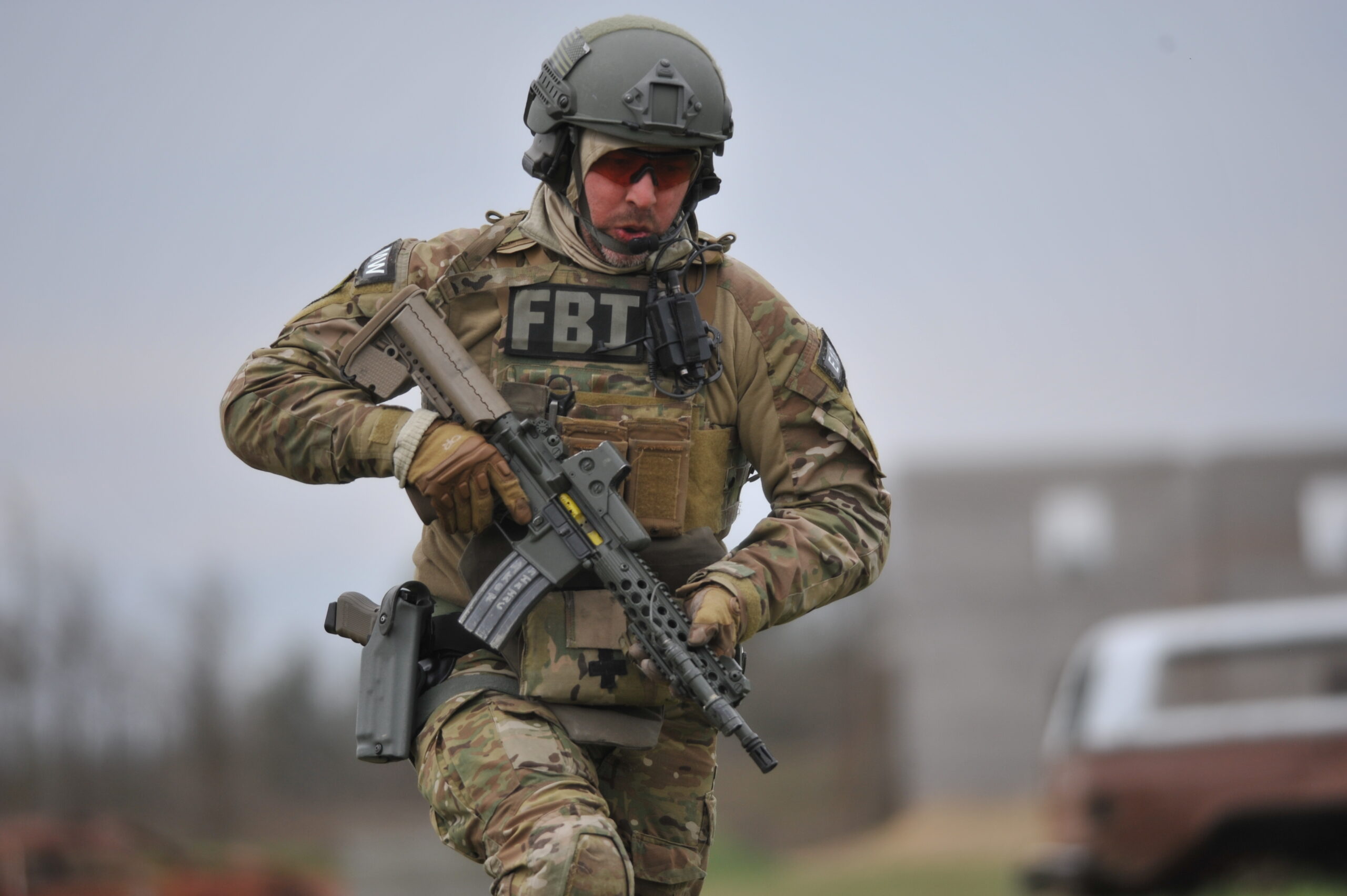 Less familiar is the FBI’s ubiquitous practice of inducing people to commit crimes in order to justify its continued existence and its continued receipt of taxpayer-funded largess. That practice involves entrapping people into committing crimes and then proudly patting itself on the back for “keeping America safe” by supposedly busting dangerous criminals.
An example of this sordid practice is detailed in a January 19, 2024, article in the New York Times that involved four men whose lives were partially destroyed by the FBI as part of its attempt to make itself look good by creating and encouraging a crime supposedly committed by those four men.
The four men — James Cromitie, Laguerre Payen, David Williams and Onta Williams — were from Newburgh, New York, and became known as the “Newburgh Four.” Given the FBI’s history of viewing Martin Luther King and the civil-rights movement as communist agents, it’s not surprising that the FBI targeted four Black men for its entrapment scheme. The fact that they were poor also figured into the FBI’s plot, given that the FBI used the lure of big amounts of taxpayer money to induce the men to commit a crime.
The scheme was part of the FBI’s post-9/11 plot to invent criminal conspiracies to commit terrorist attacks. That’s what the FBI did with the Newburgh Four. The FBI used the services of an informant named Shahed Hussain. The FBI had Hussain infiltrate various mosques and identify poor people who could be induced to engage in acts of terrorism. That would enable the FBI to exclaim, “We’ve busted terrorists! We’re keeping you safe! Give us more taxpayer money!”
Hussain promised the Newburgh Four $250,000 if they would agree to participate in a terrorist plot. After several months of refusing the offer, the four black men, at least one of whom was unemployed and broke, agreed to participate in bomb plots at various synagogues.
The men were busted and given 25-year jail sentences. They had served 14 years in jail until a heroic federal judge recently ordered their release. As reported in the New York Times article, the judge, Colleen McMahon, called the case “notorious.” She pointed out that “nothing about the crimes of conviction” had been of the “defendants’ own making.” She pointed out that the FBI’s agent in the crime, Shahed Hussain, was a “small time grifter and petty drug dealer.”
Judge McMahon correctly pointed out that the “real lead conspirator was the United States.” She added, “The F.B.I. invented the conspiracy; identified the targets; manufactured the ordnance.” The New York Times pointed out that McMahon added that the FBI “federalized” the charges — ensuring long prison terms — by driving several of the men into Connecticut to view the “bombs.”
After 14 years in jail on FBI-manufactured crimes, the Newburgh Four are free. But the best way to ensure that the FBI doesn’t destroy other people’s lives is to abolish it. Its dismantling would go a long way toward restoring freedom and justice in America. Anyway, criminal justice belongs at the state and local level, not the federal level.
From stones to missiles, Palestinian resistance’s phenomenal military rise
By Ivan Kesic | Press TV | January 24, 2024
The Al-Aqsa Storm Operation has irreversibly redefined the battlefield dynamics, especially with the Palestinian resistance stunning the military pundits in the West with its preparedness and the ability to inflict heavy and irreparable blows on the occupying regime.
The past fifteen weeks have been marked by the Palestinian resistance against the Israeli genocidal aggression on the Gaza Strip, with the armed wing of the Palestinian resistance group Hamas surprising all and sundry with its massive weapons arsenal, all of them locally manufactured.
Toward the end of 2023, the Martyr Izz ad-Din al-Qassam Brigades, the military wing of Hamas, published a video, showing its missile arsenal that is able to reach every nook and corner of the occupied territories.
Even today, more than three months after the regime launched its aggression followed by extensive operations by the resistance groups against the occupation forces, this arsenal remains intact.
Military experts in the West acknowledge that the Israeli regime, with all its advanced and sophisticated weapons systems imported from the United States and Europe, has been unable to match up to the armed wings of the Palestinian resistance groups and their fighters.
Despite the Israeli regime dropping 67,000 tons of bombs on Gaza since October 7, the resistance continues to grow and inflict heavy blows on the structure of the Zionist occupation.
The story of the Palestinian missile program is a story of decades of sacrifice, ingenuity, dedicated work and successful management, and above all, the defiant spirit of resistance.
This long and difficult path of resistance against the apartheid regime began with Palestinian stone-throwing at Israeli armored vehicles during two intifadas, and ended with the capability to launch 5,000 rockets in one day and a rocket arsenal sufficient for months of warfare.
The missile capabilities and scope of operations displayed by the Hamas and other Palestinian groups surprised all international observers, even the Israeli intelligence services.
What is particularly intriguing are the conditions in which the operation was carried out.
Pertinently, the Gaza Strip was under Israeli occupation from 1967 to 2005, and ever since has been under a fierce land, sea and air blockade that prevents the import of not only weapons but also materials for their production, as well as basic goods.
The Israeli regime tried everything to weaken the resistance and retain the military technological advantage so that it could easily eliminate the groups that have been fighting for the liberation of Palestine.
An example that illustrates this disparity is the Gaza Massacre of 15 years ago when hundreds of Palestinian civilians were killed by Israeli bombs, hundreds of Israeli civilians, the so-called “war tourists”, gathered on the nearby hills and cheered triumphantly.
However, times have changed since that gruesome bloodthirsty cheering by the Zionist settlers that was followed by the iconic photo of a Palestinian boy throwing a rock at an Israeli tank.
The Palestinian resistance initially relied on rudimentary weapons, smuggled or domestically produced, intended for close combat and countering invading forces on their own soil.
After years of usage of assault rifles and explosives, a simple Qassam rocket appeared in 2001, with a range of a handful of kilometers and low destructive power, which for the first time made possible a retaliatory strike against the Israeli occupation.
Over time, the efficiency of the Qassam models increased and the first Israeli military bases and occupied cities came within range in the 2010s, which caused the phenomenon of “war tourists” on the borders of Gaza to fall into oblivion suddenly.
The Israeli regime made an effort to stop the effectiveness of these rocket attacks by developing a warning system. It invested a staggering amount of money in the development of Iron Dome, a military system that turned out to be a miserable failure on October 7.
It also boasted about assassinating the Hamas rocket engineers responsible for the Qassam development, thinking it might cripple the Palestinian “brain trust” or deter new generations from engaging in development, which proved to be a blowback assessment.
Today, the Palestinian resistance has rockets with a range of hundreds of kilometers and warheads with a payload of hundreds of kilograms, capable of reaching any point in the occupied Palestinian territories.
Due to their size, it is not possible to smuggle these rockets from abroad into the Gaza Strip, especially not in such huge quantities, which proves that they are the result of local production.
Industrial production, in conditions of scarcity of necessary materials and exposure to Israeli airstrikes, is an impressive feat in itself. Production facilities are scattered underground and well hidden, which requires exceptional logistical skills.
The same applies to the supply of materials, which mainly comes from recycling raw materials such as old water pipes, anchors of destroyed buildings, streetlight poles and so on.
In an astonishing feat from 2020, Hamas naval commandos managed to salvage large 170-kilogram naval shells from a British warship that sunk offshore more than 100 years ago during the First World War and made them reusable for new missiles.
The rocket engines and guidance systems are the product of cooperation and military knowledge imparted by experts in the region, especially Iran.
The missiles revealed in the new video include the Maqadma and Jabari rocket family, both with a range of 90 km and 50 kg warheads, put into service in the early 2010s.
Development in the middle of the same decade witnessed the creation of the Attar rocket family with a range of 90 km and 50 kg warhead, as well as of the Rantisi rocket family with a range of 170 km and 100 kg warhead.
Finally, at the end of 2010s, the Ayyash rocket family was put into service, with a range of 250 km and a payload of 250 kg, the most powerful rocket in the Palestinian arsenal, used for strikes on Safed and Eilat during the Al-Aqsa Flood operation.
At the same time, the Sijjil rocket family with a range of 55 km and 50 kg warhead was also introduced, followed by the Shamala rocket family with a range of 80 km and 150 kg warhead.
Except for the Sijjil rocket series, which is named after a Quranic verse, all others are named after Palestinian martyrs, namely Ibrahim al-Maqadma, Ahmed al-Jabari, Raed al-Attar, Abdel Aziz al-Rantisi, Mohammed Abu Shamala and Yahya Ayyash.
For three decades, the Israeli regime thought that these assassinations would break the spirit of resistance and their technological development, which backfired in a way it could not have imagined.
The martyrs and the missiles named after them are today giving sleepless nights to the regime leaders.
Senate Looks to Fund Middle East Military Activity as CENTCOM Is ‘Running Out of Funds’
By Kyle Anzalone | The Libertarian Institute | January 24, 2024
The Senate is planning to add money to upcoming legislation to fund President Joe Biden’s military buildup in the Middle East and war in Yemen. Senator Susan Collins says the legation should be a priority as US Central Command is quickly depleting its funds. Senator Jack Reed believes Congress will need to pass multiple rounds of funding to allow Biden to wage war across the Middle East.
Following the Hamas attack on southern Israel, Biden ordered thousands of troops and multiple aircraft carrier strike groups into the region. Politico reports the Department of Defense informed Congress the deployment of additional troops and warships to the Middle East over the past four months has cost $1.6 billion. The Pentagon estimates the cost will be $2.2 billion over the course of the year.
The cost estimates do not include the price of the interceptors and munitions used in fighting the Houthis. Congress has not authorized Biden’s war in Yemen or the military surge in the Middle East. A growing number of American lawmakers, including within Biden’s party, have voiced opposition to the White House waging a war in Yemen without Congressional authorization.
A Pentagon official said at some point, the holes in the Department of Defense budget will have to be filled by Congress. An official told Politico, “It will be, I think, a hole that we would want to be filled. It is a bill that will be due and we will have to pay for it within a limited amount of resources.”
The Senate is now preparing to fund the conflicts in the Middle East, but there are no plans to authorize the war. Politico reports Congress is considering several options for authorizing the war spending. The outlet explains, “Lawmakers are aware of the unplanned cost and are weighing how to pay for it. Options include adding it to the annual spending bill, adding it to the $111 billion emergency supplemental for Ukraine and Israel, or funding it through a stand-alone supplemental for war costs.”
The White House has been pushing Congress to pass a $111 billion bill that provides funding for the wars in Ukraine and Israel, the military buildup in the Asia-Pacific, and border security. The legislation has been delayed for several months over debate on immigration policy.
Sen. Collins, a Republican member of the Senate Appropriations Committee, is urging the body to take action. “[US Central Command] needs [the funding] sooner. They’re fast running out of funds,” she said.
Senator Jack Reed believes Congress will have to pass multiple rounds of funding to fight wars in the Middle East. He said, “I sense, given the unexpected cost, that there will have to be a separate supplemental. These aren’t routine costs. They’re because of our reaction to the Houthi disruption, to Iranian malign behavior, etc. And I think that’s probably where we would go for it.”
Senators Dan Sullivan, Mitch McConnell, and Mark Kelley have all called for adding money to the supplemental war legislation to replace the interceptors and munitions used to fight the Houthis in Yemen.
UAE enlists Al-Qaeda, US mercenaries to operate in Yemen: Report
The Cradle | January 24, 2024
A BBC investigation released on 22 January reveals that the UAE hired Al-Qaeda militants to fight for the Southern Transitional Council (STC), the Emirati-backed government in Yemen.
A whistleblower cited in the investigation provided the BBC with “a document with 11 names of former Al-Qaeda members now working in the STC,” among them former high-ranking operatives of the extremist group.
Nasser al-Shiba, a former high-ranking Al-Qaeda member, is now the commander of the of the STC’s armed units, several sources told the BBC.
These militants were hired to carry out political assassinations across Yemen at the behest of Abu Dhabi, according to the investigation.
The BBC also points to a shadowy group of US mercenaries, known as Spear Operations Group, hired by the UAE to carry out assassinations.
Isaac Gilmore, a former US navy seal who later became Spear’s chief operating officer, is “one of several Americans who say they were hired to carry out assassinations in Yemen by the UAE.”
“He refused to talk about anyone who was on the ‘kill list’ provided to Spear by the UAE — other than the target of their first mission: Ansaf Mayo, a Yemeni MP who is the leader of Islah in the southern port city of Aden.”
Saudi and UAE-backed mercenary groups have run rampant across Yemen since the start of the war in the country nine years ago. Aside from assassinations, these mercenaries have also been implicated in a number of crimes, including the looting and illegal trading of Yemeni cultural heritage.
Several ancient sites and museums have been looted and stripped of valuable artifacts by UAE-backed mercenary groups in Yemen. There are also accounts of underage girls being raped by militants of such groups.
This is not the first time that UAE-backed armed groups in Yemen have been accused of working or coordinating with Al-Qaeda and ISIS.
According to documents obtained by Yemen’s Al-Masirah media outlet in February last year, Takfiri militants affiliated with the UAE-backed mercenary group, the Giants Brigade, looted large amounts of oil from the reserves in the energy-rich province of Shabwah, south of the country.
“We have all the evidence of the UAE’s relationship with Al-Qaeda and ISIS in Yemen,” Saleh al-Jabwani, Saleh al-Jabwani, a minister in the former Saudi-backed government of Abd Rabbuh Mansour Hadi, said in 2019.
The BBC investigation comes one month after UAE-backed mercenaries came under the spotlight once again, following reports that the US was working to recruit members of these mercenary groups to “distract” Ansarallah from its military operations against Israel.
“The United States is moving to activate factions loyal to the UAE in Yemen to distract Sanaa from continuing to carry out more air and sea attacks against the Israeli entity,” the Lebanese newspaper Al-Akhbar reported on 8 December.
According to Hebrew media, the UAE-backed STC has approached Israel and offered to help protect Israeli shipping in the Red Sea from attacks by Yemen’s Ansarallah resistance movement and the armed forces of the government in Sanaa.
Since November, Yemen’s Armed Forces and Ansarallah have seized one Israeli-linked vessel and have targeted over a dozen other ships, either owned by Israelis or Israeli firms or en route to Israeli ports. The Red Sea blockade by Yemen is in solidarity with the Palestinian resistance, which Sanaa has vowed to continue until the war and siege in Gaza ends.
Yemeni armed forces have also launched drones and missiles towards Israel’s southern port city of Eilat.
These attacks are garnering significant amounts of popular support for Ansarallah in Yemen.
According to Yemeni officials and analysts who spoke with Responsible Statecraft on 24 January, elements of the Muslim Brotherhood-affiliated Islah Party – which has, for the most part, been opposed to Ansarallah throughout the Yemen war – have been providing them with material support and have praised their pro-Palestine operations.
Iraqi resistance joins Yemen in imposing naval blockade against Israel
The Cradle | January 24, 2024
The Secretary-General of the Sayyid al-Shuhada Brigades, Abu Ala al-Walaei, announced during the early hours of 24 January the start of phase two of the Islamic Resistance in Iraq’s (IRI) pro-Palestine operations, including enforcing a naval blockade on Israel in the Mediterranean Sea.
“At a time when the criminal US occupation is again blatantly targeting our security forces … we urge the Mujahideen of the Islamic Resistance in Iraq to begin the second phase of their operations, which includes enforcing a blockade on Zionist maritime navigation in the Mediterranean Sea and putting the entity’s ports out of service,” Walaei said via social media.
The leader of the Sayyid al-Shuhada Brigades, a faction within the larger Popular Mobilization Units (PMU), stressed that these operations will continue until “the unjust siege on Gaza is lifted and the horrific Zionist massacres against its people are stopped.”
Hours earlier, US warplanes conducted a new round of airstrikes targeting alleged locations of the PMU-affiliated Kataib Hezbollah in Al-Qaim on the Iraqi-Syrian border and in Jurf al-Nasr south of Baghdad.
At least one death was reported following the attack in Al-Qaim.
The spokesman for Kataib Hezbollah, Jaafar al-Husseini, said in response to the attack: “The resistance will continue to destroy enemy strongholds in support of our people in Gaza until the brutal US-backed killing machine stops and the entire siege is lifted.”
Iraq’s National Security Advisor Qassim Al-Araji criticized the US for once again “violating Iraqi sovereignty” by targeting the PMU.
“Attacking the headquarters of the [PMU] in Al-Qaim and Jurf al-Nasr is an assault and a flagrant violation of Iraqi sovereignty and does not help [quell tensions],” the official said, stressing that, “Instead of bombing and targeting the headquarters of an Iraqi national institution, the US side should move to stop the aggression against Gaza.”
The Iraqi government has previously demanded that the US army respect the country’s sovereignty and security, as Prime Minister Mohammed Shia al-Sudani stresses that the PMU is an “integral part” of the country’s armed forces.
As part of the Resistance Axis’ operations in support of the Palestinian people, the IRI – an umbrella group of armed factions that includes members of the PMU – has conducted about 150 attacks on US bases in Iraq and Syria over the past several months.
The most recent attack took place on Tuesday morning, with a rocket salvo hitting the US-occupied Conoco oil field in northeast Syria for the second time in three days.
China-led multipolarity has accelerated the decline of the American era, the war in Gaza may end it altogether.
By Mohamad Hasan Sweidan | The Cradle | January 24, 2024
What is unfolding today in West Asia — the Gaza war and its regional expansion — cannot be viewed separately from the international transformations that have grown in momentum over the past few years. Today, the transition to multipolarity is the underlying factor shaping the decisions and policies of most countries, particularly those of the great powers.
The timing of Israel’s devastating military assault on Gaza coincides with heightened US attention on its great power competition for Washington, this conflict has much wider geopolitical significance beyond West Asia. In this context, the US has assumed, and will continue to play, a pivotal role in Gaza and its environs, unlike its powerful peers in China and Russia.
According to statistics published by the China Society for Human Rights Studies, the US initiated 201 of the 248 armed conflicts that took place since the end of World War II, often engaging in these wars via US-led alliances and/or proxies.
For decades, Washington has led these conflicts by very ably forming, then leading, and directing broad alliances to achieve its political and military objectives. But that ability notably shifted in December 2023, signaling a sharp decline in this capability.
In response to Yemen’s Ansarallah-aligned armed forces’ Red Sea blockade of Israeli-linked vessels, the US Department of Defense announced the formation of “Operation Guardian of Prosperity … to uphold the foundational principle of freedom of navigation” in those waters, initially consisting of a coalition of ten countries, most of them insignificant partners.
Protecting Israel or maintaining maritime dominance?
The coalition proved shaky from the get-go, with only the US and Britain actively involved in military strikes on Yemen. The reluctance of key European countries France, Spain, and Italy to join the naval alliance indicated a growing skepticism among the US’s traditional partners — both western and West Asian — about Washington’s commitment and capability to defend its allies in any impactful way.
Interestingly, more than eight further countries reportedly joined the coalition, but demanded anonymity, given the potential political fallout from associating with Washington and Tel Aviv.
Crucially, the Pentagon’s stated purpose of securing navigation in the Red Sea does not align with the actual threat presented, revealing ulterior motives behind US actions. The Yemenis have repeatedly confirmed that they only intend to inhibit the passage of Israeli-owned or destined vessels — and that all other ships are free to pass.
In short, the US/UK-led coalition is acting as a naval arm for Israeli military forces, seeking specifically to ensure unimpeded access for ships heading to Israeli ports via the Bab al-Mandab Strait. That’s not a position many other states will get behind if they want to maintain freedom of transport for their own shipping vessels.
Ultimately, the American show of force in these waterways seeks to consolidate US naval dominance, which war-torn Yemen, West Asia’s poorest country, has contested.
As outlined in the National Security Strategy for 2022:
The US “will not allow foreign or regional powers to jeopardize freedom of navigation through the Middle East’s (West Asia) waterways, including the Strait of Hormuz and the Bab al Mandab, nor tolerate efforts by any country to dominate another — or the region — through military buildups, incursions, or threats.”
According to media reports following massive US airstrikes against Iraqi targets on 23 January, Iraqi resistance factions will now also follow Yemen’s suit by implementing a blockade of Israeli ports in the Mediterranean Sea.
Current events are spiraling out of Washington’s control as onlookers increasingly question the utility and competence of US naval leadership in the world’s important waterways. Equally, there is recognition that other formidable forces and states have emerged, challenging US control over key global straits. In the words of British politician and writer Walter Raleigh, “Who rules the seas rules the world.” Under Sanaa’s watch, the US no longer can claim rule over the Red Sea or even its adjacent waterways.
Great power competition amid the Gaza war
The current scenario in West Asia, particularly post-Al-Aqsa Flood and the Gaza war that followed, coincides with a shift in Washington’s focus toward competition with China and its proxy war against Russia in Ukraine. As outlined in the US intelligence community’s annual threat assessment last year, this transition has already affected strategic goals, leading to a sharp decline in western support, especially from the US, for Ukraine. The Biden administration faced challenges in securing Congressional approval for a new aid package for Kiev, which directly competed for dollars against Tel Aviv’s military campaign in Gaza.
Despite assurances from western leaders during visits to Ukraine in October, their statements came without tangible material support, leaving President Volodymyr Zelensky in the proverbial dust. Quite unexpectedly, China has emerged as a potential peacemaker in this European conflict, with Kiev openly requesting Beijing’s involvement in mediation talks, and the US itself open to Chinese mediation to mitigate the escalation in West Asia.
The Chinese are well aware that there are no simple, face-saving exits for the US from the Gaza war it has championed and that the conflict’s metamorphosis into a regional one mires the US deeper into West Asia — and away from the Asia-Pacific.
Although China seeks to increase its presence in West Asia, it is very careful not to bog itself down in the region’s many issues. But Washington’s request that Beijing use its influence to sway Iran from conflict escalation makes clear that the US is no longer “the biggest power” in the region.
Why Israel opposes multipolarity
Following Operation Al-Aqsa Flood, US financial and military support for Israel has reached a critical stage, presenting two options for Washington. The first involves imposing some control on Israeli actions, given that the war’s timing has been unfavorable to US strategic interests, particularly in a critical election year. The second option, favored by the Washington elite, is to continue its unwavering support to Tel Aviv, even at the risk of damage to its global image.
Sustained global outrage over the Gaza war, coupled with the landmark genocide case filed against Israel at the International Court of Justice (ICJ), shows that Washington’s ability to cover for Israel is diminishing rapidly. Again, this reflects the global shift in the balance of power toward multipolarity, which is marked by the widespread decline of American influence.
But the US support for the Gaza genocide has had dramatic domestic repercussions, too. Polls show a major shift in the attitudes of young Americans, especially university youth, who will make up the ranks of America’s future leaders.
A Harvard-Harris poll published on 17 January reveals that 46 percent of respondents aged 18-24 believe that Hamas’ actions on 7 October can be justified because of the injustice to which the Palestinians are subjected. The same poll shows that 43 percent of the same group support Hamas in this war, and that 57 percent believe that Israel is carrying out massacres in Gaza. The most staggering poll result of all, though, has to be the one in December (conducted by the same pollsters) in which 51 percent of young Americans believe a final solution to the Israeli-Palestinian conflict is for Israel to end and be given to Hamas and the Palestinians.
While Israel remains a direct US interest in West Asia, Washington’s commitment to Tel Aviv’s security has already become a growing burden and increasingly difficult to justify. As the region’s Axis of Resistance expands its battle with Israel on new, multiple frontlines, the US will need to reallocate ever-expanding resources and focus on matching its international rivals in further-flung geographies.
Ukraine was a test run compared to this Gaza war and the immense, direct toll it is taking on US alliances, domestic politics, and the American image globally. For Israel, this presents an existential crisis beyond measure, as Washington is forced to compete with other great powers, none of whom are ideologically driven to support Zionism as part of their foreign policies.
Lavrov debunks US claim on Ukraine talks
RT | January 23, 2024
Moscow has never closed the door to dialogue to end the Ukraine conflict, Russian Foreign Minister Sergey Lavrov said on Tuesday, reiterating that the country’s key goal remains stopping NATO’s unchecked expansion towards its borders.
In a rare interview with CBS News in New York, where he arrived to take part in UN meetings on Ukraine and the Middle East, Lavrov rejected a recent claim by US Secretary of State Antony Blinken, who alleged that Moscow has shown no “willingness… to engage, to negotiate in good faith” to end the conflict with Kiev.
“It’s not true,” Lavrov stressed, adding that Russia has always been ready to discuss “any serious proposal” that addresses the situation on the ground and the root causes of hostilities. Moscow is also willing to reach a solution “which would guarantee legitimate national interests of Russia and the Ukrainian people,” the diplomat stated.
Lavrov reiterated that Russia is prepared to listen to anyone interested in establishing “justice” in relations between Moscow and Kiev. He insisted, however, that this would require the West to stop its policy of “using Ukraine as an instrument of war against Russia.”
Lavrov recalled that Russia has long voiced concerns about NATO expansion. “The goal is very simple… we’ve been warning publicly since 2008… that NATO’s expansion against all promises [to Russia and the Soviet Union]… was going too far,” he said.
At a 2008 summit in Bucharest, NATO leaders declared that Ukraine would eventually become part of the alliance, sparking a backlash from Russia, which has traditionally viewed the US-led military bloc’s expansion towards its borders as an existential threat.
In December 2021, weeks before the start of the Ukraine conflict, Moscow submitted a draft of security guarantees to the US and NATO, demanding that the West ban Kiev’s accession to the bloc and retreat to its borders as of 1997. The overture, however, was rebuffed.
Officials from Moscow and Kiev said the two sides were close to reaching a peace deal early in the Ukraine conflict, with a key Russian demand being that the neighboring country recommit to neutral status and abandon its NATO ambitions. According to numerous reports, the process was derailed by then-UK Prime Minister Boris Johnson, who convinced Ukraine to continue fighting.
DC Think Tank: House Could Kill Ukraine Aid Bill
By Ekaterina Blinova – Sputnik – 23.01.2024
House Republicans could block a hefty Ukraine aid package even if a bipartisan border security and immigration deal is passed, suggests the latest report by the Quincy Institute for Responsible Statecraft.
Republican and Democratic senators have engaged in a series of negotiations regarding President Joe Biden’s proposed $100 billion package for Ukraine. Senate leaders, Mitch McConnell (R-Ky.) and Chuck Schumer (D-N.Y.), have expressed optimism about the bipartisan Ukraine aid-border security agreement’s prospects.
Last year, the multi-billion package for Ukraine, as well as aid for Israel and the island of Taiwan, became stuck in the US Congress after the GOP deemed the border security issue to be an absolute priority.
According to Blaise Malley, a reporter for Responsible Statecraft and a former associate editor at The National Interest, it is uncertain whether the House of Representatives would align with the upper chamber’s position, despite the bipartisan agreement on border issues being on the horizon.
Malley referred to House Speaker Mike Johnson’s firm stance with regard to the implementation of sweeping migration reforms and his concerns about Ukraine aid oversight and Kiev’s strategy.
“We need the questions answered about the strategy, about the endgame and about the accountability for the precious treasure of the American people,” Johnson told journalists after a January 17 meeting with President Biden and other congressional leaders at the White House. The House speaker also stressed that the border issue should still come first. Rep. Johnson has a record of consistently voting against Ukraine aid in the past.
A GOP conference on Ukraine aid is due to be held on January 24 following the request by a group of Senate Republicans, led by Sen. Ron Johnson (R-Wis.), Malley noted, adding that support for further bankrolling Ukraine is beginning to steadily wither among House Republicans.
What’s more, some GOP lawmakers even threatened to introduce a “motion to vacate” against the incumbent House speaker, if he allows another package of Ukraine aid to pass.
“Rep. Marjorie Taylor Greene tells me ‘I would introduce the motion to vacate myself’ if Speaker Johnson passes funding to Ukraine,” Axios congressional reporter Andrew Solender tweeted on January 17.
Last October, the so-called Freedom Caucus forced then-Speaker of the House Kevin McCarthy to step down after Rep. Matt Gaetz of Florida forced the vote on the “motion to vacate.”
According to Malley, Speaker Johnson is unlikely to go against the Freedom Caucus for many reasons, one of which is that it may upend his relations with leading Republican presidential candidate Donald Trump.
But that is not all: the multi-billion aid bill, which also includes at least $10 billion for Israel, has come under scrutiny from some Democratic congressmen who are seeking to obligate Tel Aviv to observe human rights in its war against Gaza. Since the conflict started, 25,105 Palestinians have been killed in the region, according to the Palestinian Health Ministry.
The RS reporter pointed out that 18 Senators on January 19 announced their support for an amendment to the national security supplemental that would require “that the weapons received by any country under this bill are used in accordance with US law, international humanitarian law and the law of armed conflict.”
“The path to passing this legislation is filled with roadblocks and question marks,” Malley wrote. “Biden has implored Congress to approve his proposal as soon as possible, but even as incremental progress is made, final passage still appears to be a ways away.”
Belgium to Allocate $663Mln to Ukraine From Profits Made From Russia Frozen Assets – Reports
Sputnik – 23.01.2024
BRUSSELS – Belgium will allocate 611 million euros ($663 million) to help Ukraine in 2024 from the profits received from the frozen assets of Russia, La Libre newspaper reported on Tuesday, citing Defense Minister Ludivine Dedonder.
The funding will be provided from the interests on the accounts of Russia’s frozen assets in the country, the newspaper reported.
Last year the US proposed G7 working groups to look at possible ways to seize $300 billion in frozen Russian assets. The EU, and the UK have stressed that the money received via the confiscation would not be easily accessible and would also be insufficient to cover Ukraine’s reconstruction needs. Besides, the countries have noted that the confiscation of Russian assets should not occur to the detriment of providing financial support to Kiev in 2024.
Moscow has maintained that any attempt to confiscate its frozen assets would violate international law. The Russian Foreign Ministry has dismissed the freezing of Russian assets as theft.
“Those who are trying to initiate this, and those who will implement it, must understand that Russia will never leave those who did this alone. And it will constantly exercise its right to a legal battle, internationally, nationally or otherwise. And this, of course, will have — both Europeans and Americans understand this very well — it will have legal consequences for those who initiated and implemented it,” Kremlin spokesman Dmitry Peskov said commenting on the issue.
Last year, Russian President Vladimir Putin dubbed the West’s asset seizure an “unseemly business,” and stressed that “stealing other people’s assets has never brought anyone good”.
They Think We are Stupid, Volume 6
Everything you need to know about our ruling class’s opinion of you
By Aaron Kheriaty, MD | Human Flourishing | January 22, 2024


The U.S. Steals Syrian Oil, and the Kurds Sell It to Israel at a Discount in Erbil
By Steven Sahiounie | Strategic Culture Foundation | January 22, 2024
Iran’s Revolutionary Guard (IRG) claimed responsibility for missile attacks on an Israeli “spy headquarters.” Kurdish businessman Peshraw Dizayee and four of his family members were killed in the attack on their home on January 16 near the U.S. Consulate in Erbil, in the Iraqi Kurdistan Region (IKR).
Dizayee was the owner of the Falcon Group, which is a business involved in oil and gas, agriculture and security. The IRG claimed its missiles targeted a “Mossad headquarters”.
“No U.S. facilities were impacted. We’re not tracking damage to infrastructure or injuries at this time,” a U.S. official said in response to the recent attack.
Prime Minister of the IKR, Masrour Barzani, condemned the IRG attacks on Erbil.
The Oil business in Erbil
The oil business is thriving in IKR, and the Falcon Group was part of it. Kurdish oil has been exported to Israel, Italy, France and Greece through a secretive trade depending on pre-pay deals.
Israel buys much of its oil from Erbil, and Israel depends on the heavily discounted crude, making it a key customer. The oil is discounted to Israel because it is free, as the source is the stolen Syrian oil. 40% of Israel’s oil supplies were from IKR in the first three months of 2023, which doubled the amount in 2022.
Israel received its first substantial seaborne crude oil shipment from the IKR in 2014, which is the same time the U.S. occupation forces arrived in Syria. Israel was reportedly importing as much as three-quarters of its crude oil needs from the IKR by mid-2015.
Israeli refineries and oil companies imported almost $1 billion worth of Kurdish oil between May and August of 2023, according to shipping data, trading sources and satellite tanker tracking, which represents about 77 % of average Israeli demand, which runs at roughly 240,000 barrels per day. More than a third of all of the northern Iraqi exports, which are shipped from Turkey’s Mediterranean port of Ceyhan, went to Israel over the period.
According to anonymous sources, it was a Mossad agent who first traveled to Erbil to negotiate the deal to buy oil from IKR, which was facilitated by U.S. officials.
The U.S. Consulate in Erbil
The new U.S. Consulate General building in Erbil, near the attack carried out by Iran, is the biggest consulate complex built by the U.S. Embassies and Consulates are under the U.S. State Department, but the consulate in Erbil has a connection to the U.S. Department of Defense, demonstrating the strategic importance of the region for Washington, with a U.S. military base also in IKR.
Irvin Hicks, Jr., the U.S. Consul General in Erbil, stated in January 2023, that the new 800-million-dollar consulate building is a clear statement that the “United States of America is not going anywhere.”
The U.S. first opened a diplomatic office in Erbil in February 2007, and later upgraded to a consulate general in 2011, the same year the U.S.-NATO attack on Syria began for regime change, under the Obama-Biden administration.
The U.S. embassy in Baghdad was built in 2009 and is its biggest mission compound in the world at a cost of $750 million. Iraqi Kurdistan and the Iraqi central government in Baghdad operate separately, as the Kurds are a semi-autonomous region.
Erbil has 30 consulates, six honorary consulates, and six foreign trade offices, with the Japanese consulate the latest to open on Jan. 11.
“Opening more than 30 consulates is not normal,” Iranian Brigadier General Mohammad Hossein Rajabi criticized. Most of these consulates are used for espionage activities.”
Iran views the foreign offices as having the potential to carry out plans aimed at destabilizing the security of Iran, by hosting Iranian separatist groups and bases aligned with Israeli intelligence agency Mossad.
The Iraqi response to the Genocide in Gaza
“On October 20, 2023, the Department ordered the departure of eligible family members and non-emergency U.S. government personnel from U.S. Embassy Baghdad and U.S. Consulate General Erbil due to increased security threats against U.S. government personnel and interests,” according to the State Department’s Iraq travel advisory.
Iraqis have taken to the streets to protest the U.S. complicity in the genocide being committed in Gaza by Israel. U.S. President Joe Biden has defied the American values of human rights and international law by continuing to send weapons to Israel to promote the wholesale slaughter of the Palestinian civilians of Gaza, even in the face of international criticism which has lowered the image of America as a beacon of freedom to a joke.
Protests have taken place outside of the U.S. Embassy in Baghdad, and military groups which are under the central government of Iraq have fired rockets and armed drones at U.S. troops based in Anbar and near Erbil multiple times. Baghdad does not recognize Israel; however, the IKR are aligned with the U.S., and sell the stolen oil from Syria to the prime U.S. ally, Israel.
The U.S. invaded and destroyed Iraq in 2003, and occupied the country for years until a withdrawal. When ISIS reared its ugly head, the Baghdad government requested U.S. troops to come to help in the fight against ISIS, which saw its defeat at the hands of Iraq, Syria, Russia, and the U.S. The Iraqi parliament ordered the U.S. troops to leave after the defeat of ISIS in 2017, but the Department of Defense refused. The Prime Minister of Iraq has recently ordered the U.S. troops to leave immediately following the U.S. assassination of Mushtaq Jawad Kazim al-Jawari in Baghdad on January 4, an Iraqi military commander who was instrumental in the defeat of ISIS.
The PKK in Syria and Erbil
The PKK aligned SDF in north east Syria is U.S. supported. The U.S. military in Syria are occupying the largest oil field in Syria, which prevents the Damascus government from using the oil to provide electricity to the Syrian people, who suffer with just 3 hours of electricity per day.
In December 2023, 44-tanker convoy carrying oil stolen from Syria traveled clandestinely to U.S. bases near Erbil. Just days before, U.S. forces took 95 tankers of oil and a truckload of stolen Syrian wheat to IKR. The Syrian wheat fields are also in the area the U.S. troops occupy and the area is controlled by Kurds who are aligned with the IKR.
Farhan Jamil Abdullah, head of the Syrian Oil Company, said in July that as a result of the U.S. sanctions and military occupation in Syria, oil production has decreased to 15,000 barrels per day from 385,000 barrels before 2011.
Firas Hassan Kaddour, the Syrian Oil Minister, said in July that the losses of the energy sector in Syria are close to 100 billion U.S. dollars.
The main oil field of Al Omar and Conoco in Syria are producing oil which is shipped in tankers by the U.S. Army and refined at Kar Oil Refinery in Erbil.
The U.S. sponsors the SDF militia in Syria which is dominated by the YPG. The YPG is the Syrian branch of the PKK, a group recognized by Turkey, as well as the U.S. and the EU, as a terrorist organization, who have killed more than 40,000 persons over decades.
Turkey has condemned the U.S. alliance with the SDF and YPG, and considers the U.S. is financing terrorism.
The commander of the SDF is General Mazloum Kobani, who is also a member of the PKK. His real name is Ferhat Abdi Sahin, is one of Turkey’s most wanted terrorists. Kobani was chosen by the U.S. as their military ally and it is at Kobani’s command that the stolen Syrian oil is loaded into tankers.
Erdogan has demanded for years that the U.S. must stop supporting the SDF, YPG, and to stop encouraging the Kurds to establish an independent homeland in north east Syria on the border with Turkey, which is a NATO member, and ally of the U.S., housing an American military base there.
Featured Video

Houthis Don’t Have to Conquer Saudi Arabia to Make It Pay
or go to
Aletho News Archives – Video-Images
From the Archives
Newly Released FBI Docs Shed Light on Apparent Mossad Foreknowledge of 9/11 Attacks
By Whitney Webb | MintPress News | May 17, 2019
NEW YORK — For nearly two decades, one of the most overlooked and little known arrests made in the aftermath of the September 11 attacks was that of the so-called “High Fivers,” or the “Dancing Israelis.” However, new information released by the FBI on May 7 has brought fresh scrutiny to the possibility that the “Dancing Israelis,” at least two of whom were known Mossad operatives, had prior knowledge of the attacks on the World Trade Center. … continue
Blog Roll
 Aletho News
- MEP blasts ‘Euro-Gestapo’ for lecturing Russia on democracy
- Syria May Send Troops to Saudi Arabia Amid War with Ansar Allah
- UK whines about losing billions to ‘Putin tax’
- Baghaei to Rubio: Distorted narratives cannot erase US record of broken commitments
- Houthis Don’t Have to Conquer Saudi Arabia to Make It Pay
- MOE: Nearly 22,000 Students and Education Workers Killed
- Guterres in Islamabad: Genocide, cowardice, and the cage of Imran Khan
- Johnson, Marandi say Yemen holds upper hand over Saudi Arabia
- False flags won’t save aggressors, Iran FM spokesman says
- The Makkah Pact Enters Into Force: The End of American Dominance or Its New Form?
- If Americans Knew
- Report claimed Mark Levin used by Israeli government to influence Trump
- Over 2,000 Gazans have died awaiting medical evacuation amid Israel’s continued siege
- How a U.S. Diplomat Suppressed and Altered Reports Critical of Israel
- 5 Palestinians Die from Israeli Strikes in Gaza as Relentless Attacks Continue
- Report: Ceasefire Slows Killing but Leaves Devastation Intact
- Country Music Singer Zach Bryan Breaks Attendance Record at Robert Kraft’s Gillette Stadium While Wearing ‘Free Palestine’ Shirt for Second Night in a Row
- Three years of death and devastation: Israel’s war on Gaza in pictures
- Why Hamas believed the status quo was more dangerous than its 7 October gamble
- Debunking Israel’s latest list of ‘terrorist’ journalists in Gaza
- In Gaza, focus is on survival, “every step is a struggle” – Daily Update
- No Tricks Zone
- New Study: 50 Years Of The Most Aggressive ‘Net Zero’ Policies Can Only Affect The Global Climate By 0.03°C
- US September “Heat” Was No Record…Many Records Set Decades Ago
- Latest European Green Energy Debacle; Portugal’s Largest Flagship Solar Park Insolvent!
- Green Energy Debacle: German Expert Professor Fritz Vahrenholt Warns Of Severe Economic And Social Consequences
- Two More Paleo Reconstructions Affirm Meters-Higher Sea Levels Across Ireland, Brazil 7000-6000 Years Ago
- New Study: Earth And Venus Surface Warmth Largely Explained By Convection And Lapse Rate, Not CO2 Or Radiation
- 2025 Nature Paper Claiming Worsening Global Drought Gets RETRACTED …Heavily Flawed
- New Study: ‘Global Drought Shows No Detectable Recent Acceleration Under Climate Warming’
- Economic Masterminds: German Socialists Suggest Taxing Productivity Gains Stemming From Using AI
- The South China Sea Has Not Been Cooperating With The Climate Change Narrative

