US making ‘no practical steps’ to ratify Nuclear Test Ban Treaty – Russia
RT | March 27, 2015
Moscow has slammed Washington for taking “no practical steps” to ratify the Comprehensive Nuclear Test Ban Treaty (CTBT) – despite countless promises to do so – and consequently preventing the important international treaty from going into force.
“The main load of responsibility that the CTBT has not entered into force so far lies on the eight remaining countries from the so-called ‘list of 44’ whose ratification documents are needed to launch the treaty,” Russia’s Foreign Ministry said in a statement.
The ministry stressed that “first of all, this refers to the US, a country that positions itself as a leader in the sphere of strengthening the regime of nuclear non-proliferation and disarmament.”
“Unfortunately, despite the repeated statements on the plans to ratify the Treaty, the US has yet taken no practical steps in this direction,” the statement said.
Moscow also praised Angola for ratifying the CTBT on March 20. The African nation was the 164th country to confirm the treaty.
“Such a decision of Luanda (Angola’s capital) certainly brings the CTBT closer to a universal status and contributes to its turning into a valid international-legal tool,” the ministry said.
The statement stressed that Russia’s “continuous commitment to the CTBT and the readiness to secure its speedy entry into legal force.”
“We once again call on all the states that have not yet signed or not ratified the Treaty to do it without delay or preconditions,” it said.
The Comprehensive Nuclear Test Ban Treaty is a multilateral agreement banning all nuclear explosions in all environments, for military or civilian purposes.
The CTBT was adopted by the United Nations General Assembly in September 1996. However, nearly two decades later, it has not entered into force due to non-ratification by eight countries.
The US, China, Egypt, Iran, Israel have signed the deal, but not ratified it. North Korea and Pakistan have yet to sign the treaty.
Bipartisan bill would repeal Patriot Act, cut down American surveillance
RT | March 25, 2015
The bipartisan Surveillance State Repeal Act, if passed, would repeal dragnet surveillance of Americans’ personal communications, overhaul the federal domestic surveillance program, and provide protections for whistleblowers.
House lawmakers Mark Pocan (D-Wis.) and Thomas Massie (R-Ky.) are co-sponsoring bill H.R.1466, which was introduced on Tuesday and would repeal the 2001 Patriot Act, limit powers of the FISA Amendments Act, and prohibit retaliation against federal national security whistleblowers, according to The Hill.
“The Patriot Act contains many provisions that violate the Fourth Amendment and have led to a dramatic expansion of our domestic surveillance state,” said Rep. Massie in a statement. “Our Founding Fathers fought and died to stop the kind of warrantless spying and searches that the Patriot Act and the FISA Amendments Act authorize. It is long past time to repeal the Patriot Act and reassert the constitutional rights of all Americans.”
Specifically, the bill would revoke all the powers of the Patriot Act, and instruct the Director of National Intelligence and the Attorney General to destroy any information collected under the FISA Amendments Act concerning any US person not under investigation.
It would repeal provisions of the FISA Amendments Act to ensure surveillance of email data only occurs with a valid warrant based on probable cause. The bill would also prohibit the government from mandating that manufacturers build mechanisms allowing the government to bypass encryption in order to conduct surveillance.
Additionally, the bill would protect a federal whistleblower’s efforts to expose mismanagement, waste, fraud, abuse, or criminal behavior. It would also make retaliation against anyone interfering with those efforts – such as threatening them with punishment or termination – illegal.
“Really, what we need are new whistleblower protections so that the next Edward Snowden doesn’t have to go to Russia or Hong Kong or whatever the case may be just for disclosing this,” Massie said.
There have been previous attempts to limit dragnet surveillance under the Patriot Act since former National Security Agency analyst Edward Snowden leaked information regarding the programs in 2013, but the Senate bill introduced in 2013 never reached the floor for a vote.
“The warrantless collection of millions of personal communications from innocent Americans is a direct violation of our constitutional right to privacy,” said Rep. Pocan in a statement.
“Revelations about the NSA’s programs reveal the extraordinary extent to which the program has invaded Americans’ privacy. I reject the notion that we must sacrifice liberty for security – we can live in a secure nation which also upholds a strong commitment to civil liberties. This legislation ends the NSA’s dragnet surveillance practices, while putting provisions in place to protect the privacy of American citizens through real and lasting change.”
Portions of the Patriot Act are due for renewal on June 1.
US troops, contractors sexually abused Colombian girls with impunity – report
RT | March 25, 2015
Fifty-four Colombian girls were sexually abused by US troops and military contractors between 2003 and 2007, claims a new report by the country’s reconciliation commission. None of the perpetrators were ever prosecuted because US forces had immunity.
The claims are part of an 800-page report by an independent commission established by the Colombian government and the Revolutionary Armed Forces of Colombia (FARC) rebel group. The commission’s goal is to determine the causes and document the consequences of the civil war that has ravaged the country for 50 years and claimed over seven million lives.
“There exists abundant information about the sexual violence, in absolute impunity thanks to the bilateral agreements and the diplomatic immunity of United States officials,” Renan Vega, of the National University of Colombia in Bogota, told Colombia Reports.
Vega authored the portion of the report documenting the allegations of sexual abuse by US military personnel and contractors, deployed in the country under ‘Plan Colombia’ to back the government against FARC and cocaine cartels.
Most of the abuses allegedly took place in Melgar, a town in the province of Tolima, located 61 miles (98 km) southwest of Bogota. In one instance, contractors based at Tolemaida Air Base were abusing more than 50 underage girls and making pornographic videos.
In another instance, in 2007, one US sergeant and a security contractor were accused of sexually assaulting a 12-year-old girl. An investigation by Colombian prosecutors established that the girl had been drugged and assaulted inside the military base by Sergeant Michael J. Coen and contractor Cesar Ruiz. Both were flown out of the country, as terms of the US-Colombian Status of Forces Agreement (SOFA) gave US personnel immunity from local laws.
The girl and her family left Melgar and moved to Medellin, claiming harassment and threats from the US-allied government forces.
The Colombian daily El Tiempo reported that Melgar was dealing with a ”a growing societal problem” of sexually exploited minors, “augmented by the presence of foreigners, especially those from the United States tied to oil and military endeavors.” The newspaper reported that there had been 23 formal complaints in 2006 and 13 in 2007. Left-leaning news site El Turbion corroborated the numbers.
According to the government, 7,234 Colombian women were registered as victims of sex crimes during the conflict.
Read more: Immunity for US troops in Afghanistan reveals colonial nature of Security Pact
Israel accused of feeding secret info on Iran talks to US lawmakers
RT | March 24, 2015
Israel has been accused of feeding secret information on the Iran 5+1 nuclear talks to senior US lawmakers in an effort to scupper the negotiations, a new report says. The accusation was met with sharp denial in Tel Aviv.
The allegations were revealed in a Wall Street Journal investigation, and come from dozens of interviews with officials past and present, who are familiar with the nuclear discussions.
Israel, for its part, claims that this was not accompanied by any official accusations by the White House, according to Haaretz.
According to the sources, it came as no surprise to the White House that Prime Minister Benjamin Netanyahu was continuing on his mission to derail a much sought-after agreement with Iran, as Tel Aviv remains implacably opposed to a nuclear Tehran, and has in recent past tried to involve the US Congress to impede a diplomatic solution offered by the 5+1 talks.
However, it came as a surprise to Washington that Tel Aviv would feed the secret information to US lawmakers to drain support from a deal with Tehran. Washington and Tel Aviv have vastly different notions on how to deal with Tehran and how regional peace is to be secured.
“It is one thing for the US and Israel to spy on each other. It is another thing for Israel to steal US secrets and play them back to US legislators to undermine US diplomacy,” a top US official close to the situation told WSJ.
Israel’s alleged role in passing on information to US lawmakers emerged after US intelligence was snooping on the Israelis and heard information they claimed could only have come from the closed-door talks.
Tel Aviv denied this, saying that they had acquired the information by different means, such as routine spying on communications with Iran.
“These allegations are utterly false,” Netanyahu’s office told reporters. “The state of Israel does not conduct espionage against the United States or Israel’s other allies. The false allegations are clearly intended to undermine the strong ties between the United States and Israel and the security and intelligence relationship we share.”
WSJ’s sources said that Israel tops the list of close US allies trying to spy on it, and that more US counterintelligence resources are spent on Israel than any other partner.
Netanyahu has been trying to drum up support against the Obama administration’s push for rapprochement with Tehran from within the US government, as well as trying to sway US lawmakers.
The fresh allegations of meddling by Israel could alienate US officials, many of whom are expected to be around after Obama’s term finishes.
Last month, Obama’s cabinet accused Israel of “selective sharing of information” and “cherry-picking” as it publicly voiced its discontent with the ongoing talks. “Not everything you’re hearing from the Israeli government is an accurate depiction of the talks,” State Department spokeswoman Jen Psaki said.
On the same day, The New York Times revealed that Obama had warned his European partners in the 5+1 talks (France, Germany and the UK) not to share too much information with Israel, “because whatever we say may be used in a selective way.”
Two weeks ago, Netanyahu attempted to cancel a briefing for of a delegation of six US senators, Netanyahu’s idea of involving Congress in the matter would all but derail any deal with Iran. Eventually, Netanyahu had to back down and allow the briefing to take place.
Tensions between Tel Aviv and Washington are already running high after Netanyahu delivered a controversial address to the US Congress, organized with Republican lawmakers but not the White House or the US State Department, in which he struck out at Iran, but, in Obama’s opinion, offered few alternatives to his previous line of aggressive engagement.
The rift deepened further after Netanyahu said in his re-election campaign that Palestinian statehood would never happen on his watch.
The White House said shortly afterward: “We cannot simply pretend that those comments were never made, or that they don’t raise questions about the prime minister’s commitment to achieving peace through direct negotiations.”
Relations cooled with Tel Aviv in 2012, when Obama decided to talk to Iran without Israel’s involvement – something Netanyahu reportedly did not appreciate.
With these latest allegations of Israeli meddling in US politics, “people feel personally sold out,” one US official said.
Israel appeared to be counting on a handful of Democrats in Congress to block the deal with Iran, the WSJ source said. “[T]hat’s where the Israelis really better be careful, because a lot of these people will not only be around for this administration but possible the next one as well,” the US official said.
Read more:
Israel’s delegation in Paris trying to prevent ‘bad’ Iran nuclear deal
Israel, US ‘boycott’ UN session on Gaza conflict
RT | March 23, 2015
Israeli and American representatives were conspicuously absent from the UN Human Rights Council session on the Palestinian territories on Monday. The session aimed to look into the Gaza conflict which killed 2,200 people in 50 days in 2014.
“I note the representative of Israel is not present,” Council President Joachim Ruecher said as the session kicked off Monday in Geneva.
Tel Aviv refused to comment as to why its representatives did not take part.
The US, however, said that one of the points on the UN session agenda – concerning human rights violations against the Palestinians – lacked legitimacy.
“Our non-participation in this debate underscores our position that Item 7 lacks legitimacy, as it did last year when we also refrained from speaking. The United States strongly and unequivocally opposes the very existence of Agenda Item 7 and any HRC resolutions that come from it,” Keith Harper, US ambassador to the Council, said in a statement.
He added that the United States remains “deeply troubled” by the item directed against Israel “and by the many repetitive and one-sided resolutions under that agenda item. No other nation has an entire agenda item set aside to deal with it.”
The Monday session was initially scheduled to discuss the report on the 50-day war in Gaza last year, but the incoming United Nations Human Rights Council’s chairperson, Mary McGowan Davis, said investigators needed more time to finish their report on the conflict, as Israel impeded access to the Gaza Strip and the West Bank.
“The commission has done its utmost to obtain access to Israel and the Gaza Strip, as well as the West Bank, including East Jerusalem. We would very much have liked to meet face to face with victims and the authorities in these places,” she said.
Davis asked for a delay until June for the commission to complete its report, due to late-breaking testimonies from witnesses and changes in leadership.
Mary McGowan Davis – a former New York State Supreme Court Justice – replaced William Schabas, a Canadian international law expert, as the Council’s chairperson after Schabas quit last month under Israeli pressure. Israel had doubts about his objectiveness, as he had prepared a legal opinion for the Palestine Liberation Organization while serving as a law professor in 2012.
Meanwhile, despite Schabas’ resignation, Israel continues to accuse the commission of bias against the Jewish state. Three years ago, Tel Aviv cut all ties with the Council after it began checks on how Jewish settlements in the Palestinian territories could be violating human rights. Relations were partially restored last year.
Israel has been severely criticized for its political decisions amid the 2014 war in Gaza, which claimed the lives of more than 2,140 Palestinians – most of them civilians – and over 70 Israelis, most of whom were soldiers. The conflict ended with a truce between Israel and Hamas on August 26.
“The ferocity of destruction and high proportion of civilian lives lost in Gaza cast serious doubts over Israel’s adherence to international humanitarian law principles of proportionality, distinction and precautions in attack,” Makarim Wibisono, special rapporteur on human rights in the occupied territories, told the Council. Meanwhile, armed Palestinian groups were also accused of impunity against civilians and targeting Israeli civilians to inspire aggression from Tel Aviv.
“The actions of Palestinian armed groups in Gaza, including indiscriminate rocket fire into civilian neighborhoods in Israel, firing from densely-populated areas, locating military objects in civilian buildings, and the execution of suspected collaborators, also constitute clear violations of international humanitarian law and human rights law,” Deputy High Commissioner for Human Rights Flavia Pansieri said in remarks published on the UN’s website on Monday.
Relations between the Obama administration and Israel appeared to have cooled down after Prime Minister Netanyahu addressed the US Congress with a speech criticizing Washington’s nuke talks with Iran. Netanyahu’s pre-election promise not to allow the creation of a Palestinian state did not help to improve the situation. After being re-elected, the PM tried to step back and said he still supported the concept of “two states.” However, White House press secretary Josh Earnest called his position “cynical” and accused him of “divisive election day tactics.”
Anti-base Okinawa governor blocks relocation of US Marines
RT | March 23, 2015
Okinawa’s governor ordered a halt to an underwater survey needed for reclamation of land for a new $8.6-billion base, which would host US troops after the Futenma facility on the island is closed.
Takeshi Onaga is delivering on the promise he made to voters to oppose the construction, after his election last November. At a media conference on Monday, he announced that defense ministry contractors must stop the survey due to the damage it’s causing to corral reefs. If they don’t, Onaga said he would revoke approval for drilling operations given by his predecessor in December 2012 within days.
The survey is necessary for the eventual construction of an off-shore runway for the future US military base in the less populous area of northern Okinawa, which would house thousands of troops after the closure of the Futenma base in the south.
The facility is viewed by locals as a source of noise, pollution and crime. Opposition to its presence flared up after the rape and abduction of a 12-year-old girl by three US servicemen in 1995.
In 1996, Tokyo and Washington agreed to shut the base down, but construction of a replacement stalled due to local resistance.
Onaga’s move coincides with the announcement of Prime Minister Shinzo Abe’s visit to the US in late April. Abe, who supports the construction of the new base, is expected to be praised for his determined position to oppose Chinese influence in the region.
Chief Cabinet Secretary Yoshihide Suga told journalists the Japanese government was examining Onaga’s documents. He called the governor’s steps “extremely regrettable.”
“We are going to continue with construction work without delay,” the spokesman said.
Read more: Anti-US military base candidate wins Okinawa governor race
Ukraine oligarchs ‘top cash contributors’ to Clinton Foundation prior to Kiev crisis
RT | March 22, 2015
From 2009 up to 2013, the year the Ukrainian crisis erupted, the Clinton Foundation received at least $8.6 million from the Victor Pinchuk Foundation, which is headquartered in the Ukrainian capital of Kiev, a new report claims.
That places Ukraine as the leading contributor among foreign donators to the Clinton Foundation.
In 2008, Viktor Pinchuk, who made a fortune in the pipe-building business, pledged a five-year, $29-million commitment to the Clinton Global Initiative, a program that works to train future Ukrainian leaders “to modernize Ukraine.” The Wall Street Journal revealed the donations the fund received from foreigners abroad between 2009-2014 in their report published earlier this week .
Several alumni of the program have already graduated into the ranks of Ukraine’s parliament, while a former Clinton pollster went to work as a lobbyist for Pinchuk at the same time Clinton was working in government.
The Pinchuk foundation said its donations to the Clinton-family organization were designed to make Ukraine “a successful, free, modern country based on European values.” It went on to remark that if Pinchuk was hoping to lobby the US State Department about Ukraine, “this cannot be seen as anything but a good thing,” WSJ quoted it as saying.
However, critics have pointed to some disturbing aspects regarding the donations, including the coincidence of the Ukrainian crisis, which began in November 2013, and the heavy amount of cash donations being made to the Clinton Foundation on behalf of wealthy Ukrainian businessmen. In any case, given that Hillary Clinton appears to be considering a possible run in the next presidential elections, more scrutiny will be devoted to her past work with the charity that bears the Clinton name.
First, as already mentioned, Clinton was serving as the US secretary of state at the time that the donations to her family’s charity were being made. Although it is true that the Clinton Foundation refused donations directly from foreign governments while Clinton was serving in the Obama administration, the door remained wide open to donations from public citizens like Pinchuk, who has advocated on behalf of stronger ties between Ukraine and the European Union.
Political connections in the Pinchuk family run deep. Not only did Viktor Pinchuk serve two terms as a Ukrainian parliamentarian, but his wife is the daughter of former Ukrainian President Leonid Kuchma.
After being introduced to former US President Bill Clinton by Doug Schoen, a political analyst and pollster who has worked for both Clintons, Pinchuk and his wife began making donations to Clinton-family charities, WSJ reported.
During Hillary Clinton’s time at the State Department, Schoen began work as a congressional lobbyist for the Ukrainian oligarch. Schoen defended his lobbying activities, saying there was no connection to Pinchuk’s hefty donations.
“We were not seeking to use any leverage or any connections or anything of the sort relating to the foundation,” he said.
Schoen said he and Viktor Pinchuk met on several occasions with Clinton aides including Melanne Verveer, a Ukrainian-American who holds membership in the influential Council on Foreign Relations, as well as the Trilateral Commission.
The purpose of these meetings, according to Schoen, was to encourage the US government to pressure Ukraine’s former President Viktor Yanukovich to release his jailed predecessor, Yulia Tymoshenko.
Whatever the case may be, Ukraine entered a period of severe crisis on November 21, 2013, when Yanukovich suspended plans for the implementation of an association agreement with the European Union. The announcement triggered mass protests that led to Yanukovich fleeing Kiev on February 22, 2014.
Social unrest eventually consumed the country, as the eastern part of the country attempted to gain more independence from Kiev. Recently, both sides have agreed to a tense ceasefire, hammered out last month in Minsk, Belarus by the leaders of Ukraine, Russia, France, and Germany.
Read more: Putin in film on Crimea: US masterminds behind Ukraine coup, helped train radicals
Revealed: The CIA report used as pretext for Iraq invasion
RT | March 20, 2015
The document summarizing the CIA’s purported knowledge of Iraqi chemical, biological and nuclear weapons programs, produced in October 2002 and hidden from the public ever since, has finally been made public.
The CIA had previously released a heavily redacted version of the controversial National Intelligence Estimate (NIE) in 2004. Last year, transparency advocate John Greenwald made another FOIA request and received a declassified version of the document, which Vice News published this Thursday.
RAND Corporation, a government-connected think tank, also had access to the NIE. In a report published in December 2014, RAND analysts noted that the original CIA assessment contained many qualifiers about virtually everything, but as the document went up the chain of command, “the conclusions were treated increasingly definitely.”
Thus, even though the CIA offered guesses based on rumors from Iraqi exiles and unverifiable sources, Bush administration officials claimed with absolute certainty that Iraq was producing chemical and biological agents, and acquiring components for nuclear weapons.
Likewise, the Bush administration asserted a connection between Al-Qaeda and the government in Baghdad even though the CIA report noted that its information was based on “sources of varying reliability,” and that even if the relationship had existed, there was no indication Iraqi leader Saddam Hussein knew about it.
“As with much of the information on the overall relationship, details on training and support are second-hand,” the document, quoted by Vice News, said. “The presence of [Al-Qaeda]… militants in Iraq poses many questions. We do not know to what extent Baghdad may be actively complicit in this use of its territory for safehaven and transit.”
The NIE reveals much of the intelligence concerning allegations that Iraq gave Al-Qaeda instructions on using chemical and biological weapons came from interrogations of alleged terrorists, often under torture.
Last year’s Senate investigation into the CIA torture program revealed that the dubious charges all came from a single source, which the NIE names as Ibn al-Shaykh al-Libi (“The Libyan”). Al-Libi commanded the Khaldan training camp in Afghanistan, shut down by the Taliban before 9/11 because he refused to subordinate to Osama bin Laden. Who exactly tortured the information out of him remains redacted, but the Senate report noted that Al-Libi recanted his testimony after being turned over to the CIA in February 2003, saying he only told his torturers what they wanted to hear.
Paul Pillar, the former CIA analyst in charge of coordinating the assessment on Iraq and now a visiting professor at Georgetown University, told Vice News that the claims of alleged Iraqi biological weapons – such as the anthrax-laced envelopes sent to Senators Tom Daschle and Patrick Leahy a week after 9/11 – were based on such sources as Ahmad Chalabi, of the US-backed Iraqi National Congress.
“There was an insufficient critical skepticism about some of the source material,” Pillar said. “I think there should have been agnosticism expressed in the main judgments. It would have been a better paper if it were more carefully drafted in that sort of direction.”
Tunisia museum attack: Who’s behind it, what are their goals?
RT | March 19, 2015
Groups like IS, which could be behind the Bardo Museum shootings, have a long history of collaborating with the West and may have attacked tourists just to maintain their anti-Western façade, says independent political analyst Dan Glazebrook.
RT: Do you think that the Western tourists were targeted on purpose?
Dan Glazebrook: Yeah, I think so. The thing is with ISIS and these groups – they have a long history of collaborating with the West. It’s fundamental to their appeal that they kind of try to present themselves as anti-Western. If you look over the last several years, they’ve been singing from the same song-sheet – whether it’s on Libya, the fight against Gaddafi; Syria, the fight against Assad. We’ve had revelations about fighters’ passage to Syria to go and fight against Assad being facilitated by MI5, by British intelligence. This all came out in the hearings in Mozambique last year. So these guys are on the same page, they are helping to fulfill the West strategic aims of destabilization in the area. … The thousands and thousands people they’ve killed, the vast majority of them have been other Muslims and non-white people. From time to time they have to kill some Europeans and some Westerners in order to maintain this façade of somehow being opposed to the West, whilst they continue to carry out and facilitate the West’s strategic aims.
RT: A large number of Islamic State fighters reportedly come from Tunisia. Why is that?
DG: It was estimated at one point that the actual majority of foreign fighters in Syria were of Tunisian origin, over 3,000… They’ve also fought in Libya; they’ve fought in terrorist campaigns in Algeria. There are many different reasons; part of it is a kind of extremist backlash against the extremist secularism of the previous President [Zine El Abidine] Ben Ali and his predecessor [Habib Bourguiba]. But I think a lot of it is just simply to do with the economics and finances. There is very high unemployment in Tunisia. It is rumored that you can get up to $27,000 a year for going to fight for ISIS… Billions of dollars were put into these sectarian militias to build up these groups by Saudi Arabia and the USA as a bulwark against the resistance axis of Syria, Iran, and Hezbollah. These billions of dollars are still slushing around.
‘Attack might be publicizing Ansar al-Sharia’s merger with ISIS’
Brian Levin, director of the Center for the Study of Hate and Extremism, also commented on the Tunis museum attack.
RT: No one has claimed responsibility for the attack yet. Who in your view is most likely to be behind it?
Brian Levin: The most likely would probably be Ansar al-Sharia which is a radical Salafist terrorist group which started in Tunisia shortly after the Tunisian revolution in January, 2011. It was formed three months later by a fellow named Abu Ayadh. That is the most likely suspect, although, ISIS affiliates are present in neighboring Libya as well.
RT: Do you think the attackers were pursuing any particular goal with this terrible assault?
BL: Yes, I would think that if it is Ansar al-Sharia or if Ansar al-Sharia is using this to publicize some kind of merger with ISIS – this would be the time and the place to do it. Tunisia, as I said, in an area where ISIS has been exporting its brand of radicalism. That is one thing – Tunisia is Western friendly and it has got a strong economy.
RT: Earlier, a warning for tourists had been issued calling on them not to visit certain areas. Is this kind of attack in Tunisia a rare event and just how dangerous is the country for travelers?
BL: There have been advisories put out about travel to Tunisia. Its biggest industries are in fact tourism and minerals. It is a democratic society and it is Western friendly. Its economy is strong [but] it relies on these exports and tourism. And an attack like this could really hurt the economy in a place where there is fragility with respect to the economic situation. Remember again, Tunisia was the success story of the Arab Spring. This is the time and the place where groups like ISIS and Ansar al-Sharia are trying to make radicalism an imprint there and in the neighboring countries as well.
RT: The EU foreign policy chief Federica Mogherini has said that IS was behind the attack. Do you believe that that is likely?
BL: It could be in a sense to the extent that these actors had the same goal… Ansar Al-Sharia is allying itself with the al-Qaeda affiliates in North Africa. The fact of the matter is it very well could be ISIS. ISIS does have an imprint in North Africa. One of the things that ISIS had wanted to do even when it was just AQI [al-Qaeda in Iraq] back in 2004, they wanted to export their terrorism to places like Jordan, and now has an imprint in places like Libya which neighbors Tunisia.
Read more 17 tourists, 2 locals slain in Tunis museum attack
US Muslim tortured in UAE for 106 days struggles to prove FBI hand
RT | March 18, 2015
A US citizen, who was put on a no-fly list, declared a threat to national security and tortured in an UAE prison after refusing to become an FBI informant, is having a hard time proving it happened at the behest of the US authorities, his lawyer told RT.
Yonas Fikre is an Eritrean born American citizen who immigrated as a refugee to the US when he was 13 from neighboring Sudan. He became a US citizen and in 2006 settled in Portland, Oregon. His problems began soon after 2010 when he went back to Khartoum, where he still had relatives, to start an electronics import business.
In Sudan he was summoned to the US Embassy on false pretenses and was told by two FBI agents from Oregon that they wanted to ask him a few questions about his mosque in Portland. When Fikre demanded a lawyer and hesitated to answer questions about people he had prayed at the mosque with but barely knew – the agents told him he was placed on a no-fly list. Although there was “absolutely no factual justification” for that, his lawyer, Thomas Nelson, told RT.
Fikre was told he would be taken off the list if he agreed to work for the FBI as an informant. He eventually agreed to answer their questions, but not work for the feds. A couple of weeks later, Fikre says he received a letter from one of the FBI agents, telling him threateningly: “While we hope to get your side of issues we keep hearing about, the choice is yours to make. The time to help yourself is now.”
Taking threats into account, he still managed to fly to his relatives in Sweden. He concluded that he was not in fact deemed a serious threat and the FBI agents had been bluffing, although he wondered whether had he flown to a close US ally such as Britain that this would also have been the case.
He got a chance to find that out after he went to the UAE, one of the US’s closet allies in the Middle East, and was suddenly arrested by the local police.
Fikre was held and tortured in UAE prison for 106 days from June to September 2011. During this time he was continually beaten and repeatedly asked about events in Portland, Oregon – the same questions that the FBI asked him earlier.
“During the torture he was always blindfolded, and so he could not see who was doing the interrogating and who else was in the room, although he was aware that there were others. With the exception that he could occasionally look underneath the blindfold and see pants, trousers, shoes and dress of that sort. Sometimes there was Western dress, sometimes there was Arabic dress,” his lawyer explained to RT.
After eventually being released – without any charges – Fikre managed to return to Sweden and over the next three years managed to prove that he had been tortured while in custody in the UAE, although he and his legal team are convinced they can not prove that this was at the behest of the US authorities.
“During the course of 3 years there, the Swedish authorities investigated what happened to him and they came to a conclusion that Yonas indeed had been tortured. Their problem was that they had a hard time proving that it was the FBI or the American authorities that instigated and performed the torturing. It was not a question of whether the torture occurred, it was a question of whether they can prove that the Americans were behind it,” he explained.
Although there is overwhelming circumstantial evidence, Thomas Nelson says they are having hard time proving the US authorities took part in the torture.
“It’s one of those difficult things because when the most powerful nation on earth wants to hide something, it can do it very easily. We have litigation going on here where, we’re going to try and chase down those avenues and to prove who was involved, what they did and how they did it,” Nelson said.
The lawyer added that legally one of the major problems lawyers face in issues like this is that it’s very difficult to bring a foreign state as a defendant into the United States court system. He also said that another reason that litigation against the US authorities has been unsuccessful is because the US has been “very effective in scaring and creating fear both in the judiciary and in the general public about Muslims.”
Featured Video
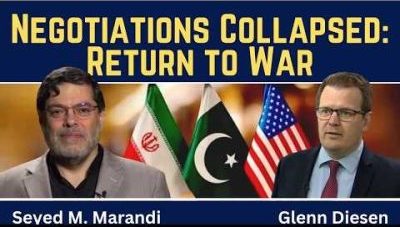
Seyed M. Marandi: Negotiations Collapsed – Return to War
or go to
Aletho News Archives – Video-Images
From the Archives
The US-Iran Scenario That Most Scares Israel
By Ali Haydar | Al-Akhbar | October 9, 2013
Israeli Prime Minister Benjamin Netanyahu issued a series of threats toward Iran and its interlocutors in the West, including the US, as serious negotiations on Iran’s nuclear program seem more plausible.
As a possible rapprochement looms between the US and Iran, Netanyahu has attempted to impose impossible Israeli conditions on the negotiators, such as the full dismantling of Iran’s nuclear program, not to mention threatening military force.
Whatever the deal that could materialize between Iran and the West, Israel is going to find itself before an open-ended path. One can foresee three possible scenarios… continue
Blog Roll
 Aletho News
- UK, Spain reject Trump’s new scheme to blockade Hormuz Strait
- Russian frigate ‘resurfaces’, chases off NATO pirates days after Kiev ‘sank’ it
- Ukraine Targets Russian Merchant Fleet With NATO Intel Support – Presidential Aide
- Russia’s ‘shadow fleet’ makes mockery of UK naval power
- Ukraine plans to attack Russian ships with Norwegian support
- US’s ‘Very Foolish’ Double Blockade of Hormuz Strait Makes Absolutely No Sense: Here’s Why
- China issues rules on countermeasures against foreign states’ unlawful extraterritorial jurisdiction
- Seyed M. Marandi: Negotiations Collapsed – Return to War
- Tomorrow’s naval blockade showdown
- ‘Israel’ attacks civilians to hide its embarrassing military failures & out of pure sadism
- If Americans Knew
- Israeli prison authorities are blocking hundreds of solidarity postcards being sent to female Palestinian prisoners
- ‘I wished for death’: Sexual violence in Israel’s prisons is an ‘organized state policy’
- Israeli army shoots, kills 9-year-old girl in her Gaza classroom
- Israel is attacking Lebanon to sabotage the Iran ceasefire, but the media is hiding its true motivation
- Israel’s restriction of aid into Gaza leads to critical shortages in bread, baby formula, and water
- Critical shortages in Gaza, Lebanon in ruins, “piracy” in Iran – Daily Update
- US-Iran ceasefire negotiations make zero progress – Daily Update
- Pro-Israel ‘Thinktanks’ and Individuals who Influence U.S. Foreign Policy
- Mearsheimer reveals how Israel dictates US policies on Iran, Gaza – video
- After killing 350+, Israel still has a “score to settle” with Lebanon before ceasefire – Daily Update
- No Tricks Zone
- Cave Discovery Reveals Today’s Desert Climates Were Recently Far Warmer, Wetter, Teeming With Life
- German Expert: Heat Dome Led To Record Temps In Western USA…Warmer In 1934, 1936
- New Study: No Linear Warming Or Glacier Retreat Along Northern Antarctic Peninsula Since 1980s
- An Inconvenient Tree: Uncovered In Alps… Europe Much Warmer Than Today 6000 Years Ago
- New Study Reports A 60% Slowdown In Greenland’s Ice Loss Rate In The Last Decade
- Low Intensity Tornado Wrecks Major Solar Farm, Creating A Potential Toxic Dump
- New Study Finds Warming Saves Lives…Cold Temperatures 12 Times More Deadly Than Excess Heat
- German Science Blog Accuses PIK Climate Institute Of Hallucinating Climate Tipping Points
- Devastating Assessment Of Comirnaty Vaccine By Former Senior Pfizer Europe Toxicologist
- New Study: CO2 Is ‘Effectively Negligible’ As An Explanatory Climate Change Factor Since 2000
 Aletho News