China Rejects Illegal, Violent Actions Against Venezuela, Cuba
teleSUR | May 6, 2020
China Wednesday condemned the recent rifle attack at the Cuban embassy in the United States, a mercenary forces’ invasion plan of Venezuela, and all the interventionist maneuvers against the sovereignty of any country.
China’s Foreign Ministry spokeswoman Hua Chunying said that her government firmly opposes any violent action perpetrated against official representations.
She urged Washington to take the necessary measures to protect the Cuban embassy from any damage, as provided for in the 1961 Vienna Convention.
In this way, China joined other nations in the world that repudiated the shooting launched last Thursday against the Cuban embassy in the U.S. capital. The Cuban mission officials suffered no damage, but there were material deteriorations in the building as a result of the attack.
Hua also deplored the attempted maritime invasion of Venezuela by mercenary forces seeking to carry out a coup against President Nicolas Maduro.
She stressed the Chinese government’s rejection of the violation of the sovereignty of the South American country by any means or excuse.
The diplomat called for prioritizing the well-being of the Bolivarian people and promoting the peaceful resolution of the political impasse in Venezuela.
China has been in favor of respecting the United Nations Charter and the basic norms governing international relations in the face of the U.S. policy of hostility towards the Maduro administration.
The Asian nation recently criticized Washington for applying more extraterritorial sanctions to Venezuela, Cuba, and Iran to the detriment of the public health of the people just as the COVID-19 pandemic spreads.
SITREP: Venezuelan Bay of Pig’s while the planet is under lockdown
By Ana | The Saker Blog | May 5, 2020
In the early morning of the 3rd of May 2020, an illegal foreign invasion was intended and aborted in the Caribbean small town named Chuao, in the Aragua State in Venezuela. According to the available information, the invasion was successfully contended by the Venezuelan Militias together with the armed forces in a joint operative.
At the moment, there is not a lot of information available, but it is clear that two US citizens and the son of a high ranked ex-officer of the Venezuelan Army were captured together with six more mercenaries, as informed by TeleSur.
This failed new attempt to topple the government of Nicolas Maduro is apparently linked to the operation which failed on Sunday May 3rd, executed on the coast near Caracas, Macuto which ended with a green beret imprisoned by government agents.
Guaido’s fingerprints are all over the place and were sanctioned by the confession of Silvercorp Jordan Goudreau testifying the existence of a contract between himself and Guaido. As if this confession was not enough, we also have his plea for respect for human rights of Silvercorps mercenaries involved.
Meanwhile in Imperial mainland, many more were made aware of the operations leaving as well all sorts of fingerprints, not difficult to elucidate even for starved and untrained imperial vassals. We have a trace of tweets that preceded the apparently very secret operations of the Silvercorp commands.
1. – Silvercorp itself tweets to The Donald about readiness and high efficiency of the, at that time, still future operation.

2.- Marianella Salazar, former Venezuelan journalist exiled in Miami tweets as well the night before the events.
As well a video showing Goudreau and Nieto, was aired some hours before the attempted invasion:
https://www. facebook.com/MisionVerdadEnVzla/videos/1888201781313396/
Also involved and captured is Josnars Adolfo Baduel, son of General Baduel who was a former close collaborator of Hugo Chavez who later turned on him and joined the coup attempt of April 2002.
While all events keep unfolding and more information is breaking through, we have a modern time Pontius Pilates washing his hands.
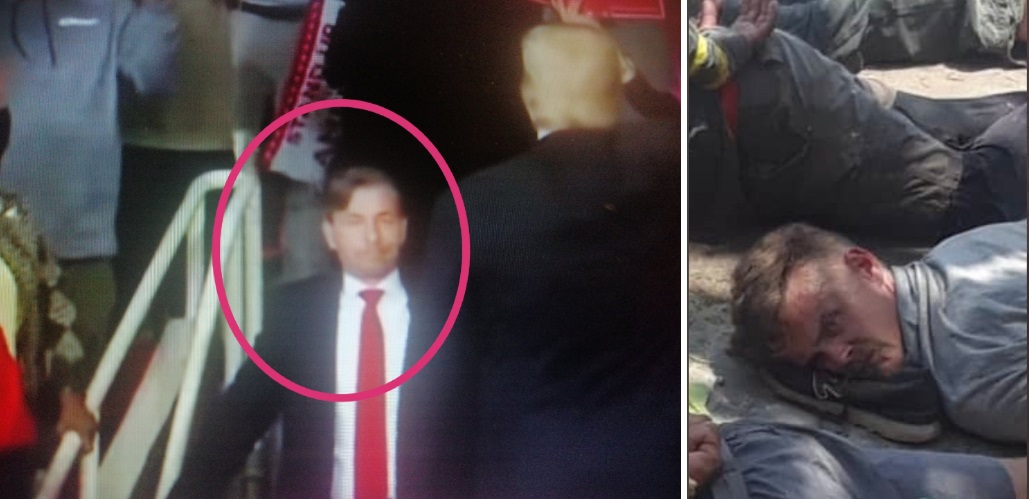
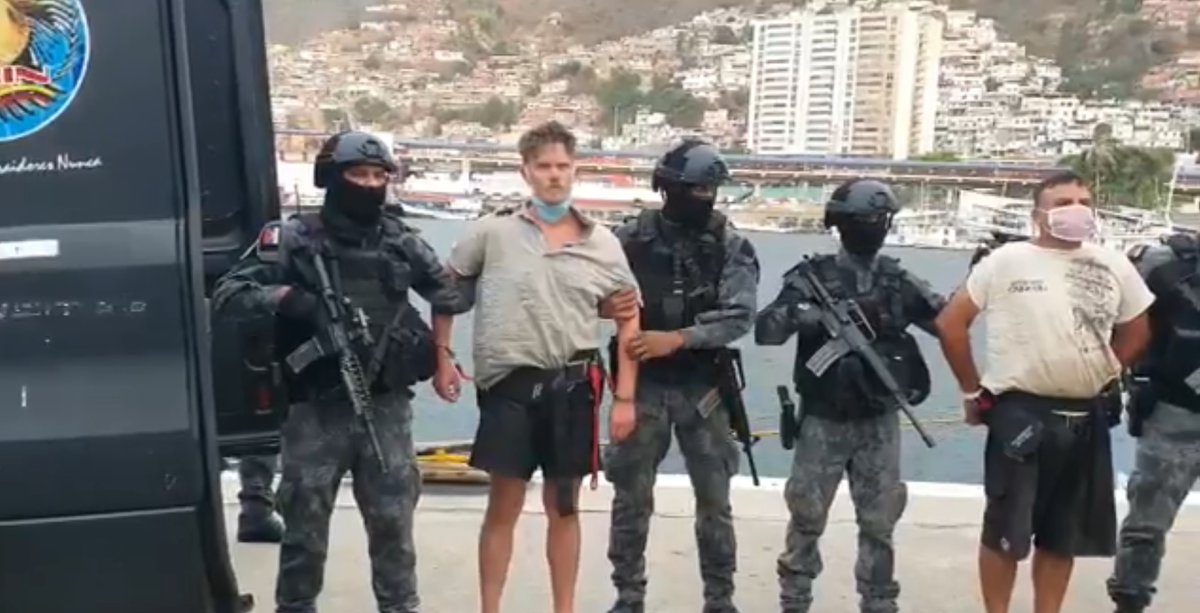
Here are some photos of the folks who wanted to invade Venezuela:
Seems like this guy was close to Trump, at least on one photo, maybe a bodyguard or security?
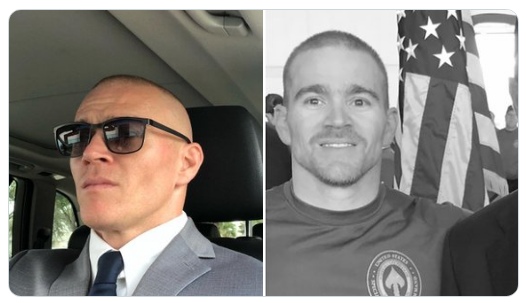
This is a mercenary from the Silvercorp PMC.
Here the caption says “expectations” and “reality”:
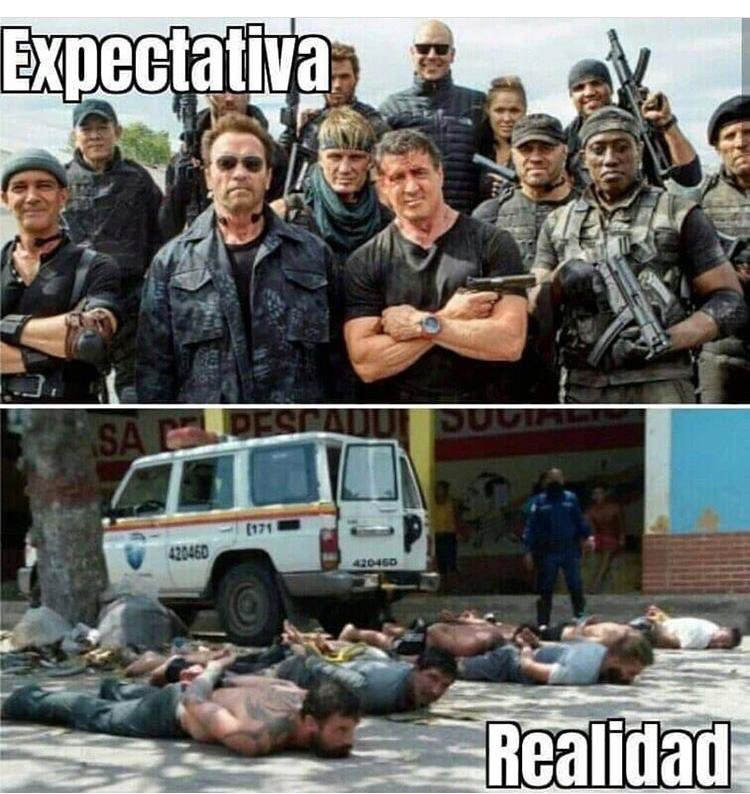
Here is another one of those “invincible” Hollywood special operators:

and here is what they look like in reality:
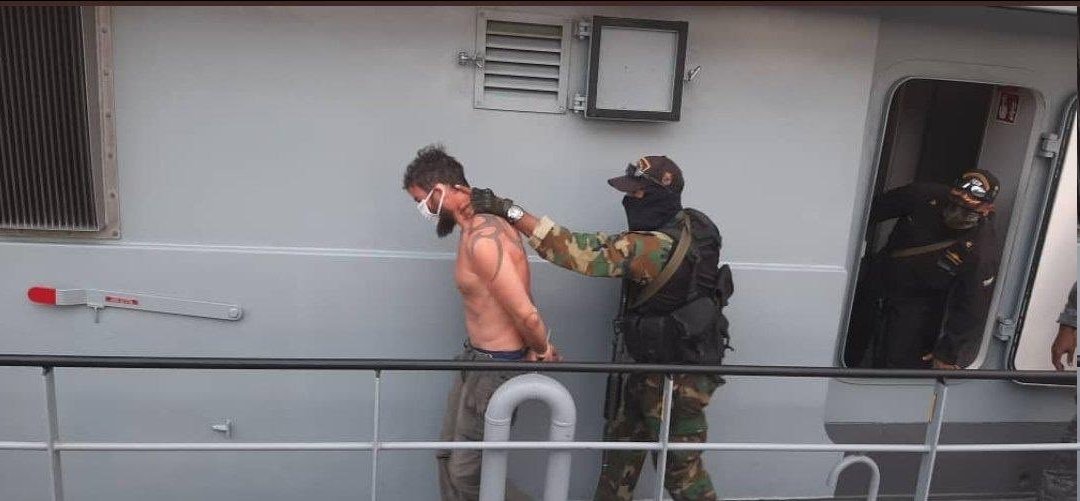
they sure don’t look as cocky now:
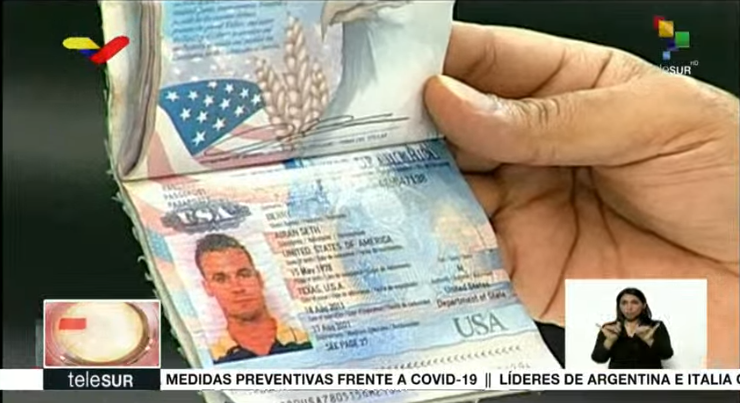
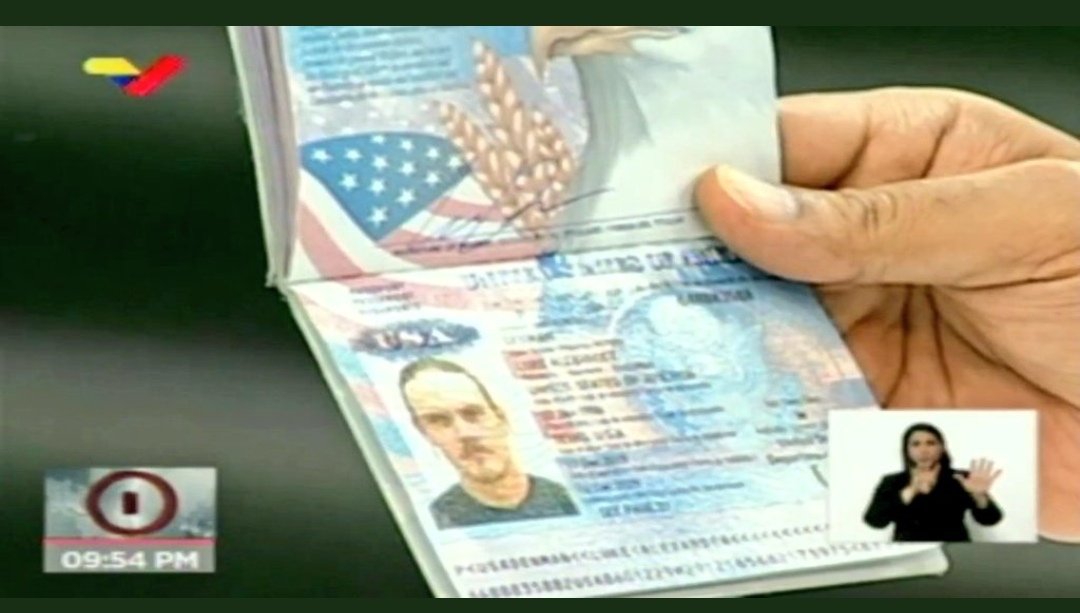
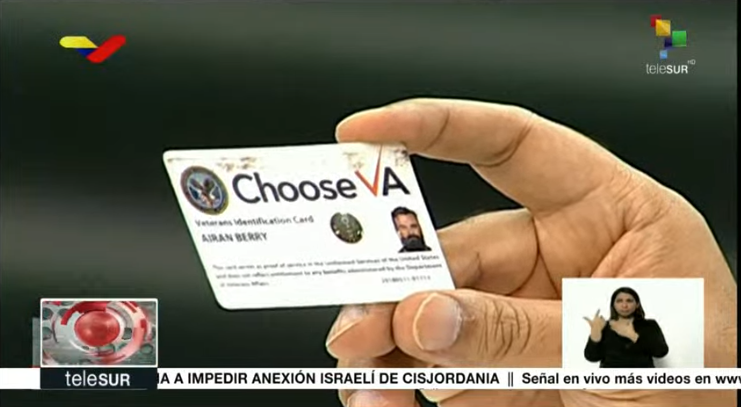
proof of nationality? Sure, these “experts” took their passports with them (!!)
Venezuelan Armed Forces: Paramilitary Incursion Neutralized
By Ricardo Vaz | Venezuelanalysis | May 3, 2020
Mérida – Venezuelan authorities announced they routed an armed group attempting to land on Venezuelan shores on Sunday.
The incident reportedly took place in the early morning hours, with armed men on speed boats approaching coastal La Guaira State, just north of Caracas.
“A group of terrorist mercenaries, organized and trained in Colombia, tried to disembark with war material off the coast of La Guaira,” a statement released by the Bolivarian National Armed Forces (FANB) read.
The statement detailed that intelligence work, as well as defense exercises, allowed the FANB and police units to respond immediately. In the ensuing confrontation, eight members of the paramilitary group were killed, the FANB added, and two were arrested. There are no reports of casualties on the Venezuelan side.
The operation also resulted in the apprehension of military gear and weapons, allegedly matching equipment stolen in the failed April 30, 2019 military putsch. The armed forces likewise revealed that divers are currently being deployed to recover additional weapons and that Navy ships are patrolling the coastline in search of other vessels involved in the incursion.
“The Bolivarian National Armed Forces categorically rejects these irrational acts of violence,” the statement went on to say.
Speaking to the press on Sunday, Interior Minister Nestor Reverol and Defense Minister Vladimir Padrino Lopez said that the defensive operation was ongoing and there could be further arrests in the coming days.
Padrino also announced that a new set of “Bolivarian Shield” military exercises will begin immediately on orders of President Nicolas Maduro.
For his part, National Constituent Assembly President Diosdado Cabello divulged that weapons had been seized on land, including vehicles fitted with machine guns. The location of the equipment was not disclosed. He also claimed that the boats’ GPS trackers indicated they had departed from Colombia.
Sunday’s failed incursion came on the heels of an Associated Press report revealing that former US Special Operations soldier Jordan Goudreau had played a leading role in a plan to invade Venezuela led by retired Venezuelan Major General Cliver Alcala. Goudreau was responsible for training a contingent of 300 Venezuelan army deserters who were to enter Venezuela in a heavily armed caravan and seize the capital within 96 hours.
Both the Venezuelan opposition and the Colombian government were reportedly aware of the plot.
In a video released on social media, Goudreau confirmed that the amphibious landing attempt had been launched from Colombia as part of “Operation Gedeon” and that “other units” were active in the “south, west, and east of Venezuela.” He appeared alongside retired National Guard Captain Javier Nieto Quintero, who claimed that the operation aimed to “capture” high-ranking officials and “liberate” the Venezuelan people.
Nieto spent 18 months in prison starting in 2004 for alleged connections to Colombian paramilitary groups before leaving the country. In a press conference in Florida in October 2019 he announced the creation of a “Military Command,” made up of former officials, with the stated goal of setting up an armed force to back a “transition government.”
A video of purported participants in “Operation Gedeon” was likewise released on Sunday. A man identifying himself as Antonio Jose Sequea, whom Goudreau identifies as the commander of the operation, appears on a beach flanked by heavily armed soldiers. Sequea is additionally seen with a blue armband similar to those worn by mutinous FANB soldiers who took part in last year’s failed April 30 putsch led by opposition leader Juan Guaido.
Among the other soldiers cameoed in the video is National Guard Captain Robert Colina, aka “Panther,” who reportedly died in the operation. In March, the Venezuelan government accused Colina of planning the assassination of top Caracas officials as part of Alcala’s Colombia-based paramilitary activites. Sequea was also identified at the time as a participant in the April 30 coup attempt.
For his part, opposition leader Guaido issued a statement Sunday afternoon dismissing the operation as a “false flag” allegedly perpetrated by the Maduro government. Guaido declared himself “interim president” in January 2019 with US backing but has since faded from the spotlight following repeated failed attempts to oust Maduro.
Guaido has yet to comment on Goudreau and Nieto’s video announcing the military operation.
The former National Assembly president had previously denied any connection to Alcala and Goudreau. For his part, Alcala claimed that a contract had been signed with Guaido, opposition strategist J. J. Rendon, and “US advisors.”
However, Miami-based Venezuelan journalist Patricia Poleo published a document Sunday evening, which she purported to be a copy of the contract. Poleo interviewed Goudreau, who produced a document with Guaido’s signature, which contracts Goudreau’s company Silvercorp to provide services, including “strategic planning,” “equipment procuring” and “project execution advisement,” for a fee of US $212 million.
Poleo also released several audio recordings of an alleged conference call between Guiado, Goudreau, and senior Guaido envoy Sergio Vergara, in which they agreed to sign the contract.
During the interview, Goudreau accused the Venezuelan opposition of not fulfilling their end of the contract, but that the operation (“Gedeon”) had gone ahead.
guaido_goudreau.jpg

Alleged contract signed between Juan Guaido and Jordan Goudreau’s company Silvercorp for $212 million. (@FactoresdePoder)
NYT Blames Maduro for Healthcare Horror, Downplays US Role
By Bryce Greene | FAIR | April 16, 2020
The New York Times (4/10/20) published an article describing the horrendous shape of the Venezuelan healthcare system. The human interest story, written by Julie Turkewitz and Isayen Herrera, followed several women through their nightmarish journey of childbearing in a broken medical system. The piece would be outstanding reporting, had it not fumbled the most important aspect of the story: how and why the system is as bad as it is. In true “manufacturing consent” fashion, the piece downplayed the US role in destabilizing the Venezuelan economy, and instead pointed to President Nicolás Maduro’s “authoritarianism” as the primary cause of the crisis.
The piece appeared on the Times’ front page on Saturday. The section of the piece visible on the front page pointed to Maduro as the cause for Venezuela’s healthcare problem, saying the system had been “crippled by a broken economy overseen by an increasingly authoritarian government.”
The story continued on an inside page, where it finally referenced the US role in creating the desperate conditions. The reporters briefly mentioned that Maduro claimed that US sanctions had some effect, but quickly brushed the claim aside, citing “analysts and critics” who said that Maduro’s charge had “only some weight.”
To back up this dismissal, the authors cited Feliciano Reyna, the founder of a nonprofit known as Action for Solidarity. Reyna blamed the Maduro administration for refusing to accept help from aid organizations. He indicated that despite the sanctions, the country would be able to receive the supplies it needed from those organizations.
However, a few paragraphs later, the piece stated the government had been attempting to receive help through the Red Cross for nearly a year now, throwing Reyes’ criticism into doubt. The contradiction was not addressed by the reporters, and the doublethink was allowed to go unchallenged, even as the piece acknowledged that the Red Cross has been failing to meet Venezuela’s needs, due to a lack of funds, and quoted Venezuela Red Cross leader Louis Farias, who said that their chapter’s call for help “didn’t get the backing [they] had hoped.”
The New York Times omitted other statements from the Red Cross organization that shed more light on the role the US has played. Francesco Rocca, president of the International Federation of the Red Cross, stated publicly last year that he believed that “political will” was behind the lack of funding for Venezuela. He said that there are some who wanted “to use the civilian population, their desperation, as a tool to destabilize the country.” Rocca pointed out that “it is easier to receive funds for Syria and even for Yemen.”
Later in the piece, the reporters cited economist Asdrúbal Oliveros, who claimed that “Mr. Maduro had simply chosen to prioritize the import of oil and food over medicine.” Oliveros believes the calculus was based on the fact that “pregnant women and sick people don’t protest—but that hungry people do.” No explanation was offered for why it’s Maduro’s fault that his administration has been forced to choose between essential resources for his country.
The piece merely calls Oliveros “one economist,” failing to disclose that he has been part of the Venezuelan opposition backing would-be president Juan Guaidó in an ongoing US-backed coup attempt against Maduro. Oliveros was described by the pro-Guaidó publication Americas Quarterly (4/18) as one of the “10 People Who Will (One Day) Rebuild Venezuela.”
The New York Times and other elite media have played an important role in mobilizing the US public against the Maduro government. They have highlighted the very real hardships on the ground, while casting blame for them almost exclusively on the “authoritarian” Maduro government (which, despite media’s constant implications, won an internationally observed election with more than 4 million more votes over the president’s closest rival (FAIR.org, 5/10/19). They consistently downplay the role of US sanctions in contributing to the dire economic situation (FAIR.org, 2/6/19, 6/26/19, 3/25/20).
If the Times were concerned about the fate of the women it profiled, and the state of Venezuelan economy, the paper would direct its readers to the sources of instability for which they bear the most responsibility. US sanctions have decimated the Venezuelan economy, as was predicted by analysts when they were first imposed. One 2019 study from the Center for Economic Policy Research found that the sanctions had indirectly caused the deaths of 40,000. Portraying Maduro as the sole reason for the country’s crisis is factually incorrect and journalistically irresponsible.
US commander claims major naval buildup in Caribbean not aimed at toppling Maduro
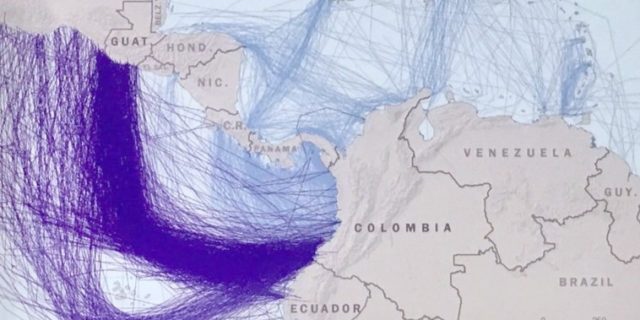
A map produced by the US Southern Command shows that most drug routes enter the US via the Pacific and then Central America (Business Insider)
Press TV – April 19, 2020
The top US military commander for Latin America has claimed that the Navy’s purported expansion of counter-narcotic operations in the Caribbean is not a military force aimed at toppling Venezuela’s President Nicolas Maduro despite Washington persisting provocations against Caracas.
Chief of US Southern Command Adm. Craig Faller asserted in an interview that Washington’s recent decision to double anti-narcotics assets in Latin America was planned months ago and not “directly” tied to Maduro’s indictment in a US court on allegations of leading a “narco-terrorist” conspiracy that supposedly sent 250 metric tons of cocaine a year to the United States.
“This is not a shift in US government policy,” Faller further claimed, despite boasting that enhanced interdiction efforts would harm Maduro’s finances and staying power. “It’s not an indication of some sort of new militarization in the Caribbean.”
The naval deployment announced this month is reportedly one of the largest US military operations in the region since its invasion of Panama in 1989 to topple its president and former CIA operative Gen. Manuel Noriega from power and take him to the US to face drug charges.
The operation involves major war-making resources such as Navy warships, AWACS surveillance aircraft and on-ground Special Forces rarely deployed before in the region.
Faller, however, further claimed that economic and diplomatic pressure — not the use of military force — continue to be Washington’s preferred instruments to oust the Venezuelan president from power.
He then went on to claim that growing instability in Venezuela is leading to an “uptick” in piracy in the Caribbean without citing any statistics or evidence to support his assertion.
Faller also said the recent sinking of a Venezuelan naval ship after it allegedly rammed an Antarctic-hardened cruise ship without passengers near Curacao reflected the readiness of the Venezuelan armed forces.
“It was a bad day for them,” he mockingly said. “Their lack of seamanship and lack of integrity is indicative of how it all played out.”
The hawkish US commander also pointed out that the coronavirus pandemic did force some in the US military to rethink the timing of the current deployment out of concern for the safety of American troops, adding that while controls to protect the workforce have been enhanced, it was determined that over the long term, the US is positioned to take advantage of the disruption in narcotics supply chains caused by the coronavirus outbreak as drug cartels scramble to source precursor chemical and other inputs.
“We thrive in uncertainty and are going to try and capitalize on that,” Faller boasted.
Corporate Media Cover for US Mob Threats Against Venezuela
By Lucas Koerner and Ricardo Vaz | FAIR | April 15, 2020
The Trump administration unveiled on March 31 a “democratic transition” plan to remove Venezuelan President Nicolás Maduro from office, in favor of a “council of state” composed of both opposition and ruling party loyalists.
The plan was, however, less an offer to negotiate than a diktat, with the US State Department (3/31/20) vowing that “sanctions will remain in effect, and increase, until the Maduro regime accepts a genuine political transition.”
Despite the obvious mafioso overtones, Washington’s stenographers in the corporate press were quick to present the initiative as “sanctions relief,” once again whitewashing murderous US economic warfare against Venezuela (FAIR.org, 2/6/19, 6/14/19, 6/26/19).
Western journalists’ callous obfuscation of sanctions’ deadly toll, especially amid a global pandemic (FAIR.org, 3/25/20), goes hand in hand with their parroting of bogus “narco-terrorism” charges leveled against Maduro and top Venezuelan officials, which butresses Washington’s ever-illicit casus belli.
An Offer They Can’t Refuse
The New York Times (3/31/20) jumped at the opportunity to furnish the Trump administration’s plan with a varnish of reasonability. “The proposal…offers to ease American sanctions intended to pressure President Nicolás Maduro and his loyalists over the past year,” Lara Jakes wrote, misconstruing the unilateral measures destroying Venezuela’s economy as well-intentioned steps to bring about “fair elections.”
At no point did the paper of record mention Washington’s threat to ramp up illegal sanctions if Maduro refuses the “offer” to replace his government with a five-person junta, in flagrant violation of Venezuela’s constitution. Other Western media likewise covered up the US blackmail, praising Donald Trump’s bayonet-hoisted ultimatum as a “roadmap to relief” (Washington Post, 3/31/20), a “more toned-down approach” (Reuters, 3/31/20) and a “conciliatory framework” (Economist, 4/2/20).
Having dutifully whitewashed US sanctions, the Times and its counterparts were free to cast war criminal Elliott Abrams, rehabilitated last year as Trump’s Venezuela envoy (CounterSpin, 3/1/19), as an honest broker committed to good-faith dialogue:
But Mr. Abrams was careful to say that the plan was an opening offer for talks between the two sides, “not a take-it-or-leave-it proposition,” and that no single issue was a deal breaker—except the demand for Mr. Maduro’s departure.
By contrast, Maduro—reelected in internationally monitored elections with a greater percentage of the electorate than Trump won in 2016, or Barack Obama in 2012—is for the Times “reminiscent of mid-20th century Latin American strongmen,” whose 2018 victory was “self-declared.”
The Times went on to accuse the Venezuelan leader of “creating one of the world’s largest refugee populations,” concealing the role of criminal sanctions in driving migration (FAIR.org, 2/18/18).
This vilification of Maduro and the Chavista poor people’s movement does not merely reflect reporters’ professional class bias, but is structurally necessary to justify US economic warfare and more overt criminality in the first place.
It is therefore no coincidence that the Trump administration’s gunpoint “proposal” to overturn Venezuela’s constitutional order came on the heels of Department of Justice “narco-terrorism” charges against the Venezuelan head of state and other top officials, which corporate journalists trumpeted enthusiastically.
Most outlets regarded the timing as a symptom of “contradictory” (Washington Post, 4/14/20) or “erratic” (New York Times, 4/10/20) US policy, which could “make it harder to remove Maduro” (Economist, 4/2/20), but the underlying regime change (ir)rationality never comes into question.
Indeed, even liberal imperialist academics like David Smilde and Abraham Lowenthal (Washington Post, 4/14/20) declined to call for scrapping the indictments, let alone easing sanctions, as a goodwill gesture aimed at securing Chavista support for the US plan, which they hailed as a “step in the right direction.” Rather, they merely recommend that the Trump administration offer “guarantees for indicted officials” against extradition, as if Maduro would be inclined to negotiate while Washington continues its collective punishment and maintains a $15 million bounty on his head.
Smilde and his Washington Office on Latin America colleague Geoff Ramsey’s (Washington Post, 3/27/20) refusal to demand the immediate annulment of the drug charges and illegal sanctions is hardly surprising, given both men’s long-running support for US coup efforts (Common Dreams, 3/5/19).

(Left) The NYT found Maduro’s white suit and being flanked by ministers as “reminiscent of dictators” (Right) The WaPo found an unconstitutional plan to remove an elected president on the basis of threats “a step in the right direction”
Calling the Kettle Black
The DoJ’s indictment of 14 current or former senior Venezuelan officials on “narco-terrorism” charges provided the Western media with fresh grist for its imperial propaganda mill.
This is hardly the first time that the corporate media have reported the Washington’s evidence-free drug allegations against official enemies, which they have frequently done without any pretense of journalistic rigor (Extra!, 1/90, 9/12; FAIR.org, 9/24/19, 5/24/19).
The New York Times (3/26/20) dedicated no less than 12 paragraphs to repeating prosecutors’ claims, which are centered on the outlandish notion that Maduro secretly heads a drug cartel that conspired with Colombia’s FARC guerrillas to “‘flood’ the United States with cocaine.”
Despite marshaling a crack team of three writers and four contributing reporters, the Times proved incapable of citing any contrarian perspectives, let alone basic facts, that cast doubt on the “narco-terrorism” narrative.
The Guardian (3/26/20) and the Washington Post (3/27/20) were virtually the only outlets to mention the US government’s own publicly available data showing that just a small fraction of drug routes pass through Venezuela, with the overwhelming majority of cocaine entering the United States via Mexico and Central America. Furthermore, Colombia remains the world’s largest cocaine producer, right under the nose of large US military and DEA contingents, which have long waged a “war for drugs and of terror” in the country.
The DoJ’s case looks like a reheated version of equally unfounded accusations against former President Hugo Chávez, which corporate journalists eagerly promoted last year (FAIR.org, 9/24/19).
A map produced by the US Southern Command shows that most drug routes enter the US via the Pacific and then Central America (Business Insider)
As with prior allegations against Socialist Party Vice President Diosdado Cabello (Wall Street Journal, 5/18/15), the indictments hinge on the testimony of defectors, whose claims are echoed in the Western press without scrutiny.
In the most recent case, retired Maj. Gen. Cliver Alcalá and former intelligence chief Hugo “El Pollo” Carvajal were also charged by the DoJ and pledged to cooperate with US authorities. Both had previously broken with the Maduro government and endorsed self-proclaimed “interim president” Juan Guaidó.
Alcalá, who swiftly surrendered to DEA agents and was flown to the US, boasted of plotting a coup in conjunction with Guaidó and “US advisers.”
In an exposé of the coup plot, the Financial Times (4/4/20) cast doubt on the general’s “rambling and contradictory” account, quoting several US officials denying the coup attempt and alleging Alcalá was “acting on the orders of Caracas.”
The outlet conveniently ignored that this would not be the first time Alcalá conspired to invade Venezuela with a paramilitary force.
According to Bloomberg (3/6/19), there was a plan for the general to lead a contingent of 200 Venezuelan exile soldiers to clear the way for the entry of “humanitarian aid” on February 23, 2019, which was vetoed at the last minute by Colombia, suggesting high-level coordination with Washington, Bogotá and Guaidó.
By repeating the US narrative of Alcalá as a Maduro “plant,” corporate journalists paradoxically legitimize the general as a reliable source of current information on Venezuelan “narco-terrorism,” while concealing his embarrassing ties to the US and its opposition proxies.
As we have exposed for FAIR.org (5/24/19), Carvajal has already proved his worth in the past by serving up to credulous reporters highly dubious allegations about Venezuelan leaders’ Hezbollah ties (New York Times, 2/21/19).
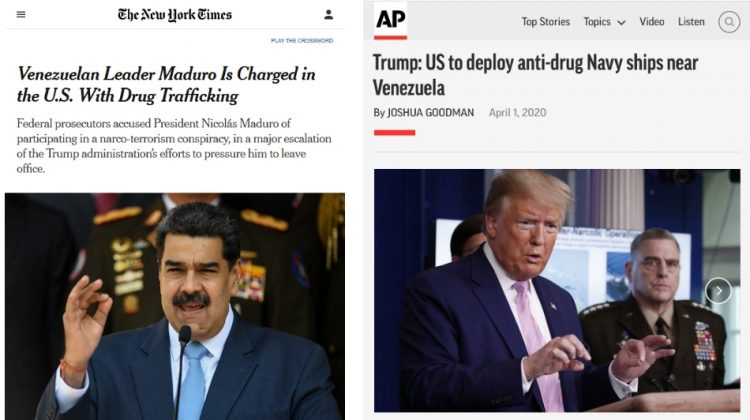
(Left) The NYT (and other outlets) accepted the DoJ’s “narco-terrorism” charges at face value (Right) An AP headline endorsed Trump’s dubious justification for an aggression
Imaginary Cartels, Real Warships
The uncritical coverage of the DoJ charges paved the way for a further US escalation shortly after the “transition” plan was unveiled.
On March 31, the Trump administration announced a military deployment to the Caribbean described by Associated Press (4/1/20) as “one of the largest in the region since the 1989 invasion of Panama.”
One might have expected such an obscenely expensive display of force amid a deadly pandemic currently killing thousands of Americans to be met with widespread rebuke across the media spectrum.
In fact, the opposition was largely muted. Newsweek (4/3/20) and Foreign Policy (4/2/20) gave voice to the Pentagon’s concern that the operation was wasteful and politically motivated, while the New York Times (4/10/20) published an op-ed raising polite proceduralist quibbles. Agreeing with the Trump administration that Maduro is a “dictator” who “must go,” Michael Shifter and Michael Camilleri nonetheless placed a vague call for Washington “to reboot sanctions policy, provide aid through accountable channels, and press the country’s leaders to work together.” Evidently, demanding the immediate lifting of (arguably genocidal) sanctions was too unreasonable to ask.
Referring to the Venezuelan military as “deeply involved in corruption and criminality,” Shifter and Camilleri exemplify the decadent imperial intelligentsia’s psychology of displacement.
From social democratic left to neoliberal right, Global North journalists and intellectuals remain invested in the self-serving illusion that besieged Southern nations such as Venezuela and Iran are more “criminal,” “corrupt” and “authoritarian” than the US empire (FAIR.org, 2/12/20).
For all their polite critiques of illegal US sanctions and military escalation–whose monstrosity has been laid bare by the current pandemic–the cult of Western exceptionalism goes unchallenged.
Venezuelan Leader Pens Open Letter to US Public
teleSUR | April 7, 2020
In a letter issued on Sunday, Venezuelan President Nicolás Maduro warned the administration of U.S. President Donald Trump against making any unwise military decisions against the Bolivarian Republic.
Venezuelan Foreign Minister Jorge Arreaza read a letter on Sunday that Venezuelan President Maduro sent to the people of the United States, following Washington’s recent threats toward the Bolivarian Republic.
In the letter, the head of state indicated that “in Venezuela we do not want an armed conflict in our nation, we cannot accept war threats,” and urged the American people not to believe in the reasons that Trump indicates for attacking Venezuela.
President Maduro urged the people in the United States to not believe Trump’s statements about “fighting drug trafficking”, calling these claims by the U.S. leader false and unfounded.
In the text, President Nicolás Maduro rejected the threats of the Trump administration against Venezuela that seek to lead the region to an expensive, bloody and indefinite armed conflict.
“We in Venezuela do not want an armed conflict in our region. We want fraternal relationships, cooperation, exchange and respect, “he said.
He stated that the country cannot accept war threats, or blockades, nor the intention to install an international guardianship that violates sovereignty and ignores the advances of the last year in the political dialogue between the government and a large part of the Venezuelan opposition.
After showing solidarity with the U.S. people that are suffering from the COVID-19 pandemic, he called on the people of the country to hold their leaders accountable and compel them to focus their attention and resources on the necessary and urgent fight against the pandemic.
Furthermore, he requested the cessation of military threats, the end of illegal sanctions and the blockade that restricts access to humanitarian supplies, which are so necessary today in the country to combat this virus.
“I ask you, with your heart in your hands, not to allow your country to be drawn, once again, to another endless conflict, another Vietnam or another Iraq, but this time closer to home,” the letter highlights.
A Simple Democratic Transition Framework For Venezuela: End All Sanctions
By Nino Pagliccia | One World | April 4, 2020
Here is an idea how the US can help a real democratic transition framework in Venezuela: end all “sanctions” unconditionally, return to Venezuela all properties seized so Venezuelans can get on with their productive lives to restart the economy, and call on the radical Venezuelan opposition to peacefully and democratically participate in the political life of the country.
On March 31, the US Secretary of State issued a press statement proposing a “pathway” by which all Venezuelans would live happily ever after, at least that is what Mike Pompeo seems to wish. He “call[s] on all Venezuelans, whether military or civilian, young or old, of all ideological tendencies and party affiliations, to consider this framework carefully and seriously.” The 13-point document was posted on the US State Department website with the title “Democratic Transition Framework for Venezuela”. Let’s take a serious look at it.
General Observations
An initial major observation can be made even before reading the 13 paragraphs. If this is a proposal meant as a recommendation to resolve an impasse between parties, it will not accomplish its goal because no “serious” proposal can be made unilaterally and much less by a non-friendly government. In the recent past, attempts at international mediation have been flatly dismissed by Washington, suggesting US preference for unilateral political and other interests vis-à-vis Venezuela.
A second related general observation – that shouldn’t even need to be explained – must be made about the fact that Venezuela is a sovereign country. All other governments should stay out unless the legitimate government of the country makes a specific request. More than 120 governments recognise the Maduro government as legitimate, including the United Nations.
The title is also controversial. Unless what’s meant by “transition” is peacefully resolving a conflict, which is what the Maduro government has been asking of the extreme right-wing opposition for years, there is no other transition to be considered. As for “democratic”, the notion used by Washington has lost its real meaning over time, especially when it comes to regime change aspirations.
Those three observations alone would have been enough to suggest that this plan was a foolish decision to make. In fact, it is a non-starter, but for the sake of completion, let’s take a look at some of the 13 points.
After a review, we noticed that there are seven mentions of lifting “sanctions” at different steps if they are followed according to the “framework”. The author has already referred to the inappropriate use of the word “sanctions” in general. Its use in this context confirms that they are intended to be “a penalty for disobedience”. The preferred denomination is unilateral coercive measures.
What is Venezuela supposed to do in order for the US administration to remove the “penalty for disobedience”? In short, Venezuela is asked to break its 1999 constitution while it is trampled upon during the “transition”, accept the Monroe Doctrine, open its doors to neoliberal policies, and give up its self-determination.
The “Democratic Transition” Breaks The Constitutional Order
For instance, the first point in part asks for, “Full return of the National Assembly (AN)…National Constituent Assembly (ANC) is dissolved.” This is basically asking a) to legitimise an AN that was in contempt for forcing illegal membership; b) to reinstate Juan Guaidó as the speaker disregarding the election that took place last January when he refused to participate; and c) break the constitution by dissolving the constitutionally elected ANC.
Point number 5 requires the AN to approve a “Council of State” Law, “which creates a Council of State that becomes the executive branch”. But this is already being done. In fact, on March 31, President Nicolas Maduro attended the constitutional Council of State in order to deal with “a new imperial onslaught in the middle of the combat with the Covid-19” and to provide advice to the national government according to Articles 251 and 252 of the Venezuelan Constitution.
Point number 6 gives another example where the constitutional order must be broken during the “transition”. It states, “All of the powers assigned to the President by the Constitution will be vested exclusively in the Council of State.” Article 251 establishes, “The Council of State is the highest consulting body of the Government and the National Public Administration.” It does not take on the powers of the president.
The “Democratic Transition” Enforces The Monroe Doctrine
This is made clear in a very short paragraph as the third point of the plan. “All foreign security forces depart immediately unless authorized by 3/4 vote of the AN.” US President James Monroe of 19th-century “Monroe Doctrine” fame must have applauded from his tomb together with all other US presidents that followed who have made similar requests to all Latin American countries at one time or another. This is a reference to the presence of Cuban security advisors and health professionals, but also likely to the close Moscow-Caracas relationship since Hugo Chavez was president to this day with President Maduro. Russian military personnel have been engaged in training of Venezuelan Armed Forces in the use and maintenance of weapons, as well as joint military exercises.
The “Democratic Transition” Opens The Door To Neoliberal Policies
Here we quote point 9 in full: “The international community provides humanitarian, electoral, governance, development, security, and economic support, with special initial focus on medical care system, water and electricity supply. Existing social welfare programs, now to be supplemented with international support, must become equally accessible to all Venezuelan citizens. Negotiations begin with World Bank, IMF, and Inter-American Development Bank for major programs of support.” This does not require any further explanation except to emphasise that Venezuela’s self-determination will be lost.
The happy ending according to Washington’s script of this political play or farce to be performed in Caracas is that “presidential and AN elections are held” in 6-12 months, but this is a play that is not produced in Venezuela. In fact, Venezuelans will not be participants and protagonists in this play, as is their constitutional right now. They will be reduced to performing minor roles in a corner of the US’ “backyard” of Latin America.
The Venezuelan government has predictably rejected the US plan. Foreign Minister Jorge Arreaza stated publicly to Mike Pompeo, “decisions in Venezuela are made in Caracas.” The US must have been ready for that reaction because the day after making the “democratic transition” plan public, it deployed warships off the coast of Venezuela supposedly to “protect American people” from the scourge of illegal drugs coming from Venezuela. Never mind that the United Nations Office on Drug and Crime reports that 84% of cocaine arrives to the US via Guatemala by the Eastern Pacific and not by the Caribbean.
Here is an idea how the US can help a real democratic transition framework in Venezuela: end all “sanctions” unconditionally, return to Venezuela all properties seized so Venezuelans can get on with their productive lives to restart the economy, and call on the radical Venezuelan opposition to peacefully and democratically participate in the political life of the country.
Nino Pagliccia is a Venezuelan-Canadian freelance writer and activist.
US Sends Navy Ships to Caribbean in ‘Anti-Drug’ Mission Targeting Venezuela
By Ricardo Vaz and Lucas Koerner | Venezuelanalysis | April 2, 2020
Mérida – The Trump administration is dispatching US Navy warships to the Caribbean Sea in an effort to turn up the pressure on Venezuela.
The initiative was announced by President Donald Trump and other high ranking officials in a press conference Wednesday.
The move is allegedly part of a wider “anti-narcotics” operation in the region, which in addition to Navy destroyers will reportedly involve AWAC surveillance aircraft and on-ground special forces units. The Associated Press reported that the operation is one of the largest in the region since the 1989 invasion of Panama.
“We must not let malign actors exploit the [coronavirus] situation for their own gain,” Trump said.
The military deployment came on the heels of the Department of Justice (DoJ) levying “narco-terrorism” charges against top-ranking Venezuelan officials, as well as a “democratic transition” plan unveiled by the State Department.
On March 26, the DoJ accused President Nicolas Maduro, National Constituent Assembly Diosdado Cabello and several other officials of conspiring with FARC rebels to “flood” the US with cocaine.
Critics have pointed to the dearth of concrete evidence implicating top Venezuelan leaders and to the fact that data from US agencies shows that only a small fraction of drug routes pass through Venezuela, with most cocaine entering US territory via Central America and Mexico.
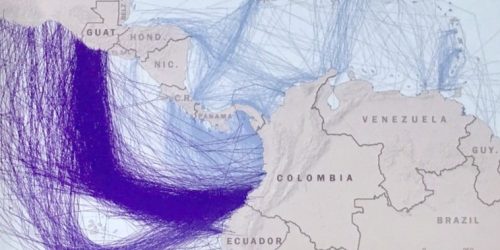
A map produced by the US Southern Command shows the main drug-smuggling routes connecting Colombia and Ecuador with Guatemala and Mexico via the Pacific Ocean.
On Tuesday, the State Department unveiled a “framework for a peaceful democratic transition in Venezuela,” calling for Maduro’s resignation and the establishment of a transition government headed by opposition and Chavista officials to oversee new elections.
The Trump administration pledged to lift sanctions against Venezuelan individuals and key economic sectors, but only after Maduro left office and all security agreements with Russia and Cuba were terminated.
The US has vowed to ramp up unilateral sanctions until the Maduro administration accepts the deal.
For its part, the Venezuelan government blasted the military deployment, with Communications Minister Jorge Rodriguez calling it “an attempt to attack Venezuela with lies and threats.”
Rodriguez added that Venezuela has “robust” anti-narcotics policies and would be ready to “coordinate” actions against drug trafficking in the region.
Washington’s naval operation comes days after the controversial sinking of a Venezuelan coast guard boat off the coast of the Caribbean island of La Tortuga.
According to the Venezuelan Ministry of Defense, the patrol ship “Naiguata” located a Portuguese cruise ship, the “RCGS Resolute,” in Venezuelan territorial waters and ordered the vessel to accompany it to port. The “Resolute” allegedly refused the instructions and proceeded to ram the “Naiguata,” which subsequently sank as a result of the impact.
The cruise ship owner, Columbia Cruise Services, has disputed this account, insisting that the “Resolute” was “subject to an act of aggression by the Venezuelan Navy in international waters,” while carrying no passengers.
On Wednesday, Venezuelan President Nicolas Maduro suggested the ship “was being used to transport mercenaries.” He also claimed that “someone from the north called” to prevent Dutch authorities from inspecting the “Resolute” at its current mooring in the Curacao port of Willemstad.
Portuguese Foreign Minister Augusto Santos Silva, for his part, has pledged to collaborate with Venezuela and Holland in the investigation of the “unfortunate” incident.
Crisis & Critique: US Ramps up Aggression amid Pandemic
By Ociel Alí López – Venezuelanalysis – April 1, 2020
Venezuela has been one of the countries least affected by the coronavirus pandemic in the region so far. Nevertheless, the US government is attempting to exploit the situation in order to force a violent outcome to the country’s political standoff, putting a price on the head of Maduro and other top functionaries as well as pushing a new “transition” plan to depose the government in exchange for sanctions relief. Meanwhile, Venezuela’s attorney general has summoned Guaido for questioning on April 2. Far from bringing about a truce, the coronavirus has raised tensions to new heights.
On the verge of a truce
The pandemic has caught Venezuela’s opposition in a rather uncomfortable position. Their strategy of not recognizing Maduro and the never ending simulacrum that is Guaido’s “interim presidency” is, fourteen months later, an abject failure in terms of concrete achievements. Guaido’s virtual staying power is owed almost exclusively to Donald Trump, who invited him to the White House at the close of his international tour in February.
But this strategy leaves a vacuum in the opposition. The existence of an “interim president” precludes that of an opposition leader who can channel requests, critiques, and demands toward the government. Guaido is instead forced to speak as a president but without any state resources at his disposal to confront the COVID-19 crisis. Some of Guaido’s spokespeople such as his foreign relations envoy, Julio Borges, issue statements that are woefully out of touch with the gravity of the international conjuncture: “The coronavirus is Maduro and there will be no cure until he leaves power.”
For his part, Maduro, comfortable and without internal resistance, rapidly implemented the World Health Organization’s guidelines, decreeing a national quarantine within days of the first case being reported on March 13. Maduro also managed to meet not only with the country’s principal chamber of commerce, FEDECAMARAS, but also with Colombia’s health authorities, a fact which Colombian President Ivan Duque publicly denied. He additionally secured aid from Cuba and China, which have emerged as global leaders in COVID-19 response. Meanwhile, the United States and Guaido’s other Western sponsors are mired in an unprecedented health crisis due to the number of dead and infected.
On March 23, the European Union publicly called for the International Monetary Fund to accept emergency loan requests from Venezuela and Iran and for relief from US sanctions, which according to EU foreign policy chief Josep Borrell, “block them from receiving income by selling oil.” UN Secretary General Antonio Guterres also urged the lifting of unilateral coercive measures in the face of the pandemic.
The situation seemed favorable for Maduro’s struggle against the US economic blockade.
In this context, the coronavirus was on the verge of bringing about the unthinkable: an agreement between the opposition and the government. Henry Ramos Allup, the president of Venezuela’s main opposition party, announced on March 10 that Democratic Action would abandon its prior abstentionism and compete in parliamentary elections scheduled for 2020. Amid the global COVID-19 hysteria, former presidential candidate Henrique Capriles opened the possibility for an agreement with Maduro when he stated on March 25:
This pandemic must create an opportunity to pursue some kind of agreement that looks after people’s wellbeing… Let’s work together: you have internal control, and I have international support. You are willing to come to an agreement to join hands. Could it be that difficult? I don’t think so.
That very night, there were two, almost parallel reactions. Maduro said, “I agree with Capriles’ proposal,” and asked the Vatican’s representative in the country to mediate and open its offices for a meeting with the different opposition factions as soon as possible.
Minutes later, Guaido stated, “we are willing to do everything we have to do,” implicitly recognizing the need for an agreement to address the health emergency. However, he did enumerate certain conditions regarding the distribution of humanitarian aid, which should be managed by multilateral organisms and not the Maduro government.
Venezuela’s dueling political factions appeared to be on the verge of engaging in substantive talks, but it was not to be.
Escalating US assault
The next day, on the morning of March 26, US Attorney General William Barr gave a press conference announcing “narco-terrorism” charges against Maduro and other senior government officials.
As expected, the charges were endorsed by Trump in the midst of the COVID-19 crisis, effectively torpedoing negotiation efforts and once again raising tensions to a boiling point.
This is hardly the first time that the US has blocked dialogue. When in early August 2019 rumors were circulating of something resembling an electoral pre-agreement emerging from Norway-brokered talks, the United States ramped up sanctions with an August 5 executive order banning all dealings with the Venezuelan state and freezing its assets in what some analysts have linked to the Cuba embargo. The next day, Maduro abandoned talks.
The government had also previously claimed in February 2018 that a last minute call by then US Secretary of State Rex Tillerson to the head of the opposition negotiating team, Julio Borges, led the opposition to walk out in lieu of signing a finalized electoral deal. This was the fruit of months of negotiations mediated by former Spanish President Jose Rodriguez Zapatero and the Dominican government, and the agreement concerned guarantees for the 2018 presidential elections, which the main opposition parties opted to boycott.
With this latest decision, Trump ups the ante. On top of punishing economic sanctions, the US now places a multi-million dollar bounty on the head of Maduro and other top officials, giving the green light to renewed violent actions aimed at killing or capturing them.
But the move also aborts the nascent negotiation efforts recently underway. Rather than paving the way for an invasion, indictments open the way for paramilitary operations of the sort one might find in a Hollywood movie. Recall that neighboring Colombia is a country littered with irregular armed outfits. Just a few days ago, following the seizure of an arms cache in northeastern Colombia, retired Major General Cliver Alcala confessed to a plot to overthrow Maduro in coordination with Guaido and US advisors. Paradoxically, the general confirmed the coup plan only after he was indicted by the US Justice Department, subsequently turning himself in to Drug Enforcement Agency officials and traveling from Colombia to the US.
Several days later, on March 31, US Secretary of State Mike Pompeo, in a more conciliatory but equally arrogant tone, unveiled a “transition” plan proposing the creation of a “council of state” comprised of opposition and Chavista representatives, with both Guaido and Maduro stepping aside and new elections called. The Venezuelan constitution contains no provisions permitting such an arrangement, which has already been rejected by Foreign Minister Jorge Arreaza.
The government did not delay in rolling out its response. The attorney general summoned Guaido to appear for questioning on April 2 and it is very possible that he could be taken into custody after Alcala publicly named him as responsible for terrorist actions to be carried out with the arms confiscated in Colombia. With Guaido behind bars, another scenario opens up, and all that is left is to await a more decisive response from the US.
Meanwhile, we must not forget the arena that has taken center stage at present: healthcare.
Coronavirus and the collapse of the health sector
This escalation of conflict comes not only in the context of coronavirus, but also at a moment of deep crisis in Venezuela’s healthcare system, which could be rapidly overwhelmed if Venezuela’s curve mirrors that of other countries.
In a November 2019 report, UN Under-Secretary-General for Humanitarian Affairs Mark Lowcock observed:
I have seen myself how the health system is on the verge of collapse, with many hospitals lacking the most basic water and electricity infrastructure. Hospital patients, many of whom are already critically ill, are at high risk of losing their lives from new infections they are acquiring while they are in hospital, because basic cleaning and disinfection cannot be done. This is exacerbated by a lack of medicines, and a shortage of doctors and nurses to administer them. Preventable diseases including malaria and diphtheria are back with a vengeance. People with chronic health conditions, pregnant and nursing women, infants and those living with disabilities are among the most vulnerable.
No matter how much the government emphasizes its strength in the health sector owing to the support of its allies, the reality is that the system has suffered severe deterioration. If we project an Italy or Spain-style curve in Venezuela, the result could be not just a health sector collapse, but a catastrophe in every arena of life.
For this very reason, Washington’s bellicose measures provoke widespread animosity among diverse national and international constituencies. On the one hand, Chavismo automatically closes ranks behind the government, which implements stronger security measures that block efforts to open up the political field. On the other, the opposition factions that were engaged in or calling for dialogue with the government are now shut out of the game because it will be very difficult for them to compete in parliamentary elections to be held later this year. And if the main opposition parties do not participate, like in the last few elections, they will lose the only real power they have left: the National Assembly. The majority of opposition political actors have reacted with caution and have not automatically supported the US’ actions.
Washington’s latest maneuvers also fly in the face of positions taken by US allies like the European Union, as well as other multilateral bodies, which have called for lifting sanctions on Venezuela and Iran. Washington’s “kick them while their down” approach may appear disproportionate in the face of the current crisis, but we must remember that the US presidential campaign looms large and the Venezuela issue is key to winning the critical state of Florida.
For his part, Guaido may try to dust off the “humanitarian aid” discourse that he had dropped from his political repertoire after the opposition’s US-backed effort to force food and other supplies across the Colombian border in February 2019 ended not only in failure but in a corruption scandal that has dogged the “interim president” ever since. The US, Colombia, and Guaido’s other allies could make a fresh attempt at “humanitarian intervention” amid the current situation of international panic. US Deputy Assistant Secretary of State for Cuba and Venezuela Carrie Filipetti recently prepared the ground for this possibility, stating that the COVID-19 contagion in Venezuela could pose a regional threat.
This discourse is illogical given that according to official figures Venezuela has far fewer cases than its neighbors, while the US is now the global epicenter of the coronavirus outbreak. But when it comes to US-Venezuela relations, official discourses have little concern for facts. Anything can happen, above all, if elections require putting a face on the “invisible enemy.”
Ociel Alí López is a Venezuelan researcher who has published numerous written and multimedia works. He is dedicated to analyzing Venezuelan society for several European and Latin American media outlets. He is a co-founder of alternative Venezuelan state television station Avila TV in 2006. He is the recipient of the CLACSO/ASDI researcher prize and the Britto Garcia literature award.
West Trying to Take Advantage of Venezuela’s Coronavirus Woes to Topple Gov’t – Moscow
Sputnik – April 2, 2020
The West is trying to take advantage of Venezuela’s difficulties during the coronavirus outbreak to depose the Maduro government, Russian Foreign Minsitry said on Thursday.
“Unfortunately, we see that a number of countries are still guided by the desire to take advantage of the difficult situation in the world and the epidemiological situation in Venezuela in particular to achieve political goals”, spokeswoman for the Foreign Ministry Maria Zakharova said during a briefing on Thursday.
According to her, the idea of a coup that would lead to the ouster of the legitimately elected president of the country still remains in the minds of some political forces in the West.
“We object to the blocking of assistance to Caracas through the IMF. We condemn the US far-fetched drug-trafficking accusations against the head of a sovereign state”, she added.
Venezuela has so far registered 143 COVID-19 cases and three deaths. Last week, Russia delivered the first batch of 10,000 coronavirus test kits to the country and vowed to continue this assistance. China, in turn, sent a team to medical experts to help the sanctioned and the cash-strapped country. Both nations have called for lifting sanctions on Venezuela.
Amid these developments, Pompeo said on Tuesday that an interim government could be established in Venezuela, consisting of National Assembly members and accepted by both Caracas and the opposition, to serve until the next presidential and legislative elections. The US pledges to remove sanctions should the conditions of its plan, including “the departure of foreign security forces” and free elections, be met.
Venezuelan Foreign Minister Jorge Arreaza rejected firmly on Tuesday Washington’s crisis settlement plan, which envisions the creation of an interim government and elections within the next year.
Beyond Chutzpah: US Charges Venezuela with Nacro-Terrorism
By Roger D. Harris | Dissident Voice | March 29, 2020
According to the parable, the ungrateful son takes out a life insurance policy on his parents, murders them to collect, and is caught and found guilty. At his sentencing, the judge asks if he has anything to say on his behalf. The son replies: “Have mercy upon me because I am an orphan.” That’s chutzpah.
US Attorney General Barr’s indictments on March 26 against the government of Venezuela for narco-terrorism go beyond chutzpah. For starters, William P. Barr was chief counsel for the CIA airline Southern Air Transport implicated in the 1980s for running illicit drugs and related narco-terrorism during Iran-Contra.
The US charges of drug trafficking against Venezuela are the height of hypocrisy. The world’s leading source of heroin is US-occupied Afghanistan; the US is the world’s largest cocaine market.
The president of Honduras, Juan Orlando Hernández (JOH), is the latest in a line of corrupt presidents since the 2009 US-backed coup there. JOH was identified as an unindicted co-conspirator in October by a US federal court for smuggling multi-million dollars’ worth of cocaine into the US.
Colombia is the chief regional US client state, distinguished by being the largest recipient of US military aid in the hemisphere. Hillary Clinton called Plan Colombia a model for Latin America. Yet this model is the planet’s largest supplier of illicit cocaine. And that’s only scratching the surface of the US’s history of complicity in international narcotrafficking.
The false criminal charges by the US government against fourteen high-ranking Venezuelan officials are for alleged involvement in international drug trafficking. The US government has, in effect, put a $15 million bounty on Venezuelan President Maduro and bounties of $10 million each for the head of the National Constituent Assembly and other leading officials and former officials.
Thirty years ago, the US posted a $1 million reward on the head of Manuel Noriega, then president of Panama, on charges of narcotrafficking. Noriega had long been a US security asset assisting in the US’s dirty Contra war against the Sandinista government in Nicaragua. Noriega had also used his US patronage to consolidate his rule in Panama as well as his ties with Colombian drug cartels. However, toward the end of his tenure, Noriega did not demonstrate a sufficient level of servility to his US handlers and was deposed in the US invasion of Panama in 1989, taking the lives of many uncounted civilians.
As RT warns: “The US indictment of Venezuelan President Nicolás Maduro and his subordinates on narcotrafficking charges echoes the rationale used to invade Panama and kidnap its leader.” Unlike the Noriega case, where the Panamanian president was convicted of massive drug trafficking with the knowledge and full protection of the CIA and other US security agencies, the US lacks evidence against the Venezuelans.
The US claims that Venezuelan officials are conspiring to “flood the United States with cocaine” are thoroughly groundless. Even the Washington Office on Latin America (WOLA), a Washington-based think tank that supports regime change for Venezuela, found in a recent detailed report using the US government’s own data that the facts do not support such bogus claims.
The authoritative US interagency Consolidated Counterdrug Database reports, in fact, that 93% of US-bound cocaine is trafficked through western Caribbean and eastern Pacific routes, not through Venezuela’s eastern Caribbean coast. Over six times as much cocaine flowed through the US-allied Guatemala than Venezuela in 2018.
Yes, some illicit drugs flow through Venezuela – a minor amount compared to those emanating from US client states – but the culprits are criminal gangs that the very indicted officials are fighting. The coca is grown and manufactured into cocaine in neighboring Colombia, not Venezuela. While supporting US government actions to undermine Venezuelan state institutions, WOLA recognizes: “Venezuela’s state institutions have deteriorated… In this environment, armed groups and organized criminal structures, including drug trafficking groups, have thrived.”
Yet WOLA’s conclusion is: “US government data suggests that, despite these challenges, Venezuela is not a primary transit country for US-bound cocaine. US policy toward Venezuela should be predicated on a realistic understanding of the transnational drug trade.”
The US indictments against the government of Venezuela are a ramping up of a policy of regime change. Ever since Hugo Chávez was elected president of Venezuela in 1998 and launched the Bolivarian Revolution, the hostile US government has floated consistently unsubstantiated accusations of narcotrafficking.
More recently the Trump administration has sought to replace the democratically elected president of Venezuela with a US-chosen and groomed security asset. Juan Guaidó, the man anointed by Trump to be president of Venezuela, had never run for the presidency nor served as president and was unknown to 81% of the Venezuelan population at the time of his self-declaration as president. Besides these dubious qualifications, Guaidó collaborated with the right-wing Colombian drug cartel and paramilitary group known as Los Rastrojos and even posed for pictures with some of their operatives, which were posted on Twitter.
The ever-tightening unilateral coercive measures on Venezuela by the US have created a blockade, costing Venezuela over 100,000 lives. Sanctions are not an alternative to war but an economic form of warfare and just as deadly. As such, unilateral economic sanctions are an explicit violation of international law under the charters of the United Nations and the Organization of American States and even under US law.
Unfortunately, Venezuela is not alone. The rogue empire’s sanctions now blight a third of the world’s population in 39 countries.
This latest escalation of the US hybrid war against Venezuela takes place within the context of the global coronavirus pandemic, which the US empire sees as an opportunity to further attack the Venezuelan people made more vulnerable by the health crisis. Indeed, the US State Department has declared “Maximum-pressure March” against Venezuela. In service of the empire, Twitter has closed the accounts of the Venezuelan ministries of health, science, education, and housing.
Meanwhile, Cuba, Russia, and China are all materially supporting the Maduro government’s successful efforts to contain the spread of COVID-19 in Venezuela. In contrast to this internationalist solidarity, the US is in the midst to the largest war games in 25 years, Defend Europe 20, in contravention of World Health Organization quarantine protocols.
Words cannot sufficiently describe the inhumane perfidy of the US empire’s response to the pandemic. This should be a time for the US government to:
- Drop the unsupported indictments against President Maduro and other Venezuelan officials.
- Lift the inhumane and illegal sanctions on Venezuela so that Venezuela can purchase medicines and equipment to better fight the coronavirus pandemic.
- Restore normal relations with Venezuela based on respect for national sovereignty.
Roger D. Harris is with the Task Force on the Americas, a human rights group working in solidarity with social justice movements in Latin America and the Caribbean since 1985.
Featured Video
Col Doug Macgregor: America’s Back to ENDLESS WARS
or go to
Aletho News Archives – Video-Images
Book Excerpt
Leslie Wexner’s Inner Demon
BY WHITNEY WEBB |
UNLIMITED HANGOUT| JUNE 10, 2022
This short excerpt from Whitney Webb’s upcoming book “One Nation Under Blackmail” examines an obscure media profile of Leslie Wexner, Jeffrey Epstein’s mentor, from the 1980s that contains disconcerting revelations about Wexner’s personality and his inner world. … continue
Blog Roll
Recent Comments
papasha408 on Germany demands UN Rapporteur… papasha408 on Israel Demanding that Iran Lim… Coronistan on Why can’t western leaders acce… John Edward Kendrick on German government ‘embezzling’… loongtip on Von der Leyen to have new secu… papasha408 on First Gaza, then the world: Th… papasha408 on Is Nixing Aid to Israel a Pois… papasha408 on Japan to Sign Up For NATO’s Uk… Redracam on Iran Willing to Dilute Enriche… loongtip on When Threats Replace Evid… loongtip on Zelensky tried to kill the cha… eddieb on I might get killed for posting…


 Aletho News
- Ukraine to ban Russian literature – culture minister
- 40 State Attorneys General Want To Tie Online Access to ID
- Col Doug Macgregor: America’s Back to ENDLESS WARS
- Villains of Judea: Haim Saban
- Germany demands UN Rapporteur Albanese resign, joining France
- Hamas official says Netanyahu joining ‘peace council’ is a farce
- Israel Demanding that Iran Limit the Range of Missiles to 300 Kilometers
- Why can’t western leaders accept that they have failed in Ukraine?
- German government ‘embezzling’ taxpayer money to fund Ukraine – veteran politician
- Russian Soldiers Tortured in Secret Ukrainian Prisons
- If Americans Knew
- AZAPAC, the new PAC opposing Israeli domination of U.S policies
- Haim Saban: Billionaire for Israel
- Rafah e-wallet plan highlights Israel’s deepening financial occupation
- Viral post claims Netanyahu sought legal approval, igniting speculation about Israel’s organ harvesting
- AIPAC Has a New Opponent: PAL PAC
- Right-Wing Catholic Off Trump Religion Panel After Israel-Gaza Remarks at Antisemitism Event
- Jewish terrorism, apartheid rule the West Bank – Not a ceasefire Day 125
- Why Israel persecutes children like my son Shadi
- In Gaza, One Man Is Searching for the Remains of His Family With a Flour Sifter
- Horrific situation in Gaza, West Bank – Not a ceasefire Day 124
- No Tricks Zone
- German Gas Crisis…Chancellor Merz Allegedly Bans Gas Debate Ahead of Elections!
- Pollen Reconstructions Show The Last Glacial’s Warming Events Were Global, 10x Greater Than Modern
- Germany’s Natural Gas Storage Level Dwindles To Just 28%… Increasingly Critical
- New Study Rebuts The Assumption That Anthropogenic CO2 Molecules Have ‘Special’ Properties
- Climate Scientist Who Predicted End Of “Heavy Frost And Snow” Now Refuses Media Inquiries
- Polar Bear Numbers Rising And Health Improving In Areas With The Most Rapid Sea Ice Decline
- One Reason Only For Germany’s Heating Gas Crisis: Its Hardcore-Dumbass Energy Policy
- 130 Years Later: The CO2 Greenhouse Effect Is Still Only An Imaginary-World Thought Experiment
- New Study Affirms Rising CO2’s Greening Impact Across India – A Region With No Net Warming In 75 Years
- Germany’s Natural Gas Crisis Escalates … One Storage Site Near Empty …Government Silent
 Aletho News