Venezuelan Socialist Politician Slain in ‘Vile’ Killing
By Ryan Mallett-Outtrim | Venezuelanalysis | April 1, 2016
Venezuelan authorities announced Friday they were investigating the killing of a socialist politician in Trujillo state.
Marco Tulio Carrillo was “shot repeatedly” outside his home in Trujillo Thursday night, according to a statement from Venezuela’s public prosecutor’s office. Carrillo was the mayor of the La Ceiba municipality, and a member of President Nicolas Maduro’s socialist party, the PSUV.
The prosecution said Carrillo was hit by eight bullets fired from a passing car. No suspects have yet been named.
The killing has been condemned by other socialist politicians.
“Another worthy revolutionary has been vilely felled,” tweeted PSUV legislator Hugbel Roa.
Carrillo is the third pro-Maduro political figure to be killed in the past week.
Over the weekend, Haitian Venezuelan political figure and solidarity activist Fritz Saint Louis was gunned down in his home. Saint Louis had served as the international coordinator for the United Haitian Socialist Movement, as well as secretary-general of the Haitian-Bolivarian Culture House of Venezuela. It’s unclear whether Saint Louis’ killing was politically motivated, though in 2015 he ran as a candidate in the PSUV’s National Assembly election primaries.
His death followed the suspected assassination of another socialist politician last Thursday. Legislator Cesar Vera was shot in Tachira state, in what local authorities say may have been a paramilitary attack.
Vera was a member of the Great Patriotic Pole, a political coalition of parties aligned with the PSUV. He was also a prominent figure in the leftist militia, the Tupamaro movement.
In another incident of political violence, two police officers were killed by right-wing militants earlier this week. The officers were killed while responding to a protest in Tachira state. Witnesses have said the pair were run over by a bus that had been hijacked by militants.
UN Group Rejects US Sanctions Against Venezuela
teleSUR – March 24, 2016
The G77 and China affirmed their solidarity with Venezuela after President Barack Obama renewed an executive order classifying Venezuela as a threat.
The Group of 77 and China reiterated this week, “its rejection to the latest decision of the government of the United States of America to renew its unilateral sanctions against the government of the Bolivarian Republic of Venezuela.”
A March 3 executive order signed by President Obama renewed sanctions against Venezuela, referring to the South American state as “a national emergency with respect to the unusual and extraordinary threat to the national security and foreign policy of the United States posed by the situation in Venezuela.”
The G77 is the largest intergovernmental organization of developing countries in the United Nations, which “provides the means for the countries of the South to articulate and promote their collective economic interests and enhance their joint negotiating capacity on all major international economic issues within the United Nations system, and promote South-South cooperation for development,” according to their website.
The group represents the global South, and features many Latin American countries such as Cuba, Ecuador, Venezuela, Brazil and Bolivia. Other regions are represented by members, including the Middle East, Asia and Africa.
The statement goes on to say that the “G77 and China underlines the positive contribution of Venezuela to the strengthening of South-South cooperation, solidarity and friendship among all peoples and nations, with a view to promoting peace and development, conveying solidarity.”
It also demands the U.S. government “evaluate and implement alternatives for a dialogue” with Venezuela, “under the principle of respect to sovereignty and self-determination of the peoples. Therefore, it urges to repeal the aforementioned executive order.”
Venezuela Faces Outside Threats, Says Russian Foreign Minister
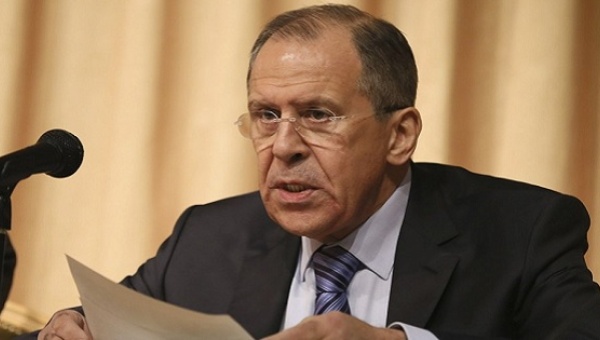
Russian Foreign Minister Lavrov reaffirms his country’s friendship with Venezuela. | Photo: PSUV
teleSUR – March 25, 2016
Russian Foreign Minister Sergei Lavrov said that his country has been closely following the situation in Venezuela and stressed that such is exacerbated by external interference.
“Venezuela is a friend country that they (opponents) are trying to destroy from outside,” Lavrov said Thursday during a meeting in Moscow with Venezuelan diplomats and Latin American students who are attending a course in diplomatic studies organized by the Russian Foreign Ministry.
At the meeting, the top diplomat explained the vision of Russia in Latin America and said he is pleased to see how Latin American countries have unanimously rejected coups led by right-wing opposition.
U.S. President Barack Obama issued an Executive Order March 9, 2015, declaring a “national emergency with respect to the unusual and extraordinary threat to the national security and foreign policy of the United States posed by the situation in Venezuela.” Obama then renewed that decree March 3, 2016, claiming that alleged conditions that prompted the first order had “not improved.”
All 33 members of the Community of Latin American and Caribbean States expressed their opposition to the U.S. government’s aggressive move and called for it to be reversed.
Soros Disruption: American-Style
By Wayne MADSEN – Strategic Culture Foundation – 20.03.2016
Eastern Europeans and Arabs are all-too-familiar with the political street hooliganism sponsored by global «provocateur» George Soros and his minions. Lately, middle-class Americans have had a taste of the type of violent protest provocations during the current US presidential campaign that have previously been visited upon governments from Macedonia and Moldova to Syria and Libya.
Recently, Donald Trump campaign rallies have seen highly-coordinated and well-planned political demonstrations in Chicago, Cleveland, St. Louis, Dayton, and other cities. The rallies were disrupted by highly-coordinated and well-planned protesters waving freshly-printed protest signs before awaiting television cameras. Such «rent-a-mob» actions are trademark signs of the involvement of George Soros and the «godfather» of political street violence, Gene Sharp, in disrupting the normal political process.
One of the favored methods proposed by Sharp and embraced by Soros-financed groups is the taunting of individuals. Sharp’s advice to taunt speakers is being played out in the US presidential campaign: «instead of predominantly silent and dignified behavior… people may mock and insult officials, either at a certain place or by following them for a period». Sharp suggests that taunting individuals, such as presidential candidates, be combined with a refusal to disperse when either asked or ordered to do so. Sharp claims that these methods are «non-violent». However, when the US Secret Service, charged with protecting presidential candidates from assassination or bodily harm, order protesters to leave a campaign venue and there is a subsequent refusal to do so, violence is a certainty.
Soros and Sharp honed their street revolution tactics on the streets of Belgrade in the Bulldozer Revolution that overthrew Serbian president Slobodan Milosevic on October 5, 2000. Two Soros-financed and Sharp-inspired groups, OPTOR! and the Center for Applied Nonviolent Action and Strategies (CANVAS), as well as their leader Srdja Popovic, a so-called «pro-democracy» agitator, have all been unmasked as US intelligence assets. Popovic has received funding from the CIA-linked US Institute of Peace, a creation of neo-conservatives to advance the type of undemocratic political street disruptions first seen in Serbia and that soon expanded to Ukraine, Georgia, Egypt, Venezuela, Russia, Macedonia, and other countries. Today, Soros-inspired political violence has targeted Trump rallies across the United States.
Popovic first began to infiltrate American politics by ostensibly supporting the Occupy Wall Street movement. As his ties to the CIA and Goldman Sachs later showed, his intent and that of his financiers were to derail the anti-capitalist popular movement.
Several veteran «agents provocateurs» of the Occupy Wall Street movement who are now part of the Bernie Sanders presidential campaign have been enlisted by groups like Unbound Philanthropy, an immigrant rights group, to disrupt Trump rallies. Together with the Soros-financed group Black Lives Matter, these professional street hooligans have carefully, and in compliance with the Sharp model, staged their demonstrations to achieve maximum media coverage while achieving the maximum level of disruption to the primary election process.
Unbound Philanthropy is funded by Obama’s deep-pocketed friend and frequent vacation host in Hawaii, William Reeves, a former JP Morgan executive who now heads up BlueCrest Capital. In some cases, the political protesters masquerade as Trump supporters by wearing pro-Trump shirts and hats in order to gain access to Trump campaign venues. This methodology of disruption employs another Sharp tactic, that of using false identities. Coupled with the tactic of «non-violent harassment» of individuals, the use of employing false identities to gain admittance to Trump rallies, followed by coordinated protests in the form of placard-waving «stand-ins», are textbook examples of Sharp tactics being employed with the financial support of Soros and his gang, which includes Reeves and pro-immigration Hispanic groups and Black Lives Matter. Many of the anti-Trump street actions are coordinated by MoveOn.org, another group financed principally by Soros and the Hyatt Hotels’ Pritzker family of Chicago. One member of the Pritzker family, Penny Pritzker, serves as the Secretary of Commerce in the Obama administration.
MoveOn.org, which has endorsed Sanders, is actually using its protests at Trump rallies as a fundraising gimmick. It promises to disrupt future Trump campaign rallies and it will use every weapon in the Sharp/Soros handbook.
Another Sharp/Soros tactic employed against Trump is the «speak-in». During a Trump campaign appearance in Dayton, a pro-Bernie Sanders protester jumped a barrier and rushed the stage in an attempt to grab the microphone from Trump. The Secret Service tackled the protester who was arrested by police. The protester previously took part in a 2015 protest at Wright State University in Dayton where he dragged a US flag on the ground. Destruction of property, including US flags, is another hallmark disruption tactic proposed by Sharp.
The Sharp definition of a «speak-in» is a «special form of nonviolent intervention… when actionists interrupt a meeting… or other gathering for the purpose of expressing viewpoints on issues which may or may not be related directly to the occasion». Soros classifies the action as «social intervention», with «psychological and physical aspects». Regardless of Sharp’s definition of such actions as «nonviolent», the Secret Service does not take lightly anyone lunging at a presidential candidate, especially after the assassination of candidate Robert F. Kennedy in Los Angeles in 1968 and the shooting and attempted assassination of candidate George Wallace in 1972. Soros’s operatives are dangerously playing with fire by bringing such violence-tinged street protest tactics to the American presidential political scene.
The stench of Popovic and Soros in the street operations against Trump, who has railed against Wall Street’s «free trade agreements» and neo-conservative «wars of choice», can be seen in the links between the street protest groups and corporate giants like Goldman Sachs.
Popovic and his CANVAS non-governmental organization (NGO) has received funding from a former Goldman Sachs executive named Muneer Satter.
Satter happened to work at Goldman Sachs with fellow corporate executive Heidi Cruz, the wife of Trump’s opponent for the Republican presidential nomination, Senator Ted Cruz of Texas. Although Satter retired from Goldman Sachs in 2012 he continues to serve as vice chairman of the Goldman Sachs Foundation. In 2012, the year that Satter retired from Goldman Sachs, the firm loaned more than $1 million to Cruz’s Texas US Senate campaign.
Satter also happens to be close to both President Barack Obama and anti-Trump GOP operative Karl Rove. Satter has donated to both Obama and Rove’s Crossroads political action committee. Satter was also the national finance co-chair of Mitt Romney’s 2008 and 2012 presidential campaigns.
This year, Satter joined the Senator Marco Rubio campaign as Illinois Finance Committee co-chairman. Such background players, Heidi Cruz and her Goldman Sachs friend Satter, as well as Rove, Romney, Reeves, Soros, the Pritzkers, and Popovic – a Central Intelligence Agency-linked foreign interloper in the United States political system – are the actual movers and shakers behind America’s presidential election. Their jobs and those of other deep-pocketed political financiers like Paul Singer, Haim Saban, Sheldon Adelson, Michael Bloomberg, Sam Zell, and Norman Braman, are to ensure that no «unfiltered outsiders» ever become the President of the United States. These and other wealthy backroom political maestros owe their undemocratic but massive political influence to insider politicians residing at 1600 Pennsylvania Avenue in Washington. They will do everything in their power to prevent an «unfiltered» candidate from becoming the next American president.
Did the Saudis Just Win? 5 Signs That the Oil Glut Crisis May Be Over
Sputnik – March 8, 2016
Saudi Arabia’s alleged strategy of pushing high-cost oil producers off the market may have worked, as investors have shifted their focus away from high-cost shale oil operations and large multinationals are increasingly looking at short-term projects.
Although hedge funds such as Goldman Sachs are warning against thinking that commodities including oil are facing a long-term rally, there are several signs that oil prices may have already hit bottom.
1. OPEC Rebalance
News of a looming oil deal among OPEC countries may have helped oil prices begin a stable, nearly month-long rally on February 12. Days earlier, Igor Sechin, head of Rosneft, Russia’s biggest oil company, said it would be open to the idea of an output cut and OPEC’s Venezuela made the first concrete proposal the following day.
Unlike OPEC countries, Russia’s oil producers are predominantly private companies responsible to shareholders, although some, such as Rosneft, also have a significant share of government control. The new deal, however, may lead to a rebalance of OPEC influence by including Russia and Mexico, both of which held negotiations, while members such as Venezuela, which has the world’s largest oil reserves, could lose standing.
At the same time, Russian oil companies are starting to diversify internationally, with Lukoil looking into Iranian assets while Rosneft begins drilling off the coast of Vietnam to regain positions potentially lost as a result of US sanctions.
2. Shale Crash
Despite a rise in prices over the past few weeks, US shale oil companies announced that they would cut output as a result of major losses.
Companies such as Chevron and ConocoPhillips may actually compete against shale oil companies as they cut investments in deepwater oil extraction, giving domestic shale producers more opportunities to cut losses and liquidate their assets.
In the long term, however, the effect may be temporary, as the lifting of the US oil export ban could lead major US companies to increase exports.
3. Chinese Weather
Despite fears regarding China’s economy and predictions of an economic “perfect storm,” the fears did not materialize. As a result, volatility unseen since the 2008-2009 financial crisis began to fall, allowing oil prices to regain stability and head higher.
China’s troubles still prevail, but disruptions in the country’s stock market proved to not significantly impact economic fundamentals, in an economy which still suffers more from overinvestment as a result of government planning than from problems raising capital.
4. Iranian supplies
While Iran was ready to ship oil as soon as sanctions were lifted, with long-term supplies stored in tankers, the introduction of Iranian oil did not greatly impact the European oil market, as the country shipped less than a third of the oil it promised to export.
Low oil prices may have also been behind Iran’s less-than-spectacular results when it came to raising capital for new oil production, which the country plans to grow to pre-sanctions highs.
5. US Inventories May No Longer Matter
Although the oil glut prevails, in the United States, oil prices have continued steadily rising even after announcements that US inventories grew nearly three times more than expected. The country’s oil producers have actually begun eyeing oil exports to Europe, which faces supply disruptions as a result of an accident in Nigeria and financial trouble among offshore North Sea oil operations.
At the same time, major oil companies are increasingly wary of long-term investments which could be subject to future volatility.
The situation suggests that Saudi Arabia’s alleged strategy of forcing out high-cost operations for both shale and offshore projects may have actually worked, and while the US would face beneficial export conditions while the glut is ongoing, consolidation and liquidation in the shale sector could bring back the pre-shale world while scaring off investors from higher-cost projects.
Obama Renews Decree Calling Venezuela a ‘Threat’
teleSUR | March 3, 2016
U.S. President Barack Obama renewed Thursday an executive order issued last March that declared Venezuela “an unusual and extraordinary threat to the national security and foreign policy of the United States.”
The renewal of the decree is valid for one year and was revealed in a letter from Obama to congressional leaders. In the letter, the U.S. president claims that alleged conditions that first prompted the order had “not improved.”
The executive order was first issued by Obama in March 2015 and provoked a storm of controversy inside Venezuela and a backlash throughout Latin America.
Leaders from throughout the region condemned the decree.
All 33 members of the Community of Latin American and Caribbean States expressed their opposition to the U.S. government’s move and called for it to be reversed.
“CELAC calls upon the government of the United States of America and the government of the Bolivarian Republic of Venezuela to launch a dialogue, under the principles of respect for sovereignty, non-interference in the internal affairs of the states, the self-determination of the peoples and the democratic and institutional order in line with international law,” read the unanimous statement by the regional bloc.
The United Nations of South America also strongly criticized Obama’s order.
Inside Venezuela, millions signed a petition asserting that the country was not a threat and called for the decree to be repealed.
The U.S. president eventually responded to the outcry, admitting that Venezuela “does not pose a threat” to the United States in an interview with EFE.
The order allows the U.S. government to impose sanctions on Venezuela.
Prominent Chavista Journalist Assassinated in Caracas
By Z.C. Dutka – Venezuelanalysis – January 20, 2016
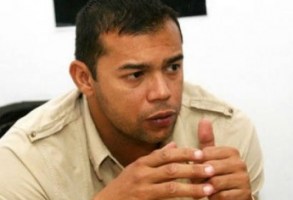 Santa Elena – Journalist Ricardo Duran, official Press Secretary for Venezuela’s socialist government, was shot dead in the early hours of Wednesday morning while arriving at his Caracas home.
Upon leaving his vehicle in the residential neighborhood of Caricuao, Duran was shot with a single bullet by an assailant evidently trained to kill, authorities say.
“They didn’t take anything from him; not his wallet nor cash, not his cell phone or regulatory weapon, he had a gun permit, and much less his car,” said Caracas Chief of Government Daniel Aponte, indicating that the crime is being treated by investigators as an assassination.
“We are simply dismayed,” said Aponte, calling Duran an “example of revolutionary journalism.”
The slain journalist was well-known as a former anchorman of VTV state television, and has been described as one of the key figures in authentically reporting the 2002 coup d’état against Hugo Chavez, which many private media outlets presented as a resignation.
Duran received a National Prize for Journalism in 2009 in recognition of his work in radio, and previously held the post of Director of Communications for the National Assembly.
Venezuela’s Upcoming Double-Confrontation
By Gregory Wilpert | teleSUR | January 13, 2016
Venezuela is heading for two confrontations, each reinforcing the other – a political and an economic one. The future is very uncertain.
Following the Venezuelan opposition’s recent electoral victory in the Dec. 6 parliamentary elections, the opposition seems to be more determined than ever to steer towards an outright confrontation with the president. The goal is to destabilize the government as much as possible, with the aim of achieving his ouster before the end of the year.
The new National Assembly president said that his aim is to have a plan in place for president Maduro’s ouster within the first six months of 2016. Ramos Allup furthered this confrontation Jan. 6, when he swore in three opposition members as representatives, whose election the Supreme Court had previously put on hold due to electoral irregularities. On Monday, January 11, the Supreme Court thus declared that the National Assembly president had acted in defiance of the Court and that from now on all laws that the National Assembly passes are null and void, since the assembly had incorporated members into its body that should not be there.
The political confrontation between the legislature and the executive is thus programmed. The next conflict will be about the amnesty law, by which the opposition intends to free all so-called political prisoners, that is, all opposition figures who have been involved in violent protest of one kind or another, many of whom have been held responsible for deaths of innocent bystanders. Ramos Allup already warned Maduro that if he and the Supreme Court do not implement the amnesty law, he will begin removing ministers from Maduro’s cabinet: “Whether or not he accepts [the amnesty law] will not matter, to which we will say, ‘We do not accept his naming of ministers.’”
The options for the new opposition-dominated National Assembly to get rid of Maduro are several. As mentioned above, it can remove not only the ministers and the vice-president (though this could lead to new National Assembly elections if the vice president is removed three times in a row), remove the heads of other branches of government, such as the Supreme Court, the attorney general, or the National Electoral Council (with prior approval from either the Supreme Court or the attorney general), amend or reform the constitution (which then has to be submitted to a referendum), or call for a constitutional assembly (followed by a referendum).
Also, there is a lot of speculation that the opposition might try to organize a recall referendum against Maduro, but doing so would require the collection of 20 percent of registered voters’ signatures, which amounts over 3.8 million signatures. This latter course is a difficult undertaking. In comparison, when the opposition organized the recall referendum against president Chávez in 2004, it had to collect only 2.5 million signatures because the electorate was substantially smaller.
Aside from the project to remove Maduro and to give amnesty to its law-breaking supporters, the oppositional National Assembly also plans to introduce a number of laws that could undermine the Maduro presidency. A populist measure that the opposition has wanted to pass for a long time is to give ownership titles to the beneficiaries of the housing mission. Over the past five years the government has constructed one million public homes, which it has essentially leased to families in perpetuity, but without giving them a title that can be bought and sold. The reasoning behind this is to avoid the development of a speculative housing market of homes built with public funds. The opposition is betting that most public housing beneficiaries would prefer a saleable ownership title, so that they can sell the home and thereby possibly make a profit from it.
Another law that would probably get the president into trouble is a rumored project to dollarize the economy. It is obvious to everyone in Venezuela that the current economic situation of high inflation, frequent shortages of basic goods, long lines at supermarkets, and a massive black market for price-controlled products, is not sustainable. One “solution” to these problems that some opposition leaders have favored it to simply get rid of the local currency, the bolivar, and base the entire economy on dollars, just as Ecuador did in 2001. Aside from undermining the country’s economic sovereignty, such a move would also almost definitely mean major painful displacements for economy, leading to increased inequality and unemployment. No doubt the opposition would then try to blame Maduro for this, but it is possible of course that they themselves would end up carrying a large part of the blame, which is why the opposition will enter into this project neither unambiguously nor unanimously.
Other major projects on the opposition docket include the repeal of a wide variety of progressive laws that were passed during the Chavez and Maduro presidencies, beginning with the land reform, re-privatization of key industries, and the dismantling of price controls, among other things.
Finally, the opposition has also announced that it will convoke special investigation commissions. Among these are commissions to investigate corruption within the executive and another to investigate the credentials of newly appointed Supreme Court judges. The investigation of the judges could lead to the removal of several of these because the Supreme Court law allows for the removal of judges who do not meet the fairly tough requirements for appointment.
On the Chavista side of the confrontation the options for maneuvering are even tougher. Here the foremost issue for the government is how to deal with the on-going economic crisis, which is bound to get worse especially since the price of oil is tumbling. While the price of an average Venezuelan barrel of oil reached a high of US$55 per barrel in early 2015, the most recent figures point to half that amount, at US$27 per barrel. Unless this price recovers, this could be devastating for Venezuela, especially since 95 percent of the country’s export earnings and 50 percent of its fiscal budget come from the sale of oil.
The 50 percent collapse in the price of oil over the past eight months, however, means a far larger collapse in revenues because a large proportion of Venezuela’s oil is extra-heavy oil that is expensive to extract, reaching a high of around US$20-$25 per barrel, leaving relatively little to no profit at such low prices. In other words, a 50 percent drop in the price of oil represents a far larger than 50 percent drop in revenues for the state.
Maduro recently named a new cabinet, reshuffling many positions, but in the key position of vice president for the economic area, Luis Salas, Maduro appointed someone considered to be a proponent of the same policies as before, who says that price controls and the currency control must be maintained and that the government’s main weakness has been in the area of enforcement of existing policies. In other words, even though the country is now waiting for the announcement of a promised “economic emergency plan,” it seems doubtful that this plan will signal a significant departure from the economic policies so far.
The drop in revenues, combined with an inflationary spiral that the economic war of smuggling, hoarding, and speculation and that the black market for dollars have inflicted on Venezuela, signal a very difficult near-term future for Venezuela’s economy and everyone in it. Some economists warn of possible hyperinflation and of an inability to pay its foreign bills (balance of payments crisis).
In short, Venezuela is heading towards two confrontations simultaneously, where each threatens to exacerbate the other: one economic and the other political. What the prospects are for overcoming these confrontations is impossible to predict at this moment. Within the chavistasocial movements and the governing party, the PSUV (United Socialist Party of Venezuela), more and more voices are calling on the government to organize a massive consultation process with the grassroots, which is something that Maduro has endorsed, but it remains an open question whether these will happen in time and if it does, whether it will be able to provide solutions that will allow the Bolivarian Revolution to move forwards, despite the reinvigorated opposition in parliament.
Venezuela: Right-Wing Politicians Accept Supreme Court Ruling
teleSUR | January 13, 2016
The Venezuelan Supreme Court had declared the leadership of the right-wing dominated National Assembly in contempt over their defiance.
Three right-wing Venezuelan politicians have finally decided to follow the rule of law and accept the Supreme Court ruling that suspended their election victories until an investigation into allegations of vote buying is concluded.
During National Assembly’s session Wednesday, the Supreme Court ruling was read aloud inside the chamber.
National Assembly President Henry Ramos Allup then affirmed that the leadership of the assembly would “abide by the ruling of the Supreme Court.”
Socialist lawmakers, who had been demanding the Supreme Court’s ruling be respected, responded with vehement applause.
The three suspended lawmakers wrote to the leadership of the National Assembly Tuesday seeking that their swearing-in be reversed. The majority MUD coalition swore in the lawmakers despite the court order in a defiant provocation last week.
Ramos Allup told CNN that he had received a letter from the three suspended politicians Tuesday evening.
Julio Ygarza, Nirma Guarulla and Romel Guzamana, representing the right-wing MUD coalition, were elected in the state of Amazonas during parliamentary elections held last month. But the electoral chamber of the Supreme Court accepted a challenge to the results over allegations of vote-buying and electoral irregularities.
The court ordered that all candidates elected in the state of Amazonas be temporarily suspended while an investigation is conducted.
However, the MUD coalition defied the Supreme Court and had the three suspended candidates sworn in. In response, socialist PSUV lawmakers went before the Supreme Court to protest the MUD’s violation of the constitution.
The Supreme Court agreed and ruled Monday that the leadership of the National Assembly were in contempt and any decisions made by the National Assembly would be void after the right-wing MUD alliance swore in the three legislators.
A fourth candidate from the state of Amazonas, a socialist from the PSUV, was also suspended, but he did not attempt to take his seat in the assembly.
The MUD won a two-thirds supermajority in the Dec. 6 elections, granting it powers to make sweeping changes, including overhauling the constitution and calling a recall referendum on the presidency of President Nicolas Maduro.
Venezuelan Opposition Swears in Suspended Deputies to Parliament
teleSUR | January 7, 2015
All 112 members of the Venezuelan right-wing coalition MUD elected to the National Assembly were sworn in as legislators Wednesday, despite three being suspended pending an inquiry into electoral fraud.
Three members of MUD and one of the socialist alliance PSUV from the state of Amazonas were suspended after a decision by the Supreme Court of Justice to investigate allegations of vote-buying.
But on the second day of the new parliament the MUD ignored the ruling and swore the three deputies in regardless.
According to PSUV lawmakers, this represents a violation of the constitution, and that decisions made by the National Assembly while the suspended deputies are seated will be void.
PSUV deputy Tania Diaz said, “At this moment, the new leadership of the National Assembly violates the constitution and ignores the powers. Forever coup-mongers.”
“On swearing in three deputies whose declaration was suspended by a decision by the Supreme Court of Justice, all the decisions that the National Assembly takes are nullified,” she added.
Former National Assembly president, Diosdado Cabello, said that what the opposition had done was “extremely serious.”
“The act today is very serious, extremely serious. It violated the national constitution. The act violated correspondence between the powers, and the respect between the powers, for the Supreme Court,” he said.
“This assembly now has no legitimacy, it cannot decide anything,” he told reporters.
Featured Video

The Sordid History of the CIA – Part 2
or go to
Aletho News Archives – Video-Images
Book Review
Jeffrey Epstein: A Jewish Individual?
The Occidental Observer | February 5, 2023
One Nation Under Blackmail: The Sordid Union between Intelligence and Organized Crime that Gave Rise to Jeffrey Epstein (Volume 1 & 2) by Whitney Webb
“Far from being an anomaly, Epstein was one of several men who, over the past century, have engaged in sexual blackmail activities designed to obtain damaging information (i.e., “intelligence”) on powerful individuals with the goal of controlling their activities and securing their compliance.”[1]
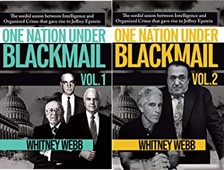
Jeffrey Epstein is dead and Ghislaine Maxwell is locked away in prison, and the thought-makers of our world seem keen to let the more explosive parts of the scandal dissipate from the public consciousness. As far as the mainstream media is concerned, Epstein and Maxwell were little more than well-connected socialites who ran a sex-trafficking ring for the rich and the powerful, and the focus has shifted instead to the criminal and civil cases seeking to achieve redress for the victims of sexual abuse.
On occasion some newspaper articles will mention the hidden cameras littered across Epstein’s properties, others the reams of CDs and hard drives found within them during the FBI raids. Altogether missing from the Netflix documentaries (Jeffrey Epstein: Filthy Rich [2020] and Ghislaine Maxwell: Filthy Rich [2022]) or the articles that spend their time narrowly focusing on the links between Epstein and Bill Gates, is the acknowledgement of the true nature of Epstein himself and the ultimate purpose of this sex-trafficking of minors — a sexual blackmail operation.
Not everyone is cowardly enough to let these controversial aspects lie untouched, as the newly released two-volume book One Nation Under Blackmail by independent reporter Whitney Webb seeks to blow wide open this media-enforced blackout. Utilizing primarily open-source information (that is, publicly accessible information such as books, newspapers articles and government reports),[2] Webb’s book delves into the life and times of Jeffrey Epstein and his deep ties to Jewish billionaires and Israeli intelligence. … continue
Blog Roll
Recent Comments


 Aletho News
- Trump’s ‘Board of Peace’ exports Israeli ‘ceasefire’ diplomacy to the world
- Israeli army closes dozens of cases involving killing of Palestinians inside torture camps
- Europe creates a ‘Russian government-in-exile’, consisting of a bunch of losers
- Munich, 2007: The Day the West Was Told No
- At The Munich Security Conference, AOC Gets It Wrong On Foreign Policy
- Europe Decided to Go to War With Russia by 2030, Already Preparing – Orban
- Russia and China Are Expanding Their Cooperation to Counter US Efforts to Bully Iran and Cuba
- NATO plotting maritime blockade of Russia – Moscow
- Jeffrey Epstein’s sinister shadow over West Asia
- The Sordid History of the CIA – Part 2
- If Americans Knew
- Israel battles Palestinian right of return, one Palestinian at a time – Not a ceasefire Day 127
- Noor’s short life of unimaginable suffering
- Israel Destroyed Gaza’s Hospitals. Now It’s Banning Doctors Without Borders.
- Is Spite of What Zionists Say, It’s a Good Thing to Criticize Governments
- Palestinian mother, daughter recount strip searches, harsh conditions in Israeli detention
- Israel used weapons in Gaza that made thousands of Palestinians evaporate
- ADL’s Stats Twist Israel’s Critics Into Antisemites
- Why Is the World Silent When the Gaza Genocide Is Not Over?
- In Gaza: 8,000 bodies under rubble, 3,000 missing – Not a ceasefire Day 126
- AZAPAC, the new PAC opposing Israeli domination of U.S policies
- No Tricks Zone
- Unfudging The Data: Dutch Meteorological Institute Reinstates Early 20th Centruy Heat Waves It Had Erased Earlier
- German Gas Crisis…Chancellor Merz Allegedly Bans Gas Debate Ahead of Elections!
- Pollen Reconstructions Show The Last Glacial’s Warming Events Were Global, 10x Greater Than Modern
- Germany’s Natural Gas Storage Level Dwindles To Just 28%… Increasingly Critical
- New Study Rebuts The Assumption That Anthropogenic CO2 Molecules Have ‘Special’ Properties
- Climate Scientist Who Predicted End Of “Heavy Frost And Snow” Now Refuses Media Inquiries
- Polar Bear Numbers Rising And Health Improving In Areas With The Most Rapid Sea Ice Decline
- One Reason Only For Germany’s Heating Gas Crisis: Its Hardcore-Dumbass Energy Policy
- 130 Years Later: The CO2 Greenhouse Effect Is Still Only An Imaginary-World Thought Experiment
- New Study Affirms Rising CO2’s Greening Impact Across India – A Region With No Net Warming In 75 Years
 Aletho News