Venezuela Opposition Cries Foul After Recall Suspended, Calls for Coup Against Maduro
teleSUR | October 21, 2016
The ominous calls came as courts temporarily froze the referendum process to investigate thousands of fraudulent signatures submitted in the first phase.
Leader’s from Venezuela’s opposition appeared to call for a coup against President Nicolas Maduro, after the country’s Supreme Court ruled that the presidential recall referendum would be temporarily suspended due to fraud committed in the first phase of the process.
Opposition leader Henrique Capriles said Friday that President Maduro is “in disobedience of the constitution” and called on both the National Assembly and Armed Forces to “make a decision” and have people “respect the constitution.”
The former Venezuelan presidential candidate also said Maduro had vacated his position as president, prompting fears that a coup might be looming.
“Maduro did not only leave the country, he left his position,” Capriles said during Friday’s press conference.
“Maduro declared himself in disobedience, he does not respect the Constitution, and today he left the country, and will leave everything.”
Maduro left Venezuela for various OPEC and non-OPEC countries Thursday to help establish a stable price for oil, which has negatively affected the South American country’s economy.
Capriles, head of Justice First and one of the leaders of the opposition MUD coalition, also called on the nation’s armed forces to intervene.
“Hopefully the armed forces will have people respect the constitution,” he said.
The MUD leader also demanded the government repeal the decision to suspend the signature collection process for the recall referendum and called on opposition members to “take the streets of Venezuela.” Toward the end of his speech, Capriles denied he wanted a coup to oust Maduro and said he does not want to incite violence.
“We don’t want a coup in the country,” said Capriles, “A coup has (already) happened to the people and we have to restore constitutional order.“
Henry Ramos Allup, the president of the National Assembly, also spoke during the press conference and said the National Assembly he leads supports all the decisions and the message promoted by Capriles.
Ramos Allup also called on the Venezuelan Armed Forces “to analyze the abuses to the constitution” allegedly carried out by the government. He also said they were offering a constitutional way out for Maduro through the recall referendum in order to prevent “a violent way out” in the future.
The legislator said a delegation from the assembly will travel to the Organization of American States, or OAS, to demand the OAS apply the so-called Democratic Charter against his country, something the opposition has been requesting for months.
“Venezuelans have always been stronger than its leaders,” he said, before he cast doubt on Maduro’s nationality, suggesting he may actually be Colombian—a common allegation that has no basis.
The National Electoral Council, or CNE, said the decision to postpone the recall referendum process came after the MUD committed the criminal offense of presenting more than 600,000, about 30 percent, of signatures deemed irregular. Among the invalid signatures were almost 11,000 from deceased Venezuelans.
The Supreme Court also declared invalid all acts of the National Assembly after it swore in three legislators who had previously been suspended over irregularities when they were elected.
Venezuelan Supreme Court Orders New Inquiry into Disappeared During Fourth Republic
By Lucas Koerner | Venezuelanalysis | October 20, 2016
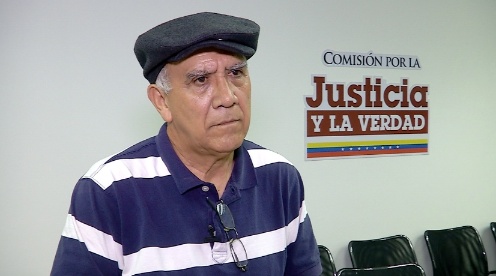
Caracas – Venezuela’s Supreme Court (TSJ) issued a ruling Tuesday ordering the country’s the public prosecution to reopen investigations into the case of a law student disappeared in 1966.
Andres Pasquier Suarez, a law student at the Central University of Venezuela, was detained by Venezuela’s national guard on October 10, 1966 and subsequently handed over to the now defunct Armed Forces Information Service.
According to military records, the youth was transferred two days later to the Urica Anti-Guerrilla Camp from which he never returned.
A Maracaibo military tribunal charged with investigating the incident declared the case closed on March 15, 1968, finding that “no crime has been committed in any moment”.
Writing on behalf of the high court, TSJ President Gladys Gutierrez struck down the prior ruling as “contrary to the elemental principles of law and justice”, concluding that the military court had failed to conduct an impartial investigation of the disappearance.
The justice ordered the public prosecutor’s office to reopen the investigation and identify those responsible as mandated under article 19 of Venezuela’s Law to Prosecute Crimes, Disappearances, Tortures, and Other Human Rights Violations for Political Reasons during the Period 1958-1999.
Over the last 17 years, numerous inquiries have brought to light the magnitude of human rights violations committed under Venezuela’s pacted, two-party system known as the Fourth Republic.
This past July, the country’s official Truth and Justice Commission revealed that it had registered a total of 11,043 cases of torture, assassinations, and political disappearances between 1958 and 1998.
Pro-Clinton Ad Compares Trump to Chavez, Venezuela Responds

teleSUR | October 20, 2016
The U.S. Democratic Party showed its true colors in a new ad that the Venezuelan government blasted as “racist arrogance” that puts the late Hugo Chavez in the same category as fascist dictators Benito Mussolini and Adolf Hitler in an effort to cast Republican presidential rival Donald Trump as a dictator-in-waiting.
The Spanish-language ad, aimed at U.S. Latino voters ahead of the Nov. 8 election, features comments by Trump that Clinton should be jailed and his vow to sue media that spread “purposely negative, horrible and false” articles.
“Remind you of anyone?” the video asks before flashing images of the popular socialist Venezuelan leader Chavez.
The clips are selectively edited to portray Chavez as authoritarian but deliberately fail to mention that Chavez and his Bolivarian Revolution won support at the ballot box in over a dozen elections which former Democratic President Jimmy Carter called “the best in the world.”
“It is an expression of racist arrogance and irrationality from a party that does not serve its constituents,” Venezuela’s Foreign Minister Delcy Rodriguez said in a statement late Wednesday.
“Chavez is a leader who transcended our time for his democratic nature, his fight for the poor and universal feeling for humanity,” she added.
The video also compares Trump and Chavez, who died in 2013, with European dictators Mussolini and Hitler, and concludes by urging voters to “protect” U.S. democracy. The ad was paid for by the Democratic National Committee in support of Clinton, and was not made by her campaign.
The clip nonetheless serves to show that the U.S. Democratic Party, despite efforts to portray their party as more reasonable than their Republican counterparts, are not beneath manipulation to help their candidate get elected.
The U.S. Department of State, under the leadership of then-Secretary of State Clinton, publicly praised the results of the 2012 Venezuelan presidential elections that saw Hugo Chavez re-elected to a third term.
In statements to the press, then-State Department spokesperson Victoria Nuland said they “congratulated the Venezuelan people for the high turnout and for the generally peaceful manner in which the election was carried out.”
But while Clinton publicly welcomed improved relations with Venezuela as secretary of state, she privately ridiculed the country and continued to support destabilization efforts.
Venezuela, whose economy is heavily dependent on oil exports and has suffered due to the dramatic drop in the price of oil, has been the subject a vicious media campaign which has portrayed the country as being on the brink of collapse. The ad is an effort to piggyback off that negative press to win support from the Latino community.
However, the effort may backfire as Venezuela’s socialist government enjoys support throughout Latino communities in the United States and even reached out directly to low-income people in the United States through discounted home heating oil.
In the Democratic Party primary race, both Clinton and her opponent Bernie Sanders also tried to tie Chavez into the race, with the latter calling the Venezuelan leader a “dead communist dictator.”
40 Years After CIA Terrorist Bombs Cuba Plane, Still No Justice

By Teresa Gutierrez – teleSUR – October 2016
Forty years ago, on October 6, 1976, Cubana Flight 455 on its way from Barbados to Jamaica was bombed shortly after takeoff, killing 73 people, including the national fencing team of Cuba.
In what was immediately seen as a terrorist act, most in the international community joined Cuba in denouncing the horrific act.
In 2011, declassified CIA documents showed that one of the key figures in this terrorist attack was Luis Posada Carriles, a right-wing Cuban who had fled the island after the Cuban Revolution of 1959.
The documents revealed that it was Posada Carriles, now 88, who had planned the 1976 bombing. He had already gained experience terrorizing the Cuban people as a participant in the failed CIA-orchestrated Bay of Pigs assault in 1961.
Peter Kornbluh, author of the book, “Back Channel to Cuba,” and a former researcher at the National Security Archive of George Washington University, said in 2011 that the declassified documents “again brings up the issue of how an international terrorist like Luis Posada Carriles can live happily ever after in Miami.”
This point demonstrates that the Oct. 6 anniversary should not only be remembered, it should be reflected upon.
The 1976 attack highlights U.S. imperialism’s decades-long war of sabotage against the Cuban Revolution. Despite a thawing in U.S.-Cuba relations, this war has not subsided.
A free man, Posada Carriles moved to Venezuela in the early 80’s where he was eventually jailed for his acts of terror against Cuba. But he escaped in 1985 and resumed plotting against Cuba and its leader, Fidel Castro.
In this period, he was also instrumental in plotting against the revolutionary government of the Sandinista National Liberation Front in Nicaragua, working as a coordinator for the contras who were fighting a war backed by the U.S. government.
Posada Carriles bragged to the New York Times in 1998 that he had been responsible for the 1997 hotel bombings targeting Cuba’s tourist industry that killed an Italian tourist, saying the man just happened to be in the wrong place at the wrong time. Posada Carriles later recanted his story.
The New York Times wrote in 1998, “Mr. Posada was schooled in demolition and guerrilla warfare by the Central Intelligence Agency in the 1960s. In a series of tape-recorded interviews … Posada said the hotel bombings and other operations had been supported by leaders of the Cuban-American National Foundation. Its founder and head, Jorge Mas Canosa … was embraced at the White House by Presidents Reagan, Bush and Clinton.”
The CANF recieved millions of dollars of U.S. tax-payer money to carry out its dirty war against Cuba for decades, according to declassified documents.
Posada Carriles was again arrested in 2000 for possession of explosives in Panama and charged with plotting to assassinate the Cuban leader at the Peoples’ Summit taking place at the University of Panama. Soon after he went into hiding.
When Posada Carriles resurfaced in Miami in 2005, the U.S. government refused to extradite him to Cuba or Venezuela to face judicial proceedings for his crimes.
In early 2011, Posada Carriles was finally put on trial in El Paso, Texas—not for his many terrorist acts—but for immigration fraud and obstruction of a proceeding.
He was charged with lying to an immigration judge about his involvement in the 1997 bombings and about how he entered the U.S. in 2005.
U.S. prosecutors presented evidence that Posada Carriles played a major role in carrying out bombings in Cuba. Many expected convictions on at least some of these charges but the jury dumbfounded prosecutors with a complete acquittal.
Ricardo Alarcon, a long-time Cuban leader and at the time, the president of the national assembly, told AP, “The stupid and shameful farce is over.”
Venezuela’s government also denounced the trial as “theater,” saying Washington continued to harbor a mass murderer.
Alarcon had intimate and deep knowledge of the farce that is the U.S. judicial system. He had been a leading advocate of the Cuban Five and a principle strategist for their freedom.
The Cuban Five were Gerardo Hernandez, Ramon Labañino, Antonio Guerrero, Fernando Gonzalez and Rene Gonzalez. They were arrested by the U.S. government in Miami in 1998 and falsely accused of committing espionage conspiracy against the U.S. and other related charges.
They were convicted in a federal court in 2001 and spent over 15 years in jail, labeled by the U.S. government and media as terrorists.
But the Five were in fact counter-terrorists, heroes who were willing to sacrifice their lives, leave their beloved families and homeland to protect Cuba from U.S. aggression. They worked to stop terror and aimed to defend Cuba from the kind of aggression Posada Carriles and his CIA cohorts carried out.
The Five reflect a spirit of justice and peace and to this day—having returned to their beloved country—continue to inspire all those who yearn for a better world.
As long as the likes of Posada Carriles are free to walk the streets of Florida, Cuba must do everything it can to defend itself from U.S. terror.
As long as the U.S. continues to occupy Guantanamo, the Cuban Revolution must be ready to defend itself, despite President Barack Obama’s dubious declarations.
A Salon magazine article in 2008 raised this question: “The coddled ‘terrorists’ of South Florida: Anti-Castro Cuban exiles who have been linked to bombings and assassinations are living free in Miami. Does the U.S. government have a double standard when it comes to terror?”
The answer is yes—a thousand times yes.
Russian Envoy Stands Against Imposing Color Revolution on Venezuela
Sputnik – 03.10.2016
Russia is prepared to join efforts aimed at resolving Venezuela’s internal political standoff if necessary, Russian Ambassador to Venezuela Vladimir Zaemsky told Sputnik.
“We welcome efforts of various politicians to help reach a mutual understanding between the various political groups in Venezuela and we hope that such steps eventually would lead to a positive result. We are ready to join this if it is deemed necessary,” Zaemsky said.
Venezuela has been embroiled in a political crisis with opposition staging regular protests and launching a campaign to remove President Nicolas Maduro, blaming him for an economic crisis in Venezuela, a country suffering from shrinking GDP, shortages of goods and rising inflation. According to the ambassador, the political crisis cannot be settled without preventing the attempts of some of Venezuela’s neighbors, the West, global media and non-governmental organizations to interfere in the internal affairs of the country.
“Russia believes that the political resolution of Venezuela’s problems should be found by the Venezuelan people itself… It must meet constitutional norms and national laws. Destructive meddling from abroad is unacceptable, no one can impose ‘color [revolution] scenarios’ based on notorious radical tactics to destabilize the situation,” Zaemsky said.
Venezuela has been in a state of an economic emergency since January. Up to 96 percent of Venezuela’s budget depends on oil revenues amid the ongoing slump in oil prices. Venezuela’s opposition hopes to hold a recall referendum to remove Maduro from power.
In August, Maduro pledged to act much tougher than his Turkish counterpart Recep Tayyip Erdogan in case of the coup attempt in the country.
Venezuela Faces Down Rebuke at UN, Possible New Sanctions
By Ryan Mallett-Outtrim | Venezuelanalysis | September 30, 2016
A group of 29 countries called for the Venezuelan government and opposition to engage in renewed national dialogue Thursday, amid calls for more US sanctions against the South American country.
Led by the right-wing government of Paraguay, the international group including the US and UK called on President Nicolas Maduro to “ensure the full respect of human rights, due process, the separation of powers and the consolidation of a representative democracy”.
Issued during a meeting of the UN Human Rights Council (UNHRC) in Geneva, the statement also called for the Venezuelan government to ensure the organisation of a presidential recall referendum.
Venezuela condemned the declaration as “interventionist”, while its regional allies drew support outweighing the Paraguayan statement.
A call from Cuba for respect for state sovereignty drew the support of 88 countries.
Maduro described the outcome of the UNHRC meeting as a “great victory” for Venezuela.
“To their 29 votes, we got 88,” he said.
The fiery session Thursday was the latest in a series of jabs at Venezuela over the course of the meeting. When the UNHRC forum began on September 13, UN High Commissioner for Human Rights Zeid Ra’ad al Hussein lashed out at Maduro’s government over “allegations of repression of opposition voices, arbitrary arrests and excessive use of force against peaceful protests”.
A major anti-government rally two days later drew thousands of opposition supporters to the streets of Caracas and other major Venezuelan cities, with no signs of widespread police crackdowns or repression. Another large rally is scheduled to take place on October 12.
More International Setbacks, Possible Sanctions
The controversy at the UNHRC followed weeks of bad news for Venezuela’s international relations. Earlier this month Venezuela was barred from its position as president of the South American trade bloc Mercosur, while Maduro’s hosting of a summit of the Non-Aligned Movement failed to draw more than a handful of international allies.
Then on Wednesday, US lawmakers issued renewed condemnation, and calls for new sanctions on Caracas.
On Tuesday, the US House of Representatives passed a resolution calling for the release of “political prisoners” in Venezuela.
“This resolution states in no uncertain terms that President Maduro’s shameful and rampant corruption in Venezuela must end,” said Florida Representative and former chairperson of the Democratic National Committee Debbie Wasserman Schultz.
Schultz herself faced allegations of corruption earlier this year, after whistle-blower website Wikileaks released documents that appeared to show Schultz and other leading party officials failed to maintain impartiality during the Democratic primaries.
CNE Head Targeted by Rubio
The day after the House issued its latest Venezuela resolution, long time anti-Venezuela campaigner Senator Marco Rubio called on President Barack Obama to authorise sanctions on government officials including the head of Venezuela’s National Electoral Council (CNE), Tibisay Lucena.
Rubio claimed Lucena and other top officials have “committed significant acts of violence or human rights abuses”.
Lucena herself has no oversight over Venezuela’s security forces, which have been accused of human rights abuses. Nor has she directly been involved in the arrest of opposition political figures such as Leopoldo Lopez, who was imprisoned in 2015 after a Venezuelan court found him guilty of inciting a wave of deadly violence.
As head of the CNE, Lucena has been criticised by opposition supporters, who say her organisation has dragged its feet on preparing for a presidential recall referendum, which could lead to Maduro being forced from power early. CNE officials have responded to the complaints by arguing the opposition itself has slowed the referendum by allegedly including bogus signatures in a preliminary petition that was required to prompt a recall vote.
Last week, the CNE confirmed the referendum would not be possible until next year, dashing opposition hopes of forcing new elections. The timing of the referendum is significant: if it takes place before January 10, 2017, Maduro could be forced from office, and snap elections held. If the referendum is held after this cut off point, Maduro will simply be replaced by his vice-president for the rest of the normal presidential term.
The CNE’s handling of the referendum has also been criticised by the US, prompting backlash from the Maduro administration.
In a bid to ease tensions, the US and Venezuela are expected to hold new diplomatic talks in the coming weeks.
According to a report from the Associated Press this week, the talks will include Venezuelan officials and a US Department of State official. The official was named as Thomas Shannon, the state department’s current undersecretary of state for political affairs.
No further details of the meeting have been released, though another recent meeting between Venezuelan officials and US Secretary of State John Kerry reportedly focused on the detention of Joshua Holt.
A US national, Holt was detained by the Venezuelan military in June, under allegations of stockpiling firearms in the home of his wife in Venezuela. Holt’s relatives have denied the allegations.
Top Witnesses Admit Lying in Drug Hearing against Venezuelan First Lady’s Nephews
By Lucas Koerner | Venezuelanalysis | September 19, 2016
Caracas – Two top witnesses in a US drug case against the nephews of Venezuelan First Lady Cilia Flores confessed Friday to repeatedly lying to federal authorities in the course of the investigation.
During their testimony during a preliminary hearing in a Manhattan district court, the father-son team of undercover informants for the Drug Enforcement Agency (DEA) admitted to lying to their handlers concerning illegal activities conducted during the probe, including allegations related to trafficking drugs into the US as well as hiring prostitutes.
Posing as members of the Mexican Sinoloa cartel, the informants were instrumental in the November 12 arrest of Franqui Francisco Flores de Freitas, 30, and Efrain Antonio Campo Flores, 29, in Haiti, allegedly in possession of over 800 kilograms of cocaine.
Lawyers for the two nephews of Venezuela’s first lady and former parliamentary president punctured holes in the DEA case on Friday, raising serious doubts concerning the credibility of the witnesses.
During a lengthy cross-examination, defense attorneys John Zach and David Roday obtained confessions that the two informants had abused narcotics and hired prostitutes while working on DEA missions, in addition to concealing vital information from federal authorities.
“I did lie to them,” said the 55-year-old father, identified in the case as CS-1.
The informant confessed that he had paid for two prostitutes during a DEA mission in Venezuela, in addition to bringing an unauthorized individual into the operation. He further admitted that he failed to inform prosecutors of these incidents until a lunch break following his son’s testimony that very day.
The two were arrested early this year and have pleaded guilty to drug charges as well as lying to authorities in exchange for a cooperation agreement.
However, that agreement might now be in jeopardy in light of the latest revelations.
“They [the prosecutors] are extremely unhappy and are going to review everything,” CS-1 stated.
The pair have reportedly received over USD $1.2 million from the US government for their work.
While the case has yet to go to trial, the defense hopes to get the charges thrown out and the nephews’ confessions suppressed, which they claim were obtained under coercion, without duly informing the defendants of their Fifth Amendment rights.
A History of Violence
What mainstream accounts of Venezuela’s “peaceful” opposition leave out
By Gabriel Hetland | Jacobin | September 11, 2016
The media narrative is clear: peaceful demonstrators upset about a collapsing economy and political repression are fighting an oppressive state in Venezuela. The actual history, however, is more murky.
For more than a decade the Venezuelan opposition has used a variety of violent tactics to try to topple the country’s democratically elected government. An April 2002 coup deposed Hugo Chávez for forty-seven hours and led to multiple civilian deaths.
Violent protests in April 2013 targeted government-run health clinics and other public institutions, resulting in at least seven civilian casualties; this occurred following the 2013 presidential election, which the opposition lost but refused to concede to the government. The early 2014 wave of protests resulted in forty-three deaths, half at the hands of the opposition.
During the 2014 protests, opposition activists deliberately targeted state security forces and even strung galvanized wire across intersections, leading to the brutal decapitation of a motorcyclist. Nor can we omit mention of the approximately two hundred peasant leaders killed by ranchers opposed to the 2001 land reform law pushed by Chávez.
This brutal history is almost totally absent from mainstream media depictions of the opposition. The same is true of leading opposition figures’ present-day celebrations of this violence. In mainstream accounts of last week’s protests in Caracas, the opposition is depicted as an essentially peaceful force, seeking to use constitutional means — a recall referendum — to legally put an end to an incompetent, repressive government.
An article on the protests in the Wall Street Journal quotes an opposition supporter saying, “[D]on’t tell me that we didn’t try to demand change peacefully through the constitution.” The article briefly mentions the 2002 coup, but fails to note that leading members of today’s opposition played key roles in that episode. Nor does it make any mention of more recent instances of opposition violence.
A New York Times article on the protests details the deteriorating conditions in Venezuela leading people to protest against the government, and provides ample coverage of claims that the government has repressed dissident politicians and foreign journalists. No mention is made of opposition violence.
A BBC article on the September 1 protests states that “A small group of protesters clashed with riot police as the peaceful rally ended.” The article mentions the 2014 protests and states that, “Forty-three people on both sides of the political divide were killed during those protests.” Like other mainstream articles, however, this piece focuses disproportionately on opposition allegations of instances of government repression.
A piece in Bloomberg on the September 1 protests briefly discusses the 2014 protests, but misleadingly gives readers the impression that “over 40 people were killed” because of a government “crackdown on anti-government protests,” eliding the opposition’s responsibility for many of those deaths.
The takeaway from these and other mainstream media stories about the protests is clear: the opposition is peaceful, and there is no reason to believe the government’s delusional and self-serving claims that it faces a real threat of a violent coup.
Indeed, opposition leaders have repeatedly denied seeking a coup. But statements from these figures, not to mention recent history, indicate that the government may have more reason to worry than mainstream sources allow for.
In May, Henrique Capriles, the opposition presidential candidate in the 2012 and 2013 elections, exhorted the Venezuelan military to “decide whether you are with the constitution or with Maduro.”
Other opposition leaders, such as Jesús Torrealba, have also made public statements that steer clear of explicitly calling on the military to overthrow the government, but still suggest that the military should actively support the opposition against President Maduro. One wonders how government officials in other countries would react if leading opposition figures made similar statements there?
A good test of whether the opposition is as “peaceful” as media accounts suggest is to examine how opposition leaders speak about past episodes of violence. It’s telling that key opposition figures not only fail to express remorse or contrition when events such as the 2002 coup are discussed, but openly celebrate such acts.
During a speech given on August 27, just days before the September 1 protests, Venezuelan National Assembly head and leading opposition figure Henry Ramos Allup repeatedly refers to the coup in an approving matter. In the speech Ramos Allup makes it clear that his only regret is that it did not succeed in ousting Chávez.
No doubt, there is plenty to criticize about the Venezuelan government these days. The government deserves ample blame for mismanaging its currency and failing to confront corruption. State violence that does occur should be condemned and there’s a need for an independent left to grow in the country. But the narratives we’re being sold by the media are giving the opposition a free pass.
Gabriel Hetland teaches at University at Albany and has written about Venezuelan politics for the Nation, NACLA, Qualitative Sociology, and Latin American Perspectives.
The Financial Times: Megaphone for Mass Murder
By James Petras :: August 28, 2016
The Financial Times editorial page carries a logo that proclaims: “Without fear and without favour”. Indeed the editors have shown no fear when it comes to… fabricating lies, promoting imperial wars decimating countries and impoverishing millions, whether in Libya, Syria, Iraq, Afghanistan, Yemen and now Venezuela. The fearless “Lies of Our Times” have been at the forefront forging pretexts for inciting imperial armies to crush independent governments.
Despite its pretentious scribblers and prestigious claims, the FT is seen by the Anglo-American financial class as a belligerent purveyor of militarist policies designed for the most retrograde sectors of the ruling elite.
What is most striking about the FT fearless fabrications on behalf of imperial militarism is how often their political and economic prognostications have been incompetent and flat out wrong.
For the past ten years, the FT editorial pages have described China in economic crisis and heading for a fall, while in reality, the Chinese economy has grown at between eight and six percent a year.
For over a decade and a half, the FT editors claimed Russia under President Vladimir Putin presented an international existential threat to ‘the West’. In fact, it was the ‘Western’ armies of NATO, which expanded military operations to the borders of Russia, the US, which financed a neo-fascist coup in Kiev and the US-EU which promoted an Islamist uprising in Syria designed to totally undermine Russia’s influence and relations in the Middle East.
The FT’s economic gurus and its leading columnists prescribed the very catastrophic deregulatory formulas which precipitated the financial crash of 2008-09, after which they played the clownish role of “Mickey the Dunce” – blaming others for the failed policies.
The fearless FT scribes are currently leading a virulent propaganda campaign to promote the violent overthrow of the democratically elected Venezuelan government of President Nicolas Maduro.
This essay will identify the FT’s latest pack of fearless lies and fabrications and then conclude by analyzing the political consequences for Venezuela and other independent regimes.
The Financial Times and Venezuela: From War in the Suites to Terror in the Streets
In covering the crisis in Venezuela, the FT has systematically ignored the ongoing campaign of assaults and assassinations against elected officials, security officers, military and police who have been murdered by the FT’s favored ‘opposition’.
The FT did not cover the horrific murders of an elected Chavista congresswoman and her two young children, who were executed (shot in the head) in broad daylight by opposition-paid hitmen.
These ongoing opposition terror campaigns against the elected government and the general public are systematically ignored in the FTs ‘reports’ and on its editorial pages, which focus more on the shortages of consumer items.
The FT cover-up of right-wing terror extended to inventing a ‘possible’ army or National Guard plan to open fire on opposition demonstrators. In this case, the FT anticipated right-wing violence by laying the blame on the government in advance.
The FT covers-up the opposition business elite’s campaign of hoarding essential goods to create artificial shortages and panic buying. They deny the ongoing price gouging and pin the blame for shortages and long consumer lines exclusively on ‘regime mismanagement’.
The FT conveniently omits to mention that the decline in world oil prices has affected not only the economy of Venezuela but all countries dependent on commodity exports, including the Financial Times favorite neo-liberal regimes in Brazil and Argentina.
The Financial Times cites bogus ‘opinion’ polls, which wildly exaggerate the government’s declining popularity: In the recent elections Maduro’s supporters secured 40% of the popular vote while the FT claims his support to be 7%!
US client regimes (Mexico, Peru, and Colombia) are the largest producers of illegal drugs and US banks are the largest launderers for narco-money. Yet the FT reports on “Venezuela’s role as a conduit for illegal drugs smuggled north to the US and east into Brazil, Africa and thence to Europe”. Drug enforcement experts all agree that Colombia, home to seven US military bases and with a regime closely linked to paramilitary-narco gangs, is the source of drugs smuggled through Venezuela. That Venezuela has become a victim of the violent Colombian narco-trade is never acknowledged by the elegant City of London pen-prostitutes.
The FT blames the re-emergence of ‘malaria and other possible diseases’ on the leftist Maduro government. In fact the recent ‘malaria outbreak’ (also cited by the New York Times propagandists) is based on a single illegal gold miner.
The FT ignores how the US- backed neo-liberal regimes in Argentina and Brazil, which rule by presidential decree, have slashed public health programs setting the stage for much greater public health crises.
The Financial Times: Big Lies for Mass Murder
The Financial Times is waging an all-out propaganda war with one goal: To incite the violent seizure of power in Venezuela by US political clients.
In line with the Obama-Clinton ‘regime-change by any means’ policies, the FT paints a deceptive picture of Venezuela facing ‘multiple crises’, representing a ‘destabilizing’ threat to the hemisphere, and on the brink of a global ‘humanitarian crisis’.
Armed with these deadly clichés, the FT editorial pages demand “a new government soon and certainly before the 2018 elections”.
Recently, the FT proposed a phony legal gimmick — a recall referendum. However, since the opposition cannot initiate the vote in time to oust the elected President Maduro, the FT calls for “events which precipitate changes sooner” – a violent coup!
FT’s scenarios aim to precipitate a violent right-wing “march”, eventually provoking civil bloodshed in early September of this year.
The FT expects that “blood in Caracas will require an active Latin America response”(sic). In other words, the FT hopes that a US-backed military invasion from neighboring Colombia would help eliminate the Chavistas and install a rightist regime.
The Financial Times, which actively promoted the NATO-led destruction of the government in Libya, now calls for a US-led invasion of Venezuela. Never ones to re-assess their promotion of ‘regime change’, the FT now calls for a violent coup in Venezuela, which will exceed that of Libya in terms of the loss of thousands of Venezuelan lives and the brutal reversal of a decade of significant socio-economic progress.
“Without fear and without favor”, the FT speaks for imperial wars everywhere.
Conclusion
The US presidential elections take place just as the Obama-Clinton regime prepares to intervene in Venezuela. Using bogus ‘humanitarian’ reports of widespread hunger, disease, violence and instability, the Obama regime will still need Venezuelan thugs to provoke enough violent street violence to trigger an’ invitation’ for Washington’s Latin American military partners to ‘intervene’ under the auspices of the UN or OAS.
If ‘successful’, a rapid overthrow of the elected government in Caracas could be presented as a victory for Hilary Clinton’s campaign, and an example of her policy of ‘humanitarian-military interventions’ around the world.
However, if Obama’s allied invasion does not produce a quick and easy victory, if the Venezuelan people and armed forces mount a prolonged and courageous defense of their government and if US lives are lost in what could turn into a popular war of resistance, then Washington’s intervention could ultimately discredit the Clinton campaign and her ‘muscular’ foreign policy. The American electorate might finally decide against four more years of losing wars and losing lives. No thanks to the ‘fearless’ Financial Times.
Venezuela, Cuba, Nicaragua – Permanent Media False Positives
TeleSUR | July 11, 2016
Member countries of the Bolivarian Alliance of the Americas are natural targets for the relentless psychological warfare of Western news media, because they form a resistance front to the foreign policy imperatives of the United States government and its allies. Right now, Venezuela is the most obvious example. Daily negative coverage in Western media reports invariably attack and blame the Venezuelan government for the country’s political and economic crisis. Similar coverage is applied to the governments of Evo Morales in Bolivia, Rafael Correa in Ecuador, Cuba’s revolutionary government led by Raul Castro and also to Nicaragua’s Sandinista government led by Daniel Ortega.
By contrast, the permanent economic sabotage, the attacks on democratic process and the cynical promotion of violence by the dysfunctional Venezuelan opposition gets a free pass. Likewise, U.S. and European news media have virtually nothing to report about Argentina’s abrupt plunge into crisis with 40 percent inflation and a dramatic increase in poverty after barely six months of Mauricio Macri’s corruption tainted government. Nor has coverage of the chronic complicity of the Mexican government in covering up the disappearance of of the 43 Ayotzinapa students or the mass murder of striking teachers in Oaxaca matched the hysteria applied by Western media to Venezuela over bogus human rights concerns.
No doubt political scientists could work out the correlation between adverse or downright hostile media coverage and official measures or announcements by U.S. and allied governments. What’s clear in general is that Western media coverage actively and purposefully serves U.S. and allied government foreign policy preparing the ground for otherwise categorically inexplicable measures of diplomatic and economic aggression. For example, the self-evidently absurd declaration by President Obama that Venezuela constitutes a threat to the security of the United States or the anti-humanitarian failure of the U.S. government to lift the illegal economic blockade of Cuba despite President Obama’s duplicitous avowals recognizing the blockade’s political failure.
Venezuela and Cuba are close, loyal allies of Nicaragua, now in an election year. Nicaragua’s Sandinista government has faced a Western media assault over the last month or so with the U.S. government issuing a travel alert. The alert warns U.S. travelers to Nicaragua to be wary of “increased government scrutiny of foreigners’ activities, new requirements for volunteer groups, and the potential for demonstrations during the upcoming election season in Nicaragua…. U.S. citizens in Nicaragua should be aware of heightened sensitivity by Nicaraguan officials to certain subjects or activities, including: elections, the proposed inter-oceanic canal, volunteer or charitable visits, topics deemed sensitive by or critical of the government.” In a video mixed message about that alert, the U.S. Ambassador to the country, Laura Dogu, states that the advisory should in no way deter tourists from the United States visiting Nicaragua.
The travel alert appears to have been provoked by the experiences of a U.S. academic and also two U.S. government functionaries who were asked by the Nicaraguan authorities to leave the country in June. The official U.S. reaction has a lot in common with the mentality described in “Orientalism,” Edward Said’s intricate psycho-cultural map of Western perceptions of Muslim countries. Said writes, “The scientist, the scholar, the missionary, the trader or the soldier was in or thought about the Orient because he could be there or could think about it with very little resistance on the Orient’s part.” Translated to the Americas, the attitudes and behavior of Said’s orientalist are clearly present among U.S. Americanists, both governmental and non-governmental, and their regional collaborators.
The latest example of Americanist hubris here in Nicaragua has been a remarkably unscholarly outburst by Evan Ellis, the professor of the U.S. College of War who was expelled by the Nicaraguan government while attempting an unauthorized investigation of Nicaragua’s proposed interoceanic canal. Ellis’ ill-tempered diatribe repeats a familiar litany of downright falsehoods, wild speculation and poisonous calumnies, attacking Nicaragua’s Sandinista government led by Daniel Ortega as a dictatorship. It appeared in Latin America Goes Global, closely associated with the center right Project Syndicate media network. Project Syndicate lists among its associate media right-wing media outlets like Clarin and La Nación in Argentina, Folha de Sao Paulo and O Globo in Brazil and El Nacional in Venezuela.
So it is no surprise that in Nicaragua its associate media outlet should be the virulently anti-Sandinista Confidencial, which published the Spanish version of Ellis’s attack, making Ellis’ accusations of dictatorship look stupid. Addressing Chinese involvement in Nicaragua’s proposed interoceanic canal, Ellis displays his ignorance of Nicaragua’s relationship with both China and Taiwan. His tendentious, ahistorical analysis betrays the mentality of an unreconstructed Cold Warrior in all its inglorious torpor. That ideological straitjacket prevents Ellis from even beginning to appreciate Daniel Ortega’s hard-headed but deep commitment to promoting peace and reconciliation based on genuine dialog. Western political leaders and their media and academic shills perceive that commitment as a sign of weakness, which explains a great deal about repeated failures of Western foreign policy all around the world.
Around the same time as the Ellis affair, Viridiana Ríos a Mexican academic associated with the U.S. Woodrow Wilson Center left Nicaragua claiming police persecution. Ríos entered Nicaragua as a tourist but then proceeded to carry out a program of interviews with various institutions for her academic research. The curious thing about her claims is that she was never actually interviewed by any Nicaraguan official, either of the police or the immigration service. But she claims her hotel alerted her to a visit by police, in fact if it happened at all more likely immigration officials, who presumably left satisfied because otherwise she would certainly have been interviewed. Ríos then supposedly contacted the Mexican embassy who allegedly and inexplicably advised her to leave for Mexico. The upshot is that Ríos visited Nicaragua only to suddenly fear, for no obvious reason, being disappeared by government officials who could easily have detained her had they so wished. Rios then, with no complications, left Nicaragua, the safest country in the Americas along with Canada and Chile, and went home to Mexico, a country with 28,000 disappeared people.
Around the same time, as the reports about Ellis and Ríos, the Guardian published a disinformation scatter-gun attack on the Nicaraguan government also firming up the false positive of Nicaragua under Daniel Ortega’s presidency as a dictatorship. The dictatorship accusations are complete baloney. Neither Ellis nor the Guardian report faithfully that even center-right polling companies agree that support for Daniel Ortega and his Sandinista political party runs at over 60 percent of people surveyed while the political opposition barely muster 10 percent support. Similar polls show massive confidence in both the police (74 percent ), the army (79.8 percent) and satisfaction with Nicaragua’s democracy (73.9 percent). Another common theme in the attacks by Ellis and the Guardian is the supposed suspension of the construction of Nicaragua’s planned interoceanic canal, based on yet another false positive -the bogus hypothesis that the canal has no finance.
The basis for this claim is sheer speculation based on the afterwards-equals-because fallacy, typified by another unscrupulous and disingenuous Guardian article from November 2015 offering zero factual support for the claim that the Canal ‘s construction has been postponed for financial reasons. That report and numerous others reflect the outright dishonesty of the Canal’s critics. From the outset the canal’s critics accused the government and HKND, the Chinese company building the canal, of moving too quickly and failing to take into account environmental concerns and also for an alleged lack of transparency. When the government and the HKND took on board recommendations from the ERM environmental impact study to do more environmental studies, the Canal’s critics changed tack, accusing the government of covering up that the Canal has been delayed because HKND has run out of money. That claim seems to originate in Western psy-warfare outlets in Asia like the South China Morning Post and the Bangkok Post which have consistently run attack pieces on HKND’s owner, Wang Jing.
This standard operating intellectual dishonesty by NATO psy-warfare outlets like the Guardian, omits various inconvenient facts. For example, preparatory work on the Canal route continues with various studies in progress, including aerial surveys by an Australian company, one of whose pilots, Canadian Grant Atkinson tragically died in a crash late last year. This year, the government reached a conclusive agreement with local indigenous groups affected by the Canal after an extensive process of consultation. This year too, Nicaragua has signed a memorandum of understanding with Antwerp’s Maritime Academy to train the pilots who will guide shipping through the Canal and also a cooperation agreement with the UK Hydrographic Office for training and advice in relation to the hydrographic maps the Canal will need. This is hardly the behavior of people managing a project in crisis. That said, the global economic environment right now is so uncertain that investors in any large project let alone one as huge as the Nicaraguan Canal will certainly be wary.
The global economic context and the Canal’s geostrategic aspect receive a more rational treatment than Ellis’ self-serving rant in an article by Nil Nikandrov. Even Nikandrov seems to accept as fact the Guardian’s entirely speculative claim that the Canal’s financing is in crisis, but he rightly treats Ellis’s Cold War style anti-Sandinista hysteria with amused scepticism. In fact, neither Nikandrov nor Ellis make the obvious point that the strongest geostrategic reality in relation to the Canal is that, should U.S.-China tensions in the South China Sea accentuate into outright confrontation, China could not defend militarily the strong investment by Chinese companies in Nicaragua’s Canal. In any case, Nikandrov, rightly points out with regard to Nicaragua’s economy, “Nicaragua’s socioeconomic progress, Nicaraguans’ improved standard of living, and the stability and security there (compared to the increase in crime in most Central American countries) can all largely be credited to President Ortega.”
But even that reality can be turned on its head in the hands of a butterfly columnist as Bloomberg’s Mac Margolis demonstrated in his July 4 article “Nicaragua Prospers Under an Ex-Guerrilla.” Just for a change Bloomberg’s editors omitted their trademark “unexpectedly”, usually slipped in to any headline reporting unpalatable news. But the premier U.S. business news site could only finally recognize the incredible progress achieved by Daniel Ortega’s Sandinista government by at the same time smearing and denigrating President Ortega in the process. On the positive side Margolis recognizes, “the Nicaraguan economy grew 4.9 percent last year and has averaged 5.2 percent for the last five. Although three in 10 Nicaraguans are poor, unemployment and inflation are low. Public sector debt is a modest 2.2 percent of gross domestic product.”
That apart, Margolis writes, “Ortega’s critics know a darker side. Consider the ever-accommodating Nicaraguan Supreme Court, which last week deposed opposition leader Eduardo Montealegre as head of the Independent Liberal Party – essentially clearing the way for Ortega to run unchallenged in the November elections.” This is identical to the dishonest argument in Nina Lakhani’s Guardian article. Montealegre’s PLI had around 3 percent support, under the new PLI leader that seems to have crept up to around 5 percent. The Supreme Court decision made no difference to the fact that Nicaragua’s political opposition has been incapable of a serious electoral challenge to Daniel Ortega since before the last elections in 2011. Since then Daniel Ortega’s popularity has grown while support for the Nicaraguan opposition has collapsed. Implicitly contradicting himself, Margolis acknowledges that fact but goes on to make speculative, fact-free accusations of corruption, directly in relation to Nicaragua’s proposed Canal.
Without being specific he hints at widespread opposition to the Canal in Nicaragua, writing “a shadowy project that Ortega farmed out to Chinese investors led by billionaire Wang Jing. Ground has yet to be broken on the US$50 billion development, but Nicaraguans have raised a stink over the lavishly generous terms of the deal”. While opposition to the Canal certainly does exist, 73 percent of people in Nicaragua support it. Evan Ellis mentions an alleged opposition demonstration of 400,000 people, which is simply untrue. The biggest demonstration against the Canal drew about 40,000 people back in 2014 when Nicaragua’s political opposition bussed people to a march from all over the country. Plenty of information is available about the Canal and Margolis has no facts to back up his baseless accusation of corruption “I’d wager a fistful of Nicaraguan córdobas that ‘Presidente-Comandante Daniel’ has something he’s uneager to share.”
Only the crass Americanist mind set could provoke such presumptuous contempt for the opinion of the great majority of Nicaraguans. Margolis really seems to believe Nicaraguans are so stupid as to support a President who he alleges is self-evidently corrupt. In fact, Margolis’ discredited protagonist, Eduardo Montealegre, has precisely the kind of corruption tainted track record so familiar from the U.S. government deregulation of Wall Street. Montealegre was the Nicaraguan Treasury Minister under a U.S. supported right wing government and oversaw a massive bailout of Nicaragua’s rotten banking system from which his own bank benefited directly at the time. Perfectly natural then for a Bloomberg columnist to highlight Montealegre while attacking Daniel Ortega who rescued Nicaragua from precisely that culture of abject corruption. This banal irrational attack on Daniel Ortega deliberately obscures the reasons for Nicaragua’s economic success, which shows up current US and European economic policy as faith based nonsense.
Domestically, President Ortega has prioritized poverty reduction, implementing very successful socialist redistributive policies and extensive infrastructure development. Overseas, his Sandinista government has dramatically diversified commercial and development cooperation relationships, in particular structuring Venezuela’s aid in a way equivalent to deficit spending, whose success contrasts sharply with the mindless futility of current Western economic policy. Contradicting the Bloomberg article, Nil Nikandrov is much closer to reality when he writes that Ortega is, “a faithful defender of Nicaragua’s interests on the international stage and enjoys the support of the vast majority of Nicaraguans.” As the NATO country psychological warfare media crank up their attacks on Nicaragua in an election year, it remains to be seen whether Nikandrov is right when he argues, “the subversive activities of the U.S. intelligence services and their ‘strategy of chaos’ will not work in Nicaragua.”
James Petras: Imperialism Cannot Be Trusted to Abide by Its Agreements

Fars News Agency – July 9, 2016
Dr. James Petras who has been alongside three outstanding leaders of the world – Chile’s late Salvador Allende, Venezuela’s late Hugo Chavez and Greece’s late Andreas Papandreou – as an advisor warns that the United States and other imperialist powers should never be trusted.
The following is a transcript of a recorded interview with professor James Petras by Marwa Osman.
Q: How do you assess the influence of Zionism in setting the agenda for Western governments?
A: I think Zionism has become a very important influence on western, European and US diplomacy, particularly to the Middle East and in particular any questions relating to Israel’s foreign policy. In the US I think it is extremely important. Zionism has set the agenda for the US, it has helped elect officials, it has intimidated critics, it has received enormous funds from the US government and in general we can say that Israel dominates the US policy in the Middle East. The Zionists played a very important role in organizing the invasion of Iraq, they were involved with the war in Afghanistan, they are currently involved in the war inside of Syria, and they have deep positions within the state department and within the Pentagon. In the Pentagon, they have been very prominent in encouraging the US to escalate its wars and destroy the Muslim population in that region. In the treasury department, Israeli Zionists have been influential in imposing sanctions against Iran and I think the agreement was made between Iran and the US despite the pressure from the Zionists and they continue to harass any policy which would implement the Iran-US agreement, that is, what would facilitate trade and investment. So in general, England, France and the United States are very much influenced by Zionist policy regarding the Islamic countries and I think this is a major hindrance to any accommodation and understanding that would lessen the prospect of war and focus attention on the role that Israel plays along with Saudi Arabia as an enemy of the Islamic people and of the population as a whole.
Q: How do you think Zionists have managed to keep such an influence away from the public’s eye and basically away from the media?
A: I think that Zionist influence in the media is enormous. If you look at the major television networks bearing common that Zionists are in the leading positions like CBS, NBS, CNN, New York Times, Washington Post and the Wall Street Journal are very much controlled and influenced by owners and writers tied to Israeli interests. The Financial Times is also no exception to that and that has played a major role in influencing the public opinion and beyond that we have the fact that many Zionists have penetrated the government and they are simply a lobby pressuring the Congress and that plays a role also. Zionists contribute over 60% of the funding of the Democratic Party and about 35 to 40% of Republican Party funding so they influence the government directly and they influence the media and they influence the congress and the electoral process. All of this is accompanied by ferocious attacks on critics of Israel. We have seen many writers and academics who have lost jobs in medical and other professions who have criticized Israel and have been subject to harassment and some have even suffered violent threats against their lives and certainly against their employment.
Q: What are the highlights of your first hand observations during the years you served as an advisor to Andreas Papandreou? Have things changed for the better now?
A: Things are much worse now. When I was in the government back in 1982 till 1985, we implemented a policy much more balanced, criticizing the Israeli aggression against the Palestinians. We saw the Palestinian President at the time, Yasser Arafat, who visited Papandreou and they exchanged similar ideas on the Liberation of Palestine. Papandreou did not pursue his radical commitments that he made in the campaign but he did implement many reforms dealing with women’s rights, with expanding the health programs and the higher education programs. In other words he was an effective social reformer but he did not pursue the maximum agenda which was to withdraw from NATO and from the European Union although he threatened to but it was mainly a bluff. So one can say that in comparison to the current period, Papandreou was certainly much more of a reformer much more effective developing an independent foreign policy than the current governments of Greece. It’s a shame to say that Greece is going backwards rather than at least standing with the independent programs of the past.
Q: Why did the US decide to overthrow the government of President Salvador Allende? Can you depict the depth of US involvement in toppling Chilean government based on your own observations?
A: A number of things that I think are very crucial. One was when the Allende government was democratically elected it proceeded to nationalize the major industries like the copper industry, banks and some of the major industrial plants or turn them into worker represented institutions. So the first objective for Washington, particularly Henry Kissinger, was to undermine the independent economic policy of Chile. The second thing is that Chile served as a democratic alternative in Latin America, an independent foreign policy with good relationships with all of the progressive governments including Cuba and Washington did not want an example in Latin America of a democratically elected socialist government with an independent foreign policy with a critical stance on imperialist wars overseas including the war against China, the US support for the Shah etc. So I think Allende and the socialist government in Chile was overthrown through Washington’s direct involvement with financial aid, with pressures within the Chilean military to eliminate democratically oriented generals and also to pay for certain strikes particularly in the transport industry with the truck owners who were paid very substantial amounts by US CIA officials to paralyze the economy. I was an advisor to the government of Allende at the foreign ministry and I attempted to inform them on the role that Washington was playing in sabotaging the Chilean autonomy in the military. The problem was that the US had a great influence on the military and the military that was allied with the US was not purged and the democratic military officials eventually were ousted and that allowed the coup to move forward.
Q: Comparing the governance model of Allende with Chavez, you believe the reason for Chavez’ success was his structural renewal of the Venezuelan political system while Allende failed to meet its necessity. Do you think this is the reason behind the failure of the uprisings in some Arab countries, while the same fact served as a main factor for the victory of Iran’s 1979 Islamic Revolution?
A: I think both in the case of Imam Khomeini and Chavez, they moved very directly to eliminate the potential of the coup forces in the military. Imam Khomeini got rid of the generals and conspirators of the Shah within the military and therefore eliminated the possibility of intrigues and a military coup. Chavez did the same thing. When he was elected the first thing he did was to evoke a new constitutional assembly and a new constitution was formed and Chavez was very influential in the recruitment and promotion of democratically constitutionally oriented military officials so when Washington promoted the coup against Chavez it was defeated. They only captured a small minority of the military and unlike Allende who believed that the military was a democratic force not taking account of the long term ties to the United States under the previous right wing government. I think that the changes in the military and in the constitution were crucial to the advancement in Iran and Venezuela by making the military and civilian electoral processes work hand in hand. There are many other reasons for the failure of the uprisings in different Arab governments. They failed to mobilize the masses, they relied on simple maneuvers in parliament and elections. They didn’t attempt to organize an independent military that would be nationalistic anti-imperialist. Many of those so called progressive Arab governments were themselves very corrupt and thought they could make deals with the United Sates and I think ultimately fooled themselves and left their countries vulnerable to military coups, US interventions etc. It is hard to believe that if 1 million Arab fighters were recruited in Iraq, they couldn’t have prevented an invasion but Saddam Hussein was too much manipulated by Washington thinking that he could make deals with Washington against Iran and other adversaries with other Persian Gulf countries and he was wrong.
Q: How did you see the mindset of President Papandreou, President Salvador Allende of Chile, and President Hugo Chavez in their fight against US dictatorship?
A: Well I think Papandreou was committed to winning the vote and the only way to win the public vote was by taking public opinion. Greece had suffered a military dictatorship like the Shah of Iran. In the early 60s and late 70s Greece had been under right wing governments which hindered Greece’s independence in its foreign policy. They prejudiced Greece’s living standards and in that sense Papandreou was able to understand the dynamics of civil society and to win an election. Now the problem with Papandreou was that he thought he could work within the capitalist system, he thought he could modify capitalism to make it more responsive, he thought he could work with the European Union and NATO and bring them in a more progressive direction and so while he pursued reforms he misread the natures of the limitations imposed by the structure. So on the one hand he would take positions but would take right turns. So it was a very paradoxical situation; I know I used to visit Papandreou to advise him on policies and he would take notes on paper of what I would suggest as an independent anti-imperialist policy and I thought I was having a major influence but when I left the office his secretary told me that I was followed by the US ambassador, so he was playing both sides by using a lot of my advice and criticism on the one hand to make speeches in parliament and on the other hand make practical decisions aligned with his conferences with the US embassy. Now with Chavez, it was a much different story. Chavez was much more committed, honest and in tune with the people. I was in many meetings with President Chavez, I spoke with him in the Sorbonne in Paris where we shared a platform. He was very much committed to fighting imperialism and he was the only major president in the west that opposed the war on terrorism. He said it shouldn’t be a war on terrorism, it should be a war on poverty and misery that create violent confrontation. For opposing Washington’s policies in the Middle East he became a target. Now I think President Chavez was a brilliant political and social analyst but I think he made mistakes by depending too much on the oil industry and social programs when he should have diversified the economy by focusing on being less dependent on oil and more on developing Venezuela as a diversified economy and one that was capable of being more self-sufficient. Allende was a contradiction in the sense that he was very democratic, very socialist but had weak understanding of the military basis, of popular basis for sustaining the government. He believed that every government would respect democracy and of course he was very naive. Washington never paid any attention. They used democracy as a tool to destroy the government. They exploited the weaknesses of the electoral process, they destroyed the independent military and carried out the coup which led to about 15 years of dictatorship and a reversal in all the major changes in agriculture reform, national ownership of the media and resources etc. So I think one has to have a more comprehensive look. You cannot trust imperialism to abide by its agreements.
Q: Are there any interesting memories during the years as their advisor to recall?
A: A lot of it depends on the issues. I once went swimming with Papandreou and when we were swimming I saw that there were people in scuba suits and I asked him why these people were swimming around and he said these are my bodyguards because we received intelligence information that the Mossad may try to assassinate the President Papandreou while we were swimming. So I found that amusing that the president of a country engaged in a vacation with me and at the time took the concern and right to defend himself even under water. Now with President Chavez, I was very impressed by his capacity to not only to engage in serious discussions but also had a very bright kind of a touch with the people. When we finished a major meeting he met with different admirers and audiences and some of them were from his region of the country and President Chavez engaged in a song contest with some of them. I was amused by the fact that Chavez knew the popular songs that corresponded to the audience that attended him in the informal session. And finally with president Salvador Allende, I remember my first meeting with him and it was in the middle of the Vietnam war and I was part of the anti-war movement and I had just come from the United States and I asked President Allende if he could give a statement and he immediately sat down and taped a rousing speech in defense of the Vietnamese and against US imperialism. I was very respectful because he was at that time playing a leading role in the government and taking the time to engage in international solidarity with the American people’s struggle against the war. And clearly Allende distinguished between the progressive American people and the imperialist government in Washington.
Featured Video
Macgregor: We Haven’t Seen the Worst of the Iran War Yet
or go to
Aletho News Archives – Video-Images
From the Archives
15 Saudi ‘hijackers’ were CIA agents working for US: Scholar
Press TV – April 13, 2016
Fifteen of the 9/11 “hijackers” from Saudi Arabia were CIA agents working for the United States government, which was seeking to destroy the Middle East for Israel and to double the American military budget, says Dr. Kevin Barrett, an American academic who has been studying the events of 9/11 since late 2003…. continue
Blog Roll
 Aletho News
- Iran’s Plan to Shut Down AI in the Persian Gulf
- Israel seeks ‘compensation’ from Washington over Saudi F-35 sale
- Saudi crown prince seeks dialogue with Ansarullah after Yemeni blows: Report
- Damascus rejects Saudi request for Syrian fighters to counter Yemen: Report
- South Korea says will not send troops to join terrorist US war on Iran
- Russia Just Struck the Eyes of NATO’s War Machine in Ukraine
- Russia summons UK charge d’affaires over Kiev drone support
- NATO member warns bloc seeking pretext for war with Russia
- Macgregor: We Haven’t Seen the Worst of the Iran War Yet
- ‘We are not like everyone else’ laws that bind other nations do not apply to Israel, says Likud lawmaker
- If Americans Knew
- Debunking The Claim That Macklemore Has A “History Of Antisemitism”
- CPJ demands release of arrested Palestinian-US journalist near Bethlehem
- Robert Kraft: The Billionaire Friend of Netanyahu Pulling The Strings Behind the Macklemore/Ed Sheeran Blow Up
- Columbia Administered Fund Gives Big Money to Pro-Israel Groups
- Deportation Case of Palestinian Activist Salah Sarsour Tests First Amendment
- ‘We Will Not Forget’: Palestinians Mark 44 Years since Sabra and Shatila
- Why do we let Zionists decide what we can and can’t say?
- US welcomes Israeli, Iranian delegations to UN, but not Palestinians – Daily Update
- Biden’s Genocide Accomplices Targeted by New Accountability Campaign
- AIPAC’s Network Has Already Spent $67.2 Million to Shape the Midterm Elections
- No Tricks Zone
- New Study: ‘Global Drought Shows No Detectable Recent Acceleration Under Climate Warming’
- Economic Masterminds: German Socialists Suggest Taxing Productivity Gains Stemming From Using AI
- The South China Sea Has Not Been Cooperating With The Climate Change Narrative
- Energy Crisis: Germany Enters Heating Season With Historically Low Gas Reserve Fill Levels
- New Study: The Antarctic Ice Sheet Gained Mass From 2020-2024 Due To Staggering Snow And Ice Accumulation
- Study: Ocean Heating Rates From Thousands Of Years Ago ‘Dwarf’ Modern Ocean Heating Rates
- Climate Extremists Target, Attack Large-Scale Power Grid Infrastructure In Germany!
- New Study: Antarctic Ice Melt Has Contributed Less Than 1 Centimeter To Sea Level Rise In The Last 30 Years
- Fear Of Debate: Alarmist German Climate Scientist Calls On Mainstream Media To Discredit Skeptic Voices
- End-Of-August Arctic Sea Ice Extent Hasn’t Fallen In 20 Years, Official Data Show!
 Aletho News