UNASUR to Create Military Force
By Laura Benitez | The Argentina Independent | May 9, 2013
The Union of South American Nations (UNASUR) has announced that it will create a united defence body to promote democratic stability among its member countries.
Military delegates of Argentina, Brazil, and Ecuador concluded a two day meeting yesterday in Quito, and agreed on creating the first South American Defence College (ESUDE) – a safety training centre with the aim of turning “the regions into a zone of peace”.
UNASUR has said that the idea behind the project is to “eliminate outdated visions that have formed our military, with manuals and taxes from foreign powers.
“The goal is to start from scratch and consider a defence doctrine, without starting from the premise of opposing countries. It is important to define our role in the military, to assume responsibility for prevention, border control or emergency responses.
“We want to create a body of higher and postgraduate education to create a regional identity for civilians and our military, and to avoid interference of other countries or geopolitical zones,” a UNASUR spokesperson said.
The ESUDE proposal paper will be presented at the next meeting of the executive body for the South American Defence Council in Lima, Peru on the 16th and 17th May. Members who attended yesterday’s meeting in Quito will meet again during the second week of July in Buenos Aires, to define the Esude proposal.
One of the issues that is expected to be up for debate in the following meetings is the level of participation in the armed forces from each country.
The initiative already has the support of other member countries, including Argentina, Brazil, Ecuador, Peru, Venezuela, Guyana, Suriname, and Uruguay.
Related articles
- UNASUR Urges Respect for Venezuela’s Electoral Results (venezuelasolidarity.co.uk)
- U.S. refuses to recognize Maduro’s presidential win in Venezuela polls (panarmenian.net)
The New York Times on Venezuela and Honduras: A Case of Journalistic Misconduct
By Keane Bhatt | NACLA | May 8 2013
The day after Venezuelan President Hugo Chávez died, New York Times reporter Lizette Alvarez provided a sympathetic portrayal of “outpourings of raucous celebration and, to many, cautious optimism for the future” in Miami-Dade County, Florida. Her article, “Venezuelan Expatriates See a Reason to Celebrate,” noted that many had come to Miami to escape Chávez’s “iron grip on the nation,” and quoted a Venezuelan computer software consultant who said, bluntly: “We had a dictator. There were no laws, no justice.”1
A credulous reader of Alvarez’s report would have no idea that since 1998, Chávez had triumphed in 14 of 15 elections or referenda, all of which were deemed free and fair by international monitors. Chávez’s most recent reelection, won by an 11-point margin, boasted an 81% participation rate; former president Jimmy Carter described the “election process in Venezuela” as “the best in the world” out of 92 cases that the Carter Center had evaluated (an endorsement that, to date, has never been reported by the Times).2
In contrast to Alvarez, who allowed her quotation describing Chávez as a dictator to stand uncontested, Times reporter Neela Banerjee in 2008 cited false accusations hurled at President Obama by opponents—“he is a Muslim who attended a madrassa in Indonesia as a boy and was sworn into office on the Koran”—but immediately invalidated them: “In fact, he is a Christian who was sworn in on a Bible,” she wrote in her next sentence.3 At the Times, it seems, facts are deployed on a case-by-case basis.
The Times editorial board was even more dishonest in the wake of Chávez’s death: “The Bush administration badly damaged Washington’s reputation throughout Latin America when it unwisely blessed a failed 2002 military coup attempt against Mr. Chávez,” wrote the paper, concealing its editorial board’s own role in blessing that very coup at the time. In 2002, with the “resignation [sic] of President Hugo Chávez, Venezuelan democracy is no longer threatened by a would-be dictator,” declared a Times editorial, bizarrely adding that “Washington never publicly demonized Mr. Chávez,” that actual dictator Pedro Carmona was simply “a respected business leader,” and that the U.S.-backed, two-day coup was “a purely Venezuelan affair.”4
The editorial board—an initial champion of the de facto regime that issued a diktat within hours to dissolve practically every branch of government, including Venezuela’s National Assembly and Supreme Court—would 11 years later brazenly criticize Chávez after his death for having “dominated Venezuelan politics for 14 years with authoritarian methods.” The newspaper argued that Chávez’s government “weakened judicial independence, intimidated political opponents and human rights defenders, and ignored rampant, and often deadly, violence by the police and prison guards.” After lambasting Chávez’s record, the piece concluded that the United States “should now make clear its support for democratic and civilian transition in a post-Chávez Venezuela”—as if Chávez were anyone other than a fairly elected leader with an overwhelming popular mandate.
But there is a country currently in the grip of an undemocratic, illegitimate government that much more closely corresponds with the Times editorial board’s depiction of Venezuela: Honduras, which in 2009 suffered a coup d’état that deposed its freely elected, left-leaning president, Manuel Zelaya.
While the Times criticized Chávez for weakening judicial independence, the newspaper could not be bothered to even report on the extraordinary institutional breakdown of Honduras, when in December 2012, its Congress illegally sacked four Supreme Court justices who voted against a law proposed by the president, Porfirio Lobo, who himself had came to power in 2009 in repressive, sham elections held under a post-coup military dictatorship and boycotted by most international election observers.
When it comes to intimidation of political opponents and human rights defenders, Venezuela’s problems are almost imperceptible compared with those of Honduras. Over 14 years under Chávez, Venezuela has had no record of disappearances or murders of such individuals. In post-coup Honduras, the practice is now endemic. In one year alone—2012—at least four leaders of the Zelaya-organized opposition party Libre were slain, including mayoral candidate Edgardo Adalid Motiño. In addition, two dozen journalists and 70 members of the LGBT community have been killed since the coup, including prominent LGBT anti-coup activists like Walter Tróchez and Erick Martinez (neither case was sufficiently notable so as to warrant a mention in the Times).
And although the Times editors decried police violence in Venezuela, the Honduran police systematically engage in extrajudicial killings of their own citizens. In December 2012, Julieta Castellanos, the chancellor of Honduras’s largest university, presented the findings of a report detailing 149 killings committed by the Honduran National Police over the past two years under Porfirio Lobo. In the face of over six killings by the police a month, she warned, “It is alarming that the police themselves are the ones killing people in this country. The public is in a state of defenselessness…”5 Such alarm is further justified by Lobo’s appointment of Juan Carlos “El Tigre” Bonilla as director of the National Police, despite reports that he once oversaw death squads.6
Finally, the Times editorial board lamented Venezuelan prison violence. But consider for context that the NGO Venezuelan Prisons Observatory, consistently critical of Chávez, reported 591 prison deaths in 2012 for the country of 30 million.7 In Honduras, a country with slightly more than a quarter of Venezuela’s population, over 360 died in just one incident—a 2012 prison fire in Comayagua, in which prison authorities kept firefighters from handling the conflagration for 30 crucial minutes while the inmates’ doors remained locked. According to survivors, the guards ignored their pleas for help as many burned alive.8
Given the contrast in the two countries’ democratic credentials and human rights records, obvious questions arise: How has The New York Times portrayed Venezuela and Honduras since Honduras’s 2009 coup d’état? If, in both its news and opinion pages, the Times regularly prints accusations of Venezuelan authoritarianism, what terminology has the Times employed to describe the military government headed by Roberto Micheletti, which assumed power after Zelaya’s overthrow, or the illegitimate Lobo administration that succeeded it?
The answer is revealing. For almost four years, the Times has maintained a double standard that is literally unfailing. Not a single contributor in the Times’ over 100 news and opinion articles has ever referred to the Honduran government as “autocratic,” “undemocratic,” or “authoritarian.” Nor have Times writers ever once labeled Micheletti or Lobo “despots,” “tyrants,” “strongmen,” “dictators,” or “caudillos.”
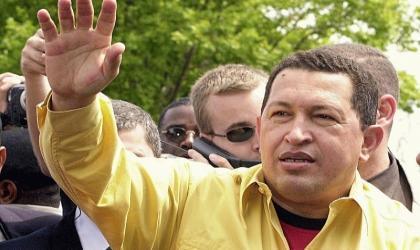 At the same time, from June 28, 2009, to March 7, 2013, the newspaper has printed at least 15 news and opinion articles in which its contributors have used any number of the aforementioned epithets for Chávez.9 (This methodology excludes the typically vitriolic anti-Chávez blog entries that the paper features on its website, as well as print pieces like Lizette Alvarez’s, which quote someone describing Chávez as a dictator.)
During this period, the paper’s news reporters themselves have referred to Chávez as a “despot,” an “authoritarian ruler,” and an “autocrat”; its opinion writers have deemed him a “petro-dictator,” an “indomitable strongman,” a “brutal neo-authoritarian,” a “warmonger,” and a “colonel-turned-oil-sultan.” On the eve of Venezuela’s October elections, a Times op-ed managed to call the Chávez administration “authoritarian” no fewer than three times in 800 words.10 And Chávez’s death offered no reprieve from this tendency: On March 6, reporter Simon Romero wrote about Chávez’s gait—he “strutt[ed] like the strongman in a caudillo novel”—and concluded that Chávez had “become, indeed, a caudillo.”11
These most basic violations of journalistic standards—referring to a democratically elected leader as a ruler with absolute power—does not simply end with its writers. On July 24, 2011, Bill Keller, then the newspaper’s executive editor, wrote the piece, “Why Tyrants Love the Murdoch Scandal,” which included a graphic of Zimbabwe’s Robert Mugabe side by side with Chávez. Keller referred to them both when he concluded, “Autocrats will be autocrats.”12
But if despotism, defined as the cruel and oppressive exercise of absolute power, is to have any meaning, it must apply to the Honduran government, whose military—not just its police—routinely kills innocent civilians. On May 26, 2012, for example, Honduran special forces killed 15-year-old Ebed Yanez, and high-level officers allegedly managed its cover-up by dispatching “six to eight masked soldiers in dark uniforms” to the teenager’s body, poking it with rifles, and “[picking] up the empty bullet casings” to conceal evidence that could be linked back to the military, according to the Associated Press.13
The paradox of the Times—its derisive posture toward what it considers antidemocratic tendencies in Venezuela as it simultaneously avoids the same treatment of Honduras’s inarguable repression—can only be explained by one crucial factor: Honduras has been a firm U.S. ally since Zelaya’s overthrow.
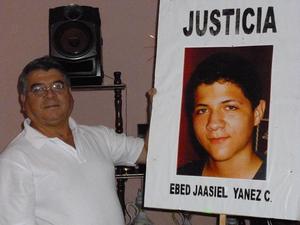
Photo Credit: SOA Watch
In fact, the unit accused of killing Yanez was armed, trained, and vetted by the United States—even its trucks were donated by the U.S. government. As the AP further reported, in 2012, the U.S. Defense Department appropriated $67.4 million for Honduran military contracts, with an additional “$89 million in annual spending to maintain Joint Task Force Bravo, a 600-member U.S. unit based at Soto Cano Air Base.” Furthermore, “neither the State Department nor the Pentagon could provide details explaining a 2011 $1.3 billion authorization for exports of military electronics to Honduras.”14
The Times’ scrupulous, unerring record of avoiding disparaging characterizations of Honduras’s human-rights-violating government may explain why it has never once made reference to 94 Congress members’ demand that the Obama administration withhold U.S. assistance to the Honduran military and police in March 2012. Nor has the paper reported on 84 Congress members’ letter to Secretary of State Hillary Clinton later that year, condemning Honduras’s “institutional breakdown” and “judicial impunity.”15
When evaluating the newspaper’s relative silence on Honduras, it is worth imagining if Chávez were to have ascended to power in as dubious a manner as Lobo; if for years Venezuela’s government permitted its security apparatus to regularly kill civilians; or if the Chávez administration presided over conditions of impunity under which political opponents and human rights activists were disappeared, tortured, and killed.
As a careful examination of the language and coverage of nearly four years of New York Times articles reveals, concern for freedom and democracy in Latin America has not been an honest concern for the liberal media institution. The paper’s unwavering conformity to the posture of the U.S. State Department—consistently vilifying an official U.S. enemy while systematically downplaying the crimes of a U.S. ally—shows that its foremost priority is to subordinate itself to the priorities of Washington.
1. Lizette Alvarez, ““Venezuelan Expatriates See a Reason to Celebrate,” The New York Times, March 6, 2013.
2. Keane Bhatt, “A Hall of Shame for Venezuelan Elections Coverage,” Manufacturing Contempt (blog), nacla.org, October 8, 2012.
3. Neela Banerjee, “Obama Walks a Difficult Path as He Courts Jewish Voters,” The New York Times, March 1, 2008.
4. “Hugo Chávez Departs,” The New York Times, April 13, 2002.
5. “Policías de Honduras, Responsables de 149 Muertes Violentas,” La Prensa, December 3, 2012.
6. Katherine Corcoran and Martha Mendoza, “Juan Carlos Bonilla Valladares, Honduras Police Chief, Investigated In Killing,” Associated Press, June 1, 2012.
7. Fabiola Sánchez, “Venezuela Prison Deaths: 591 Detainees Killed Country’s Jails Last Year,” Associated Press, January 31, 2013.
8. “Hundreds Killed in ‘Hellish’ Fire at Prison in Honduras,” Associated Press, February 16, 2012.
9. Author’s research, using LexisNexis database searches for identical terms in reference to the two countries. For a detailed list of examples, contact him at keane.l.bhatt@gmail.com.
10. Francisco Toro, “How Hugo Chávez Became Irrelevant,” The New York Times, October 6, 2012.
11. Simon Romero, “Hugo Chávez, Leader Who Transformed Venezuela, Dies at 58,” The New York Times, March 6, 2013.
12. Bill Keller, “Why Tyrants Love the Murdoch Scandal,” The New York Times Magazine, July 24, 2011.
13. Alberto Arce, “Dad Seeks Justice for Slain Son in Broken Honduras,” Associated Press, November 12, 2012.
14. Martha Mendoza, “US Military Expands Its Drug War in Latin America,” Associated Press, February 3, 2013.
15. Office of Representative Jan Schakowsky, “94 House Members Send Letter to Secretary Clinton Calling for Suspension of Assistance to Honduras,” March 13, 2012. Correspondence from Jared Polis et al. to Secretary of State Hillary Clinton, June 26, 2012.
Related articles
- U.S. Seeks to Get Rid of Left Governments in Latin America (alethonews.wordpress.com)
- The New Yorker Should Ignore Jon Lee Anderson and Issue a Correction on Venezuela (alethonews.wordpress.com)
- The New Yorker Corrects Two Errors on Venezuela, Refuses a Third (alethonews.wordpress.com)
- Nicolas Maduro did not Steal the Venezuelan Elections (venezuelanalysis.com)
- Honduras: Murdered Lawyer’s Brother Killed in Aguán (alethonews.wordpress.com)
- NPR Examines One Side of Honduran “Model Cities” Debate (alethonews.wordpress.com)
- IMF Ignores Proven Alternatives With Recommendations to Honduras (alethonews.wordpress.com)
- Killings Continue in Bajo Aguán as New Report Documents Abuses by U.S.-Trained Honduran Special Forces Unit (alethonews.wordpress.com)
- Honduras: Miguel Facusse is Tragically Misunderstood (alethonews.wordpress.com)
Capriles Formally Contests Elections Before Venezuela’s Supreme Court
By Chris Carlson | Venezuelanalysis | May 2, 2013
Maracaibo – Representatives from the electoral campaign of ex-presidential candidate Henrique Capriles formally contested last month’s elections before Venezuela’s Supreme Court today.
The legal procedure submitted to the court has the objective of annulling April’s presidential elections in which Henrique Capriles lost to Nicolas Maduro by less than 2 points, and to allow for the elections to be repeated.
“We submitted this demand to contest the elections due to fraud and bias [of the electoral body],” said Gerardo Fernández, the attorney for the Capriles campaign.
“We want to show that the electoral system is broken: the campaign, the permanent issues in the electoral registry, the abuse of state resources, and all of the irregularities on election day,” he said.
The Capriles campaign reportedly submitted a 180-page document to Venezuela’s Supreme Court, and also requested that two of the Supreme Court justices to recuse themselves from ruling on the case.
They are demanding that Judges Jhannett Maria Madriz and Malaquias Gil not be allowed to be involved in the case for having already given their opinion of the fraud claims, and for “their close ties to Nicolas Maduro”.
It is now up to Venezuela’s Supreme Court to decide if the challenge is justified, and if so, to establish the timeframe for the evidence to be presented to the court.
Fernandez said they would present evidence from before, during, and after the elections, including the “unbalanced” campaign, the “irregularities” on election day, and the auditing process afterwards.
“We are contesting the activities before the April 14th elections, the electoral process on the 14th, and the activities that occurred after that day,” he said.
Capriles has refused to accept the results, and alleged fraud after Maduro’s victory was announced on the night of April 14th.
However, he has yet to provide any solid evidence that would indicate any fraud actually took place.
After demanding a recount from the National Electoral Council (CNE), Capriles seemed to agree to an extended audit of nearly 100 percent of the ballot boxes. Capriles subsequently rejected this audit when the CNE would not include an audit of the voter registry.
Capriles demanded a verification of all the signatures and fingerprints that voters place in the voter registry at the time of voting, but the CNE has said this would be impossible, as there are more than 15 million signatures and fingerprints that would have to be evaluated.
The CNE and other government officials have said Capriles lacks any proof, and have accused the Capriles campaign of making “impossible” demands in an attempt to claim the institutions are not democratic when their requests are denied.
Capriles has already stated that he doesn’t expect a “fair” ruling from Venezuela’s Supreme Court, which he accuses of being controlled by the government.
But the Capriles campaign has said they will go through all domestic institutions before taking their complaints before international institutions.
Related articles
- Auditing Process Begins in Venezuela amid Opposition Claims of “Lies” and “Persecution” (alethonews.wordpress.com)
- Venezuela’s Electoral Council Says Capriles Lacks Proof of Fraud (alethonews.wordpress.com)
- Venezuelan Government Accuses Capriles of Making “Impossible” Demands (alethonews.wordpress.com)
- Venezuela’s Electoral Council Approves Audit of 100 Percent of Votes (alethonews.wordpress.com)
- Capriles Falsifies Evidence in Order to Claim Fraud in Venezuela’s Elections (alethonews.wordpress.com)
Auditing Process Begins in Venezuela amid Opposition Claims of “Lies” and “Persecution”
By Tamara Pearson | Venezuelanalysis | April 30, 2013
Merida – As Venezuela’s electoral organisation begins auditing the 14 April elections, ex-opposition candidate Henrique Capriles has announced his team will not participate, Spain has offered to mediate the “conflict”, and the arrest of retired general Antonio Rivero has been met with accusations of “political persecution”.
Auditing process
Yesterday the National Electoral Council (CNE) began preparations to audit the 46% of voting boxes not already audited on the day of the elections. The process is the result of a deal reached between the CNE and the opposition, although since making the agreement Capriles has withdrawn his support for it.
Yesterday the CNE set up the technical group which will carry out the auditing, approved by the electoral organisation on 18 April. The opposition requested one witness per candidate in the broadcasting/information room, and another one in the “contingency rooms” with working group members, which was approved by the CNE.
“These additional guarantees, including the second auditing… add up to a total of 18 auditing processes, which are now not being recognised and are being silenced [by the opposition]. With this, they are seeking to damage the electoral process, alluding to things that were already checked and certified by their own technicians, as is demonstrated by the minutes that are publicly available,” CNE head Tibisay Lucena said.
Nevertheless, the CNE is continuing with the process, and now that the technical group is set up, today it is conducting the random selection process of boxes in storage that were not already audited on 14 April.
From 2-5 May the material to be audited will be organised, and from today until 2 May the CNE will be selecting and training the auditors, who will then be accredited on 3 May.
Then, the first phase of this second audit will occur between 6-15 May, the second phase from 16-25 May and the third phase from 26 May to 4 June. Venezuelan citizens will conduct the audit in the Mariches storehouse, where all the boxes are currently stored.
A team from the Central University of Venezuela will accompany the process and 24 auditors, 60 external auditing assistants, 60 CNE assistants, 6 external coordinators, 12 CNE coordinators, and 30 technicians from political organisations will be involved in the process.
Capriles’ stance on auditing process
Capriles today confirmed that his team is “preparing evidence” in order to legally challenge the electoral results through Venezuela’s Supreme Court. He said they would likely lodge the appeal between this Thursday and the following Monday. He has until 6 May to challenge the election results.
“The next step, as I have indicated, will be for me to request an annulment of the results, and in so doing eliminate the matter legally as a domestic issue,” Capriles said.
Further, he called the audit a “farce”, said that Lucena was being “ordered” by “her party”, and claimed his reason for refusing to back the process was that there won’t be “access to the voting books, the only instrument that personalises the vote, where the thumb prints and the signatures are”.
Capriles said the heads of the CNE “lie and make fun of” Venezuelans by saying they will conduct a complete audit, and “sooner than later the country will have a new election… a government like this, based on illegitimacy, won’t be able to sustain the lie”.
“I have no doubt that this will end up before an international body,” Capriles concluded. This document was submitted by the opposition to the CNE, claiming to prove fraud committed during the voting on 14 April.
United Socialist Party of Venezuela (PSUV) leader Diosdado Cabello also stated he didn’t agree with the second audit, arguing, “If those who requested it aren’t going to be present, what’s the sense in doing it? Why spend time, money and work [on it]?… The opposition knows that the result of these audits will favour Nicolas Maduro … however, we respect the decision of the CNE”.
Spain offers to mediate
Spain has offered to mediate between the two sides “to guarantee peace, prosperity and stability in Venezuela,” its foreign minister, Jose Manuel Garcia Margallo said. Garcia is currently visiting Washington in order to speak at a meeting of the Organisation of American States (OAS) and today is set to meet with U.S. Secretary of State John Kerry. After the 14 April elections, Garcia initially supported a recount and “noted” that the CNE had proclaimed Maduro the winner of the elections; however Spain later officially recognised the victory.
Garcia clarified that the Venezuelan government is the one who should request mediation.
Meanwhile, two opposition legislators, Angel Medina and Tomas Guanipa, informed press today that since 22 April they have been visiting political leaders of the European Union, including Spain, France, Germany and Belgium, to “present and explain the political situation in Venezuela”. According to Guanipa, the leaders have reacted with “astonishment” to the “proof” of persecution that “Venezuelans are subject to, especially workers who decided to support Capriles”.
Arrest of opposition leader and retired general Rivero
Late last week, Venezuelan security forces arrested a US citizen, claiming he was connected to an alleged plot to “violently destabilise the country” after the elections. As part of the investigation into the plot, authorities also presented a video showing opposition member and retired army general Antonio Rivero appearing to give tactical advice to opposition protesters on 15 April. In the video Rivero also referred to the role of Capriles in leading those protests.
Rivero has now been arrested for allegedly being an accessory to a crime and conspiring to commit a felony, according to his lawyer Guillermo Heredia. Rivero is being held in the Bolivarian National Intelligence Service (Sebin) headquarters, and has declared himself on a hunger strike.
In response to the arrest, opposition leader Leopold Lopez alleged that Rivero is a “political prisoner” and that it “is the first step towards the illegalisation of political parties” in Venezuela.
Capriles called the arrest a “sign of fascism”.
According to Venezuelan Attorney General, Luisa Ortega Díaz, the violent events which took place on 15 April and 16 April, after the general election, left 9 dead and 78 injured.
Update on voting results
The CNE yesterday updated the voting results to include votes cast overseas. 93.1% of these votes (53,845) were for Capriles, and 6.8% (3,919) were for Maduro. 62% of voters registered with Venezuelan embassies voted. 88.7% (3,383) of those in Colombia voted for Capriles, and 97.9% of those in the United States (18,237) voted for him. To be eligible to vote overseas Venezuelans must have legal residency in those countries.
That means that 99.93% of votes have now been tallied, with Nicolas Maduro obtaining 7,586,251 votes (50.61%) and Capriles 7,361,512 votes (49.12%).
Related articles
- Venezuela’s Electoral Council Says Capriles Lacks Proof of Fraud (alethonews.wordpress.com)
- Venezuelan Government Accuses Capriles of Making “Impossible” Demands (alethonews.wordpress.com)
- Protests, Disturbances, and Violence Continue in Venezuela, General Strike a “Failure” (alethonews.wordpress.com)
- Capriles Attacks Venezuelan Electoral Council, Refuses to Sign Document (alethonews.wordpress.com)
- Venezuela’s Electoral Council Approves Audit of 100 Percent of Votes (alethonews.wordpress.com)
- Capriles Falsifies Evidence in Order to Claim Fraud in Venezuela’s Elections (alethonews.wordpress.com)
- Opposition Intensifies Campaign against Venezuelan Electoral System (alethonews.wordpress.com)
Venezuela and Cuba Deepen “Strategic Alliance”
By Ryan Mallett-Outtrim | Venezuelanalysis | April 29, 2013
Mérida – Venezuela and Cuba signed 51 bilateral agreements related to energy management and social programmes in areas including healthcare, education and recreation this past weekend and pledged to spend $2 billion on bilateral social development projects this year.
The agreements were signed during Venezuelan president Nicolas Maduro’s visit to Cuba over the weekend.
“We came to ratify a strategic…[and] historical alliance,” Maduro told Cuban press.
Details of the bilateral agreements are yet to be released, though Maduro described the deals as focusing on “social development”.
After meeting with Maduro, Castro told the press that the agreements reaffirm Cuba’s “unyielding will to continue co-operation in solidarity with Venezuela, determined to share our fate with the heroic Venezuelan people”.
The agreements represent Cuba’s largest source of foreign capital, according to AFP.
In his first trip abroad since being sworn in as Venezuela’s new president, Nicolas Maduro also met with former Cuban president Fidel Castro.
“I spent over five hours with Fidel, talking, sharing memories of Comandante Chavez, remembering how he and Chavez had built this alliance, which is more than a strategic partnership,” Maduro stated, according to the Havana Times.
The visit was criticised by Venezuelan opposition leader Henrique Capriles, who during his recent election bid advocated for cutting most ties with Cuba.
“Our great lackey is travelling to Havana to get instructions from his boss,” he tweeted on Saturday.
Venezuela is Cuba’s largest trade partner, currently providing the island nation with more than 100,000 barrels of oil a day. In exchange, over 30,000 Cuban medical personnel work in Venezuela.
During his election campaign, Capriles maintained his long standing policy that if elected, “not another drop of oil” would be sent to Cuba.
However, his views on the doctors are less consistent; alternating between offering them citizenship and accusing them of being spies involved in a “Castro-communist” plot and threatening them with deportation.
Maduro indicated that his administration would maintain continuity with former president Hugo Chavez’s Cuba policy, stating that the two countries “will continue working together”.
According to the Uruguayan newspaper La Republica, Maduro’s next international trip will be to Uruguay, where he is expected to meet with the country’s leftist president Jose Mujica.
The newspaper cites diplomatic sources as stating that the trip will take place around May 7, and will be part of a regional tour.
However, La Republica’s report on Maduro’s travel plans have not been officially confirmed by the Venezuelan government.
Venezuela’s Electoral Council Says Capriles Lacks Proof of Fraud
By Chris Carlson | Venezuelanalysis | April 28, 2013
Maracaibo – Venezuela’s National Electoral Council (CNE) announced yesterday that they would not approve Henrique Capriles’ additional demands for the auditing of the April 14 elections, and explained that he lacks any proof of fraud.
The announcement was made on Saturday night via a televised statement by CNE President Tibisay Lucena.
Lucena explained that the expanded audit process would be carried out as planned, but the additional demands that the Capriles campaign have made in recent days would not be included.
“It is important to note that the political parties already audited the electoral process at each stage, certifying the integrity and correct functioning of the system,” said Lucena.
“Representatives from each party signed off on each one, as can be seen in the documents on the CNE website…there were a total of 18 auditing processes, but now they are being silenced and ignored in an attempt to discredit the electoral process,” she said.
Venezuela’s electoral process includes extensive auditing throughout the entire process, including audits of the computer software, electoral rolls, machine functioning, finger ink, data transmission and vote tallying, with the presence of representatives from all political parties.
However, Capriles requested an additional audit after the elections on April 14th, stating that there had been irregularities and that the election was “stolen”.
After Capriles’ request for an additional audit was approved by the CNE last week, his campaign began to demand a more extensive audit, including a revision of the electoral rolls, which were already audited before the election.
“We announced the decision for an additional audit and Capriles publicly accepted. But in later statements he and his spokespeople said it was not enough, and that a different kind of audit was necessary,” said Lucena.
“They began demanding things that had already been audited by their own representatives, such as the electoral rolls, as the signed documents from those audits clearly show,” she said.
Lucena went on to explain that the Capriles campaign had the right to formally challenge the election before Venezuela’s Supreme Court. However, they would have to show proof that fraud occurred, something she said was lacking among the evidenced submitted by the Capriles campaign.
“[Capriles’ evidence] does not constitute any proof of how votes were affected, nor how the results could have been affected without it showing up in the vote tallies that were audited in each voting center by party representatives,” she said.
Lucena gave several examples from the evidence submitted by Capriles in which no concrete information was provided so that the CNE could investigate.
Apparently, much of the evidence was presented in the same basic format that Capriles used during a press conference last week, in which very general claims were simply printed on sheets of paper.
Lucena said without more specific information there was no way that they could be independently verified, nor could it be confirmed if anyone’s vote was actually affected.
“The documents submitted by Capriles last week do not state clearly and precisely the incidents in which the rules were broken. They do not give the specific voting centers, who was involved, nor what possible damage could have occurred as a result,” she said.
Lucena went on to explain that the additional audit of the remaining 46 percent of ballot boxes will proceed as planned and will begin on May 6th.
Capriles’ Response
Henrique Capriles responded on Sunday to the CNE’s announcement with further criticism of the electoral body.
“It’s impossible for Mrs. Tibisay to do anything against the orders of her political party, the PSUV. The nation would find out the truth!” he wrote via Twitter.
He also said that he would continue to challenge the election results inside Venezuela, and internationally as well.
“Soon we will have new elections. Every day we are stronger!” he continued.
On Saturday, Capriles affirmed in an interview that he would continue the process before Venezuela’s Supreme Court, and then in international institutions if needed.
“We think Venezuela’s Supreme Court has been converted into a court of the government, but we must exhaust all the institutions before taking it before international institutions,” he said.
Venezuelan Ambassador to the United Kingdom Samuel Moncada said that this stance by the opposition is very similar to the situation before the 2002 coup attempt in Venezuela.
“They are going to say that the CNE ignored them, and so did the Supreme Court, and they are going to take it to the Organization of American States (OAS), but after all the legal mechanisms are exhausted they will try the illegal ones, like calling for a general strike,” he said.
“They will take all legal forms to the limit, like they did in 2002, and try to take the movement to its limit so that the Armed Forces will intervene,” he said.
Related articles
- Venezuelan Government Accuses Capriles of Making “Impossible” Demands (alethonews.wordpress.com)
- Venezuela’s Electoral Council Approves Audit of 100 Percent of Votes (alethonews.wordpress.com)
- Canadian organizations condemn post-election violence in Venezuela (venezuelanalysis.com)
- Capriles Attacks Venezuelan Electoral Council, Refuses to Sign Document (alethonews.wordpress.com)
- Capriles Falsifies Evidence in Order to Claim Fraud in Venezuela’s Elections (alethonews.wordpress.com)
- Maduro Wins Venezuelan Presidential Election with 50.66 Percent of the Vote (alethonews.wordpress.com)
The New Yorker Should Ignore Jon Lee Anderson and Issue a Correction on Venezuela
By Keane Bhatt | NACLA | April 24, 2013
As a result of many dozens—possibly hundreds—of messages from readers over the past few weeks that criticized The New Yorker’s inaccurate coverage of Venezuela, reporter Jon Lee Anderson issued a response in an online post on April 23. This marks the first time the magazine has publicly addressed its controversial and erroneous labeling of Venezuela as one of the world’s most “socially unequal” countries (I highlighted the error in mid-March). Although Anderson deprives his readers of the opportunity to evaluate his critics’ arguments (he offered no hyperlinks to either of my two articles on the subject, nor to posts by Corey Robin, Jim Naureckas, and others), he is clearly writing in response to those assertions.
To his credit, Anderson unequivocally admits two of his three errors: regarding Venezuela’s homicides, he acknowledges that he falsely wrote “that Venezuela had the highest homicide rate in Latin America. Actually, Honduras has the top rate.” Anderson proceeds to explain why Venezuela’s high homicide rate is nevertheless a grave problem—a position none of his critics, myself included, dispute.
The importance of this error rests instead in its revelation of a media culture under the influence of the consistent demonization of a country deemed an official U.S. enemy. This culture certainly played a role in allowing Anderson’s obvious falsehood to remain uncorrected for five months—five months after I first wrote about it, one month after I directly and publicly confronted Anderson about the error, and even then, days after I wrote another article urging readers to demand a correction.
While The New Yorker has dedicated literally no articles to U.S. ally Honduras since its current leader Porfirio Lobo came to power in repressive, sham elections held under a military dictatorship, Anderson was allowed to assert that Venezuela—a country with half the per capita homicides of Honduras—was Latin America’s leader in murders. One might reasonably suspect that a claim on The New Yorker’s website asserting that the United States had a higher homicide rate than Bolivia (Bolivia’s rate is actually over two times as high), would be retracted more expeditiously.
Anderson’s explanation for his second error—claiming that Chávez came to office through a coup d’etat rather than a free and fair election—further lays bare the corrupting effects of the generalized vilification of Chávez on basic journalistic standards of accuracy.
Anderson writes that despite his gaffe, he obviously knew Chávez “gained the Presidency by winning an election in 1998,” as he had “interviewed Chávez a number of times, travelled with him, and came to know him fairly well.” For Anderson to write such an egregious misstatement, then, and have it pass through what is likely the most rigorous fact-checking process in the industry, exposes a pervasive ideology under which he and his many editors and fact-checkers operate. As Jim Naureckas of Fairness & Accuracy in Reporting wrote, “It’s like writing a long profile on Gerald Ford that refers to that time when he was elected president.”
Finally, Anderson offers a desperate attempt to justify his third factual error, stating:
A number of letters I’ve received dispute, out of context, my reference to “the same Venezuela as ever: one of the world’s most oil-rich but socially unequal countries”; several cite an economic statistic known as the Gini coefficient—a measure of income inequality.
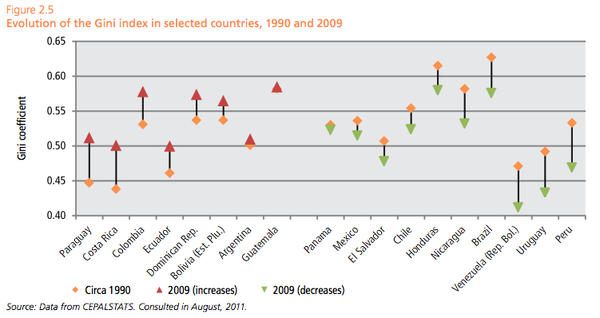
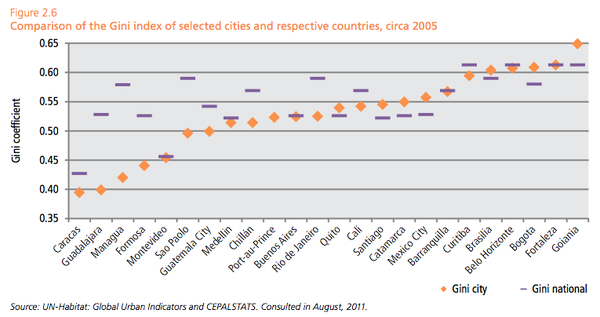
Notice that Anderson never tells his readers what Venezuela’s Gini coefficient actually is. According to the United Nations, Venezuela’s Gini, at 0.397, makes it the least unequal country in Latin America and squarely in the middle range of the rest of the world. Only by sidestepping this brutal empirical obstacle can Anderson attempt to lay out his case. He carries on by reposting three paragraphs of his original essay, which in no way mitigate the falsity of his original claim, for “context.” Anderson finally concludes by offering a novel justification for his error:
In terms of some of the components of social inequality, notably income and education, Chávez had some real achievements. (Income is what’s captured by the Gini coefficient, although that statistic has its own limitations, some particular to Venezuela.) But in housing and violence, his record was woefully insufficient. Those social factors are intimately related, to each other and to the question of equality.
A quick recap is in order before unpacking Anderson’s argument. Readers may remember that he first responded to evidence on income inequality by proclaiming, on Twitter, his agnosticism toward empirical data. Next, a senior editor at the magazine justified Anderson’s contention by arguing that Venezuela was one of the most unequal amongst other oil-rich countries—a point I debunked. Now, Anderson has settled on a definition of social inequality that minimizes Venezuela’s high educational and income equality in favor of high homicide rates and unequal housing.
But simply saying that Chávez’s record “was woefully insufficient” on housing and violence does not naturally equate to Venezuela’s standing as a world leader in social inequality. Anderson must rely on comparative international statistics to justify his position, but fails to do so.
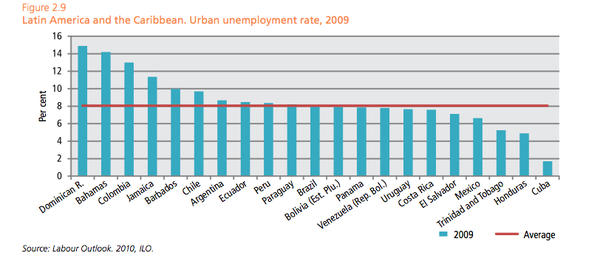
While Venezuela’s homicide rate is high by international standards and a significant social ill, this alone does not necessarily make the country more socially unequal than another country with a lower homicide rate. Are Venezuelan homicides more skewed toward low-income residents than those in Costa Rica? Or Haiti? Are Venezuelan murders more targeted at women or ethnic minorities than those in Mexico or Guatemala? And given that the high homicide rate directly affects far fewer than one in a thousand Venezuelans annually, how could this statistic possibly outweigh the effect of massive income-inequality and poverty reductions? If he is solely basing his argument on murder rates, Anderson has no credible explanation as to why Venezuela is one of the world’s most socially unequal countries.
Anderson also doesn’t offer statistics showing that housing is more unequal in Venezuela than anywhere else. That’s because it’s not.
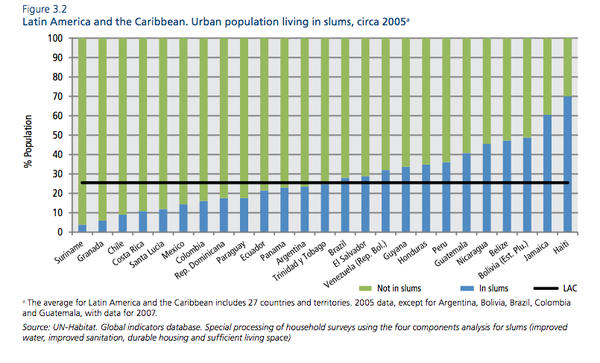
Out of the 91 countries for which the United Nations has available data, Venezuela is 61st in terms of the percentage of its urban population living in slums. That is to say, two-thirds of the world’s countries with available data have larger percentages of their urban citizens living as slum dwellers. In the Western Hemisphere, this includes Guayana, Honduras, Peru, Anguilla, Guatemala, Nicaragua, Belize, Bolivia, Jamaica, and Haiti.
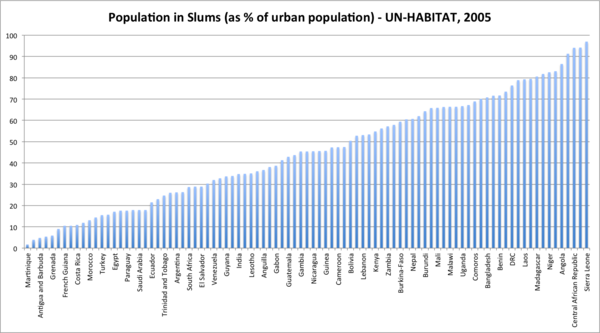
It is also worth mentioning that this data was taken from 2005, when the percentage of Venezuela’s urban population living in poverty and extreme poverty was at 37%. By 2010, according to the United Nations, it had been cut by a quarter, to 28% (p. 43). Furthermore, 2005 predates a massive governmental push in 2011 to build affordable housing. Earlier this year, Venezuela’s Housing Commission chair asserted that “in the years 2011 and 2012, the Bolivarian government together with the people reached the goal of building 350,000 homes.”
It appears, then, that Anderson has discovered a new definition of “social inequality” that has eluded economists and sociologists worldwide—one that systematically downplays Venezuela’s educational and income equality while emphasizing a high frequency of murders and a rate of slum-dwelling that is low by international standards.
While one can applaud Jon Lee Anderson for finally acknowledging the value of social indicators and statistical data, he and his magazine cannot be allowed to define “social inequality” any way they see fit. No social scientist analyzing the available data could argue, like Anderson, that Venezuela is one of the world’s most socially unequal countries. While semantics games may be expedient in avoiding a necessary correction, readers should let The New Yorker’s editor David Remnick (david_remnick@newyorker.com) know that a retraction of Anderson’s claim is long overdue.
Update (4/24): FAIR’s Jim Naureckas also offers sharp criticism of Jon Lee Anderson and his fact-checkers for a transparently inadequate attempt to justify his error regarding Venezuela’s social inequality. Read more, at “Jon Lee Anderson Explains: Because I Said So.”
~
Keane Bhatt is an activist in Washington, D.C. He has worked in the United States and Latin America on a variety of campaigns related to community development and social justice. His analyses and opinions have appeared in a range of outlets, including NPR, The Nation, The St. Petersburg Times, and CNN En Español. He is the author of the NACLA blog “Manufacturing Contempt,” which critically analyzes the U.S. press and its portrayal of the hemisphere. Connect with his blog on Twitter: @KeaneBhatt
Related articles
- The New Yorker Corrects Two Errors on Venezuela, Refuses a Third (alethonews.wordpress.com)
- On Venezuela, The New Yorker’s Jon Lee Anderson Fails at Arithmetic (alethonews.wordpress.com)
- 50 Truths about Hugo Chavez and the Bolivarian Revolution (alethonews.wordpress.com)
- ‘Little Twerp … Get a Life’: The New Yorker’s Jon Lee Anderson Thinks He’s Somebody on Twitter (gawker.com)
Arrested US citizen tied to rightists’ conspiracy

Agencia Venezolana de Noticias | April 25, 2013
Caracas – Interior Relations, Justice and Peace minister, Miguel Rodriguez Torres, informed Thursday about the arrest of a US citizen named Timothy Hallett Tracy, who is allegedly tied to conspiracy of local right-wing sectors against democracy in Venezuela.
Actions carried out by Timothy Hallett Tracy, aka ‘gringo,’ are tied to far right groups which seek to destabilize Venezuela through attacks in the streets after the April 14 presidential elections.
Minister Rodriguez Torres said that the objective of the plan was to create chaos in the country to undermine the government, creating a violent scenario.
“It is important to inform the population about situations that have been occurring. We will show the reasons and ties they have to carry out a series of actions we have been living since the April 14 elections at night,” Rodriguez Torres said at a press conference.
Since October, November and December 2012, he said, the National Bolivarian Service of Intelligence (SEBIN) started investigations on a plan named Connection April.
“All evidences we have gathered showed that the election day would come in complete normality; but once results were released by the National Electoral Council (CNE), right-wing candidate Henrique Capriles Radonski would refuse to accept it,” the Minister detailed.
During investigations, Rodriguez Torres added, a US citizen was found deeply related to rightist young people who make up the so-called Operation Sovereignty.
“When this relationship was found, surveillance and monitoring started and we noticed that this person manage to infiltrate into revolutionary groups to get their protection, though he related with the far right,” explained the Interior Relations, Justice and Peace minister.
This US citizen is presumed to be member of an intelligence agency. Also, he has been funded by foreign non governmental organizations.
Connection April
Miguel Rodriguez Torres explained that the plan Connection April aimed at stirring actions after results of the presidential election were released and leading to a civil war.
“It was its objective, leading us to a civil war. We have documents in proof of it, which they exchange through chips. Messengers took them from La Castellana square (eastern Caracas) to gringo’s house.”
According to him, investigations revealed that the idea was to achieve a civil war in Venezuela to lead to the immediate intervention of a foreign power.
“Those were and continue being their ends. We have over 500 videos seized in a raid. We wonder, Does housewives who voted for the opposing option want a civil war? Does taxi drivers want that? I am sure that nobody in this country, regardless of their stance, wants that, except these extremist groups headed by extremist leaders of rightist parties who want civil war,” said the Miguel Rodriguez Torres.
Evidence
At a press conference, minister Miguel Rodriguez Torres presented a video in which Antonio Rivero, retired general of the Armed Force, giving orders to people who disturbed public order at Altamira community, greater Caracas.
All evidence seized in a raid carried out last Wednesday night will be submitted to the corresponding organs.
The National Government has managed to act on time to continue guaranteeing peace and calm to the Venezuelan population thanks to intelligence actions nationwide, Rodriguez Torres stressed.
“The President of the Republic, Nicolas Maduro, has emphasized that this country will always be on the road of peace and coexistence. It has to be an effort of all Venezuelans, regardless of our ideological and political stance. We have to reject and isolate these fascist factors that are trying that Venezuelans kill among ourselves and hate ourselves. We cannot allow that,” insisted the Minister.
Venezuelan Government Accuses Capriles of Making “Impossible” Demands
By Chris Carlson | Venezuelanalysis | April 25, 2013
Maracaibo – Opposition leader Henrique Capriles claimed yesterday that the presidential elections were “stolen”, and demanded further audit measures that the Venezuelan government has said are “impossible”.
Capriles made the statements during a press conference on Wednesday in which he gave the government an ultimatum regarding the audit.
“The truth is that you stole the elections, that’s the truth. You stole the elections and now you have to explain that to the country and the world,” he said.
Capriles demanded that the National Electoral Council (CNE) begin the auditing process immediately, and said his campaign will refuse to wait any longer.
“That is what we are demanding. We will give you until tomorrow,” he said, though he did not say what would happen if the CNE did not respond.
However, the CNE had already said last week that it would announce the beginning of the audit this week, and was expected to make an announcement today.
The Capriles campaign went on to demand a series of additional audit measures that are not included in the audit that has been approved by the CNE. His campaign representative Roberto Picón said that in addition to a complete audit of the electoral machines and the paper ballots, they are also demanding access to the electoral registry, the fingerprint system and a verification of each individual voter.
“We are asking for complete access to the electoral registry, not only to count how many people voted but also to audit all of the details, to audit the people that voted to see if there are dead people who voted, or foreigners, or duplicates, and to see if there are fake fingerprints,” said Picón.
He further said that they are demanding the CNE validate every individual fingerprint in the system, comparing each fingerprint to every other to assure none are duplicated, validate every person’s signature on the day of the elections and that they provide proof that none of the electoral data has been altered since the elections last week.
“If it doesn’t include the electoral registry, then it is not an audit. We won’t accept a shoddy audit,” said Capriles.
Various government officials have responded to these demands, saying they would be impossible to meet, and that the Capriles campaign knows it.
“They are making requests to the CNE that are absolutely impossible to grant. They are asking that every fingerprint and every signature of the almost 15 million people who participated in the electoral process be verified,” said Calixo Ortega.
“This would take like 5 years to verify, because it takes hours to verify a single fingerprint or signature, and there are 15 million that would have to be verified,” he said.
“It appears that they are purposely making requests that cannot be granted so that they can later say that the CNE has denied their request,” he explained.
Maduro’s campaign manager Jorge Rodgriguez also responded to Capriles, accusing him of attempting to create more violence in the country.
“Now Capriles says the elections were stolen. Where is the proof? Where is a single piece of evidence of that? If you can’t show any evidence, then it didn’t happen,” said Rodriguez.
Rodriguez also accused Capriles of attempting to generate more violence in the country.
“What are you doing giving the government an ultimatum like that? You have already left a cemetery in your wake with 9 fellow Venezuelans dead from the violence you created,” he said.
Capriles has yet to present any evidence of fraud in the April 14th elections. In the days following the elections, he mentioned various examples that were all promptly shown to be false.
Venezuela’s electoral council is expected to announce the timeframe of the auditing process today or tomorrow. It is unlikely that the additional measures being demanded by the Capriles campaign will be included in the audit.
Related articles
- Venezuela’s Electoral Council Approves Audit of 100 Percent of Votes (alethonews.wordpress.com)
- Capriles Falsifies Evidence in Order to Claim Fraud in Venezuela’s Elections (alethonews.wordpress.com)
- Capriles Attacks Venezuelan Electoral Council, Refuses to Sign Document (alethonews.wordpress.com)
Rosneft sets sights on Iraq and Venezuela
RT | April 24, 2013
Rosneft has announced joint ventures with ExxonMobil in Iraq, and with a Venezuelan national oil company. According to CEO the expansion will double the company’s share of the Russian gas market.
Igor Sechin told reporters on Tuesday that the company is considering teaming up with veteran business partner ExxonMobil in Iraq.
“We will work with anyone who offers good terms, we’ll work with ExxonMobil too,” Reuters reported Sechin as saying.
An Iraqi oil ministry delegation will arrive in Moscow on May 10 to further discuss the deal.
Since Sechin became CEO, Russia’s largest producer of oil Rosneft, has upped its game against state-controlled rival Gazprom which currently controls 70% of Russian gas exports.
His first big step was acquiring the Anglo-Russian company TNK-BP from BP for $55 billion on March 21 2013, which will give it an Arctic niche.
Sechin aims to chip away at the Gazprom monopoly, and to double Rosneft’s domestic gas market by 2020, from 9% to 19-22%, plans made clear at an investor meeting in London on Tuesday.
“We like to work with gas very much,” Sechin said at the meeting. “The domestic market is also attractive, and it suits us well.”
Sechin predicts the new mega company may reach a market capitalization of $120 billion in the next two years, which would trump Gazprom’s estimated value of $73-90 billion.
According to the Oxford Institute for Energy Studies, by 2013 Russia will even outperform its pre-crisis levels of 2008.
Rosneft expects to produce more than 40 billion cubic meters (bcm) of gas in 2013, over 60 by 2016 and 100 bcm in 2020, half of which will be produced in new projects.
The company is also on Gazprom’s heels in LNG development, as both companies are looking to expand their influence, particularly in exports to China.
Venezuelan vision
Just hours after the Iraq announcement, Venezuela’s government trumpeted a joint venture with Rosneft and PDVSA, the national oil company that dominates the Venezuelan market.
Rosneft will get a 40% share and the preliminary license is set for 25 years, and subject to extension.
The Venezuelan project will develop 342 kilometers in the Orinoco River basin, one of the richest oil reserves in the world, with an estimated 86.4 billion barrels, according to RIA Novosti.
Russian companies are involved in 5 oil projects in Venezuela, the world’s fifth largest oil exporter.
Venezuelan Oil Minister Rafael Ramirez has estimated the joint Russian-Venezuelan projects will be worth close to $50 billion by 2019.
Related articles
Featured Video
Patrik Baab: Europe’s New Iron Curtain – Freedom of Speech Dies
or go to
Aletho News Archives – Video-Images
From the Archives
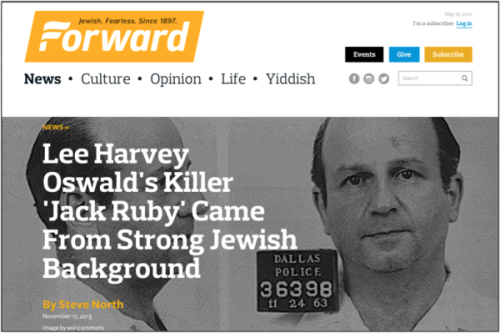
Jack Ruby: Israel’s Smoking Gun
BY LAURENT GUYÉNOT • UNZ REVIEW • NOVEMBER 13, 2021
By a strange paradox, most Kennedy researchers who believe that Oswald was “just a patsy” spend an awful lot of time exploring his biography. This is about as useful as investigating Osama bin Laden for solving 9/11. Any serious quest for the real assassins of JFK should start by investigating the man who shot Oswald at pointblank in the stomach at 11:21 a.m. on September 24, 1963 in the Dallas Police station, thereby sealing the possibility that a judicial inquiry would draw attention to the inconsistencies of the charge against him, and perhaps expose the real perpetrators. One would normally expect the Dallas strip-club owner Jack Ruby to be the most investigated character by Kennedy truthers. But that is not the case. … continue
Blog Roll
Recent Comments


 Aletho News
- Russia open to discussing Ukraine’s ‘external governance’ – senior diplomat
- US Caribbean Buildup Near $3B — Report
- Munich Security Conference and the U.S. elephant in the room
- Epstein Pitched JPMorgan Chase on Plan to Get Bill Gates ‘More Money for Vaccines’
- Germany’s CDU Pushes Real-Name Social Media Mandate and ID Checks
- Patrik Baab: Europe’s New Iron Curtain – Freedom of Speech Dies
- Trump’s ‘Board of Peace’ exports Israeli ‘ceasefire’ diplomacy to the world
- Israeli army closes dozens of cases involving killing of Palestinians inside torture camps
- Europe creates a ‘Russian government-in-exile’, consisting of a bunch of losers
- Munich, 2007: The Day the West Was Told No
- If Americans Knew
- ISIS-linked border guards, GHF-linked aid – Not a ceasefire Day 128
- Israel battles Palestinian right of return, one Palestinian at a time – Not a ceasefire Day 127
- Noor’s short life of unimaginable suffering
- Israel Destroyed Gaza’s Hospitals. Now It’s Banning Doctors Without Borders.
- Is Spite of What Zionists Say, It’s a Good Thing to Criticize Governments
- Palestinian mother, daughter recount strip searches, harsh conditions in Israeli detention
- Israel used weapons in Gaza that made thousands of Palestinians evaporate
- ADL’s Stats Twist Israel’s Critics Into Antisemites
- Why Is the World Silent When the Gaza Genocide Is Not Over?
- In Gaza: 8,000 bodies under rubble, 3,000 missing – Not a ceasefire Day 126
- No Tricks Zone
- Unfudging The Data: Dutch Meteorological Institute Reinstates Early 20th Centruy Heat Waves It Had Erased Earlier
- German Gas Crisis…Chancellor Merz Allegedly Bans Gas Debate Ahead of Elections!
- Pollen Reconstructions Show The Last Glacial’s Warming Events Were Global, 10x Greater Than Modern
- Germany’s Natural Gas Storage Level Dwindles To Just 28%… Increasingly Critical
- New Study Rebuts The Assumption That Anthropogenic CO2 Molecules Have ‘Special’ Properties
- Climate Scientist Who Predicted End Of “Heavy Frost And Snow” Now Refuses Media Inquiries
- Polar Bear Numbers Rising And Health Improving In Areas With The Most Rapid Sea Ice Decline
- One Reason Only For Germany’s Heating Gas Crisis: Its Hardcore-Dumbass Energy Policy
- 130 Years Later: The CO2 Greenhouse Effect Is Still Only An Imaginary-World Thought Experiment
- New Study Affirms Rising CO2’s Greening Impact Across India – A Region With No Net Warming In 75 Years
 Aletho News