Latin American leaders praise Chavez and prepare to travel to Caracas for his funeral on Friday
MercoPress | March 6, 2013
All Latin American leaders expressed their deep sorrow over the death of President Hugo Chavez, and several of them will be travelling to Caracas for his funeral scheduled next Friday.
Cristina Fernandez suspended all activities and declared three days of mourning Cristina Fernandez suspended all activities and declared three days of mourning
Argentine president Cristina Fernandez suspended all official activities, declared three days of mourning and will be flying to Caracas for the funeral. Cristina Fernández decided to leave Wednesday morning in the Tango 01 presidential plane along with her Uruguayan counterpart José “Pepe” Mujica, Planning Minister Julio de Vido and Foreign Minister Héctor Timerman.
Likewise Brazil’s Dilma Rousseff cancelled this week’s visit to Argentina and is planning to travel to Caracas for the funeral of Chavez. During an official ceremony Rousseff said that “in many occasions the Brazilian government did not fully concord with President Chavez”, but “today and as always we acknowledge him as a great leader, and an irreparable loss, and above all a loyal friend of Brazil and of its people”.
The Brazilian leader said she regretted the loss “not only as president but also as a person for which I had great affection”
Former president Lula da Silva also expressed ‘deep sorrow” over the death of President Chavez and in “this very sad day, all my solidarity with the Venezuelan people”.
Uruguayan president Jose Mujica also expressed his deep pain over the loss of ‘companion-commander’ Chavez and trusted the Venezuelan people and its government would continue to ‘strengthen democracy” of which the deceased leader was a “great builder”.
Bolivia’s Evo Morales who had special admiration for Chavez left Tuesday night for Caracas and decreed a full week of mourning and flags at half mast.
“Undoubtedly we had our differences, but I always admired the strength and commitment with which president Chavez battled for his ideas. He was a man profoundly committed to the integration of Latin America”, said Chilean president Sebastian Piñera.
From Mexico President Enrique Peña Nieto expressed his “deep condolence” over the loss of President Chavez. “My feelings are with his family and with the Venezuelan people, and for Venezuela to continue along the path of democracy”.
Peruvian president Ollanta Humala sent to the Venezuelan people “Bolivarian, South American and Latinamerican solidarity” and wished that in such difficult moments, “unity and reflection will prevail in such a way that things can go ahead peacefully and along the democratic track”.
From El Salvador president Mauricio Funes said Venezuela has not only lost a president, but a patriot, a man who transformed his country and “ruled for the people, changing the inequality and exclusion that prevailed in the country before he was elected to office”.
Finally the Organization of American States Secretary General Jose Miguel Insulza expressed condolences to the government and people of Venezuela regretting the sad news of the death of President Chavez.
“In a moment of such pain and sorrow for the Venezuelan people, we are next to you together with the rest of the peoples of the Americas”, said the OAS release. OAS flags will fly at half mast and there will be an extraordinary meeting of the Permanent Council to the memory of President Chavez.
President Hugo Chavez has Died
Venezuelanalysis | March 5th 2013
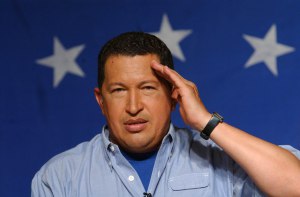 Merida – After two years of battling cancer, President Hugo Chavez has died today at 4.25 pm.
Vice-president Nicolas Maduro made the announcement on public television shortly after, speaking from the Military Hospital in Caracas, where Chavez was being treated.
Military and Bolivarian police have been sent out into the street to protect the people and maintain the peace. For now, things are calm here, with some people celebrating by honking their car horns, and many others quietly mourning in their homes.
Maduro made the announcement just a few hours after addressing the nation for an hour, accusing the opposition of taking advantage of the current situation to cause destabilization.
“Those who die for life, can’t be called dead,” Maduro concluded.
In Caracas, thousands of people have gathered in Plaza Bolivar and are said to be heading to the Miraflores Palace. Those gathered are shouting that “Chavez lives, the struggle continues,” “the people united will never be defeated,” as well as swearing that the Venezuelan bourgeoisie “will never return” to the Miraflores Palace.
Chavez supporters are also gathering in central squares across the country to rally together and mourn the death of their president.
Describing the scene in Caracas, Andromaco Martinez, stated that he was on the metro when he found out about the president’s death, “people began running everywhere”.
In Plaza Bolivar, “no-one is crying or praying,” he said, emphasizing that the Venezuelan people would defiantly defend the revolution.
“The struggle has already been ignited,” he added.
US Embassy Officials Expelled from Venezuela, Government Warns of “Conspiracy Plans”
By Tamara Pearson | Venezuelanalysis | March 5th 2013
Merida – Vice-president Nicolas Maduro today denounced destabilisation plans by the international and Venezuelan right wing, announcing the expulsion of two US officials for threatening military security. He also implied that Chavez’s cancer was “caused by enemies of Venezuela”.
Right-wing destabilisation plans
Maduro made the announcement today just after midday, following a meeting this morning with Venezuela’s political military leadership.
Maduro pronounced the expulsion of diplomat David del Monaco, and Air Attaché Deblin Costal of the US embassy in Caracas for being implicated in “conspiracy plans”.
“They have 24 hours to pack their bags and leave,” Maduro said.
He explained that Monaco had, for the last few weeks, been contacting members of the Venezuelan military in order to bring about a destabilisation plan in Venezuela.
“This official has been given the task of looking for active military members in Venezuela in order to propose destabilisation projects to the Armed Forces.”
“We want to denounce that we have certain clues of elements that make up this poisonous picture, which seek to disrupt the social life of our country and give it a beating,” he added.
“The enemies of the country, who aim to destroy democracy, have decided to go ahead with plans to destabilise Venezuela and damage the crux of a democracy…they have intensified the attacks against the economy and against goods and services,” Maduro said, referring to the scarcity of certain food and hygiene products that the country is currently experiencing.
Maduro argued that the “national and international right wing” were taking advantage of the “difficult circumstances” Venezuela is going through as a result of the “delicate state of health of President Chavez”.
Doubt over the cause of Chavez’s cancer
Further, he said, “We don’t have any doubts that the historical enemies of the country have searched for a way to damage the health of President Chavez… that he was attacked with this illness,” alluding to the possibility of a “scientific attack”.
“Just like what happened to Yasser Arafat… Eventually there will be a scientific investigation into President Chavez’s illness,” he said.
There are different theories as to the cause of the former President of the Palestinian National Authority, Yasser Arafat’s death in 2004. Last July Al Jazeera reported that traces of polonium-210, a rare and highly radioactive element, were found on Arafat’s belongings.
Other experts however claimed that polonium’s half life means it would be impossible to discover it now if it had been used for poisoning eight years ago, and that it must have been planted later. In 2005 the Palestinian ambassador to Sri Lanka, Attalah Quiba also alleged that Arafat had been poisoned by “high technology” such as a “high-tech laser”.
Continue fighting and working
Maduro concluded his public announcement by saying, “Men and women loyal to Chavez, we’re going to continue with our duties, so that no single program for the people is held back”.
“Venezuela’s political and military leadership is united, we call on the people to close ranks, to unite forces, and to pray for our comandante,” he said.
Referring to mainstream media lies and distortions about Chavez’s health and the situation in Venezuela, Maduro also expressed his appreciation to Venezuela for its “strength that there has been to face the psychological and dirty war against our people”.
The vice-president called for “respect for Chavez, for his family in these difficult times, respect for the pain and worry of our people”.
Related articles
Venezuelan Indigenous Yukpa Leader Sabino Romero Assassinated
By Ewan Robertson | Venezuelanalysis | March 4, 2013
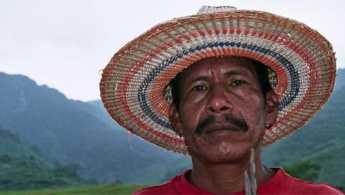
Mérida – Indigenous Yupka chief and land rights activist Sabino Romero has been assassinated in an act which has generated public repudiation from social movements and the Venezuelan government alike. A high profile investigation into the killing has been launched.
Romero was a chief of the indigenous Yupka people of the Sierra de Perijá in western Venezuela. He was assassinated on Sunday night as he made his way to vote in an indigenous election, in circumstances which are still unknown.
Romero was a leader in the struggle for ancestral Yupka lands in the Sierra de Perijá, lands held by cattle ranchers, but many of which have been formally granted to the Yupka by the Chavez government.
Last November, Romero travelled to Caracas with some 60 Yupka to demand that the government act against violence on the part of cattle ranchers who were refusing to give up their lands, as well as to protest against government inaction and public media silence over the conflict.
Several Yupka have already been killed in the land rights dispute, including Romero’s own father, and activists say that local judicial impunity has prevented the murderers from being brought to justice.
The Venezuelan government today condemned Romero’s assassination as a “terrible act”, and announced that a high-profile investigation into the killing had already been launched. The government, in a statement, said it suspects that the Yukpa chief was murdered for his role in the land rights conflict with cattle ranchers.
“We can’t get ahead of ourselves on a hypothesis about this act, which is condemnable and must be repudiated from all points of view, but in general the just struggle for the fair distribution of land is on the table [as a possible motive],” said communication minister Ernesto Villegas.
Indigenous groups and social movements held a protest today outside the Public Attorney’s office in Caracas to demand that those responsible for Romero’s assassination be brought to justice.
Ricardo Haussmann – a reliable commentator for the Guardian on Venezuela?
By Dr Francisco Dominguez | Venezuela Solidarity Campaign | March 3, 2013
Last Monday the Guardian Comment is Free website carried a piece by Ricardo Haussmann on Venezuela entitled The legacy of Hugo Chávez: Low growth, high inflation, intimidation.
The piece painted a doomsday scenario for modern day Venezuela, arguing that “Venezuelan leader Hugo Chávez is a master at holding onto power, but it has cost his country and people dearly.”
Ironically this came out just days before the Venezuelan economy was announced to have grown 5.6% in 2012 on the back of a huge housing stimulus.
Worse still, the piece appeared just a couple of days before the anniversary of the ‘Caracazo’ of 1989. The Caracazo is the day when the Venezuelan people rose up against a package of cuts forced on them. Over two thousand people were then brutally executed by state security forces in what has been termed Venezuela’s worst human rights disaster in history. In stark contrast, precisely on February 27 (2013), Venezuela was elected by about three quarters of the governments represented in the UN to become permanent member of the United Nations Human rights Council for three years.
What is the link between this and Ricardo Haussmann?
In 1989, he was an economic advisors to the soon-to-be-disgraced president Carlos Andres Perez who carried out the cuts and subsequent Caracazo violence.
As this academic paper points out:
“Pérez appointed to his economic cabinet a team of radically pro-market technocrats largely recruited from the Instituto de Estudios Superiores de Administración (IESA). These ministers–among whom were Miguel Rodríguez, Moisés Naím, Ricardo Haussmann, Gerver Torres, and Julián Villalba–became known as the “IESA Boys,” by analogy to the “Chicago Boys” of Pinochet’s Chile. This team designed the shock “paquete” that Pérez promised in his inaugural address in February 1989 and put into effect two weeks later”.
After that, from 1992 to 1993, Haussmann served as Minister of Planning in Venezuela and as a member of the Board of the Central Bank of Venezuela also under Carlos Andres Perez. Clearly the ‘Caracazo’ was not severe enough to break his link with President Perez.
Around the same time, Haussmann was Chair of the IMF-World Bank Development Committee. Judging by the nature and tone of his attack on the current Venezuelan government, one may have expected this to have been the dawn of some golden IMF-sponsored growth across Latin America.
Yet as economist Mark Weisbrot has pointed out, this period marked the worst economic performance of the Continent in a century. Only with the recent leftward shift (in many ways led by Venezuela) was there a much needed combination of economic growth and social justice.
Rejected by the Carter Centre
Haussmann later based himself in the US at Harvard, but came to prominence again following the 2004 recall referendum against Hugo Chavez, when he published a paper claiming that “statistically” the outcome could have been the result of fraud. At the time, the Wall Street Journal was amongst those who recycled the claim. The well respected Carter Centre debunked the myth and the politically motivated claims of fraud by stating clearly that “the results were accurate”.
Haussmann’s and Venezuela’s new right
In the run up to last October’s election, won by Hugo Chavez in a landslide victory, it was Haussmann (acting as an advisor to the defeated right-wing candidate Henrique Capriles) who claimed the right-wing opposition would have 200,000 people at polling stations and could then announce their own results before the official ones.
Luckily this plan – which was seen by many as the start of a worrying destabilisation aimed at getting the legitimate results not recognised internationally – failed to pick up momentum due to the scale of Hugo Chavez’s victory, with Capriles himself recognising the results. But this was not before the Spanish newspaper ABC had published a fake exit poll claiming Hugo Chavez had lost.
Surely his role as an advisor to the right-wing political candidate should have featured in the Guardian piece. This would better explain the reasons for the content of the piece.
Likewise sections of the British media have also recently quoted Diego Arria (who denies the 2002 coup in Venezuela was even a coup!) and the 2002 coup-supporting, hard right-wing MP (and friend of George W.Bush) María Corina Machado. Both are prominent signatories to a recent public petition calling on the Venezuelan military to overturn the country’s elected government.
Of course, people are entitled to express their views on Venezuela. But it’s clear that the Venezuelan people have time and again rejected the views pushed by Haussmann and the other members of the Venezuelan right recently attracting such interest in certain quarters of the British media.
Related articles
ASA Summit Promotes South-South Ties, Regional Integration
Venezuelanalysis | March 1, 2013
The signing of twenty-seven new economic and social agreements between the nations of South America and Africa was the product of three days of meetings held between representatives of more than 60 countries in Equatorial Guinea last week.
The Third South America Africa Summit (ASA) took place just outside the capital of Malabo, where heads of states and high-ranking officials outlined ways to improve commercial, technological and transportation collaboration between the two continents.
Brazilian President Dilma Rousseff as well as Bolivia’s President Evo Morales were in attendance on Friday as were the presidents of Nigeria, South Africa, Senegal, Suriname and Cape Verde, among others.
“We are here to contribute with our experiences together, always thinking about the liberation of our countries in Africa as well as in Latin America and the Caribbean”, said President Morales on Friday.
During his speech, Morales drew attention to the need to take back the natural resources that have been “looted” by the United States and Europe, highlighting the gains that have been made as a result of such policies in the Americas.
“We began to take back our resources and the result has been a change in the economic and financial history of much of the countries in Latin America and the Caribbean”, the Bolivian head of state asserted.
“Unity for the dignity of our peoples, unity for equality, and, above all, unity for our liberation”, he added.
This sentiment of economic and political independence was echoed by the majority of ASA representatives including Nigerian Foreign Minister, Viola Adaku Onwuliri.
“Let’s show our ability to make tangible decisions that will lead to economic development and the integration of Africa and South America.
With true political will, we will be able to achieve it, just a s we have already been able to overcome the burdens of colonialism and racism”, Onwuliri said.
For his part, Venezuelan Foreign Minister Elias Jaua read a letter written by Hugo Chavez who apologized for his inability to participate personally in the conference.
“I truly lament, in the deepest of ways, my inability to be physically present with you and I reiterate once again…my most irrevocable commitment to the cause of union between our people”, the Venezuelan President wrote.
In his missive, Chavez hailed the “indivisible historic ties” that bind the regions and which have obliged the two continents “to walk together until the very end”.
“I will never be tired of saying it: we are one people. We must find each other, beyond the formalities and the speeches, in the feeling of unity.”
“In this way we will take our people out of the labyrinth where they had been cast by colonialism and, in the 20th century, by neoliberal capitalism”, the head of state said.
EXPANDING THE ALLIANCE
Apart from the commercial accords inked on Saturday, participating countries also expressed their support for Argentina in its territorial dispute with the United Kingdom over the Falkland Islands.
A further resolution saw the condemnation of the more than 50 year-old US blockade on Cuba and a declaration calling for Palestine to become a full member of the United Nations.
Many countries expressed their desire for the expansion of the ASA alliance, advocating the inclusion of all of Latin America and the Caribbean, not only those members belonging to the Union of South American Nations (Unasur) bloc.
President Nguema of Equatorial Guinea described the absence of these nations as “unjustifiable” given the important commonalities that exist between Africa and the developing nations of the Americas.
“The history of our continents, largely exploited by other countries, compels us to take measures of South-South cooperation which will allow us to emerge with liberty, independence and coexistence in this globalized world of confronting interests”, Nguema said.
Following this line, the President of the Spanish-speaking African nation proposed that ASA be incorporated into the recently established Community of Latin American and Caribbean States (CELAC) alliance that includes all countries in the Americas except the United States and Canada.
Venezuelan Foreign Minister Jaua reported that Nguema’s proposal has received the support of many allied Latin American nations and that “what needs to be done is to discuss [the proposal] with Unasur and then with CELAC”.
Jaua additionally informed that there will be an encounter between the leading members of ASA next month in the Venezuelan capital of Caracas to guarantee the materialization of the agreements signed last weekend.
“On April 26, there will be a meeting of the Follow-Up Commission which is made up of Nigeria, Brazil, and Equatorial Guinea to see through the accords that have been solidified in this third summit,” the Venezuelan Minister said.
FINDING ITS FOOTING
The tri-annual ASA first took place in Abuya, Nigeria in 2006 and was followed by a second encounter in Margarita Island, Venezuela in 2009.
While many member nations agree that more needs to be done to strengthen the alliance, trade between the continents has grown from $7.2 billion in 2002 to $39.4 billion in 2011.
Ecuadoran Foreign Minister Ricardo Patino explained that relations between the two regions have not been easy over the years “because we don’t know each other very much and we don’t have much work experience together.”
At the same time, Patino affirmed that there are great possibilities for collaboration and that the two continents “have much to offer one another” in ways that go beyond pure commercial relations.
Ecuador is slated to host the next ASA summit in 2016.
Related article
- Venezuela’s Chavez to Africa – South America Summit: We Must Unite (venezuelanalysis.com)
Chávez Haters Not “Limited by Truth, Reality or Common Sense”
By Dan Beeton | CEPR Americas Blog | February 26, 2013
A new op-ed in the Guardian by Ricardo Hausmann portrays a dystopian fictional Venezuela, one in which the Venezuelan government has run the economy into the ground despite abundant oil wealth, but yet its charismatic president continues to be re-elected through some sort of sinister trickery.
Sound familiar? It should: it’s the same tired story repeated in the U.S. and U.K. media almost every day, but in this case Hausmann was apparently given free rein to present his own set of “facts.” It isn’t surprising that Hausmann would write something so divorced from reality; he went to elaborate lengths to invent a conspiracy theory about supposed fraud in Venezuela’s 2004 recall referendum by relying on fake exit polls. An independent panel of statisticians selected by the Carter Center determined that Hausmann and his colleague Roberto Rigobón had in fact found no evidence of fraud. [PDF]
But let’s get back to Hausmann’s latest Guardian piece, starting with the economy. Hausmann writes, “Since 1999, the year [Chávez] took over the presidency, Venezuela has had the lowest average GDP growth rate and the highest inflation of any Latin American country except Haiti.”
The source for this “lowest average GDP growth rate” to which Hausmann links is a highly opinionated BBC article which in turn quotes a colleague of Hausmann’s from the Center for International Development at Harvard University who has a Bachelor of Arts degree in economics. Had Hausmann consulted official government data, or growth numbers for the region from the IMF, he would have found a very different set of facts.
In fact, Brazil, Mexico, El Salvador, Guatemala, Jamaica, Nicaragua, Paraguay, Uruguay, and other countries all had lower average GDP growth than did Venezuela since 1999, according to IMF data.
Hausmann’s next sentence reads: “[Venezuela] has also seen a fivefold increase in assassinations to arguably the highest murder rate in the world.”
Why does Hausmann want to “argue” the case for Venezuela having the “highest murder rate” in the world? Because the U.N. keeps track of such figures, and at 91 per hundred thousand, post-coup Honduras’ homicide rate is about twice as high as Venezuela’s; El Salvador’s is also much higher.
Hausmann then makes the usual claims about Chávez “eliminat[ing] checks and balances” and describes – without providing any evidence – “a very large civilian army of political activists that are handsomely compensated by the state for their party work.” Such distortions of Venezuela’s democracy belittle both the many elections in which voters have overwhelmingly chosen pro-Chávez legislators and state and local officials, and the bottom-up nature of much of the transformative processes occurring in Venezuela. Hausmann then claims that Chávez “dominate[s] the airwaves,” even though Venezuelan state television has a 5.4 percent audience share while more than 94 percent of the TV seen by Venezuelans is not pro-government.
As Hausmann himself writes, “in choosing your narrative, be creative. Don’t be limited by truth, reality or common sense. …Whenever you fail, blame a conspiracy.” Hausmann has provided an excellent demonstration of the former with his Guardian op-ed, just as his post-recall referendum fantasy stories were a great example of the latter.
Related articles
- World Bank and IMF Forecasts Follow Predictable Pattern for Haiti, Venezuela
- There is an alternative: what Venezuela can teach us about the banking sector
- Venezuela’s Economy Grows by 5.5 Percent in 2012
- Economic BS in Rich Countries is Reinforced by BS about Venezuela
- The Achievements of Hugo Chavez
- Venezuela Among the Most Positive Countries, Gallup Says
Venezuelan arms maker to continue Iran trade despite US bans
Press TV – February 17, 2013
Venezuelan officials say the state-owned weapons manufacturer, CAVIM, will keep on trading with Iran in defiance of the US sanctions imposed on the company, Press TV reports.
“We think that it is logical for Venezuela to have trade and economic relations with all countries in the world. We are exercising our sovereignty,” Venezuelan Envoy to international rights bodies German Saltron said.
“We feel it is an abuse of power that the United States’ government is trying to block Iran from trading with other countries,” he added.
On February 11, the US State Department imposed sanctions on CAVIM allegedly for violating the so-called Iran Nonproliferation Act of 2000, which aims to prevent Tehran from acquiring weapons of mass destruction.
According to the US State Department website, sanctions on the Venezuelan weapons manufacturer will be in place until February 2015.
The US, the Israeli regime and some of their allies have repeatedly accused Iran of seeking to produce an atomic bomb under the cover of its nuclear energy program, a claim Iran has categorically rejected.
In 2011, Washington imposed sanctions on Venezuela’s state-owned giant oil company, PDVSA, for having oil deals with Iran’s energy industry and as part of its campaign to tighten sanctions on the Islamic Republic over its nuclear energy program.
Under the sanctions, PDVSA is denied US government contracts and banned from Washington’s export financing.
The administration of President Barack Obama is alleging that Iran is using its close economic relationship with Socialist President Hugo Chavez’s government to establish a military presence in Latin America.
In December 2012, the US president enacted a law “aimed at countering Tehran’s alleged influence in Latin America.”
Strategically dubbed as ‘Countering Iran in the Western Hemisphere Act of 2012’, the act calls for the State Department to develop a plan within 180 days to “address Iran’s growing hostile presence and activity.”
However, Iran and Venezuela have continued to expand their trade ties despite these sanctions.
More than 100 bilateral agreements have been signed between the two countries over the past decade, while last year Iranian firms signed a USD2.5 billion contract to build 17,000 houses for underprivileged people in Venezuela.
The Islamic Republic has been seeking to expand relations with Latin American countries over the past years, describing the endeavor as one of its major foreign policy strategies.
Iran’s growing popularity in Latin America has raised major concerns in Washington, which regards the region as its strategic backyard and traditional sphere of influence.
Related articles
- Venezuela wants best of relations with the US based on ‘mutual absolute respect’ (alethonews.wordpress.com)
- US probes Swiss medicine giant for trade with Iran (alethonews.wordpress.com)
Corruption Charges Shake the Venezuelan Opposition
By Chris Carlson | Venezuelanalysis | February 7th, 2013
Punto Fijo – In a heated debate before the National Assembly on Tuesday, several politicians from opposition political party Primero Justicia were accused of corruption, and one opposition legislator broke ranks with the opposition coalition.
President of the National Assembly Diosdado Cabello had warned earlier in the week that he would be presenting evidence of corruption on the part of the right-wing party Primero Justicia (Justice First) before the Assembly.
On Tuesday, he offered various pieces of evidence that showed that Primero Justicia had received more than BsF. 491 million (US$ 114 million) in undeclared funding from private sources between 2009 and 2011.
The evidence consisted of checks from various private Venezuelan firms made out to Richard Mardo, opposition legislator and candidate for governor of Aragua in last December’s state elections, as well as a recorded telephone call of Miranda Governor Henrique Caprlies’s father discussing campaign financing.
Evidence was also given against opposition legislator Gustavo Marcano for presumably transferring funds to members of Primero Justicia during his term as mayor of the eastern city of Lecheria.
All of the accusations were against members of Primero Justicia, the party of opposition leader Henrique Capriles.
The party has a history of corruption allegations, famously accused of receiving funds from Venezuela’s oil company before Chavez took power, and recently being accused of illegal campaign financing during last year’s presidential campaign when hidden cameras caught a meeting between a party official and a private businessman.
“This party is a mafia organization that uses politics as a way of doing business. This is what they really are, but they want to present another image to the public,” said Cabello.
Pro-Chavez legislators said they would be presenting formal charges against both Richard Mardo and Gustavo Marcano of Primero Justicia, and requested that they be placed under house arrest until the investigations are carried out. Officials later added Henrique Capriles, Julio Borges and Carlos Ocariz to the list of those to be investigated.
The accusations created an uproar on the floor of the assembly, with both opposition and pro-government legislators shouting insults and accusations, and leading one legislator to break away from the opposition and join the pro-Chavez coalition.
Opposition legislator Hernán Núñez criticized the opposition Democratic Unity (MUD) coalition of parties and called for the corruption charges to be investigated.
“I’m breaking ties with a coalition that isn’t united or democratic. It’s a coalition of four parties that get together and rob the hope of the Venezuelan people,” said Núñez amidst the cheers of the pro-Chavez legislators.
Opposition leaders assured that the accusations were simply a “show” put on by the government to try to weaken the opposition, and that the politicians who have recently broken ranks with the opposition were “bought off” by the government.
At a press conference on Wednesday morning, Mardo used newspaper clippings to show the various activities to which the funds had gone, claiming they were used for charitable activities like food purchases for poor families, and the repairing of a sports facility.
However, pro-Chavez commentators pointed out that newspaper clippings were not sufficient proof for how the funds were spent, nor could they justify the fact that the funds were not declared for tax or campaign purposes.
But opposition leaders and analysts insist that the government accusations against Primero Justicia are part of a larger plan to demoralize and weaken the opposition before an imminent election later this year if Hugo Chavez is unable to return to the presidency.
Henrique Capriles, who would most likely be the opposition candidate in any presidential election, insisted the charges were actually aimed at him.
“Don’t anyone be mistaken…Here what they want is to come after me, and to demoralize you all. But we won’t kneel before anyone!” said Capriles.
Opposition analyst Luis Vicente León argued that the accusations are a way for the government to make up for a growing “power vacuum”.
“The government is trying to terrorize its adversaries in order to minimize them and send a strong message that there is no power vacuum, and that they can be even stronger and harder than before,” said León.
However, pro-Chavez analysts claim the events have more to do with ruptures within the opposition coalition as the opposition parties attempt to remain united behind Henrique Capriles.
“The events in the National Assembly show that there exists a conflictive situation inside the opposition,” said pro-Chavez analyst Farith Faija, claiming that some parties in the coalition were critical of Capriles’ “abandonment of the state governor candidates in December, the raw corruption in the core of the opposition coalition, and the fact that it isn’t unified or democratic.”
Hernán Núñez gave similar reasons for his rupture with the opposition coalition, accusing Capriles of abandoning the rest of the opposition’s state governor candidates, and not being “sincere” with the Venezuelan people.
Authorities said a legislative committee will investigate the corruption charges and present a report in less than a month. No announcement was made on whether the legislators would be placed under house arrest during this time.
Related article
Eighth Annual Citgo-Venezuela Heating Oil Program Launched
Venezuelanalysis | February 4, 2013
 Last Thursday, at the Night of Peace Family Shelter in Baltimore, CITGO Petroleum Corporation President and CEO Alejandro Granado and Citizens Energy Corporation Chairman Joseph P. Kennedy II launched the eighth annual CITGO-Venezuela Heating Oil Program with the first heating oil delivery of this winter’s initiative.
The program, which began as a single donation in 2005 in response to the high prices of heating oil resulting from hurricanes Katrina and Rita, has grown well beyond its original scope. Today, it has become a humanitarian symbol of unity between the people of Venezuela and those in need in the United States.
This year, the program has a heightened sentiment as it comes at a time when Venezuelans and many in the world send their wishes for the health and prompt recuperation of President Hugo Chávez, who has supported this initiative since its creation eight years ago.
“The CITGO-Venezuela Heating Oil Program has been one of the most important energy assistance efforts in the United States. This year, as families across the Eastern Seaboard struggle to recover from the losses caused by Hurricane Sandy, this donation becomes even more significant,” said Granado. “This energy assistance program is an integral example of the humanitarian principles endorsed by the CITGO ultimate shareholder, Petróleos de Venezuela, S.A. (PDVSA), the national oil company of the Bolivarian Republic of Venezuela.”
Over the years, the program has helped more than 1.7 million people stay warm during the coldest months of winter by donating more than 200 million gallons of heating oil worth more than $400 million. It is estimated that this year the program will help more than 100,000 families in 25 states plus the District of Columbia, including members of more than 240 Native American communities and more than 200 homeless shelters.
“CITGO invests relatively more than any other major oil company in social responsibility projects. As a matter of fact, our percent of revenue spent in social programs has been five times more than those of other much larger, vertically-integrated competing global brands. It is a core principle of our business to use the strength of our resources to help people in need,” Granado said.
Since the program’s creation, CITGO has partnered with Citizens Energy Corporation, a non-profit organization created in 1979 by former U.S. Rep. Joseph P. Kennedy II. Citizens Energy Corporation, which has used successful ventures in the energy and health care industries to finance charitable programs in the U.S. and abroad, has provided energy assistance to families in need for more than 30 years.
“We are so grateful for this generous donation from the people of Venezuela and CITGO Petroleum Corporation. After eight years and more than 200 million gallons of heating oil distributed within the U.S., the burden of another difficult winter threatens the livelihood and safety of senior citizens and low-income families,” Kennedy said. “It is critical that we continue to support American families through this program. Thanks to this partnership, we will help more than 400,000 people stay warm and safe this winter.”
Kennedy emphasized the commitment CITGO has made to American communities. He said that he has approached major U.S. oil companies and oil-producing nations to ask them to assist the poor in bearing the burden of rising energy costs. “They all said no,” he said, “except for CITGO, President Chávez and the people of Venezuela.”
Congressman Elijah Cummings (MD), who also spoke during the event, reiterated the importance of helping those in need. “I commend CITGO and Citizens Energy Corporation for launching the Heating Oil Program this year. This program is literally life-saving for so many whose resources are already stretched thin in tough economic times. I stand with the many Baltimore and Washington recipients who thank both CITGO and Citizens for their commitment to helping our communities,” he said.
Echoing those sentiments, Claudia Salerno Caldera, Venezuela’s Vice Minister of Foreign Affairs for North America, addressed the plight of poor people and why humanitarian assistance is so vital. “The vision of social responsibility in the energy policy of the Bolivarian Republic of Venezuela has allowed us to assure that our profits benefit the neediest people in our country. Just as the government of President Hugo Chávez has made significant efforts in the fight against poverty and in the promotion of social justice in Venezuela, this program demonstrates that our commitment to the poor transcends all boundaries, ideological and geographical,” Salerno said.
Families struggling to pay for home heating oil can call Citizens Energy Corporation at 1-877-JOE-4-OIL (1-877-563-4645), to see if they are eligible for heating oil assistance. Once approved, the household will receive an authorization letter with details for arranging a one-time delivery of 100 free gallons of oil.
For more information about the program, click here.
Edited by Venezuelanalysis.com
CITGO, based in Houston, is a refiner, transporter and marketer of transportation fuels, lubricants, petrochemicals and other industrial products. The company is owned by PDV America, Inc., an indirect wholly owned subsidiary of Petróleos de Venezuela, S.A., the national oil company of the Bolivarian Republic of Venezuela. For more information visit www.citgo.com.
Beginning in 1979 with oil-trading ventures in Latin America and Africa, Citizens Energy has used revenues from commercial enterprises to channel millions of dollars into charitable programs in the U.S. and abroad. Whether heating the homes of the elderly and the poor, lowering the cost of prescription drugs for millions of Americans, or starting solar heating projects in Jamaica and Venezuela, Citizens Energy creates social ventures as innovative as the businesses that finance them. For more information, visit www.citizensenergy.com.
Featured Video
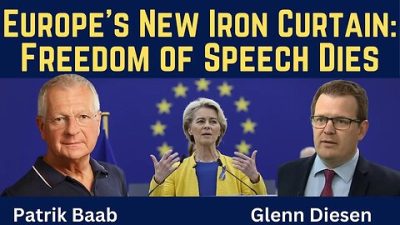
Patrik Baab: Europe’s New Iron Curtain – Freedom of Speech Dies
or go to
Aletho News Archives – Video-Images
From the Archives
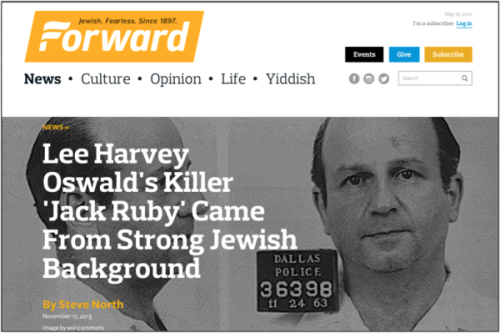
Jack Ruby: Israel’s Smoking Gun
BY LAURENT GUYÉNOT • UNZ REVIEW • NOVEMBER 13, 2021
By a strange paradox, most Kennedy researchers who believe that Oswald was “just a patsy” spend an awful lot of time exploring his biography. This is about as useful as investigating Osama bin Laden for solving 9/11. Any serious quest for the real assassins of JFK should start by investigating the man who shot Oswald at pointblank in the stomach at 11:21 a.m. on September 24, 1963 in the Dallas Police station, thereby sealing the possibility that a judicial inquiry would draw attention to the inconsistencies of the charge against him, and perhaps expose the real perpetrators. One would normally expect the Dallas strip-club owner Jack Ruby to be the most investigated character by Kennedy truthers. But that is not the case. … continue
Blog Roll
Recent Comments


 Aletho News
- Senator Rand Paul Introduces Federal Bill to END Vaccine Makers’ Liability Shield
- The Hidden Map: US and Israel May Use Unexpected Neighbors to Attack Iran
- Trump, Netanyahu Agree to Target Iranian Oil Exports to China
- Russia open to discussing Ukraine’s ‘external governance’ – senior diplomat
- US Caribbean Buildup Near $3B — Report
- Munich Security Conference and the U.S. elephant in the room
- Epstein Pitched JPMorgan Chase on Plan to Get Bill Gates ‘More Money for Vaccines’
- Germany’s CDU Pushes Real-Name Social Media Mandate and ID Checks
- Patrik Baab: Europe’s New Iron Curtain – Freedom of Speech Dies
- Trump’s ‘Board of Peace’ exports Israeli ‘ceasefire’ diplomacy to the world
- If Americans Knew
- ISIS-linked border guards, GHF-linked aid – Not a ceasefire Day 128
- Israel battles Palestinian right of return, one Palestinian at a time – Not a ceasefire Day 127
- Noor’s short life of unimaginable suffering
- Israel Destroyed Gaza’s Hospitals. Now It’s Banning Doctors Without Borders.
- Is Spite of What Zionists Say, It’s a Good Thing to Criticize Governments
- Palestinian mother, daughter recount strip searches, harsh conditions in Israeli detention
- Israel used weapons in Gaza that made thousands of Palestinians evaporate
- ADL’s Stats Twist Israel’s Critics Into Antisemites
- Why Is the World Silent When the Gaza Genocide Is Not Over?
- In Gaza: 8,000 bodies under rubble, 3,000 missing – Not a ceasefire Day 126
- No Tricks Zone
- Unfudging The Data: Dutch Meteorological Institute Reinstates Early 20th Centruy Heat Waves It Had Erased Earlier
- German Gas Crisis…Chancellor Merz Allegedly Bans Gas Debate Ahead of Elections!
- Pollen Reconstructions Show The Last Glacial’s Warming Events Were Global, 10x Greater Than Modern
- Germany’s Natural Gas Storage Level Dwindles To Just 28%… Increasingly Critical
- New Study Rebuts The Assumption That Anthropogenic CO2 Molecules Have ‘Special’ Properties
- Climate Scientist Who Predicted End Of “Heavy Frost And Snow” Now Refuses Media Inquiries
- Polar Bear Numbers Rising And Health Improving In Areas With The Most Rapid Sea Ice Decline
- One Reason Only For Germany’s Heating Gas Crisis: Its Hardcore-Dumbass Energy Policy
- 130 Years Later: The CO2 Greenhouse Effect Is Still Only An Imaginary-World Thought Experiment
- New Study Affirms Rising CO2’s Greening Impact Across India – A Region With No Net Warming In 75 Years
 Aletho News