US Shelters Venezuelan Fugitive, Criticises Existence of “Drug Kingpins” in Venezuela
By Rachael Boothroyd | Venezuelanalysis | April 19th 2012
Caracas – A Venezuelan judge has fled to the United States after he was dismissed as a Supreme Court Magistrate on March 20th, when an investigation was launched into his links to Venezuelan drug lord Walid Makled. Venezuelan born Makled is currently on trial in the country for crimes including narco-trafficking and murder, after being extradited from Colombia to Venezuela in May last year.
According to the charges levelled at the ex-magistrate, Eladio Aponte, the judge granted a falsified identification document to Makled which named him as a member of the magistrate’s staff, permitting him free passage to anywhere in the country.
In an interview on Wednesday night for US television channel SOiTV, the ex-judge hit out at Venezuelan politicians and high ranking members of the army, accusing them of having intervened and manipulated the Venezuelan judicial system. He also added that he thought Makled to be a “reputable businessman”.
The government has categorically refuted the claims, which they say are an attempt to smear the Chavez administration.
“He is an ex-magistrate being prosecuted for his links to drug trafficking, and who has sold his soul to the devil,” said Venezuelan Foreign Minister, Nicolas Maduro, whilst defending the country’s judicial institutions as independent.
“We can say with total certainty that in the case of Aponte, the decisions taken by our public institutions were in total compliance with the law, demonstrating that there are laws in Venezuela, that here there or no privileges and that no one is protected by narco gangs”. “Aponte is a totally discredited man,” he added.
The minister also went on to criticise the role of the U.S.’s Drug Enforcement Agency (DEA) in engineering Aponte’s escape after it emerged that a DEA plane had transported the fugitive from Costa Rica to the United States.
“The DEA now takes away this man accused of being linked to drugs trafficking mafias to turn him into a spokesman against Venezuela… The United States continues to be a sanctuary for drug traffickers, the corrupt, traitors and terrorists,” he said.
Maduro’s sentiments have been echoed by other members of the Venezuelan government and armed forces, as well as by US- Venezuelan attorney and investigative journalist Eva Golinger, who said that Aponte’s claims were part of a “systematic” campaign by Washington to depict Venezuela as a “narco-state” using whatever means possible.
OFAC Criticises “Worrying Trend”
Aponte’s flight to the U.S. comes as the Director of the United States’ Office of Foreign Assets Control (OFAC), Adam Szubin, criticised a “worrying trend” in Venezuela, relating to the presence of “drugs kingpins” in the country.
In an interview with opposition newspaper El Universal earlier this week, Szubin stated that the organization was particularly concerned with individuals who were in violation of the “Kingpin Act,” which “goes after foreign persons” accused of financially aiding or supporting the international trafficking of narcotics. Several Venezuelan government officials have been controversially added to the organisation’s sanctions list since 2008.
“The designations made over the last two years,” said Szubin, “conform to the Kingpin Act and point towards a worrying trend in Venezuela.”
“Nobody is added to the list by mistake,” he continued, although conceding that 400 individuals had been removed from the list since 2009.
Szubin went on to cite current Venezuelan Defence Minister, Henry Rangel Silva, who was placed on the agency’s sanctions list in 2008 for allegedly attempting to increase cooperation between the Venezuelan government and Colombia’s FARC guerrillas as proof of this trend. To date, no evidence has been presented by the OFAC in support of these allegations.
As a division of the Treasury Department’s “Terrorism and Financial Intelligence” agency, the OFAC is responsible for administering and enforcing sanctions against states, individuals and groups accused of terrorism, such as those currently being enforced against Iran. The agency is described by the Washington Post as being an institution that “U.S. policymakers increasingly rely on to advance national security and foreign policy goals in the post-9/11 era”.
Since 2008, six other members of the Venezuelan government, including former Caracas mayor Freddy Bernal, have also been added to the OFAC sanction list.
Relations between the United States and Venezuela in the fight against the international drugs trade have been strained since the latter expelled the U.S.’s Drug Enforcement Agency (DEA) in 2005 for acts of espionage, with the Venezuelan government charging the agency with maintaining a consistent campaign against the left wing politics of the government, as opposed to focusing on counter-narcotics operations.
EU Adds Venezuela’s State Airline to its List of Banned Airlines
By Tamara Pearson | Venezuelanalysis.com | April 3rd 2012
Mérida – The Venezuelan government rejected the European Union’s announcement today that it is adding Venezuela’s state-owned airline Conviasa to its list of carriers banned from its airspace.
The Venezuelan government created Conviasa in 2004 to replace the private airline Viasa, which was liquidated in 1997. Conviasa flies numerous national and Latin American routes, as well as to Spain, Ecuador, and Syria, at affordable prices. The government has also used it to deliver humanitarian aid to countries in need such as Japan and Haiti.
In June last year, U.S. politicians, during a hearing in the House of Representatives, requested that a number of measures be taken against the Venezuelan government, including sanctions against Conviasa for “supporting terrorism” because of its flights to Syria.
According to the European Commission press statement released today, the ban is due to “numerous safety concerns arising from accidents and the results of ramp checks at EU airports.” The decision, it says, is “based on the unanimous opinion of the Air Safety Committee, composed of representatives of the 27 Members States of the EU, Croatia, Norway, Iceland, Switzerland and the European Aviation Safety Agency (EASA)”.
“The safety performance of two other Venezuelan air carriers, Estellar Latinoamerica and Aerotuy, was also reviewed in depth; however, measures were not considered necessary at this stage. Nonetheless, these two air carriers remain subject to increased monitoring,” read the statement.
The Venezuelan government has expressed its “firm rejection” of the measure in an official statement today.
The decision is “completely disproportionate and contrary to the conclusions of the International Civil Aviation Organization (ICAO) regarding [Conviasa’s] safety performance,” said the Venezuelan government.
“The government of the Bolivarian Republic of Venezuela is evaluating reciprocal and proportionate actions to protect its fundamental interests and safeguard the prestige of the state-run airline for the Venezuelan people and the international community,” the statement concluded.
The European Union first wrote its blacklist in March 2006, and has since updated it four times a year. It is apparently based on deficiencies found during checks at European airports.
According to Bloomberg, “In addition to imposing an operational ban in Europe, the blacklist can act as a guide for travellers worldwide and influence safety policies in non-EU countries”.
All airlines from Afghanistan, Angola, Benin, the Democratic Republic of Congo, the Republic of Congo, Djibouti, Equatorial Guinea, Gabon, Indonesia, Kazakhstan, Kyrgyzstan, Liberia, Mauritania, Mozambique, Philippines, Sao Tome and Principe, Sierra Leone, Sudan, Swaziland, and Zambia, are banned from EU airspace. People wishing to travel between those countries must use European airlines or airlines from other countries.
In other cases, only specific airlines are banned, such as Air Madagascar, Air Koryo of North Korea, Iran Air, and Jordan Aviation. In Latin America, only Conviasa of Venezuela and Rollins Air of Honduras are now banned.
Related articles
Capriles and Chavez Neck and Neck, and Pigs Might Fly, or Conduct a Poll
By Rachael Boothroyd – Venezuelanalysis.com – April 3rd 2012
According to Latin American polling companies such as Datanalisis and Consultores 21, this year’s presidential elections in Venezuela will be a close-knit affair, with Consultores 21 claiming that there is currently a “technical draw” between the country’s support for incumbent President Chavez and his opponent, Capriles Radonski, and Datanalisis claiming that Chavez leads his rival by just 13 points (44% to 31%). According to other polls, however, Chavez is expected to sweep the elections, with polling companies such as IVAD, confirming that 57 .6% of voters would vote for the president and just 26.6% for Capriles.
Despite the almost disorientating levels of differences between poll results, the international press and in fact, Capriles himself, have decided to cherry pick the Datanalysis and Consultores 21 statistics, and it’s not hard to see why. Part of the opposition’s strategy in the run up to this year’s elections has been to emphasise its unity and its position of strength in relation to the sick/ailing Chavez – for instance, by claiming that over 3 million people had voted in this year’s Roundtable of Democratic Unity (MUD) coalition primary elections, when this is almost certainly a physical impossibility, if not a verifiable one, given that the opposition burnt all the ballot books before an investigation could be conducted.
This could all just be political showmanship in the face of past failures, but it is also possible that this forms part of a broader strategy to contest this year’s election results in October; when it is entirely likely that a sick Chavez will beat the opposition hands down yet again. Notably, the opposition coalition, unlike Chavez, has still not publically confirmed that they will accept the election results no matter what their outcome might be.
Tellingly, whilst Capriles has stated that he does not recognise the results of the other polling companies; he has made an exception for Consultores 21, stating: “personally, I believe in Consultores. I’ve been looking at Consultores’ polls for many years”.
Despite this being exceptionally convenient; it is also a foolhardy thing to say, because Consultores has made some disastrously bad predictions over the past few years. In the 2004 presidential recall, Consultores predicted that there would be a tie between those wanting Chavez to stay in office and those wanting him out, just before Chavez was then ratified as president by 60% of the population. And this wasn’t just a one-off glitch. In 2006 during the presidential run-off between Chavez and opposition candidate Manuel Rosales, Consultores maintained that Chavez had just a 13% lead over his opponent. The president then went on to take the presidential elections with almost a 30% advantage over Rosales (65.8% to 36.9%).
But Consultores is not alone in Neverland, with Datanalisis also possessing a penchant for pie in the sky polling. In 2009, in the run-up to the referendum on whether to eliminate presidential term limits, the polling company consistently predicted that the electorate would vote against the changes in a victory for the opposition – right up until releasing their final poll results, which suddenly showed that 51.5% would vote in favour of eliminating term limits, whilst 48.1% would vote against. Not only was this a dramatic change that was never explained by the company, but it also underestimated the pro-government vote and inflated the opposition’s support. The actual figures demonstrated almost a 10% margin in favour of the reforms, which were passed with 54.5% in favour and 45.15% against.
Of course, in an interview with Globovision last week, Datanalisis’ Director, Luis Vicente Leon, was quick to rectify that the company’s recently released figures are subject to change, given the “unpredictability of polls” – a somewhat surprising statement given that at least three other polls have consistently shown that Chavez’s support has remained stably around the 57% mark for the past 6 months.
These rather serious blunders, which at best could be interpreted as poor polling methodology and at worst, deliberate attempts to manipulate the electorate, are not the only thing which discredits these companies. In fact, both directors of these pollsters have direct relationships to the opposition and the U.S. government, with Leon in particular featuring frequently in Wikileaks’ Cablegates giving advice to U.S. officials at the embassy in Caracas.
Equally, Datanalisis’ surveys are funded by the somewhat ambiguously named private and international “clients,” and despite the company’s alleged commitment to “transparency” on its webpage, there is absolutely no information regarding who the donors and financers of this poll are and in what ways they contributed; with the “Clients” section of their webpage simply featuring a rather ambiguous road sign.
According to Mayor of the Libertador district in Caracas, however, Jorge Rodriguez, one of the company’s principal clients is the Democratic Action party, one of Venezuela’s traditional parties which maintained a rotating democracy with the Christian Democrat Party during the Fourth Republic (1958-1998) and which incidentally forms part of the MUD with Capriles.
Whilst they dismiss other polling companies as state “propaganda,” the media neglects to mention the very obvious links between these polling companies and the opposition, as well as the fact that even pollsters such as Hinterlaces, which are sympathetic to the opposition, are currently putting President Chavez well ahead of Capriles at 52% versus 34%. And although Leon has described these surveys as not “serious”, it is true that pollsters such as IVAD, which despite consistently underestimating the pro-Chavez vote, have evidently been much more effective in predicting the outcome of electoral processes than Datanalisis; including in predicting the public’s rejection of the 2007 constitutional reforms.
Despite this, both companies remain almost exclusively the mainstream press’ sources of choice when hypothesising over the elections. Anyone living in the U.S. or Europe would be forgiven for thinking that Capriles is the “man who would beat Hugo Chavez,” as Reuters UK reports.
However, the media’s fixation on the Datanalisis poll in particular is illuminating for another aspect, and that is because the poll revealed two important political factors which fundamentally contradict the usual representation of the Venezuelan process and which the media have decided to totally ignore.
Firstly, as opposed to the usual claims in the mainstream press that the Chavez ranks are made up of a die-hard Chavista core, the poll found that Chavez’s support was strongest, and indeed growing, amongst the country’s youth, who, according to Jorge Rodriguez, “feel more identified…with the proposal for the future which President Chavez’s presidency represents”. Interestingly, the poll also revealed that whilst 46% of the electorate would vote for Chavez, 40% of those would vote for another member of the PSUV, including Chavez’s brother Adnan or Vice-president Elias Jaua.
What we can glean from this is that a decent majority of government supporters vote for a party and a program, and not simply for Chavez’s “personality cult,” as is usually inferred. A reality which was confirmed when I did a number of interviews outside a rally for the president’s health in February, where every interviewee informed me that they would vote for another PSUV candidate in the event that Chavez were unable to stand; but never for the opposition, which one woman told me would be like “going backwards”.
Given the rather suspect source of these figures, it would be unwise to take them as given. However, they are in fact backed up by other polls conducted by GISXXI and IVAD, which also confirm that over 50% of Venezuela’s youth support Chavez. Similarly, the results of a poll released in February this year by IVAD also reveal that whilst 42.8% of participants belonged to the PSUV party (United Socialist Party of Venezuela), only 3.7% belonged to Justice First (Capriles party), 3.6% to Democratic Action, 3.4% to a New Time, 2.5% to Project Venezuela, with the membership of other parties falling to below 2%. With this in mind, the suggestion that Capriles is currently running neck and neck with Chavez seems about as likely as pigs developing the ability to speak Spanish, sprouting a pair of opposable thumbs and setting about conducting their own set of polls.
The most salient characteristic of all these polls, no matter which one you look at and no matter from what angle; is that after 13 years in government, with a financial crisis, a sick Chavez, and an endless string of destabilisation attempts under its belt, the government still manages to maintain incredible levels of support, and this continues to both baffle and infuriate the opposition; who for all the funding they receive and for all their control of the country’s media, have once again failed to present an alternative to the revolution which is capable of resonating with the Venezuelan people.
Related articles
- New poll shows tight race in Venezuela (local10.com)
- Chavez rival touts poll results showing close race (sacbee.com)
Venezuela is the Fifth Happiest Country in the World
AVN / Press Office – March 30, 2012
On Friday, the Washington Post highlighted a global happiness survey released last year by the polling firm Gallup, which found that Venezuela is the fifth happiest country in the world. According to the poll, 64 percent of Venezuelan respondents said their well-being was thriving.
The poll measured how people in 124 countries rated their lives at the current time and their expectations for the next five years.
Topping the list were Denmark (72 percent), Sweden (69 percent), Canada (69 percent), and Australia (65 percent). Finland is tied with Venezuela, sharing the fifth spot.
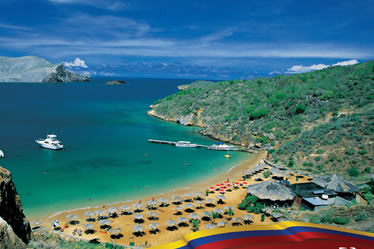 Venezuela is the Latin American country with the highest wellbeing, followed by Panama (11), Costa Rica (14), Brazil (15) and Mexico (19).
The classifications according to which respondents rated their wellbeing included “thriving,” “struggling,” or “suffering.” People who considered themselves to be thriving rated their lives a 7 or higher on a scale from 0 to 10.
According to the Post, the poll showed that the respondents with highest wellbeing also reported fewer health problems, less stress and sadness, and more happiness, respect and enjoyment.
Out of the 124 countries polled in 2010, the majority of residents in only 19 countries (mostly in Europe and the Americas) rated their lives “thriving.”
An article published on the Gallup website states that the list “is largely dominated by more developed and wealthier nations, as expected given the links between wellbeing and GDP.”
Nevertheless, it states: “Global wellbeing improved little between 2009 and 2010, remaining relatively steady when Gallup groups all these countries into four major global regions: Asia, Africa, the Americas, and Europe.”
Results have 95 percent confidence rate with a maximum margin of error of ±1.7 to ±5.7 percentage points.
Click here to see the poll results.
Related articles
- New Venezuelan Social Network Takes Off (alethonews.wordpress.com)
New Venezuelan Social Network Takes Off
The new Venezuela social network, called Plaxed, which allows streams of short posts (200 characters), as well as event invitations, polls, and questions, was created as an alternative site so that files or personal details found on the network “aren’t blocked, erased, or followed” by U.S laws, said its creator, Cesar Cotiz, a systems engineer student.
The idea for the website began one and a half years ago, but it was on trial for a long time. “Then the project became a success, we had 10,000 people register in just one day, which collapsed our servers,” Cotiz said.
“We want a social network specifically for Venezuela, for phones and for desktops, and that is completely free. Anyone can create a social network, be it for personal use or business,” Cotiz said.
Plaxed is still under development. Based on the freeware, StatusNet, it still contains a lot of English, which is gradually being replaced. It has no advertising, and its name, according to Cotiz, doesn’t mean anything.
“It’s important that Venezuelans gradually take on new technology and create new social networks… in order to start to eliminate this dependence that we have on websites made in other countries, which fall under the law of those countries, so they can take the information we put there at any time and do whatever they want with it,” Luigino Bracci, an information systems graduate told the Correo del Orinoco.
Cotiz explained that Venezuelans could take Plaxed to court, should it do something untoward with the information it has, because it falls under Venezuelan law, where as they could not do that in the case of other social networks like Facebook or Twitter.
Social networking in Venezuela has experienced a growth in recent years in Venezuela, as internet usage has risen to 40%, while President Hugo Chavez’s twitter account has the most followers in the country.
According to a report by Tendencias Digitales, Venezuela is third in Latin America for social networking media use, with 30% of internet users registered on Facebook and 21% on Twitter.
Last year the United Nations institute UNESCO awarded Venezuela’s Infocentres the King Hamad Bin Isa Al-Khalifa Prize for their work in providing free internet access, as well as training, especially to people who were previously excluded due to poverty or location. In 2010 there were 668 Infocentres, and since then many more have been built.
International agencies fund Venezuelan opposition with $40-50 million annually
By Eva Golinger | June 21, 2010
A revealing report published in May 2010 by the FRIDE Institute, a Spanish think tank, prepared with funding from the World Movement for Democracy (a project of the National Endowment for Democracy-NED), has disclosed that international agencies are funding the Venezuelan opposition with a whopping US$40-50 million annually.
This exorbitant amount of financing well exceeds the approximately $15 million previously believed to have been channelled to Venezuelan opposition groups via the United States Agency for International Development (USAID) and the NED.
According to the FRIDE report, which analyzes the impact of this funding in Venezuela, and concludes that more donations are necessary to support the “democratic opposition” to President Hugo Chavez in Venezuela, the multi-million dollar funds are exclusively directed towards political activities in the polarized South American nation. A large majority of the $40-50 million donated by US and European agencies and foundations is given to the right wing opposition political parties, Primero Justicia (First Justice), Un Nuevo Tiempo (A New Time) and COPEI (Christian Democrat ultra-conservative party), as well as to a dozen or so NGOs, student groups and media organizations.
In the FRIDE report, the Venezuelan government is classified as “semi-authoritarian,” which is a term used frequently by the NED and another US donor to Venezuelan opposition groups, Freedom House, to describe the Chavez administration. The report even goes so far as to indicate that in Venezuela, “Elections are the main link between democracy and dictatorship.” As a result, the international funds provided to political groups in Venezuela are destined to fight against the government of Hugo Chavez in order to “restore representative democracy” and return a more US-friendly government to power.
The authors of the revealing report recognize that “international assistance” for political groups in Venezuela did not begin until 2002, after the Chavez government began implementing a series of major reforms. “The presence of large international donors engaged in democracy promotion, particularly the donors based in the US (including the Carter Center, the International Republican Institute (IRI), the National Democratic Institute (NDI), the Open Society Institute (OSI), the Pan American Development Foundation (PADF), USAID and the National Endowment for Democracy (NED) and multilateral institutions (OAS and EC) is closely linked to the Chavez presidency … their political engagement began in the aftermath of the new Bolivarian Constitution, approved by popular consultation in 1999, which was the starting point of Chavez’ Revolution and Socialism of the 21st Century … many civil society organizations emerged in 2002 — the year of the attempted coup…”
According to the FRIDE document, “Foreign democracy assistance is mainly channelled through 10-12 small institutions, all of them with offices in Caracas. New political actors, such as the students’ movement or other groups, have rather sporadically been addressed by donors, mainly from the US.” In recent years, an opposition movement has emerged from the universities, backed by Washington primarily, but also by some European foundations, particularly from Spain. These student and youth groups have attempted to project a “fresh” image of the tarred traditional political parties that ruled the country throughout the latter half of the twentieth century and were largely viewed as corrupt and elitist.
But by receiving mass amounts of foreign funding and aid for their anti-Chavez political activities, the student and youth groups have demonstrated that their priorities and actions are directed by external forces, which in turn has caused for a loss of their credibility and has confirmed accusations that they are “agents” of the US government.
US: MAIN DONOR
US agencies are the principal donors to political groups in Venezuela, with annual funds of about $6 million. The FRIDE report confirms that this multi-million dollar aid is a result of US efforts to undermine the Chavez presidency. “Until very recently, the United States did not have a prominent role in democracy assistance to Venezuela. When US engagement began under the Chavez government, its political profile consisted of supporting democratic NGOs and opposition parties.”
US funds are channelled to opposition groups in Venezuela through the following organizations, Development Alternatives, Inc DAI (since 2002), the Pan-American Development Foundation PADF (since 2005), the International Republican Institute IRI (since 2002), the National Democratic Institute NDI (since 2002), Freedom House (since 2004), USAID (since 2002), NED and the Open Society Institute (since 2006).
Declassified documents obtained under Freedom of Information Act (FOIA) requests regarding the activities of these agencies in Venezuela have revealed that their multi-million dollar funding has largely gone towards promoting anti-democratic activities, such as the April 2002 coup d’etat against the Chavez government, and subsequent strikes, destabilization attempts and economic sabotage. The foreign funding has also gone to support the opposition electoral campaigns over the past eight years, including in-kind aid to train and strengthen political parties, help design elections and communications strategies and even to develop political platforms and agendas for opposition groups. This level of support goes well beyond mere donations and evidences a direct meddling in Venezuela’s domestic affairs.
EUROPE
But, not only are US agencies providing the millions to keep the Venezuelan opposition alive and feed the political conflict in Venezuela. The FRIDE report reveals that the European Commission is channelling between 6-7 million Euros annually to opposition political parties and NGOs in the South American nation. Although some of the EC’s work is done with Venezuelan government entities on a local level (infrastructure development), the majority is going to “civil society organizations” and “human rights” NGOs.
Additionally, the FRIDE report exposes the EC for serving as a “channel” for the “triangularization” of US funding to groups in Venezuela, in order to avoid the stain of Washington on the Venezuelan organizations receiving foreign aid for political activities.
Several German foundations, including the Konrad Adenauer Foundation (KAS) and Friedrich Ebert Foundation (ILDIS-FES) are providing direct funding to political parties in Venezuela. Konrad Adenauer invests about 500,000 Euros annually in projects with the right-wing parties COPEI and Primero Justicia, and has a 70,000 Euros annual commitment to fund programs at the conservative Catholic University Andres Bello (UCAB), a hotbed of opposition student groups.
The governments of Canada and Spain are also funding political opposition groups and programs in Venezuela, though with a much lower profile, so as not to affect diplomatic relations.
The FRIDE report, which admits that a majority of the NGO’s receiving the multi-million dollar funding are actually “virtual organizations with no offices or staff,” also reveals that the international funders are evading and violating Venezuelan laws.
Because Venezuela has currency controls, so as to prevent large amounts of capital flight, there are restrictions on the flow of foreign currency in and out of the country. Additionally, the Venezuelan currency, the Bolívar has a fixed rate set by the State, although a large parallel, or “black market” exists for illegal trading.
The FRIDE report confirms that several international agencies, particularly those from the US, are exchanging currency on the illegal market, in clear violation of Venezuelan law.
“…An additional problem for civil society organizations has been the ‘double currency’: even after the devaluation of the Bolívar, the unofficial exchange rate is higher than the official one…Some donors have solved this problem by paying in hard currency, by using foreign bank accounts, or by applying a semi-official exchange rate…”
The FRIDE report, titled, “Assessing Democracy Assistance: Venezuela,” is part of a series of studies conducted in 14 nations where international agencies are actively involved in funding political groups favorable to US policies.
In addition to Venezuela, other case studies were conducted in Belarus, China, Georgia, Egypt, Ukraine, Nigeria, Bosnia, Ghana, Indonesia, Kenya, Morocco, Yemen and the Democratic Republic of the Congo.
Mysteriously, the report on Venezuela, and any evidence of its existence, disappeared from the FRIDE website after this author referred to it in a prior Spanish-language article.

Featured Video

Macgregor: We Haven’t Seen the Worst of the Iran War Yet
or go to
Aletho News Archives – Video-Images
New Book
Breast Cancer: Before You Consent
A new Unbekoming paperback
Lies are Unbekoming | September 18, 2026
Peter Gøtzsche reviewed every randomised mammography screening trial ever conducted for the Cochrane Collaboration. Cochrane’s headline is that, assuming a 15% mortality reduction, one woman in 2000 avoids dying of breast cancer over ten years. Ten are overdiagnosed and treated. Two hundred experience false alarms.
But that headline assumes the reduction. When Gøtzsche looked only at the trials with adequate randomisation — the higher-quality ones — the reduction disappeared. No effect on breast cancer mortality. No effect on all-cause mortality.
This is the Cochrane finding, published in the establishment’s own database of systematic reviews.
No woman being asked to consent to a mammogram this week knows it.
That is why the new Unbekoming paperback exists. … continue
Blog Roll
 Aletho News
- Iran Judiciary issues indictments against 159 US, Israeli officials for assassination of Leader, commanders
- Turkiye revokes Iranian bank license under US sanctions campaign
- US-Denmark Agreement on Greenland Is ‘PR Stunt’ Ahead of Midterms
- Araghchi: Military intervention cannot create security; coercion cannot bring peace
- Fraud Squared
- Breast Cancer: Before You Consent
- Iran’s Plan to Shut Down AI in the Persian Gulf
- Israel seeks ‘compensation’ from Washington over Saudi F-35 sale
- Saudi crown prince seeks dialogue with Ansarullah after Yemeni blows: Report
- Damascus rejects Saudi request for Syrian fighters to counter Yemen: Report
- If Americans Knew
- Inside Gaza’s death trap of collapsing, bombed-out buildings
- The everyday items Israel bans from Gaza every day
- Inside the siege, the ruined buildings of Gaza – Daily Update
- Debunking The Claim That Macklemore Has A “History Of Antisemitism”
- CPJ demands release of arrested Palestinian-US journalist near Bethlehem
- Robert Kraft: The Billionaire Friend of Netanyahu Pulling The Strings Behind the Macklemore/Ed Sheeran Blow Up
- Columbia Administered Fund Gives Big Money to Pro-Israel Groups
- Deportation Case of Palestinian Activist Salah Sarsour Tests First Amendment
- ‘We Will Not Forget’: Palestinians Mark 44 Years since Sabra and Shatila
- Why do we let Zionists decide what we can and can’t say?
- No Tricks Zone
- New Study: ‘Global Drought Shows No Detectable Recent Acceleration Under Climate Warming’
- Economic Masterminds: German Socialists Suggest Taxing Productivity Gains Stemming From Using AI
- The South China Sea Has Not Been Cooperating With The Climate Change Narrative
- Energy Crisis: Germany Enters Heating Season With Historically Low Gas Reserve Fill Levels
- New Study: The Antarctic Ice Sheet Gained Mass From 2020-2024 Due To Staggering Snow And Ice Accumulation
- Study: Ocean Heating Rates From Thousands Of Years Ago ‘Dwarf’ Modern Ocean Heating Rates
- Climate Extremists Target, Attack Large-Scale Power Grid Infrastructure In Germany!
- New Study: Antarctic Ice Melt Has Contributed Less Than 1 Centimeter To Sea Level Rise In The Last 30 Years
- Fear Of Debate: Alarmist German Climate Scientist Calls On Mainstream Media To Discredit Skeptic Voices
- End-Of-August Arctic Sea Ice Extent Hasn’t Fallen In 20 Years, Official Data Show!
 Aletho News