Digital Surveillance — the Real Motive Behind Push to Vaccinate Kids
By Michael Nevradakis, Ph.D. | The Defender | December 15, 2021
COVID-19 may have caught much of the planet by surprise in late 2019 and early 2020, but much of the groundwork for the technology now widely used as a “response” to the pandemic was conceptualized and developed years prior.
In the U.S. and throughout the world, there has been a recent push to implement a variety of “vaccine passport” regimes, many of which rely on digital technologies such as mobile applications to carry a record of — so far, at least — one’s COVID-19 vaccination records.
These “tools” are presented by public officials and significant sections of the media in recent weeks and months as an inevitability of sorts, a technological progression as natural as breathing.
They are also presented as a “new” response to an unprecedented crisis.
These technological applications are touted as a means of keeping businesses open and ensuring “peace of mind” for members of the public who remain wary about entering public spaces.
But just how new is this “new” technology? And will the use of technology be limited to COVID vaccinations, or for purposes of “health?”
International ‘alliances’ backing the melding of ‘Big Tech’ and ‘Big Health’
It was the beginning of the preceding decade, January 2010, when Bill Gates, via the Bill & Melinda Gates Foundation, proclaimed “[w]e must make this the decade of vaccines,” adding that “innovation will make it possible to save more children than ever before.”
In launching this so-called “Decade of Vaccines,” the Gates Foundation pledged $10 billion in funding. But Gates wasn’t the only actor behind this initiative.
For instance, the “Decade of Vaccines” program used a model originating from the Johns Hopkins Bloomberg School of Public Health to project the potential impact of vaccines on childhood deaths throughout the decade to come.
And the announcement for the “Decade of Vaccines” initiative was made at that year’s annual meeting of the World Economic Forum (WEF).
These same actors — the Bill & Melinda Gates Foundation, the Johns Hopkins Bloomberg School of Public Health and the WEF — organized the now-notorious Event 201 pandemic simulation exercise, in October 2019, just before COVID entered our lives.
Moreover, in 2010, a “Global Vaccine Action Plan” was announced as part of this initiative. It was a collaboration with the World Health Organization (WHO), UNICEF and the National Institute of Allergy and Infectious Diseases (NIAID), with Dr. Anthony Fauci serving on the leadership council.
As the Gates Foundation stated at the time:
“The Global Vaccine Action Plan will enable greater coordination across all stakeholder groups — national governments, multilateral organizations, civil society, the private sector and philanthropic organizations — and will identify critical policy, resource and other gaps that must be addressed to realize the life-saving potential of vaccines.”
The steering committee for the “Global Vaccine Action Plan” included a member from the GAVI Alliance. Notably, the initial announcement for the “Decade of Vaccines” was made in the presence of Julian Lob-Levyt, then-CEO of the GAVI Alliance.
What, or who, is the GAVI Alliance? Also known as the “Vaccine Alliance,” it proclaims a mission to “save lives and protect people’s health,” and states it “helps vaccinate almost half the world’s children against deadly and debilitating infectious diseases.”
GAVI goes on to describe its core partnership with various international organizations, including names that are by now familiar: the WHO, UNICEF, the Bill & Melinda Gates Foundation and the World Bank. (Far from helping the world’s poor, the World Bank has been described by a former insider, John Perkins, as an organization that uses “economic hit men” to subjugate financially crippled countries).
In 2018, GAVI, through its INFUSE (innovation for update, scale and equity in immunization) Initiative, put forth the following “food for thought”:
“Imagine a future in which all children have access to life-saving vaccines no matter where they live — a future in which parents and health workers ensure their timely vaccination, a future in which they have their own digitally stored health record that cannot be lost or stolen, a future in which, regardless of gender, economic or social standing, this record allows each child (and parents) to have access to a bank account, go to school, access services and ultimately build a prosperous life.
“This future is possible today. With the latest advances in digital technologies that enable more effective ways to register, identify births and issue proof of identity and authentication for access to services — we are on the brink of building a healthier and more prosperous future for the world’s most vulnerable children.”
This would be accomplished, according to GAVI, through the INFUSE initiative, specifically by “calling for innovations that leverage new technologies to modernize the process of identifying and registering the children who are most in need of life-saving vaccines.”
As described by investigative reporter Leo Hohmann:
“Don’t be confused by the bit about ‘building a healthier and more prosperous future.’ That’s just window dressing. This is all about data collection and has nothing to do with health.
“The real purpose behind the historic, unprecedented push to vaccinate the very young, even against diseases like COVID that do not pose a threat to them, is to fold the current generation of children into the blossoming global digital identity system.”
GAVI itself confirmed the above statement, as it has described potential uses of these “new technologies” as going beyond the issuance of a “digital child health card” toward encompassing “access to other services,” including the broadly defined “financial services.”
Limitations on “access” to such “other services” are already apparent in jurisdictions where COVID passports restrict access to businesses, banks and other private spaces for the non-vaccinated
The GAVI Alliance also closely collaborates with the ID2020 Alliance, founded in 2016, which claims to advocate in favor of “ethical, privacy-protecting approaches to digital ID,” adding that “doing digital ID right means protecting civil liberties.
Unsurprisingly, there is no clarification provided regarding the potential loss of civil liberties for individuals who choose, for any reason, not to be vaccinated and who are therefore excluded from large swaths of society in areas where COVID passports have been implemented and enforced.
Such rhetoric on the part of ID2020 is reminiscent of the public statements put forth by the European Union (EU) as it was preparing to launch its so-called “Green Pass” earlier this year.
EU officials, such as European Commission President Ursula von der Leyen — who recently called for a “discussion” on mandatory vaccinations in the EU — went to great lengths to stress how individuals’ privacy would be protected.
In a manner which some may consider tone-deaf, they further emphasized that such a digital pass would enable people to “move safely” for “work or tourism,” as if such free movement is a new concept that only a digital pass could make possible.
Again, restrictions on the unvaccinated, including those involving “work or tourism,” were entirely absent from the public rhetoric surrounding this new measure.
Highlighting the possibilities that the GAVI-ID2020 collaboration could bring, the INFUSE call for innovation states:
“According to the ID2020 Alliance — a public-private partnership that includes Gavi — the use of digital health cards for children could directly improve coverage rates by ensuring a verifiable, accurate record and by prompting parents to bring their children in for a subsequent dose.
“From the parents’ perspective, digital records can make it convenient to track a child’s vaccines and eliminate unnecessary paperwork.
“And as children grow, their digital health card can be used to access secondary services, such as primary school, or ease the process of obtaining alternative credentials. Effectively, the digital health card could, depending on country needs and readiness, potentially become the first step in establishing a legal, broadly recognized identity.”
All of these proposals and initiatives appear, in turn, to be closely aligned with the United Nations’ Sustainable Development Goals, and in particular, Goal 16.9, which calls for the provision of a digital legal identity for all, including newborns, by 2030.
To this end, the UN established the UN Legal Identity Agenda Task Force in 2018. In May 2021, this task force, alongside the United Nations Development Programme and a variety of private sector actors, organized the “Future of Technology and Institutional Governance in Identity Management” roundtable sessions.
The final report from these sessions indicates, among other things, a desire from the stakeholders for the expansion of public-private partnerships for the further development and implementation of digital ID regimes worldwide, including in the Global South.
One of the stakeholders present, the not-for-profit Secure Identity Alliance, touts its support for “the provision of legal, trusted identity for all and driving the development of inclusive digital services necessary for sustainable, worldwide economic growth and prosperity.”
A paper published in July by the Security Identity Alliance discusses “making health certificates a workable reality.”
One of the five principles the paper puts forth for such health passports is that they are “futureproofed,” by offering “multi-purpose functionality” in order to “ensure ongoing value beyond today’s current crisis.”
The Secure Identity Alliance counts among its observers governmental authorities from countries such as Germany, The Netherlands, Estonia, Slovenia, the United Arab Emirates, Nigeria and Guinea.
Moreover, one of its founding members and current board members is the Thales Group, a private company involved in aerospace, defense and security — in short, a defense contractor.
On its website, the Thales Group proudly promotes its “smart health card” and Digital ID Wallet technology. Amidst utopian language claiming “we’re ready for change” and “putting citizens in control,” the Digital ID Wallet promises the public the ability to “access the rights and services to which we are entitled.”
Indeed, the documents that would be available via this Digital ID Wallet go beyond “health credentials” and include national identification cards, driver’s licenses and any number of other items of official documentation.
Numerous countries worldwide, including the U.S., currently find themselves in varying stages of implementing exactly this sort of “digital wallet.”
Taking ‘health passports’ a step (or more) further: digital wallet regimes take shape
The U.S. House of Representatives on Nov. 30 passed H.R. 550, the Immunization Infrastructure Modernization Act of 2021.
If passed by Congress, this law would provide $400 million in funding to expand vaccine-tracking systems at the state and local level, enabling state health officials to monitor the vaccination status of American citizens and to provide this information to the federal government.
Vaccine passports and no-fly lists for the unvaccinated — a concept for which Fauci expressed his support — could be created under the law.
The bill, sponsored by Rep. Annie Kuster (NH-02), passed the U.S. House of Representatives with 294 votes, including all Democrats and 80 Republicans. It is now before the Senate, where it is being reviewed by the Committee on Health, Education, Labor, and Pensions.
Since being passed by the House, the bill has garnered a fair amount of attention — other recent digital identification developments in the U.S., however, seem to have remained relatively under the radar.
In September, for instance, Apple announced a partnership with eight states — Arizona, Connecticut, Georgia, Iowa, Kentucky, Maryland, Oklahoma and Utah — to make those respective states’ driver’s licenses available in digital form via the Apple Wallet platform.
Meanwhile, several states, including New York (via its “Excelsior Pass”) and Connecticut introduced their own digital COVID vaccination certificate.
Similar to how the EU has promoted vaccine passports, these state-level initiatives in the U.S. are touted as a means of “safely” reopening the economy and encouraging travel and movement.
Indeed, New York went so far as to make a “blueprint” of its vaccine pass platform available, “as a guide to assist other states, territories, and entities in the expansion of compatible COVID-19 vaccine credential systems to advance economic development efforts nationwide.”
Looking at the EU, one of the bloc’s priorities as part of its 2019-2024 five-year plan is to create a “digital identity for all Europeans.” Namely, each EU citizen and resident would have access to a “personal digital wallet” under this initiative.
This “personal digital wallet” could include documentation such as national ID cards, birth certificates, medical certificates and driver’s licenses.
The EU subsequently presented its plans for the “European Digital Decade,” where under the EU’s “Digital Compass,” 100% of key public services will be available digitally, with a target of 80% uptake of digital identification documents.
Already, several EU member states are getting into the act.
Germany, which had electronic national ID cards (via biometric chips) since 2010, introduced digital versions of these ID cards this past fall, via the AusweisApp2. The same app makes German driver’s licenses available digitally.
Germany and Spain also recently signed an agreement to launch a cross-border program for digital identification, which would entail mutual recognition of each other’s official digital documents
France also recently announced its intention to integrate its national identification card with smartphones.
Greece received praise from the global press when it introduced particularly draconian digital tools during its two COVID lockdowns, such as a government SMS platform to which residents would have to send a text message in order to circulate in public for a limited set of “reasons.”
More recently, Greece announced the forthcoming creation of a digital wallet that will contain documents such as one’s national ID card, driver’s license and health documentation.
Estonia, viewed as a world leader in introducing digital e-governance and which has had digital identification cards in place since 2002, is preparing its own digital wallet system while expressing support for the EU’s “Digital Compass.”
Outside of Europe, several other countries also have expanded their digital identification regimes in various ways.
In Australia, for instance, states such as New South Wales, South Australia and Queensland introduced or trialed digital driver’s licenses.
It is in India, though, where such digital documents appear to have generated the greatest degree of controversy thus far.
The Ayushman Bharat Digital Mission was announced in 2020 and launched as a pilot program in six regions of India in 2021. It is an app that provides a unique digital health ID to each citizen and is linked to their personal health records.
Its establishment comes on the footsteps of the development of Aadhaar, India’s national digital identification card system.
Aadhaar generated controversy over the government’s plans to link it to the national voter database, while it has also been the target of hackers.
Questions arise as more digital platforms rolled out for ‘official purposes’
The rollout of digital platforms gives rise to questions about the safety of individuals’ data on these digital platforms, despite government reassurances to the contrary regarding privacy.
Moreover, it remains unclear how long “COVID passports,” whether in digital or paper form, will remain enforced, or if governments plan to make such a regime permanent.
A recent article in The Atlantic, “Why Aren’t We Even Talking About Easing COVID Restrictions?” questioned why vaccine passport mandates in the U.S. have no sunset date.
Indeed, if the proclamation of the Secure Identity Alliance regarding the need to “futureproof” such digital documents is any indication, it may be the case that governments have no intention to scrap vaccine passports.
Even if such specific uses of digital “passports” eventually go away, the range of ways in which digital wallets can potentially be utilized is staggering, including, for instance, via the tracking of “personal carbon allowances,” as previously reported by The Defender.
Michael Nevradakis, Ph.D., is an independent journalist and researcher based in Athens, Greece.
© 2021 Children’s Health Defense, Inc. This work is reproduced and distributed with the permission of Children’s Health Defense, Inc. Want to learn more from Children’s Health Defense? Sign up for free news and updates from Robert F. Kennedy, Jr. and the Children’s Health Defense. Your donation will help to support us in our efforts.
Forget China, was it CEPI’s bio-spooks who locked down the West?
By Paula Jardine | TCW Defending Freedom | December 15, 2021
IT is nearly two years since the world turned upside down and a sequence of unprecedented lockdowns and quarantines in the name of public health and safety were imposed across the West.
The narrative of the still unfolding story of Covid-19 is familiar to all of us, with China the chief bogeyman of the tale. But is that right?
In this drama has something really important been overlooked? Namely, the role of a powerful, self-appointed supranational organisation, set up 2017, called the Coalition for Epidemic Preparedness Innovations (CEPI).
Members of CEPI’s board and scientific advisory committee have been, and still are, key actors in global and national responses to the Covid-19 virus. Its mission? To ‘create a world in which epidemics are no longer a threat to humanity’.
At the start of 2020, all eyes were glued on China. The communist government had dutifully notified the World Health Organisation (WHO) on New Year’s Eve 2019 of its concerns over a small cluster of cases of ‘pneumonia of unknown origin’.
Three weeks later, when the death toll stood at 17, the CCP was sufficiently alarmed to order the home confinement of nearly 12 million mostly healthy people who were unfortunate enough to reside in the outbreak city, Wuhan.
Having fingered as the culprit a relative of the SARS virus that claimed 774 victims in 2003, the Chinese determination to contain the self-evidently nastier 2019 co-variant at all costs was made plain to the world.
The scenes broadcast out of China nightly on the TV news were surreal, but strangely familiar to anyone with a passing familiarity with vintage sci-fi. A nightmare amalgamation of The Andromeda Strain and The Hamburg Syndrome was unfolding in real life, right before our eyes.
Here, a man falling down dead in the street. There, men in white hazmat suits walking through empty Chinese thoroughfares equipped with Ghostbuster-esque backpacks blowing smoke in a desperate attempt to fumigate the invisible peril out of existence.
Knowing that the Queen’s own men at the Porton Down chemical and biological defence establishment long ago discovered that fresh air and sunlight, two commodities already in short supply in Chinese cities, are the most potent of disinfectants, it seemed a strangely futile spectacle. What on Earth were they trying to do? Death apparently lurked around every corner.
As the Wuhan lockdown was being imposed on January 23, 2020, the global elite were busy congregating at their annual networking fest, the World Economic Forum, in Davos, Switzerland (where CEPI had been founded three years earlier by the governments of Norway and India, the Bill & Melinda Gates Foundation, the Wellcome Trust global charity organisation, and the World Economic Forum).
Next day, a little-noticed press conference was convened in Davos to discuss the SARS-like, closely-related, but definitely novel, SARS Wuhan coronavirus.
Appearing in front of about 30 reporters were Sir Jeremy Farrar, Director of the Wellcome Trust and board member of CEPI; Richard Hatchett, chief executive of CEPI, and Stephane Bancel, chief executive of Moderna, one of three companies being funded to develop a coronavirus vaccine. A Chinese reporter asked the panel if there was any historical precedent for the lockdown.
Hatchett said: ‘One thing that is important to understand, is that when you don’t have treatments and you don’t have vaccines, non-pharmaceutical interventions are literally the only thing that you have, and it’s a combination of isolation, containment, infection prevention and control and then these social distancing interventions.
‘There is historical precedent for their use. We looked intensively and did an historical analysis of the use of non-pharmaceutical interventions in US cities in 1918 and what we found was that cities that introduced multiple interventions, early in an epidemic, had much better outcomes.
‘The challenge of course is that it is very difficult to sustain these interventions, as they impose enormous cost and they also can produce enormous anxiety among the affected population.’
The ‘we’ Hatchett was referring to was the US Department of Homeland Security where, as an official, he had helped develop the US pandemic preparedness plan in 2005 and 2006 during the H5N1 avian influenza outbreak, which Farrar had discovered in Vietnam.
Hatchett continued: ‘At that time, we looked at how could you have those interventions implemented in a way that maximised their benefit and minimised the cost and we developed an approach that we called “community mitigation” interventions and CDC (the US Centres for Disease Control and Prevention) published guidance on this several years ago.
‘There is a literature which I would certainly encourage Chinese authorities to review and certainly I would be happy to talk to them about that, although that’s not my current job.’
There was no need to encourage the Chinese authorities to review the literature. CEPI already had a man in Beijing, Dr George Gao, the director of China’s Centre for Disease Control, but also member of the CEPI scientific advisory panel. The community mitigation approach the Chinese adopted in Wuhan was straight out of the 2006 US Homeland Security pandemic playbook.
Gao, like Farrar, completed his PhD at Oxford University before conducting post-doctoral work under Sir John Bell, the controversial Regius Professor of Medicine at Oxford, holder of several extranumerary positions and multiple interests, not least as chair of the global health scientific advisory board of the Bill & Melinda Gates Foundation.
An expert on coronaviruses, Gao served on CEPI’s first scientific advisory committee in 2016 and was a player in Event 201, the pandemic simulation hosted in October 2019 by the World Economic Forum, Bill & Melinda Gates Foundation and the Johns Hopkins Bloomberg School of Health – discussed here by Robert F Kennedy Jr.
In all probability, Gao is the old friend Farrar was referring to when he said on Desert Island Discs that he had had a phone call on December 31, 2019 – the day the Chinese authorities reported the Wuhan pneumonia outbreak to the WHO – to alert him that China would release the genome of the new virus on January 10. As things stood on New Year’s Eve, the virus had yet to cause any deaths, although it was making a few people very ill.
By January 17, another CEPI scientific adviser, Dr Christian Drosten, had conveniently developed a PCR test from the genetic sequence posted online by the Chinese, which the WHO advised laboratories could be used as a diagnostic test for Covid-19.
This was almost two months before the WHO declared the novel coronavirus a pandemic on March 11, 2020. Following a visit to Wuhan by the WHO in February 2020, led by its assistant director-general Dr Bruce Aylward, the world was being encouraged to adopt what were now being called Chinese measures.
‘China didn’t approach this new virus with an old strategy for one disease or another disease,’ said Aylward. ‘It developed its own approach to a new disease and extraordinarily has turned around this disease with strategies most of the world didn’t think would work.’
The Chinese government, with its own Big Brother infrastructure, had its own reasons for going along with that. But the response plan is in reality far more complex, and has a much darker background in the West.
The Yellow Brick Road that passes through CEPI and Beijing leads right back to the US Department of Homeland Security, and its 1998 Pentagon strategy paper.
The response plan is in reality an American scheme, with its origins more than decade and a half earlier and against a backdrop of bioterrorism concerns. Uncle Sam is the wizard behind the curtain, not acting in the West’s interests at all.
Scenarios in Response to the New War Against Humanity
By Doug E. Steil | December 2, 2021
In light of recent developments in the western world it has become abundantly evident to most informed observers that a war against the general population has been launched under the guise of counteracting a viral pandemic. Through a process of coordinated incrementalism governmental efforts have focused on implementing a totalitarian population control system rather than appropriately targeting public health problems associated with a limited viral outbreak.
A key mechanism in this control process has involved coercive means to inject as many people as possible with an experimental gene therapy concoction with proven toxicity, in some cases deadly, which however has been ineffective in its claimed suppression of viral infection and transmission to others. The established term “vaccination” was misappropriated to mislead the public into believing that getting these shots would lead to salvation by protecting themselves and others around them. These toxic doses were authorized for emergency use a year ago based on various fraudulent misrepresentations, which included relying on false test results, suppressing viable treatment protocols, such as those published by physician Dr. Peter McCullough, rigging trial designs and aborting prematurely, and manipulating statistical interpretations in a manner that created the impression they were effective when they were not. Though their producers acknowledged unforeseen effects they demanded contractual indemnification against bad outcomes. The failure to properly inform the public about the facts surrounding these substances, including known and potential adverse effects, in conjunction with the aggressively coercive measures to compel millions of people to submit to receiving them into their bodies, constitutes crimes against humanity in accordance with the Nuremberg Code, established in 1947.
At least technically, thus far getting these toxic injections was voluntary, but a substantial portion of the public saw through the scam or were reservedly skeptical, for which they have been publicly vilified in a vicious defamation campaign propagated by the mass media, operating in concert with the pharmaceutical industry and governments. Only a few days ago – November 19 in Austria and November 30 in Germany – a critical red line was crossed through announcements by public officials, of impending requirements for everybody, including kids, to get these toxic injections, purportedly against a virus from Wuhan that has long since mutated. Today Angela Merkel expressed her endorsement of such measures, though she will no longer be in power to vote for them. The mantra has been simply that this was necessary – indeed “the only solution” – in order to increase the overall so-called “vaccination rate” in the population, as if though that could somehow solve ongoing health problems. Since there is no substantive evidence for these sensationalistic claims, it equates to pure political demagoguery. Yet, contrary to this transparently false claim, mandatory injections, possibly on a repetitive basis, would only exacerbate the current situation purportedly occurring in emergency rooms or intensive care units at hospitals because the shots do not provide any remedy but cause harm instead, in some cases almost immediately, in many cases cumulatively. Essentially, this highly controversial mandate amounts to a subversive extermination campaign in the long run, deriving from likely cases of infertility and decreased life expectancy. In order to deflect from their previous lies, officials have chosen to raise the stakes an thus declared war against humanity.
Such an egregious attack as this is unprecedented in recent memory, so it may be difficult for many to understand what is occurring, right in front of their eyes. There may be a prevailing inclination toward cognitive dissonance, but it is preferable to assess various means to counteract such ominous developments within the full scope of possible scenarios that may arise. Below are five situations, beginning with the most obvious. Subsequent response scenarios represent an escalatory progression. Though they are not equally likely to occur and may be less specific to some regions, such results cannot be ruled out entirely when considering the volatile social conditions that are caused by governments that have intentionally gone rogue. In the pursuit of conquest, they have split and destabilized society, a recurring modus operandi when regarded in a historical context, back to Philip II of Macedon and Julius Caesar – divide et impera.
• Legal Challenges
The stated rationales for implementing compulsory injections of toxic substances, euphemistically referred to as “mass vaccination”, cannot be legally justified under any circumstances under existing protections, therefore the arguments presented to the public are all based on provably false premises or wishful thinking. They have been repeated so often, that many have already internalized them to be functionally true. At their core have been false promises of immunity, appeals to social solidarity, moral self-righteousness, and an unproven notion of easing the potential demand for medical services. If only everybody had volunteered to get the shots, the claim goes, the outbreak would have been eradicated; therefore mandatory injections are the only solution. None of this is true; on the contrary the data show that case hospitalization rates increase in correlation with the proportion of administered injections. Yet even if it were true, there are basic legal protections in place worldwide that forbid such mandates.
Many people understand this as self-evident and therefore expect the legal process to work, as it should, in theory. They may regard the announcements as typical hot air from politicians as a tactical means of leveraging their authority to exert additional pressure on those people who had not made up their minds yet about this vital question and presume the judicial reviews will enforce a reversal. Though this would be a reasonable expectation if the facts and the law were followed, the problem is that the legal process has become hopelessly corrupted. Reiner Füllmich, one of the founders of the Corona Investigative Committee, which has broadcast the 80 weekly sessions it has held thus far, has repeatedly confirmed that the German legal system has been so thoroughly corrupted, that bringing forth such matters before a system with an Anglo-American legal tradition makes more sense. Contemporary judicial rulings in Germany can be so out of touch with reality that it is difficult to imagine that decisions in prior totalitarian regimes could have possibly been any worse. Even so, it is still necessary to formally proceed through this avenue in order to be able to justify taking additional steps if it should turn out that cynical expectations of an inherently corrupted system are confirmed. There is also the possibility that the time it takes to submit to the judicial review process will result in the matter becoming moot, so that the stated premises for the mandates no longer obtain and are formally withdrawn.
The sheer suddenness and public lying that accompanied these announcements, which were completely contrary to repeated promises made by these same politicians who then proclaimed there was no alternative, shows they deserve no trust. They will say and do whatever they feel will defer the truth from emerging and in the meantime protect themselves from embarrassment. Once they have gone so far as to thrown aside basic principles – having in effect become criminals of the worst kind – one can no longer expect to reverse themselves in response to appeals to decency.
• Passive Resistance
This is an effective path that many skeptics and opponents of totalitarian edicts have already chosen. Examples of this have been the numerous work stopages among US airline pilots, or hospital staff quitting their jobs. In the Italian port cities of Trieste and Genoa dock workers have gone on extended strikes in response to onerous governmental impositions still falling short of universal mandates to submit to toxic injections.
During the most recent session of the Corona Investigative Committee four specialists working in Austria, of which three are physicians, presented responses to the Austrian announcement of future mandates a week earlier, which was followed by large demonstrations in Vienna on the next day, which were said to have involved the participation of more than a hundred thousand protesters. The fourth guest , an attorney, started a political party that immediately received sufficient acclaim to be represented in the provincial government of Upper Austria. He stressed the importance of mass resistance and announced liaison efforts with various unions in addition to forming new union representation.
Mass strikes and roadblocks associated with the yellow vest movement in France have shown how determined efforts by a coordinated group of dedicated individuals can force the government to back down under persistent pressure. For people who understand why they have adamantly refused to be injected with a toxic substance for the sake of a failing mass experiment the imposition of a mandate would be regarded as an existential issue. Sane people do not risk the threat of premature death, severe sickness or disability for the sake of satisfying the power egos of corrupted political puppets and greedy profiteers.
Big demonstrations have recently taken place in numerous cities in the Netherlands, France, Britain, Australia, Croatia, Warsaw, and many other locations. Even during the cold winter months hundreds of thousands of protesters will go out onto the streets to show their strength.
• Active Rebellion
On July 20, 1944, as part of Operation Valkyrie, Claus Von Stauffenberg participated in a plot to kill Adolf Hitler and other leading cohorts by means of a suitcase bomb placed in a conference room. The bombing killed a stenographer instantly but the coup failed because the intended targets survived. After the follow-up arrests nearly five thousand individuals, including Von Stauffenberg were executed. That particular assassination attempt continues to be commemorated in contemporary times on the date of the anniversary. Von Stauffenberg is glorified in the German media as a hero even though he was a German nationalist and purportedly expected to replace Hitler with another authoritarian government, though ruled instead by aristocrats like himself. Moreover, his co-plotters had earlier helped Hitler come to power and shared many of the same policy goals. In other words, the disagreement they had with the government was about methodology and style, along with certain details, rather than wanting to transform society along a new democratic course of redemption. In other words, had their coup attempt been successful, there was likely to be far less ideological change than occurred as a consequence of the coup against John F Kennedy nearly six decades ago in Dallas, in which Lyndon B Johnson was a plotter and beneficiary. From a judicial perspective, it is said, the German government had not blatantly broken any existing laws. In any case, an implicit question that the German media do not appear to have answered in this context is: from what specific time onward in the history of that regime would it have been legitimate, without possessing any benefit of foresight, for Von Stauffenberg to have participated in multiple assassinations, and how many additional functionaries would they likely have executed subsequently?
It is relevant to bear in mind such conjecture because the fourth part in Article 20 of Germany’s Basic Law contains an essential element that explicitly states that all Germans have a right to resistance against anyone who proceeds to eliminate the specific democratic and social order enumerated in the prior three sentences, if other remedies are not possible. The first twenty articles have a special status; they cannot be revoked. What was openly suggested by the next chancellor and successor to Merkel, Olaf Scholz from the Social Democratic Party, was a significant milestone in German post-war history because this unprecedented proposal, which was universally acknowledged by everyone to be unconstitutional and unworkable, would constitute a blatant violation of Article 2, guaranteeing bodily integrity, in case it were ever to be imposed upon the population. This explains why nobody has ever gone this far, to step over the red line. They were previously reluctant to do so, but now they are playing with fire. If legal challenges to this usurpation of the most basic human principles are thwarted under some imaginary and invalid pretext, the circumstances premised in Article 20 will legally enable and authorize Germans to resist against all those who brought about the transgression. It should be noted that exercising such resistance does not – and logically cannot – rule out the use of force.
Understandably there is little legal precedence for how the right to resistance may play out, except for abiding by the general principle of proportionality, which itself is somewhat vague in the context of potentially existential measures being threatened against a substantial portion of the population. It is known that there are clandestine groups who are armed because they have been anticipating a potential situation like this, just as in the United States millions of Americans bear firearms to protect against potential tyranny pursuant to the Second Amendment of the US Constitution. One can imagine that the imposition of an illegal law that would essentially force virtually the entire population to get toxic injections, against their will, so that their life span will be shortened, will simply not be accepted by many. Official jurists may claim now that they are not threatening to forcibly inject dissenters, this is just a “cute” technicality, and there is no way to know if that claim will be revoked a few weeks or months later, as the totalitarian escalation continues. Though utilizing violence as a means of exercising the right to resist, as distinct from self defense, is not rooted in jurisprudence, its use is fueled instead by image ideation in the media as well as historical narratives. This can lower the threshold level for some individuals to criminally act out their rage. Only a few weeks ago, in late September, a person not wearing a face mask got triggered at a gas station by being told to wear one, based on a valid ordinance. This made him so angry that he came back with a gun and killed the employee, a student who was working there part-time. While some may act out their resentment impulsively, others might choose to express their resistance selectively. If a top-level politician were to be targeted in a violent way, this would surely provoke a disproportionate and unwelcome response.
An episode in German history highlights how easily and quickly things can get out of control. On November 7, 1938 Herschel Grynszpan, then a 17-year old Jew, assassinated the German diplomat Ernst Vom Rath at the German embassy in Paris, through five shots into the abdomen, on behalf of persecuted Jewry, as he claimed immediately thereafter. Grynszpan was living in Paris illegally as a stateless person and had gained access to the embassy by falsely claiming that he had valuable secret information that he wanted to share with a top official. That was the event that triggered the Kristallnacht in various cities in Germany two days later.
An important prerequisite for introducing and enhancing totalitarianism is to manufacture and cultivate a scapegoat group that is to be reviled by the general population. Over the past few months German media have been denouncing all those who refuse to get toxic shots as somehow being primarily responsible for the fact that hospitals are having to deal with patients complaining of respiratory problems, most of whom, if they are below seventy years old, have a weakened immune system due to overweight or obesity issues. A common media ploy to reinforce this fabricated hatred is to have reporters go around town with camera and microphone and film ordinary people on the street giving their opinion about these awful “unvaccinated” people. The negative attitudes will then be selected to be shown on television, providing a feedback loop to convey that such opinions are perfectly legitimate. The next phase in this perception management scheme then entails presenting the public with skewed opinion poll results, based on undisclosed methodology, which embolden legislators to invoke public support for unpopular and inherently illegitimate measures.
A necessary premise for maintaining democracy is for the population to be properly informed, not brainwashed with lies and hate, so they can make valid decisions based on facts. Yet democracy is in the process of being subverted. Two of Germany’s top weekly publications with a daily online presence, Der Spiegel and Die Zeit, based in Hamburg, have both received generous direct funding from the Bill and Melinda Gates Foundation, according to their web site. Not surprisingly, these publications have been among the more vicious disseminators of lies and vituperations against conscientious dissidents. German politicians in conjunction with the media have thus already prepared the stage for future expressions of street violence by disgruntled individuals and may themselves become caught up in such activity due to their undermining of law and democracy. For instance, as in the United States, especially as occurred during riots in the summer of 2020, it is not uncommon for one political group to stage a peaceful public demonstration. An opposing group, virtually always self-proclaimed “leftists”, nowadays including hoodlums with an affinity toward Antifa, will announce a counter-demonstration with the goal of preventing the first group to exercise their right to march along a predetermined route. Police and journalists often get caught up in the violence perpetrated by the second group of counter-demonstrators, for which the first group then gets blamed. Such activity on the streets is representative of an unfortunate societal breakdown on a larger scale. This development is exactly what enemies of Germany, such as the Green Party, which has been characterized by distinctive totalitarian flavors since its inception in 1980, would relish to spread. Its activists seek to capitalize on such situations to attain increasingly tighter control. It will be interesting to see how exercising the right to resistance will play out next year.
• Paramilitary Rejection
In a few cases a ruling elite exercising power through government can become so corrupt and disliked that the military temporarily takes over and becomes welcomed for their intercession by a substantial portion of the population. The best example of this practice is Thailand, where perennial military takeovers have a different manifestation than in African or Latin American nations. In many smaller European countries the military has taken on a more subdued role since the likelihood of fighting defensive wars to defend their own territory has decreased. This may be one explanation for a recent trend toward female defense ministers who lack military experience. Yet this should not mean they should feel or become irrelevant. They can assert themselves in special emergency situations such as natural weather catastrophes but also as a necessary back-up of police force activity. They are also particularly well equipped to secure borders to neighboring countries and airports, as well as their national radio and television broadcasting facilities, just in case a corrupt government were to become carried away with excessively abusing power to the detriment of a large segment of the population. This readiness for such contingencies may be because its leadership and soldiers have taken an oath that they tend to take more seriously than career politicians do.
A few hours after it was announced that the Austrian government would aim to implement a general requirement for experimental gene therapy through toxic shots, and a call by a leading opposition politician for large demonstrations against such plans the following day in the center of Vienna, there was an interesting report from The Free Thought Project under the following headline:
The following is excerpted from the news story:
“The police and the army refuse to control the health pass in the name of ‘freedom and human dignity.’ They will join a large demonstration against compulsory confinement on November 20, 2021 in Vienna” […]
“Austrian Armed Forces Union (FGÖ) President Manfred Haidinger followed suit and joined in a letter published on 14 November. He intends to “defend fundamental rights and freedoms”. The FGÖ specifies that “everyone” is authorized to demonstrate, even in the event of confinement! The obligation of control imposed by the Minister of the Interior, Karl Nehammer has already been rejected by the police union. In addition, the Union of Austrian Armed Forces announces that they will participate in this great gathering in Vienna.”
The chairman of the Social Democratic Trade Unions (FSG) and the Police Union, Hermann Greylinger said in an interview that the police don’t want to carry out these checks.
Legislators in parliaments propose and pass laws with the tacit presumption that such legislation will ultimately be enforced by the state power apparatus. However, if such legislators or judges should step too far out of bounds by attempting to prevent large demonstrations, as was the case in Berlin a few months ago, or by announcing a determination to implement potentially dangerous and transparently illegal mandates, then it is a duty for those who would be encumbered with the repercussions to announce that they will refuse to play along. This public rejection by the union organization, on behalf of the armed forces and police, appears to have been suppressed by the Austrian state media because it obviously represented a slap in the face of governmental overreach.
In Austria a larger segment of the population has refused to get their recommended shots than in Germany, where the population is more compliant toward authority. It remains to be seen whether the current crew of party leaders who went along with the announced mandates will retain their functions in the wake of planned public resistance and police rejection of these government plans.
• Indicting Instigators
 Based on numerous media presentations, no group of individuals is more strongly associated with the ongoing totalitarian campaign to push toxic shots onto the world’s population, to bring on a new era, than Anthony Fauci, Bill Gates, and Klaus Schwab, head of the World Economic Forum organization, which has hosted annual assemblies in the Swiss mountain resort of Davos in January, attended by influential business people, economists, top politicians, media, and technical functionaries from non-governmental organizations among others. Schwab provoked much controversy and revulsion for the contents of his book Great Reset, published last year. If the self-contradictory pronouncements in the wake of the fabricated virus pandemic made little sense it was because they were merely part of a larger playbook, according to which the population is to be manipulated to accept a new utopian order referred to as Trans-humanism. A reduced population surviving the envisaged transformation is to merge with new technology and thereby extend themselves. Trans-humanism is the fantasy goal and Technocracy is the ideological basis to get there.
At the end of Session #79 in the weekly Corona Investigative Committee meeting Patrick M Wood, author of Technocracy Rising, explained the genesis of this movement in the early 1930s, which for a while was centered at Columbia University. It has merged with the Trilateral Commission, the UN Sustainability initiative, and runs on a parallel track with the “Climate Change” cult. As a few privileged elitists will be able to extend their lives, everybody else is regarded as cattle. This ideological movement is indeed inhumane, and everybody is supposed to accept this. In this regard one is reminded of the book Animal Farm by George Orwell, or just the most basic Talmudic principles. Wood provides a cohesive explanation detailing how various observed political phenomena, that do not fall within a binary left / right paradigm, fit together within the overarching scheme of Technocracy. Klaus Schwab takes on the role of cult leader, or guru, and attendees of the World Economic Forum are the devotees.
As has been the case with other cultist leaders, affluent people tend to be attracted to the exclusive movement and donate much of their wealth to spread the message. As a totalitarian ideology Technocracy stipulates that the entire world population must become injected with one of the toxic substances being foisted onto the public. Many of the world’s current leaders, such as Merkel, Macron, Newsom, Blair, and many more, began their political careers in the World Economic Forum’s Young Global Leaders program many years ago and are now collectively well networked. They have long since become activist devotees serving the Technocracy agenda.
It is not hard to surmise that Schwab is regarded as a most odious individual. A couple of years ago his request to receive regular or at least honorary Swiss citizenship was rejected, even though he has purportedly lived there for six decades from the time he studied at the university in Zurich. (By contrast, pop singer Tina Turner got full Swiss citizenship a few years ago without apparent difficulty.) While at Harvard University, he became a protégée of Henry Kissinger. Under his tutelage Schwab began his career by organizing a meeting for executives. Subsequent gatherings eventually became the annual World Economic Forum.
There are plenty of industry groups that have lost out to both the “Climate Change” and “Corona Pandemic” constructs, including oil and gas, airlines, aviation, automobiles, hotels, casinos, cruise ships, restaurants, and entertainment, among others. The executives from these organizations are not likely to be Schwab devotees and would presumably be happy to see his influence neutralized. In Switzerland, where high-end tourism still plays an important economic role, business has gone down significantly due to measures that restrict personal contacts. It is unclear why all these sectors have not seemed to have been able to organize a coordinated response to the pernicious agenda of Schwab and his cohorts.
Just a few weeks ago, in mid-November, rumors were circulating that Schwab had been arrested at his residence in Cologny in the canton of Geneva, due to a criminal complaint, and was charged with fraud for his involvement in the Covid scandal. The initial report was not officially corroborated, and multiple fact-checker sites then claimed it was a case of false news. The denials were very specific, which left open the possibility that perhaps he may have been subject to questioning in an investigation. However, given that crimes against humanity are serious transgressions, so also are acts that aid and abet such major crimes. In view of Schwab’s central position in this criminal enterprise in association with Nuremberg Code violations, it is hard to conceive that there would not be sufficient evidence upon which to indict Schwab as a titular coordinator or crime boss.
Though the annual meeting early this year was cancelled, as was a planned event in Singapore, the World Economic Forum web site shows the date for its next meeting to be between 17-22 January in 2022, only a few weeks away. The theme is to be “Working Together, Restoring Trust”, which at least tacitly acknowledges a loss of trust. The quickest way to end the loss of trust of the thinking and critical people toward their governments would be to arrest and charge Schwab and his collaborators at the upcoming Davos meeting under criminal charges that would lead to prosecutions. This would be an easy operation since there are only two access roads to the town, from the north and south, when the Flüela Pass, which connects to the Engadin Valley, is closed for the winter. Last Sunday Swiss citizens held a referendum on the issue of a tightened Covid policy proposal, including required documentation, which a majority of voters endorsed. Based on the election results, a majority of voters in many rural regions were opposed. People who join the police forces, which would execute a mass arrest order, tend to come from these more conservative regions, especially in the eastern and central parts of the country.
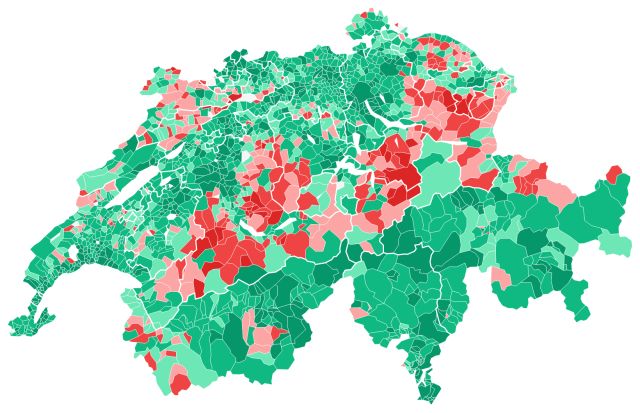
More likely than such a mass arrest would be for an international tribunal to be held, to collect evidence, in a similar manner that the Corona Investigative Committee has been engaging in fact-finding sessions for over a year. As more people understand the direct link between ongoing totalitarian offensives by numerous governments and the influence that Schwab and his associates have over these totalitarian public officials, it will become increasingly difficult for the remaining people of good conscience who are in a position to act, to do a favor for humanity and help end this new war.
To summarize, everybody concerned about the future of humanity can play at least a minor role in spreading the message of resistance to increase public awareness about what is unfolding and what ought to be done in response.
COVID-19: Moderna Gets Its Miracle
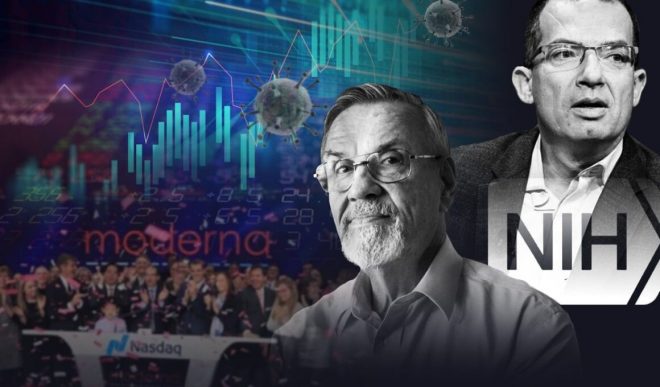
BY WHITNEY WEBB |
UNLIMITED HANGOUT| OCTOBER 28, 2021
COVID-19 erased the regulatory and trial-related hurdles that Moderna could never surmount before. Yet, how did Moderna know that COVID-19 would create those conditions months before anyone else, and why did they later claim that their vaccine being tested in NIH trials was different than their commercial candidate?
In late 2019, the biopharmaceutical company Moderna was facing a series of challenges that not only threatened its ability to ever take a product to market, and thus turn a profit, but its very existence as a company. There were multiple warning signs that Moderna was essentially another Theranos-style fraud, with many of these signs growing in frequency and severity as the decade drew to a close. Part I of this three-part series explored the disastrous circumstances in which Moderna found itself at that time, with the company’s salvation hinging on the hope of a divine miracle, a “Hail Mary” save of sorts, as stated by one former Moderna employee.
While the COVID-19 crisis that emerged in the first part of 2020 can hardly be described as an act of benevolent divine intervention for most, it certainly can be seen that way from Moderna’s perspective. Key issues for the company, including seemingly insurmountable regulatory hurdles and its inability to advance beyond animal trials with its most promising—and profitable—products, were conveniently wiped away, and not a moment too soon. Since January 2020, the value of Moderna’s stock—which had embarked on a steady decline since its IPO—grew from $18.89 per share to its current value of $339.57 per share, thanks to the success of its COVID-19 vaccine.
Yet, how exactly was Moderna’s “Hail Mary” moment realized, and what were the forces and events that ensured it would make it through the FDA’s emergency use authorization (EUA) process? In examining that question, it becomes quickly apparent that Moderna’s journey of saving grace involved much more than just cutting corners in animal and human trials and federal regulations. Indeed, if we are to believe Moderna executives, it involved supplying formulations for some trial studies that were not the same as their COVID-19 vaccine commercial candidate, despite the data resulting from the former being used to sell Moderna’s vaccine to the public and federal health authorities. Such data was also selectively released at times to align with preplanned stock trades by Moderna executives, turning many of Moderna’s highest-ranking employees into millionaires, and even billionaires, while the COVID-19 crisis meant economic calamity for most Americans.
Not only that, but—as Part II of this three-part series will show, Moderna and a handful of its collaborators at the National Institutes of Health (NIH) seemed to know that Moderna’s miracle had arrived—well before anyone else knew or could have known. Was it really a coincidental mix of “foresight” and “serendipity” that led Moderna and the NIH to plan to develop a COVID-19 vaccine days before the viral sequence was even published and months before a vaccine was even considered necessary for a still unknown disease? If so, why would Moderna—a company clearly on the brink—throw everything into and gamble the entire company on a vaccine project that had no demonstrated need at the time?
The Serendipitous Origins of Moderna’s COVID-19 Vaccine
When early January 2020 brought news of a novel coronavirus outbreak originating in Wuhan, China, Moderna’s CEO Stéphane Bancel immediately emailed Barney Graham, deputy director of the Vaccine Research Center at the National Institutes of Health, and asked to be sent the genetic sequence for what would become known as SAR-CoV-2, allegedly because media reports on the outbreak “troubled” him. The date of that email varies according to different media reports, though most place it as having been sent on either January 6th or 7th.
A few weeks before Bancel’s email to Graham, Moderna was quickly approaching the end of the line, their desperately needed “Hail Mary” still not having materialized. “We were freaked out about money,” Stephen Hoge would later remember of Moderna’s late 2019 circumstances. Not only were executives “cutting back on research and other expenditures” like never before, but – as STAT News would later report – “cash from investors had stopped pouring in and partnerships with some drug makers had been discontinued. In meetings at Moderna, Bancel emphasized the need to stretch every dollar and employees were told to reduce travel and other expenses, a frugality they were advised would last several years.”
At the tail end of 2019, Graham was in a very different mood than Bancel, having emailed the leader of the coronavirus team at his NIH lab saying, “Get ready for 2020,” apparently viewing the news out of Wuhan in late 2019 as a harbinger of something significant. He went on, in the days before he was contacted by Bancel, to “run a drill he had been turning over in his mind for years” and called his long-time colleague Jason McLellan “to talk about the game plan” for getting a head start on producing a vaccine the world did not yet know it needed. When Bancel called Graham soon afterward and asked about this new virus, Graham responded that he didn’t know yet but that “they were ready if it turned out to be a coronavirus.” The Washington Post claimed that Graham’s apparent foreknowledge that a coronavirus vaccine would be needed before anyone officially knew what type of disease was circulating in Wuhan was a fortunate mix of “serendipity and foresight.”
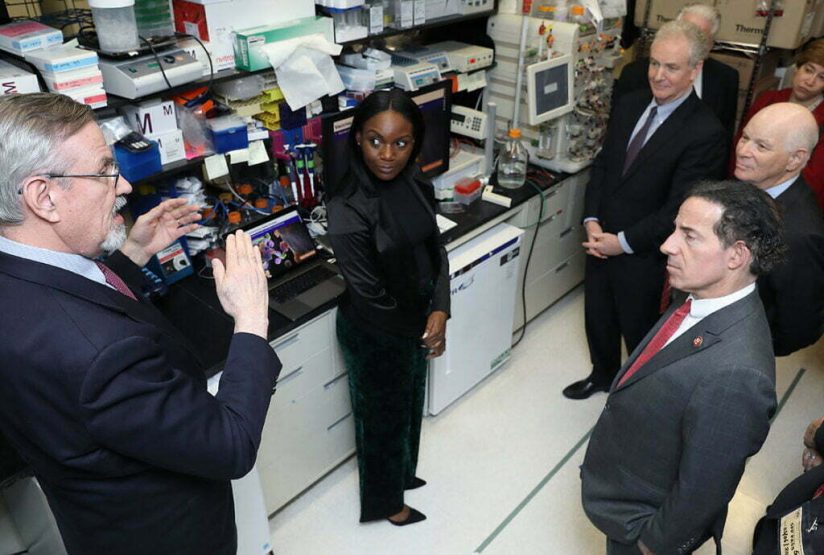
Dr. Barney Graham and Dr. Kizzmekia Corbett, VRC coronavirus vaccine lead, discuss COVID-19 research with Sen. Chris Van Hollen, Sen. Benjamin Cardin and Rep. Jamie Raskin, March 6, 2020; Source: NIH
A report in Boston magazine offers a slightly different account than that reported by the Washington Post. Per that article, Graham had told Bancel, “If [the virus] is a coronavirus, we know what to do and have proven mRNA is effective.” Per that report, this assertion of efficacy from Graham referred to Moderna’s early stage human-trial data published in September 2019 regarding its chikungunya vaccine candidate, which was funded by the Defense Advanced Research Projects Agency (DARPA), as well as its cytomegalovirus (CMV) vaccine candidate.
As mentioned in Part I of this series, the chikungunya vaccine study data released at that time included the participation of just four subjects, three of whom developed significant side effects that led Moderna to state that they would reformulate the vaccine in question and would pause trials on that vaccine candidate. In the case of the CMV vaccine candidate, the data was largely positive, but it was widely noted that the vaccine still needed to pass through larger and longer clinical trials before its efficacy was in fact “proven,” as Graham later claimed. In addition, Graham implied that this early stage trial of Moderna’s CMV vaccine candidate was somehow proof that an mRNA vaccine would be effective against coronaviruses, which makes little sense since CMV is not a coronavirus but instead hails from the family of viruses that includes chickenpox, herpes, and shingles.
Bancel apparently had reached out to Graham because Graham and his team at the NIH had been working in direct partnership with Moderna on vaccines since 2017, soon after Moderna had delayed its Crigler-Najjar and related therapies in favor of vaccines. According to Boston magazine, Moderna had been working closely with Graham specifically “on [Moderna’s] quest to bring a whole new class of vaccines to market” and Graham had personally visited Moderna’s facilities in November 2019. Dr. Anthony Fauci, the director of the NIH’s infectious-disease division NIAID, has called his unit’s collaboration with Moderna, in the years prior to and also during the COVID-19 crisis, “most extraordinary.”
The year 2017, besides being the year when Moderna made its pivot to vaccines (due to its inability to produce safe multidose therapies, see Part I), was also a big year for Graham. That year he and his lab filed a patent for the “2P mutation” technique whereby recombinant coronavirus spike proteins can be stabilized in a prefusion state and used as more effective immunogens. If a coronavirus vaccine were to be produced using this patent, Graham’s team would financially benefit, though federal law caps their annual royalties. Nonetheless, it would still yield a considerable sum for the named researchers, including Graham.
However, due to the well-known difficulties with coronavirus vaccine development, including antibody dependent enhancement risk, it seemed that commercial use of Graham’s patent was a pipe dream. Yet, today, the 2P mutation patent, also known as the ’070 patent, is not just in use in Moderna’s COVID-19 vaccine, but also in the COVID-19 vaccines produced by Johnson & Johnson, Novavax, Pfizer/BioNTech, and CureVac. Experts at New York University School of Law have noted that the 2P mutation patent first filed in 2016 “sounds remarkably prescient” in light of the COVID crisis that emerged a few years later while later publications from the NIH (still pre-COVID) revealed that the NIH’s view on “the breadth and importance of the ’070 patent” as well as its potential commercial applications was also quite prescient, given that there was little justification at the time to hold such a view.
On January 10, three days after the reported initial conversation between Bancel and Graham on the novel coronavirus outbreak in Wuhan, China, Graham met with Hamilton Bennett, the program leader for Moderna’s vaccine portfolio. Graham asked Bennett “if Moderna would be interested in using the new [novel coronavirus] to test the company’s accelerated vaccine-making capabilities.” According to Boston, Graham then mused, “That way . . . if ever there came a day when a new virus emerged that threatened global public health, Moderna and the NIH could know how long it would take them to respond.”
Graham’s “musings” to Bennett are interesting considering his earlier statements made to others, such as “Get ready for 2020” and his team, in collaboration with Moderna, would be “ready if [the virus then circulating in Wuhan, China] turned out to be a coronavirus.” Is this merely “serendipity” and “foresight”, as the Washington Post suggested, or was it something else? It is worth noting that the above accounts are those that have been given by Bancel and Graham themselves, as the actual contents of these critical January 2020 emails have not been publicly released.
When the genetic sequence of SARS-CoV-2 was published on January 11, NIH scientists and Moderna researchers got to work determining which targeted genetic sequence would be used in their vaccine candidate. Later reports, however, claimed that this initial work toward a COVID-19 vaccine was merely intended to be a “demonstration project.”
Other odd features of the Moderna-NIH COVID-19 vaccine-development story emerged with Bancel’s account of the role the World Economic Forum played in shaping his “foresight” when it came to the development of a COVID-19 vaccine back in January 2020. On January 21, 2020, Bancel reportedly began to hear about “a far darker version of the future” at the World Economic Forum (WEF) annual meeting in Davos, Switzerland, where he spent time with “two [anonymous] prominent infectious-disease experts from Europe” who shared with him data from “their contacts on the ground in China, including Wuhan.” That data, per Bancel, showed a dire situation that left his mind “reeling” and led him to conclude, that very day, that “this isn’t going to be SARS. It’s going to be the 1918 flu pandemic.”

Stéphane Bancel speaks at the Breakthroughs in Cancer Care session at WEF annual meeting, January 24, 2020; Source: WEF
This realization is allegedly what led Bancel to contact Moderna cofounder and chairman, as well as a WEF technology pioneer, Noubar Afeyan. Bancel reportedly interrupted Afeyan’s celebration of his daughter’s birthday to tell him “what he’d learned about the virus” and to suggest that “Moderna begin to build the vaccine—for real.” The next day, Moderna held an executive meeting, which Bancel attended remotely, and there was considerable internal debate about whether a vaccine for the novel coronavirus would be needed. To Bancel, the “sheer act of debating” pursuing a vaccine for the virus was “absurd” given that he was now convinced, after a single day at Davos, that “a global pandemic was about to descend like a biblical plague, and whatever distractions the vaccine caused internally at Moderna were irrelevant.”
Bancel spent the rest of his time at the Davos annual meeting “building partnerships, generating excitement, and securing funding,” which led to the Moderna collaboration agreement with the Coalition for Epidemic Preparedness Innovations—a project largely funded by Bill Gates. (Bancel and Moderna’s cozy relationship with the WEF, dating back to 2013, was discussed in Part I as were the Forum’s efforts, beginning well before COVID-19, to promote mRNA-based therapies as essential to the remaking of the health-care sector in the age of the so-called Fourth Industrial Revolution). At the 2020 annual meeting attended by Bancel and others it was noted that a major barrier to the widespread adoption of these and other related “health-care” technologies was “public distrust.” The panel where that issue was specifically discussed was entitled “When Humankind Overrides Evolution.”
As also noted in Part I of this series, a few months earlier, in October 2019, major players in what would become the Moderna COVID-19 vaccine, particularly Rick Bright and Anthony Fauci, had discussed during a Milken Institute panel on vaccines how a “disruptive” event would be needed to push the public to accept “nontraditional” vaccines such as mRNA vaccines; to convince the public that flu-like illnesses are scarier than traditionally believed; and to remove existing bureaucratic safeguards in the vaccine development-and-approval processes.
That panel took place less than two weeks after the Event 201 simulation, jointly hosted by the World Economic Forum, the Bill & Melinda Gates Foundation, and the Johns Hopkins Center for Health Security. Event 201 simulated “an outbreak of a novel zoonotic coronavirus” that was “modeled largely on SARS but . . . more transmissible in the community setting by people with mild symptoms.” The recommendations of the simulation panel were to considerably increase investment in new vaccine technologies and industrial approaches, favoring rapid vaccine development and manufacturing. As mentioned in Part I, the Johns Hopkins Center for Health Security had also conducted the June 2001 Dark Winter simulation that briefly preceded and predicted major aspects of the 2001 anthrax attacks, and some of its participants had apparent foreknowledge of those attacks. Other Dark Winter participants later worked to sabotage the FBI investigation into those attacks after their origin was traced back to a US military source.
It is hard to imagine that Bancel, whose company had long been closely partnered with the World Economic Forum and the Gates Foundation, was unaware of the exercise and surprised by the closely analogous event that transpired within three months. Given the accounts given by Bancel, Graham, and others, it seems likely there is more to the story regarding the origins of Moderna’s early and “serendipitous” push to develop a COVID-19 vaccine. In addition, given that Moderna was in dire financial circumstances at the time, it seems odd that the company would gamble everything on a vaccine project that was opposed by the few investors that were still willing to fund Moderna in January/February 2020. Why would they divert their scant resources towards a project born only out of Barney Graham’s “musings” that Moderna could try to test the speed of its vaccine development capabilities and Bancel’s doomsday view that a “biblical plague” was imminent, especially when their investors opposed the idea?
Moderna Gets to Bypass Its Long-Standing Issues with R & D
Moderna produced the first batch of its COVID-19 vaccine candidate on February 7, one month after Bancel and Graham’s initial conversation. After a sterility test and other mandatory tests, the first batch of its vaccine candidate, called mRNA-1273, shipped to the NIH on February 24. For the first time in a long time, Moderna’s stock price surged. NIH researchers administered the first dose of the candidate into a human volunteer less than a month later, on March 16.
Controversially, in order to begin its human trial on March 16, regulatory agencies had to allow Moderna to bypass major aspects of traditional animal trials, which many experts and commentators noted was highly unusual but was now deemed necessary due to the urgency of the crisis. Instead of developing the vaccine in distinct sequential stages, as is the custom, Moderna “decided to do all of the steps [relating to animal trials] simultaneously.” In other words, confirming that the candidate is working before manufacturing an animal-grade vaccine, conducting animal trials, analyzing the animal-trial data, manufacturing a vaccine for use in human trials, and beginning human trials were all conducted simultaneously by Moderna. Thus, the design of human trials for the Moderna vaccine candidate was not informed by animal-trial data.

Lt. Javier Lopez Coronado and Hospitalman Francisco Velasco inspect a box of COVID-19 vaccine vials at the Naval Health Clinic in Corpus Christi, TX, December 2020; Source: Wikimedia
This should have been a major red flag, given Moderna’s persistent difficulties in getting its products past animal trials. As noted in Part I, up until the COVID-19 crisis, most of Moderna’s experiments and products had only been tested in animals, with only a handful able to make it to human trials. In the case of the Crigler-Najjar therapy that it was forced to indefinitely delay, toxicity concerns related to the mRNA delivery system being used had emerged in the animal trials, which Moderna was now greenlighted to largely skip. Given that Moderna had subsequently been forced to abandon all multidose products because of poor results in animal trials, being allowed to skip this formerly insurmountable obstacle was likely seen as a boon to some at the company. It is also astounding that, given Moderna’s history with problematic animal trials, more scrutiny was not devoted to the regulatory decision to allow Moderna to essentially skip such trials.
Animal studies conducted on Moderna’s COVID-19 vaccine did identify problems that should have informed human trials, but this did not happen because of the regulatory decision. For example, animal reproductive toxicity studies on the Moderna COVID-19 vaccine that are cited by the European Medicines Agency found that there was reduced fertility in rats that received the vaccine (e. g., overall pregnancy index of 84.1% in vaccinated rats versus 93.2% in the unvaccinated) as well as an increased proportion of aberrant bone development in their fetuses. That study has been criticized for failing to report on the accumulation of vaccine in the placenta as well as failing to investigate the effect of vaccine doses administered during key pregnancy milestones, such as embryonic organogenesis. In addition, the number of animals tested is unstated, making the statistical power of the study unknown. At the very least, the 9 percent drop in the fertility index among vaccinated rats should have prompted expanded animal trials to investigate concerns of reproductive toxicity before testing in humans.
Yet, Moderna declined to further investigate reproductive toxicity in animal trials and entirely excluded reproductive toxicity studies from its simultaneous human trials, as pregnant women were excluded from participation in the clinical trials of its vaccine. Despite this, pregnant women were labeled a priority group for receiving the vaccine after Emergency Use Authorization (EUA) was granted for the Moderna and Pfizer/BioNTech vaccines. Per the New England Journal of Medicine, this meant that “pregnant women and their clinicians were left to weigh the documented risks of Covid-19 infection against the unknown safety risks of vaccination in deciding whether to receive the vaccine.”
Moderna only began recruiting for an “observational pregnancy outcome study” of its COVID-19 vaccine in humans in mid-July 2021, and that study is projected to conclude in early 2024. Nevertheless, the Centers for Disease Control recommends the use of Moderna’s COVID-19 vaccine in “people who are pregnant, breastfeeding, trying to get pregnant now, or might become pregnant in the future.” This recommendation is largely based on the CDC’s publication of preliminary data on mRNA COVID-19 vaccine safety in pregnant women in June 2021, which is based on passive reporting systems in use within the United States (i. e., VAERS and v-safe).
Even in the limited scope of this study, 115 of the 827 women who had a completed pregnancy during the study lost the baby, 104 of which were spontaneous abortions before 20 weeks of gestation. Of these 827 pregnant women, only 127 had received a mRNA vaccine before the 3rd trimester. This appears to suggest an increased risk among those women who took the vaccine before the 3rd trimester, but the selective nature of the data makes it difficult to draw any definitive conclusions. Despite claims from the New England Journal of Medicine that the study’s data was “reassuring”, the study’s authors ultimately stated that their study, which mainly looked at women who began vaccination in the third trimester, was unable to draw “conclusions about spontaneous abortions, congenital anomalies, and other potential rare neonatal outcomes.” This is just one example of the problems caused by “cutting corners” with respect to Moderna’s COVID-19 vaccine trials in humans and animals, including those conducted by the NIH.
Meanwhile, throughout February, March and April, Bancel was “begging for money” as Moderna reportedly lacked “enough money to buy essential ingredients for the shots” and “needed hundreds of millions of dollars, perhaps even more than a billion dollars” to manufacture its vaccine, which had only recently begun trials. Bancel, whose tenure at Moderna had long been marked by his ability to charm investors, kept coming up empty-handed.
Then, in mid-April 2020, Moderna’s long-time cooperation with the US government again paid off when Health and Human Services Biomedical Advanced Research and Development Authority (BARDA) awarded the company $483 million to “accelerate the development of its vaccine candidate for the novel coronavirus.” A year later, the amount invested in Moderna’s COVID-19 vaccine by the US government had grown to about $6 billion dollars, just $1.5 billion short of the company’s entire value at the time of its pre-COVID IPO.
BARDA, throughout 2020, was directly overseen by the HHS Office of the Assistant Secretary for Preparedness and Response (ASPR), led by the extremely corrupt Robert Kadlec, who had spent roughly the last two decades designing BARDA and helping shape legislation that concentrated many of the emergency powers of HHS under the Office of the ASPR. Conveniently, Kadlec occupied the powerful role of ASPR that he had spent years sculpting at the exact moment when the pandemic, which he had simulated the previous year via Crimson Contagion, took place. As mentioned in Part I, he was also a key participant in the June 2001 Dark Winter exercise. In his capacity as ASPR during 2020, Kadlec oversaw nearly all major aspects of the HHS COVID-19 response and had a key role in BARDA’s funding decisions during that period, as well as in the affairs of the NIH and the Food and Drug Administration as they related to COVID-19 medical countermeasures, including vaccines.
On May 1, 2020, Moderna announced a ten-year manufacturing agreement with the Lonza Group, a multinational chemical and biotech company based in Switzerland. Per the agreement, Lonza would build out vaccine production sites for Moderna’s COVID-19 vaccine, first in the US and Switzerland, before expanding to Lonza’s facilities in other countries. The scale of production discussed in the agreement was to produce 1 billion doses of Moderna’s COVID-19 vaccine annually. It was claimed that the ten-year agreement would also focus on other products, even though it was well known at the time that other Moderna products were “nowhere close to being ready for the market.” Moderna executives would later state that they were still scrambling for the cash to manufacture doses at the time the agreement with Lonza was made.
The decision to forge a partnership to produce that quantity of doses annually suggests marvelous foresight on the part of Moderna and Lonza that the COVID-19 vaccine would become an annual or semiannual affair, given that current claims of waning immunity could not have been known back then because initial trials of the Moderna vaccine had begun less than two months earlier and there was still no published data on its efficacy or safety. However, as will be discussed Part III of this series, Moderna needs to sell “pandemic level” quantities of its COVID-19 vaccine every year in order to avoid a return of the existential crises it faced before COVID-19 (for more on those crises, see Part I). The implications of this, given Moderna’s previous inability to produce a safe product for multidosing and lack of evidence that past issues were addressed in the development of its COVID-19 vaccine, will also be discussed in Part III of this series.
It is also noteworthy that, like Moderna, Lonza as a company and its leaders are closely affiliated with the World Economic Forum. In addition, at the time the agreement was reached in May 2020, Moncef Slaoui, the former GlaxoSmithKline executive, served on the boards of both Moderna and Lonza. Slaoui withdrew from the boards of both companies two weeks after the agreement was reached to become the head of the US-led vaccination-development drive Operation Warp Speed. Moderna praised Slaoui’s appointment to head the vaccination project.
By mid-May, Moderna’s stock price—whose steady decline before COVID-19 was detailed in Part I —had tripled since late February 2020, all on high hopes for its COVID-19 vaccine. Since Moderna’s stock had begun to surge in February, media reports noted that “nearly every progress update—or media appearance by Moderna CEO Stephane Bancel—has been gobbled up by investors, who seem to have an insatiable appetite for the stock.” Bancel’s tried-and-tested method of keeping Moderna afloat on pure hype, though it was faltering before COVID-19, was again paying off for the company thanks to the global crisis and related panic.
Some critics did emerge, however, calling Moderna’s now $23 billion valuation “insane,” especially considering that the company had posted a net loss of $514 million the previous year and had yet to produce a safe or effective medicine since its founding a decade earlier. In January 2020, Moderna had been worth a mere $5 billion, $2 billion less than its valuation at its December 2018 IPO. If it hadn’t been for the onset of the COVID crisis and a fresh injection of hype, it seems that Moderna’s valuation would have continued to shrink. Yet, thankfully for Moderna, investors were valuing Moderna’s COVID-19 vaccine even before the release of any clinical data. Market analysts at the time were forecasting Moderna’s 2022 revenue at about $1 billion, a figure based almost entirely on coronavirus vaccine sales, since all other Moderna products were years away from a market debut. Yet, even with this forecasted revenue, Moderna’s stock value in mid-May 2020 was trading at twenty-three times its projected sales, a phenomenon unique to Moderna among biotech stocks at the time. For comparison, the other highest multiples in biotech at the time were Vertex Pharmaceutical and Seattle Genetics, which were then trading at nine and twelve times their projected revenue, respectively. Now, with the implementation of booster shot policies around the world, revenue forecasts for Moderna now predict the company will make a staggering $35 billion in COVID-19 vaccine sales through next year.
Moderna’s surging stock price went into overdrive when, on May 18, 2020, the company published “positive” interim data for a phase 1 trial of its COVID-19 vaccine. The results generated great press, public enthusiasm, and a 20 percent boost in Moderna’s stock price. Just hours after the press release, Moderna announced a new effort to raise $1.3 billion by selling more stock. It has since been revealed that Moderna had hired Morgan Stanley to manage that stock sale on May 15.
However, left largely unmentioned by the press or Moderna itself was that the ostensibly “scientific study” only provided data from 8 of the 45 volunteers—4 volunteers each from the 15- and 100-microgram dose cohorts—regarding the development of neutralizing antibodies. The age of these mysteriously selected 8 volunteers was also not published, and other key data was missing, making it “impossible to know whether mRNA-1273 [Moderna’s COVID-19 vaccine] was ineffective [in the remaining 37 volunteers whose antibody data was not disclosed], or whether the results were not available at this point.” Meanwhile, in the highest-dose cohort, in which volunteers received 250 micrograms, 21 percent of volunteers experienced a grade 3 adverse event, which is defined by the FDA as “preventing daily activity and requiring medical intervention.”
STAT published a report the next day that was skeptical of Moderna’s press release and seemed to imply the data release was aimed at boosting the company’s stock valuation, which hit $29 billion after the news. STAT reporter Helen Branswell called this jump in valuation “an astonishing feat for a company that currently sells zero products.” Branswell’s report noted several things, including that several vaccine experts had noted that “based on the information made available [by Moderna], there’s really no way to know how impressive—or not—the vaccine may be.” Moderna later defended its withholding of key data in the press release, claiming that it was done to respect “federal securities laws and the rules of scientific journals” and to prevent a potential leak of the data from insiders at the NIH. Moderna executives have more recently claimed that the “timely” release of these selective data had been linked to their “desperate” fundraising efforts at the time and ultimately prevented them from “losing” the COVID-19 vaccine race.
The STAT report also noted that the National Institute of Allergy and Infectious Diseases (NIAID), which was running the trial referenced by Moderna in the press release, was completely silent on the matter, declining to put out a press release that day and declining to comment on Moderna’s announcement. This was described as uncharacteristic for NIAID, especially considering they were the part of the NIH co-developing the vaccine with Moderna and running the trial. STAT noted that, normally, “NIAID doesn’t hide its light under a bushel. The institute generally trumpets its findings.” In this case, however, they declined to do so. It emerged in early June 2020 that Dr. Anthony Fauci, who leads NIAID, had been displeased with Moderna’s decision to publish incomplete data on the trial, telling STAT that he would have preferred “to wait until we had the data from the entire Phase 1 . . . and publish it in a reputable journal and show all the data.”
Tal Zaks, Chief Scientific Officer at Moderna; Source: The Forward
It subsequently emerged that Moderna’s top executives, including chief financial officer Lorence Kim and chief scientific officer Tal Zaks, had used their insider knowledge of the coming press release to trade company stock that netted them several million each following the jump in Moderna’s stock that resulted from the press release’s positive buzz. A little over a week after the press release had been published, STAT reported that the top five Moderna executives had cashed out $89 million in shares since the company’s stock price had begun to soar earlier in the year. Per that report, the amount of trades by these five executives alone between January and May 2020 was “nearly three times as many stock transactions than in all of 2019.” By September 2020, the amount of stock shed by Moderna executives amounted to $236 million. Less criticized or even mentioned by the press was Moderna’s move, less than a month later, to create a tax haven in Europe for its European COVID-19 vaccine sales.
Though the trades were deemed slimy but legal, mainstream media reports essentially confirmed that the early release of the interim data was planned to “raise the share price of Moderna’s stock so that executives could cash in during the period of euphoria” that followed. Some watchdog groups called on the SEC to investigate Moderna executives for manipulating the stock market. The critical reporting on executive stock trades and Moderna’s release of incomplete data led the company’s stock to temporarily trend downward throughout the rest of May. As previously mentioned, Moderna has repeatedly attempted to explain away the timing of this particular press release, offering new explanations as recently as this week.
Moderna’s Shocking Claim about Its Vaccine Candidate
In mid-June 2020, researchers at the NIH and Moderna published a manuscript preprint of preclinical data for Moderna’s COVID-19 vaccine. This preprint described the vaccine as employing a delivery system covered in a patent owned by the company Arbutus Biopharma and described the results of that vaccine in tests on mice. As discussed in Part I, Moderna has long been locked in a bitter legal dispute with Arbutus, which has threatened Moderna’s ability to ever turn a profit on any product that relies on Arbutus-patented technology regarding lipid nanoparticle (LNP) delivery systems for its mRNA products. Moderna has claimed for years it was no longer using the Arbutus-derived system on which it once entirely relied, with Bancel even going so far as to publicly call it “not very good.” However, Moderna has provided no real evidence that it no longer relies on the technology covered in the Arbutus patents. The June 2020 manuscript preprint from the NIH and Moderna provided evidence indicating that the same Arbutus-derived technology that had caused major toxicity issues in multidose products Moderna had previously attempted to develop was also being used in Moderna’s COVID-19 vaccine candidate.
Yet, when Moderna’s chief corporate affairs officer, Ray Jordan, was challenged on this point by Forbes, Jordan asserted that the preprint’s data had been generated using a formulation of a COVID-19 vaccine that is not the same as the vaccine itself, stating, “While the authors of the preprint used the term ‘mRNA-1273’ for convenience of the reader, the preprint does not describe the cGMP process by which we make our messenger RNA and LNP or the final drug product composition in our commercial candidate (mRNA-1273).” When Forbes asked Jordan if he could provide any specifics, including the LNP molar ratio of the new LNP technology to prove that the LNPs in use in the COVID-19 vaccine were in fact different from those covered by the Arbutus patent, Jordan flat out refused.

Arbutus Biopharma’s office in Warminster, Pennsylvania; Source: Philadelphia Business Journal
Despite Jordan’s claims, a Moderna preclinical study regarding its COVID-19 vaccine was published a month later, and that July study noted that the Moderna vaccine used LNPs as described in a 2019 paper, which in turn reveals that the LNPs in question were the same as those used in the June study. This paper included the results from the study originally promoted by Moderna in May that led to a jump in Moderna’s stock price. Now published in full, the study generated lots of positive press, including a statement from the NIAID’s Fauci that “no matter how you slice this, this is good news.” A jump in US government funding of Moderna’s COVID-19 vaccine also shortly followed the study’s publication. At the time, CBS News remarked that Moderna’s stock price, which had been sliding since its late 2018 IPO, had been essentially rescued by the COVID-19 crisis, as “shares of Moderna—which has never brought a product to market over its ten-year existence—have soared as much as 380 percent since the start of the year as news emerged [in January] of its promising potential for producing a vaccine. [Moderna’s] stock price was less than $20 in early January and around $95 on Friday [July 17, 2020].” Today, by comparison, Moderna has consistently been trading above $300 a share.
Yet, if we take Ray Jordan at his word with respect to the preprint published in June, Moderna appears to have been engaged in rather slimy behavior. If Jordan was telling the truth, it appears that this July study, which appears to use the vaccine candidate containing the same LNPs as those described in the June 2020 preprint, also used a formulation not consistent with the company’s commercial vaccine candidate. If so, given that the July study was the same study referenced by Moderna’s controversial May press release tied to insider stock trades, Moderna appears to have used “positive” data generated by a vaccine candidate other than its commercial vaccine candidate to boost stock prices and ameliorate the company’s financial situation while also generating millions for executives. This, of course, says nothing about the separate but critically important issue that the vaccine candidate used in these studies, including the NIH study, is not necessarily the same as the commercial candidate used in clinical trials.
It seems that the only reason that Moderna would make such an outrageous claim to Forbes would be to distance its COVID-19 vaccine from its past controversies that largely have their root in Moderna’s LNP-related problems, which it had claimed to have already resolved. It is not clear if the motive behind such a gambit is principally related to the legal dispute with Arbutus or the past safety issues Moderna encountered with multidose therapies.
Adding to the confusion about the LNPs in use in Moderna’s products is that, a few days earlier in July, Moderna had published results on a separate vaccine candidate, this one for HIV, that appeared to use the exact same LNP technology that is covered by the Arbutus patent. The LNPs described in that study included the same components as those described in the Arbutus patent and the same molar ratio. Moderna appeared to be referencing this issue in their August 6, 2020, SEC filing, which states: “There are many issued and pending third-party patents that claim aspects of oligonucleotide delivery technologies that we may need for our mRNA therapeutic and vaccine candidates or marketed products, including mRNA-1273, if approved.”
By the end of 2020, Moderna claimed in a December filing with the SEC that, while it had “initially used LNP formulations that were based on known lipid systems,” that is, the Arbutus LNPs, it had “invested heavily in delivery science and ha[s] developed LNP technologies, as well as alternative nanoparticle approaches.” Despite the claims it made in this filing, however, it remained unclear as to whether the company’s COVID-19 vaccine was using Arbutus technology or the technology it purported to have developed on its own without infringing on Arbutus’s intellectual property.
Moderna’s claims that it now uses a different LNP system than the one that caused such major issues is based on the company’s development and implementation of a lipid structure now known as SM-102. This lipid structure was first revealed by Moderna in a 2019 publication under the name Lipid H, and, in that paper and since, Moderna has claimed that its LNP system is now superior to that which it previously used because it is using SM-102 instead of the original Arbutus lipids. However, it is critical to note that Moderna’s use of SM-102 does not necessarily mean the company is not violating the Arbutus patents, which cover the use of LNPs that combine cationic and PEGylated lipids in specific proportions.
Despite claims from Moderna that SM-102 resolved both the company’s patent-related and toxicity issues with its LNP system (as discussed in Part I), Moderna has declined to disclose SM-102’s exact structure or whether it carries a net positive charge at physiological pH, the latter of which could lead to proof of continued infringement on the Arbutus patent. In addition, there are no studies on the distribution, degradation, and/or elimination of SM-102 from the body, meaning that the accumulation of the lipids or their capacity to damage organs is not documented. The obvious lack of study of SM-102’s properties and effects on the human body was largely circumvented by public health authorities during the emergency approval process by using the same criteria for the Moderna vaccine candidate that is used for traditional vaccines that do not utilize the novel mRNA approach. These “traditional” criteria therefore do not include any requirements for data on LNP safety.
Overall, the evidence seems to point toward Moderna’s claims that its COVID-19 vaccine doesn’t use Arbutus-derived LNPs as being false. The other possibility is that Moderna attempted to modify the LNP system but only slightly so that potential identifiers, such as the molar ratio, remained the same. In this case, Arbutus could still claim that the LNPs currently in use by Moderna and in its COVID-19 vaccine infringe on their patent. It is also thus likely that the safety issues Moderna had acknowledged with this LNP system were largely unaffected if the potential modifications were indeed minor. Yet, if either of these scenarios is correct, the question becomes – Why wouldn’t Arbutus challenge Moderna once again to obtain royalty payments stemming from its COVID-19 vaccine?
The answer seems to lie mostly in optics and public relations. As STAT wrote last July, were Arbutus to sue Moderna over patent infringement in the midst of the COVID-19 crisis, “that would mean taking the substantial risk that it would be perceived as a company holding up a desperately needed medicine out of concern for its bottom line.” This also seemed to be part of the motive behind Moderna’s altruistically framed promise not to enforce its own COVID-19–related patents until the pandemic is declared over. Observers have noted that this move by Moderna was not only a public relations boon for the company but also “set a disarming tone in the space that may serve to deter others in the space [e. g., Arbutus] from acting too defensively or aggressively,” largely due to “fear of the potential public relations backlash.”
While July 2020 brought a surge in valuation and positive press for Moderna and its COVID-19 vaccine candidate, it also brought an unfavorable ruling for Moderna in its long-running dispute with Arbutus, one that opened the door for Arbutus to file an injunction against Moderna’s COVID-19 vaccine, if they chose, to force the negotiation of a license with Moderna. The news led to Moderna’s stock price falling by 10 percent, wiping out $3 billion in value. However, most likely for the reasons outlined above, Arbutus ultimately declined to jump on the decision to block Moderna’s COVID-19 vaccine from advancing in the hopes of securing royalties. Yet, they reserve the ability to do so, if and when the perceived urgency of the COVID-19 crisis fades.
Moderna has asserted that the decision would not affect its COVID-19 vaccine as the company was “not aware of any significant intellectual property impediments for any products we intend to commercialize.” Thus, Ray Jordan’s assertions and the lack of “clear and convincing” evidence that Moderna’s COVID-19 vaccine relies on Arbutus-patented technology appears to have been sufficient for Moderna to make this claim. This seems to be due to a lack of interest by the mainstream media or federal agencies/regulators in demanding concrete evidence that Moderna’s LNP system used in its COVID-19 vaccine does not rely on Arbutus-patented technology.
Despite the issues raised above in relation to the vaccine study data published in June and July, the positive press attention—particularly after the July publication—translated just a month later into the US government entering into a significant supply agreement with Moderna on August 11, 2020. Per that agreement, the government would pay $1.525 billion for 100 million doses with the option to purchase an additional 400 million doses in the future, all of which it has since purchased. Per Moderna’s press release, the agreement meant that the US government had, by that point, paid $2.48 billion for “early access” to Moderna’s COVID-19 vaccine.
Roughly a month later, it was revealed that the US government had been paying for much more. On September 10, 2020, BARDA joined long-time Moderna funder and “strategic ally” DARPA in scrutinizing contracts that had been awarded to the company due to Moderna’s failure to disclose the role government support had played in its numerous patent applications. The announcement came after Knowledge Ecology International (KEI), which advocates for protecting taxpayer investments in patents, found that none of the patents or applications assigned to Moderna in the company’s entire history had disclosed the considerable US government funding it had received at the time those patents were filed, which is required by the 1980 Bayh-Doyle Act and by the regulations of the Patent and Trademark Office. Per KEI, this translates into the US government owning certain rights over the patents, and thus US taxpayers may have an ownership stake in vaccines made and sold by Moderna.
Despite the clear evidence that Moderna failed to disclose the considerable amount of US government funding prior to and during the COVID crisis in its patent applications, Moderna responded to KEI and the BARDA/DARPA “scrutiny” by stating that it was “aware of and consults with our agency collaborators regarding our contractual obligations under each of these agreements, including those with respect to IP [intellectual property], and believe we comply with those obligations.” As of the writing of this article, BARDA and DARPA have taken no action against Moderna for their illegal omission about having received substantial government funding in their patent applications and filings. Instead, a month after DARPA claimed to be “scrutinizing” Moderna’s patent applications, it awarded the company up to $56 million to develop small-scale mobile means of manufacturing its products—namely, its COVID-19 vaccine and its personalized cancer vaccine.
Moderna: “Just Trust Us”
What quickly stands out about Moderna’s COVID-19 vaccine candidate over the course of its rapid development in 2020 was the willingness of federal agencies like NIH, BARDA, and others, as well as the mainstream press, to take Moderna at its word concerning critical aspects of its vaccine and its development, even when the evidence appeared to contradict its claims. This is particularly evident in Moderna claiming that it resolved its LNP issues, both in terms of toxicity and patent infringement, and those claims—despite the company’s refusal to release clear supporting evidence—being taken at face value. This is even more striking when one considers the multiple factors that Moderna was facing before COVID-19 and how the company faced collapse without the success of its COVID-19 vaccine, as this means Moderna was under considerable pressure to have its vaccine succeed.
While the controversial simultaneous conducting of animal and human trials was publicly justified in the name of the urgency of the COVID-19 crisis, can the other examples explored in this article be similarly justified in the name of urgency? Instead, several issues explored above appear to have been driven by conflicts of interest and corruption.
Adding to the ridiculousness is that Moderna got away with claiming that the NIH was conducting safety tests on a COVID-19 vaccine product different from their commercial candidate, without causing a major backlash in either the mainstream media or from the NIH itself. This is particularly telling as the May 2020 press release and suspiciously timed stock trading by Moderna executives and insiders did garner negative press attention. However, the subsequent revelation, per Moderna, that its press release was based on the study of a vaccine candidate that was not “necessarily the same” as their commercial COVID-19 vaccine candidate received essentially no coverage, despite raising the unsettling possibility that Moderna could have used another product to essentially rig preliminary data to be positive in order to advance their product to market and make millions through insider stock sales. How can the claims made by such a company be trusted at face value without independent verification? Furthermore, how can NIH studies of Moderna be trusted when Moderna has claimed that some of the studies that were ultimately factors in the vaccine’s emergency use authorization approval by the FDA utilized a different product than that which Moderna later successfully commercialized?
Moderna and the NIH were, nevertheless, taken at their word in November 2020 when they said that their COVID-19 vaccine candidate was 94.5 percent effective. At the time, the main promoters of this claim were Moderna’s Bancel and NIAID’s Fauci. The claim came shortly after Pfizer’s press release claiming its COVID-19 vaccine candidate was 90 percent effective. Not to be outdone by Moderna, Pfizer revised the reported efficacy of its vaccine just two days after Moderna’s November press release, stating that their vaccine was actually 95% effective to Moderna’s 94.5%. In the case of these claims, it was indicative of the now-established yet troubling practice of “science by press release” when it comes to touting the benefit of certain COVID-19 vaccines currently on the market. Since then, real-world data has shattered the efficacy claims that were used to secure emergency use authorization, for which Moderna applied at the end of November 2020 and received only a few weeks later in mid-December of that year.
As Part III of this series will explore, the EUA for the Moderna vaccine got around the issues raised in this article by treating the entire Moderna formulation as a traditional vaccine, which it is not, as traditional vaccines do not utilize mRNA for inducing immunity, and their safety and efficacy depend on several criteria that are entirely different from those of the more novel mRNA. Thus, the LNP issue, a perpetually sticky one for Moderna that it struggled to circumvent before the onset of the COVID-19 crisis, was largely evaded when it came down to, not just research and development, but receiving EUA. It appears that this sleight-of-hand by federal regulators was necessary for Moderna, after ten years, to finally get its first product on the market. As noted in Part I, were it not for the COVID-19 crisis and its fortuitous timing, Moderna might not have survived the severe challenges that threatened its entire existence as a company.
Part III will also examine how Moderna’s “Hail Mary” moment in the COVID-19 crisis was only the beginning of its miraculous rescue from a Theranos-like fate, as the company has not only expanded its partnership with the government but now with a CIA-linked firm. This shows that Moderna and key power players in Big Pharma and the US national-security state envision Moderna’s COVID-19 vaccine being sold in massive quantities for several years to come. As previously noted, without annual or semiannual sales of booster doses, Moderna’s pre-COVID crisis will inevitably return. The push for Moderna booster-dose approval has advanced despite real-world data not supporting Moderna’s past claims of safety and efficacy for its COVID-19 vaccine, the recent decision of several European governments to halt the vaccine’s use, and the FDA’s own infighting and recent admissions that the Moderna COVID-19 vaccine is one of the more dangerous currently in use, particularly in terms of adverse effects on the cardiovascular system. The obvious question here then becomes – How costly will Moderna’s “Hail Mary” save ultimately be, not just in terms of the $6 billion US taxpayer money already spent on it, but also in terms of public health?
Davos Billionaires Want to Save the Planet… Why Don’t Developing Countries Trust Them?
By Matthew Ehret | Strategic Culture Foundation | November 17, 2021
A miracle appears to be happening, as the multibillionaires of the World Economic Forum (WEF) appear to have grown consciences.
As if by magic, it appears that these gold collar elites no longer yearn for profit and power as they once had. As COP26 closes up its 12 day annual ceremonies, leading WEF-connected figures like Prince Charles, Jeff Bezos, Mario Draghi, Mark Carney and Klaus Schwab have announced a new system of economics that is based on virtue over profit!
According to the COP26 website, “95 high profile companies from a range of sectors commit to being ‘Nature Positive,’ agreeing to work towards halting and reversing the decline of nature by 2030.”
Prince Charles has boasted that he has coordinated 300 companies representing over $60 trillion to get on board with a global green transition, and after meeting with the Prince on November 2, Jeff Bezos announced his new $2 billion Earth Fund to protect nature’s ecosystems with a focus on Africa. Even Prime Minister Mario Draghi has joined Mark Carney on this new green path, as both men have moved beyond their old Goldman Sachs money worshipping days and embraced a better destiny. At the Nov 1 G20 Summit, Draghi embraced Prince Charles’ Green Markets Initiative and threw Italy’s full support behind the de-carbonization initiative.
The Prince himself (who also happens to be the nominal creator of the Great Reset Agenda launched in 2020), spoke as an enlightened statesman saying to the world’s leaders “as the enormity of the climate challenge dominates peoples’ conversations, from news rooms to living rooms, and as the future of humanity and Nature herself are at stake, it is surely time to set aside our differences and grasp this unique opportunity to launch a substantial green recovery by putting the global economy on a confident, sustainable trajectory and, thus, save our planet.”
Among the new array of financial mechanisms which we see being brought online in this war against humanity involve Bezos’ new Earth Fund, and Sir Robert Watson’s Living Planet Index (unveiled in 2018 at the World Economic Forum) and the new Rockefeller Foundation-sponsored Intrinsic Exchange Group (IEG) which seeks to turn global ecosystems worth an estimated $4 quadrillion into financial equity controllable by new private corporations (dubbed “natural asset companies”).
On its website, the IEG stated: “In partnership with the New York Stock Exchange, IEG is providing a word-class platform to list these companies for trading, enabling the conversion of natural assets into financial capital. The NAC’s equity captures the intrinsic and productive value of nature and provides a store of value based on the vital assets that underpin our entire economy and make life on earth possible… In 2021, we began seeking regulatory approval to bring the first natural asset transactions to the capital markets. Our vision is to bring to market hundreds of Natural Asset Companies representing several trillion dollars’ worth of natural assets.”
These new companies will become the stewards of new protected zones across the globe which the UN demands encapsulate 30% of the earth’s surface by 2030 and much more by 2050.
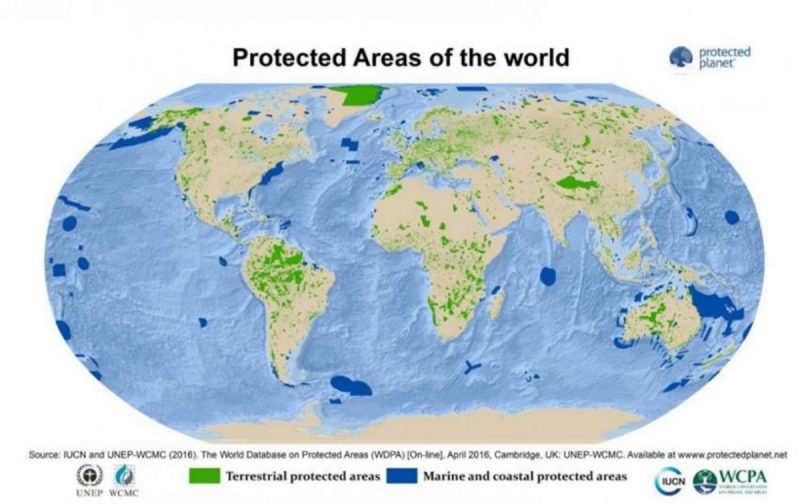
Is this time to rejoice, or is something darker at play?
To answer this question it is worth asking: Does this new virtue-driven order have anything to do with lifting people out of poverty or ending economic injustice?
Sadly, it is designed to do very much the opposite.
As we are coming to see, and as statesmen around the world are beginning to point out, this new order has more in common with oligarchical obsessions with controlling human cattle, and less to do with actually preserving the environment. The thousands of tons of CO2 emitted by private jets at Davos and COP26 represents on small aspect of this disingenuity.
Obrador Calls out the Game
On October 30, Mexico’s President Lopez Obrador called out this new virulent form of colonialism while presiding over a ceremony in celebration of the ongoing construction of the $6.7 billion high-speed Maya Train now being built in the southern regions of Mexico. The project which would dramatically uplift living standards in Mexico by driving the growth of industrial and infrastructure production has fallen far behind schedule due in large part to vast legal battles led by indigenous groups who have been used as proxies by foreign interests to defend Mexico’s ecosystems. In many of the legal cases opposing the project, the argument has been made that since several species of insect, fauna and even some leopards will be affected by the new railways, then the project must be ground to a halt and buried.

In his remarks to a journalist inquiring into the rail project, Obrador said:
“One of the things which they [the neoliberals] promoted in the world, in order to loot at ease, was the creation or promotion of the so-called new rights. So, feminism, ecologism, the defense of human rights, the protection of animals was much promoted, including by them. All these causes are very noble, but the intent was to create or boost all these new causes so that we don’t remedy—so that we don’t turn around and see that they were looting the world, so the subject of economic and social inequality would be kept out of the center of debate… The international agencies which supported the neoliberal model, which is a model of pillage where corporations grab national property, the property of the people—these same corporations financed, and continue to finance, environmentalist groups, defenders of ‘liberty.’ ”
Many people have been confused over these remarks since they cannot conceptualize how neoliberal monetarists that have parasitically driven the new age of pillage under globalization would also support such ‘new rights’ groups outlined by Obrador.
For nations of the global south who feel resentment that their rights to support their people by having their lands and resources kept off limits, they are told not to worry, since streams of money will be showered upon them from on high. Hundreds of billions of dollars worth of monopoly money will be sprayed onto the developing sector as rewards for remaining undeveloped. If that isn’t sufficient, then carbon exchange markets will be set up so that poor nations can sell their un-used carbon quotas to private polluting companies (perhaps the same companies controlling the African cobalt mines which seek a monopoly in controlling the renewable energy sector). That is another way they can make money which at least can keep them warm at night as kindling since the world’s poor will not have to worry about having nature-killing hydro electric dams mucking up their pristine environments.
Even in the west where Biden’s 30×30 executive order has been signed into action, farmers will be offered money to stop grazing on soon-to-be protected lands, while a supposedly grassroots-based WWF-connected American Prairie Reserve (with a $160 million endowment) can be seen pushing a program designed to take 5000 square miles of grazing land in Montana out of use and converted into a pure ecosystem.
As President Obrador has alluded to, today’s billionaire-funded conservation movement simply seeks to take earth’s ecosystems out of bounds of any human economic activity under a new global feudal system of controls.
Even the indigenous populations which such billionaires profess to admire as role models for global “good behavior” are being monetized by these new green indices, with monetary values being placed not only on keeping land and water untouched, but also the very cultural ecosystems of indigenous groups around the world receiving dollar values which wealthy green financiers will somehow be able to invest into. To the degree that such immutably fixed patterns of indigenous lifestyles remain unchanged by the toxic pollution of modern technology or infrastructure, the more these eco-assets will be worth for whomever professes to invest in them. This may not be scientific but it is sick.
The term ‘feudal’ is in no way used for hyperbolic purposes, as we can see a stark parallel to the 12th century Europe, except that today’s aspiring feudal lords manage such companies as Blackrock, Vanguard, Google, Microsoft, Amazon and State Street and seek to punish all serfs from infringing on properties which only the nobility may control. Blackrock alone manages over $9 trillion in assets and $21.6 trillion in technology platforms and along with Vanguard is fast becoming one of the largest real estate owners in the USA with Bill Gates having recently become the largest owner of American farmland.
The Deeper Imperial Roots of Conservationism
With this vast imperial landgrab in mind, one should not be surprised to discover that the modern conservation movement actually finds its origins not in Greenpeace activists fighting poachers as mythmakers have cooked up, but rather in the bowels of the British Empire. It was this empire that innovated “nature conservation” regions in India during the late 19th century specifically to keep the poor of India under control after having destroyed India’s once powerful textile sector. The practice was applied across India during the greatest density of famines struck southern India in 1876 killing tens of millions. It was amidst this darkness that British Imperial overlords took the opportunity to create “The Imperial Forestry Department’ in 1876 putting two fifths of India’s lands under “protection” and off limits to humans. This ensured no starving subject could use the protected zones which they had relied upon for survival for decades for food, or water.
The Nazi embrace of both Anglo-American funded science of eugenics on the one side and the Reich’s embrace of nature conservationism were also not unconnected. Herman Goring, who served as Minister for German Forests believed in a poisonous worldview that held that: 1) nature is pure and thus good due to its pure unchanging natural order while 2) humanity is impure and thus un-natural due to our aspirations for progress. This dangerous equation resulted in seemingly innocent programs launched by the Fuhrer and Goring to cleanse the German ecosystems of all foreign and thus un-natural fauna and flora in order to return the forests of Germany to their supposedly pure pre-industrial states. The worship of nature was an integral part of the new master race and the weeding out of impurities extended itself to human genetics following racial theories advanced by British eugenicists and anthropologists.
Julian Huxley’s New Eugenics Revolution
Upon Hitler’s defeat, the repackaging of eugenics took the form of British Eugenics Society Vice President Julian Huxley’s outline in the founding Manifesto for UNESCO where he said:
“At the moment, it is probable that the indirect effect of civilization is dysgenic instead of eugenic, and in any case it seems likely that the dead weight of genetic stupidity, physical weakness, mental instability and disease proneness, which already exist in the human species will prove too great a burden for real progress to be achieved. Thus even though it is quite true that any radical eugenic policy will be for many years politically and psychologically impossible, it will be important for UNESCO to see that the eugenic problem is examined with the greatest care and that the public mind is informed of the issues at stake so that much that is now unthinkable may at least become thinkable.”
Putting this new eugenics into practical action took on many heads of a hydra in the post WWII years. The particular hydra head most relevant to the thrust of this article took the form of another project Julian created in 1948 called the International Union for the Conservation of Nature (IUCN) followed soon thereafter by the World Wildlife Fund (WWF) in 1961 which he co-founded alongside two misanthropic princes named Philip Mountbatten and Bernhardt of the Netherlands.
Between 1959 and 1962 Julian had risen to become president of the British Eugenics Society and had put the finishing gloss on a new field of scientific misanthropic theology which he dubbed ‘Transhumanism’ alongside a Jesuit collaborator named Pierre Teilhard de Chardin.
If you haven’t guessed, Transhumanism was merely another form of re-packaged eugenics serving the spiritual needs of a new priesthood of elitist social engineers that would be expected to manage the gears of a new technocratic feudal machine. This neo-paganism is not intrinsically different from the cultish beliefs of the Nazi Thule society of the past which gave spiritual direction to the members of Hitler’s government.
The neo-Malthusian revival that these eugenicists would spearhead through the end of the 1960s took the form of a new array of international organizations which incorporated systems analysis, and cybernetics, which aimed to control nation states and ecosystems alike. This took the form of the World Economic Forum’s early embrace of the Club of Rome’s computer models outlined by Aurelio Peccei (and incorporated into Schwab’s second official Davos meeting in 1973). These new models aimed to impose fixed immutable limits to humanity’s growth potential beyond which no technology or scientific discovery could ever penetrate. The fact that these same multibillionaires managing the overhaul of the world economy as it transitioned into a neo-liberal looting operation were simultaneously funding the growth of this new array of “new rights” groups led by a growing armada of non-governmental organizations, ecology protection and human rights groups is not a coincidence.
Today’s involvement of both Julian Huxley’s WWF and IUCN (no renamed Conservation International) as partners with the Intrinsic Exchange Group should not make any honest lover of nature in any way comfortable.
Much more obviously remains to be said both about the history of conservationism, and how it is being used once again to conduct a new age of population control, or how it has been used to disrupt large scale infrastructure projects across the world for over 120 years, or how nature reserves across the global south have supported narco terrorist groups.
However, for the time being, it is sufficient to note that the world’s developing sector is generally not going to accept being sacrificed on the altar of a new Gaia cult managed by a priesthood of Davos billionaires. Based on the momentum we see being driven by the Greater Eurasian Partnership, the Belt and Road Initiative and ambitions from Latin American and African leaders to finally break free of centuries of imperial manipulation, it is becoming increasingly obvious that COP26’s utopic computer models are increasingly breaking down when confronted with the reality of humanity’s creative power to leap outside of the fixed rules of imperial games when a true crisis moves us into action.
Klaus Schwab’s School For Covid Dictators, Plan for ‘Great Reset’

By Michael Lord | RAIR Foundation | November 10, 2021
Economist Ernst Wolff believes that a hidden alliance of political and corporate leaders is exploiting the pandemic with the aim of crashing national economies and introducing a global digital currency.
How is it that more than 190 governments from all over the world ended up dealing with the COVID-19 pandemic in almost exactly the same manner, with lockdowns, mask mandates, and vaccination cards now being commonplace everywhere? The answer may lie in the Young Global Leaders school, which was established and managed by Klaus Schwab of the World Economic Forum, and that many of today’s prominent political and business leaders passed through on their way to the top.
The German economist, journalist, and author Ernst Wolff has revealed some facts about Schwab’s “Young Global Leaders” school that are relevant for understanding world events during the pandemic in a video from the German Corona Committee podcast. While Wolff is mainly known as a critic of the globalist financial system, recently he has focused on bringing to light what he sees as the hidden agenda behind the anti-Covid measures being enacted around the world.
Mysterious Beginnings
The story begins with the World Economic Forum (WEF), which is an NGO founded by Klaus Schwab, a German economist and mechanical engineer, in Switzerland in 1971, when he was only 32. The WEF is best-known to the public for the annual conferences it holds in Davos, Switzerland each January that aim to bring together political and business leaders from around the world to discuss the problems of the day. Today, it is one of the most important networks in the world for the globalist power elite, being funded by approximately a thousand multinational corporations.
The WEF, which was originally called the European Management Forum until 1987, succeeded in bringing together 440 executives from 31 nations already at its very first meeting in February 1971, which as Wolff points out was an unexpected achievement for someone like Schwab, who had very little international or professional experience prior to this. Wolff believes the reason may be due to the contacts Schwab made during his university education, including studying with no less a person than former National Security Advisor and Secretary of State Henry Kissinger. Wolff also points out that while Schwab was there, the Harvard Business School had been in the process of planning a management forum of their own, and it is possible that Harvard ended up delegating the task of organizing it to him.
The Forum initially only brought together people from the economic field, but before long, it began attracting politicians, prominent figures from the media (including from the BBC and CNN), and even celebrities.
Schwab’s Young Global Leaders: Incubator of the Great Reset?
In 1992 Schwab established a parallel institution, the Global Leaders for Tomorrow school, which was re-established as Young Global Leaders in 2004. Attendees at the school must apply for admission and are then subjected to a rigorous selection process. Members of the school’s very first class in 1992 already included many who went on to become important liberal political figures, such as Angela Merkel, Nicolas Sarkozy, and Tony Blair. There are currently about 1,300 graduates of this school, and the list of alumni includes several names of those who went on to become leaders of the health institutions of their respective nations. Four of them are former and current health ministers for Germany, including Jens Spahn, who has been Federal Minister of Health since 2018. Philipp Rösler, who was Minister of Health from 2009 until 2011, was appointed the WEF’s Managing Director by Schwab in 2014.
Other notable names on the school’s roster are Jacinda Ardern, the Prime Minister of New Zealand whose stringent lockdown measures have been praised by global health authorities; Emmanuel Macron, the President of France; Sebastian Kurz, who was until recently the Chancellor of Austria; Viktor Orbán, Prime Minister of Hungary; Jean-Claude Juncker, former Prime Minister of Luxembourg and President of the European Commission; and Annalena Baerbock, the leader of the German Greens who was the party’s first candidate for Chancellor in this year’s federal election, and who is still in the running to be Merkel’s successor. We also find California Governor Gavin Newsom on the list, who was selected for the class of 2005, as well as former presidential candidate and current US Secretary of Transportation Peter Buttigieg, who is a very recent alumnus, having been selected for the class of 2019. All of these politicians who were in office during the past two years have favored harsh responses to the COVID-19 pandemic, and which also happened to considerably increase their respective governments’ power.
Wolff believes that the people behind the WEF and the Global Leaders school are the ones who really determine who will become political leaders, although he stresses that he doesn’t believe that Schwab himself is the one making these decisions but is merely a facilitator. He further points out that the school’s alumni include not only Americans and Europeans, but also people from Asia, Africa, and South America, indicating that its reach is truly worldwide.
In 2012, Schwab and the WEF founded yet another institution, the “Global Shapers Community,” which brings together those identified by them as having leadership potential from around the world who are under 30. Approximately 10,000 participants have passed through this program to date, and they regularly hold meetings in 400 cities. Wolff believes that it is yet another proving ground where future political leaders are being selected, vetted, and groomed before being positioned in the world’s political apparatus.
Wolff points out that very few graduates of the Global Leaders school list it on their CVs. He says that he has only seen it listed on one: namely, that of the German economist Richard Werner, who is a known critic of the establishment. Wolff suggests that the school seems to like to include even critics of the system among its ranks, as another name among its graduates is Gregor Hackmack, the German chief of Change.org, who was in its 2010 class. Wolff believes this is because the organization wants to present itself as being fair and balanced, although it also wants to ensure that its critics are controlled opposition.
Another thing that the Global Leaders graduates have in common is that most of them have very sparse CVs apart from their participation in the program prior to being elevated to positions of power, which may indicate that it is their connection to Schwab’s institutions that is the decisive factor in launching their careers. This is most evident when the school’s alumni are publicly questioned about issues that they have not been instructed to talk about in advance, and their struggles to come up with answers are often quite evident. Wolff contends that their roles are only to act as mouthpieces for the talking points that those in the shadows behind them want discussed in public debate.
Schwab’s Yes Men in Action
Given the growing discontent with the anti-Covid measures put into practice by the school’s graduates who are now national leaders, Wolff believes it is possible that these people were selected due to their willingness to do whatever they are told, and that they are being set up to fail so that the subsequent backlash can be exploited to justify the creation of a new global form of government. Indeed, Wolff notes that politicians with unique personalities and strong, original views have become rare, and that the distinguishing character of the national leaders of the past 30 years has been their meekness and adherence to a strict globalist line dictated from above. This has been especially evident in most countries’ response to the pandemic, where politicians who knew nothing about viruses two years ago suddenly proclaimed that Covid was a severe health crisis that justified locking people up in their homes, shutting down their businesses, and wrecking entire economies.
Determining exactly how the school operates is difficult, but Wolff has managed to learn something about it. In the school’s early years, it involved the members of each class meeting several times over the course of a year, including a ten-day “executive training” session at the Harvard Business School. Wolff believes that, through meeting their classmates and becoming part of a wider network, the graduates then establish contacts who they rely on in their later careers. Today, the school’s program includes courses offered over the course of five years at irregular intervals, which in some cases may overlap with the beginnings of some of its participants’ political or professional careers – meaning they will be making regular visits to Davos. Emmanuel Macron and Peter Buttigieg, for example, were selected for the school less than five years ago, which means it is possible they have been regularly attending Young Global Leaders-related programs while in political office and may in fact still be attending them today.
A Worldwide Network of Wealth & Influence
Graduates from the Young Global Leaders school, and Global Leaders for Tomorrow before them, find themselves very well-situated given that they then have access to the WEF’s network of contacts. The WEF’s current Board of Trustees includes such luminaries as Christine Lagarde, former Managing Director of the International Monetary Fund and current President of the European Central Bank; Queen Rania of Jordan, who has been ranked by Forbes as one of the 100 most powerful women in the world; and Larry Fink, CEO of BlackRock, the largest investment management corporation internationally and which handles approximately $9 trillion annually. By tracing the connections between the school’s graduates, Wolff claims that you can see that they continue to rely on each other for support for their initiatives long after they participated in the Global Leaders programs.
Wolff believes that many elite universities play a role in the process determined by the WEF, and that they should no longer be seen as operating outside of the fields of politics and economics. He cites the example of the Harvard Business School, which receives millions of dollars from donors each year, as well as the Harvard School of Public Health, which was renamed the Harvard T. H. Chan School of Public Health after it received $350 million from the Hong Kong-born billionaire Gerald Chan. The same is true of the Johns Hopkins School of Public Health, which became the Johns Hopkins Bloomberg School of Public Health after media mogul Michael Bloomberg donated $1.8 billion to the school in 2018.
Wolff states that the WEF’s influence goes far beyond those who have passed through the Global Leaders and Global Shapers programs, however, as the number of people who participate in the annual Davos conferences is much larger than many suspect; he mentions being informed that approximately 1,500 private jets bring attendees to the event each year, overloading Switzerland’s airports.
The Alliance of Big Business & Government
The main goal of the WEF’s activities, Wolff believes, is to facilitate and further high-level cooperation between big business and national governments, something which we are already seeing take place. Viviane Fischer, another participant in the Corona Committee podcast, points out that the British-based company Serco processes migrants for the British government and also manages prisons around the world, among its many other activities. The pharmaceutical industry’s international reach is also considerable: Wolff mentions that Global Leaders alumnus Bill Gates, for example, had long been doing business with Pfizer, one of the main producers of the controversial mRNA anti-Covid vaccines, through his Foundation’s public health initiatives in Africa since long before the pandemic began. Perhaps not coincidentally, Gates has become one of the foremost champions of lockdowns and the Covid vaccines since they became available, and The Wall Street Journal has reported that his Foundation had made approximately $200 billion in “social benefits” from distributing vaccines before the pandemic had even begun. One can only imagine what its vaccine profits are today.
Digital technology, which is now all-pervasive, is also playing a prominent role in the elite’s global designs. Wolff highlights that BlackRock, run by Global Leaders alumnus Larry Fink, is presently the largest advisor to the world’s central banks and has been collecting data on the world financial system for more than 30 years now, and undoubtedly has a greater understanding of how the system works than the central banks themselves.
One of the goals of the current policies being pursued by many governments, Wolff believes, is to destroy the businesses of small- and medium-sized entrepreneurs so that multinational corporations based in the United States and China can monopolize business everywhere. Amazon, which was led until recently by Global Leaders alumnus Jeff Bezos, in particular has made enormous profits as a result of the lockdown measures that have devastated the middle class.
Wolff contends that the ultimate goal of this domination by large platforms is to see the introduction of digital bank currency. Just in the past few months, China’s International Finance Forum, which is similar to the WEF, proposed the introduction of the digital yuan, which could in turn be internationalized by the Diem blockchain-based currency network. Interestingly, Diem is the successor to Libra, a cryptocurrency that was first announced by Mark Zuckerberg’s Facebook, indicating that a global currency that will transcend the power of either the dollar or the yuan, and managed through the cooperation of Chinese, European, and American business networks, is currently being discussed. The International Finance Forum’s supervisory board includes such names as the WEF’s Christine Lagarde; Jean-Claude Trichet, the former President of the European Central Bank; and Horst Köhler, the former Head of the International Monetary Fund.
Wolff further explains that the lockdowns and subsequent bailouts that were seen around the world over the past two years left many nations on the verge of bankruptcy. In order to avoid an economic catastrophe, the governments of the world resorted to drawing on 650 billion special drawing rights, or SDRs, which are supplementary foreign exchange reserve assets managed by the International Monetary Fund. When these eventually come due, it will leave these same governments in dire straits, which is why it may be that the introduction of digital currency has become a sudden priority – and this may have been the hidden purpose of the lockdowns all along.
Wolff says that two European countries are already prepared to begin using digital currency: Sweden and Switzerland. Perhaps not coincidentally, Sweden has had virtually no lockdown restrictions due to the pandemic, and Switzerland has taken only very light measures. Wolff believes that the reason for this may be that the two countries did not need to crash their economies through lockdown measures because they were already prepared to begin using digital currency before the pandemic began. He contends that a new round of lockdowns may be being prepared that will finish off the world’s economies for good, leading to massive unemployment and in turn the introduction of Universal Basic Income and the use of a digital currency managed by a central bank. This currency might be restricted, both in terms of what individuals can spend it on as well as in the time frame that one has to spend it in.
Further, Wolff indicates that the inflation currently being seen around the world is an inevitable consequence of the fact that national governments, after taking loans from the central banks, have introduced approximately $20 trillion into the global economy in less than two years. Whereas previous bailouts were directed into the markets, this latest round has gone to ordinary people, and as a result, this is driving up the prices of products that ordinary people spend their money on, such as food.
Democracy Has Been Cancelled
The ultimate conclusion one must draw from all of this, according to Wolff, is that democracy as we knew it has been silently cancelled, and that although the appearance of democratic processes is being maintained in our countries, the fact is that an examination of how governance around the world works today shows that an elite of super-wealthy and powerful individuals effectively control everything that goes on in politics, as has been especially evident in relation to the pandemic response.
The best way to combat their designs, Wolff says, is simply to educate people about what is happening, and for them to realize that the narrative of the “super-dangerous virus” is a lie that has been designed to manipulate them into accepting things that run contrary to their own interests. If even 10% of ordinary citizens become aware of this and decide to take action, it could thwart the elite’s plans and perhaps open a window for ordinary citizens to take back control over their own destinies.
Seizing Everything: The Theft of the Global Commons – Part 2
By Iain Davis | OffGuardian | November 8, 2021
The population problem has no technical solution; it requires a fundamental extension on morality.”
– Garret Hardin, “The Tragedy of the Commons”
In Part 1 we explored the ongoing process of defining of the global commons and the claim of the stakeholder capitalists they they should be the “trustees” both of the commons and society. We are now going to look at how systems have been established to enable those stakeholders to seize them.
We should be mindful of what “global commons” means for the Global Public Private Partnership (GPPP). For them it means possession of everything: every resource on the planet, all land, all water, the air we breath and the natural world in its entirety, including all of us.
PRINCIPLES OF THE GLOBAL COMMONS
The notion of the “global commons” sprang from an amalgam of two principles in International Law. The Tragedy of The Commons (ToC) and the Common Heritage of Mankind (CHM).
In his 1968 paper on the ToC, the U.S. ecologist and eugenicist Garrett Hardin, building upon the earlier work of the 19th century economist William Forster Lloyd, outlined the population and resource problems as he saw them. He said “a finite world can support only a finite population; therefore, population growth must eventually equal zero.”
While logically this is ultimately true, if a whole raft of assumptions are accepted, the point at which zero population growth becomes necessary is unknown. The evidence suggests we are nowhere near that limit. Eugenicists, like Hardin, have claimed and continue to claim that the Earth faces a population problem. There is no evidence to support their view.
Hardin theorised that when a resource, such as land, is shared in “common,” people acting in rational self-interest will tend to increase their use of that resource because the cost is spread among all. He called this type of thinking a tragedy because, if all act accordingly, he maintained that the resource would dwindle to nothing and everyone suffer as a result.
Hardin insisted that this tragedy could not be averted. Therefore, as human beings were, in his eyes, incapable of grasping the bigger picture, the solutions were “managed” access to resources and “population control.”
While Hardin’s elitist ToC concept suggested regulated, enclosed (private) access to “common” resources, the Common Heritage of Mankind (CHM) rejected the idea of enclosure (privatisation). CHM instead advocated that a special group should be created by international treaty as “trustees” of the global commons. Seen as more “progressive,” it was no less elitist that Hardin’s concept.
The philosophical concept of CHM emerged onto the global political stage in the 1950’s but is was the 1967 speech by the Maltese ambassador to the U.N., Arvid Pardo, which established it as a principle of global governance. This eventually led to the 1982 U.N. Convention on Law of the Sea (LOSC).
Citing the CHM, in Article 137(2) of the LOSC, the U.N. declared:
All rights in the resources of the Area are vested in mankind as a whole, on whose behalf the Authority shall act.”
That “Area”, in this case, was the the Earth’s oceans, including everything in and beneath them. The “authority” was defined in Section 4 as the International Seabed Authority (ISA). Article 137(2) of the LOSC is self contradictory.
The legal definition of “vested” implies that the whole of humanity, without exception, has an absolute right to access the global commons. In this instance, those commons were the oceans. While the legal definition speaks of ownership, “vested” seems to guarantee the no one can lay any individual claim to ownership of the oceans or its resources. Access is equally shared by all.
Supposedly, this alleged right can never be “defeated by a condition precedent.” This is repudiated entirely by “on whose behalf the Authority shall act.”
Who among the billions of Earth’s inhabitants gave the ISA this alleged authority? When were we asked if we wanted to cede our collective responsibility for the oceans to the ISA?
This authority was seized by U.N. diktat and nothing more. It is now the ISA who, by a condition precedent, control, limit and license our access to the oceans.
This is the essential deception at the heart of GPPP’s “global commons” paradigm. They sell their theft as stewardship of the resources vested in all humanity, while simultaneously seizing the entirety of those resources for themselves.
SEIZING THE GLOBAL COMMONS: THE OCEANS
When interpreted by International Law, the CHM appears to place the private ownership of the global commons, suggested by the ToC, beyond the reach of government stakeholder partners. They should have no more right to these riches than anyone else. Legal challenge to any claim should be a relatively straight forward process for any concerned individual or group to make one.
This is not even a remote possibility. International Law, as it pertains to the global commons, is a meaningless jumble of inconsistencies and contradictions that ultimately amounts to “might is right.” For anyone to challenge the GPPP’s claim they would need to retain a legal team capable of defeating the UN’s and a judiciary willing to find in their favour.
The “law” is ostensibly designed to leave us imagining that we have “protected” rights and responsibilities towards these shared resources. Whereas, if subjected to any reasonable scrutiny, the legal notion of the global commons looks more like a diversion to facilitate a robbery.
If we look at the ISA’s record of stakeholder engagement we quickly find their Strategic Plan for 2019 – 2020. This succinctly outlines how the scam operates:
In an ever-changing world, and in its role as custodian of the common heritage of mankind, ISA faces many challenges… The United Nations has adopted a new development agenda, entitled ‘Transforming our world: the 2030 Agenda for Sustainable Development.’[…] Of most relevance to ISA is SDG 14 — Conserve and sustainably use the oceans, seas and marine resources.”
The shared resource – global commons – of the Earth’s oceans are not freely accessible to humanity as a whole anymore. Rather, the ISA determine who gets access to oceanic resources based upon Sustainable Development Goals (SDGs). Effectively they have turned access to the global commons into a new market.
The most vital questions we must ask is how these allocation decisions are made and by whom. This will reveal who controls these new highly regulated markets. The ISA state:
States parties, sponsoring States, flag States, coastal States, State enterprises, private investors, other users of the marine environment and interested global and regional intergovernmental organizations. All have a role in the development, implementation and enforcement of rules and standards for activities in the Area”
In addition, the ISA will:
Strengthen cooperation and coordination with other relevant international organizations and stakeholders in order to… effectively safeguard the legitimate interests of members of ISA and contractors… The rules, regulations and procedures governing mineral exploitation… are underpinned by sound commercial principles in order to promote investment… taking into account trends and developments relating to deep seabed mining activities, including objective analysis of world metal market conditions and metal prices, trends and prospects… based on consensus… that allows for stakeholder input in appropriate ways.”
The Global Public Private Partnership (GPPP) of governments, global corporations (other users of the marine environment), their major shareholders (private investors) and philanthropic foundations (private investors) are the stakeholders. They, not us, will have an input to ensure the rules, regulations and procedures will promote investment that will safeguard their interests.
In the space of a few short decades, broad concepts have evolved into principles of International Law which have subsequently been applied to create a regulatory framework for controlled access to the all the resources in the oceans. What was once genuinely a global resource is now the sole province of the GPPP and its network of stakeholder capitalists.
THE GLOBAL COMMONS ARE GLOBAL
We should be wary of falling into the trap of thinking the GPPP comprises solely of the western hegemony. The stories we are fed about the global confrontation between superpowers are often superficial.
While there are undoubtedly tensions within the GPPP, as each player jostles for a bigger slice of the new markets, the GPPP network itself is a truly global collaboration. This doesn’t mean that conflict between nation states is impossible but, as ever, any such conflict will be fought for a reason absent from the official explanation.
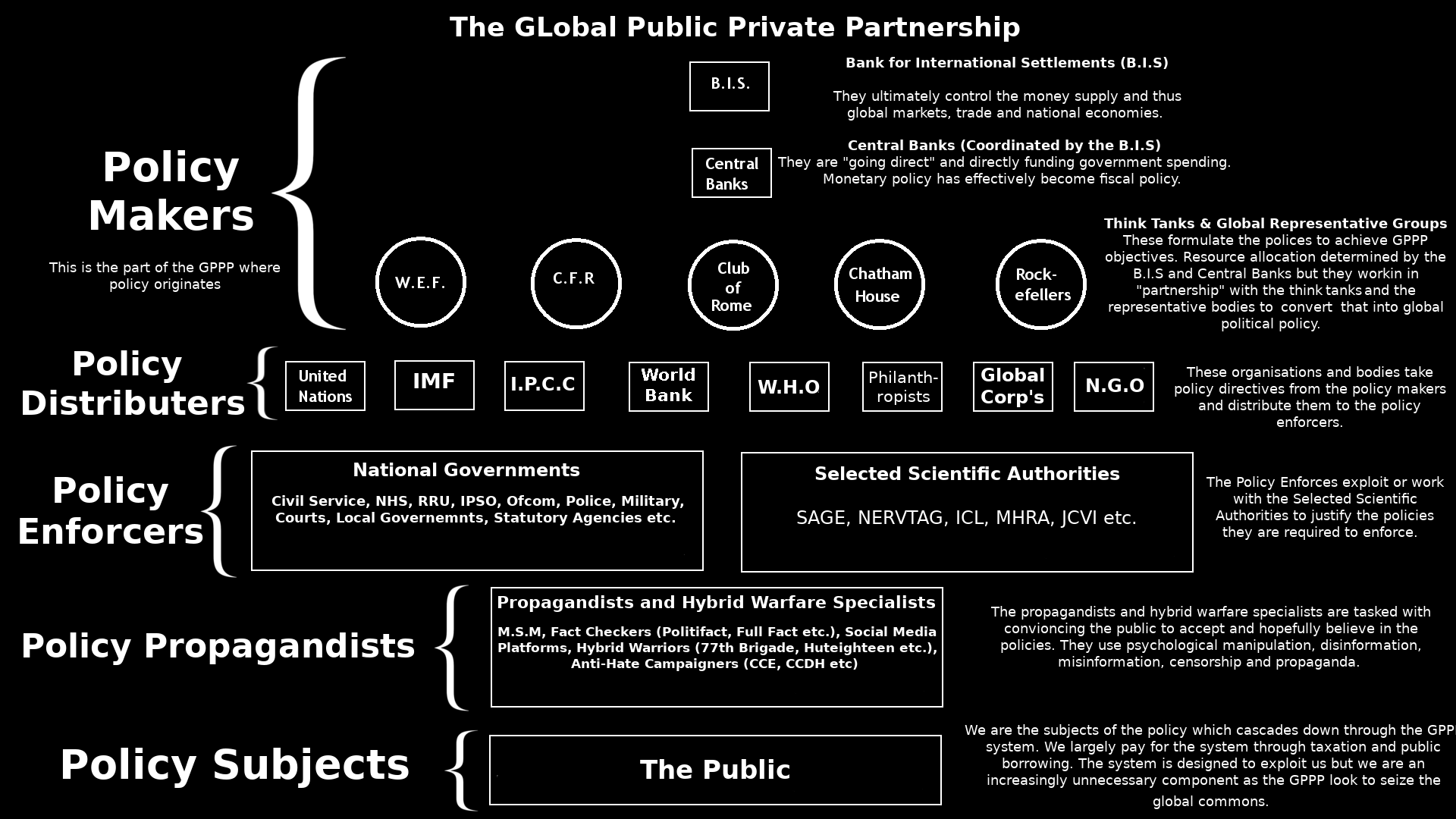
[click to enlarge]
SDG’s led to net zero policies and they stipulate, among a swath of enforced changes, the end of petrol and diesel transport. We are all under orders to switch to electric vehicles (EVs) which the vast majority won’t be able to afford. In turn, this means a massive increase in demand for lithium-ion batteries.
Manufacturing these will require a lot more cobalt which is widely considered to be the most critical supply chain risk for producing EVs. The World Bank estimate that the growth in demand for cobalt between 2018 and 2050 will be somewhere in the region of 450%. To say this is a “market opportunity” is a massive understatement.
The ISA have granted 5 cobalt exploration contracts to JOGMEC (Japan), COMRA (China), Russia, the Republic of Korea and CPRM (Brazil). When located deposits become commercially viable, as they undoubtedly will, the corporate feeding frenzy can begin.
Corporations, such as the weapons manufacturer Lockheed Martin, with its wholly owned subsidiary UK Seabed Resources (UKSR), are also among the many ISA stakeholders. UKSR received their exploration license for the South Pacific in 2013. As an ISA exploration contractor, UKSR stakeholders are free to submit their recommendations for amendments to the ISA regulations governing their own mining operations.
For example, the ISA stated that mining corporations should provide a financial guarantee that would cover “unexpected costs, expenses and liabilities.” Lockheed Martin didn’t like this at all and so suggested a slight change. They recommended the addition of the following:
The Guarantee is not to cover costs, expenses and liabilities incurred as a result of tortious liability for environmental damage.”
This was presumably because, in their pursuit of SDG “protection” of the planet, Lockheed Martin don’t wish to be liable for the environmental damage they will inflict upon it in the process. This risk of this is high because the proposed method for “scraping the seabed” will almost certainly destroy it.
Fortunately for UKSR and other stakeholders like COMRA, the ISA’s is committed to regulations which promote sound commercial principles and safeguard their commercial interests. Destroying the seabed is a risk worth taking but not if you have to pay for it.
When it comes to fighting climate change, human life is even cheaper. Nearly all cobalt is currently mined from Africa’s copper belt and more than 60% of the world supply comes from the Democratic Republic of the Congo. It is clawed from the Earth by tens of thousands of child slaves.
This poisonous torture dramatically shortens the abject misery of their suffering on this Earth. However, it does mean other young people like Greta Thunberg can inspire more fortunate children to mobilise on social media, using their fully charged devices, to save the planet.
Only the commercial viability of deep-sea reserves seems capable of saving the cobalt mine slaves. Alas, it is difficult to envisage how deep see reserves will become viable until land based reserves near exhaustion.
This openly condoned child abuse has been ongoing for years. A fact which the world’s media admits but never mentions when it eulogises about the green revolution.
The estimated 94,000 tonnes of cobalt in the Clarion Clipperton Zone (CCZ) of the Eastern Pacific alone represents 6 times the known land based reserves. With total deep sea reserves estimated to be worth between $8 – $16 trillion, as we progress towards a carbon neutral economy, deep sea mining is an inevitability. Regardless of the environmental cost.
All the real environmental issues are to be ignored as the world embarks upon a transition to a new global economy based upon one highly questionable theory: namely anthropogenic global warming (AGW).
THE GLOBAL COMMONS NEW MARKET(S)
This transition to the green economy will see myriad new markets created as the Earths “common” resources are converted into proverbial investment gold mines. Cobalt scraped from the seabed is just one example, there are thousands more.
The GPPP will have exclusive access, and thus control, over these new, essential resources. The investment opportunities are endless. It is this prospect, not any concerns for the Earth or humanity, that is driving the seizure of the global commons.
The GPPP have recognised that if they can squeeze something into the “global commons” they can then control of it. Consequently, the list of alleged “commons” continues to grow, as the the GPPP seek more control over more of the planet and everything on it.
In 1996 the late John Perry Barlow, from the Electronic Freedom Foundation, presented a Declaration for the Independence of Cyberspace to the annual Davos conference of the World Economic Forum (WEF). It perhaps seems odd that the GPPP wanted to hear this radical, libertarian call for governments around the world to leave cyberspace unregulated.
However, as I stress in my book Pseudopandemic, the intent of ideas, political and economic philosophies or social doctrines is not what interests the GPPP. Rather, it is how those ideologies can be exploited to achieve their goals.
In making his address Barlow was, perhaps inadvertently, laying the groundwork to include cyberspace as part of the “global commons.”
As we shall discuss shortly, the GPPP already had a plan in place to appropriate everything defined as a global commons. It was this prospect which enthralled the assembled Davos (GPPP) crowd.
In their 2015 Davos executive summary the WEF illustrated how the GPPP manipulate narratives to reshape the context of our daily lives.
In this case, the objective was to institute the precepts for their claimed jurisdiction of cyberspace.
What is clear is that we are confronted by profound political, economic, social and, above all, technological transformations… resulting in an entirely ‘new global context’ for future decision-making… The World Economic Forum’s Annual Meeting provides an unparalleled platform for leaders to develop the necessary insights, ideas and partnerships to respond to this new context…
Based on the principle that a multistakeholder, systemic and future-oriented approach is essential in this new context, the issues to be addressed through sessions, taskforces and private meetings at the Annual Meeting 2015 include… The inability to significantly improve the management and governance of critical global commons, most notably natural resources and cyberspace.
We have considered the example of the oceans and their resources, but the process for creating regulated markets for all commons is the same. First something must be levered into the category of the global commons. Once declared to be among the “shared resources all life relies upon,” some GPPP quango is appointed to oversee access to the new regulated market.
This body will be formed to serve the stakeholders capitalists who will then have exclusive access to and control of that resource.
In accordance with the U.N. definition “stewardship of the global commons cannot be carried out without global governance.” Global governance is formally convened via the process of stealing the global commons. The entire operation is founded upon sustainable development.
THE AGENDAS FOR SUSTAINABLE GLOBAL COMMONS
As mentioned previously, this plan has been in-place for decades. Sustainable Development Goals (SDGs) are set in Agenda 2030 as way-points along the path to completion of the plan for the 21st century: Agenda 21.
When GPPP stakeholders say they are committed to SDG’s they mean Agenda 2030, in the short term, and ultimately Agenda 21. Agenda 21 has a lot to say about what it calls “human settlements.” It lays out how they will be planned, constructed and managed by a public-private partnership. However, in constructing human settlements, human beings do not appear very high on the priority list.
Objective 5.29 states:
In formulating human settlements policies, account should be taken of resource needs, waste production and ecosystem health.”
Resource allocation, waste management and environmental protections are the prerequisites for “human settlements.” Not the welfare of humanity.
The GPPP will oversee the construction or allocation of our settlements. Objective 7.30. d. states:
Encourage partnerships among the public, private and community sectors in managing land resources for human settlements development.”
All land, not just the commons, will be managed by the GPPP. Again, subsequent Agenda 2030 SDGs have provided the justification for the land grab.
Objective 10 of Agenda 21 states:
The broad objective is to facilitate allocation of land to the uses that provide the greatest sustainable benefits and to promote the transition to a sustainable and integrated management of land resources”
Clearly this raises issues of private land ownership and use. Not just among householders but by industry, farmers, train companies or any other private land owner. The trick in holding on to land will be to secure its designation as having a “sustainable” purpose. This allocation will need to be agreed by the GPPP, so friends in high places will be key.
Agenda 21 demands, under “Activities” in section 7.29, that all nations must develop:
A comprehensive national inventory of their land resources in order to establish a land information system in which land resources will be classified according to their most appropriate uses and environmentally fragile or disaster-prone areas will be identified for special protection measures.”
If the place where you live is deemed to be environmentally fragile, and we are told the whole planet is, then the GPPP will follow section 7.30. h and implement:
Practices that deal comprehensively with potentially competing land requirements for agriculture, industry, transport, urban development, green spaces, preserves and other vital needs.”
This will involve the creation of “protected areas.” Among many of their authoritarian powers, this means that the GPPP will have control of all drinking water. Water sources automatically become “protected areas” under Agenda 21, for the good of our “health.”
Activity 18.50 it states:
All States, according to their capacity and available resources, and through bilateral or multilateral cooperation, including the United Nations and other relevant organizations as appropriate, could implement the following activities:.. Establishment of protected areas for sources of drinking-water supply.”
By exploiting the deception of “sustainable development” a planetary system of global governance, under the auspices of the GPPP, is currently being established. This is “build back better,” the “Great Reset,” the “Green New Deal” or whatever the GPPP choose to sell it as.
It means GPPP dominion over absolutely everything. We truly will own nothing, although it seems unlikely that many of us will be happy about it.
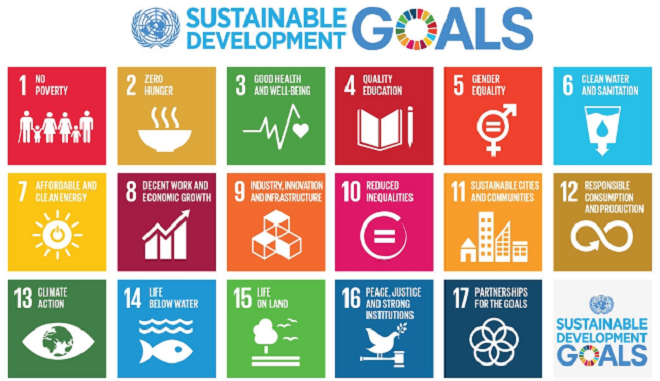
Those who do not understand, or do not wish to admit the reality of this global coup d’état, are quick to point out that Agenda 21 – and 2030 – are not legislation. Nation-states are not compelled to go along with any of it. This observation fails to appreciate what “global governance” is.
Global governance is not the setting of either policy or legislation. It is the creation of policy agendas which individual nation states may or may not implement as policy or subsequent legislation. It can only have teeth if nation states comply.
The problem we face is that nation states are “partner organisation,” some might say junior partners, within the GPPP. While they remain sovereign entities they do not act as such. We only need look at how global markets are created by Agenda 21 to see how all nation states have willingly collaborated in the sustainable development scam.
In Agenda 21 the declared “Basis for Action” at section 8.41 states:
A first step towards the integration of sustainability into economic management is the establishment of better measurement of the crucial role of the environment as a source of natural capital… A common framework needs to be developed whereby the contributions made by all sectors and activities of society, that are not included in the conventional national accounts, are included… A programme to develop national systems of integrated environmental and economic accounting in all countries is proposed.”
The clearly stated plan, written in 1992, was to create “natural capital” to shift “sustainability into economic management.” All sectors and all society will be involved in this effort to transform nature into economic capital.
This will include the oversight of the “activities of society,” such as our use of cyberspace, which are “not included in the conventional national accounts.” The global commons in other words.
It doesn’t matter if Agenda 21 (2030) has legislative authority or not. All the matters is the complicity of legislative authorities. They are in full compliance.
Agenda 21 proposed the development of “national systems of integrated environmental and economic accounting in all countries.” This was envisaged to complete the transformation of the Earth and all of its natural resources into a centralised system of economic control.
As Whitney Webb explored in her excellent article, Wall Street’s Takeover of Nature Advances with Launch of New Asset Class that is precisely what has happened. By once again misusing the concept of the global commons, the GPPP has created Natural Asset Companies (NACs). These will allegedly:
Preserve and restore the natural assets that ultimately underpin the ability for there to be life on Earth.”
This allusion to caring for the global commons all sounds wonderful but when we consider its impact upon the oceans depths, for example, it is really just the creation of new markets. Concern for environmental destruction barely registers.
THE METRICS OF THE GLOBAL COMMONS
Clearly, the objective of NACs is to secure GPPP stakeholder’s exclusive access to resources which, hitherto, weren’t “owned” by anyone. Michael Blaugrund, the Chief Operating Officer of the New York Stock Exchange, admitted as much:
Our hope is that owning a natural asset company is going to be a way that an increasingly broad range of investors have the ability to invest in something that’s intrinsically valuable, but, up to this point, was really excluded from the financial markets.”
To put this into perspective, the current, total GDP of the whole planet is approximately $94 trillion. By converting the Earth into an asset portfolio, nature is projected to be worth $4000 trillion. More than 40 times world GDP. Needless to say, this is one hell of an investment opportunity.
The transformation of the global economy is well underway. The entire GPPP is, understandably, committed to the project. What disagreements that exist only extend to who gets what. There is no opposition to the new global economic model. As Webb pointed out:
The ultimate goal of NACs is not sustainability or conservation – it is the financialization of nature, i.e. turning nature into a commodity that can be used to keep the current, corrupt Wall Street economy booming under the guise of protecting the environment and preventing its further degradation.”
NACs will enable investors to acquire assets primarily in developing nations, as multinational corporations and financial funds hoover up former global commons and other resources. However, the financialization of nature is global, transforming the Globe into a bull market.
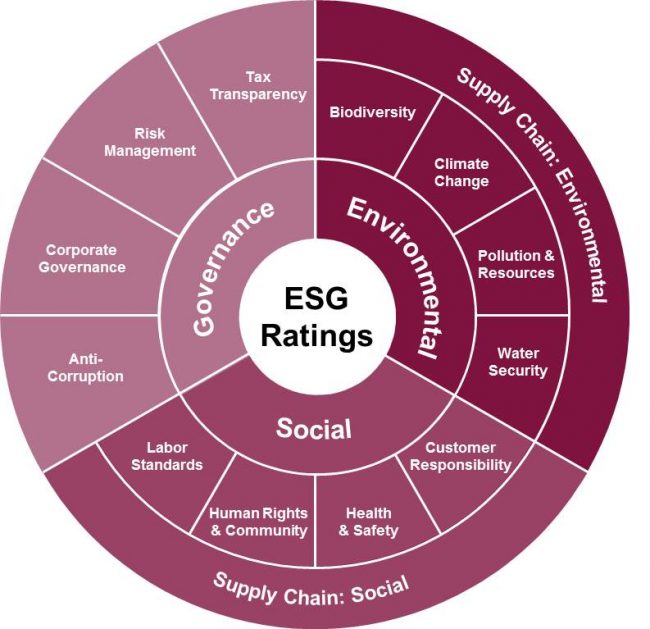
This will be achieved using Stakeholder Capitalism Metrics. Assets will be rated using environmental, social and governance (ESG) benchmarks for sustainable business performance. Any business requiring market finance, perhaps through issuing climate bonds, or maybe green bonds for European ventures, will need those bonds to have a healthy ESG rating.
A low ESG rating will deter investors and the project or business venture won’t get off the ground. A high ESG rating will see investors rush to put their money in projects which are backed by international agreements. In combination, financial initiatives like NACs and ESGs are converting SDG’s into market regulations.
This centralises authority over the global economy, placing it in the hands of the GPPP. Speaking in July 2019, then Governor of the Bank of England (BoE) and soon to be U.N. special envoy for Climate Action, Mark Carney, simply stated:
Companies that ignore climate change and don’t adapt will go bankrupt without question.”
Later, speaking at the Green Horizons Summit in November 2020, jointly hosted by The City of London Corporation, the Green Finance Institute and the World Economic Forum, Carney, acting in another role as UK Prime Ministerial Finance Adviser on COP26, said:
“Transition plans will reveal the leaders and laggers on the road to Glasgow… We will not get to net zero in a niche, it requires a whole economy transition.”
The leaders in the new global economy will be those selected by the GPPP through the appropriate rating of their issued securities. The laggers will be weeded out via the same mechanism. They will go bankrupt without question.
All business, not just global corporations, will be required to “adapt” to the new SDG based economic system. This isn’t some projection of what the future global economy will look like, it has already happened. While the world has been obsessing over the pseudopandemic the GPPP has initiated a global revolution.
At the eventual COP26 summit in Glasgow, Mark Carney, allegedly speaking as the U.N envoy – or perhaps as a Board Trustee of the World Economic Forum, it’s hard to say – launched something he called GFANZ:
The architecture of the global financial system has been transformed to deliver net zero. We now have the essential plumbing in place to move climate change from the fringes to the forefront of finance so that every financial decision takes climate change into account … [This] rapid, and large-scale, increase in capital commitment to net zero, through GFANZ, makes the transition to a 1.5C world possible.”
The UK Chancellor of the Exchequer, Rishi Sunak, followed up Carney’s statement with the declaration of the Glasgow Financial Alliance for Net Zero (GFANZ). The plan is to initially “align,” (force) 40% of the world’s current financial assets, amounting to $130 trillion, to commit to the transition towards a decarbonised global economy. The UK government press release reported:
The UK has convened over 30 advanced and developing countries from across 6 continents and representing over 70% of global GDP to back the creation of a new global climate reporting standards by the IFRS Foundation to give investors the information they need to fund net zero.”
All this is necessary, according to Carney, Sunak and all the other GPPP leaders, to control the Earth’s climate. They really imagine, or rather want you to imagine, that they can tweak the temperature of the Earth by centralising their authority over the world’s economy.
As Whitney Webb accurately observed on Twitter:
GLOBAL GOVERNANCE OF EVERYTHING
GFANZ is largely based upon double accounting and financial slight of hand. There isn’t really any commitment to actually reducing GHG emissions. The major banks will still be free to invest in fossil fuels while it remains profitable.
Once again the mainstream critics, or at least those reported by the financial MSM, utterly fail to understand what they are looking at. They fantasise that it is all about “saving the planet” or creating a greener economy for the good of all.
It is not, and it never was. It is about centralising financial and economic power.
It doesn’t matter if the numbers don’t add up. The real environmental impact is totally irrelevant. All that matters is that a mechanism is created by which the upper echelons of the GPPP hierarchy can firstly rescue and then extend their authority and control. That is the primary objective and until the pet economists and media commentators grasp this, they will never see that which is staring them in the face.
Presumably they still believe it is just an incalculable coincidence that this transformation has occurred just in time to save the failed IMFS (international monetary and financial system.) The GPPP have simply struck lucky. Saving the planet just happens to require exactly the same economic and financial restructuring needed to cover up the complete collapse of their former control structure.
At the 2019 annual G7 bankers symposium in Jackson Hole, Wyoming, just four months before the first cases of COVID 19 were reported, the second largest investment management firm in the world, BlackRock, presented their report Dealing With The Next Downturn to the gathered G7 central bankers. They reported:
Unprecedented policies will be needed to respond to the next economic downturn. Monetary policy is almost exhausted as global interest rates plunge towards zero or below. Fiscal policy on its own will struggle to provide major stimulus in a timely fashion given high debt levels and the typical lags with implementation… Conventional and unconventional monetary policy works primarily through the stimulative impact of lower short-term and long-term interest rates. This channel is almost tapped out.”
Unable to either spend or tax their way out of trouble, BlackRock admitted that, for the GPPP, the existing IMFS was a finished. This was the source of their power and therefore, if they were to retain their “authority,” a new system was required.
Mark Carney, on this occasion speaking as the governor of the BoE, affirmed BlackRock’s assessment:
Most fundamentally, a destabilising asymmetry at the heart of the IMFS is growing… a multi-polar global economy requires a new IMFS to realise its full potential. That won’t be easy… the deficiencies of the IMFS have become increasingly potent. Even a passing acquaintance with monetary history suggests that this centre won’t hold… I will close by adding urgency… Let’s end the malign neglect of the IMFS and build a system worthy of the diverse, multipolar global economy that is emerging.”
All agreed that a new IMFS was urgently needed. There was no time left to lose. In their paper BlackRock suggested that the new financial order could be created by “going direct:”
Going direct means the central bank finding ways to get central bank money directly in the hands of public and private sector spenders… enforcing policy coordination so that the fiscal expansion does not lead to an offsetting increase in interest rates.”
This was a revolutionary concept. Central banks theoretically served solely as the bank for commercial banks and government. Their official role was to invest in government bonds and manage settlements between commercial banks using central banks reserves called “base money.” The money you and I use every day is “broad money.” It had always circulated in the economy separately from base money.
Base money had never before been used to directly stimulate or manipulate broad money markets (in theory). With their going direct plan BlackRock were suggesting a mechanism by which it could. Effectively placing central banks in charge (enforcing policy coordination) of government fiscal policy: government taxation and spending.
Going direct represents a fundamental change in the nature of our political systems. It suggests that elected governments are no longer in charge of spending. It appears to be the establishment of taxation without representation: the end of any notion of democracy.
BlackRock added that going direct would be required if an “unusual conditions” arose. The center couldn’t hold, an extraordinary catalyst was needed to bring about the transformation.
In yet another remarkable and, for the GPPP, incredibly fortuitous coincidence, the U.S. “repo market” floundered just a month later. This delivered the necessary unusual condition, triggering BlackRock’s plan.
Things became extremely unusual just a few months later as the world was plunged into a global pseudopandemic. In response, by March 2020, going direct went into overdrive.
BlackRock said that going direct would only be required while the “unusual condition” persisted, although the nature of the arrangement would require a “permanent set-up.” Once fiscal policy objectives were achieved, which were also monetary policy objectives, the temporary permanent set-up could then move on to the “exit strategy” placed on the “policy horizon”.
We now know what that policy horizon is. It is the transformation of the IMFS, the seizure of the global commons, the financialization of nature and the establishment of a central financial body that rules it all. This process is more commonly referred to a “sustainable development” or the contruction of the green economy.
Mark Carney – formerly of Goldman Sachs & the Bank of England
ONE RING TO RULE THEM ALL
Prior to his GFANZ proclamation, in November 2020, Rishi Sunak stated that the UK intended to issue the world’s first sovereign green bond. The UK Government decreed that it would make reporting to the Task Force on Climate-related Financial Disclosures (TFCD) mandatory for all UK businesses by 2025. Sunak added that this would encourage investment in new technologies “like stablecoins and Central Bank Digital Currencies”.
The UK Government added:
The UK will become the first country in the world to make Task Force on Climate-related Financial Disclosures (TCFD) aligned disclosures fully mandatory across the economy by 2025… The UK will also implement a green taxonomy — a common framework for determining which activities can be defined as environmentally sustainable.”
The UK government’s pretence that it was in control of this initiative was comical. The Stakeholder Capitalism Metrics which determine ESG asset ratings, and the development of NACs, aren’t managed by the UK, U.S. or any other elected government. These financial levers are firmly rooted in the private sector.
GPPP leaders like the Bank for International Settlements, national central banks, BlackRock, Vanguard and WEF partners like Deloitte, PwC, McKinsey and KPMG are controlling these investment strategies. Governments are just junior, facilitating partners in the Global Public-Private Partnership.
The TCFDs are evaluated in response to a company’s “sustainability report.” According to the Financial Stability Board (FSB), the sustainability report “describes a company’s or organization’s impact on society, often addressing environmental, social, and governance issues.”
The TDFD assessment determines the ESG rating of its assets. This will be the deal maker, or breaker, whenever it wants to raise capital investment.
The sustainability report standards are set by the International Financial Reporting Standards (IFRS) foundation. The IFRS foundation states that it is a non profit, public-interest organisation.
It sets agreed accountancy standards in 140 jurisdictions for both public and private organisations. Its jurisdictions include the U.S., the EU, the UK, Canada, Australia, New Zealand, China and Russia.
However its claim to operate in the “public interest” is not supported by its own statements. The IFRS foundation also reports:
IFRS Standards are set by the International Accounting Standards Board and are used primarily by publicly accountable companies—those listed on a stock exchange and by financial institutions, such as banks.”
The International Accountancy Standards Board (IASB) is a private-sector organisation. Currently 12 people supposedly decide upon the IFRS standards which stipulate the sustainability report requirements for businesses and other organisations, including governments, across the planet.
Under the chairmanship of Mark Carney – he’s a busy man – the Financial Stability Board (FSB) created the TCFD in 2015:
The Financial Stability Board (FSB) announced today it is establishing an industry-led disclosure task force on climate-related financial risks.. The Task Force on Climate-related Financial Disclosures (TCFD) will develop voluntary, consistent climate-related financial risk disclosures for use by companies in providing information to lenders, insurers, investors and other stakeholders.
Five years later it was again Carney who, knowing that the “center cannot hold,” announced the consolidation and unification of the whole system at the COP26 summit. Inline with GFANZ, the IFRS announced the next step in the process, with the creation of its International Sustainability Standards Board (ISSB.)
The head auditor at PwC, Hemione Hudson, said:
The launch today of the International Sustainability Standards Board is an important step towards achieving a global common approach to ESG related disclosure standards. Harnessing the power of the financial markets to play a leading role in the transition to a net zero economy… Reporting standards are a critical component to achieving this”
We can now see how the whole system will work.
Every business, every project they wish to embark upon, every initiative they plan and every policy they pursue must adhere to SDGs. Their compliance to the agreed agenda will be measured via their “sustainability report.”
The Task Force on Climate-related Financial Disclosures (TCFD) will judge their performance. Their ESG subcommittees, such as the International Sustainability Standards Board, will approve the relevant ESG rating for that business.
The private investment ratings agencies like Deloitte who are “members” of the IFRS and, by definition, the GPPP, will effectively control every business’s investment strategy and thus their operations. Deep-sea mining, cybersecurity, digital currency innovation, exploitation of the global commons and anything else ordained as “sustainable” will receive the corresponding ESG rating.
All of this is centrally controlled through the TCFD system, operated by the FSB. They will be able to select who prospers and who doesn’t. The FSB secretariat is “hosted” and funded by the Bank for International Settlements (BIS) and is based at BIS headquarters in Basel, Switzerland.
Not only are the central banks, under the authority of the BIS, going direct and funding global fiscal policy, they are intent upon controlling all business, all commerce and all finances. They are seizing the global commons, financializing nature and moving beyond the old IMFS to establish true global governance.
If we don’t act. If we simply allow the puppets in our so-called governments to maintain their GPPP positions then the BIS, the central banks and other “valued stakeholders” are going to seize everything on this Earth. We will be beholden to them for the resources that “all life relies upon.”
If we allow that to happen then, just like the forgotten souls abandoned to the brutality of the cobalt mines, we will all be slaves.
The WEF and the Pandemic
How is the Davos World Economic Forum involved in the coronavirus pandemic?
Swiss Policy Research | October 6, 2021
The Davos World Economic Forum (WEF) is a premier forum for governments, global corporations and international entrepreneurs. Founded in 1971 by engineer and economist Klaus Schwab, the WEF describes its mission as “shaping global, regional and industry agendas” and “improving the state of the world”. According to its website, “moral and intellectual integrity is at the heart of everything it does.”
The WEF has been involved in the coronavirus pandemic in several ways.
First, the WEF was, together with the Gates Foundation, a sponsor of the prescient “Event 201” coronavirus pandemic simulation exercise, held in New York City on October 18, 2019 – the same day as the opening of the Wuhan Military World Games, seen by some as “ground zero” of the global pandemic. China itself has argued that US military athletes may have brought the virus to Wuhan.
Second, the WEF has been a leading proponent of digital biometric identity systems, arguing that they will make societies and industries more efficient, more productive and more secure. In July 2019, the WEF started a project to “shape the future of travel with biometric-enabled digital traveler identity management”. In addition, the WEF collaborates with the ID2020 alliance, which is funded by the Gates and Rockefeller foundations and runs a program to “provide digital ID with vaccines”. In particular, ID2020 sees the vaccination of children as “an entry point for digital identity.”
Third, WEF founder Klaus Schwab is the author of the book COVID-19: The Great Reset, published in July 2020, which argues that the coronavirus pandemic can and should be used for an “economic, societal, geopolitical, environmental and technological reset”, including, in particular, advancing global governance, accelerating digital transformation, and tackling climate change.
Finally, the WEF has been running, since 1993, a program called “Global Leaders for Tomorrow”, rebranded, in 2004, as “Young Global Leaders”. This program aims at identifying, selecting and promoting future global leaders in both business and politics. Indeed, quite a few “Young Global Leaders” have later managed to become Presidents, Prime Ministers, or CEOs (see below).
During the coronavirus pandemic, several WEF Global Leaders and Global Shapers (a junior program of the Global Leaders) have played prominent roles, typically promoting zero-covid strategies, lockdowns, mask mandates, and ‘vaccine passports’. This may have been a (largely failed) attempt to protect public health and the economy, or it may have been an attempt to advance the global transformation agenda outlined above, or perhaps both.
In this regard, some notable Young Leaders include Jeffrey Zients (US White House Coronavirus Response Coordinator), Stéphane Bancel (CEO of Moderna), Jeremy Howard (founder of influential lobby group “Masks for All”), Leana Wen (zero-covid CNN medical analyst), Eric Feigl-Ding (zero-covid Twitter personality), Gavin Newsom (Governor of California, selected in 2005), Devi Sridhar (British zero-covid professor), Jacinda Ardern (Prime Minister of New Zealand), French President Emanuel Macron (selected one year prior to his election in 2017), Austrian Chancellor Sebastian Kurz, German Chancellor Angela Merkel (selected back in 1993), German Health Minister Jens Spahn, and former British Prime Minister Tony Blair (a leading proponent of ‘global vaccine passports’).
To get a full overview of their members, see Global Leaders for Tomorrow and Young Global Leaders on WikiSpooks (a Wiki focusing on covert power structures) as well as the official Young Global Leaders website. For an overview of some notable members in politics and the media, see below.
In conclusion, the Davos World Economic Forum has indeed been involved in the strategic management of the coronavirus pandemic, with a major emphasis on using the pandemic as a catalyst for digital transformation and the global introduction of digital identity systems.
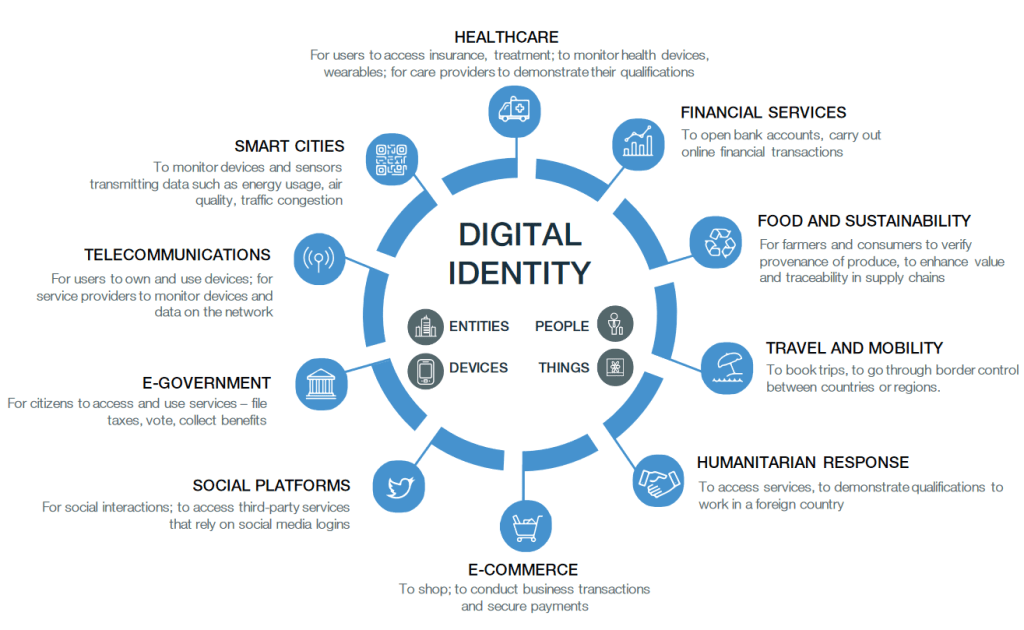
Digital Identity: The vision of the World Economic Forum (WEF, 2018)
WEF “Young Global Leaders”
An overview of some WEF Young Global Leaders (2005-2021) and Global Leaders for Tomorrow (1993-2003) in politics and the media. The list is not exhaustive.
Sources: Global Leaders for Tomorrow and Young Global Leaders on WikiSpooks.
United States
Politics and Policy
Jeffrey Zients (White House Coronavirus Response Coordinator since 2021, selected in 2003), Jeremy Howard (co-founder of lobby group “masks for all”, selected in 2013), California Governor Gavin Newsom (selected in 2005), Pete Buttigieg (selected in 2019, candidate for US President in 2020, US secretary of transportation since 2021), Chelsea Clinton (Clinton Foundation board member), Huma Abedin (Hillary Clinton aide, selected in 2012), Nikki Haley (US ambassador to the UN, 2017-2018), Samantha Power (US ambassador to the UN, 2013-2017, USAID Administrator since 2021), Ian Bremmer (founder of Eurasia Group), Bill Browder (initiator of the Magnitsky Act), Jonathan Soros (son of George Soros), Kenneth Roth (director of “Human Rights Watch” since 1993), Paul Krugman (economist, selected in 1995), Lawrence Summers (former World Bank Chief Economist, former US Treasury Secretary, former Harvard University President, selected in 1993), Alicia Garza (co-founder of Black Lives Matter, selected in 2020), Stéphane Bancel (Moderna CEO).
Media
CNN medical analyst Leana Wen (selected in 2018), CNN chief medical correspondent Sanjay Gupta, Covid Twitter personality Eric Feigl-Ding (a ‘WEF Global Shaper‘ since 2013), Andrew Ross Sorkin (New York Times financial columnist), Thomas Friedman (New York Times columnist, selected in 1995), George Stephanopoulos (ABC News, 1993), Lachlan Murdoch (CEO of Fox Corporation).
Technology and Social Media
Microsoft founder Bill Gates (1993), former Microsoft CEO Steven Ballmer (2000-2014, selected in 1995), Amazon founder Jeff Bezos (1998), Google co-founders Sergey Brin and Larry Page (2002/2005), former Google CEO Eric Schmidt (2001-2017, selected in 1997), Wikipedia co-founder Jimmy Wales (2007), PayPal co-founder Peter Thiel (2007), eBay co-founder Pierre Omidyar (1999), Facebook founder and CEO Mark Zuckerberg (2009), Facebook COO Sheryl Sandberg (2007).
Great Britain, Canada, New Zealand
Professor Devi Sridhar (a leading ‘zero covid’ proponent, selected in 2020/21), former British Prime Ministers Tony Blair and Gordon Brown (both selected in 1993), BBC World Service journalist Dawood Azami, Lynn Forester de Rothschild (co-owner of The Economist), Nathaniel Rothschild (son of Lord Rothschild), historian Niall Ferguson (selected in 2005), William Hague (Foreign Secretary, 2010-2014), Charles Allen (CEO of ITV, 2004-2007; Chairman of EMI, 2008-2010).
New Zealand Prime Minister Jacinda Ardern (since 2017, selected in 2014), Canadian Deputy Prime Minister Chrystia Freeland (selected in 2001; former managing director of Reuters). Canadian Prime Minister Justin Trudeau is a WEF participant, but is not a confirmed Young Global Leader.
Germany
Chancellor Angela Merkel (selected in 1993, 12 years before becoming Chancellor), current Health Minister Jens Spahn and former Health Ministers Philipp Roesler and Daniel Bahr, current co-chair of the Green Party and failed Chancellor candidate Annalena Baerbock (selected in 2020), former co-chair of the Green Party Cem Özdemir (selected in 2002), media mogul and Axel Springer CEO Mathias Doepfner (selected in 2001), talk show host Sandra Maischberger, late Foreign Minister and Vice Chancellor Guido Westerwelle (1997), former German President Christian Wulff (selected in 1995, 15 years before becoming President), Reto Francioni (former CEO of Deutsche Boerse).
European Union
EU Commission Presidents Jose Manuel Barroso (2004-2014, selected in 1993) and Jean-Claude Juncker (2014-2019, selected in 1995), French President Emanuel Macron (since 2017, selected in 2016), former French President Nicolas Sakozy (2007-2012, selected in 1993), Austrian Chancellor Sebastian Kurz, former Italian Prime Minister Matteo Renzi (2014-2016, selected in 2012), former Spanish Prime Minister Jose Maria Aznar (1996-2004, selected in 1993), Klaus Regling (CEO of the European Financial Stability Mechanism since 2012), Guy Verhofstadt (former Belgian Prime Minister, Chair of the Brexit Steering Group), Danish Minister for the Environment Lea Wermelin, Finnish Prime Minister Sanna Marin, former Finnish Prime Minister Alexander Stubb, and Mark Leonard (founding director of the Soros-funded European Council on Foreign Relations).
Switzerland
Natalie Rickli (Director of Health of the Canton of Zurich, selected in 2012), former Presidents of the Swiss National Council Christa Markwalder (selected in 2011) and Pascale Bruderer-Wyss (selected in 2009), Geneva politician Pierre Maudet (selected in 2013), NZZ media group CEO Felix R. Graf (selected in 2007), former Swiss Justice Minister Ruth Metzler (selected in 2002), former Swiss television CEO Roger de Weck (2011-2017, selected in 1994), former UBS CEOs Peter Wuffli (selected in 1994) and Marcel Rohner (selected in 2003), former Credit Suisse CEO Tidjane Tiam (1998).
Video Annex
1) Bill Gates demanding “digital immunity proof” in March 2020
2) Edward Snowden warning of the “destruction of rights” (March 2020)
3) The Chinese “social credit” system (May 2019)
Further reading
- All Roads Lead to Dark Winter (Whitney Webb, April 2020)
See also
Cultural Warfare in the 20th Century: How Western Civilization Came Undone
By Matthew Ehret | Strategic Culture Foundation | October 9, 2021
In my last article “Guterres and the Great Reset: How Capitalism Became a Time Bomb”, I made the case that the time bomb justifying a Great Reset of civilization was set into motion over 50 years ago. In that location, we were introduced to a cast of characters surrounding the World Economic Forum and Trilateral Commission who played instrumental roles in bringing about a controlled disintegration of western civilization.
Despite the fact that this un-natural transformation occurred over the dead bodies of great statesmen of the 1960s, a question still lingers: HOW did the western nations… especially the United States, so deeply shaped by a love of freedom, wilfully relinquish its democratic institutions in favor of a new system of supranational governance and de-growth? How did the very people who were targeted for destruction not only let this happen but in some cases even aide and abet the perpetrators?
Epistemological Warfare in America
Here it helps to look to the writings of an imperial grand strategist who is too often championed as a defender of freedom: Aldous Huxley.
While Aldous’ brother Julian was reshaping the global paradigm by re-packaging eugenics under several new costumes post-1945, Aldous’ creative juices were driven entirely by his role as a cultural warrior.
Grand children of Thomas Huxley who was commissioned to re-organize the British Empire in the late 1850s, both grandchildren vigorously embraced the family business working closely with the elite Bloomsbury Group of Bertrand Russell, and John Maynard Keynes between 1914-1937.
Among these creative misanthropes, Lord Bertrand Russell (another celebrated pacifist) had gone far in outlining the sort of bone chilling ideal that Darwinian laws of evolution demanded be humanity’s destiny under a scientifically managed priesthood. In his 1930 Scientific Outlook, Russell stated:
“The scientific rulers will provide one kind of education for ordinary men and women, and another for those who are to become holders of scientific power. Ordinary men and women will be expected to be docile, industrious, punctual, thoughtless, and contented. Of these qualities probably contentment will be considered the most important. In order to produce it, all the researchers of psycho-analysis, behaviourism, and biochemistry will be brought into play…. All the boys and girls will learn from an early age to be what is called `co-operative,’ i.e., to do exactly what everybody is doing. Initiative will be discouraged in these children, and insubordination, without being punished, will be scientifically trained out of them.”
“Except for the one matter of loyalty to the world state and to their own order, members of the governing class will be encouraged to be adventurous, and full of initiative. It will be recognized that it is their business to improve scientific techniques and to keep the manual workers contented by means of continual new amusements”.
Huxley would have Russell’s thesis firmly in mind when he began writing his Brave New World in 1931.
Aldous Goes to Work
Having set up his base of operations in Hollywood in 1937, Aldous lived out his days in the USA writing scripts for Hollywood, exploring psychotropic drugs and coordinating a new cultural movement that would soon overtake the youth growing up amidst the insanity of the Cold War.
In an infamous 1962 speech titled “The Ultimate Revolution”, Aldous Huxley outlined the principles of this new science of governance telling adoring fans amidst the wannabe alphas in the Berkeley auditorium:
“If you are going to control any population for any length of time, you must have some measure of consent. It’s exceedingly difficult to see how pure terrorism can function indefinitely. It can function for a fairly long time, but I think sooner or later you have to bring in an element of persuasion, an element of getting people to consent to what is happening to them. Well, it seems to me that the nature of The Ultimate Revolution with which we are now faced is precisely this: That we are in process of developing a whole series of techniques, which will enable the controlling oligarchy who have always existed and presumably always will exist, to get people, actually, to love their servitude.”
Getting people to love their servitude would be made possible by an array of new techniques outlined in both Huxley’s fiction and non-fiction writings and put into motion by the hard work of CIA-funded laboratories working under secretive umbrella of Allan Dulles’ MK Ultra. Utilizing many techniques pioneered by Nazi psychiatrists in WWII, one of the primary objectives of MK Ultra was to deconstruct the human psyche using a mix of electroshock therapy, psychotropic drugs and other conditioning in order to reconstruct personalities from scratch by professional psychiatrists. As Naomi Klein demonstrated in her famous book The Shock Doctrine, the idea behind MK Ultra was always to extend these behavioral techniques to reprogramming entire groups, societies and nations.
Within Huxley’s Brave New World, psychotropic drugs (soma), cultural norms driven by pre-adolescent sensualism, constant Tinder-esque sexual escapades, the disintegration of family units and hyper-sensualized entertainment (dubbed “feelies”) did the job nicely. Huxley’s dystopia featured a society which had successfully evolved to become a total oligarchy with a scientific priesthood managing the test tube babies bio engineered to become alphas, betas, gammas or the lowly toilet cleaning epsilons reminiscent of the sub-human Morlocks described in H.G. Wells’ earlier Time Machine. In Huxley’s world, family units have long since disintegrated with the nation state and any belief in God.
In his 1958 Brave New World Revisited, Aldous decries the ultimate evil caused by faith in scientific and technological progress as an illusion which cannot provide an escape from the ultimate determining law of humanity: overpopulation. Citing creative breakthroughs in atomic power, space exploration and medicine, Huxley bemoans how each time humanity solves a problem that allows us to save more lives, the species replicates at faster rates bringing about the inevitable Malthusian problems of future wars for resources, diseases and the breeding of the inferior races.
Huxley writes:
“In this second half of the twentieth century we do nothing systematic about our breeding; but in our random and unregulated way we are not only over-populating our planet, we are also, it would seem, making sure that these greater numbers shall be of biologically poorer quality. In the bad old days children with considerable, or even with slight, hereditary defects rarely survived. Today, thanks to sanitation, modern pharmacology and the social conscience, most of the children born with hereditary defects reach maturity and multiply their kind.”
In another speech delivered to the University of California in 1961, Huxley elaborated on this bone chilling plan saying:
“There will be in the next generation or so a pharmacological method of making people love their servitude and producing dictatorship without tears, so to speak. Producing a kind of painless concentration camp for entire societies, so that people will in fact have their liberties taken away from them but will rather enjoy it, because they will be distracted from any desire to rebel – by propaganda, or brainwashing, or brainwashing enhanced by pharmacological methods. And this seems to be the final revolution.”
Huxley knew that if this sort of brainwashing were successfully induced, the ruling oligarchy could ensure that the hedonistic identities of those coming of age within this controlled environment would detach themselves from outdated concepts like nationalism, love of family, or religion, in order to create LSD-driven personal “micro-realities”. Honoring the past and sacrificing for the future became replaced with a new wisdom of “living in the now”.
Huxley was happy to discover that LSD-25 mixed with cannabis, hashish and mescaline was a perfect supplement for soma writing in his 1958 Revisited:
“In LSD-25 (lysergic acid diethylamide) the pharmacologists have recently created another aspect of soma – a perception-improver and vision-producer that is, physiologically speaking, almost costless. This extraordinary drug, which is effective in doses as small as fifty or even twenty-five millionths of a gram, has power (like peyote) to transport people into the other world. In the majority of cases, the other world to which LSD-25 gives access is heavenly; alternatively it may be purgatorial or even infernal. But, positive, or negative, the lysergic acid experience is felt by almost everyone who undergoes it to be profoundly significant and enlightening. In any event, the fact that minds can be changed so radically at so little cost to the body is altogether astonishing.”
During his time in the United States coordinating this new countercultural insurgency, Aldous recruited a young professor of psychiatry named Timothy Leary to his cause. Describing his interaction with Huxley as the two planned this final revolution, Leary wrote in 1983:
“We had run up against the Judeo-Christian commitment to one God, one religion, one reality, that has cursed Europe for centuries and America since our founding days. Drugs that open the mind to multiple realities inevitably lead to a polytheistic view of the universe. We sensed that the time for a new humanist religion based on intelligence, good natured pluralism and scientific paganism had arrived.”
The Creation of Organized Schizophrenia
How the counter-culture was formed in the bowels of such oligarchical psychiatric mental meatgrinders like London’s Tavistock Institute and was applied by psychiatric shock troops strategically placed across all schools, military, unions, corporate boards and government bureaucracies throughout the years is beyond the scope of this present article, although it was explored in a recent video by this author.
What must be kept in mind for our present purposes is that cultural warfare during this intense post WW2 period was full spectrum in nature- taking every major branch of human life into account and extracting all traces of creative reason, universality, Freedom, and Truth anywhere it could be found.
Whether it was in the fine arts and music or whether it was in scientific practice, new dualisms were imposed severing logical thinking from the “pollution” of subjective emotions. Where the arts became shaped increasingly by hedonism liberated from reason (with a “high” post-modern art for the elites and a “low” populist art for the dumb masses), the sciences became governed by the dogmatic faith in cold mathematical sterility governed by “statistics”, entropy, and blind fatalism.
Random paint splashes of CIA-funded artists like Jackson Pollock or the fuzzy squares of Mark Rothko became the new artistic ideal while scientists found themselves trained to think like computers modelling their minds of the methods of Bertrand Russell’s Principia, Norbert Weiner’s Cybernetics and John von Neumann’s Information Theory. Bertrand Russell’s role coordinating the CIA’s Congress for Cultural Freedom should not be lost on anyone.
With the severing of creativity from reason, the minds of those processed by this new cultural field was increasingly shaped by blind rules and axioms enforced by expert consensus rather than personal acts of discovery. Computer modelling thus found itself replacing acts of genuine human thought and within this sterile intellectual climate, a new cult of artificial intelligence began to find fertile soil to grow its perverse roots.
When mixed with heavy doses of imperial wars, assassinations, coups, and the looming threat of nuclear annihilation, the parents of the baby boomers had no clue what evil they were dealing with as their children were absorbed into a new drug/sex-ridden cultural field that no one had ever experienced before. Schizophrenic chaos in the world bred schizophrenic chaos in the culture as increasingly large arrays of youth gave up on reality in order to “tune in, turn on and drop out”.
Throughout the 1960s, patriotic forces around the world rallied to revive the spirit of scientific and technological progress which these neo-Malthusians despised so much. President John F Kennedy attempted to amplify Eisenhower’s Atoms for Peace along with large scale investments into Africa, Asia and Ibero America alongside leaders of the Pan African and Pan Arab world who were committed to ending colonialism and bringing their people into the 21st century.
After Kennedy’s murder, Charles de Gaulle worked with international co-thinkers like Quebec Premier Daniel Johnson, Canadian Prime Minister John Diefenbaker and German Chancellor Adenauer to bring about a coalition of progress which peaked in 1968 with Bobby Kennedy’s inevitable leadership of the United States.
Just as in the period of the late 19th century when a win-win system of international cooperation was threatening to replace the dying Hobbesian system of the British Empire, a dense string of coups, color revolutions and assassinations ensured the crushing of this dynamic as a new age of post-industrialism, Anglo-American imperialism and monetarism was unleashed onto an unsuspecting society.
The Club of Rome Takes the Stage
In this new post-1968 political climate, new scientific conferences were organized in an attempt to impose statistic modelling premised on systems analysis onto biological, economic and especially ecological systems. Extrapolating present trends into the future and disregarding the sorts of non-linear qualitative leaps caused by creative thought allowed this new breed of scientist to “predict” the inevitable crises caused by population growth and the diminishing returns on finite resources.
The iconic study for this new scientific movement was the Club of Rome-commission MIT report Limits to Growth that “predicted”, as Malthus had done two centuries earlier, the point of crisis when population pressures would outstrip nature’s bounty- giving technocrats managing humanity the tools needed to make the proper sacrifices in the present.
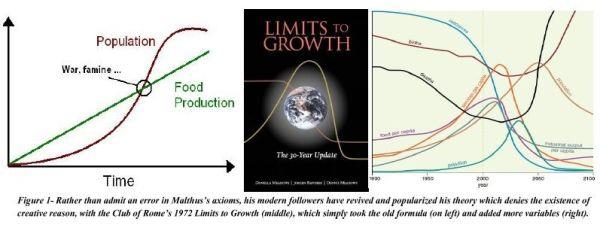
When figures like Mark Carney discuss the “greening of global finance” and placing monetary values upon the reduction of carbon footprints, this is the sick and unscientific foundation of their thinking. Where formerly, humanity valued economic growth via scientific and technological progress (and implicitly the support of increased numbers of people at higher standards of life), the new system of “values” promoted by these misanthropes demanded that profit be tied to the reduction of human activity on the earth.
Club of Rome co-founder Aurelio Peccei, who presented at the inaugural World Economic Forum meetings in Davos, stated:
“The economy and the ecology are inextricably united… A strategy of generating wealth and one of safeguarding this patrimony are opposed. Activities that generate wealth but destroy the natural patrimony even more, create negative value”.
Former President of the World Federation of Mental Health during the high point of MK Ultra, Margaret Mead (wife of MK Ultra controller Gregory Bateson) presided over one such 1975 conference on the environment and atmosphere sponsored by the Club of Rome (this club also being an early sponsor of the World Economic Forum in 1971). Echoing the spirit of Russell and Huxley earlier, Mead called for the creation of a new science of statistics premised on equating pollution to climate change that would become internally consistent and shape the behavior of humanity going into the 21st century. The focus was always population control. In her speech Mead said:
“The unparalleled increase in the human population and its demands for food, energy, and resources is clearly the most important destabilizing influences in the biosphere. We are facing a period when society must make decisions on a planetary scale.”
“What we need from scientists are estimates, presented with sufficient conservatism and plausibility but at the same time as free as possible from internal disagreements that can be exploited by political interests, that will allow us to start building a system of artificial but effective warnings, warnings which will parallel the instincts of animals who flee before the hurricane. [We must] draw from the necessary capacity for sacrifice. It is therefore a statement of major possibilities of danger, which may overtake humankind, on which it is important to concentrate attention”.
Rather than seeing science as a field for optimistic problem solving, this misanthropic cult of elitists demanded that science be redefined around a “new wisdom” of adapting to problems real or imagined. This cynical science of “problematique” (the science of problems) assumed that since all creative discovery caused population growth, the real enemy was found in the naïve optimists who believe it good to promote discoveries. Mead ridiculed those cultural optimists who rejected this cynical view of science saying:
“Those who react against prophets of doom, believing that there is not adequate scientific basis for their melancholy prophecies, [for they] tend to become in turn prophets of paradisiacal impossibilities, guaranteed utopias of technological bliss, or benign interventions on behalf of mankind that are none the less irrational just because they are couched as ‘rational.’ They express a kind of faith in the built-in human instinct for survival, or a faith in some magical technological panacea.”
Using more truthful language, Club of Rome co-founder Sir Alexander King stated in the preface of The First Global Revolution (1991):
“In searching for a common enemy against whom we can unite, we came up with the idea that pollution, the threat of global warming, water shortages, famine and the like, would fit the bill. In their totality and their interactions these phenomena do constitute a common threat which must be confronted by everyone together. But in designating these dangers as the enemy, we fall into the trap, which we have already warned readers about, namely mistaking symptoms for causes. All these dangers are caused by human intervention in natural processes, and it is only through changed attitudes and behaviour that they can be overcome. The real enemy then is humanity itself.”
Today’s world is being pulled by two opposing dynamics.
The prophets of doom who set the time bomb in place half a century ago giddily prepare their utopian Great Reset which demands vast bloodletting as an overpopulated humanity is to be sacrificed by a modern pagan scientific priesthood devoted to Gaia and computer models. On the other hand, the spirit of progress and open system thinking has come alive in the form of the multipolar alliance which premises its planning on an opposing set of assumptions about the nature of humanity, creative thought, value, economics, progress and natural law.
Which future wins out in this battle over humanity will be shaped by the decisions and discoveries we make (or fail to make) in the days ahead.
Featured Video
Marandi: US attacked world’s largest gas field & Iran declares economic war
or go to
Aletho News Archives – Video-Images
From the Archives
Why the UK, the EU and the US Gang-Up on Russia
By James Petras :: 03.20.2018
Introduction: For the greater part of a decade the US, the UK and the EU have been carrying out a campaign to undermine and overthrow the Russia government and in particular to oust President Putin. Fundamental issues are at stake including the real possibility of a nuclear war.
The most recent western propaganda campaign and one of the most virulent is the charge launched by the UK regime of Prime Minister Theresa May. The Brits have claimed that Russian secret agents conspired to poison a former Russian double-agent and his daughter in England, threatening the sovereignty and safety of the British people. No evidence has ever been presented. Instead the UK expelled Russian diplomats and demands harsher sanctions, to increase tensions. The UK and its US and EU patrons are moving toward a break in relations and a military build-up.
A number of fundamental questions arise regarding the origins and growing intensity of this anti-Russian animus.
Why do the Western regimes now feel Russia is a greater threat then in the past? Do they believe Russia is more vulnerable to Western threats or attacks? Why do the Western military leaders seek to undermine Russia’s defenses? Do the US economic elites believe it is possible to provoke an economic crisis and the demise of President Putin’s government? What is the strategic goal of Western policymakers? Why has the UK regime taken the lead in the anti-Russian crusade via the fake toxin accusations at this time?
This paper is directed at providing key elements to address these questions. … continue
Blog Roll
 Aletho News
- Hormuz disruption exposes hidden strain on US military supply chains
- Allowing US to use UK bases amounts to participation in war: Araghchi
- Iran War Is Accelerating the End of US Dominance
- FBI Resumes Buying Americans’ Location Data Without Warrants
- IDF threatens ‘elimination’ for Russian leaders who ‘wish Israel ill’
- Attacks on enemy energy facilities not over yet, strikes ongoing: Iran
- US dragged by Israel into ‘unlawful war’ with Iran – Gulf state
- Israel’s War on Iran’s Grid: How the South Pars Strike Turned Energy into a Weapon
- War on Iran to impose trillion-dollar ‘Israel First Tax’ on US citizens: Araghchi
- The State Is Socializing the Cost Of the Iran War
- If Americans Knew
- Trump: Israel attacked Iranian gas field without US knowledge. No more such attacks!
- America’s friends must help extricate it from an unlawful war
- Democratic Nat’l Committee’s Kneejerk Backing of Israel Is Political and Moral Failure
- Major revelations from former counterterrorism chief Joe Kent’s extensive interview
- More than half of Palestinian child detainees have no charges
- Grieving Parents in Iran Spend Every Night at the Graves of Their Children, Killed by U.S. Strike
- War on Iran spins out of control, Palestine struggles – Not a ceasefire Day 160
- How ignorance, misunderstanding and obfuscation ended Iran nuclear talks
- Israeli media reports grotesque settler attack in West Bank
- UK security adviser attended US-Iran talks and judged deal was within reach
- No Tricks Zone
- Energy Expert: Germany’s Nuclear Phaseout Was A “500 Billion Euro Mistake”
- New Research: South Australia’s Mid-Holocene Sea Surface Temperatures Were 4°C Warmer Than Today
- Storing Green Energy To Last Germany 10 Days Would Require A 60-Million Tonne Battery
- New Studies: UK Sea Levels Were 4 Meters Higher Than Today During The Mid-Holocene
- Destructive Green New Deal: German Energy And Metal Group Warns Of Drastic Crisis
- New Study Documents A 20-Year Pause In Arctic Sea Ice Decline – Driven By Internal Variability
- Wake-up Call: Survey Shows Majority Of Germans Now Favor Postponing Climate Targets!
- Televised! Leading German Political Candidate Tells Schoolchildren CO2 Makes Sun Hotter!
- New Study: A Century Warming Of 1.1°C Is ‘Commonplace’ And ‘Not Unusual’ During This Interglacial
- New Study: ‘Internal Noise’ And Volcanic Forcing Can Trigger 10-15°C Warming Within Decades
 Aletho News